[Prefatory Note: On October 26 the Istanbul Statement issued on behalf of the Steering Committee was issued, and expressed the central concluding concern that although a ceasefire was formally agreed upon by Israel and Hamas, the genocide continued, including periodic resumptions of lethal violence by Israel killing many Palestinians. The struggle for a just peace continues, and includes the rejection of all efforts to exclude Palestinian rights and Palestinian authentic participation.]
Istanbul, 26 October 2025
At conclusion of the Final Session of Gaza Tribunal this Istanbul Statement is made on behalf of the Steering Committee at a historic moment of darkness expressive of our continuing quest for the light of justice.
The Gaza Tribunal recognizes that the current genocide in Palestine, rooted in a century of colonization and oppression, represents a watershed moment in the history of our world. If the Israeli perpetrators and their western enablers are allowed to escape justice, and the Palestinian survivors are left without meaningful redress and, ultimately, their full liberation from the dehumanizing shackles of Zionism and colonialism, the world will have ratified one of the worst atrocities in history. The Tribunal notes that if colonialism, apartheid, and genocide are not moral redlines, then there are no redlines. And the world that presages will be a world of unprecedented horror. Every member of the human family has a stake in Palestinian justice.
Cognizant of this, the Gaza Tribunal was established in London in November 2024, as a people’s tribunal in the tradition of the Russell Tribunal that was established at the height of US aggression in Vietnam. It convened public hearings in Sarajevo in May 2025, adopting the historic Sarajevo Declaration as a statement of the principles of the Tribunal and of the global quest for justice in Palestine. Its work over the past year has consisted of the collection of information and analysis, the hearing of witnesses and survivors, the archiving of evidence, and the issuing of appeals to humanity for action to end the genocide and to secure justice for the Palestinian people. Its convening here in Istanbul has brought together members of the Tribunal, witnesses, survivors, experts, and an international Jury of Conscience to issue a moral judgement on the crimes of the Israeli regime and those complicit in their perpetration, and to set the course for the next phase of the quest for justice in Palestine.
The members of the Gaza Tribunal welcome the findings of the Jury of Conscience, applaud their moral clarity, and commit to the struggle to see their implementation in full.
The accelerated genocide of the past two years had shocked the conscience of humanity. The images of its audacious cruelty are forever seared in the minds of decent people everywhere, and the echoes of the cries of its victims will forever ring in our ears. We will forget none of it. The brutal attacks on an imprisoned civilian population, the intentional infliction of hunger, thirst, and disease as weapons of genocide, the targeting of bullets and bombs and drones at innocents, the mass arrests and imprisonment in notorious dungeons, the systematic beatings, and torture, and sexual violence of the genocidal perpetrators, the sniping of toddlers for sport, the systematic destruction of hospitals, schools, churches, mosques, homes, refugee shelters, aid facilities, agricultural fields, food stores, even cemeteries, and the deliberate targeting of civilian truth tellers, journalists, medical personnel, aid workers, and other protected persons. So too will we remember the arrogant genocidal threats and declarations of the perpetrators, and their cruel laughter and public celebration of their crimes, all recorded forever in a catalogue of shame.
We warn the world today that the genocide in Palestine has not ended. The Israeli regime continues to murder Palestinians in Gaza with its Western-supplied bullets and bombs. It continues to obstruct the delivery of food and medicine to the survivors. It continues to impose its unlawful siege on the survivors. Its two-year systematic imposition of hunger, disease, injury, the plaguing of all of Gaza with toxic chemicals and explosive ordinance, its destruction of most shelter as well as the infliction of mass mental disorder and impaired developmental capacities for surviving civilians, will all continue to claim victims of the genocide for years to come. Even as Gaza continues to bleed, the Israeli regime has extended the annihilation phase of the genocide to the West Bank, where land, and livelihoods, and lives are claimed every day in the ethnic cleansing and racist assaults of the Israeli army and its violent settlers.
Nor do the colonial maneuvers reflected in the so-called Trump Plan, or in the New York plan, offer any hope for end to the genocide, or for freedom or justice for Palestine. Even as we welcome any ceasefire, we note that the Israeli regime has continued to violate with impunity the current declared cessation with daily killings of Palestinians and the continued obstruction of humanitarian aid. We reject the provisions of both plans that would violate fundamental Palestinian rights of self-determination, the essential elements of which are agency, sovereignty, authentic representation and unified leadership. The proposed Plans presuppose impunity for Israeli genocide and apartheid, normalize the Israeli regime, ignore the rights of the Palestinian people under international law, and impose proxy occupation and colonial control over the victims of genocide, while doing nothing to reign in the perpetrators of genocide. Palestinians must lead the restoration of Gaza, and Israel and its enablers must be held responsible for all reparations.
We demand accountability for the perpetrators and their complicit enablers, redress for the victims and survivors, action to address the root causes of Zionist colonization, occupation, and apartheid, rejection of all efforts to normalize the perpetrator regime and its criminal acts, and freedom for Palestine. In sum, we demand justice.
To these ends, we call on people of conscience everywhere to intensify their efforts to secure justice for the Palestinian people, through increased and coordinated efforts to isolate the Israeli regime, reject its normalization, and to hold it to account through boycotts, divestment, sanctions, military embargoes, criminal prosecutions of perpetrators and complicit actors, civil actions against those benefitting from harms, education of our neighbors, public protest and civil disobedience, and the amplification of calls for a free Palestine.
[Prefatory Remark: I post today the historic outcome of Gaza People’s Tribunal Final Session in Istanbul, May 23-26. The Jury composed of persons of diverse backgrounds, but joined by lives vividly committed to a lives of engaged citizenship, progressive political consciousness, with actions guided by the deep roots of conscience. The GPT was designed to honor these same features with a particular emphasis on serving as an instrument of truth-telling with respect to the Palestinian ordeal resulting from the Hamas-led attack of October 7, 2023. To expose the truth that emerges from respecting reality and evidence is necessary because of state propaganda and a filtered, biased media that either hides or slants the truth, even to the extent of punitive and lethal action against independent journalists and dismissing as irrelevant the rulings of the International Court of Justice and the International Criminal Court.
Its formation inspired by the Russell Tribunal of 1966-67 that reacted to US crimes in the Vietnam War that were not resisted, or even exposed by the organized international community as embodied in the UN. When institutions fail to implement international law in extreme situation people of conscience must act. Israel has become a rogue or pariah state becuase the peoples of the world have reacted, but it is not enough. Palestinian rights must be realized, and future of peace must be shaped by the victims of criminality, not by the perpetrators.]
FINAL STATEMENT OF THE GAZA TRIBUNAL JURY OF CONSCIENCE
Istanbul, October 26, 2025
We, the undersigned members of the Jury of Conscience, hereby deliver this Statement of Findings and Moral Judgment
at the final session of the Gaza Tribunal. The Jury, guided by conscience and informed by international law, does not speak
with the authority of states, but when law is silenced by power, conscience must become the final tribunal.
The Tribunal is not a court of law so does not purport to determine guilt or liability of any person, organization or state. It is a
civil society response to the continuing lack of accountability for the commission by Israel of genocide in the Gaza Strip. We
believe that genocide must be named and documented and that impunity feeds continuing violence throughout the globe.
Genocide in Gaza is the concern of all humanity. When states are silent civil society can and must speak out.
The Gaza Tribunal has brought together a wealth of material in a valuable archive, the existence of which provides lasting
evidence of the truth of the genocide against the Palestinian people. The Jury expresses solidarity with the rallies, the
marches, the encampments, the flotillas, the strikes and other actions that protest the genocide and states’ unwillingness
to hold Israel to account. And it offers a counter-narrative to the security narrative Israel and its allies persistently broadcast
and to the labelling of Palestinian suffering as a humanitarian disaster. It is not. It is the deliberate commission of the gravest
of crimes, imposed with dire humanitarian consequences.
We have heard extensive evidence of the crimes committed by Israel, of the causes of the genocide, of the collusion by and
complicity of other actors, of courageous resistance and resilience by Palestinians and by global civil society. We have heard
moving personal testimonies of the physical and mental harms wrought by these crimes and the suffering of the Palestinian
people.
This concluding statement presents our findings based upon this evidence and the legal standards of the Genocide
Convention, the human rights treaties, the Rome Statute of the International Criminal Court, and the moral imperatives of
natural justice. Yet above all, this decision is grounded in the unyielding belief that every human life has equal worth, and that
no state or ideology has the right to destroy an entire people.
Our decision builds upon the testimonies, oral and written, the expert evidence and the research and analytical papers
carried out by many people over the past months. It reiterates and endorses the Sarajevo Declaration adopted in May 2025.
Israel’s Crimes
The Jury condemns the ongoing genocide and crimes listed below. We believe these crimes and their impact on the Palestinian
people should be separately named to understand the holistic nature of the genocide, its dehumanisation of the people,
its sadistic character and its temporality. These crimes did not commence in October 2023 and they will not end with the
ceasefire; deaths and severe physical harm will continue. The physical and psychological trauma of the surviving population
will be transmitted through the generations.
The Jury condemns the commission of the following additional crimes:
Starvation and famine through the deliberate denial of food, water and systematic destruction of the entire food system.
Domicide is more than the intentional mass destruction of residential properties and their infrastructure – electricity,
water and sanitation. A home is about love, life, a repository of memories, hopes and aspiration. Its destruction causes
displacement, trauma, the disintegration of communities and profound cultural loss.
Ecocide describes a particular kind of warfare based on ruination of land fertility, air quality, sources of food and water:
catastrophic environmental damage that destroys the capacity to survive after the bombing ceases.
Deliberate destruction and targeting of the healthcare infrastructure, equipment and personnel have been
systematic for decades and has become almost total. The most important issue for physical and mental health is the
Israeli occupation and the dehumanisation of the population.
Reprocide is the intentional and systematic targeting of Palestinian reproductive care through prevention of births,
eliminating future lives and the ability to reproduce safely.
Scholasticide is the genocide of knowledge, the destruction of Palestine’s intellectual future through the killing, silencing
and displacing a generation of students and teachers, obliteration of schools and universities, destroying dreams andaspirations.
Attacks on journalists. ‘Genocide documentation’ is carried out by Palestinian journalists and they and their families
are targeted. Silencing these journalists is instrumental to the concealment of the genocide and more journalists have
been killed than in any other conflict.
Torture, sexual violence, disappearances, gender-based violence in detention, at checkpoints, in house searches, in
displacement and elsewhere.
Politicide is the targeted assassination and kidnapping of political and cultural leaders, representatives, activists, and
destruction of civic institutions.
The Jury finds a coherent and consistent pattern of exterminatory violence in the intentional and targeted destruction of
homes, water supplies, schools, hospitals, clinics, universities, cultural and religious institutions, agricultural land, and natural
ecosystems. The weaponization of hunger, denial of medical care, and forced displacement are not collateral damages of
war—they are instruments of collective punishment of the entire population and of genocide. They are not justified by any
claim of military objectives.
Complicity and Collusion
The Jury finds Western governments, particularly the United States, and others complicit in, in some cases colluding with,
Israel’s commission of genocide through provision of diplomatic cover, weapons, weapon parts, intelligence, military
assistance and training, and continuing economic relations. Such actions constitute moral failure and breach of their legal
duty to prevent genocide and to cooperate to end a violation of a peremptory norm of international law – genocide and the
Palestinian right to self-determination. Silence and inaction in the face of genocide are not an option and are other forms of
complicity.
The Jury finds a range of non-state actors to be complicit in genocide. Biased media reporting in the west on Palestine and
under-reporting of Israeli crimes conform to the economic and political interest of the ruling elites and their allied interests.
Academic institutions through their investments support Israel; staff and student endorsements of Palestine are silenced
or disciplined.
Israel survives through militarisation; global supply chains sustain the genocide through weapons, banks, technology,
transportation, and other multinational corporations. The hi-technology sector sustains the machinery of genocide by
manipulating contents through algorithms, and allowing Israel to watch and plan every airstrike and assassination. Companies
that sell cloud capacity to Israel provide the computer power for genocide. The Jury considers that the political economy of
genocide is the highest form of hyper imperialism of the 21st century.
The Jury finds the current global order, structured by power hierarchies and economic dependencies, to have revealed its
incapacity to prevent or punish atrocity crimes when committed by the powerful or their allies. The United Nations, paralyzed
by the veto and political selectivity, has abdicated its foundational responsibility “to save succeeding generations from the
scourge of war.”
The Jury however commends the UNHRC special procedures, including the Commission of Inquiry and especially the
steadfastness of the special rapporteur on the occupied Palestinian territories, Francesca Albanese, for their affirmation of
genocide.
Conclusions
The Jury affirms that Israel is perpetrating an ongoing genocide against the Palestinian people in Gaza, within—and enabled
by—a broader settler-colonial apartheid regime rooted in the supremacist ideology of Zionism. This campaign is inseparable
from over a century-long project targeting Palestinians across all of Palestine and in exile. The root causes of genocide lie in
a racist, supremacist ideology—Zionism—that underpins a system aiming to dispossess, dominate, and erase Palestinians,
supported by an oppressive neo-colonial power structure led by the United States and its allies, and shielded by international
complicity, including from many Arab and Muslim governments.
The Jury considers the genocide in Gaza to have several exceptional characteristics. It is perpetuated on a captive population
in a tiny, closed territory where Israel controls all entries and exits. It is systematic and carried out with the most advanced
technology. Despite Israel’s attempts to prevent reporting, it is highly visible in real time. There has been resort to international
judicial bodies, the International Court of Justice by South Africa and the request for an Advisory Opinion by the UN GeneralAssembly with respect to UNRWA and the arrest warrants issued by the ICC, yet these have been ignored with impunity by
Israel and other states have made little real protest and minimal sanctions have been imposed. Indeed, it is the ICC personnel
and NGOs assisting the Court that have been sanctioned by the United States.
Recommendations
Ending Impunity and Ensuring Accountability
To hold all those responsible, politically, militarily, economically, and ideologically, perpetrators, supporters, enablers,
and complicit parties fully accountable by every lawful means and to the fullest extent of the law.
To suspend Israel from international organizations and institutions, particularly the United Nations and its affiliates.
To activate UN General Assembly Resolution 377 A(V) (Uniting for Peace) so the UNGA can adopt collective measures
to mandate a protective force for the Palestinian territories and stop the genocide in Gaza, given the UNSC’s failure to
act due to successive U.S. vetoes.
Resisting and Dismantling Oppressive Structures
The Jury reaffirms the right of the Palestinian people to self-determination and to choose their modes of resistance to achieve
liberation, freedom, and independence.
The Jury endorses a global, rights-based strategy to dismantle Zionist structures: identify and map the Zionist regime’s
sources of power and enabling pillars.
The Jury calls for building a worldwide movement that weakens, isolates, and dismantles each source through coordinated
political, legal, economic, academic, cultural, technological, and social action.
To achieve this objective, two main tasks are paramount:
1. Steadfastness and non-displacement. Palestinians—in Gaza, the West Bank including Jerusalem, Palestinian
communities inside the 1948 lines, must remain rooted in their land. There must be no further forced displacement of
Palestinians in exile, particularly refugees across the region. Preventing displacement and sustaining steadfastness are
essential to maintain the struggle.
2. Comprehensive global confrontation. Confront the Zionist movement and regime globally in every sphere—political
and diplomatic; legal and human rights; economic and commercial; media, cultural, intellectual, academic, and
educational; industrial, technological, and scientific; arts, tourism, and sports. This mobilization centers peoples,
movements, parties, unions, civil-society organizations, and individuals so that solidarity becomes power, normalization
is resisted, and the Zionist project is besieged on all fronts.
The Jury affirms that the struggle is with Zionism as a racist, supremacist, settler-colonial enterprise—not with Jews or
Judaism. The strategic horizon is a single rights-based political order grounded in equality, decolonization, restitution, and
the unfettered right of return. Only this course can end the ongoing genocide and open a path to a just and durable peace
for all who live in Palestine and beyond.
We issue this statement in the name of justice, dignity, and peace, and in remembrance of all those who have perished in
Gaza and throughout Palestine.
Silence is not neutral; silence is complicity; neutrality is surrender to evil.
In solidarity with the people of Gaza and in memory of all victims of genocide,
20 October 2025 21:02 BST | Last update: 11 hours 21 mins ago
By rewarding impunity for genocide, Trump’s ceasefire proves why a civil society-led tribunal is needed to uphold accountability and document Palestine’s fight for justice
Protesters hold signs calling for the arrest of Israeli Prime Minister Benjamin Netanyahu during a Palestine solidarity protest in Sarajevo, Bosnia and Herzegovina, on 12 October 2025 (Amel Emric/Reuters)
The Gaza Tribunal, a people’s tribunal, was formed a year ago in response to the failure of the established world order of sovereign states and international institutions to stop what experts and ordinary people increasingly recognised as genocide in Gaza.
The Gaza Tribunal will hold its final session from 23-26 October 2025 at Istanbul University.
Our initiative was inspired by an earlier civil society effort during the Vietnam War, when leading public intellectuals Bertrand Russell and Jean-Paul Sartre established the Russell Tribunal, which held hearings in 1966 and 1967.
Its mission was to report on the international crimes of the United States and to legitimise growing anti-war sentiment in the West.
The underlying premise was that when the state system fails to uphold international law or to ensure accountability for grave crimes that affect global peace and security, people possess a residual authority and responsibility to act.
New MEE newsletter: Jerusalem Dispatch
Sign up to get the latest insights and analysis on Israel-Palestine, alongside Turkey Unpacked and other MEE newsletters
In the half-century since, many similar tribunals have emerged around the world. Their shared purpose is to speak truth to power and legitimise solidarity initiatives that seek to mount pressure on governments and institutions to take action.
Such people’s tribunals are also intended to encourage civil society activism, such as the Boycott, Divestment and Sanctions (BDS) movement launched by Palestinian NGOs in 2005.
Unlike national or international courts, people’s tribunals do not claim legal authority.
They are overtly partisan, driven by moral conscience rather than formal procedure. They provide a platform for survivor testimony and expert analysis, with the aim of mobilising global activism in pursuit of justice.
Their focus extends beyond legal culpability to encompass broader moral and political responsibility. The tribunal embodies these principles through its Jury of Conscience – individuals of diverse backgrounds and nationalities who share a commitment to moral integrity and to exposing the Palestinian ordeal in Gaza.
Seeking truth
In certain respects, the tribunal’s work resembles that of United Nations truth-seeking mechanisms, such as the reports of the special rapporteur on the situation of human rights in the Palestinian territories. These have persuasively documented evidence of genocidal intent by Israel and its complicit allies.
Yet unlike the tribunal, UN rapporteurs operate as neutral experts, professionally bound to follow evidence wherever it leads.
In an unprecedented act of retaliation, the current UN special rapporteur, Francesca Albanese, was personally sanctioned by the US government, denied entry to the country despite her credentials and had her American assets frozen.
The punitive response to UN truth-telling underscores the need for independent civil society efforts to expose the reality of human suffering caused by Israel’s unlawful and immoral policies
This punitive response to UN truth-telling underscores the need for independent civil society efforts to expose the reality of human suffering caused by Israel’s unlawful and immoral policies.
From its inception, the tribunal has pledged complete independence from government interference, with no active politicians or officials involved in its work.
It is against this background that some may argue that recent developments, particularly US President Donald Trump‘s much-publicised diplomacy and the resulting fragile ceasefire in Gaza, render the tribunal redundant.
They may see the tribunal as an unhelpful distraction from the supposed work of peacebuilding, or from the UN’s paralysis in the face of two years of genocide in an occupied territory where it bears a special institutional responsibility.
The reality, however, is that such developments make the tribunal more essential than ever. When governments and international institutions abandon justice, it falls to ordinary people to uphold it.
Illusions of peace
The attention devoted in recent days to the so-called Trump ultimatum to Hamas, whose acceptance led to the return of all Israeli hostages within 72 hours, reflected the coercive nature of the process.
Hamas was told to comply or face a US-backed Israeli resumption of the genocide that Trump, in his fiery language, forecast as the “opening of the gates of hell”.
Hamas dutifully delivered all of the living hostages and as many of the remains of the dead as it managed to recover. In response, Israel released nearly 2,000 Palestinians imprisoned without charge since 7 October 2023 – effectively hostages themselves.
This prisoner exchange produced a ceasefire in Gaza, accompanied by celebrations in Israel limited to the return of the hostages, and in Gaza, expressing joy about the ceasefire, the release of detained Palestinians, and the partial withdrawal of Israeli forces.
At the same time, there were many flaws in the arrangements when viewed from a Palestinian perspective.
Trump’s plan for Gaza rewards Israel’s genocide and punishes its victims
The proposed transition to a peaceful future, outlined in the 20-point plan and boasted about by Trump in grandiose terms, seems at best premature and, more likely, never to be realised.
Recent statements and behaviour by Israel’s leaders and public appear as determined as ever to pursue a dehumanising and punitive approach towards the still unwelcome Palestinian presence in Gaza and the West Bank.
Israeli ceasefire violations in the first few days resulted in at least 10 Palestinian deaths and the blocking of half of the agreed humanitarian deliveries to a population that is starving, disease-ridden, lacking potable water, and deprived of health services and medicines.
The Palestinian population, stunned and devastated by two years of genocide that deliberately destroyed health and sanitation facilities as well as more than 90 percent of residential structures, continues to suffer under catastrophic conditions.
To live without bombs, even temporarily, is surely a blessing. Yet to exist in primitive tent communities without toilets or kitchens, amid rubble containing the missing bodies of friends, neighbours and relatives, should be regarded as a slowdown of the genocidal assault but hardly its end – or even its replacement by a post-genocide phase resembling the pre-7 October 2023 apartheid-style occupation.
A broken process
In this atmosphere, it remains imperative to expose Israel’s harsh policies and practices that continue to impose emergency, dehumanising conditions and vulnerabilities upon the entrapped population of Gaza.
Israel is reported to have given material support to anti-Hamas clans and gangs to aggravate the grave conditions that persist.
While the ceasefire and the prospect of a peaceful future may be welcomed, it is notable that the positive results were achieved through reliance on an unlawful ultimatum threatening intensified violence.
Beyond this, the entire process was guided by and weighted in favour of Israel and the United States – the two states most closely identified with the perpetration of two years of unremitting genocide.
In effect, the political actors guilty of genocide were rewarded by being entrusted with controlling the peace process for their own benefit.
This is a perversion of justice. Imagine the outrage if surviving Nazi leaders had been authorised to preside over the post-World War Two peace process.
The ‘legitimacy war’
The tribunal does not claim historic importance, but its relevance remains undiminished. It exists to validate the charge of genocide and to reaffirm the Palestinian struggle for self-determination and statehood.
Both dimensions of the present Gaza reality are airbrushed out of existence by the self-congratulatory bombast of Trump’s diplomacy.
Amid fragile ceasefire, the Gaza tribunal on genocide will bring us closer to justice
Those who perpetrated genocide have so far not only evaded any kind of formal accountability for their crimes but have also benefited, except to the extent that Israel is now experiencing eroded legitimacy as a sovereign state and is widely viewed as a pariah.
This dynamic of delegitimation has occurred despite the international community’s complete failure to apply standards of accountability in the form of reparations or a reconciliation process that exchanges acknowledgement of past crimes for amnesty.
That others, rather than the perpetrators and their enablers, are expected to bear the costs of Gaza’s reconstruction is an assault on the very notion of moral and legal responsibility.
What the tribunal seeks to achieve is the sharpening of a populist tool that constructs an accurate archive and narrative of past and present.
Its assessments contribute to the relevance of voices of conscience in civil society – a form of symbolic politics that influences questions of legitimacy.
In this respect, the side that won the “legitimacy war” for control of moral and legal discourse generally determined the political outcome of the anti-colonial struggles of the last half-century, despite being militarily inferior.
These are lessons the US should have learned in Vietnam, and Israel in its long encounter with the Palestinian people.
There is little doubt that the Palestinians have won the legitimacy war
Although the future is highly uncertain, there is little doubt that, as of now, the Palestinians have won the legitimacy war – an outcome that will be certified by the proceedings of the Gaza Tribunal.
In their struggle against Zionist settler colonialism, Palestinians have achieved a notable symbolic victory since 7 October 2023, and Israel a corresponding defeat.
To record and document this outcome in Gaza is, by itself, enough to justify holding the Gaza Tribunal’s final session in the days ahead.
The views expressed in this article belong to the author and do not necessarily reflect the editorial policy of Middle East Eye.
Richard Falk is an international law and international relations scholar who taught at Princeton University for forty years. In 2008 he was also appointed by the UN to serve a six-year term as the Special Rapporteur on Palestinian human rights.
Middle East Eye delivers independent and unrivalled coverage and analysis of the Middle East, North Africa and beyond. To learn more about republishing this content and the associated fees, please fill out this form. More about MEE can be found here.
Prefatory Note: The post below is based on modified responses to questions addressed to me by Rodrigo Craveiro, a Brazilian journalist. The focus is what to expect in the weeks ahead to follow from the Trump dipomatic offensive to bring an Israeli crafted peace to fruition in Gaza, and broader stability to the entire Middle East}
There is a sense of joy but also of fury due to the fact all the bodies didn´t return to Israel. How do you see this?
Given the overall experience of the past two years, the attention accorded to the hostages by the Western media is misleadingly disproportionate, and as usual Israel-biased. And now the pain of those Israelis who seek the agreed return of the bodies of non-surviving hostages is an extension of this distortion that shifts global concerns away from the terrible carnage and ccontinuing suffering in Gaza, and the totally ravaged homeland of the Palestinians that is being subject to day after arrangements made by its tormentors without Palestinian participation, much less authentic representation selected by the Palestinian people. Legitimate Palestinian leadership does not presently exist even if there existed a commitment to identify and endow such individuals with appropriate roles. For sustainable progress toward a just future peace to be achieved the Palestinians must participate and be representative of their own choosing. Such a reality can only be decided by the Palestinians themselves, most obviously, in an internationally monitored competitive election among rival claimants to Palestinian leadership throughout Occupied Palestine.
Hamas evidently agreed to return the bodies of dead hostages in their possession, but given the difficulty of locating the bodies and collecting the remains, unless there is a genuine repudiation by Hamas of this underlying duty associated with the ceasefire, their good will deserves the benefit of the doubt. The disappointment of the families in Israel that suffered from this human loss is understandable, but it should be interpreted in ways that are subordinate to more relevant issues such as ceasefire violations. It was reported two days after the ceasefire went into effect that Israel killed by gunfire and missiles 7 Palestinians seeking to visit their destroyed home in Gaza City, a disturbing incident which seemed received scant, if any, coverage in international media or mainstream international commentary, and yet could be seen as evidence of the fragility of the ceasefire arrangements or an indication that Israel is ready to risk or is even seeking the collapse of the ceasefire by testing its limits. A carefree attitude toward the renewal of the violent encounter that rests on implied, or even secret, assurances of unwavering US support.
Trump addressed the Israeli Knesset, where he said that his peace plan marks the “historic dawn of a new Middle East”. Do you believe this is something real or is he exaggerating?
My best guess is that historians looking back at those words will conclude that Trump had confused dawn with dusk. There is no prospect of a brightening of the dark skies casting a shadow on the countries of Middle East until Palestinian rights arerespected, and that includes honoring the international right of return of the seven million Palestinian refugees. There must be a campaign to obtain proper accountability for the Gaza Genocide. Until the costs of Gaza reconstruction are borne by the perpetrators of the devastation, accompanied by some process of reconciliation that does not whitewash the crimes of Israel and its enablers it will be impossible to create a peaceful future for the region. At the very least the vast devastation caused by the genocide must be physically overcome by a process of reconstruction funded by adequate reparations. The scope of reconstruction must include health, heritage and religious sites, educational and cultural institutions, residential neighborhoods, UNRWA facilities, and much else. The most painful losses of loved ones and body parts can never be compensated by material means and are an enduring negative legacy of the Gaza Genocide. Even recognizing pragmatic constraints on peacemaking given political conditions a ‘peace’ crafted to please the perpetrator of genocide and its most complicit supporter, is highly unlikely to proceed very far. The Trump 20 Point Plan is not a break with the past, but an effort to induce forgetfulness necessary to attain credibility in proposing post-conflict arrangements. To grasp the ironies of this Trump Plan we should imagine our reactions if the Nazi survivors of World War II had been put in charge of designing the future of the international order, or even of just post-war Germany. It would not have seemed like a step toward a peaceful future regardless of the language used to obscure the perverse underlying reality.
3- Trump and the three mediating governments signed the peace plan for Gaza at the Sharm el-Sheik Summit. Given this development, what can we expect to happen in the future?
It is almost universally believed that the ceasefire should remain operative even if violations of the underlying plan occur or its further implementation stalls. Beyond this it is a matter of how much leverage is exerted by the US to advance the governance proposals in Part II of Trump‘s Plan. Whether Hamas and Palestinian resistance forces are subject to being coerced by further threats of Israeli renewal of its genocidal assault is unclear. It is also uncertain if the US would go along with an Israeli unilateral departure from the Trump Plan. Israel is quite capable of fabricating claims that Hamas is violating the ceasefire and related obligations leaving it no choice but to resume its military operations. It would appear at this time that Trump would allow Israel to exercise such an option. At the same time, Trump is so mercurial and narcissistic that it possible he would regard Israel’s action as undermining his claims as peacemaker, and repudiate the Israeli resumption of large-scale violence in Gaza. In an odd way Israel and Trump may turn out to have different goals. Israel has not given up its quest for ‘Greater Israel,’ which means absorbing not only East Jerusalem, but Gaza and the West Bank within its sovereign territory. Trump may still strangely believe he can obtain the Nobel Peace Prize if his Plan is operationalized in Gaza and the two conflicting parties accept the arrangements.
Overall, it is clear that peace and stability will not be the future of the Middle East until Israel respects Palestinian rights, drastically redefines or repudiate Zionism and apartheid in a manner consistent with international law, and agrees to the establishment of a Peace & Reconciliation Commission to acknowledge Israel’s past criminal violations of Palestinian rights and to announce a new dedication to the creation of an independent commission that assists the Palestinian/Israeli leadership to build future relations between Jews and Arabs on the basis of equality, dignity, and rights as the foundation for sustainable patterns of peaceful coexistence. For a truly new and stable Middle East Israel must agree to the establishment of a nuclear free zone, including itself and Iran.
4- What are Risks of Clashes between Hamas and Gaza Clans and Factions?
These issues are murky, with contending interpretations and explanations of their recent prominence in the midst of this most ambitious effort to develop the current ceasefire pause into a framework for long-term conflict resolution by implementing, perhaps with modifications, the advanced phases of the Trump 20 Point Plan. In this context, Israel seems to welcome these tensions within Gaza, by various means including subsidies, to allow them an option to exit from this series of developments that might challenge their annexation plans in the West Bank as well as Gaza. It is possible that the Netanyahu government agreed to the ceasefire only to secure the return of the hostages, and never assented to any wider interference with its militarist approach, and may have had assurances of Trump’s support no matter what. If this plays out Israel would actually welcome the collapse of the conflict-resolution part of the framework in a manner that would find tacit acceptance, if not outright approval in Washington. Such a manipulation of reality requires pinning the blame on Hamas that is currently taking the form of criticizing Hamas for seeking to destroy those armed groups in Gaza that collaborated with the Israeli military operations.
Such a line of interpretation is reinforced by Israeli unreasonably shrill complaints about the Hamas failure to return all of the bodies of the dead hostages. On its part Hamas claims it has returned all the remains it could discover with its existing equipment, given that some dead hostages remain trapped far beneath the rubble. This seems a reasonable explanation as Hamas has little incentive to retain the remains of dead Israeli hostages or of taking steps that provide an excuse for Israel to resume bombardment and other forms of violence in Gaza.
Such a line of interpretation is also consistent with Israel’s pattern of lethal violence killing Palestinians in several instances that have the clear appearance of being deliberate violations of the ceasefire agreement. Additionally, Israeli interference with the delivery of humanitarian aid by reducing the entry of relief goods by 50% is another expression of Israel’s unwillingness to allow even a conflict-resolving process weighted in its favor to go forward. These are serious provocations by Israel, causing sharp criticism from some governments that had previously endorsed the Trump approach, but not yet even a whimper of disapproval from the US.
The gathering evidence suggests that Israel is accumulating grounds for repudiating the ‘peace’ process and resuming its military operations accompanied by a renewed clampdown on the further delivery of humanitarian aid, despite widespread hunger, disease, and trauma among the civilian population of Gaza. The next week or so shall determine whether this pessimistic assessment dooms the ceasefire as well as the prospects for conflict-resolution by diplomacy rather than through further recourse to genocide. Israel since the return of the living hostages in Gaza holds all the cards and Hamas has none except for its incredible capacity of resilience.
[Prefatory Comments]This post consists of my responses to a Brazilian journalist who posed some questions about the recent diplomatic surge of recognitions of Palestinian statehood, as provisionally represented by a PLO coalition of political actors, chaired Mahmoud Abbas, and in the 1990s given the supposedly temporary, ambiguous title of the Palestinian Authority with its capital in the West Bank city of Ramallah. This political development resulted from the Oslo diplomacy that allowed the PLO to represent the Palestinian people although within a pro-Israeli partisan framework that empowered the US to serve as intermediary without requiring Israel to freeze settlement activity or to comply with international humanitarian law during ‘the peace process.’ The central expectation of this process was that a Palestinian state would emerge from a complex series of bilateral negotiations, but what occurred was an evident lack of political will on the part of Israel and Washington to produce such an outcome. The whole undertaking was contradicted and discredited by the continuous expansion of unlawful Israeli settlements on the occupied Palestinian territories of the West Bank, East Jerusalem, and Gaza. The Palestinians were advised at the time by the US to withhold their objections to Israeli behavior until the final stages of statehood negotiations were reached (which never happened), and the Palestinian team foolishly heeded the advice, and itself lost credibility for consenting to take part in a diplomatic exercise that did not even acknowledge the Palestinian right of self-determination.
At the outset a certain skepticism seems prudent. It suggests a cautious response to this foundational question: Should this new surge of internationalist enthusiasm for ‘two-statism’ be viewed as a buildup for a replay of the Oslo process or as something new? Underlying conditions are different as
Israel’s military operations Gaza are now normalized, even in most of the previously complicit liberal democracies of the West and in most influential venues of political discourse as ‘genocide.’ This has resulted in Israel’s delegitimation and emergent identity as a rogue or pariah state that has become the target of hostile civil society initiatives ranging from BDS to rising pressures to impose arms embargoes, suspension of diplomatic relations, and expulsion or suspension from the UN. It has also produced pushback by the US in the form of sanctioning UN appointees by barring entry and freezing assets, denying visas to PLO members, including the leadership of the Palestinian Authority, and classifying Palestinian NGOs as terrorist organizations. Israel has reacted defiantly to calls for Palestinian statehood and to the boycott of Netanyahu’s speech at the 80th anniversary session of the General Assembly. To date, France and the US have put forward peace proposals, with some cooperation and encouragement from Arab governments, that end the genocide, but reward Israel by excluding Hamas from any future political role in Gaza, and dubiously presupposing the adequacy of the PA to represent the struggle for Palestinian rights, including the establishment of a functioning state. My responses below are based on a strong conviction that until the Palestinian people are given the choice as to their political representation by way of an internationally monitored free elections in Gaza and the West Bank or through a reliable referendum allowing for the selection or ranking of political representation options, no peace process should be accorded legitimacy by the UN or civil society assessments.
How can the recognition of the State of Palestine by Australia, Canada, the United Kingdom, France, Portugal, Belgium, and others help in a plan to officialize the creation of the State of Palestine?
The push toward Palestinian recognition will probably has now extended to at least 157 of the 193 members of the UN, representing a large majority of the world’s peoples. The only major opponents being Israel and the United States, along with s Hungary, Paraguay, and Argentina, autocratic middle powers. The longer-term undertaking of the states bestowing statehood recognition is a two-state solution of the underlying conflict. This objective has been most influentially articulated so far by France, and somewhat separately by the US although it has not yet openly challenged Israel’s refusal to allow the emergence of a Palestinian state in any form. It is based on the belief that the only way to end the conflict and achieve regional stability is by promoting a solution that provides an alternative to Israel’s One-State Plan (Greater Israe) but also by a Euro/Arab packaging of Palestinian statehood to preclude a genuine Palestinian liberation. Israeli one-statism is structured in accord with Israel’s 2018 adoption of a Basic Law institutionalizing Jewish supremist dominance in Israel and the OPT according to an unacknowledged adoption of a settler colonial approach to apartheid control imposed on the subjugated and dehumanized native population of historic Palestine. President Trump’s assertion that he would not allow Israel to annex occupied Palestinian territory may depict a middle ground of permanent Israeli occupation and gradual Israelization without a Palestinian state of any sort coming into existence.
The French-backed solution, now competing with the Trump US proposal along somewhat similar lines, is centered on endorsing the establishment of a Palestinian state following the release of hostages held captive in Gaza since October 7 and the gradual dismantling of Hamas by an International Stabilization Force with an armed Arab administrative presence in Gaza. Palestinian governance of Gaza, the West Bank, and East Jerusalem would be eventually entrusted to what is generally referred to as a reconstituted Palestinian Authority, originally brought into existence within the framework of Oslo Diplomacy of the 1990s. Mahmoud Abbas, the longtime, quasi-collaborationist President of the Palestinian Authority told the General Assembly speaking online as barred entry to the US, that he favors a demilitarized Palestinian state, the demilitarization and exclusion of Hamas from a governance in role , and opposed the October 7 attack, while indicting Israel for ‘genocide’ in shaping its response. Abbas has not so far insisted that Israel be required to implement the right of return enjoyed by an estimated 8 million Palestinian refugees living in the OPT and neighboring countries.
A handful of states apparently oppose this approach, most unambiguously, Israel, as it is inconsistent with Israel’s firm commitment to a one-state solution, and refusal to accept any form of Palestinian statehood. Israeli state propaganda opposes these recent Global West recognitions of Palestine by its former allies, several earlier complicit in supporting the genocide diplomatically, and some of these governments continuing their material support. Israel condemns these diplomatic moves as somehow ‘rewarding’ Hamas and its allegedly ‘terrorist’ assault of two years ago, but it hard to fathom how Hamas gains from this variation of two-state advocacy that includes the punitive exclusion of Hamas from any future role in the administration of Gaza. In other words, this variant of the two-state approach appears to reward the perpetrator of genocide and punish the victim. In fact, it may reopen the road to political and economic normalization and acceptance within the Arab Middle East.
The seeming majority Palestinian approach rejects both Israeli one statism and the two-statism as delimited by Emanuel Macron as set forth in the New York Declaration, arising from summit on Palestine co-chaired by France and Saudi Arabia, as well as the 21 Point Program for conflict resolution put forward by Trump in consultation with Arab countries. The most independent and trustworthy Palestinian voices are calling for the selection of a new more legitimate mechanism than the PA for the pursuit of national liberation objectives. This would be expected to require mechanisms for a meaningful exercise of the Palestinian right of self-determination by the Palestinian people including those Palestinians and their descendants living in neighboring countries or the OPT as refugees. Authentic Palestinian representation would likely take the form of a fully unified sovereign secular state (presumably renamed and deZionized) encompassing Palestinians and Jews in viable, ethnically neutral governance structures and integrated with guaranteed rights of return for Palestinians living as exiles or in refugee camps and of Jews living in the diaspora. Palestinian statehood could take the form of a viable, fully distinct, equal, and sovereign Palestinian state co-existing with a post-Zionist Israel that embodied the principles of ethnic equality, implying either the revision of Zionist ideology or its complete abandonment, reflecting approval by authenticated Palestinian representatives.
The recognition diplomacy of former supporters of Israel’s response to and characterization of October 7, even though vigorously repudiated by Israel, does not bring the conflict closer to a just and durable outcome. In effect, despite Israel’s apparent rejection, if the Palestinian statehood proposals is ever implemented along these proposed lines would not only reward Israel for genocide, and additionally have the perverse effect of extending the conflict rather than ending it. If ending was the true objective then Israel would be required to reject the practice, policies, and ideology of Zionism as the basis of Israeli governance and to refrain from establishing new settlements on occupied Palestinian territory, if not called upon to remove some or all of the settlements. As of the present, Israel is strongly opposed to the Franco/American approaches as has been made clear in words, and also by its actions, particularly threats of partial or complete annexation of the West Bank and new provocative expansions of settlements, including a new particularly controversial settlement in E1 where a proposed settlement would bisect occupied the West Bank effectively ending any prospect of a viable Palestinian state.
2- Israel has criticized the recognition of a Palestinian state, claiming that it will strengthen Hamas. Netanyahu has said there will never be a Palestinian state. How do you see this?
Netanyahu signaled by the Doha attack of September 13 seeking to assassinate the Hamas negotiating team that Israel’s priorities remain the extermination of Hamas as a source of resistance, a discrediting of the PA as capable of being ‘a partner of peace,’ and an overall, unshakable commitment to Greater Israel, which implies opposition to any form of Palestine statehood, however limited. As suggested it also implies total extermination of Hamas as the organized center of continuing Palestinian resistance. Israel as now constituted remains currently unwilling to end the genocide, and seeks political rewards as measured by land and the removal of Palestinian residents to offset its political loss of legitimacy. As noted, Israel is now a politically isolated pariah state that is economically subject to an increasing variety of civil society harassments. The underlying conflict between the two peoples remains frozen with no horizon of durable peace visible to informed eyes.
With so many nations recognizing Palestinian state, what will be necessary to make the transition from a symbolic reality to a sovereign territorial reality with recognized borders and governmental authority?
As the foregoing seeks to make clear, this sequence of diplomatic recognitions at this point seems to produce a diplomacy of futility, acceptable to neither side, and lacking the will and capabilities at the UN and elsewhere to overcome the ongoing stalemate created by Israel’s refusal to consent to coexist with a viable, and fully sovereign Palestinian state, or even a willingness to accept a Palestinian state with ghost characteristics. Israel seems poised to prolong the agony pushing Palestinians in Gaza and the West Back to leave or die. In effect, to create a third mass dispossession of the sort that in 1948 and 1967 led to the mass expulsion of Palestinian residents to obtain and preserve a Jewish majority population. Israel to fulfill the apparent goals of the Zionist Project must not only claim and exercise territorial sovereignty over the land and ethnic dominance with an apartheid matrix of control over remaining Palestinian but continuously act to defuse the demographic bomb resulting from Palestinian fertility rates being higher than that of their Jewish oppressors and from the persisting legally based claims of Palestinian refugee communities to implement their long deferred right of return.
The likely outcome of increasing international pressure to end the genocide and settle the conflict by a diplomatic compromise is currently taking the mainstream shape of a two-state outcome has little prospect of realization, given the opposition of both Israel and Palestine (if legitimately represented). If a Palestinian demilitarized statelet should be accepted by a weak and dependent PA leadership, that is, not of Palestinian choosing, it will at best recreate a pre-October 7 set of conditions of de facto Israeli one-statism periodically challenged by resistance violence. It may also lead to creative efforts by Palestinian activists and countries in the Global South to gain enough international backing for a justice-driven solution to produce a new conflict-resolving diplomacy. Two-state advocacy would likely be discredited and soon superseded by Palestinian advocacy and civil society activism that will increase over time pressures within Israel to contemplate ways to restore national legitimacy and overcome the perceptions and practices of being a pariah state. This would be, as was the case in racist South Africa, a transactional adjustment rather that a reevaluation of priorities and identity.
In conclusion, the French-Arab-American led diplomatic approaches should be critically analyzed on grounds of their misleading and concealed allegiances with many of the underlying tenets of Israel and Zionism that amount to a continuing denial of fundamental Palestinian rights. Until Palestinian representation is determined by Palestinians rather than by external political actors, whether the US, the UN, or others. Only when Palestinian international representation is reliably established will it become credible to embark upon a truly genuine effort, with integral Palestinian participation and truly neutral intermediation to devise a durable and desirable solution based on a mutually acceptable governance arrangements and agreed boundaries either of a binational single state or of two coexisting equal sovereign states.
‘Albanese has spoken truth with unflinching clarity in a world largely silent in the face of a holocaust, carrying out her mandate with integrity and defiance that honours both the law and the human conscience. This book is a formidable indictment of injustice and demonstrates what it means to stand alone against power’ Susan Abulhawa, author of Against the Loveless World
Israel’s genocide in Palestine and the complicity of powerful Western states is undermining international human rights and the UN system. The United States has imposed sanctions on lawyers, UN experts, and Palestinian officials in an attempt to bully and intimidate them into silence. One prominent example is UN special rapporteur Francesca Albanese, who has played an important role in documenting Israel’s atrocities and those who profit from its oppression of Palestinians.
This book compiles Albanese’s indispensable and damning reports on Israel’s conduct in Palestine since October 2023. First outlining the case that this period should be understood as a genocide, Albanese goes on to explain how the ongoing violence fits into a longer history of Israel’s settler colonialism, and finally presents a devastating indictment against the international corporations that treat mass killing and destruction as a business opportunity.
The volume also features a reflection by Albanese on the current state of affairs; revelations by her predecessors Richard Falk, John Dugard, and Michael Lynk of their experiences as UN special rapporteurs; and a preface by Lex Takkenberg, a 30-year veteran of UNRWA, co-authored with scholar Mandy Turner.
—————
The ebook is free to download from the Pluto Press website indefinitely, with request for a donation to the Palestinian refugee agency, UNRWA. All royalties from sales of the book will be donated to UNRWA.
—————
The book’s title is a variation on a line from a poem by the Palestinian national poet Mahmoud Darwish. It is a metaphor for hope and strength even in the darkest of times.
The cover features a painting ‘Children of Gaza Dreaming of Peace’ from Malak Mattar, a Palestinian artist from Gaza
[Prefatory Note: Interview by Daniel Falcone on Sept 8 Israeli attack on Hamas
negotiating team residence in Doha ending diplomatic effort, at least temporarily, to reach agreement on a US proposed/ allegedly Israel approved ceasefire/hostage exchange arrangements. A disturbing development from many points of view, including the role of secure diplomatic settings for conflict resolution war-averting efforts.]
In the aftermath of this Israel-Qatar attack that seemed at first to threaten the Western interests in the Middle East, is a strange combination of verbal denunciation of Israeli violation of Qatari sovereignty with a political status quo in play.
Israel’s brazen September 8 missile strike on Doha in targeting senior Hamas negotiators has sent reactions all throughout the region, threatening to disrupt US brokered ceasefire talks. Further, it brought questions about Israel’s strategy and intent as well as their government’s disregard for global norms. Coming amid delicate diplomacy and on the soil of a key U.S. ally, the attack challenges assumptions about core-peripheral power, and underlines the ever-changing politics of the Middle East. In the Q/A that follows, Daniel Falcone interviews Richard Falk for insight into the consequences of this act and what it reveals about Israel’s objectives.
Daniel Falcone: Can you explain the incredible action of Israel in bombing Qatar? Why should we be surprised? Why shouldn’t we?
Richard Falk: At this stage an explanation seems premature, although not for media pundits. At best, we can venture speculations, but the complexities of the situation should encourage humility of interpretation. It would be naïve to give much weight to the words of top officials that issue from either Tel Aviv or Washington. Of course, the media stress so far is in three salient facets of the undertaking:
(1) Israel’s display of audacity in launching a missile against high value human targets in the capital of Qatar, location of the largest US military base in the region and the site of negotiations between Israel and Hamas.
(2) the unrelenting demonization of Hamas as a terrorist entity that deserves neither the protection of law and morality nor reactions of human sympathy for the loss of dedicated lives; and …
(3) the tightrope act of Donald Trump who combines his public disapproval of Israel for carrying out this military operation supposedly without a prior notification to the White House while reiterating his solidarity with Israel so far as destroying Hamas.
Obviously, Trump sheds no tears for the victims of the attack, nor is he incensed by Israel’s disregard of international law and morality at a time when it seemed an American ceasefire diplomacy proposal was on the brink of success. What Trump knew and said privately Netanyahu is high on the list of uncertainties.
From Israel’s perspective such a gathering of top Hamas leaders in Doha can be simply regarded as a target too tempting to forego, especially given their information about the location of their place of residence. If these top Hamas leaders had been assassinated, rather than apparently managing to avoid the missile strike, it would have allowed the Netanyahu government to claim a victory in relation to their post-October 7 commitment to exterminate Hamas for the attack, and diminished outrage at attacking an adversary negotiating team.
From a second perspective, the timing as well as the location of the attack is rather mystifying. These Hamas leaders were functioning as a negotiating team meeting in one place to prepare a unified response to the US proposal, unreliably reported as already accepted by Israel, to establish both a ceasefire and the return of the surviving ‘hostages’ in a prisoner exchange. Why would Israel undermine such a proposal by this sort of disruptive behavior when it had just days previously agreed to the negotiated solution, risking not only negative reactions throughout the region and beyond, but also, and more significantly, raising doubts about US unconditional support.
Although a US shift away from its long-term posture on Israel/Palestine remains a remote possibility, which cannot be totally ruled out given Trump’s style of egocentric and erratic leadership that is certainly capable of taking personal offense at Netanyahu’s subversion of Trump’s diplomatic initiative. Such a conjecture presupposes that Trump is being uncharacteristically truthful when finding himself betrayed by Israel, a country thought too dependent on the US to pull off such a diplomatic tactic. The alternative is that Trump is so beholden to Netanyahu that he conspired with him to project the image of diplomacy when the real plan was a counter-terrorist ploy to lure the Hamas leaders to Doha as a group, thinking they were going to put the finishing touches on a breakthrough agreement that will end the Gaza ordeal.
Yet from another perspective, apparently not yet discussed, but likely influential, is either Netanyahu or cabinet hardliners such as Ben-Gvir, Smotrich, and Katz, opposed a ceasefire at this time before the Gaza City ground operation was completed or missing the opportunity to decapitate the surviving Hamas leadership, and made their political weight felt with Netanyahu as had happened previously. These Zionist extremists have seemed determined to seize the moment since October 7 to fulfill Israel endgame ambitions relating to land and people.
Recalling the early Zionist pre-Nazi whimsical airbrushing of the residents of Palestine by falsely contending that it was replacing ‘a people without land for a land without people,’ while just an ironic quip, can be retroactively interpreted as a start down a long path of Palestinian dehumanization and erasure in the 1920s if not before. What now defines the Zionist Project is to acquire for Israel as much land of Ottoman Palestine as possible with as few Palestinians living on it as feasible. Those Palestinians with the resolve to remain face the ensured prospect of suffering as a victimized, super-resilient minority in an Israeli apartheid state.
As with the timing of Iran’s ‘12 Day Iran War,’ June 13-24, 2025, as partly reflecting Israel’s successful effort to deflect attention from its increasingly condemned Gaza policies, the Doha timing may have partly been motivated by the hope of deflecting attention once again. These lines of interpretation are highly conjectural, difficult to either confirm or dismiss. This complexity is aggravated by the tendency of the main parties to the conflict to use public discourse as a propaganda tool rather than as truthful disclosures of national policies. Against this background and timing of the Doha attack it is plausible, if controversial, to argue that it should be regarded as another example of Israel strategy of deflection, shifting the focus away from Israel’s plan to demolish Gaza City or to divert the attention from the fate of the hostages or to show the world and prove to itself that Israel is able and willing to act without waiting for a green light from Washington.
Along these lines, some analysts now fear a second attack on Iran in coming weeks as Israel once more finds itself in a position where facing a rising tide of criticism and hostile pushback that it might once again possibly act to deflect attention from what now appears a provocative failure of the Qatar mission because the Hamas leadership somehow survived the missile attack. Whether Iran would act again so moderately in response seems doubtful, raising threats of a deadly regional war with strong escalation dangers and serious policy challenges to US foreign policy, whether as shaped by the White House or deep state.
Daniel Falcone: What is the end game for Israel? It looks like in the short-term negotiators are worth more dead than alive. Are there other motivations other than power?
Richard Falk: I think your question, with due account given to uncertainties and shifting priorities, points to the reality that Israel seems primarily concerned with establishing a one-state solution in all or most of Ottoman Palestine, administered in quasi-colonial fashion by the UK in the aftermath of World War I. As I have earlier observed, attaining this goal must be preceded by a Palestinian political surrender or better yet, the physical erasure of any significant Palestinian presence. Israel could partially reach such a goal diplomatically or even by the imposition of an extreme form of apartheid making life so unbearable for the Palestinians that many would soon leave if a refugee sanctuary was found, if for no other reason than to assure family survival, especially for children.
The post-October 7 genocide, as underscored by accelerated settlement expansion in the West Bank, should end any beliefs that Israel is at all interested in a diplomatic compromise taking the form of a two-state solution, even if the designated Palestinian negotiators (the Palestinian Authority) seem willing to settle for a ghost state, which more resolute Palestinians insist would be no better than a renewal of ‘breadcrumb diplomacy.’ On further consideration it may turn out that the fragile Netanyahu coalition was unwilling to go along with the current ceasefire diplomacy because it viewed it as a trap that would block a full realization of the Zionist Project.
Considering such priorities, Israel needed to go to the blood-soaked end of its Gaza policy if it was to achieve its primary goals relating to the victorious end of the settler colonial undertaking. Netanyahu either shared this line of thinking in whole or part or accepted it as to avoid the collapse of his fragile coalition that might still lead to his facing long delayed charges of fraud and disgrace within Israel.
Of secondary importance was to extend the orbit of lawlessness by coercively removing present or near future threats within the Middle East to Israel’s security and hegemonic partnership with the US. This line of analysis best explains Israel’s recent multiple regional aggressions against Iran, Syria, and Lebanon. These military operations have been conducted with the alleged purpose of ensuring that unstable regional actors do not in the future become adversaries, which leads to the preemptive destruction of existing military capabilities with implied threats of future military operations should conditions change. Israel, despite possessing the only arsenal of nuclear weapons in the region, remains insecure, at least if security is assessed in defensive terms. More accurately perceived, Israel’s awesome deterrent capability in its regional neighborhood is conceived of offensively as well as preemptively as to avoid the rise of any regional power that might have a political disposition to challenge Israel’s hegemony or partnership with the US in managing the geopolitics of the Middle East. Whether an extra-regional challenge focused on economic penetration and energy politics is posed by China acting alone or with Russia, or in concert with a coalition of the willing in the Global South is still an over-the-horizon nightmare for the West.
Israel’s plans are most likely to be upset, if at all, from within as the status of pariah state sinks into the political consciousness of nations, the region, and the world prompting pressures from without and a pragmatic recalculation by elites within. This kind of dynamic led to profound shifts in the recalculation of the interests (although not the values) of South African apartheid elites in the 1990s producing an enduring embedding of constitutional democracy that were not even hinted at until given tangible expression until unexpectedly acted upon by the Afrikaner leadership.
Netanyahu’s unexpected remarks implicitly acknowledging Israel’s pariah or rogue status are an indication that international disapproval is now having major negative impacts. Recently Netanyahu confessed that “[We] will have to get used to an economy with autarchic features.” As well as declaring “[We’ll] have to be both Athens and Sparta, developing the capabilities to cope on our own.” Even a month ago such statements acknowledging Israel political and economic isolation could hardly be imagined as being uttered by such a combative and self-congratulating political leader as Netanyahu.
Daniel Falcone: Often Israel and the US are discussed as core regions whereas places like Qatar or even Sudan are considered peripheral. Does this event put this misconception on display in your estimation? Nothing looks peripheral when it comes to Israel.
Richard Falk: It is a tantalizing challenge to divide the states of the world up into those that are core and those that are on the periphery. Each historical era gave rise to its own distinctive patterns. World War II produced one pattern, the Cold War another, decolonization another and now the world is on the cusp of another rearrangement of core/periphery relations. The distinction between global geopolitical actors (currently US, China, Russia) and other states is another way of mapping the new world order emerging in tandem with the Ukraine War and the Gaza Genocide.
In a narrow sense, both Israel and Qatar were playing core roles in recent decades. Israel as a regional hegemon with questionable credentials as a sovereign state, although gaining legitimacy through its technological acumen and its skills as arms supplier and battlefield innovator. Whether it will retain its core regional geopolitical role despite perpetrating a transparent genocide viewed in real time is a major uncertainty, likely greatly affected by whether anti-pariah state pressures are exerted in a sustained and effective manner to ensure cooperative relations with the Arab states, Organization of Islamic Cooperation, and the Arab League.
Although I suspect many would disagree, I believe Qatar’s core is rather stable, especially if it is assumed that the September 9 Doha attack was a one-off incident. To a surprising extent Qatar has become like Switzerland for diplomacy among adversaries, reflective of the power-shift from Europe following the collapse of French and British colonialism. This de-westernizing phenomenon has not received the commentary it deserves. This world order realignment of neutral diplomatic sites exhibits more responsiveness to historical circumstances than has the UN with obvious disappointing consequences for multilateral approaches to global problem-solving.
Daniel Falcone:Mouin Rabbani recently discussed the USS Liberty and the Israeli attack on America. Considering this alleged mishap, could we ever witness Israel attacking its allies in your view?
Richard Falk: The Israeli attack on the USS Liberty during the Six Day War on June 8, 1967, killing 34 naval crew members, injuring an additional 171, severely damaging the ship. Objective scholarly treatments have long concluded beyond a reasonable doubt that the Liberty incident was not ‘a mishap’ but rather a deliberate attempt by Israel to prevent US surveillance of its military operations that conflicted with its public assertions. [For a persuasive account see Joan Mellen, Blood in the Water: How the US and Israel Ambush to USS Liberty (Prometheus, 2018)].
It is notable that the US Government chose to accept the Israeli apology and went along with a coverup narrative, despite the damning evidence that it was a deliberate and lethal attack on an American warship. This dynamic has been persuasively analyzed in Mellon’s book and to this day the US coverup is deplored by Liberty survivors. It is a revealing taint on the willingness of the US Government to throw the wellbeing, even the lives, of members of its own armed forces under the bus of diplomatic expediency.
Where Israel’s strategic interests are involved, however extreme, lawless, and inhumane, there is little doubt that the present and many of its past leaders would not hesitate to repeat the USS Liberty disaster/tragedy if the strategic stakes were high enough. More than almost any state, Israel’s allies, including the US, are not beyond suspicion, attitudes acutely inflated by security paranoia that falsely views latent antisemitism as a universal phenomenon. I entertain the wish, however slim, that Israel is capable of internally transforming its identity in ways that confer future legitimacy and achieve a stable normalcy. For this transformative scenario to have any reasonable chance of reshaping the future presupposes mounting international pressure.
Even so, if Israel were to shed its Zionist ideology of Jewish exceptionalism, such developments would be a spectacular instance of the politics of impossibility. Its enactment would help ensure peace and justice, but it has no chance of happening unless the world finally musters the will to impose strong economic sanctions on Israel, as reinforced by civil society activism that mobilizes support for cultural and sporting boycotts, demands an armed protective force under UN auspices, and urges suspension of Israel’s participation in the UN.
The politics of impossibility walks a tightrope between wishful thinking and such unlikely transformative events as the South African abandonment of apartheid, the Soviet collapse, and China’s remarkable developmental ascendancy coupled with unprecedented rates of poverty reduction. Negative events are also possible as with the signs of an American abandonment of democracy and embrace of fascistic styles of governance.
Daniel Falcone: Has the visit to Israel and Qatar by the American Secretary of State, Marco Rubio, altered your understanding of the US engagement with recent developments, especially the attack on the Hamas leadership in Doha?
Richard Falk: The Rubio visit did underscore some vital points in addition to reassuring Israel of US continuing support and Qatar, as well as the Gulf countries, of unwavering security commitments. Rubio tried hard to show that the US was still backing Israel all the way while also promising to be a trusted protector of Arab governments should they face their own security threats. His underlying expression of this dual relationship seemed to rest on the demonization of Hamas, calling this center of Palestinian resistance “agents of barbarism” and insisting that “[As] long as they’re around there will be no peace in this region.”
As Ariel Hayon insisted in an article, “Dangerous Prophecy,” when the microphones are off, every European and Arab leader knows that Hamas’s clones pose a threat to them just as much as this terror organization poses a threat to us. [Published online, September 16, 2025, S. Daniel Abraham, Center of Middle East, News Update.] Hayon, like Rubio, is trying to overcome the divisiveness of the Arab/Islamic Emergency Summit in Doha following the attack by stressing the common supreme interests of both Israel and the Islamic world (or at least of the governing regimes) in counterterrorism, otherwise viewed as popular resistance.
In the aftermath of this Israel-Qatar attack that seemed at first to threaten the Western interests in the Middle East, is a strange combination of verbal denunciation of Israeli violation of Qatari sovereignty with a political status quo in play. On the outside, but not to be discounted, are a series of civil society campaigns and solidarity initiatives that are reacting to the cruelties and injustices of the ongoing genocide. The release at this time of the report of the UN Commission of Inquiry that confirms by evidence and analysis allegations of Israeli genocide in Gaza is another facet of the overall situation.
This interplay will be tested by the way states participate in the forthcoming General Assembly session devoted to celebrating the 80th anniversary of the UN.
[Prefatory Note: Interview by Daniel Falcone on Sept 8 Israeli attack on Hamas
negotiating team residence in Doha ending diplomatic effort, at least temporarily, to reach agreement on a US proposed/ allegedly Israel approved ceasefire/hostage exchange arrangements. A disturbing development from many points of view, including the role of secure diplomatic settings for conflict resolution war-averting efforts.]
In the aftermath of this Israel-Qatar attack that seemed at first to threaten the Western interests in the Middle East, is a strange combination of verbal denunciation of Israeli violation of Qatari sovereignty with a political status quo in play.
Israel’s brazen September 8 missile strike on Doha in targeting senior Hamas negotiators has sent reactions all throughout the region, threatening to disrupt US brokered ceasefire talks. Further, it brought questions about Israel’s strategy and intent as well as their government’s disregard for global norms. Coming amid delicate diplomacy and on the soil of a key U.S. ally, the attack challenges assumptions about core-peripheral power, and underlines the ever-changing politics of the Middle East. In the Q/A that follows, Daniel Falcone interviews Richard Falk for insight into the consequences of this act and what it reveals about Israel’s objectives.
Daniel Falcone: Can you explain the incredible action of Israel in bombing Qatar? Why should we be surprised? Why shouldn’t we?
Richard Falk: At this stage an explanation seems premature, although not for media pundits. At best, we can venture speculations, but the complexities of the situation should encourage humility of interpretation. It would be naïve to give much weight to the words of top officials that issue from either Tel Aviv or Washington. Of course, the media stress so far is in three salient facets of the undertaking:
(1) Israel’s display of audacity in launching a missile against high value human targets in the capital of Qatar, location of the largest US military base in the region and the site of negotiations between Israel and Hamas.
(2) the unrelenting demonization of Hamas as a terrorist entity that deserves neither the protection of law and morality nor reactions of human sympathy for the loss of dedicated lives; and …
(3) the tightrope act of Donald Trump who combines his public disapproval of Israel for carrying out this military operation supposedly without a prior notification to the White House while reiterating his solidarity with Israel so far as destroying Hamas.
Obviously, Trump sheds no tears for the victims of the attack, nor is he incensed by Israel’s disregard of international law and morality at a time when it seemed an American ceasefire diplomacy proposal was on the brink of success. What Trump knew and said privately Netanyahu is high on the list of uncertainties.
From Israel’s perspective such a gathering of top Hamas leaders in Doha can be simply regarded as a target too tempting to forego, especially given their information about the location of their place of residence. If these top Hamas leaders had been assassinated, rather than apparently managing to avoid the missile strike, it would have allowed the Netanyahu government to claim a victory in relation to their post-October 7 commitment to exterminate Hamas for the attack, and diminished outrage at attacking an adversary negotiating team.
From a second perspective, the timing as well as the location of the attack is rather mystifying. These Hamas leaders were functioning as a negotiating team meeting in one place to prepare a unified response to the US proposal, unreliably reported as already accepted by Israel, to establish both a ceasefire and the return of the surviving ‘hostages’ in a prisoner exchange. Why would Israel undermine such a proposal by this sort of disruptive behavior when it had just days previously agreed to the negotiated solution, risking not only negative reactions throughout the region and beyond, but also, and more significantly, raising doubts about US unconditional support.
Although a US shift away from its long-term posture on Israel/Palestine remains a remote possibility, which cannot be totally ruled out given Trump’s style of egocentric and erratic leadership that is certainly capable of taking personal offense at Netanyahu’s subversion of Trump’s diplomatic initiative. Such a conjecture presupposes that Trump is being uncharacteristically truthful when finding himself betrayed by Israel, a country thought too dependent on the US to pull off such a diplomatic tactic. The alternative is that Trump is so beholden to Netanyahu that he conspired with him to project the image of diplomacy when the real plan was a counter-terrorist ploy to lure the Hamas leaders to Doha as a group, thinking they were going to put the finishing touches on a breakthrough agreement that will end the Gaza ordeal.
Yet from another perspective, apparently not yet discussed, but likely influential, is either Netanyahu or cabinet hardliners such as Ben-Gvir, Smotrich, and Katz, opposed a ceasefire at this time before the Gaza City ground operation was completed or missing the opportunity to decapitate the surviving Hamas leadership, and made their political weight felt with Netanyahu as had happened previously. These Zionist extremists have seemed determined to seize the moment since October 7 to fulfill Israel endgame ambitions relating to land and people.
Recalling the early Zionist pre-Nazi whimsical airbrushing of the residents of Palestine by falsely contending that it was replacing ‘a people without land for a land without people,’ while just an ironic quip, can be retroactively interpreted as a start down a long path of Palestinian dehumanization and erasure in the 1920s if not before. What now defines the Zionist Project is to acquire for Israel as much land of Ottoman Palestine as possible with as few Palestinians living on it as feasible. Those Palestinians with the resolve to remain face the ensured prospect of suffering as a victimized, super-resilient minority in an Israeli apartheid state.
As with the timing of Iran’s ‘12 Day Iran War,’ June 13-24, 2025, as partly reflecting Israel’s successful effort to deflect attention from its increasingly condemned Gaza policies, the Doha timing may have partly been motivated by the hope of deflecting attention once again. These lines of interpretation are highly conjectural, difficult to either confirm or dismiss. This complexity is aggravated by the tendency of the main parties to the conflict to use public discourse as a propaganda tool rather than as truthful disclosures of national policies. Against this background and timing of the Doha attack it is plausible, if controversial, to argue that it should be regarded as another example of Israel strategy of deflection, shifting the focus away from Israel’s plan to demolish Gaza City or to divert the attention from the fate of the hostages or to show the world and prove to itself that Israel is able and willing to act without waiting for a green light from Washington.
Along these lines, some analysts now fear a second attack on Iran in coming weeks as Israel once more finds itself in a position where facing a rising tide of criticism and hostile pushback that it might once again possibly act to deflect attention from what now appears a provocative failure of the Qatar mission because the Hamas leadership somehow survived the missile attack. Whether Iran would act again so moderately in response seems doubtful, raising threats of a deadly regional war with strong escalation dangers and serious policy challenges to US foreign policy, whether as shaped by the White House or deep state.
Daniel Falcone: What is the end game for Israel? It looks like in the short-term negotiators are worth more dead than alive. Are there other motivations other than power?
Richard Falk: I think your question, with due account given to uncertainties and shifting priorities, points to the reality that Israel seems primarily concerned with establishing a one-state solution in all or most of Ottoman Palestine, administered in quasi-colonial fashion by the UK in the aftermath of World War I. As I have earlier observed, attaining this goal must be preceded by a Palestinian political surrender or better yet, the physical erasure of any significant Palestinian presence. Israel could partially reach such a goal diplomatically or even by the imposition of an extreme form of apartheid making life so unbearable for the Palestinians that many would soon leave if a refugee sanctuary was found, if for no other reason than to assure family survival, especially for children.
The post-October 7 genocide, as underscored by accelerated settlement expansion in the West Bank, should end any beliefs that Israel is at all interested in a diplomatic compromise taking the form of a two-state solution, even if the designated Palestinian negotiators (the Palestinian Authority) seem willing to settle for a ghost state, which more resolute Palestinians insist would be no better than a renewal of ‘breadcrumb diplomacy.’ On further consideration it may turn out that the fragile Netanyahu coalition was unwilling to go along with the current ceasefire diplomacy because it viewed it as a trap that would block a full realization of the Zionist Project.
Considering such priorities, Israel needed to go to the blood-soaked end of its Gaza policy if it was to achieve its primary goals relating to the victorious end of the settler colonial undertaking. Netanyahu either shared this line of thinking in whole or part or accepted it as to avoid the collapse of his fragile coalition that might still lead to his facing long delayed charges of fraud and disgrace within Israel.
Of secondary importance was to extend the orbit of lawlessness by coercively removing present or near future threats within the Middle East to Israel’s security and hegemonic partnership with the US. This line of analysis best explains Israel’s recent multiple regional aggressions against Iran, Syria, and Lebanon. These military operations have been conducted with the alleged purpose of ensuring that unstable regional actors do not in the future become adversaries, which leads to the preemptive destruction of existing military capabilities with implied threats of future military operations should conditions change. Israel, despite possessing the only arsenal of nuclear weapons in the region, remains insecure, at least if security is assessed in defensive terms. More accurately perceived, Israel’s awesome deterrent capability in its regional neighborhood is conceived of offensively as well as preemptively as to avoid the rise of any regional power that might have a political disposition to challenge Israel’s hegemony or partnership with the US in managing the geopolitics of the Middle East. Whether an extra-regional challenge focused on economic penetration and energy politics is posed by China acting alone or with Russia, or in concert with a coalition of the willing in the Global South is still an over-the-horizon nightmare for the West.
Israel’s plans are most likely to be upset, if at all, from within as the status of pariah state sinks into the political consciousness of nations, the region, and the world prompting pressures from without and a pragmatic recalculation by elites within. This kind of dynamic led to profound shifts in the recalculation of the interests (although not the values) of South African apartheid elites in the 1990s producing an enduring embedding of constitutional democracy that were not even hinted at until given tangible expression until unexpectedly acted upon by the Afrikaner leadership.
Netanyahu’s unexpected remarks implicitly acknowledging Israel’s pariah or rogue status are an indication that international disapproval is now having major negative impacts. Recently Netanyahu confessed that “[We] will have to get used to an economy with autarchic features.” As well as declaring “[We’ll] have to be both Athens and Sparta, developing the capabilities to cope on our own.” Even a month ago such statements acknowledging Israel political and economic isolation could hardly be imagined as being uttered by such a combative and self-congratulating political leader as Netanyahu.
Daniel Falcone: Often Israel and the US are discussed as core regions whereas places like Qatar or even Sudan are considered peripheral. Does this event put this misconception on display in your estimation? Nothing looks peripheral when it comes to Israel.
Richard Falk: It is a tantalizing challenge to divide the states of the world up into those that are core and those that are on the periphery. Each historical era gave rise to its own distinctive patterns. World War II produced one pattern, the Cold War another, decolonization another and now the world is on the cusp of another rearrangement of core/periphery relations. The distinction between global geopolitical actors (currently US, China, Russia) and other states is another way of mapping the new world order emerging in tandem with the Ukraine War and the Gaza Genocide.
In a narrow sense, both Israel and Qatar were playing core roles in recent decades. Israel as a regional hegemon with questionable credentials as a sovereign state, although gaining legitimacy through its technological acumen and its skills as arms supplier and battlefield innovator. Whether it will retain its core regional geopolitical role despite perpetrating a transparent genocide viewed in real time is a major uncertainty, likely greatly affected by whether anti-pariah state pressures are exerted in a sustained and effective manner to ensure cooperative relations with the Arab states, Organization of Islamic Cooperation, and the Arab League.
Although I suspect many would disagree, I believe Qatar’s core is rather stable, especially if it is assumed that the September 9 Doha attack was a one-off incident. To a surprising extent Qatar has become like Switzerland for diplomacy among adversaries, reflective of the power-shift from Europe following the collapse of French and British colonialism. This de-westernizing phenomenon has not received the commentary it deserves. This world order realignment of neutral diplomatic sites exhibits more responsiveness to historical circumstances than has the UN with obvious disappointing consequences for multilateral approaches to global problem-solving.
Daniel Falcone:Mouin Rabbani recently discussed the USS Liberty and the Israeli attack on America. Considering this alleged mishap, could we ever witness Israel attacking its allies in your view?
Richard Falk: The Israeli attack on the USS Liberty during the Six Day War on June 8, 1967, killing 34 naval crew members, injuring an additional 171, severely damaging the ship. Objective scholarly treatments have long concluded beyond a reasonable doubt that the Liberty incident was not ‘a mishap’ but rather a deliberate attempt by Israel to prevent US surveillance of its military operations that conflicted with its public assertions. [For a persuasive account see Joan Mellen, Blood in the Water: How the US and Israel Ambush to USS Liberty (Prometheus, 2018)].
It is notable that the US Government chose to accept the Israeli apology and went along with a coverup narrative, despite the damning evidence that it was a deliberate and lethal attack on an American warship. This dynamic has been persuasively analyzed in Mellon’s book and to this day the US coverup is deplored by Liberty survivors. It is a revealing taint on the willingness of the US Government to throw the wellbeing, even the lives, of members of its own armed forces under the bus of diplomatic expediency.
Where Israel’s strategic interests are involved, however extreme, lawless, and inhumane, there is little doubt that the present and many of its past leaders would not hesitate to repeat the USS Liberty disaster/tragedy if the strategic stakes were high enough. More than almost any state, Israel’s allies, including the US, are not beyond suspicion, attitudes acutely inflated by security paranoia that falsely views latent antisemitism as a universal phenomenon. I entertain the wish, however slim, that Israel is capable of internally transforming its identity in ways that confer future legitimacy and achieve a stable normalcy. For this transformative scenario to have any reasonable chance of reshaping the future presupposes mounting international pressure.
Even so, if Israel were to shed its Zionist ideology of Jewish exceptionalism, such developments would be a spectacular instance of the politics of impossibility. Its enactment would help ensure peace and justice, but it has no chance of happening unless the world finally musters the will to impose strong economic sanctions on Israel, as reinforced by civil society activism that mobilizes support for cultural and sporting boycotts, demands an armed protective force under UN auspices, and urges suspension of Israel’s participation in the UN.
The politics of impossibility walks a tightrope between wishful thinking and such unlikely transformative events as the South African abandonment of apartheid, the Soviet collapse, and China’s remarkable developmental ascendancy coupled with unprecedented rates of poverty reduction. Negative events are also possible as with the signs of an American abandonment of democracy and embrace of fascistic styles of governance.
Daniel Falcone: Has the visit to Israel and Qatar by the American Secretary of State, Marco Rubio, altered your understanding of the US engagement with recent developments, especially the attack on the Hamas leadership in Doha?
Richard Falk: The Rubio visit did underscore some vital points in addition to reassuring Israel of US continuing support and Qatar, as well as the Gulf countries, of unwavering security commitments. Rubio tried hard to show that the US was still backing Israel all the way while also promising to be a trusted protector of Arab governments should they face their own security threats. His underlying expression of this dual relationship seemed to rest on the demonization of Hamas, calling this center of Palestinian resistance “agents of barbarism” and insisting that “[As] long as they’re around there will be no peace in this region.”
As Ariel Hayon insisted in an article, “Dangerous Prophecy,” when the microphones are off, every European and Arab leader knows that Hamas’s clones pose a threat to them just as much as this terror organization poses a threat to us. [Published online, September 16, 2025, S. Daniel Abraham, Center of Middle East, News Update.] Hayon, like Rubio, is trying to overcome the divisiveness of the Arab/Islamic Emergency Summit in Doha following the attack by stressing the common supreme interests of both Israel and the Islamic world (or at least of the governing regimes) in counterterrorism, otherwise viewed as popular resistance.
In the aftermath of this Israel-Qatar attack that seemed at first to threaten the Western interests in the Middle East, is a strange combination of verbal denunciation of Israeli violation of Qatari sovereignty with a political status quo in play. On the outside, but not to be discounted, are a series of civil society campaigns and solidarity initiatives that are reacting to the cruelties and injustices of the ongoing genocide. The release at this time of the report of the UN Commission of Inquiry that confirms by evidence and analysis allegations of Israeli genocide in Gaza is another facet of the overall situation.
This interplay will be tested by the way states participate in the forthcoming General Assembly session devoted to celebrating the 80th anniversary of the UN.
In the aftermath of this Israel-Qatar attack that seemed at first to threaten the Western interests in the Middle East, is a strange combination of verbal denunciation of Israeli violation of Qatari sovereignty with a political status quo in play.
Israel’s brazen September 8 missile strike on Doha in targeting senior Hamas negotiators has sent reactions all throughout the region, threatening to disrupt US brokered ceasefire talks. Further, it brought questions about Israel’s strategy and intent as well as their government’s disregard for global norms. Coming amid delicate diplomacy and on the soil of a key U.S. ally, the attack challenges assumptions about core-peripheral power, and underlines the ever-changing politics of the Middle East. In the Q/A that follows, Daniel Falcone interviews Richard Falk for insight into the consequences of this act and what it reveals about Israel’s objectives.
Daniel Falcone: Can you explain the incredible action of Israel in bombing Qatar? Why should we be surprised? Why shouldn’t we?
Richard Falk: At this stage an explanation seems premature, although not for media pundits. At best, we can venture speculations, but the complexities of the situation should encourage humility of interpretation. It would be naïve to give much weight to the words of top officials that issue from either Tel Aviv or Washington. Of course, the media stress so far is in three salient facets of the undertaking:
(1) Israel’s display of audacity in launching a missile against high value human targets in the capital of Qatar, location of the largest US military base in the region and the site of negotiations between Israel and Hamas.
(2) the unrelenting demonization of Hamas as a terrorist entity that deserves neither the protection of law and morality nor reactions of human sympathy for the loss of dedicated lives; and …
(3) the tightrope act of Donald Trump who combines his public disapproval of Israel for carrying out this military operation supposedly without a prior notification to the White House while reiterating his solidarity with Israel so far as destroying Hamas.
Obviously, Trump sheds no tears for the victims of the attack, nor is he incensed by Israel’s disregard of international law and morality at a time when it seemed an American ceasefire diplomacy proposal was on the brink of success. What Trump knew and said privately Netanyahu is high on the list of uncertainties.
From Israel’s perspective such a gathering of top Hamas leaders in Doha can be simply regarded as a target too tempting to forego, especially given their information about the location of their place of residence. If these top Hamas leaders had been assassinated, rather than apparently managing to avoid the missile strike, it would have allowed the Netanyahu government to claim a victory in relation to their post-October 7 commitment to exterminate Hamas for the attack, and diminished outrage at attacking an adversary negotiating team.
From a second perspective, the timing as well as the location of the attack is rather mystifying. These Hamas leaders were functioning as a negotiating team meeting in one place to prepare a unified response to the US proposal, unreliably reported as already accepted by Israel, to establish both a ceasefire and the return of the surviving ‘hostages’ in a prisoner exchange. Why would Israel undermine such a proposal by this sort of disruptive behavior when it had just days previously agreed to the negotiated solution, risking not only negative reactions throughout the region and beyond, but also, and more significantly, raising doubts about US unconditional support.
Although a US shift away from its long-term posture on Israel/Palestine remains a remote possibility, which cannot be totally ruled out given Trump’s style of egocentric and erratic leadership that is certainly capable of taking personal offense at Netanyahu’s subversion of Trump’s diplomatic initiative. Such a conjecture presupposes that Trump is being uncharacteristically truthful when finding himself betrayed by Israel, a country thought too dependent on the US to pull off such a diplomatic tactic. The alternative is that Trump is so beholden to Netanyahu that he conspired with him to project the image of diplomacy when the real plan was a counter-terrorist ploy to lure the Hamas leaders to Doha as a group, thinking they were going to put the finishing touches on a breakthrough agreement that will end the Gaza ordeal.
Yet from another perspective, apparently not yet discussed, but likely influential, is either Netanyahu or cabinet hardliners such as Ben-Gvir, Smotrich, and Katz, opposed a ceasefire at this time before the Gaza City ground operation was completed or missing the opportunity to decapitate the surviving Hamas leadership, and made their political weight felt with Netanyahu as had happened previously. These Zionist extremists have seemed determined to seize the moment since October 7 to fulfill Israel endgame ambitions relating to land and people.
Recalling the early Zionist pre-Nazi whimsical airbrushing of the residents of Palestine by falsely contending that it was replacing ‘a people without land for a land without people,’ while just an ironic quip, can be retroactively interpreted as a start down a long path of Palestinian dehumanization and erasure in the 1920s if not before. What now defines the Zionist Project is to acquire for Israel as much land of Ottoman Palestine as possible with as few Palestinians living on it as feasible. Those Palestinians with the resolve to remain face the ensured prospect of suffering as a victimized, super-resilient minority in an Israeli apartheid state.
As with the timing of Iran’s ‘12 Day Iran War,’ June 13-24, 2025, as partly reflecting Israel’s successful effort to deflect attention from its increasingly condemned Gaza policies, the Doha timing may have partly been motivated by the hope of deflecting attention once again. These lines of interpretation are highly conjectural, difficult to either confirm or dismiss. This complexity is aggravated by the tendency of the main parties to the conflict to use public discourse as a propaganda tool rather than as truthful disclosures of national policies. Against this background and timing of the Doha attack it is plausible, if controversial, to argue that it should be regarded as another example of Israel strategy of deflection, shifting the focus away from Israel’s plan to demolish Gaza City or to divert the attention from the fate of the hostages or to show the world and prove to itself that Israel is able and willing to act without waiting for a green light from Washington.
Along these lines, some analysts now fear a second attack on Iran in coming weeks as Israel once more finds itself in a position where facing a rising tide of criticism and hostile pushback that it might once again possibly act to deflect attention from what now appears a provocative failure of the Qatar mission because the Hamas leadership somehow survived the missile attack. Whether Iran would act again so moderately in response seems doubtful, raising threats of a deadly regional war with strong escalation dangers and serious policy challenges to US foreign policy, whether as shaped by the White House or deep state.
Daniel Falcone: What is the end game for Israel? It looks like in the short-term negotiators are worth more dead than alive. Are there other motivations other than power?
Richard Falk: I think your question, with due account given to uncertainties and shifting priorities, points to the reality that Israel seems primarily concerned with establishing a one-state solution in all or most of Ottoman Palestine, administered in quasi-colonial fashion by the UK in the aftermath of World War I. As I have earlier observed, attaining this goal must be preceded by a Palestinian political surrender or better yet, the physical erasure of any significant Palestinian presence. Israel could partially reach such a goal diplomatically or even by the imposition of an extreme form of apartheid making life so unbearable for the Palestinians that many would soon leave if a refugee sanctuary was found, if for no other reason than to assure family survival, especially for children.
The post-October 7 genocide, as underscored by accelerated settlement expansion in the West Bank, should end any beliefs that Israel is at all interested in a diplomatic compromise taking the form of a two-state solution, even if the designated Palestinian negotiators (the Palestinian Authority) seem willing to settle for a ghost state, which more resolute Palestinians insist would be no better than a renewal of ‘breadcrumb diplomacy.’ On further consideration it may turn out that the fragile Netanyahu coalition was unwilling to go along with the current ceasefire diplomacy because it viewed it as a trap that would block a full realization of the Zionist Project.
Considering such priorities, Israel needed to go to the blood-soaked end of its Gaza policy if it was to achieve its primary goals relating to the victorious end of the settler colonial undertaking. Netanyahu either shared this line of thinking in whole or part or accepted it as to avoid the collapse of his fragile coalition that might still lead to his facing long delayed charges of fraud and disgrace within Israel.
Of secondary importance was to extend the orbit of lawlessness by coercively removing present or near future threats within the Middle East to Israel’s security and hegemonic partnership with the US. This line of analysis best explains Israel’s recent multiple regional aggressions against Iran, Syria, and Lebanon. These military operations have been conducted with the alleged purpose of ensuring that unstable regional actors do not in the future become adversaries, which leads to the preemptive destruction of existing military capabilities with implied threats of future military operations should conditions change. Israel, despite possessing the only arsenal of nuclear weapons in the region, remains insecure, at least if security is assessed in defensive terms. More accurately perceived, Israel’s awesome deterrent capability in its regional neighborhood is conceived of offensively as well as preemptively as to avoid the rise of any regional power that might have a political disposition to challenge Israel’s hegemony or partnership with the US in managing the geopolitics of the Middle East. Whether an extra-regional challenge focused on economic penetration and energy politics is posed by China acting alone or with Russia, or in concert with a coalition of the willing in the Global South is still an over-the-horizon nightmare for the West.
Israel’s plans are most likely to be upset, if at all, from within as the status of pariah state sinks into the political consciousness of nations, the region, and the world prompting pressures from without and a pragmatic recalculation by elites within. This kind of dynamic led to profound shifts in the recalculation of the interests (although not the values) of South African apartheid elites in the 1990s producing an enduring embedding of constitutional democracy that were not even hinted at until given tangible expression until unexpectedly acted upon by the Afrikaner leadership.
Netanyahu’s unexpected remarks implicitly acknowledging Israel’s pariah or rogue status are an indication that international disapproval is now having major negative impacts. Recently Netanyahu confessed that “[We] will have to get used to an economy with autarchic features.” As well as declaring “[We’ll] have to be both Athens and Sparta, developing the capabilities to cope on our own.” Even a month ago such statements acknowledging Israel political and economic isolation could hardly be imagined as being uttered by such a combative and self-congratulating political leader as Netanyahu.
Daniel Falcone: Often Israel and the US are discussed as core regions whereas places like Qatar or even Sudan are considered peripheral. Does this event put this misconception on display in your estimation? Nothing looks peripheral when it comes to Israel.
Richard Falk: It is a tantalizing challenge to divide the states of the world up into those that are core and those that are on the periphery. Each historical era gave rise to its own distinctive patterns. World War II produced one pattern, the Cold War another, decolonization another and now the world is on the cusp of another rearrangement of core/periphery relations. The distinction between global geopolitical actors (currently US, China, Russia) and other states is another way of mapping the new world order emerging in tandem with the Ukraine War and the Gaza Genocide.
In a narrow sense, both Israel and Qatar were playing core roles in recent decades. Israel as a regional hegemon with questionable credentials as a sovereign state, although gaining legitimacy through its technological acumen and its skills as arms supplier and battlefield innovator. Whether it will retain its core regional geopolitical role despite perpetrating a transparent genocide viewed in real time is a major uncertainty, likely greatly affected by whether anti-pariah state pressures are exerted in a sustained and effective manner to ensure cooperative relations with the Arab states, Organization of Islamic Cooperation, and the Arab League.
Although I suspect many would disagree, I believe Qatar’s core is rather stable, especially if it is assumed that the September 9 Doha attack was a one-off incident. To a surprising extent Qatar has become like Switzerland for diplomacy among adversaries, reflective of the power-shift from Europe following the collapse of French and British colonialism. This de-westernizing phenomenon has not received the commentary it deserves. This world order realignment of neutral diplomatic sites exhibits more responsiveness to historical circumstances than has the UN with obvious disappointing consequences for multilateral approaches to global problem-solving.
Daniel Falcone:Mouin Rabbani recently discussed the USS Liberty and the Israeli attack on America. Considering this alleged mishap, could we ever witness Israel attacking its allies in your view?
Richard Falk: The Israeli attack on the USS Liberty during the Six Day War on June 8, 1967, killing 34 naval crew members, injuring an additional 171, severely damaging the ship. Objective scholarly treatments have long concluded beyond a reasonable doubt that the Liberty incident was not ‘a mishap’ but rather a deliberate attempt by Israel to prevent US surveillance of its military operations that conflicted with its public assertions. [For a persuasive account see Joan Mellen, Blood in the Water: How the US and Israel Ambush to USS Liberty (Prometheus, 2018)].
It is notable that the US Government chose to accept the Israeli apology and went along with a coverup narrative, despite the damning evidence that it was a deliberate and lethal attack on an American warship. This dynamic has been persuasively analyzed in Mellon’s book and to this day the US coverup is deplored by Liberty survivors. It is a revealing taint on the willingness of the US Government to throw the wellbeing, even the lives, of members of its own armed forces under the bus of diplomatic expediency.
Where Israel’s strategic interests are involved, however extreme, lawless, and inhumane, there is little doubt that the present and many of its past leaders would not hesitate to repeat the USS Liberty disaster/tragedy if the strategic stakes were high enough. More than almost any state, Israel’s allies, including the US, are not beyond suspicion, attitudes acutely inflated by security paranoia that falsely views latent antisemitism as a universal phenomenon. I entertain the wish, however slim, that Israel is capable of internally transforming its identity in ways that confer future legitimacy and achieve a stable normalcy. For this transformative scenario to have any reasonable chance of reshaping the future presupposes mounting international pressure.
Even so, if Israel were to shed its Zionist ideology of Jewish exceptionalism, such developments would be a spectacular instance of the politics of impossibility. Its enactment would help ensure peace and justice, but it has no chance of happening unless the world finally musters the will to impose strong economic sanctions on Israel, as reinforced by civil society activism that mobilizes support for cultural and sporting boycotts, demands an armed protective force under UN auspices, and urges suspension of Israel’s participation in the UN.
The politics of impossibility walks a tightrope between wishful thinking and such unlikely transformative events as the South African abandonment of apartheid, the Soviet collapse, and China’s remarkable developmental ascendancy coupled with unprecedented rates of poverty reduction. Negative events are also possible as with the signs of an American abandonment of democracy and embrace of fascistic styles of governance.
Daniel Falcone: Has the visit to Israel and Qatar by the American Secretary of State, Marco Rubio, altered your understanding of the US engagement with recent developments, especially the attack on the Hamas leadership in Doha?
Richard Falk: The Rubio visit did underscore some vital points in addition to reassuring Israel of US continuing support and Qatar, as well as the Gulf countries, of unwavering security commitments. Rubio tried hard to show that the US was still backing Israel all the way while also promising to be a trusted protector of Arab governments should they face their own security threats. His underlying expression of this dual relationship seemed to rest on the demonization of Hamas, calling this center of Palestinian resistance “agents of barbarism” and insisting that “[As] long as they’re around there will be no peace in this region.”
As Ariel Hayon insisted in an article, “Dangerous Prophecy,” when the microphones are off, every European and Arab leader knows that Hamas’s clones pose a threat to them just as much as this terror organization poses a threat to us. [Published online, September 16, 2025, S. Daniel Abraham, Center of Middle East, News Update.] Hayon, like Rubio, is trying to overcome the divisiveness of the Arab/Islamic Emergency Summit in Doha following the attack by stressing the common supreme interests of both Israel and the Islamic world (or at least of the governing regimes) in counterterrorism, otherwise viewed as popular resistance.
In the aftermath of this Israel-Qatar attack that seemed at first to threaten the Western interests in the Middle East, is a strange combination of verbal denunciation of Israeli violation of Qatari sovereignty with a political status quo in play. On the outside, but not to be discounted, are a series of civil society campaigns and solidarity initiatives that are reacting to the cruelties and injustices of the ongoing genocide. The release at this time of the report of the UN Commission of Inquiry that confirms by evidence and analysis allegations of Israeli genocide in Gaza is another facet of the overall situation.
This interplay will be tested by the way states participate in the forthcoming General Assembly session devoted to celebrating the 80th anniversary of the UN.
The English version posted below has been somewhat modified, mainly for style and some updatijng.]
Q<How can Israel and Netanyahu be stopped at this moment?
That is a question that has haunted the world for the past two years, and worried peace and justice activists for a much longer time. The most obvious issue is to how to persuade the US government and EU countries to withdraw their support in response to Israel’s abusive occupation policies in Gaza and the West Bank. It remains crucial for any hope of an adequate, if belated, international response to the Gaza genocide for European countries do more than just step back but encourage the imposition of collective sanctioning measures through the UN or by a coalition of the willing. It is of even greater relevance to bring pressure on the US Government to stop shielding Israel and to join in a genuine effort to overcome the current famine that is threatening death by starvation to most of the surviving Palestinian population trapped in Gaza.
The political atmosphere regarding Israel’s assault on Gaza has changed over the course of the last five months, that is, after Israel broke the ceasefire on March 13 of this year. A much larger segment of the public, including in previously complicit countries, is increasingly disturbed by Israel continuing genocide, especially by the cruelty of inducing deliberate starvation, the manipulation of the humanitarian aid, and perhaps most of all by converting the food distribution centers into killing fields. The overall impression produced by Israel’s tactics is one of death of innocent people and destruction of their habitats and cultural heritage with a ferocity that is unprecedented in human history. Prior genocides were never before as widely and vividly witnessed around the world in real time. The Israeli response to October 7 has been exposing the eyes and ears of the entire world to daily images of atrocities, as well as the complicity of the Western liberal democratic governments and the feebleness of UN genocide prevention efforts. This represents a moral collapse by Western governments and reveals the deficiencies of international law and the UN in the face of clashes between humanitarian concerns and strategic interests. If this dynamic results in Israeli post-genocide occupation of Gaza and the expulsion and repression of surviving Palestinians, this tragic failure of moral internationalism will be completed. Such a result will keep reviving memories of generations to come with graphic descriptions of this appalling behavior that was tolerated and significantly enabled by the West, particularly by the former European colonial powers and the breakaway British colonies. The work of documentary and fictional filmmaking will undoubtedly preserve and disseminate this dark and scandalous chapter in human history.
We who are alive now cannot evade responsibility for taking what action we can that is directed at securing Palestinian rights as well as resisting Israel’s crimes. The urgent question before the world is ‘how to translate opposition to this ongoing experience of criminality into effective action of opposition given existing emergency conditions?’ The humanitarian emergency can only be address by an immediate response of sufficient magnitude. We have little time to plan and intervene protectively if we are serious about engaging to save the surviving Gazan population of an estimated two million persons, most of whom have already been severely malnourished and traumatized by almost two years of relentless wholesale onslaught conducted with minimal constraint.
What has been happening in Gaza should not be treated as a ‘war,’ which presupposes a somewhat symmetrical struggle between two sides. The conflict unfolding in Gaza is more accurately portrayed as a ‘massacre’, or even provocatively as ‘a military hunting expedition.’ It is so one-sided in its characteristics, with one side having its choice of options as to the most hyper-modern weaponry and targets, and the other side vulnerable and helpless, with few options other than to seek shelter and pray to survive. To use the language of war for such a conflict is to normalize Israel’s behavior by raising technical questions of the law of war as to whether it has exceeded the limits of ‘self-defense’ or ‘military necessity.’ Such issues can be argued indefinitely by lawyers for and against, thereby minimizing the horror that is transpiring.
Language matters as it allows advocates of abhorrent behavior to hide the true nature of their true motivations that account for the tactics deployed to destroy the identity, livelihood, memories, and lives of an entire people and at the same time engage in ethnic cleansing to clear the land of its native population. The recourse to force of this intensity and duration given the context cannot be explained by reference to Israeli security or even revenge, but only by reference to territorial ambitions and depopulation that long infused the Zionist Project, which has delayed implementation until an opportunity was present,.
In the case of Gaza there’s a special feature that this violence is concentrated in a tiny area occupied after the 1967 War and subject to international humanitarian law with Israel being a provisional occupying power that has now been declared by the International Court of Justice in 2024 to have flagrantly abused its authority and role from the perspective of international law. This most respected international tribunal in a near unanimous judgment concluded that Israel was legally obligated to withdraw its military presence and political administration altogether from occupied Palestinian territories and allowed it a year to do so. The year expired on July 19, 2025, although extended to September by General Assembly resolution. Given the refusal of Israel to comply, this authoritative judicial opinion instructed the UN and its Members in their individual capacities to take steps to implement Israel’s withdrawal. What is now established is that Israel no longer has any legitimate foundation for exercising control in either Gaza or the West Bank, and has itself become an unlawful, as well as an abusive occupant. Israel not only refuses to comply with the ICJ decision. Instead, Israel has defiantly announced plans for settlement expansion in the West Bank, directly violating an important legal constraint found in the 4th Geneva Convention on Belligerent Occupation and signaling an intention to make its presence in the West Bank permanent and irreversible. So far there are no signs at the UN or elsewhere that there exists a sufficient political will to do anything that would really make Israel feel obliged to comply.
There are some symbolic gestures that have been recently made by several important European countries including Germany, France, Britain, and others reacting to the official confirmation of famine in Gaza and the reports of children and others dying of starvation. But in terms of stopping an extremist leader like Netanyahu and the Zionist movement that has captured control over the governing process and the citizenry in Israel, and there is little indication that anything in the short term can or will be done to mitigate the suffering in Gaza, or to avert what seems to be worse to come. There is a slender hope that the increasing pariah or rogue status of Israel will induce an unexpected willingness of Israel’s leaders to compromise the further pursuit of maximalist goals in exchange for a pledge to normalize Israel’s relations with Saudi Arabia and other governments in the Middle East, a revival of the Abraham Accords initiated in the last year of Trump’s first term as the US president.
People have started advocating, including here in Istanbul, the authorization and formation of a UN armed protective force that would intervene at the invitation of Palestine with sufficient capabilities to protect the Gazan population perhaps by a peacekeeping presence deployed at the borders between Israel and Gaza, as well as between Israel and the West Bank. It is doubtful that this will happen so long as the U.S. and Israeli opposition remains as unrelenting as in the past 22 months. Indeed, Netanyahu in early September signaled Israel’s rejection of any post-genocide idea of Palestinian statehood by expressing anger. His defiant words were coupled with threats of annexation to carry to completion the Zionist end game of Palestinian political erasure despite its diplomatic recognition by as many as 150 states, including the most important NATO members aside from the United State
At the same time, it may be the best hope aside from an Israeli course correction, and it’s certainly worth exerting public pressure that might make Israel do something radically inconsistent with its behavior before and after October 7. History is full of surprises, good and bad, reflecting the inability of the human species to know the future, despite its amazing technocratic sophistication and thus forced to live with uncertainty on every level of human existence. But uncertainty is no excuse for passivity in the presence of evil. What seems a phantasy hinged to Israel’s willingness to change its behavior by accepting an arrangement committed to enforcing international law and accepting a stable and just peace that would also promise the political as well as the physical reconstruction of Gaza is neither probable nor impossible.
Such a scenario, however remote it now appears, is what we should struggle to achieve at this point even though most self-confident experts would dismiss its relevance as an idle utopian fantasy and move on to plan some incremental feasible face-saving adjustment that would not attempt to address the underlying maladies associated with prolonged apartheid governance and genocidal practices and policies.
Q>If genocide cannot be stopped what is the outcome Israel seeks? When do you think Israel will stop this military operation increasingly labeled as ‘genocide’ in public discourse?
In my view Israel’s undertaking was not motivated primarily, or perhaps not at all by security considerations. Israel had ample capabilities to address whatever security threats existed after October 7, and assuming that Israel didn’t let the attack happen so as to have the pretext for such a response, it would merely be a matter of enhancing border security, well within Israel’s defense capabilities. Israel received warnings that this attack was coming. Including a New York Times front page story about the degree to which Netanyahu had been made aware of the preparations in Gaza for launching this attack. As well, the Egyptian intelligence reportedly warned Netanyahi in the days before the attack. The world deserves an international investigation of the October 7 events, including what preceded and what followed, to obtain a better grasp of what motivated Israel to act as it has.
Ordinary persons should at least entertain the possibility that Israel wanted the pretext for initiating such a large-scale response that it would begin the end game for the Zionist project, which means grabbing as much land as they could acquire in terms of what was in some sense withheld from Israel by the international consensus favoring a two-state solution. The Israeli made no secret of wanting to have one Israeli state with Jewish supremacy and allowing only the Jewish people as having a right of self-determination. This is set forth in Israel’s Basic Law adopted by the Knesset in 2018. As Israel has no constitution, the Basic Law is the highest form of legislation and the most difficult to amend and repeal. It internalizes and acknowledges the apartheid regime Israel has long relied upon to deal with Palestinians living in Israel or in the occupied territories or even as refugees. It has been complemented by episodic seizures of Palestinian land and periodic expulsion of Palestinians.
On the West Bank there’s been an increasing spillover from the Gaza violence, mainly evident in the upsurge of settler violence directed at making life unlivable for Palestinians in the West Bank and encouraging a movement among the many militant settler communities that are very well represented in the Netanyahu coalition to annex the West Bank and to occupy substantial if not the whole of Gaza and in the process to find ways to remove as many Palestinians as possible, either by forced expulsion or by some kind of ‘voluntary’ arrangement with another country that would accept them, possibly being bribed to do so by economic incentives. Several African countries have been talked about in this way but so far none have been persuaded to accept an influx of Palestinian refugees forced to flee their homeland.
But Israel and specifically the Zionist movement has always been animated by the idea of a single colonized Israel state that has the characteristics of a settler colonial undertaking. Such a project has been pursued at the very moment that colonialism has collapsed elsewhere in the world. Hence, it hardly surprising that there’s more resistance from the Palestinians to a historical attempt to engage in a new colonial undertaking during what is often referred to as a post-colonial era.
This persistent resistance of Palestinians has given rise to a vicious circle linking resistance to more and more severe repression taking the form of apartheid. No matter what its name Israel has devised a system of racial domination and exploitation that is based on ethnicity not on class but on identity determined to be either Jew or non-Jew. Aside from Israel’s resolve to exert discriminatory submission on the part of the Palestinians, its ambitions are more extensive, involving land and racial purification that depends on a continuous process of ethnic cleansing.
And when apartheid doesn’t succeed in achieving the ends that are being sought there has been a strong tendency of settler colonial movements to embrace a logic of genocide of varying degrees of severity depending on circumstances in each instance. Recourse to genocide often came about because it seemed the only way that the settler colonial undertaking could find stability and achieve homeland security. All settler colonial settler states have commenced their existence with an often unconsciously constructed apartheid-like structure, which if resisted over a long period would tend to transition to genocide or in a few instances the abandonment of the project. The US and Canada illustrate a transition to genocide, Algeria and South Africa illustrate a transition to withdrawal after resistance from within and without seemed to formidable to ignore.
As such what is happening in the occupied Palestinian territories is not a new phenomenon, it happened in all the white British breakaway colonies Canada, US, Australia, New Zealand. They each experienced this sequence of apartheid followed by genocidal policies to marginalize the native peoples within their territories, and if long stabilized, by rituals of apology without the slightest intention of redressing legitimate grievances of surviving descendants of the victimized native population.
One has to understand that against the background of several centuries of history, genocide has never been effectively stopped by the international community. Even the Holocaust in Germany was tolerated until Hitler launched a war against Poland and then attacked the Soviet Union. It was only then that Germany was delegitimized as a sovereign state. Even during World War II, the allied powers notoriously refused to bomb the railroad tracks leading to the death camps, although some historians question this interpretation of Allied conduct with regard to the Nazi genocide.
In the background of the Gaza genocide is the extensive experience that countries in the West have had of consolidating the ambitions of dominant racial elites by any means unless there exists within or without some sufficient strategic interest with the ability and will to stop them.
A final thing aspect of this approach to Gaza is to mention at least that after the Cold War, Islam became the next enemy of the Global West. It is relevant to take note of the striking fact that all the countries that were complicit with Israel’s genocidal behavior are from the white West and all the countries and movements that support the Palestinian struggle come from the Global South or from governments or movements originating in Islamic neighbors of Palestine. In other words after the end of the Cold War, there emerged in the faultlines of the Middle East an inter-civilization struggle for land, energy reserves, trade routes, and hegemonic status.
Q>So we shouldn’t wait patiently for the international community to act. International organizations and geopolitical actors have never acted effectively to stop this or any previous genocide. History tells us almost everything we need to know, or does it?
The organized international community has never been designed or empowered to stop genocide. It has always in the past reacted after the fact. With digital communications this could change but obstacles to fashioning effective responses remain. If enough agitation arises in civil society it might effectively bring pressure on some governments to change their policies so as to support an anti-genocide protective intervention under international auspices, and act to provide an implementing capability. This might require the coordinated imposition of sanctions with demands for consent to deploy armed blue helmet protective forces.
This happened in a limited way regarding Apartheid South Africa which was strategically allied with the UK and the US. But the internal politics of these two countries turned so strongly against apartheid that these governments, despite their conservative governments under the leadership of Thacher and Reagan, complied with the wishes of their citizens rather than pursued their strategic interests. The Israeli case is different as Zionist lobbies, especially AIPAC, continue to be effective in asserting leverage over US policy toward Israel.
Q> Is it possible for the completely different Gaza plan to what Trump proposed in his promotional video- Gaza riviera – on social media to come true? A plan where Gaza is fully emptied, and Palestinians leave their land…
We’re living at a time of radical uncertainty so that what seems impossible may become actualized in ways that it’s currently difficult to anticipate. The crystal ball used to predict the future is even foggier than usual. We are destined to live in an atmosphere of ambient uncertainty with respect to future developments, but this does not relieve us from responsibility to struggle for what we believe is right and just. Precisely because a benign future is not foreclosed, as engaged citizens dedicated to a humane future our responsibility to act on behalf of justice is an imperative of moral conscience.
Reinforcing this general idea of political responsibility are concrete factors.Trump is sufficiently narcissistic, unpredictable, and impressionable that he could launch a major campaign to prove that this vision of a Middle East Riviera comes at least partially into being. It now seems unlikely because it’s not wanted by any of the relevant actors and it seems reminiscent of the the imperial side of the colonial era. Such a proposal poses an awkward question for advocates: ‘by what possible right has the U.S. to take over a territory with which it has not had any relevant historical connection or prior reasonable claim. Trump has made similar bizarre threats about American ambitions to exert sovereignty over Greenland, Canada, Panama, and undoubtedly others will be added to this notorious list.
Q>Netanyahu thinks he’s winning. Is he really winning, Israel is really winning?
No. Without doubt Israel prevails on the battlefield they have no opposition, they kill lots of people, they destroy lots of structures, disrupting the life and heritage of Gaza in a totalizing manner. At the same time, they basically lost what the onslaught set out to achieve beyond the devastation of Gaza. Recourse by Israel to this level of violence was supposed to exterminate Hamas, yet after two years of horrifying violence Israel finds itself with no choice but to negotiate with Hamas and to reach a deal to achieve a ceasefire and hostage exchange. In the background, of course, is Israel’s insistence on excluding Hamas from any governance role in Hamas, an extreme case of rewarding the main wrongdoer and further punishing the devastated victim.
Beyond this, there are all sorts of civil society and even governmental pushbacks by former supporters, including a flurry of recognitions of Palestinian statehood. Even Israeli tourists are subject to angry protest. They have recently been denied the right to get off tourist ship in the harbors of Greek islands. More and more Israeli applicants are denied visas in an increasing number of places. IDF soldiers are facing threats of criminal prosecutions in several countries that have universal jurisdiction.
The whole legitimacy of a Zionist Israel is very much in doubt and its legitimacy challenged at this point. There are moves afoot to suspend Israel participation in UN activities or even to expel Israel from the UN. Several prominent Israelis are beginning to talk in a very strong way at least domestically against Netanyahu not only because of the failure to obtain the release of the remaining hostages but for broader issues of behavior that has ruined the reputation the whole idea of a a Jewish democratic state.
This Gaza genocide is the worst thing that has befallen diaspora Jews since Hitler. It brings authentic antisemitism rather than the fake weaponized antisemitism that is relied upon by the Zionist networks around the world to discredit Israel’s critics including of Jews such as myself. I was somewhat victimized this fake version of antisemitism while serving as UN Special Rapporteur for Occupied Palestine, but not in the serious way Francesca Albanese has been. However ethically inappropriate, it is the tactic Israel devised to divert attention from critical messages of unlawful behavior to the fake antisemitism attributed to the messenger to undermine his or her credibility.
Israel earlier in its answered substantive criticisms but it became so obvious that it was violating the rights of the occupied Palestinian people in numerous ways that it began adjusting its approach. Although reckless and disreputable the tactic was quite effective as a diversionary tactic. Fortunately, its overuse has weakened these fake accusations, and made the practice understood to be defamatory in unacceptable ways, especially in international arenas.
Q>How will history record the world’s silence and it’s allowing all this to happen?
Of course, much will depend on the eventual political outcome that remains unclear, especially whether what emerges from such a genocidal assault on the population of Gaza leads to ‘Greater Israel’ and realizes Netanyahu’s vision of ‘the new Middle East’ or whether Israel faces such pressures on its economic viability and political legitimacy that it renounces the apartheid features of Zionism, and moves finally towards a genuine accommodation with Palestine that acknowledges the Palestinian right of self-determination. The unexpected transformation of racist South Africa from an apartheid structure of governance to a constitutional democracy is an instructive and hopeful precedent. It should also lead us to understand that at this stage Israel has yet to win or Palestine to lose. The conflict and struggle goes on even though future Palestinian prospects for a justice-driven peace have never seemed bleaker. As earlier expressed, the ‘certainties’ of the present are often transformed in unanticipated way as the realities of the future unfold.
If Israel prevails and manages to normalize its relations in the Middle East and with the world and is again accepted as a legitimate sovereign state, recollections derived from the events of the past two years may be airbrushed to an extent that their gruesome realities become marginalized in the public imagination as became the fate of native peoples in North America, Australia, and New Zealand. I do not see this as happening, at least not in the near future, unless there is an upheaval in Israel that drastically changes the outlook of Zionism or repudiates Zionism altogether, and I do not see this happening, although it remains a less remote possibility than it did two years ago.
Evaluating the future perception of this post October 7 experience is also difficult currently. Israel’s leadership was warned by various friendly governments of an impending Hamas attack, yet appears to have chosen to let it happen so as to have a pretext for a violent response. In fact, Israel instantly over-reacted without taking any account of the context or its complacency about border security. We should remind ourselves that the context included a harsh blockade of Gaza since 2007 that induced widespread misery, periodic Israeli military incursions causing devastation, and a refusal even to respond to Hamas diplomatic initiatives for a long-term ceasefire lasting up to 50 years. The Zionist Project made political use of the October 7 attack to launch its endgame based on territorial expansion at the expense of the Palestinian occupied territories and adjustments by way defusing the so-called ‘demographic bomb’ set to explode at some point due to higher Palestinian than Jewish fertility rates. The solution was to be found by way of ethnic cleansing which meant coercing the departure of as many Palestinians as possible. In effect, carrying out the last stage of any durable settler colonial project by Israel presupposes provoking a second Nakba of mass expulsion on the long suppressed Palestinian nation that despite all has remained resilient and resistant.
If Israel succeeds, as now seems likely, it will not bring peace but lead to new forms of Palestinian resistance. This will be viewed as the greatest failure of modern times to bring an end the colonial era in a civilized manner. It will be objectively seen as one of the cruelest abuses in history, made worse by the material and psychological support given to Israel’s prolonged genocide by the Western liberal democracies that had so proudly championed the development of human rights and genocide-prevention after World War II. It will be looked back upon from many perspectives, including as a sequel to the Cold War in which Israel safeguarded the Middle East for Western exploitation and continuing encroachment, as well as containing the spread of the kind of radical Islam favored by Iran. In the process the West sacrificed commitments to international law and global justice for the sake of geopolitical priorities and Western racial cohesion. It also exhibited unabashed moral hypocrisy by invoking international criminal law to bash Russia for its border-crossing attack on Ukraine while shielding Israel from compliance with the rulings of the most respected international tribunal. In this process international law was doubly damaged first by backing Israel’s Gaza campaign and secondly by making clear that international law was to be taken seriously only as a policy and propaganda instrument to be reserved for use against adversaries and rivals, but to be evaded in the event of unlawfulness by friends and allies.
Q<Could you please tell us about the Gaza Tribunal that you’re the president? Who launched it? Who are the members? And what is your aim?
To respond adequately, would require a long response. I will be brief and encourage those interested to read ‘The Sarajevo Declaration of the Gaza Tribunal’ for a more detailed account of the perspective of our effort. https://chng.it/nf5gKSCmG8 [See text of Declaration, attached]
A group of sponsors, affiliated with the Islamic Cooperative Youth Forum (ICYF), a civil society organization affiliated with the Conference of Islamic Cooperation and possessing UN credentials, approached Hilal Elver and myself to accept this role of organizing a civil society tribunal devoted to documenting and increasing pressure on Israel and its supporters to stop the genocide, and possessed the funding needed to make it happen. We on our part insisted on political independence and full respect for our identity in the shaping of the work of the GT, which emphasized our resolve to operate as a civil society initiative that had no connections with governments or with active politicians and diplomats. GT is administered by a Steering Committee, and its members include Palestinian NGO representatives, public intellectuals and civil society activists, former UN Special Rapporteurs and former UN officials, and retired diplomats.
We believed such an initiative justified as neither the UN nor states acting individually or collectively were able to end the genocide or impose sanctions on Israel. Our standpoint was informed by the failure of Israel to comply with international law or the ruling of both the International Court of Justice and the International Criminal Court, as supplemented by the failure of the UN to close the enforcement and accountability gaps, principally due to the right of veto possessed by Israel’s leading supporters in the Security Council.
The undertaking of the GT is to expose three gaps in a workable system of global governance: enforcement of law, accountability of perpetrators and complicit actors, and the refusal of states and their institutions to heed the global public interests and adapt national interests as needed. GT also aims to establish a documentary record of the genocide free from media manipulation and self-censorship in the format of an archival record that will be published in due course. The purpose to the extent possible is to insulate public discourse from state propaganda and special interests, particularly in the domain of the arms industry. The overriding immediate goal of GT is to legitimize civil society activism in the face of continuing Israeli criminality and the humanitarian emergency threatening the future of Palestinians in Gaza, and more recently in the West Bank. Such a goal also involves opposition to efforts to suppress peaceful protest activity and punish critics of Israel as has been happening in North America and many European countries.
To be clear this is a peoples tribunal, not a conventional court of law. This will be evident in the final session of the GT in Istanbul (Oct 23-26, 2025) by the centrality of a Jury of Conscience, charged with arriving at a final verdict and preparing a written judgment. This framing signals an emphasis on justice rather than on the more technical approaches to law applied by governmental and inter-governmental courts. Ironically, the GT by encouraging people to act both to exert pressure on governments and by participating in solidarity initiatives has more enforcement capabilities than do traditional capabilities in this kind of situation.
[Prefatory Note: A slightly modified version of a text published on Sept. 1, 2025 in TMS.}
On August 25 Thomas Friedman, always a weathervane for political and economic establishment thinking in the West, wrote a notable column in the NY Times that was pragmatic in tone, misleading in substance, and regressive in intention. Yet it reflects a growing ambivalence toward Israel’s prolonged genocide even among longtime supporters of Israel that now highlights starvation, famine, and a gross distortion of the delivery of humanitarian aid under emergency conditions. But expressed dangerously without hiding the hope that Israel could even now restore its legitimacy without being held accountable for crimes in Gaza and despite all, still expecting to be rewarded by excluding Hamas from any further governance role in Gaza and continuing to move toward the annexation of the West Bank by formal action or through further settlement expansion.
It is notable that the headline of the Friedman opinion piece is titled “Israel’s Gaza Campaign is Making It a Pariah State.” [NY Times, Aug 25, 2025]This Israeli misfortunr is blamed by Friedman almost totally on Netanyahu and his ultra-right religious coalition partners usually as represented by Bezalel Smotrich and Itamar Ben-Gvir who both serve as important cabinet ministers in Tel Aviv’s coalition government. Neither the apartheid matrix of control exercised by Israel over Palestinians in place many years prior to October 7 nor Jewish supremist demographic policies and territorial ambitions embedded in Zionist ideology and written into Israel’s 2018 Basic Law are even mentioned by Friedman as major contributors to Israel’s collapsing legitimacy. What is not said is often more important than what is said.
Beyond this, Friedman in his telltale and flip opening sentence writes, “I will leave it to historians to debate whether Israel is committing genocide in Gaza.” To begin with, at this stage the reality of Gaza genocide is no more debatable than that of the Holocaust, or for that matter the genocide carried out some years ago against the Rohingya people living in Myanmar. And the continued evasion of naming is no longer acceptable, although it could be responsibly personally hedged by being described as reflecting a now unchallengeable consensus among genocide scholars and legal experts.
At most an authoritative pronouncement of genocide awaits only a definitive legal judgment by the International Court of Justice in responding to the 2023 South African submission invoking the Convention on the Prevention and Punishment of Genocide (1948). Early in 2024 nearly unanimous rulings of the ICJ in an interim decision has already affirmed the plausibility of genocide allegations and the wrongfulness of Israeli disruptions of international deliveries of humanitarian aid. To refrain at this juncture from naming the onslaught in Gaza as ‘genocide’ is to avert one’s gaze from the gigantic elephant in the room. At the very least, Friedman might have written as follows: “In deference to the ICJ I will leave it to the jurists to settle any lingering debate as to whether Israel is committing genocide in Gaza.” Even such a revision still casts an agnostic eye on the gruesome realities daily confirmed by the images and words of brave photographers and journalists on the ground who have too often paid with their lives for acts of truth-telling professionalism
A second level of evasion on Friedman’s part is to fall in line with those that call the Israeli violence of the past two years in Gaza as acts committed during a ‘war.’ Such a designation enables atrocities to be sidelined in public consciousness as at worst regrettable incidents of ‘collateral damage’ or ‘mishaps’ attributable to ‘the fog of war,’ explained away as combat tactics reasonably relied upon as matters of ‘self-defense’ and ‘military necessity.’ Yet by now such an Israeli dominated public discourse on the violence, suffering, and cruelty inflicted on over two million entrapped Palestinians lacks any credibility, and so the war discourse should be disregarded as state propaganda. The conflict as has been widely observed by many close observers bears a closer resemblance to ‘a massacre’ than a war because it is so one sided with the most modern weaponry of land, sea and air possessed on the Israeli side and primitive weaponry or none at all on the Palestinian resisting side.
The casualty statistics, although confirming this interpretation are diversely measured at present, with the Gaza Ministry of Health as of July 2025 officially listing over 63,000 deaths, plus more than double that number wounded, while declaring 887 IDF personnel killed as well as 815 Israeli civilians. The respected UK medical journal, The Lancet, has published various expert analyses suggesting that the Palestinians are at least 41% underreported by these official figures, especially in relation to indirect deaths due to traumatic causes and malnourishment, including one Lancet estimate in July 2024 that at least 186,000 Palestinian have perished due to the Israeli attack. At present, the entire surviving Palestinian population is at risk due to the recent Gaza City escalation, acutely imperiling one million sheltering Palestinian civilians and abetted by ordering dangerous evacuations amid Famine 5 acute food shortages.
The third level of Israeli-oriented brainwashing is perhaps the most disturbing of all, allowing Israel and the US to decide upon ‘day after arrangements’ with the perverse consequences of rewarding the perpetrators and accomplices of genocide, while further punishing the victim population and affirming a reductionist demonization of Hamas as ‘a terrorist entity.’ It is as if it was left to surviving Nazi leaders to preside over post-World War II arrangements, including regarding those affecting surviving death camp inhabitants and the fate of Israel.Friedman completely adheres to the Israeli narrative when it comes to the October 7 attack as unprovoked and barbaric, also subscribing to ‘a blaming the victim’ rationale of the ongoing Palestinian ordeal.
Friedman insist that if only Hamas had returned the remaining Israeli hostages it would have spared Palestinians the slaughter of recent months. In his words, “Hamas’s leadership could have ended all of this suffering by agreeing to quit Gaza and release all its hostages. By perpetuating this war, Hamas has also engaged in its own heinous crimes — the murder of Israeli hostages and the human sacrifice of thousands of Gazans to Hamas’s mad dreams. It’s all true — and relevant.” [For a more nuanced and accurate portrayal of Hamas see Helena Cobban & Rami G. Khouri, Understanding Hamas and Why It Matters (OR Books, 2024).] Is it really true or relevant?
There is again silence on the part of Western media when it comes to the most verified influential reports of post-October 7 detention of hundreds of innocent Palestinian civilians and confinement accompanied by routine torture. Such Palestinians are hardly noticed and certainly never receiving the special attention reserved by the term ‘hostages,’ a term reserved for the unfortunate Israelis detained in the course of the October 7 attack. The Israeli managed the public discourse on this issue in such a distorted manner that only Israelis are media identified as ‘hostages,’ with the unconscious effect of the dehumanization of the Palestinian ‘other’ whose captivity is not even worthy of notice.
Friedman’s explanation for why Israel is feeling the heat of global criticism while Hamas generally escapes censure except by complicit Western governments. Friedman poses the rhetorical question, “So why is the world ganging up on Israel now?” His disguised Zionist response is revealingly tone deaf, as well as stunningly blind to the unfolding account of the cruel daily occurrences that brings tears to the eyes of persons of conscience the world over: “Because it holds Israel to a higher standard than Hamas, because Israel has always held itself to a higher standard.” Only a self-censoring media platform would allow such slanted language to find its way into print. To forget the expulsion of more than 700,000 Palestinians from their homeland with no right of return in 1948 was winked at by the world, as were decades of defiant lawlessness in administering the occupied territories of Gaza and the West Bank. Rather than being held to a higher standard Israel was given a no holds barred exemption from its legal duties to apply international humanitarian law in its treatment of Palestinians and their rights, including Israel’s lapsed commitment to implement the UNGA 1947 Partition Resolution 181(II) which underpins Israel’s own claims of sovereign rights.
There are reasons to take a serious look at Friedman’s warnings to Israel’s supporters that its current leadership “is committing suicide, homicide and fratricide.” Such an evaluation from a longtime influential journalist is in reaction to his overall conviction that Israel’s future is indeed bleak if it fails to challenge effectively Israel’s growing classification and treatment as a pariah state. If this status becomes frozen, as now seems almost certain, it will jeopardize Israel’s prospects for a normal, prosperous, viable future.
Friedman’s solution is indeed a great departure from his uncritical prior unabashed pro-Israeli writings when it comes to questioning Zionist approaches to the conflict. It for Israel to agree immediately to a permanent ceasefire and military withdrawal from Gaza in exchange for a release of the hostages. This preliminary recommended move is to be followed by Palestinian governance of Gaza configured to please Israel as well as the complicit West by excluding Hamas and relying upon a reconstituted Palestinian Authority that is sufficiently collaborative to satisfy the Tel Aviv leadership. In my view, this is a non-solution, but a formula for a more subtle way of achieving Zionist goals and consigning the Palestinian people to new miseries. Friedmans ‘solution’ is what Palestinians who insist on their right of self-determination dismiss as ‘breadcrumb diplomacy’ in the form of a demilitarized statelet, aptly alternatively described as ‘a Bantustan,’
The true path to a justice-driven peace depends on implementing the ICJ July 2024 Advisory Opinion terminating Israel’s role as Occupying Power in Gaza and the West Bank. This change of formal status should be coordinated with internationally monitored free elections in Gaza with Hamas having the option to compete for votes with other political entities. If this process were able to go forward smoothly it might become possible to have real peace and justice negotiations between Israel and Palestine but only after Israel renounces Zionism, dismantles apartheid, agrees to respect the right of return of Palestinian refugees, and engages with leading Arab governments, the EU, Canada, and the US in reparation arrangement allowing for reconstruction of devastated Gaza, and the ravaged West Bank. It would also be desirable to redress past Palestinian grievances to establish a Peace and Reconciliation Commission that would provide an objective account of the historical record, which has helped clear the air in other post-conflict situations of transition. A final vital step would be a nuclear free internationally verified nuclear free zone applicable throughout the Middle East together with a cap on annual military spending.
A long and difficult to do agenda, but anything less will not reach the deep roots of this century long conflict that began during the British Mandate that commenced after Palestine’s relatively peaceful existence beneath the mantle of the Ottoman Empire. After World War I and the Ottoman collapse Britain fulfilled the colonialist Balfour Declaration that pledged support to the Zionist Movement for a Jewish homeland (but not a state) in Palestine. Support consisted of greenlighting Jewish immigration and property purchases without bothering to obtain the consent of the Arab large majority population in Palestine. This paved the way after World War II for the Zionist settler colonial project that reached its current genocidal climax during the past two years and is now poised to either further reenforce this criminal past or transcend it. If the latter happens it will be an historic victory not only for the Palestinians but for all of humanity, and a tribute to the activism of civil society. If not, worse is sure to come.
Richard Falk is an international law and international relations scholar who taught at Princeton University for forty years. Since 2002 he has lived in Santa Barbara, California, and taught at the local campus of the University of California in Global and International Studies and since 2005 chaired the Board of the Nuclear Age Peace Foundation. He initiated this blog partly in celebration of his 80th birthday.




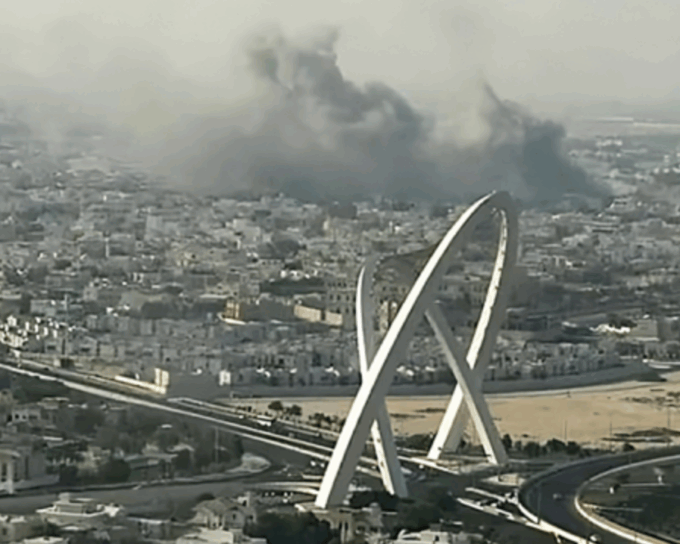

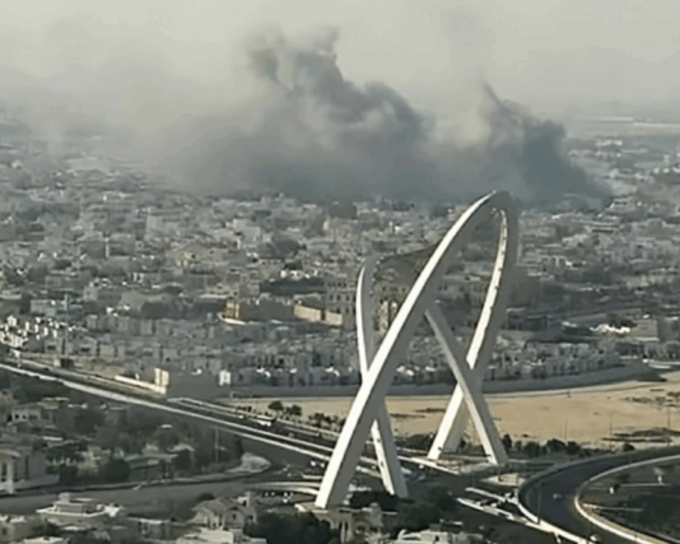

 Global Justice in the 21st Century