[Prefatory Note: Responses to Interview Questions on Sub-Regional Geopolitics in the Persian/Arab Gulf countries, Qods News Agency, 10 Dec 2020. Qatar is caught between seeking the end of the coercive diplomacy led by Saudi Arabia and the UAE and not wanting to end its necessary cooperation with Iran, especially with respect to large maritime natural gas deposits. The efforts at accommodation can turn out to be either a lessening of a confrontational approach to Iran or its intensification. Coming months, perhaps weeks, will be clarifying.]
Qatar: Between the Scylla of Coercion and the Charybdis of Accommodation: aan inquiry into sub-regional geopolitics
Q1: What is the role of Saudi Arabia in the structure of countries like Iraq, Syria, Yemen, or even Lebanon?
There is little doubt that Saudi Arabia seeks to spread its influence throughout
the Middle East, both to enhance the regime stability of the monarchy and to contain challenges of Iran arising in the countries mentioned in the question. Saudi Arabian security is also linked to sectarian identity, not only to give hegemonic legitimacy to its particular version of Islam but to express its view that Shi’ism is responsible for turmoil and strife throughout the region, and is the basis of Iranian influence beyond its borders. These issues cause political controversy and explain external intervention in the four countries mentioned. In each one Iran is perceived by the Saudi government as blocking national ambitions in Riyadh to be the regional leader, but also of the perceived threats to Saudi security and legitimacy. The Islamic Republic of Iran is seen by Saudi Arabia as being not only a challenge to Sunni dominance of Islamic allegiance and identity in the region but also as an abiding threat to domestic security due to the strategic presence in the society of discontented and radicalized Shi’ite minorities and by Shi’ite insistence, clearly articulated by Ayatollah Khomeini, that monarchy is not compatible with Islamic values.
Q2: Given the fact that Qatar, Saudi Arabia, and the UAE obey the US policies, what is your assessment of the current dispute among them?
It is a mistake to assume that the U.S. controls all aspects of Gulf country behavior. I believe that Saudi Arabia and UAE were disturbed by what they regarded as Qatar’s independent line of political behavior that collided with their policy preferences. These governments wanted there to be unity of purpose and policy with Gulf Cooperation Policy under their reactionary leadership, and opposed Qatar’s normalized relations with Iran, their openness to giving asylum and diplomatic support to Muslim Brotherhood leaders and prominent Hamas leaders living in exile, as well as their relative openness to ‘modernity’ with regard to freedom of expression and independent media, particularly Aljazeera, which carried articles that were critical of Saudi Arabia and the UAE in relation to the Syrian strife and otherwise. From available information, the U.S. never was comfortable with this split among Gulf countries, except at the very outset when the Saudi anti-Qatar received the obviously ill-considered blessings of President Trump while he was in Riyadh. Shortly afterwards, the U.S. Government realizing its strategic interests, quickly shifted its position and began using it diplomatic leverage to encourage reconciliation. It is plausible to believe that U.S. influence might have discouraged more aggressive moves against Qatar. The large U.S. Al Udeid Air Base in Qatar undoubtedly was a factor leading Washington to promote accommodation and at the same time likely inhibiting the Saudi/UAE led coalition from making any serious effort to implement their reported intention to achieve regime-change in Doha. It is likely that the Biden presidency will persist in its efforts to restore harmony among the Gulf monarchies, which is also what Israel seeks.
Q3: What reasons caused the shift of Arab world leadership from Egypt, Syria, and Iraq to Saudi Arabia, the UAE, and Qatar? What were its effects?
Egypt, Syria, and Iraq exhibit national situations that each have their own special features generating distinct atmospheres of national emergency. At the same time, they share all-consuming preoccupations associated with domestic turmoil, strife, and conflict within their respective countries. These crisis situations dominates the energies of the political leadership of these governments. It is hardly surprising that the search for stability at home take precedence over the regional agenda. As well, these countries are not nearly as worried as are Saudi Arabia and the UAE by Iranian expanded influence in the region, or particularly threatened by anti-Sunni sectarianism. In contrast, as suggested above, Saudi Arabia and the UAE are relatively stable domestically, while giving greater attention to developments within the regional context of the Middle East. Qatar seems differently motivated, and can be best understood as asserting its independence as a sovereign state, thereby overcoming being in the shadows cast by its larger neighbor. Qatar uses its fossil fuel wealth and active political imagination to overcome its subordinated and mini-state reality, which it did so successfully as to provoke Saudi and Emirate elites, apparently particularly annoyed that Qatar was chosen to host the 2022 World Cup.
Q4: What are the reasons for the current regional security and political crises in the Middle East?
There are four principal reasons for these serious, prolonged crises: first, the various regional reverberations of the Iranian Revolution that has generated since 1979 a counterrevolutionary series of responses led, and even financed by Saudi Arabia and regional allies, and strongly endorsed by Israel and the United States. Each of these political actors has their specific motivations and priorities, as well as convergent policy objectives; secondly, the regionally destabilizing impacts of the Arab Uprisings of 2011, and the various efforts to reverse, or at least neutralize, those challenges directed at the established economic and political order. As well, the severe unresolved civil strife in Yemen, Syria, Iraq, and Libya have offered occasions for competitive interventions that have led to several proxy wars; thirdly, the U.S./UK attack on and regime-changing occupation of Iraq in 2003 had the effect of intensifying sectarian tensions and contributing to political extremism, dramatized by the rise of ISIS, and other manifestations of transnational terrorism; fourthly, the outside reactions to these developments in Iraq increased the scale of regional and international interventions in Syria and Yemen, produced oppression in Egypt, and led to frequent unlawful military actions by Israel in Syria. Such turmoil was aggravated by various U.S. undertakings designed to destabilize Iran, including by covert actions and sanctions maintained during the COVID pandemic despite international appeals to suspend sanctions and mitigate acute civilian suffering and adverse humanitarian consequences. The United States and Israel have given a high priority to curbing Iranian regional influences in relation to Iraq, Syria, Yemen, and more recently, Lebanon, as well as in Gaza.
Q5: What is your opinion about the role of the Persian Gulf Arab countries in the formation of terrorist groups?
I am not an expert on this topic, nor is it easy to assess, given the role of secret and disguised behavior of Persian Gulf Arab countries. For many years, Saudi Arabia invested many billions in support of madrassas in Asian Sunni countries that encouraged Salafi versions of political extremism that
inspired terrorist organizations and political agendas, and also led to an increased reliance on state terrorist tactics and weaponry in carrying on counterterrorist warfare regionally. It is my impression that the lower profile military engagement by the U.S. during the Trump presidency led the Gulf Arab governments to be more regionally cautious, seemingly worried about escalation that might lead to war if Iran was unduly provoked, with the assumption that a full-fledged regional war would produce catastrophic results for all sides. Illustrative of a more cautious Gulf style of confrontation was the muted response to the drone attack attributed to Yemen, but with Iranian weaponry and alleged political support,t on the state-owned Saudi Aramco oil processing facilities located at Abqaiq in eastern Saudi Arabia. Whether Biden will revive American participation in the 2015 Nuclear Program Agreement in Iran, ending sanctions, will affect how Persian Gulf Arab governments deal with anti-Iranian terrorist organizations. As always, expectations about such behavior in the region should be tentative as many uncertainties loom on the road ahead.
[Prefatory Note: The post below is the text of an interview published in the Tehran Times on 2 Dec. 2020 in resins t questions posed by Zahra Mirzafarjouyan .
TEHRAN, Dec. 02 (MNA) – Richard Falk says the assassination of Mohsen Fakhrizadeh cannot be legally, morally, or politically justified by any acceptable theory justifying the use of international force, and has very negative implications as an international precedent confirming prior political assassinations of nuclear scientiists and opponents in recent years by drone strikes and other methods of attack as in this instance..
Top Iranian nuclear and defence scientist ‘Dr. Mohsen Fakhrizadeh’, who headed the Iranian Defense Ministry’s Organization of Defensive Innovation and Research (known by its acronym SPND), was targeted on Friday in a multi-pronged attack involving at least one explosion and small fire by a number of assailants in Absard city of Damavand County, Tehran Province.
New York Times quoted intelligence officials as saying that Israel regime was behind the assassination of Iranian scientist Mohsen Fakhrizadeh.
“One American official — along with two other intelligence officials — said that Israel was behind the attack on the scientist,” New York Times reported, adding, “It was unclear how much the United States may have known about the operation in advance, but the two nations are the closest of allies and have long shared intelligence regarding Iran.”
The assassination of Iranian scientist Fakhrizadeh provoked many reactions in the region and the world but in the meantime, the silence of many human rights defenders in not condemning this assassination is debatable.
In this regard, the Iranian Foreign Minister had condemned the assassination of Mohsen Fakhrizadeh and called on the international community not to remain silent in the face of this terrorist act and to abandon double standards and condemn the act of state-sponsored assassination.
The scene where Moshen Fakhrizadeh assassinated on Nov. 27, 2020
To know more about the issue, we reached out to Richard Anderson Falk, American professor emeritus of international law at Princeton University.
Following is the text of our interview with him]
Isn’t the assassination of the Iranian scientist against international law and norms?
Fakhrizadeh’s assassination cannot be legally & politically justified by any acceptable theory governing the use of force international relations and has very negative implications as an international precedent. Yes, it is a targeted use of international force against someone outside the combat zone that cannot be justified by a valid claim of self-defense, which by the UN Charter, requires a prior armed attack, or at least a well-documented threat of the imminence of such an attack. This assassination of a nuclear scientist amounts to an unlawful ‘extra-judicial execution,’ which the UN Human Rights Council has unconditionally condemned on several occasion.
In the case of Afghanistan and its so-called ‘War on Terror,’ the US justified drone assassinations in various parts of the world either by an anti-terrorist rationale or by the contention that a hot battlefield has been extended to foreign countries if linked to a particular terrorist organization. Israel has resorted to extra-territorial assassinations since its inception despite frequent condemnations, as well as provocative assassinations in Occupied Palestine since 1967.
The assassination of Mohsen Fakhrizadeh cannot be legally, morally, or politically justified by any acceptable rationale, and has very negative implications as an international precedent.
Many believe the terrorist act has been committed by the Israeli regime. What do you think of this?
I find all forms of state terrorism to be unlawful, amounting to international crimes, and morally indefensible, especially aggravated when directed at civilians inhabiting countries which are at peace with one another, even if relations are strained by unresolved disputes.
US Secretary of State Mike Pompeo and his wife step off a plane in Tel Aviv, Nov. 18, 2020
Can such an act by the Israeli regime be done without coordination with Trump?
As such coordination is rarely acknowledged, we can only surmise that it occurs, and has been confirmed in the past, including in relation to Iran’s nuclear program. Given the timing of Pompeo’s visit to Israel prior to the assassination and after Trump was defeated in the U.S. presidential elections in November constitutes strong circumstantial evidence of knowledge before the event, if not active coordination. Israel’s failure to make any effort to deny their role in the assassination is also relevant.
Why have the terrors been focused on Iranian nuclear and defensive elites?
Israel, US, and likely Saudi Arabia have been carrying on an unlawful destabilization campaign against Iran for many years, which has intensified during the Trump presidency. Such a focus corresponds with Israel’s security narrative, which seems to have been unconditionally accepted in Washington during the Trump presidency. It alleges that Israel’s longer-range security is threatened by Iran’s nuclear program, which it further alleges seeks to gain a capability to develop produce nuclear weapons, a concern that is reinforced by claims that its immediate security is currently jeopardized by Iran’s large arsenal of sophisticated precision-guided missiles. Israel may feel emboldened by both Trump support and likely departure from the American presidency on January 20th, and further by the recent normalization agreements with the UAE and Bahrain.
What can be the consequences of such a criminal irresponsible act?
The Iranian choice of diplomacy versus some form of military retaliation will likely shape the future with respect to ‘consequences’ The chain of consequences initially depends on how and when Iran chooses to respond, essentially whether it awaits Biden’s inauguration as the US President on January 20th, hoping for a renewal of US participation in the Joint Comprehensive Program of Action (JCPOA)(2015 Agreement on Iran’s Nuclear Program), including the lifting of all sanctions. The Iranian choice of diplomacy versus some form of military retaliation will likely dominate future developments with respect to ‘consequences.’
There are other uncertainties. (1) will Trump/Netanyahu seek to provoke Iran by further aggressive actions in the interim before the Biden inauguration? (2) will Biden follow the Obama path toward diplomacy or be more guided by a policy that strikes a compromise between Obama’s and Trump’s approach? Such a compromise would extend the 2015 arrangement to cover non-nuclear regional security issues affecting Yemen, Gaza, and Lebanon, and possibly Syria, as well as possiby missile deployments. (3) do the normalization agreements between Israel and several Arab governments create a new regional situation that is different than what existed pre-Trump?
What are the goals behind the act considering the timing?
As the act itself has not been officially acknowledged, commentary on its goals is necessarily speculative. The most reasonable interpretation of goals is to provoke Iran so as to give Israel a pretext for retaliation and possibly draw the US into a combat role, and if this fails, to make a diplomatic accommodation with the Biden presidency more problematic for both sides.
Why haven’t European countries condemned the act strongly and somehow they have kept silent?
Europe is hoping mainly for a renewal of its special relationship with the US as soon as Biden takes overEurope has disengaged from active involvement in the region except possibly for France in relation to Lebanon and the East Mediterranean natural gas disputes. Europe is hoping mainly for a renewal of its special relationship with the US as soon as Biden takes over. It does not want to have any distractions from this goal, and it may feel that its future leverage is greater if it pursues equidistance diplomacy that appears not to take sides in this central confrontation between Iran and the Arab/Israel security partnership.
[Prefatory Note: The following interview devoted to Pompeo’s three day visit to Israel and Occupied Palestine conducted by Eshrat Mardi, was published in the Tehran TimesInterview Nov. 28, 2020.]
1: On November 19, Mike Pompeo toured the West Bank and the Golan Heights. How do you analyze the visits to these two occupied lands in terms of international law?
Given the timing of Pompeo visit, so shortly followed by the shocking assassination of the leading nuclear scientific figure, Mohsen Fakhrizadeh, makes one wonder whether the real strategic purpose of the visit was either to be told about the planned attack or to encourage it. We have no way of knowing beyond the circumstantial evidence suggesting some level of linkage between Pompeo’s visit and this high-profile assassination.
As far as the secondary goals of the Pompeo visit are concerned, I would suggest an effort on his part to solidify the pro-Israeli legacy of the Trump presidency with the added goal of inhibiting any attempts on Biden’s presidency to disavow U.S. support for this series of unlawful territorial expansionist moves made by Israel since 2016. It also seems that Pompeo seeks to be the Republican nominee for president in 2024, and apparently supposes that acquiring credentials as the most ardent champion of Israel will attract Zionist money and backing in the U.S, in the years ahead.
2: Pompeo said the boycott, divestment, and sanctions (BDS) movement against Israel, which is only aimed at pressuring Israel to stop settlements of Palestinian lands, as “anti-Semitic” and as “cancer”. How do you interpret these remarks?
Such unacceptable efforts to brand BDS as anti-Semitic is a further effort by Pompeo to appease the most militant Zionist elements in the United States, and should be understood in the context of my response to the prior question. During the BDS Campaign directed at South African apartheid 30 years ago there was some controversy about whether this form of global solidarity was helpful to the anti-apartheid struggle, but there was never any suggestion that the advocacy of BDS was other than a constitutionally protected form of nonviolent protest. To make BDS in the context of Israel a type of hate speech or even a crime is a means to discourage a rising tide of solidarity, including in the United. States and by Jews, with the Palestinian struggle for basic rights, including the right of self-determination.
3: Pompeo also called settlements “part of Israel” and “a recognition of the reality”. While in the Golan Heights, Pompeo also said, “This is a part of Israel and a central part of Israel.” What is the ulterior motives behind such remarks?
Such language, which overlooks and defies the contrary UN consensus concerning the settlements and Syrian territory, is a further expression of the unconditional support of the Trump presidency for these most controversial encroachments on Palestinian aand Syrian territorial rights. Prior American leaders have more cautiously adopted similar kinds of positions by speaking approvingly of recognizing ‘the facts on the ground’ but refrained from distorting international law by claiming that these settlements were established in a manner consistent with international law, which is the salient feature of the Pompeo declarations.
4: Don’t you think that Pompeo’s remarks about the occupied Palestinian and Syrian lands are an example of a Machiavellian approach toward issues?
Such affirmations of territorial aggression by Israel are a reversion to the worst readings of cynical realism attributed to Machiavelli’s The Prince, and in a context where intervening legal and moral developments since his time have made respect for the sovereign rights of both a foreign country (Syria) and of an Occupied Nation and its people (Palestine) foundational principles of peace and security in our world of the 21st Century. Such remarks should be viewed as indictable expressions by Pompeo of complicity with the commission of Israeli international crimes.
5: What is your opinion of his statement that “settlements can be done in a way that are lawful and appropriate and proper?”
This kind of opinion on Israeli settlements presupposes and necessitates Palestinian consent by a political body legitimately and authentically representing the Palestinian people. Whether the Palestinian Authority is such a body is not a fully settled issue. Overall, it is difficult to imagine such consent being validly given unless there is established one democratic state for both peoples on the basis of complete equality between Jews and Palestinians (including Christians, Druse, Bedouin minorities), a reality that would require the abandonment of the core feature of the 19th century Zionist project to establish ‘a Jewish state.’
6: Some view Pompeo as the ideologist who manipulates Trump and shapes his approach toward international issues such as the occupied lands, the Paris climate accord or the 2015 Iran nuclear accord. What do you think?
It may be that Pompeo is entrusted with the implementation of the Trump approach to the Middle East, but I am not aware of any evidence that he exerts the kind of influence that his son in law, Jared Kushner, exerted on Trump during recent years. Pompeo is a bureaucrat with his own ambitions, and an outlook, especially on Israel, that resembles that of Trump, and quite likely is more deeply rooted in his real beliefs. In this sense he may be somewhat less opportunistic than Trump. In this connection we should keep in mind that Pompeo is a devout member of the Christian evangelist movement that has been fanatically pro-Israeli and pro-Trump.
7: Are not Pompeo’s visits to the occupied lands viewed as a revitalization of colonialism?
To the extent that Israel is itself properly perceived as a product of late settler colonialism, which has been long delegitimized, Pompeo’s visit and show of support are an anachronistic endorsement of colonialism. I would regard Israel as a remnant of colonialism rather than part of any wider political process of ‘revitalization.’ The remarkable achievement of the Zionist movement was to establish and legitimize, with crucial geopolitical help from the West, a colonial state at a historical time when colonialism was in its death throes elsewhere, that is, an achievement contrary to the flow of history and to contemporary standards of law and morality. Zionist success partly reflected the weight of historical circumstances, above all, the Holocaust, but such an explanation provides no justification for the denial of Palestinian basic rights. I believe that we are living in a post-colonial world order, and this struggle around the future of Israel and Palestine is the last major battlefield, which is not meant to imply that the associated challenges of imperialist geopolitics has been met.
8: Some believe that an inaction by the international community emboldened the Trump administration to go ahead with manipulation of facts and replace international law with violation of international law. What is your view?
There is no doubt in my mind that the weak responses to such prior unlawful Trump pro-Israeli initiatives as moving the American Embassy to Jerusalem, validating Israeli sovereign rights to the Golan Heights, and greenlighting the annexation of portions of the West Bank gave Netanyahu the backing he wanted to go further and further in enacting in internationally unacceptable conduct, including in this connection the recent assassination of Mr. Fakhrizadeh, which is an outrageous act of state terrorism. This act should be viewed given the context of Trump’s last days as president, as a provocation of sufficient magnitude, to push tensions with Iran toward a regional war. There may well be the belief in Israel that Netanyahu should take advantage of these last days of the Trump presidency as he may not enjoy the same level of geopolitical support from Washington during the Biden presidency.
9: Don’t you think that Trump’s and Pompeo’s records have been a great blow to the Republicans?
I wish that I could answer in the affirmative. Unfortunately, not if the reference of your question is to the Middle East where Trump and to a lesser extent Pompeo are appreciated by both political parties in the U.S. for achieving normalization agreements with several Arab states, thereby weakening the long prior effort to isolate Israel diplomatically and economically in the region until a genuine peace with the Palestinians is reached. Many Republicans, mostly privately, are critical of Trump for his mismanagement of domestic issues, especially the COVID pandemic, and for his unwillingness to concede defeat in the recent election, which has posed a serious constitutional crisis and created a dangerous precedent for the future. There is also some muted concerns about stumbling into an unwanted war with Iran, but for most Republicans the bipartisan consensus favorable to Israel remains unquestioned and non-controversial national policy.
10: Such things are being done in 2020. The way the Trump administration treats the occupied lands reminds us of colonialist era. How do the current and next generations will look into such illegal acts?
I believe more and more people in the West are viewing Israeli behavior as a toxic combination of settler colonialism and apartheid racism, and within that frame of reference are becoming more aware that Israel is setting a dangerous example of the persistence of colonial excesses, which have produced decades of suffering for the Palestinian people dispossessed from or victimized in their own society. Europe, too, has been complicit, less actively engaged than the U.S., but still complacent in not accepting their responsibility for leaving this legacy of colonialism insufficiently attended.
People in Turkey never eat Turkey on Thanksgiving Day, and hardly know that such a holiday exists unless they have spent time in the U.S. or have children living there. In contrast, this is almost the first time I have been in a foreign country on the day when
this most distinctively American holiday is celebrated, although with analogues elsewhere, and always associated in the U.S. with a family meal featuring turkey, stuffing, sweet potatoes, cranberry sauce, and pumpkin pie. It is not surprising that such a gathering of families is taking precedence over CDC health guidelines even as COVID spreads its deadly virus at an alarming, accelerating speed across the country. More even than Christmas or Easter, Thanksgiving has escaped from its religious origins of honoring God’s providential relations with human destiny and its pagan beginning in harvest festivals giving thanks for the bounty of nature that underpins human livelihood. Thanksgiving is a day when almost all Americans partake of a meal with those most cherished in their lives, and give little thought to its deeper roots.
Growing up in the middle of Manhattan, Thanksgiving was for me an innocent childhood experience, devoid its historical complexities and sometimes cloyingly sentimental, but with only the most superficial attention to its larger meaning as a giving of thanks by the early settlers for surviving their first winter, largely thanks to the foods of native Americans being cruelly displaced and forever deprived of their sovereign claims of nationhood, including their traditional modes of living on, for, and by the land. And in the Plymouth settlement in Massachusetts where Thanksgiving was intertwined with gross crimes against the Pequot Nation.
Perhaps, because outside my familiar setting, this Thanksgiving occasions more reflective thinking than ever before. The first impulse, is to feel ambivalent toward those Americans who risk their own health and that of others by traveling long distances to be together with their families. It makes the experience less routine, and expresses the values of living and loving as taking precedence over the risks of dying, or spreading disease. We also know from news reports that native American communities relegated to ‘reservations,’ even such relatively favored ones as the Navajo Nation, have more harshly borne the burdens of the COVID virus more than the white settler society that displaced and marginalized them over the course of recent centuries.
We can be especially thankful this Thanksgiving as we appear to be witnessing the bloody end game of the Trump White House even if we cannot be joyful about the prospect of a Biden presidency. Already we have grounds of concern given the new foreign policy team so far assembled whose roots and branches seem to be relics of the Cold War era, with dangerous intimations that China is being set up as the new Soviet Union. As well, not a whimper of criticism of Israel or even empathy for the Palestinian ordeal, and no clear sign of seeking normalcy in relations with Iran. We should not rest easy until the interventionists who made such a mess of foreign policy in country after country in the first twenty years of this century
are discredited, making way for a new live and let live ethos that entrusts the future of sovereign states to the interplay of forces within countries, showing deference except where the UN decrees otherwise to the law, politics, and ethics of self-determination, finally honoring that most fundamental human right that encompasses all the others and is the common Article 1 of both the International Covenant of Economic, Social and Cultural Rights and the International Covenant of Civil and Political Rights. As most moralists, assuming a freedom from tribalist biases, will affirm, the place to begin with such moves toward peace and justice is with the long Palestinian struggle to give reality to their inalienable right as a people to self-determination, which probably means, given the unlawful moves of Israel over the decades, one democratic secular state for both peoples.
All in all, the world historical situation makes this Thanksgiving different, and more emotive, than any prior one during my lifetime, an occasion that justifies both remorse and rejoicing, as well as providing a reminder to continue the struggle for less remorse and more rejoicing. Our simple goal is to ready when the sun shines on Thanksgiving 2021 to greet the day with less ambivalance.
[Prefatory Note: Posted below is a greatly modified interview on the entirely inappropriate and distasteful visit of the U.S. Secretary of State to Israel for three days. It was distasteful and regressive to a degree that defied normal levels of its criticism. I would call particular attention to its boastful endorsement of Israel’s cruel and unlawful behavior during the Trump presidency, which was harmful to the Palestinian struggle for basic rights and to Palestinian victimization resulting from the Israeli apartheid regime that has been imposed on the Palestinian people as a whole. The interview questions were submitted by the Brazilian journalist Rodrigo Craveiro on behalf of Correio Brazilence on Nov. 20, 2020. I also highly recommend an article by Rima Najjar, “Bashing and Thrashing: Trump’s So-Called Legacy in Palestine,” Nov. 20, 2020.]
Geopolitical Subservience and Personal Opportunism: Mike Pompeo’s Visit to Israel
For me the entire event was a grotesque occasion of national embarrassment from start to finish. Even the most dimwitted imperialist would know better than to declare Pompeo’s subservience to Israel in these scary words: “Israel is everything we want the entire Middle East to look like going forward.”
It is impossible not to take note of the cruel absurdity of Pompeo’s visit to Israel, further ingratiating himself to his Israeli minders by celebrating the lawlessness of the Trump diplomacy of the last four years. It was far more plausible to imagine Netanyahu visiting Washington to bid farewell to his benefactor in the White House, with a side trip to one of Sheldon Adelson’s Vegas casinos. An Israeli expression of gratitude to Trump for a level of U.S. Government diplomatic support that went well beyond the pro-Israeli partisanship of prior American leaders would have been annoying but quite understandable. But why would Pompeo want to call attention to such unseemly exploits after enduring a political humiliation at home by a display of homage to the worst excesses of an outlaw foreign country. If given the unsavory task of casting a TV series on theme of ‘geopolitical buffoonery’ I would look no further than Mike Pompeo for a role model! Even Saturday Night Live would be stymied if they attempted to satirize such obtuse political behavior. Is it any wonder that the only support that Israel could find to oppose the recent 2020 annual General Assembly Resolution affirming the Palestinian right of self-determination and independent sovereign statehood were such pillars of international order as Micronesia, Marshall Islands, and Nauru in the 163-5 vote.
1– How do you assess the symbolism of this travel of Mike Pompeo to West Bank and to Golan Heights? What kind of message did he want to transmit?
First of all, the timing of the visit given the outcome of the American presidential election is mighty strange and beyond suspect, undoubtedly motivated by undisclosed illicit goals. I would call attention to three:
–first, Pompeo is unabashedly positioning himself in relation to the pursuit of the Republican presidential nomination for the 2024 elections, especially burnishing his already incredible credentials as an over-the-top reliable and unconditional supporter of Israel. Presumably, this makes him the best bet to receive financial backing from wealthy militant Zionist donors. To reinforce the claim of doing whatever possible to ingratiate himself with his gloating Israeli hosts, Pompeo delivered a welcome symbolic message by becoming the first U.S. political leader to visit an Israeli settlement during an official visit. He paid a visit to Psagot Settlement which is not far from Ramallah in the West Bank. Psagot operates a winery, which was not bashful about going all out to please Pompeo, bizarrely expressing their gratitude by naming one of their red wines in his honor, which may be a peculiar form of recognition for Pompeo who presents himself at home as a devout Evangelical Christian;
–secondly, to highlight the tangible contributions of the Trump presidency to the realization of maximal Zionist goals, including moving the American Embassy to Jerusalem, intensifying the anti-Iran coalition by increasing sanctions, supporting the annexation of the Golan Heights, brokering the normalization agreement with Arab governments that have ended Israel’s regional isolation, legitimating the Israeli settlements, by doing, blurring the distinction between de facto annexation which has been proceeding ever since 1967 and the Israeli goal of extending its sovereignty to at least 30% of the Occupied West Bank, and pledging to commit the U.S. Government to brand the BDS Campaign as ‘anti-Semitic’
–thirdly, an incidental part of the Pompeo mission seems designed to inhibit the Biden presidency from making moves to undo the Trump legacy on Israel/Palestine. Netanyahu, AIPAC, and most of the U.S. Congress will scream ‘foul play’ if Biden makes even slight moves to reverse, or even moderate, Trump’s lawlessness, insisting that and departure from the Trump initiatives would be proof of an anti-Israeli policy turn in Washington. Actually, there is no reason to suppose that Biden needs inhibiting when it comes to confronting Israel, except possibly with respect to formal annexation.
2– What about the fact that Pompeo agreed that products made in West Bank settlements could now be sold in the United States with the notation ‘made in is Israel’?
Such a step seems partly designed to box in the Biden presidency and to contrast the U.S. pro-Israeli approach with that of the European Union and the UN. The European Court of Justice recently overturned a French judicial decision allowing labeling of settlement imports as ‘made in Israel,’ requiring that settlement imports be labeled as ‘made in Israeli settlements.’ Up until the Trump presidency, the US had not directly challenged the UN view that the settlements were unlawfully established in violation of Article 49(6) of the Fourth Geneva Convention. A few months ago, Pompeo released an official statement declaring, in a break from previous U.S. policy, that the settlements are ‘not per se inconsistent with international law.’ Such a declaration is inconsistent with a widely endorsed view of the requirements of international humanitarian law, and has no relevance except to show American cynical disregard of the most basic precepts of international law when it comes to issues bearing on Israel’s expansionist policies and Palestinian rights.
3– Also how do you see fact he told BDS is a antisemitic movement?
Again, Pompeo’s gratuitous remark is a gesture of solidarity with the Netanyahu government, and irresponsibly treats the BDS Campaign as antisemitic. Additionally, Pompeo declares an intention to withdraw government support from any organization that supports BDS, thereby threatening funding sources of such leading human rights NGOs as Amnesty International and Human Rights Watch, and also forcing a Biden presidency to face a dilemma of allowing such policy to persist or reversing it, with either course of action producing a strong backlash.
It should be appreciated that BDS is a nonviolent means of exerting pressure on the Israeli Government, and seeks to induce Israel to uphold Palestinian rights under international law. BDS was an effective instrument of pressure on the South African racist apartheid regime in the 1980s. It was widely supported by religious institutions, labor unions, and universities in the United States, and enjoyed the backing of the UN. It also was criticized in investment and conservative circles, but never was it suggested that the anti-apartheid BDS campaign directed at South Africa was somehow immoral, or even unlawful, or was itself racist in character. For Pompeo and others to brand BDS as antisemitic is to confuse a legitimate expression of concern for human rights of the Palestinian people with hatred of Jews. In this sense, what Pompeo did to please Israeli hardliners should be rejected as the worst kind of opportunistic politics that seeks to harm legitimate peaceful political activity in the United States, including advocating punitive action against respected human rights organizations.
[Prefatory Note: ‘Remembering Robert Fisk’ is the text of an interview conducted by Daniel Falcone, and published below on Nov. 9, 2020 in Counterpunch. There is one insertion mentioning Seymour Hersh as a fourth journalist in this style of exceptional devotion to the courage and craft of truth telling in place of danger or where transparency is obscured by state secrets.]
In this interview, International Scholar Richard Falk provides his personal recollections of Robert Fisk. Falk explains how Fisk provided the world with well- informed perspectives that offered critical thinking and grim realities of the acute struggles stirring throughout the Middle East region. Falk comments on Fisk’s “unsparing exposure of Israeli abusive policies and practices toward the Palestinian people” indicating that his “departure from the region left a journalistic gap that has not been filled.”
Falk also discusses how the study, coverage and understanding of the Palestinian cause has shifted over the years from one of “exposing the hypocrisy and greed of the powerful” to more political and activist-centered solution based forms, within geo-political coverage. Despite this, Falk praises Fisk for “his commitments to peace, self-determination, and neutrality.”
Daniel Falcone: I can recall being amazed by Robert Fisk’s researching capabilities and stamina. In order to read both Pity the Nation and The Great War for Civilization it requires the reader to get through over 1,700 pages. Can you comment on Fisk’s reporting over the years in general as a Middle East correspondent?
Richard Falk: Fisk was a vivid writer with a startling ability to observe, comment, and interpret. Fisk could be read for literary satisfaction as well as for a kind of episodic journalistic autobiography that brought together his experience of contemporary wars and strife. What his published books establish is the extent of Fisk’s illuminating understanding of turmoil in the world, and the degree to which the blood being spilled can be traced back to European colonialism and forward to American imperial ambition in both Asia and the Middle East.
Daniel Falcone: Can you explain how in your view Robert Fisk’s reporting and writings shaped understandings and perceptions of the Middle East? Do you recall any professional and personal interactions with him over the years? How do you categorize his journalistic reputation and writing style?
Richard Falk:Robert Fisk was one of the few journalists in the world relied upon to give first-hand reports from the fields of strife on the conflicts occurring throughout the Middle East. His reportage seemed guided by an overriding commitment to truthfulness as to facts, brashness and vividness of reporting style, and an interpretative understanding that got it right from perspectives of human consequences.
He was given the most dangerous combat assignments in several of the most challenging hot spots in the world, including Northern Ireland during The Troubles, Lebanon (declaring Beirut as his home) during its decade-long civil war, and Afghanistan during the period when the West was arming Afghan extremists to oppose the Russian presence. In the latter role, he was badly beaten by Afghans enraged by the Western interventions and yet Fisk explained to the world while still bloody that he empathized with Afghan anger as their villages and homes were being devastated by U.S. air attacks and a combat role that escalated the violence.
Specifically, in the Middle East, Fisk gave the world a truly independent, informed, and critical understanding of the struggles occurring throughout the region, including an unsparing exposure of Israeli abusive policies and practices toward the Palestinian people. Fisk’s departure from the region left a journalistic gap that has not been filled. It is important to appreciate that there are few war correspondents in the world that combine Fisk’s reporting fearlessness with his interpretative depth, engaging writing style, and candid exposures of the foibles of the high and mighty.
Fisk never sought refuge by hiding behind curtains of political correctness. On the contrary, he prided himself on a commitment to what might be called ‘judgmental journalism’ in his professional demeanor, which is best understood as portraying reality as he saw and experienced it, which in Middle East contexts meant stripping away the geopolitical delusions peddled by powerful government to hide their true motives. He was particularly controversial in recent years by depicting the U.S. anti-Damascus combat role in Syria as not really about the future of Syria or even counterterrorism, as Washington claimed, but was mainly motivated, with prodding from Tel Aviv and Riyadh, by anti-Iran, anti-Shi’ia containment and destabilization goals.
This assessment was confirmed by my two personal interactions with Fisk that illustrated his approach to truth-telling in two very different contexts. The first occurred a bit over 20 years ago. I was interviewed by a Libyan film crew who were surprised by finding Princeton police at my house at the same time due to some death threats I received after supporting Palestinian grievances during an appearance on the BBC program ‘Panorama.’
The young Libyan filmmakers were making a documentary on the evolution of Israel/Palestine relations. After finishing with me they left for Beirut to interview Fisk, conveying to him that my house was guarded as I was living under threat. This exaggerated the reality of my situation, and prompted Fisk to write a column for The Independent without ever contacting me describing my situation as emblematic of Zionist efforts to intimidate critics of Israel by threats of violence.
As a sign of his worldwide impact, I received more than 100 messages of solidarity, many of which said that they were praying for my safety. The drama past, but I cannot imagine another prominent journalist willing to go out on a limb to show concern for someone in my circumstances. At the same time, I cannot imagine writing such a piece without checking the facts with the person in question.
This latter point goes to the one widespread criticism of Fisk’s flamboyant approach, which took note of his impatience with details, and willing to craft his articles around truths he firmly accepted as descriptive of reality. In my case, he didn’t really care if the Libyans were reliably reporting as it was a helpful anecdote for making the underlying argument that he correctly believed to be descriptive of reality—namely, Zionist tactics of intimidation to quiet or even silence voices of criticism. This is an interesting issue raising questions about the distinction between core and peripheral reliability.
Whereas the journeymen journalists are wary of going against the prevailing consensus on core issues (for instance, they slant reality in pro-Israeli direction, and would have described me as an extreme critic of Israel or even someone accused of being ‘anti-Semitic), the Fisks of this world embellish peripheral matters to engage their readers while being reliable forthright on core matters even when offensive to the societal majority. Although Fisk did this in a progressive vein, others take similar factual liberties to feed the conspiratorial and reactionary appetites of their right-wing followers.
My other equally illuminating contact with Fisk was during a West Coast visit a decade ago, when he came to California to give a university lecture. I was approached by the organizers to act as his chauffer during the visit, which I was thrilled to do. It gave me the opportunity to confirm Fisk’s reputation as highly individualistic, irreverent, and provocative self that was on display whether he was reporting from a war zone or talking to students on a college campus. The large turnout and enthusiastic audience reception made clear that Fisk’s influence spreads far beyond readers of his columns in The Independent.
He was recognized throughout the world as a colorful celebrity journalist whose words mattered. There are almost none who have his mixture of bravado, insight, and commitment, and still manage affiliations with mainstream news outlets. In my mind Fisk is a positive example of a celebrity journalist, which for me contrasts negatively with the sort of liberal punditry that issues from the celebrity pen of Thomas Friedman. Whereas Fisk is comfortable in his role of talking truth to power, Friedman relishes his role as the self-proclaimed sage observer who tenders advice to the rich and powerful as to how to realize their goals, combining an arrogance of style with faithful adherence to the pillars of Western orthodoxy (predatory capitalism, global militarism, special relationship with Israel).
Daniel Falcone: What special qualities did Robert Fisk possess that made him so influential and memorable, and perhaps the most distinguished journalist of our time? What did Fisk think of the other styles of journalism that perhaps differed from his own?
Richard Falk: For perspective, I recall my contact, and in these instances, friendship with three other exceptional war correspondents whose traits somewhat resemble the qualities that have made Fisk’s death an irreplaceable loss: Eric Rouleau of Le Monde, Gloria Emerson of the NY Times, and Peter Arnett of Associated Press. Each of them shared a flair for adventure, a pride in their stand-alone journalistic style, a fearlessness in the face of extreme danger that endeared them to combatants, and a sensibility that hovered between the sadness of loneliness and a love of solitude.
These qualities were accompanied in each instance by fiercely independent personalities that gave their home office minders both pride in their stellar reporting and anxious fits as they breached the red lines of establishment thinking. By their nature, such individuals were mavericks who eluded managerial control. They also each shared contempt for what Fisk described as ‘hotel journalism,’ that is, the practice of leading journalists hiring locals to give them stories from the front lines of confrontation while spending most of their days sipping martinis at the hotel bar.
I never observed Fisk at work, but feel confident that his working style resembled that of these others. I did have the opportunity to be with Eric Rouleau in Tehran during the aftermath of the Iranian Revolution, heard accounts of Gloria Emerson’s comradery with American soldiers in combat situations, and was with Peter Arnett in Hanoi while engaged in accompanying three released American POWs back to the United States in the last stage of the Vietnam War.
Although distinct and different in personality and interests, each shared this sense of wanting to get to the bottom of what was happening in the field while listening to the views of leaders, however controversial, in one-on-one. Both Fisk and Arnett were among the few Western journalists who interviewed Osama Bin Laden in the late 1990s. It is reported that Bin Laden was so impressed by Fisk’s approach that he invited him to become a Muslim since he already displayed his devotion to truth.
Fisk’s famously reacted at the end of 2001 to being beaten nearly to death by a mob of angry Afghan refugees living in a Pakistani border village who recognized him as a Westerner when his car broke down, and vented their anger by a brutal attack that was halted by a local Muslim leader. Fisk’s words, which included disapproval of such violence, were also atypical for most, but characteristic for him: Of the attacker he said “There is every reason to be angry. I’ve been an outspoken critic of the US actions myself. If I had been them, I would have attacked me.”
Aside from Fisk, Sy Hersh was undoubtedly the most successful in revealing inconvenient truths, starting with the MyLai massacre coverup involving the execution of over 347 Vietnamese villagers in 1968 midway in the American War in Vietnam, and more recently revealing the story of how Israel covertly succeeded in developing nuclear weapons and how ISIS was secretly supplied with weapons by leading NATO counterterrorist governments because of their anti-Assad priority. I knew Sy by way of Gloria Emerson who served him in dual roles as mentor and guardian angel, traveling the same routes a generation earlier, and somehow giving him the confidence and support that someone who swims against strong currents needs. As with all of these star journalists, Sy was by temperament blunt and persistent whenever the occasion called for getting beneath the surface.
Daniel Falcone: How did Fisk cover the Palestinians? What is his legacy on the coverage of the conflict? Are there any journalistic outfits, think-tanks, organizations or academics that you consider to cover the plight of the Palestinian people well while providing context the way Robert Fisk did?
Richard Falk: Fisk took for granted his support for the Palestinian struggle, his disgust at the tactics of control relied upon by Israel, while condemning America’s use of its geopolitical muscle contributed to the prolonged struggle of the Palestinians for breathing space in their own homeland. This should not be understood as Fisk adopting a blind eye toward Palestinian wrongdoing and diplomatic clumsiness. He was almost alone among influential journalists in voicing skepticism from the outset of the Oslo peace process initiated on the White House Lawn in 1993. Fisk, above all, blended his passion for core truths with an undisguised judgmental approach toward wrongful conduct, regardless of the eminence of the target.
There are many initiatives that try to present the Palestinian ordeal in a realistic way, and I have dealt from time to time with many of them. I would mention, first of all, Jewish Voice for Peace, which has done its best to express views that acknowledge the violations of Palestinian basic rights, including imposition of an apartheid regime that oppresses, fragments, and victimizes the Palestinians as a people whether through occupation, dispossession, ethnic cleansing, and denial of elemental rights of return. Palestine Legal has been courageous and highly competent, providing expert guidance and involvement in legal cases and controversies involving issues bearing on Palestinian rights.
In journalistic and academic circles there are a few bright spots in the United States. As online sources of information, insight, and reportage sympathetic to the Palestinians I would mention Mondoweiss, Middle East Eye, and the Electronic Intifada, each well edited, online publishers of quality material. Among individuals who have been outspoken and influential I would mention Marwan Bishara, Phyllis Bennis, Norman Finkelstein, Noam Chomsky, Ilan Pappe, Noura Erakat, Lawrence Davidson, and Virginia Tilley.
Over the years, I have had little patience with the tortured reasoning and moral pretentiousness of ‘liberal Zionists’ who jump at any partisan olive branch so long as it leaves Israel as a Jewish state with Jerusalem as its capital and doesn’t require giving up most of the unlawful settlements in the West Bank. However, the recent abandonment of such a posture by the most eminent of liberal Zionists, Peter Beinart, is both a refreshing realization that Zionism is not reconcilable with a sustainable peace and a signal to American Jews to rethink the format for a political compromise that shifts away from the two-state mantra.
In Israel and Occupied Palestine there have been perceptive and brave NGOs that have been outspoken in their criticism of Israeli tactics. In Israel I would mention B’Tselem on violations of human rights, Badil on questions bearing on the treatment of Palestinian refugees and residents of Israel, and Israel Committee Against House Demolitions. Several Israeli journalists have been outspoken critics of Israel behavior toward Palestine, and I would express particular admiration for Gideon Levy and Amira Hass.
Among intellectually inclined progressive activists, Jeff Halper shines, writing several important books, including War Against People: Israel, Palestinians, and Global Pacification (2015). He has an outstanding forthcoming book, an exceptional example of ‘advocacy journalism’ insisting that one democratic state with equality for both peoples is the only path to a just and sustainable peace. If it is to be achieved it must include accepting certain views: the reality of Israel as a settler colonial state, the non-viability of the Zionist project to establish and maintain an exclusivist Jewish state, and the dependence on a grassroots collaborative political process of Jews and Palestinians seeking a just peace through democratization and basic rights.
In Occupied Palestine, Mohammed Omer acted as a brave war correspondent under the most difficult conditions, and endured harsh physical abuse by Israeli security forces. In relation to human rights, Raji Sourani an outstanding lawyer, has for many, many years documented abusive Israeli behavior in Gaza, including identifying its criminal character, while serving as Director of the Palestine Centre of Human Rights in Gaza. He has been imprisoned several times by Israel and arrested on at least one occasion by the Palestinian Authority.
I have had the opportunity to know and work with almost all of these individuals and groups, and have admired their courage, perseverance, and dedication to justice. Their ethic has had an advocacy, solutions-oriented character that never seemed an integral part of Fisk’s contributions that were more focused on exposing the hypocrisy and greed of the powerful, than finding solutions for bloody conflict beyond the anti-imperialist advocacy of withdrawal and peacemaking, although he never made a secret of his commitments to peace, self-determination, and neutrality.
[Prefatory Note: What follows is my contribution to a forthcoming publication bearing the title Shared Struggle: Stories of Palestinian and Irish Hunger Strikers. This important collection of writing prepared by Norma Hashim and Yousef M. Aljami. It appeared by way of exclusive arrangement on October 27, 2020 in the online magazine Politics Today. My essay speaks to the hunger strikes as political resistance of a sublime character, and at the same time to the selective silence of the Western media when it comes to heroic moments in the Palestinian struggle. Just days ago Maher Al-Akhras ended his 103 day hunger strike when Israel finally agreed to his release from prison after repeated confinement without charges under colonialist ‘administrative detention’ rulings. ]
Making Sense of Hunger Strikes and Symbolic Politics
A Palestinian man wearing a protective mask walks past a mural depicting prisoner Maher Al-Akhras, 49, a Palestinian jailed by Israel, who has been on hunger strike for 84 days, protesting his detention without trial, in Gaza City October 18, 2020. Photo by Majdi Fathi / NurPhoto via Getty Images
Desperate circumstances give rise to desperate behavior. If by states, extreme violent behavior tends to be rationalized as ‘self-defense,’ ‘military necessity,’ or ‘counterterrorism,’ and claims of legal authorization are treated as appropriate. If even nonviolent acts of resistance by individuals associated with dissident movements, then the established order and its supportive media will routinely describe such acts as ‘terrorism,’ ‘criminality,’ and ‘fanaticism,’ and the behavior is criminalized, or at best exposed to scorn by the established order of sovereign states. Statist forms of combat almost always rely on violence to crush an enemy, while the desperation of resistance sometimes takes the form of inflicting hurt upon the self so as to shame an oppressor to relent or eventually even surrender, not due to empathy or a change of heart, but because fearful of alienating public opinion, intensifying resistance, losing international legitimacy, facing sanctions. It is against such an overall background that we should understand the role of the hunger strike in the wider context of resistance against all forms of oppressive, exploitative, and cruel governance. The long struggles in Northern Ireland and Palestine are among the most poignant instances of such political encounters that gripped the moral imagination of many persons of conscience in the years since the middle of the prior century.
Those jailed activists who have recourse to a hunger strike, either singly or in collaboration, are keenly aware that they are choosing an option of last resort, which exhibits a willingness to sacrifice their body and even life itself for goals deemed more important. These goals usually involve either safeguarding dignity or honor of subjugated people or mobilizing support for a collective struggle on behalf of freedom, rights, and equality. A hunger strike is an ultimate form of non-violence, comparable only to politically motivated acts of self-immolation, physically harmful only to the self, yet possessing in certain circumstances unlimited symbolic potential to change behavior and give rise to massive displays of discontent by a population believed to be successfully suppressed. Such desperate tactics have been integral to the struggles for basic rights and resistance to oppressive conditions in both Palestine and Northern Ireland.
An unacknowledged, yet vital, truth of recent history is that symbolic politics have often eventually controlled the outcomes of prolonged struggles against oppressive state actors that wield dominant control over combat zones and uncontested superiority in relation to weapons and military capabilities. And yet despite these hard power advantages thought decisive in such conflict, they go on in the end to endure political defeat. It may be helpful to remember that it was the self-immolation of Buddhist monks in Saigon during the 1960s was considered a scream of the culture in reaction to the American led military intervention. It led Vietnamese scholars to interpret these extreme acts of solitary individuals, endowed with the highest civilizational authority, as actually shifting the balance of forces in Vietnam in ways that then and there doomed the seemingly irresistible American military resolve to control the political future of Vietnam. These acts didn’t end the war, but to those with insight into Vietnamese culture it did signal an outcome contrary to what the war planners in Washington expected. Tragically before acknowledging defeat, the Vietnam war persisted for a decade, ravaging the land and bringing great suffering to the people of Vietnam. Self-immolation, setting oneself on fire as an irreversible instance of self-sacrifice, carries the logic of a hunger strike to its conclusion. Depending on the actor and context, self-immolation can be interpreted either as an expression of hopeless despair or as a desperate appeal for a just peace.
It was the self-immolation of a simple fruit and vegetable vendor, Mohamed Bouazizi in the Tunisian town of Sidi Bouzid on December 17, 2010 that called attention to the plight of the Tunisian people, igniting a nationwide uprising that drove a corrupt dictator, Ben Ali, from power. Bouazizi, without political motivation or spiritual authority of the Buddhist monks, sparked populist mobilizations that swept across the Arab world in 2011. Somehow Bouazizi’s entire personal self-immolation set the region ablaze. Such a reaction could not have been predicted and was not planned, yet afterwards it was interpreted as somehow generating revolutionary responses to intolerable underlying conditions.
Without doubt, the supreme example of triumphant symbolic politics in modern times was the extraordinary resistance and liberation movement led by Gandhi that merged his individual hunger strikes unto death with spectacular nonviolent forms of collective action (for instance, ‘the salt march’ of 1930), accomplishing what seemed impossible at the time, bringing the British Empire to its knees, and by so doing, restoring independent statehood and sovereignty to India.
Both the oppressed and the oppressors learn from past successes and failures of symbolic politics. The oppressed view it as an ultimate and ennobling approach to resistance and liberation. Oppressors learn that wars are often not decided by who wins on the battlefield but by the side that gains a decisive advantage symbolically in what I have previously called ‘legitimacy wars.’ With this knowledge of their vulnerability, oppressors fight back, defame and use violence to destroy by any means the will of the oppressed to resist, especially if the stakes involve giving up the high moral and legal ground. The Israeli leadership learned, especially, from the collapse of South African apartheid not to take symbolic politics lightly. Israel has been particularly unscrupulous in its responses to symbolic challenges to its abusive apartheid regime of control. Israel, with U.S. support, has mounted a worldwide defamatory pushback against criticism at the UN or from human rights defenders around the world, shamelessly playing ‘the anti-Semitic card’ in its effort to destroy nonviolent solidarity efforts such as the pro-Palestinian BDS Campaign modeled on an initiative that had mobilized worldwide opposition to South African apartheid. Notably, in the South African case, the BDS tactic was questioned for effectiveness and appropriateness, but its organizers and most militant supporters were never defamed, much less criminalized. This recognition of the potency of symbolic politics by Israel has obstructed the Palestinian liberation struggles despite what would seem to be the advantageous realities of the post-colonial setting.
Israel’s version of an apartheid regime evolved as a necessary side effect of establishing an exclusivist Jewish state in a non-Jewish state. This Zionist project required that the Palestinian people become victims of colonialist displacement in their own homeland. Israel learned from the South African experience techniques of racist hierarchy and repression, but they were also aware of the vulnerabilities of oppressors to sustained forms of non-violence that validated the persevering resistance of those oppressed. Israel is determined not to repeat the collapse of South African apartheid, and to do so requires not only repression of resistors but the demoralization of supporters.
A similar reality existed in Northern Ireland where the memories of colonies lost to weaker adversaries slowly taught the UK lessons of accommodation and compromise, which led the leaders in London to shift their focus from counterterrorism to diplomacy, with the dramatic climax of the Good Friday Agreement in 1998. Israel is not the UK, and the Irish are not the Palestinians. Israel shows no willingness to grant the Palestinian people their most basic rights, yet even Israel does not want to be humiliated in ways that can arouse international public opinion to move beyond the rhetoric of censure in the direction of sanctions. The Israeli Prison Service doesn’t want Palestinian hunger strikers to die while in captivity, not because of empathy, but to avoid bad publicity. To prevent such outcomes, Israeli prison authorities will make concessions, including even release, when a hunger striker is feared at the brink of death, and earlier attempts at force feeding have failed. Palestinian prospects are more dependent than ever on waging and winning victories in the domain of symbolic politics, and Israel, with the help of the United States, will go to any length to hide defeat in this longest of legitimacy wars.
It is against such a background that Palestinian and Irish contributions came to surface to underscore the essential similarity of these two epic anti-colonial struggles. What gives the stories of Palestinian and Irish hunger strikers the authority and persuasive power is the authenticity derived from words of those brave men and women who chose to undertake hunger strikes in situations of desperation and experienced not only their own spirit-enhancing ordeal but the pain of loss of martyred fallen comrades, grieving families, and their common effort to engage the wider struggles for rights and freedom being carried on outside the prison walls. Despite the vast differences in their respective struggles against oppression, the similarities of response created the deepest of bonds, especially of the Irish toward the Palestinians whose oppressive reality was more severe, and has proved more enduring, although the dreams of the Irish hunger strikers remain largely unrealized. At the same time, the inspirational example of the Irish hunger strikers who did not abandon their quest for elemental justice at the doorstep of death was not lost on the Palestinians.
The victory by the Biden/Harris ticket in the 2020 American National Elections are basically good news for the country and the world, although not as good as expected (by pollsters or enthusiasts) or nearly as decisive as desirable given the dreadfully regressive behavior of Trump and the Republican Party over the past four years. And there is some bad news, as well, lurking just beneath the surface. Not only the strength of Trumpism in America, but the likely drift toward the center-right of the Biden presidency
Why Good News?
Above all, Trump’s reelection would have meant a tighter embrace of an American version of fascisim with constitutionalism, the rule of law, and human rights repudiated, and an autocratic/plutocratic style of leadership consolidated around an ideology of chauvinistic or nativist nationalism.
The vote was not as one-sided as anti-fascists might have hoped, but the Biden ticket did prevail in the popular vote by an almost 5 million margin, and won the electoral college by a comfortable margin. This achievement is even greater than the statistical results if account is taken of the various Republican voter suppression efforts.
In policy terms, the result seems clearly beneficial with respect to the short-term domestic agenda. The CORONA pandemic is likely to be immediately handled in accord with guidelines by health specialists rather than by the macho whims of the Trump White House, which means that the virus is likely to be brought under control as rapidly and humanely as possible, assuming that the inauguration of Biden occurs on January 20th. Beyond this, presuming some Congressional flexibility, a stimulus package beneficial to the poor and unemployed, as well as to small businesses is likely to be quickly forthcoming. Such policies should pave the way to a broader, more sustainable and fairer economic recovery, although the second wave COVID spike in Europe warrants caution as to what the future will bring.
Looking beyond these immediate challenges, it would seem reasonable to expect improvements in health care, public education, judicial appointments, racial and gender equality from the Biden presidency, with a realistic prospect of progress toward realizing such goals, especially if the two Georgia runoff elections on January 5th go the Democratic Party way, which seems possible, but not yet probable.
Internationally, the Biden victory will be greeted by world leaders around the world with a huge sigh of relief. It will have, additionally, some positive impacts on global problem-solving, giving rise overall to a more cooperative atmosphere. A revived posture of U.S. global activism is certain to be welcomed at first raising hopes of crafting compromise solutions to common problems. It seems also like to produce some increased appreciation of the role of the United Nations and international law, highlighted by reactivating membership in and refunding of the WHO. This kind of participation by the United States is likely to a partial renewal of the global leadership role that the U.S. played in the decades after the end of World War II, although in a more muted manner, due to preoccupations with domestic challenges, and in a spirit more related to functional concerns, above all, climate change and health, than to ideologically adversary geopolitical relations.
Now, the Bad News
While the referendum on Trump as leader and fascism as ideology were formally repudiated, the threats posed remain existentially viral, likely to become entrenched in some kind of organizational Trumpist format that will stalk the future of governance and quality of political life in the United States during the years ahead. It is chastening to acknowledge that if the pandemic had not struck the country so hard or Trump had handled it more prudently, he likely would have been reelected. The stock market would have attained a record high, while unemployment would have remained at record lows. As it was, as Republicans gleefully point out, their party won the 2020 elections except for the presidency—so far holding their Senate majority, even picking up several seats in the House of Representatives, gaining in Federal contexts, meaning greater influence among the legislatures and leadership in the 50 states. I can only imagine the dire morning after had there been no health crisis, no economic downturn, and no crazy leader in the White House!
Less obvious, but no less serious, the Biden victory is also a victory for the American deep state, which has presided over the implementation of an evolving bipartisan consensus that has shaped American foreign policy ever since the wartime unity governments of 1941-1945. This foreign policy consensus can be identified with four overlapping dimensions: (1) a global military security system consisting of hundreds of overseas military bases, all-oceans naval presences, operational intelligence capabilities in every strategically important country in the world, and a hegemonic control of nuclear weaponry; (2) a string of formal and informal alliances and special relationships that connect U.S. diplomacy and geopolitical muscle with strategic priorities such as the defense of Europe, Taiwan, and Israel; (3) a shifting continuing need to identify sufficient global security threats and interest to satisfy private sector arms sales interests and to ensure Congressional support for high defense budgets; the promotion of such goals tend to magnify security threats and induce geopolitical confrontations; (4) a support structure for a market-driven world economy premised on ‘Neoliberal Globalization,’ premised on facilitating transnational capital investments and beneficial trading frameworks, and backed up by international economic institutions (World Bank, IMF, World Trade Organization), and supplemented as necessary by various hostile responses by the U.S. Government in reaction to displays of foreign economic nationalism, including reliance on sanctions, covert interventions, and coercive diplomacy.
It is notable that the bureaucratic managers of the deep state, retirees from the CIA and Pentagon, were not comfortable with the Trump presidency because its leadership lacked a disciplined adherence to these four dimensions of the deep state consensus that had managed the transitions from World War II to the Cold War, from the Cold War to the War of Terror, and hopes perhaps for a new transition that generates tensions with Russia and/or China. It is not that Trump defied the consensus at the level of policy, but that he led with an unsteady hand less responsive to the nuances of geopolitical management of an increasingly complex global setting. With Biden the deep state has a reliable veteran adherent of the deep state consensus, someone who can be trusted to follow its signals as to policy initiatives, especially in the domains of foreign economic and security policy. In the present setting, Biden has almost total freedom to opt for the center-right on foreign policy as the political mood is currently dominated by how he delivers on the home front.
Finally, on the domestic scene, there is now a probable surfacing of post-Trump strife among the Democratic winners in the recent elections. The issue is one of policy influence as reflected by high profile appointments, policy priorities, and presidential tone. Will the progressive wing of the Democratic Party that preferred Bernie Sanders over Joe Biden as the anti-Trump candidate be given its due or will it be boxed in by the center-right leadership that blames the center-left for its setbacks in the 2020 elections? These self-styled Democratic moderates insist that progressive advocacy of the Green New Deal, Medicare for All, debt forgiveness for student loans were ‘socialist’ or hard left proposals that drove many Independents to vote Republican except for Biden/Harris. It seems doubtful that ‘the center will hold’ as Democrats on the left and right vie for influence, and it is quite possible that The Squad will go it alone, championing movement politics, while almost giving up on the two-party approach to American politics. We already finding the two wings each claiming credit for the Biden victory. The center-right contending that only a candidate of Biden’s conservative record could have won, and all other Democrat alternatives would have gone down to defeat. The center-left counters with the claim that without the progressive ground game and mobilization of voter turnout among minorities and youth, Biden/Harris would have been beaten by Trump/Pence.
Leading Where?
Too many uncertainties exist to support any confident assessment as to how these clashing tendencies will play out. What seems clear is that there were two outcomes of the American elections: Trump was beaten, but Trumpism was not, garnering the support under the most unfavorable circumstances of over 70 million voters and a heightened sense of militancy under circumstances of higher political stakess. Will Trumpists, and the Republican leadership, interpret the election as a defeat because Trump lost or as a mandate because Republican conservative policy positions despite the adverse presidential tide made gains at the Congressional and federal levels of government.
One unknowable issue is whether Trumpism can flourish without Trump in the White House, and closely related, whether Trump after returning to private life will seek to lead the movement he inspired or resume his life as freewheeling business magnate.
Another area of uncertainty is whether the deep state will opt for a geopolitical confrontation with China or will be content to promote economic growth and political stability at least for an interim period during which the U.S. recovers its geopolitical composure. It seems safe to assume that Biden will govern in light of a new articulation of a deep state consensus responsive to its reading of the global scene, but how that will be weighted is far from clear at this time.
Biden’s clarion call has been to bring civility, if not a spirit of unity, back to the ebb and flow of American politics. This is an understandable response to the slash and burn presidency of Trump, but if it persists, it could lead to some discrediting compromises, with respect to stimulus, health care, immigration, unlikely to appease Trumpists or even non-Trump Republicans, and foster an image of the Biden presidency as out of touch with the harsh realities of American politics in their present configuration. Obama made this mistake, and was outmaneuvered by Republicans who took all they could get without giving away anything in return. It will be important to watch closely Biden’s attempts to induce a more cooperative atmosphere and, especially, how he handles a non-responsive Republican Senate. Indications remain strong that the last thing Trump-oriented Republicans want is compromise. Forgetting that it takes two to tango could quickly alter the welcome image of Biden the unifier into that of Biden the dangerous fool who fails to understand the ethics and politics of polarization. Unless a presently unseen and almost unimaginable will emerges on the political right to seek some level of reconciliation with the Democratic establishment, wasting energy on finding common ground is like looking for sunlight deep inside a cave.
[Prefatory Note: a short interview on Election Day in the United States, a momentous test of whether the Trump challenge to constitutional democracy will be decisively repudiated by the American people and whether Republicans will mount a perverse challenge via the judicial system to deny the majority of the people their choice of leadership. The system is structurally rigged against democratic values by enabling Trump to be reelected via the anachronistic Electoral College even if he loses the popular vote by 5,000,000 or more. Beyond this, a Biden presidency will not address the deeper flaws associated with U.S. global militarism and predatory neoliberalism but it will respond responsibly and empathetically to a country gravely wounded by the pandemic and it will moderate the toxic political atmosphere that Trump and Trumpists have so stridently championed. For the first time ever in American political history, the aftermath of the election is likely to be more consequential than the election itself! The full meaning of this electoral experience is more likely to be disclosed on November 4th and the following weeks than on November 3rd when voting comes to an end. This interview was conducted by a journalist representing the Mehr News Agency in Iran.]
Q: Will US foreign policy towards the Middle East change with the possible change of US president? What about US policy toward Iran?
A: While it appears as if Biden will be elected, dark clouds of uncertainty hover over the American elections as never before in the country’s history. The possibilities of a paralyzing constitutional crisis and serious civil strife cannot be excluded. At the same time, if Biden enters the White House, U.S. foreign policy will not change dramatically, at least in the beginning. For one thing, the domestic challenges are too great. The COVID health crisis and the troubled US economy are likely to dominate presidential politics during Biden’s first year of so. The emphasis would be placed on strictly American issues including imposing strict regulation of health guidelines, stimulus initiatives to help ease economic hardships especially among the jobless, minorities, and the poor, while calming racial tensions and lessening political polarization.
Against this background, if as expected, Biden is elected, and a proper transfer of political leadership by Trump, then it is likely that in the short run US foreign policy toward the Middle East will be moderated, but not fundamentally changed. It is likely that Biden’s approach to Israel/Palestine will remain highly partisan in Israel’s favor but with somewhat less disregard of the UN and the EU on issues such as annexation and settlement-building, but will allow the US Embassy to remain in Jerusalem, will endorse the recent normalization agreements with UAE, Bahrain, and Sudan, and will not challenge the Israeli incorporation of the Golan Heights into its territory.
The Biden approach will likely be instructively revealed by its approach to Syria, which in turn will reflect the willingness of Russia, and Iran, to help manage a transition to peace and stability, including elections and arrangements for the removal of foreign armed forces, an autonomous region set aside for the Kurdish minority, and reconstruction assistance. More than Trump, if geopolitical frictions arise with Russia and China, the Biden center/right approach to foreign policy is highly likely to intensify geopolitical tensions with Russia and China with risks of dangerous incidents and an overall slide into a second cold war.
Similarly, with respect to Iran, I would expect Biden to pursue a somewhat less confrontational policy, exhibiting a greater concern about avoiding policies that might provoke war in the region. A test will be whether the Biden presidency take steps to revive American participation in the 2015 JCPOA (Joint Comprehensive Program of Action), the International Agreement on Iran’s nuclear weapons program, a step Israeli supporters in the US opposed in the past and would oppose in the future, but some Democratic advisors and officials are likely to favor. Of course, Iran’s diplomacy in this period will be an important factor, especially if it signals its willingness to seek accommodation within the region and beyond, and expresses hope for a new approach to its relations with the West. How Israel behaves directly and through its levers of influence in Washington will also be highly relevant, especially, the intelligence consensus on the nature of Iran’s intentions with respect to nuclear weaponry.
A Biden presidency might push Saudi Arabia and Iran to work toward a compromise in Yemen, motivated by humanitarian as well as political considerations, which include an end to military intervention and encouragement of a negotiated end of the civil war. If something along these lines occurs, it would be a sign that significant changes in US foreign policy in the Middle East might be forthcoming. At present, the most responsible analysis of the future of US foreign policy in this critical region would emphasize continuity with some attentions to marginal variations. This expectation of continuity also reflects ‘a bipartisan consensus’ that had its origins in the anti-fascist consensus during World War II, the anti-Communist consensus during the Cold War, and the anti-Islamic consensus during the ‘War on Terror.’ Since the collapse of the Soviet Union, the Middle East has been the region, more than any other, where the playing out of this consensus has been most evident. It has had particularly adverse consequences in relation to the Palestinian struggle for basic rights and for Iran’s defense of its sovereignty.
Q: Some experts warn that the US is on the edge of political unrest and riots. What is your taking on it?
A: There is no doubt that the internal realities in the US are quite frightening at this stage, and that a contested election might be the spark that sets the country aflame. It is difficult to predict what forms this violence would take, and whether Trump would incite unrest in the aftermath of his defeat, or at least fan its flames, as part of mounting an ill-conceived challenge to electoral results that voted him out of power. If this were to happen, widespread right-wing violence could occur with very mixed efforts to exert control over lawless behavior verging on domestic terror, and undoubtedly accompanied by massive responses from the left side of the political ledger, involving both peaceful protests and more radical actions of resistance throughout the entire country. The future of US constitutional democracy could be at risk as never before, or at least not since the American Civil War of the early 1860s. And not far in the background is a judicial system, presided over by the U.S. Supreme Court that is inclined toward Trumpism, and reactionary modes of legal reasoning and constitutional interpretation.
Q: How will the US political and security structure react to any possible unrest (if happens)?
A: Many expert observers believe that the responses of governmental authorities and police forces will depend on whether the presidential election is being seriously contested by Trump, and conceivably also by Biden. The prospect of serious unrest seems also less likely if the results are one-sided in Biden’s favor, a so-called landslide
victory, which would weaken, if not undermine, arguments that the election was ‘rigged’ or ‘stolen,’ and make the losers less motivated, except some extremists, to cause civil strife and property damage. Much depends on how Trump handles defeat, and whether he can gain support for an electoral challenge from the military leadership of the country and from the US Senate, which will still be under Republican control from November 4th until inauguration of the president on January 20, 2021 even if control of the Senate is lost, as the outcome of the election is not given immediate effect.
It should also be remembered that the US is a federal country with 50 distinct jurisdictions for handling ‘law and order’ issues, and great variations in behavior regionally and depending on which party controls the machinery of government in these sub-state units. There is also a Federal layer of law enforcement that can be invoked by the national government, giving the White House a means to counteract behavior within any of the 50 states that it opposes. As there is very little past experience, there is little
understanding of how the aftermath of the election will be handled in the US, and this should worry not only Americans but the world.
Richard Falk is an international law and international relations scholar who taught at Princeton University for forty years. Since 2002 he has lived in Santa Barbara, California, and taught at the local campus of the University of California in Global and International Studies and since 2005 chaired the Board of the Nuclear Age Peace Foundation. He initiated this blog partly in celebration of his 80th birthday.


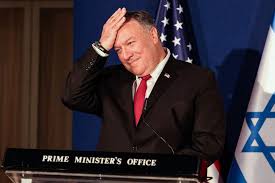


Qatar: Between the Scylla of Coercion and the Charybdis of Accommodation: aan inquiry into sub-regional geopolitics
11 Dec[Prefatory Note: Responses to Interview Questions on Sub-Regional Geopolitics in the Persian/Arab Gulf countries, Qods News Agency, 10 Dec 2020. Qatar is caught between seeking the end of the coercive diplomacy led by Saudi Arabia and the UAE and not wanting to end its necessary cooperation with Iran, especially with respect to large maritime natural gas deposits. The efforts at accommodation can turn out to be either a lessening of a confrontational approach to Iran or its intensification. Coming months, perhaps weeks, will be clarifying.]
Qatar: Between the Scylla of Coercion and the Charybdis of Accommodation: aan inquiry into sub-regional geopolitics
Q1: What is the role of Saudi Arabia in the structure of countries like Iraq, Syria, Yemen, or even Lebanon?
There is little doubt that Saudi Arabia seeks to spread its influence throughout
the Middle East, both to enhance the regime stability of the monarchy and to contain challenges of Iran arising in the countries mentioned in the question. Saudi Arabian security is also linked to sectarian identity, not only to give hegemonic legitimacy to its particular version of Islam but to express its view that Shi’ism is responsible for turmoil and strife throughout the region, and is the basis of Iranian influence beyond its borders. These issues cause political controversy and explain external intervention in the four countries mentioned. In each one Iran is perceived by the Saudi government as blocking national ambitions in Riyadh to be the regional leader, but also of the perceived threats to Saudi security and legitimacy. The Islamic Republic of Iran is seen by Saudi Arabia as being not only a challenge to Sunni dominance of Islamic allegiance and identity in the region but also as an abiding threat to domestic security due to the strategic presence in the society of discontented and radicalized Shi’ite minorities and by Shi’ite insistence, clearly articulated by Ayatollah Khomeini, that monarchy is not compatible with Islamic values.
Q2: Given the fact that Qatar, Saudi Arabia, and the UAE obey the US policies, what is your assessment of the current dispute among them?
It is a mistake to assume that the U.S. controls all aspects of Gulf country behavior. I believe that Saudi Arabia and UAE were disturbed by what they regarded as Qatar’s independent line of political behavior that collided with their policy preferences. These governments wanted there to be unity of purpose and policy with Gulf Cooperation Policy under their reactionary leadership, and opposed Qatar’s normalized relations with Iran, their openness to giving asylum and diplomatic support to Muslim Brotherhood leaders and prominent Hamas leaders living in exile, as well as their relative openness to ‘modernity’ with regard to freedom of expression and independent media, particularly Aljazeera, which carried articles that were critical of Saudi Arabia and the UAE in relation to the Syrian strife and otherwise. From available information, the U.S. never was comfortable with this split among Gulf countries, except at the very outset when the Saudi anti-Qatar received the obviously ill-considered blessings of President Trump while he was in Riyadh. Shortly afterwards, the U.S. Government realizing its strategic interests, quickly shifted its position and began using it diplomatic leverage to encourage reconciliation. It is plausible to believe that U.S. influence might have discouraged more aggressive moves against Qatar. The large U.S. Al Udeid Air Base in Qatar undoubtedly was a factor leading Washington to promote accommodation and at the same time likely inhibiting the Saudi/UAE led coalition from making any serious effort to implement their reported intention to achieve regime-change in Doha. It is likely that the Biden presidency will persist in its efforts to restore harmony among the Gulf monarchies, which is also what Israel seeks.
Q3: What reasons caused the shift of Arab world leadership from Egypt, Syria, and Iraq to Saudi Arabia, the UAE, and Qatar? What were its effects?
Egypt, Syria, and Iraq exhibit national situations that each have their own special features generating distinct atmospheres of national emergency. At the same time, they share all-consuming preoccupations associated with domestic turmoil, strife, and conflict within their respective countries. These crisis situations dominates the energies of the political leadership of these governments. It is hardly surprising that the search for stability at home take precedence over the regional agenda. As well, these countries are not nearly as worried as are Saudi Arabia and the UAE by Iranian expanded influence in the region, or particularly threatened by anti-Sunni sectarianism. In contrast, as suggested above, Saudi Arabia and the UAE are relatively stable domestically, while giving greater attention to developments within the regional context of the Middle East. Qatar seems differently motivated, and can be best understood as asserting its independence as a sovereign state, thereby overcoming being in the shadows cast by its larger neighbor. Qatar uses its fossil fuel wealth and active political imagination to overcome its subordinated and mini-state reality, which it did so successfully as to provoke Saudi and Emirate elites, apparently particularly annoyed that Qatar was chosen to host the 2022 World Cup.
Q4: What are the reasons for the current regional security and political crises in the Middle East?
There are four principal reasons for these serious, prolonged crises: first, the various regional reverberations of the Iranian Revolution that has generated since 1979 a counterrevolutionary series of responses led, and even financed by Saudi Arabia and regional allies, and strongly endorsed by Israel and the United States. Each of these political actors has their specific motivations and priorities, as well as convergent policy objectives; secondly, the regionally destabilizing impacts of the Arab Uprisings of 2011, and the various efforts to reverse, or at least neutralize, those challenges directed at the established economic and political order. As well, the severe unresolved civil strife in Yemen, Syria, Iraq, and Libya have offered occasions for competitive interventions that have led to several proxy wars; thirdly, the U.S./UK attack on and regime-changing occupation of Iraq in 2003 had the effect of intensifying sectarian tensions and contributing to political extremism, dramatized by the rise of ISIS, and other manifestations of transnational terrorism; fourthly, the outside reactions to these developments in Iraq increased the scale of regional and international interventions in Syria and Yemen, produced oppression in Egypt, and led to frequent unlawful military actions by Israel in Syria. Such turmoil was aggravated by various U.S. undertakings designed to destabilize Iran, including by covert actions and sanctions maintained during the COVID pandemic despite international appeals to suspend sanctions and mitigate acute civilian suffering and adverse humanitarian consequences. The United States and Israel have given a high priority to curbing Iranian regional influences in relation to Iraq, Syria, Yemen, and more recently, Lebanon, as well as in Gaza.
Q5: What is your opinion about the role of the Persian Gulf Arab countries in the formation of terrorist groups?
I am not an expert on this topic, nor is it easy to assess, given the role of secret and disguised behavior of Persian Gulf Arab countries. For many years, Saudi Arabia invested many billions in support of madrassas in Asian Sunni countries that encouraged Salafi versions of political extremism that
inspired terrorist organizations and political agendas, and also led to an increased reliance on state terrorist tactics and weaponry in carrying on counterterrorist warfare regionally. It is my impression that the lower profile military engagement by the U.S. during the Trump presidency led the Gulf Arab governments to be more regionally cautious, seemingly worried about escalation that might lead to war if Iran was unduly provoked, with the assumption that a full-fledged regional war would produce catastrophic results for all sides. Illustrative of a more cautious Gulf style of confrontation was the muted response to the drone attack attributed to Yemen, but with Iranian weaponry and alleged political support,t on the state-owned Saudi Aramco oil processing facilities located at Abqaiq in eastern Saudi Arabia. Whether Biden will revive American participation in the 2015 Nuclear Program Agreement in Iran, ending sanctions, will affect how Persian Gulf Arab governments deal with anti-Iranian terrorist organizations. As always, expectations about such behavior in the region should be tentative as many uncertainties loom on the road ahead.
Tags: Gulf Dispute, intervention, Iran, Qaatar, Saudi Arabia