[Prefatory Note: The post below is a slightly modified version of an interview published in The Nation on September 25th, following the September 14th attack on Saudi oil facilities. It follows a pattern with respect to Iran of accusations, denials, and public uncertainties. This combination of elements, given the leadership in Washington and Tehran, one blustering, the other inflexible, can easily produce an unintended stumble into war. A second shorter interview is appended, conducted prior to the attacks by an Iranian journalist, M.J. Hassani of Tasnim News Agency. It illustrates the seeming rigidity of Iran’s Supreme Guide, considered as having the final word on government policy, exceeding that of the elected leadership.]
Daniel Falcone Introduction to the Interview: After accusations of Iranian drone attacks on Saudi oil facilities, Iranian officials and authorities indicated that “full-fledged war” with the United States could be imminent, prompting Aramco, Saudi Arabia’s state oil company, to suspend oil production by nearly 6 million barrels per day. US Secretary of State Mike Pompeo referred to the purported aggression as an “unprecedented attack on the world’s energy supply.” The allegations caused other countries to ostracize Iran at the United Nations General Assembly and significantly complicated the prospects of a multilateral nuclear deal.
Falcone: Can you provide some context for this latest series of headlines regarding the “Iranian threat.” Is this just “old wine new bottles?”
Falk: The magnitude of this attack on Saudi oil facilities makes the situation more dangerous even if it is considered as nothing more than a quantitative escalation of Iran’s response to US sanctions and other provocations, an Iranian version of Trump’s proclaimed policy of applying ‘maximum pressure’ to bring Iran to its knees. Yet it could be a qualitative escalation if the attack is treated as the biggest test of the US commitment to dominance in the region since 1956 when the US sided with the UN in calling for France, the UK, and Israel to withdraw from the Sinai after the Suez Operation. As Falcone suggests, the American Secretary of State, Mike Pompeo, made war-mongering remarks, including calling the attacks ‘an act of war.’ It is hard to deny that such an attack is an act of war, but against whom, by whom, has not been firmly established.
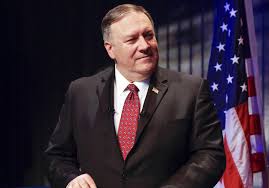
And yet, the hawks in the room clamor for blood, and do not seem to mind if the result is an all out regional war. Stephen A. Cook, the respected Council on Foreign Relations Middle East expert, endorsed this qualitative line of interpretation when he ended his analysis of the attack with some inflammatory words: “If Trump does not respond militarily, the United States should just pack up and go home.” [see Cook, “This is the Moment that Decides the Future of the Middle East,” Flash Points, Sept. 18, 2019]
At the same time, Trump seems to be inclined, at least for the present, to regard the attacks on the Abqaiq oil processing facility and the Khurais oil field as a big serving of the old wine. Trump in typical fashion has displayed both bluster and restraint. At least verbally Trump has spoken in a muscular vein, insisting that if Iranian responsibility for the attack can be demonstrated, then he will retaliate in some proportionate manner. Even under these circumstances, possibly with his eye on November 2020, Trump seems determined to avoid acts that would start an unwanted war. Although ambiguously, Trump still somewhat surprisingly appears to be keeping the diplomatic door ajar. He has been quoted as saying, probably much to Israel’s chagrin, “I know they [the Iranians] want to make a deal..at some point it will work out.” It will not work out if Trump uses this transactional language when approaching the religious leadership of Iran, even if directed at President Rouhani who leads the moderate forces in Tehran. To talk of ‘a deal’ is to demean the process, and helps explain the deep distrust of any American move toward negotiation that was unreservedly expressed recently by Iran’s supreme guide, Ayatollah Khamenei. U.S. leaders and diplomats should by now have learned that the language of the bazaar does not work if the objective is to find an agreement that serves the interests of both sides.
Falcone: With Iran, Trump seems to be caught in a pickle. On the one hand, he needs to undo the Obama legacy in the region with the Joint Comprehensive Plan of Action (JCPOA). On the other hand, he runs the risk of looking like a neoconservative. What’s going on in your estimation?
Falk: I think you are correct in sensing the conflicting pressures on Trump. He cannot go back on his repudiation of the JCPOA agreed upon in 2015 and its Obama approach without seeming to be giving in to Iran’s pressure. At the same time, he evidently does not want to follow the Bolton/neocon/Pompeo path that leads to open military action, and most likely followed by a devastating war. In this sense, Trump’s ideal outcome would be some sort of diplomatic accommodation that he could ‘sell’ as a demonstration that ‘maximum pressure’ has yielded results. Whether he could spin such an outcome as a victory outside of his base seems doubtful as there would be many critics who would insist that any such result, even if it disguised the revival of JCPOA with another round of negotiations and a new name, would be viewed as at best a repetition of what had been achieved by the P5 + 1 Obama diplomacy of 2015. In fact, it now seems that to get any agreement with Iran there would have to be a much more solid commitment by the US and its allies that sanctions could not be again re-imposed on Iran in the future without a collective decision by the parties to the agreement. Such a condtion might possibly also be reinforced requiring a confirming decision on sanctions by the UN Security Council. If I were negotiating on Iran’s behalf, I would certainly insist on ironclad assurances that sanctions could not be renewed by a unilateral decree issued in Washington. Perhaps, Iran could be persuaded to accept some joint arrangements on regional peacekeeping and nonintervention that could be sold in Washington, and maybe even in Jerusalem and Riyadh as curtailing Tehran’s projection of regional power.
Falcone: John Bolton was recently fired. Can you talk about his role in the administration to get us to this point. I’m wondering if his dismissal is mere optics and the Bolton-Pompeo foreign policy is firmly in Trump’s hand.
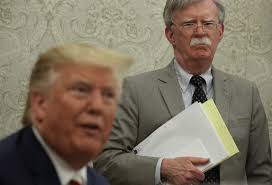
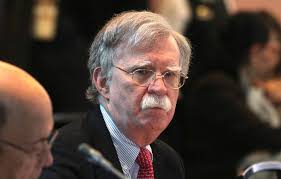
Falk: We should realize by now that Trump’s highly quixotic style is resistant to all attempts at rational analysis. We do not really know whether Trump was reacting to Bolton’s belligerence with respect to foreign policy or to his aggressive, pushy personality that has long offended many prominent persons without achieving promised foreign policy victories. For instance, his advocacy of maximum pressure did not produce the desired regime change in Iran, or even a pullback on its regional involvements as in Gaza, Lebanon, and Yemen. All it did was to raise regional tensions to dangerous heights.
It does not appear that there is any sign of an ideological shift in the White House, although there does seem to be a more complex approach preferred by Trump, which fuses bluster and threats with this resolve to avoid outright combat, war, and any course of action that might lead to American casualties. This zigzag pattern of diplomatic maneuvering has so far seemed capable of absorbing Trump’s drastic mood swings and off the chart impulsiveness. The fact that it drives crazy the rational think tank gurus who dominate the Beltway can be regarded as a plus for Trump. Perhaps, the best explanation of Bolton’s dismissal was his fiery independence, which must have been fundamentally at odds with Trump’s insistence on low-profile deference from his top advisors and the shaping and reshaping of foreign policy on the basis of a constant search for transactional gains (even at the cost of diplomatic setbacks), which treats global policymaking as if it is just a replica of how to succeed in the urban real estate market without trying too hard.
It is lamentable that Bolton’s successor as National Security Advisor, Robert O’Brien, seems to be a milder version of the same hawkish pedigree, although seemingly more bureaucratic, less ascerbic, in style. A few years ago, O’Brien published a book of essays [While America Slept: Restoring American Leadership to a World in Crisis] that was highly critical of the supposed passivity of Obama’s foreign policy. In recent years, as State Department coordinator of hostage releases O’Brien has proven his value by being a Trump enthusiast, which in the present climate is the best credential a person can have who seeks a promotion to a high-status position in the federal government.
Falcone: How does oil, sanctions, and our relations with the Saudis contribute to the rising tensions in the region and the dangerous possibility of escalations?
Falk: There is no doubt that the sanctions imposed on Iran, coupled with the repudiation of the JCPOA, has escalated the conflict, and resulted partly from Washington seeking to please the Saudis and Israelis by adopting a more confrontational approach to Iran. As well, in the background is the dream scenario of toppling the regime, or at least forcing it to plead for mercy. There is no doubt that sanctions have caused great harm as measured by social and economic conditions in Iran, a collective and indiscriminate punishment mainly inflicted on the Iranian civilian population. Such coercion violates the UN Charter and international law. This punitive behavior against Iran resembles what was done to the Iraqi population in the twelve years after the First Gulf War. The frustrations with this reliance on sanctions eventuated in a devastating attack and occupation of Iraq initiated by George W. Bush in 2003. The Iraq War ended in a costly strategic failure given its supposed goals, including a boost to extremism concretely exhibited by the rise of ISIS almost in direct response to the heavy-handed American occupation policies in Iraq.
The prolonged strife in Yemen is part of this mindless militarism. It has included strong American backing for a brutal Saudi intervention from the aiir that has caused widespread suffering on the part of a largely helpless society, posing serious threats of massive famine and disease epidemics
Falcone: I’ve noticed whenever Trump wants to avoid delivering a foreign policy message and tone that sounds like Bush or Clinton he trots Pence out there to do the dirty work. Is this, in your view, to promote war with Iran yet try to create an intentional distance from neoliberals and neoconservatives?
Falk: As always, it is hard to interpret the logic behind Trump’s moves, or even to believe that a discoverable logic exists. He seems to act without calculating gains and losses unless money is involved, but is focused on trying to achieve immediate results that bring him notoriety if not glory. If there is a policy failure, then Trump does his best to shift the blame to others. Perhaps, because confronting Iran is a risky kind of diplomatic venture, it is best to put Pence out in front as often as possible, and thus seek to distance himself from responsibility if and when policy breakdowns occur. Trump consistently personalizes foreign policy and his leadership role demands above all that media attention is focused on himself. Trump stretches the reality of almost any situation to implausible extremes making it necessary to exonerate himself from distasteful and dysfunctional behavior by inverting and inventing facts, lying when it seems helpful, and disseminating fake news without blushing.
Falcone: Of course Israel will always be pertinent in figuring out the US method to the madness concerning Iran. How can following the US-Israeli alliance help us to get a sense of potential war with Iran. Or has this war already been underway?
Falk: The connections with Israel are vital to an understanding of the US role in the Middle East, and especially in the context of Washington’s ‘special relationships’ with Israel and Saudi Arabia. The Israeli relationship is more deeply rooted in American politics than is the Saudi connection, which seems interest-based, relating not only to oil but also to its status as the world’s primary arms purchaser. With respect to both countries, it is arguable that these special relationships are contrary to American national interests in the Middle East, and also lead to behavior contrary to America’s professed values. With regard to the Saudis, their huge investment in the dissemination worldwide of a fundamentalist Wahabist doctrine of Islam would seem radically at odds with the US counterterrorist strategy, especially since 9/11. If Iran’s indirect involvement in the attacks on the Saudi oil facilities is established, then it would allow us to make a challenging comparison with the Saudi direct and indirect involvement in the 9/11 attacks, which according to the official version of the events implicated 15 Saudis of the 19 hijackers.
Most damaging is the FBI evidence of Saudi support for the attacks that killed almost 3,000 Americans that has been withheld all these years until families of victims finally obtained their release. The efforts of the presidency of George W. Bush with inappropriate help from the FBI director at the time who happened to be Robert Mueller, to shield Saudi embassy officials and others close to the royal family from any accountability, or even scrutiny. Only the pressure of survivors and survivor families seems finally to be prying some of this information loose in the course of a law suit charging Saudi complicity in 9/11. Shockingly, yet to be expected, hardly a word appears in the mainstream media, and even now Trump’s Attorney General, William Barr, is invoking the state secrets act to justify on national security grounds withholding evidence that evidently would further incriminate Saudi Arabia. These developments coming to light 17 years after 9/11 should give pause to those who still question the primacy of geopolitics and the unacceptable behavor of the deep state when it comes to the conduct of American foreign policy or even the protection of national interests and the wellbeing of American citizens. It also raises haunting questions about the effects of these two special relationships, and reminds us of the ugly connivance and coverup of the Israeli assault on the USS Liberty back in 1967 that killed 44 American naval personnel. For those who seek the full exposure of this incident, I urge a reading of Joan Mellen’s Blood in the Water, written with the cooperation of leading officers of the Liberty who survived the attack. In effect, bad as Trump is on these issues, he cannot be blamed for everything. These pernicious special relationships long preceded his presidency, and were bipartisan.
As for Israel, the relationship has definitely turned Arab public opinion and popular sentiments strongly against the US, and made the US continued dominance in the region depend on propping up anti-democratic autocratic leaders. The whole policy of confronting Iran has for many years been driven by the Netanyahu leadership, gravely weakening America’s role as a responsible global leader, and risking a war that would be a humanitarian and geopolitical disaster.
How far Israel, as a state, and Netanyahu, personally, are to blame for the escalated confrontation with Iran is difficult to assess, but it would seem to be substantial. What stands out for me is how supposed American ‘patriots’ can continue to swallow the toxic kool aid of these two special relationships. It may be time to reconsider what constitutes patriotism and what constitutes treason. In a world where Edward Snowden, Chelsea Manning, and Julian Assange are viewed as criminals but John Bolton, Mike Pompeo, and Donald Trump are viewed as national patriots there is something terribly wrong with our political language.
Tasnim News Agency Interview Questions, M.J. Hassani, 17 Sept 2019
Hassani: On Tuesday, Leader of the Islamic Revolution Ayatollah Seyed Ali Khamenei deplored the US’ calls for talks with Iran as a trick and said that Tehran will not negotiate bilaterally or multilaterally with Washington at any level. What do you think about Ayatollah Khamenei’s remarks?
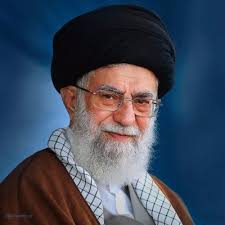
Falk: With all due respect, I think that Ayatollah Khamenei’s remarks are phrased in too unconditional language. I believe that it is not desirable to shut the door to what I call ‘restorative diplomacy,’ and thereby avoid any further devastation caused by the current reliance on ‘coercive diplomacy’ by the adversaries of Iran and by Iran’s ‘active resistance.’ Trump is unpredictable and impulsive, and should not be challenged so directly as he might act irrationally in ways that could be mutually catastrophic. At the same time, the Iranian religious leader is correct to express the view that Iran will not engage in normalization talks so long as the United States and Israel seek to impose unacceptable restraints on Iran as a sovereign nation, while they engage in unrestrained and unaccountable military action throughout the entire Middle East.
Hassani: The reason behind this approach is that Iran sees the US calls for negotiation as a trick aimed at imposing its demands on the Islamic Republic and pretending that the “maximum pressure” policy has worked. This is while Iran has not given in to the US pressures so far. Is the reason justified? How do you assess Iran’s policy of “active resistance” against the US?
I agree with the view that Iran should not be lured into a negotiation that gives the US a public relations victory by claiming the success of its ‘maximum pressure’ approach, but this should be done by Tehran in ways that also expresses Iran’s search for an improved regional and global political atmosphere that is geared toward peace and co-existence rather than war and hostility. I believe Iran has effectively made its point that it will not back down in the face of harsh sanctions and other hostile acts that are contrary to international law. Now it can seize the initiative by proposing a constructive approach that shows that it seeks normalization on the basis of sovereign equality, and is not seeking confrontation for the sake of confrontation.
Hassani: Iran has described the US return to the 2015 nuclear deal, known as the Joint Comprehensive Plan of Action (JCPOA), and the removal of sanctions against the Islamic Republic as the only way that Washington can hold talks with Iran. How do you see the prospect of open diplomacy between Iran and the US as well as the other parties to the JCPOA?
Falk: Trump has wrongly, and for regressive political reasons, condemned the JCPOA, but would have incredible political difficulty and embarrassment if he now were to affirm it. The motivation for condemning JCPOA had to do with his efforts to repudiate Obama’s diplomacy and to show total solidarity with Israel, and is not really about the 2015 agreement, except incidentally. I think Iran should propose to reconvene the countries that negotiated in 2015, and produce a new agreement based on intervening developments, but making it clear that this would not be an acceptance of any preconditions put forward by Washington, and would not relate to non-nuclear issues.
Hassani: Can we regard the Islamic Republic’s strategy of “active resistance” against the US pressures as successful given Ayatollah Khamenei’s assertions?
Falk: I think ‘active resistance,’ depending somewhat on how it is defined has been successful so far, but in some ways a dangerous and high risk policy if adhered to much longer. Iran, having made its point effectively, should move to higher ground by proposing constructive deescalating steps such as reconvening the P5 +1 group to come up with a new framework agreement covering Iran’s nuclear program and the ending of US sanctions. The way forward should not be a continuation of the present, but an effort to occupy this high ground of law, morality, and peaceful conflict resolution. It may also be appropriate at this time to propose an emergency meeting of the UN Security Council, which likely would be rejected by Trump, but would put Iran in a favorable light internationally as creatively engaging in restorative diplomacy. Taking a longer view, Iran should consider reviving discussion of a nuclear free zone for the entire Middle East, including Israel, a country that acquired nuclear weapons by stealth and covert assistance from those states now most objecting to Iran’s nuclear program.
Tags: Bolton, Iran, JCPOA, Khamenei, Maximum Press, Sanction, Saudi oil attacks, Trump


 Global Justice in the 21st Century
In Praise of Kamila Shamsie Home Fire
13 OctIn Praise of Kamila Shamsie’s Home Fire
It took the withdrawal of the Nelly Sachs Prize to make me familiar with the fine literary achievements and compassionate politics of Kamila Shamsie. Selfishly, I cannot thank the Dortmund City Council enough for its outrageous behavior, evidently canceling the award because a right-wing newspaper outed Shamsie as a supporter of the BDS Campaign. I can imagine Shamsie’s feeling of hurt as well as disappointment as this incident unfolded. In her novels, she has manifested an uncannny awareness, more so than any writer I have encountered, of the precarious existence of ethnic, gender, and civilizational outsiders, especially Muslims, if they happen to reside in the supposedly once more tolerant West. Her words of eloquent response to the Dortmund about face express both her magnetic literary personality and moral intelligence: “It is a matter of great sadness to me that a jury should bow to pressure and withdraw a prize from a writer who is exercising her freedom of conscience and freedom of expression; and it is a matter of outrage that the BDS movement (modelled on the South African boycott) that campaigns against the government of Israel for its acts of discrimination and brutality against Palestinians should be held up as something shameful and unjust.”
Germany seems particularly susceptible these days to Islamophobic tropes, especially those given traction at the expense of Muslims, Palestinians, and immigrants. It seems that even 75 years after the Holocaust the German political establishment is still attempting to convince themselves, as well as the State of Israel, that the Holocaust was a national anomaly. Seeking to prove the unprovable, Germany and Germans have chosen to fall in love with Israel precisely because it is the nation state of the Jewish people, and for this reason alone it can do no wrong as we all know that love is blind. In their vain effort to make such a surreal posture credible, Germany insists on going even further, as if to drive the point home to any doubters, by converting Israel’s critics into Germany’s adversaries, somehow forgetting that the locus of the anti-Semitic gene present in the German body politic is situated on its far right, and is definitely not to be found even among the most uncompromising supporters of the BDS Campaign. To suggest otherwise, as is the inescapable implication of the Dortmund action, is to slander a writer of exquisite moral sensitivity. Her actions as a citizen exhibits a strong bond between her sense of right and wrong that infuses her novels and her nonviolent engagements on the side of justice for the Palestinian people. Bonds of this nature are what keep democracy alive, and should be celebrated now more than ever, not condemned.
Evaluated from a more humanistic perspective, this incident confirms the impression that Germany as a nation has learned nothing from its past. To side with Israel is to side with an apartheid government that imposes a regime of daily victimization upon the Palestinian people (treating them as enemy aliens in what once Palestine!). To regard those who oppose this Israeli behavior as if they are the miscreants is to learn nothing from the rightly repudiated German past. It is to be complicit in its repetition.
Under these circumstances, my expression of personal gratitude to Dortmund may seem odd, yet it is quite easy to explain. If it had not been for the withdrawal of the prize, I would not have become an avid reader of Shamsie. The prize might have caught my wandering eye, as should earlier some of the dazzling reviews of Home Fire, but with a busy life along with an array of self-indulgent distractions, I would almost certainly not have taken such a drastic step as to acquire the novel, and then find myself so overwhelmed by its literary quality and brilliant commentaries on the human condition that I immediately obtained, and then read with uncharacteristic concentration, Burnt Shadows in two ten hour days of uninterrupted reading. Reflecting on this experience, which I wish is being replicated by others shocked into a similar response to mine, I became appreciative that, depending on circumstances, we sometimes become more intellectually and culturally indebted to acts of negation than to those of affirmation. It may be that those favoring the Dortmund jury reversal supposed that withdrawing the prize would have the valued added of lessening interest in Shamsie’s writing, and instead it seems to be spreading the word that she is a great writer!
Perhaps, if writers in Britain had not organized a joint letter of solidarity with Shamies to the London Review of Books, the abstraction of learning about a cancelled prize would not have overcome my habitual sloth, and I would have moved on. I was also drawn to look for myself at the work in question by Shameis’ unrepentant response, defending her BDS support as something she did as a citizen, which in any event should have had no bearing on whether her novel was more deserving of recognition than were the other short listed competitors for the prize. Until this happened, I would have thought the Nelly Sachs Prize honored literature, rather than kneeling at the altar of political correctness. From now on whenever Germany does something similar, I will do my best to make them pay, not only by joining the protest, but by embracing the work that they repudiated. Let these prizes remain noteworthy, but only if future cancellations serve more as magnets than as repellents. My fear is that foundations and selection groups that give such prizes will in the future become more wary, do their homework better, and bypass candidates whose sympathies with the Palestinian struggle might stir the waters of controversy. It is worth realizing that much of the evil in the world is what is done off camera, behind closed doors, and we who wish for other realities, never get wind of what is going on. Self-censorship may be more destructive of freedom of expression than censorship. Dortmond’s rationale for retraction can be discussed, rejected, overcome. If Home Fire had been quietly put aside by the jurors in their deliberations, it would have aroused no protest, enlisted no new circle of admirers, and no positive voices reminding us that BDS is dedicated to nonviolent liberation, nothing more, nothing less.
Yet before touching on the qualities that make me so admiring of Home Fire, I would comment a bit more on what seems like a panic attack. We need to ask what made the folks in Dortmund act so inappropriately as to make themselves appear both craven and foolish? At first glance, it seems that these days right-wing pressure works more often than it should, although ironically, it is the far right that is the incubator of real anti-Semitism. The true face of Jew hatred revealed itself in the very recent Halle incident in which a right-winger aimed to slaughter Jews at a German synagogue on the Yon Kippur holiday. Further, even granting the Zionist feverish campaign to brand BDS as expressive of the so-called ‘new anti-Semitism,’ to treat Shameis’ support of a cultural boycott as enough to induce the city of Dortmund to withdraw the prize seems to signal societal panic, maybe a reaction to the rise of the anti-immigrant, anti-Muslim AfD (Alternative for Germany). It is of more than passing interest that the AfD was not content as were the mainstream German parties in the Bundestag with calling BDS ‘anti-Semitic’ but wanted the non-violent movement formally banned altogether. The resolution adopted in May 2019 by a rare cross-alliance of political parties was itself a lamentable response to pressures being exerted by Zionist groups may have set the stage for the Dortmund retreat. It was followed shortly by a similar action in Aachen where an award was withdrawn from Walid Raad, an Lebanese innovative artist with a world reputation because he reportedly refused to denounce BDS, carrying the imperative of political correctness a menacing step further.
****************************************************************************
Part of the dark charm of Home Fire is a tribute to Shameis’ ‘see it all eyes’ that illuminate the complexities of Islamic jihadism, how it appeals to those ‘out of place’ around the world, wounding and rupturing the flow of life for those burdened and blessed with a hybrid ethnic, religious, and class identity. Shamsie tells us that her narrative inspiration for Home Fire is the Greek play of Antigone where a heartbroken sister defies her uncle, Creon, the king of Thebes, by burying her rebellious brother who died on a field of battle, and thus declared a traitor by Creon; by law he was denied the right of burial and his body left to rot on the battlefield until he was restored to dignity by the defiant Antigone. Sophocles depicted this classic instance of overriding the law of the land by acting in obedience to the transcendent law of the human heart, given concreteness over the centuries by natural law jurisprudence and more recently, by the universal principles of human rights. Shamsei imparts her meaning by choosing a tag line from Sophocles that appears alone on a page preceding the novel: “The ones we love.. are enemies of the state.”
Reading Shamsei made me recall my experience 30 years ago when I read Toni Morrison’s Beloved. The novel made me realize, although growing up in the racially self-righteous, self-segregated liberal confines of Manhattan, that until I read Beloved, I had never grasped the existential horrors of post-slavery racism in the United States, especially throughout the South, and more subtly in the rest of the country. Similarly, until I read Home Fire I never thought empathetically about the intimate lives of terrorists and their loved ones, pitting love within a family against what the state decrees as the limit of acceptable conduct and the moral ambiguities arising from the dreadful harm done to innocent others by terrorist violence, whether by the state or its enemies. The perpetrators are also victims, and the victims can become perpetrators propelled by a vicious retaliatory logic that finds words to justify even beheadings; a jihadist in Home Fire says this: “..what you do to ours we will do to yours..” In other words, when we free ourselves from liberal forms of political indoctrination to experience the radical and reactive otherness that produces delicate negotiations between love and law the simple verities of moral truisms evaporate before our eyes. If we nurture our spiritual selves, a formidable challenge, those brave enough would almost always choose the path cleared by the heart rather than mechanically adhering to the cold logic of those who insist on observing the law however unjust. A signal achievement of Home Fire is to weave a credible tale of such nurturing through the selfless passions of Aneeka, a luminous being, compelled by sibling love to respond to her hapless terrorist twin brother, Pervais. The fact that Aneeka is studying in London to become a lawyer, while Pervais is enchanted by digital mysteries of recorded sounds, somehow heightens the tension between law and love, with a romanticized forgetfulness when it comes to prudence in a public domain of discriminatory vigilance in the world after the 9/11 attacks.
Shameis’ has produced a moral fable for our times. It is given novelistic and societal complexity by the apparent innocence of the twins, Pervais killed by a colleague in the course seeking to come home to Britain because after becoming disillusioned by his exposure to ISIS, and Aneeka herself defying a vindictive British law denying any right of return even to British citizens if officially declared to be terrorist suspects. With deep symbolic resonance, the corpse of Pervais was sent to his ‘ethnic home,’ Pakistan, where Aneeka traveled to perform her own version of a sacred burial ritual. We are told in a sprightly Note of Acknowledgement at the very end of the book, in case it did not earlier cross our minds, that Shameis’s work was foreshadowed by the exploration of these themes in Sophocles’ most memorable play, Antigone. Even though I studied Greek theater literature as a student some decades ago, I admit that I never on my own drew the connections between Home Fire and Antigone, and when instructed, I found it worth knowing, but quite irrelevant to my intense enjoyment of this extraordinary novel. The idea of loyalty to love by performing a proper burial may retain a certain symbolic relevance in our world, but it is less inscribed in the modern sensibility than it was in ancient times when such ritual matters were regarded as concerns of ultimate significance, although Shameis brings it to life because the characters and plot are so emotionally enveloping.
I found Shameis’s electric feel for language, including the radiance of the conversational dialogue and the creation of vivid and sympathetic characters interacting in the course of an ingenious plot that addressed several distinctive themes of this particular historical moment are some of the elements that make this novel so exciting as a de-Orientalizing work of fictive art. By reading Home Fire we learn what is excluded from reading newspapers or listening to politicians. Shameis has a special talent for conveying the wonderfully non-conformist dimensions of human lives struggling for meaning and love in our chaotic, confused, and violent world. Even the older sensible sister of the twins, Isma, burdened with parenting them from their childhood, gives principled prudence its due, and yet the book opens ironically with Isma’s own interrogation ordeal at Heathrow as she departs Britain to earn a graduate degree at an American university. Her extremely unpleasant exit experience results from nothing more incriminating than her racial and religious identity, and more plausibly, by her being marked for special attention at immigration portals due to their awareness that her abandoning father died an al Qaeda militant en route to Guantanamo.
This novel was for me an experience of adult education at its best as well as an absorbing artistic reading pleasure. What we learn, above all, is that judging and assessing others from their outside appearances and external criteria produces false impressions that often lead to tragic outcomes. We also learn that grief, forgiveness, and empathy are among the most powerful private emotions that contrast favorably with the cruel opportunism of those who hitch their wagon to the conventional wisdom of state power as intrusively enacted in ways that disrupt the lives of gentle people.
Dortmund was quite right to select Home Fire for a literary award, which also informs us deeply about the vulnerability and fragile live of those at the Muslim edge of Western societies, especially if they are unwilling or unable to compromise beliefs and identity. Kamila Shamsie teaches us by her artistry to understand better the worlds we so unknowingly inhabit. We should also pause long enough to notice her way of living, feeling, and acting as if humanity was her true native country.
Tags: AfD, anti-Semitism, BDS Campaign, Budestag BDS, Dortmund Germany, Halle, HOME FIRE, Israel, Kamila Shameis, Neely Sachs Award