Archive by Author

Two Sides of the Palestinian Coin: Hunger Strike/Gaza

28 May


The Palestinian hunger strike protesting Israeli prison conditions was suspended on May 27th after 40 days, at a time when many of the 1000 or so strikers were experiencing serious deteriorations of health, most were by then hospitalized, and the holy period of Ramadan about to commence creating continuity between the daytime fasting of the faithful and the prior desperate protest of the strikers. What was perhaps most notable about this extraordinary gesture of a mass prolonged hunger strike was that it was treated as hardly worthy of notice by the world media or even by the United Nations, which ironically is regularly attacked by diplomats and the media in the West for being overly preoccupied with Israeli wrongdoing.


It needs appreciating that recourse to a collective hunger strike is a most demanding form of political resistance, invariably provoked by prolonged outrage, requiring courage and a willingness to endure hardship by participants, as well subjecting their will to as harsh a test as life offers. To continue foregoing food for 40 days is a life-threatening and heroic, a commitment never lightly undertaken.


With Bobby Sands as their leader ten IRA imprisoned hunger strikers starved themselves unto their death in 1981. The world watched in rapt attention as this extraordinary spectacle of self-inflicted death unfolded day by day. Without openly acknowledging what was happening before their eyes, hardened political leaders in London silently took notice of the moral challenge they confronted, shifting tactics abruptly, and began working toward a political compromise for Northern Ireland in a manner that would have been unthinkable without the strike.


The Palestinians can harbor no such hopes, at least in the near term. Israel deliberately clouds the moral and political embedded challenges by releasing videotapes supposedly showing ‘snacks’ secretly being eaten by the strike leader, Marwan Barghouti. This fact that this accusation was vigorously denied by his immediate family and lawyer is occasionally noted in the world media, but only as a detail that does not diminish the impact of discrediting the authenticity of the strike. Whether true or not, Israel succeeded in shifting attention away from the strike and avoids doing anything significant to improve prison conditions, much less take steps to end the severe abuses of the Palestinian people over the course of an incredible period of 70 years with no end in sight. Prison authorities immediately resorted to punitive measures to torment those prisoners who were on strike. Such a response underscores ‘democratic’ Israel’s refusal to treat with respect nonviolent forms of resistance by the Palestinian people.


At this same time as the prison drama was unfolding, Gaza was experiencing a deepening of its prolonged crisis that has been cruelly manipulated by Israel to keep the civilian population of almost two million on the brink of starvation and in constant fear of military onslaught. Supposedly the caloric intake for subsistence has been used as a benchmark by Israeli authorities for restricting the flow of food to Gaza. And since that seems insufficient to impose the level of draconian control sought by Israel, three massive military attacks and countless incursions since the end of 2008 have inflicted heavy casualties on the civilian population of Gaza and caused much devastation, a cumulative catastrophe for this utterly vulnerable, impoverished, captive population. In such a context, the fact that Hamas has retaliated with what weaponry it possessed, even if indiscriminate, is to be expected even if not in accord with international humanitarian law.


A leading intellectual resident of Gaza, Haider Eid, has recently written a poignant dispatch from the front lines of continuous flagrant Israelu criminality, “On Gaza and the horror of the siege,” [<http://mondoweiss.net/2017/gaza-horror-siege/&gt;, May 25, 2017]. Eid ends his essay with these disturbing lines:

“We fully understand that the deliberate withholding of food or the means to grow food in whatever form is yet another strategy of Israel’s occupation, colonization, and apartheid in Palestine, and, therefore, should be viewed as an abnormality, even a pogrom!

 But what we in Gaza cannot fathom is: Why it is allowed to happen?”


At the start of Ramadan, Haider Eid appeals to the world to stand up against what he calls ‘incremental genocide’ “ by heeding the BDS call made by Palestinian Civil Society.”


It is significant that Eid’s appeal is to civil society rather than to the Palestinian Authority entrusted with representing the Palestinian people on the global stage or for a revival of ‘the peace process’ that went on for twenty years within the Oslo Framework or to the UN that accepted responsibility after Britain gave up its Palestine mandate at the end of World War II. These conventional modes of conflict resolution have all failed, while steadily worsening the situation of the Palestinian people and nurturing the ambition of the Zionist movement to reach its goal of territorial expansion.


Beyond this, Eid notes that the authority of BDS is a result of an authoritative Palestinian call to which the peoples of the world are implored to respond. This shift away from intergovernmental empowerment from above to a reliance on empowerment by a victimized people and their authentic representatives embodies Palestinian hopes for a more humane future, and for an eventual realization of long denied rights.


It is appropriate to merge in our moral imagination the ordeals of the prisoners in Israeli jails with that of the people of Gaza without forgetting the encompassing fundamental reality—the Palestinian people as a whole, regardless of their specific circumstances, are being victimized by an Israeli structure of domination and discrimination in a form that constitutes apartheid and different forms of captivity.


It seems that the hunger strike failed to induce Israel to satisfy many of the demands of the strikers for improved conditions. What it did achieve was to remind Palestinians and the world of the leadership gifts of Marwan Barghouti, and it awakened the Palestinian population to the moral and political imperative of sustaining and manifesting resistance as an alternative to despair, passivity, and submission. Israelis and some of their most ardent supporters speak openly of declaring victory for themselves, defeat for the Palestinians. Regardless of our religious or ethnic identity we who live outside the circle of Israeli oppression should be doing our utmost to prevent any outcome that prolongs Palestinian unjust suffering or accepts it as inevitable.


What is unspeakable must become undoable.


Alternate Worldviews: Davutoğlu, Kissinger, Xi Jinping

25 May


[Prefatory Note: This post is a much modified version of a shorter
opinion piece published by the global-e online publication on May 18, 2017. It is a response to and commentary upon an essay of Ahmet
Davuto
ğlu, former foreign minister and prime minister of Turkey, published under the title ‘Response to Ahmet Davutoğlu’s “The Future of National and Global (Dis)order: Exclusive Populism versus Inclusive Global Governance.”’It contrasts the global outlook of Davutoğlu with that of Henry Kissinger, yet does not discuss the specific policies pursued by either of these public figures while they acted on behalf of their respective governments, and ends with an allusion to Xi Jinping’s speech at the World Economic Forum a few months ago.]


In his global-e essay of March 30, 2017, Ahmet Davutoğlu provides a provocative and comprehensive assessment of current global trends, and their impact on the future of world order. What sets Davutoğlu’s diagnosis of the global setting apart is his insistence that the current crisis of governance, including the ominous dangers that he identifies, can only be overcome in an enduring manner if it is fully appreciated that present maladies on the surface of world politics are symptoms of deeper structural disorders. He gives particular attention in this regard to the failure of the United States to support a reformist agenda that could help establish global governance on foundations that were effective, legitimate, and humane after the end of the Cold War. Implicit here is the contrast between the benevolent global role played by the U.S. after World War II and its harmful dedication to neoliberal globalization after the end of the Cold War without attending to the historic opportunities and challenges of the 1990s.


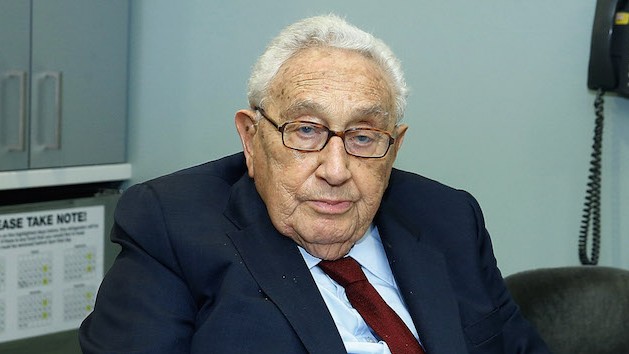
At first glance, Davutoğlu seems to be echoing the lament of Henry Kissinger, the chief architect of Nixon’s foreign policy during the 1970s. Kissinger plaintively asks, “Are we facing a period in which forces beyond the restraints of any order determine the future?” This is coupled with Kissinger’s underlying worry: “Our age is insistently, at times almost desperately, in pursuit of a concept of world order.” [World Order, Penguin Press, 2014, 2] Not surprisingly for those familiar with Kissinger’s approach, he expresses a nostalgic fondness and airbrushed account of the liberal world order that the U.S. took the lead in establishing after World War II, as well as his signature nostalgia associated with the construction of the European state-centric system of world order in the aftermath of devastating religious wars in the seventeenth century. His idealizing of this post-Westphalian framework is expressed in a language no one in the global south could read without a good belly laugh as it totally ignores the predatory geopolitics by which the West subjugated and exploited much of the non-Western world. According to Kissinger the new golden age of Westphalia after 1945 was reflective of “an American consensus—an inexorably expanding cooperative order of states observing common rules and norms, embracing liberal economic systems, foreswearing territorial conquest, respecting national sovereignty, and adopting participatory and democratic systems of governance.” [p.1]


The best Kissinger can offer to repair what he now finds so deeply disturbing is “a modernization of the Westphalian system informed by contemporary realities.” By the latter, he primarily means accommodating the rise of China, and the consequent dewesternization of the global relation of forces. Such an adjustment would require some restructuring, taking steps to integrate non-Western values into the procedures, norms, and institutions of governance facilitating geopolitical cooperation between dominant states. The content of these cooperative relations would emphasize the establishment of mutually beneficial trade and security governing relations among states. For this to happen the liberal West would have to accept the participation of states that based national governance on authoritarian patterns of national governance without passing adverse judgment. Kissinger, never an advocate of ‘democratic peace’ as theory or policy, is consistent in his promotion of a world order that does not pass judgment on the internal public order systems of sovereign states, leaving human rights to one side, and not making the adoption of democracy an ingredient of political legitimacy. In this regard, Kissinger’s version of geopolitics revives the ethos of a pre-World War II realpolitik prior to the sorts of ideas of ‘democracy promotion’ associated with the presidencies of Bill Clinton and George W. Bush


What makes the comparison of Kissinger and Davutoğlu of interest is less their overlapping concerns with the current deficiencies of global governance than their differing articulation of alternative explanations and recommendations. Kissinger writing in a post-colonial period where hard and soft power have become more globally dispersed, especially moving toward Asia, considers the challenge mainly to be one of reforming state-centric world order by a process of inter-civilizational accommodation and mutual respect with a particular eye focused on how to properly address the rise of China alongside the partial eclipse of Europe.


In contrast, Davutoğlu sees the immediate crisis to be the result of inadequate global responses to a series of four ‘earthquakes’ that have rocked the system in ways that greatly diminished its legitimacy and functionality (that is, the capacity to offer adequate solutions for the major challenges of the historical moment). This sequence of earthquakes (end of Cold War, 9/11 attacks, financial breakdown starting in 2008, and Arab uprisings of 2011) occasioned responses by global leaders that Davutoğlu derides as “short-termism and conjectural politics,” that is, ‘quick fixes,’ which failed to appreciate either underlying causes or structural factors. This meant that the policy remedies adopted did not address the problems presented in ways that would avoid recurrent crises in the future. It is this failure of global leadership to address causes and structures that is partly blamed for the present malaise. Davutoğlu characterizes the present period as marked by “a rising tide of extremism,” constituted by a political spectrum with non-state groups like DAESH (also known as ISIS) at one end and the populist surge producing such dysfunctional statist outcomes as Brexit and Trumpism at the other. Davutoğlu does not treat the ascent of China as a fifth earthquake, exhibiting a conceptual understanding of the complexities and originality of the present global setting, while according less attention to the shift in the geopolitical hierarchy associated primarily with China’s rise.


Davutoğlu identifies three sets of disappointing tendencies that clarifies his critique: (1) the American abandonment of the liberal international order that it earlier established and successfully managed; (2) the disappointing reactions by the West to anti-authoritarian national upheavals, illustrated by the tepid reactions of the United States and Europe to the Arab Spring, withholding encouragement and support, despite its declared commitment to democratization and human rights; (3) and the structural numbness illustrated by failing to reform and update existing international institutions in the economic and political spheres, particularly the UN, which has been unable to act effectively because so little has been done to take account of drastic changes in the global landscape over the course of the last 70 years.


The comparison here between Davutoğlu and Kissinger reveals fundamental differences of analysis and prescription. Kissinger sees the main challenge as one of geopolitical chaos that needs to be overcome by forging realistic, yet cooperative, relations between the U.S. and China. Although he is not explicit, Kissinger seems to be preoccupied with what Graham Allison influentially labels as ‘the Thucydides trap.’ In such circumstances a reigning dominant state feels its status threatened by an emerging challenger, and the rivalry eventuates in war. In the nuclear age even political realists search for alternatives to such a dire prospect. Additionally, Kissinger clearly believes that unless the U.S. and China can agree on world order there will be chaos even if it not outright war. Underlying this imperative is the idea that dominant states are alone capable of creating order on a global scale, making the UN irrelevant, a distraction, and considering international law as a proposed regulative enterprise to be a house of cards.  


Kissinger favors a live and let live geopolitical equilibrium presiding over a state-centric world order that works best if the power of the dominant states is balanced and their core interests served on the basis of a shared understanding of how best to govern the world. In a fundamental sense, by proposing the incorporation of China at the apex of global governance Kissinger is advocating the global expansion of the Westphalian approach that was historically developed to minimize war and maximize stability in Europe. As might be expected, Kissinger utters not a word about justice, human rights, the UN, climate change, and the abolition of nuclear weapons. In effect, Kissinger traverses the future as if embarking on a perilous journey across a normative desert. It is hardly an occasion for surprise that Donald Trump should summon Kissinger to the White House amid the Comey crisis or that Kissinger would make himself available for an Oval Office photo op to shore up the challenged legitimacy of an imploding presidency. Trump knows less about foreign policy than my ten-year old granddaughter so that when he described Kissinger’s visit as ‘an honor’ it is left as a complete mystery why this was so. It is amusing that Trump also described his audience with Pope Francis at The Vatican as an honor. The irony of the pairing should not escape even the most casual scrutiny.


Davutoğlu’s offers a far more sophisticated and nuanced response to his equally pessimistic diagnosis of the current global situation. His fears and hopes center on an approach that might be described as ‘normative realism’ or ‘ethical pragmatism.’ In this fundamental respect Davutoğlu analyzes the challenges confronting humanity in light of the international structures that exist. He advocates the adaptation of these structures to current realities, but with a strong normative pull toward the fulfillment of their humane and inclusive democratizing potential. He optimistically hopes that the United States will again play up to its weight on the global stage, especially as a normative leader and problem-solver. For this reason he strongly disapproves of the shrill Trump call of ‘America first’ as well as worries about the varieties of right-wing populism that have led to the rise of ultra-nationalist autocrats throughout the planet.


Davutoğlu, a leading political figure in Turkey over the course of the last fifteen years, is both a Turkish nationalist and an internationalist. He urges greater representation for emerging economies and states in international institutions and procedures, and the necessary reforms of procedures and practices to bring this about. No personal achievement during his years as Foreign Minister brought Davutoğlu greater satisfaction than Turkey’s election to term membership in the UN Security Council. For Davutoğlu such a supreme soft power recognition of status on the world stage epitomized a new kind of cosmopolitan nationalism. As Kissinger is (hard)power-oriented, Davutoğlu is people-oriented when it comes to global politics. In this regard, Davutoğlu’s worldview moves in the direction of normative pluralism, incorporating diverse civilizational constructs to the extent possible, globalized by crucial universalist dimensions, particularly with respect to human dignity, human rights, and a diplomacy focused on conflict resolution. Davutoğlu gives scant attention to working out a Kissingerian modus vivendi between dominant state actors, but is receptive to practical solutions and political compromises for the sake of peace, justice, and stability.


Although I share Davutoğlu’s diagnosis and overall prescriptions I would take note of several differences that might turn out to be only matters of emphasis if our respective positions were more fully elaborated. I think the most distinctive feature of the current world order crisis is its insufficient capacity to address challenges of global scope, most notably climate change, but also the persistence and slow spread of nuclear weapons as well as the pestilence of chronic poverty. The Westphalian approach to world order was premised on the interplay of geopolitical actors and state-centric territorial sovereignty, and was never until recent decades confronted by threats that imperiled the wellbeing, and possibly, the survival of the whole (species or world) as distinct from the part (state, empire, region, civilization). With nuclear weapons, rather than seeking their abolition, the United States exerts as much control as possible over a geopolitical regime seeking to prevent their proliferation, especially using coercive diplomacy to threaten governments viewed as hostile. Claiming to act on this basis, the United States, in coalition with the United Kingdom, launched a devastating attack in 2003 on Iraq followed by a decade of chaotic occupation. This anti-proliferation outlook presupposes that the principal danger to world peace and stability arises from countries that do not possess the weaponry rather from those that have used, developed, and deployed nuclear weapons. Considered objectively, Iran and North Korea are two countries under threat in ways that make their acquisition of nuclear weapons rationally responsive to upholding their security by deterring attacks. It is time to realize that nonproliferation ethos is precarious, misleading, and self-serving, and contributes to a cleavage that splits human community at its core. This split occurs at the very time when greater confidence in human unity is urgently needed so that shared challenges of global scope can be effectively and fairly addressed.


In effect, I am contending that Davutoğlu’s prescriptive vision does not directly address a principal underlying cause of the current crisis—namely, the absence of institutional mechanisms and accompanying political will to promote human and global interests, as well as national and local interests. Under present arrangements and attitudes, global challenges are not being adequately met by geopolitical leadership or by multilateral mechanisms that seek to aggregate national interests. The Paris Climate Change Agreement of 2015 represented a heroic effort to test the outer limits of multilateralism, but it still falls menacingly short of what the scientific consensus informs us as necessary to avoid exceedingly harmful levels of global warming. Given the current geopolitical mood, it seems unlikely that even the inadequate Paris approach will be properly implemented.


Similarly, the sputtering response to the situation created by the North Korean crisis should be treated as a wakeup call as to the dangerous dysfunctionality of a militarist approach to nuclear weapons policy, relying on threat diplomacy and punitive sanctions. The only approach that seems likely to be effective and deemed reasonable over time is one based on mutual security considerations, a serious embrace of a denuclearization agenda, and what might be called restorative diplomacy.


In the end, I share Davutoğlu’s call for the replacement of ‘international order’ (the Kissinger model) by ‘global governance’ (specified by Davutoğlu as “rule- and value-based, multilateral, consensual, fair, and inclusive form [of] global governance.” Such a shift to a governance focus is sensitive to the role of non-state actors and movements, as well as to the relevance of national ideology and governing style. It rejects a top down geopolitical approach.


It could be a hopeful sign that such a way of thinking is gaining ground that a recent speech in the West by the Chinese president, Xi Jinping, moved in Davutoğlu’s, rather than Kissinger’s direction. When Xi addressed the 2017 World Economic Forum in Davos he endorsed a worldview that rejected geopolitics, encouraged an inclusive multipolarity, and advocated nuclear disarmament. As Washington continues to conceive of the Chinese challenge as materialist and military, the real challenge being posed by China seems to be on the level of ideas, values, and survival instincts.


Normal
0

false
false
false

EN-US
JA
X-NONE

/* Style Definitions */
table.MsoNormalTable
{mso-style-name:”Table Normal”;
mso-tstyle-rowband-size:0;
mso-tstyle-colband-size:0;
mso-style-noshow:yes;
mso-style-priority:99;
mso-style-parent:””;
mso-padding-alt:0in 5.4pt 0in 5.4pt;
mso-para-margin:0in;
mso-para-margin-bottom:.0001pt;
mso-pagination:widow-orphan;
font-size:12.0pt;
font-family:Cambria;
mso-ascii-font-family:Cambria;
mso-ascii-theme-font:minor-latin;
mso-hansi-font-family:Cambria;
mso-hansi-theme-font:minor-latin;}


Trumped Up Diplomacy in the Middle East

20 May


In his first overseas trip since moving into the White House, Donald Trump is leaving behind the frustrations, allegations, rumors, and an increasing sense of implosion that seems to be dooming his presidency during its second hundred days. At the same time, a mixture of curiosity and apprehension awaits this new leader wherever he goes making his visit to the Middle East and Europe momentous occasions for the host governments, wide eyed public, and rapacious media. We need to remember that in this era of popular autocrats and surging right-wing populists, Trump is a ‘hero of our time.’


Even if all had gone smoothly for the new president in his home country, there should be expressions of deep concern about his travel itinerary. He visits first the two countries with which the United States has ‘special relationships’ in the Middle East, Saudi Arabia and Israel. What has long made them ‘special’ are a series of pre-Trump departures from realist and normative foreign policy orientations by successive American presidencies. These departures were motivated by oil geopolitics, arms sales and strategic alliances, hostility to Iran, and a disguised American sweet spot for foreign royalty. It is has long been obvious that uncritical deference to Israeli priorities has seriously undermined U.S. foreign policy in the Middle East, which would have benefitted much more from policies designed to encourage peace and stability by refraining from regime-changing interventions, massive arms sales, and a diplomacy of respect for the politics of national self-determination.


Most remarkably, the U.S. Government has for decades winked at the billions of support given by Saudi members of the royal family to Wahabism, that is, to promote fundamentalist Islam, throughout the Muslim world. The first words uttered by Trump on his arrival in Riyadh were that it ‘an honor’ to be visiting.

Then came signed deals adding up to $110 billions in arms sales and the declaration of a common strategic vision, that is, a super-alliance, called an ‘Arab NATO’ in some circles, a dagger aimed at Iran’s heart. Why turn a blind eye toward the Saudi role in fanning the flames of jihadism while ramping up a military threat to relatively passive Iran that reelected Hassan Rouhani as its president, who has consistently championed moderation at home and normalization abroad.


How can we explain this? Trump has been critical of most aspects of the foreign policy agenda of his predecessors, but on the promotion of the special relationships he seems intent on doubling down on the most misguided aspects of earlier approaches to the region. The shape of his travel itinerary during his days confirms this impression. In this regard, Trump repudiates Obama’s hesitant, but in the end successful, efforts to bring Iran in from the cold, while trying to please Saudi Arabia by ignoring its extreme denial of human rights to its own people as well as its contributions to anti-Western terrorism.


If Trump was truly intent on putting America first, as he insistently asserts, then he could do so very directly and effectively by taking three major steps toward the protection of national interests: first, demand a firm commitment from the Saudi government to cease using private funds and public diplomacy to spread Wahabism beyond its borders. Any credible public statement along these lines would weaken ISIS and other terrorist movements throughout the world far more than cascades of Tomahawk missiles dumped on a Syrian airfield. Such a challenge to Saudi policies also raises the possibility, however remote, of an endgame in the ‘war on terror.’ If such a reset of Saudi relations could be coupled with an indefinite freeze on arms sales to the Gulf countries that would have been even better, sending a signal throughout the region that America will no longer engage with the bloody conflicts that have brought so much suffering and devastation to the Middle East. This might give some belated meaning to ‘America first.’


The second step would have been even harder for an American president to take. It would require Trump to tell Mr. Netanyahu that no further military assistance for Israel would be authorized until an unconditional freeze on settlement expansion was in place and enforced, and the blockade of Gaza lifted once and for all.


It does not require a PhD in Middle Eastern Studies to appreciate that the establishment of a nuclear free zone in the region and the adoption of effective steps to minimize the sectarian divide between Sunni and Shia Islam would improve future prospects for this horrendously disrupted political realities, at last reducing tensions and risks of wars. Nor does it require special knowledge to identify the obstacles such actions—the one government that already possesses nuclear weapons and the government that feels threatened by a challenge to its regional preeminence. Saudi Arabia and Israel both regard Iran as enemy number one, although it poses no existential threat to either one, and Israel will not even discuss giving up its nuclear arsenal despite being assured by Washington that its qualitative edge in conventional weaponry relative to its neighbors will be upheld.


The special relationships block even the consideration of enlightened initiatives, take them entirely off the table. This contrasts with the American proclivity for coercive diplomacy, which always assertively leaves the military option on the table. Without tension-reducing measures, a few false moves could easily give rise to a major war with Iran, which might bring smiles to leaders in Riyadh and Tel Aviv, but would be disastrous for the societies involved and for the United States, as well as for the region.


Given the leverage and militancy of pro-Israeli lobbies in the United States, more realistically pursuing American national interests toward Israel and the Middle East, seems tantamount to issuing invitations to Trump’s beheading, and despite his wildly gyrations of policy and mood, he has shown no disposition whatsoever to take on AIPAC, inc.. Quite the contrary.


Of course, I am not so naïve to think that the advocacy of rationality in foreign policy will have the slightest echo in Washington in the course of Trump’s current diplomatic foray into uncharted territories. What I wish to point out is that this kind of foreign policy fantasy, however desirable if it were to be enacted, has become a species of political suicide. Any political leader who moved in more rational directions would be risking his own life, at least politically. The proposals mentioned above tells us what an American president should do if a rational and humane political system was in place and organized in such ways as to allow the pursuit of national interests, the realization of values associated with peace and human rights, and to attain the benefits of just and sustainable Isreali/Palestinian peace arrangements.


As long as these dysfunctional special relationships are relied upon to define American national interests in the Middle East, violent extremism and turmoil will persist, the authority of the United Nations and international law will suffer, and the credibility of American regional and global leadership will further erode. And maybe worst of all, the mounting ecological and nuclear challenges of global scope and apocalyptical risk will be remain unattended in what has become the greatest display of species indifference to its own survival throughout human history.


Mainstream advice on the Middle East being proffered to the Trump presidency by Beltway sharpshooters takes for granted the geopolitical status quo questioned above. The problems presented by the two special relationships are not even mentioned. Given these perspectives there are three broad kinds of approaches recommended for the region: (1) don’t aim too high, lower expectations, and don’t touch raw nerves in Israel or the Arab world (e.g. moving the American embassy to Jerusalem or telling Israel to dismantle the separation wall, stop expanding settlements, or handle the ongoing hunger strike humanely)[See Aaron David Miller, “From My Twenty Years of Failing at Middle East Peace,” Foreign Policy online, May 19, 2017]; (2) gang up on Iran, which will please both Israel and Saudi Arabia, and will have some positive resonance back in the United States [e.g. Michael Doran, “A Trump Plan for the Middle East,” NY Times, May 19, 2017]; (3) adopt the Israeli hard right view, now pushed within the United States, that the best road to ‘peace’ is to give Israel a green light to exert even greater pressure on the Palestinians to the point of their surrender. [a position repeatedly advocated by Daniel Pipes on the online listserv Middle East Forum and elsewhere, see Pipes, “The Way to Peace: Israeli Victory and Palestinian Defeat,” Commentary, Jan. 2017; Pipes boasts of his work with the Congressional Israel Victory Caucus that wants the U.S. Government to stop talking about ‘the two state solution,’ and support an Israeli shift from managing the status quo to launching a campaign to defeat Palestinians so decisively as to end the conflict.]


The first of these approaches is a cautionary warning to Trump the maker of grand deals not to exceed the boundaries of the feasible. The Israel/Palestine conflict is not ripe for resolution, Israel has no incentive or inclination to reach a fair compromise and even if it were, the Palestinians are currently too fragmented and poorly led to provide a reliable negotiating partner. The second geopolitically oriented approach makes matters worse, pushing the sectarian and secular divides in the direction of a regional confrontation, even combat. The third is geopolitically triumphalist, assuming that the Palestinians can be induced to give up their century old struggle, and go the way of other indigenous lost causes that have succumbed to predatory settler movements.


As Trump dominates the news by his visits to Saudi Arabia and Israel we should not be tricked into thinking that his ‘achievements’ are hopeful developments. The only true beacons of hope for the peoples of the Middle East are the contrarian affirmations of the Palestinian hunger strike, the Rouhani electoral victory, and the BDS Campaign. The fact that such developments are ignored or condemned by the dominant political forces in the West should at least alert us to gathering storm clouds in that tormented region and elsewhere.


THE PALESTINIAN HUNGER STRIKE: “Our chains will be broken before we are..”

16 May


On April 17th at least 1500 Palestinian prisoners launched a hunger strike of indefinite duration, responding to a call from Israel’s most famous Palestinian prisoner, Marwan Barghouti. It also happens to be that Barghouti is the most popular political leader, far more liked, trusted, and admired that the President of the Palestinian Authority, Mahmoud Abbas. Barghouti is serving a series of lifetime terms for his alleged role in directing an operation during the Second Intifada in which five Israelis were killed.


Barghouti who has been in prison for fifteen years, gave his reasons for the strike as “torture, inhumane and degrading treatment, and medical negligence,” as well as a failure to abide by international legal standards pertaining to prison conditions during a military occupation. Even the normally timid International Committee of the Red Cross acknowledged prisoner demands by issuing a public statement asserting that the denial of family visits and moving Palestinian prisoners and detainees outside of the occupied territory to Israeli jails were violations of international treaty norms set forth in the Fourth Geneva Convention governing belligerent occupation.


Because Barghouti expressed his grievances in an article somewhat surprisingly published by the NY Times on April 16th. Surprising because the Times, an influential media outlet, has over the years been reliably deferential to the Israeli rationalizations for Israeli contested policies and behavior. It turns out that the newspaper was nervous about this departure from its normal operating mode. Barghouti’s piece only appeared in its international edition, and had a qualifying editorial note appended: “This article explained the writer’s prison sentence but neglected to provide sufficient context by stating the offenses of which he was convicted. They were five counts of murder and membership in a terrorist organization. Mr. Barghouti declined to offer a defense at his trial and refused to recognize the Israeli court’s jurisdiction and legitimacy.” [italics in the original]


In retaliation for daring to publish this opinion piece Barghouti was severely punished. He was immediately placed in solitary confinement, has not been allowed to change his clothes for the past month, and is inspected by prison guards four times a day.


The notorious Canadian ultra Zionist media watchdog, Honest Reporting, explains on its website that its goal is “defending Israel from media bias.” Honest Reporting expressed its outrage by condemning the NY Times for opening its pages to a convicted Palestinian ‘terrorist.’ It is Orwellinan to so describe Barghouti, a political leader courageously defending his people against an unlawful and oppressive occupation that is approaching its 50th anniversary, and is now best understood as a crime against humanity taking the form of apartheid victimizing the Palestinian people as a whole, and not just those living under occupation. If the Honest Reporting was indeed honest it would expose the pronounced media bias in the West shielding Israel from international accountability and obscuring the severity of Palestinian grievances under international law and morality.


The world media treatment of this massive Palestinian strike is typical, although nevertheless disappointing. It gives meager attention to the dramatic character of such a prison protest that has continued for over a month, stimulating many solidarity demonstrations throughout occupied Palestine, a sympathy 24-hour hunger strike by South Africans including the prominent Deputy President Cyril Rhamaposa, and widespread shows of support throughout the Palestinian diaspora. The reaction of the Palestinian Authority has been evasive, with Abbas giving a token show of public support for prisoner goals, while letting it be known privately that he hopes the strike will end as soon as possible.


The behavior of the Israeli Prison Service is an indirect confirmation of prisoner discontent. In a sadistic taunt, Israeli settlers were allowed to have a barbecue in the parking lot in front of one of the prisons, apparently mocking the hunger strikers with the pungent aroma of meat being grilled. Worse than this, a fake video was distributed by prison official purporting to show Barghouti having a snack in his cell. This effort to discredit the strike and its leader has been angrily denied. Khader Shkirat, Barghouti’s lawyer, explained that there was no way food could be smuggled to someone in solitary, especially with frequent room searches. It was finally conceded by prison officials that food was delivered to Barghouti’s cell by prison guards trying unsuccessfully to tempt him to break the fast. Barghouti on his side responded via his lawyer, “I plan to escalate my hunger strike soon. There is no backtracking. We will continue until the end.” Barghouti, 58, has according to the last report has lost 29 pounds since the start of the strike, and now weighs 119, planning to refuse even water.


Even if this dire commitment is not carried through to a potentially grim finality it will not tarnish the significance of what has been undertaken, and the great reluctance of the world to focus its attention on such a display of nonviolent martyrdom. This is not the first Palestinian prison strike motivated by abusive prison conditions and instances of administrative detention, arresting and jailing without any formal charges. But it appears to be the most consequential due to the participation of Marwan Barghouti along with so many other Palestinian prisoners as well as producing many displays of solidarity beyond the prison walls.


As Ramzy Baroud has pointed out in an Al Jazeera article published on May 10, 2017, the strike, although putting forth demands relating to prison conditions, is really a reflection of the underlying ordeal, what he refers to as “the very reality of Palestinian life”; it is above all “a call for unity against factionalism and Israeli occupation.” The distractions created by the Trump presidency, Brexit and the rise of the European right-wing, and turmoil in the Middle East have given Israel’s leadership the political space to push their expansionist agenda toward an imposed outcome of one Jewish state imposing its will on two distinct peoples. Such an endgame for this version of colonialist displacement and subjugation of the indigenous majority population will extend Palestinian suffering in the short-run, but will over time undermine Israeli security and stability, and bring the long Palestine nightmare to an end.


The British leadership finally appreciated their own interests, forging a political compromise in Northern Ireland in the form of the Good Friday Agreement, which while fragile and imperfect, has mostly spared Catholics and Protestants further bloodshed. Will the Israeli and U.S. leadership grow responsive to the moral and legal imperatives that call for a sustainable and just peace between these two peoples before the political imperative of such an essential outcome assume more menacing forms?


Against all expectations, the South African leadership did eventually become so responsive, but only after enough pressure was exerted internally and internationally. The South African leadership produced a new dawn by releasing its prime ‘terrorist’ inmate, Nelson Mandela, from prison, and the rest is history. Marwan Barghouti is clearly available to play such an historical role in relation to Israel. It will be a tragedy if Zionist ambitions and American led geopolitics preclude this from happening! The road to peace for Israel is the similar to the road to peace for apartheid South Africa: dismantle the apartheid regime that now dominates and discriminates against the Palestinian people on a systematic and totalizing basis. Such a projected future may seem a dream, but dreams can be made to come true through the dynamics of a struggle for justice. If so, we may look back on Barghouti’s hunger strike as the beginning of a winning Palestinian endgame.


It is important that we appreciate that a hunger strike is not only a pure form of nonviolence, but is also a self-inflicted sacrifice by those who seek to exhibit their opposition to the existing state of affairs in this manner, hoping to create conditions that produce change. It is an extreme type of resistance that in its essence is an appeal to the conscience and compassion of its opponents and public opinion generally. As Gandhi found out in racist South Africa, if that conscience and compassion are not sufficiently present within a given society such tactics are futile, and violent resistance becomes the only alternative to submission and despair. Israel has been repeatedly challenged by the Palestinians to do the right thing, but responds increasingly by treating all of its adversaries as ‘terrorists’ regardless of their behavior, while itself continuing to defy international law thereby denying the most fundamental rights to the Palestinian people and repeatedly relying on excessive force to safeguard its dominance.

Israel’s New Cultural War of Aggression

5 May

A Small Battleground in a Large Culture War


A few weeks ago my book Palestine’s Horizon: Toward a Just Peace was published by Pluto in Britain. I was in London and Scotland at the time to do a series of university talks to help launch the book. Its appearance happened to coincide with the release of a jointly authored report commissioned by the UN Social and Economic Commission of West Asia, giving my appearances a prominence they would not otherwise have had. The report concluded that the evidence relating to Israeli practices toward the Palestinian people amounted to ‘apartheid,’ as defined in international law.


There was a strong pushback by Zionist militants threatening disruption. These threats were sufficiently intimidating to academic administrators, that my talks at the University of East London and at Middlesex University were cancelled on grounds of ‘health and security.’ Perhaps, these administrative decisions partly reflected the awareness that an earlier talk of mine at LSE had indeed been sufficiently disrupted during the discussion period that university security personnel had to remove two persons in the audience who shouted epithets, unfurled an Israeli flag, stood up and refused to sit down when politely asked by the moderator.


In all my years of speaking on various topics around the world, I had never previously had events cancelled, although quite frequently there was similar pressure exerted on university administrations, but usually threatening financial reprisals if I was allowed to speak. What happened in Britain is part of an increasingly nasty effort of pro-Israeli activists to shut down debate by engaging in disruptive behavior, threats to security, and by smearing speakers regarded as critics of Israel as ‘anti-Semites,’ and in my case as a ‘self-hating,’ even a self-loathing Jew.


Returning to the United States I encountered a new tactic. The very same persons who disrupted in London, evidently together with some likeminded comrades, wrote viciously derogatory reviews of my book on the Amazon website in the U.S. and UK, giving the book the lowest rate possible rating, This worried my publisher who indicated that how a book is rated on Amazon affects sales very directly. I wrote a message on my Facebook timeline that my book was being attacked in this way, and encouraged Facebook friends to submit reviews, which had the effect of temporarily elevating my ratings. In turn, the ultra-Zionists went back to work with one or two line screeds that made no effort whatsoever to engage the argument of the book. In this sense, there was a qualitative difference as the positive reviews were more thoughtful and substantive. This was a new kind of negative experience for me. Despite publishing many books over the course during this digital age I had never before had a book attacked in this online manner obviously seeking to discourage potential buyers and to demean me as an author. In effect, this campaign is an innovative version of digital book burning, and while not as vivid visually as a bonfire, its vindictive intentions are the same.


These two experiences, the London cancellations and the Amazon harassments, led me to reflect more broadly on what was going on. More significant, by far, than my experience are determined, well-financed efforts to punish the UN for its efforts to call attention to Israeli violations of human rights and international law, to criminalize participation in the BDS campaign, and to redefine and deploy anti-Semitism so that its disavowal and prevention extends to anti-Zionism and even to academic and analytic criticism of Israel’s policies and practices, which is how I am situated within this expanding zone of opprobrium. Israel has been acting against human rights NGOs within its own borders, denying entry to BDS supporters, and even virtually prohibiting foreign tourists from visiting the West Bank or Gaza. In a remarkable display of unity all 100 U.S. senators recently overcame the polarized atmosphere in Washington to join in sending an arrogant letter to the new UN Secretary General, António Guterres, demanding a more friendly, blue washing, approach to Israel at the UN and threatening financial consequences if their outrageous views were not heeded.


Israel’s most ardent and powerful backers are transforming the debate on Israel/Palestine policy into a cultural war of aggression. This new kind of war has been launched with the encouragement and backing of the Israeli government, given ideological support by such extremist pressure groups as UN Watch, GO Monitor, AIPAC, and a host of others. This cultural war is implemented at street levels by flame throwing militants that resort to symbolic forms of violence. The adverse consequences for academic freedom and freedom of thought in a democratic society should not be underestimated. A very negative precedent is being set in several Western countries. Leading governments are collaborating with extremists to shut down constructive debate on a sensitive policy issue affecting the lives and wellbeing of a long oppressed people.


There are two further dimensions of these developments worth pondering: (1) In recent years Israel has been losing the Legitimacy War being waged by the Palestinians, what Israeli think tanks call ‘the delegitimation project,’ and these UN bashing and personal smears are the desperate moves of a defeated adversary in relation to the moral and legal dimensions of the Palestinian struggle for rights. In effect, the Israeli government and its support groups have given up almost all efforts to respond substantively, and concentrate their remaining ammunition on wounding messengers who bear witness and doing their best to weaken the authority and capabilities of the UN so as to discredit substantive initiatives; (2) while this pathetic spectacle sucks the oxygen from responses of righteous indignation, attention is diverted from the prolonged ordeal of suffering that has long been imposed on the Palestinian people as a result of Israel’s unlawful practices and policies, as well as its crimes against humanity, in the form of apartheid, collective punishment, ethnic cleansing, and many others. The real institutional scandal is not that the UN is obsessed with Israel but rather that it is blocked from taking action that might exert sufficient pressure on Israel to induce the dismantling of apartheid structures relied upon to subjugate, displace, and dispossess the Palestinian people over the course of more than 70 years with no end in sight.

Trump versus International Liberalism: Should We Care?

28 Apr


The pre-Trump establishment is anxiously discussing among themselves such questions as ‘is this the end game of liberalism’ and ‘how best to revive liberalism under present conditions?’ The contrary question I pose is the one assumed by the Washington/New York elites, that is, whether liberalism in its present and recent forms is worth saving. There is an embedded language problem. The mainstream arbiters of ‘political correctness’ here in the United States treat being liberal as a kind of leftist orientation associated with Democrats, being soft of crime, beholden to minorities, and friendly toward gay marriage and trans people, but such a designation is highly misleading when used to depict international policy positions. In these contexts, liberal is used synonymously with contemporary capitalism as currently ideologized as neoliberal globalization. True, ‘liberal’ in American political discourse is often used domestically to identify those who support civil liberties, a suspicion of state power, rights of suspected criminals, regulation of the police, the abolition of capital punishment, are suspicious of the military industrial complex, pro-UN and pro-human rights, and sometimes dislike military adventures abroad, but far from always. These ‘liberal’ positions tends to be situated left of center. These kinds of liberals overlap to a considerable degree with those on the right who champion market forces as protected by the American global state as the foundation of world order, and laud the achievements and benefits of international liberalism. That is, many Republican conservatives have long been collaborated international liberals, while decrying the social damage that they attribute to domestic liberalism.


Almost twenty years ago I published a small book, Predatory Globalization: A Critique (Polity, 1999), and although it needs updating, its central argument about the failings of international liberalism continue to seem relevant, perhaps, more so than when published. In the interim, these failings have given rise to an angry backlash that currently imperils the post-Cold War rule-based liberal international order, more popularly known as ‘the Washington consensus.’ The defining feature of this approach is its economistic view of the world, which contrasts with the outlook associated with old-fashioned European-schooled realists such as Hans Morgenthau and Henry Kissinger, and such American-oriented counterparts as George Kennan, Zbigniew Brzezinski, and Samuel Huntington who interpret the world through a predominantly geopolitical optic.


Perhaps, John Ikenberry is the most articulate, informed, and humane exponent of international liberalism, initially emergent after 1945 at the end of World War II, and then revamped significantly, in the Reagan/Thatcher years in the 1980s in ways that accentuated the autonomy of transnational capital flows in the 1990s in the triumphalist period after the end of the Cold War. [For a full presentation of Ikenberry’s views see his Liberal Leviathan (2011)] In two recent issues of Foreign Affairs several articles set forth the normative case for liberalism, insisting that compared to all past “imperial and anarchic systems..the liberal order stands alone.” [G. John Ikenberry, “The Plot Against American Foreign Policy: Can the Liberal Order Survive?” Foreign Affairs 96:2-9 (2017). Ikenberry goes on to explain his affirmation: “..in terms of wealth creation, the provision of physical security and economic stability, and the promotion of human rights and political protections, no other order in history comes close.” In other words, so far as human experience is concerned, the world has never had as good as under liberalism. Gideon Rose, editor of this prestigious and influential organ of the American liberal establishment, echoes this mood of liberalism under imminent siege due to Trumpism, by observing that “if the new administration tries to put [its anti-liberal] vision into practice, it will call into question the crucial role of the United States as the defender of the liberal international order as a whole, not just the country’s own national interests.” [Foreign Affairs 96:1 (2017)] One doesn’t need to be a cryptographer to read such an admonition as celebrating the marriage of capitalism and militarism under the banner of the liberal internatonal order, which could be more transparently labeled as the American ‘global domination project.’ Rose is hopeful that once Trump starts governing he will see the light, and avoid a damaging retreat from its global leadership role. Some commentators regard Trump’s retreat from his most confrontational campaign positions on trade and economic nationalism as already vindicating this expectation.


For Ikenberry also, the demonic forces threatening the downfall of this best of all possible worlds are associated with the worldview of Donald Trump as he articulated it throughout his presidential campaign and in inaugural address, further reinforced by his extremist cabinet appointments and the issuance of several early policy directives emanating from the White House. In sum, Ikenberry regards early Trumpism as “a frontal attack on the core convictions of the postwar U.S. global project,” although after 100 days seems to be moving toward an embrace of the national security consensus, although it is too soon to tell which way the tree will fall.


Ikenberry explains what he means by setting forth the beneficial elements of the liberal economic order that he believes threatened by Trump’s feared nationalist approach. First, comes ‘internationalism,’ the commitment to a robust international engagement based on “rules, institutions, partners, and relationships,” and concretized in the form of security alliances. Trump clearly draws this bedrock approach into question by his ‘America First’ rhetoric and his apparent demand that close allies begin to pay their fair share or even act to uphold their security by developing their own needed military capabilities, even possibly nuclear weapons, without hovering any longer under America’s nuclear umbrella. Again, the evidence of whether Trump really intends to follow through on such departures from American foreign policy orthodoxy is difficult to assess at this point.


A second feature of international liberalism is the dependence upon a closely related open international trading and investment framework, including mechanisms for involving disputes with foreign governments arising over contested economic policies. Trump is criticized by liberals for adopting a transactional approach to trade and investment issues, an approach that looks for favorable deals rather than for the establishment of mutual beneficial cooperative frameworks, and capriciously risks the revival of protectionist regimes, imposing high tariffs, border taxes, and other burdens on imports that would invite retaliation by adversely affected trading partners.


The third pillar of Ikenberry’s version of liberalism is the network of institutions and rules that allegedly lent stability to a market-based world economy. It remains anchored in the so-called Bretton Woods institutions established after World War II, as well as the World Trade Organization and the UN. For Ikenberry this was a system that bound states together in mutually beneficial webs of interdependence and cooperation designed to deal effectively with both routine and crisis situations as these arose in the world economy. Ikenberry regards Trump’s stress on nationalist priorities as a serious threat to multilateralism in general, and thus as undermining America’s credibility as global leader.


The fourth pillar of the liberal edifice endangered by Trump is the challenge directed as America’s traditional support for receptivity to immigrants and societal openness. The crusade against illegal immigrants, constructing a massive wall on the Mexican border, and a general espousal of nationalist priorities adds up to an embrace of exclusionary nationalism, which again weakens the legitimacy of American global leadership, giving a nationalist edge to hostile populist backlashes against globalization already evident around the world.


Fifth and finally, Trump is derided by international liberals because he is seen as abandoning the bonding of likeminded liberal democracies as the basis for an extra-national ‘security community.’ Ikenberry notes with derision that Trump “trusts Merkel and Putin equally,” which implicitly repudiates the relationship between domestic liberalism and international cooperation. It is contended that such a leveling of relationship tempts America’s former closest friends to hedge their bets by forging more diverse alignments that could be better trusted to uphold their security and contribute to their prosperity under conditions of diplomatic uncertainty.


In the end Ikenberry is convinced that Trump, unless restrained (or self-restrained), will damage the liberal approach to world order, but Trump is not able to destroy the liberal edifice all by himself. Ikenberry hopes that other forces at home and abroad will create sufficient resistance to lead Trump to revise his policy agenda in ways compatible with the liberal agenda. He ends his article with these words: “If the liberal democratic world is to survive, its champions will have to find their voice and act with more conviction.” Such an expectation is rather opaque with respect to specifics as we do not know exactly who are these ‘champions’ or what they might do unless Ikenberry is hoping for the mobilization and intervention of the ‘deep state.’ If this is the case he should be mildly reassured by recent developments, the firing of 59 Tomahawk missiles at a Syrian airfield and the bellicose diplomatic response to North Korea’s nuclear program.


Joseph Nye, the doyen of celebrants of the benign effects of US global leadership also exhibits similar concerns about the Trump threat to the postwar global liberal order that Ikenberry seeks to sustain. [See Nye, “Will the Liberal Order Survive?” Foreign Affairs 96:10-16 (2017)] For Nye “[t]he liberal international order that emerged after 1945 was a loose array of multilateral institutions in which the United States provided global public goods such as freer trade and freedom of the seas and weaker states were given access to the exercise of American power.”[11] This strikes me as a peculiarly elliptical formulation, which presupposes that it is beneficial for weaker states to be given “access’’ to American power, whatever that access might mean as a practical matter! And we know what it meant for countries whose governments were perceived as moving left such as Iran (1953), Guatemala (1954), Chile (1973), and Vietnam (1963-1975). Nye does acknowledge that in the past there were “bitter debates and partisan differences over military interventions” but concludes by affirming “the demonstrable success of the order in helping to secure and stabilize the world over the past seven decades has led to a strong consensus that defending, deepening, and extending this system has been and continues to be the central task of U.S. foreign policy.”[12] There is revealingly no reference to the various failed American interventions in Muslim majority states or the rise of Islamophobia in the West. Nye considers the threat to international liberalism posed by the rise of China, the general diffusion of power internationally, and the rise of non-state transnational forces, yet he exhibits confidence that the liberal order can effectively cope with these challenges. What worries Nye most are not these challenges from without, but the challenge from within.


In this regard, Nye like Ikenberry, and the American national security establishment worry most about the rise of an illiberal populism within the United States that is hostile to economic globalization and its frameworks of multilateral rules and institution. Without mentioning Trump by name, Nye believes that polarization at home will diminish the effectiveness of a liberal order that he believes depends upon a continuation of a central American role in global policymaking and security arenas with respect to both hard and soft power. Nye believes that this role is imperiled by “[p]olitical fragmentation and demagoguery,” which undermine the ability of the U.S. “to provide responsible political leadership.”[16] Nye ends his essay on a forlorn note, suggesting that “Americans and others may not notice the security and prosperity that the liberal order provides until they are gone—but by then it may be too late.”[16] In effect, Nye is of the opinion that a danger is the tendency for Americans to take the benefits of liberalism for granted, and thus be complacent about its protection.


A more European perspective, more nuanced and less U.S.-centric, is provided by Robin Niblett, Director of Chatham House (the British counterpart to the Council on Foreign Relations) [Niblett, “Liberalism in Retreat: The Demise of a Dream,” Foreign Affairs 96:17-24(2017). Although agreeing with Nye that the main threat is internal as well as sharing the view of both Ikenberry and Nye that populism is challenging the liberal order, Niblett points out that the limitations of American-led global leadership preceded Trump. Niblett believes that the effort to spread the values and institutions of liberalism in the post-colonial world were not generally successful, failing most spectacularly in the Middle East, exemplified by the tragic fate of Syria. Niblett also stresses the innovative contributions to liberalism by way of the pooled sovereignty that characterized the European Union, which he believed to be the cutting edge of “a new liberalism” exhibiting many capabilities that exceeded those of states acting on their own, but he regards this promising past to be in deep trouble in the post-Brexit era. In this regard, Niblett is implicitly critical of those American intellectuals who think that liberalism is essentially an American contribution to world order, and do not properly acknowledge the co-equal European role.


Niblett is not optimistic about restoring the kind of liberalism that Ikenberry and Nye believe produced a long period of relative security and rapid economic growth and stability. Instead he sees things falling apart: “..over the past decade, buffeted by financial crises, populist insurgencies, and the resurgence of authoritarian powers, the liberal international order has stumbled.”[18] He attributes this downward spiral to “deep unease with globalization,” which is not likely to be soon reversed, and certainly not merely by reining in Trump. In Niblett’s view the liberal order has been decisively weakened in the West and can no longer serve as the basis of a coherent world order. Despite Niblett’s sensitivity to the weakness of liberalism his hopes for the future rest on the willingness to work out a kind of pragmatic coexistence between liberal and illiberal states reinforced by a continued realization that “a liberal international economic order” is indispensable for the maintenance of the “prosperity and internal security of both types of states.”[24] Note that this kind of diversely constituted community of states challenges the Ikenberry/Nye emphasis on domestic constitutionalism as an essential element of the international liberal approach to world order. In effect, Niblett detaches domestic public order considerations from the viability of international liberalism.


Despite this, Niblett sees the future as shaped by a new phase of ideological competition for hearts and minds, this time between liberalism and authoritarianism (fueled by right-wing populism and ultra-nationalism) as alternative internal public order systems. He concludes by observing “[i]f history is any guide, liberal democracy is the best bet.”[24]


I can only wonder whether history is a trustworthy guide in the twenty-first century, given the radical and unprecedented challenges confronting a state-centric system with very little capacity to generate global public goods, or to promote global interests as distinct from aggregating national interests. It is questionable whether the affirmation of the past American role as global leader during a period when the liberal consensus prevailed internally, at least in the West, can withstand critical scrutiny, given the degrees of inequality, persisting poverty, refusals to work toward nuclear disarmament, marginalization of the UN and international law with respect to war/peace issues, and patterns of militarism and interventionary diplomacy. What seems beyond serious question is that the collapse of this internal liberal consensus here in the United States, which long preceded Trump’s shattering of any illusions about the continuity of American foreign policy, makes impossible any reasonable expectation of responsible U.S. leadership in the near future. Although Obama was a dedicated domestic and international liberal, efforts to promote his policy agenda were increasingly stymied by a right-leaning Republican Congress, and when it came to counter-terrorism, his approach did not depart very significantly from the preferences of his illiberal critics. Whether it is any longer even accurate to locate the United States on the liberal side of the geopolitical balance sheet is an open question.


Other liberal heavyweights were also participants in this debate about the future of world order, which centered on offering prescriptive suggestions to offset the advent of Trump. For instance, Richard Haass, President of the Council of Foreign Relations, the publisher of Foreign Affairs, has his own way of trying to adapt to the challenges of the present. [Haass, “World Order 2.0: The Case for Soverign Obligation,” Foreign Affairs 96:2-9] He accurately avoids putting all the blame on Trump, and considers the problem of change in the global policy agenda to be at the root of the challenge to international liberalism, and seems to suggest that a response requires recasting the Westphalian state in rather fundamental ways. He rests his hopes for the future on states accepting a new identity that gives central importance to what he calls ‘sovereign obligation,’ the responsibility that each state should accept to gear its policies toward the provision of global public goods, a move so fundamental as to give rise to ‘World Order 2.0.’ We are never told how at a time of resurgent and inward looking nationalism almost everywhere, the political energy will come for such a deep change in the approach of governments to the balancing of national interests against the wider claims of global wellbeing. Underneath this call by Haass for reform is an affirmation similar to that of Ikenberry, regarding globalization, benign U.S. leadership, and mutually beneficial international cooperation as indispensable.


What is most missing from this debate, aside from self-scrutiny, is the failure to appreciate that Trump and the populist surge, are trivial distractions from addressing the more fundamental challenges to the very survival of the human species. There seemed absent from the Foreign Affairs symposium any awareness that nuclear weaponry and climate change are generating a biopolitical moment that is testing whether the human species has a sufficient collective will to survive to surmount the current array of global challenges. Whether we realize it or not, we may be living in end-times, meaning that the christening of this age as ‘the anthropocene’ is nothing more than an indirect acknowledgement of human responsibility for the ascendance of negativity.


Liberalism is an intergovernmental structure maintained and enforced by geopolitical actors, chiefly the United States. What is required to address the challenges of the biopolitical moment are globally constituted problem-solving mechanisms. Such mechanisms can alone provide enough support to achieve global public goods under current conditions, but are prevented from coming into being by the interacting resistance of global market forces and state-centrism. Only civil society militancy on an unprecedented scale can create a mandate for the kind of global transformation in ideas and structures are necessary to enable a sustainable future resting on the values of eco-humanism. If this analysis is correct, Trumpism and liberalism are nothing but sideshows.

The Zookeeper’s Wife: Reflections on Past and Present

19 Apr


I found “The Zookeeper’s Wife,” the 2017 film version of Diane Ackerman’s 2007 non-fiction construction of a tale of heroic resistance to Nazi brutality in Warsaw, deeply moving for several reasons. Although familiar from other films, this renewed exposure to the mentality that informed the Nazi Holocaust powerfully and sensitively rendered, especially through the medium of concrete details (e.g. smuggling Jews from the Warsaw ghetto by hiding them beneath garbage collected to feed pigs, so as elude inspecting guards; or the non-Jewish pediatrician who insisted on accompanying his Jewish students on the train carrying them to the Treblinka death camp; or the contrast between the eco-humanist tenderness toward all kinds of animals and a variety of vulnerable people of the zookeeper and his wife—the real life Żabińskis, Antonina and Jan—and the violent loutishness of the Nazi soldiers and ghetto guards).


The originality of the film arises from the relationship between the zookeeper couple, their love of and intimacy with animals, and their brave double undertaking to save 300 Jews from certain death as the ghetto was closed and destroyed with its inhabitants sent off to die in gas chambers as well as their loving dedication to what animals remained alive in the zoo after Nazis carted the most exotic creatures off to German zoos and killed for sport most of the rest in the manner of homicidal hunters. The fact that the story was true, reconstructed from the diary of the zookeeper’s wife, Antonina Żabiński, added moral and psychopolitical weight to the narrative. And, finally, the terrifying experience of the animals, loved by the zookeepers, desecrated by the Nazis, was very affecting, especially the impact of the bombing of the zoo during the German attack and siege of the city of Warsaw in 1939 that killed some of the wild animals and sent others scurrying in frenzied shock beyond their cages onto the zoo grounds and even into the city. Of course, any zoo, however benign the zookeepers, is a kind of prison for its totally innocent and vulnerable inhabitants, and so this experience of war was an experience of double jeopardy so far as the imprisoned animals were concerned.


What struck me most intensely, and prompted this reflection, was the extreme victimization of Warsaw Jews. It made me wonder at the time whether, as a Jew myself and had I been born in Warsaw an obvious target of this genocidal fury. I realized that I was spared only because I happened to be born beyond the Nazi reach. From a metaphysical perspective, this seemed a very arbitrary dividing line between a normal life and an unseemly death. Sharing this identity with the millions of victims, should I not at least respect the post-Nazi Jewish effort to achieve security and survival in the form of Israel and refrain from further criticism? Should I not withdraw from my commitments to Palestinian solidarity, and not further interfere with Israel’s efforts to find its path as a state among states? Have I any right to pass judgment?


I realized that this reaction was testing my political identity in fundamental ways, especially raising issues about how to connect this unexpected and strangely belated responsiveness to my ethnic reality with my more cosmopolitan wish to give priority to human and species identity, and to respond empathetically to existential suffering and vulnerability. These further musings reminded me of the present Palestinian ordeal. It led me to ask myself whether such a double vision was at all manageable.


In the foreground of these reflections was undoubtedly a spate of recent high visibility attacks on my person and character as joint author of a report commissioned by the UN Economic and Social Commission of West Asia (ESCWA), and released with the title “Israeli Practices Towards the Palestinian People and the Question of Apartheid.” I was smeared by Ambassador Nikki Haley, UN Watch, and by an assortment of media outlets as an anti-Semitic Israeli-basher. Although such attacks were maliciously motivated, and sufficiently far from my actual beliefs or deeds to be personally unthreatening, their repetition was bound to take its toll in terms of my public reputation. As Joseph Goebbels, and modern advertising taught the world, a lie or defamatory smear repeated often and loudly enough, especially in prominent places, will eventually gain credibility, and even the most convincing refutations will be largely ignored.


Recovering my moral compass, allowed me to reaffirm the hierarchy of my commitments. I do honor the memory of the Holocaust as a prime experience of unrestrained evil, forever a source of mourning and foreboding, and acknowledge that I have a certain degree of ‘survivor guilt’ having been so arbitrarily spared despite my ethnic eligibility for the gas chamber. At the same time, I refuse to defer to that past by disregarding present evil, no matter the perpetrator. The Palestinian experience of victimization is severe, prolonged, ongoing, without an end in sight. Israel’s refusal to seek a reasonable compromise is connected with expansionist territorial ambitions, a lofty sense of biblical entitlement, a defiant attitude toward international law and widely shared moral beliefs, and an uncritical militarism as the foundation of the security of the Israeli state. The persistence of the Palestinian order is one of the great moral scandals of our time, and there is no credible emancipatory future on the political horizon. As a Jew, and even more as a human being, I feel morally comfortable and politically responsible about joining with others of good will and strong faith around the world in calling upon Israel to dismantle its apartheid regime, restore the state of Israel to a condition of political legitimacy, and in the interim to endure the indignities and pressures mounted by the BDS (boycott, divestment, and sanctions) campaign.

Irish Recollections: After the Cork Conference on ‘International Law and the State of Israel’

14 Apr


Having recently spent several days at a very intense academic conference held in seductive Cork gave me the opportunity to reflect upon earlier experiences in Ireland, admittedly an unabashedly self-indulgent diversion. I realize that this will probably disappoint most regular blog readers who subscribe either to vent their strong disagreement with my views, often accompanied by harsh assaults on my character or personality, or by those likeminded persons who share enough of a common understanding of what it means for our species to exist in biopolitical end time to find this website congenial enough to stay connected. On this occasion I am admittedly exploring the depths of autobiographical banality to take advantage of the relationship between Ireland and my own highly individual end time, as well as an earlier period of my life when dark cosmic thoughts rarely clouded my inner space.

This reflective mood was further stimulated a few days ago by an interview to be broadcast sometime soon on a Cork radio station. The interview was conducted by the kind of personable Irish young woman with dancing eyes that we dream about: She seems to dwell in realms of gleeful immediacy as imprudently as a wayward leprechaun. After a longish exchange about the visit and the visitor she poses questions of more current interest, in this instance, about the conference that brought me to the city of Cork for the first time ever. This academic event was indeed a rather unusual occurrence for this serene and magical place, one of the oldest, yet small scale, urban habitats in all of Europe. The conference [“International Law and the State of Israel: Legitimacy, Exceptionalism, and Repsponsibility”] that brought me to Cork was treated as sufficiently controversial to have been cancelled the two prior years in England, specifically at the University of Southampton whose administrators yielded to heavy pressures exerted by pro-Israeli Jewish groups. With exceptional perseverance, the Southampton conveners, determined not to be silenced, teamed up with colleagues at the University of Cork, and despite some minor friction with Irish university administrators, went ahead with the conference. It took place between March 31 and April 2 without a single disruptive glitch, three long days of serious discussion exemplifying the highest ideals and spirit of academic freedom. I will comment further about this happy outcome toward the end of this post, but in the meantime, I will without further wimpish evasion, walk softly upon the thin ice of my Irish past.


My earliest contact with Irish sensibility was undoubtedly my most profound. From the ages of two or three until eleven or twelve, my almost continuous companion was a young Irish woman, Bridie Horan, a recent immigrant to the U.S. from County Kerry, who became more of a mother to me than my biological mother who was supremely unmotherly, a quality undoubtedly accentuated by a strained marriage with my father that led to their separation, which was quickly followed by a Nevada divorce well before I was seven. During this period we moved twice, once to the countryside from mid-Manhattan, and then a year or two later back to an adjacent apartment building in New York City half a block away. Both buildings fronted Central Park, between 64th and 65th streets, and both had good views of the park. The earlier apartment building, 50 Central Park West, was the setting for the film “Four Men and a Baby.”


From this childhood experience, I remember particularly being taken quite often by Bridie to the neighborhood Catholic Church, absorbed by the ritual of the Mass, but performed in Latin, I didn’t grasp the religious symbolism. I did develop an appreciation of religious mystery and the power of communities of faith. In these years this was my only exposure to religious practice. My parents were totally assimilated Jews who never bothered to explain what that meant, nor did they exhibit any ethnic consciousness associated with Jewish tradition, Yiddish language, and a cultural understanding of what it meant to be a Jew in American society in the 1930s.


I was especially impressed by the devoutness of those devotees who daily approached the altar to receive communion. Bridie was among those who stood in line to receive a wafer and a sip of wine from a silver chalice, but she never explained why or what. It was clearly an organic part of her fragile identity, which was torn from its deep Irish roots. She retained strong nationalist feelings for Ireland, but I do not recall her speaking of her Irish life or family. She expressed hostility toward the British who terrorized her community, sending notorious colonial troops known as ‘the black and tans’ tasked with subduing the rebellious Irish.


I didn’t realize until now that this was my first exposure to anti-colonial struggle, but at the time it seemed to me something distant and unreal. As a somewhat loutish child I teased Bridie until tears came to her eyes by praising Winston Churchill, who as colonial overlord personified for her British cruelty to the Irish. Bridie also daily escorted me back and forth to the Ethical Cultural School a half block away where I was enrolled in pre-kindergarten from the age of three. She was very Irish in her temperament and way of speaking, and remains a vivid remembrance brought to life while in Cork.


Bridie would also take me to visit friends of hers, presenting me as if her own child, a feeling that I remember enjoying at the time without much thought about what this meant. After the divorce of my parents and my mother’s departure, first for NYC, and later California, I lived briefly with my father in Pound Ridge, NY, near Stamford, Connecticut, for a year or so, before we returned to New York. We lived in a rather modern house far from the nearest neighbor, representing it seemed a final effort to save a doomed marriage. What I remember most from this period of rural isolation was acute loneliness, a fear of snakes, affection for snowscapes, wiling away hours hitting a jai-lai ball against the garage wall, and an early minor talent in basement table tennis. I was so alone that I even listened to news broadcasts, recalling now the excited voice of network commentators describing the the onset of World War II, signaled by the attack of Germany and the Soviet Union on Poland, followed by the German attack on the Soviet Union. I had the most minimal comprehension of what was transpiring beyond a vague realization that something historically significant was unfolding. What this war meant was completely unreal to me at the time, and Bridie was probably as confused as I was, doing little to help me grasp this epochal turn of events. When the American entry into war occurred in 1941, I recall listening to a radio broadcast a few days after the war started that warned of an expected German air attack against New York reported as being only hours away. Before realizing that it was a false alarm, I felt no fear, and a kind of ill-defined disappointment that the attack never happened, disclosing my perverse ignorance of the horrors of warfare. At this time, maybe a result of wartime tensions, Bridie later ran afoul of my father for reasons that were never clear, and likely were connected with personal feelings gone astray. My father insisted that Bridie had built up an obsessive desire for a close relationship with him, but I never heard her version. His story was that it became impossible to juggle a responsible childrearing framework with an intimate connection that he denied wanting. I mourned the loss of this original Irish connection, and for weeks suffered from the loss of the only female that touched me deeply during those childhood years. It was a broken connection never to be restored.


Long before I went to Ireland or ever read a serious book I had a short adolescent acquaintance with Stephen Joyce, grandson of the great James Joyce, son of Helen Joyce married to the author’s son, and the sister of one of my father’s closest and most unconventional friends, Robert Kastor. I recall being told that Helen would read to the famous Irish writer as he was losing his eyesight. I remember Stephen as a congenial boy, but later lost touch with him. I was told by an Irish diplomat at Cork that Stephen grew to be a wily adult who pursued business interests linked to his grandfather’s legacy, which may or may not have been true. Perhaps, my visit to the Dublin home of Joyce twenty-five years ago and a devotional reading of Ullyses, as well as Portrait of the Artist as a Young Man, allowed me to see Ireland through the impassioned prose, flow of consciousness, and extraordinary literary rendering of the Irish imaginary by Joyce.


Then came Yeats and Sean MacBride, each imparting distinctive dimensions of the Irish experience, and linked through the mystery of Sean’s mother, Maud Gonne, who seemed to provide Yeats with romantic inspiration tempered by his impassioned rejection of her political alignments and aspirations. As a young adult I came to regard Yeats as the greatest poetic voice of our time, and the one that resonates most with my own somewhat pathetic strivings that persist to this day.


I had three significant contacts with Sean MacBride (winner of Nobel Peace Prize in 1974; Lenin Peace Prize in 1975) each of which seemed peculiarly relevant to the substantive side of this recent visit to Ireland. The first of these occurred early in 1968 when Sean was Secretary General of the International Commission of Jurists, a widely respected NGO with headquarters in Geneva. There was an impending trial of 35 political and cultural leaders of what was then called South West Africa, a territory held as a Mandate by South Africa, since independence known as Namibia. I had been asked by defense counsel to be an expert witness, an invitation that probably resulted from my role as part of the defense team that represented Liberia and Ethiopia in the International Court of Justice in a 1964-65 case focused on whether the extension of apartheid to South West Africa violated the trust relationship between South Africa as mandatory power and these two former members of the League of Nations who had the authority to raise such legal questions. The decision rendered in 1965 shocked the UN, actually supporting the basic claim of South Africa that it was acting in accord with its obligations under the mandate in good faith by doing in South West Africa what it did with respect to race relations in its own country under the heading of ‘separate development’ of distinct races. The General Assembly reacted to this decision that flaunted the moral and political anti-apartheid consensus by revoking the South African mandate, and granting independence to South West Aftrica, since known as Namibia.


The South African Government obviously didn’t want my participation in the trial in Pretoria as an expert witness, delaying indefinitely a decision on whether or not issue a visa. Assuming that the visa would not be issued, the defense shifted tactics, requesting that the International Commission of Jurists (a respected NGO supportive of the rule of law) designate me as an official observer of what was anticipated to be a political trial. Sean’s father, Major John MacBride, who fought on the Afrikaaner side in the Boer War, and later executed by the British due to his activist role in support of Irish revolutionary nationalism, used family connections with South African leaders to arrange my visa. It was a memorable experience, especially as the trial coincided with the Tet Offensive in Vietnam that reshaped the mainstream approach to the Vietnam War in the United States, but would be a diversion to discuss here. What was relevant to my time at Cork was this earlier exposure to apartheid as a system of discriminatory oppression in the South African context, as well as the recollection of Sean MacBride’s unlikely facilitative link that enabled me to observe and report upon the trial. My report to the International Commission of Jurists on the various horrors of the trial and the heroics of the defendants was condemned by a South African government spokesperson, observing that I wrote with ‘a poison pen’ making me subject to criminal prosecution if I dared to return to South Africa. I took this criticism as a compliment, some sense that my reportage was on target.


My second link to MacBride was associated with a fact-finding commission set up in Britain to investigate Israeli war crimes associated with the 1982 attack on Lebanon, including the siege of Beirut. I was invited to be Vice Chair of the Commission, and became acting Chair when Sean’s health made it impossible for him to make the trip to Lebanon and Israel to assess the evidence. The rest of us came to the Lebanese port of Jounieh by ship from Cyprus, and as we entered the harbor, there were young Lebanese women water skiing, while we could hear gunfire from the other side of the hills in the Beirut area. Again the experience was quite extraordinary as Beirut was under Israeli siege, the Maronite leader then President-elect of Lebanon, Bachir Geymayel, was assassinated, and several days later the massacres at the Sabra and Shatila refugee camps occurred with guidance and support of Israeli invading forces headed by Ariel Sharon. Returning to London, Sean took charge of the discussions leading up to the submission of our report that found Israel responsible for a series of major violations of the laws of war. Our initiative came to be known as the MacBride Commission, the report was a collective effort, with the initial draft prepared by Kader Asmal, who was living in Dublin in exile from South Africa at the time, dean of the faculty at the Trinity College of Arts and Sciences, a prominent figure in the Irish anti-apartheid campaign, and later a principal author of the South African Constitution. [published under title Report of the International Commission to enquire into reported violations of International Law by Israel during its invasion of the Lebanon (London: Ithaca Press, 1983)] Kader became the only Indian member of the cabinet formed by Nelson Mandela after his election at President of South Africa. I became a lifelong friend of Kader as a result of sharing this experience, and maintained close contact until his death a few years ago, a tragic loss on many levels of personal and public engagement.


The third and final link with MacBride was to serve under his chairmanship as a participant in a civil society initiative known as the London Nuclear War Tribunal held in London, 1985. In addition to Sean and myself, Dorothy Hodgkin (Nobel Prize, chemistry, 1964) and Maurice Wilkins (Nobel Prize, medicine, 1962). The proceedings involved a comprehensive inquiry into the status of nuclear weapons in relation to customary international law, and produced a declaration and series of findings and recommendations that remain relevant at present. [For the full account see Geoffrey Darnton, ed., Nuclear Weapons and International Law: From the London Nuclear Warfare Tribunal (Bournesmouth, UK: Peace Analytics, 2nd ed. 2015)].


There are other recollections of Ireland based on several visits to Dublin. Perhaps, the most memorable was participation with the late Fred Halliday at a conference in 1996 on the sociology and politics of terrorism that was partly held under the auspices of the army of the Republic of Ireland. After the conference there was a dinner at the army headquarters, and I was greeted on my entry to the building by a full-length portrait of William Butler Yeats. Although an ardent cultural nationalist, Yeats was a relatively conservative figure in the Irish struggle for independence, and is celebrated around the world for the lyric universality of spirit embodied so enduringly in his poetry. I continue to feel that only in Ireland would that sense of nationalism and national security become merged with reverence for a poet of global stature so displayed by the country’s armed forces.


Actually, the most memorable part of the experience came during dinner. I was seated next to the commander-in-chief of the army of Ireland. Midway through the dinner a waiter handed the general a note, which reported the major IRA bomb exploded in the city center of Manchester, England. His only words at the time were “I guess I won’t be going home this weekend.” Apparently, military officers could normally spend weekends with their families.


All of this as background to my days in Cork, culminating in the conference partly held in the City Hall of Cork (due to a compromise with university officials under Zionist pro-Israeli pressures of the sort that had led to University of Southampton cancellations), with the third and final day held on the new campus of the University of Cork, one of Europe’s most venerable universities. The extraordinary perseverance and good will of Oren Ben-Dor, a historian on the faculty at Southampton, and the willingness of the Irish organizing team at Cork to withstand the usual pressures, allowed the conference to go forward without incident.


The conference consisted of three long days of high quality academic presentations that were organized as panels with ample time for audience participation. It was a lively participatory audience whose member posed challenging and probing questions. I was the first of two keynote speakers (the other was Ugo Mattei, a very imaginative Italian legal scholar who insisted that there was no solution to the Israel-Palestine conflict without taking account of the broader context of neoliberal capitalism and geopolitical militarism, a position I regarded as extremely important). My talk focused on the significance of the recently released UN report, co-authored with Virginia Tilley, on Israel as an apartheid state. The basic policy contention derived from the report, which can be found on the website of this blog, is that 50 years after the 1967 War it is more appropriate to call for ‘ending apartheid’ rather than continue to mouth the slogan ‘end the occupation.’ This conceptual move is significant for at least two reasons: as signifying a shift from ‘territory’ to ‘people,’ and as a belated acknowledgement that the Palestinians as a whole (including those in refugee camps and exile, minority in Israel, and those residing in Jerusalem) are being subjugated by an Israel regime or structure of apartheid that fragments, discriminates, and dominates on the basis of race, and violates relevant international legal norms.


There is much more that could be said about this conference, rich in ideas and devoted to a search for a sustainable peace for both peoples on the basis of equality in form and substance. Although there was considerable attention paid to the illegitimacy of Israeli state formation, the emphasis of the conference was on finding a just peace for the future rather than dwelling upon the necessity to redress past grievances. At the same time, the past could and should not be ignored. Palestinian wounds will not heal until there a credible reconciliation process is established that includes Israeli official acknowledgements of historic wrongdoing centered on the nakba, conceived of as a process of dispossession, displacement, and domination.


The U.S. Attack on al-Shayrat Airfield

8 Apr


In early morning darkness on April 7th the United States fired 59 Tomahawk cruise missiles at the Syrian al-Shayrat Airfield from two American destroyers stationed in the Eastern Mediterranean. It described the targets as Syrian fighter jets, radar, fuel facilities used for the aircraft. It asserted prior notification of Russian authorities, and offered the assurance that precautions were taken to avoid risks to Russian or Syrian military personnel. Pentagon spokespersons suggested that in addition to doing damage to the airfield, the attack had the intended effect of “reducing the Syrian government’s ability to deliver chemical weapons.”


President Donald Trump in a short public statement justified the attack as a proportionate response to the Syrian use of chemical weapons against the town of Khan Sheikhoun in the western Syrian province of Idlib a few days earlier, which killed an estimated 80 persons, wounding hundreds more. Although there were denials of Syrian responsibility for the attack from Damascus and Moscow, a strong international consensus supported the U.S. view that Bashar al-Assad had ordered the attack allegedly as a means of convincing opposition forces concentrated in Idlib that it was time to surrender.


In the background, is the conviction among the more militaristic policy advisors and political figures, including Trump, that President Barack Obama’s failure to enforce his 2012 ‘red line’ warning to Syria emboldened Assad to launch this latest attack with chemical weapons. Of course, this is all hawkish speculation that can be neither proven nor disproven, but it undoubtedly influenced the Trump entourage to suppose that it was presented with an opportunity to exhibit a greater readiness to use American military force in the Syrian conflict, incidentally, an outlook long advocated by Hillary Clinton and many of her advisors and foreign policy supporters. To do so, abandoned one of Trump’s signature pledges, to avoid military engagement in the conflicts raging throughout the Middle East, which he portrayed as a costly failure of prior American political leaders. Trump under pressure due to the growing evidence of ties with Russian political leaders during the 2016 presidential campaign may have welcomed an occasion on which to demonstrate his independence from Moscow and Putin. The departure from the Trump campaign agenda is particularly pointed as there were no American casualties resulting from the attack on Khan Sheikhoun 60 hours earlier than the Tomahawk response.


In Trump’s brief public rationale, the red line argument was not relied upon, but rather the combination of humanitarian outrage and grief with an assertion of the “national security interest of the United States to prevent and deter the spread and use of deadly chemical weapons.” This geopolitical purpose was reinforced by a cursory appeal to international law and even the UN Security Council: “There can be no dispute that Syria used banned chemical weapons, violated its obligations under the Chemical Weapons Convention and ignored the urging of the U.N. Security Council.” Yet identifying Syria’s evident violation of international law should not be confused with an international law justification for the use of retaliatory force. In using this language Trump was evidently seeking to weaken the impression of an irresponsible unilateral American recourse to non-defensive force without bothering to seek an endorsement from the U.S. Congress or the UN. Not surprisingly Moscow and Damascus both condemned the attack as an act of ‘aggression’ and ‘a flagrant violation of international law.’


Trump used some additional words designed to draw attention away from the unilateral nature of the attack by contending that it fulfilled the common goals of “civilized nations” to deter Assad and defeat terrorism, thereby linking the American initiative to what he called ‘justice’ rather than basing legitimacy exclusively on an appeal to ‘law’ or ‘order.’ Trump expressed this sentiment as follows: “And we hope that as long as America stands for justice, that peace and harmony will in the end prevail.” This is very different in tone, substance, and policy from Trump’s campaign rhetoric, which stridently stressed ‘America first,’ clarified as a call to act with reinvigorated resolve to devote military capabilities exclusively to promoting U.S. material national interests, and to stop wasting resources and energy by trying to address the larger concerns of the world, especially in the Middle East. This abrupt affinity with an internationalist spirit is made explicit in Trump’s final words—“Good night, and God bless America and the entire world.” As far as I know, this ritualistic invocation of God so much associated with George W. Bush and mimicked by Barack Obama never was extended to include “the entire world,” which is such an unfamiliar wording as to suggest that it was deliberately inserted to stake a quite unexpected and renewed claim to American moral leadership in world affairs. As with the attack itself, it seems likely to be a one/off embrace of cosmopolitan sentiments, but it is still worth noting. After all, language matters.


As has been suggested, bombing a Syrian airfield is unlikely to help Syrian children exposed to the terrible ravages of this war, that is, unless it does create a new momentum for a sustainable ceasefire. Already, the Russian reaction signals a worsening of relations with the United States in Syria and generally, and may end up producing the kind of confrontation that had led Republicans in the national security establishment to abandon Trump during the presidential campaign a year ago. With the removal of Bannon from the National Security Council it may not be premature to suggest that the deep state has found ways to reestablish its influence on national security policy after all seemed lost due to Trump’s electoral victory and vindictive attitude toward ‘the intelligence community.’ It is far too early to say that bureaucratic wars are over, but there is at the very least clear movement evident toward the restoration of the pre-Trump established order in Washington.


The Khan Sheikhoun attack raises more fundamental questions that are neither raised nor resolved by Trump’s speech. Despite making a gesture in the direction of international law by reference to the Chemical Weapons Convention and Security Council directives, the strike against al-Shayrat Airfield was a non-defensive use of force by the United States that violates the core UN Charter prohibition unless carried out on the basis of an explicit Security Council authorization. It is precisely the sort of unilateralism that the Charter, and post-1945 international law, made unlawful. In this context there was no urgency or necessity to strike immediately that might have made the departure from Charter norms seem more reasonable. Of course, Security Council authorization would not have been forthcoming, given the near certainty that Russia would use its veto. In that sense, assuming the attribution of responsibility for the chemical weapons attack to the Assad regime holds up, which is by no means assured, there is a dilemma presented when the moral and political case for action is strong, but lacks an ample justification in international law.


Of course, international law has for more three decades given way to the dictates of counterterrorism policies, which have featured retaliatory strikes ordered by American presidents without international authorization. Has this pattern of essentially unchallenged practice by the U.S. Government done away with the legal constraints of the UN Charter? Some jurists suggest that state practice of this character creates new expectations about the scope of legality of international uses of force by states in addressing security threats posed by non-state actors or by internal threats of state/society atrocities as here and in the Kosovo War of 1999. In a decentralized world, lacking governmental authority at regional and global levels, it seems regressive to endorse this return to a state of affairs where warfare is discretionary, and international law and respect for the authority of the United Nations are reduced to considerations of convenience and self-interest, and thus, as here, when inconvenient, a powerful state can use force with unconditional impunity in pursuit of its foreign policy goals.


There are also accompanying prudential questions about recourse to a military response in this instance where the intended target is the internationally recognized government of a sovereign state that is engaged in a protracted civil war. Is this a further challenge to state-centric world order? Will the attack magnify the conflict still further rather than deter Assad and make a political compromise more likely? Will the antagonism of Russia and Iran make it more difficult to bring the conflict to an end by reliance on diplomacy? There is no way to answer such questions beyond the observation that where, as here, international law opposes recourse to force, the risks of further escalation are considerable, and the rise of geopolitical tensions inevitable, the presumption should be strongly against a military response.


Then there are domestic questions about whether it is okay for an American president to resort to an international use of force without some sort of Congressional debate and authorization (short of a Declaration of War). Again Trump has plenty of precedents for acting without a specific Congressional authorization from the presidencies of Ronald Reagan, Bill Clinton, and George W. Bush. Executive warmaking authority was definitely increased after the 9/11 attacks, and given a limited, although broad, legislative imprimatur in the Authorization for the Use of Military Force (AUMF) statute of 2001. AUMF is limited to those forces responsible for the 9/11 attacks and ‘associated forces,’ which the Obama presidency interpreted to extend to Al Qaeda wherever located, and without any time horizon. It seems beyond doubt that constitutionalism in the war/peace context has been severely weakened over the course of the last 70 years, and this latest episode just continues the trend. It would seem that where there is no necessity to act instantly and where there is no formal UN authorization, the underlying republican commitment to checks and balances to avoid abuses of power, should have led Trump to seek authorization from Congress, and in light of his failure to do so, a critical reaction from Congress.


There are two clusters of serious questions raised. Is this a new turn toward belligerent internationalism by the Trump presidency that will shape the near future of American foreign policy in the Middle East, and possibly elsewhere? Does the reversion to unilateralism with respect to international uses of force heighten the risks of geopolitical escalation and large-scale warfare, including possibly the threat or use of nuclear weapons?


Is Israel an Apartheid State?

26 Mar

[Prefatory Note: This post was originally published on March 22, 2017 by The Nation under the title “The Inside Story of Our UN Report Calling Israel an Apartheid State,” the text of which can be found at this link: https://www.thenation.com/article/the-inside-story-on-our-un-report-calling-israel-an-apartheid-state/ What is below is somewhat modified.]


Is Israel an Apartheid State?


Six months ago, the UN’s Economic and Social Commission for West Asia (ESCWA) asked Virginia Tilley and me to write a study examining the applicability of the international criminal law concept of apartheid to Israel’s policies and practices toward the Palestinian people. We were glad to accept the assignment, and conceived of our role as engaging in an academic undertaking. ESCWA, one of several UN regional commissions, requested the study as a result of an uncontested motion adopted by its 18 Arab member governments.

Almost within hours of its release on March 15, our report [bearing the title “Israel’s Practices Toward the Palestinian People and the Question of Apartheid”] was greeted by what can only be described as hysteria and derision. The newly appointed US ambassador to the UN, Nikki Haley, denounced the report and demanded that the UN repudiate it. The newly elected Secretary General, Antonió Guterres, quickly and publicly called for ESCWA to withdraw the report from its website, and when Rima Khalaf, the head of the commission, resisted, Guterres insisted. Rather than comply, Khalaf resigned, explaining her reasons in a gracious, principled letter to the Secretary General, an eloquent expression of public conscience that is itself extremely rare in UN experience and worthy of the most favorable notice and commentary. [for text of letter see Soon thereafter, the report was withdrawn from the commission’s website, despite containing a very clear disclaimer at its outset noting that the report represents the views of its authors and not necessarily that of ESCWA or the UN.


What is striking about this pattern of action and reaction, which resembles in many respects the US government response to the Goldstone Report (the UN Fact-Finding Mission on the Gaza Conflict of 2008-9), is the degree to which Israel’s officials and supporters, in response to criticism, have sought to discredit and wound the messenger rather than address the message by offering a detailed substantive explanation and defense. Each time such a technique succeeds in this mission of discrediting, wounding, and diverting attention the role of the UN as a promoter of the public good is weakened, and the Organization becomes rather an instrument by which dominant geopolitical forces assert their will at the expense of truth, reason, and human wellbeing.


Virginia Tilley, a professor of political science at Southern Illinois University Carbondale and a leading world expert on apartheid, and I, as well as ESCWA, would welcome substantive discussion and critical feedback, and we had hoped that our analysis and conclusions would provide the basis for debate, dialogue, and further consideration of the recommendations appended at the end. ESCWA, for its part, took steps to ensure that the report lived up to scholarly standards, submitting the draft text to three prominent international jurists, who had been anonymously solicited to offer objective vetting. Each submitted a strong positive appraisal along with suggestions for revision, which we gratefully incorporated before the final text was released. Against this background, it is irresponsible for government officials and others to dismiss our report as a biased polemic, and to do so damages the authority of the UN and respect for international law.


It is also misleading to do what the American and Israeli diplomats did, as well as the media– treating this study as if a report officially endorsed by the UN. Such treatment overlooks the disclaimer on the opening page of the report, which clearly states that the analysis and interpretations presented are those of the authors alone, and are not to be attributed to the UN. In effect, it is a document initiated by a UN agency, appraised for quality by reference to scholarly standards, but not adopted nor even endorsed at this point, although this might happen in the future, a step we as authors would welcome.


During my tenure as the UN’s Special Rapporteur on human rights in the occupied Palestinian territories (2008-14), I witnessed how defenders of Israel attempted to discredit critics. My reports in that post often included sharp criticisms of Israel and other actors, ranging across various topics including defiance of international law, unlawful expansion of settlements, excessive use of force, and complicity of international corporations and banks that do business for profit with the settlements, and others. To my surprise, I never received substantive pushback regarding these specific allegations, but I did have the unpleasant experience of having my words on completely unrelated issues torn out of context, and brought to the attention of UN high officials and important diplomats representing member states. Among my harshest critics were not only the usual ultra-Zionist NGOs, but also Barack Obama’s diplomats at the UN, including Susan Rice and Samantha Power, as well as then-Secretary General Ban Ki-moon. I mention this personal experience only to note that it falls into a longstanding pattern of diversionary rebuttal that prefers to smear rather than engage in reasoned debate about the important issues of law and justice at stake.


The international crime of apartheid was authoritatively specified in the 1973 Convention on the Suppression and Punishment of the Crime of Apartheid. The main elements of the crime consist of deliberate and systematic acts of racial discrimination with the purpose of maintaining unlawful structures of racial domination, that is, a dominant race subjugating another race. Our report also considered whether, in the context of inquiring into the presence of apartheid, it was appropriate to consider Jews and Palestinians as distinct races; we found that there were abundant grounds for doing so. As our report shows, “race” in this legal context is treated as a socially and politically constructed category developed to identify a distinct people. It has no necessary correlation with biogenetic realities, which in this case actually shows an overlap between Jews and Palestinians.


Even Palestinian citizens of Israel, who can vote and form political parties, are subject to many discriminatory laws that impair security and the quality of life. The report also proceeds from the proposition that whether apartheid exists or not depends on the overall treatment of the Palestinian people as a whole, and not by accepting the fragmentation that has been imposed by Israel. Adopting what we believe to be an innovative methodology, we approached this challenge by dividing the Palestinians into four domains that correspond to the manner in which Israel has exercises its authority over the course of many decades, although the specific tactics of control vary through time. In the past, a thorough study by international law scholars found that Israel’s practices in the occupied Palestinian territories are consistent with apartheid [See Virginia Tilley, ed., Beyond Occupation: apartheid, colonialism and international law in the occupied Palestinian territories [Pluto: London, 2012]. It called attention to the discriminatory treatment of Palestinians, who are subject to military administration as compared to the Jewish settler population, which enjoys the full benefit of the rule of law as it is observed in Israel in relation to Jewish nationals. That study found that “settler-only roads,” dual legal systems, and the draconian separation of the two populations into regions on the basis of race hallmarks of apartheid. Repressive practices that have made the lives of ordinary Palestinians a daily ordeal are a core dimension of this racially organized system of control. It should be also noted that according to preferred readings of international law, penalizing and criminalizing nonviolent forms of resistance to apartheid itself constitutes the crime of apartheid.


A second domain investigated in the report involves Palestinians who are residents of Jerusalem. Here the apartheid character of Israeli rule is exhibited in the way the government of Israel severely undermines the human security of Palestinians living in Jerusalem, manipulating their rights of residence as well as imposing a variety of discriminatory practices, ranging from fiscal measures, demolitions, to the arbitrary withholding of building permits.


The third domain deals with the Palestinian minority living in Israel, perhaps the most problematic component in terms of establishing a definition of apartheid that encompasses the entire Palestinian population. In this category are some 1.7 million citizens of Israel, who are allowed to form political parties and vote in elections. But this minority, which makes up about 20 percent of the overall Israeli population, is prohibited by law from challenging the proclaimed Jewish character of the state and is subject to a wide range of discriminatory nationality laws as well as administrative practices that severely restrict their rights, with effects on land acquisition, property, immigration, family reunification, and marital freedom.

International law has detached apartheid from its South African origins; it’s now a stand-alone crime against humanity that does not stand or fall by whether it contains similar features to those that constituted the apartheid regime in South Africa.


A fourth domain, and the one affecting the largest demographic segment, is made up of Palestinians registered as refugees by UN procedures or living under conditions of involuntary exile. In the background is Israel’s rejection of UN General Assembly Resolution 194 (1948), which confirms that Palestinians dispossessed or displaced by Israel in 1948 enjoy a right of return. General Assembly Resolution 3236 declares this right of return or repatriation to be an “inalienable right,” which thus presumably incorporates those additional several hundred thousand Palestinians later displaced by the 1967 war. As far as is known, no Palestinian displaced since the establishment of Israel in 1948 has been granted a right of return to resume residence.


The report argues that the crime of apartheid has been detached from its historical origins in South Africa. Neither the 1973 Convention nor the 1998 Rome Statute underlying the International Criminal Court ties apartheid to South Africa, but rather treats its practice as a stand-alone crime against humanity. Thus, there are important differences between the way apartheid operated in South Africa and the way it is currently being imposed on the Palestinians, but these differences are not relevant to the question of whether it fairly and accurately applies to Israel. One notable difference is that in South Africa the Afrikaner leadership forthrightly proclaimed apartheid as a reflection of its ideological belief in the separation of races, whereas for Israel such a structure of separation on the basis of race is denied and repudiated, and its attribution is treated as an inflammatory insult. There are other differences as well, relating to degrees of labor dependence and the demographic ratio between Jews and Palestinians.


This quasi-permanent structure of domination cannot be justified or explained by reference to Israel’s legitimate security needs.

Our report concludes that Israel has deliberately fragmented the Palestinian people in relation to these four demographic domains, relying on systematic discrimination, including “inhuman acts,” primarily to maintain its control and render resistance more difficult, while continuing to expand territorially at the expense of prospects for Palestinian self-determination. On the basis of these findings—backed up by detailed presentations of empirical data, including reliance on Israeli official sources—we conclude that the allegation of apartheid as applied to the Palestinian people is well founded and descriptive of the present situation, more so than the terminology of occupation.


As earlier suggested, we are keenly aware that our report is the work of academic investigators and does not represent an authoritative finding of apartheid by a formal judicial or governmental institution. As mentioned—contrary to media coverage and diplomatic denunciations—the report has never been endorsed or accepted by the UN, or even ESCWA. We do recommend such an endorsement, and we urge the UN, national governments, and civil society to take measures designed to encourage Israel to dismantle its apartheid regime and treat the Palestinian people in accord with the dictates of international law and human rights, as well as elementary morality.


The broader setting associated with our contention that Israel has become an apartheid state draws on the reality that there is no peaceful resolution to the conflict on the diplomatic horizon, and thus no foreseeable prospect for ending the discriminatory regime and the attendant suffering of the Palestinian people. This quasi-permanent structure of domination cannot be justified indefinitely by invoking Israeli security needs, which are themselves partly created by the unwillingness of Israel to respect Palestinian rights under international law. A people cannot be permanently repressed in by military force and administrative coercion ways without viewing the structure that has emerged as an apartheid regime. Indeed, part of the reason for not awaiting a more formal assessment of these charges of apartheid is our sense of urgency in ending a set of arrangements that have for so long been responsible for so much suffering and denial of basic rights, above all the right of self-determination.


It remains our central hope, one shared with ESCWA, that the widespread availability of this report will lead to a clearer understanding of the Palestinian plight and encourage more effective responses by the UN, by governments, and by civil society. Beyond this, it is our continuing wish that people of good will throughout the world, especially within Israel, will work toward a political solution that will finally allow Jews and Palestinians to live together in peace, with justice.