
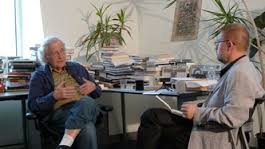
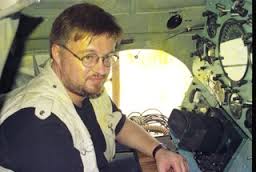
Recently I read On Western Terrorism: from Hiroshima to Drone Warfare, published in 2013 by Pluto Press here in London, and consisting of a series of conversations between Chomsky and the Czech filmmaker, journalist, and author, Andre Vltchek, who is now a naturalized American citizen. Vltchek in an illuminating Preface describes his long and close friendship with Chomsky, and explains that these fascinating conversations took place over the course of two days, and was filmed with the intention of producing a documentary. The book is engaging throughout, with my only big complaint being about the misdirection of the title—there is virtually nothing said about either Hiroshima or drone warfare, but almost everything else politically imaginable!
Vltchek, previously unknown to me, consistently and calmly held his own during the conversations, speaking with comparable authority and knowledge about an extraordinary assortment of topics that embraced the entire global scene, something few of us would have the nerve to attempt, much less manage with such verve, insight, and empathy. After finishing the book my immediate reaction was that ‘Chomsky knows everything’ and ‘Vltchek has been everywhere and done everything.’ Omniscience and omnipresence are not often encountered, being primary attributes commonly attributed by theologians to a monotheistic god! Leaving aside this hyperbole, one is stunned throughout by the quality of the deep knowledge and compassion exhibited by these two public intellectuals, and even more by their deeply felt sympathy for all those being victimized as a result of the way in which the world is organized and Western hard power has been and is being deployed.
The book left me with a sense of how much that even those of us who try to be progressive and informed leave untouched, huge happenings taking place in domains beyond the borders of our consciousness. It suggests that almost all of us are ignoring massive injustices because they receive such scant attention from mainstream media and our access to alternative sources is too restricted. And, maybe also, are capacity for the intake of severe injustice is limited for most of us. The book is well worth reading just to grasp this gap between what we care about and what is actually worth caring about. Somehow, part of what is so amazing about this exposure to the range of concerns that preoccupy Chomsky and Vltchek is the degree to which their knowledge and ethical sensitivity seems so comprehensive without ever appearing to be superficial. How do they find the time, perseverance, and energy? Of course, it helps to be blessed with high intelligence, clarity of spirit, astonishing retentive gifts, and a seeming refusal to sleep, rest, and recreate (which was among the traits I found so intimidating long ago in Noam’s Vietnam writing, my first encounters with his political thought, having earlier been awed by his revolutionary linguistics approach).
While appearing to be on an equal footing throughout this dialogic text, Vltchek does acknowledge his reverential admiration for Chomsky, this extraordinary iconic American intellectual who has remained situated on the front lines of global critical debate for the past half century. In Vltchek’s words: “”The way I saw it, we were fighting for the same cause, for the right of self-determination and real freedom for all people around the world. And we were fighting against colonialism and fascism, in whichever form it came.” “For Noam, fighting injustice seemed to be as natural as breathing. For me, it became both a great honor and great adventure to work with him.” (ix) Vltchek believes that the lines of inspiration beneath a photo of the great English scholar/seer/activitst, Betrand Russell, which hangs ion the wall in Chomsky’s MIT office are also descriptive of what drives Chomsky to such heights: “”Three passions, simple but overwhelmingly strong have governed my life: the longing for love, the search for knowledge, and unbearable pity for the suffering of mankind.” (vi, xv).
Vltchek shares with Chomsky an outlook that interprets the world on the basis of a deep structure of moral and political indictment directed at Western imperialism. Vltchek expresses this shared understanding clearly: “After witnessing and analyzing numerous atrocious conflicts, invasions and wars on all continents, I became convinced that almost all of them were orchestrated or provoked by Western geopolitical and economic interests.” (ix). The extent and gravity of the accusations is expressed statistically by Vltchek: “Along with the 55 million or so people killed as the direct result of wars initiated by the West, pro-Western coups and other conflicts, hundreds of millions have died indirectly in absolute misery, and silently.” (1) Chomsky agrees, wondering about which is the worst crime that should be attributed to the West, positing the destruction of the 80-100 indigenous people living in the Western Hemisphere before the European settlers arrived, as one option. In reflecting upon this, he abruptly shifts direction by observing, “..we are moving toward what may in fact be the ultimate genocide—the destruction of the environment.”(2) Chomsky laments that despite the overwhelming evidence of this self-destructive momentum, the challenge continues to be largely ignored by the public and the government, even in the face of dire warnings from the scientific community. The capitalist obsession with profits and capital accumulation, combined with psycho-political control over the dissemination of knowledge in even the most democratic of societies, makes it almost impossible to ‘see’ these threatening dimensions of social, economic, and political reality.
In a sense these conversations are an extended intellectual journey through the cartography of victimization brought about by Western colonial and post-colonial undertakings. Vltchek says early on “Colonialism continues but it appears that it is much more difficult for local people to point the finger and say exactly what is happening and who their enemies are.” (6) Chomsky responds “Some of the worst atrocities in the world have been committed over the last few years in the Eastern Congo. Three to five million people have been killed.” Aside from the magnitude of such a catastrophe what is so startling is its relative invisibility. This process of horrifying violence and unawareness is deeply troubling to both Chomsky and Vltchek. Chomsky repeatedly, and tellingly, refers to such victims as ‘un-people,’ those in non-Western realms whose death and suffering barely register on Western consciousness unless there are self-interested geopolitical reasons in a particular context to take non-Western suffering seriously. Both of these authors also view such tragedies as outcomes of global corporate greed, the struggle for control of Africa’s abundant natural resources leading these private sector actors to fund factions and militias that are out front, doing the fighting and killing. The true culprits hide behind curtains of evasion to remain invisible to the public. The media is shockingly complicit by reporting only on what is in view, avoiding critical investigative journalism. Chomsky and Vltchek help us to realize that an array of powerful forces are using their wealth and influence to prevent us from seeing. We are allowed to see only as much as the gatekeepers of the public mind want us to see, and yet we are not relieved from using our capacities for sight. Reading Chomsky and Vltchek removes the scales from our eyes, at least temporarily, as they have managed to elude these gatekeepers, but at considerable risk, with a display of moral courage, civic responsibility, and extraordinary intellectual energy. I learn a lesson in civics from their vigilance: as citizens of constitutional democracies we retain the freedom, and hence possess a heavy responsibility to see for ourselves what is being done in our name, and not being content by becoming informed about distant victimizations, but learning to heed above all those that are proximate, and once we see what is nearby, we have a responsibility to act.
Without venturing onto the terrain of ‘Orientalism’ the conversations are sensitive to what Chomsky refers to as “intellectual and moral colonization” that reinforces patterns of “political and economic colonization.” In this regard, he goes on to observe that “The main achievement of hierarchy and oppression is to get the un-people to accept that it’s natural.”(17), that is, to induce passivity and resignation among the ranks of the victimized. The moral consciousness of the perpetrators is also deliberately neutralized. When Chomsky inquires as to whether Europeans have “any consciousness of colonial history” Vltchek responds: “No, grotesquely there is very little consciousness.” He adds that such ignorance is “shameful and revealing”: “Europeans make sure that they remain ignorant of their horrid crimes, about the genocides they committed and are still involved in. What do they know about what their governments and companies were and are doing in DR Congo?” (20)
But just as the devil resides in the details, so too do angels of perceptions many of whom inhabit the pages of this book, and a few can be briefly mentioned here. The conversations weave a fabric of awareness that shifts back and forth between lamenting inattention and denial to the exposure of occurrences and realities that are unfamiliar yet crucially revealing. Without extending this commentary too much further, let me note some of the areas of agreement between Chomsky and Vltchek that corrected or collided with my own understanding. First, the comparison between China and India in which China is praised almost without reservation and India is condemned almost without qualification, surprisingly close to the approach taken by that arch consevative V.S. Naipaul [See Naipaul’s India, A Wounded Civilization(1977)] Their essential argument is that India is exceptionally cruel in its cultural practices, and has done relatively little to alleviate poverty, while China has made extraordinary progress that is spread widely throughout the country. Both confirm, contrary to Western propaganda and consistent with what I also experienced during a visit a year ago, that young university students in China seem fearless, raising sensitive controversial issues in public venues. In effect, India gets too much credit in the West because it possesses the trappings of liberal democracy, while China’s achievements are downplayed because socialist values are mixed with predatory capitalist practices. My own love of India has blinded, or at least numbed me, to the worst of India, and has consistently thrilled me with its cultural vibrancy and rich heritage, which included Gandhi and his incredible mobilization of a militant nonviolent challenge to the then still mighty British Empire.
The two conversationalists agree that the most encouraging political moves in the world from a progressive perspective have been made in Latin America. There are political experiments, as in Bolivia and Venezuela, that express the energies of a socialist populism with original regional and national features, and there is an encouraging set of hemispheric moves to repudiate the main signs of a crippling past dependency on the United States. Chomsky and Vltchek point out that in Latin America, and Asia, the United States has supported vicious and repressive political forces so as to secure the wealth generating interests of corporate America, personified by what might be called ‘the United Fruit Syndrome,’ or more popularly, the perpetuation of ‘banana republics.’ A telling argument made in the book is that the military dictatorships in Latin America that the U.S. helped install and sustain in the 1970s and 1980s were far more oppressive and exploitative of their populations than were the Stalinist governments in control of East Europe during the Cold War decades.
There is agreement among the authors that the heroes of the liberal establishment should be recast as villains. Two such exemplary individuals are Winston Churchill, reviled here for his criminal outlook toward African colonial peoples, and George Kennan, who is portrayed as a leading architect of the American global domination project put into operational form during the period of American ascendancy soon after World War II. Part of this exercise of demonization by Chomsky and Vltchek is to illustrate the mind games of liberal hegemonic ideology that treat such political luminaries as paragons of moral virtue. It continues the tradition of critical perception of the ruling elites that Chomsky so brilliantly set forth in American Power and The New Mandarins back in 1969.
Chomsky and Vltchek both persuasively accord great significance to the almost forgotten Indonesian massacre of 1965 in which more than a million people were sacrificed in a massive bloodbath designed to clear the way for a neoliberal takeover of the wealth producing capacity of the country. The governments of the United States and Australia have much blood on their hands in encouraging this atrocity, and its aftermath that included genocidal incidents in East Timor. The authors are negative about Asia other than China, supposing that it has swallowed a huge dose of poisonous cool aid called ‘neoliberalism.’
Such illustrative discussion just scratches the surface of these exceptionally perceptive conversations. It would be misleading to suggest that these two progressive interpreters of the whole world were in complete agreement. Chomsky is somewhat more tentative about developments in Turkey or in writing the obituary of the Arab Spring than is Vltchek who seems less nuanced in some of his commentary. Chomsky welcomes improvements and positive trends, while Vltchek believes that only structural change can make a sufficient difference to bring real hope to oppressed peoples.
In a similar vein, Chomsky seems more convinced than in the past that keeping hope alive is almost a duty expressive of solidarity with those currently victimized. More than before Chomsky is articulate about his belief that without the belief that positive change is possible, there will be no challenge mounted against an intolerable status quo.
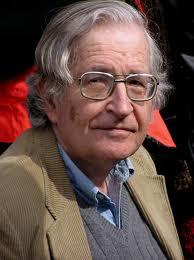
The book ends with Chomsky depicting two trajectories for the human future: either a continuation of ecological sleep leading to species suicide or an awakening to the ecological challenge, with accompanying improvements. (173) As Chomsky has aged, although far more gradually than is normal, he has somewhat mellowed, and seems less pessimistic and assured overall than when I first came to know him in the late 1960s. I would say that Chomsky’s maturity has endowed him wisdom that acts as a complement to his astonishing command over the specifics of the whole spectrum of political concerns. This substantive authoritativeness set him apart long ago as our foremost intellectual and most beloved commentator on the passing scene of world events, but now he has also become a ‘wise elder,’ and whose views of the world deserves the greatest respect from all of us.


Malala and Eartha Kitt: Words that Matter
22 OctThere are two ways of responding to an invitation from an American president. I recall that when Amory Lovins, the guru of market-oriented environmentalism, was asked about what was his main goal when invited to the White House to meet the president he responded self-assuredly: ‘To be invited back.” That is, be sure to say nothing that might so disturb the high and mighty to an extent that might jeopardize future invitations. A positive reading of such an approach would point out that Lovins was just being realistic. If he hoped to have any influence at all in the future he needed to confine his present advice to an areas situated well within the president’s comfort zone. A less charitable interpretation would assume that what mattered to Lovins was the thrill of access to such an august portal of power.
Never receiving such an invitation, I had a lesser experience, but experienced similar temptations, being invited by a kind of institutional miscalculation to be the banquet speaker at West Point at the end of an international week at this elite military academy in which the cadets and representatives from a couple of hundred colleges had been fed the government line by top officials at the Pentagon and State Department. The officer tasked with arranging the program decided that
it might be more interesting to have for once a speaker who had a more critical outlook on the U.S. role in the world. I was invited, and accepted with mixed feelings of being both co-opted and challenged. It turns out that the seductive part of the occasion was to find myself housed in a suite normally reserved for the president or Secretary of Defense; it was luxurious and so spacious that it took me some time to locate the bedroom, although I did almost immediately find the fridge stocked with beer and food. First things first. Anyway, after a momentary crisis of confidence, I decided that I should not give in to the lure of this splendid treatment. Despite some pangs of self-doubt, I went ahead and presented my prepared talk on “The Menace of American Militarism.”
The time was just after the end of the Vietnam War, and my remarks that evening were greeted with enthusiasm by the invited delegates from other colleges around the country who had endured a week of high level government propaganda, with mixed responses from the several hundred cadets who seemed divided in their reactions to what I had said, and with stony silence by the West Point faculty who evidently felt that I abused the occasion, and even at the social reception afterwards refused to talk with me or look in my direction. I suppose the justification in their view was that rudeness begets rudeness. Actually, I would have welcomed discussion of my essential contention that a permanent war footing since 1945 was hurting American society in ways difficult to overcome, creating a militarized political culture, but it was not to be. Sullen silence was their only response on that evening long ago.
The most dramatic moment at the talk occurred during the question period when a young female cadet stood up, and said some words to this effect,”[a]s I am persuaded by what you have said, would you advise me to resign my commission?” This was a challenge for which my text had no answers, nor was the audience ready for such drama. There was total silence in the vast hall. It is one thing to encourage a critical view of the role of the military in American and global society, it is another to encroach upon the life decisions of a young person whose future is being rather fundamentally called into question. Without knowing how best to respond, and I still don’t after all these years, I more or less threw the question back at her, saying “[o]n such matters, only you can decide how best to live your life.” I never discovered what happened to her, but do not feel ashamed of my response. And overall, I felt that my overall performance had kept the faith. To prove it, I was never invited back, and since that was the test I had set for myself when I accepted the invitation, I felt that the evening, awkward as it became, was not a personal failure. Whether I made some among the audience of young people think a bit differently about the country, and war/peace and security issues, I will never know.
It is against this background that I was struck a few days ago by the marvelous display of courage and composure by Malala Yousafzai who went to the White House, and media venues of great influence (The Daily Show, Diane Sawyer), to continue with her advocacy of the right of girls everywhere, but especially in her native Pakistan and Afghanistan, to receive an education, but also to link human security with the abandonment of war and violence. Malala was a kind of child marvel, apparently speaking in her neighborhood throughout the Swat Valley of such issues from the age of nine with astonishing fluency and intelligence. The fact that she was shot in the face by a Taliban extremist on her way home in a school bus a year ago gave her life and cause an immediate visibility around the world. When she rather miraculously recovered (the bullet grazing her brain) and resumed her campaign, there was an understandable admiration for a girl so young who was not only courageous, but had this burning passion for knowledge and education, but also was urging whoever would listen that war and violence could not lead humanity to a better future. Her advice: “Instead of sending guns, send pens, instead of sending tanks, send books.” “You are powerful when you have a pen because through a pen you can save lives and that’s the change we want to bring to our society.” It was a message that needed to be heard in Washington, and Malala was the ideal messenger! In fact, Washington was receptive to the education part of the message, but to the anti-war part, which it did its best to ignore.
When emerging from her meeting with the Obama family at the White House her statement was brilliantly crafted to catch the light of the occasion as well as to dispel its darkness: “I thanked President Obama for U.S. work in supporting education in Pakistan and Afghanistan and for Syrian refugees. I also expressed my concerns that drone attacks are fueling terrorism. Innocent victims are killed in those acts, they lead to resentment among the Pakistani people. If we refocus on education it will make a big impact.” The White House also made a statement praising Malala for her commitment to education and courage, but pointedly overlooking that part of her comment devoted to drones. Such silence in view of such a challenge has an eerie quality. Such a reaction from the president tried to make Malala stand for only a message about education, when in reality her real message was to connect education with peace and real security. Not since the great seer of Brazil, Paolo Friere, told of the emancipatory potential of teaching illiterate peasants how to read and write had someone so powerfully linked learning and empowerment (see Friere’s Pedagogy of the Oppressed for a transformative account of his work in the Brazilian countryside).
Of course, so long as Malala’s exploits validated an anti-Islamic and pro-American slant, it is a no brainer to celebrate her achievements, even lamenting the oversight by the Nobel Prize selection committee, and generally commend a campaign that wants to see girls everywhere empowered by education. The harder part is being able to listen to a critical comment that touches on a life and death issue such as the terror wrought by drones in Pakistan. In my view, for Obama to ignore that part of Malala’s message is to dishonor her visit, and exploit it for his own public relations purposes! It is somewhat odd that Obama failed to listen to Malala whole message. After all, only recently did the United States Government announce that it is ceasing drone attacks on Pakistan due to the adverse reactions among Pakistanis. Obama seemed able to listen to Medea Benjamin a few months ago when she disrupted his drone talk at the National Defense University. Obama might have used this occasion to acknowledge that he was listening and heeding the cries of anguish coming from distant communities facing the terrorizing threats of drone warfare, but then again, I should know better. Our warrior presidents always seem afraid of appearing weak if they show the slightest compassion for the victims of our militarism, while proudly standing tall while weeping over the bodies of those victimized by the enemy as in relation to the recent.
Malala’s experience reminded me of another White House event 45 years earlier. Eartha Kitt, a beloved African American singer who whispered her sensual lyrics into the microphone, earning her the alluring label of ‘sex kitten,’ was invited to the White House as one of fifty prominent women to discuss the rise of urban crime among American youth with the President Lyndon Johnson’s wife, Ladybird. It was January 1968 at the height of the Vietnam War, which was casting a dark shadow over the LBJ’s presidency, so much so that he would shock the country a few months later by decreeing a bombing pause in the war and announcing his completely unexpected decision not to seek a second presidential term in office. When Eartha Kitt was given the opportunity to speak a few words she seized the moment, saying what any reasonably sensitive person well understood, that there were connections between sending young Americans off to risk death in a senseless war and the alarming drug/crime scene in the country’s cities. But for the mostly white and august women at this White House luncheon it was a shocker. The rest of the guests, apparently without exception, were reported to react in “embarrassed silence” to what the NY Times condescendingly described as “an emotional tirade against the war.” Worse yet, Ladybird Johnson was “stunned” and “in tears,” presumably realizing that her ‘do good’ luncheon had collapsed before the desert had even been served. This smart Texas First Lady was personally bold and liberal, inviting popular cultural figures such as Eartha Kitt along with her more reliably loyal cohort to discuss a national issue. But what does Eartha Kitt do, but spoil the occasion by refusing to play along, and treat urban crime as some sort of domestic disorder that could be delinked from the Vietnam War. Such delinking was absurd, considering that it was the poor and minorities who were doing most of the fighting and dying in Vietnam.
Eartha Kitt’s comments at the White House luncheon are worth recalling: “You send the best of the country off to be shot and maimed. They rebel in the streets. They take pot…and they will get high. They don’t want to go to school because they’re going to be snatched off from their mothers to be shot in Vietnam.” Perhaps, not the most eloquent statement, but it was authentic, replete with genuine feelings. She was made to pay dearly for these words of truth telling. In a chilling aftermath, Eartha Kitt’s career came virtually to an end. Many contracts to appear at clubs were cancelled, few new opportunities for performances or recordings emerged, her career was severely damaged, if not destroyed. Nothing was forthcoming from the White House in her defense. To her credit, despite these cruel pressures and harsh backlash, Eartha Kitt never backed down, never apologized.
I connect Malala and Eartha Kitt in my mind because both seized the moment to speak truth to power, probably sensing that it meant they would never be invited back, and for Eartha Kitt it was worse than that. It seems almost certain that neither of these fearless women would have been invited in the first place if their intentions to speak out had been known in advance. America is a democracy so long as its dirty laundry is kept from public view, but when such obvious moral failures as the Vietnam War or drone attacks are exposed, the response from on high is one of shocked hurt, anger, or at best, silence and deflection. Revealingly, for Earth Kitt the response was vindictive, but for Malala it is likely to be one of moving on, ignoring the drone comment, and refocusing on the liberal part of her mission as a crusading advocate of education for women as a matter of right (while suppressing the more radical part that condemns warmaking and military intervention). Happily for the White House, the media played along, emphasizing how Malala giggled like a young and innocent adolescent when she met the queen in Buckingham Palace a few days later.
Tags: Amory Lovins, Eartha Kitt, Malala, Malala Yousafzai, Pakistan, United States, Vietnam War, White House