
Prefatory Note: A few days ago I published an earlier version of this article in Al Jazeera English, but have revised it to take account of the developments in Libya of the last several days, as well as some comments about the criminality of prior Taliban rule in Afghanistan. The essential points remain that foreign military intervention, even with a UN mandate, is costly, unclear in its impact on human rights, and likely to interfere with political dynamics governed by the play of internal forces and the logic of national self-determination.
************
On January 31, 1968 the combined forces of North Vietnam (DRV or Democratic Force of Vietnam) and the NLF (National Liberation Front) launched a spectacular series of attacks throughout the contested territory of South Vietnam. As many as 100 Vietnamese cities and towns were simultaneously attacked, 36 of 44 provincial capitals were captured, and the once impregnable American Embassy complex in Saigon was penetrated and several guards killed. These attacks were all repelled in a few days, with the Vietnamese taking huge losses, 37,500 estimated deaths, which came on top of 90,000 lost soldiers in the preceding months. The American commander, General Westmoreland, had confidently predicted prior to the Tet Offensive that the NLF would never be able to replace such losses, and victory for the United States in the Vietnam War was near at hand.
During the Tet Offensive the American losses were announced as 2,500. This ratio of comparative deaths, and the fact that the DRV/NLF could not maintain their presence in any of the urban areas that they briefly controlled, led Westmoreland and counterinsurgency experts to claim a military victory for the American side. Add to this the evidence that the Vietnamese objective of these coordinated attacks on the points of Saigon’s governmental control in Vietnam was not primarily to kill or even to seize control of the country but to inspire popular uprisings by the people of Vietnam, and these hopes of Hanoi never materialized anywhere in the country. This ‘defeat’ was acknowledged by the DRV commander General Tran Do who confirmed that the purpose of the Tet Offensive had been to stimulate a spontaneous uprising among the Vietnamese population against the continuing American military occupation of their country. This convergent perception of the Tet Offensive by both sides seemed authoritative, and yet, and this is my point, yet it proved to be politically irrelevant. General Do’s words uttered after the fact emphasize the secondary objective of the Tet Offensive: “In all honesty, we didn’t achieve our main objective, which was to spur uprisings throughout the South. Still, we inflicted heavy casualties on the Americans, and their puppets, and this was a big gain for us.”
But what made these American casualties so important was not the loss of life. What made these death so deeply disturbing was their unsettling impact on both backers and opponents of the war in Washington, the backers because their belief that victory was at hand was shattered and the critics because the lies emanating from Washington had been finally exposed. If General Westmoreland was not deceived or lying the American casualties sustained during the Tet Offensive could not have happened given the supposed decimation of the Vietnamese enemy. If these expectations of an imminent victory had not been discredited by the Tet Offensive, the dramatic event would have been coolly diagnosed as a desperate lost gamble by the Vietnamese, and rather than turning attention to an exit strategy would have led to an intensified effort to achieve total victory on behalf of the Vietnamese regime in Saigon that had welcomed the American intervention.
It was the shock effect on the American mood about the war that transformed the Tet Offensive into a big victory for the Vietnamese regardless of what their intentions for the mission had been or the unacceptable level of losses sustained. The scale, scope, and surprise of the Tet Offensive had an immediate traumatic impact on American public opinion and related Congressional support for continuing the Vietnam War. The Vietnamese military leadership was also slow to appreciate the real importance of Tet. As General Do put it, “As for making an impact in the United States, it had not been our intention—but it turned out to be a fortunate result.” The Tet Offensive was interpreted by all sectors of opinion on the war as opening a ‘credibility gap’ between the government and the citizenry. This gap consisted of the space separating the excessively optimistic assessments relied upon by the White House to quiet opposition to a growingly unpopular war from the reassurances being given to the increasingly restive backers of the war. The Tet Offensive conclusively demonstrated to the vast majority of the American people that the prior claim by Washington that the Vietnamese adversary was abjectly knocking on the door of defeat, on the verge of surrender or collapse, was far removed from the truth. The Tet Offensive had such an unsettling effect on the American body politic that the incumbent president and assumed candidate for reelection in 1968, Lyndon Johnson, acknowledging his failure to achieve victory in the Vietnam War abruptly withdrew from the presidential race, declared a pause in the bombing of North Vietnam allegedly to give diplomacy a chance to end the war through negotiations, and firmly rejected a request from U.S. commanders in Vietnam for a troop surge.
It is true the war dragged on for several more years with heavy casualties on both sides, but the Tet Offensive radically altered the American goal from ‘victory’ to ‘peace with honor,’ that is, ‘defeat in disguise.’ At the time Henry Kissinger, the foreign policy architect of the Nixon presidency, was only hoping for ‘a decent interval’ between the American withdrawal and the collapse of the client regime in Saigon. The subsequent Christmas bombing of Hanoi and the disastrous air attacks on the Cambodian countryside (that led directly to the Khmer Rouge genocidal takeover of the country) were part of the futile effort by the Nixon/Kissinger presidency to produce the token victory that they called ‘honor.’ Actually, when the war finally came to an end in 1975, the dominant image was of Vietnamese collaborators with the American intervention desperately seeking to escape from Vietnam by clamoring aboard a helicopter taking off from the roof of the U.S. embassy. Not honor but humiliation, chaos, and defeat became the end game for the United States in Vietnam, or put differently, the price paid with thousands of Vietnamese, Cambodian, and American lives to avoid wounding American pride and geopolitical standing was all in vain.
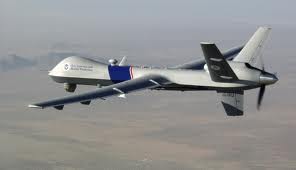
To this day, counterinsurgency professionals in Washington think tanks and the Pentagon contend that the United States snatched defeat from the jaws of victory. This distorted reading of history partly explains why American policymakers have failed (and refused) to learn the defining lesson of the Vietnam War: the virtual impossibility in the early 21st century of turning military superiority on the battlefield enjoyed by an intervening party into a favorable political outcome against an adversary that effectively occupies the commanding heights of national self-determination. That is in this century the symbols of legitimacy count in the end for more than drone technology and the weaponry of destruction. This American and NATO learning disability has led directly to embarking upon subsequent legally and strategically problematic interventions, especially in the period since the 9/11 attacks of a decade ago: Afghanistan, Iraq, and Libya. Military superiority succumbs over time to the strong historical tides of the last seven decades favoring the forces aligned with the politics of self-determination. Among other explanations for this conclusion that cuts against the grain of political realism is this: the intervening side gets tired of an unresolved struggle long before fatigue sets in for the side defending national territory. An Afghan aphorism expresses this insight: “You’ve got the watches, we’ve got the time.” Since 1945 nationalist endurance consistently outlasts and outwits geopolitical endurance, and by so doing eventually offsets the asymmetries of military capabilities.
But my reason for recalling the Tet Offensive is less about this primary feature of conflict in our time, especially in the setting of what Mary Kaldor has usefully called ‘new wars,’ than it is to comment upon contradictory perceptions of victory and defeat. These conflicts tend to be resolved on political battlefields far from sites of military violence, although each struggle has its own story to narrate. What seems to count most in the end is a decisive shift in political perceptions on the home front of the intervening side. Neither the successful response to the attacks in terms of casualties or restored control of the cities in South Vietnam, nor the failure of the attacks to be followed by popular uprisings by the Vietnamese people mattered so far as the historical significance of the Tet Offensive is concerned. It was also not relevant that the military appraisal made by both sides was wrong, although the Vietnamese side was less wrong as the spike in American casualties added strongly influenced the political reassessments of the conflict by the White House and caused widespread consternation among the American people that increased pressures to withdraw from the war.
This recall of the Tet Offensive is not meant to be an exercise in historical memory or even in the differences between how the military thinks and how the political process in a liberal democracy works. It is rather a frustrated commentary on the increasingly absurd refusal of the Obama presidency to acknowledge the American failure to defeat the Taliban and put the governmental structure in Kabul under pro-Western secular custody, the role confidently assigned years ago to Hamid Karzai. As with Vietnam, the American public is continually being told by the military commanders and political leaders about how well things are going, and even when unexpected setbacks do take place, these are quickly dismissed as ‘one-off’ incidents that should not become occasions for reappraisal. There was a recent disappointment in some liberal establishment circles within the United States that were growing skeptical about continuing the intervention in Afghanistan when the execution of Osama Bin Laden in May was not followed by a credible and liberating claim from Washington of ‘mission accomplished,’ which would have positively reclaimed the notorious miscalculation by George W. Bush in the early months of the Iraq War. Such a claim would have played well throughout the American heartland, and probably given Obama a clear path to an electoral victory in 2012. Public opinion according to recent polls would applaud an accelerated withdrawal of NATO forces from Afghanistan: 59% of Americans would like to see all American troops taken out of Afghanistan immediately or within a year, while only 22% believe that the United States has sufficiently defined goals to make the war worthy of American military engagement.
The American people have become generally opposed to foreign military intervention, although this attitude could quickly be reversed in the event that foreign extremists were able to inflict major damage on perceived American interests. According to Newsmax, August 11, 2011, only 24% of Americans support the U.S. military role in Libya, and 75% believe that the United States should not engage in overseas military action “unless the cause is vital to our national security.” It is obvious that for most Americans Libya was never seen as ‘vital,’ and the justification relied upon by the White House did not even pretend that ‘security’ was the rationale for military intervention, but invoked ‘humanitarism,’ which never qualifies in political arenas as a cause worth dying for. Of course, leaders will always argue that an intervention undertaken is vital, and could hardly do less, considering that lives of their citizens are put at risk. But what these poll results show is the common sense currently displayed by American public opinion: reject humanitarianism as an adequate basis for war making along with distrust of the post-facto security arguments put forth by elected leaders; healthy doubts about the self-serving claims of the military to be closing in on victory if only the public is patient and the leaders dispatch more troops. But such wars go on and on, however dysfunctional, the bodies pile up, and the political opposition is disregarded, and this despite what would have hoped was the cautionary influence exerted by the realization that the American empire teeters on the edge of financial disaster.
True, after months of NATO bombing the anti-Qaddafi movement seems on the verge of victory. As with Kosovo in 1999, the Libyans seem overwhelmingly opposed to Qaddafi dictatorial rule and solicited the intervention. In these circumstances military intervention can succeed, but at a high price in terms of devastation and civilian collateral damage, especially in a casualty-safe war carried on from the air. Yet the outcome yet make clear, as the respected foreign policy expert on the UN and the Arab World Phyllis Bennis reminds us, whether it will be the Libyan people or the oil companies and NATO that benefit from the war and the destruction of the Qaddafi regime. We do already know, or at least should realize, that the whole NATO operation sets a bad precedent for the UN. Its authorization of the use of force back in March 2011 in Security Council Resolution 1973 was framed in terms of protecting civilians in imminent danger of massacre, but the NATO operation was carried out in such a manner as to achieve regime change by tipping the balance in what became an all out civil war. In this respect that guidelines in 1973 were so vague and loose as to be worthless or NATO exceeded the authority granted, despite the language of ‘all necessary measures,’ and there was no effort to contain the military operations within the intended scope of 1973. In this latter regard, the five abstaining states (China, Russia, India, Brazil, and Germany ) are derelict in their failure to insist on adherence to the guidelines associated with civilian protection, which certainly did not extend to bombing the personal compound of Qaddafi or the state TV facilities.
Several observations follow. During the Vietnam Era public opinion counted for more when the government was making its political calculations about continuing an unpopular war. Unquestionably, there has been a decline in democratic accountability in the United States with respect to war/peace issues. In part, this reflected the presence of a robust peace movement during the Vietnam War, which in turn arose as an angry response to the military draft that threatened the wellbeing of middle class America. Now there is no draft, the war is fought with professional soldiers, drones, and private contracting firms. Furthermore, the weaponry and tactics are designed to minimize American casualties relative to the destruction inflicted. Unfortunately, the lessons learned from a decade of warfare in Vietnam were not about whether to intervene in new wars but how. It may be that in place of international law and political prudence, both of which should rationally discourage interventions at odds with the logic of self-determination, the new source of restraint will derive from fiscal pressures to reduce defense spending. So far the militarist consensus in Washington has largely exempted the bloated U.S. defense budget from the knives of the cost cutters, who openly advocate socially regressive cost-cutting while calling for increases in defense spending. Even the more socially sensitive Obama democrats have largely continued to acquiesce in this willingness to treat the defense budget as non-discretionary, as well as proudly claiming to have increased military assistance to Israel.
When an American helicopter was shot down on August 6th, the 66th anniversary of the Hiroshima bombing, and all 30 persons aboard were killed, including 22 members of the Navy Seals Elite Unit, I hoped that this would administer a Tet-like shock. The Obama administration could have used the occasion to say that it was time to bring American troops home and end involvement in the struggle over the political future of Afghanistan. It is common knowledge by now that the Afghanistan War is being fought against the nationalist Taliban and on behalf of a corrupted and incompetent Kabul regime for the political control of the country. It should be understood that the prior period of Taliban rule exhibited fundamentalist rule in an unusually violent and harsh form that exposed the Afghan population to massacres and crimes against humanity. Whether today’s Taliban, a less centralized organization would repeat its crimes of the past unknown in advance, and does lead to reasonable disagreement about the best course of action, which seems to be the choice of what seems to be ‘the least worst option’ at the moment.
The unresolved conflict in Afghanistan is a clear and complex instance of the sort of ‘new war’ that will not be decided once and for all on the battlefield by soldiers and weapons or through the anachronistic agency of foreign intervention. The strategic justifications advanced to justify the war—preventing a future sanctuary for a reconstituted Al Qaeda and avoiding the takeover of Pakistan by extremists– seem highly questionable. It is more plausible to promote such security goals by closing out a military intervention that fans the flames of anti-Americanism, gives extremism a good name in Pakistan, and exhibits once again the impotence of American imposed military solutions.
Such an analysis yields a single moral, legal, and prudential imperative: when foreign intervention is losing out to determined national resistance, leave the country quickly, stop the killing immediately, and declare victory with pomp and circumstance or leave in dignified silence acknowledging the uncertainties surrounding the future, especially as to whether the Afghans on their own can work out accommodations and whether the Taliban this time round is ready to compromise and is less dogmatic in its understanding of Islamic governance. At this stage of the conflict in Afghanistan these are the only outcomes within reach for the United States. Moving toward their embrace might also help avoid such misadventures in the future. This would require replacing the palace guard in Washington that has been calling the shots in American foreign policy for many years. I admit that a Beltway realist reading these musings would likely respond: “Dream on!” And that is the problem!






Libya without Qaddafi: Decoding an Uncertain Future
26 AugThere is so much spin surrounding the Transitional National Council victory in Libya that it is difficult to interpret the outcome, and perhaps premature to do so at this point considering that the fighting continues and the African Union has withheld diplomatic recognition on principled grounds. Almost everything about the future of Libya has been left unresolved, beyond the victory of the rebel forces as massively assisted by NATO air strikes as well as a variety of forms of covert assistance given to the anti-regime Libyans on the battlefield. Of course, in the foreground is the overthrow of a hated and abusive dictator who seemed more the outgrowth of the surrealist imagination than a normal political leader who managed to rule his country for more than 42 years, and raised the material standards of the Libyan people beyond that of other societies in the region.
It does seem that the great majority of the Libyan people shared with others in the region a thirst for political freedom. The initial uprising seems definitely inspired by the Arab Spring. But unlike the other populist challenges to authoritarian Arab states, in Libya the anti-regime forces abandoned nonviolent tactics at early stage and became an armed uprising. This raised some doubts and widespread fears about the onset of a civil war in the country, but it also brought forth a variety of explanations about the murderous behavior of the regime that left its opponents no alternative.
Now with Qaddafi gone as leader, if not yet captured or killed, a new central concern emerges. What will the morning after bring to Libya? At the moment it is a matter of wildly divergent speculation as the unknowns are so predominant. There are a few observations that clarify the main alternatives. More favorably than in Egypt or Tunisia, this populist uprising possesses a revolutionary potential. It has seems poised to dismantle the old order altogether and start the work of building new structures of governance from the ground up. The fact that the TNC resisted many calls for reaching an accommodation or compromise with the Qaddafi regime gives the new leadership what appears to be a clean slate with which to enact a reform agenda that will be shaped to benefit the people of the country rather than foreign patrons. This opportunity contrasts with the messy morning after in Egypt and Tunisia where the remnants of the old order remain in place. In Cairo numerous demonstrators were sent to jail, and reportedly tortured, after new demonstrations were held in Tahrir Square led by those fearful that their political aspirations were being destroyed by the same old bureaucracy that had provided Mubarak with his oppressive structures of authority that made the country safe for neoliberal exploitation and unsafe for constitutional democracy. Let’s hope that the TNC can sustain Libyan unity and commit itself to the building of a democratic constitutional order and an equitable economy step by step. It will not be easy as Libya has no constitutional experience with citizen participation, an independent judiciary, or the rule of law. Beyond this, political parties, non-state controlled media, and civil society were absent from Libya during the Qaddafi era.
And then there is the big possible problem of NATO’s undefined post-Qaddafi role. The air war inflicted widespread damage throughout the country, and already NATO entrepreneurial interests are staking their claims, and TNC spokespersons have indicated that those who lent their cause support will be rewarded in appreciation. Fortunately, NATO does not purport to be an occupying force, but the United States and the principal European countries that took part in the war are pulling strings to release billions of dollars of assets of the Libyan state that were frozen in compliance with Security Council Resolution 1973 and various national directives, and may well be playing a major advising role behind the scenes. Will this dynamic of enabling the new leadership to achieve a finance recovery and reconstruction in Libya come as part of a package containing undisclosed political conditions and economic expectations? There are signs that oil companies and their government sponsors are scrambling to get an inside track in the current fluid situation. It does not require paranoia about imperialist geopolitics to take note of the fact that the two major military interventions in the Arab world within the last decade were both situated in significant oil producing countries whose leadership rejected integration into a world order in which global energy policy was under the firm control of the market interests of international capital. And, oh yes, the other likely target of major Western military action is Iran, and it too ‘happens’ to be a major oil producer. Let us recall that the UN failed to respond in oil-free Rwanda in 1994 when a small expansion of a peacekeeping presence already in the country might have saved hundred of thousands from an unfolding genocidal onslaught. In the realm of world politics, it may be worth observing, coincidences rarely happen.
There are also significant unresolved issues associated with the precedent set by the UN in authorizing a limited protective intervention that when acted upon ignored the guidelines set forth by the drafters of the Security Council resolution. The actual scope and ill-disguised purpose of the intervention shortly after it became an operational reality in Libya was to tip the balance in a civil war and achieve regime change. Such goals were never acknowledged by the pro-intervening governments in the course of the extensive and sharp Security Council debate, and had they been, it is almost certain that two permanent members, China and Russia, given their reluctance to approve of any use of force in the Libyan situation, would have blocked UN action by casting a veto. The UN is confronted by a dilemma. Either it refuses to succumb to geopolitical pressures as was the case when it withheld approval from the United States plan to attack Iraq in 2003, and steps aside while a so-called ‘coalition of the willing’ is hastily formed to carry out an attack, or they grant some kind of limited authority that is cynically overridden by the far more expansive goals of the intervening governments as has been the case in Libya. Either way respect for the authority of the UN is eroded, and the historical agency of geopolitics is confirmed.
In the Libyan case, the evaluation of the UN role is likely to depend on what happens in the country during the weeks and months ahead. If a humane and orderly transition takes place in the country, and national resources are used to benefit the people of Libya and not foreign economic interests, the intervention will be effectively marketed as a victory for humane governance and a demonstration that the international community can engage in humanitarian intervention in an effective and principled manner. If the country descends into chaos as the Libyan victors fight among themselves for the political and economic spoils or take revenge on those associated with the Qaddafi regime, the intervention will be retrospectively discredited. This will happen also if the country becomes one more neoliberal fiefdom in which the majority of the population struggles to subsist while tiny elites sitting in Tripoli and Benghazi collaborate with foreign financial and corporate interests while skimming billions off the top for themselves.
This assessment of the intervention as a precedent is based on considering only its consequences. As such, it does not take into account the importance of maintaining as a matter of principle, the integrity of UN authorizations of military force both in relation to the UN Charter and with respect to confining the military undertaking to the strict limits of what was authorized. I will consider in a companion essay this issue of sustaining constitutionalism and the rule of law when the Security Council authorizes military action.
Tags: African Union, Arab people, Libya, Muammar al-Gaddafi, NATO, United Nations, United Nations Security Council, United States