Archive | Crimes of State RSS feed for this section

Why Congress Should Say to ‘No’ on Syria

6 Sep

[I am not sure this attempt at clarifying the present stage of the Syria debate adds much to my prior posts, yet I hope that it provides a kind of summary that is helpful in following the unfolding debate; all along I have felt that the Syrian impasse presented the UN and the world with a tragic predicament: trapped between doing something to stop the Assad regime from committing atrocities against its own people so as to retain power and the non-viabiility and illegality of military intervention, a predicament further complicated by the proxy war within the region along sectarian lines, by the strategic involvement of the U.S. and Russia on opposite sides, the maneuverings behind the scenes by Saudi Arabia, Qatar, and Israel, and the avowed Turkish support for regime-changing intervention; also, the overall regional turmoil, and past bad feeling in relation to the UN role in the overthrow of Qadaffi posed additional obstacles; efforts to shape the political outcome by military means, because of the proxy war dimensions (including an increasingly evident, although still surprising, tacit alliance between Israel and Saudi Arabia) have so far only escalated the violence on the ground in Syria; Turkey, Russia, and the United States have all along  oscillated between principled and pragmatic responses favoring one side or the other, and exhibiting an ambivalent commitment to equi-distant diplomacy.]

There are three positions that have considerable support in Washington circles, although rarely acknowledged and not popular with the public, partly because of recent foreign policy failures, and partly too removed from perceptions of genuine security interests:

–undertake an attack to uphold ‘red line’ credibility of the president and the United States Government;

–undertake an attack too avoid an insurgent defeat, but on a scale that will not produce an insurgent victory; goal: keep the civil war going;

–undertake an attack to convince Iran that Obama is ready to use force if diplomatic coercion doesn’t work.

There are several other considerations that need to be taken into account:

–the Assad regime is guilty of numerous crimes against humanity aside from and prior to its probable (although far from assured) responsibility for the August 21st attack with chemical weapons on Ghouta; Syria lacks a legitimate government from the perspective of international criminal law; with respect to the violation of the Geneva Accord with respect to chemical weapons, the responsibility of Assad personally and the Syrian government generally has not been established beyond a reasonable doubt at this point;

–nevertheless, the Assad regime retains considerable support from various segments of the Syrian population, possesses substantial military capabilities, and is unlikely to collapse without a major ground invasion; the Assad government retains a measure of legitimacy from the perspective of the politics of self-determination;

–insurgent forces are divided, without coherent leadership, and are also responsible for committing atrocities, and contain political extremists in their ranks; a victory by the insurgency does not seem likely to lead to legitimate governing process from the perspective of law and morality;

–the negative American experiences of relying on war in Vietnam, Iraq, and Afghanistan should create a presumption against the authorization of force and reliance on military option in conflict situations; there is mounting evidence from past cases that the costs and risks associated with military options tend to be grossly understated during pre-war debates in the United States due partly to the political mobilization role played by mainstream media;

–the diplomatic alternative to force has been handicapped by its past abuse in the UN Security Council with respect to Libya authorization of ‘responsibility to protect’ undermining the trust of Russia, China, and others, and by the refusal to bring Iran into the political conversation as a key actor.

Against this background there are four important independent reasons for Congress to withhold authorization in this instance:

–a use of force that can neither be justified as self-defense, nor is authorized by the UN, is contrary to the UN Charter, which is an obligatory treaty, as well as being the most serious type of violation of international law in a post-Nuremburg world; the Nuremberg precedent with regard to crimes against peace (as the ‘crime of crimes’) should be respected, especially by the United States, which continues to serve for better and worse, as  the main normative architect of world order;

–the Kosovo precedent of ‘illegal, but legitimate’ is not applicable as a military attack is not likely to achieve either its political goals of ending the civil war and of causing the collapse of the Assad regime, nor its moral goals of stopping the slaughter and displacement of the Syrian people, and the devastation of their cities and country;

–even if the political and moral goals could be achieved, Congress, as well as the president, lacks the authority to authorized foreign policy uses of force that are incompatible with the UN Charter and international law;

–Congress should defer to domestic and world public opinion that clearly is opposed to a proposed military attack in the absence of an exceptional demonstration can be made as to the positive political and moral benefits of such an attack; for reasons mentioned, no such demonstration can be made in this instance; even the European Union has withheld support for a military attack on Syria at the

September meeting of the G-20 in St. Petersburg; only France among America’s traditional allies supported Obama’s insistence on reliance on a punitive military strike, supposedly for the sake of enforcing international law, bizarre reasoning because the rationale reduces to the following proposition: in view of the political realities, it is necessary to violate international law so as to be able to enforce it.

##

Questioning Obamacare for Syria

5 Sep

When it comes to war, Obama is okay just this once, especially for Republicans


            There is something particularly distressing about the ongoing debate on authorizing an internationally illegal and immoral military attack on Syria: a show of political support on the right. Such a ‘coming together’ of some of the center and much of the right in the American Congress has been sadly absent during Obama presidency until now, whether the issue was health, taxes, social services, keeping the government running, and immigration. And this support emerges on the rare occasion when a majority of American citizens, not known for their cosmopolitan sentiments or affection for the UN Charter, oppose attacking Syria, as was the British Parliament, and as is public opinion throughout Europe. In such a setting, it is not only international law and the UN are being repudiated in a war/peace situation, but the whole fabric of democratic accountability to law and the judgment of the people.


            At least we can conclude that the reactionary tendency in American political life over the course of the last decade or so is consistent in its adherence to irresponsible means in the pursuit irresponsible ends. It appears that the real selling point for the looming attack on Syria is not for the sake of the Syrians, but to warn the leadership of Iran that it is next on the White House hit list unless it soon surrenders to Washington’s demands, echoing those more stridently made by Israel. Is this what global leadership of the United States has come to mean? To let adversaries be reminded that the global bully means business.


            And what about damaging the Obama legacy? There is a loss/loss feeling about the eventual attack, if indeed it should happen. If the attack on Syria is truly limited and does not produce many civilian casualties, his Republican champions, including such hawkish stalwarts as Senators McCain and Graham, will quickly change sides, arguing that doing such a slap on the wrist is worse than doing nothing. The broadening of the Congressional resolution suggests that the hawk support depends on launching a major attack that has much wider ambitions than what Obama seemed to favor in his call to Congress for authorization. Does he heed his earlier concept of the attack or go along with his more militarist supporters?


            If, as seems probable, there are casualties, retaliations, escalation, diplomatic fallout, persisting civil strife, cross border spillover effects, then Obama is almost sure to face a grassroots protest movement expressing national and global disaffection, and including some of those Democrats who go along because a ‘red line’ once drawn by an American president needs to get respect, even if the cost of doing so is irresponsible, irrational, imprudent, illegal, and immoral. Carrying out Obama’s preferred course of action would mean reverting to the once derided ‘Nixon madman’ approach to foreign policy, that is, inhibiting the Kremlin during the height of the Cold War by making their leaders believe that the American president was trigger-happy and crazy. Do whatever it takes to make sure else that America is feared around the world, endowing even its ill-advised threats with maximum potency. This iron fist style of ‘keeping of the peace’ is totally divorced from adherence to international law and support for the UN. It excessively values keeping ‘the military option’ on the table at all times in the hope of either annihilating its enemies or make them suffer the consequences of opposition to Washington ideas about how to run the world.


            If Congress responds with an authorization for force in Syria, and even in a form that exceeds what the president requested, it will no doubt recall the last major Congressional dark folly: the infamous Gulf of Tonkin resolution, giving LBJ a blank check to widen the Vietnam War in ways of his devising. His first step was to escalate the American engagement by attacking North Vietnam from air and sea in 1965. It is never pleasant to revive bad memories except possibly to avoid another foreign policy fiasco, as well as to deepen the impression that America as a imperial superpower has lost its capacity to learn from past mistakes.


            Dear friends, if the only way America can seem strong is to cast itself in the role of global bully, supplanting the earlier somewhat more understandable imperial cover of pax Americana, then the wise and virtuous will conclude, if they have not already, that America is actually weak. In this century true strength will not be measured by degrees of military dominance and battlefield victories, but by helping to solve the growing agenda of national, regional, and global problems endangering the future of humanity.

Such a constructive path can only be taken if the major states show respect for international law and the UN Charter as the foundational premises of a sustainable world order. Thinking otherwise, that the history will be interpreted from the militarist perspectives of those who base human and societal security on a global war machine places global civilizations, and even the human species, on a slippery slope of extinction, nothing less! At this time, we need to fear more a clash of rationalities than a clash of civilizations, although both should be transcended.


            Could it not be offered in response that such thoughts are a hysterical over-reaction to what will be at worst a flash flood soon to be forgotten? Along these lines, it is contended that any attack on Syria is likely to be over in several days (although the current language of the resolution offers a wide open window to war making by extending authorization to 90 days), the reaction by Syria and its friends, if any is forthcoming, will probably be muted, and life in America, the Middle East, and the world will return to what passes for ‘normalcy.’ Even if we assume that such a moderate unfolding is more or less accurate foretelling, yet even so, the effect would be deeply destructive. It will enable most of us to remain ignorant of an underlying frightening reality: our body politic suffers from this crippling disease of ‘martialitus’ for which there is no known cure, and at present not even a widely agreed upon diagnosis. Indeed, the disgraceful edifice of global surveillance may have as its primary task suppressing knowledge that our political leaders suffer from severe versions of this disease. Snowden, Manning, and Assange were likely seen to pose such a great danger because they were attempting to remove the geopolitical cataracts clouding our vision of such a distressing political reality. After such knowledge, there would be no forgiveness, only urgent responsibilities. Under these conditions cultivating the false consciousness of normalcy is itself an ominous sign of a collective refusal to acknowledge the disease, much less to begin treating it by such moves as a Congressional resolution requiring the president to obtain authorization for non-defensive force from the United Nations and under all circumstances act in accordance with the requirements of international law as objectively determined. It would be also important to insist that the government move toward fulfilling its obligations under the Nonproliferation Treaty of 1968 by tabling a proposal for phased and verified nuclear disarmament. It may also be appropriate to introduce a resolution in Congress that would make mandatory a declaration of war in all instances where international force was to be used by the United States other than in circumstances of genuinely imminent foreign attack.


##

Contra Syria Attack

30 Aug

At this stage Informed opinion agrees that the response to the presumed Assad regime’s responsibility for the use on August 21st of chemical weapons in Ghuta, a neighborhood in the eastern surrounding suburbs of Damascus, is intended to be punitive. This is a way of signaling that it is a punishment for the alleged use of chemical weapons, and at the same time denies any ambition to alter the course of the internal struggle for power in Syria or to assassinate Bashar el-Assad. Of course, if it achieved some larger goal unexpectedly this would likely be welcomed, although not necessarily, by such convergent  centers of concern on Syrian policy as Washington, Ankara, Riyadh, and Tel Aviv.

Why not necessarily? Because there is a growing belief in influential Western circles, highlighted in a cynical article by Edward Luttwak published a few days ago in the NY Times, [“In Syria, America Loses if Either Side Wins,” Aug. 24, 2013] that it is better for the United States and Israel if the civil war goes on and on, and there are no winners. Accorded to this warped reasoning, if Assad wins, it would produce significant regional gains for Iran, Russia, and Hezbollah; if the Syrian Free Army, and its Nusra Front and Al Qaeda allies win, it is feared that it would give violent extremist forces a base of operations that would likely work strongly against Western interests. Only Turkey, the frontline opponent of the Assad regime, and Saudi Arabia, the regional champion of Sunni sectarianism, stand to gain by resolving the conflict in favor of the Sunni-led opposition forces as that would both contribute, as Ankara and Riyadh see it, to greater regional stability, augment their preferred sectarian alignment, and inflict a major setback on Iran and Russia.

Turkey and Saudi Arabia are split on whether it matters that upon the fall of Assad, a regime would be defeated that has repeatedly committed crimes against humanity in waging a war against its own people. Their contradictory responses to the el-Sisi coup and massacres in Egypt are illuminating on this score: Turkey adhered to principle despite a sacrifice of its short-term material and political interests in the Middle East, while Saudi Arabia has rushed in to provide Cairo with massive economic assistance and a show of strong diplomatic support for a military takeover that is crushing the leading Muslim political organization in the country.

Another way of thinking about the grand strategy of the United States in the Middle East after the dust from the Arab Spring began to settle in the region is suggested by the noted Israeli peace activist and former Knesset member, Uri Avnery [“Poor Obama,” August 31, 2013]: the U.S. Government at work frantically behind the scenes to restore the function of governance to military dictators, with Egypt the new poster child. Avnery attributes these Machiavellian machinations to CIA masterminds swimming in dark waters, entrapping Obama by overriding his strong rhetorical support for democracy in the Arab world, articulated in his Cairo speech back in 2009.

The rationale for an American-led attack on Syria is mostly expressed as follows:

–America’s credibility is at stake after Obama ‘red line’ was crossed by launching a large-scale lethal chemical weapons attack; doing nothing in response would undermine U.S. global leadership;

–America’s credibility makes indispensable and irreplaceable contributions to world order, and should not jeopardized by continued passivity in relation to the criminal conduct of the Assad regime; inaction has been tried for the past two years and failed miserably [not clearly tried—Hilary Clinton was avowed early supporter of rebel cause, including arms supplies; recent reports indicate American led ‘special forces operations’ being conducted to bolster anti-Assad struggle];

–a punitive strike will deter future uses of chemical weapons by Syria and others, teaching Assad and other leaders that serious adverse consequences follow upon a failure to heed warnings posted by an American president in the form of ‘red lines;’

–even if the attack will not shift the balance in Syria back to the insurgent forces it will restore their political will to persist in the struggle for an eventual political victory over Assad and operate to offset their recently weakened position;

–it is possible that the attack will unexpectedly enhance prospects for a diplomatic compromise, allowing a reconvening of the U.S.-Russia chaired Geneva diplomatic conference, which is the preferred forum for promoting transition to a post-Assad Syria.

Why is this rationale insufficient?

–it does not take account of the fact that a punitive attack of the kind evidently being planned by Washington lacks any foundation in international law as it is neither undertaken in self-defense, nor after authorization by the UN Security Council, nor in a manner that can be justified as humanitarian intervention (in fact, innocent Syrian civilians are almost certain to loom large among the casualties);

–it presupposes that the U.S. Government rightfully exercises police powers on the global stage, and by unilateral (or ‘coalition of the willing’) decision, can give legitimacy to an other unlawful undertaking; it may be that the United States remains the dominant hard power political actor in the region and world, but its war making since Vietnam is inconsistent with the global public good, causing massive suffering and widespread devastation; international law and the UNSC are preferable sources of global police power than is reliance on the discretion and leadership of the United States at this stage of world history even if this results in occasional paralysis as evidenced by the UN’s failure to produce a consensus on how to end the war in Syria;

–U.S. foreign policy under President Barack Obama has similarities to that of George W. Bush in relation to international law, despite differences in rhetoric and style: Obama evades the constraints of international law by the practice of ‘reverential interpretations,’ while Bush defied as matter of national self-assertion and the meta-norms of grand strategy; as a result Obama comes off  as a hypocrite while Bush as an outlaw or cowboy; in an ideal form of global law both would be held accountable for their violations of international criminal law;

–the impacts of a punitive strike could generate harmful results: weakening diplomatic prospects; increasing spillover effects on Lebanon, Turkey, elsewhere; complicating relations with Iran and Russia; producing retaliatory responses that widen the combat zone; causing a worldwide rise in anti-Americanism.

There is one conceptual issue that deserves further attention. In the aftermath of the Kosovo NATO War of 1999 there was developed by the Independent International Commission the argument that the military attack was ‘illegal but legitimate.’[1] The argument made at the time was that the obstacles to a lawful use of force could not be overcome because the use of force was non-defensive and not authorized by the Security Council. The use of force was evaluated as legitimate because of compelling moral reasons (imminent threat of humanitarian catastrophe; regional European consensus; overwhelming Kosovar political consensus—except small Serbian minority) relating to self-determination; Serb record of criminality in Bosnia and Kosovo) coupled with considerations of political feasibility (NATO capabilities and political will; a clear and attainable objective—withdrawal of Serb administrative and political control—that was achieved). Such claims were also subject to harsh criticism as exhibiting double standards (why not Palestine?) and a display of what Noam Chomsky dubbed as ‘military humanism.’

None of these Kosovo elements are present in relation to Syria: it is manifestly unlawful and also illegitimate (the attack will harm innocent Syrians without achieving proportionate political ends benefitting their wellbeing; the principal justifications for using force relate to geopolitical concerns such as ‘credibility,’ ‘deterrence,’ and ‘U.S. leadership.’ [For an intelligent counter-argument contending that an attack on Syria at this time would be ‘illegal but legitimate,’ see Ian Hurd, “Bomb Syria, Even if it is Illegal,” NY Times, August 27, 2013; also “Saving Syria, International Law is not the answer,” Aljazeera, August 27, 2013]

The Spreading Wings of Islamophobia in Egypt

25 Aug

The Orwellian features of the military takeover in Egypt have received attention, although the use of language to evade unwanted truth continues because incentives to do so persist. For this reason, Washington has remained unwilling to call what happened in Egypt on July 3rd as a coup, despite its unmistakable character. The nature of Egypt’s coup has daily become more and more evident. It is now clear that not only was the takeover properly described as coup, but it has turned out to be a particularly bloody coup that is now being reinforced by a total lockdown of opposition forces and democratic options, including even dissenting opinions.

It is true that the disgraced members of el-Sisi’s façade of civilian leadership, its so-called ‘interim government,’ continue to tell a compliant media in Cairo about intentions to restore democracy, revert to the rule of law, end the state of emergency, and carry forward the spirit of Tahrir Square in 2011. They even have the audacity to invoke their allegiance to the overthrow of Mubarak as ‘our glorious revolution,’ historicizing that memorable occasion when the whole world was inspired by this remarkable scene of Egyptian unity and fearlessness. They shamelessly make such a claim at the very moment when their own movement is extinguishing the earlier quest for a just society by this newly empowered and ruthless police and security establishment. The latest reports from Egypt suggest an atmosphere in which state terror prevails without accountability and with a writ so large as to reach even those anti-Morsi activists who were in the street on June 30th but now have the temerity to question the release from prison of Mubarak. Nothing more establishes the hypocrisy of the new Egyptian leadership than to insist on their continuity with the earlier democratic movement and their support for Mubarak’s release from prison and accountability.

Of all the Orwellian ironies is this double movement that deserves our contempt: public reassurances about fidelity to the January 25th Revolution of 2011 while arranging the official rehabilitation of Hosni Mubarak!

But less noticed, but at least as insidious, is resurgent Islamophobia on the part of the el-Sisa junta that runs the country with an unconcealed iron fist. Revealingly, Western media seems to avert their eyes when reporting on the suppression of the Muslim Brotherhood, and its supporters. Now according to the most recent reports the non-religious leaders of striking workers or independent journalists are being killed or criminalized if they offer even the mildest criticisms of the harsh oppressiveness that prevails in Egypt these days, and the justifications offered are that they are engaged in ‘Islamic’ politics. [See David D. Kirkpatrick, “Egypt Widens Its Crackdown and Meaning of ‘Islamist,’” New York Times, Aug. 25, 2013] In the security codes operative these days in Egypt, ‘Islamist’ is increasingly being used as a synonym for ‘terrorist,’ and neither is seen as entitled to the protection of law nor even treatment as a human being. It is hard to grasp this kind of extreme Islamophobia in a country that is itself overwhelmingly Muslim, and in which even its military leadership affirms its private adherence to Islam. Such an inner/outer confusion is more distressing even than the Orwellian manipulations of our feelings by Inversions of language: calling the peaceful demonstrator as ‘a terrorist’ and treating the terrorist acting on behalf of the state as a bastion of public order. Why? This inner/outer demonization of Islamists gives a sanctuary to the virus of genocide. We urgently need further insight into this disturbing discovery that the worst forms of Islamophobia seem currently emergent within the Muslim heartland.

There are other features of Egyptian developments that point in the same direction. None more illuminating than the failure of the Western media to observe that the new rulers of Egypt shockingly turned their back on the most elemental human entitlements of the Muslim Brotherhood, whose membership and sympathies extends to at least 25% of the country. Recall how strident and universally endorsed was the external Western criticism of Morsi for his failure to establish a more inclusive form of democratic governance during his time as president. Then compare with the deafening silence about the undisguised embrace of violent exclusiveness by the el-Sisi cabal. Somehow the repression of Muslims, even if taking the form of massacres, guilt by identity, and group criminalization, is reported upon critically as an overreaching by the government seeking in difficult circumstances to establish public order. The repressive policies and practices of the el-Sisi leadership are rarely identified, even tentatively, as a genocidal undertaking where affiliations with the most popular and democratically most legitimate political organization in the country is by fiat of the state declared an outlaw organization whose membership become fair game. Is inclusiveness only expected when the government is in the hands of an elected Muslim-oriented leadership? Is exclusiveness overlooked when the government moves against an alleged Islamist movement? What, we might ask, is the el-Sisi concept of inclusiveness? At present, the only plausible answer is ‘my way or the highway.’

Egypt: Extreme Polarization and Genocidal Politics

24 Aug

Extreme Polarization and Genocidal Politics

In these morbid days, there are some home truths that are worth reflecting upon.

What Happened After Tahrir Square?

In retrospect, ‘the January 25th Revolution’ in Egypt is ‘a revolution’ that never was, which has now been superseded by ‘a counter-revolution’ that was never possible. Why? The dislodging of a Mubarak dynasty in 2011 did not even achieve ‘regime change’ much less initiate a transformative political process. There was no revolution to counter. Even more modest hopes for political reform and humane governance were doomed from the start, or at the latest, when Ahmet Shafik, the overtly fulool candidate of the discredited Mubarak regime polled almost 50% of the vote in the presidential election runoff against Mohamed Morsi in June 2012.

What then was Tahrir Square? Part project (getting rid of Mubarak and sons), part fantasy (hoping that the carnivalistic unity of the moment would evolve into a process of democratic state-building), part delusional experiment (believing that the established order of Mubarak elites and their secular opponents would be willing to rebuild a more legitimate political and economic order even if it meant that they would be transferring significant power and status to the Muslim Brotherhood). The 2011 turn to ‘democracy’ in Egypt always contained a partially hidden condition: the Muslim Brotherhood was welcome to participate in an electoral process so long as its support was not so great as to give it a majoritarian mandate. The liberal secularists and left groups who were at the core of the anti-Mubarak uprising anticipated that MB would win support at the 25-30% level in the forthcoming Egyptian national elections for parliament and the presidency. It was assumed that this would confine the MB to a minority role, although possibly forming the strongest single legislative bloc. This was also understood to mean that the next president of Egypt would not be directly associated with the Brothers or be seen as a representative of political Islam, but would be drawn from the ranks of liberal seculars (that is, anti-Mubarak, but also opposed to Islamic influence in governing circles). From this perspective in the Spring of 2011 it was widely expected that Amr Moussa, former Foreign Minister in Mubarak’s government and later Secretary General of the Arab League, would be elected president by a strong majority, an anticipation supported by leading public opinion polls. Moussa was both part of the Egyptian establishment with national name recognition and yet had established his anti-Mubarak claims to legitimacy in the period of upheaval.

Essentially, the fly in this Egyptian democratic ointment was the unsuspected grassroots popularity and strength of Islam, and specifically, the Muslim Brotherhood, winning control in a sequence of five elections during 2011-12, three for the parliament, two for the presidency. Whether reasonably or not, this revelation of Islamic democratic strength was the death knell of democracy in Egypt. It frightened the anti-seculars into a de facto alliance with the fulool, sealing the fate of the Morsi government. And since the legitimating procedures of the elections had repudiated the old Murbarak order, even in its post-Mubarak liberal, reconstituted self, the anti-MB opposition had to find an alternative strategy. They did: generate crises of governability and legitimacy via a massive populist mobilization, that is, insist on the democracy of the street taking precedence over the democracy of the ballot box.

The armed forces were ‘the joker’ in this political deck. The military leadership seemed at first to go along with the Tahrir Square flow, but also to play its cards in a contradictory way as to have the flexibility to control the transition to whatever would come next in Egypt, always claiming the mantle of being the guarantor of order, and the indispensable alternative to chaos. Sometimes it was perceived as having made a backroom deal with the MB, and was viewed with suspicion by the anti-Morsi forces. It should be recalled that Maj. General Abdel-Fattah el-Sisi, besides being the head of the armed forces, served as the Minister of Defense in the Morsi cabinet up until the day of the coup. As the anti-Morsi momentum gathered steam, the military took over the movement, either enacting its preferred scenario all along or changing horses in the middle of the race so as to be riding on the winner. In June 2012 the military could credibly claim a popular mandate to restore order and economic stability. The bloody destruction of the MB as a rival source of economic and political power implemented the mandate more harshly than anticipated.

Think of it, the group that had prevailed in a series of free elections throughout the nation in 2011-12 was scapegoated overnight into a band of ‘terrorists’ that must be crushed for the sake of Egyptian peace and security. When the word ‘terrorist’ is deployed to designate the enemies of the state, it signals that the rule of the gun will replace the rule of law. It paves the way to the adoption of exterminist and genocidal tactics by the state, and what has followed should have not have occasioned surprise, however shocking. In General el-Ssi’s carefully chosen words: “..citizens invited the armed forces to deal with terrorism, which was a message to the world and the foreign media, who denied millions of Egyptians their free will and their true desire to change..” Decoded, the general is saying the anti-Morsi ‘democratic’ masses called not only for a new leadership in Egypt but for the destruction of the MB, now recast as ‘terrorists.’

Obviously, there is no place for such terrorists in the new order of post-Morsi Egupt. In the period following the fall of Mubarak, it should be recalled that the MB was widely regarded as a moderate and nonviolent political movement with its overtly Islamic orientation respectful of political pluralism. In contrast, it is now portrayed by the coup makers and supporters as the embodiment of exclusivist and fundamentalist Islam led by bloodthirsty extremists, a makeover aided and abetted by a staunchly pro-secular and very influential mainstream media, as well as by the maneuvers of the Mubarak deep state that were never dislodged after the fall of the ruler..

ElBaradei’s disappointing participation in the coup and interim government, followed by his courageous resignation, reflects the ambivalence of true liberals, and their confusion: making nice with the military for the sake of regaining political control and economic privilege, yet not wanting too much innocent blood to be spilled in the process. Note that most of the anit-Mubarak ‘liberals’ are opportunistic at the core, and despite all that has happened, still refuse to break with the el-Sisi interim government. They have made their choice in a situation seemingly defined as either ‘us’ than ‘them,’ having learned their lesson that constitutional democracy does not work in their favor. Given this intensification of polarization there seems to be no space left for those few who retain liberal values and reject extremist political tactics even on their side of the divide. ElBaradei is apparently one of those rare principled liberal secularists who has refused to be complicit in crimes against humanity, and for this surge of conscience he has been savagely attacked as ‘a traitor’ for displaying such a change of heart in the public square, implicitly a moral challenge to those of his general background who continue to cling to el-Sisi’s fraying coattails.

Was the Muslim Brotherhood Responsible?

Could the MB have handled things differently, and avoided the July 3rd scenario? Yes, possibly, if they had kept their pledge to participate as a minority force in the new Egyptian political order, taking self-denying precautions not to dominate the parliament and not seek the presidency. In other words, it is likely that if the MB had bided its time, and allowed a liberal secular candidate to take initial control of the government, and in all probability fail, their overall position today might be quite strong. This assessment presupposes that whoever was chosen to be the first post-Mubarak leader would not be able to satisfy the expectations of the Egyptian public with respect to economic recovery and social justice, and would be rejected ‘democratically,’ in all probability by an electoral process. It is doubtful that the severe social justice problems could be addressed without a break with the neoliberal world economic system, and no secularist on the Egyptian horizon was prepared to mount such a challenge. It is quite probable that if such a challenge had been mounted, the army and the MB would have stepped in to abort such moves. It should be remembered that a left criticism of the MB from the outset were its acceptance of the neoliberal consensus.

It was reported (how reliably is unknown) that in February of 2012, that is prior to initial presidential election in May 2012 fielding 13 candidates, Nabil ElAraby, a globally known and respected liberal secularist and at the time Secretary General of the Arab League, had been told that he would have the backing for the presidency of both the Supreme Council of the Armed Forces (SCAP) and the MB, if he had agreed to run for the Egyptian presidency. This support would have assured an electoral victory, but ElAraby prudently declined the offer if indeed this story was accurate.

The gross imprudence of the MB failure to keep its pledge of non-competition for the presidency is only now becoming fully apparent. Having waited more than 80 years for a chance to control the destiny of the country, the MB would have been wise to wait a few more to see how things were developing in the country, especially given the societal and bureaucratic forces likely arrayed against them if they took center stage. Of course, such a retrospective appraisal always can be made to sound prescient, and is unlikely to be instructive.

Some have argued that it was the multiple failures of the Morsi leadership that were the proximate cause of the el-Sisi coup. In other words, the fatal mistake of the MB was not their unwillingness to stay in the political background and bide their time, but their inability to follow up on their electoral success when occupying the governmental foreground. This argument reasons, had Morsi been more inclusive, more capable in negotiating international loans and attracting foreign investment, more inspirational in promoting a vision of Egypt’s future, less heavy-handed in dealing with oppositional activists and secularists, more competent in stimulating an economic recovery, more reassuring to the Gulf monarchies, and more patient about promoting an Islamic agenda, things might have turned out differently. True, even an efficient and sensitive Morsi government would likely have lost some of its popularity due to the difficulties any leadership would have faced during this period, but it would not have been overthrown, nor would its political base be criminalized and crushed by a post-coup bloody campaign of merciless state terror.

It is impossible to assess the plausibility of such a counter-factual, but I have my extreme doubts. It is notable that with few exceptions those who claimed to be most outraged by the strong arm tactics and incompetence attributed to the Morsi government have averted their eyes from and even mandated the far bloodier tactics of the el-Sisi regime, shouting such banal slogans as ‘the army and the people are one hand.’

After the Coup: A Genocidal Mentality?

Although much is unknown, the sequence of four massacres when softer alternatives were readily available to restore order, the moves to criminalize the MB
(detaining Morsi, arresting MB leaders, and calling on the public to demonstrate so as to give its authorization for adopting such a strategy of oppression against the Brothers and their supporters), and recourse to the language of ‘terrorism’ to demonize demonstrators peacefully seeking to uphold constitutional rights and demand a return to constitutional government form a toxic pattern. Such behavior confirms the extreme alienation on the part of the coup leaders. In effect, it was more than a coup, less than a counter-revolution (as old governmental order had remained in place forming the Egyptian deep state). If polarization poisoned the well of democratic legitimacy, then its accelerated momentum led to the emergence of a genocidal climate of opinion in Egypt, and the old fulool bureaucracy played its assigned part.

In such an atmosphere it is almost to be expected that many of the coup supporters among the mass of Egyptians find nothing wrong with the tactics of the security forces since July 3rd. They endorse these tactics by an enthusiastic call for el-Sisi to become the next president of the country, and view the followers of the MB as undeserving of being treated as ‘Egyptians,’ belonging outside the pale of humanity deserving no mercy and entitled to no rights. In this murderous atmosphere, anything goes.

I suppose in this evolving Egyptian mêlée we can learn about the way the state-centric world operates by noting which governments are silent, which are approving and supportive, and which ridiculously continue to call on both sides to show ‘maximum restraint.’ We still live in a world where hard power strategic calculations in the inner counsels of government almost always outweigh soft power affirmations associated with democracy, human rights, and nonviolence. It is not a pretty picture, whether one questions the crude pragmatism of such Islamic stalwarts as Saudi Arabia and the Orgnization of the Islamic Conference or the equivocations of such liberal advocates of human rights and democracy as the United States, the European Union, and even the UN Secretary General.

These Egyptian developments also raise awkward questions about whether there exist outer limits to the politics of self-determination, which has authenticated many national movements against European colonialism and oppressive rule. Egypt is in the throes of what might be described as a process of Satanic self-determination, and there is no prospect that humanitarian intervention could restore constitutional normalcy to Egypt even if genuine empathetic motivations were present, which they are not. Which among the governments of the region or the world would have the temerity to seek an application of the norm of http://theconversation.com/egyptians-pay-for-democracy-in-blood-17085
>of the MB? Remember how in 2011 leading NATO countries relied upon R2P at the UN to obscure their primary mission, which was to destroy Qaddafi’s regime in Libya. At this stage, R2P is not an emergent principle of international law, as advocates claim, but an operative principle of geopolitical convenience becomes relevant when it serves the political and economic interests of the West.

The ethos of human solidarity means that none of us dedicated to human rights, to the accountability of leaders for crimes against humanity, and to the quest for humane governance should abandon Egypt in this tragic hour of need. At the same time, we need to admit that there is no politics of human solidarity capable of backing up a protective ethos even in the face of genocidal tremors. Our responsibilities as ‘citizen pilgrims’ extend beyond lamenting the failures of world order to serve the wellbeing of the Egyptian people. At least, we need to raise our voices, engage fully in witnessing, and support whatever soft power initiatives can be mobilized on an emergency basis.

I want to recommend highly, as well, two illuminating articles by my friend Emad Shahin, a faculty member at the highly respect American University in Cairo:

I also recommend highly the series of interpretative articles by Esam Al-Amin on the evolving Egyptian situation that have been published during the last two years, including just prior to and after the coup, in Counterpunch, an excellent progressive online journal.

On Chelsea Manning and America

22 Aug

I am posting on this blog two important texts that deserve the widest public attention and deep reflection in the United States and elsewhere. In deference to Manning’s request, I am addressing him from now on as ‘Chelsea Manning.’ She has endured enough indignities to deserve respect for her preference as to name and gender. In addition, I would stress the following:

–the extraordinary disconnect between the impunity of Bush, Cheney, Rumsfeld, Yoo, and others who authorized and vindicated the practice of torture, were complicit in crimes against humanity, and supported aggressive wars against foreign countries and the vindictive rendering of ‘justice’ via criminal prosecutions, harsh treatment, and overseas hunts for Snowden and Assange, all individuals who acted selflessly out of concern for justice and the rights of citizens in democratic society to be informed about governmental behavior depicting incriminating information kept secret to hide responsibility for the commission of crimes of state and awkward diplomacy; a perverse justice dimension of the Manning case is well expressed in the statement below of the Center of Constitutional Rights “It is a travesty of justice that Manning who helped bring to light the criminality of U.S. forces in Iraq and Afghanistan, is being punished while the alleged perpetrators are not even investigated.” And “We fear for the future of our country in the wake of this case.”

–the vindictive punishment of Chelsea Manning, a historically stiff imprisonment for the unlawful release of classified documents, a dishonorable discharge from military service that is a permanent stain, a demotion to the lowest rank, and imprisonment for 35 years;

–the failure of the prosecution or the military judge or the national leadership to acknowledge the relevance of Manning’s obviously ethical and patriotic motivations and the extenuating circumstance of stress in a combat zone that was producing observable deteriorations in his mental health;

–an increasingly evident pattern of constructing a national security state that disguises its character by lies, secrecy, and deception, thereby undermining trust between the government and the people, creating a crisis of legitimacy; it is part of the pattern of ‘dirty wars’ fought on a global battlefield comprehensively described in Jeremy Scahill’s book with that title;

–the mounting challenge directed at President Obama to grant Manning’s request for a presidential pardon, and to reverse course with respect to the further authoritarian drift that has occurred during his time in the White House; ever since Obama’s Nobel Prize acceptance speech when he claimed American adherence to the rule of law, it has been evident that such a commitment does not extend to high level governmental violators at home (“too important to prosecute”) or to the sovereign rights of foreign countries within the gunsights of the Pentagon or the CIA or to the crimes of America’s closest allies; international law is reserved for the enemies of Washington, especially those who resist intervention and occupation, or those who dare to be whistle-blowers or truth-tellers in such a highly charged atmosphere that has prevailed since the 9/11 attacks; the opening of Manning’s statement below suggests the relevance of such a context to the evolution of his own moral and political consciousness;

–the noted author and public intellectual, Cornel West, offered a salutation to Manning relating to his announcement about his/her gender identity shift that I wholeheartedly endorse: “My dear brother Bradley Manning – and from now on sister Chelsea Manning – I still salute your courage, honesty and decency. Morality is always deeper than the law. My presence at your trial yesterday inspires me even more!”

–read Chelsea Manning’s statement and ask yourself whether this man belongs in prison for 35 years (even granting eligibility for parole in seven years), or even for a day; imagine the contrary signal sent to our citizenry and the world if Manning were to be awarded the Medal of Freedom! It is past time that we all heeded Thomas Jefferson’s urgent call for ‘the vigilance’ of the citizenry as indispensable to the maintenance of democracy.

STATEMENT BY Chelsea MANNING ON BEING SENTENCED

The decisions that I made in 2010 were made out of a concern for my country and the world that we live in. Since the tragic events of 9/11, our country has been at war. We’ve been at war with an enemy that chooses not to meet us on any traditional battlefield, and due to this fact we’ve had to alter our methods of combating the risks posed to us and our way of life.

I initially agreed with these methods and chose to volunteer to help defend my country. It was not until I was in Iraq and reading secret military reports on a daily basis that I started to question the morality of what we were doing. It was at this time I realized in our efforts to meet this risk posed to us by the enemy, we have forgotten our humanity. We consciously elected to devalue human life both in Iraq and Afghanistan. When we engaged those that we perceived were the enemy, we sometimes killed innocent civilians. Whenever we killed innocent civilians, instead of accepting responsibility for our conduct, we elected to hide behind the veil of national security and classified information in order to avoid any public accountability.

In our zeal to kill the enemy, we internally debated the definition of torture. We held individuals at Guantanamo for years without due process. We inexplicably turned a blind eye to torture and executions by the Iraqi government. And we stomached countless other acts in the name of our war on terror.

Patriotism is often the cry extolled when morally questionable acts are advocated by those in power. When these cries of patriotism drown our any logically based intentions [unclear], it is usually an American soldier that is ordered to carry out some ill-conceived mission.

Our nation has had similar dark moments for the virtues of democracy—the Japanese-American internment camps to name a few. I am confident that many of our actions since 9/11 will one day be viewed in a similar light.

As the late Howard Zinn once said, “There is not a flag large enough to cover the shame of killing innocent people.”

I understand that my actions violated the law, and I regret if my actions hurt anyone or harmed the <a title=”United States”. It was never my intention to hurt anyone. I only wanted to help people. When I chose to disclose classified information, I did so out of a love for my country and a sense of duty to others.

If you deny my request for a pardon, I will serve my time knowing that sometimes you have to pay a heavy price to live in a free society. I will gladly pay that price if it means we could have country that is truly conceived in liberty and dedicated to the proposition that all women and men are created equal.

STATEMENT OF THE CENTER FOR CONSTITUTIONAL RIGHTS

August 21, 2013 – Today, in response to the sentencing of Pfc. Bradley [Chelsea] Manning, the Center for Constitutional Rights issued the following statement.

We are outraged that a whistleblower and a patriot has been sentenced on a conviction under the Espionage Act. The government has stretched this archaic and discredited law to send an unmistakable warning to potential whistleblowers and journalists willing to publish their information. We can only hope that Manning’s courage will continue to inspire others who witness state crimes to speak up.

This show trial was a frontal assault on the First Amendment, from the way the prosecution twisted Manning’s actions to blur the distinction between whistleblowing and spying to the government’s tireless efforts to obstruct media coverage of the proceedings. It is a travesty of justice that Manning, who helped bring to light the criminality of U.S. forces in Iraq and Afghanistan, is being punished while the alleged perpetrators of the crimes he exposed are not even investigated.  Every aspect of this case sets a dangerous precedent for future prosecutions of whistleblowers – who play an essential role in democratic government by telling us the truth about government wrongdoing – and we fear for the future of our country in the wake of this case.

We must channel our outrage and continue building political pressure for Manning’s freedom. President Obama should pardon Bradley [Chelsea] Manning, and if he refuses, a presidential pardon must be an election issue in 2016.

Snowden’s Post-Asylum Relevance

15 Aug


            Now that Snowden has been given temporary asylum in Russia for a year, attention in the drama has shifted in two directions, although overshadowed at the present by the horrific happenings in Egypt and Syria. The Snowden issues remain important, and it is too soon to turn aside as if the only question was whether the U.S. Government would in the end, through guile and muscle, gain control of Snowden. Among the issues that should continue to occupy us are as follows:


            –interpreting the negative impact on U.S.-Russia relations;

            –the claim that if Edward Snowden is a sincere whistle-blower he will now, despite asylum, voluntarily return to the United States to tell his story in open court so as to answer charges that he is guilty of criminal espionage and conversion of government property.


            As before, to grasp this post-asylum phase of the Snowden drama a few aspects of the background need to be appreciated:

            –it continues to bias the public to describe Snowden as ‘a leaker,’ which is the usual way he is identified in the mainstream media, including such authoritative newspapers as the New York Times and Washington Post; on the right, he is simply called ‘a traitor,’ and for the liberal elite the jury is out on whether to conclude that Snowden is ‘a whistle-blower’ deserving some belated sympathy á la Ellsberg or ‘a traitor’ for his supposed gifts to the enemies of the United States that undermine ‘security,’ and deserve harsh punishment. As always, language matters, and its careful analysis is revealing as to where to locate ‘the vital center’ of American and international opinion;

              Snowden’s own statement of his rationale for acting ‘unlawfully’ seems credible and idealistic, and given the wrongful nature of what was revealed and its bearing on the constitutional rights of Americans and the norms of international law, should have been sufficient to induce a humane government to drop all charges, and even acknowledge Snowden’s service as a dutiful citizen, inviting his return to the United States. Here are Snowden’s words befitting someone who deserves exoneration not criminal confinement: “America is a fundamentally good country; we have good people with good values who want to do the right thing, but the structure of power that exist are working to their own ends to extend their capability at the expense of the freedom of all publics.”  

            –Russia (and China) never had an obligation: legal, moral, and political, to transfer Snowden in response to the extradition request of the United States Government. Even if there had been an extradition treaty, ‘political crimes’ are not subject to extradition for good reasons. In a plural international order, it is highly desirable to provide foreign sanctuary to those who act peacefully in opposition to an established national political order. The United States itself has engaged repeatedly in such practice, shielding even political fugitives who have engaged in terrorist acts, provided only that the target government was viewed as hostile by Washington at the time of the alleged crimes, e.g. Cuba, Nicaragua, Venezuela;

            –the rationale for refusing to extradite Snowden is particularly strong given the nature of his disclosures, the substance of which have evoked strong denunciations from a range of foreign governments, including such friends of the U.S. as Brazil and the United Kingdom; although espionage has long been routine in international relations, the deliberate and comprehensive spying on foreign citizens and confidential governmental undertakings is treated as unacceptable when exposed, and would be viewed as such if Russia (or any country) was detected as having established such a comparably broad surveillance program in the United States; there is an admitted schizophrenia present, making their spies criminals, ours heroes, and vice versa; such are the games played by states, whether friends or enemies;

            –the United States angered a number of countries by its tactics designed to gain custody over Snowden, especially in Latin America. Its hegemonic style was most crudely displayed when it succeeded in persuadingseveral European governments to deny airspace to the presidential plane carrying the Bolivian president , Evo Morales. It is almost certain that the United States would treat such behavior as an act of war if the situation were reversed; more privately, it evidently cajoled and threatened foreign leaders via diplomatic hard ball to withhold asylum from Snowden. Such an effort, in effect, attempted to subvert sovereign discretion in relation to asylum as a respected human rights practice entirely appropriate in the context of Snowden’s plight, which included, it should be remembered, the voiding of his U.S. passport;

            –Obama has finally admitted at a press conference of August 11th that negative reactions even in Washington to what was widely perceived as surveillance far in excess of what could be reasonably justified by invoking post 9/11 security, was prompting the government to take steps to protect privacy and roll back the program.  Whether these planned reforms will amount to more than gestures to quiet the present public uproar remains to be seen. Obama did acknowledge, what everyone knew in any event, that it was the Snowden disclosures that prompted such official action at this time, but even with this show of recognition, the president still called on Snowden to return to the United States to tell his story to a criminal court if he seeks vindication. In his words, if Snowden thought he had done the right thing, “then, like every American citizen, he can come here, appear before the court with a lawyer and make his case.” Really!


            In the aftermath of the Bradley Manning saga, the treatment of Guantanamo detainees, the acquittal of Zimmerman in the Trayvon Martin case, and the denial of ‘compassionate release’ to Lynne Stewart a brave and admired lawyer with a reputation for defending unpopular clients, who lies shackled in a Texas jail while dying of terminal cancer. It could only be a naïve fool who would risk their future on a scale of justice offered to Snowden by the American criminal law system in light of these judicial and governmental outrages. It seems rather perverse for Snowden’s father, Lou Snowden, to be reported as planning to visit his son in Moscow with the intention of urging his return to face charges, although only if the government provides appropriate reassurances. It should by now be obvious that such reassurances to Snowden would be meaningless even if made in good faith by the Attorney General. Normally, the judge and jury in any criminal trial involving alleged breaches of national security defers to the government’s view of the situation and would be unlikely to allow Snowden the option of introducing evidence as to his motivation, which is normally excluded, especially if classified material is at stake. In a trial of this sort the government only needs to show criminal intent, that is, the deliberate flouting by Snowden of relevant American law. Since this is uncontested, it would mean that Snowden would have to claim ‘necessity,’ a defense rarely entertained by American courts, and here would also require that Snowden be able to depict the surveillance system and why it was a threat to American democracy and the rights of American citizens, which could not be done without declassifying the very documents that Snowden is accused of wrongfully disclosing.


A Tale of Two Texts


            Without dwelling on their detailed character, it is worth noting two texts that illustrate the range of reaction to the Snowden controversy. The first is by Thomas Friedman, the NY Times columnist, with a flair for pithy supercilious commentary on the passing scene, and an arrogance rarely exceeded even in Washington. The second is by Antonio Patriota, the foreign minister of Brazil, a country that has rarely seldom its voice to question even the most questionable behavior of its hegemonic neighbor to the North.


            Friedman’s column, published on August 13, is entitled “Obama, Snowden and Putin,” and its theme is that Snowden and Putin have an opportunity to overcome their bad behavior by seizing the opportunity for a second chance. Snowden is supposed to come home, face trial, and show the country by so doing allow American courts to make the judgment as to whether to view him as ‘whistle-blower’ or ‘traitor.’


            As for Putin, even before angering the United States by giving asylum to Snowden, he gave up the ‘reset’ opportunity given by Obama for good relations with the United States. According to Friedman, Putin’s failure was not repression at home, but his failure to follow the American lead in foreign policy, whether on Syria, Iran, cyber security. And from this outlook, Putin is seen as staking his domestic political future in Russia through an alleged adoption of an anti-American set of policies. Friedman never pauses to wonder whether American policies in the Middle East and elsewhere in the world are worthy of support. He never asks whether Putin was right or wrong in defying Obama in the Snowden context. He never notes that Moscow was very forthcoming in cooperative law enforcement in the aftermath of the Boston Marathon bombing last April, or that Putin expressed his hope that the Snowden incident would not harm relations between Russia and the United States. Friedman did not even pause to wonder about the provocative nature of American joint military exercise with Georgia a hostile presence on the border of the Russian heartland or the way in which NATO has been given a second life after the Cold War that includes the deployment of defensive missile systems threatening to Russia.


            What is most astonishing is that Friedman exempts Obama from any blame, presumably because he doesn’t need a second chance. It seems Friedman conveniently forgets the heavy handed abuse of Manning, the refusal to look into the substance of the war crimes disclosed by the WikiLeaks documents, and the belated admission that the surveillance network had overreached legitimate security requirements. It would seem that with Guantanamo still open, and engaged in the force-feeding of hunger-striking detainees, most of whom are deemed innocent by their captors, would be a gaping wound in the body politic that might call for presidential remedial intervention! And nowhere does Friedman note that Obama’s handling of the Snowden case needlessly damaged America’s relations in the Western Hemisphere. But do not hold your breath until Friedman makes such comments that would surely be unwelcome in the White House.


            In contrast, hampered in rhetoric by traditions of diplomatic courtesy, Foreign Minister Patriota, made the following statement on the Snowden disclosures at the UN Security Council on August 6th: “..the interception of telecommunications and acts of espionage, practices that are in defiance of the sovereignty and in detriment to the relations among nation. They constitute a violation of our citizen’ human rights and the right to privacy.” The minister then goes to say that several leading states in Latin America, including Brazil, intend to pursue their grievance in other venues of the UN, including the Security Council. He explains that this “is a serious issue, with a profound impact on the international order. Brazil has been coordinating with countries that share similar concerns to uphold an international order that is respectful of sovereignty of States and of human rights.” Also, Mr. Patriota welcomed the statement of the UN High Commissioner for Human Rights, Navi Pillay, who called attention to the Snowden disclosures as revealing forms of surveillance that violate Article 12 of the Universal Declaration of Human Rights and Article 17 of the International Covenant on Civil and Political Rights.


            These two texts illuminate the inside/outside nature of international relations brought to the attention of scholars a decade ago in the work of R.B.J Walker. Inside of America, the problems are seen as relating to Snowden,and his culpability combined with a superpower’s frustrations resulting from an inability to swallow him whole. Outside America, especially in Latin America, the domain of gunboat diplomacy and the Monroe Doctrine, the focus is on the fundamental logic of reciprocity upon which peaceful and friendly relations among sovereign states depends. Nothing better shows the hegemonic nature of the United States presence in the world than its unyielding refusal to grasp, let alone accept, this logic of reciprocity even in dealing with friends and neighbors.


Gaza: 7th Year of Unlawful Blockade (UN HRC SR Press Release)

15 Jun

Gaza Blockade

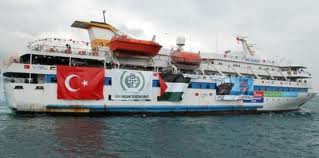
Prefatory Note: I am posting a press release of yesterday, 14 June 2013, to take note of the start of the seventh year of the Israeli blockade. After the Mavi Marmara incident, 31 May 2010 and the more recent November ceasefire agreement between Israel and the Gaza government there was an undertaking to ease the blockade with respect to the flow back and forth of people and goods, but the situation remains desperate for the civilian population of Gaza that remains essentially locked into the Gaza Strip where economic destitution has reached epidemic extremes and where the water is mostly unfit for human consumption. The international community, and its main leaders, have commented adversely on the blockade, but nothing happens! It is this sense of powerlessness that is undermining the legitimacy and relevance of the United Nations to the suffering of the Palestinian people, and with particular relevance to the extreme ordeal of the civilian population of Gaza.

**********************************************************

Freedom Flotilla 


UN Human Rights Office of the High Commissioner

Press Release on start of 7th year of Gaza Blockade

Collective punishment in Gaza must end: Israel’s blockade enters its 7th year – UN Special Rapporteur        

GENEVA, 14 June 2013 – The United Nations Special Rapporteur on the situation of human rights in the Palestinian territories occupied by Israel since 1967, Richard Falk, called today on Israel to end its blockade over the Gaza Strip, six years after it was tightened following the Hamas takeover in June 2007. The human suffering of the land, sea and air blockade imposed on the 1.75 million Palestinians living in one of the most densely populated and impoverished areas of the world has been devastating.

“Six years of Israel’s calculated strangulation of the Gaza Strip has stunted the economy and has kept most Gazans in a state of perpetual poverty and aid dependency,” said the UN expert. “Whether it is fishermen unable to go beyond six nautical miles from the shore, farmers unable to access their land near the Israeli fence, businessmen suffering from severe restrictions on the export of goods, students denied access to education in the West Bank, or patients in need of urgent medical attention refused access to Palestinian hospitals in the West Bank, the destructive designs of blockade have been felt by every single household in Gaza. It is especially felt by Palestinian families separated by the blockade,” he added.

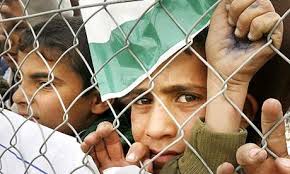
Gaza children at fence

“The people of Gaza have endured the unendurable and suffered what is insufferable for six years. Israel’s collective punishment of the civilian population in Gaza must end today,” said the Special Rapporteur.

“Israel has the responsibility as the Occupying Power to protect the civilian population. But instead of allowing a healthy people and economy to flourish, Israeli authorities have sealed off the Gaza Strip. According to statistics released by the Israeli Ministry of Defense, last month’s exports out of Gaza consisted of 49 truckloads of empty boxes, three truckloads of spices, one truckload of cut flowers, and one truckload of furniture,” he said. In 2012, the total number of truckloads of exports leaving Gaza was 254, compared to 9,787 in 2005 before the tightening of the blockade.

“It does not take an economist to figure out that such a trickle of goods out of Gaza is not the basis of a viable economy,” noted the UN expert. “The easing of the blockade announced by Israel in June 2010 after its deadly assault on the flotilla of ships carrying aid to the besieged population resulted only in an increase in consumer goods entering Gaza, and has not improved living conditions for most Gazans.  Since 2007, the productive capacity of Gaza has dwindled with 80 percent of factories in Gaza now closed or operating at half capacity or less due to the loss of export markets and prohibitively high operating costs as a result of the blockade. 34 percent of Gaza’s workforce is unemployed including up to half the youth population, 44 percent of Gazans are food insecure, 80 percent of Gazans are aid recipients,” he said.

“To make matters worse, 90 percent of the water from the Gaza aquifer is unsafe for human consumption without treatment, and severe fuel and electricity shortage results in outages of up to 12 hours a day. Only a small proportion of Gazans who can afford to obtain supplies through the tunnel economy are buffered from the full blow of the blockade, but tunnels alone cannot meet the daily needs of the population in Gaza.”

“Last year, the United Nations forecast that under existing conditions, Gaza would be uninhabitable by 2020. Less optimistic forecasts presented to me were that the Gaza Strip may no longer be viable only three years from now,” said the Special Rapporteur. “It’s clear that the Israeli authorities set out six years ago to devitalize  the Gazan population and economy,” he said, referring to a study undertaken by the Israeli Ministry of Defense in early 2008 detailing the minimum number of calories Palestinians in Gaza need to consume on a daily basis to avoid malnutrition.  The myriad of restrictions imposed by Israel do not permit civilians in Gaza to develop to their full potential, and enjoy and exercise fully their human rights.

ENDS

In 2008, the UN Human Rights Council designated Richard Falk (United States of America) as the fifth Special Rapporteur on the situation of human rights on Palestinian territories occupied since 1967. The mandate was originally established in 1993 by the UN Commission on Human Rights.

Learn more, log on to: http://www2.ohchr.org/english/countries/ps/mandate/index.htm

UN Human Rights – Occupied Palestinian Territories: http://www.ohchr.org/EN/countries/MENARegion/Pages/PSIndex.aspx

UN Human Rights – Israel: http://www.ohchr.org/EN/Countries/MENARegion/Pages/ILIndex.aspx

For more information and media requests, please contact Kevin Turner (kturner@ohchr.org) or Kiyohiko Hasegawa khasegawa@ohchr.org) or write to sropt@ohchr.org

For media inquiries related to other UN independent experts:

Cécile Pouilly, UN Human Rights – Media Unit (+ 41 22 917 9310 / cpouilly@ohchr.org)

UN Human Rights, follow us on social media:

Facebook: https://www.facebook.com/unitednationshumanrights

Twitter: http://twitter.com/UNrightswire

Google+ gplus.to/unitednationshumanrights    

YouTube: http://www.youtube.com/UNOHCHR

Storify:        http://storify.com/UNrightswire

Ending Perpetual War? Endorsing Drone Warfare?

1 Jun


            That President Obama chose on 23 May to unveil his second term cautionary approach to counter-terrorism at the National Defense University epitomized the ambiguity of the occasion. The choice of venue was itself a virtual guarantee that nothing would be said or done on that occasion that challenges in any fundamental way the global projection of American military power. Obama’s skillfully phrased speech was about refining technique in foreign policy, achieving greater efficiency in killing, interrogating the post-9/11 war mentality, and all the while extolling the self-mystifying glories of American exceptionalism. That is, only the United States, and perhaps Israel and NATO, possessed an entitlement to use force at times and places of the actor’s choosing without consulting the UN, respecting the constraints of international law, and heeding the admonition in the Declaration of Independence to show “a decent respect for the opinions of mankind.” Such exceptionalism, especially as enacted by recourse to aggressive wars, invites resistance, polarizes political struggle, and defeats any hope that stability will be achieved by the gradual realization of global justice rather than through the crude tactics of hard power diplomacy and militarism.


            There were several points of light in the otherwise dark Obama firmament. Perhaps, the most promising aspect of Obama’s presentation was its carefully hedged call for reexamining the still prevailing response to the 9/11 attacks as  ‘perpetual war.’ From the outset this cautious, yet welcome, questioning represented an ironic inversion of Kant’s prescriptions for perpetual peace. In Obama’s words, “..a perpetual war—through drones or troop deployments—will prove self-defeating and alter our country in troubling ways.” Depending on how we read world history since 1939, it can be understood as an era of perpetual war with a brief intermission between the end of the Cold War and the 9/11 attacks. Certainly, during the course of this period the United States has been continuously mobilized to engage in major war on a moment’s notice, and that this posture has definitely militarizes state/society relations in the country. There was nothing in Obama’s speech to draw attention to the perils posed by such a militarized state, having achieve global military dominance, and creating a domestic ‘miliary-industrial complex’ that would make even Dwight Eisenhower tremble with fear. There were no benchmarks that would allow the Congress or the citizenry to appreciate that it was time to bring the war on terror to an end.


            Obama also appeared to question the openendedness of the 2001 unlimited legislative mandate to use force overseas without including any requirement of a specific prior procedure of Congressial approval in Authorization to Use Military Force Act (AUMF). In Obama’s words, “Our systematic effort to dismantle terrorist organizations must continue, but all wars, must end. That’s what history advises. That’s what our democracy demands.” At the same time, Obama avoided directly challenging this AUMF legislation enacted to give the government precisely the legal authority to use force anywhere and at any time to wage war against supposed terrorist adversaries and their governmental guardians. Such authority can be validly used even where there is no terrorist threat, as was the case for Iraq when it was invaded and occupied in 2003.  At this point, Obama was asking Congress “to determine how we can continue to fight terrorists without keeping America on a perpetual war-time footing.” He went on to say that what is needed is “to refine, and ultimately repeal, the AUMF mandate.” Whenever politicians qualify a recommendation with such words as ‘refine’ and ‘ultimately,’ it is an almost sure sign that an end game is not envisioned, and may not even be intended. What Obama made evident is that although he had the right instincts with respecting to changing course with respect to the war on terror, his political will to support any altered course of action was far too weak to produce action, or maybe even too feeble to generate a needed debate on security for the country and the world, given the realities of mid-2013. Obama seems to be comfortable with framing counter-terrorist security policy as war so long as it is moving toward an understanding that war on terror will become more limited in scope at some point, and that at least there will be announced an intention to declare that the war on terror is over.  Obama did not have the resolve to insist that incidents of terrorism should be hereafter handled as criminal acts, which is what happens in the rest of the world—this would certainly have been a major step back from the fire, and might even deserved to be treated as extinguish the fire set for the world on 12 September 2001. The nature of the Boston Marathon murders might have been just the right occasion to make the change, emphasizing the degree to which the major danger was being posed by extremists living within the country. It was no longer necessary to treat the world as a counter-terrorist battlefield.


            There is admittedly a genuine security challenge that was posed on 9/11: the United States is vulnerable to well-planned terrorist attacks on the many soft targets of a complex modern society. And although other countries are also subject to major attacks, as was Madrid train bombings in 2004 and the London attacks in 2007, no country is as likely to arouse extremist anger and resentment due to its global projection of hard power as is the United States, and no country is as fearful, despite its military dominance as measured by realist calculations, as is the United States. Such a mismatch suggests that the American global role requires adjustment to the logic of self-determination in the post-colonial world, that the protection of the last remnants of the colonial edifice is a losing effort, and a dangerous one.


            To be sure there was in Obama’s speech many rhetorical flourishes that were probably designed to please liberal critics of drone warfare and Guantanamo, the two most awkward features of his presidency.  Such rhetoric invited a comparison with the far more bellicose and imperial language relied upon by George W Bush, but Obama’s approach was in a form that was sufficiently nationalistic to take account of the sensitivities of the right wing jackals that give him little, or no slack. Obama voiced his commitments to fight political extremists wherever they are found, while abiding by law, living up to ethical standards, and upholding the Constitution.  He contended that his presidency “has worked vigorously to establish a framework that governs our use of force against terrorists—insisting upon clear guidelines, oversight and accountability that is now codified in Presidential Policy Guidance that I signed yesterday,” a boast bound to raise more than a few skeptical eyebrows. Obama also did acknowledge that “this new technology raises profound questions—about who is targeted, and why; about civilian casualties, and the risk of creating new enemies; about the legality of such strikes under U.S. and international law; about accountability and morality.” At the same time, this welcome willingness to suggest the need for some comprehensive rethinking was confusing, hedged by claims that all that has been done up to now has worked and that the drone war, despite a few mistakes, has at all stages been consistent with the international laws of war, the Constitution, and international morality. It is notable that Obama refers to ‘profound questions’ that deserve to be asked and answered, but craftily refrains from answering them himself, just as he was relatively polite to Medea Benjamin, when she interrupted his talk from the floor with a direct challenge to use his authority as Commander-in Chief to close Guantanamo, which he responded to by saying that she deserved an attentive audience, although he was in substantial disagreement with what she was proposing, but without saying why and how. In assessing Obama’s performance, I am reminded of the early downplaying  among Soviet dissenters of Mikhail Gorbachev’s claims to be a radical reformer: “He is giving us glastnost (freer speech) without perestroika (substantive and structural change), but he promised us both.”


            In large part Obama was reacting to a tsunami of recent criticism from around the world. His explanations at the National Defense University amounted to an admission that the conduct of drone warfare and the maintenance of Guantanamo, for better and worse, had severely eroded America’s diplomatic stature. Beyond this, such behavior had given rise to acute resentment directed against the United States, and was quite likely spawning the very extremists that the use of attack drones were supposed to be killing. The Obama presidency was clearly attempting to retreat from this precipice of disconnect without falling into an anticipated ambush staged by its obsessive detractors at home. As many have pointed out the speech was long on vague generalities, short on policy specifics. It called in several ways for a more ‘disciplined’ approach to the war on terror, yet at the same time claimed in some detail that what has been done during the Obama years was both ‘effective’ and ‘legal,’ and had been climaxed by the mission that killed Osama Bin Laden in 2011. In effect, the speech was acknowledging that the projection of American force around the world had become understandably problematic for many, but could be fixed by acknowledgements and a show of concern without making any discernable major shifts in behavior or objectives. Such a proposed tweaking of policy hardly qualifies as ‘profound’ even if its sentiments were to be fulfilled by such gradual shifts in policy as closing Guantanamo and minimizing reliance on drones, moves that at this point still seems quite unlikely.


            The speech was notably short even on those specifics that had been anticipated by those who gave their expert opinion as to what to expect. For instance, it was expected that the controversial and ethically outrageous ‘signature strikes’ whereby combat-age males have been targeted and killed in Pakistani tribal areas and in Yemen if they are seen congregating in a place supposedly frequented by terrorists, even if no further evidence exists as to their relationship to political violence, would be repudiated. Obama never even mentioned signature strikes. Nor did he refer to the supposed likelihood of an announcement that the CIA would be confined in the future to its primary role as a spy and intelligence gathering agency rather than acting in a variety of paramilitary modes. Even if this does happen at some point, drone policies relating to authorization and accountability will continue to be shrouded in secrecy and deniability whether or not major responsibility for the use of drones remains headquartered at Langley. Of course, the purported significance of such a reassignment of responsibility for the drones to the Pentagon may be typical liberal hype. It seems unrealistic to expect a great breakthrough in transparency and sensitivity to international law and morality just because the Pentagon rather than the CIA would be presiding over the attacks. It might be illuminating in this regard to ask Bradley Manning and Julian Assange what they thought about transparency at the Pentagon and its respect for international law..


            But there is much more at stake than was discussed in the lengthy speech. In trying to make the case that drone warfare is less invasive, resulting in fewer civilian casualties, Obama never even alluded to the severe degree to which attack drones are instruments of state terror, terrorizing the entire region exposed to their habitual use. Drone warfare, this supposedly miracle counter-terrorism weapons system, is in its enactment a new form of intense state terror that is enraging public opinion against the United States around the world, reactions not limited to the places subject to attack, although especially there. A Yemeni citizen, Farea al-Muslimi told the U.S. Senate in recent hearings, about attitudes toward drones in his home village, “..when they think of America, they think of the fear they feel at the drones over their heads.” In Pakistan, American drones have had a disastrously negative impact on public attitudes toward Islamabad’s relationship with the United States, evoking acute and widespread grassroots hostility throughout this key Asian country. Even in Afghanistan, where the political violence shows no signs of abating, the American handpicked leader, Hamid Karzai, is now saying that the prospects for Afghan stability and peace would be enhanced by the departure of American led NATO forces. This is a rather astounding about face for a leader handpicked years ago in Washington and long dependent on American largess and human sacrifice.


            Such realities should have at least tempted Obama to raise some genuinely profound questions about the viability and inherent morality of the continued U.S. insistence on projecting its military power to the far corners of the global. For whose benefit? At what costs? To what effects? But there was Obama silence about such underlying questions that are daily being asked elsewhere in the world.


            There is another line of prudential concern that was no where to be found in this less unconditional embrace of drones, reliance upon which was deglamorized to some degree, yet remains an embrace. Some 70 countries currently possess drones, although not all of these have acquired attack drones, but the day is not far off when drones will be part of the military establishment of every self-respecting sovereign state, and then what? Obama spoke about the right of the United States to kill or capture suspected ‘terrorists’ wherever they may be in the world if deemed by the government to be an imminent threat to American security interests and not amenable to capture. But is there not a de facto golden rule governing international relations: “what you claim the right to do to others, you authorize them to do to you.” Of course, this is often modified by invoking the geopolitical bronze super-rule that is generally operative, at least in relations with most of the non-West: “we can do to you whatever we wish or feel the need to do, and yet there is no legal, moral, or political precedent created that can be invoked by others.” American exceptionalism has long parted company with the central idea that international law is dependent for its effectiveness on the logic of reciprocity: namely, that what X does to Y, Y can do to X, or for that matter to Z, but with the technology of drones emergent, we may soon come to regret resting our claim on such a one-sided anti-law prerogative that encodes double standards. A hegemonic approach to international law has been relied upon in relation to nuclear weapons, with a somewhat similar pronouncement by Obama in 2009 to work ultimately toward a world without such weapons. Four years later the meager effort to realize such a vision should be a cautionary indication that the future military application of drones is unlikely to be significantly restricted so long as the United States finds their role useful, and given this prospect, a borderless future for violent conflict throughout the world should give Pentagon planners many a sleepless night.


            There is another feature of the Obama approach that bears scrutiny. The discipline and care associated with his plea for a more restrictive approach to counter-terrorism is basically entrusted to the suspect subjectivities of governmental good faith in Washington. At least, the Wikileaks disclosures should have taught American citizenry that secrecy at high levels of public sector policymaking is intended to place controversial behavior of government beyond public scrutiny and democratic accountability. Obama is asking the American people to put their trust in the judgment and values of bureaucrats in Washington so as to ensure that democracy can be restored in the country, and a better balance struck between security and the freedoms of the citizenry.  Perhaps, while waving the banner of national security, you can fool most of the people most of the time, but hopefully there are limits to such bromides from on high despite a compliant media. It should be noticed that the Obama presidency has done more to prevent and punish breaches of governmental secrecy than any previous political leadership. In relation to the criminality disclosed by Wikileaks the reaction was to do its best to prosecute the messenger while totally ignoring the message.  


            In most respects, the song that Obama sang at the National Defense Univerity did not conform to the melody. Obama refrained from taking what would have been the most natural and welcome step: belatedly putting the  genie of war back in its box, and finally reject this dysfunctional blending of war and crime. After all the deaths and displacements of the wars waged in Afghanistan and Iraq were major failures from the perspective of counter-terrorism, and it would appear that such an adjustment was overdue. The root error committed immediately after 9/11 was to move the fight against Al Qaeda and international terrorism from the discourse of crime to the framework of war without any kind of thoughtful rationale or appreciation of the adverse consequences. In the traumatic atmosphere that prevailed after the attacks, this rushed transition to war was partially done under the influence of neocon grand strategy that had been actively seeking a global writ to intervene well before the attacks occurred, especially in the Middle East. The Bush entourage made no secret of its search for a pretext to take advantage of what was then being called ‘the unipolar moment,’ a phrase no longer in fashion for obvious reasons. It needs to be remembered that back before 9/11 the Democrats were being chided for their wimpish foreign policy during the 1990s that wasted what was alleged to be a rare opportunity to create the sort of global security infrastructure that was needed to realize and protect the full potential of neoliberal globalization, which included a preoccupation with ensuring that the oil reserves of the Gulf remained accessible to the West. Although the United States has been chastened by its military setbacks in recent wars, its underlying grand strategy has not been repudiated or revised, and even now with so much at stake politically and militarily, there are strong pressures mounting to intervene more robustly in Syria and to launch yet another aggressive war, this time against Iran.


            If effect, we the peoples of the world, can take some slight comfort in the cautionary approach evident in the Obama tilt away from the hazards of ‘perpetual war,’ but until the more fundamental aspects of the American global role and ambitions, and its related militarism become the crux of  debate, advocacy, and policy, we and others cannot rest easy!


Responding to The Syrian Challenge

27 May


            The issue facing the U.S. Government at this stage is not one of whether or not to intervene, but to what extent, with what objectives, and with what likely effects. More precisely, it is a matter of deciding whether to increase the level and overtness of the intervention, as well as taking account of what others are doing and not doing on the Assad regime side of the conflict. Roughly speaking, there have been interventions by the Turkey, the United States, Qatar, Saudi Arabia, Israel, and the EU on the insurgent side, and by Russia, Iran, Hezbollah on the regime side, with a variety of non-Syrian ‘volunteers’ from all over being part of the lethal mix.


            From an international law perspective the issues are blurred and controversial, both factually and jurisprudentially. The Assad government remains the government of Syria from most international perspectives, despite having repeatedly perpetrated the most despicable crimes against humanity. Such behavior has eroded Syria’s status as a sovereign state whose territorial integrity, political independence, and governmental authority should be respected by outside actors including the UN. Under most circumstances the UN Charter obligates the Organization to refrain from intervening in matters internal to states, including civil wars, unless there is a clear impact on international peace and security.  Such an impact certainly seems to exist here, given the large-scale regional proxy involvement in the conflict. Given the pull and push of the current situation in Syria, the UN Security Council could, if a political consensus existed among its permanent member, authorize a limited or even a regime changing intervention under a UN banner. For better or worse such a consensus does not exist, and never has, since the outbreak of violence usually dated as commencing on March 15, 2011 with the violent suppression of previously peaceful anti-government demonstrations in the cities of Aleppo, Damascus, and especially Daraa, often known as ‘the cradle of the revolution.’ The situation is further clouded by bad geopolitical memories, especially the Security Council authorization to use force in Libya to protect the civilian population of Benghazi in March 2011. On that occasion, Russia and China, as well as Germany, Brazil, and India, put aside their anti-interventionist convictions, and allowed an intervention under NATO auspices to go forward by abstaining rather than voting against the authorization of force.  But what happened in Libya thereafter was deeply disturbing to the abstainers—instead of a limited authorization to establish a no-fly zone around Benghazi, a full-fledged air campaign with regime-changing objective in mind went forward without any effort by the intervenors to expand their mission or even to explain why the limits accepted in the Security Council debate and resolution were so blatantly put to one side. After such a deception trust was broken, and the difficulties of obtaining UN approval to act under the norm of ‘responsibility to protect’ were greatly magnified.


            Should it not be argued that the people of Syria should not be sacrificed because of this betrayal of trust in relation to Libya, and besides, Western leaders contend is not Libya and the world better off with Qaddafi gone. If this outlook is persuasive, and China and Russia continue to thwart a rescue of the Syrian people by threatening to veto any call for action, would it not be justifiable for a group of states to act without UN authorization, claiming Kosovo-like legitimacy. Yet there are major costs involved when the restraining ropes of law are loosening for the sake of moral and political expediency.  To cast aside the Charter regime is a move toward restoring the discretion of states when it comes to waging war, which was the main rationale for establishing the UN in the first place.


            This prohibition on non-defensive force holds legally even if a strong humanitarian justification for intervention can be made. The Kosovo precedent suggests that in the face of an imminent humanitarian catastrophe, an intervention will be widely endorsed as legitimate by the organized international community even if it is clearly unlawful. If such an undertaking is reasonably successful in ending the violence and saving lives, there is likely to be an ex post facto endorsement of what was done, especially if seems to most respected observer that humanitarian objectives were not invoked by the interveners to obscure the pursuit of strategic goals. This is what happened after the NATO War to remove the Serbian presence from Kosovo. The UN watched from the sidelines without condemning the unlawful use of force, and has played a central role in the post-conflict reconstruction of Kosovo. More surprisingly, the UN, to its regret, even attempted to play such a role after the flagrantly unlawful and illegitimate attack upon and occupation of Iraq, despite having earlier rebuffed the concerted American effort to win the approval of the Security Council prior to the war. It should not have come as a great surprise that the Iraqi resistance forces targeted the UN Headquarters in Baghdad, apparently regarding the UN as having becoming an arm of the occupying and invading foreign forces. Unlike Kosovo where the Serbs were driven out, in Iraq despite a massive displacement of civilians, resistance forces stayed in the country to fight against the occupiers and on behalf of their vision of a post-occupation Iraq.


            There are important world order issues present aside from the questions of legality and legitimacy. There are also pragmatic and prudential dimensions of any decision about what to do in response to Syria’s descent into chaos and horrific violence, with no early end in sight. Although the sovereign state is not an absolute ground of political community, it is the basic unit comprising world order, and the logic of self-determination should be allowed to prevail in most situations even when the results are disappointing. The practical alternative to the logic of self-determination is the hegemonic logic of hard power, and its record is not a happy one if viewed from the standpoint of people and justice. Sovereign equality has been the weave of the juridical order ever since the Peace of Westphalia in 1648, although the existential inequality of states has offered a counterpoint that as given rise to a variety of geopolitical regimes, e.g. the European colonial period, the bipolarity of the Cold War, the unipolarity of the 1990s, and perhaps, the emerging multipolarity of the early 21st century.


            When crimes against humanity cross a certain threshold of severity,  which is itself necessarily a subjective judgment, or where genocide is credibly threatened or actually taking place or credibly threatened, the normally desirable and applicable norm of non-intervention and its internal complement of self-determination, gives way to claims of ‘humanitarian intervention,’ a practice somewhat sanitized recently by being accorded normative authority in the form of a ‘responsibility to protect.’ National primacy gives ground to the primacy of the human in such exceptional circumstances, and the human interest can justify a full-scale intervention provided prudential and pragmatic factors seem likely to allow intervention to succeed at acceptable costs, and to be procedurally endorsed in some secondary way.  Of course, there is also the question of disentangling strategic motives for intervention from the humanitarian justification. There is no easy formula for distinguishing between acceptable and unacceptable blends of the strategic and the moral, but as Noam Chomsky warned during the Kosove intervention, ‘military humanism’ is not believable because double standards are so rampant. Why are the Kosovars protected but not the besieged population of Gaza? Why the Libyans but not the Syrians? The presence of double standards is not the end of the story. Without some strategic incentive it is unlikely that the political will is strong enough to succeed with a military undertaking that is purely a rescue operation. Recall how quickly the United States backed away from its involvement in Somalia after Black Hawk Down incident in 1993. In that sense, the presence of oil, maritime shipping lanes, pipeline routes is a strategic interest that will offset the costs of war for a considerable number of years as the Iraq invasion of more than ten years ago illustrated, but even in Iraq an eventual acknowledgement of the inability to achieve the strategic objectives led to a conclusion to give in and get out, time ran out. A democratic public does not accept the human and economic costs of a non-defensive war indefinitely, no matter how much the media plays along with the official line. That is the lesson that is imperfectly learned by politicians in a long list of encounters, most prominently, Vietnam, Iraq, and now Afghanistan.


            Arguably, in 1999 what happened in Kosovo was a positive scenario for interventionary diplomacy. NATO intervened without a green light from the UN, and yet managed, although without achieving complete success, to provide the great majority of the Kosovar population not only with security but with support for their claim of self-determination. Before the intervention, most of the Kosovo population was living under oppressive conditions, and faced a severe threat of worse to come. As many as a million people, almost half of the population, sought temporary refuge in nearby Macedonia, but ratified the intervention by returning to their homeland as soon as NATO had forced their Serbian oppressors to leave. There are complexities beyond the debate about the use of force. Who would settle the question of competing sovereign claims mounted by Belgrade and Pristina? It appears that the resolution of this dispute will be resolved for the foreseeable future by the de facto realities, which is to say in favor of Kosovar claims of political independence and in opposition to Serbian claims of historic sovereign title.


            Such a positive outcome didn’t occur in Iraq, which was attacked in 2003 without UN authorization, and in the absence of a humanitarian emergency, and the effects of the undertaking were horrendous in terms of level of devastation and loss of life, agitating sectarian conflict, with no stability or decent government put in place or in sight. A ruthless dictator who brought stability to Iraq was replaced by an authoritarian regime beset by enemies from within, including even the loss of control of the northern regions run by the Kurdish majority as a virtually of a state within the state. Such an intervention was neither legitimate nor lawful. The Libyan intervention of 2011 seems an intermediate case, if evaluated either from the perspective of just cause or overall consequences. The dust has certainly not settled in Libya, and at this point it is difficult to tell whether the future will resemble more the strife of Iraq or the relative calm of, say, Bosnia.


            How does Syria fit into this picture based on recent experience with large-scale interventions? The situation in Syria qualifies for intervention on behalf of a beleaguered population that have endured great suffering already, and in this respect, even absent UN authorization, the legitimacy rationale of Kosovo would seem sufficient. According to a variety of reports there have been at least 80,000 killed in the Syrian conflict, with an incredible 4 million Syrians internally displaced, with an additional 1.5 million Syrian refugees in neighboring countries, especially, Turkey, Lebanon, and Jordan.  This massive spillover is giving rise to severe destabilizing tensions in these countries, and creating a rising risk that the internationalized civil war in Syria will further engage other countries directly in combat operations. Israel has already three times struck at targets in Syria that were allegedly connected with weapons shipments to Hezbollah in Lebanon, and there are reports that Beirut has been hit by a rocket sent from Syrian rebel forces. Also relevant is the line in the sand drawn by Obama in relation to the use of chemical weapons by Damascus, or the depots used to store these weapons falling into hostile hands, and the Assad threats of retaliation, and some signs of violence on the border separating Syria from the Israeli occupied Golan Heights. And finally, the allegations by Israel and some right wing member of the U.S. Congress urging more aggressive moves in relation to Iran, with Netanyahu contending that Iran is seeking to become a ‘nuclear superpower’ with a program larger than that of either North Korea and Pakistan, both already members of the nuclear weapons club.


            The dangers of widening the war zone in a disastrous manner and of acting in behalf of the questionable agendas of states other than Syria greatly complicates the response to the Syrian internal crisis. It also gives a heavy weight to the question: how to take account of prudential considerations that relate to probable costs and effects of various alternative courses of action? Here there is much less prospect that sufficient force could and would be used to tip the conflict in favor of the disunited rebel groups in the direction of an acceptable outcome, or even that a sustainable ceasefire could be achieved. The more likely result of any further escalation of external intervention is to magnify the conflict still further, and this would likely include encouraging counter-moves by the powerful foreign friends of the Assad government. It needs to be realized that outsiders are engaged heavily on both sides, and each can credibly blame the other, although it does seem to be widely agreed that by far the greatest share of responsibility for the commission of atrocities belongs to the governing authorities operating out of Damascus. There is something strange about the alignments, with the conservative Arab governments in Qatar and Saudi Arabia, as well as the United States and Western Europe, backing the revolutionary insurgency, despite it being increasingly dominated by radical Islamic participation, especially Jilhat al-Nusra. On the other side, Iran’s religiously oriented government finds itself aligned to the secular Ba’athist leadership in Damascus. 


            Against this background only a diplomacy of compromise seems both justifiable as the best among an array of bad option and prudent in having the best hope of ending the violence and putting Syria on a trail that could lead to political normalcy. But a diplomacy of compromise accepts the stalemate on the battlefield as its necessary starting point, and does not set preconditions, such as the removal of Bashar al-Assad from his position as head of state and the demand for a post-Assad transitional government in Damascus. Nor in like measure can a diplomacy of compromise expect the opposition to trust the government or to lay down their arms if the Assad regime is left in control of the governance structures in the country. Such a process can only hope to be effective if the two sides, at least subjectively, realize that they are trapped in an endless and irreversible downward spiral, and act accordingly, although not needing to admit such an unsatisfactory outcome in their public utterances. There are pitfalls. A ceasefire, even if bolstered by a major peacekeeping presence and some devolution of political authority that takes account of which side controls which city and region.


            The Syrian situation is further bedeviled by the absence of a unified insurgent leadership, making it unclear who can speak authoritatively on behalf of insurgent forces. Just a week ago some of the opposition forces met in Istanbul under the auspices of the National Coalition for Syrian Revolutionary and Opposition Forces, issuing a 16 point proposal that called for the departure of Assad from the country, the establishment of a coalition government to manage the transition, with the inclusion of some members of the Assad leadership, and impunity for all allegations of criminality associated with the strife. Such a proposal seemed to arouse controversy even at the coalition meeting, and seems without great support in Syria if the views of the various opposition groupings are all taken into consideration. In the meantime, the United States is acting strenuously to convene a second conference in Geneva during the month of June to exert pressure on the Assad government to negotiate an end to the war on the basis of the removal of Assad as president and the establishment of a pluralist transitional government tasked with organizing elections. The American Secretary of State, John Kerry, is energetically pushing this plan, which is linked to a threat—either negotiate along the lines we propose, or the arms embargo will be lifted, and the rebel militias will receive arms. Although the language being used by the United States and others in UN Action Group for Syria and the Friends of Syria is respectful of the role of the Syrian people in shaping the future of the country, there is a coercive aura surrounding this surge of diplomatic initiative that is dysfunctional to the extent that it seems based on the insurgency having the upper hand rather than there being a stalemate. Under the conditions prevailing in Syria, by far the role for external actors is to assume a facilitative mode that is fully supportive of a framework for negotiations based on a diplomacy of compromise. The litmus test for a diplomacy of compromise is the mutual realization that a battlefield stalemate cannot be broken by acceptable means. When and if this realization takes hold negotiations can proceed in a serious manner and a ceasefire is more likely to hold. What this would mean concretely is difficult to discern, and would undoubtedly be difficult for the parties to agree upon. An urgent preliminary step would be to invite trusted international envoys from non-geopolitically activist governments to talk with the entire spectrum of political actors to ascertain whether such a diplomacy of compromise has any traction at the present time, and if not, why not.


            Suppose such an initiative fails, and cannot it be said that this approach has already been tried under UN and Arab League auspices, designating such respected global figures as Kofi Annan and Lakhdar Brahimi to undertake a similar mission? Perhaps, such initiatives preceded the recognition by the Syrian antagonists that the military path is blocked and bloody, and that now the timing is better, although maybe not good enough. It could be that such an appreciation led Moscow and Washington to agree on convening a conference of interested governments in Geneva next month that is expected to include the government of Syria.  Such an international effort suggests that outsiders might be able to find enough common interests to put their geopolitical weight behind a diplomacy of compromise, but they should not attempt to do anything more by way of imposing conditions. An effective and legitimate diplomacy of compromise must be seen as coming from within, and not a maneuver that is executed from without. Of course, such restraint is not inconsistent with upgrading efforts to soften the hardships of Syrian refugees and those internally displaced, nor upgrading efforts to meet uregent relief needs in Syria, which probably calls for allowing reliable NGOs to take over the bulk of the humanitarian challenge, but again in a manner faithful to the ethos of compromise, which includes suspending disbelief as to who is right and who wrong.


            But what of the Jalhat al-Nusra extremists in the insurgent ranks, credited with doing the most arduous recent fighting on the insurgent side? And what about the war criminals running the government in Damascus? Or their Hezbollah allies also given major combat roles in the last several weeks? Can these realities be wished away, and if not how to respond? Radical uncertainty prompts caution with respect to every alternative course of action, including throwing up one’s hands in despair. Obviously a diplomacy of compromise is not a panacea, and likely is a non-starter, but in such a desperate situation it seems worth trying, provided it does not become a different kind of battlefield in which the goals sought by violence are being pursued by statecraft, doing nothing more than instituting an intermission between periods of unrestrained violence for the weary combatants. My essential argument is that until the parties engaged in hostilities on both sides recognize their inability to achieve a political victory by way of the battlefield, and external actors acquiesce in this recognition, there can only take place an unproductive and wrongheaded coercive diplomacy of partisanship, supporting the claims of the anti-Assad side. It should have become clear after more than two years of bloodshed and atrocities that no amount of geopolitical arm-twisting will lead Damascus and their own constituencies to place the destiny of Syria on this kind of diplomatic chopping block.