Archive | Crimes of State RSS feed for this section

Reflections on the Great Palestinian Prison Hunger Strikes of 2012

15 May


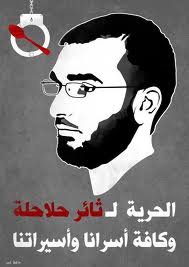
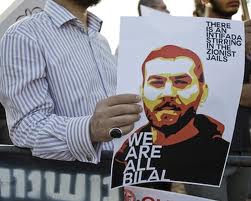
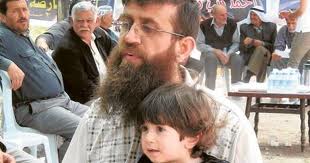
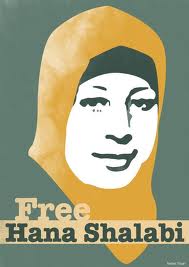
            Ché Guevara was once asked what was at the root of his revolutionary commitment. His response, which we should all take some moments to reflect upon, “it is about love.” Reading the words of Khader Adnan (‘Open Letter to the People of the World’) and Thaer Halahleh (‘Letter to my Daughter’), or the comments of Hana Shalabi’s mother and sister, or Bilal Diab’s father, led me to

recall Guevara’s illuminating comment. Only those with closed minds can read such words of devotion without feeling that the animating hunger of these Palestinians is for peace and justice, for love and dignity, and that their heroic strikes would have impossible without cherishing life and future freedom for the people of Palestine


            The nature of extreme self-sacrifice, provided it is autonomous and nonviolent, is an inherently spiritual undertaking even when its external appearance is political. For Christians, and others moved to tears by the life of Jesus, the Crucifixion exemplifies this encounter between the political and the spiritual.


            We can only marvel at the duplicitous double standards of the media. Without the Internet and Al Jazeera the West, especially the United States, would have rendered invisible these challenges to Israeli abuses of human rights and international humanitarian law. Only the settlement of the strike, and to some extent fear of Palestinian unrest should one of these hunger strikes die while in detention, was deemed somewhat newsworthy by the Western press.


            As many have observed, the media treatment of the Chinese dissident, Chen Guangcheng, or the global attention given to the Isreael soldier held captive in Gaza, underscores the media victimization of the Palestinian struggle, and exposes the illegitimacy of an information regime that rests upon such a flagrant disregard for objectivity, taking refuge in ill-disguised double standards: magnifying Israeli grievances, disappearing Palestinian wrongs.


            The Israeli media did have a cynical preoccupation with the hunger strikes wavering between worries of seeming to give in to pressure exerted by fears if the strikes continued Third Intifada and the characteristic concern of an oppressor that accommodating grievances would be treated as a show of weakness and an encouragement of further Palestinian resistance activity. For this reason the agreement reached to end the main strike has been sharply criticized by Israeli right-wing politicians.


            Israel is not alone in addressing prison hunger strikes in a detached manner that refuses to acknowledge the moral motivation, physical courage and discipline, and the righteousness of the demands for reforms. A 2011 protest hunger strike in a notorious California Pelican Bay State Prison and other prisons around the state led to this monumentally icy reaction from Nancy Kincaid, Director of Communications for California Correctional Health Service: “They have the right to die of starvation if they wish.”  And as the late Kurt Vonnegut so memorably reflected on the terror bombing of Dresden during World War II: “And so it goes.”


            The ending of the hunger strikes on the eve of the 64th observance of Nakba Day is above all a protest against the particular reality of these protests against administrative detention, arrest procedures of a police state, and unacceptable prison regulations that include extensive and extended consignment to solitary confinement, taunting of prisoner suffering, denial of family visits (especially for Gaza families), and a variety of forms of inhumane treatment. It also needs to be understood as part of the general Palestinian struggle for protection and rights, above all, the inalienable right of self-determination, which is accorded to every people by virtue of Article 1 of both Human Rights Covenants.


            Any agreement reached with Israel should be carefully monitored and scrutinized. It was a disgrace that Israel should have released Hana Shalabi but punitively ‘deported’ her to Gaza where she is required to remain for three years before returning to her family and home in the West Bank village of Burqin.  Without charges to sentence Shalabi to what many have called the world’s largest open air prison is to compound the wrong done by detaining her in the first place, and is an implied admission by Israel that it is a punishment to be required to live in blockaded Gaza.


            Throughout this period of hunger strikes that was started by Khader Adnan on the day following his December 17th arrest I and others have taken notice of the IRA strike in the Maze Prison in Northern Ireland in which ten Irish prisoners fasted unto death, including the martyred Irish hero, Bobby Sands. What I have learned of while following the developments in the Palestinian strikes was the earlier celebrated hunger strike of Terrence MacSwiney, the elected lord mayor of county Cork who was arrested, charged, and convicted of his activism in the Irish struggle against British colonial rule.

MacSwiney upon conviction told a stunned court, “I whall be free, alive, or dead, within a month.” He died on October 25, 1920 in the Brixton Prison after an extraordinary 74 day hunger strike, and has been part of the proud tradition of Irish revolutionary iconography ever since. (For a detailed account see Dave Hannigan’s Terrence MacSwiney: The Hunger Strike that Rocked an Empire (Dublin: Obrien Press, 2010)) Unlike the blanket of denial and silence that has accompanied the Palestinian acts of protest, the MacSwiney story “became a worldwide sensation, causing workers to lay down tools on the New York waterfront, sparking riots in Barcelona and mass demonstrations from Buenos Aires to Boston. The international press covered his decline on a daily basis, raising the profile of the cause of Irish Independence to previously unheard-of-heights.” (from back cover material)


            Aside from the contrast in media coverage, there is the notable fact that MacSwiney faced charges in an open court, and was allowed to speak in his own defense. Governments that claim to be democracies and respectful of human rights and the rule of law should waste no time in abolishing administrative detention provisions. And if that is not done, at least the pretension of being a constitutional democracy should be abandoned. Is not time that we demanded that ‘power speak truth to the people’!

Learning from the Irish Hunger Strikes of 1981 and the Palestinian Challenge

11 May


Prefatory Note

John Hurson in Ireland has been keenly conscious of the affinities between the historic Irish hunger strike of 1981 and the ongoing Palestinian hunger strikes. He has travelled to Gaza on several occasions on humanitarian aid convoys, and is the founder of the on line Gaza TV News service. I suggested that we collaborate on an article that might recall the Irish experience, especially the parallels and the potential implications for the future of the Palestinian struggle.

John Hurson ends his reflective essay with a comparison between the hardheartedness of Netanyahu and the British leader at the time, Margaret Thatcher. Although more than 30 years have passed since Bobby Sands and his nine fellow prisoners died as a result of carrying their prison protests to their ultimate point of no return.   I hope and pray that no Palestinian hunger strikers die. Their moral authority and political energy is needed to galvanize further these glimmerings of a Palestinian awakening. The impact of Khader Adnan and later Hana Shalabi, after their release from Israeli prisons is illustrative, and helps us all understand that although abusive arrest and administrative detention is the immediate cause of the hunger strikes, their agenda was always far broader than seeking personal relief. Their intention, already partially effective, was to shine a bright light of truth on the manner in which Israel has used administrative detention, as well as on broader concerns about Palestinian imprisonment more generally, and beyond this, to call attention to the unlawful and immoral denial through decades and across generations of fundamental Palestinians rights under a structure called internationally ‘occupation’ but experienced as a lethal blend of annexation, apartheid, and settler colonialism.

At this time present medical condition of at least six long-term hunger strikers has been reported to be grave for the past several days. The respected Palestinian NGO, Addameer, gave details in its May 9th release entitled “Update: Situation of Long-Term Hunger Strikers Becomes Increasingly Urgent.” Those in critical condition include Thaer Halahleh and Bilal Diab (74 days); Hassan Shafadi (68 days); Omar Abu Shalal (66 days); Mohammad Taj (55 days); Jaafar Azzedine (51 days).

There have been calls made for a worldwide empathy and solidarity hunger strike on Tuesday, May 15, the day that the Nabka is observed by Palestinians and their friends worldwide. I intend to make this gesture of support, and hope many others will join, and send a further message that the cause of Palestinian justice is rising to the top of the moral agenda of the peoples of the world even in the face of the awful complicity of Western governments with an intolerable situation of prolonged occupation and exile.

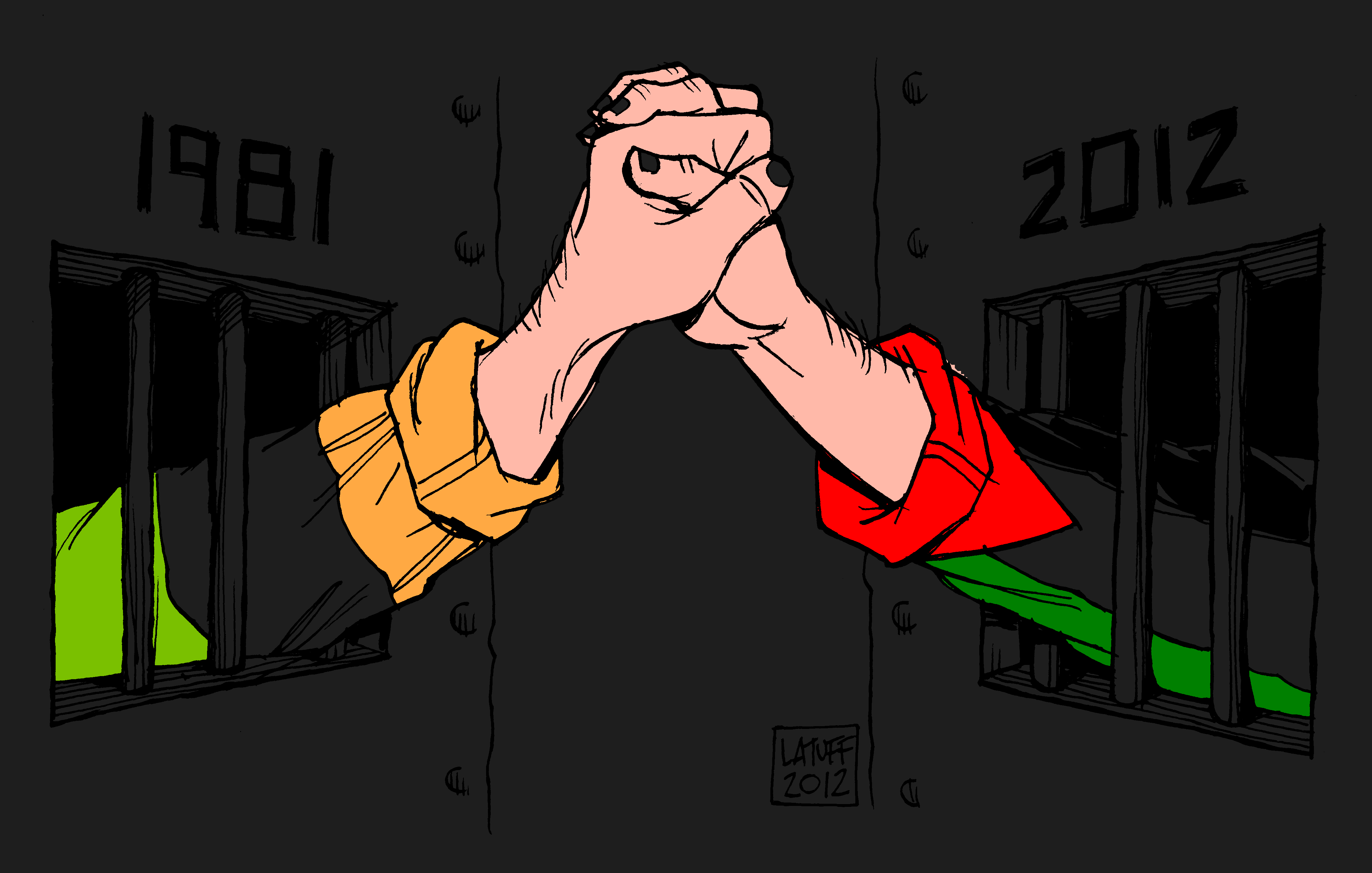
The featured cartoon, suggested John Hurson, is by Carlos Latoof, the award winning Brazilian cartoonist who has so ofter memorably depicted the torments and tormentors of Palestine.

********************************************************************************************

RECALLING THE IRISH HUNGER STRIKE OF 1981

By John Hurson of County Tyrone, Ireland

In 1980, 7 IRA men in the H Block prison embarked on a hunger strike seeking to re establish their political status, which the British Government had ended 4 years before. After 53 days, and the men close to death, a deal was apparently on the table from the Thatcher led British Government, and the men called of their hunger strike. In the days that followed, it became clear that there was no deal.   2 months later, another hunger strike was announced, and on March 1st, Bobby Sands began his hunger strike. As part of their strategy, different men would join at later stages. Several men would follow Bobby, and by the end of the summer, 10 men had died before the hunger strike was called off.

The prisoners had 5 demands:

1. The right not to wear a prison uniform;

2. The right not to do prison work;

3. The right of free association with other prisoners, and to organise educational and recreational pursuits;

4. The right to one visit, one letter and one parcel per week;

5. Full restoration of remission lost through the protest.

In the months that followed, several of the demands were met, and within 2 years, all 5.   A few weeks after Bobby started his fast, the MP for Fermanagh and South Tyrone died, and an election was called. A decision was made to run Bobby as a candidate in order to gain more attention to their plight, and on his 41st day on hunger strike, he was elected MP for Fermanagh and South Tyrone.   His election lit a spark where the Republican movement saw the impact of electoral success. The rise of Sinn Fein to where they are today can be traced back to this victory. Today, Sinn Fein are a major political force in Ireland, and have elected representatives in all corners of Ireland. During the negotiations that led to the signing of the Good Friday Agreement, Sinn Fein played a major role. Today, Martin McGuiness is the Deputy First Minister in the Stormont Executive, and meets world leaders on a regular basis. Gerry Adams, the party leader, is an elected TD (Teachta Dala, Gaellic designation for Member of Parliament) in the Irish Parliament.   There is no doubt that the hunger strike of 1981 changed things forever, not only for the prisoners in the H Blocks, but politically. The names of the 10 men are ingrained forever in Irish history, and the dark days of 1981 are now a beacon of hope for the future.   February 21st, 2012,

Khader Adnan ended his hunger strike after 66 days, the same length of time Bobby Sands endured before he died on May 5th 1981. Throughout Khader’s hunger strike, he was compared to Bobby Sands, the first of ten men to die in the Hunger Strike of 1981.   Forever, the 2 men will be talked about in the same breath for their courage, determination, and in Bobby’s case, ultimate sacrifice.   At the beginning of March 1981, Bobby Sands began his Hunger Strike. He died on May 5th.   Following Bobby, Francis Hughes, Ray McCreesh, Patsy O’Hara, Joe McDonnell, Martin Hurson, Kevin Lynch, Kieran Doherty, Thomas McElwee, and Mickey Devine all died before the strike was called off.


As Khader Adnan approached the 50 day mark, I contacted Tommy McKearney and he recorded a message for Khader and his family. Tommy’s message carried a unique understanding of Khader’s condition as Tommy had gone 53 days without food in 1980.   I contacted Oliver Hughes in South Derry. Oliver’s brother, Francis, died after 59 days, and his cousin Thomas McElwee after 62. Oliver  recorded a very powerful message .   As Khader was on his 64th day, I got in contact with the family of Ray McCreesh. They sent a statement of support for Khader and his family. Ray McCreesh (61 days), died on the same day as Patsy O’Hara.(61 days)   Patsy ’s brother Tony sent a message of support  on behalf of himself, and his mother Peggy.   Mickey Devine was the last of the 10 men to die in 1981. Mickey’s children, Michael og and Louise, sent through a heartfelt message,. considering they were the same age as Khader’s children when their father died, their voices added a special meaning. Mickey Devine, (27), died on August 20th 1981   In addition to these messages, two other former hunger strikers added their voices. Pat Sheehan(55 days), and Ray McCartney  (53 days), sent a video message. Danny Morrison, who was a friend of Bobby Sands also issued a statement.

On day 66, Khader reached an agreement with the Israeli Government to end his strike on the condition that they would not renew his Administrative Detention order, and release him on April 17th.   Following Khader’s hunger strike several other prisoners followed his example, and began hunger strikes in protest at their incarceration under the Administrative Detention policy.   On April 17th, over 1,500 Palestinian prisoners initiated a mass  hunger strike. The plight of the Palestinian prisoners was set to take centre stage, and their struggle brought to the worlds attention.   In the days that followed, hundreds more joined them   Adding a voice of support for Bilal Diab and Thaer Hallahla who were on day 70 of their hunger strike, was Laurence McKeown. Before ending his fast, he had gone 70 days without food. He knew only to well the dangers facing both men, and he recorded a message of support.   Two days later, Pat Sheehan, MLA, issued a statement on behalf of Sinn Fein calling for an immediate end to Administrative Detention, and support for the prisoners.   Bilal and Thaer are on day 74 day of their hunger strike.

Ireland has a long history of the use of a hunger strike as a form of protest. It has been used for centuries. Palestinian prisoners have been inspired by Irish hunger strikes in the past, and this one is no different.   In 1981, Palestinians prisoners sent a message of support to the families of the 10 men who died. Their memory burns bright among current prisoners on hunger strike.   This hunger strike has resonated widely in Ireland. .   The voices have roared around the world, playing a pivotal role in bringing international awareness and pressure on the Israeli Government, and their treatment of Palestinian prisoners.   Historically, Ireland has had its fair share of tyrants. Amongst them, Margaret Thatcher is in a league of her own for allowing 10 Irish men to die on hunger strike before granting their 5 demands.


Judging from his past behaviour, Netanyahu, like Thatcher in 1981, is unlikely to step in to avoid having any of these Palestinian die during their hunger strikes.

Is the fuse being lit for a 3rd Intifada? Only the future will give us an answer.

UN rights expert raises alarm over Palestinian prisoners on hunger strike in Israeli Prisons

1 May

UN Press Release—HUMAN RIGHT COUNCIL–2 May 2012

UN rights expert raises alarm over Palestinian prisoners on hunger strike in Israeli Prisons

GENEVA (30 April 2012) – UN Special Rapporteur on the situation of human rights in the Palestinian territories occupied since 1967, Richard Falk on Monday said he was appalled by the “continuing human rights violations in Israeli prisons,” amid a massive wave of hunger strikes by Palestinian prisoners.

In extraordinary acts of collective nonviolent resistance to abusive conditions connected to Israel’s prolonged occupation of Palestinian territory, more than 1,000 Palestinian prisoners began an open-ended hunger strike on 17 April 2012, Palestinian Prisoners Day. This hunger strike is a protest against unjust arrest procedures, arbitrary detention and bad prison conditions. Prison authorities have reportedly taken punitive measures against those on hunger strike, including by denying them family and lawyer visits, confiscating their personal belongings and placing them in solitary confinement.

“I am appalled by the continuing human rights violations in Israeli prisons and I urge the Government of Israel to respect its international human rights obligations towards all Palestinian prisoners,” Falk said. “Israel must treat those prisoners on hunger strike in accordance with international standards, including by allowing the detainees visits from their family members.”

Falk noted that since the 1967 war, estimated 750,000 Palestinians including 23,000 women and 25,000 children have gone through detention in Israeli jails. This constitutes approximately 20 percent of the total Palestinian population in the occupied Palestinian territory or 40 percent of the total male Palestinian population in the occupied Palestinian territory.

“Israel’s wide use of administrative detention flies in the face of international fair trial standards,” Falk said. “Detainees must be able to effectively challenge administrative detention orders, including by ensuring that lawyers have full access to the evidence on which the order was issued.” The Special Rapporteur noted that Israel currently holds around 300 Palestinians in administrative detention.

Falk called on the international community to ensure that Israel complies with international human rights laws and norms in its treatment of Palestinian prisoners.

ENDS

In 2008, the UN Human Rights Council designated Richard Falk (United States of America) as the fifth Special Rapporteur on the situation of human rights on Palestinian territories occupied since 1967. The mandate was originally established in 1993 by the UN Commission on Human Rights. Learn more, log on to: http://www2.ohchr.org/english/countries/ps/mandate/index.htm


OHCHR Country Page – Occupied Palestinian Territories: http://www.ohchr.org/EN/countries/MENARegion/Pages/PSIndex.aspx


Opening the Other Eye: Charles Taylor and Selective Criminal Accountability

27 Apr


This post is a corrected and modified version of my earlier text with the same title; this version is published in AJE today, 1 May 2012

************         


            From all that we know Charles Taylor deserves to be held criminally accountable for his role in the atrocities committed in Sierra Leone during the period 1998-2002. Taylor was then President of Liberia, and did his best to encourage violent uprisings against the governments in neighboring countries so as to finance his own bloody schemes and extend his regional influence. It was in Sierra Leone that ‘blood diamonds,’ later more judiciously called ‘conflict diamonds’ were to be found in such abundance as to enter into the lucrative world trade, with many of these diamonds finding their way eventually onto the shelves of such signature jewelry stores as Cartier, Bulgari, and Harry Winston, and thereby circumventing some rather weak international initiatives designed to protect what was then considered the legitimate diamond trade.


            It is fine that Charles Taylor was convicted of 11 counts of aiding and abetting war crimes and crimes against humanity of the rebel militias that committed atrocities of an unspeakable nature, and that he will be sentenced in early May. And it may further impress liberal commentators that fair legal procedures and diligent judicial oversight led to Taylor’s acquittal with respect to the more serious charges of ‘command responsibility’ or ‘joint criminal enterprise.’ Surely, the circumstantial evidence sufficiently implicated Taylor in a knowing micromanaging of the crimes that it would have seemed reasonable to hold him criminally responsible for the acts performed, and not just for aiding and abetting in their commission. I share the view that it is desirable to lean over backwards to establish a reputation of fairness in dealing with accusations under international criminal law. It is better not to convict defendants involving crimes of state when strong evidence is absent to uphold specific charges beyond any reasonable doubt. In this respect, the Taylor conviction seems restrained, professional, and not vindictive or politically motivated.


            But as Christine Cheng has shown in a perceptive article published online in Al Jazeera (27 April 2012) there are some elements of this conviction that feed the suspicion that the West is up to its old hypocritical tricks of seizing the high moral ground while pursuing its own exploitative economic and geopolitical goals that obstruct the political independence and sovereignty of countries that were once their colonies. As Cheng points out the financing of the Special Court on Sierra Leone was almost totally handled by the United States, United Kingdom, the Netherlands, and Canada. In addition, there were pragmatic reasons to make sure that Taylor was never allowed to return to Liberia where he retained a strong following. It was feared that if Taylor was back in Liberia he would likely again foment trouble in the Liberian sub-region, and this would make it impossible to restore stability, and begin ‘legitimate’ mining operations, which is what the West apparently wanted to have happen in Sierra Leone.


            What is dramatically ironic about the whole picture is that the United States is the number one advocate of international criminal justice for others. President Obama has even taken the unprecedented step on 23 April 2012 of establishing an Atrocity Prevention Board under the authority of the National Security Council, and headed by Samantha Power a prominent human rights activist that has been serving in his administration. In his speech of 23 April at the U.S. Holocaust Memorial Museum announcing the formation of the Board Obama said that atrocity prevention and response was a ‘core national interest of and core moral responsibility’ of the United States. It is hard to fault such an initiative in light of the faltering American (and UN) response to recent allegations of mass atrocity in Syria and Sudan, and against the background of refusing to be more pro-active back in 1994 as a grotesque and preventable genocide unfolded in Rwanda. At the same time, there is an impression, the essence of the liberal mentality, of Uncle Sam surveying the world with a blinkered vision, seeing all that is horrible while overlooking his own deeds and those of such friends as Israel or Bahrain.


            Heeding the sound of one hand clapping it might be well to remember that the United States more than any country in the world holds itself self-righteously aloof from accountability on the main ground that any international judicial process might be tainted by politicized motivations! Congress has even threatened that it would use military force to rescue any Americans that were somehow called to account by the International Criminal Court in The Hague, and has signed agreements with over 100 governments pledging them not to hand over American citizens to the ICC. And yet it is American international criminal lawyers and human rights NGOs that have been most loudly applauding the outcome in the Taylor case, without even a whimper of acknowledgement that there may be some issues relating to double standards. If international criminal adjudication is so benevolent when prominent Africans are convicted, why does the same not hold for Americans? Given the structure of influence in the world there exists more reason for Africans to be suspicious of such procedures than Americans who fund such efforts, and are so influential behind the scenes.


            If aiding and abetting is what the evidence demonstrates, then should there not be at least discussion of whether international diamond merchants and jewelry retailers making huge profits by selling these tainted diamonds should not have investigated, and even prosecuted? There was a voluntary, self-regulating certification procedure was established, the Kimberly Process (2001) named after the city in South Africa where the meeting of concerned governments, corporate leaders, and civil society representatives took place. This joint initiative was especially pushed by large diamond sellers, such as the notorious De Beers cartel of South Africa, that were distressed by the downward effect on world prices by the availability of blood diamonds. A British NGO, Global Witness, reports that almost none of the prominent diamond retailers took any notice of this cooperative effort to restrict the flow of blood diamonds, and seemingly purchased diamonds at the lowest price without inquiring too much as to their origins or complying with the certification requirement established by the Kimberly Process.  The latter process was partly developed to avoid a civil society backlash protesting this indirect support of atrocities, as well as protect the market shares and control of the established international companies that had long dominated the lucrative trade in diamonds. But isn’t revealing that Western corporations are asked to act in a morally responsible manner by way of a voluntary undertaking while political leaders of sovereign states in Africa are subject to the draconian rigor of international criminal law?


            These issues are absent from the Western public discourse. Take the self-satisfied editorial appearing in the Financial Times (April 27, 2012). It starts with words affirming the larger meaning of Taylor’s conviction: “A strong message was sent to tyrants and warlords around the world yesterday. International law may be slow, but even those in the higher ranks of power can be held to account for atrocities committed against the innocent.” And the editorially ends even more triumphantly, and without noticing the elephant standing in the middle of the room, that leaders “..in states weak and strong—now know that there can be no impunity for national leaders when it comes to human rights.” Such language needs to be decoded to convey its real message as follows: “national leaders of non-Western countries should realize that if their operations henceforth stand interfere with geopolitical priorities, they might well be held criminally responsible.”


            There are several observations that follow: (1) if non-Western leaders are supportive of Western interests, their atrocities will be overlooked, but if there is a direct confrontation, then the liberal establishment will be encouraged to start ‘war crimes talk’ (thus Milosevic, Saddam Hussein, and Qaddafi (with the latter killed before proceedings couild be initiated) were charged with crimes, while the crimes of those governing Bahrain, Saudi Arabia, and Israel[1] were ignored); (2) the great majority of cases dealing with international crimes have been up to this point are associated with events and alleged criminality in sub-Saharan Africa, confirming the extent to which this region has been devastated by bitter conflicts, many of which are attributable to the remnants of colonialism (divide and rule; slave trade; arbitrary boundaries separating tribal and ethnic communities; apartheid; continuing quest for valuable mineral resources by international business interests); (3) the Western mind is trained not to notice, much less acknowledge, either the historical responsibility of the colonial powers or the unwillingness of the West to submit to the same accountability procedures that are being relied upon to impose criminal responsibility on those who are perceived to be blocking Western economic and political interests.


            The United States is particularly vulnerable from these perspectives. When we hear the names of Guantanamo Bay and Abu Ghraib the immediate association is with American war crimes. When American leaders openly endorse reliance on interrogation techniques that are generally condemned as ‘torture’ we should be commenting harshly on the wide chasm separating ‘law’ from its consistent implementation. When a soldier, such as Bradley Manning, exposes the atrocities of the Iraq and Afghanistan wars he is held in humiliating prison circumstances and prosecuted for breaching secrecy, with suggestions that his intent was ‘treasonous,’ that is, intended to help enemies. At least, if there was a measure of good faith in Washington, it should have been possible to move forward on parallel paths: hold Manning nominally responsible for releasing classified materials, mitigated by his motives and absence of private gain, but vigorously repudiate and investigate the horrible crimes being committed against civilians in Iraq and Afghanistan, as well as the battlefield practices and training programs that give rise to such atrocities.


            The Western powers have gone significantly further in sculpting international law to their liking. They have excluded ‘aggressive war’ from the list of international crimes contained in the Rome Treaty that governs the scope of ICC jurisdiction. When the defendants were the losers in World War II, aggressive war was treated at Nuremberg (and Tokyo) as the supreme war crime as it was declared to encompass the others, war crimes and crimes against humanity. The UN Charter was drafted to reflect this outlook by unconditionally prohibiting any recourse to force by a state except in self-defense narrowly defined as a response to a prior armed attack. But in the decades that followed each of the countries that sat in judgment at Nuremberg engaged in aggressive war and made non-defensive uses of force, and so the concept became too contested by practice to be any longer codified as law. This reversal and regression exemplifies the Janus face of geopolitics when it comes to criminal accountability: when the application of international criminal law serves the cause of the powerful, it will be invoked, extended, celebrated, even institutionalized, but only so long as it is not turned against the powerful. One face of Janus is that of international justice and the rule of law, the other is one of a martial look that glorifies the rule of power on behalf of the war gods.


            Where does this line of reasoning end? Should we be hypocrites and punish those whose crimes offend the geopolitical gatekeepers? Or should we insist that law to be law must be applied consistently? At least these questions should be asked, inviting a spirit of humility to emerge, especially among liberals in the West.


[1] Of course, Israel is only geographically non-Western, and its leadership enjoys the same kind of impunity available to American leaders and those of allied countries.

Afghanistan: The War Turns Pathological—Withdraw!

14 Mar


            The latest occupation crime in Afghanistan is a shooting spree on March 11 by a lone American soldier in the village of Balandi in the Panjwai District of Kandahar Province of Afghanistan. 16 Afghan civilians, including women and children, were shot in their homes in the middle of the night without any pretense of combat activity in the area. Such an atrocity is one more expression of a pathological reaction by one soldier to an incomprehensible military reality that seems to be driving crazy American military personnel on the ground in Afghanistan. The main criminal here is not the shooter, but the political leader who insists on continuing a mission in face of the evidence that it is turning its own citizens into pathological killers.


            American soldiers urinating on dead Taliban fighters, Koran burning, and countryside patrols whose members were convicted by an American military tribunal of killing Afghan civilians for sport or routinely invading the privacy of Afghan homes in the middle of the night: whatever the U.S. military commanders in Kabul might sincerely say in regret and Washington might repeat by way of formal apology has become essentially irrelevant.


            These so-called ‘incidents’ or ‘aberrations’ are nothing of the sort. These happenings are pathological reactions of men and women caught up in a death trap not of their making, an alien environment that collides lethally with their sense of normalcy and decency. Besides the desecration of foreign lands and their cultural identities, American political leaders have unforgivably for more than a decade placed young American’s in intolerable situations of risk, uncertainty, and enmity to wage essentially meaningless wars. Also signaling a kind of cultural implosion are recent studies documenting historically high suicide rates among the lower ranks of the American military.


            Senseless and morbid wars produce senseless and morbid behavior. Afghanistan, as Vietnam 40 years earlier, has become an atrocity-generating killing field where the ‘enemy’ is frequently indistinguishable from the ‘friend,’ and the battlefield is everywhere and nowhere. In Vietnam the White House finally speeded up the American exit when it became evident that soldiers were murdering their own officers, a pattern exhibiting ultimate alienation that became so widespread it give birth to a new word ‘fragging.’


            Whatever the defensive pretext in the immediacy of the post-9/11 attacks, the Afghanistan War was misconceived from its inception, although deceptively so. (to my lasting regret I supported the war initially as an instance of self-defense validated by the credible fear of future attacks emanating from Afghanistan) Air warfare was relied upon in 2002 to decimate the leadership ranks of Al Qaeda, but instead its top political and military commanders slipped across the border. Regime change in Kabul, with a leader flown in from Washington to help coordinate the foreign occupation of his country, reverted to an old counterinsurgency formula that had failed over and over again, but with the militarist mindset prevailing in the U.S. Government, failure was once again reinterpreted as an opportunity to do it right the next time! Despite the efficiency of the radical innovative tactic of target killing by drones, the latest form of state terror in Afghanistan yields an outcome that is no different from earlier defeats.


            What more needs to be said? It is long past time for the United States and its NATO allies to withdraw with all deliberate speed from Afghanistan rather than proceed on its present course: negotiating a long-term ‘memorandum of understanding’ that transfers the formalities of the occupation to the Afghans while leaving private American military contractors—mercenaries of the 21st century—as the outlaw governance structure of this war torn country after most combat forces withdraw by the end of 2014, although incredibly Washington and Kabul, despite the devastation and futility, are presently negotiating a ten-year arrangement to maintain an American military presence in the country, a dynamic that might be labeled ‘re-colonization by consent,’ a geopolitical malady of the early 21st century.


            As in Iraq, what has been ‘achieved’ in Afghanistan is the very opposite of the goals set by Pentagon planners and State Department diplomacy: the country is decimated rather than reconstructed, the regional balance shifts in favor of Iran, of Islamic extremism, and the United States is ever more widely feared and resented, solidifying its geopolitical role as the great malefactor of our era.


            America seems incapable of grasping the pathologies it has inflicted on its own citizenry, let alone the physical and psychological wreckage it leaves behind in the countries it attacks and occupies. The disgusting 2004 pictures of American soldiers getting their kicks from torturing and humiliating naked Iraqi prisoners at Abu Ghraib should have made clear once and for all to the leaders and the public that it was time to bring American troops home, and keep them there if we cared for their welfare.  Instead punishments were inflicted on these hapless young citizens who were both perpetrators and victims, and their commanders resumed their militarist misadventures as if nothing had happened except an unwelcome ‘leak’ (Donald Rumsfeld said as much) What this pattern of descretation exhibits is not only a criminal indifference to the wellbeing of ‘others’ but a shameful disregard of the welfare of our collective selves. The current bellicose Republican presidential candidates calling for attacks on Iran amounts to taking another giant step along the road that is taking American over the cliff. And the Obama presidency is only a half step behind, counseling patience, but itself indulging war-mongering, whether for its own sake or on behalf of Israel is unclear.


            President Obama recently was quoted as saying of Afghanistan “now is the time for us to transition.”  No, it isn’t. “Now is the time to leave.”  And not only for the sake of the Afghan people, and surely for that, but also for the benefit of the American people Obama was elected to serve. 

Reciprocity, Lawfare, and Self-Defense: Targeted Killing

6 Mar


This post is a modified, revised, and expanded text of a contribution to a six-part Jadaliyya roundtable on targeted killing, edited by Noura Erakat, and posted on the Jadaliyya website, March 5, 2012; the roundtable responds to an important article by Lisa Hajjar referred to in the opening paragraph.

**********************

There is an emergent Israeli/American controversy on the lawfulness of targeted killing. Although the policy has not yet attained the status of being a national debate, there are signs that it may be about to happen, especially in light of the Attorney General, Eric Holder’s Northwestern Law School speech on March 5, 2012 outlining the Obama’s administration’s controversial approach to targeted killing in some detail. Lisa Hajjar convincingly narrates how the “legalization” of targeted killing has evolved over the course of the last twenty years. [Hajjar, “Lawfare and Targeted Killing:Developments in the Israeli and U.S. Contexts,” Jadaliyya, Jan. 15, 2012] She there calls attention to the analogy to the torture debate that, in many ways, defined the political and moral identity of the Bush presidency in the aftermath of the 9/11 attacks, and even caused moral and legal fissures to develop that divided the American people unto this day.

Hajjar shows that it was Israel that first crossed the threshold of legality in response to a wave of suicide bombings that traumatized Israeli society in the 1990s. In other words, targeted killing became a tactic of choice for both the Israel and the United States as part of the preventive logic of counter-terrorism, that is, placing a premium on eliminating threats before harm is inflicted rather than the reactive logic of striking back and retaliating. The upsurge in targeted killing seems responsive to the belief that neither defensive strategies nor deterrence, nor massive retaliation are appropriate or effective against a terrorist adversary, especially if the violence might accompanied by the readiness of a perpetrator to die while carrying out a mission.

By so doing, it gives up on the struggle to restrict the discretion of states to claim self-defense as an open ended justification for the use of force. This is a major setback for war prevention efforts resting on international law that can be traced back at least to the Kellogg-Briand Pact of 1928 that outlawed recourse to war, and was later reinforced and elaborated at the Nuremberg trials and in the core provisions, Articles 2(4) and 51, of the UN Charter. In other words, from an international law perspective the stakes are higher than they might seem in the context of authorizing target killing by invoking the alleged security necessities of the ‘war’ occasioned by the 9/11 attacks. Holder framed his defense of the tactics, including targeted killing, relied upon by the Obama presidency in the terms initially laid down by George W. Bush in his September 20, 2001 speech to a joint session of Congress: “We are a nation at war.” How different might the last decade have been, and likely for the better, if Bush had opted back then in that feverish atmosphere for a policy of enhanced law enforcement, not a global war on terror. And one can only wonder, and question the failure of Obama to take advantage of the changed climate in 2009 when he moved into the White House, or after the execution of Osama Bin Laden, to indicate that the war was at an end, and from now on the guidelines of law enforcement would prevail. Earlier terrorist organizations operating in Europe poses much greater threats to the security of societies than is posed by the remnants of Al Qaeda, and never insisted on the governmental prerogatives of warmaking.

In considering the victims of targeted killing we are dealing with one aspect of the plight of rightless Palestinians and alleged American enemies scattered around the world, with an inevitable skepticism about the degree to which this unaccountable authority to kill individuals is exercised in a responsible manner as claimed by its apologists, most recently by Eric Holder. Looking at the Israel record with respect to Palestinian prisons or the American treatment of its detainees at Abu Ghraib or Gunatánamo Bay there is every reason to doubt whether the claims of great care exercised in the approval of targets are to be trusted at all. Certainly, those selected for torture were often persons without information and sometimes without any real involvement with terrorist activities. In important respects, target killing is worse than torture due both to its finality which deprives the target of any opportunity to tell his or her story, and because of the collateral damage inflicted on those unlucky innocents who happen to be in the killing zone—or are mistakenly targeted.

        Lawfare: Hajjar draws an instructive distinction between those who regard reliance on law and courts as a positive dimension of political democracy and those who view recourse to law as a means to delegitimize states and their security policies. I would develop this distinction by viewing civil society’s recourse to litigation and legal arguments as “constructive lawfare,” while viewing the denigration of law’s role by governments, specifically, Israel and the US, as nihilistic or regressive, and an effort to free themselves from all forms of legal accountability that they cannot fully control. Such efforts to deplore recourse to law and international standards of legitimacy aim to insulate state security policy from procedures and discipline of accountability, and deprive society of an absolutely necessary check on the abuse of state power undertaken in secrecy and insulated from even post-facto investigation. Constructive lawfare is one of the few means available in a democratic society to redress the new imbalance between state and society in the post-9/11 world, and in relation to the acute vulnerability experienced daily by a people living under occupation for decades.

Instead of seeking to invalidate ‘lawfare,’ governments that took seriously their own insistence on the importance of living according to cherished values would move to allow citizens to have greater access to courts to raise questions of international and constitutional law flowing from governmental security policies.

More specifically, it would be a meaningful gesture in this direction if the U.S. Government were to foreswear procedural copouts from accountability by renouncing the political questions doctrine, executive privilege, and sovereign immunity. Holder quotes Obama several times to the effect that adhering to the rule of law is the right thing to do, but also because it is more effective in upholding security interests. As Obama expressed it as the National Archives in 2009: “[w]e uphold our most cherished values not only because doing so is right, but because it strengthens our country and it keeps it safe. Time and again, our values have been our best national security asset.” If that were genuinely believed, then a different approach would have been long ago adopted both in relation to targeted killing, and more generally, to security: less secrecy, more accountability, and more readiness to recognize and address the legitimate grievances of foreign adversaries.

            Reciprocity: David Cole makes the following cogent observation on his New York Review of Books blog (19 September 2011): “In international law, where reciprocity governs, what is lawful for the goose is lawful for the gander.” He goes further in questioning the approach taken to targeted killing by the Obama administration as being unmindful of setting a precedent that is a prelude to future regret: if we “continue to justify such practices in only the vaguest of terms, we should expect other countries to take them up—and almost certainly in ways we will not find to our liking.” In effect, he is adopting the view that Obama embraces, which is the convenient convergence of virtue and practical benefit.

It is true that international law in many substantive domains, from diplomatic exchange to commerce, substitutes reciprocity for enforcement, and so what is claimed for oneself is granted to others. However, in the domains of national security, the use of armed force, and criminal accountability for gross crime, international law operates more characteristically according to an imperial logic, or at best a hegemonic logic, in which equals are not treated equally. It is obvious that losers in wars with the West and leaders of some Global South countries are being held more and more accountable for crimes against humanity, especially since the establishment of the International Criminal Court a decade ago. But it is equally obvious that leaders of Western countries, including Israel, enjoy de facto impunity despite their evident involvement in crimes against humanity.

The one exception, which irritates geopolitical actors clinging to impunity, is the haphazard efforts to detain and prosecute state officials and agents under the controversial rubric of universal jurisdiction. Hajjar’s article gives a helpful summary of the pull and push pressures associated with attempts to rely on universal jurisdiction in relation to Israeli military and political leaders whose travel carries them to countries in Western Europe that have laws on their books permitting the use of domestic courts to pursue accountability for crimes of state committed beyond normal territorial sovereignty.  What is most notable is that these attempts to extend the reach of international criminal law beyond what is possible at a global level are furiously resisted by the United States and Israel, claiming the potential disruption of diplomatic interaction. True, the imposition of law can be disruptive, but the refusal to apply law is also disruptive in a different way by discrediting fundamental claims about animating values.

Whether the targeted killing precedents being set by the US and Israel will come to haunt these countries is highly uncertain, and they will do what they can to persuade public opinion that such claims made by hostile states are undisguised terrorism. Israel can assassinate Iranian nuclear scientists with impunity, while an alleged Iranian threat to kill a Saudi Arabian diplomat, which never materialized, is treated as a heinous instance of international terrorism is never questioned in the mainstream media. In other words, the language of law will be used in contradictory ways to deal with our acts and theirs’.

The US used atomic bombs against Japanese cities at the end of World War II, escaped any kind of accountability as war crimes prosecutions were limited to the wrongdoing of the Germans and Japanese, the losers in the war, which led critics of such double standards to deride the outcomes at Nuremberg and Tokyo as “victors’ justice.” In the current era, practices of targeted killing are certain to spread. Fifty countries have drones, and some deploy them for surveillance and reconnaissance missions. For example, Turkey, in fighting against Kurdish insurgents, made use of drones to carry out recent cross-border raids against PKK base areas in northern Iraq. The future will almost surely witness a strong effort by the United States to impose geopolitical discipline on attack uses of drone aircraft. Whether such an effort will be successful is uncertain as the relative high accessibility of drone technology as compared to nuclear weaponry may make it impossible to implement a non-proliferation approach.

Surely, Iran would have strong grounds to emulate Israeli and American practice with regard to targeted killing, particularly in view of the alleged Israeli targeting and assassinating of Iranian nuclear scientists in recent years, as well as mounting repeated overt threats of launching an attack designed to disable Iran’s nuclear program. Such threats would appear to be direct violations of Article 2(4) of the UN Charter that categorically prohibits “the threat or use of force” except in situations of self-defense against a prior armed attack (Article 51) or as mandated by a decision of the UN Security Council. But if Iran was to avail itself of the targeted killing precedent to assassinate individuals in Israel or the United States that it deemed to be threatening or responsible for a prior attack on its citizens, such violence would be denounced as “terrorism,” and devastating forms of retaliation would almost certainly follow.

In other words, reciprocity is not likely to shape the future of targeted killing, but rather a regime of double standards tailored to the specific realities of the spread and use of drone weaponry. If such a one sided regime is established it would have the effect of giving a new meaning to military superiority in the 21st century, and widen the opportunities for geopolitical management of international conflict. It is hard to imagine that China or Russia, and perhaps others, would acquiesce in this event, and new dangerous, costly, and unstable rivalries among leading sovereign states might likely ensue.

Human Rights: It is important to introduce the perspectives of human rights into the legal debate on targeting killing, and not limit inquiry to the applicability of international humanitarian law as set forth in the Geneva Conventions of 1949 and the Geneva Protocols of 1977. Targeted killing of a non-combatant involves a challenge to the right to life, as well as constitutes a flagrant form of extra-judicial execution. UN Special Rapporteur on Extra-judicial, Summary or Arbitrary Executions Philip Alston, in his influential 2010 report to the UN Human Rights Council, legally condemns targeted killing by drones on these bases, especially those taking place outside the combat zone, or as the Obama presidency puts it, far from “the hot battlefield.”

These human rights objections to targeted killing take on added force when extended to individuals who are suspected of inciting terrorist acts, as was the case with Anwar al-Awlaki, but without any disclosure of evidence of either the case against the target or a credible demonstration that such an individual posed an imminent security threat and could not be captured. As Hajjar points out, the difficulties posed by detention constraints and questionable evidence that would hold up in court exert pressure to avoid these complexities by killing the person in question.

Self-defense: The most serious encroachment on relatively settled conceptions of the self-defense exception to the international law prohibition on the use of force is the US reliance on a unilaterally expanded definition of self-defense to validate targeted killing in countries remote from existing combat zones. This expansion of the right to use force is a virtual abandonment without legal and political argument of the animating undertaking of the UN Charter to set forth a legal framework that delimits as carefully as language can, the legal discretion by states to use force without a Security Council mandate. Even conceding some flexibility in construing the right of self-defense with respect to the red lines of Article 51, this kind of globalization of the option to kill terrorist suspects, and by so doing often spread terror in societies that are geographically unrelated to active battlefields, stretches self-defense beyond the breaking point in a manner resembling Yoo/Gonzales insistence that water boarding was not a form of torture. Implicit in Holder’s approach is the uncomfortable question of whether there are any limits on hegemonic lawmaking left in the 21st century? The question is not really deflected by Holder’s bland and meaningless assurance: “Of course, any such use of lethal force by the United States will comply with the four fundamental law of war principles governing the use of force.” (that is, necessity, discrimination, proportionality, humanity). These abstract guidelines, legal descendants of the Just War Doctrine are meaningless without being coupled to some mechanism of accountability, and here where the evidence surrounding a targeted killing is shrouded in secrecy it is not even possible to mount an informal argument of abuse.

To view the execution of individuals in Yemen or Somalia on the ground that their activities are to be assimilated to the claim of self-defense associated with a continuing urgent response to the al-Qaeda 9/11 attacks is to unilaterally expand the option of recourse to international force beyond what international law had attempted to impose on states after 1945. True, over the years state practice has nibbled away at the red lines written into Article 51, sometimes reasonably, sometimes not, especially weakened in the name of flexibility has been the insistence that a valid claim of self-defense could only be made in response to a prior armed attack, but the Obama administration’s legal rationale for targeted killing cuts the use of force off from any testable legal mooring, including the procedural requirement in the Charter that a claimant state must submit its use of force to the Security Council for review. What becomes clear, and without any indication of forethought, is the abandonment of that effort memorialized in the words of the Preamble to the UN Charter “to save succeeding generations from the scourge of war.”  Additionally, Obama has done nothing to restore the constitutional balance when it comes to war, failing to seek a declaration of war before its involvement in the NATO War against Libya. The Legal Advisor, Harold Koh, sought to justify this failure by claiming that the hostilities didn’t rise to the level of war mainly because there was little prospect of American casualties or troops on the ground. Apparently, the devastation wrought by thousands of bombing sorties does not count in Koh’s thinking as ‘war.’ Whether such a sensibility should be described as Orwellian or imperialist is mainly a matter of taste.

The most comprehensive legal justifications for targeted killing have been made by Eric Holder and John Brennan, Obama’s official chief counterterrorist advisor, in his speech at the Harvard Law School a few months ago. For devastating critique of the due process issues raised by targeted killing as rationalized by Holder see David Cole’s blog post
http://www.nybooks.com/blogs/nyrblog/2012/mar/06/targeted-killings-holder-speech/ The irony here is that, just as John Yoo shocked the conscience of liberal America by insisting that practices long assumed to be torture (most notably water boarding) were not torture (i.e., flagrantly illegal) when employed by the US government, now the Obama administration asserts a similar position that America loves the rule of law, except of course when it might inhibit recourse to a preferred tactic. If such a bump in the road, then the lawyers are sent in with their shovels to remove any appearance of an obstacle, making it clear to the world that whatever America wants to do is “legal” so are as its leading legal technicians are concerned even when the policy in question flaunts generally accepted understandings of a rule of international law. In this instance, self-defense is stretched way beyond the accepted consensus among international law specialists as most authoritatively expressed by the majority of the International Court of Justice in its Nicaragua decision of 1986. Claiming that self-defense entitles the United States to convert the entire world into a global battlefield is certainly bad law, but it is also likely to be bad policy, generating support for extremist expressions of anti-Americanism and creating tensions with such other states as China and Russia, and maybe Brazil, India, and Turkey. And it is scant consolation for Mr. Holder, Mr. Brennan and other Obama officials to reassure the public that this broad legal authority is being used prudently and sparingly, and with a maximum effort to avoid harm to others than those targeted. Unfortunately, the facts as more impartially assessed do not lend credence to such self-serving packaging of targeted killing without even taking considerationthe spread of terror to communities that might be struck day or night by a drone missile aimed at a suspect. This indiscriminate form of state terrorism embedded in targeted killing does not even get the benefit of an acknowledgement.

 A Word in Conclusion

We now have the materials we need to launch a much overdue debate on targeted killing. Unlike torture, which has vividness and immediacy that existentially assaults our sense of decency and dignity, the relative novelty and remoteness of targeted killing, a technologically facilitated innovation in the tactics of state violence, seems more abstract and numbing, and less in conflict with civilizational values. In some respects, this distinction identifies some real differences. Most legal commentators do not challenge targeted killing if confined to the combat zone, say Afghanistan, but focus their criticisms on its cross-border uses, which in the US case, can be anywhere in the non-Western world. In this regard, while torture is primarily of concern as a crime against humanity, targeted killing raises the most fundamental issues of world order, sovereignty, the scope of warfare, the crime of aggression, and extra-judicial executions.

Stop Warmongering in the Middle East

20 Jan


            The public discussion in the West addressing Iran’s nuclear program has mainly relied on threat diplomacy, articulated most clearly by Israeli officials, but enjoying the strong direct and indirect backing of Washington and leading Gulf states.  Israel has also engaged in covert warfare against Iran in recent years, somewhat supported by the United States, that has inflicted violent deaths on civilians in Iran. Many members of the UN Security Council support escalating sanctions against Iran, and have not blinked when Tel Aviv and Washington talk menacingly about leaving all options on the table, which is ‘diplospeak’ for their readiness to launch a military attack. At last, some signs of sanity are beginning to emerge to slow the march over the cliff. For instance, the Russian Foreign Minister, Sergei Lavrov, commented harshly on this militarist approach: “I have no doubt that it would pour fuel on a fire which is already smoldering, the hidden smoldering fire of Sunni-Shia confrontation, and beyond that [it would cause] a chain reaction. I don’t know where it would stop.” And a few days ago even the normally hawkish Israeli Minister of Defense, Ehud Barak, evidently fearful of international panic and a preemptive response by Tehran, declared that any decision to launch a military attack by Israel is ‘very far off,’ words that can be read in a variety of ways, mostly not genuinely reassuring.


            It is not only an American insistence, despite pretending from time to time an interest in a diplomatic solution, that only threats and force are relevant to resolve this long incubating political dispute with Iran, but more tellingly, it is the stubborn refusal by Washington to normalize relations with Iran, openly repudiate the Israeli war drums, and finally accept the verdict of history in Iran adverse to its strategic ambitions. The United States has shown no willingness despite the passage of more than 30 years to accept the outcome of Iran’s popular revolution of 1978-79 that nonviolently overthrew the oppressive regime of the Shah. We need also to remember that the Shah had been returned to power in 1953 thanks to the CIA in a coup against the constitutional and democratically elected government of Mohamed Mossadegh, whose main crime was to nationalize the Iranian oil industry. This prolonged unwillingness of Washington to have normal diplomatic contact with Iran has been a sure recipe for international tension and misunderstanding, especially taking into account this historical background of American intervention in Iran, as well as the thinly disguised interest in recovering access to Iran’s high quality oil fields confirmed by its willingness to go along with Israel’s militarist tactics and diplomacy.


            This conflict-oriented mentality is so strong in relation to Iran than when others try their best to smooth diplomatic waters, as Brazil and Turkey did in the May 2010, the United States angrily responds that such countries should mind their own business, which is an arrogant reprimand, considering that Turkey is Iran’s next door neighbor, and has the most to lose if a war results from the unresolved dispute involving Iran’s contested nuclear program. It should be recalled that in 2010 Iran formally agreed with leaders from Brazil and Turkey to store half or more of its then stockpile of low enriched uranium in Turkey, materials that would be needed for further enrichment if Iran was truly determined to possess a nuclear bomb as soon as possible. Instead of welcoming this constructive step back from the precipice Washington castigated the agreement as diversionary, contending that it interfered with the mobilization of support in the Security Council for ratcheting up sanctions intended to coerce Iran into giving up its right to a complete nuclear fuel cycle. Such criticism of Turkey and Brazil for its engagement with peace diplomacy contrasts with its tacit endorsement of Israeli recourse to terrorist tactics in its efforts to destabilize Iran, or possibly to provoke Iran to the point that it retaliates, giving Tel Aviv the pretext it seems to seek to begin open warfare.


Iran is being accused of moving toward a ‘breakout’ capability in relation to nuclear weapons, that is, possessing a combination of knowhow and enough properly enriched uranium to produce nuclear bombs within a matter of weeks, or at most months. Tehran has repeatedly denied any intention to become a nuclear weapons state, but has insisted all along that it has the same legal rights under the Nonproliferation Treaty as such other non-nuclear states as Germany and Japan, and this includes the right to have a complete nuclear fuel cycle, which entails enrichment capabilities and does imply a breakout capability. In the background, it should be realized that even the 1968 Treaty on the Nonproliferation of Nuclear Weapons contains a provision that allows a party to withdraw from the obligations under the treaty if it gives three months notice and ‘decides that extraordinary events..have jeopardized its supreme national interests.’(Article X) Such a provision, in effect, acknowledges the legal right of a country to determine its own security requirements in relation to nuclear weapons, a right that both the United States and Israel in different ways have implicitly exercised for decades with stunning irresponsibility that includes secrecy, a failure to pursue nuclear disarmament that is an obligation of the treaty, and a denial of all forms of international accountability. The real ‘threat’ posed by a hypothetical Iran bomb is to Israel’s regional monopoly over nuclear weapons. As three former Mossad chiefs have stated, even if Iran were to acquire a few nuclear bombs, Israel would still face no significant additional threat to its security or existence, as any attack would be manifestly suicidal, and Iran has shown no such disposition toward recklessness in its foreign policy.


            To be objective commentators we must ask ourselves whether Iran’s posture toward its nuclear program is unreasonable under these circumstances. Is not Iran a sovereign state with the same right as other states to uphold its security and political independence when facing threats from its enemies armed with nuclear weapons? When was the last time resorted to force against a hostile neighbor? The surprising answer is over 200 years ago! Can either of Iran’s antagonists claim a comparable record of living within its borders? Why does Iran not have the same right as other states to take full advantage of nuclear technology? And given Israeli hostility, terrorist assaults, and military capabilities that includes sophisticated nuclear warheads, delivery style, and a record of preemptive war making, would it not be reasonable for Iran to seek, and even obtain, a nuclear deterrent? True, the regime in Iran has been oppressive toward its domestic opposition and its president has expressed anti-Israeli views in inflammatory language (although exaggerated in the West), however unlike Israel, without ever threatening or resorting to military action. It should also be appreciated that Iran has consistently denied an intention to develop nuclear weaponry, and claims only an interest in using enriched uranium for medical research and nuclear energy. Even if there are grounds to be somewhat skeptical about such reassurances, given the grounds for suspicion that have been ambiguously and controversially validated by reports from International Atomic Energy Agency, this still does not justify sanctions, much less threats backed up by deployments, war games, projected attack scenarios, and a campaign of terrorist violence.


            So far no prominent advocates of confrontation with Iran have been willing to acknowledge the obvious relevance of Israel’s nuclear weapons arsenal. Is not the actuality of nuclear weaponry, not only an Iranian breakout potential but a substantial arsenal of Israeli weaponry secretly acquired (200-300 warheads), continuously upgraded, and coupled with the latest long distance delivery capabilities, the most troublesome threat to regional stability and peace? At minimum, are not Israel’s nuclear weapons stockpile highly relevant both to bring stability and for an appraisal of Iran’s behavior? The United States and Israel behave in the Middle East as if the golden rule of international politics is totally inapplicable, that you can do unto others, what you are unwilling to have them do unto you!


            We need, as well, to remember the lessons of recent history bearing on the counter-proliferation tactics relied upon in recent years by the United States. Iraq was attacked in 2003 partly because it did not have any nuclear weapons, while North Korea has been spared such a comparably horrific fate because it possesses a retaliatory capability that would likely be used if attacked, and has the capability to inflict severe harm on neighboring countries. If this experience relating to nuclear weapons is reasonably interpreted it could incline governments that have hostile relations to the West to opt for a nuclear weapons option as necessary step to discourage attacks and interventions. Surely putting such reasoning into practice would not be good for the region, possibly igniting a devastating war, and almost certainly leading to the spread of nuclear weapons to other Middle Eastern countries. Instead of moving to coerce, punish, and frighten Iran in ways that are almost certain to increase the incentives of Iran and others to possess nuclear weaponry, it would seem prudent and in the mutual interest of all to foster a diplomacy of de-escalation, a path that Iran has always signaled its willingness to pursue. And diplomatic alternatives to confrontation and war exist, but require the sort of political imagination that seems totally absent in the capitals of hard power geopolitics.  


            It should be obvious to all but the most dogmatic warmongers that the path to peace and greater stability in the region depends on taking two steps long overdue, and if not taken, at least widely debated in public: first, establishing a nuclear free Middle East by a negotiated and monitored agreement that includes all states in the region, including Israel and Iran; secondly, an initiative promoted by the United Nations and backed by a consensus of its leading members to outline a just solution for the Israel/Palestine conflict that is consistent with Palestinian rights under international law, including the Palestinian right of self-determination, which if not accepted by Israel (and endorsed by the Palestinian people) within twelve months would result in the imposition of severe sanctions. Not only would such initiatives promote peace and prosperity for the Middle East, but this turn to diplomacy and law would serve the cause of justice both by putting an end to the warmongering of recent years and to the intolerable denial of rights to the Palestinian people that goes back to at least 1947, and was later intensified by the oppressive occupation of East Jerusalem, West Bank, and Gaza that resulted from the outcome of the 1967 War.


            These manifestly beneficial alternatives to sanctions and war is neither selected, nor even considered in the most influential corridors of opinion-making. It is simple to explain why: world order continues to be largely shaped by the rule of power rather than the rule of law, or by recourse to the realm of rights, and no where more so than in the Middle East where the majority of the world’s oil reserves are located, and where an expansionist Israel refuses to make real peace with its neighbors while subjugating the Palestinian people to an unendurable ordeal. Unfortunately, a geopolitical logic prevails in world politics, which means that inequality, hierarchy, and hard power control the thought and action of powerful governments whenever toward strategic interests are at stake. Perhaps, a glance at recent history offers the most convincing demonstration of the validity of this assessment: Western military interventions in Iraq and Libya, as well as the intimidating threats of attacks on Iran, three states in the region with oil and regimes unfriendly to the West. Egypt and Tunisia, the first-born children of the Arab Spring, were undoubtedly politically advantaged by not being major oil producing states, although Egypt is not as lucky as Tunisia because Israel and the United States worry that a more democratic Egyptian government might abandon the 1978 Peace Treaty and show greater solidarity with the Palestinian struggle, and are doing what they can to prevent Cairo from moving in such directions.


            Fortunately, there is a growing, although still marginal, recognition that despite all the macho diplomacy of recent years, a military option is not really viable. It would not achieve its objective of destroying Iran’s nuclear capabilities, and it would in all likelihood confirm the opinions among Iranian hawkish factions that only the possession of nuclear weapons will keep their country from facing the catastrophe brought on by a military attack. Beyond this, attacking Iran would almost certainly unleash retaliatory responses, possibly blocking the Straits of Hormuz, which carry 20% of the world’s traded oil, and possibly leading to direct missile strikes directed at Israel and some of the Gulf countries. Given this prospect, there is beginning to be some indication that the West is at last beginning to consider alternatives to hot war in responding to Iran.


            But so far this realization is leading not to the peaceful initiatives mentioned earlier, but to a reliance on ‘war’ by other means. The long confrontation with Iran has developed its own momentum that makes any fundamental adjustment seem politically unacceptable to the United States and Israel, a sign of weakness and geopolitical defeat. And so as the prospect of a military attacked is temporarily deferred for reasons of prudence, as Barak confirmed, but in its place is put this intensified and escalating campaign of violent disruption, economic coercion, and outright terrorism. Such an ongoing effort to challenge Iran has produced a series of ugly and dangerous incidents that might at some point in the near future provoke a hostile Iranian reaction, generating a sequence of action and reaction that could plunge the region into a disastrous war and bring on a worldwide economic collapse.


            The main features of this disturbing pattern of covert warfare are becoming clear, and are even being endorsed in liberal circles because such a course of action is seen as less harmful to Western interests than an overt military attack, proceeding on the assumptions that are no better alternatives than confrontation in some form.  Israel, with apparent American collaboration, assassinates Iranian nuclear scientists, infects Iranian nuclear centrifuges used to enrich uranium with a disabling Stuxnet virus, and recruits Iranians to join Jundallah, an anti-regime terrorist organization in Iran, to commit acts of violence against civilian targets, such as the 2009 attack on the mosque in Zahedan that killed 25 worshippers and wounded many others. The New York Times in an editorial  (January 13, 2012) describes these tactics dispassionately without ever taking note of their objectionable moral or legal character: “An accelerating covert campaign of assassinations, bombings, cyber attacks and defections—carried out mainly by Israel, according to The Times—is slowing..[Iran’s nuclear] program, but whether that is enough is unclear.” The editorial observes that “a military strike would be a disaster,” yet this respected, supposedly moderate, editorial voice only questions whether such a pattern of covert warfare will get the necessary job done of preventing Iran from possessing a nuclear option sometime in the future.


            It should be obvious that if it was Iran that was engaging in similar tactics to disrupt Israeli military planning or to sabotage Israel’s nuclear establishment liberal opinion makers in the West would be screaming their denunciations of Iran’s barbaric lawlessness. Such violations of Israel sovereignty and international law would be certainly regarded by the West as unacceptable forms of provocation that would fully justify a major Israeli military response, and make the outbreak of war seem inevitable and unavoidable.


            And when Iran did recently react to the prospect of new international sanctions making its sale of oil far more difficult by threatening to block passage through the Straights of Hormuz, the United States reacted by sending additional naval vessels to the area and warning Tehran that any interference with international shipping would be ‘a red line’ leading to U.S. military action. It should be incredible to appreciate that assassinating nuclear scientists in Iran is okay with the arbiters of international behavior while interfering with the global oil market crosses a war-provoking red line. These self-serving distinctions illustrate the dirty work of geopolitics in the early 21st century.


            There are some lonely voices calling for a nuclear free Middle East and a just settlement of the Israeli/Palestine conflict, but even with credentials like long service in the CIA or U.S. State Department, these calls are almost totally absent in the mainstream discourse that controls debate in the United States and Israel. When some peaceful alternatives are entertained at all it is always within the framework of preventing Iran doing what it seems entitled to do from the perspectives of law and prudence. I am afraid that only when and if a yet non-existent Global Occupy Movement turns its attention to geopolitics will the peoples of the Middle East have some reason to hope for a peaceful and promising future for their region.    

Healing Wounds: Seeking Closure for the 1915 Armenian Massacres

12 Jan


Richard Falk & Hilal Elver


            Recently the National Assembly, France’s lower legislative chamber, voted to criminalize the denial of the Armenian genocide in 1915, imposing a potential prison sentence of up to one year as well as a maximum fine of 45, 000 Euros. The timing of this controversial initiative seemed to represent a rather blatant Sarkhozy bid for the votes of the 500,000 French citizens of Armenian descent in the upcoming presidential election. It follows similar pre-election initiatives in 2001 when the French Parliament officially declared that the massacres of Armenians in 1915 were an instance of genocide and in 2006 when the Assembly first voted to criminalize Armenian genocide denial, an initiative that never became law because the French Senate failed to give its assent. And this hopefully may happen again with respect to this recent Assembly move.


            Predictably, the French action was perceived by Turkey as a hostile provocation. The Turkish government, which has so far refused to describe the 1915 events as ‘genocide,’ immediately reacted, warning France of adverse economic consequences if this initiative went forward, and has reacted by withdrawing its ambassador and freezing inter-governmental economic relations. The Turkish Prime Minister, Recip Teyyip Erdogan, denounced the action of the French Assembly that had been initiated by a prominent member of Sarkhozy’s party. Erdogan, known for his forthrightness, advised the French Government that instead of criminalizing the Turkish unwillingness to acknowledge the 1915 events as genocide, France should busy itself with determining whether its harsh tactics used during the 1950s in Algeria, and supposedly responsible for up to a million Algerian deaths during the long French campaign to hold onto to its north African colony constituted genocide.


            There are many issues raised by this turn for the worse in French-Turkish relations, and its embittering dialogue about historic events. Perhaps, the most important, is whether it is ever justifiable to criminalize the expression of an opinion about a set of past occurrences that goes against a societal consensus. It is true that genocide or Holocaust denial can be hurtful to those who are survivors or descendants of survivors, and identify with the victims of such severe wrongdoing, and its attendant suffering, but whether the sensitivities of these communities should ever be protected by the criminal law seems doubtful, conflicting with freedom of expression and censuring inquiries into historical events that are unpopular and controversial, but occasionally illuminating enough to challenge conventional wisdom. It would seem that informed agreement and social pressure should be sufficient to deter all but the most extremist instances of denial if a genuine and sufficient consensus exists as to the locus of responsibility and the character of the events. In this instance, such criminalization is especially unfortunate as even if the facts of the 1915 events are reasonably well established, the relevance of genocide is certainly ambiguous and somewhat problematic, especially from a legal perspective.


            Against this background, where Turkey has not yet been willing to describe the events of 1915 as ‘genocide’ the criminalization of the denial is more likely to raise tensions that encourage a long overdue accommodation. Of course, there are related irritants to the Turkish-Armenian relationship, especially the unresolved conflict over the future of the Nagorno-Karabakh enclave in Azerbaijan. Among thoughtful Turks there continues to be some questioning of the character of the World War I events in question, not about their tragic character or even a willingness to condemn Ottoman wrongdoing, but there remains a Turkish governmental and societal reluctance to pin the label of genocide on these occurrences. It is well known that the Armenian diaspora has long been seeking to induce key governments around the world to make formal declarations to the effect that what happened in 1915 was genocide, and some 25 governments have done so, as have many lesser political entities such as sub-divisions of the state or cities. Such efforts to legalize historical truth, as distinct from mourning historical events, is itself

a political gimmick to circumvent diplomacy and accommodation. But to criminalize genocidal denial represents a still further escalation of Armenian efforts to resolve the controversy over this potent g-word through branding of denial as a crime. We would insist that rather than resolving the conflict, such steps make a politics of reconciliation that much more difficult for both parties.


            The discourse on genocide has always been confusing, multi-layered, and often toxic. The word ‘genocide’ is weighted down by its implications, explaining both why there is such a strong impulse to invoke it and an equally intense effort to deny its applicability.  We need to distinguish genocide as a crime in international law from the political assessment of historic events as genocide due to a clear pattern of deliberate killing of an ethnic or religious group. And such a political assessment needs to be further distinguished from a moral condemnation of a pattern designed to destroy systematically a beleaguered minority that might properly be described as ‘genocidal,’ or what has been more recently described as ‘ethnic cleansing’ in the setting of Bosnia, which is distinct from the judicially certified ‘genocide’ that shook the foundations of Rwanda in 1994.


            From a legal perspective it is not plausible to call these events in 1915 as genocide. After all, the word did not exist until coined by Rafael Lemkin in 1943, and the crime was not so delimited until the Genocide Convention came into force in 1951. Beyond this, and more telling than this technical observation, is the fact that the indictments at Nuremberg did not charge the surviving Nazi leaders with genocide, but convicted these Germans of ‘crimes against humanity’ for their connection with genocidal conduct, and even here only if the alleged criminal acts were associated with World War II, found by the tribunal to be an unlawful war, and thus a ‘crime against peace.’ If the Holocaust perpetrated against Jews and others did not seem to the Nuremberg tribunal to be a distinct crime, then it seems untenable to regard the Armenian tragedy as embodying the crime of genocide. When the UN expert body, the International Law Commission, put into words what was done at Nuremberg it explicitly affirmed the Roman dictum prohibiting retroactivity: no crime without law (nulla crimen sine lege).  Such a dictum touches on a fundamental component of justice to the effect that behavior, however detestable from moral and political points of view, is not a ‘crime’ until so designated in advance of the acts in question by a competent judicial body. This principle has never been contested, and it pertains to the genocide debate whenever attached to pre-1951 events, whether the Armenian experience or to the destruction of a variety of indigenous peoples in various parts of the world or to the barbarous institution of slavery.


            At the same time, if what took place in 1915 were to have occurred anytime after the Genocide Convention became effective, it would seem beyond any reasonable doubt to qualify as genocide. The International Court of Justice in the course of examining the Bosnian allegations of genocide, put the bar high by requiring written or documentary evidence of a clear intent by Serbian governmental leaders to commit the crime of genocide that was not available (except the particular incident involving the horrific massacre of several thousand Bosnian males at Srbrenica in 1995 was declared to be genocide). While such evidence was difficult to provide to the satisfaction of the World Court in relation to this notorious Bosnian experience of the 1990s partly as a result of a questionable arrangement with the ad hoc International Criminal Tribunal for former Yugoslavia not to release documentary evidence tying the Belgrade regime to the anti-Muslim cleansing operations in Bosnia, the situation with respect to Armenia is different. Unlike Bosnia, documentary evidence from the ruling Ottoman authorities does exist in sufficient quantity and quality to make a persuasive argument to the effect that ‘genocide’ took place in 1915, but because the events occurred 36 years before genocide formally became a crime such a showing is legally irrelevant.


            If this reasoning is accepted, it has important implications, including establishing some political space for bringing closure to the issue: Turkey could formally declare that if what happened to the Armenians in 1915 took place in the 1960s it would have been genocide, while those on the Armenian side could accept the idea that the 1915 massacres were not then genocide, but that their extent, character, and evidence would constitute genocide if taking place now, or anytime after 1951. The French move, if indeed it becomes law, is irresponsible in the extreme as it disallows the explorations of constructive ways that the violence and suffering of the past might be mitigated. As post-apartheid South Africa has illustrated, it might sometimes be politically and morally preferable for a victimized people to opt for ‘truth and reconciliation’ than to insist on the criminalization of past wrongs however heinous.


            It seems to me that such an approach would have mutual benefits. It would bring a conflict that has endured for decades nearer to closure. It would allow Armenians to regard their victimization as genocide from a political and moral perspective, while enabling Turkey to make such a concession without fearing such legal implications as Armenian demands for reparations and the recovery of lost property. Turkish good faith and remorse could be further expressed by appropriating funds for the establishment of a major museum of Armenian History and Culture in Ankara, by recognizing April 24th as a day of Armenian remembrance, and by encouraging honest historical inquiry into these horrific occurrences.


            Of course, such a politics of reconciliation can only have any hope of succeeding if there is a large display of good will and a sincere search by Turkish and Armenian leaders for positive relations between the two peoples. It is to be expected that extremists on both sides would strenuously object to such an accommodation. Admittedly, there would not be complete satisfaction even among that largely silent majority of Armenians and Turks who might welcome a pacifying development. What would be created is valuable– a new opening that would allow a more benevolent future to unfold for both peoples that could include a joint cathartic reexamination of the past. Such a development might add to the solemnity and dignity of the expected worldwide observances in 2015 of the 100th anniversary of these events and avoid these occasions from being little more than sad remembrances and shrill recriminations.  


Kuala Lumpur War Crimes Tribunal: Bush and Blair Guilty

29 Nov

This post is modified version of a text published by Al Jazeera a few days ago. It is a sequel to the piece entitled “Toward a Jurisprudence of Conscience,” and will be followed by an assessment of the Russell Tribunal on Palestine session in Cape Town, South Africa investigating the allegations that Israel is guilty of imposing apartheid on the Palestinian people, considered by the Rome Treaty framework of the International Criminal Court to be a crime against humanity.

***************


Criminal Justice in Kuala Lumpur


            In Kuala Lumpur, after two years of investigation by the Kuala Lumpur War Crimes Commission (KLWCC), a tribunal (Kuala Lumpur War Crimes Tribunal or KLWCT) consisting of five judges with judicial and academic backgrounds reached a unanimous verdict that found George W. Bush and Tony Blair guilty of crimes against peace, crimes against humanity, and genocide as a result of initiating the Iraq War in 2003, and in the course of maintaining the subsequent occupation. The proceedings took place over a four day period from November 19-22, and included an opportunity for court appointed defense counsel to offer the tribunal arguments and evidence on behalf of the absent defendants who had been invited to offer their own defense or send a representative, but declined to do so. The prosecution team was headed by two prominent legal personalities with strong professional legal credentials: Gurdeal Singh Nijar and Francis Boyle. The verdict issued on November 22, 2011 happens to coincide with the 48th anniversary of the assassination of John F. Kennedy.


            The tribunal acknowledged that its verdict was not enforceable in a normal manner associated with a criminal court operating within a sovereign state or as constituted by international agreement as is the case with the International Criminal Court or by acts of the United Nations as occurred in the establishment of the ad hoc International Criminal Tribunal for former Yugoslavia. But the KLWCT by following a juridical procedure purported to be operating in a legally responsible manner, which would endow its findings and recommendations with a legal weight that seems expected to extend beyond a moral condemnation of the defendants, but in a manner that is not entirely evident.


            The KLWCT added two ‘Orders’ to its verdict that had been adopted in accordance with the charter of the KLWCC that controlled the operating framework of the tribunal: 1) Report the findings of guilt of the two accused former heads of state to the International Criminal Court in The Hague; 2) Enter the names of Bush and Blair in the Register of War Criminals maintained by the KLWCC.


            The tribunal these Orders by adding recommendations to its verdict: 1) Report findings in accord with Part VI (calling for future accountability) of the Nuremberg Judgment of 1945 addressing crimes of surviving political and military leaders of Nazi Germany; 2) File reports of genocide and crimes against humanity at the International Criminal Court in The Hague; 3) Approach the UN General Assembly to pass a resolution demanding that the United States end its occupation of Iraq; 4) Communicate the findings of the tribunal to all members of the Rome Statute (governing the International Criminal Court) and to all states asserting Universal Jurisdiction that allows for the prosecution of international crimes in national courts; 5) Urge the UN Security Council to take responsibility to ensure that full sovereign rights are vested in the people of Iraq and that the independence of its government be protected by a UN peacekeeping force.


The Anti-War Campaign of Mahathir Mohamed


            These civil society legal initiatives are an outgrowth of a longer term project undertaken by the controversial former Malaysian head of state, Mahathir Mohamed, to challenge American-led militarism and to mobilize the global south to mount an all out struggle against the war system.  This vision of a revitalized struggle against war and post-colonial imperialism was comprehensively set forth in Mahathir’s remarkable anti-war speech of February 24, 2003, while still Prime Minister, welcoming the Non-Aligned Movement to Kuala Lumpur for its XIIIth Summit. Included in his remarks on this occasion were the following assertions that prefigure the establishment of the KLWCC and KLWCT:  “War must be outlawed. That will have to be our struggle for now. We must struggle for justice and freedom from oppression, from economic hegemony. But we must remove the threat of war first. With this Sword of Democles hanging over our heads we can never succeed in advancing the interests of our countries.
War must therefore be made illegal. The enforcement of this must be by multilateral forces under the control of the United Nations. No single nation should be allowed to police the world, least of all to decide what action to take, [and] when.”
Mahathir stated clearly on that occasion that his intention in criminalizing the behavior of aggressive war making and crimes against humanity was to bring relief to victimized peoples with special reference to the Iraqis who were about to be attacked a few weeks later and the Palestinians who had long endured mass dispossession and an oppressive occupation. This dedication of Mahathir to a world without war was reaffirmed through the establishment of the Kuala Lumpur Foundation to Criminalize War, and his impassioned inaugural speech opening a Criminalizing War Conference on October 28, 2009.


            On February 13, 2007 Mahathir called on the KLWCC to prepare a case against Bush and Blair whom he held responsible for waging aggressive warfare against Iraq. Mahathir, an outspoken critic of the Iraq War and its aftermath, argued at the time that there existed a need for an alternative judicial forum to the ICC, which was unwilling to indict Western leaders, and he was in effect insisting that no leader should any longer be able to escape accountability for such crimes against nations and peoples. He acknowledged with savage irony the limits of his proposed initiative: “We cannot arrest them, we cannot detain them, and we cannot hang them the way they hanged Saddam Hussein.” Mahathir also contended that “The one punishment that most leaders are afraid of is to go down in history with a certain label attached to them..In history books they should be written down as war criminals and this is the kind of punishment we can make to them.” With this remark Mahathir prefigured the KLWCC register of war criminals that has inscribed the names of those convicted by the KLWCT. Will it matter?

Does such a listing have traction in our world? Will future leaders even know about such a stigmatizing procedure? I think civil society is challenged to

do its best to build ‘negative’ monuments in the public squares of global consciousness constructed with a deliberate intent to disgrace those guilty of crimes against peace and crimes against humanity. For too long our public squares have been adorned with heroes of war!


            In his 2007 statement Mahathir promised that a future KLWCT would not in his words be “like the ‘kangaroo court’ that tried Saddam.” Truly, the courtroom proceedings against Saddam Hussein was a sham trial excluding much relevant evidence, disallowing any meaningful defense, culminating in a grotesque and discrediting execution. Saddam Hussein was subject to prosecution for multiple crimes against humanity, as well crimes against the peace, but the formally ‘correct’ trappings of a trial could not obscure the fact that this was a disgraceful instance of ‘victors’ justice. Of course, the media, to the extent that it notices civil society initiatives at all condemns them in precisely the same rhetoric that Mahathir used to attack the Saddam trial, insisting that the KLWCT is ‘a kangaroo court,’ ‘a circus,’ a theater piece with pre-assigned roles.


            The KLWCT did I think make a mistake by establishing a defense team for Bush and Blair, and then failing to present their best possible arguments. Instead, a sheepish defense based on their acknowledging human failings for engaging in criminal conduct did create an impression that this ‘tribunal’ was not assessing the legal merits of the charges, but merely in reinforcing the preordained guilt of these particular individuals. In reporting on the defense effort, the following excerpt is illustrative of this self-discrediting as aspect of the approach taken by the KLWCT: “Lead Defense Counsel continued, ‘Had George W. Bush said  ‘we know who you are, we know what you did, and we forgive you,’ the world could have been a much different place.  But, instead, Afghanistan, Iraq, Guantanamo happened.  We are fallible human beings.  We make mistakes. And the Defense stated that the defense of Bush and Blair defense is that the accused ‘are human.’” Such a mock atonement, which does not correspond with the continuing effort of these former leaders to justify their Iraq War policy, was entirely inappropriate and erodes both the persuasiveness and credibility of the undertaking. It may be that an empty chair would have been the most suitable way to acknowledge the absence of the defendants from the courtroom, despite being given an opportunity to

present their best defense, or if it was decided to mount a defense on their behalf, then it should have done as skillfully and persuasively as possible.

The KLWCT has already announced a subsequent session devoted to the torture allegations directed at such American political leaders as former Vice President, Dick Cheney, and former Secretary of Defense, Donald Rumsfeld. Hopefully, the question of how to handle absent defendants will be handled in a better manner. The basic choice is whether to mount a genuine defense or to forego a defense on the belief that the purpose of the tribunal is to document the allegations and to pass judgment in overcome the refusal of governmental and inter-governmental judicial institutions to address such geopolitically sensitive issues. It is not clear whether the KLWCT effort to imitate the criminal procedures of tribunals constituted by the state system if the best model for these civil society initiatives. Perhaps, it is time to evolve a distinctive language, norms, institutions, and procedures that

reflect both the populist foundations of a jurisprudence of conscience.


            Although receiving extensive local coverage, Western media without exception has ignored this proceeding against Bush and Blair, presumably considering it as irrelevant and a travesty on the law, while giving considerable attention to the almost concurrent UN-backed Cambodia War Crimes Tribunal prosecuting surviving Khmer Rouge operatives accused of genocidal behavior in the 1970s. For the global media, the auspices make all the difference.


Universal Jurisdiction


            The KLWCT did not occur entirely in a jurisprudential vacuum. It has long been acknowledged that domestic criminal courts can exercise Universal Jurisdiction for crimes of state wherever these may occur, although usually only if the accused individuals are physically present in the court. In American law the Alien Tort Claims Act allows civil actions provided personal jurisdiction of the defendant is obtained for crimes such as torture committed outside of the United States. The most influential example was the 1980 Filartiga decision awarding damages to a victim of torture in autocratic Paraguay (Filartiga v. Peña 620 F2d 876). That is, there is a sense that national tribunals have the legal authority to prosecute individuals accused of war crimes wherever in the world the alleged criminality took place. The underlying legal theory is based on the recognition of the limited capacity of international criminal trials to impose accountability in a manner that is not entirely dictated by geopolitical priorities and reflective of a logic of impunity. In this regard, UJ has the potential to treat equals equally, and is very threatening to the Kissingers and Rumsfelds of this world, who have curtailed their travel schedules. The United States and Israel have used their diplomatic leverage to roll back UJ authority in Europe, especially the United Kingdom and Belgium.


The Move to Civil Society Tribunals


            To a certain extent, the KLWCT is taking a parallel path to criminal accountability. It does not purport to have the capacity to exert bodily punishment or impose a financial penalty, and rather stakes its claims to effectiveness on publicity, education, and symbolic justice. Such initiatives have been undertaken from time to time since the Russell Tribunal of 1966-67 to address criminal allegations arising out of the Vietnam War whenever there exists public outrage and an absence of an appropriate response by governments or the institutions of international society. The Lelio Basso Foundation in Rome established in 1976 a Permanent Peoples Tribunal (PPT) that generalized on the Russell experience. It was founded on the belief that there was an urgent need to fill the institutional gap in the administration of justice worldwide that resulted from geopolitical manipulation and resulting formal legal regimes of ‘double standards.’ Over the next several decades, the PPT addressed a series of issues ranging from allegations of American intervention in Central America and Soviet intervention in Afghanistan to contentions about the denial of human rights in the Marcos dictatorship in the Philippines, the dispossession of Indian communities in Amazonia, and the denial of the right of self-determination to the Puerto Rican people.


            The most direct precedent for KLWCT was World Tribunal on Iraq held in Istanbul (WTI) in 2005, culminating a worldwide series of hearings carried on between 2003-2005 on various aspects of the Iraq War. As with KLWCT it also focused on the alleged criminality of those who embarked on the Iraq War. WTI proceedings featured many expert witnesses, and produced a judgment that condemned Bush and Blair among others, and called for a variety of symbolic and societal implementation measures. The jury Declaration of Conscience included this general language: “The invasion and occupation of Iraq was and is illegal. The reasons given by the US and UK governments for the invasion and occupation of Iraq in March 2003 have proven to be false. Much evidence supports the conclusion that a major motive for the war was to control and dominate the Middle East and its vast reserves of oil as a part of the US drive for global hegemony… In pursuit of their agenda of empire, the Bush and Blair governments blatantly ignored the massive opposition to the war expressed by millions of people around the world. They embarked upon one of the most unjust, immoral, and cowardly wars in history.” Unlike KLWCT the tone and substance of the formal outcome of the Iraq War Tribunal was moral and political rather than strictly legal, despite the legal framing of the inquiry. For a full account see Muge Gursoy Sokmen, World Tribunal on Iraq: Making the Case Against War (2008).


Justifying Tribunals of Popular Justice and Public Conscience


            Two weeks before the KLWCT, a comparable initiative in South Africa was considering allegations of apartheid directed at Israel in relation to dispossession of Palestinians and the occupation of a portion of historic Palestine (Russell Tribunal on Palestine, South African Session, 5-7 November 2011). All these ‘juridical’ events had one thing in common: the world system of states and institutions was unwilling to look a particular set of facts in the eye, and respond effectively to what many qualified and concerned persons believed to be a gross historical and actual circumstance of injustice. In this regard there was an intense ethical and political motivation behind these civil society initiatives that invoked the authority of law. But do these initiatives really qualify as ‘law’? A response to such a question depends on whether the formal procedures of sovereign states, and their indirect progeny—international institutions—are given a monopoly over the legal administration of justice. I would side with those that believe that people are the ultimate source of legal authority, and have the right to act on their own when governmental procedures, as in these situations, are so inhibited by geopolitics that they fail to address severe violations of international law.


            Beyond this, we should not neglect the documentary record compiled by these civil society initiatives operating with meager resources. Their allegations are almost always exhibit an objective understanding of available evidence and applicable law, although unlike governmental procedures this assessment is effectively made prior to the initiation of the proceeding. It is this advance assurance of criminality that provides the motivation for making the formidable organizational and fundraising effort needed to bring such an initiative into play. But is this advance knowledge of the outcome so different from war crimes proceedings under governmental auspices? Indictments are made in high profile war crimes cases only when the evidence of guilt is overwhelming and decisive, and the outcome of adjudication is known as a matter of virtual certainty before the proceedings commence. In both instances the tribunal is not really trying to determine guilt or innocence, but rather is intent on providing the evidence and reasoning that validates and illuminates a verdict of guilt and resulting recommendations in one instance and criminal punishment in the other. It is of course impossible for civil society tribunals to enforce their outcomes in any conventional sense. Their challenge is rather to disseminate the judgment as widely and effectively as possible. A PPT publication in book form of its extensive testimony and evidence providing the ethical, factual, and legal rationale for its verdict proved sometimes to be surprisingly influential. This was reportedly the case in exposing and generating oppositional activism in the Philippines in the early 1980s during the latter years of the Marcos regime.


The Legalism of the KLWCT


            The KLWCT has its own distinctive identity. First of all, the imprint of an influential former head of state in the country where the tribunal was convened gave the whole undertaking a quasi-governmental character. It also took account of Mahathir’s wider campaign against war in general. Secondly, the assessing body of the tribunal was composed of five distinguished jurists, including judges, from Malaysia imparting an additional sense of professionalism. The Chief Judge was Abdel Kadir Salaiman, a former judge of Malaysia’s federal court. Two other persons who were announced as judges were recused at the outset of the proceedings, one because of supposed bias associated with prior involvement in a similar proceeding, and another due to illness. Thirdly, there was a competent defense team that presented arguments intended to exonerate the defendants Bush and Blair, although the quality of the legal arguments offered was not as cogent as the evidence allowed.


            Fourthly, the tribunal operated in rather strict accordance with a charter that had been earlier adopted by the KLWCC, and imparted a legalistic tone to the proceedings. It is this claim of legalism that is the most distinctive feature of the KLWCT in relation to comparable undertakings that rely more on an unprofessional and loose application of law by widely known moral authority personalities and culturally prominent figures who make no pretense of familiarities with the technicalities of legal procedure and the fine points of substantive law. In this respect the Iraq War Tribunal (IWT) held in Istanbul in 2005 was more characteristic, pronouncing on the law and offering recommendations on the basis of a politically and morally oriented assessment of evidence by a jury of conscience presided over by the acclaimed Indian writer and activist Arundhati Roy and composed of a range of persons with notable public achievements, but without claims to expert knowledge of the relevant law, although extensive testimony by experts in international law did give a persuasive backing to the allegations of criminality. Also unlike KLWCT, the IWT mad no pretense of offering a defense to the charges.


Tribunals of ‘Conscience’ or of ‘Law’?


            It raises the question for populist jurisprudence as to whether ‘conscience’ or ‘law’ is the preferred and more influential grounding for this kind of non-governmental initiative. In neither case, does the statist-oriented mainstream media pause to give attention, even critical attention. In this regard, only populist democratic forces with a cosmopolitan vision will find such outcomes as Kuala Lumpur notable moves toward the establishment of what Derrida called the ‘democracy to come.’ Whether such forces will become numerous and vocal enough remains uncertain. One possible road to greater influence would be to make more imaginative uses of social networking potentials to inform, explain, educate, and persuade.

This recent session of the Kuala Lumpur War Crimes Tribunal offers a devastating critique of the persisting failures of international criminal law mechanisms of accountability to administer justice justly, that is, without the filters of impunity provided by existing hierarchies of hard power. So whatever the shortcomings of the KLWCT it definitely moved to close the criminal justice gap that now protects what might be called ‘geopolitical criminals’ from accountability for their crimes against peace and crimes against humanity, and this is a move, however haltingly, toward global justice and the global rule of law.