Archive | Erdogan RSS feed for this section

Nonagon of Toxic Conflict: Notes on the Turkish Quagmire

2 Oct


The lethal complexity of politics in the Middle East has become overwhelming. The main political actors producing a continuous stream of swerves and turns that randomly juggle alignments and almost casually switch the identity of friends and enemies. In practical terms what this means is that there are indecipherably opaque conflicts, a multitude of state and non-state actors with distinct agendas, a bewildering array of seemingly contradictory and shifting conflict patterns, and controversial media manipulations orchestrated from various sources of governmental and insurgent authority situated both within and without the region. This geometry of conflict can be best approximated as a nonagon connecting the US/Turkey/Kurds/ISIS/Iran/Syria/Russia/Saudi Arabia/Israel, and even this is a crude simplification that leaves out many important actors. It is little wonder the Middle East has become a puzzle so daunting that only fools are clear about what should be done. The best we can do is to pick up a piece at a time, and hope it makes some sense a few weeks later.


Amid all these complexities there are some crucial developments bearing on Turkey’s relations to the overlapping realities of civil, national, regional, and extra-regional warfare. Turkey had deftly managed to avoid toxic engagement with the troubles of the region until 2009 when it began to cross swords with Israel, followed by jumping imprudently and overtly onto the anti-Assad side after the 2011 uprising in Syria. These prior problematic issues were temporarily eclipsed recently after Turkey crossed several additional treacherous thresholds of turmoil: the renewal of the deadly clash with Kurdish aspirations in Turkey and Syria; a formal joint undertaking with the United States to combat ISIS presence while still proclaiming solidarity with ‘moderate’ anti-Assad forces; and the recognition that the scale of the unmanageable flow of Syrian refugees across the Turkish border and outside of the camps is becoming unmanageable and a threat to domestic order.


As if this is not enough to worry about, polarized domestic politics in Turkey was unable to produce either a governing majority for the AKP (Justice and Development Party) in the June elections or in the aftermath an agreed coalition. As a result Turkey has an embattled interim government until a new election on November 1. The country is also beset by a divisive controversy that targets Recep Tayyip Erdoĝan as primarily responsible for all the above alleged wrongs, accusing him both of harboring the unabashed ambition to run the country as its executive president and of needlessly arousing Kurdish hostility and fears by adopting an ultra-nationalist posture during the electoral campaign that ended in June. The Turkish opposition seems to forget the uncomfortable reality that if by magic Erdoĝan disappeared the array of formidable problems facing the country would not disappear with him. And perhaps, even more uncomfortably, awake to the realization that the AKP since 2002, despite some notable errors and deficiencies, has been responsible for a remarkable series of positive economic, social, and political developments, as well as the upgrading of the country as an importantly independent regional and global political actor.


After 30 years of struggle between the Turkish state and it large Kurdish minority (14-18 million) causing up to 40,000 battle deaths there were finally hopes of peace raised in 2013 when a reconciliation process was started and a ceasefire established by the AKP led government. Now these hopes have disappeared and been replaced by daily violence as well as dire fears of what is to come, which includes the possibility of a full-scale civil war. In reaction to these developments Erdoĝan, emphatically declared the end of the peace process, although somewhat later ambiguously renewing a call for national unity, a new ceasefire, and a revived search for reconciliation. As might be expected, conditions were attached by Erdoĝan to such a proposal: abandonment of armed struggle by the Kurdish movement , the PKK (or Turkish Workers Party), which has been operating out of its main base area in Iraq’s Qandil mountains.


The recently proclaimed military collaboration of Turkey and the United States with the agreed goal of jointly battling ISIS adds to the confusion. It is Kurdish armed groups, including the PKK, and especially its Syrian offshoot, the Democratic Union Party (PYD), along with the Iraqi Kurdish peshmerga militia that have proved to be the most effective forces combatting ISIS and the Assad government in recent months, and an indispensable complement to America air strikes. In effect, the anti-ISIS campaign is at cross-purposes with the renewed Turkish preoccupation with the fight against the PKK and the Assad regime. Fighting against the Kurds weakens the fight against ISIS and Assad, and vice versa.


From Ankara’s perspective there is logic to the seeming irrationality of stepping up the fight against the strongest enemy of its main Syrian enemy. Ever since the Iraqi Kurds established their state within a state in northern Iraq and the Syrian Kurds seemed within reach of their goal of establishing Rojava (or Syrian Kurdistan), the more radical parts of the Turkish Kurdish national movement, evidently had second thoughts about negotiating with the Turkish government a peaceful end to their struggle in exchange for rights and some measure of limited autonomy. After so many years of struggle why should Turkish Kurds settle for far less than what their Kurdish comrades in Iraq and Syria achieved? It should be appreciated in raising such a question that the Kurdish minority in Turkey is about three times the size of the Iraqi Kurdish population, estimated to be between 15 and 20 million, which happens to be more than eight times the size of the Syrian Kurdish minority. It would seem that what the reconciliation process would offer Turkish Kurds fell below reasonable expectations, and it could be argued that the success of the Kurdish political party (HDP or Peoples Democratic Party) in the June elections associated with electing 80 members of Parliament as a result of crossing the 10% marker for the first time accentuated rather than alleviated Kurdish anxieties. There is no direct evidence at this point, but circumstantially it seems as if the HDP’s success was not welcome news to the PKK as it seemed to augur a premature accommodation with the Turkish state, and thus a betrayal of more ambitious goals for the Kurdish national movement. How else can we explain the PKK repudiation of the ceasefire with Turkey on June 11th only four days after the historic HDP electoral success in June?


Then the ISIS suicide attack on July 20, 2015 in the Turkish border town of Suruç killing 32 young Turkish civilian activists made clear that Ankara could no longer ignore the threat posed by ISIS despite the disturbing contradiction of battling against an opponent of both the Kurds and Assad. Hence, the agreement with the United States with respect to ISIS, and the accusations that Turkey was nevertheless using most of its military capabilities to fight against the Kurds and Assad.


In this atmosphere of growing political violence the Turkish government faced a mounting internal security threat. Between the June 7 Turkish national elections and late July, there were over 281 violent attacks carried out in Turkey by PKK operatives, including a series of lethal assaults on police and military personnel. In retaliation, unsurprisingly, the Turkish armed forces launched air attacks against PKK positions in the Kandil area of northern Iraq. To blame this upsurge of violence on Erdoĝan is not only simplistic but deeply misleading.


Two other factors can better explain what happened. First, the Kurdish militant leadership in the Kandil base areas came to the conclusion that the political success of Kurdish armed struggle in Iraq and Syria could be duplicated in Turkey; secondly, a concern that the rewards of the reconciliation process started by the Turkish state if allowed to continue would reward Kurdish politicians and business people who took few risks to advance the national movement in Turkey, while the PKK fighters enduring decades of hardship, loss, and danger would end up being invited back to Turkey with an inadequate acknowledgement of their long struggle. Of course, in between the Turkish state and the AKP there were many Kurds and Turks to yearned for peace and political compromise, and opposed any behavior on either side that would resume a zero-sum bloody struggle in which one side or the other would be a winner and the other a loser.


The prolonged Syrian civil strife burdens Turkey further. It is relevant to recall that in the years immediately before 2011, and the Arab Spring, when Turkish regional diplomacy was capturing the imagination by its call for ‘zero problems with neighbors,’ it was then Assad’s Syria that served as the poster child of the policy reaching an unprecedented level of cordiality as between the two governments and their respective leaders. Earlier tensions were dissolved and forgotten, friendship and trade flourished in relations between the two countries, and overnight the governments of Syria and Turkey seemed to reconcile their differences, opened their borders, increased economic and cultural interaction, creating an impression that durable harmony will persist long into the future.


Then came the Arab Spring in early 2011, which spread to Syria in March shortly after the successful uprisings in Tunisia and Egypt. The Damascus government responded with torture and crimes against humanity in its reactions to peaceful demonstrators who were initially suppressed in Daraa, and later in many parts of Syria. Turkey, along with the UN, tried for several months to coax the Assad leadership into meeting the political demands of the Syrian people by instituting democratic reforms. Assad seemed to agree, but no power-sharing steps were taken. Instead there was a spread of insurgent activity, and an intensification of indiscriminate violence and frequent atrocities by the government, including heavy bombing of rebel held Syrian cities and towns, and eventually recourse to chemical weapons and barrel bombs. Syrian casualties rose, mass atrocities were documented, and hundred of thousands of refugees streamed across the Turkish border, creating a major humanitarian challenge that continues to grow, reaching the astounding figure of over 2 million.


Against this background, Turkey increasingly and overtly sided with the rebel forces. Istanbul becoming the center of operations for anti-Assad political activity, which included explicit backing of the Friends of Syria (a loose and ineffectual anti-Assad coalition put together by the United States and Turkey). Various forms of military assistance were channeled to the Free Syrian Army but it steadily lost ground against the well-equipped Syrian armed forces, which enjoyed support and assistance from Russia and Iran. Early in the conflict Ankara believed that the balance of forces had shifted decisively against Assad, and that the Syrian regime would collapse in a few weeks. It was mistakenly thought that Syria, like Libya, would be easy prey to a popular uprising, forgetting that the Damascus government unlike Tripoli had loyal support from a series of important Syrian minorities as well as from large segment of the urban business world, was strongly backed by Iran and Russia, and possessed significant military capabilities.


The situation became even messier. Even before the appearance of ISIS, it seemed that the Al Nusra Front had become the most effective opposition to Assad, was linked to Al Qaeda. In this mix, when ISIS seemingly came out of the blue to mount an even bigger challenge to Damascus the alignments for and against became hopelessly complex. It is not surprising that given these developments the Turkish leadership was initially reluctant to confront ISIS as its battlefield record of success seemed to pose the biggest threat to their biggest enemy! Turkey still understandably wobbles on the tightrope that stretches between opposing Assad and fighting PKK and ISIS.


How this interplay of US/Turkish/Kurdish/ISIS actions and reactions will play out is currently unknowable. To intervene in such a zone of multiple conflict is beset with risks, costs, and unknowns but so is standing by as horrified spectators. The assumption in the West has been that military power offers the only way to calm the waters without sacrificing Western interests, but the consistent record of intervention is one of repeated costly failures. Perhaps, the very hopelessness of the situation makes the moment right for bold forms of regional diplomacy. Tangibly, what this means is bringing Russia and Iran into the game, and minimizing the influence of Israel and Saudi Arabia. Israel seems to be promoting regional disorder, destabilizing the internal public order of the major states in the region. Saudi Arabia apparently cares for little other than the survival of the royal regime in the Kingdom. It can savagely undermine the Muslim Brotherhood in Egypt and Hamas in Gaza yet claim to be leading the Sunni struggle against the spread of Shia Islam, justifying its interventions in Syria and Yemen. And globally, it is Saudi funds and Wahabi militancy that is bringing extremist politics to the forefront throughout the Middle East.


With such tensions, contradictory agendas, and unconditional ideologies at play the outlook for compromise and normalcy is dim. Oddly, Russia without ties that bind is freer to dampen the forces of extremism than is the United States that remains beholden to Israel and Saudi Arabia. Similarly, Iran despite the theocratic and repressive character of its government has the internal stability that Turkey now lacks, and if allowed could play a constructive force role by helping to work out a political transition in Syria and Yemen and playing a leading part in an anti-extremist coalition needed to cope with ISIS and Al Qaeda in the Arabian Peninsula, as well as the Al-Nusra Front operating in Syria.


Will this happen? Of course, not. It is far too rational and realistic. The United States despite its power and residual leadership potential finds itself stuck in a geopolitical straight jacket of its own devising, and without its ability to behave like a rational actor. The region seems destined in coming years to fluctuate between chaos and autocracy, and this means that Arab populations will experience repression, displacement, chaos, and cycles of demonic political violence. More than elsewhere, the Middle East is badly in need of political miracles.


Turkey is one of the few actors, situated within and without the Arab World, that retains the capacity to be a constructive influence in support of compromise and nonviolence conflict resolution. This helpful performance depends on the Turkish recovery of composure within its borders, which seems dependent of the AKP recovering an effective majority allowing it to form a government after the results of the new election on November 1st become known. The second best solution would be a strengthening of the AKP and CHP (Republican Peoples Party) parties in November, followed quickly by a coalition between these two parties that puts national unity, economic development, and political stability ahead of partisan confrontation. It is the anti- Erdoĝan preoccupation that has mainly hindered Turkey’s effort at regional leadership, although Erdoĝan has contributed to this atmosphere by his reliance on autocratic tactics in quelling the Gezi uprising in 2013 and expressing his views without sensitivity to opposition values and outlooks ever since scoring a major victory in the 2011 elections. It is time for Erdoĝan and the AKP to abandon ‘majoritarian democracy’ and also time for the political opposition parties and media to assess the Erdoĝan and the AKP in a more balanced, and less polarized views. It is unfortunate that even prior to 2011, the opposition to the AKP was unyielding in voicing its intense hostility, giving no credit, and insisting the AKP under Erdoĝan’s leadership was guiding the country away from the secularism of the Republic era, and toward the imposition of an Islamic theology in the manner of Iran. Let’s hope that the CHP does well enough in the new elections to join with the AKP in giving Turkey the government it deserves, and that Erdoĝan will be content to be presidential in a constitutional system that is essentially based on parliamentary supremacy but with some recourse to judicial checks on arbitrary power.


The focus on Turkey, and its role with respect to Syria and the conflicts with Syria, PKK, and ISIS is not meant to minimize the importance of the other actors in the region that are part of the geopolitical nonogon. There are several overlapping regional proxy wars that have complicated, perhaps precluded, a diplomatic resolution of the conflict, including serious intraregional tensions between Saudi Arabia and Syria as well as the extraregional rivalry between the United States and Russia. Also of indeterminate significance are the variety of undisclosed Israeli regional moves and the leverage exerted by way of its often dysfunctional special relationship with the United States (preventing negotiation of a Middle East Nuclear Weapons Free Zone or allowing Iran to play an appropriate diplomatic role). Although not as notoriously described, the willingness of the United States to give Saudi Arabia a free pass with respect to internal repression and recourse to force as in Yemen, and earlier Bahrain, is a further source of regional turmoil.
Turkey’s Electoral Maelstrom        

3 Jul

th


If I were Turkish, and not merely a sympathetic observer and part time resident, I would write an Open Letter to the opposition political parties that had separately and collectively achieved several goals in the June 7th elections:

            –repudiating Recep Tayyip Erdoğan’s push for a constitutional shift from a parliamentary to a presidential system;

            –for the Kurdish-based HDP, a significant gain in support to cross the 10% threshold, and get a rather large foot in the Parliament;

            –for the ultra-nationalist MHP to achieve a significant gain in electoral support;

            –for the secular stronghold of Kemalist republicanism CHP maintenance of their position as by far the strongest opposition party by almost 10% over their nearest competitor.


Since arriving in Turkey a couple of weeks ago, the media is filled with a wide range of informed speculations about what will happen, as well as vigorous advocacy about what is best for the country, for the AKP, and for the various parties and political personalities, and none more so, than the diverse passions that swirl around the name Erdoğan. In such an atmosphere it seems foolhardy to venture into such roiled waters. My only advantages the absence of access to insider gossip and great sympathy with the struggle of Turkey and its leaders to find their way in a chaotic and dangerous region at a time of a deepening global crisis fraught with ecological, political, and economic uncertainties.

imagesth-1


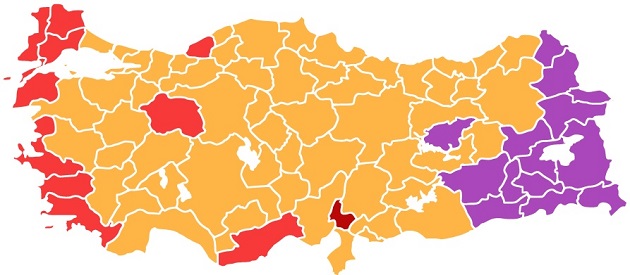
The situation created in Turkey by the elections was one that continued the AKP (Justice & Development Party) as the dominant political party, with 40.9% of the vote, an edge of more than 15% over the CHP (Republican Peoples’ Party) winning 25.0% of the vote. Despite dominating the election and winning 256 seats, the AKP still fell short of the majority of representatives in the 550 seat Parliament required to achieve a mandate to form a new government without entering into a coalition with one of the three parties that together gathered almost 60% of the votes in June. This leaves essentially two broad coalition options—either the AKP forms a coalition with one of the three opposition parties or the opposition parties unite in a three-way coalition (as no two of the three parties have enough representation in Parliament to make a majority).

th

th-1th-1


So far neither alternative has proved feasible. The AKP has seemed quietly receptive, promising transparency in the process, but has made clear that it is not responsive to proposals that seem disproportionate to the electoral showing of the purported junior partner. When the CHP leader, Kemal Kiliçdaroğlu, demands that it will only enter a coalition if the prime minister is rotated, and starts with himself as prime minister, he reaches so high as to effectively declare himself out of the game. Similarly, when the MHP insists that its entry into a coalition with the governing depends on ending the peace process with Kurds that the AKP began, it is expressing unacceptable demands for a coalition partnership. Moving forward on Kurdish reconciliation is urgent at this time as a breakdown of negotiations is likely to lead to a renewal of internal violence, which given the regional realities, could spill across boundaries and be even bloodier than the earlier decade of struggle with the PKK. Finally, the DHP, perhaps understandably, sees no gain for its prospects arising from a coalition given the hostility to Kurdish aspirations exhibited by AKP leaders during the electoral campaign and considering the hardline taken by the MHP against even a moderate accommodation with Kurdish expectations.

th-2


 th-2


This gridlocked situation is adverse to Turkey’s national economic and political interests. Already the World Bank has adjusted downward its forecasts of Turkish economic growth in light of this ambience of uncertainty surrounding Ankara’s governing process, and this situation is likely to worsen if no government is formed within the 45 day window allowed for a coalition process to reach closure.


It is in this context that the opposition parties stand to lose all that they appeared to have gained on June 7th. If as seems likely there is no coalition formed by the deadline, then the options open to President Erdoğan are eager to invite the AKP to form a minority government or to call for new elections in the shortest possible time. The minority government option, which Prime Minister Davutoğlu has pronounced as unworkable, would also in all probability lead to new elections rather soon, but maybe not immediately. The political process would be very fragile. Whenever the AKP failed to win parliamentary support from any one of the three opposition groups to support its policy initiatives, the government would be paralyzed by inaction, and a call for new elections would be quickly forthcoming.


It is this likely, but still avoidable, failed coalition scenario, that remains threatening to the hopes of opposition forces. In the event that no coalition is formed, and new elections are held, the most probable outcome, although this interpretation is contested, is a big swing of more pragmatically inclined voters toward the AKP. After all, for the Turkish economy to fulfill its potential it definitely needs a government firmly in place as soon as possible, and only the AKP on its own or in stable coalition can achieve this result. Given such a perception, the logical step for a Turkish citizen would be to vote for the AKP even if it wasn’t her or his first choice in June. What is more, such a transfer of votes to the AKP could have two other results, possibly depriving the HDP of its parliamentary representation by reaching a level in this second cycle that fell below the 10% threshold, thereby giving the AKP enough electoral strength not only to resume its role as majority party but to allow Erdogan to press forward with his ambition to convert Turkey into a presidential system. Both the CHP and MHP could also do worse on a second go around, and this would certainly dim their stars.


Of course, this outcome, while logical is by no means assured. Voters in the sort of polarized atmosphere that has existed in Turkey during the whole of the AKP period of governance, leads many Turks to vote with their hearts rather than their heads. If this turns out to be the dominant pattern, then it is quite possible that this second electoral cycle will resemble the first, possibly strengthening the incentives of both the AKP and the opposition to swallow some pride and reach a workable set of coalition arrangements. Or it might accentuate the dysfunctionality of Turkish political culture at this point, leading to a sharp economic downturn accompanied by a menacing uptick in political instability, including new signs of insurgent violence.


Here, then, is the essential situation: above all, if reason prevails, most Turks will likely increasingly act to create the conditions necessary to form a majority government, and in the process could deprive the country of two achievements attributed to the prior election—minority representation for the Kurds and others plus a curtailment of the ambition of its current president. With this understanding, the unwillingness of opposition parties to minimize their bargaining demands to form a coalition seems unfortunate and even irrational under present conditions, making much more likely an overall outcome that will not be pleasing to anti-AKP forces for one or another reason. It is especially likely that this post-election impasse could give new life to the Erdoğan game plan to revise the Constitution so as establish a presidential system.


Such reflections may turn out to be far from the manner in which the Turkish political scene unfolds. It purports only to share my attempt to comprehend a situation that seems complex and confusing to most Turks. Americans are notorious at getting non-Western societies wrong, and I do not claim to be an exception, which is part of the reason I have spent many of my adult years opposing American military interventions in distant lands.


Israel’s Shimon Peres Reacts to the Turkish Elections

10 Jun


Newspapers reported on June 9th that former Israeli president Shimon Peres (2007-2014) was pleased by the outcome in Turkey. He is quoted as saying “I am happy about what happened in Turkey – Erdoğan wanted to turn Turkey into Iran, and there is no room for two Iran’s in the Middle East.”


It is worth recalling that the downward spiral in relations between Turkey and Israel started in a real way when Erdoğan attacked Israel and Peres personally for defending Israel’s massive attack on Gaza at the 2009 World Economic Forum in the course of a panel in which both he and Peres were members. Erdoğan responded to Peres’ contention that Hamas was responsible for violence against Israeli civilians. His words were undiplomatically blunt: “Mr. Peres, you are a senior citizen and you speak in a loud tone. I feel that your raised voice is due to the guilt you feel. But be sure that my voice will not be raised as yours is. When it comes to killing, you know very well how to kill. I know very well how you struck and killed innocent children on the beaches.” So piercing the haze that separates these polite evasions of such international events from the cruel realities under discussion was a welcome rarity: on this occasion Erdoğan was confronting the naked face of power with a truth that needed to be heard. After

interference from the chair, Erdoğan strode off the stage announcing that he was through forever with the World Economic Forum, not for allowing Peres to speak, but for the attempting to stifle a response.


The deterioration in Turkish/Israeli relations climaxed the following year when Israeli commandos boarded the Turkish passenger ship, Mavi Marmara, the lead vessel among six in a freedom flotilla containing peace activists bringing humanitarian supplies to Gaza and seeking to break the Israeli blockade. The incident on May 31, 2010 resulted in the death of nine Turkish nationals, and created an enduring rupture in the political relations between the two countries that continues despite efforts by the American president, Barack Obama, to encourage normalization. Turkey is prepared to compromise on the issues raised by the Mavi Marmara attack, but to its credit will not accept normalization until Israel lifts its blockade of Gaza and ceases its use of massive force against the totally vulnerable Gazan civilian population.


Erdoğan’s departure from diplomatic protocol at the World Economic Forum illustrated his impulsive tendency to vent his feeling in public places without the usual filters of self-censorship that is second nature for most politicians. Of course, assessing such outbursts generally depends on the context and on whether what is being said so forthrightly has merit or not. Erdoğan’s public venting in relation to policies that were sensitive for secular Turks became particularly frequent, intensifying polarization, especially after the AKP’s one-sided victory in the 2011 general election after which the Turkish leader did seem to embrace a more majoritarian view of democracy (acting on the mandate of the majority of voters), and abandoning the pragmatism of his earlier posture based on an acceptance of republican democracy (that is, respect for minority values and views, checks and balances on the exercise of state power).


Reverting to the recent Peres assertion, it is certainly inflammatory and deeply misleading to link Turkey under the AKP with Iran, and to contend that Erdoğan’s hidden project is to convert Turkey into a second Iran. This is both false and insulting, as if Turkey is incapable of self-determination according to the declared will of its own public and elected leaders. There exists no credible evidence that Turkey has in any way endorsed the defining feature of the Islamic Republic of Iran, namely, a theocratic mode of governance.


Peres also essentializes Iran, refusing to acknowledge its recent evolution as a result of Hassan Rouhani’s election as president in 2013 and Iran’s forthcoming nuclear diplomacy that went the extra mile in search of a formula that would normalize its regional and global relations, which if accepted by the West and put into practiced, will almost certainly be viewed as a major contribution to regional and world peace. Peres speaks as if Iran is the hermetically sealed embodiment of political evil rather than a country that has struggled to overcome its autocratic past under the Shah, and managed to be stable during this period of exceptional regional turmoil with its theocracy displaying a willingness to indulge a limited democracy despite threats and provocations from the United States and Israel. There is much to criticize in Iran, but for such criticism to be responsible, it should be responsive to actualities, especially in the Middle East where there are such scant grounds for stability, let alone justice.


In important respects, the outcome of the Turkish elections is far better interpreted as a Kurdish HDP victory rather than an Erdoğan AKP defeat. Time will tell whether the Kurds will be constructive and creative in this phase of their political engagement within Turkey and in relation to Kurdish political developments in neighboring countries. It will also determine whether Erdoğan is statesmanlike and creative in shaping the political future of the country, taking to heart the electoral message that any shift to a presidential system is not now in the interests of the country.

Turkish Elections: It’s Not Just Erdoğan!

9 Jun

 dgwmt42n4n2

The Turkish general election on June 7th ended more or less as the polls predicted. The only small surprise was that the Kurdish Party (HDP) ended with 13% of the vote rather than either falling just below or above the 10% threshold needed for parliamentary participation. By clearing the 10% hurdle, the HDP denies the winner, Erdoğan Justice and Development Party (AKP), the majority required to form a new government. This means either a coalition, currently deemed unlikely and even undesirable, or a minority government with a new set of general elections scheduled in coming months.


The spinning of the Turkish election results in the West is rather malicious. It seems designed to generate two kinds of reactions: first, that the outcome was a personal defeat for Erdoğan and the AKP; and secondly, that now Turkey faces a period of instability and uncertainty, an atmosphere supposedly confirmed by a drop in the Turkish stock market and currency value. Such assessments, although not totally wrong, are misleading in dangerous and possibly self-fulfilling ways if taken by the Turkish opposition and the world as the real meaning of what took place. It is disturbingly reminiscent of the effort of the opposition in Egypt to discredit the Morsi presidency as soon as he was elected in mid-2012, generating a crisis of legitimacy despite his electoral victory, setting the stage for a populist revolt and the Sisi-led coup a year later. This undermining of electoral results is one of the most dangerous games being played by certain elements in the United States and the Middle East, and could lead the way to yet another regional disaster.


I believe what is most important about the Turkish elections is their affirmation of the growing strength and poise of Turkish democracy. If ever there existed a temptation to manipulate the vote so as to keep the HDP below the 10% margin, it was in this election as it would have enabled the AKP to have the majority in the Turkish Grand National Assembly so as to form a new government on its own and later have the parliament mandate a referendum on the shift to a presidential system in which the governing party would be quite sure to prevail. The fact that enough voters, especially among young and progressive Turkish citizens voted for the HDP, exhibited a healthy resistance to the perceived efforts to consolidate power further in Ankara, especially in the person of Erdoğan.


When the Conservatives in Britain won 36% of the vote to 30% for Labour the media called it a landslide, and a decisive vindication of Tory policies. In Turkey, although slipping 6% points (and losing 2.5 million votes compared to 2011), the AKP still prevailed in the election by more than 15%, winning 41.8% of the popular vote, with its closest competitor being the old Ataturk party, the CHP, winning only 25%. It might be well to recall that in 2002 the AKP formed the government although winning only 34% of the overall vote, gathering its majority because 45% of the total ballots were cast for parties that fell below 10% , resulting in their transfer mainly to the AKP.


The fact that HDP will now have 79 members in Parliament despite being an overtly Kurdish party is a further healthy development that might make a long overdue reconciliation more attainable. Also notable was the election of 97 women to parliarment along with four Christians, the first Roma ever, and a member of the Yazidi community. Such increased diversification refutes in a very vivid manner the contention that the AKP leadership was gradually turning Turkey into an Islamic republic, a so-called ‘second Iran.’


What is so striking about the world media reactions is their failure to note these encouraging developments, or to take balanced account of the dignified acceptance of the public will exhibited by the existing Turkish leadership. The AKP Chairman and Prime Minister Ahmet Davutoğlu, said simply “This nation’s decision is the best decision,” indicating respect for the outcome. So far, as well, Erdoğan has in no way challenged the vote that was certainly, in part, a defeat for his insistence that the ‘New Turkey’ would be more successful if it shifted to a presidential system. He has not lived up to the Putinesque persona that his detractors have long insisted upon.


The other failure of world perception has to do with some attention to some other contextual explanations for some decline in AKP popularity. In the background, is the fact of holding the reins of government in Turkey ever since their surprise victory in 2002, reaffirmed with increasing margins in 2007 and 2011 general elections. It is always a sign of a healthy democracy when a portion of the voters indicate their belief that ‘it time for a change.’ There is truth in the adage that ‘power corrupts,’ and a shift of leadership to a responsible opposition can be a revitalizing development for a country. Unfortunately, a persisting weakness in the Turkish political firmament is the absence of a credible alternative to the AKP. The opposition parties lack leaders of suitable stature or any kind of alternative program that commands widespread support. In this sense, I would suppose that there would have been a larger defection from the AKP in this election if a viable alternative did exist. Why there is no such alternative is something that constructive critics of the AKP should be devoting their attention to rather than giving their energies over to incessant and mean-spirited attacks.


There are additional explanations of some loss of voter support by the AKP. Above all, the weakening of the economy, with growth falling to 3% of GNP, or possibly a bit lower, and unemployment rising to 11%. Such a decline in economic performance is a product of many factors, but it certainly disappointed the expectations of many Turks struggling to get along on a day-to-day basis. Also, important is the deep cleavage that developed with the Hizmet Movement led by Fetullah Gulen, whose followers supposedly shifted votes in this election to the CHP and MHP. And finally, the lingering bad taste associated with the government’s excessive use of force in response to the Gezi Park demonstrations of 2013 apparently led many on the left and among the young to vote for the HDP, and may have given this Kurdish party the support it needed to qualify for parliamentary representation and thereby change the political climate in the country.


images-1


There are also understandable dissatisfactions in Turkey about Ankara’s Syria policy, which has resulted in both a huge influx of refugees, numbering about 1.5 million, and controversial tactics in lending some support to extremist anti-Assad forces. It is always easy to second-guess what to do in situations of a severe humanitarian/political crisis, and no governmental actor has emerged with a positive reputation in this post-Arab Spring period. Although the Turkish government seems to have made miscalculations, especially underestimating the strength and resilience of the Assad regime, it has more than most regional or global actors pursued a principled position throughout. It has supported democratizing movements, and opposed efforts to restore authoritarianism or to use governmental violence against peaceful demonstrators as in Syria and Egypt.


The election results are very new. What will ensue is not yet at all clear. It is a moment for all sides to show leadership and composure, and most of all, Erdoğan and Davutoğlu. Erdoğan, in particular, has been given a rare opportunity to turn electoral defeat into political victory. All he has to do is make a statesmanlike speech, acknowledging the setback for his vision of Turkey’s future but displaying his respect and admiration for the democratic process, and his commitment to maintaining Turkish political stability and working toward economic revival. It would be an opportunity for Erdoğan to put to rest among all except his most ardent enemies, the contention that he is an aspiring autocrat in the Putin mold. In the immediate aftermath of the elections, Erdoğan has so far taken the high road, but without making his response fully evident. At least, he does not lament defeat, but rather acknowledges the will of the electorate expressed by a vote in which 84% of eligible voters took part, and calls on all parties to evaluate the results “healthily and realistically,” adding that “the esteem of our nation is above all else.” Instead of berating the opposition, Erdoğan praised the turnout as exhibiting “the precious nation’s determination for democracy and for reflecting its will at the ballot box.” There was no bombast or recriminations that has sometimes in the past marred Erdoğan’s performance as a leader. It is too early to be sure that this benign mood will persist, but these early signs are hopeful.


For Davutoğlu the opportunity presented to him is more complex, but still very present. It is his moment to show firm leadership and demonstrate his dedication to a smoothe transition in the interest of the whole country. Without distancing himself from Erdoğan, Davutoğlu can demonstrate that he is quite capable of leading the country, and sensitive to the benefits of parliamentary democracy. Davutoğlu could emerge as a co-leader with Erdoğan that would not only restore confidence in AKP’s competence and underlying commitment to secular democracy, but would show to the Middle East that non-autocratic rule true to a nation’s history and character is possible. Of course, it is also a moment to move forward with the Kurdish peace and reconciliation process and to improve the human rights record of the government, especially showing a greater capacity to respect criticism from the media and political dissenters.


Despite the turbulence of the region, the economic troubles of neighbors in the Middle East and Europe, Turkey has enjoyed a period of extraordinary success during these years of AKP governance. The economy tripled in size, the militarized deep state has been dismantled, and overall democracy has been strengthened and diversified in relation to gender and ethnicity. Beyond these national gains, the regional and global standing of Turkey increased dramatically. Perhaps, more than any country, Turkey in this AKP period showed the world that it is possible to pursue an independent line in foreign policy and yet maintain continuity with its most enduring alignments. It is easy to overlook such notable achievements, especially given the polarizing passions of the anti-Erdoğan opposition.

It may also be a time for bringing back the steady hand of Abdullah Gul to the governing process. It would be a further sign of the ability of the AKP to learn from its mistakes, and to provide Turkey with the best possible leadership.


In my view, persons of good will throughout the world and in Turkey, should now breathe a sigh of relief, being glad that the AKP plan to establish a presidential Turkey has been put back on the shelf and yet relieved that the AKP was again supported by a significant plurality of Turkish citizens in an impressively free and fair electoral process.

The Semantics of Struggle

9 May

Words Against the Grain


While reporting to the UN on Israel’s violation of basic Palestinian rights I became keenly aware of how official language is used to hide inconvenient truths. Language is a tool used by the powerful to keep unpleasant realities confined to shadow lands of incomprehension.


Determined to use the rather modest flashlight at my disposal to illuminate the realities of the Palestinian ordeal as best I could, meant replacing words that obscure ugly realities with words that expose as awkward truths often as possible. My best opportunity to do this was in my annual reports to the UN Human Rights Council in Geneva and the General Assembly in New York. My courageous predecessor as Special Rapporteur, John Dugard, deserves credit for setting the stage, effectively challenging UN complacency with language that looked at the realities lurking below the oily euphemisms that diplomat seem so fond of.


Of course, I paid a price for such a posture as did Dugard before me. Your name is added to various black lists, and doors once open are quietly closed, if not slammed shut. If the words used touched enough raw nerves, you become a target of invective and epithets. In my case, my temporary visibility as UN Special Rapporteur meant being called ‘an anti-Semite,’ even ‘a notorious anti-Semite,’ and on occasion ‘a self-hating Jew.’ Strong Zionist pressures are now seeking to induce legislative bodies in the United States to brand advocacy of BDS or harsh criticism of Israel as prohibited forms of ‘hate speech.’ In April of this year pressures  by the British Jewish Board of Deputies led the University of Southampton to cancel a major academic conference on the Israel/Palestine conflict.


In relation to Israel’s treatment of the Palestinians, the clarifying/some of the offending words are ‘apartheid,’ ‘ethnic cleansing,’ ‘settler colonialism,’ ‘annexation,’ ‘crimes against humanity,’ and ‘genocide.’ The UN evades such invasions of light by speaking of Israeli ‘occupation’ (as if a static reality without history) and without challenging certain strong normative tendencies, including the criminalization of apartheid and ethnic cleansing, the delegitimation of colonialism, and the unlawfulness of annexation (as in Jerusalem by legal diktat and the West Bank by the de facto settlement phenomenon).


It was my experience that using words that connect the realities with the norms changes the discourse that is used by some of those at the UN and in the media, especially among those who seek genuinely to understand the significance of what is actually happening. Right language encourages right action. What is right language follows from how convincingly the word links to the reality being pointed to, and whether ideological obstacles can be overcome. The weakness of Israel’s position from the perspective of controversy is being expressed by their avoidance of substantive debate, for instance, challenging the labeling of occupation as apartheid, and recourse instead to character assassination of those who dared to connect these dots.


I feel that Israel is losing this struggle to obscure the true nature of their activities, and its devastating effects on Palestinian lives and rights. Whether this will mean that Israel will alter its policies is far less clear, and certainly not assured, and the outcome of the 2015 Israeli elections and formation of the new coalition government would suggest that the most extremist Israeli government ever has been installed under the leadership of Netanyahu and the Likud Party.


Nothing should be more shocking to Western liberal sensibilities than the appointment of Ayelet Shaked of the Jewish Home Party as the Minister of Justice in Netanyahu’s newly formed coalition government. Ms. Shaked, while being a member of the Knesset, became globally notorious as a result of her post sent around during the Israeli attack on Gaza in the summer of 2014 in which she called the entire Palestinian population the “enemy” that “should be destroyed.” Leaving no room doubt she went on to say that even that even “its elderly and and its women” should not be spared, and that the killing of Palestinian mothers is justified because they give birth “to little snakes.” Ali Abunimah asks rhetorically, “If Shaked’s post does not meet the legal definition of genocide then nothing does.” What is as shocking as these sentiments of Shaked is the silence of the Western media and leaders in the face of such an appointment in the only democracy in the region. Imagine the self-righteous angry posturing from liberals in the West if Hamas dared to select such a personality from their ranks to serve as the Minister of Justice. As it is the Hamas Covenant is invoked to confirm genocidal sentiments although subsequent behavior and political initiatives have moved in a far more accommodating direction. What is at stake is the discriminatory manner of either noticing or not noticing the elevation of adherents of ‘genocide’ to the pinnacles of state power. This two-way approach to language is fully displayed in the political discourse surrounding the Israel/Palestine conflict. And closer to home, compare Ayelet’s selection as Minister of Justice after her offensive tweet with the University of Illinois’ breach of Steven Salaita’s contract to become a tenured professor in reaction to his tweets expressing his outrage about Israel’s 51 day criminal assault on Gaza last summer. It conveys a lively sense of the extremity to which double standards are carried when it comes to Israeli behavior. 


There is another set of intense struggles around language that arise when a single word is insisted upon because of its emotive value, and possibly its legal ramifications. I am referring to the unconditional insistence of the Armenian diaspora that the catastrophic events that climaxed in the 1915 massacre of as many as 1.5 million Armenians should be acknowledged as ‘genocide’ by Turkey in the form of an official apology by the government and its leaders. The Armenian insistence stems from several motivations, it seems. Above all, the fact that once ‘genocide’ is admitted, then the link to ultimate evil is established beyond controversy, the Armenian narrative is validated beyond controversy, descendants of victims are granted a kind of clisure, and what happened to the Armenians is implicitly equated with what later happened to the Jews as a result of Naziism. It is psychologically important to prevail with respect to how these events are described so as to alleviate the pain endured over the years by the Armenian people because of what they have experienced as ‘genocide denial’ on the part of Turkey.


Turkey’s response to the Armenian allegations has evolved over the years, but it remains somewhat edgy. The 2014 statement of Erdogan seemed to accept the Armenian narrative to the extent of acknowledging the massacres and wrongdoings of 1915, while stopping well short of using the G-word. A few weeks ago, Prior to the centenary of April 24, Pope Francis brought his moral authority to bear by describing in a solemn mass as ‘genocide’ what happened to the Armenian people, and called upon Turkey to recognize these events for what they were. In reaction, Erdogan and other Turkish leaders stepped back, declaring that the issue of what happened in 1915 has not yet been sufficiently resolved by historians to justify attaching the word ‘genocide’ to this horrific set of events, that wrongdoing was not as one-sided as Armenians claim, and that the pope stepped out of line by issuing such an ill-informed and partisan statement concerning historical events that are complex and contested. 


Taking a different tack than that of Pope Francis, Barack Obama angered Armenians (even more than the pope angered Turks) by refusing to include the word ‘genocide’ in his centenary message to the Armenian people, instead using the Armenian descriptive Meds Yegham (the great calamity). Obama added that the 1915 events constituted a ‘massacre,’ produced ‘a terrible carnage,’ and were ‘a dark chapter of history.’ It seemed meant to be a strong statement of solidarity with the Armenian campaign, omitting only the word ‘genocide,’ but this omission was all that was needed to turn this expression of solidarity with the Armenian call for redress of grievances into an anti-Armenian statement that was unwelcome because it refused to show its support for all that now mattered to the Armenians, namely, that their victimization be regarded as ‘genocide’ beyond any doubt. For this goal to be reached, the endorsement by the U.S. Government is deemed to be necessary, and hence the Obama formulation fell decisively short.  No denunciation of the 1915 events that did not adopt the descriptive label of genocide was acceptable for the aggrieved and mobilized Armenian diaspora. This semantic hard line shows how much meaning can be invested in whether or not a particular word is used.


In response to Obama, representatives of the organized Armenian diaspora expressed their disappointment in harsh language, going so far as to say it would have been better if Obama had said nothing at all. They called ‘disgraceful’ his refusal to live up to a 2008 campaign pledge that if elected president he would identify the events of 1915 as genocide. Obama’s apparent justification for this semantic retreat is that as the head of state his primary obligation is to care for the strategic interests of the country, and Turkey as a NATO ally was too important to antagonize over such an issue. But my point here is to take account of the power of the word, as well as to notice that the language functions differently in private and public domains. To refer to 1915 as Meds Yegham is a strong affirmation of the Armenian narrative. By comparison, if Obama were to describe the dispossession of the Palestinians in 1948 as the nakba, there would be dancing in the streets of Ramallah and Gaza City. Such a designation, if ever used by an American president, would be correctly viewed as a mighty slap in Israel’s face and a great symbolic victory for the Palestinians. The point here is that the Armenians have been able to raise the threshold of semantic redress to the very highest level by this insistence on genocide, and accompanying sentiment that nothing else will be acceptable, while the Palestinians have yet to receive even a formal acknowledgement that they were victims of a calamity in the less incendiary terminology of Arabic, much less that of genocide or ethnic cleansing.


What are we to make of this bitter fight about the words used to describe a series of events that happened 100 years ago? First, and most obviously, words matter, and are made to matter deeply by political actors, especially when the purpose is to challenge conventional wisdom. Some words achieve a charismatic stature, and none more than genocide. [As an aside, I was never more attacked by Zionist activists and the mainstream media than when in 2007 I referred in a newspaper article to Israel’s policies of punitive siege imposed on the entire civilian population of Gaza as ‘genocidal’ (not ‘genocide’) in its intent and effect, a contention given governmental endorsement by Shaked’s appointment, but still manages to slip under the radar of Western moral and political sensibilities.


Secondly, the alleged Turkish reason for its objection to genocide is based on the factual contention that historical realities of 1915 remain contested, and can only be resolved by an international commission composed of historians enjoying unrestricted archival access. The Armenians summarily reject such an approach as proof of Turkish bad faith, insisting that there already exists an authoritative international consensus supportive of their claim of genocide due to the establishment of systematic, one-sided, deliberate massive slaughter designed to eliminate the Armenian presence in Turkey. Thirdly, the American position is aligned with the Armenians on the facts, but with the Turks on the appropriate language at governmental levels, which seems the weakest of all rationalizations for evading the charge of genocide. Fourthly, if the search is for a way to resolve the conflict, the Armenian tactic of invoking foreign governments and moral authority figures such as the pope, is dysfunctional although it does provide strong moral support for the campaign. If, on the contrary, the mobilization of support is primarily intended to generate a heightened collective memory of victimization among Armenians, then soliciting these external expressions of solidarity from leading moral authority figures is of great value.


I find my own view trapped midway between the positions put forward by Pope Francis and President Erdogan. On the facts, although as Turkey argues the events occurred in wartime with the Armenians acting as adversaries and sometimes engaged in violence against Turks, still the basic character of the events  certainly seemed to be genocidal in character, with entire Armenian communities being forced to make death marches. As a lawyer, however, I would refrain from using the label genocide as there was no crime of genocide in 1915, and criminal law can never properly have a retroactive application. As I have pointed out before, even the London Agreement of 1945 setting up the Nuremberg Tribunal to assess Nazi crimes did not include ‘genocide’ among the international crimes that could be charged even though the word genocide had been coined by Rafael Lemkin in 1944, or before.


Yet is it not appropriate in view of the consensus on the facts, to recognize the links to catastrophes that have been definitively called genocide by affixing the term to the onslaught against Armenians planned and executed by ‘the young Turks’ acting under Ottoman authority? Surely no sane person objects to categorizing the Holocaust as ‘genocide’ even though the death camps were established and the final solution occurred before the Genocide Convention of 1950, and was long underway before Raphael Lemkin had invented the word. Thinking along this line, and acknowledging that the crime of genocide had yet to be established, it would seem that it is politically, morally, and therapeutically correct to describe the 1915 tragic ordeal of the Armenian people as genocide, but legally irresponsible to do. In this gap between semantic contexts there seems room for a conflict resolving compromise. Yet the distinction drawn may seem obscure, and somewhat academic, unlikely in the end to be attractive for either side in the controversy.


How, then, can such an encounter over the word be resolved? It seems doubtful that Turkey will back down without some face saving ritual, and it is virtually certain that the Armenian diaspora having raised the temperature surrounding this single word to such a fever pitch will be content with anything less than a full fledged Turkish capitulation. The Armenian campaign will certainly continue to refuse to risk an ambiguous outcome arising from convening the sort of historical inquiry that Turkey proposes as the necessary next step in resolving the controversy. It doesn’t require much sophistication to conclude that the parties are stuck and likely to remain so for a long time.


This is a pity. Both sides would have much to gain by finding a way forward. It is quite likely that if the word issue was finessed, Turkey would be relieved, and go out of its way to preserve a vibrant memory of the events through such initiatives as a national museum, agreeing to a commemorative day, and hosting a variety of Armenian cultural events. If the Turkish leadership could persuade itself that the historical issue is substantially settled, and what matters is the present relationship, maybe then it could issue the kind of statement the Armenian people so fervently seek, and a mutually beneficial future could likely unfold. Both sides need to look in the mirror sufficiently to realize that more is at stake then fidelity to their fixed position for and against the use of the word genocide. Yet, the way in which psycho-political works, it is likely that the wait for such a sensible breakthrough to happen will be long. The burden of magnanimity is on the Turkish side, the stronger party and with less at stake concerning national identity.


Before concluding, I would mention another word that is obstructing reason and decency in the national and global political realm. It is ‘terrorism,’ used to demonize the grievances and the tactics of the adversary, and in mainstream discourse preempted by governments and their media apologists to create an unbridgeable moral distance between themselves and a political challenge.

“We refuse to negotiate with terrorists” is the rationale for keeping a hot war going. We should also notice that the language of terrorism is racialized. If the incident involves a white American, there is a tacit turn toward focusing on his mental condition and sociopathic sensibility, but if the suspect is Islamic a frantic search is undertaken to link the acts of violence with either jihadist groups or to trace its source to the Koran.


There are efforts to offset equalize word play. For instance, critics of hegemonic semantics introduce the phrase ‘state terror,’ to designate violence by state entities against their non-state enemies. This rejects the attempt by governments to immunize their own violence from censure, while branding the violence of their adversary as morally and legally prohibited because it is terror


We know that the accusatory language of terrorism is in the toolkit of governmental policymaking, and can be dropped when convenient. When a political actor is ready to negotiate, adherents of the former enemy are no longer described as ‘terrorists.’ Think how effortlessly the former leaders of the IRA, ANC, or even the PLO were seated at diplomatic dinner tables when the right moment arrived! Yet until the appointed hour, relying on the terminology of terrorism is the equivalent of a hunting license that can be used as a rationale for torture, disproportionate force, civilian casualties, extraordinary rendition, drone strikes, and special ops wherever, whenever without regard to constraints of law or morality.


Public reason in democratic society would greatly benefit from a renunciation of terrorism as a respectable term of art. Instead, the focus could be placed on what to do in effective and humane ways to sustain security and safeguard just political orders. In effect, to forego the temptation to call the enemy ‘a terrorist’ the path would be clear to talk as well as fight, and to resist the absurd dichotomy that we are totally ‘good’ and the adversary is totally ‘evil.’


But what if the insurgent challenge is demonizing the established order by contending that it is decadent, corrupt, and oppressive? Is it not reasonable if such a critique jumps the barriers of law, and mobilizes for violent struggle, to respond? Of course it is not only reasonable, but morally and politically imperative to respond as persuasively as possible, and to uphold the security of what is deemed legitimate societal arrangements. What is not helpful, actually diversionary, is to respond as if the struggle was between good and evil, and that is what happens as soon as the insurgent challenger is labeled

‘a terrorist.’ Such language exempts the defenders of the status quo from self-criticism and considering accommodationist tactics, proscribing negotiation and assessment of grievances. The response to ‘terrorists’ is war talk, rendering peace talk as irrelevant of worse.


Shall we also abandon the label of ‘state terror’ for crimes of the state associated with violence directed toward the innocent? Yes, as part of a wider semantic contract to banish ‘terrorism’ from the lexicon of political discourse. Yet, not unilaterally, as under existing conditions ‘state terror’ at least creates some understanding that it is the manner of deploying violence that should be repudiated rather than the blackening of insurgent reputation. As terrorism is used on behalf of the state, even violence carefully directed at state structures and their human instrumentalities are called ‘terrorists.’ In any event, state terror calls attention to policies and practices, and does not purport to demonize the state itself, leaving open possibilities of diplomacy and reconciliation.


At the very least, it would be a salutary move to call for a moratorium on the use of the word ‘terrorist’ from this day forward. And as with the fierce ideological struggles over ‘genocide’ it is best to know when to be provocative so as to expose suppressed realities and when to be pacifying so as to calm the atmosphere raising hopes for compromise and a shift of energies in the direction of nonviolent struggle.

Ahmet Davutoğlu as Turkish Foreign Minister, and Now Prime Minister

30 Aug

[Prefatory Note: The post below is written as a congratulatory message to Ahmet Davutoğlu. ‎ Prior to his entry into government Davutoğlu built a strong following among intellectuals around the world for his scholarly breadth and depth that involved an unusual command over both social science and the humanities, with a special focus on philosophies of history, and their application to the Turkish past and present realities and future prospects. I publish here also a significantly modified article originally written a week ago at the request of AlJazeera Turka, and heretofore only available in Turkish.]


The Ascent of Ahmet Davutoğlu


Richard Falk


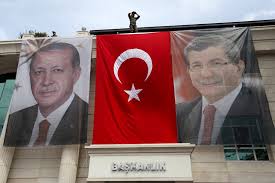
So far most commentary on Ahmet Davutoğlu’s selection as Turkey’s new Prime Minister has been focused on what will be his relationship with the country’s new president, Recip Teyyip Erdoğan. Especially opponents of the Justice and Development Party (AKP) tend to portray Davutoğlu as certain to play second fiddle to Erdoğan who is both fiercely resented and feared, and regarded as a ‘Turkish Putin.’ The fact that Erdoğan seems to have handpicked Davutoğlu to succeed him at party leader and prime minister, and acted deliberately to sideline the popular prior president, Abdullah Gul, adds to the concern about what to expect from a government led by Davutoğlu. I believe that such speculation is profoundly wrong, that Davutoğlu is an admirable person of strong beliefs and an adherent of a political vision that has evolved over the years on the basis of study and experience. In my view Davutoğlu will turn out to be a historically significant Turkish leader by virtue of his thoughtful style of governance and through the assertion of his own priorities and programs. Few countries can claim leadership of the quality provided and record achieved by Erdoğan, Davutoğlu, and Gul over the last twelve years.


For Davutoğlu to reach the peak of political power is the latest stage in his remarkable ascent within governing circles in Ankara. Coming to government after a deep immersion in the scholarly life of a university professor is unusual enough, but to rise to such a level of prominence and influence without casting aside his academic demeanor is unprecedented, not only in Turkey but anywhere.

Searching for recent comparisons, I can think only of Henry Kissinger, and he never rose above the level of Secretary of State, although he did serve as architect of American foreign policy during Richard Nixon’s presidency, a period of undoubted global leadership. Unlike Davutoglu, Kissinger treated the moral and legal dimensions of foreign policy as instruments of propaganda rather than as matters of principle. Kissinger as a scholar never achieved the distinction nor the national impact that resulted from Davutoğlu’s Strategic Depth, which incidentally, was planned to be the first of three monumental studies, the other two being devoted to historical depth and cultural depth. One of the costs of entering government has been the deferral of this project, which if completed, is almost certain to be a work of exceptional significance.


Starting out in 2003 as Chief Advisor to the Foreign Minister, and later to the Prime Minister, Davutolğu’s role as a highly influential and respected expert was quickly recognized. Long before Davutoğlu became Foreign Minister in 2009, he was widely respected in Turkey as the architect of its energetic and effective foreign policy, which was causing a stir in the region and around the world.


Davutoğlu’s contributions were particularly notable in three domains of foreign policy. First, he understood and clearly articulated the importance for Turkey to adapt to the new regional setting created by the end of the Cold War, appreciating that it was now possible and desirable for Turkey to be an independent actor in the Middle East and beyond without awaiting clearance from Washington.


Secondly, Davutoğlu from almost the beginning of his role in government became Ankara’s chief emissary in trying to clear the path to Turkish membership in the European Union, working out the important ‘Copenhagen Criteria’ that turned out to be also useful as a roadmap for desired domestic reform. This functioned as an important mandate that was linked to a domestic program of reform, which included protecting human rights and featured the containment of the deep state in Turkey during the early years of AKP leadership when relations with the armed forces were tense, and rumors of an impending coup were in the air. Satisfying the EU requirements gave Erdoğan the justification he needed for impressively strengthening the civilian control of government in Turkey. Because of its private sector interests, the Turkish military turned out to be as eager for EU membership as was the AKP, and even the harsh Kemalist opposition went along with this part of the AKP program.


Thirdly, these moves to civilianize the Turkish government removed altogether the earlier role played by the Turkish armed forces as custodian of the republic through the medium of coups against elected political leaders. In retrospect, substantially removing the armed forces from the political life was a great step forward in democratizing Turkey even if this momentous development was not acknowledged in Brussels, and elsewhere in Europe. For quite independently Islamophobic reasons Europe was becoming adamantly opposed to accepting Turkey as a member of the EU, no matter how successful the Turkish government might be in satisfying the standards laid down for accession. It might also be noted that the secular opposition in Turkey also has never credited Erdoğan with this achievement, which might turn out to have be his greatest contribution to Turkey’s political development as a vibrant constitutional democracy. While praising this central achievement it needs to be noted that the overall record of the AKP on human rights is mixed, with particularly regrettable encroachments on political freedoms via the imprisonment of journalists, pro-Kurdish activists, and others.


From the outset of his time in government, Davutoğlu was also extremely active in doing everything possible to resolve the Israel/Palestinian/Syrian conflicts, and led a comprehensive Turkish effort to bring peace to the region. Davutoğlu’s attempt to have Hamas treated as a normal and legitimate political player after its 2006 electoral victory in Gaza would have saved much grief in the Middle East had it been accepted in Washington and Tel Aviv. After these conflict-resolving initiatives collapsed, Turkey has almost alone in the region played a principled and constructive role by challenging the Israeli blockade of Gaza and seeking to end the collective punishment and humanitarian ordeal of the Palestinian population. This role was resented in the centers of Western power and even in most Arab capitals, but it has endeared Turkey and its leaders to the peoples of the region and beyond. It also gave expression to Davutoğlu’s insistence that a successful Turkish foreign policy should be as principled as possible while at the same time being creatively opportunistic, promoting national interests and values, and in all possible situations seeking engagement rather than confrontation.


More famously, and controversially, Davutoğlu saw the opportunities for Turkish outreach in the Arab world, and beyond. Unlike the failed efforts in the 1990s to incorporate the newly independent Central Asian republics in a Turkish sphere of influence, the AKP effectively approached the expansion of trade, investment, and cultural exchanges throughout the region, an approach given the now notorious doctrinal label by Davutoğlu of ‘zero problems with neighbors’ after he became Foreign Minister in 2009. At first ZPN seemed like a brilliant diplomatic stroke, a dramatic effort to rest Turkey’s ambitions on the dynamics of ‘soft power geopolitics,’ that is, providing benefits, attracting others, and not depending for influence on military prowess or coercive diplomacy. Given what appeared to be the frozen authoritarian political realities in the region, constructive engagement with mutual benefits seemed superior to postures of hostility, tension, and non-involvement that had for so long been characteristic of Turkish foreign policy, and descriptive of the sterile political atmosphere throughout the Middle East.


Then in early 2011 came the Arab Spring that surprised everyone, including Turkey. It created excitement and turbulence throughout the region, but also the promise of far greater democratic and more patterns of governance. Davutoğlu as much as any statesman in the world welcomed these Arab anti-authoritarian upheavals as benevolent happenings, pointing especially to the extraordinary events in Tunisia and Egypt in early 2011 that overthrew two long serving authoritarian and corrupt leaders by relying on largely nonviolent mass mobilization. Davutoğlu was especially impressed by Arab youth as a revolutionary force that he believed was well attuned to the changing tides of history.


This optimism did not last long. Events in Libya, Syria, Bahrain, and Yemen made it clear that there was not going to take place the smooth and quick transitions that deceptively seemed to be taking place in Egypt and Tunisia. It was soon clear that it would become necessary for Turkey to choose sides as between the authoritarian elites seeking to hold onto or restore their power and the earlier Ankara approach of accommodating the governing authorities of Arab states without passing judgment on how these governments treated their own citizenry.


Syria posed the most severe challenge in this respect. The Assad regime in Damascus had earlier been the poster child of ZPN, and now dramatized the non-viability of such a posture as the Damascus regime became responsible for committing one atrocity after another against its own people. Turkey abruptly switched sides, losing trust in Assad, and aligning itself with rebel forces. Both the pro and anti-Assad postures proved controversial in Turkey. The main secular opposition party, CHP, accusing Erdoğan of playing sectarian politics by supporting in Syria an insurgency that was increasingly dominated by Sunni militants associated with a Syrian version of the Muslim Brotherhood.


Davutoğlu skillfully and reasonably reformulated his ZPN by saying that when a government shoots its own citizens in large numbers, Turkey will side with the people, not the governmental leadership, which lost its legitimacy through its actions. From now on the doctrine associated with his outlook could be more accurately understood as ‘zero problems with people,’ of ZPP. The same logic guided Turkey in its eventual support of the NATO intervention in Libya as the Qaddafi regime seemed poised to engage in genocidal onslaught against the entrapped population of Benghazi to quell a popular uprising. The mass mobilization against the elected Morsi government in Egypt illustrated another kind of difficulty, leading Turkey to stand out in the region, joined only by Qatar, in its refusal to give its blessings to the military coup that brought General Sisi come to power in July 2013.


The touchstone of Davutoğlu’s approach to foreign policy is the effort to blend principle and pragmatism in relation to shifting policy contects, doing what is right ethically while at the same time exploring every opportunity to promote Turkish national interests, including enhancing its international reputation as a responsible and strategic player. This blend of goals was well-illustrated by the seemingly frantic Davutoğlu diplomacy in many settings, including the Balkans, Crimea, Armenia, Myanmar, and Latin America, seeking wherever possible to resolve regional conflicts while lending support to humanitarian goals, and in the process establishing Turkey’s claims to be both a constructive international actor and a valuable partner for trade and investment.


The most impressive example of such an approach was undoubtedly the major initiative starting in mid-2011 to help out a crisis-ridden Somalia when the rest of the world abandoned the country as a ‘failed state.’ Erdoğan and his wife, together with Davutoğlu, visited Mogadishu at time when it was viewed as dangerously insecure and then put together a serious financial aid package to highlight the continuing Turkish commitment. From this bold and imaginative gesture of solidarity came a major opening to Africa for Turkey, which produced an immediate rise in Turkish prestige that brought with it major opportunities throughout the continent.


In reflecting on the Erdoğan/Davutoğlu approach to foreign policy, this Somalia initiative helps explain, as well, how and why Turkey after an absence of 50 years was elected to term membership for 2009-2010 in the UN Security Council with strong African backing. Turkey is again investing an enormous effort to being elected to the Security Council for a 2015-2016 term. It also explains why Istanbul has become a favorite site for major international meetings, often displacing the earlier tendency to choose Western European cities for such gatherings. Both of these involvements at the global level are expressive of Turkey’s ambition to be a global political actor, as well as a strong state and regional influence.


Despite an extraordinary record of achievements, the Davutoğlu foreign policy experience also has its share of blemishes, even taking into account the difficulties that all governments faced in adapting to the abrupt sequence of unexpected changes in the Middle East during the last several years. Perhaps because his plate was so full with an array of diverse undertakings, Davutoğlu didn’t sufficiently focus on the daunting complexities of the aftermath of the Arab Spring, leading him to make on behalf of Turkey several costly miscalculations.


Undoubtedly the most serious of these blunders concerned Syria, not the underlying impulses, but the lack of nuance. In my view, Turkey’s mistakes can be understood in two phases: first, the excessive enthusiasm attached to the initial effort to dissolve the tensions that had dominated Turkish-Syrian relations for many years, affirming the Assad regime well beyond what was necessary for the normalization of relations thereby creating unrealistic expectations; and secondly, not only repudiating the government in Damascus that had been so recently befriended, but giving all measure of aid and comfort to an ill-defined insurgency without any seeming appreciation of the internal balance of forces in Syria. Ankara acted as if the Assad regime would soon collapse if pushed even slightly by the uprising. Turkey seemed continuously surprised by the resilience of the Assad regime and by the internal, regional, and international support it was receiving. Turkish policy was wrong for several reasons, and embroiled Turkey in a prolonged civil conflict with no end in sight, as well as damaged its image as a prudent and calming diplomatic influence throughout the region.


A similar line of criticism can be applied to Davutoğlu’s overall response to the Arab Spring and its aftermath. While it was consistent with the principled side of the foreign policy approach he was pioneering to welcome the events of 2011 in Tunisia and Egypt as transformative, it was premature to pronounce these developments as irreversible, and to anticipate their continuous deepening and regional spread. It soon became evident that Davutoğlu did not adequately appreciate the political will or capabilities of counter-revolutionary forces in the region, and did not seem to take account of the impact of an anti-democratic preoccupation that pervaded the dynastic politics of the well-endowed monarchies in the region. The role of Saudi Arabia and the UAE, for instance, in using their petroleum wealth and political leverage to promote a military takeover and bloody crackdown of the Muslim Brotherhood in Egypt altered the political balance in several countries, and took an unquestionable precedence over even the sectarian impulses of these political actors in their opposition to Shiite Iran. Shocking in this regard is the tacit strategic compact of these Arab governments with Israel that even went so far as to endorse the 50 day criminal onslaught directed at Hamas in the West Bank and Gaza that commenced on July 8th.


More difficult to analyze, but at least somewhat questionable, was the degree to which Turkey, despite trying to pursue its own distinctive brand of diplomacy in this Davutoğlu era also seemed to be going along with some dubious policies of the United States. In this regard, I would mention a limited collaboration with the failed military interventions in Afghanistan, Libya, and of course, Syria. It is also debatable as to whether Turkey should have consented to NATO’s deployment of defensive missile systems on its territory, which Moscow understandably viewed as provocative. What seems called for in the future is greater selectivity in maintaining Turkey’s strong alignments with the United States and NATO.


All in all, Ahmet Davutoğlu has had a remarkable run as Foreign Minister, and as Turkey’s new Prime Minister, is almost certain to embellish further his many notable contributions to the success of post-Kemalist Turkey. His thoughtfulness about policymaking combined with his personal integrity and decency combined with the highest levels of professional competence make him a rarity among politicians. I have long been impressed by Davutoğlu’s clear understanding of how Turkey’s effectiveness internationally is an outcome of the confidence generated by domestic success. This requires achieving political stability, economic development, protecting human rights and the environment, as well as creating and the further strengthening of the procedures and substance of an inclusive democracy that is fair and beneficial for all citizens regardless of their ethnic and religious identities. With such leaders committed to this progressive worldview, Turkey can look forward to a bright future. Turkey is poised to play a crucial role as a force for peace and justice in the roiled waters of the Middle East, in surrounding regions and sub-regions, and even in the world.


‘Genocide’ in 1915: Law, Language, and Politics

27 Apr

 [This post is supplemental to what was contained in yesterday’s post, seeking to take advantage of the attention given to the events of 1915, to encourage a rethinking of the nature of the conflict. I am arguing that the historical argument should be put to rest, and that the issues that yet need to be resolved relate to the legal questions surrounding the applicability of genocide, as well as the related semiotic and political questions associated what be called ‘the politics of genocide.’]

            The Turkish Prime Minister, Recep Tayyip Erdogan, and the American President, Barack Obama, have both been accused of ‘denialism’ by representatives of the Armenian community in response to their official statements issued to commemorate formally the 99th anniversary of atrocities committed in 1915 against the Armenian minority living in Turkey.


            The accusations directed at the two leaders are somewhat different as is the tone and substance of their two statements. Obama is essentially being attacked because the Armenian diaspora community in the United States was led to believe during his presidential campaign of 2008 that he would if elected formally affirm that what happened in 1915 to the Armenian minority living in Turkey constituted genocide. Obama’s statement adopts strong language of condemnation: “We recall the horror of what happened ninety-nine years ago, when 1.5 million people were massacred or marched to their deaths in the final days of the Ottoman Empire.” He added, “I have consistently stated my own view of what occurred in 1915, and my view has not changed,” apparently seeking to console those who expected more, while refraining from crossing the red line associated with the G-word, which is what Armenians were waiting for. Obama calls for a “full, frank, and just acknowledgement” of the facts as being in the interests of all sides, and part of the struggle to “build a foundation for a more just and tolerant future,” and with a nod toward national humility Obama observes that Armenian/Turkish reconciliation should go forward “as we [in America] strive to reconcile some of the darkest moments in our own history.” But this is not enough to satisfy those who articulate the views of the Armenian campaign that will settle for nothing less than the unambiguous avowal that the Armenian ordeal was ‘genocide.’ Any other description of these events is dismissed as unacceptable, being regarded as evasive or denialist in relation to this insistence on the word.


            Oddly, the complaints about Erdogan’s response to the 1915 anniversary are rather similar, although his rhetoric is more problematic in relation to how the events in question should be historically understood. For Erdogan many ethnicities suffered unjustly during the final stage of the Ottoman Empire, including Turks, Kurds, Arabs, Armenians and millions of others during this “difficult period.” He calls for an approach that appreciates “all the sufferings endured..without discriminating as to religion or ethnicity.” And further, that no justice is rendered by “constructing hierarchies of pain nor comparing and contrasting suffering.” Erdogan pushes back against Armenian pressures by saying “using the events of 1915 as an excuse for hostility against Turkey and turning the issue into a matter of political conflict is inadmissible.” In effect, Erdogan repudiates the major premise of the Armenian campaign.


            Erdogan articulates, as well, an approach that Turkey has more broadly embraced in its sponsorship (with Spain) of the Alliance of Civilizations: “The spirit of the age necessitates dialogue despite differences, understanding by heeding others, evaluating means for compromise, denouncing hatred, and praising respect and tolerance.” More concretely, he repeats the call for “a joint historical commission,” which would have the benefit of an expanded access to the extensive Turkish archives now available to all researchers. Along these lines Erdogan also proposes that the diverse peoples of Anatolia, who lived together peacefully for centuries, “talk to each other about the past with maturity and to remember together their losses in a decent manner.” And somewhat piously at the end, “it is with this hope and belief that we wish the Armenians who lost their lives in the context of the early twentieth century rest in peace, and we convey our condolences to their grandchildren.”


            As might be expected, the Armenian reaction to such sentiments is one of anger, and feelings of disappointment that can be summarized by the reaction, ‘nothing new.’ Erdogan’s message is the familiar Turkish refrain that refuses to accept the central Armenian grievance—that Armenians were the main target of the lethal Ottoman policies of 1915 to such a deliberate and systematic extent as to justify the label of ‘genocide.’ The Armenian campaign for rectification is centered upon the unconditional demand that governments throughout the world, especially Turkey, and secondarily, the United States, confirm that what took place was genocide. For this reason, although the differences between what Obama and Erdogan had to say are significant, even profound, the Armenian reactions are almost equally dismissive.


            To some extent more nuanced Armenian responses to Obama and Erdogan might help lead toward a more constructive approach to persisting tensions. After all, Obama basically subscribes to the Armenian understanding of what took place in 1915, while Erdogan rejects the far more basic idea that Armenian suffering is of such a grave character as to warrant special consideration. It would seem desirable and reasonable for Turkey to move beyond this view of plural suffering to a willingness to accept the historical narrative long convincingly put forward by respected scholars and representatives of the Armenian and international community, and concentrate attention on how this terrible past episode may be properly acknowledged during 2015, a hundred years later. The responsible debate at this time is about the legal status of the 1915 events, taking the historical facts as sufficiently established as to not require further investigation. Indeed if the Turkish government were willing to make this concession it might ease the way toward creating a process with some real prospect of mutual accommodation. From this perspective, it should be possible to start by agreeing with the descriptive accuracy of Obama’s formulation and move beyond what Erdogan proposes while incorporating his remarks encouraging dialogue and tolerance.


            What seems most helpful at this time is shifting away from a focus on the historical interpretation of the events of 1915 toward a consideration of how to achieve an agreed rendering of the legal and semiotic issues that are the true residual core of the controversy. Such a shift will at least allow us to understand the overriding importance attributed by both the Armenian community and the Turkish government to whether the word genocide should be treated as applicable or non-applicable in the good faith search by the parties for justice and reconciliation. In the spirit of moderation it needs also to be realized that time has passed, that the hurt of such remembrances can never be fully assuaged, and that the best that can be achieved is some compromise between remembering and forgetting. Such a compromise is essential if the shared objective of the Armenian community and Turkey is to escape finally from the twinned entrapments of embitterment and rationalization.