Archive | Human Rights RSS feed for this section

Zero Dark Thirty (ZD30) & American Exceptionalism (revised)

31 Jan

 (Note: What follows is a revised text of my post on the film published a few days ago; further reflection, feedback, and exposure to other points of view led me to feel that, given the sensitivity of the topic, I could do somewhat better in setting forth my assessments; I thank those readers who contributed comments, and apologize for this ‘new’ post that is mainly an ‘old’ one.)

            ZD30 is the film narrative that tells the dramatic story of the special forces operation that on May 2, 2011 located and killed Osama Bin Laden in a compound on the outskirts of the Pakistani city of Abbottabad, which is not far from Islamabad. It is directed by the prominent director, Kathryn Bigelow, who had won big Hollywood awards (2009 Oscar for best movie and  best director) for her brilliant film, Hurt Locker, focused on the work of a bomb squad in Iraq, and its impact on the lives of the American soldiers taking part. She knows her craft, and ZD30 is captivates an audience due to its screenplay, virtuoso acting, taut plot, vividly contoured characters, insight into the mentality of CIA operatives and their bosses, and the evidently realistic portrayal of grisly torture scenes. These filmic virtues have been displaced by a raging controversy as to whether ZD30 endorses torture as a valued and effective tool against extremist enemies of the United States and conveys the message that torture was instrumental in the successful hunt for Bin Laden.


            Certainly President Obama claimed and received much credit in the United States for executing this mission, and it has received very little critical scrutiny. It is hard to calculate the impact of this strike that killed Bin Laden on the 2012 election, but it many believe it made a crucial difference, at least psychologically, and particularly in relation to the outcome in swing states and with respect to the last minute decisions reached by independent voters. Such a success against Al Qaeda was registered as a major victory despite the absence of evidence that Bin Laden has been playing any significant role in Al Qaeda activities during recent years, including that of their so-called affiliates, in such countries as Yemen, Iraq, and Mali, and he was so removed from the scene of the conflict that there was serious speculation that he had died or was incapacitated long before 2011. As it did with the 9/11 attacks, the U.S. government fans the flames of suspicion by refusing to disclose the evidence relied upon to identify that the person killed at the compound in Abbottabad was indeed Bin Laden and by the related refusal even to allow journalists or others to see the body before it was unceremoniously dumped at sea (although after administering Muslim burial rituals and obtaining a quiet approval from the Saudi government, his birthplace).


            The deeper questions, of course, are the conduct of such a military mission without the permission, or even the knowledge, of the territorial sovereign; indeed there were American military units standing by in case Pakistan found out while the operation was underway and used its own military capabilities to abort it. Also, was it legally and morally appropriate to kill Osama Bin Laden despite his being unarmed when confronted in the compound and at that point in the raid there was no resistance? It would seem clear that it would not be acceptable to the U.S. Government for other governments to carry out such an extra-judicial killing to eliminate an enemy leader living in a distant country. Would not many governments have a comparable security argument if faced with real or imagined overseas enemies? Arguably, the immensity of the 9/11 crimes and the grandiosity of Osama Bin Laden’s self-declared war against ‘the crusader’ forces of the West set him apart to some extent. Bigelow makes this connection by opening the film with a blank screen while engaging the audience with voice recordings of frightened persons trapped in the Trade Center buildings on that fateful day, presumably conditioning us to be indulgent toward responses on ‘the dark side’ that were somehow commensurate with the immensity of the crime attributed to Osama Bin Laden and Al Qaeda.


            Yet, it would still seem that the particulars of this Operation Neptune Spear (the US Government code name) are ventures that only the United States, and possibly Israel, would undertake, and that their unabashed victory claim, is a notorious instance of American Exceptionalism, namely, an assertion that the United States can do what others must not dare to do, and can even provide for itself a legal rationale with the arrogant label ‘not for use by others,’ as has been the implicit message of the American debate, such as it is, about the legality of attack drones. With a posture of post-colonial insensitivity the United States is currently openly discussing ‘establishing’ a sixth military base for drone aircraft in Africa (Morocco, Senegal, Bukino Faso, Uganda, Djibouti, and now Niger) as if such a decision could be made solely in Washington without regard for the precedent being set or the regional attitudes toward the reassertion of a Western military presence. On formal level these African governments have given their formal consent to what might be called ‘drone colonialism,’ but can such moves be reconciled with political independence and genuine self-determination?


            The discussion generated by the movie is misleadingly framed as a kind of quarrel between those who insist on ‘political correctness’ when it comes to torture and militarism and those who champion freedom of speech and the amoral conscience of the artist. Matt Taibbi ends an otherwise stellar, provocative review in Rolling Stone of ZD30 with what he must regard as an ironic closing line that speculates on how Dick Cheney would respond, as if that clinches the anti-Bigelow arguments: “Isn’t it just a crazy coincidence that he’s probably going to love it?” Bigelow doesn’t do much to unmuddy the waters by declaring herself to be “a lifelong pacifist’ and then in the same LA Times op/ed (Jan. 15, 2013) ending with what sounds to me like a ringing statement of approval of what the film depicts, including its torture sequences. In Bigelow’s words, “Bin Laden wasn’t defeated by superheroes zooming down from the sky; he was defeated by ordinary Americans who fought bravely even as they sometimes crossed moral lines, who labored greatly and intently, who gave all of themselves in both victory and defeat, in life and in death, for the defense of this nation.”


            Besides being quite a stark departure from pacifism this observation contradicts her earlier dismissal of moral criticism: “Those of us who work in the arts know that depiction is not endorsement. It fit was, no artist would be able to paint inhumane practices, no author could write about them, and no filmmaker could delve into the thorny subjects of our time.” Such a posture is adopted by ZD30 at its outset with the moviegoer informed, “Based on Firsthand Accounts of Actual Events.” These words can only be understood asa filmmaker’s insistence that what is about to be seen is ‘reality’ and not ‘a reality show.’


            In fact, Maya, the lead CIA operative whose quiet heroism consisted of an obsessive dedication to the search for Bin Laden, is portrayed as a new kind of governmental superhero who shuts down emotions in the line of duty until the mission is successfully completed. Such feminization of macho character traits is a feature of the film that has received searing commentary from Zilah Eisenstein in Al Jazeera English (21 January 2013). Bigelow’s gift for self-contradiction is unmatched: she celebrates Maya’s achievement, who is finally allowed to cry only at the end on her flight home, reminded by the crew that she must be important to have a military plane all to herself, while claiming that the demanding work of protecting the security of the country is being done by ‘ordinary Americans.’ Maybe Bigelow’s Hindu gift as an artist to live in comfortable proximity to stark contradiction!


            In the abstract, there can be no quibble with such a blending of antagonist sentiments, but this does not imply a suspension of moral and political judgment. Let’s suppose that Picasso had coupled the unveiling of his Guernica with a statement of glowing praise for what Hitler’s and Mussolini’s pilots had accomplished by their attack on a Spanish village in 1937, and went on to insist that the bombing of a defenseless village was a display of courage and patriotic resolve by these bombers who risked everything in the defense of Franco’s Fascist side in the Spanish Civil War! By Bigelow’s double insistence on being both an amoral filmmaker that depict ‘reality’ and an American patriot who loves her country, she evidently wants to please everyone, but ends up satisfying almost no one, least of all someone trying to decipher her true beliefs about the real meaning of the film. Silence would have served her better.


            Despite purporting to be non-committal, seeking only to tell the true story of the struggle to catch Bin Laden, the film comes down quite strongly in support of those who have long contended that torture works. On the one side the movie better than any other film I have seen, makes the undertaking of torture a distasteful enterprise in the extreme that sullies the torturer along with the victim (although the film suppresses any recognition of this blowback).  At the same time ZD30 normalizes torture as part of the daily routine of anti-terrorist warfare, and it scandalizes the torturers in the manner of Abu Ghraib, by merging brutality toward those who are helpless with humiliation that disgusts: forcing the Muslim victim to expose his genitals in the presence of females and leading the prisoners around with a dog collar and leash in the manner given global notoriety by Lynndie England in an Iraq prison.


            Anyone who sees ZD30 will at least no longer be able to take refuge behind the euphemisms of the Bush Era that denied ‘torture’ ever took place as torture is contrary to government policy and American values. During the earlier period the authorized practice of torture was called ‘enhanced interrogation techniques,’ a pattern then falsely alleged to be fully consistent with international humanitarian law. Of course, Obama’s refusal to look back to assess whether accountability should be imposed for such crimes while declaring his pledge to act in accord with international law is another one of those convenient contradictions that Bigelow throws in our direction.


            The film handles well the intense bureaucratic pressures on CIA field operatives from higher up to find some ‘actionable intelligence’ and making reliance on torture part of the job description. ZD30 also conveys the atmosphere within government, or at least the CIA, as one that takes it for granted that torture elicits reliable and valuable intelligence. There is no strong countervailing pressures evident except an oblique appreciation that after Bush the new man in the White House, namely Obama, has officially repudiated torture, and is unwilling to sweep the issue under the rug of mystification by calling torture enhanced interrogation techniques. There is a derisive implication in the movie that to the extent the governmental wind is blowing in a slightly different direction in Washington the ongoing global work of imperial America will grow more difficult. There is no suggestion in ZD30 or in other contexts that Obama seeks to dismantle the American overseas empire or even to revise the role of military power in the grand strategy of the first country in history to invest in the enormous capabilities needed to become and remain a ‘global state,’ that is a state whose sovereignty is non-territorial is scope, extending to the global commons (oceans, space) and overriding the sovereign of ‘normal’ states whose claims of sovereignty extend no further than their territorial boundaries.


            The question of torture has been much discussed in the United States over the course of the last decade. It is usually defended by invoking an extreme situation, saving a city from a ‘ticking bomb’ or to locate someone about to massacre a school full of children, implying that torture will only be used when confronted by situations of exceptional and imminent danger. But the practice of torture becomes much more generalized once the red line of prohibition is crossed. As soon as exceptions are made, as always in dealing with violent crime and politics, there is the possibility, however remote that torture might yield access to information that could avert human disaster. Yet the taint of torture is not removable, and spreads; for this reason, only an unconditional prohibition, as written into international human rights law and reinforced by rigorous accountability mechanisms, is worthy of our moral, and political, respect. To reclaim this high moral ground should be the shared goal of any anti-torture campaign worthy of support.


            For me more disturbing even than the indirect whitewashing of torture is the nationalization of worldview that pervades the film (as well as the media and the political culture, given populist credibility by such TV serials as 24 and Homeland). There is no sense whatsoever that those who are killed or tortured might be innocent or have had major long unheeded grievances or that the American response to 9/11 was killing and wounding many more thousands than had been killed by Al Qaeda, a set of responses in which whole societies were torn asunder for little or no gain in American security, in effect, massive forms of collective punishment, fueled by national orgies of fear and calls for vengeance. There is a monumental insensitivity in this country to the sovereign rights of other states, most obviously Iraq, Pakistan, and Afghanistan. The American military and the intelligence world are professionally oriented toward maximizing operational effectiveness, but it is less understandable that the country’s political leaders remain oblivious to the rights and wellbeing of others in a world that is increasingly globalized. Implicitly, in the film and in American statecraft the lives of others are simply stage props on the geopolitical stage of political violence where the grand narrative of global statehood is being narrated.


            In this primary sense, objectively considered, the killing of Bin Laden seems little more than a costly and risky venture in vengeance that glorifies a militarist conception of security that can only bring massive doses of grief to societies around the world, and does great harm to the many young Americans being asked to put their mental and physical health in mortal jeopardy for very questionable purposes that are only marginally related to the defense and security of the country. The historically high suicide, crime, and social dislocation among war veterans coming home from Iraq and Afghanistan should be heeded as a scream from the depths of the political culture rather than be treated as an awkward embarrassment that should not even factored into discussions of the costs of war. Such screams were briefly heard in the aftermath of Vietnam (derided by the leadership as the ‘Vietnam Syndrome’), but soon ignored as the dirty work of managing an empire went forward. What ZD30 does, without malice but in the obedient spirit of complicity, is to glorify this dirty work.

Observing the International Day of Solidarity with the Palestinian People in Cairo

29 Nov

(text of my remarks delivered in Cairo at joint UN/Arab League ceremony marking the observance of the 2012 International Day of Solidarity with the Palestinian People, 29 Nov 2012, some 10 hours prior to the historic vote in the UN General Assembly)


Your Excellency, Dr. Nabil Elaraby, Secretary General of the League of Arab States

H.E. Barakat Al Fara

H.E. Amre Dou Al Atta

Dr. Mohammad Gimi’a

Bishop Macos

Excellencies, Distinguished Guests, Ladies and Gentlemen:


It is an exceptional honor and challenge to speak on such an occasion. We meet at a tense historical moment with heavy potential consequences for the Palestinian people and for the peoples and governments of the region. I along with many others throughout the world share Nelson Mandela’s view that the denial of Palestinian rights remains the “the greatest moral issue of our time.” This 2012 International Day of Solidarity with the People of Palestine possesses a special significance. A ceasefire ending the latest orgy of violence afflicting the two societies, but especially affecting the people of Gaza, has been agreed upon just over a week ago, and appears to be holding.  And in a few hours the Chairman of the Palestinian Liberation Organization and President of the Palestinian Authority, Mahmoud Abbas, is scheduled to ask the UN General Assembly to recognize Palestine as a non-member observer State within the UN, a status similar to that of the Vatican. When this initiative is approved later today it means an upgraded status for Palestine within the UN System, including probable access to other organs of the UN.


Meeting here in Cairo on this occasion has an added resonance. It was the Egyptian government that played such an instrumental role in producing the ceasefire in Gaza, and it is the democratization of Egypt that has done more to improve Palestinian prospects than any other recent regional or international development. It also raises expectations that Egypt will in the future exert its influence to bring this conflict that has lingered far too long to a just end by working toward a peaceful solution based on the recognition of Palestinian rights under international law. Nothing would better convey to the world that the Arab Spring represents a regional declaration of independence from the dominion of external influence. In doing so it would enlarge upon the earlier historic achievement of unexpectedly bringing about the downfall of a series of dictatorial regimes reigning throughout the Middle East.


Those innocent Palestinians who lost their lives and were injured during the latest Israeli military attack upon Gaza should be remembered and mourned on this day as martyred victims of Israel’s latest onslaught. This attack was carried out with ferocity and using the most modern weaponry against an essentially entrapped and acutely vulnerable people. We should be thankful that this latest violent interlude has come to an end, and all of us should resolve to work toward the good faith implementation of the ceasefire agreement not only with respect to the violence, but in its entirety. Such an implementation would uphold what was achieved through the energetic and flexible diplomacy of Egypt, and other regional forces.


There are already disquieting signs that Israel is downplaying the conditions set forth in the ceasefire text, especially those pertaining to a prohibition on future targeted assassinations and on establishing the mechanisms mandating the opening of the Gaza crossings. The blockade of Gaza imposed by Israel in mid-2007 is nothing other than the collective punishment of the entire Gazan population, and hence a flagrant violation of Article 33 of the 4th Geneva Convention. If the ceasefire agreement is faithfully carried out the blockade will finally be brought to an end, after more than five years of punitive closure. Goods and persons will be able to flow in both directions across the borders between Israel and Gaza. This is unlikely to happen without concerted pressure from Israel’s neighbors. Israeli officials are whispering behind the scenes that nothing more was agreed upon, despite the clear language of the brief ceasefire text, beyond the cessation of the violence. The Israeli claim is that everything else was a mere pledge to discuss, without any obligation to act. Such a disappointing of the Palestinian expectations must not be allowed to happen. Without implementation of the full agreement, this ceasefire will evaporate in a cloud of smoke, the rockets soon will again fall on Israel, and Gaza will again become a killing field while the world once more looks on helplessly at this awful spectacle of an ultra-modern war machine killing and maiming at will, and once more terrifying with unforgiveable impunity the entire civilian population of Gaza.


Such a situation presents the regional and world community with both a responsibility and an opportunity. As I have suggested, without pressure brought to bear Israel is unlikely to implement the ceasefire. There are levers of influence that can be pulled, and if they are, it will convey a new seriousness on the part of Arab governments, to take concrete measures to enforce the international legal rights of the Palestinian people. States such as Egypt and Jordan have peace treaties with Israel that can be suspended due to fundamentally changed circumstances or diplomatic relations downgraded or even drawn into question. The more affluent Arab governments could commit to supplying UN agencies with funds to offset any refusals to pay the normal assessed financial contributions of Israel and its friends. There are many concrete steps that can be taken if the political will to do so is present.


Shockingly, Michael Oren, Israel’s ambassador at the United States, declared a few days ago that in this recent attack, ‘Israel was not confronting Gaza, but Iran.” He added that the attack on Gaza should be understood as ‘a rehearsal’ for militarily engaging Tehran. Such an acknowledgement is tantamount to a public confession by a high Israeli official to commit crimes against humanity, spilling Palestine blood so as to play what amounts to a war game to test how effective the Iron Dome would likely be in dealing with Iranian rockets expected to be released in the aftermath of an Israeli attack, if in fact Israel actually goes ahead with such a military venture at odds with the UN Charter.  


This assertion by someone of Ambassador Oren’s stature reinforces the call to the UN Human Rights Council to form a high level fact-finding mission to Gaza that evaluates allegations of war crimes on all sides of the struggle as was done with mixed results after the Gaza War of 2008-09. Such a step has been proposed in a letter of 22 November 2012 to Navi Pillay, the High Commissioner for Human Rights, from the highly respected director of the Palestine Centre for Human Rights, Raji Sourani. I believe firmly that it is our responsibility as citizens of the world, and especially those of us associated with the UN, to do whatever necessary to avoid having flagrant violations of international humanitarian law being swept under the diplomatic rug. Further, it my hope that this time, unlike the unfortunate experience with the Goldstone Report four years ago, that whatever recommendations are made to the UN do not get buried beneath the weight of geopolitical influence, but are carried out in a timely and diligent manner. The UN to be credible and relevant to the aspirations of the Palestinian people must at this time move beyond its authoritative and oft repeated affirmation of inalienable Palestinian rights under international law to the undertaking of concrete steps designed to implement those rights.


Ambassador Oren’s comments are revealing in another way. They are an extreme example of Israel’s frequent reliance on ‘a politics of deflection’ to divert attention from their highest priority concerns. Such deflection takes various forms. On a simple level it means attacking the messenger to avoid the message, or claiming that the UN is biased so as to avoid discussing the abuses alleged. Such a pattern was epitomized by the recent unlawful and criminal attack on journalists in Gaza, in effect eliminating the messenger to prevent delivery of the message. On a more complex level it means shifting attention away from the real drama of the occupation. Periodic attacks on Gaza totally redirects the attention of the world away from Israel’s expansionist projects. It should be clear to all by now that Israel’s highest priorities in Occupied Palestine are associated with their controversial and unlawful settlement activity in the West Bank and East Jerusalem. Israel builds an unlawful security wall on occupied Palestinian territory, in the course of which it seizes additional Palestinian land, and when the World Court declares this unlawful wall should be torn down and Palestinians compensated for the harm done, Israel callously attacks the highest judicial body of the UN and carries on with its construction efforts without suffering any adverse effects.


Similarly, Israel continuously expands its settlements and has made a recent major move to legalize its approximately 100 ‘outposts,’ smaller settlements that had been previously illegal even under Israeli law. The attention of the world is guided toward Gaza, while settlement building gets a free pass. The passage of time is not neutral. For Israel is allows expansionist policies to move forward uninterrupted, for the Palestinians it diminishes ever further their prospects for realizing their primary goal of sovereign territorial statehood. It is part of the Palestinian tragedy that the international community and the media are so easily manipulated. Responsible action requires vigilance, and it is a positive step in this regard that the HRC authorized a fact-finding mission to assess the settlement phenomenon from the perspective of international law and human rights standards. This is a concrete step that represents an effort to refocus world attention where it belongs. Make no mistake. Every additional settler, every new settlement outpost, is one more nail in the coffin of the two state consensus.


In considering the Palestinian situation, it is misleading to become preoccupied, as is the case with the Western media, with pinning the blame on one side or the other for a particular breakdown of the precarious armed truce that exists. More relevant is an appreciation of the broader context. As Sara Roy, a Harvard specialist on Gaza, reminds us, “The current crisis is framed in terms devoid of any real context. The issue goes far beyond which side precipitated the terrible violence that has killed innocents on both sides. The issue—largely forgotten—is one of continued occupation and blockade, a grossly asymmetrical conflict that has deliberately disabled Gaza’s economy and people.” (Boston Globe, Nov. 23, 2012). This defining reality of the occupation applies, of course, to all of occupied Palestine, but the asymmetry of human loss is particularly evident in relation to Gaza, and is partly conveyed by a comparison of the grisly statistics of death: more than 160 Palestinians, and 5 Israelis. According to figures compiled by the Israeli human rights NGO, B’Tselem between the ceasefire established in January 2009 and the outbreak of this recent cycle of violence not a single Israeli had been killed, while Israeli violence was responsible for 271 Gazan deaths.


Looking at the overall casualty ratios, the Israeli journalist, Gideon Levy, writing in Ha’aretz (25 Nov 2012), observes the following: “sometimes numbers do reflect reality, and this reality can no longer be ignored. Since the first Qassam rocket fell on Israel in April 2001, 59 Israelis have been killed –and 4,717 Palestinians. The numbers don’t lie, as they say in less lethal fields, and this proportion is horrifying.” It should help us realize that Israel had an alternative to this turn once more toward mass mechanized violence directed against an occupied people enduring a siege that is crippling its society materially and bringing the mental and physical health of the Gazan population to a point of near collapse.


In my role as UN Special Rapporteur on the situation of human rights in the occupied Palestinian territories, I have tried to move in this proposed direction, that is, from rhetoric to action, in my most recent report to the General Assembly. I have recommended a boycott of those corporations that do business with unlawful Israeli settlements, naming several of the prominent corporations making profits in this unacceptable manner. We also voiced support for the ongoing international civil society campaigns of boycott originated by a coalition of Palestinian NGOs in a call that dates back to 2004. These are practical steps taken only after efforts by way of confidential communications with these corporations had failed to persuade them to live up to their legal and moral responsibilities to respect for human rights. This encouragement of civil society also recognizes that other political actors have failed to live up to their responsibility as members of the organized international community. When Israel a member state of the UN fails to cooperate and is guilty of persistent gross violations of international law, then something should be done in reaction. It is notable, and regrettable, that the most direct challenges to the unlawful blockade of Gaza have come, not from the UN or from member states in the region and beyond, but from civil society in the form of the Free Gaza Movement and the Freedom Flotilla. It is equally notable that the most serious challenges to Israel’s archipelago of expanding settlements has been mounted by the BDS Campaign of solidarity with the Palestinian people and not by states or international institutions.


We should also remember Rachel Corrie, in this connection, an American peace activist who was brazenly killed by an Israel bulldozer almost ten years ago while trying to stop the demolition of a Palestinian home in Rafah. Rachel was an idealistic young woman who pierced the dehumanizing myths surrounding the plight of the Palestinian people. In a letter to her mother back in Olympia, Washington Rachel just days before her death she wrote, “I have bad nightmares about tanks and bulldozers outside our house and you and me inside.” It is such brave persons who bear witness to the daily ordeal being experienced by Palestinians, not just for days or months, or even years, but for decades and generations. It should not have been necessary for Rachel Corrie to sacrifice her life in this manner if the world system had done its job of enforcing the rights of the long oppressed Palestinian people. We who have witnessed and documented these realities of oppression must do our best to honor Rachel Corrie’s legacy.


The time has come for practical measures that back up UN assessments of Israeli unlawfulness.  This unlawfulness is sustaining a cruel and prolonged occupation of Palestine that has over time assumed the character of territorial expansionism coupled with an apartheid structure of control. As many as 600,000 Israeli settlers are fully protected by the Israeli rule of law while Palestinian residents of the West Bank and East Jerusalem are held captive decade after decade without rights and without the protection of law. Such conditions are often worsened by prison detentions and lifelong confinement in refugee camps, either within Palestine or in neighboring countries. It is an intolerable status quo, and has been for a period spanning several generations of Palestinians. The international community recently, with much fanfare, avowed ‘the responsibility to protect’ as a new international norm intended to guide the UN in responding to situations of humanitarian catastrophe. Only the maliciousness of geopolitics can explain why the people of Palestine, and especially the residents of Gaza, have not been given the protection that they so desperately need, and deserve. It seems time to challenge this maliciousness in the name of peace and justice, and the

dignity of a people whose inalienable right of self-determination has been too long denied. A starting point might be the deployment of UN peacekeepers to monitor adherence to the ceasefire. The Palestinians are the most glaring example in this post-colonial era of a people who have not managed to gain their independence and national sovereignty despite almost 65 years of struggle, strife, and humiliation.


Prolonged occupation is a special condition that deserves a special recognition that it has not yet received. The occupation of the West Bank, East Jerusalem, and Gaza since 1967 exacts a terrible cost from the captive population. The framework provided by international humanitarian law, while helpful in situations of short term occupation, falls far short of its claims to offer the protection needed when an occupation extends beyond ten years. One aspect of occupation is to silence those who represent the people of such a society. The UN General Assembly is being given an opportunity to take belated account of this situation on this very day by recognizing and acknowledging Palestinian statehood, something 132 governments have already done by establishing diplomatic relations with Palestine. The very least that a people living for more than 45 years under occupation deserve is this right of access to the institutions of the world to present their grievances on a global stage, to have a voice, and if not a full-fledged seat at the tables of decision, at least a stool. Let us hope that the UN General Assembly will give us all something positive to celebrate on this International Day of Solidarity.


Let me bring these remarks to a close with several observations:

–I think the most important lesson that can be learned by all sides is that political violence is not the answer. It brings neither security nor liberation. Such learning is particularly important for the militarily superior side that often wrongly associates its future security with a willingness to make use of its military dominance. What recent history has shown, and not only in relation to Israel/Palestine, is that political outcomes are at sharp odds with military outcomes. The United States essentially won every battle in Vietnam yet lost the war. An Afghan saying makes the same point: “you have the watches, we have the time.”


What follows from this is obvious: if political violence begets more political violence, then it is time for the stronger side to turn to diplomacy, compromise, respect for law and rights. Until Israel appreciates that its security can only be achieved by turning to peaceful means, there will be insecurity for both Israelis and Palestinians, the dance of death will go on. It was only when the British made this switch that the conflict in Northern Ireland changed from being ‘irreconcilable’ to becoming ‘negotiable,’ and a substantial peace followed.


This is a time when the test of solidarity with the struggle of the Palestinian people needs to be expressed by deeds, by walking the walk, no longer being content with talking the talk. It is time for civil society actors throughout the world to lend robust support to the BDS Campaign. It is time for governments to consider the sort of economic sanctions so effectively imposed on the South African apartheid regime. It is time for the UN to accord recognition of statehood to any people that has been occupied for more than ten years starting with the people of Palestine. It is time for the members of the Quartet, which includes the UN, the EU, Russia, and the United States to explain to the world how it imagines a Palestinian state to be possible in light of Israel’s continued settlement expansion and the related determined attempt to give East Jerusalem a distinctly Jewish character. Without such an explanation it is bad faith, and a trap for the Palestinians, to urge a return to another diversionary round of negotiations, a roadmap to nowhere!


In other words, it is time for us finally, wherever and whoever we are, to act responsibly toward the Palestinian people. The great Jewish religious teacher, Abraham Heschel, expressed this sentiment with memorable words: “Few are guilty, all are responsible.”


I want to give the last words to the extraordinary Palestinian poet, Mahmoud Darwish, some lines from his long prophetic poem, “Silence for Gaza,”

written in 2007, but more relevant today than when written. These lines refer to the plight of Gaza, but they apply as well to all Palestinians, whether living under the yoke of occupation, in refugee camps, or consigned to an involuntary diaspora throughout the world:


            Enemies might triumph over Gaza (the storming sea might triumph

            Over an island…they might chop down all its trees)


            They might break its bones.

            They might implant tanks on the insides of its children and women.

            They might throw it into the sea, sand, or blood

            But it will not repeat the lies and say ‘Yes’ to invaders.

            It will continue to explode

            It is neither death, nor suicide. It is Gaza’s way of declaring that it

            deserves to live. It will continue to explode.

            It is neither death, nor suicide. It is Gaza’s way of declaring that it

            deserves to live.


                        [translated by Sinan Antoon from Hayrat al-‘A’id (“The Returnees  Perplexity, Riyad al-Rayyis, 2007]

Beyond Language: Reflections on the Arakan Tragedy

15 Oct


            Yesterday I listened to the wife of the Prime Minister, Emine Erdogan, speak about her recent harrowing visit to the Rohingya people in the the federal state of Arakan ( mainly known in the West as Rakhine) who are located in northwestern Myanmar (aka Burma). The Rohingya are a Muslim minority numbering over one million, long victimized locally and nationally in Burma and on several occasions over the years their people have been brutally massacred and their villages burned. She spoke in a deeply moving way about this witnessing of acute human suffering shortly after the most recent bloody episode of communal violence in June of this year. She lamented that such an orgy of violence directed at an ethnic and religious minority by the Buddhist majority is almost totally ignored by most of the world, and is quietly consigned by media outlets to their outermost zones of indifference and irrelevance. She especially appealed to the women present to respond with activist compassion, stressing that women are always the most victimized category in these extreme situations of minority persecution and ethnic cleansing.


            The situation of the Rohingya is an archetypal example of acute vulnerability in a state-centric world. In 1982 the territorial government of Burma stripped away the citizen rights of the impoverished Rohingya Muslims who have lived in Arakan for many generations, but are cynically claimed by Rangoon to be unlawful new migrants from bordering Bangladesh who do not belong in Burma and have no right to remain or to burden the state or cause tension by their presence. Bangladesh in turn, itself among the world’s poorest countries, already has 500,000 Rohingya who fled across the Burmese border after earlier attacks on their communities, and has closed its borders to any further crossings by those escaping persecution, displacement, destruction of their homes and villages, and threats to their lives. To deepen this aspect of the tragedy, only 10% of these migrants who fled from Burma have been accepted as ‘refugees’ by the UN High Commission of Refugees, and the great majority of the Rohingya living in Bangladesh for years survive miserably as stateless persons without rights and living generally at or even below subsistence levels.  The Rohingya who continue to exist precariously within Arakan are stateless and unwanted, many are reported to wish openly for their own death. As a group they endure hardships and deprivations in many forms, including denial of health services, educational opportunity, and normal civil rights, while those who have left for the sake of survival, are considered to be comparatively fortunate if they manage to be accepted as ‘refugees’ even if their status as undocumented refugees means the absence of minimal protection, the denial of any realistic opportunity for a life of dignity, and the terrifying uncertainties of being at the continuing mercy of a hostile community and an inhospitable state.


            The principal purpose of this educational conference sponsored by Mazlumder, a Turkish NGO with strong Muslim affinities, was to gather experts to report on the situation and urge the audience to take action and thereby mobilize public opinion in support of the Rohingya people. It served to reinforce the high profile diplomatic and aid initiatives undertaken in recent months by the Turkish government to relieve the Rohingya plight. It also called attention to the strange and unacceptable silence of Aung Anh San Suu Kyi, the widely admired democratic political leader in Myanmar, herself long placed under punitive house arrest by the ruling military junta and recipient of the 1992 Nobel Peace Prize honoring her heroic resistance to dictatorship in her country. Her voice on behalf of justice for Burmese ethnic and religious minorities, and especially for the Rohingya, would carry great weight among Buddhists in the country and with world public opinion, and might shame the government into taking appropriate action. As it is, the present Burmese leadership and the prevailing tendency in domestic public opinion is to view the conflict as intractable, with preferred solutions being one or another version of ethnic cleansing, a crime against humanity– either forced deportation or the distribution of the Rohingya throughout the country so as to destroy their identity as a coherent people with deep historical roots in  northern Arakan. Outside pressures from Saudi Arabia and the United States might help to rally wider international concern, especially if tied to Burma’s economic goals. Aside from Turkey, governments have been reluctant to put pressure on Rangoon in this period because the Rangoon leadership has softened their dictatorial style of governance and seem to be moving toward the establishment of constitutional democracy in the country.


            What struck me while listening to the presentations at the conference was how powerful language can become when its role is to think with the heart. I have always found that women are far less afraid to do this in public spaces than men. We fully secular children of the European Enlightenment are brainwashed from infancy, taught in myriad ways that instrumental reason and logical analysis are the only acceptable ways to think and express serious interpretations of societal reality. Mrs. Erdogan, not only thinks with her heart, but she infuses such thought with an obvious religious consciousness that conveys a spiritual commitment to empathy that neither needs nor relies upon some sort of rational justification.


            Such a powerful rendering of suffering reminded me of James Douglass’ use of the realm of the ‘unspeakable’ (in turn inspired by the Catholic mystic author and poet, Thomas Merton) to address those crimes that shock our conscience but can only be diminished in their magnitude by speech. Their essential horror cannot be comprehended by expository language even if it is emotively heightened by an inspirational appeal. Only that blend of thinking with the heart combined the existential validation of direct witnessing can begin to communicate what we know, in the organic sense of knowing, to be the reality. I have discovered in my attempt to address the Palestinian ordeal as honestly as possible that direct contact with the actualities of occupation and the experience of listening closely to those who have been most directly victimized is my only way to approximate the existential reality. For this reason, my exclusion by Israel from visiting Occupied Palestine in my UN role does not affect the rational legal analysis of the violation of Palestinian rights under international law, but it does diminish my capacity as a witness to touch the live tissue of these violations, and erodes my capacity to convey to others a fuller sense of what this means for the lives and wellbeing of those so victimized. Of course, UN reports are edited to drain their emotive content in any event.


            I recall also my experience with the world media after a 1968 visit to Hanoi in the midst of the Vietnam War. I had been invited by a European lawyers’ organization to view the bomb damage in North Vietnam at a time when American officials, especially the Secretary of Defense, Robert McNamara, were claiming ‘the most surgical strikes in the history of air warfare.’  I accepted this ‘controversial’ invitation to visit ‘the enemy’ during an ongoing war, although the fighting was somewhat paused at the time, as ‘a realist’ opponent of the war, basically accepting the position of Bernard Fall, George Kennan, and Hans Morgenthau that it was a losing proposition to suppose that the U.S. could achieve what the French colonial occupying power was unable to do and that it was a costly diversion of resources and attention from more important security concerns. My experience in Hanoi transformed my understanding and outlook on the war. It was a result of meeting many of the leaders, including the Prime Minister on several occasions, visiting bombed villages, talking with peasants and ordinary Vietnamese, and most of all, realizing the total vulnerability of the country to the military superiority of the United States with no prospect of retaliation—the concrete and cumulative terror of being on the receiving end of one-sided war that continues for years.  I came away from North Vietnam convinced that ‘the enemy,’ and especially its people, was on the right side of history, and the United States, and the badly corrupted Saigon regime that it propped up, was on the wrong side; above all, I felt the pain of the Vietnamese and was moved by their courage, humanity, and under the dire circumstances, their uncanny faith in humanity and their own collective destiny as a free nation. It produced a sea change in my mindset concerning the Vietnam War, and ever since.


            When I left Vietnam, and returned to Paris, I received lots of attention from mainstream media, but total disinterest from these prominent journalists in what was for me the most important outcome of the trip—the realization of what it meant humanly for a peasant society to be on the receiving end of a high tech war machine of a distant superpower whose homeland was completely outside what is now being called ‘the hot battlefield.’ The journalists had no interest in my (re)interpretation of the war, but they were keenly  eager to report on proposals for ending the conflict that had been entrusted to me by Vietnamese leaders to convey to the United States Government upon my return. It turned out that the contour of these proposals was more favorable from Washington’s point of view than what was negotiated four years and many deaths later by Henry Kissinger, who ironically received a Nobel Peace Prize for his questionable efforts. My main reflection relates back to the Arakan meeting. The media is completely deaf to the concerns of the heart, and is only capable of thinking, if at all, with the head. It limits thought to what can be set forth analytically, as if emotion, law, and morality are irrelevant to forming an understanding of public events. What at he time interested the NY Times and CBS correspondents, who were sympathetic and intelligent individuals, was the shaping of a diplomatic bargain that might end the war, whether it was a serious proposal, and whether Washington might be interested. It turned out that Washington was not ready for even such  a favorable compromise, and plodded on for several years, culminating in the unseemly withdrawal in 1975 in the setting of a thinly disguised surrende.  


            Poets in the West, caught between a cultural insistence on heeding the voice of reason and their inability to transfer feelings and perceptions into words, vent their frustration with language as the only available vehicle for truth-telling. As T.S. Eliot memorably expressed it in the final section of his great poem East Coker:


Trying to use words, and every attempt

Is a wholly new start, and a different kind of failure


Imagine if the master poet of the English language in the prior century gives voice to such feelings of defeat (paradoxically in one of the great modern poems), how must the rest of us feel! We who are mere journeymen of the written word fault ourselves for inadequacies of depictions and usually lack the temerity to blame the imperfect medium of language for the shortcomings of efforts to communicate that which eludes precise expression.


            Earlier in the same poem Eliot writes some lines that makes me wonder if I have not crossed a line in the sands of time, and should long ago have taken refuge in silent vigil:


…..Do not let me hear

Of the wisdom of old men, but rather of their folly    

Hope, Wisdom, Law, Ethics, and Spirituality in relation to Killing and Dying: Persisting Syrian Dilemmas

12 Oct


            In appraising political developments most of us rely on trusted sources, our overall political orientation, what we have learned from past experience, and our personal hierarchy of hopes and fears. No matter how careful, and judicious, we are still reaching conclusions in settings of radical uncertainty, which incline our judgments to reflect a priori and interpretative biases. As militarists tends to favor reliance on force to resolve disputes among and within sovereign states, so war weary and pacifist citizens will seek to resolve even the most extreme dire conflict situations by insisting on the potentialities of non-violent diplomacy.


In the end, even in liberal democracies most of us are far too dependent on rather untrustworthy and manipulated media assessments to form our judgments about unfolding world events. How then should we understand the terrible ongoing ordeal of violence in Syria? The mainly polarized perceptions of the conflict are almost certain to convey one-sided false impressions that either the atrocities and violence are the work of a bloody regime that has a history of brutal oppression or that this hapless country has become the scene of a proxy war between irresponsible outsiders, with strong religious sectarian overtones of the Sunni/Shi’ia regional divide, and further complicated by various geopolitical alignments and the undisclosed ambitions of the United States, Russia, Israel, Iran, Saudi Arabia, and others. Undoubtedly, the truth lies at some point between the two poles, with many ambiguities, undisclosed interferences, and assorted unknowns undermining our capacity to reach any ‘objective’ understanding, and leading many to discount the extremely dirty hands of all the major participants, seen and unseen, so as to permit a clear partisan position of being for or against.


The difficulties are even greater. If, in contrast, we seek to interpret the conflict from all angles with as much detachment as possible, the result is likely to be paralyzing so far as action is concerned. There is too much uncertainty, secrecy, and complexity to give rise to the clarity needed to shape policy with any confidence, and without confidence killing or allowing the killing to continue, no responsible conclusion can be reached. In effect, only over-simplification, that is, polarized interpretations, are capable of overcoming passivity, but at a high cost. Arguably, in relation to the Syrian maelstrom, passivity functions as a political virtue, or put differently, as the lesser of evils.  


In such a situation, assuming we repudiate proxy and geopolitical agendas as the desired bases for determining the future for Syria, what should we hope for? A rapid end of the violence, some sort of now unimaginable accommodation between the two (or many) sides in the struggle, a recognition by the various ‘interested’ third parties that their goals cannot be attained at acceptable costs, an abdication by Bashar al-Assad, an arms embargo uniformly enforced, the completely implausible emergence of constitutional democracy, including respect for minority rights. Merely composing such a wish list underscores the seeming hopelessness of resolving the situation in as acceptable manner, and yet we know that it will somehow be eventually resolved.


From the perspective of the Syrian factions and participants, so much of their own blood has been spilled, that it probably seems unacceptable and unreliable to be receptive at this point to any offer of reconciliation, and when the only hope is for either an unconditional victory for the self or the extermination of the other. And with such extremist attitudes, it is not surprising that the bodies keep piling up! What are we to do when every realistic trajectory adds to an outcome that is already tragic?


My approach in these situations of internal conflict has been to oppose and distrust the humanitarian and democratizing pretensions of those who counsel intervention under the alluring banner of ‘the responsibility to protect.’ (R2P) and other liberal rationales supportive of military intervention, what Noam Chomsky tellingly calls ‘military humanism.’ Yet in concrete situations such as existed in Kosovo in 1999, Libya in 2011, and Syria today, to counsel a passive international response to the most severe crimes against humanity and genocidal atrocities would seems to deny the most elemental ethical bonds of human solidarity in a networked, globalized world, bonds that may turn out in the near future to be indispensable if we are to achieve environmental sustainability before the planet burns us to a crisp.


            There are structural issues arising from the statist character of world order in the post-colonial era that make political choices in such situations of bitter internal conflict a tragic predicament. On the one side, is the statist logic that endows territorial governments with unconditional authority to sustain their unity in the face of insurgent challenges, a political principle given constitutional backing in Article 2(7) of the UN Charter, prohibiting UN intervention in internal conflicts. This statist logic is deeply confused and contradicted by legitimizing the inalienable and emancipatory right of self-determination conferred on every ‘people,’ and not on governments. In the background, as well, are the various non-Western collective memories, uniformly bad, of colonial rule, and wellfounded contemporary suspicions that humanitarian interventions, however described and unwittingly, represent attempted colonialist revivals, both ideologically and behaviorally.  


On the other side of the policy fence, there is an odd coalition of liberal internationalists who sincerely regard intervention as an essential tool for the promotion of a more humane world along with more cynical geopolitical strategists who regard conflict zones, especially where large oil reserves exist, as targets of opportunity for extending Western interests. Further, normative confusion arises from the drift of practice on the part of the UN that has been understood to vest in the Security Council unlimited competence to interpret the Charter as it wishes. (See World Court decision in the Lockerbie case, which coincidentally involved Libya) In this regard, the rhetoric of human rights has been used to circumvent the Charter limits restricting UN competence to address conflicts internal to states: for instance, the Security Council in 2011 authorized a ‘No Fly Zone’ for Libya that was immediately converted by the NATO intervenors into a de facto mandate for ‘regime change’; the whole undertaking was validated for most advocates of the broadened undertaking because it freed Libya from a murderous dictatorship; others approved, believing that the operation involved a proper invocation of the R2P norm, and still others endorsed the intervention on the basis of its supposed post-conflict state-building successes, avoiding chaos, and especially the rather impressive efforts to base the governance of Libya on democratic procedures. As the situation continues to evolve, there exists controversy as to how to assess the positive and negative aspects of post-Qaddafi Libya.


In evaluating our positions for or against a given intervention, should our sense of strategic motivations matter? For instance, the Kosovo intervention was at least partially motivated by the desire in Washington and among many European elites to show that NATO was still useful despite the end of the Cold War and the disappearance of the Soviet threat that generated the alliance in the first place. Do such strategic considerations matter if indeed the people of Kosovo were spared the kind of ethnic cleansing endured not long before by the people of Bosnia, culminating in the genocide at Srebrenica in 1995? Might it not be claimed that only when strategic incentives exist, will an intervention be of sufficient magnitude to be effective? In effect, altruism alone will not produce effective forms of humanitarian intervention. Does the existence of double standards matter? Certain crimes against humanity generate an interventionary response while others are overlooked, for instance, the persisting collective punishment of the people of Gaza. Should we drink from a glass that is only half full? The same question applies to the recent surge of criminal prosecutions under the authority of the International Criminal Court.


There are other ways of evaluating what has taken place. For example, should the consequences of intervention or non-intervention color our assessments of the policy choice? Let’s say that Kosovo evolves in a constructive direction of respect for human rights, including those of the Serbian minority, or in contrast, becomes repressive towards of its minority population. Do we, should we, retrospectively reexamine our earlier view on what it was preferable to do back in 1999? And finally, should we give priority to the postulates of human solidarity, what might be called ‘moral globalization,’ or to the primacy of self-determination as the best hope that peoples of the world have of achieving emancipatory goals, recognizing that the grand strategies of the geopolitical actors are indifferent, at best, and often hostile to such claims?


My argument reduces to this: in such a global setting we cannot avoid making disastrous mistakes, but to renounce the effort to find the preferred course of action, we should not withdraw from politics and throw up our hands in frustration. We can expose false claims, contradictions, double standards, and we can side with those who act on behalf of emancipatory goals, while not being insensitive to the complexity, and even contradictions, of ‘emancipation’ in many political settings. There are often ‘right’ and ‘wrong’ sides from the perspective of international morality, international law, and global justice, but not always. When all sides seem deeply ‘wrong’ as in Syria, the dilemmas for the engaged global citizen is heightened to the point where the only responsible posture may be one of humility and an acknowledgement of radical uncertainty. In such circumstances, the most salient moral imperative is to refrain from acts that are likely to intensify the violence, intensify suffering, and increase dying and klling. This may not be a heroic political posture, but it may offer the most constructive response to a particular mix of circumstances, minimizing prospects of further escalation.


            Finally, it is not very helpful to observe, ‘time will tell whether this was the best response.’ Perhaps, we can learn for the future about factors overlooked that might have altered our assessment, but our past decision was based on what we knew and perceived at that time, and should not be revised by taking account of subsequent developments. In some situations, such as the many struggles of oppressed and occupied peoples, it seems desirable to be hopeful even in the face of the realization that the eventual outcome could bring deep disappointment. We should, I feel, as often as possible be guided by our hopes and beliefs even when, as nearly always, we are confronted by the dilemmas of radical uncertainty. We should also do our best not to be manipulated by those media savvy ‘realists’ who stress fears, claim a convergence of benevolence and interests, exaggerate the benefits of military superiority, and especially in America serve as the self-appointed chief designers of exploitative patterns of geopolitically shaped security.


            With hope we can often overcome uncertainty with desire, and engage in struggles for a just and sustainable future that celebrates human potential for moral growth, political enhancement, and spiritual wisdom.

            Without hope we fall victim to despair and will be carried along with the historical current that is leading nation, society, civilization, species, and world toward catastrophe.

 We live in what can be described both as the Information Age and cope daily with information overload. We are supposed to shape policy on the basis of knowledge, yet when it comes to crucial issues such war/peace or climate change, we act and advocate without sufficient knowledge, or even ignore an informed consensus, and what is worse, we put aside law, ethics, and our spiritual sensitivities.

Finally, to think, act, and feel as a citizen pilgrim provides the necessary foundation for hope, and its two sisters, wisdom and spirituality.

Palestinian Hunger Strikes: Why Still Invisible?

19 Aug


            When it is realized that Mahatma Gandhi shook the British Empire with a series of hunger strikes, none lasting more than 21 days, it is shameful that Palestinian hunger strikers ever since last December continue to exhibit their extreme courage by refusing food for periods ranging between 40 and over 90 days, and yet these exploits are unreported by the media and generally ignored by relevant international institutions. The latest Palestinians who have aroused emergency concerns among Palestinians, because their hunger strikes have brought them to death’s door, are Hassan Safadi and Samer Al-Barq. Both had ended long earlier strikes because they were promised releases under an Egyptian brokered deal that was announced on May 14, 2012, and not consistently implemented by israel. Three respected human rights organizations that have a long and honorable record of investigating Israeli prison conditions have issued a statement in the last several days expressing their ‘grave concern’ about the medical condition of these two men and their ‘utmost outrage’ at the treatment that they have been receiving from the Israeli Prison Service.


            For instance, Hassan  Safadi, now on the 59th day of a second hunger strike, having previously ended a 71 day fast after the release agreement was signed, is reported by Addameer and Physicians for Human Rights-Israel, to be suffering from kidney problems, extreme weakness, severe weight loss, headaches, dizziness, and has difficulty standing. It is well established in medical circles that there exists a serious and risk of cardio-vascular failure for a hunger strike that lasts beyond 45 days.


            In addition to the physical strains of a prolonged hunger strike, the Israeli Prison Service puts deliberately aggravates the situation facing these hunger strikers in ways that have been aptly described as cruel and degrading punishment. Such language is generally qualifies as the accepted international definition of torture. For instance, hunger strikers are punitively placed in solitary confinement or put coercively in the presence of other prisoners or guards not on hunger strikes so as to be taunted by those enjoying food. It is also an added element of strain that these individuals were given false hopes of release, and then had these expectations dashed without even the disclosure of reasons. Both of these strikers have been and are being held under administrative detention procedures that involve secret evidence and the absence of criminal charges. The scrupulous Israel human rights organization, B’Tselem, has written that the use of administrative detention is a violation of international humanitarian law unless limited to truly exceptional cases, which has not been the case as attested even in the Israeli press. Hassn Safaedi’s experience with administrative detention exhibits the manner of its deployment by Israeli occupation authorities. Administrative detention was initially relied upon to arrest him when he was a child of 16, and since then he has served a variety of prison terms without charges or trial, and well authenticated reports of abuse, amounting to a total of ten years, which means that during his 34 years of life a considerable proportion of his life has been behind bars on the basis of being alleged security threat, but without any opportunity for elemental due process in the form of opportunity to counter evidence, presumption of innocence, and confronting accusations. Amnesty International has recently again called for an international investigation of the treatment of Palestinian detainees and reassurances that Palestinians are not being punished because they have recourse to hunger strikes.


            It is important to be reminded of the context of hunger strikes. Such undertakings require great determination of which most of us are incapable, and an exceptionally strong inner commitment that connects life and death in a powerful, almost mystical, unity. It is no wonder that Palestinian hunger strikers have been inspired by the 1989 Tiananman Square Declaration of Hunger Strikers:  “We are not in search of death; we are looking for real life.” The ten IRA hunger strikers, led by Bobby Sands, who died in 1981 at the Maze Prison in Northern Ireland transformed the British Government’s approach to the conflict, leading to establishing at last a genuine peace process that was climaxed by the Good Friday Agreement that brought the violence mostly to an end. Hunger strikes of this depth send a signal of desperation that can only be

Ignored by a mobilization of moral insensitivity generating a condition that

Is somewhere between what psychologists call ‘denial’ and others describe

as ‘moral numbness.’


            So why has the world media ignored the Palestinian hunger strikers? Must we conclude that only Palestinian violence is newsworthy for the West?

Must Palestinian hunger striking prisoners die before their acts are of notice? Why is so much attention given to human rights abuses elsewhere in the world, and so little attention accorded to the Palestinian struggle that is supposed to engage the United Nations and underpin so much of the conflictual behavior in the Middle East? Aside from a few online blogs and the Electric Intifada there is a media blackout about these most recent hunger strikes, another confirmation of the Politics of Invisibility when it comes to Palestinian victimization.


            After all, the United Nations, somewhat ill-advisedly, is one of the four parties (the others being the United States, Russia, the European Union) composing The Quartet, which has set forth the roadmap that is supposed to produce peace, and should exhibit some special responsibility for such a breach of normalcy in the treatment of Palestinians detained in Israeli prisons. Addameer, al-Haq, and Physicians for Human Rights-Israel have called on three international actors to do something about this situation, at the very least, by way of fact-finding missions and reports—UN High Commissioner of Human Rights, the European Union, and the High Contracting Parties of the Fourth Geneva Convention. Is it too much to expect some sort of response?  We do not expect the United States Government, so partisan in all aspects of the conflict, to raise its voice despite its protestations of concern about human rights in a wide array of countries and despite President Obama’s almost forgotten promises made in his June 2009 Cairo speech to understand the suffering of the Palestinian people and to turn a new page in Middle Eastern policy.


            Since I have been following this saga of hunger strikes unfold in recent months, starting with Khader Adnan and Hana Shalabi in December 2011, I have been deeply moved by the consistently elevated human quality of these hunger strikers that is disclosed through their statements and interactions with family members and the public. Their words of devotion and loving solidarity are possessed of an authenticity only associated with feelings rarely expressed except in extreme situations when life itself is in jeopardy. This tenderness of language, an absence of hate and even bitterness, and a tone of deep love and devotion is what makes these statements from the heart so compelling. I find these sentiments to be spiritually uplifting. Such utterances deserve to be as widely shared as possible to allow for a better understanding of what is being lost through this long night of the soul afflicting the Palestinian people. Surely, also, the politics of struggle is implicit, but the feelings being expressed are at once deeply political and beyond politics.


            I can only hope that informed and sensitive writers, poets, singers, and journalists, especially among the Palestinians, who share my understanding of these hunger strikes will do their best to convey to the world the meaning of such Palestinian explorations in the interior politics of nonviolence. These are stories that deserve to be told in their fullness maybe by interviews, maybe through a series of biographical sketches, maybe by poems, paintings, and songs, but they need to be told at this time in the same spirit of love, empathy, solidarity, and urgency that animates theses utterances of the Palestinian hunger strikers.


            I paste below one sample to illustrate what I have been trying to express: a letter from Hassan Safadi to his mother written during his current hunger strike, published on July 30, 2012 by the Electric Intifada, translated from Arabic by a young Palestinian blogger, Linah Alsaafin, who contributed a moving commentary that is a step in the direction I am encouraging:


“First I want to thank you dear mother for your wonderful letter, whose every word penetrated my heart and immersed me in happiness, love and tenderness. I am blessed to have a mother like you. Please thank everyone who stood in solidarity and prayed for me.

What increased my happiness and contentment was you writing that you raise your head up proudly because of me…I hope your head will always be lifted high and your spirits elevated oh loved one. As for waiting for my release, I remind you mother we are believers.

We are waiting for God’s mercy with patience…as Prophet Muhammad related God’s words, “I am as my slave thinks…” As you await my release, think positively and God willing, God will not leave you and your work and He will not disappoint your expectations.

Thank God I have a mother like you, a patient believer who prays for me from her heart, and I thank you dear mother for the beautiful song you wrote that warmed my chest as I read the lyrics..

Congratulations to Nelli’s [his sister] twins…I pray to God they will be attributed to Muslims and to Islam and for them to receive the best upbringing, and for their time to be better than our time.

Say hello and salute Abu Jamal and thank him for his efforts and say hello to Ayah and Amir and tell them I miss them, tell everyone who asked about me I say hello, and pray for them.

How beautiful the last line in your letter is! “God is with you, may He protect you and take care of you…I leave you in His safe hands.”

Please mother, always pray for me using those words especially in the month of Ramadan, happy holidays.

Your son”


Soul Searching and Common Sense After Oak Creek

7 Aug


           President Obama has responded to the killing of six members of the Gurdwara in Oak Creek, Wisconsin this last Sunday with these words: “All of us recognize that these kinds of terrible, tragic events are happening with too much regularity. It is time for soul searching and we need to think of ways to reduce violence.” What is most noticeable here, as it was in Obama’s tepid message of consolation to the families of the victims of the Aurora movie theater shooting of two week ago, is this reality: party politics trumps moral principle and even common sense in the aftermath of these extreme challenges to civic peace in America. To fail to mention the grotesque absurdity of legally allowing almost everyone in the United States to buy assault weapons and large quantities of ammunition online or at neighborhood shops can only be explained by the intimidating influence of the gun lobby, and its accompanying gun culture, in this country as currently heightened by an ongoing, nasty presidential election campaign. But should we, even if of liberal or progressive persuasion, suspend moral accountability to this degree in deference to the cynical pragmatics of electoral politics? And if we continue to do so will we not keep paying the price of what Mr. Obama called “tragic events..happening with too much regularity” and soon out of denial stop even wondering ‘why’? Can we give national leaders this kind of a free pass without renouncing our duties as citizens?


            We can be thankful that independent commentators such as Mark Juergensmeyer had the moral forthrightness and political integrity to view Wade Michael Page as a ‘Christian terrorist,’ and not to allow references to ‘Islamic terrorists’ to serve as a stand alone mobilizing resource for the Islamphobic forces that have been so dangerously active and aggressive in the years since 9/11, seemingly with ever growing intensity and ferocity.  Even the police commander in Wisconsin described Page, although hesitantly, as a ‘domestic terrorist.’ ‘Christian terrorist’ seems more accurate as it calls our attention to Page’s obvious intent to kill at random innocent members of a non-Christian religious faith for the sake of restoring the purity of a white Christian nation. It is probable that Page wrongly regarded this Sikh community as Muslim, and in his twisted mind thought he was avenging 9/11 in keeping with a tattoo on his body. Juergensmeyer also reminds us of the similar crusader mentality that the Norwegian killer, Anders Breivik, also an adherent of a white and Christian supremacist credo. So we can ask why has our president not yet used the word ‘terrorism’ when addressing such horrifying incidents of homegrown violence? “The answer my friend..” In this instance, it seems to be a political wind of hurricane force!


            Although the time has certainly arrived when genuine soul-searching would involve a questioning as to whether the Second Amendment of the U.S. Constitution should not now be cast aside as a relic of history, such a deep interrogation of our national wellbeing is far too much to expect from any elected political leader. But what about the famed marketplace of ideas? Didn’t George W. Bush tell the American people after the 9/11 attacks that they hate us for our freedoms? Is it not time we acted as if we had a few? After all conferring “the right to bear arms” in early 21st century America seems to have become an unbearable and anachronistic threat to the future of democratic public order, and should at least be high on the agenda of late night talk shows even if at first limited to HBO contrarians such as Bill Mayer and alternative media iconoclasts.  Can we not as citizens raise such questions without fear of a dreadful, maybe dangerous, backlash? Probably not is the sad answer. It is odd to realize that those that create this climate of hate are themselves sitting pretty thanks to Fox News and the Romney entourage of reactionary billionaires.


            Two helpful initiatives do not require any soul searching, just common sense. But neither is likely to be ever implemented without the emergence of a militant grass roots movement that achieves a radical recasting of the relationship between government and citizens in light of present day realities:


                        –comprehensive gun control, and the unconditional outlawing of the sale or possession of assault weapons, as well as all automatic and semi-automatic rifles and pistols;


                        –the monitoring, regulation, and criminalization of white supremacy and neo-Nazi groups in a manner equivalent to the treatment of Islamic and other groups suspected of violent intentions. In all these instances of prudential surveillance, the civil rights of those targeted for scrutiny need to be respected.


            As American citizens we should no longer accept presidential excuses for accommodating pressure groups and lobbyists who are foisting these violent and outrageous forms of legalized anarchy on our society. We certainly do continue also to need protection from the tyrannies of state power, which was the original historical justification for keeping popular militias from being disarmed, but free access to guns are clearly no longer the way to ensure the preservation of our liberties as a people, if indeed they ever were. On the contrary, these recent incidents of mass killing provide the government with cover to hide an unmistakable drift toward authoritarian rule in the name of providing security.


            The monitoring by the FBI and Homeland Security of the extreme right should no longer be derailed by their conservative allies in Congress. Contrary to the national mood, it is not Moslems that are the main subversive threat active in American society, but it is the rise of the militant right wing that poses a mortal threat to the future of the republic. These forces are being emboldened by private sector militarization that is still treated even by mainstream America as a sacred right. The New York Times reports in a front page story on August 7, 2012 that conservatives in Congress objected to a 2009 FBI/Homeland Security report, “Rightwing Extremism” that sensibly warned of rising dangers of racially motivated violence due to the election a black president and the continuing recession. In response to this criticism, the Secretary of Homeland Security, Janet Napolitano, not only withdrew the report and apologized for its flaws, but also apparently greatly reduced the number of analysts monitoring the activities of these racist and neo-Nazi skinhead groups. It is not too late to demand her resignation as a sign of good intentions to lessen the prospect of the regularity of such tragic events.


            In essence, the Oak Creek atrocity warns us anew of the promiscuity of violent libertarianism and the associated dangers posed by right-wing extremism. If we wait patiently for our government and its leaders to do the right thing we are almost sure to be disappointed. Hopefully, our better angels will offer more activist counsel!


Akram Rikhawi’s Critical Condition

16 Jul


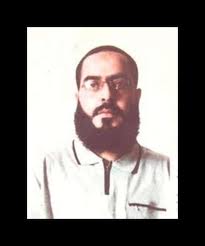
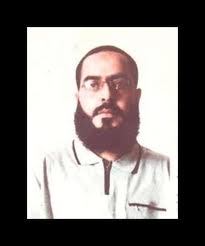
This is a picture of Akram Rikhawi. He is reported to be close to death after maintaining a hunger strike for more than 95 days. Please publicize this astonishing interface of cruelty on Israel’s part and bravery on Mr. Rikhawi’s part.

Akram Rikhawi and the Saga of Palestinian Hunger Strikes

9 Jul


       The persistence of Palestinian hunger strikes shocks me for two reasons: that these extreme expressions of moral freedom alert all who choose to expose their consciousness to such realities of the severely abusive arrest, detention, and interrogation procedures that many Palestinians living under Israeli occupation must endure; that the world’s media, foreign governments, the UN, the Arab League barely acknowledge such events, which if they occurred in other countries would generate outpourings of outrage and sympathy, and depending on the geopolitical calculus, hypocritical calls for the application of the ‘responsibility to protect’ norm.

       I post below a joint press release by respected NGOs of Palestine and Israel that summarize the desperate medical condition of Akram Rikhawi, who has continued his hunger strike for more than 85 days, an extraordinary display of discipline and resolve, the exemplary Palestinian virtue of samud (steadfastness). Mr. Rikhawi, whose home is in Gaza, has been held in prison since 2004 after being convicted to a nine-year term by an Israeli military court. He has been denied mercy by the Israeli authorities despite a present political atmosphere in which the Palestinian resistance has not been posing violent challenges to Israeli security behind the green line, and his condition would in any event make political activism an impossibility.

       As a result of the ‘Shalit Law,’ a vindictive violation of international humanitarian law that retaliates against Palestinian prisoners because of the capture of Gilad Shalit an Israeli soldier who was released a year ago, Rikhawi has been denied family visits since 2006 despite being the father of eight children plus the five young children of his recently deceased brother. Yasmine, daughter of his brother, summed up Akram Rikhawi’s tragic situation: “My uncle made a decision and we support him because we live life once; we either live it with dignity or we die fighting for it.” No human being should be forced to face such a dilemma, and those that do deserve our compassion and support. Jasmine describes Akram Rikhawi as the main source of financial and emotional support of the entire family, which was the center of his life. She describes him as an avid reader who was constantly challenging the family to engage in serious discussions, including issues arising from his intense opposition to the occupation.


       He suffers from multiple life-threatening ailments, including serious asthma and diabetes, and has been targeted for abuse since initiating this hunger strike as the following report makes clear.

       Putting all the pieces together, including the realization that many hunger strikes have been in process since Khader Adnan had recourse to a hunger strike on December 17, 2010 in protest against his arrest and confinement as a result of an administrative detention decree, we can reach some tentative conclusions:

–these brave acts of nonviolence have inspired Palestinians and some others, sustaining their dignity under the most difficult and inhumane of circumstances;

–Western countries and Western NGOs, claiming to be champions of humanitarian diplomacy, have spurned the moral and political challenges posed by these hunger strikes;

–despite such malign neglect, the hunger strikes have shined a bright light on the unlawfulness and cruelty of Israeli arrest and interrogation procedures and prison conditions that has increased awareness of this dimension of prolonged Israeli occupation of Palestine;

–with such an awareness comes responsibility, including acting on the request of Addammeer and Phsicians for Human Rights-Israel that letters demanding Akram Rikhawi’s release be sent to listed Israeli officials.

*****************************************************************

Concern mounts for the life of Akram Rikhawi on his 85th day of hunger strike

An independent doctor from PHR-IL visited Akram Rikhawi yesterday and an Addameer lawyer visited him today, along with Samer Al-Barq and Hassan Safadi. Samer and Hassan are still denied access to independent doctors.

Joint Press Release, Addameer Prisoner Support and Human Rights Association and Physicians for Human Rights-Israel

Ramallah-Jaffa, 5 July 2012—Physicians for Human Rights-Israel (PHR-IL) and Addameer Prisoner Support and Human Rights Association are gravely concerned for the life of Akram Rikhawi, who is now on his 85th day of hunger strike. An independent doctor from PHR-IL visited Akram in Ramleh prison medical center yesterday, 4 July, which was made possible only after an appeal to the Israeli District Court, where the judge eventually ordered the Israeli Prison Service (IPS) to allow the entry of the independent doctor no later than 3 July.

Following the visit to Akram, the PHR-IL doctor reported the alarming deterioration of Akram’s asthma, which continues to be unstable. The doctor believes Akram has been given very high doses of steroids as treatment, which can cause severe long-term and irreversible damage. The doctor reiterated recommendation for immediate examination by a lung specialist, which was not performed as recommended after the last visit by an independent doctor on 6 June.

Akram also reported that he is experiencing severe dizziness, can no longer walk and is having difficulty standing. Even more troubling, Akram has not been given any assistance in these matters, leaving him vulnerable to the danger of falling, which could result in fatal injury due to his osteoperosis. The doctor further noted that Akram is experiencing tingling and numbness in his left thigh, which could indicate peripheral nerve damage, and recommended immediate examination in a public hospital, for fear of permanent neurological damage.

The IPS has continued to punish Akram for his hunger strike by confiscating his books and reading materials, isolating him from other prisoners and cancelling his daily break. He is also being held in a cell with no fan or air conditioning, despite the high humidity and how badly it affects his asthma.

Akram pointed out to the independent doctor and to Addameer lawyer Mona Neddaf in her visit today that he was recently hospitalized at Assaf Harofeh Hospital, but was shackled at all times to the hospital bed and felt his needs were mostly ignored by the medical staff. He emphasized to Ms. Neddaf his desire to have unrestricted access to the independent doctors from PHR-IL.

Ms. Neddaf also visited Samer Al-Barq, who is on his 45th day of renewed hunger strike in protest against the extension of his administrative detention. Ms. Neddaf noted that he seems significantly weaker than during her last visit on 25 June. He is consuming only water with glucose.

Samer’s family has reported that he suffers from kidney problems and high blood pressure and has lost more than 25% of his original weight. On 21 June, PHR-IL submitted a request to allow access for independent physicians. On 25 June the IPS denied this request without providing any reasons.

Hassan Safadi is on his 15th day of renewed hunger strike, after previously spending 71 days on prolonged hunger strike. His last administrative detention order was due to expire on 29 June and, according to the agreement ending Palestinian prisoners’ mass hunger strike, he was supposed to be released on that date. However, his lawyer was informed on 21 June of the renewal of his administrative detention order for a further six months, in violation of the agreement.

According to Ms. Neddaf after her visit with him today, Hassan’s lawyer submitted a request to the military judge that he review the agreement and consider his immediate release. The judge responded that he would give a decision on this matter in two weeks. Hassan stressed that he will not break his hunger strike until he is released to his home in Nablus.

Hassan was transferred to Ramleh prison medical center last week and is currently being held in an isolated cell. He is drinking water with salt and taking vitamins due to a low potassium level in his blood. He has lost approximately 8 kilos in weight since the beginning of his renewed strike. PHR-IL submitted a request to allow access for an independent doctor on 26 June and have not yet received a response from the IPS.


In light of the deterioration of the conditions of the remaining Palestinian prisoners on hunger strike, PHR-IL and Addameer urge the international community to immediately intervene on their behalf and demand:

  • unrestricted access for independent physicians to all hunger strikers;
  • the immediate transfer of Akram Rikhawi and Samer Al-Barq to a public hospital, and the transfer of all prisoners on hunger strike for more than 40 days to public hospitals;
  • that no hunger striker be shackled while hospitalized;
  • that all hunger strikers—especially those in advanced stages of hunger strike—be allowed family visits, while they are still lucid;
  • that all information be given to families as to the medical condition of their loved ones, which is the responsibility of hospitals and medical staff in accordance with standards of medical ethics;
  • that Akram Rikhawi be granted release on humanitarian grounds;
  • that Hassan Safadi and Samer Al-Barq, along with all other administrative detainees, be immediately and unconditionally released.

*Write to the Israeli government, military and legal authorities and demand that Akram Rikhawi be released immediately and receive adequate medical care.

  • Brigadier General Danny Efroni
Military Judge Advocate General
6 David Elazar Street
Harkiya, Tel Aviv
Israel
Fax: +972 3 608 0366; +972 3 569 4526
Email: arbel@mail.idf.il; avimn@idf.gov.il
  • Maj. Gen. Nitzan Alon
OC Central Command Nehemia Base, Central Command
Neveh Yaacov, Jerusalam
Fax: +972 2 530 5741
  • Deputy Prime Minister and Minister of Defense Ehud Barak
Ministry of Defense
37 Kaplan Street, Hakirya
Tel Aviv 61909, Israel
Fax: +972 3 691 6940 / 696 2757
  • Col. Eli Bar On
Legal Advisor of Judea and Samaria PO Box 5
Beth El 90631
Fax: +972 2 9977326

*Write to your own elected representatives urging them to pressure Israel to release Akram Rikhawi.

Beyond the Politics of Invisibility: Remembering Not to Forget Palestinian Hunger Strikers

28 May


            With a certain amount of fanfare in Israel and Palestine, although still severely underreported by the world media and relatively ignored by the leading watchdog human rights NGOs, it was observed with contradictory spins that the Palestinian hunger strikes had been brought to an end by agreement between the strikers and Israel. At least, that is what most of us believed who were following this narrative from outside the region, but like so much else in the region our understanding was a half-truth, if that. Whether Israel abides by its assurances remains to be seen, and although these strikes were courageous acts of nonviolent resistance it is not clear at this point whether they will have any longer term effects on the Israel’s occupation, arrest, and prison policy, or on the wider Palestinian struggle.


            Two things are certain, however. First, a much wider awareness that Israel’s reliance on administrative detention, its abusive arrest procedures, and its prison system deserves wider scrutiny than in the past, and that this dimension of the prolonged occupation of Palestine has been responsible for inflicting great suffering on many Palestinians and their families ever since 1967. Whether such a structure of imprisonment of an occupied people should be viewed as a hitherto neglected dimension of state terrorism is an open question that should be further investigated. Secondly, that the hunger strike as a mode of resistance is now part of the Palestinian culture of resistance, and an option that engages Palestinian political consciousness in manner that did not exist prior to Khader Adnan’s 66 day hunger strike initiated on December 17, 2011.


            There were parallel and overlapping strikes: A sequence of long-term strikes, first, Adnan, followed by Hana Shalabi, then Thaer Halahleh and Bilal Diab, and maybe others, focusing on humiliating and abusive arrest procedures, as well as administration detention as a practice; and then a second wave of strikes, commencing on April 17, 2012, Palestine Prisoners Day and ending 30 days later on the eve of the 2012 Nakba observance. This latter protest involved more than 1600 Palestinian prisoners, who were initially inspired by the Adnan and Shalabi strikes, and focused their challenge on deplorable prison conditions.  


            Supposedly Israeli prison authorities agreed under the pressure of these latter strikes to reduce reliance on solitary confinement in its prisons and to allow more family visits, especially from Gaza. Gaza prisoners had been denied such visits for years as an unlawful reprisal mandated by the Knesset in angry reaction to the capture of the Israeli soldier, Gilad Shalit. What was this pressure? It was not moral suasion. It seemed to be a calculated decision by Israeli prison authorities that it would be better to make small concessions than risk angry reactions to the death of any hunger strikers. The debate in the Israeli press was entirely pragmatic: whether it was worse to have bad publicity or to show weakness by giving in. Israel only seemed to give in. It needs to be understood that Israel retains all the prerogatives to rely on administrative detention in the future and continuing to have unmonitored exclusive control over prison life.


            In the background it should be appreciated that the whole structure of this Israeli prison system violates the Fourth Geneva Convention that explicitly forbids the transfer of prisoners from an occupied territory to the territory of the occupier.


            These uncertainties about the results of these past strikes should certainly be kept in mind. What is presently of more urgent concern is the failure even to realize that long-term hunger strikes were never ended by at least two prisoners, Mahmoud Sarsak, without food for 70 days, and Akram Rikhawi on strike for 40 days. Both are, as could hardly be otherwise, are currently in danger of dying, and yet hardly anybody seems to know. Sarsak who is 25 years of age and a resident of the Rafah Refugee Camp in Gaza is hardly a nobody. When arrested in July 2009 he was a member of the Palestine National Football Team on his way to a match in the West Bank. He was arrested under the ‘Unlawful Combatants Law,’ which offers a person detained even less protection than is provided by ‘administrative detention.’ It is aimed at Palestinians living in Gaza, a part of Palestine that is treated by Israel (but not the international community) as no longer occupied since Sharon’s ‘disengagement plan’ was implemented in 2005. Iman Sarsak has bemoaned his brother’s fate, “My family never would have imagined that Mahmoud would have been imprisoned by Israel. Why, really why?”


            There is reason to believe that rather than some conjured up security concern, Sarsak was arrested as part of a broader effort to demoralize the Palestinians, especially those long entrapped in Gaza. During the savage attacks on Gaza at the end of 2008 (‘Operation Cast Lead’) the national stadium used for football and the offices of the Palestine Football Association were targeted and destroyed, and three members of the Palestine team killed. All along, the team has been handicapped by curfews, checkpoints, and harassments, as well as the blockade of Gaza, that has forced the team to forfeit many games. The goalkeeper, Omar Abu Rwayyes has said, “if you degrade the national team you degrade the idea that there could ever be a nation.” Football, what we Americans call soccer, plays a vital symbolic role in the self-esteem and national consciousness of peoples throughout the Arab world, and elsewhere in the South, to a degree unimaginable for even a sports crazy country like the United States.


            There has been some slight notice taken of the plight of the Palestinian team in the football world. A few years ago Michel Piatini, President of FIFA, warned Israel that it was risking its own membership in the world association if it continued to interfere with the Palestinian efforts to field the best possible team for international competition. But as with many international gestures of protest against Israel, there was no follow through, nullifying the original impulse. In fact, a disturbing reversal of approach took place. Not long afterwards, Piatini actually presided over a process that awarded Israel the honor of hosting the 2013 Under-21 European Championships. A British NGO, ‘Soccer Without Borders’ was not so easily seduced, issuing a declaration urging a boycott of the event in Israel, declaring that its organization “stands in solidarity with Mahmoud Sarsak and all Palestinian political prisoners.”


            As is usually the case, the Israeli response in self-justifying and cynical. A shin bet official insisted that Israel “can’t play by the rules of bridge if everyone else is playing rugby.” This kind of assertion papers over the degree to which Israeli society in recent years has enjoyed peace, prosperity, and security while Palestinians have been enduring the rigors of a cruel occupation and the severe vulnerabilities of a rightless existence. Palestinians have also been experiencing the split reality of observing a set of protective laws applied Israeli settlers (all of whom are part of an unlawful enterprise) and an unregulated military structure applied arbitrarily to the indigenous residents of the West Bank, East Jerusalem, and Gaza.


            With national athletes being such objects of interest it shows how effective is this ‘politics of invisibility’ that keeps the world from knowing the harm being done to the Palestinian people and how they are resisting, often at great risk and self-sacrifice, as epitomized by these long hunger strikes. One can be certain that if such repressive measures were taken by China or Myanmar there would be a mighty cascade of interest, coupled with high minded denunciations from the global bully pulpits of political leaders and an array of moral authority figures. But when the Palestinians experience abuse or resist by reliance on brave forms of nonviolence there is a posture of almost total disregard, and if a few voices are raised, such as that of Archbishop Tutu it is either ignored because his witness is treated as partisan or according to Israel’s more zealous defenders, he is discredited by being alleged to be ‘anti-semite,’ a denunciation whose meaning has been conflated so as to apply to any critic of Israel. Even such a globally respected figure as Jimmy Carter could not escape the wrath of Israeli loyalists merely because the word ‘apartheid’ in the title of a book urging a just peace between the two peoples.


            The politics of invisibility is cruel and harmful. It is cruel because it does not acknowledge a pattern of injustice because the victims have been effectively stigmatized. It is harmful because it sends a strong signal that victimization will only be given some sort of visibility if it shocks the conscience by its violence against those who seem innocent. Such visibility has a largely negative and stereotyping impact, allowing the oppressor to escalate state violence without risking any kind of backlash or even notice, and validating the perception of the victim population as undeserving, and even as evil endorsers of an ethos of terrorism. Israeli hasbara has worked hard over many years to stereotype the Palestinians as ‘terrorists,’ and by doing so to withdraw any sympathy from their victimization, which is portrayed as somehow deserved. These hunger strikers, despite all indications to the contrary, are so described, attributing their supposed association with Islamic Jihad as synonymous with an embrace of terrorism.  A more objective look at the evidence suggests that Islamic Jihad has itself for several years abandoned tactics of violence against civilian targets, and is part of a broader shift in Palestinian tactics of resistance in the direction of nonviolence. Such shifts are either totally ignored by the politics of invisibility or there is a refusal to acknowledge the shift so as to keep the negative stereotype before the public. 


            It is one more challenge to global civil society to do what international law is currently incapable of doing: treat equals equally. If the world media renders visible the plight of Chinese human rights activists who are abused by the state, might not at least human rights NGOs note this emergency plight of Palestinian hunger strikers on the edge of death?  And if these NGOs are afraid to do so, should not those with eyes able to see such torment, start screaming at the top of our lungs?

The Nakba: 2012

17 May


            The recent parallel hunger strikes in Israeli prisons reignited the political imagination of Palestinians around the world, strengthening bonds of ‘solidarity’ and reinforcing the trend toward grassroots reliance on nonviolent resistance Israeli abuses.  The crisis produced by these strikes made this year’s observance of Nakba Day a moral imperative for all those concerned with attaining justice and peace for the long oppressed Palestinian people whether they be living under occupation or in exile. The Palestinian mood on this May 14th, inflamed by abuse and frustration, but also inspired by and justly proud of exemplary expressions of courage, discipline, and nonviolent resistance on the part of imprisoned Palestinians who are mounting the greatest challenge of organized resistance that Israel has faced since the Second Intifada.


            The agreements ending the strikes were reached as a result of Israeli concessions, pledges to reduce reliance on administrative detention, abandon solitary confinement, and allow family visits, including from Gaza. Whether these pledges will be honored remains to be seen. Past Israeli behavior whether with respect to Israeli settlement activity or with respect to softening the impact of the blockade on Gaza that has been maintained for five years suggest that only careful monitoring will determine whether Israel abides by its commitments. The experience of Hana Shalabi is not encouraging. In an agreement that ended her hunger strike after 43 days in exchange for her release from administrative detention, she was not allowed to return to her West Bank home but sent to Gaza and ordered to remain there for three years.

Whether she was told about this condition at the time of her release has not been satisfactorily clarified, but it does strongly suggest that it is important to

Remember that there are two devils: one hangs out in the details, the other in the degree to which behavior corresponds with the pledges.


            As of now, the outcome of these hunger strikes have been justly celebrated as a victory for Palestinian resistance, and a further demonstration that at this stage the political struggle against Israeli occupation depends on the will and creativity of the people, and not on the diplomatic skill of the leadership.  Inter-governmental diplomacy of the sort associated with ‘the Oslo peace process’ and ‘the Quartet’s road map’ have provided a smokescreen to divert attention from Israeli expansionist ambitions for the past twenty years without moving the two sides one inch closer to a sustainable and just peace.


            Perhaps, the other good news for the Palestinians is the further decline of Israel’s global reputation. According to a BBC poll only Iran and  Pakistan are viewed more unfavorably than Israel among the 22 countries ranked, suggesting the utter failure of the expensive Israeli propaganda campaign. Even if Europe the unfavorable ratings associated with Israel are strikingly high: 74% Spain, 65%, France, 69% Germany, 68% Britain. What calls for explanation is why these European governments and the European Union ignore such a mandate from their own citizens, and continue to pursue policies that are unconditionally pro-Israeli.


            There are other signals of a shift in the diplomatic balance of forces. According to another new poll 61% of Egyptians want to cancel the 1979 Treaty with Israel. This is reinforced by the resentment of Egyptians toward  the United States’ role in their country in the Middle East generally. 79% of the 1000 Egyptians interviewed expressed their unfavorable view of the United States.


            Where are the Israeli ‘realists’ hiding? Instead of loose talk about attacking Iran isn’t time to give weight to such recent developments? The writing is on the wall. Military superiority and political violence do not ensure security in the early 21st century. Legality and legitimacy matter more than ever. It is Turkey that exerts regional influence, not because it throws its weight around, but because it has, despite some serious flaws, pursued a path that has brought greater prosperity at home, acted independently and effectively in fashioning its foreign policy, and achieved a governing style reflective of its cultural identity. These achievements generate a Turkish Model that is attractive, overlooking unresolved acute problems with minorities and a clumsy kind of unwillingness to respect dissenting voices.     


            Reverting to the Palestinian epic hunger strikes that continue to deserve our attention and admiration. It all started when a lone prisoner, Khader Adnan initiated a hunger strike to protest his abusive arrest and administrative detention on December 17th, which happens to be the exact anniversary of the day that the Tunisian vendor, Mohammed Bouazizi, set himself on fire, his death leading directly to a wave of uprisings across the region that became known throughout the world as the Arab Spring. Adnan gave up his strike after 66 days when Israel relented somewhat on his terms of detention, and this was the same length of time that Bobby Sands maintained his hunger strike unto death so as to dramatize IRA prison grievances in North Ireland. It is not surprising that the survivors of the 1981 Irish protest should now be sending bonding messages of empathy and solidarity to their Palestinian brothers locked up in Israeli jails.


            What Adnan did prompted other Palestinians to take a similar stand. Hana Shalabi, like Adnan a few weeks later experienced a horrible arrest experience that included sexual harassment and was sent to prison without charges or trial four months after she had been ‘released’ in the Shalit prisoner exchange in October 2011. She too seemed ready to die rather than endure further humiliation, and was also eventually released, but punitively, being ‘deported’ to Gaza away from her West Bank village and family for a period of three years. Others hunger strikes followed, and now two types of hunger strike under way, each influenced by the other.


            The longer of the strike involves six protesting Palestinians who are in critical condition, with their lives at risk for at least the past week. Bilal Diab and Thaer Halahleh who have now refused food for an incredible 76 days, a sacrificial form of nonviolent resistance that can only be properly appreciated as a scream of anguish and despair on behalf of those who have been suffering so unjustly and mutely for far too long. It is a sign of Western indifference that even these screams seem to have fallen on deaf ears.


            The second closely related hunger strike that has lasted almost a month is an equally an extraordinary display of disciplined nonviolence, initiated on April 17th Palestinian Prisoners Day. By now there are reported to be as many as 2000 prisoners who are refusing all food until a set of grievances associated with deplorable prison conditions are satisfactorily. The two strikes are linked because the longer hunger strike inspired the mass strike, and the remaining several thousand non-striking Palestinian prisoners in Israel jails are already pledged to join the strike if there are any deaths among the strikers. This heightened prisoner consciousness has already been effective in mobilizing the wider community of Palestinians living under occupation, and beyond.


            This heroic activism gives an edge to the 2012 Nakba observance, and contrasts with the apparent futility of traditional diplomacy. The Quartet tasked with providing a roadmap to achieve a peaceful resolution of the Israel/Palestine conflict seems completely at a loss, and has long been irrelevant to the quest for a sustainable peace, let alone the realization of Palestinian rights. The much publicized efforts of a year ago to put forward a statehood bid at the United Nations seems stalled indefinitely due to the crafty backroom maneuvers of the United States. Even the widely supported and reasonable recommendations of the Goldstone Report to seek accountability for Israeli leaders who seemed guilty of war crimes associated with the three weeks of attacks on Gaza at the end of 2008 has been permanently consigned to limbo. And actually the situation is even worse for the Palestinians than this summary depiction suggest. While nothing happens on the diplomatic level other clocks are ticking at a fast pace.  Several developments adverse to Palestinian interests and aspirations are taking place at an accelerating pace: 40,000 additional settlers are living in the West Bank since the temporary freeze on settlement expansion ended in September 2010, bringing the overall West Bank settler population to about 365,000, and well over 500,000 if East Jerusalem settlers are added on.


            Is it any wonder then that Palestinians increasingly view the Nakba not as an event frozen in time back in 1947 when as many as 700,000 fled from their homeland, but as descriptive of an historical process that has been going on ever since Palestinians began being displaced by Israeli immigration and victimized by the ambitions and tactics of the Zionist Project? It is this understanding of the Nakba as a living reality with deep historical roots that gives the hunger strikes such value. Nothing may be happening when it comes to the peace process, but at least, with heightened irony, it is possible to say that a lot is happening in Israeli jails. And the resolve of these hunger strikers is so great as to convey to anyone that is attentive that the Palestinians will not be disappeared from history. And merely by saying this there is a renewed sense of engagement on the part of Palestinians the world over and of their growing number of friends and comrades, that this Palestinian courage and sacrifice and fearlessness will bring eventual success and, in contrast, it is the governmental search for deals and bargains built to reflect power relations not claims of rights that seems so irrelevant that its disappearance would hardly be noticed.


            By and large, the Western media, especially in the United States, has taken virtually no notice of these hunger strikes, as if there was no news angle until the possibility of martyrdom for the strikers began at last to stir fears in Israeli hearts and minds of a Palestinian backlash and a public relations setback on the international level. Then and only then has there been speculation that maybe Israel could and should make some concessions, promising to improve prison conditions and limit reliance on administrative detention to situations where a credible security threat existed. Beyond this frantic quest by Israel to find a last minute pragmatic escape from this volatile situation posed by both hunger strikers on the brink of death and a massive show of solidarity by the larger prison population, is this sense that the real message of the Nakba is to underscore the imperative of self-reliance and nonviolence and ongoing struggle. The Palestinian future will be shaped by the people of Palestine or nothing. And it is up to us in the world, whether Palestinian or not, to join in their struggle to achieve justice from below, sufficiently shaking the foundations of oppressive structures of occupation and the exclusions of exile to create tremors of doubt in the Israeli colonial mindset. And as doubts grow, new possibilities suddenly emerge.


            For this reason, the Nakba should become important for all persons of good will, whether Palestinian or not, whether in Israel or outside, as an occasion for displays of solidarity. This might mean a global sympathy hunger strike as is being urged for May 17th or an added commitment to the BDS Campaign (Boycott, Divestment, and Sanctions) or signing up to join the next voyage of the Freedom Flotilla. Certainly the Nakba is a time of remembrance for the historic tragedy of expulsion, but it is equally a time of reflection on what might be done to stop the bleeding and to acknowledge and celebrate those who are brave enough to say “this far, and no further.”