
With a certain amount of fanfare in Israel and Palestine, although still severely underreported by the world media and relatively ignored by the leading watchdog human rights NGOs, it was observed with contradictory spins that the Palestinian hunger strikes had been brought to an end by agreement between the strikers and Israel. At least, that is what most of us believed who were following this narrative from outside the region, but like so much else in the region our understanding was a half-truth, if that. Whether Israel abides by its assurances remains to be seen, and although these strikes were courageous acts of nonviolent resistance it is not clear at this point whether they will have any longer term effects on the Israel’s occupation, arrest, and prison policy, or on the wider Palestinian struggle.
Two things are certain, however. First, a much wider awareness that Israel’s reliance on administrative detention, its abusive arrest procedures, and its prison system deserves wider scrutiny than in the past, and that this dimension of the prolonged occupation of Palestine has been responsible for inflicting great suffering on many Palestinians and their families ever since 1967. Whether such a structure of imprisonment of an occupied people should be viewed as a hitherto neglected dimension of state terrorism is an open question that should be further investigated. Secondly, that the hunger strike as a mode of resistance is now part of the Palestinian culture of resistance, and an option that engages Palestinian political consciousness in manner that did not exist prior to Khader Adnan’s 66 day hunger strike initiated on December 17, 2011.
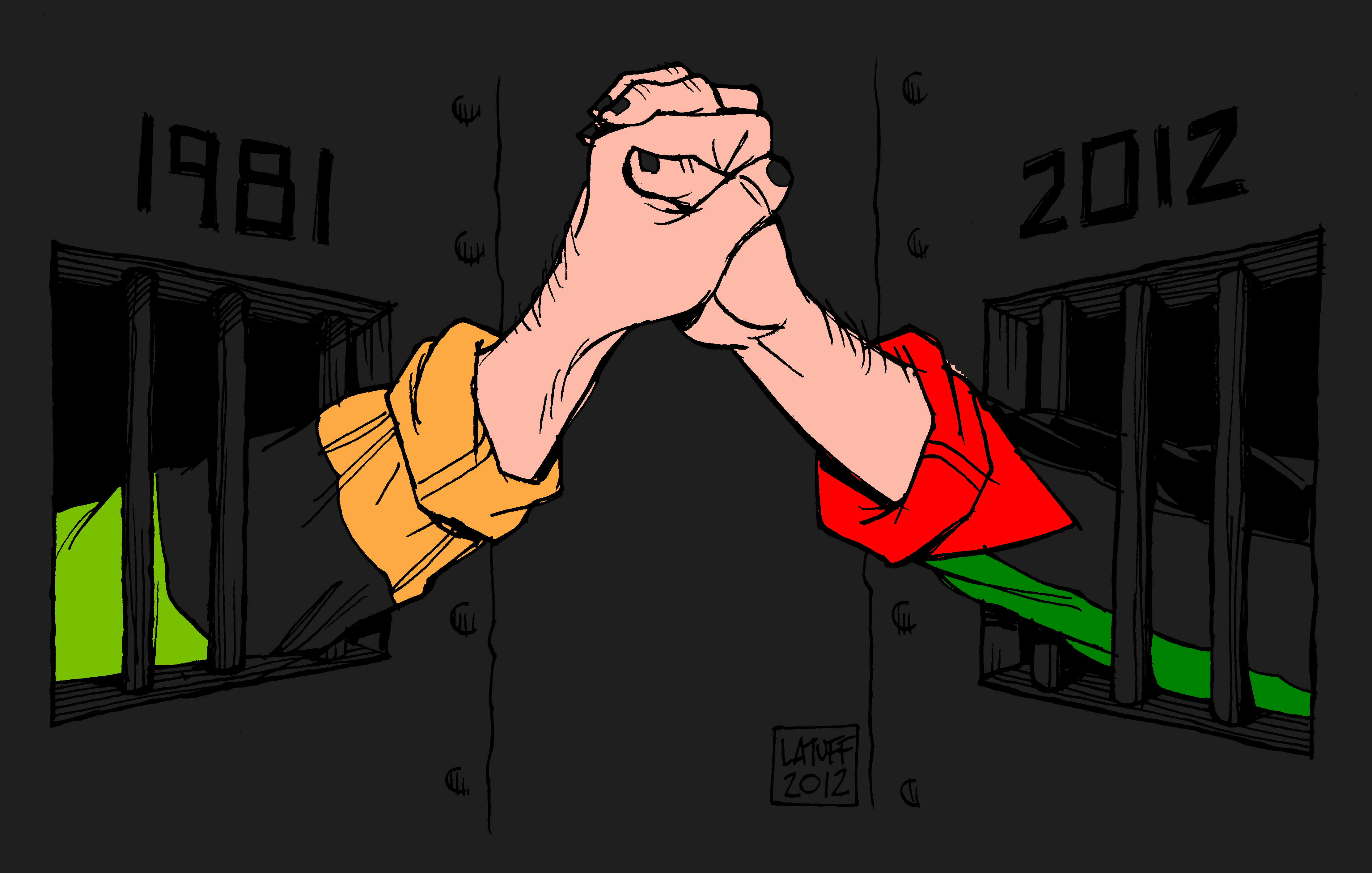
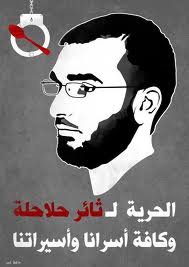
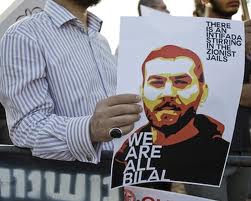
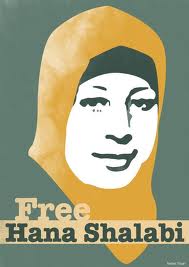
There were parallel and overlapping strikes: A sequence of long-term strikes, first, Adnan, followed by Hana Shalabi, then Thaer Halahleh and Bilal Diab, and maybe others, focusing on humiliating and abusive arrest procedures, as well as administration detention as a practice; and then a second wave of strikes, commencing on April 17, 2012, Palestine Prisoners Day and ending 30 days later on the eve of the 2012 Nakba observance. This latter protest involved more than 1600 Palestinian prisoners, who were initially inspired by the Adnan and Shalabi strikes, and focused their challenge on deplorable prison conditions.
Supposedly Israeli prison authorities agreed under the pressure of these latter strikes to reduce reliance on solitary confinement in its prisons and to allow more family visits, especially from Gaza. Gaza prisoners had been denied such visits for years as an unlawful reprisal mandated by the Knesset in angry reaction to the capture of the Israeli soldier, Gilad Shalit. What was this pressure? It was not moral suasion. It seemed to be a calculated decision by Israeli prison authorities that it would be better to make small concessions than risk angry reactions to the death of any hunger strikers. The debate in the Israeli press was entirely pragmatic: whether it was worse to have bad publicity or to show weakness by giving in. Israel only seemed to give in. It needs to be understood that Israel retains all the prerogatives to rely on administrative detention in the future and continuing to have unmonitored exclusive control over prison life.
In the background it should be appreciated that the whole structure of this Israeli prison system violates the Fourth Geneva Convention that explicitly forbids the transfer of prisoners from an occupied territory to the territory of the occupier.
These uncertainties about the results of these past strikes should certainly be kept in mind. What is presently of more urgent concern is the failure even to realize that long-term hunger strikes were never ended by at least two prisoners, Mahmoud Sarsak, without food for 70 days, and Akram Rikhawi on strike for 40 days. Both are, as could hardly be otherwise, are currently in danger of dying, and yet hardly anybody seems to know. Sarsak who is 25 years of age and a resident of the Rafah Refugee Camp in Gaza is hardly a nobody. When arrested in July 2009 he was a member of the Palestine National Football Team on his way to a match in the West Bank. He was arrested under the ‘Unlawful Combatants Law,’ which offers a person detained even less protection than is provided by ‘administrative detention.’ It is aimed at Palestinians living in Gaza, a part of Palestine that is treated by Israel (but not the international community) as no longer occupied since Sharon’s ‘disengagement plan’ was implemented in 2005. Iman Sarsak has bemoaned his brother’s fate, “My family never would have imagined that Mahmoud would have been imprisoned by Israel. Why, really why?”
There is reason to believe that rather than some conjured up security concern, Sarsak was arrested as part of a broader effort to demoralize the Palestinians, especially those long entrapped in Gaza. During the savage attacks on Gaza at the end of 2008 (‘Operation Cast Lead’) the national stadium used for football and the offices of the Palestine Football Association were targeted and destroyed, and three members of the Palestine team killed. All along, the team has been handicapped by curfews, checkpoints, and harassments, as well as the blockade of Gaza, that has forced the team to forfeit many games. The goalkeeper, Omar Abu Rwayyes has said, “if you degrade the national team you degrade the idea that there could ever be a nation.” Football, what we Americans call soccer, plays a vital symbolic role in the self-esteem and national consciousness of peoples throughout the Arab world, and elsewhere in the South, to a degree unimaginable for even a sports crazy country like the United States.
There has been some slight notice taken of the plight of the Palestinian team in the football world. A few years ago Michel Piatini, President of FIFA, warned Israel that it was risking its own membership in the world association if it continued to interfere with the Palestinian efforts to field the best possible team for international competition. But as with many international gestures of protest against Israel, there was no follow through, nullifying the original impulse. In fact, a disturbing reversal of approach took place. Not long afterwards, Piatini actually presided over a process that awarded Israel the honor of hosting the 2013 Under-21 European Championships. A British NGO, ‘Soccer Without Borders’ was not so easily seduced, issuing a declaration urging a boycott of the event in Israel, declaring that its organization “stands in solidarity with Mahmoud Sarsak and all Palestinian political prisoners.”
As is usually the case, the Israeli response in self-justifying and cynical. A shin bet official insisted that Israel “can’t play by the rules of bridge if everyone else is playing rugby.” This kind of assertion papers over the degree to which Israeli society in recent years has enjoyed peace, prosperity, and security while Palestinians have been enduring the rigors of a cruel occupation and the severe vulnerabilities of a rightless existence. Palestinians have also been experiencing the split reality of observing a set of protective laws applied Israeli settlers (all of whom are part of an unlawful enterprise) and an unregulated military structure applied arbitrarily to the indigenous residents of the West Bank, East Jerusalem, and Gaza.
With national athletes being such objects of interest it shows how effective is this ‘politics of invisibility’ that keeps the world from knowing the harm being done to the Palestinian people and how they are resisting, often at great risk and self-sacrifice, as epitomized by these long hunger strikes. One can be certain that if such repressive measures were taken by China or Myanmar there would be a mighty cascade of interest, coupled with high minded denunciations from the global bully pulpits of political leaders and an array of moral authority figures. But when the Palestinians experience abuse or resist by reliance on brave forms of nonviolence there is a posture of almost total disregard, and if a few voices are raised, such as that of Archbishop Tutu it is either ignored because his witness is treated as partisan or according to Israel’s more zealous defenders, he is discredited by being alleged to be ‘anti-semite,’ a denunciation whose meaning has been conflated so as to apply to any critic of Israel. Even such a globally respected figure as Jimmy Carter could not escape the wrath of Israeli loyalists merely because the word ‘apartheid’ in the title of a book urging a just peace between the two peoples.
The politics of invisibility is cruel and harmful. It is cruel because it does not acknowledge a pattern of injustice because the victims have been effectively stigmatized. It is harmful because it sends a strong signal that victimization will only be given some sort of visibility if it shocks the conscience by its violence against those who seem innocent. Such visibility has a largely negative and stereotyping impact, allowing the oppressor to escalate state violence without risking any kind of backlash or even notice, and validating the perception of the victim population as undeserving, and even as evil endorsers of an ethos of terrorism. Israeli hasbara has worked hard over many years to stereotype the Palestinians as ‘terrorists,’ and by doing so to withdraw any sympathy from their victimization, which is portrayed as somehow deserved. These hunger strikers, despite all indications to the contrary, are so described, attributing their supposed association with Islamic Jihad as synonymous with an embrace of terrorism. A more objective look at the evidence suggests that Islamic Jihad has itself for several years abandoned tactics of violence against civilian targets, and is part of a broader shift in Palestinian tactics of resistance in the direction of nonviolence. Such shifts are either totally ignored by the politics of invisibility or there is a refusal to acknowledge the shift so as to keep the negative stereotype before the public.
It is one more challenge to global civil society to do what international law is currently incapable of doing: treat equals equally. If the world media renders visible the plight of Chinese human rights activists who are abused by the state, might not at least human rights NGOs note this emergency plight of Palestinian hunger strikers on the edge of death? And if these NGOs are afraid to do so, should not those with eyes able to see such torment, start screaming at the top of our lungs?

![[Palestinians hold photographs of their relatives jailed in Israel during a support rally for Palestinian prisoners on hunger strike, in the West Bank city of Ramallah, May 5, 2012. Image by Majdi Mohammed/AP Photo.]](https://i0.wp.com/www.jadaliyya.com/content_images/3/LadiesStriking.jpg "[Palestinians hold photographs of their relatives jailed in Israel during a support rally for Palestinian prisoners on hunger strike, in the West Bank city of Ramallah, May 5, 2012. Image by Majdi Mohammed/AP Photo.]") [
[ My U. S. government, in this situation, is misguided and wrong wrong wrong….


 Global Justice in the 21st Century
U.S. Military Suicides and Palestinian Hunger Strikes
12 JunThere is some awareness in the United States that suicides among American military personnel are at the highest level since the years of the Vietnam War. It is no wonder. The sense of guilt and alienation associated with taking part in the Afghanistan War, especially multiple postings to a menacing war zone for a combat mission that is increasingly hard to justify and almost impossible to carry out successfully, seems sufficient to explain such a disturbing phenomenon. These tragic losses of life, now outnumbering battlefield deaths, about one per day since the start of 2012, are not hidden from the American public but nor do they provoke an appropriate sense of concern, of better, outrage. This contrasts with the Vietnam years, especially toward the end of the war, when many families with children at risk in a war that had lost its way and was being lost took to the streets, pressured their Congressional representatives, spoke at anti-war rallies, and supported their sons unwillingness to take part. Now there is a stony silence in American society, which seems to be a confirmation that we now are ‘citizens’ of or ‘patriots’ in an authoritarian democracy, or more urbanely, ‘subjects’ of a constitutional democracy. We are less than ever cognizant of the Jeffersonian imperative: the health of this democracy depends on the conscience and vigilance of its citizens.
Anthony Swofford, a former marine, seeking to comprehend what Newsweek in a cover story (May 25, 2012) acknowledges to be “an epidemic” of suicides among combat veterans takes note of the resistance to self-scrutiny on the part of the governmental branches most involved. In his words, “the Department of Veteran Affairs and the military shy away from placing blame directly on the psychological and social costs of killing during combat.” There is some attention given apparently to improving the screening process so that potential suicides are not inducted, but no sensitivity to the deeply alienating experience of being assigned to kill in an utterly unfamiliar human environment as is the case with Afghanistan and Iraq that is naturally hostile to such an occupation by a distant country with an entirely different cultural orientation. If you have seen pictures of heavily armed American foot soldiers on patrol in an Afghan village feelings of surreal misfit seem inescapable. And yet, there is no national sense of responsibility associated with sending young Americans into situations where the harm done to themselves not only puts their lives and wellbeing in jeopardy as a result of being exposed to enemy weapons but also subjects them to often invisible traumatic wounds of the assigned combat duties that rarely altogether heal even many years after leaving the war zone.
These wounds are far more widespread than even the high incidence of suicide suggests, often expressed in less dramatic and terminal ways. It is a monumental expression of insensitivity to the wellbeing of our youth that we put them in harm’s way to carry out a war effort that has long been drained of meaning, and that our leaders are at a loss to explain. True patriotism in this century should produce an angry uproar and public debate before acquiescing in such a cruel indifference to the fate of our young warriors, who are disproportionately poor and frequently members of a marginalized minority. This insensitivity is, of course, far less pervasive than when the victims are ‘others.’ This is illustrated by the national failure to raise questions about the state terror associated with drone attacks on village communities in foreign countries that undoubtedly spreads acute fear and feelings of vulnerability to the entire population, and not just to those who might imagine themselves to be selected by an American president as a kill target.
The relationship of these suicides to the recent wave of Palestinian hunger strikers objecting to Israeli practices of detention without charges or trial and to deplorable arrest and prison conditions is worth commenting upon. The hunger strikers are arousing widespread sympathy among their population, and a growing commitment to protest their confinement and celebrate their courage, embracing their acts as essential expressions of Palestinian nonviolent resistance to occupation, annexation, and apartheid conditions. Unlike suicides among veterans, which are lonely acts of desperation because the conditions of living have become endurable, the hunger strikers are willingly and knowingly engaging in a punishing self-decreed refusal to accept food as the only means available to call attention to their severe grievances. Their acts express an intense desire for life, not death, but their statement to the world is that when conditions become so dreadful it is preferable to die than to be further humiliated by intolerable mistreatment.
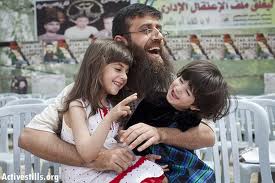
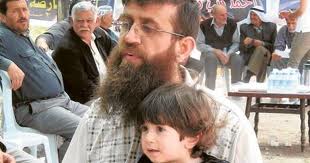
The first hunger striker, Khader Adnan, since his release in April tells of why he engaged in such extreme violence against his body despite a deep attachment to his family and village life: “The reasons behind my hunger strike were the frequent arrests and treatment received when arrested and the third was the barbaric methods of interrogation in prison—they humiliated me. They put dust of their shoes on my moustache, they picked hairs out of my beard, they tied my hand behind my back and to the chair which was tied to the floor. They put my picture on the floor and stepped on it. They cursed my wife, and my daughter who was less than a year and four months old with the most offensive words they could use.” The hunger strikes have finally brought to light such patterns of humiliation long imposed on imprisoned Palestinians. What Adnan did inspired many others among Palestinian prisoners, and at present there remain at least three Palestinians risking death to abide by their plea for life and dignity, and these include a prominent member of the Palestinian national football team who has been held as an ‘unlawful combatant’ since July 2009, Mahmoud Sarsak, now 90 days without food (the two others are Akram al-Rakhaw, 70 days, and Sunar al-Berq).
These dual sad set of circumstances both involve fundamental wrongs associated with the violence of states. The American suicides are essentially sacrifices of lives at the altar of the Martian god of war, while the Palestinian hunger strikes are struggles to survive in the face of state terror imposed in darkness on those who show any signs of resistance to an occupation that has gone on for 45 years and has become more and more oppressive with the passage of time. As Adnan said of his experience of arrest in the middle of the night and release: “..they are trying to hurt our dignity..and released me in the dark, late at night..they only work in the darkness.”
Despite this darkness, we should be able to see what is happening, and respond with whatever means are at our disposal. In America we are mostly kept in the dark with respect to Palestinian suffering, and as for our Americans victims of war, we are informed, but not enlightened, and thus are caught in the headlights, supposing that these military suicides are an unfathomable mystery rather than realizing that they are inevitable byproducts of wars fought in strange foreign lands for no credible defensive purpose.
Tags: Adnan, Anthony Swofford, Guantánamo Bay hunger strikes, Hungerstrike, MahmoudSarsak, Palestine national football team, Palestinian prisoners in Israel, United States