The following Q & A interview consists of my responses to questions put to me by the outstanding Greek journalist, C. J. Polychroniou, and is being published in the Sunday edition of the Greek newspaper, Eleftherotypia, March 6, 2011.
1. Various Arab leaders, from Egypt and Tunisia to Bahrain and Libya, have blamed either Islamic fundamentalist forces or Al-Qaeda for the uprisings, thus refusing to accept the uprisings as popular, secular revolutions. An indication that the Arab leaderships are truly of of touch with reality in their own country or there is something indeed into their claims?
Such allegations by these embattled dictatorial leaders have no basis in fact as far as I can tell, and seem to be a grasping at straws while straining to survive in the midst of a political maelstrom. Such irresponsible allegations seem to be rather desperate reminders to the West, especially to Washington, that these Arab autocrats have been loyal servants for many years, that it should be appreciated that they are the enemy of the American number one enemy (Al Qaeda), and that these regimes should therefore be treated as trusted friends, and repression of the protestors welcomed. Such pleas are seeking to convey a sense that these uprisings if allowed to succeed will be damaging to Western and American interests, bringing hostile elements into political control of the respective governments, and replacing compliant current officialdom with more antagonistic leaders. Of course, each country is different in its particulars. Mubarak could reasonably pretend to have been serving Western interests during his 31 years of rule, and has long been supported and free from critical scrutiny because of this. Qaddafi, in contrast, until recently was seen by the West as a dangerously hostile presence in the region, a supporter of radical anti-Western political action. He made himself acceptable as a trading partner some years ago when he appeared to cave in geopolitically, abandoning Libya’s nuclear program and renouncing support for terrorist causes. It is almost forgotten that the Bush presidency in the period after its invasion of Iraq in 2003 claimed as a major diplomatic success this dramatic shift in Libya, suggesting that its efforts at ‘democracy promotion’ were bearing fruit.
Looking at the issue more objectively it seems clear that the rise of these democratic popular forces throughout the Arab World is taking place in spite of the Al Qaeda reality in the background rather than as a result of it. As is well known, even the Muslim Brotherhood in Egypt has an intensely antagonistic relationship with Al Qaeda, and has developed during the last decade a nonviolent and low profile political program that points in a moderate direction. Also, the experience of political Islam in Iran over the past 30 years seems to have influenced other Muslim oriented activists in the region to look to Turkey, not Iran or Al Qaeda, for inspiration. Turkey offers the region an encouraging model of achieving democratic gains and protecting human rights while promoting more equitable, yet successful, forms of economic development that have also seemingly managed to avoid major corruption. What enraged the Arab publics was a lethal mixture of authoritarian rule and gross corruption resting on a pure embrace of neoliberal policies that combined repression with material hardship. Such a pattern of economic growth confers almost all of its benefits on the ruler’s family and entourage, making positive GNP growth a cruel joke for the public as a whole.
2. After the fall of Mubarak and Ben Ali in Egypt and Tunisia, respectively, the rest of the Arab dictators and monarchs seem to have concluded that using force to remain in power is their preferred option. Is this a viable strategy without suppport from the US and Europe?
It is difficult at this stage to tell whether reliance on force will work or not, and if so where, and to what extent it has been encouraged or at least tolerated by Washington and Europe. Of course, Libya is a special case in at least two senses: (1) the U.S. would not mind seeing the Qadaffi regime collapse, and take its chances with whatever comes next; (2) the Qaddafi response seems to rely on a more vicious and widespread use of force than has been used elsewhere in this period, and includes deploying high technology weaponry against initially unarmed demonstrators that seems to be leading toward widespread and bloody civil strife in the country. Elsewhere in the region, and especially, Bahrain because of oil, it is more likely that the U.S. would like to see the regime survive, using force if necessary to quell protests. Iran, although not an Arab country, is the extreme instance in the opposite direction. The U.S. seeks to mobilize opposition and stiffen sanctions in response to uses of force by the Tehran regime, and encourages oppositional activity by covert means, openly favoring a regime change. Iran’s experience is in many respects different that that in the Arab countries, but the internal confrontations in Iran have much in common with the recent uprisings in Tunisia and Egypt, given the goals of the Green Revolution and the resistance of the regime.
One generalization that has not yet been fully tested as yet is whether, as now seems to be the case, the monarchies in the region have more political space available to reach accommodations with opposition movements than do the secular regimes of the sort that existed in Egypt and Tunisia. The monarchies are perceived as less corrupt, more legitimate in terms of the political culture, and their leaders regarded as less usurpers than royal autocrats who have abused their role as rulers, but who can recover considerable popular respect if genuine reforms take place, granting more freedom and seeking greater economic justice.
3. Should the UN or even NATO use force to get Gaddafi out of the picture, or best to reach an agreement with him and have him disappear in some remore corner of the globe?
I am opposed to military intervention for several reasons. It will tend to support Qaddafi’s claim that he is the victim of foreign subversion, either in the form of colonialism or Muslim fundamentalism. It would also fuel suspicions that the West will intervene where oil is at stake as in Kuwait, Iraq, or Libya, and invokes humanitarian issues as a cover for imperial goals. Intervention would likely generate more violence and suffering for the Libyan people by intensifying the military dimensions of the conflict. A humanitarian intervention could not likely be carried out in an effective manner in the short run, especially as American capabilities are stretched thin, and the Tripoli regime has the means to offer stiff resistance. If the UN had a protective force in being under its authority, then maybe a protective emergency mission could be undertaken, but even this would be risky. NATO acting beyond Europe, as in Afghanistan, creates the impression of post-colonial imperial ambitions, and should not be seriously considered. Overall in the post-colonial era, especially lacking a clear UN mandate, it is best to show respect for the dynamics of self-determination even in situations where vulnerable elements of the population is at risk, at least to the extent of refraining from military intervention.
Whether Qadaffi can be enticed to leave for comfortable exile in the manner of Ben Ali is an open question. So far, he has seemed to resist such a suggestion, preferring to die together with his family in Libya, casting himself and sons in the role of martyrs. All in all, none of the available options seem promising at this time. Some of the deficiencies of the current structure of world order are exposed: intervention is unacceptable, but so is being a helpless spectator as a humanitarian catastrophe of these proportions unfolds. Imaginative diplomacy that emphasizes soft power tactics and brings to bear civil society influences may turn out to be most effective and least costly.
4. You’ve been involved with developments in the region for many decades. What explains the sudden explosion of public anger throughout the Arab world?
It is too early to offer much commentary about the future of the Middle East. The coming months will tell us whether these uprisings are reformist or revolutionary in content. So far, the trajectory seems decidedly reformist, taking the form of either forcing the leaders out as in Tunisia and Egypt, or by inducing the existing regime to seek to regain stability by meeting some core demands of the populace as in Jordan, Yemen, Algeria, Morocco, Oman, and Bahrain. To be revolutionary, the political changes would have to be complemented by a partial rejection of neoliberal economic orientation, and that doesn’t seem likely without further radicalization of the uprisings. At this point the question is whether the political reforms will be deeper than cosmetic, establishing a genuinely democratic governance structure including independent political parties, a constitutionally functioning judiciary, an accountable bureaucracy, human rights, and a media free to criticize without risk. How these reformist governing structures will deal with jobs, food security, and general conditions of poverty and inequality remains to be seen, and will have a big bearing on whether the post-autocratic leaders gain political legitimacy and public acceptance.
It is always difficult to assess after the fact what looked extremely unlikely until it happened. Tolstoy in the Second Epilogue of War and Peace asks why historians always get things wrong when they look toward the future. Tolstoy’s answer is that historians look at the surfaces of social action, whereas the dynamics of history are shaped by unanticipated explosions from below. In effect, the changes that we are witnessing in the Middle East were long brewing, both as anger and as resistance. The uprisings seemed spontaneous, but on further reflection, it is clear that both the rage and the resistance were preexisting conditions that had evolved during prior years. Rage and resistance came together in an extraordinary kind of political chemistry that was sparked by the suicide of a young street vendor in an interior Tunisian town, an event igniting a wildfire that spread quickly as the winds of protest carried the sparks of outrage throughout Tunisia, and then to neighboring countries where additional political suicides also fanned the flames of discontent. As with an earthquake, the risks can be noted beforehand, but the event is not predictable in time or exact place.
In the Arab world, few anticipated this kind of mass visible resistance ever occurring in any of the countries, much less in the region as a whole. There was a widespread realization of acute discontent among the peoples of these countries, but little expectation that these feeling would morph into a series of revolutionary challenges to the status quo. Even the Western intelligence agencies, despite their extensive activities throughout the region and their tendency to posit alternative scenarios, were caught by surprise. In the aftermath, we find lots of ‘learned’ explanations being suddenly forthcoming as pundits scrambled to regain their reputations as ‘experts’ on the region or country.
5. You serve as a UN Special Rapporteur on the situation of human rights in the Palestinian territories. What impact, if any, will the Arab revolutions have on the Palestinian issue?
Without wanting to evasive, my answer here too is that it is hard to say at this stage. A realistic Israel, which is itself a kind of utopian expectation, would urgently be seeking a quick peace with the Palestinians by rushing to accept the Arab League Mecca Proposals of 2002. The Palestinian Authority has already clearly indicated its willingness to accept such a settlement as full satisfaction of their search for a Palestinian state. Despite the realist logic behind such positive developments, the situation is almost certain to remain dangerous frozen for the foreseeable future.
What we are likely to witness is more stalling by Israel, vigorously claiming an interest in direct peace negotiations, while feverishly acting to undermine any prospects of a successful and just outcome by continuing with its program of unlawful settlement expansion in the West Bank and ethnic cleansing of Palestinians in East Jerusalem. In the background is the daunting question of Palestinian representation. Gazans are not currently represented at all in international venues due to the Hamas/Fatah split. This is also true of Palestinians living as a discriminated minority in Israel nor of the several million Palestinians living in refugee camps of neighboring countries or in exile.
There are some unconfirmed reports that Netanyahu is about to offer the Palestinian Authority a Palestinian state on 40-50% of the West Bank (that is, less than 11% of the historic Palestine) as an interim solution, with permanent borders to be established at a later date. There are media reports that Netanyahu is considering this diplomatic move as a direct reaction to the regional development of the last two months. In some respects this possible Israeli offer corresponds to the Fayyad approach adopted by the PA Prime Minister. Whether such a step moves toward a just outcome of the Palestinian struggle is doubtful as it leaves many contested issues out in the cold, perhaps permanently: refugees, separation wall, Jerusalem, Gaza, water, permanent borders, status of Palestinian minority in Israel.
If these Arab revolutions do manage to achieve real governmental transformations in a democratizing direction, then regional pressures on Israel are likely to mount, including pressure to renegotiate the 1979 Peace Treaty with Egypt. At minimum, one would expect an end to the blockade of Gaza that has gone on for more than three years, a cruel and criminal form of collective punishment of the 1.5 million civilians living at near subsistence levels.
My main hope for the Palestinian struggle rests on the soft power initiatives embedded in the BDS (boycott, divestment, and sanctions) campaign that has been growing in strength around the world. With the greatly reduced reliance on hard power resistance, the Palestinian movement has increasingly the shape of what I call a Legitimacy War. Such a strategy resembles the anti-apartheid campaign that was so effectively globally waged against the South African racist regime In the late 1980s and early 1990s. While noting the similarities, there are also significant dissimilarities, and the analogy should be noted, but not pushed too far.
There is no doubt that the Palestinian quest for self-determination is the major symbolic global justice issue of our time, and it will not be easily resolved. Israel will have to drastically downgrade its ambitions, and accept either a genuinely viable and independent Palestinian state within 1967 borders (requiring dismantling most of the settlements, the separation wall, reconstituting the Palestinian presence in East Jerusalem, and compromise on the refugee issue) or give up on the existence of a Zionist Israel and agree to a bi-national secular single state for both peoples. Neither option seems remotely acceptable to the current Israeli leadership, meaning that in all probability the conflict will in go on for many more years with continuing tragic results, especially for the Palestinians.









 Global Justice in the 21st Century
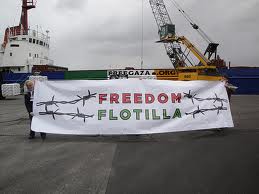
Another UN Failure: The Palmer Report on the Flotilla Incident of 31 May 2010
11 SepWhen the UN Secretary General announced on 2 August 2010 that a Panel of Inquiry had been established to investigate the Israeli attacks of 31 May on the Mavi Marmara and five other ships carrying humanitarian aid to the beleaguered people of Gaza there was widespread hope that international law would be vindicated and the Israelis would finally be held accountable. With the release of the Palmer Report these hopes have been largely dashed as the report failed to address the central international law issues in a credible and satisfactory manner. Turkey, not surprisingly, responded strongly that it was not prepared to live with the central finding of the 105 page report reaching the astonishing conclusions that the Israeli blockade of the Gaza Strip is lawful and could be enforced by Israel against a humanitarian mission even in international waters.
Perhaps this outcome should not be so surprising after all. The Panel as appointed was woefully ill-equipped to render an authoritative result. Geoffrey Palmer, the Chair of the Panel, although a respected public figure, being the former Prime Minister of New Zealand and an environmental law professor, was not particularly knowledgeable about either the international law of the sea or the law of war. And incredibly, the only other independent member of the Panel was Alvaro Uribe, the former President of Colombia, with no professional credentials relevant to the issues under consideration, and notorious both for his horrible human rights record while holding office and forging intimate ties with Israel by way of arms purchases and diplomatic cooperation that was acknowledged by ‘The Light Unto The Nations’ award given by the American Jewish Committee that should have been sufficient by itself to cast doubt on his suitability for this appointment. His presence on the panel compromised the integrity of the process, and made one wonder how could such an appointment can be explained, let alone justified. Turkey’s agreement to participate in such a panel was itself, it now becomes clear, a serious diplomatic failure. It should have insisted on a panel with more qualified, and less aligned, members.
The other two members of the panel were designated by the governments of Israel and Turkey, and predictably appended partisan dissents to those portions of the report that criticized the position taken by their respective governments. Another unacceptable limitation of the report was that the Panel was constrained by its terms of reference that prohibited reliance on any materials other than what was presented in the two national reports submitted by the contending governments. With these considerations in mind, we can only wonder why the Secretary General would have established a formal process so ill-equipped to reach findings that would put the legal controversy to rest and resolve diplomatic tensions, which it has certainly failed to do. Such deficient foresight is itself one of the notable outcomes of this unfortunate UN effort to achieve the peaceful resolution of an international dispute.
Even such an ill-conceived panel did not altogether endorse Israeli behavior on 31 May. The panel found that Israel used excessive force and seemed legally and morally responsible for the deaths of the nine passengers on the Mavi Marmara, instructing Israel to pay compensation and issue a statement of regret. In other words the Palmer Report seems to fault seriously the manner by which the Israeli enforced the blockade, but unfortunately upheld the underlying legality of both the blockade and the right of enforcement, and that is the rub. Such a conclusion contradicted the earlier finding of a more expert panel established by the Human Rights Council, as well as rejected the overwhelming consensus that had been expressed by qualified international law specialists on these core issues. A gross inadequacy of the report was to separate the assessment of the blockade as if exclusively concerned with Israeli security, and ignore its essential role in imposing an intolerable regime of collective punishment on the population of Gaza that has lasted for more than four years.
While the Panel delayed the report several times to give diplomacy a chance to resolve the contested issues, Israel and Turkey could never quite reach closure. There were intriguing reports along the way that unpublicized discussions between representatives of the two governments had agreed upon a compromise arrangement consisting of Israel’s readiness to offer Turkey a formal apology and to compensate the families of those killed as well as those wounded during the attack, but when the time for announcing such a resolution of this conflict, Israel refused to go along. In particular, the Israeli Prime Minister, Benjamin Netanyahu, seemed unwilling to take the last step, claiming that it would demoralize the citizenry of Israel and signal weakness to Israel’s enemies in the region. More cynical observers believed that the Israeli refusal to resolve the conflict was a reflection of domestic politics, especially Netanyahu’s rivalry with the even more extremist political figure, Foreign Minister, Avigdor Lieberman, who was forever accusing Netanyahu of being a wimpy leader and made no secret of his own ambition to be the next Israeli head of state. Whatever the true mix of reasons, the diplomatic track failed, despite cheerleading from Washington that openly took the position that resolving this conflict had become a high priority for American foreign policy. And so the Palmer Report assumed a greater role than might have been anticipated for what was supposed to be no more than a technical inquiry about issues of law and fact. After the feverish diplomatic efforts failed, the Palmer panel seemed to offer the last chance for the parties to reach a mutually satisfactory resolution based on the application of the international law and resulting recommendations that would delimit what must be done to overcome any violations that had taken place during the attack on the flotilla.
But to be satisfactory, the report had to interpret the legal issues in a reasonable and responsible manner. This meant, above all else, that the underlying blockade imposed more than four years ago on the 1.6 million Palestinians living in Gaza was unlawful, and should be immediately lifted. On this basis, the enforcement by way of the 31 May attacks was unlawful, an offense aggravated by being the gross interference with freedom of navigation on the high seas, and further aggravated by producing nine deaths among the humanitarian workers and peace activists on the Mavi Marmara and by Israeli harassing and abusive behavior toward the rest of the passengers. Such conclusions should have been reached without difficulty by the panel, so obvious were these determinations from the perspective of international law as to leave little room for reasonable doubt. But this was not to be, and the report as written is a step backward from the fundamental effort of international law to limit permissible uses of international force to situations of established defensive necessity, and even then, to ensure that the scale of force employed, was proportional, respectful of civilian innocence, and weighed security claims against harmful humanitarian effects. It is a further step back to the extent that it purports to allow a state to enforce on the high seas a blockade, condemned around the world for its cruelty and damaging impact on civilian mental and physical health, a blockade that has deliberately deprived the people of Gaza of the necessities of life as well as locked them into a crowded and impoverished space that has been mercilessly attacked with modern weaponry from time to time.
Given these stark realities it is little wonder that the Turkish Government reacted with anger and disclosed their resolve to proceed in a manner that expresses not only its sense of law and justice, but also reflects Turkish efforts in recent years to base regional relations on principles of fairness and mutual respect. The Turkish Foreign Minister, realizing that the results reached by the Palmer Panel were unacceptable, formulated his own Plan B. This consisted of responses not only to the report, but to the failure of Israel to act responsibly and constructively on its own by offering a formal apology and setting up adequate compensation arrangements. Israel had more than a year to meet these minimal Turkish demands, and showed its unwillingness to do so. As Mr. Davutoglu made clear this Turkish response was not intended to produce an encounter with Israel, but to put the relations between the countries back on ‘the right track.’ I believe that this is the correct approach under the circumstances as it takes international law seriously, and rests policy on issues of principle and prudence rather than opts for geopolitical opportunism. As Davutoglu said plainly, “The time has come for Israel to pay a price for its illegal action. The price, first of all, is being deprived of Turkey’s friendship.”
And this withdrawal of friendship is not just symbolic. Turkey has downgraded diplomatic representation, expelling the Israeli ambassador from Ankara and maintaining inter-governmental relations at the measly level of second secretary. Beyond this all forms of military cooperation are suspended, and Turkey indicated that it intends to strengthen its naval presence in the Eastern Mediterranean. As well, Turkey has indicated that it will initiate action within the General Assembly to seek an Advisory Opinion from the International Court of Justice as to the legality of the blockade. What is sadly evident is that Israeli internal politics have become so belligerent and militarist that the political leaders in the country are hamstrung, unable to take a foreign policy initiative that is manifestly in their national interest. For Israel to lose Turkey’s friendship is second only to losing America’s support, and coupled with the more democratic-driven policies of the Arab Spring, this alienation of Ankara is a major setback for Israel’s future in the region, underscored during the last several days by the angry anti-Israeli protests in Cairo.
What is more, the Turkish refusal to swallow the findings of the Palmer Report adopts a political posture that is bound to have a popular resonance throughout the Middle East and beyond. At a time when some of Turkey’s earlier diplomatic initiatives have run into difficulties, most evidently in Syria, this stand on behalf of the victimized population of Gaza represents a rare display by a government of placing values above interests. The people of Gaza are weak, abused, and vulnerable. In contrast, Israel is a military powerhouse, economically prospering, a valuable trading partner for Turkey, and having in the background an ace in the hole– the United States ever ready to pay a pretty penny if it could induce a rapprochement, thereby avoiding the awkwardness of dealing with this breakdown between its two most significant strategic partners in the Middle East. We should also keep in mind that the passengers on these flotilla ships were mainly idealists, seeking nonviolently to overcome a humanitarian ordeal that the UN and the interplay of national governments had been unable and unwilling to address for several years. This initiative by civil society activists deserved the support and solidarity of the world, not discouragement from the UN and a slap on the wrist by being chastened by the Palmer report’s view that their actions were irresponsible and provocative rather than empathetic and courageous.
Israel has managed up to now to avoid paying the price for defying international law. For decades it has been building unlawful settlements in occupied West Bank and East Jerusalem. It has used excessive violence and relied on state terror on numerous occasions in dealing with Palestinian resistance, and has subjected the people of Gaza to sustained and extreme forms of collective punishment. It attacked villages and neighborhood of Beirut mercilessly in 2006, launched its massive campaign from land, sea, and air for three weeks at the end of 2008 against a defenseless Gaza, and then shocked world opinion with its violence against the Mavi Marmara in its nighttime attack in 2010. It should have been made to pay the price long ago for this pattern of defying international law, above all by the United Nations. If Turkey sustains its position it will finally send a message to Tel Aviv that the wellbeing and security of Israel in the future will depend on a change of course in its relation to both the Palestinians, its regional neighbors, and to the international community. The days of flaunting international law and fundamental human rights are no longer policy options for Israel that have no downside. Turkey is dramatically demonstrating that there can be a decided downside to Israeli flagrant lawlessness.
Tags: 2007–present blockade of the Gaza Strip, Benjamin Netanyahu, Geoffrey Palmer, Israel, MV Mavi Marmara, Prime Minister of New Zealand, Turkey, United Nations