

The UN Alliance of Civilization (AOC) was initiated by Kofi Annan in 2005 while he was Secretary General of the UN with the joint sponsorship of Turkey and Spain, with its principal center of operations in Istanbul. It was formed under the dark skies that existed after the 9/11 attacks, and seeks to provide an alternative narrative to that of inter-civilizational war, that starkly negative scenario of Islam versus the West associated with the inflammatory views of Bernard Lewis and Samuel Huntington that continues to provide fuel for Islamophobia that burns ever more brightly in Europe and North America. It was several years since I had heard as many references to Huntington’s ‘clash of civilizations’ thesis as I did during the discussions and presentations at the Istanbul Forum, which was opened by speeches made by Recep Tayyip Erdogan, the Prime Minister of Turkey, and Ban Ki Moon, the current UN Secretary General.
The primary rationale for the AOC is to provide a ‘platform’ for inter-civilizational dialogue that explores differences among civilizations, but seeks to promote mutual undertstanding and respect, even affection and celebration. The label platform has become recently popular in international circles to convey the sense of a venue that has minimal restrictions as to participation, agenda, and ideological presuppositions. It is open to all perspectives that accept some presumed core values, and tempers disagreements by insisting upon an atmosphere of civility, and by generally avoiding controversial topics of current events. In this regard both Erdogan and Ban Ki Moon affirmed the broad idealistic goals of the AOC, but also made explicit in strong language their condemnation of the Syrian government for its role in recent atrocities committed against civilian communities, with especial reference to the shocking impact of the Houla Massacre that had occurred several days prior to these meetings.
In Turkey the AOC is taken seriously as a new dimension of continuing thought and reflection as is evident both by the establishment of a dedicated academic program at Bahçeshir University and a separate degree granting graduate institute within a new field of academic specialization identified as ‘alliance of civilizations.’ Its first cohort of students played an active part in the discussion periods during the Forum. The AOC is under the administrative leadership of Jorge Sampaio, former President of Portugal, whose title is UN High Representative for Alliance of Civilizations. It holds periodic meetings on various themes in different parts of the world. I took part in the opening session of the Forum on a panel that included the philosophical founding father of the AOC, Professor Mehmet Aydin, former Minister of State, Rashi Gannushi, the head of the an-Nahda Movement that has emerged victorious in Tunishian elections, and Princess Rym Ali of Jordan, the founder of the Jordan Media Institute. The panel was supposed to address the relevance of global politics, and relied on a Q & A format presided over by the widely admired TV moderator for Al Jazeera, Riz Khan. The session was lively, avoiding the often tedious presentation of a sequence of papers, and led to thoughtful questions posed by members of a disparate audience that included the various constituencies that are brought together by the AOC: governments, international institutions, NGOs, students, and representatives of civil society. Due to the format that I had not known in advance, I had prepared some remarks that were never presented at the session, but I did have the opportunity to make some of these points in responding to questions put to me either by Riz Khan or members of the audience.
It is a fair question to wonder whether sponsoring such events is worth the expense and effort. Skeptics say there is already too much ‘empty talk.’ My tentative response is affirmative. I find that the quality of such global conversations and associated secondary influences to be an essential dimension of a significant 21st century learning experience, not only or even primarily as a result of what speakers from such varied backgrounds have to say, but for the wider audience in attendance and those reached and influenced through media coverage. It is a step in the direction of creating what I described during the discussion period as an emergent ‘cosmopolitan pedagogy’ that is sensitive to divergent cultural styles and understandings. At its best such pedagogy supplements knowledge with wisdom, rationality with ethics and spirituality, and couples concerns about economic development with attentiveness to injustices and environmental hazards. It is through sustaining a creative tension between the particular and the general, the diverse and the universal, as well as between the controversial and the agreed upon that a cosmopolitan pedagogy responsive to the complexities, fragilities, and interactive dynamics of the early 21st century will come gradually into being. I found the discussions at the Istanbul Forum to be valuable contributions to a process of reconstituting cultural cognition for this moment in history.
My prepared remarks are published here online for the first time, and were formulated before I had the benefit of the discussions at the Forum, and I hope are of some slight interest:
“I am grateful for this opportunity to participate in this Istanbul Forum of the Alliance of Civilizations.
“As several others have undoubtedly already had occasion to mention the mission of the Alliance as one of promoting understanding among civilizations by way of an open dialogue that stresses differences, I wish to emphasize the commonalities associated with this undertaking. More than ever before in human history there is the need for peoples throughout the world to find leaders who will facilitate cooperation supportive of the shared needs of the planet. The world is faced with a series of problems of global scope that cannot be successfully addressed by governments acting alone or even by coming to agreements about cooperative arrangements based on their mutual national interests. As the failure to act responsibly from a global perspective in relation to nuclear weaponry or climate change illustrates, the peoples of the world remain beholden to the severe limitations of state-centric world order in seeking to shape a global policy that serves the human interest, which is long-term survival and an equitable distributions of burdens. The risks associated with the possession and deployment of nuclear weaponry and those caused by the inability to fashion a timely response to climate change depend on global policy formed to benefit the whole of humanity, now and in the future, and not just the parts as represented by the governments of sovereign states. Even a global state such as the United States acts selfishly whenever confronted by challenges that threaten its military dominance, diplomatic prestige, and its economic growth
What is particularly appealing about the AOC orientation is the replacement of states by civilizations as the primary units of analysis when thinking about world politics. Such a perspective frees us from the narrowness, egoism, and shortsightedness of nationalist thinking and tribal identities. It also underscores the crucial potential roles of religion and culture in developing an approach to global challenges on the basis of shared and universally endorsed values that draw their inspiration from the East as well as the West. Central to this endeavor is the focus so well expressed by Jacques Derrida on what it might mean for humanity “to live together well” on this planet, a deceptively simple observation that makes a double assertion with profound implications: however we choose as a species to behave, we are destined to live together, which is the inescapable message of globalization, but the more demanding second part of the assertion is the implied encouragement to live together benevolently, that is, in peace, justice, and contentment as attainable ideals. Unfortunately, except as abstractions, we remain mostly in the dark as to how, as a practical matter it could become possible to live, if not well, at least better together: working to achieve real peace, real justice, and real harmony, which presupposes, above all sympathy for and hospitality toward ‘the other’ in all the shapes and forms that human experience presents, and especially, with respect to those others that suffer and are being victimized in various ways by existing societal arrangements. Actually, we have some sense of what such a better world would look like, but we do not have much understanding of how to make the transition from where we are to where we would like to be, and maybe the unstated purpose of the AOC is to bring discussions of such a transition into the domain of public reason, and thus less subject to dismissal as ‘utopian’ wishful thinking. In passing I would note that utopian thought in this period of planetary emergency deserves also to be taken seriously and may provide the world with an emancipatory potential.
The task set for this panel is to emphasize the relevance of global politics to the work of AOC. This is a difficult and speculative task although it is probably better undertaken here in Istanbul than anywhere else in the world. The Turkish political leadership over the course of the last decade has been impressively sensitive to the originality of this young century, and its relevance for the conduct of diplomacy and foreign policy. The essence of this sensitivity has been to give substantive implementation to an awareness that the state is a part of more inclusive configurations of influence and belief—region, civilization, religion—and not on its own. That without a world government the state remains the most influential representative of the whole—species, world. In effect, the pursuit of national interests, detached from an appreciation of such wider interests as global interests, civilizational identity, and the human interest is not only a betrayal of core values but increasingly dysfunctional for the ends served by the state itself. In the end, this is a fundamental adjustment that calls for vision, ethics, and a practical understanding of how problems can be best solved in a manner that is also mindful of future generations. Fitting together the parts with the whole has always been a challenge to the political and moral imagination of statesmen, but the bearing of problems of global scope and the need for longer time horizons puts a premium on developing responsive modes of thought, policy, and action. It is in this respect that Turkey’s foreign policy based on principled pragmatism has seemed to be a breakthrough in an era where hard power diplomacy has so often failed and the urgencies generated by interdependence tend to be downplayed even as they are acknowledged.
Against this background I think we need as soon as possible to make a conceptual leap of faith. For several centuries world order has been shaped by a preoccupation with borders and walls, along with the related idea of territorial sovereignty. Political community has been established within defended borders, and what is not bounded effectively is open for occupation or shared use. Of course, the colonial period gave a Eurocentric twist to this more general idea, but since the collapse of colonialism this state-centric manner of distributing authority and establishing order has been accepted throughout the world. It is expressed in international law by the ideas of equality among sovereign states, by sovereign authority within the state and freedom beyond its borders as exercised in such global commons as the oceans and space. It is from this perspective that we speak of ‘the freedom of the high seas.’ The United Nations was organized on the basis of the legitimacy of this state-centric imagery, and its Charter reflects this orientation toward world order, although privileging some states in the procedures of the Security Council.
Identity for persons and peoples followed from this basic spatially conceived mapping of the world, giving rise to nationalism and patriotism. Nationalist ideology and citizenship became in the modern world the exclusive means for individuals and groups to be accorded protection and membership in a state, making statelessness an acute form of vulnerability, an existence without rights. Of course, this conceptual mapping was a crude approximation of reality that overlooked many features of the manner in which this system operated: citizens were frequently helplessly vulnerable to the violence and abuse by their own state; minorities were targets of discrimination; hegemonic and imperial geopolitics encroached upon the territorial sovereignty of weaker states.
Two fundamental developments altered the descriptive accuracy and ethical acceptability of this image of world order. First, the destructiveness of World War II highlighted by the use of atomic bombs against Japanese cities undermined the idea that war could be rationally reconciled with sovereign control over the technologies of warmaking. Secondly, the rise of human rights in the aftermath of the disclosure of the Holocaust challenged the normative idea that states were unrestricted( that is, sovereign) in their internal behavior except as restrained by the rule of law and institutions of constitutional governance. Expressed more vividly we can say that Hiroshima and Auschwitz gave rise to a new concern with limits to complement the earlier focus on borders. This shift has now acquired an ecological dimension through the fears associated with climate change, and the failures to regulate sufficiently the discharge of greenhouse gasses. What has become evident in each of these domains is that problem-solving capabilities of a world of borders cannot address adequately the issues posed by a world of limits, whether these limits refer to political violence, sovereign authority, and the regulation of the global commons, including the world economy.
In other words, the degree to which states, and their perspectives, continue to dominate the formation of global policy has become increasingly anachronistic. It is epitomized by the construction of walls and barriers to keep unwanted people in or out, even sea walls are being proposed and some actually constructed to overcome rising sea levels associated with global warming and the prospect of maritime migrants fleeing from places that are uninhabitable due to heat or flooding. Some states are indulging the illusion that they can escape the downsides of interdependence by establishing for their citizenry the kind of security established by affluent ‘gated communities.’ Similarly, the response of the United States to the 9/11 attacks was to territorialize its quest for restored global primacy by attacking Afghanistan, and then Iraq, in what should have been understood to be an essentially non-territorial conflict of global scope that gave rise to transnational policing and information gathering, but also to self-scrutiny as to whether such extremism, while adopting criminal tactics, might not have been prompted by legitimate grievances. Such war making after 9/11 was the source of major confusions as a result of the deliberate intertwining of a worldwide counterterrorism campaign with the pursuit of global state-building, the global domination project of the American foreign policy establishment.
In these contexts, and others, we are living in a world of limits but continue to act as if we can address its challenges by acting as if the world of borders remains sufficient. Of course, in many respects our lives and destinies continue to be controlled by these spatial allocations of authority, but the state is stymied when it comes to solving the most basic challenges of the day, whether it be grasping the impacts of drone technology and cyberwar or handling the transnational ramifications of excessive sovereign debt. Issues of scarcity relative to food, water, and energy are also emerging to pose questions about the future viability of our collective lives on the planet, and the need to think now and urgently about how to address limits in a manner that respects the dignity of persons and peoples, and also adopts a precautionary approach to sustainability and survival risks. The preoccupation with borders in what is becoming daily a more borderless world will give rise to waves of despair as problems that could be solved if limits were agreed upon and institutionalized continue to be ignored, or at best, marginalized in the search for the right solutions for global problems.
In conclusion, we can discern the relevance of the AOC theme of civilizational discourse. Only by enlisting the wisdom, core values, and visions of civilizations, including with special appreciation those associated with indigenous peoples, have we any hope of making the necessary transition from borders to limits in our consciousness and governmental logic. It is within the world’s cultures and religions that the sense of limits is inscribed in the deepest recesses of memory and pedagogy, establishing the imperative that human endeavor is doomed unless respectful of limits, either as generated by divine authority or through the enveloping power of nature. Human tragedy, as ancient peoples well understood, is to ignore or live beyond such limits. The Greeks had a word for it: hubris, which conveyed a deep awareness that tragedy befell those who exceeded limits, however powerful and autonomous they might seem.
To learn from others is particularly crucial for the West, which has not heeded these cultural warnings, and especially the United States, that continues to project its military power and neoliberal dogma on a global scale. It means heeding this message of limits whether articulated by native peoples or by the sages of the East. I close with some words uttered long ago by Rabindranath Tagore in his 1913 Nobel Prize Acceptance Speech: “It is the East in me which gave to the West. For is not the East the mother of spiritual Humanity and does not the West, do not the children of the West amidst their games and plays when they get hurt, when they get finished and tired, turn their face to the serene mother, the East? Do they not expect their food to come from her, and their rest for the night when they are tired? And are they to be disappointed?” This early utterance of such inspirational sentiments was far too generous to the colonizing East and too hopeful about prospects for inter-civilizational harmony, but at the same time prophetic in reminding the children of the Enlightenment in the West that the spiritual accomplishments of the East should not be overlooked. Of course, spirituality is embedded in all civilizations, and it is more a matter of recovering those suppressed spiritualities of the West that succumbed to a spell of secular absolutism while crafting the modern world by means of its technological prowess that proved so useful in war and economic development.

Tags: Alliance of Civilizations, Ban Ki-moon, Istanbul, Kofi Annan, Prime Minister of Turkey, Recep Tayyip Erdoğan, Secretary-General of the United Nations, United States



![[Palestinians hold photographs of their relatives jailed in Israel during a support rally for Palestinian prisoners on hunger strike, in the West Bank city of Ramallah, May 5, 2012. Image by Majdi Mohammed/AP Photo.]](https://i0.wp.com/www.jadaliyya.com/content_images/3/LadiesStriking.jpg "[Palestinians hold photographs of their relatives jailed in Israel during a support rally for Palestinian prisoners on hunger strike, in the West Bank city of Ramallah, May 5, 2012. Image by Majdi Mohammed/AP Photo.]") [
[ My U. S. government, in this situation, is misguided and wrong wrong wrong….





U.S. Military Suicides and Palestinian Hunger Strikes
12 JunThere is some awareness in the United States that suicides among American military personnel are at the highest level since the years of the Vietnam War. It is no wonder. The sense of guilt and alienation associated with taking part in the Afghanistan War, especially multiple postings to a menacing war zone for a combat mission that is increasingly hard to justify and almost impossible to carry out successfully, seems sufficient to explain such a disturbing phenomenon. These tragic losses of life, now outnumbering battlefield deaths, about one per day since the start of 2012, are not hidden from the American public but nor do they provoke an appropriate sense of concern, of better, outrage. This contrasts with the Vietnam years, especially toward the end of the war, when many families with children at risk in a war that had lost its way and was being lost took to the streets, pressured their Congressional representatives, spoke at anti-war rallies, and supported their sons unwillingness to take part. Now there is a stony silence in American society, which seems to be a confirmation that we now are ‘citizens’ of or ‘patriots’ in an authoritarian democracy, or more urbanely, ‘subjects’ of a constitutional democracy. We are less than ever cognizant of the Jeffersonian imperative: the health of this democracy depends on the conscience and vigilance of its citizens.
Anthony Swofford, a former marine, seeking to comprehend what Newsweek in a cover story (May 25, 2012) acknowledges to be “an epidemic” of suicides among combat veterans takes note of the resistance to self-scrutiny on the part of the governmental branches most involved. In his words, “the Department of Veteran Affairs and the military shy away from placing blame directly on the psychological and social costs of killing during combat.” There is some attention given apparently to improving the screening process so that potential suicides are not inducted, but no sensitivity to the deeply alienating experience of being assigned to kill in an utterly unfamiliar human environment as is the case with Afghanistan and Iraq that is naturally hostile to such an occupation by a distant country with an entirely different cultural orientation. If you have seen pictures of heavily armed American foot soldiers on patrol in an Afghan village feelings of surreal misfit seem inescapable. And yet, there is no national sense of responsibility associated with sending young Americans into situations where the harm done to themselves not only puts their lives and wellbeing in jeopardy as a result of being exposed to enemy weapons but also subjects them to often invisible traumatic wounds of the assigned combat duties that rarely altogether heal even many years after leaving the war zone.
These wounds are far more widespread than even the high incidence of suicide suggests, often expressed in less dramatic and terminal ways. It is a monumental expression of insensitivity to the wellbeing of our youth that we put them in harm’s way to carry out a war effort that has long been drained of meaning, and that our leaders are at a loss to explain. True patriotism in this century should produce an angry uproar and public debate before acquiescing in such a cruel indifference to the fate of our young warriors, who are disproportionately poor and frequently members of a marginalized minority. This insensitivity is, of course, far less pervasive than when the victims are ‘others.’ This is illustrated by the national failure to raise questions about the state terror associated with drone attacks on village communities in foreign countries that undoubtedly spreads acute fear and feelings of vulnerability to the entire population, and not just to those who might imagine themselves to be selected by an American president as a kill target.
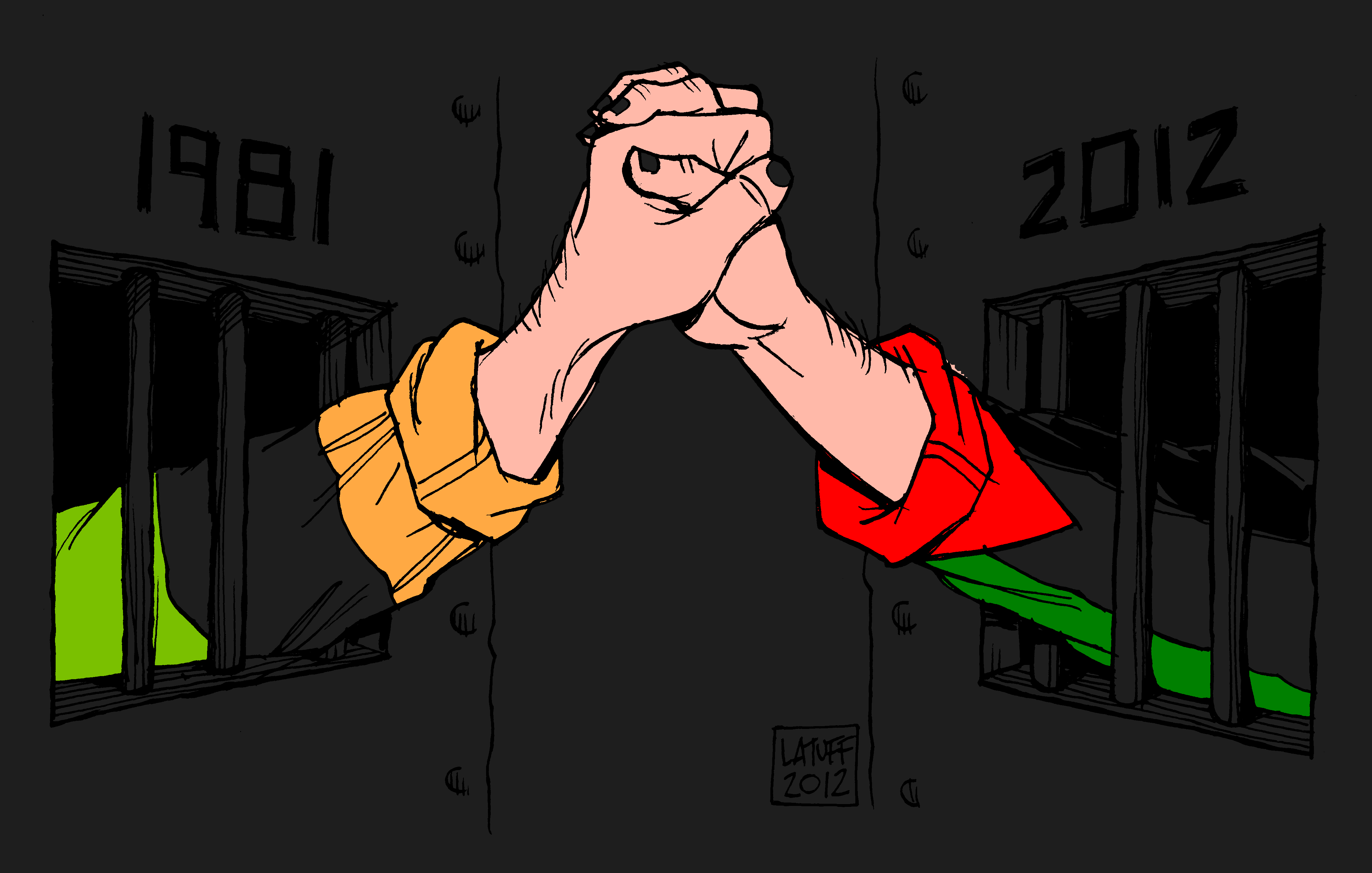
The relationship of these suicides to the recent wave of Palestinian hunger strikers objecting to Israeli practices of detention without charges or trial and to deplorable arrest and prison conditions is worth commenting upon. The hunger strikers are arousing widespread sympathy among their population, and a growing commitment to protest their confinement and celebrate their courage, embracing their acts as essential expressions of Palestinian nonviolent resistance to occupation, annexation, and apartheid conditions. Unlike suicides among veterans, which are lonely acts of desperation because the conditions of living have become endurable, the hunger strikers are willingly and knowingly engaging in a punishing self-decreed refusal to accept food as the only means available to call attention to their severe grievances. Their acts express an intense desire for life, not death, but their statement to the world is that when conditions become so dreadful it is preferable to die than to be further humiliated by intolerable mistreatment.
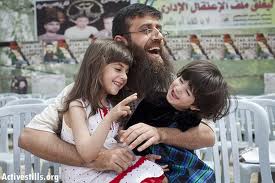
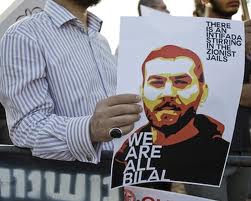
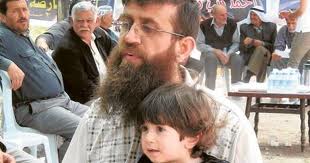
The first hunger striker, Khader Adnan, since his release in April tells of why he engaged in such extreme violence against his body despite a deep attachment to his family and village life: “The reasons behind my hunger strike were the frequent arrests and treatment received when arrested and the third was the barbaric methods of interrogation in prison—they humiliated me. They put dust of their shoes on my moustache, they picked hairs out of my beard, they tied my hand behind my back and to the chair which was tied to the floor. They put my picture on the floor and stepped on it. They cursed my wife, and my daughter who was less than a year and four months old with the most offensive words they could use.” The hunger strikes have finally brought to light such patterns of humiliation long imposed on imprisoned Palestinians. What Adnan did inspired many others among Palestinian prisoners, and at present there remain at least three Palestinians risking death to abide by their plea for life and dignity, and these include a prominent member of the Palestinian national football team who has been held as an ‘unlawful combatant’ since July 2009, Mahmoud Sarsak, now 90 days without food (the two others are Akram al-Rakhaw, 70 days, and Sunar al-Berq).
These dual sad set of circumstances both involve fundamental wrongs associated with the violence of states. The American suicides are essentially sacrifices of lives at the altar of the Martian god of war, while the Palestinian hunger strikes are struggles to survive in the face of state terror imposed in darkness on those who show any signs of resistance to an occupation that has gone on for 45 years and has become more and more oppressive with the passage of time. As Adnan said of his experience of arrest in the middle of the night and release: “..they are trying to hurt our dignity..and released me in the dark, late at night..they only work in the darkness.”
Despite this darkness, we should be able to see what is happening, and respond with whatever means are at our disposal. In America we are mostly kept in the dark with respect to Palestinian suffering, and as for our Americans victims of war, we are informed, but not enlightened, and thus are caught in the headlights, supposing that these military suicides are an unfathomable mystery rather than realizing that they are inevitable byproducts of wars fought in strange foreign lands for no credible defensive purpose.
Tags: Adnan, Anthony Swofford, Guantánamo Bay hunger strikes, Hungerstrike, MahmoudSarsak, Palestine national football team, Palestinian prisoners in Israel, United States