[This post is written jointly with Hilal Elver. It reflects our experience as members of the Intellectual Forum that held meetings in Istanbul during May 2011 parallel to the UN inter-governmental conference on the problems and future of the LDCs, and our continuing role in the Academic Council that was established by the Turkish Ministry of Foreign Affairs to provide an intellectual input to the policy forming process, both by way of critique and prescription.]
*************************************
by Hilal Elver and Richard Falk
******************

The unfolding tragedy in East Africa is a dramatic indicator of what humanity as a whole can expect in the near future ‘if business as usual’ continues to be the phrase that most accurately expresses global climate change policy. The unwillingness of the developed countries to provide adequate humanitarian aid to the most vulnerable peoples in the world also helps explain this worsening regional tragedy has reached such dire extremes.

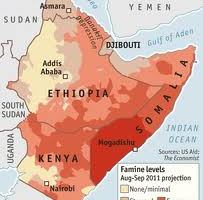
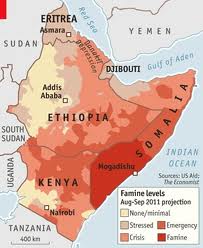
East Africa is currently suffering from its most severe drought in 60 years. According to UN estimates 12.4 million people are in immediate need of humanitarian assistance. 25% of Somalia’s 7.5 million people are currently displaced. Famine has spread to all parts of the Horn of Africa. As we write, 4.8 million Ethiopians, 3.7 million Somalis, and 3.7 million Kenyans are being catastrophically victimized.
Somalia has been hit worst of all countries in the region. An aggravating cause of the Somali crisis arises from the fact that much of the countryside is controlled by the Islamist Shabab movement that forbids most international aid agencies from entering territory controlled by its forces. More than 100,000 people have arrived in Mogadishu in the last two months in desperate search for food and subsistence, some by walking as much as 100 kilometers.
It is generally accepted that the larger continental expanse of sub-Saharan Africa is now the region of the world most negatively affected by global climate change, particularly by global warming. Such a generalization needs to be qualified as not all African countries are suffering from climate change to the same extent, the degree of impact from country to country reflecting varying conditions on the ground. Farms in moist or dry savannah are more sensitive to higher temperature and reduced rainfall than are farms in humid and forest areas. These latter areas may actually experience higher agricultural yields despite adverse climate change trends.
Drought is not a stranger to the peoples of East Africa. According to Klaus Toepfer, the former Executive Director of the United Nations Environment Program: “It is a natural climatic phenomenon. What has dramatically changed in recent decades is the ability of nature to supply essential services like water and moisture during hard times. This is because so much of nature’s water and rain supplying services have been damaged, destroyed or cleared. These facts are especially poignant when you factor in the impact of climate change which is triggering more extreme weather events like droughts.” These remarks support our belief based on the evidence that climate change is a significant element of African humanitarian crises. Toepfer’s words also show us why human induced environmental damage further aggravates preexisting adverse environmental and economic conditions.
It is not possible to determine conclusively that the famine in Somalia is attributable to climate change alone or even predominantly, or is a result of the wider environmental context, as well as a belated consequence of colonial and post-colonial exploitations of Somali resources. A post-colonial example of this Western role in aggravating Somali misery involved the destruction of Somali coastal fisheries due to the activities of high technology distant fishing fleets that virtually rendered traditional Somali fishing obsolete.
Also contributing to Somalia’s downward spiral was illicit toxic dumping by global corporate interests. With no patrols along its shoreline after the collapse of government in 1991, Somalia coastal waters became a dumping area for the developed world’s toxic wastes resulting in severe damage to the fish stocks upon which the Somali fishing industry and population had so heavily depended. Westerner economic actors were desperate to discover places to escape from strict and expensive environmental regulations in their own countries that regulated the discharge of their industrial wastes. As a result, the lives and livelihoods of Somali fishermen along Somalia 3333-km coast were being seriously jeopardized.
It is tragic to realize that piracy has replaced fishing as the dominant coastal means of livelihood for these traditional Somali communities. This piracy has been criminalized, but without account being taken of Western responsibility for depriving Somalia of a leading source of its food and in the process destroying employment opportunities in a previously vibrant commercial activity.
Taking advantage of this difficulty of connecting the dots of causation, the climate deniers are making the most of a highly selective use of meteorological statistics to insist that there is no occasion for special worry or measures in response to Somalia’s crisis. These problems should be interpreted as nothing more threatening than a routine phase of the African weather cycle that the region has been living with for centuries.
Climate change skeptics are not alone in their contentions, but have some unexpected allies. Somalia’s extremist Islamist group, allegedly linked to Al Qaida, Al Shabab, contends that the “drought is caused by Allah and people should pray for rain.” This evasion of problem-solving by reliance on a pre-modern religious mentality has become politically fashionable even in Western countries. Not long ago the governor of Oklahoma urged residents to pray for rain to end a state-wide drought and the Republican Party presidential hopeful, Rick Perry, preceded the recent announcement of his candidacy by holding a public prayer meeting. Another American presidential candidate, Michelle Bachmann, sounds remarkably similar to Al-Shabab militants when she warns that advocates of action to reduce greenhouse gasses are displacing the work of God.
In addition to its presumed distrust of foreign intrusions, Al-Shabab has a material reason for its belief that the Somali drought and famine were not a result of human behavior. A UN investigator, Matt Bryden, recently concluded that “Al-Shabab has evolved from a small, clandestine network into an formidable organization that generates tens of millions of dollars a year by organizing charcoal export to Gulf countries, especially Saudi Arabia, Oman and the United Arab Emirates.” Bryden suggests that the deforestation that has taken place in areas under the control of al-Shabab have probably contributed to the famine by their indiscriminate plunder of forest areas. It is well established that unregulated deforestation is responsible for reduced rainfall.
To be sure, Al-Shabab has its reasons for denying that the famine in Somalia is due to environmental damage, including the detrimental impacts of global warming. Perhaps, if its membership were more sophisticated about the nature of climate change, Al-Shabab would shift their argument, and blame the West, which can be presented as overwhelmingly responsible for the harmful impacts currently being felt in Africa due to almost two hundred years of industrialization with its accompaniment of unregulated greenhouse gas emissions. There is little serious dissent from the view that it is the engines of modernity that have led the climate change challenge to reach its present crisis proportions.
It seems likely that the leaders of Al-Shabab do not have the scientific background needed to appreciate the seriousness and nature of climate change as it bears on the future of Somalia. Their leaders do seem to operate themselves according to the major premise of capitalism, to wit, that selfish economic interests come before the wellbeing of people, even those starving to death. From such a perspective, the leadership of Al-Shabab rejects what must seem to them to be an unwarranted interference in the internal affairs of their country by the international community, plausibly fearing that their own political existence might be jeopardized under the pretext of carrying out ‘humanitarian’ operations under Western auspices. Recalling the disastrous effort of the Clinton presidency to impose a centralized governmental structure on Somalia in 1993, this suspicion about Western intentions seems reasonable, although tragically costly for the people on the ground daily suffering from inadequate supplies of affordable food.
In such a situation it is not surprising that many Somalis are blaming Al-Shabab for the severity and prolongation of the food shortage, which has weakened the movement’s political credibility with the populace. Islamists in Somalia themselves now seem deeply divided. Earlier Al-Shabab enjoyed considerable popular support during a period when chaotic conditions prevailed due to the absence of a competent government. Prior to the onset of the current emergency in 2006, the majority of the Somali people longed most for an end to the lawlessness and rampant corruption that has paralyzed the country since the collapse of the Siad Barre regime in 1991, and saw Al-Shabab as offering this prospect.
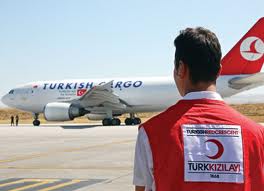
For all these reasons, combined with the abject poverty of the country, Somalia has become the international poster child for failed states, environmental disaster, and human misery. This has also made Somalia seem to be one of the most dangerous countries in the world, both because of these extreme internal conditions and due to its appropriation as a base for international terrorism. Despite these perceptions, the Turkish Foreign Minister observed in relation to the Turkish Government’s state visit to the country in August of 2011 that “there is no reason that Somalia could not recover from its problems.”
Despite the crisis, the Turkish Prime Minister, Recep Tayyip Erdogan, took the highly unusual step of visiting Somalia in the company of several ministers in his cabinet, their families, and a group of Turkish business leaders. This was truly a dramatic initiative that contrasts with the approach taken toward Somalia in recent years by other governments. It a fact that despite its woes Somalia is one of the few countries in the world that no Western leader has dared to enter over the course of the last 20 years, presumably fearful of the chaos and unrest, as well as concerned by security threats posed by religious extremists, warlords, criminal gangs, and worried about the health risks associated with the uncontrolled presence of several lethal infectious diseases.
Against such a background, it is only natural to wonder ‘why’ Turkey has decided to take such an initiative at this time. Several important symbolic and functional reasons have been given by Turkish officials to explain the timing and purpose of this high profile diplomatic event situated outside of Turkey’s geographic orbit of normal diplomatic activity. “The purpose of the visit was first symbolic,” Erdogan declared. He went on to say “[t]here was a perception that nobody can go to Mogadishu; we try to destroy the perception. We came, many others can come.”
There is a second kind of explanation not far in the background. A few months ago Turkey hosted in Istanbul the Fourth United Nations Least Developed Countries (UN-LDC) Summit. Somalia may well be the most afflicted of the 48 LDCs, and so Turkey singling the country out in this way to call attention to its broader concern with world poverty. After all, the LDC summit was held under Turkish auspices because Ankara had expressed a willingness to take on the responsibility for shaping UN policy towards these ‘poorest of the poor’ during the next 10 years. In view of this initiative it would have been difficult for the Turkish government to close its eyes to the desperate situation in Somalia. Such a show of indifference would also have seemed incompatible with its professed desire to do everything possible to help address the challenges faced by the LDCs.
Thirdly, as a devout Muslim, Prime Minister Erdogan was undoubtedly moved by the ordeal confronting the Muslim community in Somalia during the holy month of Ramadan. As all Muslims are deeply aware, this is a time when religious devotion encourages generosity to others less fortunate. The Somalia case presents a compelling opportunity for Erdogan and associates to fulfill their religious duties during Ramadan.
It is also relevant to observe that shortly before the Somalia visit, Turkey hosted a major meeting of the Organization of Islamic Cooperation (OIC) at which $500 million was set as a goal pledged by the assembled government to assist drought and famine stricken Somalis. The Turkish government is additionally sponsoring a national campaign for Somali emergency relief that is seeking to raise an additional $250 million in funds from private Turkish donors.
In the course of an impassioned speech to Muslim leaders during the OIC meeting, Erdogan provocatively called negative attention to the luxurious life styles of the leaders of oil rich countries. Some commentators interpreted these remarks as an attack on capitalism, but it is more reasonably understood as a warning and diatribe against the excesses of some capitalists! And the importance of acting responsibly toward those who are less fortunate.
We need remind ourselves that Turkey has done very well in the Erdogan period of leadership by adhering to economic policies based on free market principles. Erdogan and the AKP are far from the orientation of such avowedly anti-capitalist leaders as Hector Chavez or the Castro brothers. Yet his ideological affinities with capitalism does not mean that Erdogan is not responsive to the social principles of Islam, or that he is being inconsistent when he calls for what used to be promoted by Western leaders under the banner of ‘compassionate capitalism.’ In some speeches to Turkish audiences Erdogan does not hesitate to use language that incorporates Islamic thought, which probably comes very naturally to him when he speaks, as he often does, spontaneously, and without a prepared text. This Muslim influence or style of advocacy was not common in Turkey during the Kemalist years when strictly secular politicians were running the country, and it remains somewhat unfamiliar to those Turks whose identity is derived from European models.
Erdogan also does not hesitate to criticize the West. While in Somalia, he said: “The tragedy in Somalia is testing modern values. What we want to emphasize is that the contemporary world should successfully pass this test to prove that Western values are not hollow rhetoric.” Such a direct challenge seems warranted when the leading Western countries have turned increasingly away from the humanitarian emergency conditions affecting not only Somalia, but all the LDCs. Also neglected by the affluent societies are the large enclaves of extreme poverty in a variety of countries that have relatively high average per capita incomes, but skewed income distribution patterns favoring the ultra-rich and containing deep pockets of extreme poverty.
We can affirm the Turkish initiative associated with the recent visit to Somalia as an imaginative and brave step to mobilize public concern throughout the world. The real test of its worth comes during the years ahead when Turkey and AKP will be under self-imposed pressures to take the lead in tangibly exhibiting empathy for the most deprived segments of humanity along with displaying an increased sensitivity to the seriousness of the climate change dimensions of these economic conditions. Of course, this Turkish role should not be interpreted as offering a free ride to other countries, including those in Europe, North America, and Asia. The governments of these countries have the resources and responsibilities to act as world citizens in an era of ever increasing globalization both in relation to pursuing economic policies that could dramatically reduce world poverty and taking on climate change for which their past and present activities are primarily responsible.
Tags: Africa, Al-Shabaab, Climate change, Least Developed Country, Somali people, Somalia, United Arab Emirates, Western world



 Global Justice in the 21st Century
Forget ‘Normal’ Politics
5 FebPolitical life is filled with policy choices that are made mainly on the basis of calculations of advantage, as well as reflecting priorities and values of those with the power of decision. In a constitutional framework of governance the rule of law sets outer limits as to permissible outcomes. The legitimacy of the decision depends on adhering to these procedural guidelines, and the fact that if the societal effects turn out badly it can be corrected by altering the ‘law.’ Of course, all sorts of special interests behind the scene manipulate this process, and the public debate mirrors these pressures. The results of highly contested policy choices usually reflect the power structure (class, race, ideology) more than they do the outcome of rational detached assessments of the public good. At present, the national public good in the United States is being held hostage to the lethal extremism of the gun lobby as led by the National Rifle Association (NRA), which combines special interest politics with a political culture that is violent and militarist. Such a political culture seems unlikely to be able to prohibit the sale of automatic assault weaponry to private citizens even in the immediate aftermath of a series of horrific shootings in American schools and public spaces by individuals gaining access to assault rifles and pistols.
If we agree with this line of interpretation, we must have the courage to raise radical questions as to whether under these conditions a flawed democracy is any longer capable of serving the national public good in fundamental respects. In my view, the only morally responsible position is to mobilize the citizenry around the need for drastic reform of American democracy. At the very least, the role of big money in shaping policy choices and the electoral process must be ended, and the glorification of violence and militarism must be repudiated. To seek such results a reliance on normal politics is to inhabit the land of illusion. In some respects, a revolutionary situation is present in the country but a revolutionary movement is no where to be seen. Only utopian reasoning can be hopeful about the future of the country, and it is the case of hope against hope.
This politicization of policy choice is to some extent inevitable, and is usually not so threatening to the wellbeing of a country, but at present there are increasingly harmful repercussions that follow, also with respect to global stability and security. Within societies where policy choice depends on governmental action there is a play of contending forces, but the outcome is at least coherently oriented around a shared commitment to the national public good. Internationally, in contrast, there are no social forces, other than transnational civil society actors (NGOs), that are dedicated to the global public good. Governments, including that of the United States, determine and justify national policy choices by reference to the pursuit of national interests. When a dominant state opts to play a global leadership role as the United States did after 1945, it can sometimes promote a type of imperial world order that is beneficial to itself, but also at the same time helpful to most other states and to the human community generally. Such initiatives as financing the economic reconstruction of Western Europe, the establishment of the United Nations, and the promotion of international human rights illustrate such a convergence of national and global interests. But note that global interests, aside from civil society advocacy groups, have no independent base of support. Even the United Nations, which is supposed to promote peace and justice for the whole of humanity is little more than a collection of unequal states each jealous of its sovereign prerogatives. In addition, the UN gives an unrestricted special blocking power (veto) to the five permanent members of the Security Council. The UN despite its many contributions has been unable to become effective in curtailing violations of international law by leading states and their friends and has not been able to meet such global challenges as ridding the world of nuclear weaponry or fashioning a constructive response to climate change.
In relation to climate change there has been an overwhelming consensus among relevant experts for over two decades that global warming is causing severe harm to the ecology of the planet, and that this situation is likely to reach an irreversible tipping point if the average temperature on the earth rises above a 2°C level compared to what it was at the start of the industrial age. This knowledge had been irresponsibly contested by a well-funded campaign of climate skeptics that has been especially effective in the United States in hijacking the public debate, and undermining policy choices that are in accord with the scientific consensus. The skeptic undertaking is funded by fossil fuel interests, and is being managed by some of the same public relations firms that delayed public appreciation of the link between cancer and cigarette smoking by several decades. This campaign has destroyed the capacity of the United States to play a constructive leadership role needed to establish an obligatory framework for prudent restrictions on the level of greenhouse gas emissions. Without U.S. leadership there is lacking the political will on a global level to act with sufficient seriousness to protect the global interest, and human destiny becomes jeopardized in a highly destructive manner from the perspective of species survival.
Just as national democracy needs drastic reform, so do the structures and procedures of world order. One direction of reform would be to establish institutions with resources and capabilities to serve distinctively global interests. Steps in such a direction would include a global revenue producing mechanism, a global peoples parliament, an independent UN peace and emergency relief force, a repeal of the veto right in the Security Council, a revision of the authority of the International Court of Justice by converting current ‘advisory opinions’ into binding enforceable decisions, convening a nuclear disarmament process, and upgrading the existing UN Environmental Program (UNEP) to the status of super-agency called UN Agency on Environmental Protection and Climate Change.
Such a thought experiment as this is oblivious to horizons of feasibility that befuddle politicians and set artificial parameters limiting responsible debate. My diagnosis is anchored in an interpretation of horizons of necessity. By recognizing this huge gap between feasibility and necessity it is implied that normal politics are futile, and in their place we are forced to embrace utopian politics, which can be described as horizons of desire, faith, and hope.
Tags: Climate change, Environment, Human rights, International Court of Justice, National Rifle Association, Politics, United Nations, United States