Tag Archives: Dahiya Doctrine

WHAT DRIVES ISRAEL—10/29/24

29 Oct

Prefatory Note This post is a much modified, updated version of my responses to questions posed Murat Sofuoglu, a Turkish journalist associated with TRT World. The dehistoricizing and decontextualization of the Hamas attack of October 7 was spread around the world by the most influential global media platforms and political leaders of the liberal democracies, and led to widespread sympathy for Israel and some months of tolerance of their response despite its legally and ethically unacceptable character. As such the Israeli response was initially sanitized by regarding  Palestinian grievances in Gaza as irrelevent, and also by uncritically accepting Israeli  hasbara that its response to the Hamas attack was solely motivated by security and counter-terrorist considerations, and thus disconnected from the Greater Israel priority and preoccupations of the Netanyahu coalition that came to power at the start of 2023 or more than nine months before the attack.]  


1. Has the Israeli model to secure Jews a homeland in Palestine failed?

I think it is misleading to refer to the Zionist Project in the singular and by reference to ‘a homeland’ as originally pledged in the Balfour Declaration issued in 1917. The minimum pre-1948 goal of world Zionism was to create a Jewish supremist state in Israel with an unlimited right of returns for Jews from anywhere in the world, and the denial of such an equivalent right to the Palestinians who were the native majority population. The Nakba that accompanied the 1948 War involved the forced expulsion from Palestine and permanent refugee/exile status for of at least 700,000 non-Jewish residents of the portion of Palestine set aside for Israel by the partition resolution of 29 November 1947 UN GA Res. 181. Israeli expulsion politics exhibited the Zionist intention in the fog of war was to ensure a long-term Jewish majority settler population that would enable Israel to claim credibly in its early years to be both Jewish and democratic, the latter proving to become

overwhelmed by the apartheid regime that was convincingly delimited as such over the course of the last decade. The occupation was fully documented as a type of apartheid violating the 1973 Convention on the Prevention and Punishment of the Crime of Apartheid. This assessment was validated by comprehensive reports, filled with data, prepared by ESCWA, Human Rights Watch, Amnesty International, and the Israeli NGO, B’Tselem.

Prefiguring the response of the governments of most liberal democracies was the failure to express any adverse reactions to Israeli apartheid despite their earlier support for the global anti-apartheid movement that exerted so much pressure on the South African government that it pleasantly surprised the world by releasing Nelson Mandela from prison and proceeding rapidly to become a constitutional democracy incorporating legal commitments to racial equality. Why was there no negative international response to Israeli apartheid?  At the very least the apartheid assessments should have led to a demand that Israel withdraw from Gaza, West Bank, and East Jerusalem.

Even earlier, the most that the US Government could manage to say about the relentless expansion of unlawful settlements that ‘it was unhelpful.’  At first, Western governments were reluctant to be even mildly critical of Israel because of their own failure to do more by way of opposition to the Holocaust, inducing a debilitating sense of guilt made more potent by Israel’s domination of the public discourse subtly facilitated by a racist dehumaniization of the Palestinian other as an Orientalized inferior people when compared to the rapid modernizing prevailing temperament in the new Jewish state.

The UN contributed to the Palestinian tragedy by initially proposing partition of a previously colonized national entity without bothering to consult the Arab majority population residing in Palestine that would have certainly been opposed to lending legitimacy to such a fracturing of their homeland. But the Palestinians were never given a chance to vote in a referendum on partition, which itself was an ahistorical imposition of UK colonial interest and methods of control by a logic of ‘divide and rule.’

This post-1945 tragedy was compounded and prefigured the future ordeals of the Palestinian people by the failure to at least secure the promised Palestinian state of equal status to Israel before legitimating Israel’s claims to statehood by diplomatic recognition and admission to the UN as a member sovereign state. The 1967 War aggravated Palestinian grievances by. establishing Israeli de facto control by way of conquest over the Palestinian territories of East Jerusalem, West Bank, and Gaza, again given unregulated de facto control by way of the doctrine of Belligerent Occupation, supposedly within a temporary and regulative international law framework set forth in the 4th Geneva Convention and the First Additional Protocol. Israel massively violated its terms of occupation in numerous fundamental ways from Day One. Perhaps, the most flagrant early expression of Israeli territorial unilateralism was its incorporation of East Jerusalem into sovereign Israel as ‘its eternal capital.’ This symbolic and substantive land-grabbing that included Islamic sacred sites has never to this day been accepted by the majority of states, and the Israeli move to establish Jerusalem as the Israeli capital was declared ‘null and void’ in an 2017 Emergency Session General Assembly Resolution (ES-1019) supported by a super-majority of Member states but opposed and then ignored by the US and the main states of NATO [the vote was 129-9-35 (abstentions).

The developments between 1967 and 2024 consolidated Israeli territorial ambitions in occupied Palestine by way of the extensive unlawful settlement movement, a coercive apartheid occupation regime that subjugated Palestinians living under prolonged occupation that culminated in the genocidal and ecocidal assault on Gaza that killed many in real time and totally devastated Gaza as a livable habitat. The settler colonial assessment of Israel disposing the majority native population resembled the pattern of the breakaway British colonials (US, Canada, Australia, and New Zealand) each of which, although New Zealand less so, implemented their colonial encroachments by genocidal tactics in response to resistance, and succeeded in establishing their flourishing and enduring state.

In retrospect, it seems obvious that Zionism, and since 1948, Israel itself pursued a two-track strategy: first, a public hasbara discourse that claimed moderation and pretended to seek a democratic polity and engage in a search for a political compromise on land rights, democracy, and human rights with the native population; secondly, a political strategy that opportunistically advanced by stages to realize the hard core Zionist Project of restoring Jewish exclusive control over the Biblically ‘promised land’ of Jewish tradition at a given time for what it could get by way of an expansionist vision with respect to Israel itself, neighboring countries, and regional geopolitics. Not only did the shadows cast by the Nazi Holocaust in the early years of Israel’s existence inhibit criticism of the settler colonial aspects of Israel’s approach to the indigenous non-Jewish residents of Palestine but Israel’s first political leader, David Ben Gurion a committed secularist, cynically declared ‘Let the Bible be our weapon,’ and in the process claimed a religious entitlement to all of historic Palestine as ‘the promised land’ of Jewish tradition, which has prevailed over the prime norm of colonial decline, that of the right of sef-determination.

After the 1967 War Israel became itself a partner in ‘colonialism after colonialism’ in the Middle East. There emerged a strategic relationship with the United States and Europe that embraced regional security, safeguarding oil and gas reserves for the West, and cooperating with respect to the containment of political Islam, especially after the Islamic Revolution in Iran (1979). This US led geopolitical limitations imposed on regional autonomy were highlighted by the unprecedented US political commitment to ensure that Israel possessed a military capability to defeat any combination of regional adversaries. Such a willingness to indulge ‘Israeli exceptionalism’ with respect to regional security was  dramatized by looking away while Israel covertly, with European active complicity not only became the sole nuclear weapons state in the Middle East but assumed the role of guardian of non-proliferation when it came to Iran.  As Israel gained in strength and regional acceptance via the Abraham Accords reached in 2020 during the last months of the Trump presidency it seemed on a path that would end with a one-state solution under its sole and uncontested dominion.

As Israel gained in political acceptance and self-confidence it became less shy about revealing its nationalist agenda. The 2018 Basic Law, with a quasi-constitutional status, was forthright in claiming Israel as a Jewish State, with the Jewish people exclusively entitled to exercise the right of self-determination (ignoring the rights and relevance of the 20% of its population that was non-Jewish, and Hebrew was confirmed as the only official language. Even extreme Israeli apologists seemed reluctant to any longer claim, what was never true, that “Israel was the only democracy in the Middle East.” The net result as of late 2024 is that it is the Palestinians who have become unwelcome strangers in their own historic homeland. Israeli democracy, such as it has become, was clearly in practice and law ‘for Jews only.’ And again the Western patrons of Israel watched from the sidelines as Israel kept enlarging and disclosing its zero-sum vision of conflict resolution, and disregard of the US role as intermediary in the search for a diplomatic resolution of the conflict.  

2. What is Israel trying to achieve with its ongoing war campaign across the Middle East?

Again, we are challenged to deal with Israel’s mainly undisclosed intentions and what is disclosed is not trustworthy or a small part of the Israeli policy agenda motivating the enlargement of the combat zone. For greater insight we are forced to rely on conjecture to produce some kind of illuminating, yet plausible, interpretation. As with Gaza, Israel claims a right of self-defense. It seeks extra weight by insisting that its enemies are all sponsors or guilty of ‘terrorist’ violence’ and proxy engagements determined to undermine Israeli security, Even if we accept this line of argument Israel’s use of force in Lebanon is disproportional and indiscriminate, self-acknowledged and operationalized as an inflammatory application of the Dahiya Doctrine originally set forth in the Lebanon War of 1982. The Dahiya Doctrine was enunciated by a leading Israeli general, expressing the intention to retaliate disproportionately against security provocations threatening Israeli interests. The Gaza genocide can be viewed as a grotesque and maximal example of Dahiya thinking and practice, although specifically motivated by Israeli extraterritorial security priorities, ethnic cleansing, economic ambitions, regional paranoia, as well as its invariable dismissal of the genuine grievances and armed resistance of adversaries as invariably of a terrorist character.

In certain ethical respects the Dahiya Doctrine is an Israeli adaptation of the logic of deterrence that guided security policy of both US and USSR during Cold War. Its most salient feature was known as Mutual Assured Destruction  (or to critics as MAD). Israel’s adaptation consisted of substituting the threat of genocide for that of nuclear retaliation. The core idea of deterrence is a credibly threatened unacceptably disproportionate response to any fundamental threat to strategic interests or to homeland security of the nuclear antagonists and their close allies.

There is no mutuality in Israel’s approach to deterrence, which is a generalized warning to its regional adversaries of dire results if they dare to attack or provoke Israel. Any regional state purporting to balance Israel hegemonic nuclear capabilities is projected as such a threat, which presupposes a geopolitical right to maintain Israel’s regional nuclear supremacy.

3. Do you think with the current campaign, the Netanyahu government aims to resolve once and for all the Jewish question, fixing Israel’s place in the Middle East? 

It seems as though Israel has been expanding its combat objectives initially justified as retaliation against Hamas for the October 7 attack by adopting a proclaimed goal of exterminating Hamas. While pursuing this goal Israel engaged in such excessive and indiscriminate violence that its behavior was widely perceived as a transparent instance of genocide committed in real time and including a growing and increasingly activist minority in the civil societies of the Western countries, including many Jews, whose governments most ardently support Israel. Israel has suffered a near total loss of legitimacy as a normal state and is increasingly viewed as a pariah or rogue state to an extent exceeding the condemnation of even overtly racist and oppressive South Africa. This ended when the Pretoria government surprised the world by abandoning apartheid in the mid-1990s, apparently for pragmatic reasons associated with debilitating sanctions that limited South Africa’s participation in world society, including cultural and sporting boycotts that curtailed the freedoms of the ruling white minority.

Israel has handled this international hostility differently and more defiantly than South Africa, partly because it has had the benefit of strong geopolitical support from the governments of the Global West, especially the all-important US. Israel’s security is a matter of strategic importance to the West as a beachhead in the Middle East for the related purposes of ensuring access to oil and gas reserves of the region and containing the spread of political Islam. Thus, the increase of Israel’s war objectives to include Hezbollah, the Houthis, and of course Iran has also become a battleground in the Clash of Civilizations within the region and is a potent source of instability parallel to the incipient Second Cold War with China and Russia. Whether Israel, with Washington’s backing and probable participation will provoke war with Iran is one of the great uncertainties of this historical moment. Part of this uncertainty involves assessing the relevance of Netanyahu’s personal survival agenda and whether the Religious Right in the governing coalition will push these wider objectives to the point of regional war with dangerous geopolitical risks. An ethical imperative is also continues to be present– not to shift attention away from the ongoing acute human catastrophe entrapping the civilian population of Gaza in deliberately induced death threatening traumas of mass hunger and widespread disease.

What Israel does and refrains from doing in the next few weeks will have a major impact on the prospects for a peaceful future responsive to growing ecological challenges. This in turn may reflect the outcome of the US presidential elections, and how the new leadership handles this dangerous, fragile global situation that combines a prolonged humanitarian catastrophe, ethical and legal gross abuses of civilian innocence, and hazardous neglect of heightened risks of geopolitical encounters and ecological collapses.

##
DAHIYA DOCTRINE: JUSTIFYING DISPROPORTIONATE WARFARE—A PRELUDE TO GENOCIDE

1 Apr

[Prefatory Note: What follows is an essay that originated from my responses to some questions from a journalist preparing his own article on the Dahiya Doctrine. It led me to consider the relevance of the doctrine, and link it to the events of the last several months in Gaza, the Hannibal Directive, antisemitism, and genocide.]

  1. What is the Israeli military’s “Dahiya Doctrine?”

The label ‘Dahiya Doctrine’ was apparently first publicly discussed by a former IDF Chief of General Staff, Gadi Eisenkot. Dahiya is a neighborhood village in southern Beirut that was believed to be a residential stronghold for Hezbollah, the radical Islamic Shi’ite movement opposed to Israel’s encroachments on Lebanese territorial sovereignty and pro-Palestinian in its wider political agenda. The doctrine came as no surprise to persons familiar with past Israeli tactics, although its articulation with reference to events back in 1986 and 2006 entailed an open rejection of compliance with applicable international law. Undoubtedly, the disclosure raised a few eyebrows of disapproval in Tel Aviv as such matters are not generally considered fit for open discussion.

The Dahiya Doctrine is a summary description of Israeli tactics ever since the time of the British Mandate, but was specifically invoked by General Eisenkot with reference to the 2006 Israeli use of disproportionate force (relative to what was regarded by Israel as Hezbollah resistance provocations) to destroy the civilian infrastructure of Dahiya. It was set forth not only as a rationale of past practice, but to describe Israel’s distinctive claim of intention and entitlement to use force in this manner against non-state adversaries as the core of a two-part doctrine of counter-terrorist deterrence. It also was an informal attempt to redefine ‘military necessity’ in situations of asymmetric warfare being waged by Israel against hostile non-state actors based in neighboring states. In the specific context of Lebanon, the blame for recourse to disproportionality is assigned to Hezbollah by Eisenkot contending that the Shiite villages of south Lebanon had been transformed ‘into platforms for terror,’ an inflammatory shorthand for armed resistance to Israel’s occupation of southern Lebanon.

It is notable that this claim is put forward without the slightest effort on Eisenkot’s part to reconcile the Dahiya Doctrine with international humanitarian law, which imposes a limit of proportionality on any use of force in situations of international combat. It also neglects to take note of the fact that before encounters with Hezbollah, Israel routinely struck back disproportionately at its enemies, especially with respect to Palestinian acts of resistance, even when nonviolent and undertaken in frustrated response to Israel’s prolonged unlawful behavior as was the case with the Gaza Right of Return Movement initiated in 2018 after 11 years of punitive blockade and periodic large-scale Israeli attacks on the vulnerable Palestinian civilian population.

It is significant that the Dahiya Doctrine was first explicitly applied to the non-Palestinian Hezbollah militia movement, which was misleadingly labeled as ‘Iran-backed’ to warn and justify Israel’s claims to strike back disproportionately against any and all adversaries. The military incursions carried out in 2008-09, 2012, 2014, and 2021 in Gaza are each illustrative instances of the application of the Dahiya Doctrine although rarely rationalized in these terms by Israel and its supporters, but rather subsumed beneath diversionary arguments invoking Israel’s claim of an unrestricted right to defend itself. Such a legal justification was itself dubious given that Hamas, along with the West Bank and East Jerusalem were Occupied Territories subject to a special legal regime depicted in the Fourth Geneva Convention of 1949, further elaborated in the First Additional Protocol of 1977. It is widely agreed at the UN and by legal experts that an Occupying Power has no standing to invoke ‘self-defense’ arguments in support of using force, and collective punishment, against an Occupied People, especially in this context as UNSC Res. 242 back in 1967 had unanimously  looked toward the withdrawal of Israel’s armed forces from these territories occupied in the 1967 War. Aside from this, Israel is subject to specific legal duties in the 4th Geneva Convention to protect civilians subject to its administration, and to refrain from efforts to displace the occupied people by interfering with their

underlying rights of self-determination as it has massively done by authorizing and even subsidizing a large number of Israeli settlements and annexing as its ‘eternal capital’ the entire city of Jerusalem. With these considerations in mind, Israel, so long as it remains the Occupying Power, the Dahiya Doctrine and disregard of Gaza’s Occupied status is deeply problematic. Israel is entitled to take measures to sustain security in the Occupied Territories as part of its administrate role, but the force used should be considered legitimate only if rendered compatible with Israel’s responsibilities to safeguard the population under its supposedly temporary and not to interfere with its pre-occupation societal integrity. At least, the international community should not have been hoodwinked into abandoning reliance on the international law framework relevant to belligerent occupation. It seemed obliged to take note of the current legal challenge to Israel’s occupation that has lasted 57 years resulting from the General Assembly’s request for an Advisory Opinion on the legality of Israel’s occupation given its long duration and array of unlawful practices and policies. Whatever the outcome at the ICJ the likelihood of Israeli compliance or UN sanctions in the event of non-compliance is virtually nil. At the same time, it is politically valuable to confirm accusations of unlawful behavior by recourse to authoritative procedures, even if unenforceable, as such assessments tend to have legitimating and mobilizing effects with respect to civil society solidarity initiatives such as BDS (boycott, divestment, and sanctions) and exerts some influence on public discourse in the media and in diplomatic venues.

It is notable that the factfinding mission of the Goldstone Commission established in the aftermath of the 2008-09 Israeli Operation Cast Lead by the UN Human Rights Commission did conclude in its 2009 report that Israeli tactics in Gaza were instances of disproportionality, collective punishment, and state terror in conformity with the reasoning and practice endorsed by the Dahiya Doctrine, while taking note of the unlawfulness of the doctrine and its Gaza application in fact if not by name.

  • How does the Dahiya Doctrine fit into the prevailing laws of war?

As suggested in the previous response, the Dahiya Doctrine directly contradicts one of the most fundamental norms of customary international law, which also infuses the treaty formulations of limits on the use of force in the Geneva Conventions and the UN Charter. Namely, disproportionate force is prohibited as it is considered a form of excessive force and has the clear intended prohibited effects of targeting a wide range of civilian sites and inflicting severe collective punishment on the civilian population as criminalized as a war crime in Article 33 of the 4th Geneva Convention.

The Israeli retaliatory campaign in reaction to the Hamas attack of October 7, 2023, is a grotesque example of the Dahiya Doctrine carried to a transparent genocidal extreme. It highlights the aggravating absence of any Israeli effort to set limits on the extent or degree of disproportionality. As in Gaza, General Eisenkot (IDF Chief of Staff, 2015-2016), with reference to Dahiya made some vague references to the issuance of evacuation orders to limit the loss of life on the part of civilians, but in practice this concern has never been consistently evident in the deployment of Israeli military operations. This disregard is manifestly evident in the current military operations in Gaza, despite weak Israeli protestations that allege Palestinian reliance on ‘human shields’ and blaming Hamas for situating their tunnel strongholds beneath hospitals, refugee camps, UN buildings, and schools. These legal arguments cannot justify a total abandonment of Israel’s legal responsibilities as the Occupying Power of Gaza, and besides, these Israeli explanations are not accompanied by sufficient evidence to offset objections

arising from Israel’s recourse to genocidal tactics and endorsed by dehumanizing language of its highest leaders that fulfill requirements of genocidal intent. The Interim Order of the ICJ on January 26, 2024 reinforces this assessment by concluding nearly unanimously that the evidence supports an inference of ‘plausible genocide.’ Even though provisional, and softened by the usual cautious demeanor of this highly regarded international tribunal, it reinforces the worldwide common sense perception of genocide based on real time imagery and informed journalistic commentary from Gaza sites of carnage.

  • How is the Dahiya Doctrine being implemented by the Israeli military in Gaza?

Again, earlier responses anticipate this question. Yet there are complexities associated with attributing to the Dahiya Doctrine the totality of blame for the extremity of what has been transpiring in Gaza for more than five months. This complexity arises from the widespread perception that the military operation in Gaza is not primarily about what it purports to be—namely, the destruction of Hamas or Palestinian resistance through disproportionate force and deterrence of future provocations by Hamas or other state and non-state adversaries. The Gaza operation must be viewed in the wider context of Israel seemingly exaggerated and vengeful reaction to the Hamas attack, which objective investigations may eventually reveal was allowed to take place or inflated in the official depictions of its supposed barbaric aspects, so as to provide the extremist Netanyahu coalition government with a pretext for its preexisting resolve to induce forced evacuation and dispossession of as many of the 2.3 million Palestinians from Gaza as possible, with an implicit unacceptable demand, which is openly avowed  in settler and religious Zionist activism and literature of confronting the Palestinians, residents not only in Gaza, but even more directly in the West Bank and East Jerusalem with a dire choice between leaving and dying, or at best remaining entrapped in a life of misery.

Palestinians are understandably describing Israeli operations as having the overall purpose of inflicting on the Palestinian people conditions designed to produce a second nakba (or catastrophe), recalling the earlier nakba of 1948 when an estimated 750,000 Palestinians were forcibly made to leave their homes and learn that their villages had been bulldozed. Obliged to seek refugee status in neighboring countries and Gaza (then under Egyptian occupation) with no right of return, was itself a serious violation of a fundamental international human right. In effect, the logic behind the Dahiya Doctrine is certainly one way of viewing the 2023-2024 Gaza operation, but in my view it is incomplete without taking into account the underlying endgame of extreme Zionism, as embodied in the program of the Netanyahu coalition government that has governed Israel since the start of 2023, which is to establish ‘Greater Israel.’ The plan is to solidify the existence of a Jewish supremacy state (containing as few Palestinians as possible) in the whole of historic Palestine, described by its most ardent advocates as ‘Israel from the river to the sea,’ that is, from the Jordan River to the Mediterranean Sea. In effect, what made this Netanyahu government the most extreme in the whole of Israel’s existence is its stress on completing the Zionist Project through the forced dispossession of Palestinians on at least the scale of the 1948 exodus. More moderate Israeli governments were also committed to such an outcome, although reluctant to acknowledge this, given the international two-state consensus. Earlier Israeli governments were far more ambivalent about turning the settlers loose to terrorize those Palestinians stubbornly refusing to be victims of a second nakba and to use Gaza resistance as a pretext for a genocidal assault on the people and infrastructure of Gaza, making the Gaza Strip uninhabitable and unlivable at least temporarily.

  • The Hannibal Directive and Israel’s Security Paradigm

The Hannibal Directive named after a historically important general in Carthage (247-183 BC) who claimed to prefer suicide to capture by an enemy was first articulated in 1986 by Israel in response to a series of incidents involving Hezbollah’s seizure of Israeli soldiers occupying Lebanon after the 1982 War. It informed debate about the abduction or capture of a low-ranking Israeli soldier, Gilad Shalit in Gaza. Shalit’s release in a prisoner swap for 1,027 Palestinian prisoners being held in Israel jails raised the sensitive issue of whether it would not have better to risk killing Shalit than to be pressured into making such a deal. Although Benny Gantz, as IDF Chief of Staff in 2006, insisted that the IDF was under orders to endeavor to rescue Israelis captured from their abductors, which envisaged the use of lethal force, Israeli soldiers were said to be under strict orders not to kill deliberately abducted Israeli soldiers or civilians. Such a distinction, according to some accounts, was not maintained in practice, where the main goal was to prevent abductees from becoming prisoners.

In 2016 Gadi Eisenkot, while he was IDF Chief of Staff formally repudiated the Hannibal Directive and did not reveal secret replacement protocols for dealing with future abduction/hostage taking. The Hannibal Directive, however named or unnamed, again likely supplied the logic of the shootings of abductors and captured Israeli soldiers and citizens in the course of the October 7 Hamas attack. There are a variety of reports suggesting that IDF troops killed by accident or design abducted Israelis to prevent their seizure as hostages. Israel’s dissenting version of what happened on that day insist that any shootings of Israelis by the IDF was accidental, and attributable to the chaos of the situation. [For insightful analysis of these issues in the course of the 2014 attack on the city of Rafah that resulted in the death of an Israeli officer by IDF action to prevent capture see Finkelstein,  Gaza: An Inquiry into its Martyrdom, 2018, 273-277]

The reasons for coupling the inclusion of this brief discussion of the Hannibal Directive are to further illustrate a calculative approach by Israel to issues of life and death for Israelis and others that is complementary in spirit to that set forth in the practice of disproportionate warfare as a prerogative of Israel justified by reference to the behavior and elusiveness of its non-state adversaries, which are consistently linked in state propaganda to its main state enemy, Iran. Such thinking also manifests the dehumanization of the Palestinian people in the event that their presence in their own homeland clashes with the policy priorities of the current phase of the Zionist Project, Such inquiries help us understand the continuities of the prolonged occupation of Palestinian Territories that has imposed oppressive conditions violating the most basis rules and principles of international humanitarian law, mutating from a regime of apartheid to one of forcible expulsion and genocide. For meticulous documentation of such serious charges, see Albanese, Anatomy of a Genocide, A/HRC/55/75, 25 March 2024.

5, Can the Dahiya Doctrine be linked to the Zionist Interpretation and Treatment of Antisemitism?

In my view there is a definite, although complex, linkage. To make such an assessment requires distinguishing three varieties of antisemitism as discourse and as practice:

            —antisemitism as hatred of and discrimination against Jews, currently reignited by Israel’s subjugation and abuse of the Palestinians as a people [See On Antisemitism and: Solidarity and the Struggle for Justice in Palestine, Jewish Voices for Peace, 2017]. The core of this phenomenon was in Europe, including Western Russia, and extending to the Global West, including Australia and New Zealand, with deep roots in the dominant narrative of Christianity in which the Jewish establishment of its day collaborated with the Roman imperial presence in assenting to the Crucifixion of Jesus, and given a special twist in most contemporary varieties of Evangelical Christianity that read the Book of Revelations as imparting the message that the Second Coming of Jesus will only occur when  all Jews return to Israel (as the successor to historic Palestine). Jews will then be given the choice of converting to Christianity or facing damnation. Despite this genuine type of antisemitism, the state of Israel has learned from its experience during the Nazi period that pragmatic convergences could facilitate the establishment and security of a Jewish state, especially the idea that encouraging Jewish immigration to Israel by any means was vital to the domestic support in the United States and elsewhere of Israel.

Early Zionist leaders even collaborated on arrangements with the Nazi regime in Germany that facilitated Jewish immigration to Israel, in some instances, with assurances that Jewish assets could be taken abroad. [see Suarez, State of Terror, 2018] The same pattern of pragmatic and instrumental use of antisemitism underlay the Balfour Declaration in 1917 by which the British Foreign Secretary pledged UK support for the establishment of a Jewish homeland in Palestine, which it facilitated by welcoming Jewish immigration and cooperating with Jewish leaders to carry out its divide and rule governance of its Palestine Mandate. In other words, the Zionist Movement pursued its goals by negotiating a number of Faustian Bargains with antisemitic adversaries, a part of the Israel state-achieving narrative that is confusing for both followers and critics.

It seems reasonable to ask ‘this may be true, but what has it do with the Dahiya Doctrine?’ It relates to the deep roots of Israeli behavior since the early pre-Israel origins of the Zionist Movement. In essence, because of its weakness in relation to potential and actual adversaries, Israel needed to make up its own pragmatically-driven rules of practice without regard to any sense of duty to comply with the expectations of established political, legal,  and moral frameworks. The Dahiya Doctrine is one of expression of such pragmatism, enacted without regard to law or morality against elusive non-state adversary movements. At its extremes, as in Gaza in recent months it invokes the Holocaust to demonize critics, including adverse rulings in widely respected international institutions such as the International Court of Justice, contending that decisions by such actors are tainted by their ‘antisemitism,’ which seems pure smear given the lack of even scant evidence of hostility to Jews as such. In extreme reactions, prominent Israeli spokespersons denounce allegations of responsibility for genocide by contending that given Jewish victimization in the Holocaust, and before, any such accusation is itself a sign of mortal hatred of Jews and disregard of their experience. In effect that Israel, by virtue of its history and national identity can never be held to account for such criminality. In a more implicit and restricted form, this is the essential message to the world transmitted by the Dahiya Doctrine. It seems perverse and cruel to immunize Palestinian victimization from legal and moral criticism because of the Jewish experience in Europe, culminating in the Holocaust. Palestinians had no responsibility for these horrifying manifestation of hatred of Jews and should not be expected to bear the burdens associated with establishing a Jewish sanctuary in their midst without their consent or any show of Zionist respect for the Palestinian presence.

          —antisemitism as a weapon against critics who are neither antisemites in the first sense nor deniers of Israel’s legitimacy as a sovereign state. This weaponization of antisemitism draws its effectiveness partly because of the guilty consciousness of the Global West, especially in Germany, UK, and the US, during the pre-war Nazi years, causing extreme sensitivity to any contentions of antisemitism, making weaponization an effective means to shift the conversation away from Israel wrongdoing. [For a searching account see Asa Winstanley, The Weaponization of Anti-Semitism, 2018] Highly professional reporting by Special Rapporteurs of the UN Human Rights Commission are consistently defamed by knowingly ‘fake antisemitism,’ invoked by Zionist groups and subsidized by Israeli funding and influence on media reportage. This dynamic is less related to the Dahiya Doctrine but it underpins the Israeli opportunistic defense against criticism emanating from the UN or other responsible circles as ‘blood libels’ against the Jewish people, as was the response by prominent Israeli voices in reaction to the Goldstone Report of 2009, which contributed to its recommendations being sidelined and ignored, even discredited, another instance of Dahiya logic writ large. Israel’s mastery of ‘the politics of deflection’ has been often successful in shifting the media and public focus from message to messenger, with the intended result that the message is never being delivered to the public. (Winstanley, 202-)

This was the case when a series of respected NGOs and many prominent scholars in the years 2017-2022 formed a consensus on the basis of highly documented reports that Israel was guilty of the international crime of apartheid. Rather than engage the issue, Western governments and mainstream media responding to such a damaging allegation with deafening silence, refusing to take notice and offer counter-arguments to the apartheid consensus, again as with Dahiya sustaining the impression of Israeli impunity in relation to normally applicable international criminality.

            —antisemitism as emanating from Jews within Israel and Directed against the Jewish Diaspora. The Israeli government and public opinion has moved to the right, embracing the Greater Israel scenario as the basis for its future peace and security, replacing the Oslo diplomatic model of a negotiated end to the struggle of the two peoples on the basis of a political compromise with a victory scenario unilaterally realized with complicit support from Western liberal democracies. This third more obscure and subtle type of antisemitism is underappreciated both in its emergence, its recent surge in Israel, and in relation to Dahiya logic. Part of the obscurity arises because of the overlap of the pragmatic dependence on ideological, political, and economic support of Zionist diaspora networks in the Global West to continue to back Israel financially and diplomatically despite the increasing world clamor for a ceasefire in Gaza, the accountability of Israeli leaders, and a surge of support to implement Palestinian rights long deferred.

As criticism of Israel’s treatment of the Palestinian people grows throughout the world, and especially increasing among younger Jews in the Diaspora, the tensions between Jews living in Israel those spread across the world are intensifying. Such tensions are downplayed in deference to the continued financial and diplomatic dependence on Zionist leverage in the official circles of the Global West and on the continuing belief among Jews living in Europe and North America that Israel retains a right to exist as a secure, legitimate sovereign state.

The tensions are mainly caused by increases in settler violence and the rise in influence of religious Zionism and more culturally oriented assertions heard with greater frequency in Israel to the effect that ‘true Jewish heritage is expressed by speaking Hebrew’ or by a growing internal ambivalence toward the Holocaust noted by close observer of Israeli Jewish remembrance museums where recent changes in exhibitions and pedagogy give greater weight to the outlook of earlier leading Zionist voices such as Theodor Herzl, and even David Ben Gurion, who believed that Jews who failed to immigrate to Israel were oblivious to  the inevitability of a repetition in some new guise of the Jewish fate that culminated in the Holocaust, and deserved little sympathy.

Turning back to the Dahiya Doctrine, the shared lesson of the Holocaust is that diaspora Judaism suffered as it did because it was disproportionately weak and passive, deluding itself by ignoring a deeply embedded, if temporarily dormant soft antisemitism limited to the social sphere. Early Israel was modeled on inverting the experience of diaspora Jews by stressing disproportionate strength, creative energy, and pro-active modes of being, which provide the impetus and mentality reflected in the Dahiya Doctrine. The doctrine can also be seen as a metaphor for Israel’s worldview. Indeed, the pre-Israel image of the urban Jew was replaced by the agrarian idealism of early settlements of Jews in Israel, glamorized by claims of ‘making the desert bloom’ and the social idealism of the kibbutz movement of communal living in self-enclosed rural ethnic enclaves. Later Judaism, especially after the 1967 War was caught up in the materialist and militarist dreamland of modernity, the prevailing Western ethos of neoliberal globalization. and the resolute ambition to establish stable security and permanent boundaries unilaterally, by force as necessary, in the course of realizing the goals of a Greater Israel. This meant defying the two-state mantra that was the preferred declared position of Israel’s most influential supporters in the Global West, including the US. Despite all that has changed, the Biden presidency continues to favor, at least in public, Palestinian statehood; only the Trump presidency between 2017-21 seemed content with an outcome that either denied a state to Palestine altogether or offered a token state with virtually no sovereign rights.

In concluding, these views on the Dahiya Doctrine and Hannibal Directive can be regarded as specific to the use of international force by Israel against its adversaries free from any sense of obligation to show respect for settled international law or critical public opinion. These formulations can also interpreted as metaphorical illuminations of Israel’s distinctive approach to the pursuit of its national interests and security as a state among states. It is distinctive because its openness and rejection of the normative order of law, morality, and institutional authority that is widely treated as the basis of global governance. This enactment of 21st century settler colonialism is taking place in a global setting that denies the legality of colonialist claims and affirms the rights of resistance to those subjugated, much less victimized by apartheid, atrocities, and now a genocide adopted vengefully and as the ultimate instrument relied upon to ensure ethnic dominance.

2. How does the Dahiya Doctrine fit into the prevailing laws of war?

3. How is the Dahiya Doctrine being implemented by the Israeli military in Gaza?

Israel’s Violence Against Separation Wall Protests: Along the Road of STATE TERRORISM

7 Jan


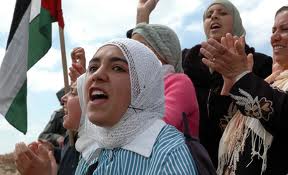
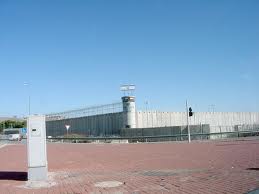
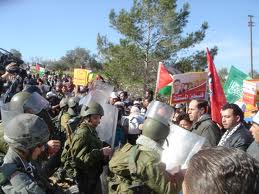
One of the flashpoints in Occupied Palestine in recent years has involved non-violent weekly protests against continued Israeli construction of a separation wall extending throughout the whole of the West Bank. A particularly active site for these protests has been the village of Bi’lin near the city of Ramallah, and it is here where the Israeli penchant to use deadly force to disrupt nonviolent demonstrations raises deep legal and moral concerns. These concerns are accentuated when it is realized that way back in 2004 the International Court of Justice (the highest judicial body in the UN System) in a rare near unanimous ruling declared the construction of the wall on occupied Palestinian territory to be unlawful, and reached findings ordering Israel to dismantle the wall and compensate Palestinians for the harm done. Israel has defied this ruling, and so the wall remains, and work continues on segments yet to be completed.


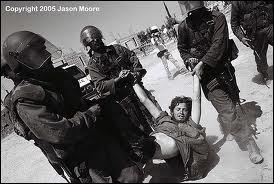
It is against this background that the world should take note of the shocking death of Jawaher Abu Rahma on the first day of 2011 as a result of suffocation resulting from tear gas inhalation while not even being part of the Bi’lin demonstration. Witnesses confirm that she was standing above the actual demonstration as an interested spectator. It was a large year end demonstration that included the participation of 350 Israeli and international activists. There was no excuse for the use of such a harsh method of disrupting a protest against a feature of the occupation that had been pronounced to be unlawful by an authoritative international body. As it happens the brother of Ms. Rahman had been killed a few months earlier by a tear gas canister fired with a high velocity from a close range. And there are many other reports of casualties caused by Israel’s extreme methods of crowd control. International activists have also been injured and harshly detained in the past, including the Irish Nobel Peace Laureate, Mairead Maguire. Together these deaths exhibit a general unacceptable Israeli disposition to use excessive force against Palestinians living under occupation. Just a day later an unarmed young Palestinian, Ahmed Maslamany, peacefully on his way to work was shot to death at a West Bank checkpoint because he failed to follow an instruction given in Hebrew, a language he did not understand.


When this lethal violence is directed against unarmed civilians seeking to uphold fundamental rights to land, routine mobility, and self-determination  it dramatizes just how lawless a state Israel has become and how justifiable and necessary is the growing world campaign of delegitimation centered upon the boycott, disvestment, and sanctions movement (BDS). Each instance of Israeli excessive and criminal violence inflicts suffering on innocent Palestinian civilians, but it also is a form of martyrdom in the nonviolent Legitimacy War that the Palestinians have been waging within Palestine and on the symbolic global battlefields of world public opinion with growing success.

Israel knows very well how to control unruly crowds with a minimum of violence. It has demonstrated this frequently by the way it gently deals, if it deals at all, with a variety of settler demonstrations that pose far greater threats to social peace than do these anti-wall demonstrations. It is impossible to separate this excessive use of force by Israel on the ground against Palestinians from the indiscriminate use of force against civilians in Israel’s larger occupation policy, as illustrated by the cruel punitive blockade that has been imposed on the people of Gaza for more than three years and by the criminal manner in which carried out attacks for three weeks on the defenseless population in Gaza exactly two years ago. Is it not time for the international community to step in and offer this long vulnerable Palestinian population protection against Israeli violence?

.

Underneath Israel’s reliance on excessive force as a matter of strategic doctrine are thinly disguised racist ideas: Israeli lives are worth many times the value of Palestinian lives and Palestinians, like all Arabs, only understand the language of force (an essentially genocidal idea launched influentially years ago in a notorious book The Arab Mind by Raphael Patai published in 1973. It is also part of a punitive approach to the occupation, especially in Gaza, where WikiLeaks cables confirm what was long suspected: “As part of their overall embargo plan against Gaza, Israeli officials have confirmed to [U.S, Embassy economic officers] on multiple occasions that they intend to keep the Gaza economy on the brink of collapse without quite pushing it over the edge.” (cable reported on Jan. 5, 2011, Norwegian daily) Then Prime Minister Ehud Olmert in a speech delivered in January 2008 said of the blockade: “We will not harm the supply of food for children, medecine for those who need it and fuel to save lives..But there is no justification for demanding we allow residents of Gaza to live normal live while shells and rockets are fired from their streets and courtyards (at southern Israel).”

This is a clear confession of collective punishment of a civilian population by Israel’s political leader at the time, violating the unconditional prohibition of Article 33 of the Fourth Geneva Convention. Such gross criminality should subject Israeli political leaders to international mechanisms designed to impose accountability on individuals responsible for the commission of crimes against humanity. It also makes it evident that the blockade is punitive, not responsive to cross-border violence that incidentally at all times was far more destructive of Palestinian lives and property than that of Israelis. Beyond this, the Hamas leadership in Gaza had since its election repeatedly attempted to establish a ceasefire along its border, which when agreed upon with the help of Egypt reduced casualties on both sides to almost zero after being establishment in mid-2008. This ceasefire was provocatively disrupted by Israel on November 5, 2008 to set the stage for launching of the massive attacks on Gaza, lasting for three weeks after being initiated on December 27th of 2008.

In that war, if such a one-sided conflict should be so described, the criminality of the tactics relied upon by the Israeli Defense Forces has been abundantly documented by The Goldstone Report, by a comprehensive fact-finding mission headed by John Dugard under the auspices of the Arab League, and by detailed reports issued by Amnesty International and Human Rights Watch. There is no reasonable basis for any longer doubting the substance of the allegations of criminality associated with those three weeks of all out attacks on the people and civilian infrastructure, including UN schools and buildings.

The Goldstone Report correctly noted that the overall impression left by the attacks was an extension of the Dahiya Doctrine attributed to an Israeli general during the Lebanon War 2006 in which the Israeli destruction from the air of a district in South Beirut was a deliberately excessive response, at the expense of civilian society, because of being an alleged Hezbollah stronghold, and in response to a border incident in which ten Israeli soldiers lost their lives in an encounter with Hezbollah combatants. The 2009 Goldstone report quoted IDF Northern Command Chief Gadi Eisenkot, who said, “What happened in the Dahiya quarter of Beirut in 2006 will happen in every village from which Israel is fired on. We will apply disproportionate force on it and cause great damage and destruction there. From our standpoint, these are not civilian villages, they are military bases. […] This is not a recommendation. This is a plan. And it has been approved.” In effect, the civilian infrastructure of adversaries such as Hamas or Hezbollah are treated as permissible military targets, which is not only an overt violation of the most elementary norms of the law of war and of universal morality, but an avowal of a doctrine of violence that needs to be called by its proper name: STATE TERRORISM.

We have reached a stage where the oppressiveness of the Israeli occupation, extending now for more than 43 years and maintained in multiple daily violations of international humanitarian law.  In its essence and by design the Israeli occupation of the West Bank, East Jerusalem, and the Gaza Strip should be understood and condemned as STATE TERRORISM as exhibited both in structure and practice.