


The exciting presence of protestors on Wall Street (and the spread of the #OccupyWallStreet protests across the country) is a welcome respite from years of passivity in America, not only in relation to the scandalous legal and illegal abuses of comprador capitalists, but also to the prolongations of wars in Iraq and Afghanistan, a shocking disregard of the impinging challenges of climate change, a rising Islamophobic tide at home, and a presidency that seems less willing to confront hedge fund managers than jobless masses. But will this encouraging presence be sustained in a manner that brings some hope of restored democracy and social wellbeing at home and responsible law-oriented leadership abroad?
There is little doubt that this move to the streets expresses a deep disillusionment with ordinary politics based on elections and governing institutions. Obama’s electoral victory in 2008 was the last hope of the young in America who poured unprecedented enthusiasm into his campaign that promised so much and delivered so little. Perhaps worse than Obama’s failure to deliver, was his refusal to fight, or even to bring into his entourage of advisors some voices of empathy and mildly progressive outlook. From his initial appointment of Rahm Emmanuel onwards, it was clear that the Obama presidency would be shaped by the old Washington games waged by special interests, as abetted by a Republican Party leaning ever further to the right, a surging Tea Party that is pushing the opposition to the outer extremes of irrational governance, and a Democratic Party that is trying to survive mainly by mimicking Republicans. If such a portrayal of ordinary politics is more or less correct it is a wonder that a more radical sense of America’s future took so long to materialize, or even to show these present signs of displeasure with what is and engagement with what might be.
For those of us with our eyes on the Middle East two observations follow. The extraordinary falling back from Obama’s speech in Cairo of 2009, which was, contrary to how it was spun by the pro-Israeli media, a very cautious approach to the Israel/Palestine conflict, but at least forward looking in its realization that something more had to be done if negotiations were ever to be more than a charade. The speech contained lots of reassurances for Israel, especially it treated the dispute as essentially territorial (withdrawal to 1967 borders, which deliberately pretends that refugee and exile rights of Palestinians are irrelevant to a just peace), and only seemed to project balance when it insisted on a suspension of settlement expansion as a confidence-building step toward a new cycle of negotiations. It really was a most modest request to insist that Israel temporarily stop expanding settlements that were almost unanimously seen as flagrant violations of Article 49(6) of the Fourth Geneva Convention and posing a real threat to the viability of an independent Palestinian state. When Israeli leaders and their zealous American backers indicated ‘no go,’ the Obama administration back peddled with accelerating speed, gradually isolating the United States on the global stage by the unconditionality of its support for Israel even in situations where Israel is seen by virtually the entire rest of the world as defiant toward international law. Besides this, a few months ago the leaked Palestine Papers underscored Israel’s disinterest in a negotiated solution to the conflict even in the face of Palestinian of huge Palestinian Authority concessions behind closed doors. Of course, Obama should not take the whole blame as Congress has outdone him when it comes to support for partisan positions that often seem to outdo the Knesset.
The latest phase in American foreign policy in relation to the conflict is associated with the American threat to veto the statehood bid of Palestine in the UN Security Council, coupled with its arm-twisting efforts to induce others to vote with the U.S. against statehood or at least abstain, so that Palestine will not get the nine affirmative votes it needs to receive a positive recommendation and the U.S. will be spared the embarrassment and backlash of casting a veto. The shrillness of the sterile call by Obama in his 2011 speech to the General Assembly to the parties to resume negotiations after almost twenty years of futility, and for the Palestinians the effects were far worse than mere failure (the ordeal of occupation, loss of land to settlements, annexation wall, road infrastructure). It should finally be understood. Time is not neutral. It helps Israel, hurts Palestine.
Disavowing American party and institutional politics and situating hope with the arousal of progressive forces in civil society is different from concluding that the Wall Street protests is more than a tantalizing flash in the pan at this stage. Even this cautionary commentary should make it obvious that the events owe their primary inspiration to Tahrir Square (with a surprising initial push from the Canadian anti-consumerist organization Adbusters, previous mainly known for its irreverent and vaguely anarchistic magazine by the same name), especially the ethos of a nonviolent leaderless, programless spontaneous rising that learns day by day what it is about, who it is, and what is possible. Of course, the stakes for activists are much lower than in Egypt or elsewhere in the Middle East, as there is little risk of death at this point on American streets. At the same time, the monsters of Wall Street are not quite as potent a unifying target for an militant opposition as was the grim personage of Hosni Mubarak, cruel autocrat of more than three decades, and so it may be harder to transform the protests into a sustainable movement.
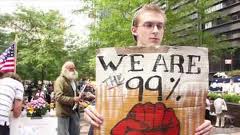
In the end, we must hope and engage. The beginnings of hope are rooted in the correctness of analysis, and so we can be thankful that this initiative places its focus on financial and corporate structures, and not on the state. Further along these lines, if the struggle will gain momentum it will be totally thanks to politics-from-below. The implicit not so subtle point is that the center of power over the destinies of the American people has shifted its locus from Washington to New York, and from the penthouse to the the basement!! We’ll see!!

 Global Justice in the 21st Century
Palestinian Hunger Strikers: Fighting Ingrained Duplicity
12 MayThe article below was written jointly by Noura Erakat and myself, and was posted on the Jadaliyya website on May 11, 2012
On his seventy-third day of hunger strike, Thaer Halahleh was vomiting blood and bleeding from his lips and gums, while his body weighs in at 121 pounds—a fraction of its pre-hunger strike size. The thirty-three-year-old Palestinian follows the still-palpable footsteps of Adnan Khader and Hana Shalabi, whose hunger strikes resulted in release. He also stands alongside Bilal Diab, who is also entering his seventy-third day of visceral protest. Together, they inspired nearly 2,500 Palestinian political prisoners to go on hunger strike in protest of Israel’s policy of indefinite detention without charge or trial.
Administrative detention has constituted a core of Israel’s 1,500 occupation laws that apply to Palestinians only, and which are not subject to any type of civilian or public review. Derived from British Mandate laws, administrative detention permits Israeli Forces to arrest Palestinians for up to six months without charge or trial, and without any show of incriminating evidence. Such detention orders can be renewed indefinitely, each time for another six-month term.
Ayed Dudeen is one of the longest-serving administrative detainees in Israeli captivity. First arrested in October 2007, Israeli officials renewed his detention thirty times without charge or trial. After languishing in a prison cell for nearly four years without due process, prison authorities released him in August 2011, only to re-arrest him two weeks later. His wife Amal no longer tells their six children that their father is coming home, because, in her words, “I do not want to give them false hope anymore, I just hope that this nightmare will go away.”
Twenty percent of the Palestinian population of the Occupied Palestinian Territories have at one point been held under administrative detention by Israeli forces. Israel argues these policies are necessary to ensure the security of its Jewish citizens, including those unlawfully resident in settlements surrounding Jerusalem, Area C, and the Jordan Valley—in flagrant contravention of the Fourth Geneva Convention‘s Article 49(6), which explicitly prohibits the transfer of one’s civilian population to the territory it occupies.
The mass hunger strike threatens to demolish the formidable narratives of national security long propagated by Israeli authorities. In its most recent session, the United Nation’s Committee for the Elimination of Racial Discrimination concluded that Israel’s policy of administrative detention is not justifiable as a security imperative, but instead represents the existence of two laws for two peoples in a single land. The Committee went on to state that such policies amount to arbitrary detention and contravene Article 3 of the Convention on the Elimination of All Forms of Racial Discrimination, which prohibits “racial segregation and apartheid.” Nevertheless, this apartheid policy has so far escaped the global condemnation it deserves. In general, Palestinian grievances are consistently evaded with the help of media bias that accords faint coverage to signs of resistance, including even this extraordinary non-violent movement mounted by Palestinian victims of institutionalized state abuse.
Although there has not been a principled or total abandonment of armed struggle by Palestinians living under occupation, there has been a notable and dramatic shift in emphasis to the tactics of nonviolence. For yearsliberal commentators in the West have been urging the Palestinians to make such a shift, partly for pragmatic reasons. Even President Obama echoed this suggestion in his 2009 Cairo address when he said,
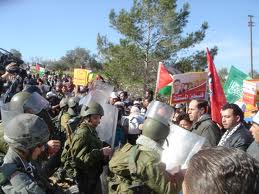
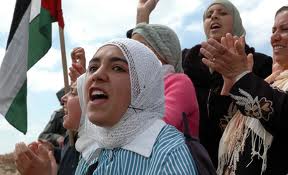
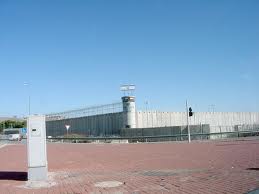
But when Palestinians act in this recommended manner, the West averts its gaze and Israel responds with cynical disregard, dismissing near-death Palestinian hunger strikers as publicity stunts or cheap tricks to free themselves from imprisonment. Today, Palestinians have epitomized the best of American values that reflect the global history of non-violent resistance, as they wage a mass hunger strike, engage in a global boycott, divestment, and sanctions (BDS) movement against Israeli Apartheid, and risk their bodies on a weekly basis in peaceful protests against the Annexation Wall. The latter continues to expand its devastating encroachment upon and around Palestinian lands in defiance of a near unanimous Advisory Opinion of the International Court of Justice as well as countless Security Council Resolutions.
Yet, this America chooses to label the hunger strikers’ prison guards, the architects of racist laws and policies, as well as the engineers of the Apartheid Wall, as the sole and exemplary democracy in the Middle East. Rather than condemn Israel’s colonial practices, which constitute the core of Arab grievances and explain the widespread resentment of the US role in the Middle East, a US Congressional House panel has just now approved nearly one billion US dollars in additional military assistance to augment Israel’s anti-missile defense program. If passed, Israel will receive a record amount of four billion dollars in military aid next year—more than any country in the world.
There is a stark contrast between the round-the-clock coverage given to Chen Guangchen, the blind Chinese human rights activist who escaped from house arrest to the safety of the US Embassy, and the scant notice given this unprecedented Palestinian challenge to the Israeli prison system that is subjecting the protesters to severe health risks, even death. What is more, such hunger strikes are part of a broader Palestinian reliance on a powerful symbolic appeal to the conscience of humanity in their quest for long-denied rights under international law. Said deprivations include a disavowal of a peace process that has gone nowhere for decades, while a pattern of settlement expansion has made any realization of the widely endorsed “two-state solution” increasingly implausible. The prolonged nature of the occupation also steadily transforms what was supposed to be a temporary occupation into a permanent arrangement best understood as a mixture of annexation and apartheid.
In the face of this opportunity to place pressure upon Israel to comply with international law and human rights norms, the international community of governments and inter-governmental institutions has been grotesquely silent as Palestinians place their very lives at sacrificial risk. For its part, the United Nations’ most senior officials said nothing until a group of forty young protesters blocked the entrance of UN offices in Ramallah on 8 May, demanding the issuance of a statement on behalf of the hunger striking prisoners. Together with the help of a global social media campaign to trend #UNclosed, UN Secretary-General Ban Ki-Moon and UNRWA’s director Filippo Grandi have finally issued statements expressing deep concern. Grandi has gone the farthest to urge that Israel either provide trials for the detainees or release them, though his statement has been conspicuously removed from the Agency’s website.
It is hard to deny the irony of tacit approval, at worst, or timid condemnation, at best, in the United Nations, the United States, or elsewhere. In its 2008 Boumedienne decision, the US Supreme Court declared that (arguably) the world’s most villainous and immoral persons are entitled to habeas corpus review in US courts in order to avoid the cruelty of indefinite detention. Yet, Israel’s policy of detaining indigenous Palestinians who inhabit the lands the State seeks to confiscate and settle for more than four decades has denied those Palestinians exactly such legal protection. What are Palestinians to do in the face of such frustrating circumstances? What message does the lack of international support for their strong displays of nonviolence, self-sacrifice, and personal bravery send to them and to their Arab and Muslim counterparts who are once more exposed to blatant US hypocrisy in the region?
Palestinian civil society is now mainly opting for explicit acts of collective nonviolent resistance to register their dissatisfactions with the failures of the United Nations—or inter-governmental diplomacy in general—to produce a sustainable peace that reflects Palestinian rights under international law. The main expression of this embrace of nonviolence is the adoption of tactics used so successfully by the anti-Apartheid campaign to change the political climate in racist South Africa, yielding a nonviolent path to multiracial constitutional democracy. At the present time the growing BDS movement is working to achieve similar results.
Let us recall that successful global nonviolent movements are not restricted to fasts and marches, but include the boycott, non-cooperation, and civil disobedience tactics deployed by Palestinians today. Though President Obama, encumbered as he may be by a domestic election cycle, may feel compelled to ignore Palestinian responses to his call, the rest of the world should not. Certainly, US-based and global citizens should demand that the Western media begin to act responsibly when dealing with injustices inflicted on the Palestinian people, and not sheepishly report human rights abuses only when committed by the adversaries of their state. The media itself is a tactical target and a residual problem. In solidarity with the hunger strikers, civic allies should address the institutional edifice upholding administrative detention. It extends from a discriminatory core and therefore its requisite treatment includes ensuring the enjoyment of internationally guaranteed rights; rights enshrined by the BDS call to action and reified by the movement’s steady and deliberate progression.
Tags: Fourth Geneva Convention, Hunger strike, Israel, Palestinian people, Palestinian prisoners in Israel, Palestinian territories, Richard Falk, West Bank