
Personal Prelude
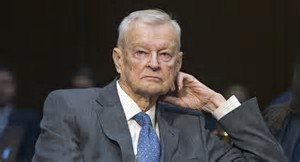
I never knew Zbigniew Brzezinski well, and was certainly not a friend, hardly an acquaintance, but we interacted on several occasions, directly and indirectly. We were both members of the Editorial Board of Foreign Policy magazine founded in 1970 during its early years, which featured lively meetings every few months at the home of the founding co-Chair, a liberal banker named Warren Damien Manshel (the other founding co-Chair was his Harvard friend from graduate school, Samuel Huntington). I was a kind of outlier at these meetings, which featured several editors who made no secret of their ambition to be soon chosen by political leaders to serve at the highest levels of government. Other than Zbig the editor who flaunted his ambition most unabashedly was Richard Holbrook; Joseph Nye should be included among the Washington aspirants, although he was far more discreet about displaying such goals.
In these years, Zbig was a Cold War hawk. I came to a lecture he gave at Princeton, and to my surprise while sitting quietly near the front of the lecture hall, Zbig started his talk by saying words to the effect, “I notice that Professor Falk is in the audience, and know that he regards me as a war criminal.” This was a gratuitous remark as I had never made such an accusation, although I also never hid my disagreements with Brzezinski’s anti-Soviet militancy that seemed unduly confrontational and dangerous. Indicative of this outlook, I recall a joke told by Zbig at the time: a general in Poland was asked by the political leader when the country came under attack from both Germany in the East and the Soviet Union in the West, which front he preferred to be assigned. He responded “Germany—duty before pleasure.”
In these years Zbig rose to prominence as the intellectual architect and Executive Director who together with David Rockefeller established The Trilateral Commission in 1973. The Trilateral Commission (North America, Western Europe, and Japan) was best understood as a global capitalist response to the Third World challenge being mounted in the early 1970s with the principal goal of establishing a new international economic order. Brzezinski promoted the idea that it was important to aggregate the capitalist democracies in Europe along with Japan in a trilateral arrangement that could develop a common front on questions of political economy. On the Commission was an obscure Georgia governor, Jimmy Carter, who seemed handpicked by this elite constellation of forces to be the Democratic Party’s candidate for president in 1976. It was natural for Brzezinski to be a foreign policy advisor to Carter during his campaign and then to be chosen as National Security Advisor (1977-1981) by President Carter.
My most significant contact with Brzezinski related to Iran Revolution during its last phases. In January of 1979 I accompanied Ramsey Clark and Philip Luce on what can best be described as a fact-finding visit in the last phases of the revolutionary ferment in the country. Toward the end of our time in Iran we paid a visit to the American Embassy to meet with Ambassador William Sullivan who understood that revolution was on the cusp of success and the Shah’s government was on the verge of collapse. What he told us was that the White House rejected his efforts to convey this unfolding reality, blaming Brzezinski for being stubbornly committed to saving the Shah’s regime, suggesting that Brzezinski’s friendship with the influential Iranian ambassador in Washington, Ardeshir Zahedi, apparently blinded him to the realities unfolding in Iran. It should be noted that Sullivan was no shrinking violent. Sullivan had a deserved reputation as an unrepentant counterinsurgency diplomat, who General Westmoreland once characterized as more of a field marshal than a diplomat, given his belligerent use of the American embassy in Laos to carry out bombing attacks in the so-called ‘secret war.’
Less than a year later I was asked to accompany Andrew Young to Iran with the hope of securing the release of the Americans being held hostage in the embassy in Tehran. The mission was planned in response to Ayatollah Khomeini’s hint that he would favor negotiating the release of the hostages if the U.S. Government sent an African American to conduct the negotiations. Young, former ambassador to the UN, was the natural choice for such an assignment, but was only willing to go if the White House gave a green light, which was never given, and the mission cancelled. At the time, the head of the Iran desk in the State Department told me privately that “Brzezinski would rather see the hostages held forever than see Andy Young get credit for their release.” Of course, I have no way of knowing whether this was a fair statement or not, although this career bureaucrat spoke of his frustrating relationship with Brzezinski. Of course, there was never an assurance that if such a mission had been allowed to go forward, it would have been successful, but even in retrospect it seemed to warrant a try, and might have led to an entirely different U.S./Iran relationship than what has ensued over the past 38 years.
While attending a conference on human rights at the Carter Center a decade later, I had the good fortune to sit next to President Carter at dinner, and seized the opportunity to ask him about his Iran policy, and specifically why he accepted the resignation of Cyrus Vance who sought a more moderate response to Iran than was favored by Brzezinski. Carter responded by explaining that “Zbig was loyal, while Vance was not,” which evaded the question as to which approach might have proved more effective and in the end beneficial. It should be remembered, as was very much known in Tehran, that Brzezinski was instrumental in persuading Carter to call the Shah to congratulate him on his show of toughness when Iranian forces shot and killed unarmed demonstrators in Jaleh Square in an atrocity labeled ‘bloody Friday,” and seen by many in Iran as epitomizing the Shah’s approach to security and the Iranian citizenry.
Brzezinski versus Kissinger
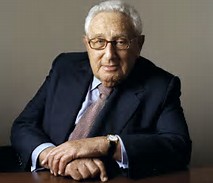
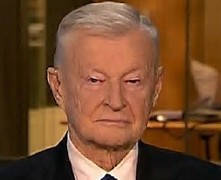
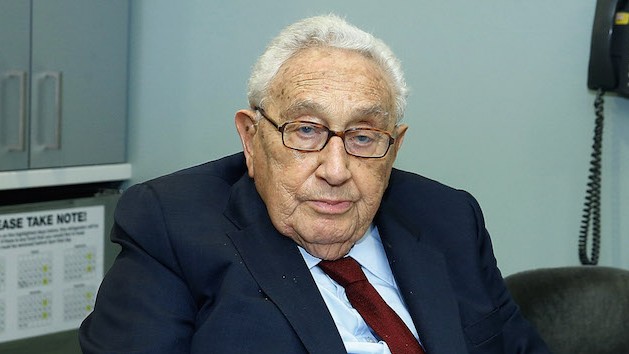
It is against this background that I take note of Zbigniew Brzezinski’s death at the age of 89 by finding myself much more favorable to his role as foreign policy and world order commentator in recent years than to my earlier experiences during the Cold War and Iranian Revolution. It is natural to compare Brzezinski with Henry Kissinger, the other foreign-born academic who rose to the top of the foreign policy pyramid in the United States by way of the Council on Foreign Relations and the American establishment. Kissinger was less eager than Brzezinski to defeat the Soviet Union than to create a stable balance, and even went so far as to anger the precursors of the alt-right by supporting détente and arms control during the Nixon years. Somehow, Kissinger managed to transcend all the ideological confusion in the United States to be still in 2017 to be courted and lionized by Democrats, including Hilary Clinton, and Republicans, including Trump. Despite being frequently wrong on key foreign policy issues Kissinger is treated as an iconic figure who was astonishingly able to impart nonpartisan wisdom on the American role in the world despite the highly polarized national scene. Brzezinski never attained this status, and maybe never tried. Despite this unique position of eminence, Kissinger’s extensive writings on global trends in recent years never managed to grasp the emerging complexity and originality of world order after the collapse of the Soviet Union. His line of vision was confined to what could be observed by looking through a neo-Westphalian prism. From this perspective Kissinger has been obsessed with China’s rise and how to reach a geopolitical accommodation with this new superpower so that a new statist balance of power with a global scope takes hold.
Post-Cold War Geopolitics: A Eurasian Scenario
In my view, late Brzezinski developed a more sophisticated and illuminating understanding of the post-Cold War world than did Kissinger. While being sensitive to the importance of incorporating China in ways that were mutually beneficial, Brzezinski was also centrally focused on the non-geopolitical features of world affairs in the 21st century, as well as on the non-statist dimensions of geopolitics. In this regard, Brzezinski was convinced that the future world order would be determined by the outcome of competition among states for the control Eurasia, and that it was crucial for American political efforts to be calibrated to sustain its leadership role in this central arena of great power rivalry.
Brzezinski also appreciated that economic globalization was giving market forces a heightened significance that could not be adequately represented by continuing to rely on a state-centric frame of reference in crafting foreign policy. Brzezinski also recognized that a new political consciousness had arisen in the world that he associated with a global awakening that followed the collapse of European colonialism, and made the projection of hard power by the West much more problematic than in the past. This meant that the West must accept the need for consensual relations with the non-West, greater attentiveness to the interests of humanity, and an abandonment of hegemonic patterns of interaction, especially associated with military intervention. He also recognized the importance of emerging challenges of global scope, including climate change and global poverty, which could only be addressed by cooperative arrangements and collective action.
Late Brzezinski Foreign Policy Positions
What impressed me the most about the late Brzezinski was his clarity about three central issues of American foreign policy. I will mention them only briefly as a serious discussion would extend this essay well beyond a normal reader’s patience. (1) Perhaps, most importantly, Brzezinski’s refusal to embrace the war paradigm adopted by George W. Bush after 9/11 terrorism, regarding ‘the war on terror’ as a dysfunctional over-reaction; in this regard he weighted more highly the geopolitical dimensions of grand strategy, and refused to regard ‘terrorism’ as a strategic threat to American security. He summed up his dissenting view in a conversation on March 17, 2017 with Rachel Maddow as follows, “Yes, ISIS is a threat. It’s more than a nuisance. It’s also in many respects criminal violence. But it isn’t in my view, a central strategic issue facing humanity.” Elsewhere, he make clear that the American over-reaction to 9/11 handed Osama Bin Laden a major tactical victory, and diverted U.S. attention from other more pressing security and political challenges and opportunities.
(2) Brzezinski was perceptively opposed to the Iraq attack of 2003, defying the Beltway consensus at the time. He along with Brent Scowcroft, and a few others, were deemed ‘courageous’ for their stand at the time, although to many of us of outside of Washington it seemed common sense not to repeat the counterinsurgency and state building failures oaf Vietnam in Iraq. I have long felt that this kind of assertion gives a strange and unfortunate meaning to the idea of courage, making it seem as if one is taking a dangerous risk in the Washington policy community if espousing a view that goes against the consensus of the moment. The implication is that it takes courage to stand up for beliefs and values, a sorry conclusion for a democracy, and indicative of the pressure on those with government ambitions to suppress dissident views.
(3) Unlike so many foreign policy wonks, Brzezinski pressed for a balanced solution to the Israel/Palestine conflict, acknowledging, what so many advocates of the special relationship deny, that the continuation of the conflict is harmful to American wider interests in the region and is a major, perhaps a decisive, source of instability in the Middle East. In his words, “This conflict poisons the atmosphere of the Middle East, contributes to Muslim extremism, and is directly damaging to American interests.” [Strategic Vision, 124] As Jeremy Hammond and Rashid Khalidi, among others, have demonstrated is that the U.S. Government has actually facilitated the Israeli reluctance to achieve a sustainable peace, and at the same time denied linkage between the persistence of the conflict and American national interests.[See analysis of Nathan Thrall (https://www.theguardian.com/world/2017/may/16/the-real-reason-the-israel-palestine-peace-process-always-fails)].
I had not been very familiar with Brzezinski later views as expounded in several books: The Grand Chessboard: American Primacy and Geopolitical Imperatives (1997, reprinted with epilogue, 2012); (with Brent Scowcroft, America and the World: Conversations on the Future of American Foreign Policy (2009); Strategic Vision: America and the Crisis of Global Power (2012).
When it comes to Brzezinski’s legacy, I believe it to be mixed. He was a brilliant practitioner, always able to present his views lucidly, forcefully, and with a catchy quality of coherence. In my view, his Cold War outlook was driven toward unacceptable extremes by his anti-Soviet preoccupations. I believe he served President Carter poorly when it came to Iran, especially in fashioning a response to the anti-Shah revolutionary movement. After the Cold War he seemed more prudent and sensible, especially in the last twenty years, when his perceptions of world order were far more illuminating than those of Kissinger, his geopolitical other.

 Global Justice in the 21st Century
Failing the people of Syria during Seven Years of Devastation and Dispossession
13 NovFailing the people of Syria during Seven Years of Devastation and Dispossession
[Prefatory Note: What follows is a wide-ranging interview in November 2017 that that concentrates on the failure of the UN and the world to rescue the people of Syria by a timely and effective humanitarian intervention. The interview was conducted by a Turkish journalist, Salva Amor, and is to be published in a magazine, Causcasus International. The text of the interview has been slightly modified.]
A missed chance
What turned such an Ideal case for humanitarian intervention into one of the worst humanitarian responses we have seen in recent times?
Answer: I do not recall this reference to Syria as ‘an ideal case,’ but I must have meant it in a hypothetical sense, that is, as if ‘humanitarian intervention’ was ever called for, it was in Syria, especially at the early stages of the conflict. And yet I am inclined to think that regime-changing intervention was at all stages a mission impossible. We should keep in mind that the record of actual successful instances of what is labeled as ‘humanitarian intervention’ has been dismal, and when successful the motivation was not predominantly humanitarian, but rather a confluence of strategic interests of one sort or another with a humanitarian challenge. In Syria the strategic interests were not sufficiently strong to justify the likely costs, especially in the wake of Iraq and Afghanistan.
Sometimes, the intervention is a cover for non-humanitarian goals, as in Afghanistan (2002), Iraq (2003), and Libya (2011) and may be effective in attaining its immediate goals of regime change but is extremely costly from the perspective of humanitarianism if assessed from the perspective of prolonged violence, societal chaos, and human suffering.
And only marginally successful strategically given the resilience of territorial resistance and the pressure for long-term occupation if the original gains of intervention are to be preserved.
At other times, the humanitarian rationale is present, as in Syria, but there is no strategic justification of sufficient weight, and what is done by external actors or the UN is insufficient to control the outcome, and often ends up intensifying the scale of suffering endured by the population. In effect, humanitarian intervention rarely achieves a net benefit from the perspective of the population that is being supposedly rescued. Perhaps, Kosovo (1999) is the best recent case where an alleged humanitarian intervention enjoyed enough strategic value to be effective, and yet seems to have left the Kosovar population better off afterwards, although even Kosovo is not a clear case.
Failures & implications of inaction
Could the surge of refugees fleeing to Europe have been avoided had a more positive and organized humanitarian intervention taken place?
Answer: It is possible that had Syria possessed large oil reserves, the intervention against the Damascus regime would have been robust enough to topple the regime, and create stability before combat conditions prompted massive internal population displacements and gigantic refugee flows, including the European influx. In this sense, Libya with oil, did prompt such an intervention, although it was an easier undertaking, as the Qaddafi regime had much less popular support than did the Assad regime, and was less well equipped militarily and lacked regional allies. In Syria, because of regional and global geopolitical cleavages, the politics of intervention and counter-intervention was far more complicated, and inhibited potential anti-regime interveners from making large commitments. At the early stages of the conflict Turkey and the United States miscalculated the costs and scale of a successful intervention in Syria, supposing that an indirect and low level effort could be effective in achieving regime change, which misunderstood the conditions prevailing in Syria.
The best response
Answer: As my earlier responses hinted, there is no ideal response, and the current world order system is not reliably capable of handling humanitarian intervention in a situation such as existed in Syria. To have any chance of effectiveness would require entrusting the undertaking to one or more powerful states, but even then the situation that would follow, is highly uncertain. In a post-colonial setting, there is bound to be strong nationalist and territorial resistance to outside intervention and occupation, generally producing serious prolonged chaos. If the country is very small and can be overwhelmed (Granada, Panama) without counter-intervention the undertaking will sometimes work. Iraq serves as a clear example of an intervention that did rid the country of a brutal tyrant, but produced internal violence among competing regions, tribes, and generated extreme sectarian strife between Sunnis and Shiites, as well as a series of ethnic, tribal, and regional battles.
In a better governed world, which is far from existing, the UN would have acted robustly and with the support of the regional governments in the Middle East, the geopolitical actors (U.S. and Russia) would have not pursued their strategic agendas, and a politically neutral intervention would have created the conditions for a post-Assad democratic political transition, including imposing accountability for past crimes. Merely mentioning this desirable scenario is enough to reveal its utopian character. Especially in the Middle East, geopolitics of a regional and global scope badly distort all efforts to fashion a humanitarian response to repression and severe violations of human rights. In the background, but not far in the background, is the relevance of oil. The countries that have experienced massive interventions (Iraq, Libya) possessed abundant oil reserves, while those that have little or no oil have either been ignored or endured prolonged bloody conflict, of which Syria is the worst case, having become the scene of competing and offsetting interventions motivated by political and strategic ambitions with only a thin propaganda rationale associated with alleviating a humanitarian crisis, which at best, was a much subordinated goal of the interveners on both sides.
Lessons for Future
4a. How can the world learn from the humanitarian failures and inaction that occurred in Syria for the past 7 years? What opportunities to protect, defend or support the Syrian people have we missed?
Answer: In my view, it is a mistake to speak of ‘inaction’ in the Syrian context. There have been massive interventions of all sorts on both sides of the conflict by a variety of actors, but none decisive enough to end the conflict, and none primarily motivated by humanitarian concerns. Of course, here and there, lives could have been saved, especially if the balance of forces within Syria had been better understood at an early stage of the conflict in the West. What intervention achieved in Syria was largely a matter of magnifying the conflict, and attendant suffering. The conflict itself was surrounded by contradictory propaganda claims making the reality difficult to perceive by the public, and therefore there was political resistance to more explicit and possibly more effective regime changing intervention.
Indifference:
4b. Is there any correlation between the rise of Islamophobia and the world’s inaction towards Syrian people’s suffering? Has the ongoing drumming of hatred towards the Islamic religion created a generation of indifference towards those of them who are suffering? Or is such wide indifference a natural response to such overwhelming humanitarian crisis?
Answer: The indifference in relation to Syria is mainly a matter of public confusion and distrust. Confusion about the nature of the conflict and distrust as to the motives of political actors that have intervened on either side. The spike in Islamophobia is attributable to the interplay of the European refugee crisis and the occurrence of terrorist incidents that are perpetrated by ISIS and its supporters. Of course, the massive refugee flow was prompted by the violence in the Syrian combat zones, which has made Europe most interested in resolving the conflict even if meant allowing a criminal regime to remain in power.
I suppose that the indifference noted in your question is more evident in relation to the plight of the Rohingya people in Myanmar that in response to Syria where, as I have been suggesting, the political context dominates the human suffering, and the Islamic identity of the victimized people is secondary. Also, it is worth recalling the global indifference to genocide in Rwanda (1994) that could have prevented,
or at least minimized, by a timely, and relatively small scale intervention. And on occasion, if the strategic context is supportive, the West will intervene on the Islamic side as in Bosnia and Kosovo in the 1990s, and there in opposition to the Christian side.
Answer: I suppose the basic justification for this behavior is that from the viewpoint of the UN the Damascus regime remains the legitimate government of Syria representing the country at the UN. This is of course a legalistic justification, and evades the real humanitarian crisis as well as the crimes of Assad’s regime. So far, because there is a geopolitical standoff, regionally (Iran v. Saudi Arabia) and globally (Russia v. the U.S. and Turkey), the UN has tried to remain aloof from the ambit of political controversy to the extent possible while doing what it can to alleviate human suffering. I am not knowledgeable about whether the UN aid is reaching the civilian population as claimed. The language of your question suggests that there should be some mechanism for disqualifying a government that commits repeated crimes against its own people from being treated by the UN as a normal member state, but this is not likely to happen anytime soon, and it is tricky as the UN System is built around state-centric ideas of world order.
The right to torture
Answer: I took part recently in a ceremony in Nuremberg Germany that awarded a human rights prize to the photographer, whose identity is kept secret for his safety, responsible for the Caesar Report containing photographic images of Syrian prison torture of some 11,000 prisoners, most of whom are reportedly now dead. There is no question that these images are horrifying, but serious issues have been raised as to the authenticity of this photographic archive. It has been authenticated as genuine by Human Rights Watch, but has also been used by persons closely connected with the U.S. Government to build a case for war crimes prosecutions, particularly against Bashar al Assad. I am not in a position to assess the controversy, yet do not doubt that the Damascus regime has committed many atrocities and are responsible for the great majority of civilian deaths over the course of the last six years in Syria. At the same time the anti-regime forces, which are fragmented, have also committed many war crimes.
These issues of criminal accountability cannot be reliably answered from a distance, or merely on the basis of media reports. What is required is a credible international fact finding commission of inquiry with adequate access to whatever evidence and witnesses remain available.
Answer: The Responsibility to Protect (R2P) UN norm is interpreted and practice is governed by the UN Security Council, and hence is completely subordinated to the manipulations of geopolitics. In this regard, the lesser humanitarian hazard in Libya led to a UN regime-changing mission because the Permanent Members opposed to intervention (China, Russia) were persuaded not to cast their veto for what was being proposed, which was a limited humanitarian mission to protect the then entrapped civilian population of Benghazi. In fact, the NATO undertaking expanded the mission far beyond the Security Council mandate from its inception, angering Russia and China that had abstained out of deference to pleas relating to the humanitarian claims put forward by the NATO members of the Security Council. They later justified their opposition to a more pro-active UN role in Syria by reference to this failure of trust, the unwillingness of the intervening states to respect the limits of the mandate.
What is important to appreciate is that R2P and other UN undertakings must adhere to the constraints of geopolitics. As disturbing as inaction with respect to Syria, is the UN silence with regard to the abuse of the civilian populations of Gaza and Rakhine (Myanmar). It is only when a geopolitical consensus exists, which is quite rare (e.g. failure with respect to Yemen) that it is possible for the UN to play an important humanitarian role in shaping behavior and protecting civilians.
Answer: Part of my response here has already been given in relation to the prior question. I would only add here that the abolition of the veto would be a crucial step, or even an agreement among permanent members of the Security Council to refrain from casting a veto in humanitarian contexts such as Syria. The problem is that the veto powers are extremely unlikely to give up their right of veto, partly because such states do not voluntarily give up power and partly because humanitarian issues are almost always inseparable from diverse and often antagonist geopolitical interests, and therefore the claims are not perceived as humanitarian. This is certainly the case with regard to Syria. The take away conclusion is that the international system as it now functions is rarely motivated by humanitarian considerations when they come into conflict with the strong political preferences and strategic priorities of principal states, and this is true even when the humanitarian crisis is as severe and prolonged as in Syria.
The most constructive response, in view of these realities, is to advocate global reform, but this will not happen without a major mobilization of people throughout the world or as a frantic response to some earth-shaking catastrophe.
Answer: Yes, there was much criticism of Russia for blocking action on Syria, but Russia was acting in accord with the constitutional structure of the UN. The U.S. uses its veto in a comparable way to protect Israel and other allies, and equally irresponsibly, from a moral or humanitarian point of view. It should be remembered that the League of Nations fell apart because major states would not participate, including the United States. The idea of the veto was designed to persuade all major states to participate, with the goal of universality of membership, but at the cost of engendering paralysis and irresponsible obstructions to action whenever veto powers disagree sharply. Your questions raise the crucial issue if this was too high a price to pay for the sake of maintaining universality of participation. One consequence of this tradeoff between geopolitics and effectiveness is to weaken public respect for the UN as an agency for the promotion of justice and decency in global affairs.
As specified in Article 108 of the UN Charter requires the approval of 2/3rds of the entire membership of the UN as well as all five Permanent Members of the Security Council, which means that it will not happen in the foreseeable future in relation to any politically sensitive issue. When World War II ended there was the hope and illusion that countries that cooperated against fascism would continue to cooperate to maintain the peace. As should have been anticipated, it was a forlorn hope.
Answer: Your comment on ISIS is a way of expressing my view that these issues are dominated by geopolitical calculations. ISIS as horrible as it is has not been nearly as responsible for the quality and quantity of suffering inflicted upon the Syrian people by the Damascus regime.
At this point, and given the unavailability of humanitarian intervention, the best Plan B for Syria is to seek a sustainable ceasefire, and this would undoubtedly require making some unpalatable compromises, including the possible retention of Assad as head of state. After all, there are many heads of state with much blood on their hands, and yet their legitimacy as rulers is essentially unchallenged. The way the world is organized makes it unable to impose criminal responsibility on the leaders of sovereign states except in special circumstances of total victory as in World War II, or more recently, in relation to the criminal prosecutions of Saddam Hussein and Milosevic, particular enemies of the West.
Answer: Yes, this is certainly a perceptive observation. When the issue is fairly large scale and internal, and where Muslims are the victims, any effort to intervene is bound to be feeble, at best, which it was in the early stages of 2011-2013 when Turkey and the U.S. cooperated in supporting Friends of Syria, which was mistakenly thought capable of shifting the balance sufficiently in Syria to produce the collapse of the Damascus regime. When that failed, it became obvious that the costs of an effective intervention were viewed in the West as too high and dangerous. Considering the Iranian and Russian alignments with the Syrian government doomed an anti-Damascus intervention.
And as you suggest, the West views ISIS as dangerous enemy, and is prepared to take bigger risks and bear higher costs because Western homeland security is at stake. ISIS is a proclaimed enemy of the West that is perceived as responsible for violent acts, Syria is not, being regarded, at most, as an unattractive regime, partly because in the past, hostile toward Israel. Taking account of these circumstances, the political realist seeks a ceasefire in Syria while going all out to achieve the destruction of ISIS.
Answer: From my earlier responses I am skeptical about what can be done beyond the obvious: give up any hope of securing support for an R2P mandate to protect the Syrian people, and pursue a ceasefire so as to end the suffering. This is not justice, but it may at least spare the Syrian people further trauma and bloodshed.
What the Syrian tragedy and ordeal reveals vividly is the inability of the international community, as now organized, to deal with a humanitarian crisis unless a geopolitical consensus is present in a relatively strong form, regionally and globally. Such a consensus is not even enough if the difficulties of intervention are seen as producing heavy casualties for the intervening side and would impose burdens of a prolonged occupation to achieve post-intervention political order and security.
Europe would benefit at this time from a Syrian ceasefire and the restoration of political normalcy. It would undoubtedly reduce the pressure on European countries created by the Syrian refugee flow, which has given right wing political parties their greatest strength and largest level of popular support since the end of World War II.
Tags: geopolitics, Humanitarian intervention, R2P, regional geopolitics, Syria, UN failure, UN Reform, world order deficiencies