Tag Archives: George W. Bush

Kuala Lumpur War Crimes Tribunal: Bush and Blair Guilty

29 Nov

This post is modified version of a text published by Al Jazeera a few days ago. It is a sequel to the piece entitled “Toward a Jurisprudence of Conscience,” and will be followed by an assessment of the Russell Tribunal on Palestine session in Cape Town, South Africa investigating the allegations that Israel is guilty of imposing apartheid on the Palestinian people, considered by the Rome Treaty framework of the International Criminal Court to be a crime against humanity.

***************


Criminal Justice in Kuala Lumpur


            In Kuala Lumpur, after two years of investigation by the Kuala Lumpur War Crimes Commission (KLWCC), a tribunal (Kuala Lumpur War Crimes Tribunal or KLWCT) consisting of five judges with judicial and academic backgrounds reached a unanimous verdict that found George W. Bush and Tony Blair guilty of crimes against peace, crimes against humanity, and genocide as a result of initiating the Iraq War in 2003, and in the course of maintaining the subsequent occupation. The proceedings took place over a four day period from November 19-22, and included an opportunity for court appointed defense counsel to offer the tribunal arguments and evidence on behalf of the absent defendants who had been invited to offer their own defense or send a representative, but declined to do so. The prosecution team was headed by two prominent legal personalities with strong professional legal credentials: Gurdeal Singh Nijar and Francis Boyle. The verdict issued on November 22, 2011 happens to coincide with the 48th anniversary of the assassination of John F. Kennedy.


            The tribunal acknowledged that its verdict was not enforceable in a normal manner associated with a criminal court operating within a sovereign state or as constituted by international agreement as is the case with the International Criminal Court or by acts of the United Nations as occurred in the establishment of the ad hoc International Criminal Tribunal for former Yugoslavia. But the KLWCT by following a juridical procedure purported to be operating in a legally responsible manner, which would endow its findings and recommendations with a legal weight that seems expected to extend beyond a moral condemnation of the defendants, but in a manner that is not entirely evident.


            The KLWCT added two ‘Orders’ to its verdict that had been adopted in accordance with the charter of the KLWCC that controlled the operating framework of the tribunal: 1) Report the findings of guilt of the two accused former heads of state to the International Criminal Court in The Hague; 2) Enter the names of Bush and Blair in the Register of War Criminals maintained by the KLWCC.


            The tribunal these Orders by adding recommendations to its verdict: 1) Report findings in accord with Part VI (calling for future accountability) of the Nuremberg Judgment of 1945 addressing crimes of surviving political and military leaders of Nazi Germany; 2) File reports of genocide and crimes against humanity at the International Criminal Court in The Hague; 3) Approach the UN General Assembly to pass a resolution demanding that the United States end its occupation of Iraq; 4) Communicate the findings of the tribunal to all members of the Rome Statute (governing the International Criminal Court) and to all states asserting Universal Jurisdiction that allows for the prosecution of international crimes in national courts; 5) Urge the UN Security Council to take responsibility to ensure that full sovereign rights are vested in the people of Iraq and that the independence of its government be protected by a UN peacekeeping force.


The Anti-War Campaign of Mahathir Mohamed


            These civil society legal initiatives are an outgrowth of a longer term project undertaken by the controversial former Malaysian head of state, Mahathir Mohamed, to challenge American-led militarism and to mobilize the global south to mount an all out struggle against the war system.  This vision of a revitalized struggle against war and post-colonial imperialism was comprehensively set forth in Mahathir’s remarkable anti-war speech of February 24, 2003, while still Prime Minister, welcoming the Non-Aligned Movement to Kuala Lumpur for its XIIIth Summit. Included in his remarks on this occasion were the following assertions that prefigure the establishment of the KLWCC and KLWCT:  “War must be outlawed. That will have to be our struggle for now. We must struggle for justice and freedom from oppression, from economic hegemony. But we must remove the threat of war first. With this Sword of Democles hanging over our heads we can never succeed in advancing the interests of our countries.
War must therefore be made illegal. The enforcement of this must be by multilateral forces under the control of the United Nations. No single nation should be allowed to police the world, least of all to decide what action to take, [and] when.”
Mahathir stated clearly on that occasion that his intention in criminalizing the behavior of aggressive war making and crimes against humanity was to bring relief to victimized peoples with special reference to the Iraqis who were about to be attacked a few weeks later and the Palestinians who had long endured mass dispossession and an oppressive occupation. This dedication of Mahathir to a world without war was reaffirmed through the establishment of the Kuala Lumpur Foundation to Criminalize War, and his impassioned inaugural speech opening a Criminalizing War Conference on October 28, 2009.


            On February 13, 2007 Mahathir called on the KLWCC to prepare a case against Bush and Blair whom he held responsible for waging aggressive warfare against Iraq. Mahathir, an outspoken critic of the Iraq War and its aftermath, argued at the time that there existed a need for an alternative judicial forum to the ICC, which was unwilling to indict Western leaders, and he was in effect insisting that no leader should any longer be able to escape accountability for such crimes against nations and peoples. He acknowledged with savage irony the limits of his proposed initiative: “We cannot arrest them, we cannot detain them, and we cannot hang them the way they hanged Saddam Hussein.” Mahathir also contended that “The one punishment that most leaders are afraid of is to go down in history with a certain label attached to them..In history books they should be written down as war criminals and this is the kind of punishment we can make to them.” With this remark Mahathir prefigured the KLWCC register of war criminals that has inscribed the names of those convicted by the KLWCT. Will it matter?

Does such a listing have traction in our world? Will future leaders even know about such a stigmatizing procedure? I think civil society is challenged to

do its best to build ‘negative’ monuments in the public squares of global consciousness constructed with a deliberate intent to disgrace those guilty of crimes against peace and crimes against humanity. For too long our public squares have been adorned with heroes of war!


            In his 2007 statement Mahathir promised that a future KLWCT would not in his words be “like the ‘kangaroo court’ that tried Saddam.” Truly, the courtroom proceedings against Saddam Hussein was a sham trial excluding much relevant evidence, disallowing any meaningful defense, culminating in a grotesque and discrediting execution. Saddam Hussein was subject to prosecution for multiple crimes against humanity, as well crimes against the peace, but the formally ‘correct’ trappings of a trial could not obscure the fact that this was a disgraceful instance of ‘victors’ justice. Of course, the media, to the extent that it notices civil society initiatives at all condemns them in precisely the same rhetoric that Mahathir used to attack the Saddam trial, insisting that the KLWCT is ‘a kangaroo court,’ ‘a circus,’ a theater piece with pre-assigned roles.


            The KLWCT did I think make a mistake by establishing a defense team for Bush and Blair, and then failing to present their best possible arguments. Instead, a sheepish defense based on their acknowledging human failings for engaging in criminal conduct did create an impression that this ‘tribunal’ was not assessing the legal merits of the charges, but merely in reinforcing the preordained guilt of these particular individuals. In reporting on the defense effort, the following excerpt is illustrative of this self-discrediting as aspect of the approach taken by the KLWCT: “Lead Defense Counsel continued, ‘Had George W. Bush said  ‘we know who you are, we know what you did, and we forgive you,’ the world could have been a much different place.  But, instead, Afghanistan, Iraq, Guantanamo happened.  We are fallible human beings.  We make mistakes. And the Defense stated that the defense of Bush and Blair defense is that the accused ‘are human.’” Such a mock atonement, which does not correspond with the continuing effort of these former leaders to justify their Iraq War policy, was entirely inappropriate and erodes both the persuasiveness and credibility of the undertaking. It may be that an empty chair would have been the most suitable way to acknowledge the absence of the defendants from the courtroom, despite being given an opportunity to

present their best defense, or if it was decided to mount a defense on their behalf, then it should have done as skillfully and persuasively as possible.

The KLWCT has already announced a subsequent session devoted to the torture allegations directed at such American political leaders as former Vice President, Dick Cheney, and former Secretary of Defense, Donald Rumsfeld. Hopefully, the question of how to handle absent defendants will be handled in a better manner. The basic choice is whether to mount a genuine defense or to forego a defense on the belief that the purpose of the tribunal is to document the allegations and to pass judgment in overcome the refusal of governmental and inter-governmental judicial institutions to address such geopolitically sensitive issues. It is not clear whether the KLWCT effort to imitate the criminal procedures of tribunals constituted by the state system if the best model for these civil society initiatives. Perhaps, it is time to evolve a distinctive language, norms, institutions, and procedures that

reflect both the populist foundations of a jurisprudence of conscience.


            Although receiving extensive local coverage, Western media without exception has ignored this proceeding against Bush and Blair, presumably considering it as irrelevant and a travesty on the law, while giving considerable attention to the almost concurrent UN-backed Cambodia War Crimes Tribunal prosecuting surviving Khmer Rouge operatives accused of genocidal behavior in the 1970s. For the global media, the auspices make all the difference.


Universal Jurisdiction


            The KLWCT did not occur entirely in a jurisprudential vacuum. It has long been acknowledged that domestic criminal courts can exercise Universal Jurisdiction for crimes of state wherever these may occur, although usually only if the accused individuals are physically present in the court. In American law the Alien Tort Claims Act allows civil actions provided personal jurisdiction of the defendant is obtained for crimes such as torture committed outside of the United States. The most influential example was the 1980 Filartiga decision awarding damages to a victim of torture in autocratic Paraguay (Filartiga v. Peña 620 F2d 876). That is, there is a sense that national tribunals have the legal authority to prosecute individuals accused of war crimes wherever in the world the alleged criminality took place. The underlying legal theory is based on the recognition of the limited capacity of international criminal trials to impose accountability in a manner that is not entirely dictated by geopolitical priorities and reflective of a logic of impunity. In this regard, UJ has the potential to treat equals equally, and is very threatening to the Kissingers and Rumsfelds of this world, who have curtailed their travel schedules. The United States and Israel have used their diplomatic leverage to roll back UJ authority in Europe, especially the United Kingdom and Belgium.


The Move to Civil Society Tribunals


            To a certain extent, the KLWCT is taking a parallel path to criminal accountability. It does not purport to have the capacity to exert bodily punishment or impose a financial penalty, and rather stakes its claims to effectiveness on publicity, education, and symbolic justice. Such initiatives have been undertaken from time to time since the Russell Tribunal of 1966-67 to address criminal allegations arising out of the Vietnam War whenever there exists public outrage and an absence of an appropriate response by governments or the institutions of international society. The Lelio Basso Foundation in Rome established in 1976 a Permanent Peoples Tribunal (PPT) that generalized on the Russell experience. It was founded on the belief that there was an urgent need to fill the institutional gap in the administration of justice worldwide that resulted from geopolitical manipulation and resulting formal legal regimes of ‘double standards.’ Over the next several decades, the PPT addressed a series of issues ranging from allegations of American intervention in Central America and Soviet intervention in Afghanistan to contentions about the denial of human rights in the Marcos dictatorship in the Philippines, the dispossession of Indian communities in Amazonia, and the denial of the right of self-determination to the Puerto Rican people.


            The most direct precedent for KLWCT was World Tribunal on Iraq held in Istanbul (WTI) in 2005, culminating a worldwide series of hearings carried on between 2003-2005 on various aspects of the Iraq War. As with KLWCT it also focused on the alleged criminality of those who embarked on the Iraq War. WTI proceedings featured many expert witnesses, and produced a judgment that condemned Bush and Blair among others, and called for a variety of symbolic and societal implementation measures. The jury Declaration of Conscience included this general language: “The invasion and occupation of Iraq was and is illegal. The reasons given by the US and UK governments for the invasion and occupation of Iraq in March 2003 have proven to be false. Much evidence supports the conclusion that a major motive for the war was to control and dominate the Middle East and its vast reserves of oil as a part of the US drive for global hegemony… In pursuit of their agenda of empire, the Bush and Blair governments blatantly ignored the massive opposition to the war expressed by millions of people around the world. They embarked upon one of the most unjust, immoral, and cowardly wars in history.” Unlike KLWCT the tone and substance of the formal outcome of the Iraq War Tribunal was moral and political rather than strictly legal, despite the legal framing of the inquiry. For a full account see Muge Gursoy Sokmen, World Tribunal on Iraq: Making the Case Against War (2008).


Justifying Tribunals of Popular Justice and Public Conscience


            Two weeks before the KLWCT, a comparable initiative in South Africa was considering allegations of apartheid directed at Israel in relation to dispossession of Palestinians and the occupation of a portion of historic Palestine (Russell Tribunal on Palestine, South African Session, 5-7 November 2011). All these ‘juridical’ events had one thing in common: the world system of states and institutions was unwilling to look a particular set of facts in the eye, and respond effectively to what many qualified and concerned persons believed to be a gross historical and actual circumstance of injustice. In this regard there was an intense ethical and political motivation behind these civil society initiatives that invoked the authority of law. But do these initiatives really qualify as ‘law’? A response to such a question depends on whether the formal procedures of sovereign states, and their indirect progeny—international institutions—are given a monopoly over the legal administration of justice. I would side with those that believe that people are the ultimate source of legal authority, and have the right to act on their own when governmental procedures, as in these situations, are so inhibited by geopolitics that they fail to address severe violations of international law.


            Beyond this, we should not neglect the documentary record compiled by these civil society initiatives operating with meager resources. Their allegations are almost always exhibit an objective understanding of available evidence and applicable law, although unlike governmental procedures this assessment is effectively made prior to the initiation of the proceeding. It is this advance assurance of criminality that provides the motivation for making the formidable organizational and fundraising effort needed to bring such an initiative into play. But is this advance knowledge of the outcome so different from war crimes proceedings under governmental auspices? Indictments are made in high profile war crimes cases only when the evidence of guilt is overwhelming and decisive, and the outcome of adjudication is known as a matter of virtual certainty before the proceedings commence. In both instances the tribunal is not really trying to determine guilt or innocence, but rather is intent on providing the evidence and reasoning that validates and illuminates a verdict of guilt and resulting recommendations in one instance and criminal punishment in the other. It is of course impossible for civil society tribunals to enforce their outcomes in any conventional sense. Their challenge is rather to disseminate the judgment as widely and effectively as possible. A PPT publication in book form of its extensive testimony and evidence providing the ethical, factual, and legal rationale for its verdict proved sometimes to be surprisingly influential. This was reportedly the case in exposing and generating oppositional activism in the Philippines in the early 1980s during the latter years of the Marcos regime.


The Legalism of the KLWCT


            The KLWCT has its own distinctive identity. First of all, the imprint of an influential former head of state in the country where the tribunal was convened gave the whole undertaking a quasi-governmental character. It also took account of Mahathir’s wider campaign against war in general. Secondly, the assessing body of the tribunal was composed of five distinguished jurists, including judges, from Malaysia imparting an additional sense of professionalism. The Chief Judge was Abdel Kadir Salaiman, a former judge of Malaysia’s federal court. Two other persons who were announced as judges were recused at the outset of the proceedings, one because of supposed bias associated with prior involvement in a similar proceeding, and another due to illness. Thirdly, there was a competent defense team that presented arguments intended to exonerate the defendants Bush and Blair, although the quality of the legal arguments offered was not as cogent as the evidence allowed.


            Fourthly, the tribunal operated in rather strict accordance with a charter that had been earlier adopted by the KLWCC, and imparted a legalistic tone to the proceedings. It is this claim of legalism that is the most distinctive feature of the KLWCT in relation to comparable undertakings that rely more on an unprofessional and loose application of law by widely known moral authority personalities and culturally prominent figures who make no pretense of familiarities with the technicalities of legal procedure and the fine points of substantive law. In this respect the Iraq War Tribunal (IWT) held in Istanbul in 2005 was more characteristic, pronouncing on the law and offering recommendations on the basis of a politically and morally oriented assessment of evidence by a jury of conscience presided over by the acclaimed Indian writer and activist Arundhati Roy and composed of a range of persons with notable public achievements, but without claims to expert knowledge of the relevant law, although extensive testimony by experts in international law did give a persuasive backing to the allegations of criminality. Also unlike KLWCT, the IWT mad no pretense of offering a defense to the charges.


Tribunals of ‘Conscience’ or of ‘Law’?


            It raises the question for populist jurisprudence as to whether ‘conscience’ or ‘law’ is the preferred and more influential grounding for this kind of non-governmental initiative. In neither case, does the statist-oriented mainstream media pause to give attention, even critical attention. In this regard, only populist democratic forces with a cosmopolitan vision will find such outcomes as Kuala Lumpur notable moves toward the establishment of what Derrida called the ‘democracy to come.’ Whether such forces will become numerous and vocal enough remains uncertain. One possible road to greater influence would be to make more imaginative uses of social networking potentials to inform, explain, educate, and persuade.

This recent session of the Kuala Lumpur War Crimes Tribunal offers a devastating critique of the persisting failures of international criminal law mechanisms of accountability to administer justice justly, that is, without the filters of impunity provided by existing hierarchies of hard power. So whatever the shortcomings of the KLWCT it definitely moved to close the criminal justice gap that now protects what might be called ‘geopolitical criminals’ from accountability for their crimes against peace and crimes against humanity, and this is a move, however haltingly, toward global justice and the global rule of law.


Language, Law, and Truth

21 Nov


“The language marches in step with the executioners.

  Therefore we must get a new language.” 

                       Tomas Tranströmer, Night Duty


            Marjorie Cohn, a respected progressive commentator on the use and abuse of international law during the past decade, notes with justifiable horror the willingness of Republican candidates for president to endorse torture as an acceptable instrument of counterterrorism. [Cohn, “US Presidential Elections: GOP Candidates Advocate Torture,” Nov. 19, 2011] Rick Perry, one leading Republican presidential contender who is now governor of Texas, put his support for torture in typically crude language: “This is war. That’s what happens in war.” The most direct endorsement was made by Herb Cain, a businessman who repeatedly demonstrates his scant knowledge of foreign policy issues, said with sprightly ignorance of waterboarding during a recent TV debate among the Republican candidates, “I don’t see it as torture. I see it as enhanced interrogation technique.” Not to be left behind in this rather alarming Republican horserace for the presidential nomination, Michelle Bachmann, attempted to give a pragmatic twist to the discussion by claiming (contrary to the evidence that torture often turns up information that is misleading and generally less useful than permissible forms of interrogation) that waterboarding is an effective means to gain information, and that as a patriot she would not hesitate to use such a technique to protect the country against its enemies. The lead candidate in opposition to Barrack Obama at this time in the November 2012 presidential election, Mitt Romney, also let it be slyly known that he shares the view that waterboarding is not torture: “Enhanced interrogation techniques have to be used. Not torture, but enhanced interrogation, yes.”

            Here we have direct examples of the dirty language games being played at great costs to the moral standing of the nation, its people, and its government. Torture is not torture if it is not called torture! Of course, in the background standing tall are George W. Bush, Dick Cheney, Donald Rumsfeld, John Yoo, and others who during the Bush presidency invented this trick designed to make torturers and their minders sleep well at night. For these unindicted war criminals, it was enough to give an unacceptably narrow definition of the legal crime of ‘torture,’ which allowed them to retain their innocence and at the same time brag about using waterboarding to save American lives, sometimes done over 100 times to a particular detainee. This Republican revival of a pro-torture argument is particularly discouraging because it seems to rest on an extremely distressing assessment of American public opinion as favorably impressed by the brutality and lawlessness of a continuing reliance on waterboarding and other forms of ‘enhance interrogation.’ If this assessment is correct it confirms the impression widespread in the world that not only has America lost its way, but has also mortgaged its soul!

            As Professor Cohn tells us, President Obama reaffirmed that waterboarding is torture, an opinion proclaimed ever since his presidential campaign in 2008, and bolstered by an insistence that since in office he has  unconditionally repudiated torture as conventionally understood. His language is instructive, but in its own way misleading: “Waterboarding is torture. Anybody that has actually read about it and understands the practice of waterboarding would say that it is torture—and that’s not something we do, period.” This renewed repudiation of waterboarding is welcome, as is the insistence on not distorting the language so as to allow those acting on behalf of the government to abuse physically and mentally persons held in detention, and even to do so with a relatively good conscience.

            But if waterboarding is torture, and Mr. Obama is true to his wider pledge to implement the rule of law during his presidency, why does he not allow investigations of the criminality on the part of his predecessors in office who acknowledged (‘confessed’) to the crime? In effect, a serious crime was repeatedly committed by the highest elected officials, damaging badly the reputation of the United States, and yet the political will to uphold the law is evidently not a feature of the Obama presidency, which early on asserted that it wanted to look forward not backward when it came to implementing law. To put it mildly, this is a peculiar ‘enforcement’ strategy that seems indistinguishable from non-enforcement! Imagine if a similar impunity was granted to common criminals for past murders and rapes! Imagine the Republican outrage! What is worse, as the comments of Republican candidates vividly reveals, this spirit of non-implementation keeps the virus of torture alive in the American body politic.

            In the good old days of the Cold War there also occurred a distressing reliance on torture and assassination, often entrusted to the CIA section on covert operations carried out overseas, well-documented and analyzed by Alfred McCoy in his book Question of Torture: CIA Interrogations, from the Cold War to the War on Terror (2006), but this behavior was kept secret, partly because it was known to be indecent and unlawful. Such a use of secrecy does not immunize the practice of torture from legal accountability had the political will and capability existed, which it did not, but it at least manifests a concern that such behavior if revealed would generate opposition and moral disgust. In the post-9/11 world, at least here in the United States, that concern and disgust while still present among urban liberals are much attenuated, which means the barriers to secret wrongdoing are likely to be virtually non-existent. And if one of these Republican torture advocates should be elected next November then it would seem likely to initiate an open season for a new round of torture undertaken beneath the feel good banner of ‘enhanced interrogation.’ At least, we can take some tiny comfort from the fact that even torture advocates still rely on this canopy of language to disguise the nature of their behavior. 

            Of course, it is easy for me to pontificate self-righteously when not faced with the dilemmas of governance. It was undoubtedly true that any attempt to impose standards of accountability on the Bush presidency would have led to an acrimonious national debate, or worse, and produced a deepening of the polarities already hamstringing the formation of public policy in the country. Yet for those who seek justice and truth in politics, such a law-oriented course of action would have been exhibited a genuine commitment to American values, and have gone a long way to demonstrate that the discontinuities between the Bush and Obama presidencies were more than halfway gestures.If a law-based democracy is ever to approximate reality, we the citizens must insist that the political risks of truth-telling be taken, that torture in our name, whether present, past, or future is totally unacceptable and will be punished no matter who turns out to be the culprit.                        

            In his speech accepting the Nobel Peace Prize in 2009 President Obama said strikingly: “Those who claim to respect international law cannot avert their eyes when those laws are flouted..The same principle applies to those who violate international law by brutalizing their own people.” But is not this precisely what Obama has been doing by averting his eyes from the crime of torture committed by his predecessors in office? This evasion of the solemn responsibility to implement international criminal law as it pertains to torture, even to investigate allegations of criminality, is accentuated by taking other backward steps suggesting ambivalence at best. Obama refused to authorize the formation a truth and reconciliation commission with a mandate to investigate past reliance on torture, which might have produced clarity, if not closure, on the issue.  As well, the Justice Department has shockingly intervened in judicial settings to prevent civil law suits by former Guantanamo detainees seeking damages from the abuse they endured on the flimsy, and morally unacceptable, grounds that as aliens they lacked clear constitutional rights, as aliens, not to be tortured. [For detailed indictment of the Obama approach to torture see Eric Lewis, “Torture’s Future,” NY Times, Nov. 21, 2011]

            In the same Nobel speech Obama explained his outlook on the relevance of law to warfare: “Where force is necessary, we have a moral and strategic interest in binding ourselves to certain rules of conduct. And even as we confront a vicious adversary that abides by no rules, I believe that the United States of America must remain a standard bearer in the conduct of war. That is what makes us different from those whom we fight. That is a source of our strength. That is why I prohibited torture. That is why I ordered the prison at Guantanamo Bay closed. And that is why I have reaffirmed America’s commitment to abide by the Geneva Conventions. We lose ourselves when we compromise the very ideals that we fight to defend. And we honor those ideals by upholding them not just when it is easy, but when it is hard.” Again, performance trumps rhetoric, and from this perspective Obama seems both hypocritical and cynical, not just in relation to torture, but more generally with respect to international law. 

            For the Obama presidency, the debate about the escalated use of attack drones to target suspected terrorists wherever they might be located in the world occupies a comparable space to that of torture during the Bush presidency. And what is revealing, is the similarity of manner by which the Obama people bring law to bear on this controversial use of force that has such broad implications for the future of warfare. More than their Bush counterparts, such luminaries as Harold Koh, Legal Advisor to the Secretary of State, and John Brennan, the top counterterrorist advisor to the president, emphasize the degree to which adherence to the rule of law in the conduct of American security policy is a priority that guides behavior because it reflects American values, and also works out better in the combat zones because it builds unity at home, strengthens cooperation abroad, and conveys the differences between ‘us’ (law-abiding on principled grounds) and ‘them’ (engaging in deliberate violence against civilians).


            But then this major premise of adherence to law is immediately contradicted by the minor premise: doing what is militarily desirable and possible to counter alleged terrorist threats associated with al Qaeda and the 9/11 experience, and this means targeted assassinations in foreign countries far from the hot battlefield, understating of civilian casualties, ignoring the frightening wider effects of drone attacks on the overall sense of societal security in a target zone, broadly defining who constitutes a threat, and a refusal to lift the veil of secrecy from drone operations to determine whether intelligence was reliable as to target and supposed threat. It is lethal behavior by the United States carried on in foreign countries, with ‘consent’ publicly denied or absent, generally undertaken by a CIA civilian operative sitting in an air conditioned office, converting ‘war’ into a risk-free process that for the drone-minder resembles a video game, and since there is no public accountability, there is also no burden of responsibility for negligence or even malice. Does not this represent an extreme stretching of the international law with respect to the right of self-defense? It also is a blatant denial of  ‘the right to life,’ an imposition of extra-judicial capital punishment, and as such, an affront to legal standards associated with international human rights.  As well it entails an utter lack of respect for the sovereign rights of other states, and in its totality, a contorted ‘legality’ put forth by government legal experts on behalf of drone warfare in a manner unnervingly similar to what the Bush legal operatives sought to do with regard to torture.

            It may be time to acknowledge that governmental lawlessness in foreign policy has become a bipartisan reality for the United States Government, and that the face in the White House or the political party in control, while not yet irrelevant, is a matter of secondary interest, at least to those who are drone targets or torture victims. 

            It may be past time to say that such a stretching of the language of law is an insult to our intelligence and a subversion of our morality as a people and nation. When ‘law’ becomes a synonym for ‘crime’ we know that power corrupts all the way to the top of the governmental pyramid!
The American and Global Experience of 9/10, 9/11, 9/12 +10:

15 Sep


            There is unacknowledged freedom associated with any event inscribed in our individual and collective experience of profoundly disabling and disturbing public occurrences. For most older Americans what is most vividly remembered among such occurrences is likely to have been Pearl Harbor, the assassination of JFK, and the 9/11 attacks, each coming as a shock to a shared societal sense of exceeding the limits of what could be expected to happen.  I doubt that other societies would have a comparable hierarchy of recollections about these three rupture of expectations that have proved so significant for an understanding of American political identity over the course of the last fifty years. To make my point clearer, most Japanese would almost certainly single out Hiroshima, and possibly the more recent disaster that followed the 3/11/11 earthquake and tsunami that led to the Fukushima meltdown, and are likely to ignore the events that Americans have found so transformative. Germans, and many Europeans, are likely to be inclined to remember the fall of the Berlin Wall, and possibly the exposure of the Holocaust, while most citizens of former colonies are undoubtedly most moved by the day on which their national independence was finally achieved.


         Because American responses to such transformative events are likely to be global in their effect, there is a greater tendency to acknowledge some American preoccupations but not their interpretation. This diversity amid universality is probably truer for 9/11 than any other recent transformative event, not only because of the drama of the attacks and global visualization in real time, but as a result of the violence unleashed in response, what I identify here as the perspective of 9/12. Shifting ever so slightly the angle of perception greatly alters our sense of the significance of the event. Just as 9/12 places emphasis on the American response, the launching of ‘the global war on terror,’ the day before, 9/10 calls our attention to the mood of imperial complacency and global vulnerability to American power that preceded the attacks. This mood was completely oblivious to the legitimate grievances that pervaded the Arab populace associated with the appropriation of the region’s resources, the American support lent to cruel and oppressive tyrants, the lethal sanctions imposed on the people of Iraq for a decade, the deployment of massive numbers of American troops near to Muslim sacred sites, and the enabling over the course of many years of Israel’s oppressive dispossession and occupation of Palestinian lands. From this perspective, the crimes of 9/11 were widely understood as an outgrowth of the wrongs of 9/10 and led unreflectively to the crimes and strategic mistakes of 9/12.  Such a critical understanding does not diminish the criminality of attacks directed at civilians, a strategic pushback that violates the most fundamental constraints of law and morality.


           It is probably misleading to think of 9/11 as primarily a global historical event. Undoubtedly its interpretation is mainly a national experience more affected by 9/10 and 9/12 than by the attacks themselves. Such an observation reminds us that despite the hype about globalization that was so prominent during the dawn of the Information Age in the 1990s, it is our shared lives within a particular sovereign state that continues to dominate our political consciousness. Surely most Palestinians see 9/11 through an optic reflecting their ordeal as understood on 9/10, while most Israelis likely saw 9/11 as a long overdue enabling of the 9/12 response that led Americans to share Israel’s preexisting national preoccupation with terrorism.  A deeper encounter with 9/11 ten years later allows us to sense more clearly that most of us are still living in a world of sovereign states despite the borderless wonders of social networking and other globalizing phenomena of this historical period. Even Europe that seemed to go further toward establishing a state-transcending civilizational identity required only the stress of an economic recession to bring back its strong conviction that what mattered most was not being a European but rather being Italian, Spanish, Greek, or French.


            Of course, for Americans this is not so obvious. The United States is truly a global state, perhaps the first in history, with the capabilities and commitment to act anywhere on the planet if its vital interests are at stake. From this perspective, 9/11 was experienced by many Americans as a challenge that could be neither addressed territorially nor by retaliatory attacks on the enemy state that inflicted the harm.  The leaders at the time, but with wide national backing, insisted that future security meant limiting freedom at home while waging war abroad. It was this global projection of this American security response that made it natural for 9/12 to be the day that most stays in the mind of foreigners, perhaps not literally, but through their feelings of victimization that resulted from the American respnse by way of war rather than through reliance on the enforcement of law against those who commit crimes against humanity. This latter road not taken, and not even seriously considered, might have been the most radical peacemaking experiment in all of modern history. It was far too radical for either the leadership or the citizenry of not only America, but the constituted politics of all states.


            With this outlook of American geopolitical exceptionalism, globalization seems real. When Barrack Obama was elected the American president in November 2008, it was a global event, with people the world over often believing that his election was more important for their future than the outcome of their own national elections. When Lula went to a meeting in Europe of the G-20 while he was still President of Brazil he said that he prayed for Obama more than for himself. The American role in the world economy and security system is truly global, but does that mean that 9/11 was interpreted as a blow struck against the whole world as George W. Bush insisted at the time? Hardly. For parts of the world it meant new and increased violence in their homeland, drones attacking targets selected in the U.S., special forces and an array of mercenaries roaming covertly in search of terrorist suspects, and new wars.


           We are, of course, free to remember certain things and to forget others. This is normally not done consciously, but it will explain the incredible diversity of how 9/11 was observed on its tenth anniversary, itself a milestone that causes especially Americans to pause and reflect. For most Americans, this became an occasion for a renewal of remorse, lament, resolve, and anger, if not rage.


            The most innocent memories of 9/11 are those of loss, a recollectionthat is both personal and collective, associated with any human tragedy caused deliberately that has a negative impact on innocent civilian lives. Less innocent, and more relevant ten years later, is the complexity surrounding the response that is prompted by fear, revenge, counter-crusading passions, and geopolitical ambition. In these respects, 9/11 is both text and pretext, and gave way to the 9/12 furies that unleashed a global war on terror that has caused widespread destruction, questionable improvements in security, and a general weakening of the American claim to exercise global leadership.

Turkey’s June 12 Elections and Eurocentrism

9 Jun

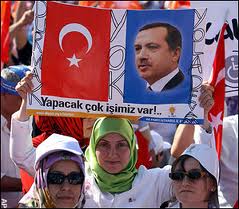
The following post is written in collaboration with Hilal Elver, my Turkish wife. It is posted a few days before Turkish elections this Sunday that will have a great impact on Turkey‘s political future. As a sign of changes in the world, the pre-election attention given to these elections in Turkey is a notable example. Turkey has emerged as ‘a success story’ in a global setting where most of the news is interpreting various forms of failure, especially in meeting global challenges such as food security, climate change, and economic instability and recession.

*************

            The Economist leader headline in its June 4th issue is revealing: “The best way for Turks to promote democracy would be to vote against the ruling party.” It reveals a mentality that has not shaken itself free from the paternalism and entitlements of the bygone colonialist days. What makes such an assertion so striking is that The Economist would know better than to advise American or Canadian or Israeli citizens how to vote. And it never did venture such an opinion on the eve of the election of such reactionary and militarist figures as George W. Bush, Stephen Harper, or Benjamin Netanyahu. Are the people of Turkey really so politically backward as to require guidance from this bastion of Western elite opinion so as to learn what is in their own best interest?


            Surely it is a strange recommendation even putting aside its interventionary aspects. As The Economist itself admits the progress Turkey has made internally and internationally since the governing Justice and Development Party (AKP) came to power in 2002. Its economy has flourished, civilian control of the governing process has been greatly strengthened, creative efforts have been undertaken to solve outstanding conflicts involving the Kurdish minority and Cyprus, and Turkey has fashioned a creative and constructive foreign policy that has greatly enhanced its regional and global reputation. With such an unquestioned record of achievement, it seems strange to go so far beyond calling attention to some serious lingering problems in Turkey by instructing the people of Turkey to vote for an opposition party that attacks the AKP relentlessly but offers no alternative vision for how it might improve upon its policies.


As Stewart Patrick put it recently in the pages of Foreign Affairs, the influential American journal on global policy: “The dramatic growth of Brazil, China, and India—and the emergence of middle-tier economies such as Indonesia and Turkey—is transforming the geopolitical landscape and testing the institutional foundation of the post-World War II liberal order.” Notable here is the recent acceptance of Turkey as a major regional and global actor, something that was not present in the political imagination before this period of AKP leadership.


And if we look beyond Eurocentric perspectives, the rise of Turkey is even more dramatic. In the Middle East, it is Turkey, although outside the Arab orbit, that has most inspiring to those leading the movements that have produced the Arab Spring. Public opinion polls in the region again and again rank Recip Tayyip Erdogan as the world’s most admired leader. It is a mistake to suggest that these movements will opt for ‘the Turkish model,’ as each national situation has its own originality, but all share a passionate insistence that destiny of the country will be shaped by its own people according to their values and aspirations, and without imitation of others. It is possible to learn from the Turkish experience in dealing with such tendentious issues as the future participation of the Muslim Brotherhood in Egyptian politics or the desirability of pursuing a foreign policy based on ‘zero problems with neighbors’ while maintaining this fierce insistence on the nationalist character of political transformation.


At the same time, in a world lacking effective and legitimate global leadership, it would be a mistake to overlook the enormous contributions made by Turkish diplomacy over the course of the prior decade. AKP foreign policy, as principally shaped by Ahmet Davutoglu, provides a reasoned, peace oriented voice of intelligent moderation that draws upon deep historical and cultural affinities, and suggests a very different political profile than that associated with such other regional voices as those emanating from Iran and Saudi Arabia.


Such an affirmation of the AKP achievements is not meant to be an uncritical endorsement of its policies. There are disturbing features of its approach to internal dissent, including the imprisonment of a large number of its domestic critics, especially journalists, and recent examples of police brutality in responding to anti-government demonstrations. There are also widely discussed worries about Mr. Erdogan’s ambitions, contentions that he is a closet autocrat as well as an immensely skillful politician in the populist mode, and it might be reassuring to the electorate as a whole if the elections do not give the AKP a parliamentary two-thirds super-majority that would allow the amendment of the 1982 Constitution without the need for a ratifying referendum. The fear is that with such control, 376 members out of a total of 550, the AKP could push through a presidential system that would allow Mr. Erdogan to become the dominant political leader in the country for another ten years. However, a new constitution is necessary. There is little disagreement among the Turkish voters about the desirability of a new constitution to replace the outdated 1982 Constitution, a byproduct of military rule. Aside from its statist and ultra-nationalist features, the present Turkish constitution keeps alive unpleasant memories of repressive rule when abuse of the citizenry was the order of the day.


Secular Turks mainly worry about certain forms of constitutional reform that they fear will keep the AKP in power forever and will somehow challenge their European modernist life style by such measures as Internet censorship instilling Islamic morals with respect to sexual content or impose restrictions on the public availability of alcohol. In the background, as well, is an unresolved struggle for economic and cultural primacy among elites with different geographic and class roots in Turkish society, the AKP bringing to the fore new energies that come from the more traditional atmosphere of Anatolian towns and villages, as opposed to the CHP elites that are concentrated in the main urban centers of western Turkey: Istanbul, Izmir, and Ankara.


Instead of telling Turks how to vote, The Economist might have more appropriately warned Turkish voters  (if their concern was the future wellbeing of the country) against the perils of the free market economy that the AKP has so enthusiastically endorsed, and especially encouraged while dramatically expanding trade with neighboring states, especially to its East.   Despite the impressive economic growth of recent years, there seems to be too great a readiness in Ankara to go along with the sort of neoliberal globalization that minimizes the regulation of markets, fails to address climate change, indulges speculative finance, and generates ever greater disparities between rich and poor within and among countries.


Even here in relation to the world economy the Turkish record is better than its harshest critics are ready to admit. Recently Turkey took over from Belgium, itself symbolic of a power ship on the global stage, as host for the next ten years of the UN efforts to assist the poorest countries in the world, known as the Least Developed Countries or LDCs. It hosted a mega-conference of 192 member states of the UN in Istanbul last month, and made it clear through statements by Mr. Erdogan and Mr. Davutoglu to the assembled delegations that Turkey’s vision of its role was to make sure that economic justice was being achieved through this UN process, an assessment that took issue with the efforts of the prior 40 years of grand rhetoric and miserable performance. Expressive of this intention, the Turkish Foreign Minister established an Intellectual Forum of independent academic specialists gathered from around the world that ran sessions parallel to the inter-governmental conference, offering a critical perspective on the entire UN approach to extreme poverty and societal vulnerability.


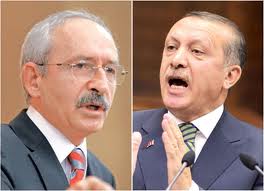
Perhaps, the greatest deficiency in the current Turkish political scene is not the quality of AKP leadership, but the absence of a responsible and credible opposition that offers the citizens some alternative policies on key questions. Until the current elections the main opposition party, Republican People’s Party (CHP), has been a party of ‘No,’ agitating secular anxieties about ‘a second Iran’ and withholding all appreciation for what the governing party has managed to achieve. Turkey, as with any vibrant democracy, needs a robust opposition, preferably with a genuine social democratic orientation, both to heighten the quality of policy debate and to make the electoral process more responsive to the values of and challenges facing Turkish society, but this will not be achieved at this stage by voting the AKP out of power. We have the impression that its new leader, Kemal Kilicdaroglu, seeks to move the party’s program and tactics in this direction, and he has moved away from the polarizing language and approach of the impoverishing Baykal period of CHP decline, but dislodging the old guard of the party has limited the adjustment. In contrast, the Erdogan leadership has exhibited a pragmatic capability to respond intelligently to changes in the political setting.


The Economist and others outside of Turkey should certainly be free to comment on AKP policies and the record of its government, but telling voters how to vote goes too far, and recalls the worst sides of the European relationship to the Middle East. We live in an increasingly integrated and interconnected political, economic, and cultural global space within which critical dialogue and mutually beneficial cooperation are indispensable if the future holds any promise of becoming peaceful, fair, and sustainable for the peoples of the world. In this regard, it is crucial that the imperatives of such free expression be reconciled with respect for the dynamics of self-determination, above all the autonomy of national electoral procedures.  It is disappointing that Eurocentricism has not yet become an embarrassment for the editors of The Economist.   

Obama’s AIPAC Speech: A Further Betrayal of the Palestinian People

24 May


            On Sunday, May 22, 2011, President Barack Obama spoke at an AIPAC Conference, three days after giving his decidedly pro-Israeli speech at the State Department on his broader Middle East foreign policy. It was a shockingly partisan speech to the extremist lobbying group that has the entire U.S. Congress in an unprecedented headlock that has become the envy of even the National Rifle Association. Of course, I assume that Obama’s handlers regarded a speech to AIPAC as obligatory given the upcoming presidential election in 2012. The dependence of political candidates for almost any significant elective office in the United States on Jewish electoral and funding support has become an article of secular political faith, and particularly so for a national office like the presidency. Nevertheless, the enactment of this political ritual by Obama seemed excessive even taking full account of the role of Israeli Lobby as to be worth noting and decrying.


            What is worse, the mainstream media typically misconstrued the AIPAC event in a manner that compounds the outrage of the speech itself. For instance, the NY Times headline says it all: “Obama Challenges Israel to Make Hard Choices for Peace.” As Obama pointed out himself in his remarks, “there was nothing particularly original in my proposal; this basic framework for negotiations has long been the basis for discussions among the parties, including previous U.S. administrations.” The supposed hard choices involve Israeli withdrawal to the 1967 borders with agreed land swaps, only restating the generalized international consensus that has often been articulated by American leaders and in a variety of authoritative settings. This is hardly a hard choice, especially as interpreted by the White House’s former Special Envoy, George Mitchell, as including Israel’s perceived security requirements. That is, the land swaps now seem to embrace not only the unlawful settlement blocs that had been conceded by George W. Bush, but now appear to incorporate Netanyahu over the top demands for strategic depth at the expense of Palestinian land, demanding the appropriation of portions of the Jordan Valley along with the deployment of Israeli troops within a hypothetical demilitarized Palestinian state.


            What is more, the alleged hard choice is never set against the background of the aftermath of the 1948 War that deprived of about half of the territory they had been given according to the UN partition plan embodied in General Assembly Resolution 181. And as is widely known, the Palestinian rejected that partition as being grossly unfair, imposed from without and awarding the Jewish minority population about 56% of historic Palestine. In effect, the willingness of the Palestinians, expressed first by the 1988 session of the Palestinian National Council to live within the 1967 borders meant agreeing to have their Palestinian state on 22% of the British mandate. This was indeed a hard choice! The land swaps involving settlement blocs, and their bypass roads, and further security zones claimed are all encroachments upon that 22%, and the fact that such further Palestinian concession can be proposed is indicative of just how unfair has become the American led approach to the resolution of the underlying conflict. It is further notable that this fundamental territorial redefinition of the two-state consensus is never acknowledged or even mentioned. In effect, what was thought to be two states in 1947 was dramatically diminished by what became the contours of two states after the 1967 War, and has been further diminished in dramatic form ever since by the settlement process and the various unilateral changes introduced by Israel in the course of administering Jerusalem.    


            The speech to AIPAC is significant not for these non-existent ‘hard choices,’ but for the scandalously obsequious pleading tone adopted by an American president that acknowledges with pride everything about the U.S. Government’s relationship to the conflict that should disqualify it from ever again having a shred of diplomatic credibility as a third party intermediary. Starting with the fawning “[w]hat a remarkable, remarkable crowd” to his heartfelt words of sympathy for Israeli victims of violence without even a scintilla of empathy for the far, far greater suffering daily endured by the entire Palestinian people: dispossessed, living under occupation, blockade, in refugee camps and exile, or as persons displaced physically and psychologically.


            The passage on military assistance to a prosperous Israel should have come as a shock to American taxpayers but passes without notice by the Western media.  I quote in full because it so shamelessly overlooks Israeli defiance of international law and its militarist outlook toward the future: “..I and my administration have made the security of Israel a priority. It’s why we’ve increased cooperation between our militaries to unprecedented levels. It’s why we’re making our most advanced technologies available to our Israeli allies. It’s why, despite tough fiscal times, we’ve increased foreign military financing to record levels. And that includes additional support—beyond regular military aid—for the Iron Dome anti-rocket system.” It is not surprising that there was loud applause after each sentence in the paragraph just quoted, but it is surprising that an American president would try to please even an AIPAC audience this abject manner. After all, others are listening! Or should be!


            Obama similarly brushes aside any concern about the unlawfulness of the Israeli occupation or its uses of force against a defenseless population in Gaza in its massive attacks launched at the end of 2008, and carried on for three weeks. Obama brushes aside the Goldstone Report by name, suggesting that its assessment of Israel’s wrongdoing somehow challenges Israel’s right of self-defense when in actuality the Goldstone legal analysis does just the opposite, and far more ardently and unconditionally than appropriate, in my view. There is not a word about the Flotilla Incident of a year ago or the recent excessive use of lethal force at the Israeli borders in response to the ‘right of return’ demonstrations associated with the Palestinian remembrance of the 2011 Nakba.


            Going beyond the negativity of his State Department comments, Obama mimics Netanyahu in condemning the moves toward Palestinian Authority/Hamas reconciliation and unity. He has the temerity to insist that “the recent agreement between Fatah and Hamas poses an enormous obstacle to peace.” Actually, reasonably considered, the agreement should have been welcomed as an indispensable step toward creating the possibility of peace.


            Not a word of challenge is uttered by Obama in front of this AIPAC audience about settlements, Jerusalem, and refugees. Not a word about the Palestinian ordeal, or diminished horizons of possibility, and no White House plan announced to give a talk before a Palestinian audience. The Obama talk was so outrageously one-sided, so contrary to American strategic interests, that it implicitly suggests that the Palestinians are so weak and passive as to let it slip by in silence. Only a justifiable outburst of Palestinian rage could begin to counter this impression of diplomatic surrender.


            Palestinian prudence would go further that an angry reaction. After such a speech the only responsible response by the Palestinian leadership is to conclude once and for all, however belatedly, that it is no longer possible to look to Washington for guidance in reaching a peaceful, just, and sustainable resolution of the conflict. Indeed, to allow such a Washington framing of peace at this point, in light of this Obama/Netanyahu posturing, would further disclose the incompetence and illegitimacy that have long handicapped the Palestinian struggle for self-determination based on a just and sustainable peace and founded on respect for Palestinian rights under international law. 

Welcoming the Tunisian Revolution: Hopes and Fears

22 Jan

Almost six years ago, President George W. Bush’s otherwise inconsequential Secretary of State, Condoleeza Rice, gave a speech at the American University in Cairo that grabbed headlines. While lauding the autocratic leadership of Egypt’s Hosni Mubarak, Rice indicated a new approach to the Arab world by the United States in these much-quoted words: “For sixty years, my country, the United States, pursued stability at the expense of democracy in this region, here in the Middle East, and we achieved neither. Now, we are taking a different course. We are supporting the democratic aspirations of all people.” Explaining further this new approach in Washington, she went on to say “[t]hroughout the Middle East, the fear of free choices can no longer justify the denial of liberty. It is time to abandon the excuses that are made to avoid the hard work of democracy.” Any close listener at the time should have wondered what was meant when at the same time she praised Mubarak for having “unlocked the door for change,” whatever that might mean. As it turned out, outlawing opposition parties and locking up their leaders seemed to remain the bottom line in Egypt without generating a whimper of complaint from the White House either in the Bush years, or since, in the supposedly milder presidency of President Obama.

And supporting “the democratic aspirations of all peoples” seems to have run aground for the White House after the Gaza elections of January 2006 in which Hamas triumphed, and the people of the Gaza Strip, regardless of how they voted, were immediately punished despite the internationally monitored elections being pronounced among the fairest in the region. It should be remembered that Hamas was enticed to participate in the political process as a way of shifting the conflict with Israel toward nonviolent political competition, and that when victorious in the elections Hamas immediately declared a unilateral ceasefire as well as indicated its openness to diplomacy and a long-term framework of peaceful co-existence. Maybe these Hamas initiatives were not sustainable, but they was neither welcomed, reciprocated, nor even explored. Instead, humanitarian assistance from Europe and the United States to Gaza was drastically cut and Israel engaged in a variety of provocations including targeted assassinations of Hamas leaders. In mid 2007 after Hamas seized control of the governing process from Fatah in Gaza, Israel imposed its notorious blockade that unlawfully restricted to subsistence levels, or below, the flow of food, medicine, and fuel. This blockade continues  to this day, leaving the entire Gazan population locked within the world’s largest open air prison, and victimized by one of the cruelest forms of belligerent occupation in the history of warfare.

There is another aspect to the Rice/Bush embrace of democracy that was disclosed by their avowedly disproportionate response to the indiscriminate bombing campaign unleashed in 2006 by Israel on population centers in Lebanon in retaliation for a border incident. In the midst of the carnage Rice observed at the United Nations that the Lebanon War exhibited “the birth pangs of a new Middle East,” while her boss in the White House described the one-sided assault on a helpless civilian population as “a moment of opportunity.” The point here being that when the people get in the way of imperial policies, it is the people who are sacrificed without even shedding a tear, really without even noticing. If their lives and wellbeing is so easily cast to one side in this callous geopolitical manner, surely the American posture of welcoming democracy in the region needs to be viewed with more than a skeptical smile. Supporting Israel’s aggressive wars initiated against Lebanon in 2006 and its massive assault for three weeks on Gaza at the end of 2008 and beginning of 2009 are clear demonstrations of the priorities of American foreign policy.

Actually, this pattern has far deeper historical roots. During the Cold War there were strategic excuses constantly being given by Washington that overlooked oppression and corruption in Third World countries so along as they aligned themselves with the United States in the ideological struggle against the Soviet Union and put out a welcome mat to foreign investors. After the collapse of the Soviet Union this geopolitical argument evaporated, but the economic and strategic priorities remained unchanged. This supposed American dedication to democracy has all along seemed schizophrenic, lauding its virtues, but often dreading its genuine emergence, especially if strategic interests associated with economic and military priorities are at stake as they usually are; consult the record of ‘gunboat diplomacy’ in the Western Hemisphere carried out under the aegis of the Monroe Doctrine (1823) if any doubt exists. Turning back to North Africa, in 1991 when the FIS (Islamic Salvation Front) in Algeria won hotly contested elections for legislative representation, the military intervened to impose its will, Washington was silent, and remained so during the ‘dark decade’ of strife followed in which at least 60,000 Algerians lost their lives. It is part of the reality in the region that American strategic and ideological goals point one way and the popular will of the people point in the opposite direction. It is thus either hypocritical or a sign of deep confusion for American leadership to advocate democracy in the Middle East without being willing to alter its grand strategy. As of now, there is every indication of continuity in the American approach to the region, signaled by its passivity in the face of Israeli extremism, its continuing military presence in Iraq, and the degree to which keeping Gulf oil reserves in friendly autocratic hands is an unquestioned goal of American foreign policy.

Given these considerations what are we to make of America’s cautiously affirmative response to the Tunisian Revolution, or as it often called, the Jasmine Revolution? It is certainly prudent to be wary of the words issued by our government in particular, and to keep an eye out for its contrary actions, although such a gaze may well be obstructed by reliance on covert activities, and only when the next Julian Assange steps bravely forward will the public get any real understanding of the realities that take refuge behind non-transparent walls.

There is no doubt that during the more than 23 years of cruel dictatorial rule of Zine El Abedine Ben Ali, the United States Government, despite the words of Rice, the ‘democracy promotion’ schemes of the Bush presidency, and the new approach to the Islamic world promised by Obama, found nothing to complain about, ignoring report from respected human rights organizations. As Yvonne Ridley, a British journalist and activist dedicated to the Palestinian struggle has written of the American response to the violence directed by the police during the Tunisian uprising: “Not one word of condemnation, not one word of criticism, not one word urging restraint came from Barack Obama or Hilary Clinton as live ammunition was fired into crowds of unarmed men, women, and children in recent weeks.” Compare the strong denunciations of Iranian authorities when they used similarly brutal tactics to suppress the Green Revolution in Iran. The point is that geopolitics calls the tune in Washington, and this means double standards and the repudiation of the rule of law.

Indeed, Tunisia under Ben Ali exemplified what the United States seems to believe serves its interests: a blend of neoliberalism that is open to foreign investment, cooperation with American anti-terrorism by way of extreme rendition of suspects, and strict secularism that translates into the repression of political, and even religious, expressions of Islam commitments and of leftist politics. The Arab regimes throughout the region that seem most worried by the regional reverberations of the unfolding story in Tunisia, while each different, all resemble the Ben Ali approach to governance, including dependence in various forms on the United States, which is usually accompanied, as in the Tunisian case, by aloofness from the Palestinian struggle for self-determination that is so symbolically significant for the peoples in these countries. There is no way for any government in the region to follow the Ben Ali path without becoming beleaguered and for the sake of its survival forced to rely on extreme repression, denial of rights, abuse of political prisoners, police violence designed to induce fear in the population and shield the privileged corrupt elites from accountability and public rage while exposing the mass of society to chronic joblessness, inflationary food and fuel price.

The spontaneous popular eruption in Tunisia that followed the tragic suicide of Mohammed Bouazizi in the central Tunisian  city of Sidi Bou Zid on December 17, 2010 was the spark that lit the revolutionary fire. This flame surge only could have occurred in an environment of acute grievance that was felt deeply and widely by ordinary Tunisians, so deeply and widely that in a few weeks time it shifted the locus of fear from the oppressed to the oppressed. This shift was signaled by the abdication of Ben Ali on January 14 to the sanctuary of Riyadh, a pattern repeating the departure of another bloody dictator, Idi Amin a few decades earlier. But the main lesson here is that oppressive regimes alienated from their populations are vulnerable to political bonfires that can be started by an insignificant spark in a faraway part of the country. Facing such a prospect can only make rulers dependent on force both more insecure and more inclined to extend the reach of political firefighting so as to achieve the impossible: spark prevention!

The martyrdom of Mohammed Bouazizi epitomized the plight of many young jobless and tormented Tunisians. This impoverished young vegetable street seller set himself on fire in a public place after the police confiscated his produce because he lacked a permit. Such an act of principled and spontaneous suicide is not common in Arab culture where suicide, if it occurs in a politically relevant mode, is usually a deliberate instrument of struggle, relied upon by Palestinians for a while and currently by parts of the opposition to developments in Iraq, Pakistan, and Afghanistan. Such forms of political suicide are usually, although not always, targeting civilians, and are inconsistent with basic ideas of morality and law. Bouazizi’s acts were expressive, not aggressive toward others, and recall practices more common in such Asian countries as Vietnam and Korea. When Buddhist monks set themselves on fire on the streets of Saigon in 1963 it was widely interpreted within the country as a turning point in the Vietnam War, a scream of the culture that was outraged by both oppressive Vietnamese rule and by the American military intervention. The intensity of Mohammed Bouazizi’s emotional funeral on Janurary 4 was intoned in these words exhibiting sadness and anger: “Farewell, Mohammed, we will avenge you. We weep for you today. We will make those who caused your death weep.” In the end one hopes that these almost inevitable sentiments of revenge, however understandable given the background of suffering and injustice, do not become the signature of the revolution.

Another more hopeful direction was captured by a slogan that was said to draw inspiration from the French Revolution: “bread, freedom, dignity.” To be worthy of the sacrifices of those who took to the streets, confronting the violence of the state without weapons during these past several weeks, any new governing process must attend to the material needs of the Tunisian masses, open up the society to democratic debate and competition, and assert the protection of human rights as an unconditional commitment of whatever new leadership emerges. Not many revolutions manage to carry out their idealistic promises that infused the period of struggle against the established order, and quickly succumb to the temptation to punish wrongdoers from the past and imaginary and real adversaries in the present instead of improving the life circumstances of the people. It is not a simple situation. Such a revolution as has taken place in Tunisia is likely to beset by determined efforts to reverse the outcome, although a favorable factor has been the refusal of the army to side with the government. Powerful and entrenched enemies do exist, and rivalries among those contending anew for power will produce imaginary enemies as well that can discredit the humanistic claims of the revolution by tempting the leadership to launch bloody campaigns to solidify its claims to run the country. It is often a tragic predicament: either exhibit a principled adherence to constitutionalism, and get swept from power or engage in a purge of supposed hostile elements and initiate a new discrediting cycle of repression. Will Tunisia be able to find a path that protects revolutionary gains without reverting to oppression? Much depends on how this question will be answered, and that will depend not only on the wisdom and maturity of Tunisians who take control at this time, but also on what the old order will do to regain power and the extent to which there is encouragement and substantive support from without. As Robert Fisk pointedly observes “Tunisia wasn’t supposed to happen.”

Undoubtedly, Tunisia faces formidable challenges in this period of transition. As yet, there has been no displacement of the Ben Ali bureaucratic forces in the government, including the police and security forces that for decades terrorized the population. There were an estimated 40,000 police (2/3 in disguise mingling with the population to monitor and intimidate). It was said that friends were afraid to talk in cafes or restaurants, and even in their homes, because of this police/mafia state atmosphere– omnipresent surveillance, thuggery, and not knowing who was on the payroll of the state. So far most prisoners of conscience have not been released from Tunisian jails, sites that daily exposed the brutality of the Ben Ali regime, although some releases have occurred and more are promised. Heading the interim government are longtime allies of Ben Ali, including Mohammed Ghannouchi, his main aide, regarded as being more aligned with the West than with the Tunisian people, although these days promising to step aside as soon as order is restored. But even if such an intention is carried out, is it enough? At present, protests continue throughout the country, especially in the capital city of Tunis, demanding that the remnants of the Ben Ali era leave the government, including especially the cabinet ministers and Mr. Ghannouchi.

We know that the revolution came about because of the courage of young Tunisians who took to the street in many parts of the country, faced gunfire and vicious state brutality, and yet persisted, seeming to feel that their life circumstances were so bad that they had little to lose, and everything to gain. We know that the flames of revolution spread rapidly throughout, and beyond the borders of Tunisia, by interactive reliance on the Internet, many throughout the Arab world replacing personal pictures on their Facebook page with admiring pictures of revolutionary turmoil on Tunisian streets or as a sign of solidarity, posting pictures of the Tunisian flag. There were even suicides of regime opponents in several Arab countries. What we don’t know is whether a leadership can emerge that will be faithful to the revolutionary ideals, and will be allowed to be. What we cannot know is how determined and effective will be internal and external counter-revolutionary tactics. We do know from other situation that elites rarely voluntarily relinquish class privileges of wealth, status, and influence, and that Tunisian elites have allies in the region and beyond who are silently opposed to the Jasmine Revolution, and extremely worried about its wider implications for other similar regimes in the region that stay in power only so long as their citizen is held in check by state terror.  We also know that policymakers in Washington and Tel Aviv will be particularly nervous if Islamic influence emerges in the months ahead, even if vindicated by electoral outcomes. Fisk reminds us that Ben Ali was praised in the past for keeping “a firm hand on all those Islamists,” which was itself code language for bloody repression and a terrorized populace. It may even be that if Islamic oriented political parties demonstrate their popularity with the Tunisian citizenry by winning the forthcoming promised election for a new democratic selected leadership, then the counter-revolutionary backlash will be particularly severe.  There is some reason to believe that Islamic political forces currently enjoy great popularity in Tunisia, and that the main voice of the most important political party with an Islamic identity, Ali Larayedh (imprisoned and tortured for 14 years; and harassed for the past six years by Ben Ali’s secret police), articulates a moderate line on the relation of Islam to the future of Tunisia that resembles the development of recent years in Turkey rather than the hard line and oppressive theocratic developments that have so deeply tainted the Iranian Revolution. The role of the long repressed labor movement, and its Communist leadership, is not known, but it was clearly a presence in the demonstrations, giving a secular edge to the revolutionary fervor.

The future of the Tunisian Revolution is filled with uncertainty. It remains at this moment a great victory for the people of the country, and those of us in sympathy with the struggle for ‘bread, freedom and dignity’ must do all in our power to honor these goals and preserve this victory. A Palestinian journalist living in Norway, Salim Nazzal, put the situation well:  “..Arab observers agree that even if it is difficult to know where things would go in the future what is sure is that the Arab region is not the same after the Tunisian Revolution.”

IRAQI OCCUPATION AND HIGHER EDUCATION: THE GHENT CHARTER

4 Jan


For Americans, the long occupation of Iraq, dating back to 2003 when George W. Bush notoriously proclaimed ‘mission accomplished,’ is measured almost entirely by the American casualty count and the cost of the war to taxpayers, now estimated to be over $3 trillion, an amount large enough to make major inroads on global poverty and preventable disease. The loss of Iraqi lives or the devastation of the country, or the long suffering inflicted on the people of Iraq, does not enter into calculations. Much attention is given to whether the outcome can be called ‘a success’ or somehow beneficial for the people of Iraq, but without any notice of the enormous human price paid by a people that was never consulted in typical imperial behavior. Iraq is the poster child of post-colonial colonialism that disregards the ethos of self-determination in pursuit of geopolitical goals such as oil, regional hegemony, Israeli priorities.

For Iraqis, the occupation followed a frightening ‘shock and awe’ onslaught in 2003 that had been preceded by twelve years of punitive sanctions that took hundreds of thousands of civilian lives following the Gulf War of 2001 that deliberately devastated the infrastructure of the country to a degree that a respected UN Report described the country as bombed back to ‘the stone age.’ A phenomenon that Madeleine Albright notoriously described at the time on prime time TV “as worth it” when confronted with the estimated civilian losses due to sanctions as 700,000.

During this period Iraq shifted its status from being the country with the most impressive development statistics in the region with respect to social indicators to becoming a failed state in every sense: increasing poverty, loss of skill personnel in all sectors, declining literacy, declining life expectancy, staggering unemployment, destruction of cultural life, pervasive civic violence, lethal religious conflict, all forms of acute insecurity.  (See some salient statistics in the Ghent Charter with link at end of text below)

(additional information is contained in an excellent article by Dirk Anriaensens, “Iraq: The Age of Darkness,” <www.brussellstribunal.org/> International Seminar on the Situation of Iraqi Academics, under ‘publications’)

True, Iraq under Saddam Hussein had been oppressively governed, especially for the Kurdish minority and the Shiite majority, but there was a high degree of social order, material progress, and economic stability. True, Iraq was a disruptive presence in the region, attacking Iran (with U.S. encouragement) in 1980, and then invading and annexing Kuwait in 1990. Yet nothing can vindicate the American led response based on war, punitive sanctions, and prolonged occupation. By now it should be evident that the forcible destruction of the regime of Saddam Hussein caused a far worse humanitarian catastrophe than did the abuses, however dreadful, associated with his governance. Military intervention has been uniformly shown to be a darkly dysfunctional corrective for abusive governance, especially in the post-colonial era. The tragedy inflicted on the people of Iraq is a direct result of American crimes of aggression, war crimes, and crimes against humanity, the offenses for which German and Japanese leaders were prosecuted and punished after World War II at the Nuremberg and Tokyo Tribunals. If there is a lesson in all this, it is that imperial grand strategy as it is playing out in the Middle East and Central Asia is intrinsically criminal, and its cruel impositions can only be defeated by campaigns of global solidarity.  Neither states nor the United Nations possess the political will or capabilities to oppose effectively these extensions of colonial behavior in the post-colonial era. As far as human rights are concerned, their realization is essentially a societal challenge, and unless abuse reaches the level of genocide or ethnic cleansing, violations should never serve as a pretext for military intervention even if disguised as ‘humanitarian intervention’ or fulfillments of the norm of ‘responsibility to protect.’

By now, there are no excuses left to ignore the horrors that accompany foreign military occupation. The prolonged experiences of Iraq, Palestine, and Afghanistan provide a consistent confirmation that benevolent claims of the occupier are disguises for exploitation, corruption, oppression, and violence against innocent civilians.

My focus in this blog is on the terrible condition of institutions of higher learning in Iraq.

The shocking portrait of what occupation has meant for academicians and students is depicted by the Ghent Charter that has been endorsed by prominent educators in Europe and elsewhere, including the Rector of the University of Ghent. The BRussell Tribunal has played a leading part in exposing these realities afflicting Iraqi universities, and has organized a seminar to take place in Ghent, Belgium, March 9-11, 2011, with the title “Defending education in times of war and occupation.” It is important that all of us, especially those paying taxes in the United States to pay for this occupation, understand that our silence is complicity. Especially those of us associated with teaching and research in American universities bear an additional responsibility to exhibit even now our solidarity with those who have suffered and are suffering in Iraqi academic communities. We know that many faculty members have been murdered since 2003 (over 500 confirmed cases), particularly those who spoke out and acted against the occupation, and many more have fled the country permanently. The departure of university personnel is part of a wider exodus of middle class Iraqis, estimates are over two million, leaving the country deprived of the sort of national social fabric essential to avoid predatory forms of foreign economic exploitation of the country. We who devote our lives to higher education realize the importance of educated and dedicated young people for the wellbeing of a country. If Iraq’s future is to be restored to some semblance of decency, its institutions of higher learning will need to become safe and hospitable for students and faculty.

In the meantime, read the Ghent Charter and weep! Ghent Charter in Defense of Iraqi Academia