[Prefatory Note: The short assessment of Israel’s strategic objectives that are not addressed in the Trump Twenty-Point Plan was initially written in response to a question put to by a Brazilian journalist with a special interest in the Middle East.]
Reading Israel Katz’s comments on Annexation of WB, permanent presence in Gaza, and Policies of Disproportionate Reprisal
Israel Katz, Israel’s Minister of Defense, used blunt language to express his version of ‘Greater Israel’ that is alone an acceptable outcome of this long struggle culminating in the Gaza Genocide. What Katz proposes is at minimum the de facto annexation of the West Bank and Israel’s permanent presence in the 53% of Gaza that Israel now occupies, made irreversible by the establishment of Jewish settlements in Northern Gaza. Katz can be read as implicitly recognizing Israel’s inability to reach these goals de jure, which can be understood as an expression of Zionist realism as to the limits of Israel’s influence at any given time. Such remarks may have been unscripted, and not indicative of how Netanyahu proposes to handle this interaction between the Trump Plan and the Zionist Endgame.
This controversial language of Katz should be interpreted both as trouble ahead for the Trump diplomacy, an exhibition of Israel’s growing awareness that the contradictions between the further implementation of remaining fundamental tenets of the Zionist vision and the Trump diplomacy may collide in the future. In the past this gap between what geopolitical managers were willing to grant Israel and what Israel insists upon as the price of peace meant a frozen diplomacy. Before Katz spoke this acceptance of a de facto version of realizing Israeli goals had rarely openly acknowledged by a public official in relation to these expansionist and hegemonic ambitions.
This official silence in relation to Israel’s unattained strategic objectives may have been intended as a temporary expression of deference to the international consensus on an endgame for the struggle between Jews and Palestinians, which has been the case since the General Assembly 1947 Partition Resolution of 181, continues to support a ‘two-state solution.’ Such solution is not favored by a wide spectrum of opinion among the political elites and citizenry of Israel that currently affirm a commitment to a single Israeli state, often known as ‘Greater Israel’, but seemingly excluded from the Trump Plan. This helps explain why Netanyahu and other prominent Israelis have in recent months made their determined opposition to Palestinian statehood in any form. Also relevant is that criticism directed at Israel’s tactics of starvation and civilian targeting has been made by the governments most complicit with the genocide (except the US), including France, the UK, and Canada, that pointedly and stubbornly support the establishment of a Palestinian state. [See French-backed New York Declaration:United Nations High-Level International Conference – New York Declaration on the Peaceful Settlement of the Question of Palestine and the Implementation of the Two-State solution (29 July 2025)]
A previous signal of Israeli one-statism was the refusal to declare existing territorial borders as final.
Katz has made other disturbing comments in his official response to a deadly stabbing attack in the West Bank a few days ago. Katz declared that he has “ordered a military action against the home village” of the Palestinian attacker, a measure of reprisal contrary to international law in two respects: openly attacking a civilian village and inflicting collective punishment on an innocent community. Israel newspapers reports more measured Israeli responses to the incident of course labeled as ‘terrorism’ that may suggest that Katz’s provocative words should be partially discounted given his reputation as a stand-alone ‘hothead.’
All along Israel has opted for disproportionate and indiscriminate responses to any signs of armed Palestinian resistance. Israel formulated the so-called Dahiya Doctrine, first enunciated in 2006 as an articulation of Israel’s response to Hezbollah operating out of Lebanon in solidarity with the Palestinian struggle. As Dahiya was long understood it was nothing new. It made explicit what Israel had been doing all along in the name of national security.
What may be noteworthy with respect to these utterances by Katz is their relevance to territorial sovereignty ambitions and the future of Gaza. It has long been agreed upon by expert observers of Israel that the current leadership of Israel to varying degrees adhered to Zionist ideology that included the prospect of West Bank annexation and further Judaification by way of the settlement movement as well as the partial annexation of Gaza reinforced by Jewish settlements situated in northern Gaza. That Zionist ambitions along these lines existed in Tel Aviv should not have come as a surprise in informed circles, although its open acknowledgement at this time is unexpected, especially as it rubs against the grain of US efforts to build wide international support for the Trump 20 Point Plan, which is strongly weighted in favor of Israel and dismissive of Palestinian grievances.
The timing of Katz’s utterances may reflect Israeli concern about the nature of Trump’s regional approach that seemed to preclude such territorial expansion. This might slow down Israel’s timetable, but would not likely inhibit the Israeli leadership, that Israel will move forward with its ‘day after’ diplomacy while paying lip service to the Trump Plan. Trump’s diplomacy has major benefits for Israel. It masks accountability issues, thereby ensuring impunity for Israel’s engagement with the criminality of genocide and apartheid, and possibly ecocide, exhibited daily in the past two plus years to the entire world. The Miami meeting scheduled for Monday, December 29 between Netanyahu and Trump may cast light on whether Katz’s comments touched on points of tension between Washington and Tel Aviv or were just a way of reminding the world of a major tenet of Zionist ideology at a critical moment when the non-Israelis were formulating the future of what has become known as Occupied Palestinian Territories. Time will tell us more about the relative leverage of Israel and the United States in crafting a post-genocide future for the two peoples. In this sense, it is most unfortunate that no modality of Palestinian participation could be agreed upon during this period of Trump diplomacy.
As such thoughts linger, the people of Gaza have not been treated with dignity but mostly left homeless amid the rubble to cope with fierce Winter without heat, adequate food, and a conscientious Israel effort to abide by the ceasefire that it has consistently violated in ways that overcome any uncertainty. There is little reason to doubt that Israel’s annexationist and expansionist goals retain their position at the top of Israel’s policy agenda.
Prefatory Note: The post below is based on modified responses to questions addressed to me by Rodrigo Craveiro, a Brazilian journalist. The focus is what to expect in the weeks ahead to follow from the Trump dipomatic offensive to bring an Israeli crafted peace to fruition in Gaza, and broader stability to the entire Middle East}
There is a sense of joy but also of fury due to the fact all the bodies didn´t return to Israel. How do you see this?
Given the overall experience of the past two years, the attention accorded to the hostages by the Western media is misleadingly disproportionate, and as usual Israel-biased. And now the pain of those Israelis who seek the agreed return of the bodies of non-surviving hostages is an extension of this distortion that shifts global concerns away from the terrible carnage and ccontinuing suffering in Gaza, and the totally ravaged homeland of the Palestinians that is being subject to day after arrangements made by its tormentors without Palestinian participation, much less authentic representation selected by the Palestinian people. Legitimate Palestinian leadership does not presently exist even if there existed a commitment to identify and endow such individuals with appropriate roles. For sustainable progress toward a just future peace to be achieved the Palestinians must participate and be representative of their own choosing. Such a reality can only be decided by the Palestinians themselves, most obviously, in an internationally monitored competitive election among rival claimants to Palestinian leadership throughout Occupied Palestine.
Hamas evidently agreed to return the bodies of dead hostages in their possession, but given the difficulty of locating the bodies and collecting the remains, unless there is a genuine repudiation by Hamas of this underlying duty associated with the ceasefire, their good will deserves the benefit of the doubt. The disappointment of the families in Israel that suffered from this human loss is understandable, but it should be interpreted in ways that are subordinate to more relevant issues such as ceasefire violations. It was reported two days after the ceasefire went into effect that Israel killed by gunfire and missiles 7 Palestinians seeking to visit their destroyed home in Gaza City, a disturbing incident which seemed received scant, if any, coverage in international media or mainstream international commentary, and yet could be seen as evidence of the fragility of the ceasefire arrangements or an indication that Israel is ready to risk or is even seeking the collapse of the ceasefire by testing its limits. A carefree attitude toward the renewal of the violent encounter that rests on implied, or even secret, assurances of unwavering US support.
Trump addressed the Israeli Knesset, where he said that his peace plan marks the “historic dawn of a new Middle East”. Do you believe this is something real or is he exaggerating?
My best guess is that historians looking back at those words will conclude that Trump had confused dawn with dusk. There is no prospect of a brightening of the dark skies casting a shadow on the countries of Middle East until Palestinian rights arerespected, and that includes honoring the international right of return of the seven million Palestinian refugees. There must be a campaign to obtain proper accountability for the Gaza Genocide. Until the costs of Gaza reconstruction are borne by the perpetrators of the devastation, accompanied by some process of reconciliation that does not whitewash the crimes of Israel and its enablers it will be impossible to create a peaceful future for the region. At the very least the vast devastation caused by the genocide must be physically overcome by a process of reconstruction funded by adequate reparations. The scope of reconstruction must include health, heritage and religious sites, educational and cultural institutions, residential neighborhoods, UNRWA facilities, and much else. The most painful losses of loved ones and body parts can never be compensated by material means and are an enduring negative legacy of the Gaza Genocide. Even recognizing pragmatic constraints on peacemaking given political conditions a ‘peace’ crafted to please the perpetrator of genocide and its most complicit supporter, is highly unlikely to proceed very far. The Trump 20 Point Plan is not a break with the past, but an effort to induce forgetfulness necessary to attain credibility in proposing post-conflict arrangements. To grasp the ironies of this Trump Plan we should imagine our reactions if the Nazi survivors of World War II had been put in charge of designing the future of the international order, or even of just post-war Germany. It would not have seemed like a step toward a peaceful future regardless of the language used to obscure the perverse underlying reality.
3- Trump and the three mediating governments signed the peace plan for Gaza at the Sharm el-Sheik Summit. Given this development, what can we expect to happen in the future?
It is almost universally believed that the ceasefire should remain operative even if violations of the underlying plan occur or its further implementation stalls. Beyond this it is a matter of how much leverage is exerted by the US to advance the governance proposals in Part II of Trump‘s Plan. Whether Hamas and Palestinian resistance forces are subject to being coerced by further threats of Israeli renewal of its genocidal assault is unclear. It is also uncertain if the US would go along with an Israeli unilateral departure from the Trump Plan. Israel is quite capable of fabricating claims that Hamas is violating the ceasefire and related obligations leaving it no choice but to resume its military operations. It would appear at this time that Trump would allow Israel to exercise such an option. At the same time, Trump is so mercurial and narcissistic that it possible he would regard Israel’s action as undermining his claims as peacemaker, and repudiate the Israeli resumption of large-scale violence in Gaza. In an odd way Israel and Trump may turn out to have different goals. Israel has not given up its quest for ‘Greater Israel,’ which means absorbing not only East Jerusalem, but Gaza and the West Bank within its sovereign territory. Trump may still strangely believe he can obtain the Nobel Peace Prize if his Plan is operationalized in Gaza and the two conflicting parties accept the arrangements.
Overall, it is clear that peace and stability will not be the future of the Middle East until Israel respects Palestinian rights, drastically redefines or repudiate Zionism and apartheid in a manner consistent with international law, and agrees to the establishment of a Peace & Reconciliation Commission to acknowledge Israel’s past criminal violations of Palestinian rights and to announce a new dedication to the creation of an independent commission that assists the Palestinian/Israeli leadership to build future relations between Jews and Arabs on the basis of equality, dignity, and rights as the foundation for sustainable patterns of peaceful coexistence. For a truly new and stable Middle East Israel must agree to the establishment of a nuclear free zone, including itself and Iran.
4- What are Risks of Clashes between Hamas and Gaza Clans and Factions?
These issues are murky, with contending interpretations and explanations of their recent prominence in the midst of this most ambitious effort to develop the current ceasefire pause into a framework for long-term conflict resolution by implementing, perhaps with modifications, the advanced phases of the Trump 20 Point Plan. In this context, Israel seems to welcome these tensions within Gaza, by various means including subsidies, to allow them an option to exit from this series of developments that might challenge their annexation plans in the West Bank as well as Gaza. It is possible that the Netanyahu government agreed to the ceasefire only to secure the return of the hostages, and never assented to any wider interference with its militarist approach, and may have had assurances of Trump’s support no matter what. If this plays out Israel would actually welcome the collapse of the conflict-resolution part of the framework in a manner that would find tacit acceptance, if not outright approval in Washington. Such a manipulation of reality requires pinning the blame on Hamas that is currently taking the form of criticizing Hamas for seeking to destroy those armed groups in Gaza that collaborated with the Israeli military operations.
Such a line of interpretation is reinforced by Israeli unreasonably shrill complaints about the Hamas failure to return all of the bodies of the dead hostages. On its part Hamas claims it has returned all the remains it could discover with its existing equipment, given that some dead hostages remain trapped far beneath the rubble. This seems a reasonable explanation as Hamas has little incentive to retain the remains of dead Israeli hostages or of taking steps that provide an excuse for Israel to resume bombardment and other forms of violence in Gaza.
Such a line of interpretation is also consistent with Israel’s pattern of lethal violence killing Palestinians in several instances that have the clear appearance of being deliberate violations of the ceasefire agreement. Additionally, Israeli interference with the delivery of humanitarian aid by reducing the entry of relief goods by 50% is another expression of Israel’s unwillingness to allow even a conflict-resolving process weighted in its favor to go forward. These are serious provocations by Israel, causing sharp criticism from some governments that had previously endorsed the Trump approach, but not yet even a whimper of disapproval from the US.
The gathering evidence suggests that Israel is accumulating grounds for repudiating the ‘peace’ process and resuming its military operations accompanied by a renewed clampdown on the further delivery of humanitarian aid, despite widespread hunger, disease, and trauma among the civilian population of Gaza. The next week or so shall determine whether this pessimistic assessment dooms the ceasefire as well as the prospects for conflict-resolution by diplomacy rather than through further recourse to genocide. Israel since the return of the living hostages in Gaza holds all the cards and Hamas has none except for its incredible capacity of resilience.
[Prefatory Note: Interview by Daniel Falcone on Sept 8 Israeli attack on Hamas
negotiating team residence in Doha ending diplomatic effort, at least temporarily, to reach agreement on a US proposed/ allegedly Israel approved ceasefire/hostage exchange arrangements. A disturbing development from many points of view, including the role of secure diplomatic settings for conflict resolution war-averting efforts.]
In the aftermath of this Israel-Qatar attack that seemed at first to threaten the Western interests in the Middle East, is a strange combination of verbal denunciation of Israeli violation of Qatari sovereignty with a political status quo in play.
Israel’s brazen September 8 missile strike on Doha in targeting senior Hamas negotiators has sent reactions all throughout the region, threatening to disrupt US brokered ceasefire talks. Further, it brought questions about Israel’s strategy and intent as well as their government’s disregard for global norms. Coming amid delicate diplomacy and on the soil of a key U.S. ally, the attack challenges assumptions about core-peripheral power, and underlines the ever-changing politics of the Middle East. In the Q/A that follows, Daniel Falcone interviews Richard Falk for insight into the consequences of this act and what it reveals about Israel’s objectives.
Daniel Falcone: Can you explain the incredible action of Israel in bombing Qatar? Why should we be surprised? Why shouldn’t we?
Richard Falk: At this stage an explanation seems premature, although not for media pundits. At best, we can venture speculations, but the complexities of the situation should encourage humility of interpretation. It would be naïve to give much weight to the words of top officials that issue from either Tel Aviv or Washington. Of course, the media stress so far is in three salient facets of the undertaking:
(1) Israel’s display of audacity in launching a missile against high value human targets in the capital of Qatar, location of the largest US military base in the region and the site of negotiations between Israel and Hamas.
(2) the unrelenting demonization of Hamas as a terrorist entity that deserves neither the protection of law and morality nor reactions of human sympathy for the loss of dedicated lives; and …
(3) the tightrope act of Donald Trump who combines his public disapproval of Israel for carrying out this military operation supposedly without a prior notification to the White House while reiterating his solidarity with Israel so far as destroying Hamas.
Obviously, Trump sheds no tears for the victims of the attack, nor is he incensed by Israel’s disregard of international law and morality at a time when it seemed an American ceasefire diplomacy proposal was on the brink of success. What Trump knew and said privately Netanyahu is high on the list of uncertainties.
From Israel’s perspective such a gathering of top Hamas leaders in Doha can be simply regarded as a target too tempting to forego, especially given their information about the location of their place of residence. If these top Hamas leaders had been assassinated, rather than apparently managing to avoid the missile strike, it would have allowed the Netanyahu government to claim a victory in relation to their post-October 7 commitment to exterminate Hamas for the attack, and diminished outrage at attacking an adversary negotiating team.
From a second perspective, the timing as well as the location of the attack is rather mystifying. These Hamas leaders were functioning as a negotiating team meeting in one place to prepare a unified response to the US proposal, unreliably reported as already accepted by Israel, to establish both a ceasefire and the return of the surviving ‘hostages’ in a prisoner exchange. Why would Israel undermine such a proposal by this sort of disruptive behavior when it had just days previously agreed to the negotiated solution, risking not only negative reactions throughout the region and beyond, but also, and more significantly, raising doubts about US unconditional support.
Although a US shift away from its long-term posture on Israel/Palestine remains a remote possibility, which cannot be totally ruled out given Trump’s style of egocentric and erratic leadership that is certainly capable of taking personal offense at Netanyahu’s subversion of Trump’s diplomatic initiative. Such a conjecture presupposes that Trump is being uncharacteristically truthful when finding himself betrayed by Israel, a country thought too dependent on the US to pull off such a diplomatic tactic. The alternative is that Trump is so beholden to Netanyahu that he conspired with him to project the image of diplomacy when the real plan was a counter-terrorist ploy to lure the Hamas leaders to Doha as a group, thinking they were going to put the finishing touches on a breakthrough agreement that will end the Gaza ordeal.
Yet from another perspective, apparently not yet discussed, but likely influential, is either Netanyahu or cabinet hardliners such as Ben-Gvir, Smotrich, and Katz, opposed a ceasefire at this time before the Gaza City ground operation was completed or missing the opportunity to decapitate the surviving Hamas leadership, and made their political weight felt with Netanyahu as had happened previously. These Zionist extremists have seemed determined to seize the moment since October 7 to fulfill Israel endgame ambitions relating to land and people.
Recalling the early Zionist pre-Nazi whimsical airbrushing of the residents of Palestine by falsely contending that it was replacing ‘a people without land for a land without people,’ while just an ironic quip, can be retroactively interpreted as a start down a long path of Palestinian dehumanization and erasure in the 1920s if not before. What now defines the Zionist Project is to acquire for Israel as much land of Ottoman Palestine as possible with as few Palestinians living on it as feasible. Those Palestinians with the resolve to remain face the ensured prospect of suffering as a victimized, super-resilient minority in an Israeli apartheid state.
As with the timing of Iran’s ‘12 Day Iran War,’ June 13-24, 2025, as partly reflecting Israel’s successful effort to deflect attention from its increasingly condemned Gaza policies, the Doha timing may have partly been motivated by the hope of deflecting attention once again. These lines of interpretation are highly conjectural, difficult to either confirm or dismiss. This complexity is aggravated by the tendency of the main parties to the conflict to use public discourse as a propaganda tool rather than as truthful disclosures of national policies. Against this background and timing of the Doha attack it is plausible, if controversial, to argue that it should be regarded as another example of Israel strategy of deflection, shifting the focus away from Israel’s plan to demolish Gaza City or to divert the attention from the fate of the hostages or to show the world and prove to itself that Israel is able and willing to act without waiting for a green light from Washington.
Along these lines, some analysts now fear a second attack on Iran in coming weeks as Israel once more finds itself in a position where facing a rising tide of criticism and hostile pushback that it might once again possibly act to deflect attention from what now appears a provocative failure of the Qatar mission because the Hamas leadership somehow survived the missile attack. Whether Iran would act again so moderately in response seems doubtful, raising threats of a deadly regional war with strong escalation dangers and serious policy challenges to US foreign policy, whether as shaped by the White House or deep state.
Daniel Falcone: What is the end game for Israel? It looks like in the short-term negotiators are worth more dead than alive. Are there other motivations other than power?
Richard Falk: I think your question, with due account given to uncertainties and shifting priorities, points to the reality that Israel seems primarily concerned with establishing a one-state solution in all or most of Ottoman Palestine, administered in quasi-colonial fashion by the UK in the aftermath of World War I. As I have earlier observed, attaining this goal must be preceded by a Palestinian political surrender or better yet, the physical erasure of any significant Palestinian presence. Israel could partially reach such a goal diplomatically or even by the imposition of an extreme form of apartheid making life so unbearable for the Palestinians that many would soon leave if a refugee sanctuary was found, if for no other reason than to assure family survival, especially for children.
The post-October 7 genocide, as underscored by accelerated settlement expansion in the West Bank, should end any beliefs that Israel is at all interested in a diplomatic compromise taking the form of a two-state solution, even if the designated Palestinian negotiators (the Palestinian Authority) seem willing to settle for a ghost state, which more resolute Palestinians insist would be no better than a renewal of ‘breadcrumb diplomacy.’ On further consideration it may turn out that the fragile Netanyahu coalition was unwilling to go along with the current ceasefire diplomacy because it viewed it as a trap that would block a full realization of the Zionist Project.
Considering such priorities, Israel needed to go to the blood-soaked end of its Gaza policy if it was to achieve its primary goals relating to the victorious end of the settler colonial undertaking. Netanyahu either shared this line of thinking in whole or part or accepted it as to avoid the collapse of his fragile coalition that might still lead to his facing long delayed charges of fraud and disgrace within Israel.
Of secondary importance was to extend the orbit of lawlessness by coercively removing present or near future threats within the Middle East to Israel’s security and hegemonic partnership with the US. This line of analysis best explains Israel’s recent multiple regional aggressions against Iran, Syria, and Lebanon. These military operations have been conducted with the alleged purpose of ensuring that unstable regional actors do not in the future become adversaries, which leads to the preemptive destruction of existing military capabilities with implied threats of future military operations should conditions change. Israel, despite possessing the only arsenal of nuclear weapons in the region, remains insecure, at least if security is assessed in defensive terms. More accurately perceived, Israel’s awesome deterrent capability in its regional neighborhood is conceived of offensively as well as preemptively as to avoid the rise of any regional power that might have a political disposition to challenge Israel’s hegemony or partnership with the US in managing the geopolitics of the Middle East. Whether an extra-regional challenge focused on economic penetration and energy politics is posed by China acting alone or with Russia, or in concert with a coalition of the willing in the Global South is still an over-the-horizon nightmare for the West.
Israel’s plans are most likely to be upset, if at all, from within as the status of pariah state sinks into the political consciousness of nations, the region, and the world prompting pressures from without and a pragmatic recalculation by elites within. This kind of dynamic led to profound shifts in the recalculation of the interests (although not the values) of South African apartheid elites in the 1990s producing an enduring embedding of constitutional democracy that were not even hinted at until given tangible expression until unexpectedly acted upon by the Afrikaner leadership.
Netanyahu’s unexpected remarks implicitly acknowledging Israel’s pariah or rogue status are an indication that international disapproval is now having major negative impacts. Recently Netanyahu confessed that “[We] will have to get used to an economy with autarchic features.” As well as declaring “[We’ll] have to be both Athens and Sparta, developing the capabilities to cope on our own.” Even a month ago such statements acknowledging Israel political and economic isolation could hardly be imagined as being uttered by such a combative and self-congratulating political leader as Netanyahu.
Daniel Falcone: Often Israel and the US are discussed as core regions whereas places like Qatar or even Sudan are considered peripheral. Does this event put this misconception on display in your estimation? Nothing looks peripheral when it comes to Israel.
Richard Falk: It is a tantalizing challenge to divide the states of the world up into those that are core and those that are on the periphery. Each historical era gave rise to its own distinctive patterns. World War II produced one pattern, the Cold War another, decolonization another and now the world is on the cusp of another rearrangement of core/periphery relations. The distinction between global geopolitical actors (currently US, China, Russia) and other states is another way of mapping the new world order emerging in tandem with the Ukraine War and the Gaza Genocide.
In a narrow sense, both Israel and Qatar were playing core roles in recent decades. Israel as a regional hegemon with questionable credentials as a sovereign state, although gaining legitimacy through its technological acumen and its skills as arms supplier and battlefield innovator. Whether it will retain its core regional geopolitical role despite perpetrating a transparent genocide viewed in real time is a major uncertainty, likely greatly affected by whether anti-pariah state pressures are exerted in a sustained and effective manner to ensure cooperative relations with the Arab states, Organization of Islamic Cooperation, and the Arab League.
Although I suspect many would disagree, I believe Qatar’s core is rather stable, especially if it is assumed that the September 9 Doha attack was a one-off incident. To a surprising extent Qatar has become like Switzerland for diplomacy among adversaries, reflective of the power-shift from Europe following the collapse of French and British colonialism. This de-westernizing phenomenon has not received the commentary it deserves. This world order realignment of neutral diplomatic sites exhibits more responsiveness to historical circumstances than has the UN with obvious disappointing consequences for multilateral approaches to global problem-solving.
Daniel Falcone:Mouin Rabbani recently discussed the USS Liberty and the Israeli attack on America. Considering this alleged mishap, could we ever witness Israel attacking its allies in your view?
Richard Falk: The Israeli attack on the USS Liberty during the Six Day War on June 8, 1967, killing 34 naval crew members, injuring an additional 171, severely damaging the ship. Objective scholarly treatments have long concluded beyond a reasonable doubt that the Liberty incident was not ‘a mishap’ but rather a deliberate attempt by Israel to prevent US surveillance of its military operations that conflicted with its public assertions. [For a persuasive account see Joan Mellen, Blood in the Water: How the US and Israel Ambush to USS Liberty (Prometheus, 2018)].
It is notable that the US Government chose to accept the Israeli apology and went along with a coverup narrative, despite the damning evidence that it was a deliberate and lethal attack on an American warship. This dynamic has been persuasively analyzed in Mellon’s book and to this day the US coverup is deplored by Liberty survivors. It is a revealing taint on the willingness of the US Government to throw the wellbeing, even the lives, of members of its own armed forces under the bus of diplomatic expediency.
Where Israel’s strategic interests are involved, however extreme, lawless, and inhumane, there is little doubt that the present and many of its past leaders would not hesitate to repeat the USS Liberty disaster/tragedy if the strategic stakes were high enough. More than almost any state, Israel’s allies, including the US, are not beyond suspicion, attitudes acutely inflated by security paranoia that falsely views latent antisemitism as a universal phenomenon. I entertain the wish, however slim, that Israel is capable of internally transforming its identity in ways that confer future legitimacy and achieve a stable normalcy. For this transformative scenario to have any reasonable chance of reshaping the future presupposes mounting international pressure.
Even so, if Israel were to shed its Zionist ideology of Jewish exceptionalism, such developments would be a spectacular instance of the politics of impossibility. Its enactment would help ensure peace and justice, but it has no chance of happening unless the world finally musters the will to impose strong economic sanctions on Israel, as reinforced by civil society activism that mobilizes support for cultural and sporting boycotts, demands an armed protective force under UN auspices, and urges suspension of Israel’s participation in the UN.
The politics of impossibility walks a tightrope between wishful thinking and such unlikely transformative events as the South African abandonment of apartheid, the Soviet collapse, and China’s remarkable developmental ascendancy coupled with unprecedented rates of poverty reduction. Negative events are also possible as with the signs of an American abandonment of democracy and embrace of fascistic styles of governance.
Daniel Falcone: Has the visit to Israel and Qatar by the American Secretary of State, Marco Rubio, altered your understanding of the US engagement with recent developments, especially the attack on the Hamas leadership in Doha?
Richard Falk: The Rubio visit did underscore some vital points in addition to reassuring Israel of US continuing support and Qatar, as well as the Gulf countries, of unwavering security commitments. Rubio tried hard to show that the US was still backing Israel all the way while also promising to be a trusted protector of Arab governments should they face their own security threats. His underlying expression of this dual relationship seemed to rest on the demonization of Hamas, calling this center of Palestinian resistance “agents of barbarism” and insisting that “[As] long as they’re around there will be no peace in this region.”
As Ariel Hayon insisted in an article, “Dangerous Prophecy,” when the microphones are off, every European and Arab leader knows that Hamas’s clones pose a threat to them just as much as this terror organization poses a threat to us. [Published online, September 16, 2025, S. Daniel Abraham, Center of Middle East, News Update.] Hayon, like Rubio, is trying to overcome the divisiveness of the Arab/Islamic Emergency Summit in Doha following the attack by stressing the common supreme interests of both Israel and the Islamic world (or at least of the governing regimes) in counterterrorism, otherwise viewed as popular resistance.
In the aftermath of this Israel-Qatar attack that seemed at first to threaten the Western interests in the Middle East, is a strange combination of verbal denunciation of Israeli violation of Qatari sovereignty with a political status quo in play. On the outside, but not to be discounted, are a series of civil society campaigns and solidarity initiatives that are reacting to the cruelties and injustices of the ongoing genocide. The release at this time of the report of the UN Commission of Inquiry that confirms by evidence and analysis allegations of Israeli genocide in Gaza is another facet of the overall situation.
This interplay will be tested by the way states participate in the forthcoming General Assembly session devoted to celebrating the 80th anniversary of the UN.
[Prefatory Note: Interview by Daniel Falcone on Sept 8 Israeli attack on Hamas
negotiating team residence in Doha ending diplomatic effort, at least temporarily, to reach agreement on a US proposed/ allegedly Israel approved ceasefire/hostage exchange arrangements. A disturbing development from many points of view, including the role of secure diplomatic settings for conflict resolution war-averting efforts.]
In the aftermath of this Israel-Qatar attack that seemed at first to threaten the Western interests in the Middle East, is a strange combination of verbal denunciation of Israeli violation of Qatari sovereignty with a political status quo in play.
Israel’s brazen September 8 missile strike on Doha in targeting senior Hamas negotiators has sent reactions all throughout the region, threatening to disrupt US brokered ceasefire talks. Further, it brought questions about Israel’s strategy and intent as well as their government’s disregard for global norms. Coming amid delicate diplomacy and on the soil of a key U.S. ally, the attack challenges assumptions about core-peripheral power, and underlines the ever-changing politics of the Middle East. In the Q/A that follows, Daniel Falcone interviews Richard Falk for insight into the consequences of this act and what it reveals about Israel’s objectives.
Daniel Falcone: Can you explain the incredible action of Israel in bombing Qatar? Why should we be surprised? Why shouldn’t we?
Richard Falk: At this stage an explanation seems premature, although not for media pundits. At best, we can venture speculations, but the complexities of the situation should encourage humility of interpretation. It would be naïve to give much weight to the words of top officials that issue from either Tel Aviv or Washington. Of course, the media stress so far is in three salient facets of the undertaking:
(1) Israel’s display of audacity in launching a missile against high value human targets in the capital of Qatar, location of the largest US military base in the region and the site of negotiations between Israel and Hamas.
(2) the unrelenting demonization of Hamas as a terrorist entity that deserves neither the protection of law and morality nor reactions of human sympathy for the loss of dedicated lives; and …
(3) the tightrope act of Donald Trump who combines his public disapproval of Israel for carrying out this military operation supposedly without a prior notification to the White House while reiterating his solidarity with Israel so far as destroying Hamas.
Obviously, Trump sheds no tears for the victims of the attack, nor is he incensed by Israel’s disregard of international law and morality at a time when it seemed an American ceasefire diplomacy proposal was on the brink of success. What Trump knew and said privately Netanyahu is high on the list of uncertainties.
From Israel’s perspective such a gathering of top Hamas leaders in Doha can be simply regarded as a target too tempting to forego, especially given their information about the location of their place of residence. If these top Hamas leaders had been assassinated, rather than apparently managing to avoid the missile strike, it would have allowed the Netanyahu government to claim a victory in relation to their post-October 7 commitment to exterminate Hamas for the attack, and diminished outrage at attacking an adversary negotiating team.
From a second perspective, the timing as well as the location of the attack is rather mystifying. These Hamas leaders were functioning as a negotiating team meeting in one place to prepare a unified response to the US proposal, unreliably reported as already accepted by Israel, to establish both a ceasefire and the return of the surviving ‘hostages’ in a prisoner exchange. Why would Israel undermine such a proposal by this sort of disruptive behavior when it had just days previously agreed to the negotiated solution, risking not only negative reactions throughout the region and beyond, but also, and more significantly, raising doubts about US unconditional support.
Although a US shift away from its long-term posture on Israel/Palestine remains a remote possibility, which cannot be totally ruled out given Trump’s style of egocentric and erratic leadership that is certainly capable of taking personal offense at Netanyahu’s subversion of Trump’s diplomatic initiative. Such a conjecture presupposes that Trump is being uncharacteristically truthful when finding himself betrayed by Israel, a country thought too dependent on the US to pull off such a diplomatic tactic. The alternative is that Trump is so beholden to Netanyahu that he conspired with him to project the image of diplomacy when the real plan was a counter-terrorist ploy to lure the Hamas leaders to Doha as a group, thinking they were going to put the finishing touches on a breakthrough agreement that will end the Gaza ordeal.
Yet from another perspective, apparently not yet discussed, but likely influential, is either Netanyahu or cabinet hardliners such as Ben-Gvir, Smotrich, and Katz, opposed a ceasefire at this time before the Gaza City ground operation was completed or missing the opportunity to decapitate the surviving Hamas leadership, and made their political weight felt with Netanyahu as had happened previously. These Zionist extremists have seemed determined to seize the moment since October 7 to fulfill Israel endgame ambitions relating to land and people.
Recalling the early Zionist pre-Nazi whimsical airbrushing of the residents of Palestine by falsely contending that it was replacing ‘a people without land for a land without people,’ while just an ironic quip, can be retroactively interpreted as a start down a long path of Palestinian dehumanization and erasure in the 1920s if not before. What now defines the Zionist Project is to acquire for Israel as much land of Ottoman Palestine as possible with as few Palestinians living on it as feasible. Those Palestinians with the resolve to remain face the ensured prospect of suffering as a victimized, super-resilient minority in an Israeli apartheid state.
As with the timing of Iran’s ‘12 Day Iran War,’ June 13-24, 2025, as partly reflecting Israel’s successful effort to deflect attention from its increasingly condemned Gaza policies, the Doha timing may have partly been motivated by the hope of deflecting attention once again. These lines of interpretation are highly conjectural, difficult to either confirm or dismiss. This complexity is aggravated by the tendency of the main parties to the conflict to use public discourse as a propaganda tool rather than as truthful disclosures of national policies. Against this background and timing of the Doha attack it is plausible, if controversial, to argue that it should be regarded as another example of Israel strategy of deflection, shifting the focus away from Israel’s plan to demolish Gaza City or to divert the attention from the fate of the hostages or to show the world and prove to itself that Israel is able and willing to act without waiting for a green light from Washington.
Along these lines, some analysts now fear a second attack on Iran in coming weeks as Israel once more finds itself in a position where facing a rising tide of criticism and hostile pushback that it might once again possibly act to deflect attention from what now appears a provocative failure of the Qatar mission because the Hamas leadership somehow survived the missile attack. Whether Iran would act again so moderately in response seems doubtful, raising threats of a deadly regional war with strong escalation dangers and serious policy challenges to US foreign policy, whether as shaped by the White House or deep state.
Daniel Falcone: What is the end game for Israel? It looks like in the short-term negotiators are worth more dead than alive. Are there other motivations other than power?
Richard Falk: I think your question, with due account given to uncertainties and shifting priorities, points to the reality that Israel seems primarily concerned with establishing a one-state solution in all or most of Ottoman Palestine, administered in quasi-colonial fashion by the UK in the aftermath of World War I. As I have earlier observed, attaining this goal must be preceded by a Palestinian political surrender or better yet, the physical erasure of any significant Palestinian presence. Israel could partially reach such a goal diplomatically or even by the imposition of an extreme form of apartheid making life so unbearable for the Palestinians that many would soon leave if a refugee sanctuary was found, if for no other reason than to assure family survival, especially for children.
The post-October 7 genocide, as underscored by accelerated settlement expansion in the West Bank, should end any beliefs that Israel is at all interested in a diplomatic compromise taking the form of a two-state solution, even if the designated Palestinian negotiators (the Palestinian Authority) seem willing to settle for a ghost state, which more resolute Palestinians insist would be no better than a renewal of ‘breadcrumb diplomacy.’ On further consideration it may turn out that the fragile Netanyahu coalition was unwilling to go along with the current ceasefire diplomacy because it viewed it as a trap that would block a full realization of the Zionist Project.
Considering such priorities, Israel needed to go to the blood-soaked end of its Gaza policy if it was to achieve its primary goals relating to the victorious end of the settler colonial undertaking. Netanyahu either shared this line of thinking in whole or part or accepted it as to avoid the collapse of his fragile coalition that might still lead to his facing long delayed charges of fraud and disgrace within Israel.
Of secondary importance was to extend the orbit of lawlessness by coercively removing present or near future threats within the Middle East to Israel’s security and hegemonic partnership with the US. This line of analysis best explains Israel’s recent multiple regional aggressions against Iran, Syria, and Lebanon. These military operations have been conducted with the alleged purpose of ensuring that unstable regional actors do not in the future become adversaries, which leads to the preemptive destruction of existing military capabilities with implied threats of future military operations should conditions change. Israel, despite possessing the only arsenal of nuclear weapons in the region, remains insecure, at least if security is assessed in defensive terms. More accurately perceived, Israel’s awesome deterrent capability in its regional neighborhood is conceived of offensively as well as preemptively as to avoid the rise of any regional power that might have a political disposition to challenge Israel’s hegemony or partnership with the US in managing the geopolitics of the Middle East. Whether an extra-regional challenge focused on economic penetration and energy politics is posed by China acting alone or with Russia, or in concert with a coalition of the willing in the Global South is still an over-the-horizon nightmare for the West.
Israel’s plans are most likely to be upset, if at all, from within as the status of pariah state sinks into the political consciousness of nations, the region, and the world prompting pressures from without and a pragmatic recalculation by elites within. This kind of dynamic led to profound shifts in the recalculation of the interests (although not the values) of South African apartheid elites in the 1990s producing an enduring embedding of constitutional democracy that were not even hinted at until given tangible expression until unexpectedly acted upon by the Afrikaner leadership.
Netanyahu’s unexpected remarks implicitly acknowledging Israel’s pariah or rogue status are an indication that international disapproval is now having major negative impacts. Recently Netanyahu confessed that “[We] will have to get used to an economy with autarchic features.” As well as declaring “[We’ll] have to be both Athens and Sparta, developing the capabilities to cope on our own.” Even a month ago such statements acknowledging Israel political and economic isolation could hardly be imagined as being uttered by such a combative and self-congratulating political leader as Netanyahu.
Daniel Falcone: Often Israel and the US are discussed as core regions whereas places like Qatar or even Sudan are considered peripheral. Does this event put this misconception on display in your estimation? Nothing looks peripheral when it comes to Israel.
Richard Falk: It is a tantalizing challenge to divide the states of the world up into those that are core and those that are on the periphery. Each historical era gave rise to its own distinctive patterns. World War II produced one pattern, the Cold War another, decolonization another and now the world is on the cusp of another rearrangement of core/periphery relations. The distinction between global geopolitical actors (currently US, China, Russia) and other states is another way of mapping the new world order emerging in tandem with the Ukraine War and the Gaza Genocide.
In a narrow sense, both Israel and Qatar were playing core roles in recent decades. Israel as a regional hegemon with questionable credentials as a sovereign state, although gaining legitimacy through its technological acumen and its skills as arms supplier and battlefield innovator. Whether it will retain its core regional geopolitical role despite perpetrating a transparent genocide viewed in real time is a major uncertainty, likely greatly affected by whether anti-pariah state pressures are exerted in a sustained and effective manner to ensure cooperative relations with the Arab states, Organization of Islamic Cooperation, and the Arab League.
Although I suspect many would disagree, I believe Qatar’s core is rather stable, especially if it is assumed that the September 9 Doha attack was a one-off incident. To a surprising extent Qatar has become like Switzerland for diplomacy among adversaries, reflective of the power-shift from Europe following the collapse of French and British colonialism. This de-westernizing phenomenon has not received the commentary it deserves. This world order realignment of neutral diplomatic sites exhibits more responsiveness to historical circumstances than has the UN with obvious disappointing consequences for multilateral approaches to global problem-solving.
Daniel Falcone:Mouin Rabbani recently discussed the USS Liberty and the Israeli attack on America. Considering this alleged mishap, could we ever witness Israel attacking its allies in your view?
Richard Falk: The Israeli attack on the USS Liberty during the Six Day War on June 8, 1967, killing 34 naval crew members, injuring an additional 171, severely damaging the ship. Objective scholarly treatments have long concluded beyond a reasonable doubt that the Liberty incident was not ‘a mishap’ but rather a deliberate attempt by Israel to prevent US surveillance of its military operations that conflicted with its public assertions. [For a persuasive account see Joan Mellen, Blood in the Water: How the US and Israel Ambush to USS Liberty (Prometheus, 2018)].
It is notable that the US Government chose to accept the Israeli apology and went along with a coverup narrative, despite the damning evidence that it was a deliberate and lethal attack on an American warship. This dynamic has been persuasively analyzed in Mellon’s book and to this day the US coverup is deplored by Liberty survivors. It is a revealing taint on the willingness of the US Government to throw the wellbeing, even the lives, of members of its own armed forces under the bus of diplomatic expediency.
Where Israel’s strategic interests are involved, however extreme, lawless, and inhumane, there is little doubt that the present and many of its past leaders would not hesitate to repeat the USS Liberty disaster/tragedy if the strategic stakes were high enough. More than almost any state, Israel’s allies, including the US, are not beyond suspicion, attitudes acutely inflated by security paranoia that falsely views latent antisemitism as a universal phenomenon. I entertain the wish, however slim, that Israel is capable of internally transforming its identity in ways that confer future legitimacy and achieve a stable normalcy. For this transformative scenario to have any reasonable chance of reshaping the future presupposes mounting international pressure.
Even so, if Israel were to shed its Zionist ideology of Jewish exceptionalism, such developments would be a spectacular instance of the politics of impossibility. Its enactment would help ensure peace and justice, but it has no chance of happening unless the world finally musters the will to impose strong economic sanctions on Israel, as reinforced by civil society activism that mobilizes support for cultural and sporting boycotts, demands an armed protective force under UN auspices, and urges suspension of Israel’s participation in the UN.
The politics of impossibility walks a tightrope between wishful thinking and such unlikely transformative events as the South African abandonment of apartheid, the Soviet collapse, and China’s remarkable developmental ascendancy coupled with unprecedented rates of poverty reduction. Negative events are also possible as with the signs of an American abandonment of democracy and embrace of fascistic styles of governance.
Daniel Falcone: Has the visit to Israel and Qatar by the American Secretary of State, Marco Rubio, altered your understanding of the US engagement with recent developments, especially the attack on the Hamas leadership in Doha?
Richard Falk: The Rubio visit did underscore some vital points in addition to reassuring Israel of US continuing support and Qatar, as well as the Gulf countries, of unwavering security commitments. Rubio tried hard to show that the US was still backing Israel all the way while also promising to be a trusted protector of Arab governments should they face their own security threats. His underlying expression of this dual relationship seemed to rest on the demonization of Hamas, calling this center of Palestinian resistance “agents of barbarism” and insisting that “[As] long as they’re around there will be no peace in this region.”
As Ariel Hayon insisted in an article, “Dangerous Prophecy,” when the microphones are off, every European and Arab leader knows that Hamas’s clones pose a threat to them just as much as this terror organization poses a threat to us. [Published online, September 16, 2025, S. Daniel Abraham, Center of Middle East, News Update.] Hayon, like Rubio, is trying to overcome the divisiveness of the Arab/Islamic Emergency Summit in Doha following the attack by stressing the common supreme interests of both Israel and the Islamic world (or at least of the governing regimes) in counterterrorism, otherwise viewed as popular resistance.
In the aftermath of this Israel-Qatar attack that seemed at first to threaten the Western interests in the Middle East, is a strange combination of verbal denunciation of Israeli violation of Qatari sovereignty with a political status quo in play. On the outside, but not to be discounted, are a series of civil society campaigns and solidarity initiatives that are reacting to the cruelties and injustices of the ongoing genocide. The release at this time of the report of the UN Commission of Inquiry that confirms by evidence and analysis allegations of Israeli genocide in Gaza is another facet of the overall situation.
This interplay will be tested by the way states participate in the forthcoming General Assembly session devoted to celebrating the 80th anniversary of the UN.
In the aftermath of this Israel-Qatar attack that seemed at first to threaten the Western interests in the Middle East, is a strange combination of verbal denunciation of Israeli violation of Qatari sovereignty with a political status quo in play.
Israel’s brazen September 8 missile strike on Doha in targeting senior Hamas negotiators has sent reactions all throughout the region, threatening to disrupt US brokered ceasefire talks. Further, it brought questions about Israel’s strategy and intent as well as their government’s disregard for global norms. Coming amid delicate diplomacy and on the soil of a key U.S. ally, the attack challenges assumptions about core-peripheral power, and underlines the ever-changing politics of the Middle East. In the Q/A that follows, Daniel Falcone interviews Richard Falk for insight into the consequences of this act and what it reveals about Israel’s objectives.
Daniel Falcone: Can you explain the incredible action of Israel in bombing Qatar? Why should we be surprised? Why shouldn’t we?
Richard Falk: At this stage an explanation seems premature, although not for media pundits. At best, we can venture speculations, but the complexities of the situation should encourage humility of interpretation. It would be naïve to give much weight to the words of top officials that issue from either Tel Aviv or Washington. Of course, the media stress so far is in three salient facets of the undertaking:
(1) Israel’s display of audacity in launching a missile against high value human targets in the capital of Qatar, location of the largest US military base in the region and the site of negotiations between Israel and Hamas.
(2) the unrelenting demonization of Hamas as a terrorist entity that deserves neither the protection of law and morality nor reactions of human sympathy for the loss of dedicated lives; and …
(3) the tightrope act of Donald Trump who combines his public disapproval of Israel for carrying out this military operation supposedly without a prior notification to the White House while reiterating his solidarity with Israel so far as destroying Hamas.
Obviously, Trump sheds no tears for the victims of the attack, nor is he incensed by Israel’s disregard of international law and morality at a time when it seemed an American ceasefire diplomacy proposal was on the brink of success. What Trump knew and said privately Netanyahu is high on the list of uncertainties.
From Israel’s perspective such a gathering of top Hamas leaders in Doha can be simply regarded as a target too tempting to forego, especially given their information about the location of their place of residence. If these top Hamas leaders had been assassinated, rather than apparently managing to avoid the missile strike, it would have allowed the Netanyahu government to claim a victory in relation to their post-October 7 commitment to exterminate Hamas for the attack, and diminished outrage at attacking an adversary negotiating team.
From a second perspective, the timing as well as the location of the attack is rather mystifying. These Hamas leaders were functioning as a negotiating team meeting in one place to prepare a unified response to the US proposal, unreliably reported as already accepted by Israel, to establish both a ceasefire and the return of the surviving ‘hostages’ in a prisoner exchange. Why would Israel undermine such a proposal by this sort of disruptive behavior when it had just days previously agreed to the negotiated solution, risking not only negative reactions throughout the region and beyond, but also, and more significantly, raising doubts about US unconditional support.
Although a US shift away from its long-term posture on Israel/Palestine remains a remote possibility, which cannot be totally ruled out given Trump’s style of egocentric and erratic leadership that is certainly capable of taking personal offense at Netanyahu’s subversion of Trump’s diplomatic initiative. Such a conjecture presupposes that Trump is being uncharacteristically truthful when finding himself betrayed by Israel, a country thought too dependent on the US to pull off such a diplomatic tactic. The alternative is that Trump is so beholden to Netanyahu that he conspired with him to project the image of diplomacy when the real plan was a counter-terrorist ploy to lure the Hamas leaders to Doha as a group, thinking they were going to put the finishing touches on a breakthrough agreement that will end the Gaza ordeal.
Yet from another perspective, apparently not yet discussed, but likely influential, is either Netanyahu or cabinet hardliners such as Ben-Gvir, Smotrich, and Katz, opposed a ceasefire at this time before the Gaza City ground operation was completed or missing the opportunity to decapitate the surviving Hamas leadership, and made their political weight felt with Netanyahu as had happened previously. These Zionist extremists have seemed determined to seize the moment since October 7 to fulfill Israel endgame ambitions relating to land and people.
Recalling the early Zionist pre-Nazi whimsical airbrushing of the residents of Palestine by falsely contending that it was replacing ‘a people without land for a land without people,’ while just an ironic quip, can be retroactively interpreted as a start down a long path of Palestinian dehumanization and erasure in the 1920s if not before. What now defines the Zionist Project is to acquire for Israel as much land of Ottoman Palestine as possible with as few Palestinians living on it as feasible. Those Palestinians with the resolve to remain face the ensured prospect of suffering as a victimized, super-resilient minority in an Israeli apartheid state.
As with the timing of Iran’s ‘12 Day Iran War,’ June 13-24, 2025, as partly reflecting Israel’s successful effort to deflect attention from its increasingly condemned Gaza policies, the Doha timing may have partly been motivated by the hope of deflecting attention once again. These lines of interpretation are highly conjectural, difficult to either confirm or dismiss. This complexity is aggravated by the tendency of the main parties to the conflict to use public discourse as a propaganda tool rather than as truthful disclosures of national policies. Against this background and timing of the Doha attack it is plausible, if controversial, to argue that it should be regarded as another example of Israel strategy of deflection, shifting the focus away from Israel’s plan to demolish Gaza City or to divert the attention from the fate of the hostages or to show the world and prove to itself that Israel is able and willing to act without waiting for a green light from Washington.
Along these lines, some analysts now fear a second attack on Iran in coming weeks as Israel once more finds itself in a position where facing a rising tide of criticism and hostile pushback that it might once again possibly act to deflect attention from what now appears a provocative failure of the Qatar mission because the Hamas leadership somehow survived the missile attack. Whether Iran would act again so moderately in response seems doubtful, raising threats of a deadly regional war with strong escalation dangers and serious policy challenges to US foreign policy, whether as shaped by the White House or deep state.
Daniel Falcone: What is the end game for Israel? It looks like in the short-term negotiators are worth more dead than alive. Are there other motivations other than power?
Richard Falk: I think your question, with due account given to uncertainties and shifting priorities, points to the reality that Israel seems primarily concerned with establishing a one-state solution in all or most of Ottoman Palestine, administered in quasi-colonial fashion by the UK in the aftermath of World War I. As I have earlier observed, attaining this goal must be preceded by a Palestinian political surrender or better yet, the physical erasure of any significant Palestinian presence. Israel could partially reach such a goal diplomatically or even by the imposition of an extreme form of apartheid making life so unbearable for the Palestinians that many would soon leave if a refugee sanctuary was found, if for no other reason than to assure family survival, especially for children.
The post-October 7 genocide, as underscored by accelerated settlement expansion in the West Bank, should end any beliefs that Israel is at all interested in a diplomatic compromise taking the form of a two-state solution, even if the designated Palestinian negotiators (the Palestinian Authority) seem willing to settle for a ghost state, which more resolute Palestinians insist would be no better than a renewal of ‘breadcrumb diplomacy.’ On further consideration it may turn out that the fragile Netanyahu coalition was unwilling to go along with the current ceasefire diplomacy because it viewed it as a trap that would block a full realization of the Zionist Project.
Considering such priorities, Israel needed to go to the blood-soaked end of its Gaza policy if it was to achieve its primary goals relating to the victorious end of the settler colonial undertaking. Netanyahu either shared this line of thinking in whole or part or accepted it as to avoid the collapse of his fragile coalition that might still lead to his facing long delayed charges of fraud and disgrace within Israel.
Of secondary importance was to extend the orbit of lawlessness by coercively removing present or near future threats within the Middle East to Israel’s security and hegemonic partnership with the US. This line of analysis best explains Israel’s recent multiple regional aggressions against Iran, Syria, and Lebanon. These military operations have been conducted with the alleged purpose of ensuring that unstable regional actors do not in the future become adversaries, which leads to the preemptive destruction of existing military capabilities with implied threats of future military operations should conditions change. Israel, despite possessing the only arsenal of nuclear weapons in the region, remains insecure, at least if security is assessed in defensive terms. More accurately perceived, Israel’s awesome deterrent capability in its regional neighborhood is conceived of offensively as well as preemptively as to avoid the rise of any regional power that might have a political disposition to challenge Israel’s hegemony or partnership with the US in managing the geopolitics of the Middle East. Whether an extra-regional challenge focused on economic penetration and energy politics is posed by China acting alone or with Russia, or in concert with a coalition of the willing in the Global South is still an over-the-horizon nightmare for the West.
Israel’s plans are most likely to be upset, if at all, from within as the status of pariah state sinks into the political consciousness of nations, the region, and the world prompting pressures from without and a pragmatic recalculation by elites within. This kind of dynamic led to profound shifts in the recalculation of the interests (although not the values) of South African apartheid elites in the 1990s producing an enduring embedding of constitutional democracy that were not even hinted at until given tangible expression until unexpectedly acted upon by the Afrikaner leadership.
Netanyahu’s unexpected remarks implicitly acknowledging Israel’s pariah or rogue status are an indication that international disapproval is now having major negative impacts. Recently Netanyahu confessed that “[We] will have to get used to an economy with autarchic features.” As well as declaring “[We’ll] have to be both Athens and Sparta, developing the capabilities to cope on our own.” Even a month ago such statements acknowledging Israel political and economic isolation could hardly be imagined as being uttered by such a combative and self-congratulating political leader as Netanyahu.
Daniel Falcone: Often Israel and the US are discussed as core regions whereas places like Qatar or even Sudan are considered peripheral. Does this event put this misconception on display in your estimation? Nothing looks peripheral when it comes to Israel.
Richard Falk: It is a tantalizing challenge to divide the states of the world up into those that are core and those that are on the periphery. Each historical era gave rise to its own distinctive patterns. World War II produced one pattern, the Cold War another, decolonization another and now the world is on the cusp of another rearrangement of core/periphery relations. The distinction between global geopolitical actors (currently US, China, Russia) and other states is another way of mapping the new world order emerging in tandem with the Ukraine War and the Gaza Genocide.
In a narrow sense, both Israel and Qatar were playing core roles in recent decades. Israel as a regional hegemon with questionable credentials as a sovereign state, although gaining legitimacy through its technological acumen and its skills as arms supplier and battlefield innovator. Whether it will retain its core regional geopolitical role despite perpetrating a transparent genocide viewed in real time is a major uncertainty, likely greatly affected by whether anti-pariah state pressures are exerted in a sustained and effective manner to ensure cooperative relations with the Arab states, Organization of Islamic Cooperation, and the Arab League.
Although I suspect many would disagree, I believe Qatar’s core is rather stable, especially if it is assumed that the September 9 Doha attack was a one-off incident. To a surprising extent Qatar has become like Switzerland for diplomacy among adversaries, reflective of the power-shift from Europe following the collapse of French and British colonialism. This de-westernizing phenomenon has not received the commentary it deserves. This world order realignment of neutral diplomatic sites exhibits more responsiveness to historical circumstances than has the UN with obvious disappointing consequences for multilateral approaches to global problem-solving.
Daniel Falcone:Mouin Rabbani recently discussed the USS Liberty and the Israeli attack on America. Considering this alleged mishap, could we ever witness Israel attacking its allies in your view?
Richard Falk: The Israeli attack on the USS Liberty during the Six Day War on June 8, 1967, killing 34 naval crew members, injuring an additional 171, severely damaging the ship. Objective scholarly treatments have long concluded beyond a reasonable doubt that the Liberty incident was not ‘a mishap’ but rather a deliberate attempt by Israel to prevent US surveillance of its military operations that conflicted with its public assertions. [For a persuasive account see Joan Mellen, Blood in the Water: How the US and Israel Ambush to USS Liberty (Prometheus, 2018)].
It is notable that the US Government chose to accept the Israeli apology and went along with a coverup narrative, despite the damning evidence that it was a deliberate and lethal attack on an American warship. This dynamic has been persuasively analyzed in Mellon’s book and to this day the US coverup is deplored by Liberty survivors. It is a revealing taint on the willingness of the US Government to throw the wellbeing, even the lives, of members of its own armed forces under the bus of diplomatic expediency.
Where Israel’s strategic interests are involved, however extreme, lawless, and inhumane, there is little doubt that the present and many of its past leaders would not hesitate to repeat the USS Liberty disaster/tragedy if the strategic stakes were high enough. More than almost any state, Israel’s allies, including the US, are not beyond suspicion, attitudes acutely inflated by security paranoia that falsely views latent antisemitism as a universal phenomenon. I entertain the wish, however slim, that Israel is capable of internally transforming its identity in ways that confer future legitimacy and achieve a stable normalcy. For this transformative scenario to have any reasonable chance of reshaping the future presupposes mounting international pressure.
Even so, if Israel were to shed its Zionist ideology of Jewish exceptionalism, such developments would be a spectacular instance of the politics of impossibility. Its enactment would help ensure peace and justice, but it has no chance of happening unless the world finally musters the will to impose strong economic sanctions on Israel, as reinforced by civil society activism that mobilizes support for cultural and sporting boycotts, demands an armed protective force under UN auspices, and urges suspension of Israel’s participation in the UN.
The politics of impossibility walks a tightrope between wishful thinking and such unlikely transformative events as the South African abandonment of apartheid, the Soviet collapse, and China’s remarkable developmental ascendancy coupled with unprecedented rates of poverty reduction. Negative events are also possible as with the signs of an American abandonment of democracy and embrace of fascistic styles of governance.
Daniel Falcone: Has the visit to Israel and Qatar by the American Secretary of State, Marco Rubio, altered your understanding of the US engagement with recent developments, especially the attack on the Hamas leadership in Doha?
Richard Falk: The Rubio visit did underscore some vital points in addition to reassuring Israel of US continuing support and Qatar, as well as the Gulf countries, of unwavering security commitments. Rubio tried hard to show that the US was still backing Israel all the way while also promising to be a trusted protector of Arab governments should they face their own security threats. His underlying expression of this dual relationship seemed to rest on the demonization of Hamas, calling this center of Palestinian resistance “agents of barbarism” and insisting that “[As] long as they’re around there will be no peace in this region.”
As Ariel Hayon insisted in an article, “Dangerous Prophecy,” when the microphones are off, every European and Arab leader knows that Hamas’s clones pose a threat to them just as much as this terror organization poses a threat to us. [Published online, September 16, 2025, S. Daniel Abraham, Center of Middle East, News Update.] Hayon, like Rubio, is trying to overcome the divisiveness of the Arab/Islamic Emergency Summit in Doha following the attack by stressing the common supreme interests of both Israel and the Islamic world (or at least of the governing regimes) in counterterrorism, otherwise viewed as popular resistance.
In the aftermath of this Israel-Qatar attack that seemed at first to threaten the Western interests in the Middle East, is a strange combination of verbal denunciation of Israeli violation of Qatari sovereignty with a political status quo in play. On the outside, but not to be discounted, are a series of civil society campaigns and solidarity initiatives that are reacting to the cruelties and injustices of the ongoing genocide. The release at this time of the report of the UN Commission of Inquiry that confirms by evidence and analysis allegations of Israeli genocide in Gaza is another facet of the overall situation.
This interplay will be tested by the way states participate in the forthcoming General Assembly session devoted to celebrating the 80th anniversary of the UN.
[Prefatory Note: A slightly modified version of a text published on Sept. 1, 2025 in TMS.}
On August 25 Thomas Friedman, always a weathervane for political and economic establishment thinking in the West, wrote a notable column in the NY Times that was pragmatic in tone, misleading in substance, and regressive in intention. Yet it reflects a growing ambivalence toward Israel’s prolonged genocide even among longtime supporters of Israel that now highlights starvation, famine, and a gross distortion of the delivery of humanitarian aid under emergency conditions. But expressed dangerously without hiding the hope that Israel could even now restore its legitimacy without being held accountable for crimes in Gaza and despite all, still expecting to be rewarded by excluding Hamas from any further governance role in Gaza and continuing to move toward the annexation of the West Bank by formal action or through further settlement expansion.
It is notable that the headline of the Friedman opinion piece is titled “Israel’s Gaza Campaign is Making It a Pariah State.” [NY Times, Aug 25, 2025]This Israeli misfortunr is blamed by Friedman almost totally on Netanyahu and his ultra-right religious coalition partners usually as represented by Bezalel Smotrich and Itamar Ben-Gvir who both serve as important cabinet ministers in Tel Aviv’s coalition government. Neither the apartheid matrix of control exercised by Israel over Palestinians in place many years prior to October 7 nor Jewish supremist demographic policies and territorial ambitions embedded in Zionist ideology and written into Israel’s 2018 Basic Law are even mentioned by Friedman as major contributors to Israel’s collapsing legitimacy. What is not said is often more important than what is said.
Beyond this, Friedman in his telltale and flip opening sentence writes, “I will leave it to historians to debate whether Israel is committing genocide in Gaza.” To begin with, at this stage the reality of Gaza genocide is no more debatable than that of the Holocaust, or for that matter the genocide carried out some years ago against the Rohingya people living in Myanmar. And the continued evasion of naming is no longer acceptable, although it could be responsibly personally hedged by being described as reflecting a now unchallengeable consensus among genocide scholars and legal experts.
At most an authoritative pronouncement of genocide awaits only a definitive legal judgment by the International Court of Justice in responding to the 2023 South African submission invoking the Convention on the Prevention and Punishment of Genocide (1948). Early in 2024 nearly unanimous rulings of the ICJ in an interim decision has already affirmed the plausibility of genocide allegations and the wrongfulness of Israeli disruptions of international deliveries of humanitarian aid. To refrain at this juncture from naming the onslaught in Gaza as ‘genocide’ is to avert one’s gaze from the gigantic elephant in the room. At the very least, Friedman might have written as follows: “In deference to the ICJ I will leave it to the jurists to settle any lingering debate as to whether Israel is committing genocide in Gaza.” Even such a revision still casts an agnostic eye on the gruesome realities daily confirmed by the images and words of brave photographers and journalists on the ground who have too often paid with their lives for acts of truth-telling professionalism
A second level of evasion on Friedman’s part is to fall in line with those that call the Israeli violence of the past two years in Gaza as acts committed during a ‘war.’ Such a designation enables atrocities to be sidelined in public consciousness as at worst regrettable incidents of ‘collateral damage’ or ‘mishaps’ attributable to ‘the fog of war,’ explained away as combat tactics reasonably relied upon as matters of ‘self-defense’ and ‘military necessity.’ Yet by now such an Israeli dominated public discourse on the violence, suffering, and cruelty inflicted on over two million entrapped Palestinians lacks any credibility, and so the war discourse should be disregarded as state propaganda. The conflict as has been widely observed by many close observers bears a closer resemblance to ‘a massacre’ than a war because it is so one sided with the most modern weaponry of land, sea and air possessed on the Israeli side and primitive weaponry or none at all on the Palestinian resisting side.
The casualty statistics, although confirming this interpretation are diversely measured at present, with the Gaza Ministry of Health as of July 2025 officially listing over 63,000 deaths, plus more than double that number wounded, while declaring 887 IDF personnel killed as well as 815 Israeli civilians. The respected UK medical journal, The Lancet, has published various expert analyses suggesting that the Palestinians are at least 41% underreported by these official figures, especially in relation to indirect deaths due to traumatic causes and malnourishment, including one Lancet estimate in July 2024 that at least 186,000 Palestinian have perished due to the Israeli attack. At present, the entire surviving Palestinian population is at risk due to the recent Gaza City escalation, acutely imperiling one million sheltering Palestinian civilians and abetted by ordering dangerous evacuations amid Famine 5 acute food shortages.
The third level of Israeli-oriented brainwashing is perhaps the most disturbing of all, allowing Israel and the US to decide upon ‘day after arrangements’ with the perverse consequences of rewarding the perpetrators and accomplices of genocide, while further punishing the victim population and affirming a reductionist demonization of Hamas as ‘a terrorist entity.’ It is as if it was left to surviving Nazi leaders to preside over post-World War II arrangements, including regarding those affecting surviving death camp inhabitants and the fate of Israel.Friedman completely adheres to the Israeli narrative when it comes to the October 7 attack as unprovoked and barbaric, also subscribing to ‘a blaming the victim’ rationale of the ongoing Palestinian ordeal.
Friedman insist that if only Hamas had returned the remaining Israeli hostages it would have spared Palestinians the slaughter of recent months. In his words, “Hamas’s leadership could have ended all of this suffering by agreeing to quit Gaza and release all its hostages. By perpetuating this war, Hamas has also engaged in its own heinous crimes — the murder of Israeli hostages and the human sacrifice of thousands of Gazans to Hamas’s mad dreams. It’s all true — and relevant.” [For a more nuanced and accurate portrayal of Hamas see Helena Cobban & Rami G. Khouri, Understanding Hamas and Why It Matters (OR Books, 2024).] Is it really true or relevant?
There is again silence on the part of Western media when it comes to the most verified influential reports of post-October 7 detention of hundreds of innocent Palestinian civilians and confinement accompanied by routine torture. Such Palestinians are hardly noticed and certainly never receiving the special attention reserved by the term ‘hostages,’ a term reserved for the unfortunate Israelis detained in the course of the October 7 attack. The Israeli managed the public discourse on this issue in such a distorted manner that only Israelis are media identified as ‘hostages,’ with the unconscious effect of the dehumanization of the Palestinian ‘other’ whose captivity is not even worthy of notice.
Friedman’s explanation for why Israel is feeling the heat of global criticism while Hamas generally escapes censure except by complicit Western governments. Friedman poses the rhetorical question, “So why is the world ganging up on Israel now?” His disguised Zionist response is revealingly tone deaf, as well as stunningly blind to the unfolding account of the cruel daily occurrences that brings tears to the eyes of persons of conscience the world over: “Because it holds Israel to a higher standard than Hamas, because Israel has always held itself to a higher standard.” Only a self-censoring media platform would allow such slanted language to find its way into print. To forget the expulsion of more than 700,000 Palestinians from their homeland with no right of return in 1948 was winked at by the world, as were decades of defiant lawlessness in administering the occupied territories of Gaza and the West Bank. Rather than being held to a higher standard Israel was given a no holds barred exemption from its legal duties to apply international humanitarian law in its treatment of Palestinians and their rights, including Israel’s lapsed commitment to implement the UNGA 1947 Partition Resolution 181(II) which underpins Israel’s own claims of sovereign rights.
There are reasons to take a serious look at Friedman’s warnings to Israel’s supporters that its current leadership “is committing suicide, homicide and fratricide.” Such an evaluation from a longtime influential journalist is in reaction to his overall conviction that Israel’s future is indeed bleak if it fails to challenge effectively Israel’s growing classification and treatment as a pariah state. If this status becomes frozen, as now seems almost certain, it will jeopardize Israel’s prospects for a normal, prosperous, viable future.
Friedman’s solution is indeed a great departure from his uncritical prior unabashed pro-Israeli writings when it comes to questioning Zionist approaches to the conflict. It for Israel to agree immediately to a permanent ceasefire and military withdrawal from Gaza in exchange for a release of the hostages. This preliminary recommended move is to be followed by Palestinian governance of Gaza configured to please Israel as well as the complicit West by excluding Hamas and relying upon a reconstituted Palestinian Authority that is sufficiently collaborative to satisfy the Tel Aviv leadership. In my view, this is a non-solution, but a formula for a more subtle way of achieving Zionist goals and consigning the Palestinian people to new miseries. Friedmans ‘solution’ is what Palestinians who insist on their right of self-determination dismiss as ‘breadcrumb diplomacy’ in the form of a demilitarized statelet, aptly alternatively described as ‘a Bantustan,’
The true path to a justice-driven peace depends on implementing the ICJ July 2024 Advisory Opinion terminating Israel’s role as Occupying Power in Gaza and the West Bank. This change of formal status should be coordinated with internationally monitored free elections in Gaza with Hamas having the option to compete for votes with other political entities. If this process were able to go forward smoothly it might become possible to have real peace and justice negotiations between Israel and Palestine but only after Israel renounces Zionism, dismantles apartheid, agrees to respect the right of return of Palestinian refugees, and engages with leading Arab governments, the EU, Canada, and the US in reparation arrangement allowing for reconstruction of devastated Gaza, and the ravaged West Bank. It would also be desirable to redress past Palestinian grievances to establish a Peace and Reconciliation Commission that would provide an objective account of the historical record, which has helped clear the air in other post-conflict situations of transition. A final vital step would be a nuclear free internationally verified nuclear free zone applicable throughout the Middle East together with a cap on annual military spending.
A long and difficult to do agenda, but anything less will not reach the deep roots of this century long conflict that began during the British Mandate that commenced after Palestine’s relatively peaceful existence beneath the mantle of the Ottoman Empire. After World War I and the Ottoman collapse Britain fulfilled the colonialist Balfour Declaration that pledged support to the Zionist Movement for a Jewish homeland (but not a state) in Palestine. Support consisted of greenlighting Jewish immigration and property purchases without bothering to obtain the consent of the Arab large majority population in Palestine. This paved the way after World War II for the Zionist settler colonial project that reached its current genocidal climax during the past two years and is now poised to either further reenforce this criminal past or transcend it. If the latter happens it will be an historic victory not only for the Palestinians but for all of humanity, and a tribute to the activism of civil society. If not, worse is sure to come.
Trump’s second term as US President has been mercurial, with lots of bobbing and weaving more bearing resemblance to a boxer’s opening round in which the point is to feel out the opponent rather than to land decisive punches. The pragmatism of the deal or the inflexibility of firm commitments premised on images of world order and national interest as reflective of hard power calculations in a world of states that political realists perceive as divided among friends, enemies, and those that don’t count.
In the case of Israel, this early rhythm of Trump’s second term is notable mainly for its uncertainty, contrasting with the tight brotherly embrace of Trump’s predecessor, Joe Biden, who tried from time to time to adjust this image ever so slightly by gestures of humanitarian concern that Netanyahu seemed to misconstrue as serious US efforts to constrain Israel’s genocidal assault on Gaza. As the quickly faded red line in Gaza illustrated Biden’s gentle warnings to Israel were mainly for show in response to public relations concerns arising in the US in response to the American protest activity and liberal media criticisms of Israel’s behavior in Gaza that struck more and more observers as ‘genocide,’ although most influential media platforms shied away from calling a spade a spade, that is, naming Israel’s Gaza violence as genocide. This inhibition on any governmental naming of the crime persists under Trump and is combined with the intensification of the repressive campaign inherited from Biden to treat support for the Palestinian pursuit of their basic rights and criticisms of Israeli excesses as ‘antisemitism,’ as a ‘hate crime against the Jewish people.’ Siding with the victim of flagrant crime is transformed by the magic of language into itself being the crime. This turn of phrase also offers Trump a pretext for advancing his generalized attacks on knowledge-based policy making of experts and reflecting scientific research as typified by elite universities, which are themselves epitomized by Harvard. Trump’s moves against Harvard involving defunding of research and challenging the immigration status of foreign students amount to an pedagogical assault on the accepted modern learning paradigm flavored by appeals to xenophobia rampant among the MAGA base. This campaign is vintage Trump, who combines his trust in belief-based action as fused with professions of ultra-nationalism.
Trump, despite shifts against Israel in US and European civil society sentiments never wastes words by making even the slightest display of empathy for the extrem suffering of the Palestinian people. He seems almost pathologically dazzled by prospects of access to the extreme wealth and geopolitical grandeur of the Gulf monarchies, carried to absurd extremes by proposing a US takeover of Gaza with the surreal promise of establishing ‘the Riviera of the Middle East,’ which included a proviso undoubtedly comforting to Tel Aviv that the reconstruction plan would be preceded by the forced departure of its surviving Palestinian population. It remains unclear to this day whether Trump was seeking a deal in which the financial burden would be shifted to the Arab world while the political administration of post-genocide Gaza, purged of Palestinians, would be entrusted to US administrative supervision, which is a double gain for Israel (no Palestinians, no UN).
As such, more than his predecessors Trump seemed at first to support unconditionally even Israel’s regional game plan of eliminating or weakening by military means potential threats to its future security by states and movements in its region. Despite likely swerves on the road ahead Trump seems at this stage determined to avoid Israeli distractions from the pursuit of his own separate primarily transactional goals in the Middle East that are of a primarily economistic character. Trump’s transactional mindset can be reduced to the pursuit of national gains with respect to trade and investment as awkwardly combined with corrupt personal and family enrichment schemes.
Above all such a course of action presupposes the US being not too overtly seen as aiding and abetting Netanyahu’s resolve to complete the Zionist Project of establishing an Israeli one-state solution that displaces Palestinians from the land and Palestine from maps of the Middle East. It should be noted that long before October 7 and years prior to Netanyahu extremist coalition that assumed governing authority at the start of 2023 the Israeli Knesset formally enacted into law the claim of exclusive Jewish supremacy without the slightest adverse reaction from Washington. [Israel’s Basic Law of 2018]. Netanyahu was Prime Minister at the time heading a less extreme governing leadership in Israel, yet committed to Israel sovereignty from the river to the sea, achieved by relying on a long tradition of patient reliance on salami tactics, taking small steps toward the fulfillment of the Zionist Project.
What the new 2023 Netanyahu team brought to the table was an acceleration of this consensus ‘solution’ to Palestinian resistance and resilience by disclosing its endgame agenda of violent dispossession and provocation. Trump will face a foreign policy dilemma of either opposing the revival of the UN-backed two-state negotiated solution or siding with Israel, concluding that the time has come to legitimize Israel’s one-state genocidally engineered outcome that included permanent statelessness for the Palestinian people, which entailed repudiating their inalienable right of self-determination.
The most revealing near-term regional measure of geopolitical affinity with Israel is whether American foreign policy chooses to normalize relations with Iran by reaching agreement about its nuclear program or eventually goes along with, and possibly even joins, Israel’s strong push for a major miliary strike aimed at destroying Iran’s nuclear facilities and Iran’s large-scale long-range missile response, and possibly sparking regime change in Tehran. Iranian diplomacy seems flexible about accepting enrichment limits and international inspection, although a recent UN inspection concluded that Iran was heightening its enrichment output to near weapons’ grade uranium, presumably devising its own weak form of deterrence to the overt threats to its security constantly being made. Trump seems likely to be tempted, for regional and geopolitical reasons, to explore options for an agreement with Iran, especially if it looks like a win for Washington’s diplomacy. If this is only speculatively accurate Trump would come to resent Israel’s effort to discourage ending Iran’s isolation without first getting rid of its anti-Israeli government. If Israel is antagonized in its regional security plan of neutralizing hostile threats by weakening the unity and capabilities of all Middle East actors, movements as well as states, an open break could occur, however improbable that now seems.
There are many unknowns that will impact upon regional developments, not least of which is Trump’ susceptibility to embarking on drastic changes in policy maneuvers as he or his entourage of submissive advisors perceive and juggle their options. Nevertheless, there are reasons at this time to accord serious attention to contrasting normalization and warmaking scenarios. The world is experiencing the dawn of a new phase of international relations in a less unipolar world order marking a terminal phase of international history best understood as ‘the aftermath of the Cold War’ that followed the collapse of the Soviet Union. Among the transitional uncertainties are shifts in geopolitical alignments, alliance relationships, and financial hierarchies. The yet undefined yet ascendant roles and ambitions of China and Russia, and possibly India, are likely to challenge the prior era of undiluted US geopolitical primacy. A major uncertainty is whether the US will adapt to multipolarity or seek at great cost to perpetuate its post-Cold War dominance that it achieved from 1992 to 2022. To do the latter would mean focusing on nullifying the geopolitical challenges of not only Russia and China, but also a more activist and coherent Global South. It would also mean sacrificing the wellbeing of Americans, the ravages of climate change, allowing public indebtedness to reach untenable levels, and letting the national infrastructure to deteriorate even further.
A related uncertainty is whether this new phase of multipolarity would be more conflictual or more cooperative than the world order of the past three decades. Would the less unified West embark upon an all-out worldwide Cold War as was done in the years after 1945 in greatly altered global circumstances? Or would it seek some form of geopolitical collaboration that prepared the way toward problem-solving cooperative relations within reconfigured geopolitical spheres of interest that accorded primacy to political tradition and geographic proximity. The reinvention of viable 21st century spheres of influence and agreed fault lines should preoccupy ‘the best and the brightest’ among foreign policy gurus in the US, Russia, and China.
It is untested whether Trump’s leverage over Netanyahu is sufficient to induce Israel to accept a permanent ceasefire in exchange for the return of the hostages. It is partly a matter of how much Trump is prepared to weaken US domestic support in the US for his presidency in Zionist and Evangelical circles by putting visible pressure on Israel to discontinue its genocidal policies in Gaza, coupled with the Gazification of West Bank policy. Trump currently appears far more concerned about avoiding open war with Iran than stopping the violence in Occupied Palestine. Of course, Trump is the most quixotic leader on the present world scene, and so it may be that he is personally offended by Netanyahu’s refusal to do what he proposes on behalf of wider US strategic interests in the region, and would be prepared to accept an open break with Israel, which would have unpredictable impacts on the governability of the US.
At odds with such transformative prospects for world order are the concrete indications that even give Trump’s ambivalence toward Netanyahu’s approach he is complicit in its recent unfolding. It takes the form of insinuating an American presence in a politically motivated humanitarian aid plan that is managed by an American private security company (SRS) that provides mercenaries to oversea the distribution centers for the dispensing of aid. The whole scheme is disguised by deceptive language of humanitarianism. Even if it ran according to its announced plan, it would bypass the neutral auspices of UN-administered aid as bolstered by international civil society humanitarian aid as well as explicitly collect surveillance information designed to track Palestinian aid recipients. So far, this relief effort directed as alleviating a humanitarian emergency has made ‘starvation’ the lesser of evils when compared to the massacres of those lured to the distribution centers, and then killed and wounded in large numbers by drones, tank fire, and indiscriminate shooting of helpless Palestinians caught by the cruel lure of food. Although the Israeli Occupation Forces deny the allegations, they have confirmed by numerous eye witnesses and journalists on the ground. It seems a particularly grotesque extension of the genocide to kill randomly starving civilians who
Lost their lives while desperately seeking food and aid for their families.
Turning to Netanyahu, the question is how much pressure would be needed to produce a change in Israel’s approach to Gaza. Over the course of almost two years Netanyahu has been notably stubborn and unyielding in response to critics at home and internationally, including in the US. He might expect that Trump would give Israel a bright green light to complete the end game of the Zionist Project by depopulating and partially occupying
Gaza and annexing all or most of the West Bank. Also at issue is whether Netanyahu’s caving into Trump pressure on Gaza would result in the collapse of Israel’s fragile coalition government, and subject Netanyahu to resumed fraud prosecutions in Israel.
In the end I think the safest prediction is a compromise, whereby a long-term ceasefire, less than permanent, is agreed upon coupled with renewedsupport for Israel’s expansion of the settler presence in West Bank (22 new settlements have been approved by the Knesset at the end of May) and accompanying annexationist moves. The whole outcome in Gaza may depend on how seriously Israel is about launching a strike designed to destroy Iran’s nuclear program as balanced is the Trump quest for a more advantageous deal than was negotiated in 2015 while Obama was president.
In the background is the weakening support for Israel among the governments in western Europe partially reflecting the loss of Israeli support in civil societies around the world, including the US and Canada. Whether these countries and others will back up this recent wave of criticism with censure and sanctions is at this time unknown as is how this conjecture of a weakening of western support for Israel will impact US policy. Will it make Trump more or less insistent on backing Israel and move Netanyahu to become somewhat receptive to a ceasefire/hostages deal as a prelude to ending the Gaza ordeal. The weeks ahead will contain signs as to which way the wind is blowing both in the region and internationally. At present, the overall situation is in flux aggravated by these two leaders who are temperamentally autocratic, but one bends with the wind and the other is as rigid as brainless robot.
[Prefatory Note: SHAPE is an international network of persons sensitive to the imperatives of human unity and the guardianship of the natural habitat in accordance ecological wisdom that illuminates paths of resilience and adaptation. In this era of predatory capitalism, imperial geopolitics, and surging fascism we as a leaspecies need to think, feel, and act differently to avoid catastrophe, and do so in a spirit of urgency. Please distribute this statement and contact us if you wish to endorse and join our efforts.]
In the name of humanity, the barbarism in Gaza must stop
Over the last eighteen months the world has witnessed undiluted militarised cruelty targeting the entire population and the supportive natural habitat of Gaza – with not so much as an ounce of mercy or compassion, let alone justice, or sensitivity to issues of ecological viability.
No one has been spared in this onslaught: not civilians, not children, women or the elderly, not humanitarian workers or UN personnel overseeing the distribution of aid, not homes, schools, places of worship, or hospitals.
No logic can begin to explain or justify this genocidal policy of indiscriminate maiming and killing, or the calculated and systematic starvation of the already traumatized Palestinian population. These and other unspeakable atrocities leave us with just two words to describe the conduct of the cabal presently ruling the State of Israel: pure evil
Faced with such vicious behaviour, humanity has but one option: to call out the evil and take appropriate action to put an end to such outrageous conduct.
In the name of humanity we therefore call on all peoples and governments to:
Terminate all transactions with the State of Israel that relate to military capabilities until a just and lasting peace settlement has been reached, which gives effect to the inalienable right of Palestinian self-determination. This embargo should include:
A ban on the export of all weapons and dual-use equipment as well as ammunition, whether supplied directly or through a third party
A ban on the import of all Israeli weapons and military technology
A cessation of all other forms of military cooperation, including joint operations/exercises/logistics and communications initiatives, intelligence cooperation and sharing, and expert exchanges and visits
A ban on all financing arrangements designed to facilitate the above activities.
Break diplomatic relations with the State of Israel until a complete and durable ceasefire has been established across all the Occupied Palestinian Territories.
Seek the exclusion of Israeli participation in international cultural and sporting events and call for national boycotts of foreign and domestic cultural and sporting happenings until a complete and durable ceasefire has been established across all the Occupied Palestinian Territories.
Apply maximum pressure on those governments that have been Israel’s primary backers, notably the United States, Britain and Germany, to cease forthwith any support of Israel’s inhuman conduct in Gaza and Palestine as a whole.
Support and financially contribute to the Arab plan for Gaza’s reconstruction formally adopted by the Organization of Islamic Cooperation in March 2025, and to this end call for an immediate UN-sponsored international summit, open to all supportive governments, relevant regional organisations and sympathetically disposed civil society, philanthropic and business organisations. The reconstruction process in Gaza and the proposed international summit should be mindful of Palestinian rights, especially the right of self-determination as applicable to all developments pertaining to Israeli Occupied Palestine.
Encourage nonviolent solidarity initiatives by civil society, both individual and collective action of the sort that proved helpful in the struggle against apartheid in South Africa. A mobilized people can change history, and bring political evil to an abrupt end, especially where, as is the case in Gaza, a severe humanitarian emergency exists.
Such measures on the part of states need to be complemented and reinforced by resolute, collective action at the UN General Assembly. A special session of the General Assembly should be urgently called to denounce the heinous crimes being committed in Gaza and the West Bank and the constant threats to cleanse Palestine of its people by measures of forced displacement.
The General Assembly should consider and adopt a series of resolutions which demand:
An immediate ceasefire in all parts of Palestine, Lebanon, Iraq, Syria and adjacent areas
The establishment of a UN peacekeeping contingent of sufficient strength to monitor and supervise the ceasefire and deter in timely fashion actions that would lead to a renewal of violence
The unimpeded flow of water, food, fuel and medicines to Gaza
Strong measures designed to protect humanitarian aid workers, health and medical personnel, and agencies and institutions engaged in the running of hospitals, clinics, kitchens and other essential services
Decisive measures to enable journalists and media personnel to carry out their duties in safe and secure environments.
We also request the world’s religious organisations to issue a call addressing from a spiritual and ethical perspective the evil of genocide as it continues to unfold in Gaza. They are uniquely placed to set forth the ethical criteria that should govern an agreement on the cessation of all military hostilities in the Occupied Territories and the creation of just and durable peace in Palestine.
Since October 2023, millions have exposed and protested against Israel’s conduct in Gaza. They have succeeded in raising the level of global public awareness even though their cries for humanity and justice have thus far gone unheeded. The complicity of the rich and the powerful have stood in the way.
People of good will everywhere must now redouble their efforts in solidarity with the Palestinian people. They must peacefully and resolutely unite their voices and work closely together for as long as it takes.
A powerful global dialogue for a just peace in Palestine that brings together people of diverse social, cultural and religious background is a primary ethical imperative of our time. So is accountability, which means punitive action against leaders of the State of Israel and the complicit enabler governments, including imposing obligations to pay reparations to the victimised population of Gaza and contributions to the funding of reconstruction.
Issued on behalf of SHAPE and its Coordinating Committee by
Professor Emeritus Richard Falk, Dr Chandra Muzaffar and Professor Emeritus Joseph Camilleri
[Prefatory Note: This post modifies and updates an interview with Mohammad Ali Haqshenas, a journalist with the International Quran News Agency, published under its auspices on January 22, 2025. It is affected by the assumption of the US presidency by Donald Trump and the early days of the Israel-Hamas ceasefire agreement negotiated during the Biden presidency more than seven months earlier.]
1. How do you assess Donald Trump’s public and behind-the-scenes efforts as the U.S. President-elect to advance the ceasefire agreement and prisoner exchange?
For Trump a major incentive of achieving the ceasefire and prisoner exchange was to show America that he gets things done as contrasted with Biden who let this same ceasefire agreement sit on the shelf for more than six months.
The ceasefire is publicized as a demonstration of Trump’s and US leverage with respect to Israel when it actively seeks results rather than merely wants to make a rhetorical impression, but there is more to this ceasefire that is immediately apparent. In addition to a promise to Netanyahu of unconditional support, Trump may well have given confidential assurances of backing Israel’s high priority strategic ambitions. Number one would be to give cover if Israel chooses to annex all or most of the West Bank. Almost as important would be Trump’s promise that it would do his best to persuade the government of Saudi Arabia to normalize relations with Israel. This would represent a continuation of the arrangements brokered by the US to induce the UAE, Bahrain, Sudan, and Morrocco at the end of first presidential term in 2020 to reach normalization agreements with Israel.
It is also significant that numerous Washington officials in the Trump entourage have unconditionally promised to support Israel if the ceasefire arrangements collapse regardless of which side is at fault. There is not even a pretension of being objective in the sense of seeking to discern where the evidence of responsibility points.
Netanyahu is rumored to have given his hardline cabinet members, Ben Gvir and Smotrich, assurances that the military campaign will resume at the end of the six-week first phase. These assurances were probably necessary to avoid the collapse of Israel’s
shaky governing coalition.
2. How do you view the relationship between Trump and Netanyahu, as well as U.S. political considerations, in light of this ceasefire?
I think the relationship of these two autocratic leaders is based on their shared transactional style, ideological agreement, and shared strategic interests. Both leaders are defenders of the West against the rest, being especially hostile to Islamic forces in the Islamic world. The Palestinian struggle is on one level the core expression of this geopolitical rivalry, with all the complicit supporters of Israel coming from the white dominant countries, that is, the European colonial powers and the breakaway British colonies in North America, Australia, and New Zealand. On the Palestinian side, except for Iran, which is indirectly supportive of the Palestinian struggle, the political actors siding with the Palestinians are Islamic non-governmental movements and militias in the Middle East, most militantly the Houthis in Yemen and Hezbollah in Lebanon, both materially and diplomatically aided by Iran. Islamic governments in the Arab world have condemned Israel for committing genocide but have refrained from acting materially or even diplomatically in ways that might exert pressure on Israel. The alignments in this ‘clash of civilizations’ correspond closely to the political vision of Trump and Netanyahu, and recall the prophetic pronouncements of Samuel Huntington shortly after the end of the Cold War.
3. Previous ceasefire agreements between Israel and Hamas were violated due to clashes between the two sides and ultimately failed. Do you think this agreement signifies a permanent end to the war or merely a temporary halt in conflicts?
I believe that Israel will not end the conflict until it satisfies at least one of its two strategic goals, both of which are outside of Gaza—the primary goal of Israel is the annexation of the West Bank coupled with a declaration of Israel’s victory over the Palestinians, signified by the formal establishment of Greater Israel as an exclusivist Jewish state from ‘the river to the sea.’ The secondary goal is to normalize relations with Saudi Arabia as a political foundation for the formation of an aggressive coalition that adopts policies to achieve regime change in Iran. Israel seems prepared to risk a major war in the course of doing so, while Saudi Arabia appears more cautious. The Trump presidency is clearly disposed to join Israel if it makes such an effort, indirectly if possible, directly if necessary. General Keith Kellogg, appointed by Trump as his Special Envoy to Ukraine in keeping with such conjectures is publicly advocating the revival of a policy of ‘maximum pressure’ on Iran as a priority of American foreign policy under Trump.
I think the Hamas side will do its best to uphold commitments to release hostages and abide by the ceasefire while Israel will pragmatically weigh its interests as the process goes forward, but seems far more likely to break the ceasefire agreement after the first 42 days, perhaps as Netanyahu’s way of keeping his coalition from collapsing, or even before as several violent incidents provoked by Israeli military forces have already occurred. Nothing short of a total Hamas political surrender including the willingness to give up whatever weapons the resistance movement possesses might induce Israel to give temporily up its unmet goals of annexation and Saudi normalization by way of a peace treaty. Even if the ceasefire is more or less maintained in its first phase, Israel seems unlikely to remain within the ceasefire framework once the six weeks of phase one is completed, which means that the latter two latter phases of ending the campaign and IDF withdrawal phases of the ceasefire will never happen. In this event, it is all but certain that Israel would then resume the full fury of its genocidal campaign, provoking Hamas to react. Israel would then use its influence with mainstream media and support in Washington to shift blame to Hamas to avoid any responsibility for the breakdown in the courts of public opinion while resuming its genocidal campaign in Gaza that never was truly abandoned despite the claims made on behalf of the ceasefire diplomacy..
4. The Israeli finance minister, referring to his discussions with Netanyahu, stated that Israel has not yet achieved its objectives in the war. Can it be argued that this agreement will undermine Israel’s security?
I believe the Israeli response was never primarily about security. It was main about land and demography, more specifically about gaining sovereignty over the West Bank, and giving the settler militants a green light to make life unlivable for the Palestinians so that they would die or leave. This anticipated and indulged settler rampage has gathered momentum with its undisguised agenda of dispossessing and killing enough Palestinians so as to restore a Jewish majority population. By such means, settler violence serves an undisguised prelude to the incorporation of the West Bank into Israel, likely with Trump’s endorsement.
Prior to October 7, Palestinians and Israelis were almost evenly split in the overall population of 14 or 15 million inhabiting Israel and the occupied Palestinian territories of the West Bank and Gaza. The higher Palestinian birthrate means that it is only a matter time until a majority of Palestinians are living under Israeli apartheid control and long dubious claims made by Israel to being a democracy would become delusional.
In the background pf my response is the growing evidence that Israel allowed the October 7 attack to happen because it wanted to initiate massive violence against the Palestinians with the justification of acting in a retaliatory mode that would excuse the death and expulsion of large number of Palestinians, a lethal process more or less repeating the expulsions of an estimated 750.000 Palestinians in 1948, what is known to Palestinians as the nakba or catastrophe.
The Israel government received several extremely reliable warnings preceding the October 7 attack, including from US intelligence sources. In addition, Israel possessed advanced surveillance capabilities throughout Gaza to monitor Hamas resistance moves. These technical capabilities were reportedly reinforced by informers making the supposed ‘surprise’ nature of the attack hardly possible to believe. Under such circumstances it is inconceivable that Israel, at the very least, should have prepared to defend its borders and nearby Israeli communities. This is not to say that Israel was necessarily privy to the details or scope of the attack and might have been genuinely surprised by its sophistication and severity. This might explain the widespread support in Israel and indulgence throughout the world for an excessive military retaliation that lasted for several months. During this period protests were small and were hardly noticed despite the genocidal features of the Israeli attack. As the violence and denial of the necessities for Palestinian subsistence went on month after month civil society opposition grew more intense and widespread, an impression furthered by agitated by repeated Israeli lethal interferences with humanitarian aid deliveries and accompanying aid workers, including even the targeting of ambulances, rescue vehicles, and the supplies sent for the relief of desperately hungry, sick, and injured Palestinians.
5. The release of prisoners is a critical step in the course of the war. Israel has incurred significant costs by agreeing to release Hamas members and individuals convicted of violent actions, which has sparked disputes within the Israeli cabinet. In your view, what challenges will this stage of the ceasefire face?
I think the main humiliation for Israel was not the release of so many Palestinian prisoners, but the need to negotiate as equals with Hamas to recover 33 hostages in a military campaign justified from the beginning as dedicated to the destruction and elimination of Hamas as a political actor and the reconfiguring of governance in Gaza.
Anyone following these events would also have hardly known from the one-sided media coverage that Palestinian prisoners were being released as the near exclusive media focus, especially that of the leading platforms in the West, was on the plight of the ‘hostages,’ while ignoring the far worse plight of the civilian population of Gaza or the many Palestinian women and children subjected to far worse treatment while under confinement. The release of more than 90 Palestinians prisoners on the first days of the ceasefire, many of whom had endured extremely abusive treatment and were innocent of any involvement in the October 7 attack was deemed hardly newsworthy. By the end of the six-week Phase One of the Ceasefire Arrangement nearly 2,000 Palestinians are scheduled for release. True, it is a direct violation of the law of war to hold innocent civilians or even captured enemy soldiers as hostage, but considering the disparity of weaponry and given the long history of Israel’s violence against civilians in Gaza, it becomes understandable why the Hamas resistance would seek at least the so-called
‘bargaining chip’ of hostages.
This underlying disparity in the relation between the hostage release and prisoner release reinforced the long-nurtured Israeli discourse that Israel values the life and freedom of its citizens so much than does Hamas that it is willing to make to agree to an unequal exchange with its enemy. Such state propaganda is consistent with the reverse disparity in media treatment, showing a human interest in each Israeli hostage released while viewing the Palestinian prisoner releases as a purely impersonal matter of statistics, a portrayal movingly contradicted by the crowds in the West Bank celebrating the prisoner releases, heeding their words of anguish about their detention experience (often held for long periods without charges) and their joyous embrace of ‘freedom.’
Those of us with experience of the two political cultures are struck by the closeness of Palestinian families and the absence of any sacrificial ethos comparable to Israel’s Hannibal Directive that instructs IDF soldiers to kill Israelis at risk of being captured rather than allowing them to become prisoners who will be traded for a disproportionate number of Israels. Living under conditions of an apartheid occupation or oppression allows Palestinians few satisfactions in pattens of existence most of us would regard as a life of misery other than personal intimacy of family and friendship.
6. How do you evaluate the future of Palestine, particularly the Gaza region? Some observers believe that Gaza’s current generation of children, who have lost their homes and families in this war, might take action against Israel in the future. What is your analysis?
Given the present correlation of forces, including the Trump assumption of the US presidency, I see little hope for a just resolution of Palestinian grievances soon. A further period of struggle, including a continuing process of Israeli delegitimation is underway. Israeli as a result of the Gaza genocide has been rebranded as a pariah state whose lawlessness has undermined it sovereign rights, and even drawn into question its entitlement to remain a member of the UN that its leaders regularly defame as ‘a cesspool of antisemitism.’ Israel also faces increased pressures from the impact of a rising tide of global solidarity initiatives generated by civil society activism, and taking the form of boycotts, divestment, sanctions, taxpayer revolt, and reinforce by reductions of trade with and investment in Israel. Such developments are bound to have economic and psycho-political impacts over time on the quality of life in Israel. Few doubt that such a campaign caused apartheid South African elites to experience the anguish of being excluded from international sporting events or of by having lucrative invitations refused by performing international musicians.
If the dynamics of delegitimation lead a significant number of Israelis to leave the country, choose to live elsewhere it would be a signal of the imminent collapse of Zionism as the state ideology of Israel, if not of Israel itself. Suddenly, the phantasies of veteran residents of Palestinian refugee camps are becoming real political possibilities. In other words, the Palestinians are winning the nonviolent Legitimacy War as measured by the Palestinian capture and global control of the high moral and legal ground of the conflict, and by the vitality of its national resistance under the most extreme pressures exerted by Israeli recourse to apartheid and now genocide. The dynamics of delegitimation may take decades of further suffering for Palestinians to feel vindication by the success of their prolonged resistance, above all by its translation into a political outcome that finally realizes Palestinian self-determination in a form that the Palestinians favor, and not by an arrangement pre-packaged and imposed by the UN or outside forces.
If this path to the realization of basic rights is effectively blocked by Israel’s apartheid tactics of domination, even should the genocidal jagged edges no longer are present, it will undoubtedly stimulate armed Palestinian resistance especially from survivors of the Gaza genocide who lost parents and children, and in some cases, whole families, or are living as amputees or with maimed bodies. It is impossible to imagine the depths of grief, which over time will give way to a sense of rage and resentment that will seek political expression in the form of violent anti-Israel acts and movements, as well as fuel global surges of genuine antisemitism, the opposite of the weaponized variants used so opportunistically to shield Isreal from criticism, censure, and sanctions.
7. From the international law perspective, what can be done to stop the Israeli occupation, which is basically the source of years-long conflicts in Palestine?
As should have become clear after decades of Israeli efforts to convert Palestinians into persecuted strangers in their own homeland, there is no path to a secure Israeli future even if the oppressor maintains its harsh apartheid regime. If that does not achieve political surrender or at least sullen acquiescence, then as a final effort to deal with resistance, then the settler elites are quite likely to engage in a last-ditch recourse to genocide. Israel is following the same path that the colonial West chose when compelled to deal with native peoples in the countries settled, who were dehumanized, slaughtered, and permanently marginalized. These pre-modern aggressions were most often rationalized by international law that until the last century generally legitimated colonial conquest and claims of sovereignty. In contrast, international law has since 1945 formally declared apartheid and genocide as high international crimes, but such a reclassification has proved inadequate in the face of Israeli defiance reinforced by the geopolitical complicity of the West, especially as led by the US.
The test of Palestinian resistance may emerge shortly and can be reduced to whether the remarkable steadfastness (samud) of the Palestinian people can withstand a final Israeli effort to transfer, eliminate, or kill the resident Arab population. There are already indications that the Trump leadership favors bizarre ethnic cleansing operations such as that mentioned by Trump’s newly appointed Middle East Envoy, Steve Witkoff. He recently proposed transferring a portion of the surviving population of Gaza to Indonesia. Even if such a bizarre proposal is discounted as mere rhetoric it exhibited an intention to aid, abet, and facilitate Israel’s version of ‘a final solution’ that left the Jewish state in unobstructed control of historic Palestine. If we assume the Israeli willingness to implement such a plan and Indonesia agreeing in exchange for being lavishly subsidized, the very idea of such a proposal contradicts the proclaimed ethos of the 21st century. Channeling Trump, Witkoff is talking as if the world of states was a chess board on which the US could shift the pieces at will, an assert of hegemonic prerogatives.
Since its establishment in 2002 the International Criminal Court has struggled tofind a path to legitimacy. Its establishment was a triumph for the Global South and civic activism in extending the potential reach of international criminal law to the countries of the Global North. ICC prospects were limited from the outset by its organizational identity being situated outside the formal UN framework and even more so, by the failure of the geopolitical ‘big three’ of the US, China, and Russia to join, and in relation to present concerns, by Israel’s refusal. The ICC has 124 members including the liberal democracies in Western Europe, all states in South America, most in Africa, and many in Asia. Despite this wide representation it has struggled throughout its existence for credibility, influence, respect, and legitimacy.
In its early years the ICC was deservedly blamed for concentrating its activities on the alleged wrongdoing of sub-Saharan African leaders, suggesting a racialist bias. Then later on, in relation to US and Israel’s alleged crimes in Afghanistan and Occupied Palestine, the ICC prosecutor sat on the files containing abundant evidence justifying at the very least, diligent investigations to determine whether indictments and prosecution were legally warranted, and by doing nothing, an impression was formed that the ICC was so weak and insecure that it could not hope to resist geopolitical, Western backdoor manipulations. ICC inaction in this instance was partly attributed to the radical ultra-nationalism of the Trump presidency that had the temerity to impose personalized sanctions on the prosecutor of the ICC should the tribunal open a case against either the US or Israel. Such sanctions were abandoned when Biden became president but the underlying hostility to ICC accountability.
The story goes on, but with new twists. When Russia attacked Ukraine in early 2022, the ICJ was called upon by the NATO West to act decisively with unaccustomed haste. The ICC obliged by expediting its procedures to move forward on an emergency basis to make a determination as to whether Putin and others should be immediately indicted for war crimes and arrest warrants issued. This unusual request for haste appeared to serve the geopolitical interests of the West, again somewhat racialized by the fact that ICC activism was on behalf of Ukraine a majority white, Christian victim of alleged war crimes. Such haste and pressures from the West had never before in the brief existence of the ICC been so enlisted. The ICC obliged, further compromising its credibility, by issuing arrest warrants for Putin and a close assistant, confirming the suspicion that it could be bullied even by non-parties to the Rome Statute that states adhered to if seeking status as parties, active in the work of the ICC.
Such haste with respect to Russia was not at all evident in relation to Gaza, despite the far greater urgency, considering the magnitude and severity of the unfolding humanitarian catastrophe facing the Palestinian people. To date it has withheld a meaningful response to the legal effort of Chile and Mexico to have the ICC investigate allegations against Israel. These two governments were seeking an ICC investigation and appropriate responses to the violations of the Genocide Convention by Israel in the course of carrying out its retaliatory attack on Gaza after October 7 that seemed designed to ignore the civilian innocence of the Palestinian people in Gaza in a prolonged process of imposing collective punishment on an occupied people, itself a violation of Article 33 of the 4th Geneva Convention. This difference in ICC responses to these two initiatives reinforced an impression of double standards in the tribunal’s treatment of allegations of international crimes. In this instance the behavior of the ICC contrasted unfavorably with the laudable efforts of ICJ to do what it could do by way of declaring the relevant international law. The effectiveness of the ICJ Interim Orders was hampered by its inability to induce compliance by Israel or enforcement by the UN. These unfortunate frustrations were also attributable in part to the complicity of the liberal democracies in aiding and justifying Israel’s response to the Hamas attack.
Is the ICC Escaping from its Bad Reputation Thanks to Israel?
Against this background, it was inevitable that the ICC would be widely viewed as a weak institution, above all by not initially obtaining participation or cooperation of such important states as the US, Russia, China, and of course, Israel. In this regard, the ICC was most unfavorably compared to the International Court of Justice (ICJ) to which all members of the UN were automatically parties. The ICJ was widely respect for maintaining a high degree of professionalism and juridical dignity in the course of assessing the merits of legal disputes referred to the tribunal for adjudication even when geopolitical strategic interests were present. This positive reputation of the ICJ was greatly enhanced by its near unanimous Interim Orders of January and March 2024 granting several Provisional Measures requested by South Africa to impede Israel’s behavior that seemed to lay a plausible basis for concluding that Israel was guilty of ‘genocide’ in Gaza, although no such conclusion was reached, and the substantive legal status of the genocide allegation deferred until the ICJ rendered its decision on the merits.
Israel was also legally ordered by the ICJ to allow humanitarian aid to reach Palestinian civilians without interference, at least until the final judgment on the merits of the genocide contention could be rendered. This was expected to happen in years hence after the ICJ had an opportunity to respond to further elaborate oral and written pleadings by the parties and those actors given leave to intervene. This process was expected to last for several years, quite likely reducing the existential relevance of the ICJ judgment as the killing would have hopefully have stopped long before the Court had time to rule. The decision would still have jurisprudential value as an authoritative interpretation of the crime of genocide, and might give rise to the establishment of preventive and early response mechanisms in anticipation of future genocides. It is possible that the passage of time would reduce the intensity of partisan geopolitics, creating a better atmosphere for cooperative moves to strengthen the global normative order against futue outbreaks of genocidal violence.
These orders legally require Israel to take a variety of steps to stop engaging in genocidal behavior including interference with efforts to deliver food and medicine to starving and desperate Palestinians huddled together in dangerously crowded collective misery in the small city of Rafah on the Egyptian border. The prospect of bloody extensions of genocide are daily proposed by Israeli leaders in their murderous attacks on Rafah, much overcrowded condition resulting from sheltering large numbers of Palestinian civilians. Israel also issued a series of evacuation orders purporting to shift Palestinians to ‘safe zones,’ but in practice subjecting even these areas in Central Gaza to devastating attacks. This pattern of evacuation orders and continuous attack has put the finishing touches on Israel’s actions that are more and more widely perceived as repudiations of the minimal moral sensibilities of a common humanity as well as carrying out mortal threats to the life prospects of Palestinians now estimated at over 186,000 by the highly respected medical journal, Lancet. This higher figure than the death statistcs compiled and verified by Gaza Public Health sources the direct Israeli violence, results from counting as deaths attributable to the attacks, Palestinians missing as presumably buried beneath piles of rubble, as well as the deaths caused by starvation, malnutrition, inadequate sanitation. Using the Lancet estimate of the proportionate loss of life in Gaza (without taking account of injuries, physical and mental) if occurred in US society would amount to 2,900,000 fataities, which is a figure greater than the total loss of American loss of lives in all the wars of the entire 20th century.
A Redemptive Moment for the ICC?
If asked even a week ago, I would have said that Bibi Netanyahu would have been the very last person on the planet to come to the institutional rescue of the ICC, although he did so in a backhanded way. Netanyahu leaped to respond after leaked rumors suggested that the ICC was on the verge of issuing arrest warrants naming Netanyahu, the Defense Minister, Yoav Gallant, and Army Chief of Staff Herzl Halevi. Somehow this prospect so agitated Netanyahu that he chose to go on the offensive in advance of any formal action. His five-minute video tirade against the ICC is worth watching by everyone—
https://x.com/netanyahu/status/1785362914519519597?s 1-–if only to get a sense of just how potentially formidable the ICC might become if it performs in conformity with its statute. On balance, if it takes Netanyahu’s misplaced sense of outrage to shame the ICC into finally doing its job, so be it.
At the same time Netanyahu’s gross distortions of what was happening in Gaza were extreme enough to provide valuable material to late night TV humorists. The obvious purpose of Netanyahu’s tirade was to whitewash over six months of an unprecedented humanitarian catastrophe imperiling the individual and collective survival of the long abused civilian population of Gaza. Israeli behavior is so macabre as to be beyond the realm of good-natured, apolitical comedy, providing more of an occasion for weeping and mourning the lost and ravaged lives, and devasted cities, hospitals, places of worship, schools, and UN facilities.
It is within this setting that the ICC seems to have been given an opportunity to act finally in accordance with its mandate, to redeem its reputation for spinelessness, and strike a symbolic blow in the increasingly worldwide struggle to stop Israel’s genocide in Gaza. It is technically possible and undoubtedly politically tempting for the prosecutor to disappoint these expectations by limiting ICC action against Israeli and Hamas leaders to their alleged pre-October 7 crimes. Such an evasion would be within scope of the 2015 initiative of Palestine, a party to the Rome Statute, which was initiated in such a manner that any crime after 2014 was potentially indictable. Such an evasion would be a double disappointment for those seeking to increase pressure on Israel to accept a ceasefire followed by a series of restorative acts that could include redress, reparations, accountability, and reconstruction punitive directives.
We are left with the puzzle of why Israel’s reaction to the ICC, in view of its low institutional esteem, was seen as so much more threatening to Israel than the more authoitative directives of the far more established ICJ. Could it be that the criminal character of the ICC and the personal nature of arrest warrants are more of an emotional pushback than mere legal rulings? Or was the ICC perceived as low hanging fruit, which even Israel took respectful account of the ICJ legal proceeding, and participated both in appointing a prominent Israeli jurist as an ad hoc judge and by taking part in the proceedings by offering a defense of their actions in Gaza.
Netanyahu phrased his key argument against the arrest warrants as posing a mortal threat to the right of democracies to defend themselves against their evil enemies, singling out Iran. Such a view, reverses the perceptions of peoples throughout the world excepting those governments and right-wing elements that support Israel in the Global West and the hardest core Zionist ideologues. Increasingly, even in the strongholds of Zionist influence, softer versions of Zionism and more independent Jewish voices are siding with the pro-Palestine protesters, reacting against the stark reality of genocide.
A Concluding Remark
We should all know by now that Israel has no intention of complying with international law no matter what the source of authority. In this sense, the importance of the ICJ and potentially, the ICC, is to strengthen the growing tide of pro-Palestinian sentiment around the world, and an emerging consensus to escalate civic solidarity initiatives of the sort that contributed to the American defeat in Vietnam despite total battlefield military superiority and that doomed the South African apartheid regime. In this regard, the utterances of the most influential international institutions entrusted with interpreting international law have more impact in high profile political situations such as exist in Gaza, than does do either the ICJ or ICC, and for that matter, than even the UNSC. Once again if the Palestine people do finally realize their basic rights, it will be thanks to the resistance of those victimized as reinforced by the transnational activism of people everywhere. It may be in launching his vitriolic attack on the ICC, Netanyahu was subconsciously delivering his\ mendacious sermon to the aroused peoples of the world.
We now know that the Prosecutor of the ICC did recommend to a sub-commission in the form of a panel of judges the issuance of arrest warrants for Israeli and Hamas leaders, and so far no decision has been forthcoming. Notable, also, was the omission of genocide from the crimes charged to the Israeli leadership. The US reacted with anger, as exhibited by President Biden, that the ICC Prosecutor seemed to create a moral equivalence between Israel and the terrorist organization, Hamas. Critics of Israel and complicit states in contrast objected to the equivalency but from an opposite position—making an attack justified by Hamas’ right of resistance within the limits of international humanitarian law equivalent to Israel’s 9+ months of genocide.
Perhaps needless to observe, the ICC has yet to deliver its judgment.
[Prefatory Note: The following opinion piece was published in Middle East Eye on May 22, 2024; also in Common Dreams. The situation surround the arrest warrants is evolving so rapidly as to justify a later revision. The situation surround the arrest warrants is evolving so rapidly as to justify a later revision.}
Why the ICC’s Decision to Recommend Arrest for Israeli and Hamas Leaders Is Historic
Ironically, the misplaced rhetoric of outrage from Israel and its allies has endowed the ICC’s pronouncements with an importance that the institution never before possessed.
The International Criminal Court this week made the first truly historic move since its establishment in 2002, with its chief prosecutor recommending arrest warrants against two top Israeli officials, Prime Minister Benjamin Netanyahu and Defense Minister Yoav Gallant, and three prominent Hamas leaders.
As expected, both sides have denounced this ICC action in the strongest possible language. Because of Western media bias, the angry reactions from Israel and its allies have dominated the news cycle, while the official statement from Hamas has been largely ignored.
While each side chose a similar line of argument, there is a 180° difference in their substantive outlooks.
What is missing from the Israeli response has been any defense against the specificities of Israeli behavior, viewed around the globe as amounting to genocide.
Israel’s most fundamental objection to the prosecutor’s action is the supposed equivalence drawn between Hamas, which perpetrated the barbarous attack of October 7, and the democratically elected government of Israel, which says it acted to defend itself and restore the security of its population.
Hamas and its supporters are also appalled at the equivalence implied by the call for arrest warrants, which “equate[s] the victim with the executioner” in the context of an oppressive Israeli occupation that affirms Palestinian legal rights of resistance, including recourse to armed struggle.
In my judgment, the Israeli response is rhetorical and polemical, to the effect that Israel and its leaders can never be accused of criminality in a context shaped by what happened on October 7, identified as the worst attack on the Jewish people since the Holocaust.
Netanyahu called the recommendation for arrest warrants “a moral outrage of historic proportions”—a “travesty of justice” that sets “a dangerous precedent,” interfering with the right of democratic states to defend themselves.
Defense Lacking
What is missing from the Israeli response has been any defense against the specificities of Israeli behavior, viewed around the globe as amounting to genocide, as evidenced by growing protests even in the U.S., Israel’s most unwavering supporter.
The crimes and the evidence are delimited in the language of law, and they are certainly of a magnitude and severity to require a good-faith substantive response by Israel. Nothing less can convince world opinion that the ICC prosecutor exceeded his writ by proposing arrest warrants.
It is especially relevant to refer back to the International Court of Justice’s near-unanimous interim order in January as evidence that the charges against Israel’s leaders are hardly a disgrace or a dangerous precedent. That ruling gives firm, if provisional, grounds for believing that Israel’s violence after October 7 constitutes a deplorable instance of sustained genocide targeting the entire civilian population of Gaza.
Although U.S. officials now complain about jurisdictional obstacles to indicting nationals of countries that are not parties to the ICC’s Rome Statute, Washington enthusiastically supported the court’s hasty indictment of Russian President Vladimir Putin soon after the 2022 invasion of Ukraine.
To a far lesser extent, the same criticism applies to the Hamas response. Although the prosecutor should have addressed the context of a long abusive occupation and victimization in violation of international humanitarian law, this does not confer impunity on such criminal excesses as were committed on October 7.
The call to issue arrest warrants against Hamas leaders is dubious because of the absence to date of an impartial international investigation into what actually happened on October 7, and of evidence that the Hamas leaders—as opposed to other Palestinian resistance entities, such as Islamic Jihad—have been properly singled out.
It should come as no surprise that the U.S. leapt to Israel’s defense, joining in a rather mindless attack on the credibility of this treaty-based global tribunal, which has a mandate to investigate and take action against perpetrators of international crimes.
Although U.S. officials now complain about jurisdictional obstacles to indicting nationals of countries that are not parties to the ICC’s Rome Statute, Washington enthusiastically supported the court’s hasty indictment of Russian President Vladimir Putin soon after the 2022 invasion of Ukraine. Such double standards exhibit moral hypocrisy and juridical nihilism, with the U.S. invoking international procedures as foreign policy instruments rather than universally applicable norms.
Irrelevant Statement
In a striking phrase that could have come from the Israeli government, U.S. President Joe Biden said on Monday, “Whatever this prosecutor might imply, there is no equivalence—none—between Israel and Hamas.” He backed up this legally irrelevant statement with the categorical assertion that “we will always stand with Israel against threats to its security.”
Again, this is irrelevant. The only question is whether the evidence supports the issuance of arrest warrants. In reiterating such a one-sided stance, Biden is reinforcing the complaints of protesters everywhere that Washington is complicit in the most transparently reported genocide confirmed in real time, and not in retrospect or abstractly, as was the case even with the Holocaust.
Ironically, the misplaced rhetoric of outrage from Israel and its allies has endowed the ICC’s pronouncements with an importance that the institution never before possessed.
The Biden leadership, through its posture of unconditional support for Israel and irresponsible denunciation of the ICC, has turned its back on its own younger generation.
Beneath the smoke of controversy is the fire of a massive campaign of state terrorism that was projected at first as defensive and reactive violence, but quickly showed its true colours as premeditated violence and forced relocation of Palestinians in Gaza, increasingly remote from Israel’s genuine security concerns.
Also forgotten in the controversies of recent months is the context set by the Netanyahu government prior to the Hamas attack. Even in the West, this governing coalition was described as the most extreme in the history of Israel. What made it so was its undisguised effort to initiate a settler-led campaign to make life as unliveable as possible for Palestinians in the occupied West Bank, expressed by a message delivered in various ways to the effect of: “Leave or we will kill you.”
The Israeli government, including extremist cabinet ministers Itamar Ben Gvir and Bezalel Smotrich, green-lit this violence as part of their priority goal of unilaterally establishing Greater Israel, and ending all Palestinian prospects of statehood or any meaningful form of self-determination.
Multiple Failures
In addition, the fact that Israel received advance warning of a planned and rehearsed Hamas attack, possessed elaborate surveillance and informer capabilities, and reacted to the attack with uncharacteristic incompetence, all make it hard to believe that a massive response scenario was not already agreed upon by the Israeli leadership before a single hostage was seized.
When the Israeli retaliation did commence, it was immediately imbued with genocidal tactics and language, including policies to deprive Palestinians in Gaza of food, fuel, electricity, and water. Most revealing were the forced relocations of Palestinians from northern to southern Gaza, the gruesome attacks on hospitals and population centers, the use of starvation as a weapon of war, and the ongoing efforts to induce Egypt and other countries to accept large numbers of Palestinian refugees.
This sustained campaign seems to have become increasingly self-destructive from the perspective of Israeli security. Many Israelis now believe that the Netanyahu leadership is responsible for multiple failures: to destroy Hamas, to achieve the safe return of hostages, and to preserve the country’s reputation as a legitimate sovereign state.
By evading any mention of genocide, Khan can justly be accused of ignoring the elephant in the room.
The Biden leadership, through its posture of unconditional support for Israel and irresponsible denunciation of the ICC, has turned its back on its own younger generation, unleashing police brutality and punitive actions against pro-Palestinian activism. It has been totally irresponsible to pretend there is no legal merit to the charges of genocide being leveled against Israel; its behavior at the United Nations has damaged international law and the character of self-righteous liberal democracies.
The ICC prosecutor is also deserving of criticism. There is no proper equivalence between the one-off attack of October 7, despite its atrocities, and the seven-month Israeli campaign of death and devastation in Gaza.
Over time I suspect that the failure to address “genocide” will be regarded as the most shocking weakness in the prosecutor’s formal statement.
At the very least ICC Pros
Why the ICC’s Decision to Recommend Arrest for Israeli and Hamas Leaders Is Historic
Ironically, the misplaced rhetoric of outrage from Israel and its allies has endowed the ICC’s pronouncements with an importance that the institution never before possessed.
The International Criminal Court this week made the first truly historic move since its establishment in 2002, with its chief prosecutor recommending arrest warrants against two top Israeli officials, Prime Minister Benjamin Netanyahu and Defense Minister Yoav Gallant, and three prominent Hamas leaders.
As expected, both sides have denounced this ICC action in the strongest possible language. Because of Western media bias, the angry reactions from Israel and its allies have dominated the news cycle, while the official statement from Hamas has been largely ignored.
While each side chose a similar line of argument, there is a 180° difference in their substantive outlooks.
What is missing from the Israeli response has been any defense against the specificities of Israeli behavior, viewed around the globe as amounting to genocide.
Israel’s most fundamental objection to the prosecutor’s action is the supposed equivalence drawn between Hamas, which perpetrated the barbarous attack of October 7, and the democratically elected government of Israel, which says it acted to defend itself and restore the security of its population.
Hamas and its supporters are also appalled at the equivalence implied by the call for arrest warrants, which “equate[s] the victim with the executioner” in the context of an oppressive Israeli occupation that affirms Palestinian legal rights of resistance, including recourse to armed struggle.
In my judgment, the Israeli response is rhetorical and polemical, to the effect that Israel and its leaders can never be accused of criminality in a context shaped by what happened on October 7, identified as the worst attack on the Jewish people since the Holocaust.
Netanyahu called the recommendation for arrest warrants “a moral outrage of historic proportions”—a “travesty of justice” that sets “a dangerous precedent,” interfering with the right of democratic states to defend themselves.
Defense Lacking
What is missing from the Israeli response has been any defense against the specificities of Israeli behavior, viewed around the globe as amounting to genocide, as evidenced by growing protests even in the U.S., Israel’s most unwavering supporter.
The crimes and the evidence are delimited in the language of law, and they are certainly of a magnitude and severity to require a good-faith substantive response by Israel. Nothing less can convince world opinion that the ICC prosecutor exceeded his writ by proposing arrest warrants.
It is especially relevant to refer back to the International Court of Justice’s near-unanimous interim order in January as evidence that the charges against Israel’s leaders are hardly a disgrace or a dangerous precedent. That ruling gives firm, if provisional, grounds for believing that Israel’s violence after October 7 constitutes a deplorable instance of sustained genocide targeting the entire civilian population of Gaza.
Although U.S. officials now complain about jurisdictional obstacles to indicting nationals of countries that are not parties to the ICC’s Rome Statute, Washington enthusiastically supported the court’s hasty indictment of Russian President Vladimir Putin soon after the 2022 invasion of Ukraine.
To a far lesser extent, the same criticism applies to the Hamas response. Although the prosecutor should have addressed the context of a long abusive occupation and victimization in violation of international humanitarian law, this does not confer impunity on such criminal excesses as were committed on October 7.
The call to issue arrest warrants against Hamas leaders is dubious because of the absence to date of an impartial international investigation into what actually happened on October 7, and of evidence that the Hamas leaders—as opposed to other Palestinian resistance entities, such as Islamic Jihad—have been properly singled out.
It should come as no surprise that the U.S. leapt to Israel’s defense, joining in a rather mindless attack on the credibility of this treaty-based global tribunal, which has a mandate to investigate and take action against perpetrators of international crimes.
Although U.S. officials now complain about jurisdictional obstacles to indicting nationals of countries that are not parties to the ICC’s Rome Statute, Washington enthusiastically supported the court’s hasty indictment of Russian President Vladimir Putin soon after the 2022 invasion of Ukraine. Such double standards exhibit moral hypocrisy and juridical nihilism, with the U.S. invoking international procedures as foreign policy instruments rather than universally applicable norms.
Irrelevant Statement
In a striking phrase that could have come from the Israeli government, U.S. President Joe Biden said on Monday, “Whatever this prosecutor might imply, there is no equivalence—none—between Israel and Hamas.” He backed up this legally irrelevant statement with the categorical assertion that “we will always stand with Israel against threats to its security.”
Again, this is irrelevant. The only question is whether the evidence supports the issuance of arrest warrants. In reiterating such a one-sided stance, Biden is reinforcing the complaints of protesters everywhere that Washington is complicit in the most transparently reported genocide confirmed in real time, and not in retrospect or abstractly, as was the case even with the Holocaust.
Ironically, the misplaced rhetoric of outrage from Israel and its allies has endowed the ICC’s pronouncements with an importance that the institution never before possessed.
The Biden leadership, through its posture of unconditional support for Israel and irresponsible denunciation of the ICC, has turned its back on its own younger generation.
Beneath the smoke of controversy is the fire of a massive campaign of state terrorism that was projected at first as defensive and reactive violence, but quickly showed its true colours as premeditated violence and forced relocation of Palestinians in Gaza, increasingly remote from Israel’s genuine security concerns.
Also forgotten in the controversies of recent months is the context set by the Netanyahu government prior to the Hamas attack. Even in the West, this governing coalition was described as the most extreme in the history of Israel. What made it so was its undisguised effort to initiate a settler-led campaign to make life as unliveable as possible for Palestinians in the occupied West Bank, expressed by a message delivered in various ways to the effect of: “Leave or we will kill you.”
The Israeli government, including extremist cabinet ministers Itamar Ben Gvir and Bezalel Smotrich, green-lit this violence as part of their priority goal of unilaterally establishing Greater Israel, and ending all Palestinian prospects of statehood or any meaningful form of self-determination.
Multiple Failures
In addition, the fact that Israel received advance warning of a planned and rehearsed Hamas attack, possessed elaborate surveillance and informer capabilities, and reacted to the attack with uncharacteristic incompetence, all make it hard to believe that a massive response scenario was not already agreed upon by the Israeli leadership before a single hostage was seized.
When the Israeli retaliation did commence, it was immediately imbued with genocidal tactics and language, including policies to deprive Palestinians in Gaza of food, fuel, electricity, and water. Most revealing were the forced relocations of Palestinians from northern to southern Gaza, the gruesome attacks on hospitals and population centers, the use of starvation as a weapon of war, and the ongoing efforts to induce Egypt and other countries to accept large numbers of Palestinian refugees.
This sustained campaign seems to have become increasingly self-destructive from the perspective of Israeli security. Many Israelis now believe that the Netanyahu leadership is responsible for multiple failures: to destroy Hamas, to achieve the safe return of hostages, and to preserve the country’s reputation as a legitimate sovereign state.
By evading any mention of genocide, Khan can justly be accused of ignoring the elephant in the room.
The Biden leadership, through its posture of unconditional support for Israel and irresponsible denunciation of the ICC, has turned its back on its own younger generation, unleashing police brutality and punitive actions against pro-Palestinian activism. It has been totally irresponsible to pretend there is no legal merit to the charges of genocide being leveled against Israel; its behavior at the United Nations has damaged international law and the character of self-righteous liberal democracies.
The ICC prosecutor is also deserving of criticism. There is no proper equivalence between the one-off attack of October 7, despite its atrocities, and the seven-month Israeli campaign of death and devastation in Gaza.
Over time I suspect that the failure to address “genocide” will be regarded as the most shocking weakness in the prosecutor’s formal statement.
At the very least ICC Prosecutor Karim Khan should have explained why it would have been legally premature to include this most serious and widespread allegation against Israel among the grounds for recommending that the ICC issue arrest warrants for Netanyahu and Gallant. By evading any mention of genocide, Khan can justly be accused of ignoring the elephant in the room.
Meanwhile, we should hope that the panel of judges will accept the prosecutors’s recommendation and issue warrants against Israeli and Hamas leaders—while also doing their best to erase the impression of equivalence. If the ICC sticks to its underlying principled position, it will enhance its reputation as a dimension of global governance not tainted by partisan geopolitics.
Richard Falk is an international law and international relations scholar who taught at Princeton University for forty years. Since 2002 he has lived in Santa Barbara, California, and taught at the local campus of the University of California in Global and International Studies and since 2005 chaired the Board of the Nuclear Age Peace Foundation. He initiated this blog partly in celebration of his 80th birthday.

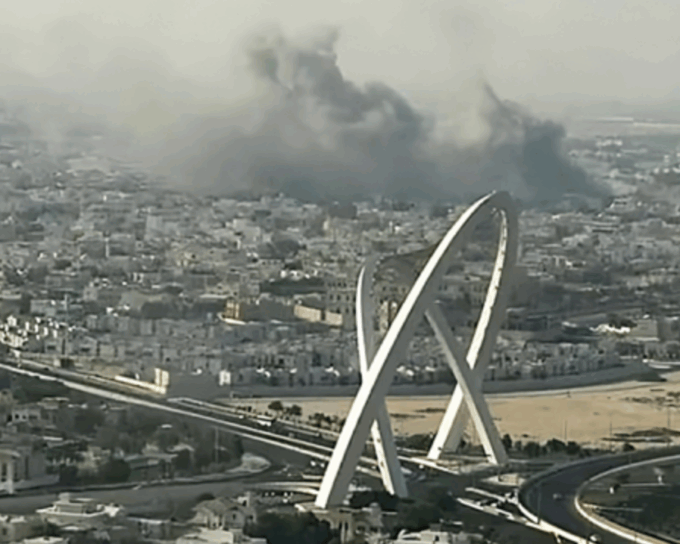

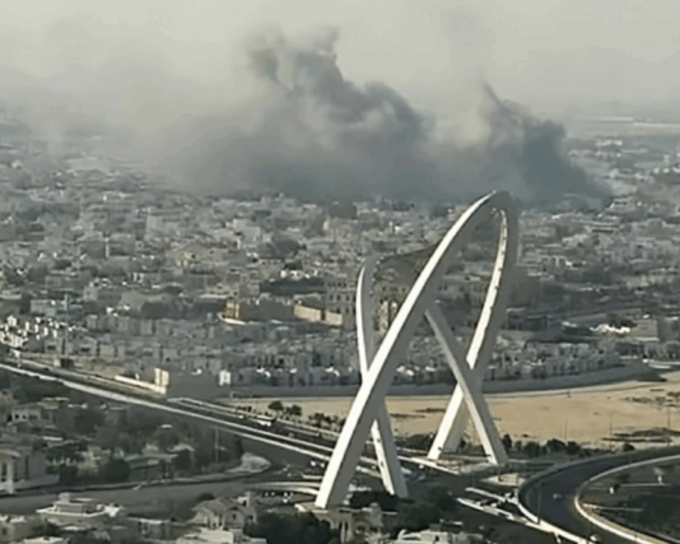

 Global Justice in the 21st Century