

The Prisoners’ Diaries: Palestinian Voices from the Israeli Gulag, edited by Norma Hashim, in close collaboration with the Centre for Political & Development Studies, Gaza, 2013
There are many moving passages that can be found in these excerpts from prison diaries and recollections of 22 Palestinians. What is most compelling is how much the material expresses the shared concerns of these prisoners despite great variations in writing style and background. A few keywords dominate the texts: pain, God or Allah, love, dream, homeland, steadfastness, tears, freedom, dream, prayer. My reading of these diaries exposed me to the distinct personal struggles of each prisoner to survive with as much dignity as possible in a dank and poorly lit circumstances of isolation, humiliation, acute hostility on the part of the prison staff, including abusive neglect by the medical personnel. The diaries also confirmed that even prolonged captivity had not diluted the spirit of Palestinian resistance to Israeli occupation, but on the contrary had intensified it. A strong impression of the overall illegitimacy of Israel’s encroachment on the most fundamental rights of the Palestinian people is also present on virtually every page.
Although not professional writers, the sentiments expressed have a special kind of eloquence arising from their authenticity and passion. A female prisoner, Sana’a Shihada, on learning that her family had been spared the demolition of their family home, describes the ordeal of her interrogation in a poetic idiom: “..the anger of the interrogators was like snow and peace to me [an Arabic saying that conveys a sense of being ‘soothing’]. I felt the pride of the Palestinians, the glory of Muslims, and the brightness of honesty. I knelt to Allah, thankfully. My tears fell on the floor of the cell, and I am sure they dug a path which those later imprisoned will be able to see.” Or the words of Eyad Obayyat, a prisoner facing three lifetime sentences for his role in killing several Israeli soldiers, “Among us prisoners, the unity of love for our homeland was precious above all other things.” Another, Avina Sarahna, asks poignantly, “Is resisting occupation a crime?…Let me be a witness to the truth, and let me stay here.” Speaking of the pain of being separated from her four children, Kahera Als’adi writes, whom she discovered were living in an orphanage: “I couldn’t keep myself from bursting into tears. Was my loving family scattered like this? Was fate against us because of our love for our homeland?..After that visit, I felt like a slaughtered sheep.” These randomly selected quotations could be multiplied many times over, but hopefully the overall tone and coherent message are conveyed by these few examples.
What I found most valuable about this publication was its success in turning the abstraction of Palestinian prisoners into a series of human stories most of which exhibit agonized feelings of regret resulting from prolonged estrangement from those they most love in the world. Particularly moving were the sorrows expressed by men missing their mothers and daughters. These are the written words of prisoners who have been convicted of various major crimes by Israeli military courts, some of whom face cruel confinement for the remainder of their life on earth, and who have been further punished by being deprived of ever seeing those they love not at all, or on rare occasions, for brief tantalizing visits under dehumanizing conditions, through fogged up separation walls.
It is hard not to treat a prison population as an abstraction that if noticed at all by the outside world is usually reduced to statistics that appear in reports of human rights NGOs. These autobiographical texts, in contrast, force us to commune with these prisoners as fellow human beings, persons like ourselves with loves, lovers, needs, aspirations, hopes, pious dreams, and unrelenting hardships and suffering. There is also reference to the other side of the prison walls. These prisoners show concern for the suffering that imprisonment causes their families, especially young children and elderly parents. Given the closeness of Palestinian families it is certain that those who are being held in prison would be terribly missed, especially as their confinement arises because of their engagement in a struggle sacred to virtually every Palestinian. Such humanization of Palestinian prisoners is undoubtedly superfluous for Palestinians living under occupation or in refugee camps where arrests, which resemble state-sanctioned kidnappings are being made daily by Israeli security forces. It is a tragic aspect of the occupation that after 45 years of occupation there is not a Palestinian family that is left untouched by the Israeli criminalization of all forms of resistance, including those that are nonviolent and symbolic.
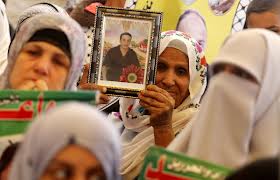
We need a wider ethical, legal, and political perspective to grasp properly this phenomenon of Palestinian prisoners. The unlawful occupation policies of Israel are unpunished even when lethal and flagrantly in violation of international humanitarian law, and are rarely even officially criticized in international arenas. In contrast lawful forms of resistance by the Palestinian people are harshly punished, and the resulting victimization of those brave enough to resist is overlooked almost everywhere. If we side with those who resist, as was done during World War II when those Europeans mounted militant forms of resistance against German occupation and criminal practices, we glorify their deeds and struggle. Yet if the occupier enjoys our primary solidarity we tend to criminalize resistance without any show of empathy. To some extent, this book cuts through this ideological myopia, and lets us experience the torment of these prisoners as human beings rather than as Palestinian ‘soldiers’ in the ongoing struggle against Israel.
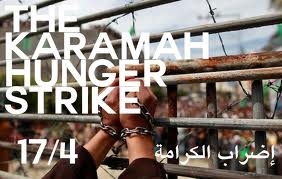
In the past year, heroic Palestinian hunger strikers, initially Khader Adnan and Hana Shalabi, did their best to call attention to the abusive character of Israel’s terrifying violent arrests in the middle of the night followed by imprisonment for lengthy periods without even making charges or holding trials. Israeli recourse to administrative detention takes place even in circumstances where the person being confined was engaged in no activities that could be remotely considered to pose a security threats. It is notable that despite hunger strikers putting their own lives at severe risk to protest such inhumane behavior by Israel in its role as the occupying power, the world refuses to pay attention even to such hunger strikers, which is somewhat shocking despite decades of lectures to the Palestinians to renounce armed resistance, and engage instead in nonviolent forms of resistance, and if they do so, they will win political support for their grievances even from governments allied with Israel, including the United States. To date the evidence suggests a far uglier pattern: when Palestinians resist by way of armed struggle, their actions are denounced and their grievances are ignored, while when they resist nonviolently, their actions and their grievances are ignored. What is worse, while this shift in Palestinian tactics has taken place in recent years, the Israeli governing process moves steadily to the right until now in March 2013, the latest governing coalition in Tel Aviv is avowedly settler oriented. The international background music has not changed, and Washington loses no opportunity to sound the trumpets while declaring its unconditional and undying loyalty to Israel, pretending not to notice violations of international law and the deliberate efforts to make the two state solution yesterday’s dream, today’s nightmare.
The preoccupation of these prisoners with the fate of the singular Israeli prisoner at the time, Gilad Shalit, was something of a surprise for me, although it is understandable. Why, the Palestinians ask themselves, does the world make such a fuss about a single Israeli being held in Gaza after being captured during a military mission, and ignore the fate of the many thousands of Palestinians detained for year after year because they fought for the freedom of their country? Once considered, such a question is both natural, and once asked, the grotesque display of double standards seems self-evident. But there is also an opposite appreciation of the significance of Shalit expressed, which recognizes that the October 2011 deal struck to release 1,027 Palestinian prisoners would not have happened had Shalit not been captured. In this sense, the Palestinians in recording their feelings realize that their freedom has been made possible because Hamas succeeded in capturing and holding Shalit. This was no small achievement. During the massive attacks by Israel on Gaza in 2008-09, Operation Cast Lead, IDF commanders told their troops that this violence had been unleashed so as to gain the release of Shalit. Had Hamas allowed Shalit to go free or had be been killed in the operation, then there would have been no negotiations for the release of Palestinian prisoners. It is as simple as that. Of course, it is not simple. Many of those released were soon rearrested by Israel, once more undermining even minimal trust between the two peoples, and again showing that Israel can defy legal and moral obligations without facing any adverse consequences, a metaphor for the overall stranglehold of the occupation.
Above all, these texts in almost every page confirm that particularly prized Palestinian collective public/private virtue of sumud or steadfastness. Such exhibitions of courage indirectly shames those of us who suffer far less or not at all, and yet find ourselves discouraged and dispirited by the ills of the world to an extent that we retreat from public engagement to the comfort zones of sanctuaries of escape. These prisoners have no such option, maintaining their commitment to the Palestinian struggle in the darkest of circumstances, consigned to spending their most energetic years behind bars or surrounded by dank prison walls. We can ask ourselves where does such courage come from? There is no definite common answer. Yet what comes across from these diary pages are deep commitments rooted in love of family and homeland as strengthened by religious faith and practice and sustained by prison camaraderie or in embittered reaction to the dehumanizing atmosphere of enduring prison life year upon year.
We should not forget that there is a callous and manifest unlawfulness about this network of Israeli prisons, all but one of the 19 being located in Israel, in direct violation of Article 76 of the Fourth Geneva Convention governing belligerent occupation: “Protected persons accused of offenses shall be detained in the occupied country, and if convicted they shall serve therein.” Underlying such a provision of law is a humane impulse: compelling an individual to be imprisoned in the occupying country imposes a geographic separation from family and homeland, which in the Israeli case is accentuated by a permit system that as a practical matter makes family visits from occupied Palestine a virtual impossibility. With respect to prisoners from Gaza, there are virtually no prison visits allowed even if sentences are for several decades or lifetime. As is widely known, the people of Gaza have been subject to a punitive blockade maintained ever since mid-2007 that involves a massive imposition of collective punishment on the civilian population, a crime of war so specified in Article 33 of the Fourth Geneva Convention.
Israel’s cruelty toward Palestinian prisoners is underscored by its recent practice of releasing West Bank hunger strikers at death’s doorstep, then deporting them for a period of years to Gaza, that is, beyond access to their families and normal places of residence, at a moment when their physical condition is so deteriorated that they could not possibly become a security threat and when most in need of nurture and familiar surroundings. Hana Shalabi, who was particularly close to her family, was so deported to Gaza for three years and just days ago. Ayman Sharawneh was similarly deported for ten years as part of a plea bargain. Such shocking practice is worthy of global condemnation. It involves another form of collective punishment inflicted both on the person so confined to Gaza and to his or her family that is not allowed to travel from the West Bank to Gaza. There is a triple perverseness about this practice of prisoner release: Gaza itself an open-aired prison also serves Israel as a site of punitive internal exile, and makes the distinction between ‘prison’ and ‘freedom’ almost disappear into surreal thin air. One can only imagine the global protest movement if Hamas had conditioned Gilad Shalit’s release on his confinement in a Salafi controlled region of Egypt!
This pattern of unlawful imprisonment and unjust deportation also interferes with the preparation of adequate defense representation as Palestinian lawyers also experience routine difficulties in obtaining permits and visiting rights. Article 76 also requires that prison conditions for those living under occupation should under no condition be worse than those of Israeli prisoners in Israel, which makes the disallowance and obstruction of family visits for Palestinians unlawful, as well as cruel.
It is increasing evident that international humanitarian law falls short when it comes to offering suitable protection to the Palestinian people who have been living under occupation since 1967, with no end in sight. It is not only occupation, but a continuous process of encroachment that cumulatively has assumed the character of de facto annexation via the massive settlement phenomenon. Under these circumstances, and given the inalienable right of self-determination that belongs to the Palestinian people, there is posed some protection for rights of resistance. These rights need to be exercised in a manner respectful of civilian innocence, but difficult issues of identification are posed in relation to armed and violent Israeli settlers. True, those who act in resistance are not technically prisoners of war, who are protected the Third Geneva Convention, but they are acting to fulfill fundamental rights being violated by those who occupy their land and sit in judgment when they act defensively. What is needed, beyond all doubt, is a code of conduct, if not an additional protocol to the Geneva Conventions, that fills in this gap associated with resistance. Resisters should be treated with the same dignity under international humanitarian law as is associated with Prisoners of War. Their acts, even if violent, are in keeping with prevailing societal and civilizational values, and perpetrators, even when confined for reasonable security reasons, should be treated with appropriate dignity. Unlike sociopathic common murderers, rapists, and the like (and even they should also be treated in accord with international standards), the acts of Palestinian prisoners are viewed as heroic by their own society and political culture, as well as many people throughout the world. They deserve international recognition and protection. Their ‘crimes’ will eventually be vindicated by history as part of a final chapter in the struggle against European colonial rule.
I believe it to be a moral obligation of all of us who care about human rights and freedom to read this book, and share it with others. The Palestinians, whose rights and dignity have been long trampled upon, especially deserve our deepest empathy, as well as our solidarity in their struggle. Reading the words of these prisoners vividly discloses the nature of such a struggle in the form of witnessing by those Palestinians who have put their lives at risk for the sake of recovering their stolen homeland. We also owe a debt of gratitude to Norma Hashim who has edited this collection as a work of devotion and an expression of solidarity with and reflection on the Palestinian struggle. Its publication in book form is timed to coincide with Palestinian Prisoner’s Day, April 17th.
The pdf version of Prison Diaries can be downloaded now for USD1.99 at http://theprisonersdiaries.blogspot.com. The printed book will be available at palestinemall.net from 17 April 2013.

 Global Justice in the 21st Century
Samer Issawi, Hunger Strikes, and the Palestinian Struggle
28 DecFor the last three years Palestinian prisoners, mainly unlawfully detained in Israeli jails, have been engaged in a series of life threatening hunger strikes to protest administrative detention imprisonment (that is,without indictment, charges, and access to allegedly incriminating evidence), abusive arrest procedures (including nighttime arrests involving brutality in the presence of family members, detention for prolonged interrogations violating international standards, e.g. 22 hours at a time, sleep deprivation), and deplorable prison conditions (including unlawful transfer to Israeli prisons, denial of family visits, solitary confinement for prolonged periods).
No recent Palestinian prisoner has received more attention among the Palestinian than Samer Issawi, released a few days ago after reaching an extraordinary bargain with prison officials last April. He agreed then to stop his hunger strike, which had lasted an incredible 266 days, either partially or completely, in exchange for an Israeli pledge to release him in eight months at the end of 2013. Notably, Issawi had rejected Israeli earlier offers to release him provided he would agree to a ten year deportation order to either Gaza or some distant country. Issawi refused this arrangement, a form of punitive release, which Israel had imposed on other hunger strikers, including Hana Shalabi. In Issawi’s words, “I do not accept to be deported out of my homeland.”
In the background also is the apparent Israeli effort to avoid having hunger strikers die, either because of their memory of the strong impact of Bobby Sands’ death on public opinion in Northern Ireland back in 1981 or as an aspect of the Israeli brand of ‘subsistence humanitarianism’ that has been explicitly most implemented in Gaza for the past decade. It involves a grouping of policies that seeks to make life extremely difficult for Palestinians but short of the point of death or epidemic, an extreme austerity reinforced periodically by what some Israelis referred to as ‘mowing the lawn,’ that is, relying on military incursion to ensure that the average collective material circumstances of Gazans don’t rise above subsistence levels. Such an articulated cruelty, proclaimed to be the rationale for an occupation policy, is bound to sow seeds of hatred, resentment, and give rise to feelings of revenge among even the most moderate of Palestinians. I have encountered such responses to Israeli practices and policies among the gentlest of Gazans with whom I have met in recent years.
Issawi’s case stands out for several reasons aside from taking note of the length of his hunger strike. His expressed motivation was an understandable reaction to being rearrested in July 7, 2012 after having been released the prior year as part of the arrangement in which 1,027 Palestinian prisoners were given their freedom in exchange for the return of Gilad Shalit, the captured Israeli soldier. Issawi was rearrested at the Juba checkpoint, accused of violating the terms of his release that restricted him to Jerusalem, his place of residence. He was apparently still within the municipal limits of Jerusalem, but in an area treated as the West Bank by the Occupation authorities, and even so was claiming only to be seeking a shop for the repair of his car. For this possible technical violation of the release agreement, he was sentenced to eight months in prison, but then additional to this, a special committee, acting under Military Order 1651, Article 186, used its authority to rule that someone rearrested in this way could be returned, on the basis of a secret file, to prison for the completion of his original sentence, which in Issawi’s case meant twenty years. There was no right to challenge such a seemingly outrageous ruling. Even Issawi’s lawyer was denied access to the file that contained the supposedly incriminating information. It was against this background that Issawi was unwilling to accept a reversal of his release from jail. He declared that a hunger strike was the only weapon available to him to protest such treatment, implying that he would either win his freedom in that way or die in prison.
Issawi’s family history is emblematic of what it has meant to live for most Palestinians decade after decade under military occupation. Samer’s brother, Fadi, was killed in 1994 by Israeli security forces, and a second brother, Medhat has spent the last 19 years in prison, while his sister Shireen was detained during 2010. The family lives in the village of Issawiyeh, a suburb of Jerusalem, and a site of protest in recent years, especially in reaction to the confiscation of village land to create a ‘national park’ and to establish a waste dump. In other words, the context of occupation, annexation, expropriation of resources, and suppression are all part of the Issawi story. Indicatively, Israel banned any celebration of Issawi’s release in Issawiyeh, an order somewhat ignored by a warm welcoming crowd joyful about his release.
Even before his rearrest for violating the terms of his release, the Palestinian NGO that monitors Israeli prisons and policies, Addameer, indicated that Issawi was subjected to constant harassment by security forces. He was questioned at length several times a week, and was denied the opportunity to live a normal life. The daily ordeal of Palestinians living under occupation is a Kafka tale of lawless law, where those in charge decide
whatever they wish, hide behind veils of secrecy, and impose their authority by relying on excessive force and a variety of humiliating obstacles to normalcy. Issawi made clear that his struggle would not end with his release from prison: “It is our obligation as freedom fighters to free all Palestinian political prisoners.” Also, that there was a link between his kind of resistance by Palestinians and the broader international solidarity movement: “I draw my strength from all the free people in the world who want an end to the Israeli occupation.” Of course, there is mutuality present as those who support the Palestinian struggle from outside are inspired by the courage and resilience of individuals such as Samer Issawi, and should know these stories of nonviolent Palestinian defiance.
The Issawi story is more than the struggle of an individual or the sad saga of a family active in resistance or a village confronting the daily realities of an occupation that is also a scenario of resource confiscation and oppressive living conditions. It represents a metaphoric summary of the Palestinian reality, epitomized by pervasive vulnerability, violent oppression, and the steady encroachment on the integrity of the Palestinian habitat, but also by the dynamics of resistance, struggle, and hope for a better, decent future. It is a reality we should all reflect upon at the turning of the year, wishing and acting for a better 2014 for Palestinians and for all of us.
Tags: Bobby Sands, Gilad Shalit, Hana Shalabi, Israel, Israel/Palestine, Northern Ireland