Tag Archives: Iraq

Beyond Words: Poet’s Lament

5 Aug

Poetry at its finest stretches the expressiveness of language beyond its prior limits, not necessarily by its choice of words, but through the magical invocation of feelings embedded deeply within consciousness. Yes even poetry has its own frontiers that if crossed lead to a word-less terrain littered with corpses of atrocity, what Thomas Merton and James Douglass have soulfully identified for us as the realm of ‘the unspeakable,’ and then are brave enough to explore forbidden terrain. When we do not respect the unspeakable by our silence we domesticate the criminality of the horror that human beings are capable of inflicting on one another, and give way to the eventual emergence of normalcy as has happened with nuclear weapons detached from the happenings of Hiroshima and Nagasaki.

I came across an utterance by one of my heroes, the Jesuit priest/poet, Daniel Berrigan, while on trial for pouring blood on draft cards during the Vietnam War: “I was in danger of verbalizing my moral impulses out of existence.” These words appear at the start of a haunting poem by another one of my heroes, the recently dead poet, Adrienne Rich; the poem’s title is “The Burning of Paper Instead of Children” and I recommend it not only as a stunning poetic achievement but also as a text for meditation.

Such thoughts seem far from the recent controversies on this blog about

the competing justice and victimization claims of Israelis and Palestinians, and the sort of language that seems historically validated for some to discuss such matters of life and death, while being hateful to others. It made me appreciate anew that there are some rivers of divergence that are too wide to cross, and that the attempt, first generates anger and frustration, but eventually brings despair, even sadness. Of course, the blogosphere is a new kind of undefended public space that can be entered by anyone with good will or ill. To appoint myself as a kind of censor, given the capacity to exclude or include comments, was neither

congenial nor tenable as a role, and I have decided to give it up except in relation to hate speech or defamatory material, although even here I acknowledge that some degree of subjectivity will always be present, at least unconsciously.

I am of course aware that the Israel/Palestine conflict is almost impossible to approach in a spirit of moderation, and I realize that many of the hostile comments are directed at my particular understanding and way of presenting the issues. Indeed, my posts have been scrutinized by pro-Israeli zealots so as to find some turn of language or alleged opinion that can be used to discredit me in other settings, especially in relation to my role as Special Rapporteur for Occupied Palestine on behalf of the UN Human Rights Council. Unlike comments that can be excluded, the posts are in the public domain, source material for those who seek to mount a personal attack, and there are no rules of the game to ensure that allegations are at least fair and reasonable. I have tried my best not to be intimidated or hurt by such concerted efforts to harm my reputation and destroy my self-esteem, but have not always succeeded.

As the person who dares to continue to write a blog under such circumstances, I have tried to devise for myself a code of responsible behavior for my own benefit, and to establish an atmosphere of trust and respect. I have selected two main principles as guidelines: (1) sustain integrity, especially whenever the suffering of others is involved, especially if it is unpopular to complain about what is happening, or worse, to mount sharp criticism of the perpetrators; in effect, talk truth to power, acknowledging, as I do, in the process that for Gandhi a dedication to truthfulness should never be separated from a dedication to nonviolence. (2) Admit mistakes, and explain their occurrence as honestly and helpfully as possible. In addition, I would add a couple further principles to this informal code, which like the Japanese game of Go has never put its rules in the form of an authoritative written text: (3) use the blog space to challenge whenever possible the ‘politics of invisibility’ that shields from our awareness structures of suffering, abuse, and exploitation; I attempted to do this, for instance, by calling attention to the extraordinary Palestinian hunger strikes that were almost totally ignored by the mainstream media in North America while giving daily coverage to Chinese human rights activists who were enduring far less. (4) use the blog space from time to time to consider a complementary aspect of the way reality is so often obscured and twisted by media, government, special interests, a pattern I label ‘the politics of deflection,’ that is, diverting attention from the message to the messenger, or condemning the auspices under which allegations were made while ignoring their substance; this is happening all the time, perhaps most damagingly by convincing much of the public for decades that the menace of nuclear weaponry has to do mostly with its proliferation rather than with its possession, deployment, threat, and possible use; more controversially, to obscure the violence of energy geopolitics behind a protective screen of counter-terrorism as in fashioning a rationale for attacking Iraq in 2003.

The work of poetry is poetry, but there are times when poets do produce lines here and there that illuminate the human predicament in unforgettable ways. Of course, the recognition of such an illumination is highly personal, and should never be defended. For me the following lines from Rainer Maria Rilke’s Fragment of an Elegy had this kind of explosive impact upon my imagination:

Once poets resounded over the battlefield, what voice

can outshout the rattle of this metallic age

that is struggling on toward its careening future?

Although composed almost a hundred years ago, this image of triumphal militarism illuminates current conditions and obliquely addresses our worst fears. We need to be thankful for these poems that make the outer limits of the speakable more accessible, especially in dark times of torment, great risk, and confusion.

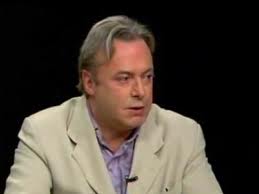
Christopher Hitchens: RIP

20 Dec


            I knew Christopher Hitchens casually, envied his rhetorical fluency, abhorred his interventionist cheerleading, and was offended by his arrogantly dismissive manner toward those he deemed his inferiors in debate or discussion. Perhaps, his sociopathic arrogance is epitomized by the kind of explanation he often gave of why he was such a heavy drinker, as for instance,  “..because it makes other people less boring. I have a great terror of being bored.” I confess that someone who needs to drink hard liquor to bear the company of others likely to be a bore, if not a boor!  Presumably as result of his profligate life style, Hitchens surprisingly graduated from Oxford with rather paltry third class honors.  If some non-academic institution of appraisal were available to offset Hitchens’ undeniable gifts of the mind with his deficiencies of character and heart, the Oxford grade would seem deserved even if Hitchens had been a dutiful student.


            I was particularly appalled one time when we were on a panel together by the way he insulted a member of the audience for putting a question awkwardly. There was something so chilling about this revelation of character as to cancel out for me his brilliance of expression reinforced by an astonishing erudition. It coheres with his willingness to forgo second thoughts about his advocacy of launching an unlawful aggressive war against Iraq, despite the false pretenses and bloody ordeal that the Iraqi people endured, and continue to endure.


            There is no doubt that Hitchens faced his own difficult death bravely, without succumbing to deathbed retreats, whether from stubbornness or authenticity it is hard to say.  He apparently made many people happy with his dogmatic embrace of atheism during a time of religious revival in this country and elsewhere. He had the courage to express his convictions, but not much empathy, and certainly no humility, for those among us who take religion and spirituality seriously.


            For reasons never made persuasive, Hitchens, as disappointed Trotskyites often do, lurched to the right in the early 1990s, and for a while even seemed to join the neoconservative dance. He resigned in 2002 as a columnist for The Nation on ideological grounds, and was clearly more comfortable in the slicker, sicker world of Vanity Fair, and also where his work was far more acclaimed.


            Hitchens is for me a hard case when it comes to deciding what to remember and what to forget. As indicated, I found his demeanor generally unpleasant in that Oxonian highbrow sense and his late politics reactionary and essentially mindless in the sense of indifference to the relevance of law, truth, and, most of all, the rights of others to shape their own destinies in the spirit of self-determination. At the same time, someone who unabashedly depicted the criminality of Kissinger’s embrace of Pinochet’s torture and crimes against humanity, deserves some sort of post-mortem salute.  As well, like Hitchens disillusioned by the American two party system, I voted for Ralph Nader in the 2000 elections, and although it did not contribute to the Bush victory, I came to reconsider my view that the choice between Bush and Gore was of no consequence. I do retain the view that Nader discussed issues that needed to be confronted, especially relating to the excesses of finance and globalized capitalism that neither party has yet to face, and only recently with the Occupy Movement have such questions started to light up the political sky. In the end it is Hitchens erudite and often illuminating essays and articles on political literature, past and present, which will continue to merit attentive reading and will likely be gratefully cherished for a long time to come. Yet even with respect to his intellectual virtuosity, Hitchens lack of a generosity of spirit darkens all horizons of expectation.


            In the end, we need to suspend moral and political judgment, and celebrate those rare human beings whose life and ideas exhibited memorable vividness. Hitchens was one of those: Christopher Hitchens RIP  (Requiescat in Pace)

Criminalizing Diplomacy: Fanning the Flames of the Iran War Option

11 Nov


            How many times have we heard in recent weeks either outright threats to attack Iran mainly emanating from Israel or the more muted posture adopted by the United States that leaves ‘all options’ on the table including ‘the military option’? What has Iran done to justify this frantic war-mongering in a strategic region that is sorting out the contradictory effects of the long Arab Spring and is the contested site of energy geopolitics that has replaced territory and minerals as the core issue of world politics?


            As a matter of historical context, it is worth observing that the Western military interventions of recent years, Iraq and Libya, were both in oil-producing countries, devastating the country to achieve regime change, which remains the central tenet of the neocon/Netanyahu vision for a reconfiguration of power in the Middle East. It follows that Iran remains the only oil producer in the region that refuses to play nicely with West, and has been sanctioned to some degree ever since it achieved an anti-Western regime change back in 1979. In this setting of pre-war hysteria—pouring the fuel of rumor and threat on the fire of belligerent diplomacy—I have no intention of discounting the grievances of those who bravely opposed the theocratic regime from within after the fraudulent elections of June 2009 in the shape of the repressed Green Movement, but it is beside the point in the present debate.


            Why talk of oil if the war momentum is explicitly preoccupied with the alleged effort by Iran to obtain nuclear weapons? Let the facts speak for themselves. Where there is oil and an anti-Western government in power, recourse to the military option follows, or at least an insistence on sanctions that aim to be crippling and regime-changing. Just as in Iraq, the smokescreen in 2003 were its stockpile of weapons of mass destruction, and when that war justifying scenario was discredited, democracy and human rights abruptly took over as the strategic rationale. Not to be overlooked, of course, was backroom Israeli pressures to destroy the Baghdad regime of Saddam Hussein,  as well as the oil, involving both favorable access to the oil fields and some leverage over pricing. We all need to be reminded over and over again that Western prosperity rested on cheap oil, and its future prospects crucially depend on reliable supplies of oil at moderate prices. We need to be reminded because as Donald Rumsfeld once reassured the world, ‘America doesn’t do empire.’ Really! Concerns about oil security in the future are the real unacknowlegeable threats to the security of the West!


            Such illicit interventionary diplomacy should be unmasked. For once we can look to Moscow for a benign clarification. The Russian Deputy Foreign Minister, Gennady Galitov, was quoted as follows: “The world community will see additional sanctions against Iran as an instrument of regime change in Tehran. We cannot accept this approach.” The plausibility of this interpretation is given further credibility by Iranian exile voices calling for targeting Iran’s central bank and currency with the avowed intention of bringing such hardship to the people of Iran as to mount destabilizing pressures from below on the Tehran government. The leader of the Green Movement, Mir Hossein Mousavi, has repeatedly spoken against international sanctions, insisting that they hurt the people of Iran and strengthen the hold of the government on the population. The struggle for Iranian self-determination must be waged by the Iranian people, not their self-interested patrons from without. Such patrons heeded in the Iraq case, and recently influential in the Libyan case as well, contribute to a war making process that leaves their country in shambles. True, the West is at first ready, but not able, to pick up the pieces. The result is continuous unresolved violent conflict, acute and widespread human insecurity, followed by eventual abandonment of the post-war reconstructive commitment. Iraq is tragically illustrative.


            As has been pointed out by some opponents of this war fever, Iran has not attacked another country in 200 years. As President Ahmadinejad recently informed Iranians in the city of Shahr-e Kord: “The Iranian nation is wise. It won’t build two bombs against the 20,000 you have.” The former heads of Israel’s Mossad, Meir Dagan and Efraim Halevy, confirm the view that Israel would not be seriously threatened even if it should turn out that Iran does come to possess a few nuclear weapons in the future. Their contention would be that such a nuclear capability would only pose a threat for Iran’s Sunni rivals, especially Saudi Arabia and Bahrain, as Israel would retain an overwhelming deterrent even without American backing. Of course, it is true that the Western alliance does not want any regional developments to destabilize its regional friends, no matter how autocratic and repressive. So much for the supposed Western embrace of the democratizing spirit of the Arab Spring! For hypocritical William Hague, the pro-Israeli Foreign Secretary of Great Britain to say that Iran’s nuclear program is threatening ‘to undermine’ the Arab Spring by ‘bringing about a nuclear arms race in the Middle East of the risk of conflict’ is obviously to point his finger in the wrong direction. There are also murmurs in the background, perhaps to shift attention away from Israeli war-mongering, to the effect that the real danger associated with Iranian acquisition of nuclear weapons is that Turkey and Saudi Arabia would follow suit.


            If these were the serious concerns of this kind there are other far better ways to proceed. Why is there no mention of Israel’s nuclear weapons arsenal, of Western unlawful assistance in helping Israel to cross the nuclear threshold covertly, of Israel being one of three important states in the world that has refused to become a party to the Nonproliferation Treaty, and of Israel’s refusal to discuss even the idea of a nuclear free zone in the Middle East that Iran has announced its readiness to join? If oil is the foremost reality of which we must not speak, then Israeli nuclearism is a close second. We understand that the Obama presidency has been reduced to silence, but why are no regional and global voices speaking on behalf of nuclear sanity?  Is Israel’s status as a nuclear weapons state as untouchable a feature of a dysfunctional system of global governance as the retention of Britain and France as two of five permanent members of the UN Security Council? Such sacred cows of an entrenched world order are dooming the 99% as much as the demons of Wall Street!


            And then there is a third reality of this deepening crisis of which we are blinkered by a compliant media not to notice: the total disregard in the public policy debate of international law that prohibits all non-defensive uses of force, including threats to do so. This core norm of the UN Charter set forth in the language of Article 2(4), reinforced by the International Court of Justice in the Nicaragua case in 1986, was built into the idea of Crimes Against Peace that served as the basis for indicting and convicting surviving German and Japanese leaders at the Nuremberg and Tokyo trials after World War II. There is not even a lawyerlike attempt to argue that Bush’s discredited doctrine of preemptive war applies to Iran, there is instead a presumed total irrelevance of international law to the policy debate. To discuss the military option as if not circumscribed by solemn legal commitments, while building the case that Iran is subject to attack because it has violated its NPT obligations as a state pledged not to acquire nuclear weapons, is double think emblazoned on the sky of hard power geopolitics. Accountability for the weak and vulnerable, discretion for the strong and mighty. It is this woeful message of street geopolitics that is being transmitted to the peoples of the world in this crisis-building moment.


            There is one final point. If ever there was an argument for the acquisition of nuclear weapons by Iran, the diplomacy of Israel and the West has fashioned it in a strong form. After all Iran is being constantly threatened with attack by states for more powerful than itself, and although it possesses retaliatory capacity, it is vulnerable to devastating attacks from sea, air, and land. Can we imagine a better set of conditions for acquiring nuclear weapons so as to deter an attack? If deterrence legitimates nuclear weapons for the West, why not for Iran? Would Iraq have been attacked in 2003 if it had a stockpile of nuclear weapons accompanied by delivery capacities? These questions point in two directions: the unacceptable two-tier structure of governance with respect to nuclear weaponry that the world has endured since the atomic bombs were dropped on Hiroshima and Nagasaki in 1945 and the imperative urgency of rejecting nuclear hegemony and oligarchy, and moving toward a negotiated nuclear disarmament treaty. There is no morally and legally acceptable or politically viable alternative to the abolition of all nuclear weapons as a global policy priority of utmost urgency.

IRAQI OCCUPATION AND HIGHER EDUCATION: THE GHENT CHARTER

4 Jan


For Americans, the long occupation of Iraq, dating back to 2003 when George W. Bush notoriously proclaimed ‘mission accomplished,’ is measured almost entirely by the American casualty count and the cost of the war to taxpayers, now estimated to be over $3 trillion, an amount large enough to make major inroads on global poverty and preventable disease. The loss of Iraqi lives or the devastation of the country, or the long suffering inflicted on the people of Iraq, does not enter into calculations. Much attention is given to whether the outcome can be called ‘a success’ or somehow beneficial for the people of Iraq, but without any notice of the enormous human price paid by a people that was never consulted in typical imperial behavior. Iraq is the poster child of post-colonial colonialism that disregards the ethos of self-determination in pursuit of geopolitical goals such as oil, regional hegemony, Israeli priorities.

For Iraqis, the occupation followed a frightening ‘shock and awe’ onslaught in 2003 that had been preceded by twelve years of punitive sanctions that took hundreds of thousands of civilian lives following the Gulf War of 2001 that deliberately devastated the infrastructure of the country to a degree that a respected UN Report described the country as bombed back to ‘the stone age.’ A phenomenon that Madeleine Albright notoriously described at the time on prime time TV “as worth it” when confronted with the estimated civilian losses due to sanctions as 700,000.

During this period Iraq shifted its status from being the country with the most impressive development statistics in the region with respect to social indicators to becoming a failed state in every sense: increasing poverty, loss of skill personnel in all sectors, declining literacy, declining life expectancy, staggering unemployment, destruction of cultural life, pervasive civic violence, lethal religious conflict, all forms of acute insecurity.  (See some salient statistics in the Ghent Charter with link at end of text below)

(additional information is contained in an excellent article by Dirk Anriaensens, “Iraq: The Age of Darkness,” <www.brussellstribunal.org/> International Seminar on the Situation of Iraqi Academics, under ‘publications’)

True, Iraq under Saddam Hussein had been oppressively governed, especially for the Kurdish minority and the Shiite majority, but there was a high degree of social order, material progress, and economic stability. True, Iraq was a disruptive presence in the region, attacking Iran (with U.S. encouragement) in 1980, and then invading and annexing Kuwait in 1990. Yet nothing can vindicate the American led response based on war, punitive sanctions, and prolonged occupation. By now it should be evident that the forcible destruction of the regime of Saddam Hussein caused a far worse humanitarian catastrophe than did the abuses, however dreadful, associated with his governance. Military intervention has been uniformly shown to be a darkly dysfunctional corrective for abusive governance, especially in the post-colonial era. The tragedy inflicted on the people of Iraq is a direct result of American crimes of aggression, war crimes, and crimes against humanity, the offenses for which German and Japanese leaders were prosecuted and punished after World War II at the Nuremberg and Tokyo Tribunals. If there is a lesson in all this, it is that imperial grand strategy as it is playing out in the Middle East and Central Asia is intrinsically criminal, and its cruel impositions can only be defeated by campaigns of global solidarity.  Neither states nor the United Nations possess the political will or capabilities to oppose effectively these extensions of colonial behavior in the post-colonial era. As far as human rights are concerned, their realization is essentially a societal challenge, and unless abuse reaches the level of genocide or ethnic cleansing, violations should never serve as a pretext for military intervention even if disguised as ‘humanitarian intervention’ or fulfillments of the norm of ‘responsibility to protect.’

By now, there are no excuses left to ignore the horrors that accompany foreign military occupation. The prolonged experiences of Iraq, Palestine, and Afghanistan provide a consistent confirmation that benevolent claims of the occupier are disguises for exploitation, corruption, oppression, and violence against innocent civilians.

My focus in this blog is on the terrible condition of institutions of higher learning in Iraq.

The shocking portrait of what occupation has meant for academicians and students is depicted by the Ghent Charter that has been endorsed by prominent educators in Europe and elsewhere, including the Rector of the University of Ghent. The BRussell Tribunal has played a leading part in exposing these realities afflicting Iraqi universities, and has organized a seminar to take place in Ghent, Belgium, March 9-11, 2011, with the title “Defending education in times of war and occupation.” It is important that all of us, especially those paying taxes in the United States to pay for this occupation, understand that our silence is complicity. Especially those of us associated with teaching and research in American universities bear an additional responsibility to exhibit even now our solidarity with those who have suffered and are suffering in Iraqi academic communities. We know that many faculty members have been murdered since 2003 (over 500 confirmed cases), particularly those who spoke out and acted against the occupation, and many more have fled the country permanently. The departure of university personnel is part of a wider exodus of middle class Iraqis, estimates are over two million, leaving the country deprived of the sort of national social fabric essential to avoid predatory forms of foreign economic exploitation of the country. We who devote our lives to higher education realize the importance of educated and dedicated young people for the wellbeing of a country. If Iraq’s future is to be restored to some semblance of decency, its institutions of higher learning will need to become safe and hospitable for students and faculty.

In the meantime, read the Ghent Charter and weep! Ghent Charter in Defense of Iraqi Academia