Tag Archives: Israel

A Modest Proposal: Is It Time for the Community of Non-Nuclear States to Revolt?

7 Oct


             There are 189 countries that are parties to the Nuclear Nonproliferation Treaty (NPT) that entered into force in 1970. Only India, Pakistan, Israel, and North Korea have remained outside the treaty regime so as to be free to acquire the weapons. The nuclear weapons states have done an incredibly successful job, especially the United States, in getting a free ride, continuously modernizing their arsenals while keeping the weapons out of most unwanted hands.


            But the NPT was negotiated as a world order bargain. The non-nuclear countries would forego their weapons option in exchange for receiving the full benefits of nuclear energy and a pledge by the nuclear weapons states to seek nuclear disarmament in good faith. After 40 years it seems time to question both the benefits of nuclear energy (especially so after Fukushima) and even more the good faith of the members of the nuclear weapons club. Back in 1996 the World Court unanimously concluded that the nuclear weapons states needed to fulfill their treaty obligation to seek nuclear disarmament as a matter of urgency, and yet nothing resembling disarmament negotiations has taken place. It seems time to declare that the good faith obligation of Article VI of the treaty has been violated, and that this is a material breach that allows all states to disavow any obligation.


            Two mind games have kept the non-nuclear majority of states in line so far: first, convincing the public that the greatest danger to the world comes from the countries that do not have the weapons rather than from those that do; secondly, confusing the public into believing that arms control measures are steps toward nuclear disarmament rather than being managerial steps periodically taken by the nuclear weapons states to cut the costs and risks associated with their weapons arsenals and programs and to fool the world into thinking they are living up to their obligation to phase out these infernal weapons of mass destruction.


            There are other problems too. Israel has been allowed to acquire nuclear weapons by stealth without suffering any adverse consequences, while Iraq was invaded and occupied supposedly to dismantle their nuclear weapons program that turned out to be non-existent and Iran is under threat of military attack because its nuclear energy program has a built in weapons potential. Such double standards and geopolitical discrimination severely erode the legitimacy of the NPT approach.


            Barack Obama earned much favorable publicity, and probably was given the Nobel Peace Prize, because in 2009 he made an inspirational speech in Prague announcing his commitment to a world without nuclear weapons. Although the speech was hedged with qualifications, including the mind-numbing reassurance to nuclearists not to worry, nothing would happen in Obama’s lifetime, it still gave rise to hopes that finally there would be a genuine attempt to rid the world of this nuclear curse. But it was not to be.

As with so many issues during the Obama presidency, the early gestures of promise were quietly abandoned in arenas of performance.


            Has not the time come for the too patient 184+ non-nuclear weapons states to stand together with the peoples of the world to challenge the world nuclear weapons oligopoly? One way would be to declare the treaty null and void due to non-compliance by the nuclear weapons states. Such a move would be fully in accord with international treaty law.


            Another way, perhaps more brash, but also maybe more likely to have a political impact, would be for as many non-nuclear states as possible to take a collective stand by way of an ultamatum: if the nuclear weapons states do not engage in credible nuclear disarmament negotiations designed to eliminate the weapons within two years, the treaty will be denounced.  


An American Awakening?

5 Oct


             The exciting presence of protestors on Wall Street (and the spread of the #OccupyWallStreet protests across the country) is a welcome respite from years of passivity in America, not only in relation to the scandalous legal and illegal abuses of comprador capitalists, but also to the prolongations of wars in Iraq and Afghanistan, a shocking disregard of the impinging challenges of climate change, a rising Islamophobic tide at home, and a presidency that seems less willing to confront hedge fund managers than jobless masses. But will this encouraging presence be sustained in a manner that brings some hope of restored democracy and social wellbeing at home and responsible law-oriented leadership abroad?


            There is little doubt that this move to the streets expresses a deep disillusionment with ordinary politics based on elections and governing institutions. Obama’s electoral victory in 2008 was the last hope of the young in America who poured unprecedented enthusiasm into his campaign that promised so much and delivered so little. Perhaps worse than Obama’s failure to deliver, was his refusal to fight, or even to bring into his entourage of advisors some voices of empathy and mildly progressive outlook. From his initial appointment of Rahm Emmanuel onwards, it was clear that the Obama presidency would be shaped by the old Washington games waged by special interests, as abetted by a Republican Party leaning ever further to the right, a surging Tea Party that is pushing the opposition to the outer extremes of irrational governance, and a Democratic Party that is trying to survive mainly by mimicking Republicans. If such a portrayal of ordinary politics is more or less correct it is a wonder that a more radical sense of America’s future took so long to materialize, or even to show these present signs of displeasure with what is and engagement with what might be.


            For those of us with our eyes on the Middle East two observations follow. The extraordinary falling back from Obama’s speech in Cairo of 2009, which was, contrary to how it was spun by the pro-Israeli media, a very cautious approach to the Israel/Palestine conflict, but at least forward looking in its realization that something more had to be done if negotiations were ever to be more than a charade. The speech contained lots of reassurances for Israel, especially it treated the dispute as essentially territorial (withdrawal to 1967 borders, which deliberately pretends that refugee and exile rights of Palestinians are irrelevant to a just peace), and only seemed to project balance when it insisted on a suspension of settlement expansion as a confidence-building step toward a new cycle of negotiations. It really was a most modest request to insist that Israel temporarily stop expanding settlements that were almost unanimously seen as flagrant violations of Article 49(6) of the Fourth Geneva Convention and posing a real threat to the viability of an independent Palestinian state. When Israeli leaders and their zealous American backers indicated ‘no go,’ the Obama administration back peddled with accelerating speed, gradually isolating the United States on the global stage by the unconditionality of its support for Israel even in situations where Israel is seen by virtually the entire rest of the world as defiant toward international law. Besides this, a few months ago the leaked Palestine Papers underscored Israel’s disinterest in a negotiated solution to the conflict even in the face of Palestinian of huge Palestinian Authority concessions behind closed doors. Of course, Obama should not take the whole blame as Congress has outdone him when it comes to support for partisan positions that often seem to outdo the Knesset.


            The latest phase in American foreign policy in relation to the conflict is associated with the American threat to veto the statehood bid of Palestine in the UN Security Council, coupled with its arm-twisting efforts to induce others to vote with the U.S. against statehood or at least abstain, so that Palestine will not get the nine affirmative votes it needs to receive a positive recommendation and the U.S. will be spared the embarrassment and backlash of casting a veto. The shrillness of the sterile call by Obama in his 2011 speech to the General Assembly to the parties to resume negotiations after almost twenty years of futility, and for the Palestinians the effects were far worse than mere failure    (the ordeal of occupation, loss of land to settlements, annexation wall, road infrastructure).  It should finally be understood. Time is not neutral. It helps Israel, hurts Palestine.


            Disavowing American party and institutional politics and situating hope with the arousal of progressive forces in civil society is different from concluding that the Wall Street protests is more than a tantalizing flash in the pan at this stage. Even this cautionary commentary should make it obvious that the events owe their primary inspiration to Tahrir Square (with a surprising initial push from the Canadian anti-consumerist organization Adbusters, previous mainly known for its irreverent and vaguely anarchistic magazine by the same name), especially the ethos of a nonviolent leaderless, programless spontaneous rising that learns day by day what it is about, who it is, and what is possible. Of course, the stakes for activists are much lower than in Egypt or elsewhere in the Middle East, as there is little risk of death at this point on American streets. At the same time, the monsters of Wall Street are not quite as potent a unifying target for an militant opposition as was the grim personage of Hosni Mubarak, cruel autocrat of more than three decades, and so it may be harder to transform the protests into a sustainable movement.


            In the end, we must hope and engage. The beginnings of hope are rooted in the correctness of analysis, and so we can be thankful that this initiative places its focus on financial and corporate structures, and not on the state. Further along these lines, if the struggle will gain momentum it will be totally thanks to politics-from-below. The implicit not so subtle point is that the center of power over the destinies of the American people has shifted its locus from Washington to New York, and from the penthouse to the the basement!!  We’ll see!!

Reflections on the Abbas Statehood/Membership Speech to the UN General Assembly

29 Sep

            There is a natural disposition for supporters of the Palestinian struggle for self-determination to suppose that the Palestinian statehood bid must be a positive initiative because it has generated such a frantic Israel effort to have it rejected. Despite the high costs to American diplomacy in the Middle East at this time of regional tumult and uncertainty, the United States has committed itself to exercise its veto on Israel’s behalf if that turns out to be necessary. To avoid the humiliation of disregarding the overwhelming majority opinion of most governments in the world, the United States has rallied the former European colonial powers to stand by its side, while leaning on Bosnia and Colombia to abstain, thereby hoping to deny Palestine the nine votes it needs for a Security Council decision without technically casting a veto. On the side of Palestinian statehood one finds China, Russia, India, South Africa, Brazil, Lebanon, Nigeria, and Gabon, the leading countries of the South, the main peoples previously victimized by colonial rule. Is not a comparison of these geopolitical alignments sufficient by itself to resolve the issue of taking sides on such a litmus test of political identity? The old West versus the new South!

            Add to this the drama, eloquence, and forthrightness of Mahmoud Abbas’s historic speech of 23 September to the General Assembly that received standing ovations from many of the assembled delegates. Such a favorable reception was reinforced by its contrast with the ranting polemic delivered by the Israeli Prime Minister, Benjamin Netanyahu, who insulted the UN by calling it ‘the theater of the absurd’ while offering nothing of substance that might make even mildly credible his strident rhetoric claim to support ‘peace,’ ‘direct negotiations.’ and ‘a Palestinian state.’ The deviousness of Netanyahu was made manifest when a few days later the Israeli Government announced that it had approved 1,100 additional housing units in the major East Jerusalem settlement of Gilo. This was a bridge too far for even Hilary Clinton who called the move ‘counter-productive’ and Europeans regarded as deeply disappointing and confidence-destroying, so much so that Netanyahu was openly asked to reverse the decision. There are a variety of other indications that additional settlement expansion and ethnic cleansing initiatives will be forthcoming from Israel in the weeks ahead. Are not such expressions of Israeli defiance that embarrasses even their most ardent governmental supporter enough reason by itself to justify a Security Council recommendation of Palestine statehood at this time? Would it not be worthwhile at this crucial moment to demonstrate the wide chasm separating increasing global support for the pursuit of justice on behalf of the Palestinian people from this domestically driven American reliance on its ultimate right of veto to block Palestinain aspirations? Would it not be well to remind Americans across the country, including even its captive Congress, that its own Declaration of Independence wisely counseled ‘a decent respect for the opinions of mankind’? If ever the use of the veto seems ill-advised and deeply illegitimate, it is in this instance, which the Obama Administration seems to acknowledge, or otherwise why would it use its leverage to induce allies and dependent states to go along with its opposition to Palestinian membership in the UN?

            Turning to the speech itself, the language of recognition may be more notable than the substance. Never before in an international forum had the voice of the Palestinian Authority spoke of Israel’s occupation policies so unabashedly–as ‘colonial,’ as involving ‘ethnic cleansing,’ as imposing an unlawful ‘annexation wall,’ as creating a new form of ‘apartheid.’ With admirable directness, Israel was accused of carrying out the occupation in a manner that violated fundamental rules of international humanitarian law, and cumulatively amounted to the commission of crimes against humanity.

             In the course of his speech Abbas tried hard to reassure the Palestinian diaspora on two matters of deep concern: that the Palestine Liberation Organization (PLO) will continue to represent the Palestinian people, who are the ultimate beneficiaries of the most fundamental of Palestinian rights at stake, the right of self-determination. The issue here is lost on almost all observers of the conflict, that the Palestinian Authority (PA) of which Abbas is president is a subsidiary body that was created by the PLO with a temporary mandate to administer Palestinian territory under occupation, and thus it was important to allay suspicions that the PLO was an intended casualty of the statehood bid so as to territorialize the conflict and give the Abbas and PA leadership complete representational control over the Palestinian role at the UN. The deep concern here relates to the adequacy of representation relating to the Palestinians living in refugee camps in neighboring Arab countries or in exile around the world. In the Palestinian National Council, 483 of its 669 members are drawn from Palestinians not living under occupation. President Abbas used the clearest possible language to reaffirm the position of the PLO just prior to enumerating the five conditions guiding his leadership role: “I confirm, on behalf of the PLO, the sole legitimate representative of the Palestinian people, which will remain so until the end of the conflict in all its aspects and until the resolution of the final status issues.”

            In the background of this representation issue is an anxiety that Palestinian refugee rights will be forgotten or marginalized in the course of striking a deal that is build around a ‘land for peace’ formula. Again Abbas inserted some reassuring language in his speech to the effect that peace will depend on “a just and agreed upon solution to the Palestine refugee issue in accordance with resolution 194,” which unconditionally affirmed a Palestinian right of return. Relevantly, Netanyahu in his speech alluded to the “fantasy of flooding Israel with millions of Palestinians,” which is his way of both dismissing the rights of Palestinian refugees, especially as derived from the massive dispossession of Palestinian in 1948, and insisting on the Palestinian recognition of Israel as ‘a Jewish state.’ This insistence combines  demographics with democracy, contending that ever since the promise of Lord Balfour on behalf of the British Government to a leader of the Zionist movement in 1917 there were continual acknowledgements that Israel was a Jewish state. Netanyahu made short shrift of the claims to dignity and equality of the 1.5 million Palestinians existing under an array of discriminatory burdens by saying merely that Israel treats its minorities in a manner that respects their human rights. It should be recalled that the Balfour Declaration, a notoriously colonial disposition, did not promise the Jewish people a state, but rather ‘a national home,’ and that it was to be established in a manner that did not interfere with the ‘civil and religious rights of existing non-Jewish communities in Palestine.’ Human rights and democracy have become significantly universalized during the last several decades. This development implies that the governing structures of society embodied in the state must renounce any claim of ethnic or religious particularity. Political legitimacy in the 21st century should not be accorded to any state that claims to be a Jewish state, an Islamic state, or a Christian state. Such statist neutrality should be set forth as an element of legitimate statehood by formal action at the United Nations. Such a declaration would impose a limit on the right of self-determination by denying to peoples the right to establish ethnic or religious states. In a globalizing world ethnic and religious diversity are present in every major state, and needs to be respected by unfurling a banner of equality that grants religious freedom to all faiths and allows collective identities to be expressed without prejudice.

            For some widely respected Palestinian activists and NGOs, these assurances were not enough. With the formidable intellectual support of Oxford professor, Guy Goodwin-Gill, the very idea of Palestinian statehood compromises the representational rights of diaspora Palestinians within UN arenas of decision, and potentially deforms future negotiations by according predominance to territorial priorities. Guy-Goodwin’s analysis was built around the general view that a state could never adequately represent people outside its borders. Given existing realities this would mean disenfranchising the Palestine refugee and exile population that comprises a majority of ‘the Palestinian people’ who are as a collectivity the holder of the overarching entitlement embodied in the right of self-determination. Such a view may be technically correct, and operationally prudent, but it overstates the clarity of the legal implications of Palestinian statehood and UN membership, while understating the degree to which what is being questioned are the psycho-political priorities of the current PA/PLO leadership.  To further strengthen and promote the unity of the Palestinian global solidarity movement it is crucial to continue to seek accommodation between territorial and non-territorial dimensions of the Palestinian struggle, and thus to minimize intra-Palestinian divergencies, including the ongoing rift with Hamas. Here again Abbas had some reassuring words to say about the future implementation of the reconciliation agreement reached between the PLO and Hamas in June, but the failure of Hamas to endorse the statehood/membership bid at this time raises doubts about whether cooperation between these two political tendencies of Palestinians living under occupation will be forthcoming in the future.

           There are, against this background, some further grounds for concern that result from gaps or disappointing formulations in the Abbas speech. One glaring gap was the failure to address the accountability issues associated with the non-implemented recommendations of the Goldstone Report arising out of war crimes allegations associated with massive attacks (Israeli code named ‘Operation Cast Lead”) on Gaza between 27 December 2008 and 18 January 2009.  In an important statement issued by the Palestinian Centre of Human Rights, jointly with several respected human rights NGOs, the PLO was given responsibility for doing their best to see that these recommendations for referral to the International Criminal Court be carried out.  In the words of the statement, “should the PLO choose not to pursue the accountability process initiated by the Report of the UN Fact-Finding Mission – at the expense of the Statehood initiative – this will amount to the prioritization of political processes over victims’ fundamental rights; indicating acceptance of the pervasive impunity that characterizes the situation in Israel and the occupied Palestinian territory.”

         Although implicit in the Abbas speech, the systematic refusal of Israel to comply with international law, was not accorded the emphasis in deserves. Given this reality, it was comic irony for Netanyahu to invoke international law in relation to the captivity of a single Israel soldier, Gilad Shalit; of course, international law should be observed in relation to every person, but when Israel subjects the whole of Gaza to a punitive blockade that has lasted for more than four years, imprisons thousands of Palestinians in conditions below international legal standards, and refuses to implement the near unanimous Advisory Opinion of the World Court on the unlawfulness of its annexation wall, it has lost all credibility to rely on international law on those few occasions when it works to its advantage.

           Even more disturbing, because so relevant to the present posture of the conflict, was the rather bland expression of willingness on the part of the PLO to resume direct negotiations provided that Israel imposes “a complete cessation of settlement activities.” As there is no chance that this condition will be met, it may not be so important for Abbas to question the value of direct negotiations given their repeated failure to move the parties any closer to peace during the past 18 years. In fact, Israel has cloaked settlement expansion, ethnic cleansing, and a variety of encroachments on what might have at one time become a viable Palestinian state, with the charade of periodic peace talks held under the non-neutral auspices of the United States. What Abbas could have done more effectively, given the unlikelihood of an affirmative Security Council recommendation on UN membership, is to couple the statehood/membership bid with the demand of a new framework for future negotiations that includes both Israeli commitments to abandon settlement expansion in East Jerusalem as well as the West Bank, and more importantly, selects a state or regional organization to provide non-partisan auspices for the talks. Such a demand would have made clear that the PLO/PA was no longer willing to play along with the Oslo game that has more than doubled the settler population and allowed Israel to invest in an expensive settler only infrastructure that is unlikely to be ever voluntarily dismantled. It is past time to declare the Oslo framework of direct negotiations as terminally ill, futile, and illegitimate, and incapable of drafting a roadmap that leads anywhere worth going! For the UN to be one of the four Quartet members, especially given the American hegemonic control over the diplomacy on the conflict, also warranted a harsh comment by Abbas.

          What the future holds is more uncertain than ever. The mainstream media has tended to criticize both Israel and the PA/PLO as if their respective behavior was equivalent. For instance, the Palestinian statehood/membership initiative is treated as equally provocative as the Israeli announced intention to expand the unlawful Gilo settlement. Such an attitude does belong in the theater of the absurd, equating a completely legal, arguably overdue plea to be given an upgraded status at the UN with a criminal encroachment on basic Palestinian rights associated with territory under occupation, as recognized by Article 49(6) of the Fourth Geneva Convention.

           Whether Israel will follow through on its threats to ‘punish’ the PA for undertaking this completely legal initiative remains to be seen. Already there is troublesome indications of widespread settler violence in the West Bank that is either unopposed or backed by Israeli military and security units. As has been observed by the Israeli president, Shimon Peres, Israel will never have a more moderate partner for peace than the Ramallah leadership, and if it undermines its viability it will be demonstrating once again that it has lost its capacity to promote its national interests. It has showed this aspect of decline most dramatically by picking a fight with a resurgent Turkey, and then missing one opportunity after another to repair the damage, which is what Ankara earlier had hoped would happen. As regional developments move toward greater support for the Palestinian struggle, Israel is allowing what might have been a historic opportunity for a sustainable peace to slip away. An acute problem with extremism, whether of the Likud or Tea Party variety, is that it subordinates interests and rationality to the dictates of an obsessive and emotive vision that is incapable of calculating the balance of gains and losses in conflict situations, being preoccupied with all or nothing outcomes, which is the antithesis of diplomacy. This is a path that inevitably produces acute human suffering and often leads to disaster. It is time for Israelis to abandon such a path for their own sake and the sake of others!

Another UN Failure: The Palmer Report on the Flotilla Incident of 31 May 2010

11 Sep


            When the UN Secretary General announced on 2 August 2010 that a Panel of Inquiry had been established to investigate the Israeli attacks of 31 May on the Mavi Marmara and five other ships carrying humanitarian aid to the beleaguered people of Gaza there was widespread hope that international law would be vindicated and the Israelis would finally be held accountable. With the release of the Palmer Report these hopes have been largely dashed as the report failed to address the central international law issues in a credible and satisfactory manner. Turkey, not surprisingly, responded strongly that it was not prepared to live with the central finding of the 105 page report reaching the astonishing conclusions that the Israeli blockade of the Gaza Strip is lawful and could be enforced by Israel against a humanitarian mission even in international waters.


            Perhaps this outcome should not be so surprising after all. The Panel as appointed was woefully ill-equipped to render an authoritative result. Geoffrey Palmer, the Chair of the Panel, although a respected public figure, being the former Prime Minister of New Zealand and an environmental law professor, was not particularly knowledgeable about either the international law of the sea or the law of war. And incredibly, the only other independent member of the Panel was Alvaro Uribe, the former President of Colombia, with no professional credentials relevant to the issues under consideration, and notorious both for his horrible human rights record while holding office and forging intimate ties with Israel by way of arms purchases and diplomatic cooperation that was acknowledged by ‘The Light Unto The Nations’ award given by the American Jewish Committee that should have been sufficient by itself to cast doubt on his suitability for this appointment. His presence on the panel compromised the integrity of the process, and made one wonder how could such an appointment can be explained, let alone justified.  Turkey’s agreement to participate in such a panel was itself, it now becomes clear, a serious diplomatic failure. It should have insisted on a panel with more qualified, and less aligned, members.


The other two members of the panel were designated by the governments of Israel and Turkey, and predictably appended partisan dissents to those portions of the report that criticized the position taken by their respective governments. Another unacceptable limitation of the report was that the Panel was constrained by its terms of reference that prohibited reliance on any materials other than what was presented in the two national reports submitted by the contending governments. With these considerations in mind, we can only wonder why the Secretary General would have established a formal process so ill-equipped to reach findings that would put the legal controversy to rest and resolve diplomatic tensions, which it has certainly failed to do. Such deficient foresight is itself one of the notable outcomes of this unfortunate UN effort to achieve the peaceful resolution of an international dispute.


            Even such an ill-conceived panel did not altogether endorse Israeli behavior on 31 May. The panel found that Israel used excessive force and seemed legally and morally responsible for the deaths of the nine passengers on the Mavi Marmara, instructing Israel to pay compensation and issue a statement of regret. In other words the Palmer Report seems to fault seriously the manner by which the Israeli enforced the blockade, but unfortunately upheld the underlying legality of both the blockade and the right of enforcement, and that is the rub. Such a conclusion contradicted the earlier finding of a more expert panel established by the Human Rights Council, as well as rejected the overwhelming consensus that had been expressed by qualified international law specialists on these core issues. A gross inadequacy of the report was to separate the assessment of the blockade as if exclusively concerned with Israeli security, and ignore its essential role in imposing an intolerable regime of collective punishment on the population of Gaza that has lasted for more than four years.


            While the Panel delayed the report several times to give diplomacy a chance to resolve the contested issues, Israel and Turkey could never quite reach closure. There were intriguing reports along the way that unpublicized discussions between representatives of the two governments had agreed upon  a compromise arrangement consisting of Israel’s readiness to offer Turkey a formal apology and to compensate the families of those killed as well as those wounded during the attack, but when the time for announcing such a resolution of this conflict, Israel refused to go along. In particular, the Israeli Prime Minister, Benjamin Netanyahu, seemed unwilling to take the last step, claiming that it would demoralize the citizenry of Israel and signal weakness to Israel’s enemies in the region. More cynical observers believed that the Israeli refusal to resolve the conflict was a reflection of domestic politics, especially Netanyahu’s rivalry with the even more extremist political figure, Foreign Minister, Avigdor Lieberman, who was forever accusing Netanyahu of being a wimpy leader and made no secret of his own ambition to be the next Israeli head of state. Whatever the true mix of reasons, the diplomatic track failed, despite cheerleading from Washington that openly took the position that resolving this conflict had become a high priority for American foreign policy. And so the Palmer Report assumed a greater role than might have been anticipated for what was supposed to be no more than a technical inquiry about issues of law and fact. After the feverish diplomatic efforts failed, the Palmer panel seemed to offer the last chance for the parties to reach a mutually satisfactory resolution based on the application of the international law and resulting recommendations that would delimit what must be done to overcome any violations that had taken place during the attack on the flotilla.


            But to be satisfactory, the report had to interpret the legal issues in a reasonable and responsible manner. This meant, above all else, that the underlying blockade imposed more than four years ago on the 1.6 million Palestinians living in Gaza was unlawful, and should be immediately lifted. On this basis, the enforcement by way of the 31 May attacks was unlawful, an offense aggravated by being the gross interference with freedom of navigation on the high seas, and further aggravated by producing nine deaths among the humanitarian workers and peace activists on the Mavi Marmara and by Israeli harassing and abusive behavior toward the rest of the passengers. Such conclusions should have been reached without difficulty by the panel, so obvious were these determinations from the perspective of international law as to leave little room for reasonable doubt. But this was not to be, and the report as written is a step backward from the fundamental effort of international law to limit permissible uses of international force to situations of established defensive necessity, and even then, to ensure that the scale of force employed, was proportional, respectful of civilian innocence, and weighed security claims against harmful humanitarian effects. It is a further step back to the extent that it purports to allow a state to enforce on the high seas a blockade, condemned around the world for its cruelty and damaging impact on civilian mental and physical health, a blockade that has deliberately deprived the people of Gaza of the necessities of life as well as locked them into a crowded and impoverished space that has been mercilessly attacked with modern weaponry from time to time.


            Given these stark realities it is little wonder that the Turkish Government reacted with anger and disclosed their resolve to proceed in a manner that expresses not only its sense of law and justice, but also reflects Turkish efforts in recent years to base regional relations on principles of fairness and mutual respect.  The Turkish Foreign Minister, realizing that the results reached by the Palmer Panel were unacceptable, formulated his own Plan B. This consisted of responses not only to the report, but to the failure of Israel to act responsibly and constructively on its own by offering a formal apology and setting up adequate compensation arrangements. Israel had more than a year to meet these minimal Turkish demands, and showed its unwillingness to do so. As Mr. Davutoglu made clear this Turkish response was not intended to produce an encounter with Israel, but to put the relations between the countries back on ‘the right track.’ I believe that this is the correct approach under the circumstances as it takes international law seriously, and rests policy on issues of principle and prudence rather than opts for geopolitical opportunism. As Davutoglu said plainly, “The time has come for Israel to pay a price for its illegal action. The price, first of all, is being deprived of Turkey’s friendship.”


            And this withdrawal of friendship is not just symbolic. Turkey has downgraded diplomatic representation, expelling the Israeli ambassador from Ankara and maintaining inter-governmental relations at the measly level of second secretary. Beyond this all forms of military cooperation are suspended, and Turkey indicated that it intends to strengthen its naval presence in the Eastern Mediterranean. As well, Turkey has indicated that it will initiate action within the General Assembly to seek an Advisory Opinion from the International Court of Justice as to the legality of the blockade. What is sadly evident is that Israeli internal politics have become so belligerent and militarist that the political leaders in the country are hamstrung, unable to take a foreign policy initiative that is manifestly in their national interest. For Israel to lose Turkey’s friendship is second only to losing America’s support, and coupled with the more democratic-driven policies of the Arab Spring, this alienation of Ankara is a major setback for Israel’s future in the region, underscored during the last several days by the angry anti-Israeli protests in Cairo.


            What is more, the Turkish refusal to swallow the findings of the Palmer Report adopts a political posture that is bound to have a popular resonance throughout the Middle East and beyond. At a time when some of Turkey’s earlier diplomatic initiatives have run into difficulties, most evidently in Syria, this stand on behalf of the victimized population of Gaza represents a rare display by a government of placing values above interests. The people of Gaza are weak, abused, and vulnerable. In contrast, Israel is a military powerhouse, economically prospering, a valuable trading partner for Turkey, and having in the background an ace in the hole– the United States ever ready to pay a pretty penny if it could induce a rapprochement, thereby avoiding the awkwardness of dealing with this breakdown between its two most significant strategic partners in the Middle East. We should also keep in mind that the passengers on these flotilla ships were mainly idealists, seeking nonviolently to overcome a humanitarian ordeal that the UN and the interplay of national governments had been unable and unwilling to address for several years. This initiative by civil society activists deserved the support and solidarity of the world, not discouragement from the UN and a slap on the wrist by being chastened by the Palmer report’s view that their actions were irresponsible and provocative rather than empathetic and courageous.


            Israel has managed up to now to avoid paying the price for defying international law. For decades it has been building unlawful settlements in occupied West Bank and East Jerusalem. It has used excessive violence and relied on state terror on numerous occasions in dealing with Palestinian resistance, and has subjected the people of Gaza to sustained and extreme forms of collective punishment. It attacked villages and neighborhood of Beirut mercilessly in 2006, launched its massive campaign from land, sea, and air for three weeks at the end of 2008 against a defenseless Gaza, and then shocked world opinion with its violence against the Mavi Marmara in its nighttime attack in 2010. It should have been made to pay the price long ago for this pattern of defying international law, above all by the United Nations. If Turkey sustains its position it will finally send a message to Tel Aviv that the wellbeing and security of Israel in the future will depend on a change of course in its relation to both the Palestinians, its regional neighbors, and to the international community. The days of flaunting international law and fundamental human rights are no longer policy options for Israel that have no downside. Turkey is dramatically demonstrating that there can be a decided downside to Israeli flagrant lawlessness. 

Turkey, the Region, and the West after the Elections

23 Jun

[This post is co-authored with Hilal Elver]


             There has been a dramatic shift in critical international responses to the current Turkish political leadership that has been recently highlighted by reactions to the resounding AKP electoral victory of June 12th. The earlier mantra of concern was expressed as variations on the theme that Turkey was at risk of becoming ‘a second Iran,’ that is, an anti-democratic theocratic state in which sharia law would dominate. Such a discrediting approach has itself been discredited to the extent that it is all but abandoned in serious discussions of the Turkish governing process.


            The new mantra of criticism is focused on the alleged authoritarian goals of the Prime Minister Recip Tayyip Erdogan. He is widely accused of seeking to shift the whole constitutional order of Turkey from a parliamentary to a presidential system, and coupled with a little disguised scheme to become Turkey’s first president under the new constitution, and then look forward to being reelected the leader of the country for a second five year term. Some of these anxieties have receded since the AKP did not win the needed 2/3s majority in the parliament that would have enabled a new constitution to be adopted without needing to gain the consent of the citizenry through a referendum. In his victory speech on the night of the elections Erdogan went out of his way to reassure Turkish society, including those who voted against the AKP, that he will heed the message of the voters by seeking the widest possible participation in the constitution-making process with the aim of producing a consensus document that will satisfy a wide spectrum of Turks. It might be expected that such a process would likely preclude any shift to a presidential system, and would certainly make politically impossible the adoption of the strong French version, which does give a president extraordinary powers.


            From outside of Turkey the new line of criticism seems to reflect American and Israeli priorities and perspectives, and is not too closely related to Turkish realities. The tone and substance of this line was epitomized by a lead NY Times editorial published the day after the Turkish elections. After acknowledging some AKP achievements, including giving it credit for the flourishing Turkish economy and a successful reining in of the deep state, the editorial moved on to criticize “Mr. Edgogan’s increasingly confrontational foreign policies, which may play well at the polls, but they have proved costly for the country’s interests.” Such a comment by the supposedly authoritative and balanced NY Times is quite extraordinary for its display of ignorance and slyly disguised bias. After all, the hallmark of Turkish foreign policy during the Erdogan years, as developed under the inspired diplomatic leadership of the Foreign Minister, Ahmet Davutoglu, has been ‘zero problems with neighbors’ as manifest in a series of conflict-resolving and reconciling diplomatic initiatives, and a broad conception of neighbor to include the Balkans, Central Asia, and the Caucuses, as well as the entire Arab world. It is possible to argue that this direction of non-confrontational foreign policy went too far in some instances, most notably Syria, and possibly Libya, and as a result have generated some serious challenges for Turkey.


            The only exception to this pattern of zero problems has been Israel, but here the NY Times once again displays an uniformed and opinionated outlook when it writes “Once-constructive relations with Israel have yielded to tit-for-tat  provocations and, if they continue, could threaten Turkey’s substantial trade with Israel.” It would be hard to compose a more misleading description of the deterioration of Turkish/Israeli relations. It should be remembered that prior to the Israeli attack on Gaza at the end of 2008, Turkey was doing its best to promote peace between Israel and Syria by acting as an intermediary, a role at the time appreciated by both parties. It is also quite outrageous to speak of “tit-for-tat provocations” when it was Israeli commandos that boarded in international waters a Turkish ship, Mavi Marmara, carrying humanitarian goods for the long blockaded people of Gaza, and killed in cold blood nine Turkish citizens. Even here in responding to Israeli unlawfulness in this Flotilla Incident of May 31, 2010, Turkey has subsequently tried its best to calm the waters, asking Tel Aviv only for an apology and compensation paid to the families of the victims, as preconditions for the restoration of normal relations with Israel. It has been Israel that has up to now defiantly refused to make even these minimal gestures in the interest of reconciliation.  And recently Davutoglu has gone further, perhaps too far, in his dedication to peaceful relations by openly discouraging Turkish participation in plans for a second Freedom Flotilla at the end of June, asking activists to wait to see if the blockade is broken due to changes in the Egyptian approach at the Rafah Crossing. The latest indications are that the Mavi Marmara will join the second freedom flotilla.


            The NY Times goes even further in its Orientalist approach to Turkey, writing that “Ankara must discourage private Turkish groups from initiating a second blockade-running Gaza flotilla..” Why must it? Is it not the blockade, approaching its fourth anniversary, that is widely condemned as cruel and unlawful, a flagrant violation of the legal prohibition on collective punishment set forth in Article 33 of the Fourth Geneva Convention? Should not putting such a demand to Turkey at least be balanced by a call on Israel to end the blockade? Given the failure of the UN or neighboring governments to protect the people of Gaza, should not members of civil society feel a duty to do so, and in democratic societies should not be hampered by their governments?


            The other foreign policy complaint in the Times’s editorial on Turkey deals with Iran. Here, of course echoing complaints from Washington as well as Tel Aviv, Turkey is blamed for playing “cozy games with Iran” that have “only encouraged Iran’s nuclear ambitions.” Perhaps wrongheaded, but hardly an example of Erdogan’s allegedly confrontational style! What NY Times obviously favors, not surprisingly, is confrontation, urging the Turkish government to “press Turkish companies and banks to enforce international sanctions against Iran.” What is at stake here is the foreign policy independence of Turkey. Its efforts to find a peaceful resolution of the dispute surrounding Iran’s nuclear program are clearly designed to lessen the tensions surrounding the present coercive diplomacy of the U.S. led coalition, and backed by the UN, that is based on sanctions and military threats. It is in Turkey’s clear national interest to avoid a military encounter that could eventuate in a damaging regional war that would be disastrous for Turkey, as well as dashing the hopes raised by the Arab Spring, while also using its diplomatic leverage to discourage Iran from developing nuclear weapons, thereby producing an exceedingly dangerous situation for itself and others.


            Another Western criticism of the Erdogan’s approach is to blame Turkey for a diminishing prospect of accession to membership in the European Union. The Financial Times in their far more reasonable post-election editorial nevertheless appears to blame Turkey for “strained relations with the EU.” On what basis is not disclosed. What was not even discussed, but should be mentioned as the main explanation of the strained relations, is the rise of Islamophobia throughout Europe and reflected in public attitudes of governmental skepticism in Paris and Berlin, as well as elsewhere on the continent, about whether Turkey is a suitable candidate for membership, given its large Muslim population. It needs to be appreciated that Islamophobia in Europe while resurgent is not new. Recently, it had been associated with Turkophobia, in reaction to the Turkish guest workers that stayed on, and became a strong presence, often unwanted, in Germany. In the two earlier centuries prior to the 20th there existed European fear and loathing of an invading Ottoman Empire, and even earlier, of course, The Crusades with their marauding militarism.


            What emerges overall is this American led reluctance to accept Turkey as an independent regional force in the Middle East that has achieved enormous influence in recent years by relying on its own brand of soft power diplomacy. A dramatic indicator of this influence is the great popularity of Erdogan throughout the region, including among the youth who brought about the uprisings against authoritarian rule throughout the Arab world. It is an encouraging sign of the times that these new Arab champions of democracy are coming to Ankara and Istanbul, not Washington, Tel Aviv, or Paris, for guidance and inspiration.  Whether through the NATO intervention in Libya or the crude efforts to intimidate Iran, the West under faltering American leadership remains addicted to hard power statecraft, which no longer achieves its goals, although it continues to cause great suffering on the ground. It is time that the West stops lecturing Turkey, and starts to learn better what succeeds and what fails in 21st century foreign policy. A good place to start learning and listening might be Ankara!

A Shameless Secretary General versus Freedom Flotilla 2

2 Jun


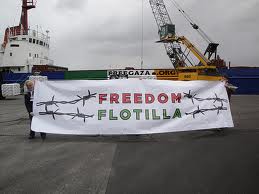
             It is expected that at the end of June, Freedom Flotilla 2 will set sail for Gaza carrying various forms of humanitarian aid, including medical, educaional, and construction materials. This second flotilla will consist of 15 ships, including the Mavi Marmara sailing from Istanbul, but also vessels departing from several European countries, and carrying as many as 1500 humanitarian activists as passengers. If these plans are carried out, as seems likely, it means that the second flotilla will be about double the size of the first that was so violently and unlawfully intercepted by Israeli commandos in international waters on May 31, 2010, resulting in nine deaths on the Turkish lead ship.


            Since that shocking incident of a year ago the Arab Spring is transforming the regional atmosphere, but it has not ended the blockade of Gaza, or the suffering inflicted on the Gazan population over the four-year period of coerced confinement. Such imprisonment of an occupied people has been punctuated by periodic violence, including the sustained all out Israeli attack for three weeks at the end of 2008 during which even women, children, and the disabled were not allowed to leave the deadly killing fields of Gaza. It is an extraordinary narrative of Israeli cruelty and deafening international silence, a silence broken only by the brave civil society initiatives in recent years that brought both invaluable symbolic relief in the form of empathy and human solidarity, as well as token amounts of substantive assistance in the form of much needed food and medicine. It is true that the new Egypt has opened the Rafah crossing a few days ago (but not fully or unconditionally), allowing several hundred Gazans to leave or return to Gaza on a daily basis. At best, this opening even if sustained provides only partial relief. Rafah is not currently equipped to handle goods, and is available only to people and so the blockade of imports and exports continues in force, and may even be intensified as Israel vents its anger over the Fatah/Hamas unity agreement.


            As the Greek coordinator of Freedom Flotilla 2, Vangelis Pisias, has expressed the motivation of this new effort to break the blockade: “We will not allow Israel to set up open prisons and concentration camps.”  Connecting  this Gazan ordeal to the wider regional struggles,” Pisias added, “Palestine is in our heart and could be the symbol of a new era in the region.” Such sentiments reinforce the renewal of Palestinian militancy as exhibited in the recent Nabka and Naksa demonstrations.


            A highly credible assessment of the Israeli 2010 attack on Freedom Flotilla 1 by a fact finding mission appointed by the UN Human Rights Council concluded that the Israelis had violated international law in several respects: by using excessive force, by wrongfully attacking humanitarian vessels in international waters, and by an unacceptable claim to be enforcing a blockade that was itself unlawful. Such views have been widely endorsed by a variety of respected sources throughout the international community, although the panel appointed by the UN Secretary General to evaluate the same incident has not yet made public its report, and apparently its conclusions will be unacceptably muted by the need to accommodate its Israeli member.


            In light of these surrounding circumstances, including the failure of Israel to live up to its announced promise after the attack in 2010 to lift the blockade, it shocks our moral and legal sensibilities that the UN Secretary General should be using the authority of his office to urge member governments to prevent ships from joining Freedom Flotilla 2. Ban Ki-moon shamelessly does not even balance such a call, purportedly to avoid the recurrence of violence, by at least sending an equivalent message to Israel insisting that the blockade end and demanding that no force be used by Israel in response to humanitarian initiatives of the sort being planned. Instead of protecting those who would act on behalf of unlawful Palestinian victimization, the UN Secretary General disgraces the office, by taking a one-sided stand in support of one of the most flagrant and long lasting instances of injustice that has been allowed to persist in the world. True, his spokesperson tries to soften the impact of such a message by vacuously stating that “the situation in the Gaza Strip must be changed, and Israel must conduct real measures to end the siege.” We must ask why were these thoughts not expressed by the Secretary General himself and directly to Israel? Public relations is part of his job, but it is not a cover for crassly taking the wrong side in the controversy over whether or not Freedom Flotilla 2 is a legitimate humanitarian initiative courageously undertaken by civil society without the slightest credible threat to Israeli security and in the face of Israeli warnings of dire consequences.


            Appropriately, and not unexpectedly, the Turkish Government refuses to bow to such abusive pressures even when backed by the UN at its highest level. Ahmet Davutoglu, the widely respected Turkish Foreign Minister, has said repeatedly in recent weeks when asked about Freedom Flotilla 2, that no democratic government should ever claim the authority to exercise control over the peaceful initiatives of civil society, as represented by NGOs. Davutoglu has been quoted as saying “[N]obody should expect from Turkey…to forget that nine civilians were killed last year..Therefore we are sending a clear message to all those concerned. The same tragedy should not be repeated again.” Underscoring the unresolved essential issue he asked rhetorically, “[D]o we think that one member state is beyond international law?” Noting that Israel has still not offered an apology to Turkey or compensation to the families of those killed, Davutoglu makes clear that until such reasonable preconditions for diplomatic normalization are met, Israel should not be accepted “to be a partner in the region.”


             In the background of this sordid effort to interfere with Freedom Flotilla 2 is the geopolitical muscle of the United States that blindly (and dumbly) backs Israel no matter how outrageous or criminal its behavior. And undoubtedly, this geopolitical pressure helps explain this attempted interference by the UN with a brave and needed humanitarian initiative that deserves to be strongly supported by the UN rather than condemned. Despite the near universal verbal objections of world leaders, including even Ban Ki-moon, to the Israeli blockade, no meaningful action has been yet taken by either governments or the UN. Israel’s undisguised defiance of the requirements of belligerent occupation of Gaza as set forth in the Fourth Geneva Convention of 1949, and the First Additional Protocol appended thereto in 1977, is an unacknowledged scandal of gigantic proportions.


            Liberating Palestine from oppressive occupation and refugee regimes should become a unifying priority for peoples and leaders during this second stage of the Arab Spring. Nothing could do more to manifest the external as well as the internal turn to democracy, constitutional governance, and human rights than displays of solidarity by new and newly reformist governments in Arab countries with this unendurably long Palestinian struggle for justice and sustainable peace. It would also offer the world a contrast with the subservience to Israel recently on display in Washington, highlighted by inviting Benjamin Netanyahu to address an adoring U.S. Congress, a rarity in the country’s treatment of foreign leaders. Its impact was heightened by the pandering speech given by President Obama to AIPAC, the notorious Israeli lobbying organization, at about the same time. It is unprecedented in the history of diplomacy that a leading sovereign state would so jeopardize its own global reputation and sacrifice its values to avoid offending a small allied partner. It is in the American interest, as well as in the interest of the peoples of the Arab world, particularly the Palestinians, to end the conflict.


             The United States Government has long discredited itself as an intermediary in the conflict. Its partisanship, driven mainly by domestic politics, represents a costly sacrifice of its own interests, but is also objectionable as lending support to intolerable Israeli policies of apartheid occupation and colonialist expansionism. It is time to shift the locus of diplomatic responsibility for resolving the conflict from Washington to the far more geopolitically trustworthy auspices of Brazil, Turkey, Nordic countries, even possibly Russia or China, and to encourage a more active regional role. If the encouraging recent Fatah/Hamas unity arrangements hold up and move forward, Palestinian representation will be regarded as increasingly credible, and hopefully will actively incorporate elements of the refugee communities in the bordering countries into their diplomacy. It is time for the world to realize, and the Palestinians to highlight, that the conflict is not just about territory (‘land for peace’), or even to ensure an adequate Palestinian presence in Jerusalem, it is most fundamentally about people. Insisting on respect for the moral, legal, and political rights of Palestinian refugees is the litmus test of a people-centered approach to the conflict, and our concern for the future of these long entrapped refugees should not be allowed to drift off into peripheral space, as has happened in the past.

Obama’s AIPAC Speech: A Further Betrayal of the Palestinian People

24 May


            On Sunday, May 22, 2011, President Barack Obama spoke at an AIPAC Conference, three days after giving his decidedly pro-Israeli speech at the State Department on his broader Middle East foreign policy. It was a shockingly partisan speech to the extremist lobbying group that has the entire U.S. Congress in an unprecedented headlock that has become the envy of even the National Rifle Association. Of course, I assume that Obama’s handlers regarded a speech to AIPAC as obligatory given the upcoming presidential election in 2012. The dependence of political candidates for almost any significant elective office in the United States on Jewish electoral and funding support has become an article of secular political faith, and particularly so for a national office like the presidency. Nevertheless, the enactment of this political ritual by Obama seemed excessive even taking full account of the role of Israeli Lobby as to be worth noting and decrying.


            What is worse, the mainstream media typically misconstrued the AIPAC event in a manner that compounds the outrage of the speech itself. For instance, the NY Times headline says it all: “Obama Challenges Israel to Make Hard Choices for Peace.” As Obama pointed out himself in his remarks, “there was nothing particularly original in my proposal; this basic framework for negotiations has long been the basis for discussions among the parties, including previous U.S. administrations.” The supposed hard choices involve Israeli withdrawal to the 1967 borders with agreed land swaps, only restating the generalized international consensus that has often been articulated by American leaders and in a variety of authoritative settings. This is hardly a hard choice, especially as interpreted by the White House’s former Special Envoy, George Mitchell, as including Israel’s perceived security requirements. That is, the land swaps now seem to embrace not only the unlawful settlement blocs that had been conceded by George W. Bush, but now appear to incorporate Netanyahu over the top demands for strategic depth at the expense of Palestinian land, demanding the appropriation of portions of the Jordan Valley along with the deployment of Israeli troops within a hypothetical demilitarized Palestinian state.


            What is more, the alleged hard choice is never set against the background of the aftermath of the 1948 War that deprived of about half of the territory they had been given according to the UN partition plan embodied in General Assembly Resolution 181. And as is widely known, the Palestinian rejected that partition as being grossly unfair, imposed from without and awarding the Jewish minority population about 56% of historic Palestine. In effect, the willingness of the Palestinians, expressed first by the 1988 session of the Palestinian National Council to live within the 1967 borders meant agreeing to have their Palestinian state on 22% of the British mandate. This was indeed a hard choice! The land swaps involving settlement blocs, and their bypass roads, and further security zones claimed are all encroachments upon that 22%, and the fact that such further Palestinian concession can be proposed is indicative of just how unfair has become the American led approach to the resolution of the underlying conflict. It is further notable that this fundamental territorial redefinition of the two-state consensus is never acknowledged or even mentioned. In effect, what was thought to be two states in 1947 was dramatically diminished by what became the contours of two states after the 1967 War, and has been further diminished in dramatic form ever since by the settlement process and the various unilateral changes introduced by Israel in the course of administering Jerusalem.    


            The speech to AIPAC is significant not for these non-existent ‘hard choices,’ but for the scandalously obsequious pleading tone adopted by an American president that acknowledges with pride everything about the U.S. Government’s relationship to the conflict that should disqualify it from ever again having a shred of diplomatic credibility as a third party intermediary. Starting with the fawning “[w]hat a remarkable, remarkable crowd” to his heartfelt words of sympathy for Israeli victims of violence without even a scintilla of empathy for the far, far greater suffering daily endured by the entire Palestinian people: dispossessed, living under occupation, blockade, in refugee camps and exile, or as persons displaced physically and psychologically.


            The passage on military assistance to a prosperous Israel should have come as a shock to American taxpayers but passes without notice by the Western media.  I quote in full because it so shamelessly overlooks Israeli defiance of international law and its militarist outlook toward the future: “..I and my administration have made the security of Israel a priority. It’s why we’ve increased cooperation between our militaries to unprecedented levels. It’s why we’re making our most advanced technologies available to our Israeli allies. It’s why, despite tough fiscal times, we’ve increased foreign military financing to record levels. And that includes additional support—beyond regular military aid—for the Iron Dome anti-rocket system.” It is not surprising that there was loud applause after each sentence in the paragraph just quoted, but it is surprising that an American president would try to please even an AIPAC audience this abject manner. After all, others are listening! Or should be!


            Obama similarly brushes aside any concern about the unlawfulness of the Israeli occupation or its uses of force against a defenseless population in Gaza in its massive attacks launched at the end of 2008, and carried on for three weeks. Obama brushes aside the Goldstone Report by name, suggesting that its assessment of Israel’s wrongdoing somehow challenges Israel’s right of self-defense when in actuality the Goldstone legal analysis does just the opposite, and far more ardently and unconditionally than appropriate, in my view. There is not a word about the Flotilla Incident of a year ago or the recent excessive use of lethal force at the Israeli borders in response to the ‘right of return’ demonstrations associated with the Palestinian remembrance of the 2011 Nakba.


            Going beyond the negativity of his State Department comments, Obama mimics Netanyahu in condemning the moves toward Palestinian Authority/Hamas reconciliation and unity. He has the temerity to insist that “the recent agreement between Fatah and Hamas poses an enormous obstacle to peace.” Actually, reasonably considered, the agreement should have been welcomed as an indispensable step toward creating the possibility of peace.


            Not a word of challenge is uttered by Obama in front of this AIPAC audience about settlements, Jerusalem, and refugees. Not a word about the Palestinian ordeal, or diminished horizons of possibility, and no White House plan announced to give a talk before a Palestinian audience. The Obama talk was so outrageously one-sided, so contrary to American strategic interests, that it implicitly suggests that the Palestinians are so weak and passive as to let it slip by in silence. Only a justifiable outburst of Palestinian rage could begin to counter this impression of diplomatic surrender.


            Palestinian prudence would go further that an angry reaction. After such a speech the only responsible response by the Palestinian leadership is to conclude once and for all, however belatedly, that it is no longer possible to look to Washington for guidance in reaching a peaceful, just, and sustainable resolution of the conflict. Indeed, to allow such a Washington framing of peace at this point, in light of this Obama/Netanyahu posturing, would further disclose the incompetence and illegitimacy that have long handicapped the Palestinian struggle for self-determination based on a just and sustainable peace and founded on respect for Palestinian rights under international law. 

Obama’s Flawed Approach to the Israel/Palestine Conflict

21 May

            There is no world leader that is more skilled at speechmaking than Barack Obama, especially when it comes to inspiring rhetoric that resonates with deep and widely held human aspirations. And his speech on Middle East policy, symbolically delivered to a Washington audience gathered at the State Department, was no exception, and it contained certain welcome reassurances about American intentions in the region.  I would point to his overall endorsement of the Arab Spring as a demonstration that the shaping of political order ultimately is a prerogative of the people. Further that populist outrage if mobilized is capable of liberating an oppressed people from the yoke of brutal and corrupt dictatorships, and amazingly to do so without recourse to violence. Obama also was honest enough to acknowledge that the national strategic interests of the United States sometimes take precedence over this preferential option for democracy and respect for human rights. Finally, his proposed $1 billion in debt relief for Egypt was a concrete expression of support for the completion of its revolutionary process, although the further $1 billion tied to an opening to outside investment and a free trade framework was far more ambiguous, threatening the enfeebled Egyptian economy with the sort of competitive intrusions that have been so devastating for indigenous agriculture and industry throughout the African continent.


            But let’s face it, when the soaring language is taken away, we should not be surprised that Obama continues to seek approval, as he has throughout his presidency, from the hawks in the State Department, the militarists in the Pentagon, and capitalist true believers on Wall Street. Such are the fixed parameters of his presidency with respect to foreign policy and explain why there is so much disappointment among his former most ardent followers during his uphill campaign for the presidency, who were once energized and excited by the slogan “change, yes we can!”  Succumbing to Washington ‘realism’ (actually a recipe for imperial implosion), the unacknowledged operational slogan of the Obama presidency has become “change, no we won’t!”

Obama’s Pro-Israeli Partisanship

           With these considerations in mind, it is not at all surprising that Obama’s approach to the Israel/Palestine conflict remains one-sided, deeply flawed, and a barrier rather than a gateway to a just and sustainable peace. The underlying pressures that produce the distortion is the one-sided allegiance to Israel (“Our commitment to Israel’s security is unshakeable. And we will stand against attempt to single it out for criticism in international forums.”). This leads to the totally unwarranted assessment that failure to achieve peace in recent years is equally attributable to Israelis and the Palestinians, thereby equating what is certainly not equivalent. Consider Obama’s words of comparison: “Israeli settlement activity continues, Palestinians have walked away from the talks.” How many times is it necessary to point out that Israeli settlement activity is unlawful, and used to be viewed as such even by the United States Government, and that the Palestinian refusal to negotiate while their promised homeland is being despoiled not only by settlement expansion and settler violence, but by the continued construction of an unlawful barrier wall well beyond the 1967 borders. Obama never finds it appropriate to mention Israel’s reliance on excessive and lethal force, most recently in its response to the Nakba demonstrations along its borders, or its blatant disregard of international law, whether by continuing to blockade the entrapped 1.5 million Palestinians locked inside Gaza or by violently attacking the Freedom Flotilla a year ago on international waters while it was carrying much needed humanitarian aid to the Gazans or the ethnic cleansing of Palestinian neighborhoods in East Jerusalem.


            At least in Obama’s Cairo speech of June 2009 there was a strong recognition of Palestinian suffering through dispossession, occupation, and refugee status: “..it is also undeniable that the Palestinian people—Muslims and Christians—have suffered in pursuit of a homeland. For more than sixty years they have endured the pain of dislocation. Many wait in refugee camps in the West  Bank, Gaza, and neighboring lands for a life of peace and security that they have never been able to lead. They endure the daily humiliations—large and small—that come with occupation. So let there be no doubt: the situation for the Palestinian people is intolerable. America will not turn our backs on the legitimate aspiration for dignity, opportunity, and a state of their own.” Of course, this formulation prejudges the most fundamental of Palestinian entitlements by confining any exercise of their right of self-determination as a people to a two-state straight jacket that may no longer be viable or desirable, if it ever was. And throughout the speech in Cairo there was never a sense that the Palestinians have rights under international law that must be taken into account in any legitimate peace process, taking precedence over ‘facts on the ground.’

             But at least in Cairo Obama was clear on the Israeli settlements, or reasonably so: “The United States does not accept the legitimacy of continued Israeli settlements. This construction violates previous agreements and undermines efforts to achieve peace. It is time for the settlements to stop.” Even here Obama is only pleading for a freeze (rather than dismantling what was unlawful). In the new speech settlement activity is blandly referred to as making it difficult to get new negotiations started, but nothing critical is said, despite resumed and intensified settlement construction in the West Bank and East Jerusalem. This unwillingness to confront Israel on such a litmus test of a commitment to a negotiated peace is indicative of Obama’s further retreat from even the pretense of balanced diplomacy as measured against Cairo.

             And there were other demonstrations of pro-Israeli partisanship in the speech. On the somewhat hopeful moves toward Palestinian Authority/Hamas reconciliation as a necessary basis for effective representation of the Palestinian people at the international level, Obama confines his comments to reiterating Israeli complaints about the refusal of Hamas to recognize Israel’s right to exist. What was left unsaid by Obama is that progress toward peace might be made by at last treating Hamas as a political actor, appreciating its efforts to establish ceasefires and suppress rocket attacks from Gaza, acknowledging its repeated acceptance of a Palestinian state within 1967 borders buttressed by a long-term proposal for peaceful co-existence with Israel, and lifting a punitive and unlawful blockade on Gaza that has lasted for almost four years. It is possible that such an approach might fail, but if the terminology of taking risks for peace is to have any meaning it must include an altered orientation toward the participation of Hamas in any future peace process.

 A Disturbing Innovation

             Perhaps, the most serious flaw in the Obama conception of resumed negotiations, is the separation of the territorial issues from the wider agenda of fundamental questions. This unfortunate feature of his approach has been obscured by Israel’s evident anger about the passage in the speech that affirms what was already generally accepted in the international community: “The borders of Israel and Palestine should be based on the 1967 lines with mutually agreed swaps, so that secure and recognized borders are established for both states.” If anything this is a step back from the 1967 canonical and unanimous Security Council Resolution 242 that looked unconditionally toward “withdrawal of Israel armed forces from territory occupied in the recent conflict.”

              Obama’s innovation involves deferring consideration of what he calls “[t]wo wrenching and emotional issues..the future of Jerusalem, and the fate of Palestinian refugees.” Leaving Jerusalem out of the negotiating process is in effect an uncritical acceptance of Israel’s insistence that the city as a whole belongs exclusively to Israel. What is worse, it allows Israel to continue the gradual process of ethnic cleansing in East Jerusalem: settlement expansion, house demolitions, withdrawal of residency permits and deportations, and overall policies designed to discourage a continued Palestinian presence.  It must be understood, I believe, as an unscrupulous American acceptance of Israel’s position on Jerusalem, which is not only a betrayal of legitimate Palestinian expectations of situating their capital in East Jerusalem but also a move that will be received with bitter resentment throughout the Arab world.

            Similarly, the deferral of the refugee issue is quite unforgivable. As of 2010 4.7 million Palestinians are registered with the UN as refugees, either living within refugee camps under conditions of occupation or in precarious circumstances in neighboring countries within camps or as vulnerable members of the host country. This refugee status has persisted for more that 60 years despite the clear assertion of Palestinian refugee rights contained in General Assembly Resolution 194 adopted in 1948 and annually reaffirmed: “The refugees wishing to return to their homes and live at peace with their neighbors should be permitted to do so at the earliest practicable date.” This persistence of the Palestinian refugee status six decades later is one of the most notorious denials of human rights that exist in the world today. To remove it from the peace process, as Obama purports to do, is to consign the refugees to an outer darkness of despair, and as such, is a telling disclosure of the bad faith embedded in the most recent Obama rendering of his approach to peace. Those who are dedicated to achieving a just peace for the two peoples—Israelis and Palestinians—are doomed to fail unless the refugees are treated as a core issue that can neither be postponed nor evaded without a grave betrayal of justice.

 Legitimacy Confusions

               And finally, Obama does his best to dash Palestinian hopes about their one effort to move their struggle a step forward, gaining their acceptance as a state by the United Nations in September of this year. In a perverse formulation of this reasonable, even belated, Palestinian effort to enlist international support for their claims of self-determination and statehood, Obama resorts to deflating and condescending language: “..efforts to delegitimize Israel will end in failure. Symbolic actions to isolate Israel at the United Nations in September won’t create an independent state.” This language is perverse because the Palestinian diplomatic initiative is meant to legitimize itself, not delegitimize Israel. And the BDS campaign and other international civil society initiatives carrying on the ‘legitimacy war’ being waged against Israel by way of the Palestinian solidarity movement are not aimed at delegitimizing Israel, but rather seek to overcome the illegitimacy of such Israeli unlawful policies and practices as the Gaza blockade, ethnic cleansing, wall building in defiance of the World Court, settlement expansion and settler violence, excessive violence in the name of security.

               In many respects, Obama’s speech, aside from the soaring rhetoric, might have been crafted in Tel Aviv rather than the White House. It is a tribute to Israel’s extraordinary influence upon the American media that has been able to shift the focus of assessment to the supposed Israeli anger about affirming Palestinian statehood within 1967 borders. It is hardly a secret that the Netanyahu leadership, aside from its shrewd propaganda, is opposed to the establishment of any Palestinian state, whether symbolic or substantive. This much was confirmed by the release of the Palestinian Papers that established rather conclusively that behind closed doors even when the Palestinian Authority made concession after concession in response to Israeli demands, the Israeli negotiating partners seemed totally unresponsive, and appeared disinterested in negotiating a genuine solution to the conflict.

             Underneath the Israeli demand for recognition of it character as a Jewish state is the hidden reality of a Palestinian minority of more than 1.5 million living as second class citizens within Israel. The Obama conception of “a Jewish state and the homeland for the Jewish people, and the state of Palestine as the homeland for the Palestinian people; each state enjoying self-determination, mutual recognition, and peace” seems completely oblivious to the rights of minority peoples and religions. Such ethnic and religious states seem incompatible with the promise of human dignity for all persons living within a political community. Homelands for a people are fine provided they do not encroach on pre-existing rights of others and do not claim exclusivity at the level of society or state. The Jewish claim in Palestine has the force of history behind it, but so Christians and others, and the Balfour certification should not mean much in a post-colonial era. It needs also to be acknowledged that the realization of a Jewish homeland in historic Palestine has long been abusive toward the resident population, and now to consign the Palestinians to a homeland behind the 1967 borders sends a regressive message. It offers Israel a covert way to invalidate the claims of refugees expelled in 1948 from Palestine, as well as overlooks the rights and wellbeing of the Palestinian minority living within Israel at present.


American Irrelevance and Palestinian Populism

               In a profound sense, whatever Obama says at this point is just more words, beside the point. He has neither the will nor the capacity to exert any material leverage on Israel that might make it more amenable to respecting Palestinian rights under international law or to strike a genuine compromise based on mutuality of claims. Palestinians should not look to sovereign states, or even the United Nations, and certainly not the United States, in their long and tormented journey to realize a just and sustainable destiny for themselves. Their future will depend on the outcome of their struggle, abetted and supported by people of good will around the world, and increasingly assuming the character of a nonviolent legitimacy war that mobilizes moral and political pressures that assert Palestinian rights from below.  In this regard, it remains politically significant to make use of the UN and friendly governments to gain visibility and legitimacy for their claims of right. It is Palestinian populism not great power diplomacy that offers the best current hope of achieving a sustainable and just peace on behalf of the Palestinian people. Obama’s State Department speech should be understood as merely the latest in a long series of disguised confessions of geopolitical impotence, but of one thing we can be sure, it will not be the last.       

Observing the 63rd Nakba

15 May

The latest news reports that at least 14 were Palestinians killed and scores more than that number injured by Israeli soldiers using live ammunition against Nakba demonstrators at confrontations near the Israeli borders with Lebanon (Ras Maroun), Syria (Golan Heights), Gaza, and West Bank. An immediate reaction is to contrast sophisticated Israeli non-lethal crowd control when dealing with settler violence and the lethal responses to Palestinian resistance politics in these four distinct settings. All in all, what is exhibited by these encounters is an upsurge of Palestinian militancy, perhaps a prelude to a third intifada, and the continuity of Israeli reliance on excessive force designed to punish and intimidate, which is a characteristic severe violation of Israel’s duties as an occupying power as defined by international humanitarian law. 

One of the many signs of the growing worldwide movement in support of the Palestinian struggle for their rights under international law and elemental morality is the increased international awareness of the Nakba. On this 63rd anniversary of the catastrophic Palestinian experience since 1948 when an escaping and expelled 760,000 Palestinians (now this dispossessed population has grown to 4.7 million; the 160,000 Palestinians who managed to stay behind in what became Israel now number 1.3 million) there is an encouraging sense that the destiny of the Palestinian people has entered a more hopeful phase: the Arab Spring, combined with earlier political developments in Turkey and Lebanon, have shifted the regional balance toward a greater identification with the Palestinian people and their just claims under international law and morality; the growing BDS worldwide campaign has extended the symbolic battlefield in the Legitimacy War against Israeli occupation, and related policies of apartheid, ethnic cleansing, barrier wall, blockade, settlements; the decision by the recently unified Palestinian leadership to seek acknowledgement of Palestinian statehood in the United Nations this September opening possibilities for further motivating the international community to live up to its responsibilities to address Palestinian grievances that have gone unanswered for these 63 years of UN endorsement of the valid establishment of Israel,  despite it being a colonial settler state imposed on and carved out of  historic Palestine; new signs of activism among the Palestinians living under occupation and in exile; the manifest and deplorable double standards involved in supporting the violent imposition of a No Fly Zone on Libya, which is in reality an effort to achieve regime change on behalf of a rebel insurgency of unknown character, while refusing to protect the people of Gaza who have severely victimized by a total blockade that has lasted almost four years, a massive case of deliberate and criminal collective punishment outlawed by Article 33 of the Fourth Geneva Convention. Against such a background the ongoing mobilization of public engagement on behalf of Palestinian rights should enlist all persons of conscience throughout the world, a populist dynamic that is happening and should intensify in the coming year. From this perspective it may soon be the case that the annual observance of the Nakba will be treated as the first truly global holiday the world has known.

Despite these developments there is no indication whatsoever that the Israeli leadership or public has any interest in achieving a sustainable peace or that it is prepared to desist from its expansionist and annexationist approach to the occupation of the West Bank and East Jerusalem. There are a few lonely Israeli voices calling for justice to the Palestinian people. For instance, Gideon Levy calling on Israel to teach ‘a different heritage lesson,’ that of the Nabka. Writing in Haaretz (15.5.2011) Levy writes, “Not only is it possible to permit the Israeli Palestinians to commemorate the day of their heritage and express their national and personal pain, something that should be self-evident, but also to teach us, the Jews, the other narrative..Only on the day that the pupils in Israel also learn about the Nabka, will we know that the earth is no longer burning under our feet..”

The Nakba is of course a day of grievance and resolve for all Palestinians including the several million living in refugee camps for decades in the countries surrounding Palestine and other millions in exile throughout the region and the world. A sustainable peace must realize the rights of all Palestinians, and must be broader and deeper than ending the occupation or establishing a Palestinian state. Palestinian representation to be legitimate and effective must keep faith with this wider Palestinian reality, and not confine its political program to a territorial imaginary. Just as the Palestinian solidarity movement is without boundaries so must be the campaign to achieve full realization of all of the rights of the dispossessed Palestinian people.

To live under Israeli occupation or as refugees for a day is difficult, for a week is unendurable, but to do so for decades is intolerable beyond words of outrage and empathy. We cannot grasp the enormity of this ordeal merely by underscoring the fact that Nakba occurred 63 years ago and that the added cruelty of the occupation started in 1967. Only the existential experience of being on the ground in occupied Palestine or visiting refugee camps in Lebanon, Jordan, or Syria can begin in a modest way to impart an understanding of the suffering and insecurity that is a daily reality of all those so confined, and even this can give rise to a false consciousness of ‘knowing.’ Those that visit can leave, those subject to regimen cannot, and that makes all the difference!

Below is the text of a press release issued in my capacity as Special Rapporteur for the Palestinian Territories Occupied since 1967, and released under the auspices of the Office of the High Commission for Human Rights in Geneva.

***********

                                                                                          16 May 2011


The UN human rights expert on the 63th anniversary of the Palestinian Nakba


16 May 2011
UN human rights expert on the 63th anniversary of the Palestinian Nakba

GENEVA – The Special Rapporteur on the situation of human rights in the occupied Palestinian territories, Mr. Richard Falk, marks the 63rd anniversary of the Nakba, the catastrophic beginning of the Palestinian tragedy of dispossession and occupation, with the following statement: 

“I commemorate Nakba this year dismayed by the killing of demonstrators observing the day in the occupied Palestinian territory and elsewhere in the region.

Since the Nakba on 15 May 1948 Israel has continuously confiscated Palestinian land in order to build illegal settlements and populate them with Israeli citizens. It is astonishing that no one in the international community has stepped forward, after 63 years, to coerce Israel to comply with international law. Israel’s legacy of ethnic cleansing persists, and manifests itself in an array of challenges to the security of residency for Palestinians living under occupation.

“The construction of the Wall inside the West Bank results in an additional 12% of land confiscation and demolition of Palestinian homes, in flagrant defiance of the Advisory Opinion of the International Court of Justice.

“This past week seven Palestinian families in the West Bank village of al-Walaja received demolition orders. This is a reminder that the Nakba continues. Israel’s pursuit of what it calls ‘facts on the ground’ consistently forces Palestinians to abandon their homes, lands, and lives, creating a reality better understood as virtual annexation. 

“This is a particularly notable Nakba anniversary, as it coincides with the release of information confirming that Israel secretly revoked as many as 140,000 residency permits of Palestinians between 1967 and 1994. This is not only another violation of Israel’s obligations as the Occupying Power under the Fourth Geneva Convention.  It is also a glaring example of several sinister schemes that Israel has employed over the years to rid historic Palestine of its original inhabitants, in order to make space for Israeli citizens.

“The international community needs to take urgent action to compel Israel to end its confiscation and occupation of Palestinian land.” 

ENDS

In 2008, the UN Human Rights Council designated Richard Falk (United States of America) as the fifth Special Rapporteur on the situation of human rights on Palestinian territories occupied since 1967. The mandate was originally established in 1993 by the UN Commission on Human Rights.

Learn more about the mandate and work of the Special Rapporteur:http://www2.ohchr.org/english/countries/ps/mandate/index.htm

OHCHR Country Page – Occupied Palestinian Territories:http://www.ohchr.org/EN/countries/MENARegion/Pages/PSIndex.aspx

OHCHR Country Page – Israel: http://www.ohchr.org/EN/Countries/MENARegion/Pages/ILIndex.aspx

For more information and media requests, please contact Nikki Siahpoush (Tel.: + 41 22 928 9430 / email:nsiahpoush@ohchr.org) or write to sropt@ohchr.org. 


Revolutionary Prospects After Mubarak

15 Feb

The Egyptian Revolution has already achieved extraordinary results: after only eighteen intense days of dramatic protests. It brought to an abrupt end Mubarak’s cruelly dictatorial and obscenely corrupt regime that had ruled the country for more than thirty years. It also gained a promise from Egyptian military leaders to run the country for no more than six months of transition, the minimum period needed for the establishment of independent political parties, free elections, and some degree of economic restabilization. It is hoped that this transition would serve as the prelude to and first institutional expression of genuine democracy. Some informed observers, most notably Mohamed ElBaradei worry that this may be too short a time to fill the political vacuum that exists in Egypt after the collapse of the authoritarian structures that had used its suppressive energies to keep civil society weak and to disallow governmental institutions, especially parliament and the judiciary, to function with any degree of independence. It is often overlooked that the flip side of authoritarianism is nominal constitutionalism.

In contrast, some of the activist leaders that found their voice in Tahrir Square are concerned that even six months may be too long, giving the military and outside forces sufficient time to restore the essence of the old order, while giving it enough of a new look to satisfy the majority of Egyptians. Such a dismal prospect seems to be reinforced by reported American efforts to offer emergency economic assistance apparently designed to mollify the protesters, encourage popular belief that a rapid return to normalcy will provide this impoverished people (40% living on less than $2 per day; rising food price; high youth unemployment) with material gains.

The bravery, discipline, and creativity of the Egyptian revolutionary movement is nothing short of a political miracle, deserving to be regarded as one of the seven political wonders of the modern world! To have achieved these results without violence, despite a series of bloody provocations, and persisting without an iconic leader, without even the clarifying benefit of a revolutionary manifesto, epitomizes the originality and grandeur of the Egyptian Revolution of 2011. Such accomplishments shall always remain glories of the highest order that can never be taken away from the Egyptian people, regardless of what the future brings. And these glorious moments belong not just to those who gathered at Tahrir Square and at the other protest sites in Cairo, but belong to all those ignored by the world media who demonstrated at risk and often at the cost of their life or physical wellbeing day after day throughout the entire country in every major city. Both the magnitude and intensity of this spontaneous national mobilization was truly remarkable. The flames of an aroused opposition were fanned by brilliantly innovative, yet somewhat obscure, uses of social networking, while the fires were lit by the acutely discontented youth of Egypt and kept ablaze by people of all class and educational backgrounds coming out into the street. The inspirational spark for all that followed in Egypt and elsewhere in the region, let us not forget, was provided by the Tunisian Revolution. What happened in Tunisia was equally astonishing to the amazing happenings in Egypt, not only for being the initiating tremor, but also for reliance on nonviolent militancy to confront a ruthlessly oppressive regime so effectively that the supposed invincible dictator, Ben Ali, escaped quickly to Saudi Arabia for cover.  The significance of the Tunisian unfolding and its further development should not be neglected or eclipsed during the months ahead. Without the Tunisian spark we might still be awaiting the Egyptian blaze!

As is widely understood, after the fireworks and the impressive cleanup of the piles of debris and garbage by the revolutionaries in Tahrir Square, itself a brilliantly creative footnote to their main revolutionary message, there remains the extraordinarily difficult task of generating ex nihil a new governing process based on human rights, the will of the Egyptian people, and a mighty resolve to guard sovereign rights against the undoubted plots of canny external actors scared by and unhappy with the revolution, seeking to rollback the outcome, and seeking above all by any means the restoration of Mubarakism without Mubarak.  The plight of the Egyptian poor must also be placed on the top of the new political agenda, which will require not only control of food and fuel prices, but the construction of an equitable economy that gives as much attention to the distribution of the benefits of growth as to GNP aggregate figures. Unless the people benefit, economic growth is a subsidy for the rich, whether Egyptian or foreign.

Short of catastrophic imaginings, if interpreted as warnings may forestall their actual occurrence, there are immediate concerns: it seemed necessary to accept the primacy of the Egyptian military with the crucial task of overseeing the transition, but is it a trustworthy custodian of the hopes and aspirations of the revolution? Its leadership was deeply implicated in the corruption and the brutality of the Mubarak regime, kept in line over the decades by being willing accomplices of oppressive rule and major beneficiaries of its corrupting largess. How much of this privileged role is the military elite ready to renounce voluntarily out of its claimed respect for and deference to the popular demand for an end to exploitative governance in a society languishing in mass poverty? Will the Egyptian military act responsibly to avoid the destructive effects of a second uprising against the established order? It should also not be forgotten that the Egyptian officer corps was mainly trained in the United States, and that coordination at the highest level between American military commanders and their Egyptian counterparts has already been resumed at the highest levels, especially with an eye toward maintaining ‘the cold peace’ with Israel.  These nefarious connections help explain why Mubarak was viewed for so long as a loyal ally and friend in Washington, Tel Aviv, and Riyadh, and why the inner counsels of these governments are reacting with concealed panic at the outburst of emancipatory politics throughout the region. I would suppose that these old relationships are being approached with emergency zeal to ensure that however goes the transition to Egyptian democracy it somehow exempts wider controversial regional issues from review and change that would reflect the values that animated the revolutionary risings in Tunisia and Egypt. These values would suggest solidarity with movements throughout the Middle East to end autocratic governance, oppose interventions and the military presence of the United States, solve the Israel/Palestine conflict in accordance with international law rather than ‘facts on the ground,’ and seek to make the region a nuclear free zone (including Israel) reinforced by a treaty framework establishing peaceful relations and procedures of mutual security.  It does not require an expert to realize that such changes consistent with the revolutionary perspectives that prevailed in Egypt and Tunisia would send shivers down the collective spines of autocratic leaderships throughout the region, as well as being deeply threatening to Israel and to the grand strategy of the United States and, to a lesser extent, the European Union, that has been determined to safeguard vital economic and political interests in the region by reliance on the military and paramilitary instruments of hard power.

At stake if the revolutionary process continues, is Western access to Gulf oil reserves at prices and amounts that will not roil global markets, as well as the loss of lucrative markets for arms sales. Also at risk is the security of Israel so long as its government refuses to allow the Palestinians to have an independent and viable state within 1967 borders that accords with the two state solution long favored by the international community, and long opposed by Israel. Such a Palestinian state existing with full sovereign rights on all territories occupied by Israel since the 1967 War would mean an immediate lifting of the Gaza blockade, withdrawal of occupying Israeli forces from the West Bank, dismantling of the settlements (including in East Jerusalem), allowing Palestinian refugees to exercise some right of return, and agreeing to either the joint administration of Jerusalem or a Palestinian capital in East Jerusalem. It should be understood that such a peace was already implicit in Security Council Resolution 242 that was unanimously adopted in 1967, proposed again by Arab governments in 2002 with a side offer to normalize relations with Israel, and already accepted by the Palestinian National Council back in 1988 and reaffirmed a few years ago by Hamas as the basis for long-term peaceful coexistence. It should be understood that this Palestinian state claims only 22% of historic Palestine, and is a minimal redress of justice for an occupation that has lasted almost 44 years (recall that the UN partition plan gave the Palestinians 45% in 1947, and that seemed unfair at the time), and an expulsion that has resulted in an outrageously prolonged refugee status for millions of Palestinians that derives from the nakba of 1948. But until now, even this minimal recognition of the Palestinian right of self-determination has been unacceptable to Israel as most recently evidenced in the Palestine Papers that provide evidence that even when the Palestine Authority agreed to extravagant Israeli demands for retention of most settlements, including in East Jerusalem, and abandonment of any provision for the return of Palestinian refugees, the Israelis were not interested, and walked away. The question now is whether the revolutionary challenges posed by the outcome in Egypt will lead to a new realism in Tel Aviv, or more of the same, which would mean a maximal effort to rollback the revolutionary gains of the Egyptian people, or if that proves impossible, then at least do whatever possible to contain the regional enactment of revolutionary values.

Does this seemingly amateur (in the best sense of the word) movement in Egypt have the sustaining energy, historical knowledge, and political sophistication to ensure that the transition process fulfills revolutionary expectations? So many past revolutions, fulsome with promise, have faltered precisely at this moment of apparent victory. Will the political and moral imagination of Egyptian militancy retain enough energy, perseverance, and vision to fulfill these requirements of exceptional vigilance to keep the circling vultures at bay? In one sense, these revolutions must spread beyond Tunisia and Egypt or these countries will be surrounded and existing in a hostile political neighborhood. Some have spoken of the Turkish domestic model as helpfully providing an image of a democratizing Egypt and Tunisia, but its foreign policy under AKP leadership is equally, if not more so, suggestive of a foreign policy worthy of these revolutions and their aftermath, and essential for a post-colonial Middle East that finally achieves its ‘second liberation.’  The first liberation was to end colonial rule. The second liberation, initiated by the Iranian Revolution in its first phase, seeks the end of geopolitical hegemony, and this struggle has barely begun.

How dangerous is the prospect of intervention by the United States, Gulf countries, and Israel, probably not in visible forms, but in all likelihood in the form of maneuvers carried out from beneath the surface? The foreign policy interests of these governments and allied corporate and financial forces are definitely at serious risk. If the Egyptian revolutionary process unfolds successfully in Egypt during the months ahead it will have profound regional effects that will certainly shake the foundations of the old post-colonial regional setup, not necessarily producing revolutions elsewhere but changing the balance in ways that enhance the wellbeing of the peoples and diminish the role of outsiders. These effects are foreseeable by the adversely affected old elites, creating a strong, if not desperate, array of external incentives to derail the Egyptian Revolution by relying on many varieties of counterrevolutionary obstructionism. It is already evident that these elites with help from their many friends in the mainstream media are already spreading falsehoods about the supposed extremism and ambitions of the Muslim Brotherhood that seem intended to distract public attention, discredit the revolution, and build the basis for future interventionary moves, undertaken in the name of combating extremism, if not  justified as counter-terrorism.

It is correct that historically revolutions have swerved off course by succumbing to extremist takeovers. In different ways this happened to both the French and Russian Revolutions, and more recently to the Iranian Revolution. Extremism won out, disappointing the democratic hopes of the people, leading to either the restoration of the old elites or to new forms of violence, oppression, and exploitation. Why? Each situation is unique and original, but there are recurrent patterns. During the revolutionary struggle opposition to the old regime is deceptively unifying, obscuring real and hidden tensions that emerge later to fracture the spirit and substance of solidarity. Soon after the old order collapses, or as here partially collapses, the spirit of unity is increasingly difficult to maintain. Some fear a betrayal of revolutionary goals by the untrustworthy managers of transition. Others fear that reactionary and unscrupulous elements from within the ranks of the revolution will come to dominate the democratizing process. Still others fear that all will be lost unless an all out struggle against internal and external counterrevolutionary plots, real and imagined, is launched immediately. And often in the confusing and contradictory aftermath of revolution, some or all of these concerns have a foundation in fact.

The revolution does need to be defended against its real enemies, which as here, definitely exist, as well to avoid imagined enemies that produce tragic implosions of revolutionary processes. It is in this atmosphere of seeking to consolidate revolutionary gains that the purity of the movement is at risk, and is tested in a different manner than when masses of people were in the streets defying a violent crackdown. The danger in Egypt is that the inspirational nonviolence that mobilized the opposition can in the months ahead either be superseded by a violent mentality or succumb to outside and inside pressures by being too passive or overly trusting in misleading reassurances. Perhaps, this post-revolutionary interval between collapse of the old and consolidation of the new poses the greatest challenge that has yet faced this exciting movement led by young leaders who are just now beginning to emerge from the shadows of anonymity. All persons of good will should bless their efforts to safeguard all that has been so far gained, and to move forward in solidarity toward a sustainably humane and just future for their society, their region, and their world.