
The Prisoners’ Diaries: Palestinian Voices from the Israeli Gulag, edited by Norma Hashim, in close collaboration with the Centre for Political & Development Studies, Gaza, 2013
There are many moving passages that can be found in these excerpts from prison diaries and recollections of 22 Palestinians. What is most compelling is how much the material expresses the shared concerns of these prisoners despite great variations in writing style and background. A few keywords dominate the texts: pain, God or Allah, love, dream, homeland, steadfastness, tears, freedom, dream, prayer. My reading of these diaries exposed me to the distinct personal struggles of each prisoner to survive with as much dignity as possible in a dank and poorly lit circumstances of isolation, humiliation, acute hostility on the part of the prison staff, including abusive neglect by the medical personnel. The diaries also confirmed that even prolonged captivity had not diluted the spirit of Palestinian resistance to Israeli occupation, but on the contrary had intensified it. A strong impression of the overall illegitimacy of Israel’s encroachment on the most fundamental rights of the Palestinian people is also present on virtually every page.
Although not professional writers, the sentiments expressed have a special kind of eloquence arising from their authenticity and passion. A female prisoner, Sana’a Shihada, on learning that her family had been spared the demolition of their family home, describes the ordeal of her interrogation in a poetic idiom: “..the anger of the interrogators was like snow and peace to me [an Arabic saying that conveys a sense of being ‘soothing’]. I felt the pride of the Palestinians, the glory of Muslims, and the brightness of honesty. I knelt to Allah, thankfully. My tears fell on the floor of the cell, and I am sure they dug a path which those later imprisoned will be able to see.” Or the words of Eyad Obayyat, a prisoner facing three lifetime sentences for his role in killing several Israeli soldiers, “Among us prisoners, the unity of love for our homeland was precious above all other things.” Another, Avina Sarahna, asks poignantly, “Is resisting occupation a crime?…Let me be a witness to the truth, and let me stay here.” Speaking of the pain of being separated from her four children, Kahera Als’adi writes, whom she discovered were living in an orphanage: “I couldn’t keep myself from bursting into tears. Was my loving family scattered like this? Was fate against us because of our love for our homeland?..After that visit, I felt like a slaughtered sheep.” These randomly selected quotations could be multiplied many times over, but hopefully the overall tone and coherent message are conveyed by these few examples.
What I found most valuable about this publication was its success in turning the abstraction of Palestinian prisoners into a series of human stories most of which exhibit agonized feelings of regret resulting from prolonged estrangement from those they most love in the world. Particularly moving were the sorrows expressed by men missing their mothers and daughters. These are the written words of prisoners who have been convicted of various major crimes by Israeli military courts, some of whom face cruel confinement for the remainder of their life on earth, and who have been further punished by being deprived of ever seeing those they love not at all, or on rare occasions, for brief tantalizing visits under dehumanizing conditions, through fogged up separation walls.
It is hard not to treat a prison population as an abstraction that if noticed at all by the outside world is usually reduced to statistics that appear in reports of human rights NGOs. These autobiographical texts, in contrast, force us to commune with these prisoners as fellow human beings, persons like ourselves with loves, lovers, needs, aspirations, hopes, pious dreams, and unrelenting hardships and suffering. There is also reference to the other side of the prison walls. These prisoners show concern for the suffering that imprisonment causes their families, especially young children and elderly parents. Given the closeness of Palestinian families it is certain that those who are being held in prison would be terribly missed, especially as their confinement arises because of their engagement in a struggle sacred to virtually every Palestinian. Such humanization of Palestinian prisoners is undoubtedly superfluous for Palestinians living under occupation or in refugee camps where arrests, which resemble state-sanctioned kidnappings are being made daily by Israeli security forces. It is a tragic aspect of the occupation that after 45 years of occupation there is not a Palestinian family that is left untouched by the Israeli criminalization of all forms of resistance, including those that are nonviolent and symbolic.
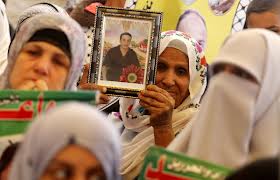
We need a wider ethical, legal, and political perspective to grasp properly this phenomenon of Palestinian prisoners. The unlawful occupation policies of Israel are unpunished even when lethal and flagrantly in violation of international humanitarian law, and are rarely even officially criticized in international arenas. In contrast lawful forms of resistance by the Palestinian people are harshly punished, and the resulting victimization of those brave enough to resist is overlooked almost everywhere. If we side with those who resist, as was done during World War II when those Europeans mounted militant forms of resistance against German occupation and criminal practices, we glorify their deeds and struggle. Yet if the occupier enjoys our primary solidarity we tend to criminalize resistance without any show of empathy. To some extent, this book cuts through this ideological myopia, and lets us experience the torment of these prisoners as human beings rather than as Palestinian ‘soldiers’ in the ongoing struggle against Israel.
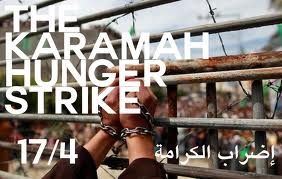
In the past year, heroic Palestinian hunger strikers, initially Khader Adnan and Hana Shalabi, did their best to call attention to the abusive character of Israel’s terrifying violent arrests in the middle of the night followed by imprisonment for lengthy periods without even making charges or holding trials. Israeli recourse to administrative detention takes place even in circumstances where the person being confined was engaged in no activities that could be remotely considered to pose a security threats. It is notable that despite hunger strikers putting their own lives at severe risk to protest such inhumane behavior by Israel in its role as the occupying power, the world refuses to pay attention even to such hunger strikers, which is somewhat shocking despite decades of lectures to the Palestinians to renounce armed resistance, and engage instead in nonviolent forms of resistance, and if they do so, they will win political support for their grievances even from governments allied with Israel, including the United States. To date the evidence suggests a far uglier pattern: when Palestinians resist by way of armed struggle, their actions are denounced and their grievances are ignored, while when they resist nonviolently, their actions and their grievances are ignored. What is worse, while this shift in Palestinian tactics has taken place in recent years, the Israeli governing process moves steadily to the right until now in March 2013, the latest governing coalition in Tel Aviv is avowedly settler oriented. The international background music has not changed, and Washington loses no opportunity to sound the trumpets while declaring its unconditional and undying loyalty to Israel, pretending not to notice violations of international law and the deliberate efforts to make the two state solution yesterday’s dream, today’s nightmare.
The preoccupation of these prisoners with the fate of the singular Israeli prisoner at the time, Gilad Shalit, was something of a surprise for me, although it is understandable. Why, the Palestinians ask themselves, does the world make such a fuss about a single Israeli being held in Gaza after being captured during a military mission, and ignore the fate of the many thousands of Palestinians detained for year after year because they fought for the freedom of their country? Once considered, such a question is both natural, and once asked, the grotesque display of double standards seems self-evident. But there is also an opposite appreciation of the significance of Shalit expressed, which recognizes that the October 2011 deal struck to release 1,027 Palestinian prisoners would not have happened had Shalit not been captured. In this sense, the Palestinians in recording their feelings realize that their freedom has been made possible because Hamas succeeded in capturing and holding Shalit. This was no small achievement. During the massive attacks by Israel on Gaza in 2008-09, Operation Cast Lead, IDF commanders told their troops that this violence had been unleashed so as to gain the release of Shalit. Had Hamas allowed Shalit to go free or had be been killed in the operation, then there would have been no negotiations for the release of Palestinian prisoners. It is as simple as that. Of course, it is not simple. Many of those released were soon rearrested by Israel, once more undermining even minimal trust between the two peoples, and again showing that Israel can defy legal and moral obligations without facing any adverse consequences, a metaphor for the overall stranglehold of the occupation.
Above all, these texts in almost every page confirm that particularly prized Palestinian collective public/private virtue of sumud or steadfastness. Such exhibitions of courage indirectly shames those of us who suffer far less or not at all, and yet find ourselves discouraged and dispirited by the ills of the world to an extent that we retreat from public engagement to the comfort zones of sanctuaries of escape. These prisoners have no such option, maintaining their commitment to the Palestinian struggle in the darkest of circumstances, consigned to spending their most energetic years behind bars or surrounded by dank prison walls. We can ask ourselves where does such courage come from? There is no definite common answer. Yet what comes across from these diary pages are deep commitments rooted in love of family and homeland as strengthened by religious faith and practice and sustained by prison camaraderie or in embittered reaction to the dehumanizing atmosphere of enduring prison life year upon year.
We should not forget that there is a callous and manifest unlawfulness about this network of Israeli prisons, all but one of the 19 being located in Israel, in direct violation of Article 76 of the Fourth Geneva Convention governing belligerent occupation: “Protected persons accused of offenses shall be detained in the occupied country, and if convicted they shall serve therein.” Underlying such a provision of law is a humane impulse: compelling an individual to be imprisoned in the occupying country imposes a geographic separation from family and homeland, which in the Israeli case is accentuated by a permit system that as a practical matter makes family visits from occupied Palestine a virtual impossibility. With respect to prisoners from Gaza, there are virtually no prison visits allowed even if sentences are for several decades or lifetime. As is widely known, the people of Gaza have been subject to a punitive blockade maintained ever since mid-2007 that involves a massive imposition of collective punishment on the civilian population, a crime of war so specified in Article 33 of the Fourth Geneva Convention.
Israel’s cruelty toward Palestinian prisoners is underscored by its recent practice of releasing West Bank hunger strikers at death’s doorstep, then deporting them for a period of years to Gaza, that is, beyond access to their families and normal places of residence, at a moment when their physical condition is so deteriorated that they could not possibly become a security threat and when most in need of nurture and familiar surroundings. Hana Shalabi, who was particularly close to her family, was so deported to Gaza for three years and just days ago. Ayman Sharawneh was similarly deported for ten years as part of a plea bargain. Such shocking practice is worthy of global condemnation. It involves another form of collective punishment inflicted both on the person so confined to Gaza and to his or her family that is not allowed to travel from the West Bank to Gaza. There is a triple perverseness about this practice of prisoner release: Gaza itself an open-aired prison also serves Israel as a site of punitive internal exile, and makes the distinction between ‘prison’ and ‘freedom’ almost disappear into surreal thin air. One can only imagine the global protest movement if Hamas had conditioned Gilad Shalit’s release on his confinement in a Salafi controlled region of Egypt!
This pattern of unlawful imprisonment and unjust deportation also interferes with the preparation of adequate defense representation as Palestinian lawyers also experience routine difficulties in obtaining permits and visiting rights. Article 76 also requires that prison conditions for those living under occupation should under no condition be worse than those of Israeli prisoners in Israel, which makes the disallowance and obstruction of family visits for Palestinians unlawful, as well as cruel.
It is increasing evident that international humanitarian law falls short when it comes to offering suitable protection to the Palestinian people who have been living under occupation since 1967, with no end in sight. It is not only occupation, but a continuous process of encroachment that cumulatively has assumed the character of de facto annexation via the massive settlement phenomenon. Under these circumstances, and given the inalienable right of self-determination that belongs to the Palestinian people, there is posed some protection for rights of resistance. These rights need to be exercised in a manner respectful of civilian innocence, but difficult issues of identification are posed in relation to armed and violent Israeli settlers. True, those who act in resistance are not technically prisoners of war, who are protected the Third Geneva Convention, but they are acting to fulfill fundamental rights being violated by those who occupy their land and sit in judgment when they act defensively. What is needed, beyond all doubt, is a code of conduct, if not an additional protocol to the Geneva Conventions, that fills in this gap associated with resistance. Resisters should be treated with the same dignity under international humanitarian law as is associated with Prisoners of War. Their acts, even if violent, are in keeping with prevailing societal and civilizational values, and perpetrators, even when confined for reasonable security reasons, should be treated with appropriate dignity. Unlike sociopathic common murderers, rapists, and the like (and even they should also be treated in accord with international standards), the acts of Palestinian prisoners are viewed as heroic by their own society and political culture, as well as many people throughout the world. They deserve international recognition and protection. Their ‘crimes’ will eventually be vindicated by history as part of a final chapter in the struggle against European colonial rule.
I believe it to be a moral obligation of all of us who care about human rights and freedom to read this book, and share it with others. The Palestinians, whose rights and dignity have been long trampled upon, especially deserve our deepest empathy, as well as our solidarity in their struggle. Reading the words of these prisoners vividly discloses the nature of such a struggle in the form of witnessing by those Palestinians who have put their lives at risk for the sake of recovering their stolen homeland. We also owe a debt of gratitude to Norma Hashim who has edited this collection as a work of devotion and an expression of solidarity with and reflection on the Palestinian struggle. Its publication in book form is timed to coincide with Palestinian Prisoner’s Day, April 17th.
The pdf version of Prison Diaries can be downloaded now for USD1.99 at http://theprisonersdiaries.blogspot.com. The printed book will be available at palestinemall.net from 17 April 2013.
Tags: Hana Shalabi, Israel, Israeli-occupied territories, Israeli–Palestinian conflict, Palestinian people, Palestinian prisoners in Israel, United States, World War II





 Global Justice in the 21st Century
Whose ‘Two State’ Solution? End game or Intermission?
6 JunFrom many sources there is a widespread effort to resume a peace process that has in the past led to failure, frustration, and anger, and often to renewed violence. The newly appointed American Secretary of State, John Kerry, is about to make his fifth trip to Israel since the beginning of 2013, insisting that the two sides try once more to seek peace, and warning if this doesn’t happen very soon, the prospects for an agreed upon solution will be postponed not for just a year or two, but for decades. Kerry says if this current effort does not succeed, he will turn his attention elsewhere, and that the United States will make no further effort. So far, aside from logging the air miles, seems perversely to be responsive to Tel Aviv’s demands for land swaps to allow settlement blocs to be incorporated into Israel and to promote further Palestinian concessions in relation to security arrangements, and totally unresponsive to Ramallah’s demands for some tangible signs from the Israeli government that resumed negotiations will not be another slammed door. In this vein, Kerry’s most ardent recent plea was at the Global Forum, an annual event organized under the auspices of the American Jewish Committee. Kerry told this audience that they possessed the influence to make the peace talks happen.
Somewhat surprisingly, even Marwan Barghouti writing from prison, has seemingly endorsed this Washington activism, and seemed to go further, calling upon the United States Government to use its leverage with Israel to resolve the conflict in a manner that recognizes Palestinian rights, and at the same time serves the broader American interest of stability in the Middle East. If Barghouti’s response to written questions submitted by Adnan Abu Amer of Al-Monitor, and published on May 28, 2013, is read carefully, it reinforces an extremely pessimistic assessment of current prospects for peace. Barghouti is urging the U.S. Government that it must make a 180 degree turn away from its posture of unconditional support for Israel if it wants to be credible with Palestinians in the search for a solution to the conflict that accords with natural justice. The United States would need, above all, to insist that Palestine becomes a fully sovereign state within the 1967 borders, have East Jerusalem as its capital, while supporting the full implementation of UN Resolution 194 that affirms the right of return of Palestinian refugees, and the removal of the settlements without noting any exceptions. These are all reasonable positions to take, each in furtherance of the relevant standards of international law. Yet it must be observed, and I am sure this is not news to Mr. Barghouti, Palestinian reasonableness in the context of the Israel/Palestine struggle means choosing not to be politically relevant.
It is from precisely this perspective that Barghouti words should be carefully and respectfully pondered. He calls the two-state solution “the only possible solution” and adds that it “must not be abandoned.” It is a vision of a two-state solution that comes superficially close to what the Israeli peace activist, Uri Avnery, advocates, but seems light years away from the kind of ‘solution’ that Israel might consider or Kerry advocate. In other words, there are two radically different two-state solutions that are often not being carefully distinguished: what might be called ‘the American conception,’ originally detailed in Barack Obama’s May 21, 2011 speech delivered at the U.S. State Department, which at the time of its utterance seemed to look toward Israel’s withdrawal to 1967 borders, with minor border adjusments, but included a general acceptance of Israel’s refusal to implement the Palestinian right of return behind the green line and its expectation that the main settlements would be incorporated into Israel sovereign territory . As so often has happened suring the Obama presidency, what seemed initially forthcoming, was soon altered by backpedaling in a manner that has severely damaged American credibility as a fair-minded third party. The U.S. Government in this instance has gradually come to acquiesce in, even if does not openly avow, these Israel’s unyielding demands, which makes Washington approach to the idea of two states for two peoples radically different than the Barghouti/Avnery conception of Palestinian statehood and self-determination. This latter conception is premised on the establishment of a genuinely sovereign and independent Palestine with East Jerusalem as its capital, and a genuine equality of the two states on matters bearing on security, resources, and refugee identity. There are, to be sure, important differences between Barghouti and Avnery with respect to the right of return, with Avnery opting for a more territorial view of the conflict consistent with the more moderate and humane Zionist views about limiting rights of Palestinian refugees and of the second-class status of the Palestinian minority living in Israel, but still rather far from the Barghouti position on these crucial matters so often ignored by the Western media.
In the background is the persisting unwillingness of the Netanyahu government, despite the overall backing it receives from Washington, to make Kerry’s life easier by undertaking some obvious confidence-building gestures: a settlement freeze and the release of some Palestinian political prisoners. Netanyahu insists on no preconditions for resumed negotiations, which means no letup in settlement expansion, no lifting of the Gaza blockade, and the continuing abusive treatment of the West Bank population. Kerry was probably hoping that his remarks at the AJC event would generate some pressure on Netanyahu to be somewhat more forthcoming. It is clear that if the Palestinian Authority are to enter direct negotiations while settlement expansion continued unchecked, it would likely be extremely detrimental to the claims of Mahmoud Abbas to be the sole legitimate voice of the Palestinian people, a view that Barghouti rejects despite his Fatah affiliation.
If Netanyahu was more adroit he could yield on these confidence-building prerequisites, and put Abbas in a bind. What has the Palestinian Authority to gain by entering into negotiations with an unabashedly expansionist and settler oriented Israeli government? Perhaps, it would win momentary favor in Washington. But for what benefit in relation to the struggle of the Palestinian people for a just solution? There are no signs whatsoever that Israel would even consider an outcome for negotiations that remotely resembled the Barghouti/Avnery two-state conception even if their differences are set aside for the moment. What would likely happen is that the negotiations would breakdown, as in the past, with the Palestinians receiving the lion’s share of the blame. Israel has much more spin control in the world media, especially if its narrative is backed by the United States, as has been the case in the past and would almost certainly be in the future. The likely hasbara assault would put the Palestinians in the position of once more being seen as rejecting what would be put forward to the world as generous Israeli proposals for a two-state solution that if looked at closely offered a statelet instead of a state, and even then subject to a humiliating and intrusive Israeli regime of control, all in the name of security, which should recall the disingenusous Israeli claim that its ‘disengagement’ from Gaza in 2005 put an end to the ‘occupation’ of the Gaza Strip.
Barghouti distance from what Kerry is trying to broker was also underscored by his expression of anger directed at the recent acceptance by the Arab League of modifications of its 2002 Arab Peace Initiative made in response to pressures exerted by Kerry. Barghouti’s comment on this aspect of Kerry’s diplomacy is worth reproducing: “The Arab Peace Initiative is the lowest the Arabs have gone in terms of a historical settlement with Israel. The statements of the Arab ministerial delegation to Washington in regards to amending the 1967 borders and accepting the land-swap inflict great damage on the Arab stance and Palestinian rights, and stimulate the appetite of Israel for more concessions. No one is entitled to amend borders or swap land; the Palestinian people insist on Israel’s full withdrawal to the 1967 borders, in addition to removing the settlements.” In effect, what Kerry put forward as a diplomatic coup, Barghouti denounced as an Arab betrayal. It all goes to show that there are many contradictory understandings cohabiting within the two-state tent.
It is notable that Barghouti also warns Israel and the United States that reliance on the status quo, which seems so comfortable from Tel Aviv’s perspective in recent years, is dangerously shortsighted: “security cannot be achieved without peace.” And further by implication, although not expressed in these words, “peace cannot be achieved without justice.” In this spirit of defiant nationalism, Barghouti also affirms that a right of resistance belongs to the Palestinian people, but its exercise should be sensitive to the limits of international law—“The tortured and oppressed Palestinian people have the right to defend themselves by all means approved by the UN Charter and international law. Total resistance is the most effective.” Barghouti in his responses strongly stresses the importance of moving to fulfill the tentative agreement between Fatah and Hamas to achieve Palestinian unity, while restating his awareness that resolving the refugee issue is central to a just solution while reaffirming his faith in an eventual Palestinian victory.
Both Kerry and Barghouti reject a one-state solution as not of any political interest, unfortunately leaving the peace process where it currently belongs—in an undurable limbo of indefinite extension. Netanyahu and Kerry have a Plan B that might really be their Plan A. It involves what Netanyahu shamelessly calls an ‘economic peace,’ a persistence of the occupation and status quo, but in a manner that makes life materially somewhat better for West Bank Palestinians (Gazans are no where to be found on this most dubious ‘map of conscience.’). It cannot be a coincidence that at this time Kerry is peddling a scheme to induce $4 billion of investment in the West Bank, presumably to convert the occupation and Palestinian statelessness into a new kind of ‘golden arch.’ The moment may have arrived to chase the moneychangers from the temple!
In pondering this dismal landscape of peace talk without peace, one wonders what became of ‘the roadmap’ and ‘the Quartet.’ It may be a small blessing that their irrelevance is being tacitly acknowledged. These creations never seemed more than a thin and deceitful veil thrown over a one sided American control over Israel/Palestine diplomacy. [For compelling documentation see Rashid Khalidi’s Broker of Deceit (2013)] In this sense the boldness of Kerry’s statecraft and Barghouti’s implicit recognition that the peace ball is in America’s court at least moves in the direction of ‘eyes wide open.’ For Kerry this means another set of grand gestures, for Netanyahu it means remaining immobile in the comfort zone created by the Palestinian shift away from the tactics of violent resistance, for Barghouti it means a call for resistance, a plea for more solidarity, and a kind of longing for an Israeli, or even an American, France’s DeGaulle or South Africa’s De Klerk who bothdramatically ruptured prior expectations by replacing confrontation with accommodation. Until something as drastic as this occurs, although not necessarily the work of a charismatic counter-hero, we need at least to have the honesty to admit that the end of the tunnel is dark except for occasional flickers of light. I discern such a flicker in the undertakings of those engaged in a legitimacy war against Israel, step by step gaining the high moral and legal ground, which may soon uncover political tipping points that will abruptly alter the relations of forces in support of Palestinian justice claims. The Palestinian Legitimacy War combines Palestinian resistance with a global solidarity campaign that is being waged on a global battlefield.
Tags: American Jewish Committee, Israel, John Kerry, Kerry, Marwan Barghouti, Middle East, Palestinian people, United States