
There is a natural disposition for supporters of the Palestinian struggle for self-determination to suppose that the Palestinian statehood bid must be a positive initiative because it has generated such a frantic Israel effort to have it rejected. Despite the high costs to American diplomacy in the Middle East at this time of regional tumult and uncertainty, the United States has committed itself to exercise its veto on Israel’s behalf if that turns out to be necessary. To avoid the humiliation of disregarding the overwhelming majority opinion of most governments in the world, the United States has rallied the former European colonial powers to stand by its side, while leaning on Bosnia and Colombia to abstain, thereby hoping to deny Palestine the nine votes it needs for a Security Council decision without technically casting a veto. On the side of Palestinian statehood one finds China, Russia, India, South Africa, Brazil, Lebanon, Nigeria, and Gabon, the leading countries of the South, the main peoples previously victimized by colonial rule. Is not a comparison of these geopolitical alignments sufficient by itself to resolve the issue of taking sides on such a litmus test of political identity? The old West versus the new South!
Add to this the drama, eloquence, and forthrightness of Mahmoud Abbas’s historic speech of 23 September to the General Assembly that received standing ovations from many of the assembled delegates. Such a favorable reception was reinforced by its contrast with the ranting polemic delivered by the Israeli Prime Minister, Benjamin Netanyahu, who insulted the UN by calling it ‘the theater of the absurd’ while offering nothing of substance that might make even mildly credible his strident rhetoric claim to support ‘peace,’ ‘direct negotiations.’ and ‘a Palestinian state.’ The deviousness of Netanyahu was made manifest when a few days later the Israeli Government announced that it had approved 1,100 additional housing units in the major East Jerusalem settlement of Gilo. This was a bridge too far for even Hilary Clinton who called the move ‘counter-productive’ and Europeans regarded as deeply disappointing and confidence-destroying, so much so that Netanyahu was openly asked to reverse the decision. There are a variety of other indications that additional settlement expansion and ethnic cleansing initiatives will be forthcoming from Israel in the weeks ahead. Are not such expressions of Israeli defiance that embarrasses even their most ardent governmental supporter enough reason by itself to justify a Security Council recommendation of Palestine statehood at this time? Would it not be worthwhile at this crucial moment to demonstrate the wide chasm separating increasing global support for the pursuit of justice on behalf of the Palestinian people from this domestically driven American reliance on its ultimate right of veto to block Palestinain aspirations? Would it not be well to remind Americans across the country, including even its captive Congress, that its own Declaration of Independence wisely counseled ‘a decent respect for the opinions of mankind’? If ever the use of the veto seems ill-advised and deeply illegitimate, it is in this instance, which the Obama Administration seems to acknowledge, or otherwise why would it use its leverage to induce allies and dependent states to go along with its opposition to Palestinian membership in the UN?
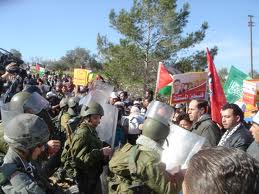
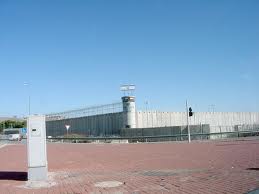
Turning to the speech itself, the language of recognition may be more notable than the substance. Never before in an international forum had the voice of the Palestinian Authority spoke of Israel’s occupation policies so unabashedly–as ‘colonial,’ as involving ‘ethnic cleansing,’ as imposing an unlawful ‘annexation wall,’ as creating a new form of ‘apartheid.’ With admirable directness, Israel was accused of carrying out the occupation in a manner that violated fundamental rules of international humanitarian law, and cumulatively amounted to the commission of crimes against humanity.
In the course of his speech Abbas tried hard to reassure the Palestinian diaspora on two matters of deep concern: that the Palestine Liberation Organization (PLO) will continue to represent the Palestinian people, who are the ultimate beneficiaries of the most fundamental of Palestinian rights at stake, the right of self-determination. The issue here is lost on almost all observers of the conflict, that the Palestinian Authority (PA) of which Abbas is president is a subsidiary body that was created by the PLO with a temporary mandate to administer Palestinian territory under occupation, and thus it was important to allay suspicions that the PLO was an intended casualty of the statehood bid so as to territorialize the conflict and give the Abbas and PA leadership complete representational control over the Palestinian role at the UN. The deep concern here relates to the adequacy of representation relating to the Palestinians living in refugee camps in neighboring Arab countries or in exile around the world. In the Palestinian National Council, 483 of its 669 members are drawn from Palestinians not living under occupation. President Abbas used the clearest possible language to reaffirm the position of the PLO just prior to enumerating the five conditions guiding his leadership role: “I confirm, on behalf of the PLO, the sole legitimate representative of the Palestinian people, which will remain so until the end of the conflict in all its aspects and until the resolution of the final status issues.”
In the background of this representation issue is an anxiety that Palestinian refugee rights will be forgotten or marginalized in the course of striking a deal that is build around a ‘land for peace’ formula. Again Abbas inserted some reassuring language in his speech to the effect that peace will depend on “a just and agreed upon solution to the Palestine refugee issue in accordance with resolution 194,” which unconditionally affirmed a Palestinian right of return. Relevantly, Netanyahu in his speech alluded to the “fantasy of flooding Israel with millions of Palestinians,” which is his way of both dismissing the rights of Palestinian refugees, especially as derived from the massive dispossession of Palestinian in 1948, and insisting on the Palestinian recognition of Israel as ‘a Jewish state.’ This insistence combines demographics with democracy, contending that ever since the promise of Lord Balfour on behalf of the British Government to a leader of the Zionist movement in 1917 there were continual acknowledgements that Israel was a Jewish state. Netanyahu made short shrift of the claims to dignity and equality of the 1.5 million Palestinians existing under an array of discriminatory burdens by saying merely that Israel treats its minorities in a manner that respects their human rights. It should be recalled that the Balfour Declaration, a notoriously colonial disposition, did not promise the Jewish people a state, but rather ‘a national home,’ and that it was to be established in a manner that did not interfere with the ‘civil and religious rights of existing non-Jewish communities in Palestine.’ Human rights and democracy have become significantly universalized during the last several decades. This development implies that the governing structures of society embodied in the state must renounce any claim of ethnic or religious particularity. Political legitimacy in the 21st century should not be accorded to any state that claims to be a Jewish state, an Islamic state, or a Christian state. Such statist neutrality should be set forth as an element of legitimate statehood by formal action at the United Nations. Such a declaration would impose a limit on the right of self-determination by denying to peoples the right to establish ethnic or religious states. In a globalizing world ethnic and religious diversity are present in every major state, and needs to be respected by unfurling a banner of equality that grants religious freedom to all faiths and allows collective identities to be expressed without prejudice.
For some widely respected Palestinian activists and NGOs, these assurances were not enough. With the formidable intellectual support of Oxford professor, Guy Goodwin-Gill, the very idea of Palestinian statehood compromises the representational rights of diaspora Palestinians within UN arenas of decision, and potentially deforms future negotiations by according predominance to territorial priorities. Guy-Goodwin’s analysis was built around the general view that a state could never adequately represent people outside its borders. Given existing realities this would mean disenfranchising the Palestine refugee and exile population that comprises a majority of ‘the Palestinian people’ who are as a collectivity the holder of the overarching entitlement embodied in the right of self-determination. Such a view may be technically correct, and operationally prudent, but it overstates the clarity of the legal implications of Palestinian statehood and UN membership, while understating the degree to which what is being questioned are the psycho-political priorities of the current PA/PLO leadership. To further strengthen and promote the unity of the Palestinian global solidarity movement it is crucial to continue to seek accommodation between territorial and non-territorial dimensions of the Palestinian struggle, and thus to minimize intra-Palestinian divergencies, including the ongoing rift with Hamas. Here again Abbas had some reassuring words to say about the future implementation of the reconciliation agreement reached between the PLO and Hamas in June, but the failure of Hamas to endorse the statehood/membership bid at this time raises doubts about whether cooperation between these two political tendencies of Palestinians living under occupation will be forthcoming in the future.
There are, against this background, some further grounds for concern that result from gaps or disappointing formulations in the Abbas speech. One glaring gap was the failure to address the accountability issues associated with the non-implemented recommendations of the Goldstone Report arising out of war crimes allegations associated with massive attacks (Israeli code named ‘Operation Cast Lead”) on Gaza between 27 December 2008 and 18 January 2009. In an important statement issued by the Palestinian Centre of Human Rights, jointly with several respected human rights NGOs, the PLO was given responsibility for doing their best to see that these recommendations for referral to the International Criminal Court be carried out. In the words of the statement, “should the PLO choose not to pursue the accountability process initiated by the Report of the UN Fact-Finding Mission – at the expense of the Statehood initiative – this will amount to the prioritization of political processes over victims’ fundamental rights; indicating acceptance of the pervasive impunity that characterizes the situation in Israel and the occupied Palestinian territory.”
Although implicit in the Abbas speech, the systematic refusal of Israel to comply with international law, was not accorded the emphasis in deserves. Given this reality, it was comic irony for Netanyahu to invoke international law in relation to the captivity of a single Israel soldier, Gilad Shalit; of course, international law should be observed in relation to every person, but when Israel subjects the whole of Gaza to a punitive blockade that has lasted for more than four years, imprisons thousands of Palestinians in conditions below international legal standards, and refuses to implement the near unanimous Advisory Opinion of the World Court on the unlawfulness of its annexation wall, it has lost all credibility to rely on international law on those few occasions when it works to its advantage.
Even more disturbing, because so relevant to the present posture of the conflict, was the rather bland expression of willingness on the part of the PLO to resume direct negotiations provided that Israel imposes “a complete cessation of settlement activities.” As there is no chance that this condition will be met, it may not be so important for Abbas to question the value of direct negotiations given their repeated failure to move the parties any closer to peace during the past 18 years. In fact, Israel has cloaked settlement expansion, ethnic cleansing, and a variety of encroachments on what might have at one time become a viable Palestinian state, with the charade of periodic peace talks held under the non-neutral auspices of the United States. What Abbas could have done more effectively, given the unlikelihood of an affirmative Security Council recommendation on UN membership, is to couple the statehood/membership bid with the demand of a new framework for future negotiations that includes both Israeli commitments to abandon settlement expansion in East Jerusalem as well as the West Bank, and more importantly, selects a state or regional organization to provide non-partisan auspices for the talks. Such a demand would have made clear that the PLO/PA was no longer willing to play along with the Oslo game that has more than doubled the settler population and allowed Israel to invest in an expensive settler only infrastructure that is unlikely to be ever voluntarily dismantled. It is past time to declare the Oslo framework of direct negotiations as terminally ill, futile, and illegitimate, and incapable of drafting a roadmap that leads anywhere worth going! For the UN to be one of the four Quartet members, especially given the American hegemonic control over the diplomacy on the conflict, also warranted a harsh comment by Abbas.
What the future holds is more uncertain than ever. The mainstream media has tended to criticize both Israel and the PA/PLO as if their respective behavior was equivalent. For instance, the Palestinian statehood/membership initiative is treated as equally provocative as the Israeli announced intention to expand the unlawful Gilo settlement. Such an attitude does belong in the theater of the absurd, equating a completely legal, arguably overdue plea to be given an upgraded status at the UN with a criminal encroachment on basic Palestinian rights associated with territory under occupation, as recognized by Article 49(6) of the Fourth Geneva Convention.
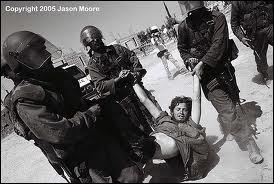
Whether Israel will follow through on its threats to ‘punish’ the PA for undertaking this completely legal initiative remains to be seen. Already there is troublesome indications of widespread settler violence in the West Bank that is either unopposed or backed by Israeli military and security units. As has been observed by the Israeli president, Shimon Peres, Israel will never have a more moderate partner for peace than the Ramallah leadership, and if it undermines its viability it will be demonstrating once again that it has lost its capacity to promote its national interests. It has showed this aspect of decline most dramatically by picking a fight with a resurgent Turkey, and then missing one opportunity after another to repair the damage, which is what Ankara earlier had hoped would happen. As regional developments move toward greater support for the Palestinian struggle, Israel is allowing what might have been a historic opportunity for a sustainable peace to slip away. An acute problem with extremism, whether of the Likud or Tea Party variety, is that it subordinates interests and rationality to the dictates of an obsessive and emotive vision that is incapable of calculating the balance of gains and losses in conflict situations, being preoccupied with all or nothing outcomes, which is the antithesis of diplomacy. This is a path that inevitably produces acute human suffering and often leads to disaster. It is time for Israelis to abandon such a path for their own sake and the sake of others!


 Global Justice in the 21st Century
An American Awakening?
5 OctThe exciting presence of protestors on Wall Street (and the spread of the #OccupyWallStreet protests across the country) is a welcome respite from years of passivity in America, not only in relation to the scandalous legal and illegal abuses of comprador capitalists, but also to the prolongations of wars in Iraq and Afghanistan, a shocking disregard of the impinging challenges of climate change, a rising Islamophobic tide at home, and a presidency that seems less willing to confront hedge fund managers than jobless masses. But will this encouraging presence be sustained in a manner that brings some hope of restored democracy and social wellbeing at home and responsible law-oriented leadership abroad?
There is little doubt that this move to the streets expresses a deep disillusionment with ordinary politics based on elections and governing institutions. Obama’s electoral victory in 2008 was the last hope of the young in America who poured unprecedented enthusiasm into his campaign that promised so much and delivered so little. Perhaps worse than Obama’s failure to deliver, was his refusal to fight, or even to bring into his entourage of advisors some voices of empathy and mildly progressive outlook. From his initial appointment of Rahm Emmanuel onwards, it was clear that the Obama presidency would be shaped by the old Washington games waged by special interests, as abetted by a Republican Party leaning ever further to the right, a surging Tea Party that is pushing the opposition to the outer extremes of irrational governance, and a Democratic Party that is trying to survive mainly by mimicking Republicans. If such a portrayal of ordinary politics is more or less correct it is a wonder that a more radical sense of America’s future took so long to materialize, or even to show these present signs of displeasure with what is and engagement with what might be.
For those of us with our eyes on the Middle East two observations follow. The extraordinary falling back from Obama’s speech in Cairo of 2009, which was, contrary to how it was spun by the pro-Israeli media, a very cautious approach to the Israel/Palestine conflict, but at least forward looking in its realization that something more had to be done if negotiations were ever to be more than a charade. The speech contained lots of reassurances for Israel, especially it treated the dispute as essentially territorial (withdrawal to 1967 borders, which deliberately pretends that refugee and exile rights of Palestinians are irrelevant to a just peace), and only seemed to project balance when it insisted on a suspension of settlement expansion as a confidence-building step toward a new cycle of negotiations. It really was a most modest request to insist that Israel temporarily stop expanding settlements that were almost unanimously seen as flagrant violations of Article 49(6) of the Fourth Geneva Convention and posing a real threat to the viability of an independent Palestinian state. When Israeli leaders and their zealous American backers indicated ‘no go,’ the Obama administration back peddled with accelerating speed, gradually isolating the United States on the global stage by the unconditionality of its support for Israel even in situations where Israel is seen by virtually the entire rest of the world as defiant toward international law. Besides this, a few months ago the leaked Palestine Papers underscored Israel’s disinterest in a negotiated solution to the conflict even in the face of Palestinian of huge Palestinian Authority concessions behind closed doors. Of course, Obama should not take the whole blame as Congress has outdone him when it comes to support for partisan positions that often seem to outdo the Knesset.
The latest phase in American foreign policy in relation to the conflict is associated with the American threat to veto the statehood bid of Palestine in the UN Security Council, coupled with its arm-twisting efforts to induce others to vote with the U.S. against statehood or at least abstain, so that Palestine will not get the nine affirmative votes it needs to receive a positive recommendation and the U.S. will be spared the embarrassment and backlash of casting a veto. The shrillness of the sterile call by Obama in his 2011 speech to the General Assembly to the parties to resume negotiations after almost twenty years of futility, and for the Palestinians the effects were far worse than mere failure (the ordeal of occupation, loss of land to settlements, annexation wall, road infrastructure). It should finally be understood. Time is not neutral. It helps Israel, hurts Palestine.
Disavowing American party and institutional politics and situating hope with the arousal of progressive forces in civil society is different from concluding that the Wall Street protests is more than a tantalizing flash in the pan at this stage. Even this cautionary commentary should make it obvious that the events owe their primary inspiration to Tahrir Square (with a surprising initial push from the Canadian anti-consumerist organization Adbusters, previous mainly known for its irreverent and vaguely anarchistic magazine by the same name), especially the ethos of a nonviolent leaderless, programless spontaneous rising that learns day by day what it is about, who it is, and what is possible. Of course, the stakes for activists are much lower than in Egypt or elsewhere in the Middle East, as there is little risk of death at this point on American streets. At the same time, the monsters of Wall Street are not quite as potent a unifying target for an militant opposition as was the grim personage of Hosni Mubarak, cruel autocrat of more than three decades, and so it may be harder to transform the protests into a sustainable movement.
In the end, we must hope and engage. The beginnings of hope are rooted in the correctness of analysis, and so we can be thankful that this initiative places its focus on financial and corporate structures, and not on the state. Further along these lines, if the struggle will gain momentum it will be totally thanks to politics-from-below. The implicit not so subtle point is that the center of power over the destinies of the American people has shifted its locus from Washington to New York, and from the penthouse to the the basement!! We’ll see!!
Tags: Fourth Geneva Convention, Israel, Middle East, Obama, Palestine, Palestinian people, United States, Wall Street