Tag Archives: United Nations

A Shameless Secretary General versus Freedom Flotilla 2

2 Jun


             It is expected that at the end of June, Freedom Flotilla 2 will set sail for Gaza carrying various forms of humanitarian aid, including medical, educaional, and construction materials. This second flotilla will consist of 15 ships, including the Mavi Marmara sailing from Istanbul, but also vessels departing from several European countries, and carrying as many as 1500 humanitarian activists as passengers. If these plans are carried out, as seems likely, it means that the second flotilla will be about double the size of the first that was so violently and unlawfully intercepted by Israeli commandos in international waters on May 31, 2010, resulting in nine deaths on the Turkish lead ship.


            Since that shocking incident of a year ago the Arab Spring is transforming the regional atmosphere, but it has not ended the blockade of Gaza, or the suffering inflicted on the Gazan population over the four-year period of coerced confinement. Such imprisonment of an occupied people has been punctuated by periodic violence, including the sustained all out Israeli attack for three weeks at the end of 2008 during which even women, children, and the disabled were not allowed to leave the deadly killing fields of Gaza. It is an extraordinary narrative of Israeli cruelty and deafening international silence, a silence broken only by the brave civil society initiatives in recent years that brought both invaluable symbolic relief in the form of empathy and human solidarity, as well as token amounts of substantive assistance in the form of much needed food and medicine. It is true that the new Egypt has opened the Rafah crossing a few days ago (but not fully or unconditionally), allowing several hundred Gazans to leave or return to Gaza on a daily basis. At best, this opening even if sustained provides only partial relief. Rafah is not currently equipped to handle goods, and is available only to people and so the blockade of imports and exports continues in force, and may even be intensified as Israel vents its anger over the Fatah/Hamas unity agreement.


            As the Greek coordinator of Freedom Flotilla 2, Vangelis Pisias, has expressed the motivation of this new effort to break the blockade: “We will not allow Israel to set up open prisons and concentration camps.”  Connecting  this Gazan ordeal to the wider regional struggles,” Pisias added, “Palestine is in our heart and could be the symbol of a new era in the region.” Such sentiments reinforce the renewal of Palestinian militancy as exhibited in the recent Nabka and Naksa demonstrations.


            A highly credible assessment of the Israeli 2010 attack on Freedom Flotilla 1 by a fact finding mission appointed by the UN Human Rights Council concluded that the Israelis had violated international law in several respects: by using excessive force, by wrongfully attacking humanitarian vessels in international waters, and by an unacceptable claim to be enforcing a blockade that was itself unlawful. Such views have been widely endorsed by a variety of respected sources throughout the international community, although the panel appointed by the UN Secretary General to evaluate the same incident has not yet made public its report, and apparently its conclusions will be unacceptably muted by the need to accommodate its Israeli member.


            In light of these surrounding circumstances, including the failure of Israel to live up to its announced promise after the attack in 2010 to lift the blockade, it shocks our moral and legal sensibilities that the UN Secretary General should be using the authority of his office to urge member governments to prevent ships from joining Freedom Flotilla 2. Ban Ki-moon shamelessly does not even balance such a call, purportedly to avoid the recurrence of violence, by at least sending an equivalent message to Israel insisting that the blockade end and demanding that no force be used by Israel in response to humanitarian initiatives of the sort being planned. Instead of protecting those who would act on behalf of unlawful Palestinian victimization, the UN Secretary General disgraces the office, by taking a one-sided stand in support of one of the most flagrant and long lasting instances of injustice that has been allowed to persist in the world. True, his spokesperson tries to soften the impact of such a message by vacuously stating that “the situation in the Gaza Strip must be changed, and Israel must conduct real measures to end the siege.” We must ask why were these thoughts not expressed by the Secretary General himself and directly to Israel? Public relations is part of his job, but it is not a cover for crassly taking the wrong side in the controversy over whether or not Freedom Flotilla 2 is a legitimate humanitarian initiative courageously undertaken by civil society without the slightest credible threat to Israeli security and in the face of Israeli warnings of dire consequences.


            Appropriately, and not unexpectedly, the Turkish Government refuses to bow to such abusive pressures even when backed by the UN at its highest level. Ahmet Davutoglu, the widely respected Turkish Foreign Minister, has said repeatedly in recent weeks when asked about Freedom Flotilla 2, that no democratic government should ever claim the authority to exercise control over the peaceful initiatives of civil society, as represented by NGOs. Davutoglu has been quoted as saying “[N]obody should expect from Turkey…to forget that nine civilians were killed last year..Therefore we are sending a clear message to all those concerned. The same tragedy should not be repeated again.” Underscoring the unresolved essential issue he asked rhetorically, “[D]o we think that one member state is beyond international law?” Noting that Israel has still not offered an apology to Turkey or compensation to the families of those killed, Davutoglu makes clear that until such reasonable preconditions for diplomatic normalization are met, Israel should not be accepted “to be a partner in the region.”


             In the background of this sordid effort to interfere with Freedom Flotilla 2 is the geopolitical muscle of the United States that blindly (and dumbly) backs Israel no matter how outrageous or criminal its behavior. And undoubtedly, this geopolitical pressure helps explain this attempted interference by the UN with a brave and needed humanitarian initiative that deserves to be strongly supported by the UN rather than condemned. Despite the near universal verbal objections of world leaders, including even Ban Ki-moon, to the Israeli blockade, no meaningful action has been yet taken by either governments or the UN. Israel’s undisguised defiance of the requirements of belligerent occupation of Gaza as set forth in the Fourth Geneva Convention of 1949, and the First Additional Protocol appended thereto in 1977, is an unacknowledged scandal of gigantic proportions.


            Liberating Palestine from oppressive occupation and refugee regimes should become a unifying priority for peoples and leaders during this second stage of the Arab Spring. Nothing could do more to manifest the external as well as the internal turn to democracy, constitutional governance, and human rights than displays of solidarity by new and newly reformist governments in Arab countries with this unendurably long Palestinian struggle for justice and sustainable peace. It would also offer the world a contrast with the subservience to Israel recently on display in Washington, highlighted by inviting Benjamin Netanyahu to address an adoring U.S. Congress, a rarity in the country’s treatment of foreign leaders. Its impact was heightened by the pandering speech given by President Obama to AIPAC, the notorious Israeli lobbying organization, at about the same time. It is unprecedented in the history of diplomacy that a leading sovereign state would so jeopardize its own global reputation and sacrifice its values to avoid offending a small allied partner. It is in the American interest, as well as in the interest of the peoples of the Arab world, particularly the Palestinians, to end the conflict.


             The United States Government has long discredited itself as an intermediary in the conflict. Its partisanship, driven mainly by domestic politics, represents a costly sacrifice of its own interests, but is also objectionable as lending support to intolerable Israeli policies of apartheid occupation and colonialist expansionism. It is time to shift the locus of diplomatic responsibility for resolving the conflict from Washington to the far more geopolitically trustworthy auspices of Brazil, Turkey, Nordic countries, even possibly Russia or China, and to encourage a more active regional role. If the encouraging recent Fatah/Hamas unity arrangements hold up and move forward, Palestinian representation will be regarded as increasingly credible, and hopefully will actively incorporate elements of the refugee communities in the bordering countries into their diplomacy. It is time for the world to realize, and the Palestinians to highlight, that the conflict is not just about territory (‘land for peace’), or even to ensure an adequate Palestinian presence in Jerusalem, it is most fundamentally about people. Insisting on respect for the moral, legal, and political rights of Palestinian refugees is the litmus test of a people-centered approach to the conflict, and our concern for the future of these long entrapped refugees should not be allowed to drift off into peripheral space, as has happened in the past.

Observing the 63rd Nakba

15 May

The latest news reports that at least 14 were Palestinians killed and scores more than that number injured by Israeli soldiers using live ammunition against Nakba demonstrators at confrontations near the Israeli borders with Lebanon (Ras Maroun), Syria (Golan Heights), Gaza, and West Bank. An immediate reaction is to contrast sophisticated Israeli non-lethal crowd control when dealing with settler violence and the lethal responses to Palestinian resistance politics in these four distinct settings. All in all, what is exhibited by these encounters is an upsurge of Palestinian militancy, perhaps a prelude to a third intifada, and the continuity of Israeli reliance on excessive force designed to punish and intimidate, which is a characteristic severe violation of Israel’s duties as an occupying power as defined by international humanitarian law. 

One of the many signs of the growing worldwide movement in support of the Palestinian struggle for their rights under international law and elemental morality is the increased international awareness of the Nakba. On this 63rd anniversary of the catastrophic Palestinian experience since 1948 when an escaping and expelled 760,000 Palestinians (now this dispossessed population has grown to 4.7 million; the 160,000 Palestinians who managed to stay behind in what became Israel now number 1.3 million) there is an encouraging sense that the destiny of the Palestinian people has entered a more hopeful phase: the Arab Spring, combined with earlier political developments in Turkey and Lebanon, have shifted the regional balance toward a greater identification with the Palestinian people and their just claims under international law and morality; the growing BDS worldwide campaign has extended the symbolic battlefield in the Legitimacy War against Israeli occupation, and related policies of apartheid, ethnic cleansing, barrier wall, blockade, settlements; the decision by the recently unified Palestinian leadership to seek acknowledgement of Palestinian statehood in the United Nations this September opening possibilities for further motivating the international community to live up to its responsibilities to address Palestinian grievances that have gone unanswered for these 63 years of UN endorsement of the valid establishment of Israel,  despite it being a colonial settler state imposed on and carved out of  historic Palestine; new signs of activism among the Palestinians living under occupation and in exile; the manifest and deplorable double standards involved in supporting the violent imposition of a No Fly Zone on Libya, which is in reality an effort to achieve regime change on behalf of a rebel insurgency of unknown character, while refusing to protect the people of Gaza who have severely victimized by a total blockade that has lasted almost four years, a massive case of deliberate and criminal collective punishment outlawed by Article 33 of the Fourth Geneva Convention. Against such a background the ongoing mobilization of public engagement on behalf of Palestinian rights should enlist all persons of conscience throughout the world, a populist dynamic that is happening and should intensify in the coming year. From this perspective it may soon be the case that the annual observance of the Nakba will be treated as the first truly global holiday the world has known.

Despite these developments there is no indication whatsoever that the Israeli leadership or public has any interest in achieving a sustainable peace or that it is prepared to desist from its expansionist and annexationist approach to the occupation of the West Bank and East Jerusalem. There are a few lonely Israeli voices calling for justice to the Palestinian people. For instance, Gideon Levy calling on Israel to teach ‘a different heritage lesson,’ that of the Nabka. Writing in Haaretz (15.5.2011) Levy writes, “Not only is it possible to permit the Israeli Palestinians to commemorate the day of their heritage and express their national and personal pain, something that should be self-evident, but also to teach us, the Jews, the other narrative..Only on the day that the pupils in Israel also learn about the Nabka, will we know that the earth is no longer burning under our feet..”

The Nakba is of course a day of grievance and resolve for all Palestinians including the several million living in refugee camps for decades in the countries surrounding Palestine and other millions in exile throughout the region and the world. A sustainable peace must realize the rights of all Palestinians, and must be broader and deeper than ending the occupation or establishing a Palestinian state. Palestinian representation to be legitimate and effective must keep faith with this wider Palestinian reality, and not confine its political program to a territorial imaginary. Just as the Palestinian solidarity movement is without boundaries so must be the campaign to achieve full realization of all of the rights of the dispossessed Palestinian people.

To live under Israeli occupation or as refugees for a day is difficult, for a week is unendurable, but to do so for decades is intolerable beyond words of outrage and empathy. We cannot grasp the enormity of this ordeal merely by underscoring the fact that Nakba occurred 63 years ago and that the added cruelty of the occupation started in 1967. Only the existential experience of being on the ground in occupied Palestine or visiting refugee camps in Lebanon, Jordan, or Syria can begin in a modest way to impart an understanding of the suffering and insecurity that is a daily reality of all those so confined, and even this can give rise to a false consciousness of ‘knowing.’ Those that visit can leave, those subject to regimen cannot, and that makes all the difference!

Below is the text of a press release issued in my capacity as Special Rapporteur for the Palestinian Territories Occupied since 1967, and released under the auspices of the Office of the High Commission for Human Rights in Geneva.

***********

                                                                                          16 May 2011


The UN human rights expert on the 63th anniversary of the Palestinian Nakba


16 May 2011
UN human rights expert on the 63th anniversary of the Palestinian Nakba

GENEVA – The Special Rapporteur on the situation of human rights in the occupied Palestinian territories, Mr. Richard Falk, marks the 63rd anniversary of the Nakba, the catastrophic beginning of the Palestinian tragedy of dispossession and occupation, with the following statement: 

“I commemorate Nakba this year dismayed by the killing of demonstrators observing the day in the occupied Palestinian territory and elsewhere in the region.

Since the Nakba on 15 May 1948 Israel has continuously confiscated Palestinian land in order to build illegal settlements and populate them with Israeli citizens. It is astonishing that no one in the international community has stepped forward, after 63 years, to coerce Israel to comply with international law. Israel’s legacy of ethnic cleansing persists, and manifests itself in an array of challenges to the security of residency for Palestinians living under occupation.

“The construction of the Wall inside the West Bank results in an additional 12% of land confiscation and demolition of Palestinian homes, in flagrant defiance of the Advisory Opinion of the International Court of Justice.

“This past week seven Palestinian families in the West Bank village of al-Walaja received demolition orders. This is a reminder that the Nakba continues. Israel’s pursuit of what it calls ‘facts on the ground’ consistently forces Palestinians to abandon their homes, lands, and lives, creating a reality better understood as virtual annexation. 

“This is a particularly notable Nakba anniversary, as it coincides with the release of information confirming that Israel secretly revoked as many as 140,000 residency permits of Palestinians between 1967 and 1994. This is not only another violation of Israel’s obligations as the Occupying Power under the Fourth Geneva Convention.  It is also a glaring example of several sinister schemes that Israel has employed over the years to rid historic Palestine of its original inhabitants, in order to make space for Israeli citizens.

“The international community needs to take urgent action to compel Israel to end its confiscation and occupation of Palestinian land.” 

ENDS

In 2008, the UN Human Rights Council designated Richard Falk (United States of America) as the fifth Special Rapporteur on the situation of human rights on Palestinian territories occupied since 1967. The mandate was originally established in 1993 by the UN Commission on Human Rights.

Learn more about the mandate and work of the Special Rapporteur:http://www2.ohchr.org/english/countries/ps/mandate/index.htm

OHCHR Country Page – Occupied Palestinian Territories:http://www.ohchr.org/EN/countries/MENARegion/Pages/PSIndex.aspx

OHCHR Country Page – Israel: http://www.ohchr.org/EN/Countries/MENARegion/Pages/ILIndex.aspx

For more information and media requests, please contact Nikki Siahpoush (Tel.: + 41 22 928 9430 / email:nsiahpoush@ohchr.org) or write to sropt@ohchr.org. 


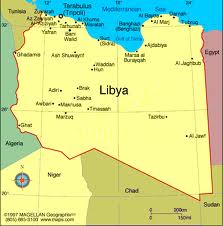
Qaddafi, Moral Interventionism, Libya, and the Arab Revolutionary Moment

20 Mar

Qaddafi, Moral Interventionism, Libya, and the Arab Revolutionary Moment

Long ago Qaddafi forfeited the domestic legitimacy of his rule, creating the moral and political conditions for an appropriate revolutionary challenge. Recently he has confirmed this assessment by referring to the disaffected portion of his own citizenry as ‘rats and dogs’ or ‘cockroaches,’ employing the bloodthirsty and vengeful language of a demented tyrant. Such a tragically criminal imposition of political abuse on the Libyan experience is a painful reality that exists beyond any reasonable doubt, but does it validate a UN authorized military intervention carried out by a revived partnership of those old colonial partners, France and Britain, and their post-colonial American imperial overseer?

From a personal perspective, my hopes are with the Libyan rebels, despite their reliance on violence and the opaqueness  of their political identity.  As many credible exile Libyan voices attest, it would seem highly likely that a rebel victory would benefit the people of Libya and would be a step in the right direction for the region, especially the Arab world, but does this entail supporting Western-led military intervention even if it is backed by the United Nations? I believe not.

Let us begin with some unknowns and uncertainties. There is no coherent political identity that can be confidently ascribed to the various anti-Qaddafi

forces, loosely referred to as ‘rebels.’ Just who are they, whom do they represent, and what are their political aspirations? It is worth observing that unlike the other regional events of 2011 the Libyan rising did not last long as a popular movement of a spontaneous character, or unfold as a specific reaction to some horrific incident as in Tunisia. It seemed, although there is some ambiguity in the media reports, that the Libyan oppositional movement was armed and reliant on military force almost from the start, and that its political character seems more in the nature of a traditional insurrection against the established order than a popular revolution in the manner of Tahrir Square inspired by democratic values. This violent political reaction to Qaddafi’s regime seems fully justified as an expression of Libyan self-determination, and as suggested deserves encouragement from world public opinion, including support from such soft power instruments as boycott, divestment, and maybe sanctions. By and large, the international community did not resort to interventionary threats and actions in Libya until the domestic tide turned in favor of Tripoli, which means that the intervention was called upon to overcome the apparent growing likelihood that Qaddafi would reestablish order in his favor, and therefore this international intrusion on the conflict represents a coercive effort to restructure a country’s governing process from without.

The main pretext given for the intervention was the vulnerability of Libyan civilians to the wrath of the Qaddafi regime. But there was little evidence that such wrath extends beyond the regime’s expected defense of the established order, although admittedly being here undertaken in a brutal manner, which itself is not unusual in such situation where a government and its leadership is fighting for their survival. How is this Libyan response different in character than the tactics relied upon by the regimes in Yemen and Bahrain, and in the face of far less of a threat to the status quo, and even that taking the form of political resistance, not military action. In Libya the opposition forces relied on heavy weapons, while elsewhere in the region the people were in the streets in massive numbers, and mostly with no weapons, although in a few instances, with very primitive ones (stones, simple guns) that mainly were used in retaliation for regime violence.

It may have been the case that the immediate Libyan governmental response was predictably brutal and militarist, and that the rebel opposition felt that it had no choice. But it should have been clear from the experiences in Iraq and Afghanistan that military intervention against a hated and brutal regime is not the end of the story, and before the ending is reached violence cascades to heights far beyond what would have likely resulted had there been no intervention. In the process heavy casualties are inflicted and massive displacements occur causing immense suffering for the entrapped and innocent population. In effect, overall historical trends vindicate trust in the dynamics of self-determination despite the fact that short-term disillusioning disasters may and do occur from time to time. These trends similarly underscore the inherently problematic character of intervention, even given the purest of motivations, which rarely, if ever, exists in world politics on the side of intervening parties.

But it can be asked, what about Rwanda, Bosnia (especially, the massacre at Srebrenica)? Are not these instances where humanitarian intervention should have been undertaken and was not? And didn’t the NATO War in Kosovo demonstrate that humanitarian intervention does sometimes spare a vulnerable population from the ordeal of genocidal ethnic cleansing? With respect to Rwanda and Bosnia, the threat of genocidal behavior was clearly established, and could likely have been prevented by a relatively small-scale intervention, and should have been undertaken despite the uncertainties. The facts surrounding the alleged genocidal threat in Kosovo remain contested, but there was a plausible basis for taking it seriously given what had happened a few years earlier in Bosnia. But just as the Libyan rebels raise some suspicion by seeking Euro-American military intervention, so did the KLA in Kosovo engage in terrorist provocations that led to violent Serb responses, allegedly setting the stage in 1999 for NATO’s ‘coalition of the willing.’ NATO went ahead in Kosovo without the benefit of a Security Council mandate, as here, for military action ‘by all necessary means.’ But with respect to Libya there is no firm evidence of a genocidal intention on Qaddafi’s, no humanitarian catastrophe in the making, and not even clear indications of the extent of civilian casualties resulting from the fighting. We should be asking why did Russia signal its intention to veto such authorization in relation to Kosovo, but not with respect to Libya. Perhaps, the Russian sense of identification with Serb interests goes a long way to explain its opportunistic pattern of standing in the way on the earlier occasion when interventionary forces gathered a head of steam in the late 1990s, while standing aside in 2011 in deference to the Euro-American juggernaut.

One of the mysteries surrounding UN support for the Libyan intervention is why China and Russia expressed their opposition by abstaining rather than using their veto, why South Africa voted with the majority, and why Germany, India, and Brazil were content to abstain, yet seeming to express reservations sufficient to produce ‘no’ votes, which would have deprived the interventionist side of the nine affirmative votes that they needed to obtain authorization. Often the veto is used promiscuously, as recently by the United States, to shield Israel from condemnation for their settlement policy, but here the veto was not used when it could have served positive purposes, preventing a non-defensive and destructive military action that seems imprudent and almost certain in the future to be regarded as an unfortunate precedent.

The internal American debate on the use of force was more complex than usual, and cut across party lines. Three positions are worth distinguishing: realists, moral interventionists, moral and legal anti-interventionists. The realists, who usually carry the day when controversial military issues arise in foreign policy debates, on this occasion warned against the intervention, saying it was too uncertain in its effects and costs, that the U.S. was already overstretched in its overseas commitments, and that there were few American strategic interests involved. The moral interventionists, who were in control during the Bush II years, triumphantly reemerged in the company of hawkish Democrats such as Hilary Clinton and Joseph Biden, prevailing in the shaping of policy partly thanks to the push from London and Paris, the acquiescence of the Arab neighbors, and the loss of will on the part of Moscow and Beijing. It is hard to find a war that Republicans will not endorse, especially if the enemy can be personalized as anti-American and demonized as Qaddafi has been, and it always helps to have some oil in the ground! The anti-interventionists, who are generally reluctant about reliance on force in foreign policy except for self-defense, and additionally have doubts about the effectiveness of hard power tactics, especially under Western auspices. These opponents of intervention against Qaddafi were outmaneuvered, especially at the United Nations and in the sensationalist media that confused the Qaddafi horror show for no brainer/slam dunk reasoning on the question of intervention, treating it almost exclusively as a question of ‘how,’ rather than ‘whether,’ and once again failing to fulfill their role in a democratic society by giving no attention to the full spectrum of viewpoints, including the anti-intervention position.

Finally, there arises the question of the UN authorization itself by way of Security Council Resolution 1373. The way international law is generally understood, there is no doubt that the Security Council vote, however questionable on moral and political grounds and in relation to the Charter text and values, resolves the legal issue within the UN system. An earlier World Court decision, ironically involving Libya, concluded that even when the UN Security Council contravenes relevant norms of international law, its decisions are binding and authoritative. Here, the Security Council has reached a decision supportive of military intervention that is legal, but in my judgment not legitimate, being neither politically prudent nor morally acceptable. The states that abstained acted irresponsibly, or put differently, did not uphold either the spirit or letter of the Charter. The Charter in Article 2(7) establishes a prohibition on UN authority to intervene in matters ‘essentially within the domestic jurisdiction’ of member states unless there is a genuine issue of international peace and security present.  Here there was not the basis for an exception to non-intervention as even the claim was supposedly motivated solely to protect the civilian population of eastern Libya, and hence was squarely within the domestic jurisdiction of Libya.

Besides, the claim to intervene as stated was patently misleading and disingenuous as the obvious goals, as became manifest from the scale and nature of military action as soon as the operation commenced. The actual goals of the intervention were minimally to protect the armed rebels from being defeated, and possibly destroyed, and maximally, to achieve a regime change resulting in a new governing leadership for Libya that was friendly to the West, including buying fully into its liberal economic geopolitical policy compass. The missile attacks in the vicinity of Tripoli, especially the early missile hits on the Qaddafi compound are unmistakable signatures of this wider intention. As the Gulf War in 1991 demonstrated, once the Security Council authorizes military action of an unspecified character, it gives up any further responsibility for or effort to maintain operational control and accountability.

Using a slightly altered language, the UN Charter embedded a social contract with its membership that privileged the politics of self-determination and was heavily weighted against the politics of intervention. Neither position is absolute, but what seems to have happened with respect to Libya is that intervention was privileged and self-determination cast aside. It is an instance of normatively dubious practice trumping the legal/moral ethos of containing geopolitical discretion in relation to obligatory rules governing the use of force and the duty of non-intervention.  We do not know yet what will happen in Libya, but we already know enough to oppose such a precedent that exhibits so many unfortunate characteristics.  It is time to restore the global social contract between territorial sovereign states and the organized international community, which not only corresponds with the outlawry of aggressive war but also reflects the movement of history in support of the soft power struggles of the non-Western peoples of the world.

If ordinary citizens were allowed to have foreign policy doctrines mine would be this: without high levels of confidence in a proposed course of military action, the UN should never agree to allow states to engage in violent action that kills people. And if this cautionary principle is ignored, governments should expect that their behavior would be widely viewed in the public as a species of international criminality, and the UN is likely to be regarded as more of a creature of politics than law and morality. For these reasons it would have been my preference to have had the abstainers in the Security Council voting against Resolution 1973. It is likely that the coalition of the willing would have gone forward in any event, but at least without the apparent UN seal of approval.


Will We Ever Learn? Kicking the Intervention Habit

7 Mar

Will We Ever Learn? Kicking the Intervention Habit


What is immediately striking about the bipartisan call in Washington for a no-fly zone and air strikes designed to help rebel forces in Libya is the absence of any concern with the relevance of international law or the authority of the United Nations. None in authority take the trouble to construct some kind of legal rationalization. The ‘realists’ in command, and echoed by the mainstream media, do not feel any need to provide even a legal fig leaf before embarking on aggressive warfare.


It should be obvious that a no-fly zone in Libyan airspace is an act of war, as would be, of course, contemplated air strikes on fortifications of the Qadaffi forces. The core legal obligation of the UN Charter requires member states to refrain from any use of force unless it can be justified as self-defense after a cross-border armed attack or mandated by a decision of the UN Security Council. Neither of these conditions authorizing a legal use of force is remotely present, and yet the discussion proceeds in the media and Washington circles as if the only questions worth discussing pertain to feasibility, costs, risks, and a possible backlash in the Arab world. The imperial mentality is not inclined to discuss the question of legality, much less show behavioral respect for the constraints embedded in international law.

Cannot it not be argued that in situations of humanitarian emergency ‘a state of exception’ exists allowing an intervention to be carried out by a coalition of the willing provided it doesn’t make the situation worse? Was not this the essential moral/political rationale for NATO’s Kosovo War in 1999, and didn’t that probably spare the majority Albanian population in Kosovo from a bloody episode of ethnic cleansing at the hands of the embattled Serb occupiers? Hard cases make bad precedents, as is well known. But even bad precedents need to find a justification in the circumstances of a new claimed situation of claimed exception, or else there would a strong reinforcement for the public impression that the powerful act as they will without even pausing to make a principled argument for a proposed departure from the normal legal regime of restraint.


With respect to Libya, we need to take account of the fact that the Qaddafi government, however distasteful on humanitarian grounds, remains the lawful diplomatic representative of a sovereign state, and any international use of force even by the UN, much less a state or group of states, would constitute an unlawful intervention in the internal affairs of a sovereign state, prohibited by Article 2(7) of the UN Charter unless expressly authorized by the Security Council as essential for the sake of international peace and security. Beyond this, there is no assurance that an intervention, if undertaken, would lessen the suffering of the Libyan people or bring to power a regime more respectful of human rights and dedicated to democratic participation.

The record of military intervention during the last several decades is one of almost unbroken failure if either the human costs or political outcomes are taken into proper account. Such interventionary experience in the Islamic world during the last fifty years makes it impossible to sustain the burden of persuasion that would be needed to justify an anti-regime intervention in Libya in some ethically and legally persuasive way.


There are also serious credibility concerns. As has been widely noted in recent weeks, the United States has had no second thoughts about supporting oppressive regimes throughout the region for decades, and is widely resented for this role by the various anti-regime movements. Qadaffi’s crimes against humanity were never a secret, and certainly widely known by European and American intelligence services. Even high profile liberal intellectuals in Britain and the United States welcomed invitations to Tripoli during the last several years, apparently without a blink of conscience, accepting consulting fees and shamelessly writing positive assessments that praised the softening authoritarianism in Libya. Perhaps, that is what Joseph Nye, one of the most prominent of these recent good will visitors to Tripoli, would call a private use of ‘smart power,’ commending Qadaffi for renouncing his anti-West posture, for making deals for oil and weapons, and most of all for abandoning what some now say was at most a phantom nuclear weapons program.

Some Beltway pundits are insisting on talk shows that the interventionists after faltering in the region want to get on the right side of history before it is too late. But what is the right side of history in Libya seems quite different than it is in Bahrain or Jordan, and for that matter throughout the region. History seems to flow according to the same river currents as does oil! Elsewhere, the effort is to restore stability with minimal concessions to the reformist demands, hoping to get away with a political touch up that is designed to convert the insurrectionists of yesterday into the bureaucrats of tomorrow.

Mahmoud Mamdani has taught us to distinguish ‘good Muslims’ from ‘bad Muslims,’ now we are being instructed to distinguish ‘good autocrats’ from ‘bad autocrats.’ By this definition, only the pro-regime elements in Libya and Iran qualify as bad autocrats, and their structures of must at least be shaken if they cannot be broken. What distinguishes these regimes? It does not seem to be that their degree of oppressiveness is more pervasive and severe than is the case for the others. Other considerations give more insight: access and pricing of oil, arms sales, security of Israel, relationship to the neoliberal world economy.

What I find most disturbing is that despite the failures of counterinsurgency thinking and practice, American foreign policy gurus continue to contemplate intervention in post-colonial societies without scruples or the slightest show of sensitivity to historical experience, not even the recognition that national resistance in the post-colonial world has consistently neutralized the advantages of superior hard power deployed by the intervening power. The most that has been heard is a whispered expression of concern by the relatively circumspect Secretary of Defense, Robert Gates, that it may not be prudent at this time for the United States to intervene in yet another Islamic country. The absence of any learning from Vietnam, Afghanistan, and Iraq is startling, underscored by the glorification of General David Petraeus who rose to military stardom soon after he was credited with refurbishing the army’s approach to counterinsurgency, which is the Pentagon jargon for pro-regime intervention. Major current illustrations are Afghanistan, Iraq, and several other places in the Middle East. Technically speaking, the proposed intervention in Libya is not an instance of counterinsurgency, but is rather a pro-insurgency intervention, as has also been the case with the covert destabilization efforts that continue in Iran.

It is easier to understand the professional resistance to learning from past failure on the part of military commanders as it is their life work, but the civilian politicians deserve not a whit of sympathy. Among the most ardent advocates of intervention in Libya are the last Republican presidential candidate, John McCain, the supposedly independent Joe Lieberman, and the Obama Democrat John Kerry. It seems that many of the Republicans focused on the deficit although cutting public expenditures punishes the poor at a time of widespread unemployment and home foreclosures would not mind ponying up countless billions to finance acts of war in Libya. There exists a worrying readiness to throw money and weapons at an overseas conflict, seemingly as to show that imperial geopolitics is not yet dead despite the growing evidence of American decline.

In the end, I suppose we have to hope that those more cautious imperial voices that base their opposition to intervention on feasibility concerns carry the day!

What I am mainly decrying here in the Libyan debate are three kinds of policy failure:

(1) the exclusion of international law and the United Nations from relevance to national debates about international uses of force;

(2) the absence of respect for the dynamics of self-determination in societies of the South;

(3) the refusal to heed the ethics and politics appropriate for a post-colonial world order that is being de-Westernized and is becoming increasingly multi-polar.


III.7.2011