Archive by Author

Choosing a President for the World Bank: West Centrism Prevails over Global Democracy

22 Apr

This post is a revised version of a text that appeared a few days ago in Al Jazeera English, and seeks to use the selection of an American as the new President of the World Bank both to expose the fraudulent claim of a merit-based selection process and to insist indirectly that the future peace and justice of the world requires a more democratic and legitimate structure of global governance that reflects the post-colonial rise of the non-West, a rise that is not reflected in antiquated structures that persist despite changed conditions.

******************************************


            The unsurprising announcement that the Board of the World Bank had voted in favor of the American candidate, Jim Yong Kim, presents an opportune moment to reflect upon the soft power structures that shape global public policy in the early 21st Century inside the UN system and beyond. It is necessary to draw a distinction between Mr. Kim’s substantive qualifications and the procedure by which he was selected. Substantively, although lacking in either financial or diplomatic experience, Dr. Kim is in certain respects an interesting choice because of his lifelong dedication to improving the health of the very poor in the global South, as well as his training in medicine and PhD in anthropology. He has had extensive relevant experience on the ground, and in working with NGOs (he co-founded the widely admired Partners in Health) and in institutional settings (for some years he directed the HIV/AIDs program for the World Health Organization) and has been president of Dartmouth University for the past three years, although stirring controversy during his brief period of administrative tenure. It may be still wondered whether Dr. Kim understands sufficiently the economic dimensions of World Bank policy to enjoy the respect of the professional staff, and might have been more appropriately chosen to head an enhanced program of the Bank devoted to health and poverty. Overall, still, the substantive case for the appointment is relatively strong, although the two opposing candidates, both former finance ministers of developing countries, certainly had equally impressive substantive résumés and ethical profiles, and were plausible choices for this position.


            The procedural criticisms of the appointment process are far more serious, and raise fundamental questions about the legitimacy of global institutions in the post-colonial period. It was not surprising that Dr. Kim’s two opponents, Ngozi Okonjo-Iweala of Nigera and José Antonio Ocampo of Colombia, openly expressed their disgust with the process, complaining that the most qualified candidate had not been chosen despite the institutional promise of a ‘merit-based’ selection process. Ms Okonjo-Iweala uttered a truism when she said that selecting the Bank president was not “open, transparent and merit-based.” Mr. Ocampo was even more direct, saying, “[Y]ou know this thing is not really being decided on merit.”  In this fundamental respect, the supposed international search for a director was a charade. It became clear as other candidate were put forward by their respective governments that the decision would be made in Washington and that the person proposed would be, as in every instance, since the World Bank was established would be an American (just as every Managing Director of the International Monetary Fund has been a European. This is a quid pro quo never formalized but decreasingly legitimate given the new deWesternized geopolitical landscape that is becoming the most prominent reality of the early 21st century).


            More specifically, this vote was a foregone conclusion, despite some mutterings to the effect that this World Bank search would be open as compared to the past, because Europe had bargained away their independence with respect to the Bank some months earlier so as to secure American support for Christine Lagarde’s appointment to head of the IMF. She too had been faced with non-Western well qualified candidates for the position that she now occupies. In fact, there were feeble boasts made in Western circles that at least this time there were non-Western candidates for these positions would be considered fairly.


            In a letter to The Financial Times (April 19, 2012), Mr. Moen Qureshi, former Prime Minister of Pakistan and former Senior Vice President of the World Bank, expresses his annoyance with this new assertion of American ‘old boy’ privileges in staffing the top positions in world order.  He does not offer

criticisms in the wider context of a dysfunctional institutional rigidities that fail to register historical changes, and instead makes the temporizing suggestion that the World Bank establish a new No. 2 position who would be a person with banking experience and knowledge of the World Bank, allowing the Bank to clarify its role in a global setting with changing priorities. He proposes that Ngozi Okonjo-Iweala be given the job, partially to overcome the injustice of her losing out in the competition for top position, but also to bring into the World Bank a person of stature and experience who can offset the limitations of Kim’s background.  Of course, even in the unlikely event that Qureshi’s sensible advice is followed, it fails to address the fundamental issue of creating a more legitimate, just, and effective structure of global governance.


            If the credibility of global financial leadership is considered more critically, given American responsibility for the global meltdown and recession going back to 2008 and the ongoing failed European efforts to solve the sovereign debt problems and internal budgetary, and taking account, in contrast, of how well the leading emerging economies handled the crisis of the last several years, this would have seemed to be an ideal moment to acknowledge the globalization of economic knowhow and competence, and pick a non-Westerner to head the Bank. President Obama might even have restored some of his tarnished reputation as a visionary and post-nationalist global citizen if he had gratuitously given up this informal prerogative enjoyed by the United States ever since the end of World War II, although those who preside over the erosion of imperial prerogatives are invariably appreciated at home for accommodating changing realities that downgrade the role of their own country, however compelling the case for such an overdue adjustment may be. Arguably, the more overdue the adjustment, the more intense the likely backlash from those with strong ideological affinities and entrenched interests in maintaining the old order as long as possible. It certainly would not have been a wise tactical move for Obama to make in an election year, but at anytime any gesture toward a more globally democratic structure for global public policy in the economic realm would have elicited a bitter screed from the likes of the Wall Street Journal.


            The informal lock on Western domination of the Bretton Woods institutions continues without much challenge. It is reported that both China and India supported the selection of Dr. Kim, apparently not wanting to alter expectations about the locus of global economic leadership, and even Russia and Mexico apparently voted for the American candidate (the votes are cast by secret ballot, and so their attribution is based on leaks and speculation). It seems that the geopolitical comfort level of the BRIC countries remains largely accommodationist in character, suggesting that decolonizing the mind of the global South has a long way to go. It would seem almost self-evident that the informal power/prestige sharing that might have appeared natural in 1945 when access to American capital markets were crucial for the success of international financial initiatives should no longer govern behavior more than 65 years later when the United States is close to being a failed state when it comes to financial viability having even suffered the indignity of having its credit rating downgraded by an independent market-oriented private agency.  As it is, despite broadening the G-8 to the G-20 with regard to some global economic issues, the governance of the world economy remains determinedly neoliberal and West-centric, and for this reason less than legitimate, especially when consideration is given to widening disparities of wealth and income within and between countries and the persistence of high levels of deep poverty and material deprivation. The geopolitical passivity of the BRICs is not encouraging from the perspective either of the wellbeing of the peoples of the world or the prospects for global democracy. It is notable that such passivity is also evident in other policy domains: climate change, control of nuclear weaponry and even recourse to military intervention (the most that BRIC countries were willing to do to express their opposition to the NATO intervention in Libya was to abstain when it came to the crucial March 2011 vote in the Security Council, although Russia and China deceived in the Libyan setting have refused to go along with R2P approach in the Syrian context).


            Undoubtedly, the most vivid institutional effort to achieve global reform that reflects the world we now live in rather than the one that existed at the end of World War II when most of the non-West was formally or informally operating under Western surveillance and control, has been the endlessly frustrating struggle to broaden and reconstitute the membership in the UN Security Council. It is scandalously anachronistic that the United Kingdom and France, at best secondary countries in the present global hierarchy, both hold permanent seats in the Security Council and enjoy a veto right, while countries such as Brazil, India, Nigeria, Indonesia, Pakistan, and Turkey must compete for the nine seats with two-year terms that are shared with the other 189 members of the UN. It is not only a problem of representation for important states, but also the fact that there is no Muslim or Hindu majority state that is permanently represented in the supposedly global body. At least with the UN there is an excuse that the Charter makes amendments almost impossible, prescribing that there must be total acquiescence in any change in the composition of the Security Council by all five of its permanent members, as well as two-thirds of the overall membership. I suppose it is far too much to expect that France and the UK would accept a single rotating European permanent seat, and relinquish their dysfunctional separate membership on the Council. In the meantime, the UN System is largely frozen in time, and the world is deprived of a more legitimate and effective global problem-solving capability that is desperately needed at this time.


            It is important to move toward the achievement of global democracy for the sake of both global policymaking and the overall legitimacy of world order. To move away from violent geopolitics, acknowledging changes in the status of governments by reliance on soft power criteria leadership of international institutions has never been more useful. From this perspective the selection of Dr. Kim, even if he lives up to his considerable potential for a turn toward global empathy, is one more lost opportunity to move beyond the West-centric structuring of world order after World War II.


Nuclear Weapons are not Instruments of Peace!

10 Apr


            A few days ago I was a participant in a well-attended academic panel on ‘the decline of violence and warfare’ at the International Studies Association’s Annual Meeting held this year in San Diego, California. The two-part panel featured appraisal of the common argument of two prominent recent publications: Steven Pinker’s best-selling The Better Angels of our Nature: Why Violence has Declined and Joshua Goldstein’s well-researched, informative, and provocative Winning the War on War: The Decline of Armed Conflict Worldwide. Both books are disposed to rely upon quantitative data to back up their optimistic assessments of international and domestic political behavior, which if persuasive, offer humanity important reasons to be hopeful about the future. Much of their argument depends on an acceptance of their interpretation of battlefield deaths worldwide, which according to their assessments have declined dramatically in recent decades. But do battlefield deaths tell the whole story, or even the real story, about the role and dangers of political violence and war in our collective lives?


            My role was to be a member of the Goldstein half of the panel. Although I had never previously met Joshua Goldstein I was familiar with his work and reputation as a well regarded scholar in the field of international relations.  To offer my response in the few minutes available to me I relied on a metaphor that drew a distinction between a ‘picture’ and its ‘frame.’ I found the picture of war and warfare presented by Goldstein as both persuasive and illuminating, conveying in authoritative detail information about the good work being doing by UN peacekeeping forces in a variety of conflict settings around the world, as well as a careful crediting of peace movements with a variety of contributions to conflict resolution and war avoidance. Perhaps, the most enduringly valuable part of the book is its critical debunking of prevalent myths about the supposedly rising proportion of civilian casualties in recent wars and inflated reports of casualties and sexual violence in the Congo Wars of 1998-2003. These distortions, corrected by Goldstein, have led to a false public perception that wars and warfare are growing more indiscriminate and brutal in recent years, while the most reliable evidence points in the opposite direction.


            Goldstein is convincing in correcting such common mistakes about political violence and war in the contemporary world, but less so when it comes to the frame and framing of this picture that is conveyed by his title ‘winning the war on war’ and the arguments to this effect that is the centerpiece of his book, and accounts for the interest that it is arousing. For one thing the quantitative measures relied upon do not come to terms with the heightened qualitative risks of catastrophic warfare or the continued willingness of leading societies to anchor their security on credible threats to annihilate tens of millions of innocent persons, which if taking the form of a moderate scale nuclear exchange (less than 1% of the world’s stockpile of weapons) is likely to cause, according to reliable scientific analysis, what has been called ‘a nuclear famine’ resulting in a sharp drop in agricultural output that could last as long as ten years and could be brought about by the release of dense clouds of smoke blocking incoming sunlight.  <http://www.nucleardarkness.org/index2.php&gt;


            Also on the panel were such influential international relations scholars as John Mearsheimer who shared with me the view that the evidence in Goldstein’s book did not establish that, as Mearsheimer put it, ‘war had been burned out of the system,’ or that even such a trend meaningfully could be inferred from recent experience. Mearsheimer widely known for his powerful realist critique of the Israeli Lobby (in collaboration with Stephen Walt) did make the important point that the United States suffers from ‘an addiction to war.’ Mearsheimer did not seem responsive to my insistence on the panel that part of this American addiction to war arose from role being played by entrenched domestic militarism a byproduct of the permanent war economy that disposed policy makers and politicians in Washington to treat most security issues as worthy of resolution only by considering the options offered by thinking within militarist box of violence and sanctions, a viewpoint utterly resistant to learning from past militarist failures (as in Vietnam, Iraq, Afghanistan, and now Iran). In my view the war addiction is real, but can only be treated significantly if understood to be a consequence of this blinkering of policy choice by a militarized bureaucracy in nation’s capital that is daily reinforced by a compliant media and a misguided hard power realist worldview sustained by high paid private sector lobbyists and the lure of corporate profits, and continuously rationalized by well funded subsidized think tanks such as The Hoover Institution, The Heritage Foundation, and The American Enterprise Institute. Dwight Eisenhower in his presidential farewell speech famously drew attention to the problem that has grown far worse through the years when he warned the country about ‘the military-industrial complex’ back in 1961.


            What to me was most shocking about the panel was not its overstated claims that political violence was declining and war on the brink of disappearing, but the unqualified endorsement of nuclear weapons as deserving credit for keeping the peace during Cold War and beyond. Nuclear weapons were portrayed as if generally positive contributors to establishing a peaceful and just world, provided only that they do not fall into unwanted hands (which means ‘adversaries of the West,’ or more colorfully phrased by George W. Bush as ‘the axis of evil’) as a result of proliferation. In this sense, although not made explicit in the conversation, Obama’s vision of a world without nuclear weapons set forth at Prague on April 5, 2009 seems irresponsible from the perspective of achieving a less war-prone world. I had been previously aware of Mearsheimer’s support for this position in his hyper-realist account of how World War III was avoided in the period between 1945-1989, but I was not prepared for Goldstein and the well regarded peace researcher, Andrew Mack, blandly to endorse such a conclusion without taking note of the drawbacks of such ‘a nuclear peace.’ Goldstein in his book writes on p.42, “[n]uclear deterrence may in fact help to explain why World War III did not occur during the Cold War—certainly an important accomplishment.” Goldstein does insist that this role of nuclear weapons has problematic aspects associated with some risk of unintended or accidental use and cannot by itself explain other dimensions of the decline of political violence, which rests on a broader set of developments that are usefully depicted elsewhere in the book. These qualifications are welcome but do not offset a seeming willingness to agree that nuclear weapons seemed partly responsible for the avoidance of World War III or the liberal internationalist view, perhaps most fully articulated by Joseph Nye, that an arms control approach is a sufficient indication that the threat posed by the possession and deployment of nuclear weaponry is being responsibly addressed. [Nye, Nuclear Ethics(New York: Free Press, 1986)]  


            Steven Pinker in his book takes a more nuanced position on nuclear weapons, arguing that if it were indeed correct to credit nuclear weapons with the avoidance of World War III, there would be grounds for serious concern. He correctly asserts that such a structure of peace would be “a fool’s paradise, because an accident, a miscommunication, or an air force general obsessed with precious bodily fluids could set off an apocalypse.”  Pinker goes on to conclude that “[t]hankfully, a closer look suggests that the threat of nuclear annihilation deserves little credit for the Long Peace.” (p.268) Instead, Pinker persuasively emphasizes the degree to which World War III was discouraged by memories of the devastation experienced in World War II combined with the realization that advances in conventional weaponry would make a major war among leading states far more deadly than any past war even if no nuclear weapons were used.


            Pinker also believes that a ‘nuclear taboo’ developed after World War II to inhibit recourse to nuclear weapons in all but the most extreme situations, and that this is the primary explanation of why the weapons were not used in a variety of combat settings during the 67 years that have passed since a single atomic bomb was dropped on Nagasaki. But Pinker does not raise deeply disturbing questions about the continued possession and threat to use such weaponry that is retained by a few of the world’s states. Or if the taboo was so strong, why this weaponry remains on hair trigger alert more than 20 years after the collapse of the Berlin Wall, and why on several occasions a threat to use nuclear weapons was used to discourage an adversary from taking certain actions. (see for instance, Steven Starr, “On the overwhelming urgency of de-alerting US & Russian missiles, http://ifyoulovethisplanet.org/?p=3358) And it the taboo was so valued, why did the United States fight so hard, it turns out unsuccessfully, to avoid having the International Court of Justice pronounce on the legality of nuclear weapons? (see ICJ Advisory Opinion, 8 July 1996; < http://www.icj-cij.org/docket/files/95/7495.pdf>) And why has the United States, along with some of the other nuclear weapons states, refused to declare ‘a no first use policy.’ The taboo exists, to be sure, but it is conditional and has been contested in times of international crisis, and its strength rests on the costs associated with any further use of nuclear weapons, including creating a precedent that might work against future interests.


            Most surprising than these comments on how the presence of nuclear weapons dissuaded the United States and the Soviet Union from going to war, was the failure of my co-panelists to surround their endorsement of the war-avoiding presence of nuclear weapons with moral and prudential qualifiers. At minimum, they might have acknowledged the costs and risks of tying strategic peace so closely to threatened mass devastation and civilizational, and perhaps species, catastrophe, a realization given sardonic recognition in the Cold War by the widely used acronym MAD (mutually assured destruction). The questions put by the audience also avoided this zone of acute moral and prudential insensitivity, revealing the limits of rational intelligence in addressing this most formidable challenge if social and political construction of a humane world order was recognized as a shared goal of decent people. It is unimaginable to reach any plateau of global justice without acting with resolve to rid the world of nuclear weaponry; the geopolitical ploy of shifting attention from disarmament to proliferation does not address the moral depravity of relying on genocidal capabilities and threats to uphold vital strategic interests of a West-centric world (Chinese nuclear weapons, and even those few possessed by North Korea, although dangerous and morally objectionable, at least seem acquired solely for defensive and deterrent purposes).


            I doubt very much that such a discussion of the decline of war and political violence could take place anywhere in the world other than North America, and possibly Western Europe and Japan. Of course, this does not by itself invalidate its central message, but it does raise questions about what is included and what is excluded in an Americans only debate (Mack is an Australian). Aside from the U.S. being addicted to war I heard no references in the course of the panel and discussion to the new hierarchies in the world being resurrected by indirect forms of violence and intervention after the collapse of colonialism, or of structural violence that shortens life by poverty, disease, and human insecurity. I cannot help but wonder whether some subtle corruption has seeped into the academy over the years, especially at elite universities whose faculty received invitations to work as prestigious consultants by the Washington security establishment, or in extreme cases, were hosts to lucrative arrangements that included giving weapons labs a university home and many faculty members a salary surge. Princeton, where I taught for 40 years, was in many respects during the Cold War an academic extension of the military-industrial complex, with humanists advising the CIA, a dean recruiting on behalf of the CIA, a branch of the Institute for Defense Analysis on campus doing secret contract work on counterinsurgency warfare, and a variety of activities grouped under the anodyne heading of ‘security studies’ being sponsored by outside financing. Perhaps, such connections did not spillover into the classroom or induce self-censorship in writing and lecturing, but this is difficult to assess.


            The significance of this professional discussion of nuclear weaponry in 2012, that is, long after the militarized atmosphere of the Cold War period has happily passed from the scene, can be summarized: To witness otherwise perceptive and morally motivated scholars succumbing to the demons of nuclearism is a bad omen; for me this nuclearist complacency is an unmistakable sign of cultural decadence that can only bring on disaster for the society, the species, and the world at some indeterminate future point. We cannot count on our geopolitical luck lasting forever! And we Americans, cannot possibly retain the dubious advantages of targeting the entire world with these weapons of mass destruction without experiencing the effects of a profound spiritual decline, which throughout human history, has always been the prelude to political decline, if not collapse. David Krieger, President of the Nuclear Age Peace Foundation, and I explore this range of issues in our recently published book, The Path to Zero: Dialogues on Nuclear Dangers (Boulder, CO: Paradigm, 2012).

Why Europe is not yet ‘A Culture of Peace’

5 Apr


             It is undoubtedly true that the greatest unacknowledged achievement of the European Union (EU) is to establish ‘a culture of peace’ within its regional enclosure for the 68 years since 1944. This has meant not only the absence of war in Europe, but also the absence of ‘war talk,’ threats, crises, and sanctions, with the single important exception of the NATO War of 1999 that was part of the fallout from the breakup of former Yugoslavia. This was undertaken by the American-led alliance both to accomplish the de facto independence of Kosovo from Serbian rule, to ensure the post-Cold War viability of NATO, to reinforce the lesson of the Gulf War (1991) that the West could win wars at low costs due to their military superiority, and to rescue Albanian Kosovars from a possible humanitarian catastrophe at the hands of their Serb oppressors.  The contrast with the first half of the 20th century is stark when Europe seemed definitely the global cockpit of the war system in the East-West struggle for global supremacy.  Millions of soldiers and civilian died in response to the two German attempts by force of arms to gain a bigger role within this European core of West-centric geopolitics. Germany challenged the established order not only by recourse to massive aggressive wars in the form of World War I and II, but also by establishing a diabolical political infrastructure that gave rise in the 1930s to the violently genocidal ideologies of Nazism and fascism.


Even during the Cold War decades, Europe was not really at peace, but always at the edge of yet another devastating. For the four decades of the Cold War there existed a constant threat of a war fought with nuclear weapons, a conflict that could have produced totally devastating warfare at any point resulting from provocative American-led deployments of nuclear weapons or inflammatory Soviet interventions in Eastern Europe, or from the periodically tense relations in the divided city of Berlin. Also, to some extent the Soviet Union, with its totalitarian variant of state socialism, was as much European as it was Asian, and thus to a degree the Cold War was being fought within Europe, although its violent dimensions were prudently limited to the global periphery. Despite the current plans to surround Russia with defensive missile systems, supposedly to construct a shield to stop Iranian missiles, there seems little threat of any war being fought within European space, and even a diplomatic confrontation seems improbable at this point. In many respects, the EU culture of peace, although partial and precarious, has been transformative for Europeans even if this most daring post-Westphalia experiment in regional integration and sovereignty has been wrongly assessed almost exclusively from an economistic perspective as measured by trade and investment statistics, and the strength of the Euro and the rate of economic growth. The deep financial crises afflicting its Mediterranean members captures the public imagination without any appreciation of this European contribution to peaceful regional governance.


Many foreign policy experts are tend to discount this claim of an internally peaceful Europe. First because it had the benefit of an external Soviet adversary that made a political consensus among European elites appear to be a condition of physical and ideological survival. Secondly, because it could count on the American military presence, hegemonically instrumentalized via NATO, to protect Europe and to soften the edges of any intra-European disagreements. This latter role helps us understand the deployment in Europe of American forces so long after the fighting stopped, even if gradually reduced from troop levels of over 300,000 to the present 50,000. Even this smaller military presence is maintained at high cost to the United States, but it is widely seen in Washington as both a guarantor of peace in Europe and as an expression of America’s global engagement and permanent repudiation of its earlier geopolitical stance toward Europe of what was called ‘isolationism.’ Such a stance was never truly descriptive of American foreign policy, which was almost from its time of independence was expansionist and disposed toward intervention in hemispheric affairs.


            While I would with some qualifications affirm the European experience with regionalism as a step forward from the perspective of global governance, there are some darker features of European behavior that need to be taken into account. The colonial powers did not give up their empires without a fight. While the EU was emerging from the wreckage of World War II, European powers fought some dirty wars in futile efforts to hold onto their overseas empires in such countries as Malaya, Indonesia, Indochina, and Algeria. In a sense, the European culture of violence toward non-Europeans was taken over by the United States in its almost continuous engagement in counterinsurgency warfare against the peoples and nations of the South, a mode of one-sided warfare that reached its climate during the Cold War in Vietnam and has risen to alarming levels of destructiveness in Afghanistan and Iraq.


            There are also some broader matters of global policy involved.  After the end of the Cold War, the Western security priorities shifted from the defense of Europe against a Soviet threat to an ongoing campaign led by the United States to control the geopolitics of energy. This refocusing shifted the fulcrum of world conflict from Europe to the Middle East, a process strongly reinforced by Washington’s willingness to follow Israel’s lead on most matter of regional security. In such settings external to the territorial domain of the EU, the approach adopted under American leadership has been premised on discretionary recourse to violence under NATO banners, as in Afghanistan and Libya, especially following the American resecuritization of world politics along liberal internationalist lines since the NATO War in Kosovo, and even more so after the 9/11 attacks. The recent buildup toward war against Iran, allegedly because it is on the verge of acquiring nuclear weapons, is a further demonstration of the contrast between the EU as a European regional arrangement based on the rejection of war as a foreign policy option and NATO as a Western hierarchal alliance that performs as a discretionary mechanism of military intervention in the non-Western world, especially in the energy-rich countries of the Muslim Middle East.


Iran is the poster child of such separation of Europe as a zone of peace and the Islamic world as a zone of war. It is notable that the threats to attack Iran in the coming months and the imposition of four stages of crippling sanctions are premised on the unacceptability of Iran’s nuclear program, which is allegedly moving close to the threshold of nuclear weaponry. It could certainly be doubted whether if Iran was intent on acquiring nuclear weapons, and thereby violating its pledge under the Nuclear Nonproliferation Treaty, it would be grounds for recourse to force.  If the issue were to be more reasonably contextualized it would make us more aware of the relevance of Israel’s stealth acquisition and development of nuclear weapons, accumulating an arsenal estimated to exceed 300 warheads. The exclusions of geopolitical discourse, facilitated by a compliant media, allow Israel to lead the charge against Iran’s supposed quest for nuclear weapons without even an acknowledgement that in light of the overall realities the most prudent and equitable approach would be for all states in the region to unconditionally renounce their intention to acquire or possess this infernal weaponry of mass destruction.


But the situation is even more distressing than this shocking embrace of double standards. The available evidence makes it doubtful that Iran is even trying to become a nuclear weapons state. This conclusion is supported by an apparent agreement of all 16 American intelligence agencies that share the view that a high probability exists that Iran abandoned its nuclear weapons program in 2003, and has not resumed it. This intelligence consensus corresponds with the Iranian contention that it is not seeking to acquire nuclear weapons. The moves toward war against Iran have been amplified by repeated threats of attack in violation of Article 2(4) of the UN Charter, as well as by deliberately imposing punitive sanctions of intensifying severity and by engaging in provocative destabilizing intrusions on Iranian sovereignty taking the form of targeted killings of nuclear scientists and the encouragement of anti-regime violence. Europe is a willing junior partner of the United States in this post-colonial reassertion of Western interests in the oil-rich Middle East, and thus complements its imperfect regional culture of peace with a dangerous global culture of war and hegemony.


            As might be expected, this kind of European role external to Europe has sparked a variety of anti-European acts of violent opposition. In turn, Europe has turned in an Islamophobic direction, giving rise to anti-immigrant reactionary politics that are mainly directed against Islamic minorities living within its midst, to a reluctance to move down the road leading to Turkish accession to EU membership, and to various restrictions of religious freedom associated with the practice of religious Islamic women such as wearing a headscarf or burka.


            What is striking here is the dedication by the West to sustain by relying on its military superiority the colonial hierarchy of North/South relations in the post-colonial world order. The state system has been universalized since 1945, but the countries of the North, under American leadership, have continuously intervened to promote Western interests at the cost of millions of lives, first as an aspect of worldwide anti-Soviet and anti-Chinese geopolitics, and more recently, to secure oil reserves and to counter Islamic political moves to control national governance structures, as in Afghanistan. The West no longer seeks to fly its flag over the governmental buildings of non-Western countries, but it as hungry as ever for their resources, as well as to ensure receptivity to Western foreign investment and trade interests. Whether to slay the dragons of Communism or Islam, or to satisfy the bloodthirsty appetites of liberal internationalists that champion ‘humanitarian interventions,’ the dogs of war are still howling in the West. The doctrinal masks of law and a UN mandate obscure the realities of aggressive war making, but should not be allowed to deceive those genuinely dedicated to a peaceful and just world.  For one thing, we should not be fooled by belligerent governments relying on legitimizing imprimatur of the Responsibility to Protect—R2P—norm, as in Libya or Syria, to mount their military operations, while at the same time adhering to a non-interventionary ethos when it comes to Gaza, Kashmir, Chechnya, Kurdistan, Tibet). Of course, consistency is not the whole story, but it does penetrate the thick haze of geopolitical hypocrisy. More basic is the renunciation of violent geopolitics and reliance for social and political change on the dynamics of self-determination. Let us appreciate the biggest successes in the Arab Spring took place where the uprising were essentially non-violent and there was minimal external interference, and the most dubious outcomes have occurred where the anti-regime movement was violent and received decisive military assistance from without.


            Unfortunately, despite the complexities involved we cannot count on the United Nations partly because the veto creates a possibility to preclude appropriate responses (as in relation to Israeli abuses of Palestinians) or its failure to be used due to geopolitical pressures authorizes essentially unlawful warfare (as in relation to the Libyan intervention where opponents abstained rather than block military action). True, the UN can sometimes withhold its certification for aggression, as it did in 2003 when it rejected the American appeal for a mandate to invade and occupy Iraq, but even then it stood aside when the aggression took place, and even entered Iraq to take part in consolidating the outcome of the unlawful attacks. The UN can be useful in certain peacemaking and peacekeeping settings, but when it comes to war prevention it has lost credibility because tied too closely to the lingering dominance of Western geopolitics.

            These critical assessments highlight the need of persons seeking peace and justice to work within and beyond the established channels of institutional governance. And more specifically, to take note of what Europe has achieved, and might yet achieve, without overlooking past and present colonial and colonialist wrongdoing. In this respect, we need both a UN that becomes as detached as possible from its geopolitical minders and a robust global Occupy Movement that works to provide the peoples of the world with a democratic public order that protects our lives and is respectful of nature’s limits.  

Hana Shalabi’s Hunger Strike has Ended, but not her Punishment

30 Mar


            As with Khader Adnan, Israel supposedly compromised with Hana Shalabi on the 43rd day of her hunger strike in protest against administrative detention and her abysmal treatment. But Israel’s concept of ‘compromise’ if considered becomes indistinguishable from the imposition of a further ‘vindictive punishment.’  How else to interpret Israel’s unlawful order to coercively exile (not technically deportation because she is being sent to a location within occupied Palestine) Hana Shalabi for three years to the Gaza Strip, far from her home village of Burqin in the northern part of the West Bank, and more significantly, far from her grief-struck family? After interviewing her older sister Zahra a few days ago, the eloquent Palestinian blogger, Linah Alsaafin, summarized the prevailing attitude of many supporting Hana Shalabi “I don’t want to immortalize her, I just want her to live.” We can join her in being relieved that Hana Shalabi did not join the Palestinian honor roll of martyrs, yet to transfer someone who is in critical medical condition to a slightly more open prison than what is experienced as an Israeli detainee, which is how Gaza has been described during its years of isolation and blockade. To call this release ‘freedom’ is to make a mockery of the word, even to call it ‘release’ is misleading.


            Hana Shalabi is now being compared to Winnie Mandela who was also exiled to the remote town of Branford in South Africa, forbidden to leave, as a punishment for her nonviolent and militant resistance to the apartheid regime that had imprisoned her then husband, Nelson Mandela. When I had the opportunity to meet and spend time with her in 1968, a couple of years prior to her exile, she was a wonderfully radiant and magnetic personality with a deep political commitment to justice and emancipation from racism, yet a joyful presence who despite living under apartheid, was life-affirming and inspiring to those like myself in solidarity with the struggle against apartheid. When she returned from exile, she was radicalized, embittered, joined in some violent oppositional tactics, seemingly exhibiting the alienating impact of the punitive effort by the South African government to diminish and marginalize her. This part of Winnie Mandela’s post-exile story should not be forgotten, nor should it be ignored that she was not exiled when confronting the sort of life-threatening physical and psychological challenges that Hana Shalabi faces as she seeks to recover from this long hunger strike. Also, at least, Winnie Mandela’s youngest daughter, Zinzi, was allowed to accompany her, which at least made an exception to the total separation from loved ones that has been the fate decreed by Israel’s military authorities for Hana Shalabi, who in her current condition cannot be considered a ‘political’ threat, much less a ‘security’ threat, by even the most paranoid Israeli official. Israel has compounded the crime of administrative detention with this shamefully gratuitous act of vindictiveness, a cruel and degrading add on to administrative detention that seems best understood as a type of torture.


            Article 49(1) of the Fourth Geneva Convention reads as follows: “Individual or mass forcible transfers, as well as deportations of protected persons from occupied territory to the territory of the Occupying Power or to that of any other country, occupied or not, are prohibited, regardless of their motive.” The intent here is clear, even though the language leave room for lawyers’ quibbles: is the Gaza Strip another country? Israel itself claims that its 2005 disengagement from Gaza relieves it of responsibility. In any event, Israel’s order of banishment will be doubly enforced, neither allowing Hana Shalabi to leave Gaza nor to enter the West Bank where her family lives. As well, given mobility restrictions her family will not be able to visit her in Gaza. Finally, it should be appreciated that this is a form of ‘collective punishment’ as it also adds to the pain and grief of Hana Shalabi’s family who will be denied even the opportunity to provide help and love that are obviously needed during what will be at best a long and difficult recovery period. In this sense, the spirit and letter of Article 27 of Geneva IV has also been violated in her arrest, detention, and now in this release: “Protected persons are entitled, in all circumstances, to respect for their persons, their honour, their family rights, their religious conviction and practices, and their manners and customs. They shall at all times be humanely treated, and shall be protected especially against all acts of violence or threats thereof and against insults and public curiosity.” Denying Hana Shalabi’s any visitation rights while confided to an Israeli prison hospital prior to the time her order of ‘deportation’ is implemented, as well as denying the Physicians for Human Rights-Israel or Addameer the opportunity to examine and talk with her underscores the stone coldness of the Israeli prison administration.


            It is up to the Palestinian solidarity movement to not let this experience of Palestinian hunger strikes be in vain. At best, it might be later seen as one of the earlier expressions of a Palestinian Spring. At the very least, it should become a key moment in an intensifying campaign against the practice of administrative detention in Occupied Palestine, as well as against abusive arrest procedures and general prison conditions that are habitually relied upon by Israeli military authorities.


            Finally, this ambiguous punitive release of Hana Shalabi was apparently agreed upon not only on the 43rd day of her hunger strike, but on the eve of the 36th commemoration of Land Day by Palestinian activists within Israel and in Occupied Palestine. It is important for all of us to recall that it was on this day in 1976 that Israel killed six Palestinian citizens of Israel who were protesting, in violation of a curfew then in effect, Israel’s expropriation of their land. The protests on Land Day 2012, especially near the Qalandiya Checkpoint have been met with tear gas, rubber bullets, and water cannon, apparently with some Palestinian injuries. Two Palestinian activists, Sam Bahour and Jafar Farah, living in the West Bank summarized the situation with these words:  “After the Arab revolutions, there’s awareness of the importance of popular participation. This has rattled the Arab regimes, and now it’s frightening the Israeli government.”


            It does appear that these hunger strikes, augmented by sympathetic and symbolic strikes within Israeli jails, in Palestine, and around the world, as well as vibrant protests on Land Day, and a worldwide BDS movement are all signs of a Palestinian reawakening that will gather political leverage as its momentum builds. This is my hope for the future. 


The End of Hana Shalabi’s Hunger Strike


            As with Khader Adnan, Israel supposedly compromised with Hana Shalabi on the 43rd day of her hunger strike in protest against administrative detention and her abysmal treatment. But Israel’s concept of ‘compromise’ if considered becomes indistinguishable from the imposition of a further ‘vindictive punishment.’  How else to interpret Israel’s unlawful order to coercively exile (not technically deportation because she is being sent to a location within occupied Palestine) Hana Shalabi for three years to the Gaza Strip, far from her home village of Burqin in the northern part of the West Bank, and more significantly, far from her grief-struck family? Her older sister Zahra was quoted a few days ago as saying “I don’t want to immortalize her, I just want her to live.” We can join her in being relieved that Hana Shalabi did not join the Palestinian honor roll of martyrs, yet to transfer someone who is in critical medical condition to a slightly more open prison than what is experienced as an Israeli detainee, which is how Gaza has been described during its years of isolation and blockade. To call this release ‘freedom’ is to make a mockery of the word, even to call it ‘release’ is misleading.


            Hana Shalabi is now being compared to Winnie Mandela who was also exiled to the remote town of Branford in South Africa, forbidden to leave, as a punishment for her nonviolent and militant resistance to the apartheid regime that had imprisoned her then husband, Nelson Mandela. When I had the opportunity to meet and spend time with her in 1968, a couple of years prior to her exile, she was a wonderfully radiant and magnetic personality with a deep political commitment to justice and emancipation from racism, yet a joyful presence who despite living under apartheid, was life-affirming and inspiring. When she returned from exile, she was radicalized, embittered, joined in some violent oppositional tactics, seemingly exhibiting the alienating impact of the punitive effort by the South African government to diminish and marginalize her. This part of Winnie Mandela’s post-exile story should not be forgotten, nor should it ignored that she was not exiled when confronting the sort of life-threatening situation that Hana Shalabi faces as she seeks to recover from this long hunger strike. Also, at least, Winnie Mandela’s youngest daughter, Zinzi, was allowed to accompany her, which was at least made an exception to the total separation from loved ones that has been decreed for Hana Shalabi, who in her current condition cannot even be considered a ‘political’ threat, much less a ‘security’ threat. Israel has compounded the crime of administrative detention with this shamefully gratuitous act of vindictiveness.


            Article 49(1) of the Fourth Geneva Convention reads as follows: “Individual or mass forcible transfers, as well as deportations of protected persons from occupied territory to the territory of the Occupying Power or to that of any other country, occupied or not, are prohibited, regardless of their motive.” The intent here is clear, even though the language leave room for lawyers’ quibbles: is the Gaza Strip another country? Israel itself claims that its 2005 disengagement from Gaza relieves it of responsibility. In any event, Israel’s order of banishment will be doubly enforced, neither allowing Hana Shalabi to leave Gaza nor to enter the West Bank where her family lives. As well, given mobility restrictions her family will not be able to visit her in Gaza. Finally, it should be appreciated that this is a form of ‘collective punishment’ as it also adds to the pain and grief of Hana Shalabi’s family who will be denied even the opportunity to provide help and love that are obviously needed during what will be at best a long and difficult recovery period. In this sense, the spirit and letter of Article 27 of Geneva IV has also been violated in her arrest, detention, and now in this release: “Protected persons are entitled, in all circumstances, to respect for their persons, their honour, their family rights, their religious conviction and practices, and their manners and customs. They shall at all times be humanely treated, and shall be protected especially against all acts of violence or threats thereof and against insults and public curiosity.” Denying Hana Shalabi’s any visitation rights while confided to an Israeli prison hospital prior to the time her order of ‘deportation’ is implemented, as well as denying the Physicians for Human Rights-Israel or Addameer the opportunity to examine and talk with her underscores the stone coldness of the Israeli prison administration.


            It is up to the Palestinian solidarity movement to not let this experience of Palestinian hunger strikes be in vain. At best, it might be later seen as one of the earlier expressions of a Palestinian Spring. At the very least, it should become a key moment in an intensifying campaign against the practice of administrative detention in Occupied Palestine, as well as against abusive arrest procedures and general prison conditions that are habitually relied upon by Israeli military authorities.


            Finally, this ambiguous punitive release of Hana Shalabi was apparently agreed upon not only on the 43rd day of her hunger strike, but on the eve of the 36th commemoration of Land Day by Palestinian activists within Israel and in Occupied Palestine. It is important for all of us to recall that it was on this day in 1976 that Israel killed six Palestinian citizens of Israel who were protesting, in violation of a curfew then in effect, Israel’s expropriation of their land. The protests on Land Day 2012, especially near the Qalandiya Checkpoint have been met with tear gas, rubber bullets, and water cannon, apparently with some Palestinian injuries. Two Palestinian activists, Sam Bahour and Jafar Farah, living in the West Bank summarized the situation with these words:  “After the Arab revolutions, there’s awareness of the importance of popular participation. This has rattled the Arab regimes, and now it’s frightening the Israeli government.”


            It does appear that these hunger strikes, augmented by sympathetic and symbolic strikes within Israeli jails, in Palestine, and around the world, as well as vibrant protests on Land Day, and a worldwide BDS movement are all signs of a Palestinian reawakening that will gather political leverage as its momentum builds. This is my hope for the year ahead. 


The Hypocrite, The Fanatic, or Obama?

26 Mar


The American electorate is facing a presidential election in which there is almost no prospect of a constructive debate. On the Republican side the campaign for the nomination has exhibited the clash of irresponsible and reactionary views, slightly relieved by the libertarian Ron Paul who at least counsel against militarism and the death dance with Israel.  All the Republican presidential hopefuls, except Paul, exhibit a craven distaste for reality when they attack Obama for being insufficiently pro-Israeli, as if 95%+ is insufficient. Such a posture, whether meant seriously or not, iexpresses contempt for the intelligence and common sense of the American citizenry.

How can an American president show greater deference to Israel than Obama, who never loses an opportunity to speak adoringly to AIPAC’s  annual national gatherings. Of course, it is not only the Middle East that discloses such a regressive Republican zone of agreed lunacy. More disturbing in some respects is the embrace of climate skepticism by all the Republican candidates, rejecting the overwhelming view of the scientific community that global warming is an urgent peril that is already causing extremely harmful effects on weather, oceans, and food security. To refer the matter to God and the Bible is to throw several centuries of trust in reason and scientific understanding of nature and the environment into a toilet of unknowing. 


            The overwhelming Republican favorite to win the nomination is Mitt Romney, not that the party base loves him, or even trusts him, but because he is thought to be electable. Romney has been convincingly charged with being ‘a vulture capitalist’ in his private sector exploits by Newt Gingrich, who is the most reckless of all the Republican presidential hopefuls, hanging in their by the sturdy thread of his ego. Romney has also reinforced the accusation about his path to fortune by displaying a monumental indifference to the plight of the very poor in America. 


            Revealingly, Romney has indicated that what he says to gain the Republican nomination about being a ‘true conservative’ will not impede  subsequent efforts to win independents to his side by altering policy positions sufficiently to reassert his claims to be a ‘true moderate’ in time to win centrist votes in the November election. His senior political advisor went further by comparing the struggle to win the nomination to the game ‘etch a sketch,’ which when interpreted means that what has been said so far is erasable as soon as electoral the fight against Obama begins, which will call for a new erasable sketch. It is sad to note that the best the Republican opposition can come up with is an opportunistic hypocrite ready to change his pitch as often as it seems opportune to do so. But as Republicans appeal to rally beneath the banner of Romney’s electability matters of substance and principle fade from view.


            Yet the only conceivable Republican alternative to Romney remains Rick Santorum, whose only prospect of success rests on prayer at this stage, which is fortunate, as he clearly seems worse for the country and the world. Santorum holds fanatical views that would deny women elementary reproductive rights as well as maintain anti-gay discrimination to the extent possible. Both Romney and Santorum converge, along of course with Gingrich, on the desirability of launching an unprovoked military attack on Iran at an early date, and seem utterly unconcerned about the likely dire consequences of such a move. This naked endorsement of aggression, a major crime in international law, is made even in the face of up to date consensus intelligence reports from the CIA and other sources that uniformly agree that Iran abandoned its nuclear weapons program as long ago as 2003, and that no credible evidence exists that they have revoked this critical decision. Romney when president is more likely to exhibit the virtues of a hypocrite if we should be so unlucky that he makes it to the White House by changing his mind given a more dispassionate look at the evidence and the consequences. In contrast, Santorum would likely adhere to his fanatical outlook, and would be unwavering in his resolve to start such a war no matter how unrelated to American security and how dangerous in its likely effects. From such a perspective the hypocrite is to be preferred over the fanatic, at least in the setting of the American presidency.


            It is pathetic that the main opposition can offer no better alternative to Obama. Arguably, the country needs a third party alternative to the Democratic and Republican Parties, which are both captives of Wall Street and the Pentagon. But if not a third party, at least a second party that talks sufficient sense to enable an instructive debate during a presidential election campaign about the main challenges facing the country. Democracy is discredited if it cannot do better than this, and calls into question whether it is any longer entirely reasonable to call the United States ‘a democracy.’ Perhaps, more descriptive are labels such as ‘plutocracy,’  ‘pre-fascist,’ and ‘soft authoritarian.’ Democracy to retain credibility has to be about more than elections and a competition to get biggest contributions from the nation’s billionaires. If the world were to be enfranchised in American elections, there would be less to fear. There is more sense abroad that the challenge of climate change needs to be met, that a war against Iran would be an evil folly, and that a more equitable approach to global economic policy would benefit humanity. And arguably in a globalizing world where people are often deeply affected by the outcome of American national elections they should be entitled to participate in selecting its political leaders. If the United States acts as if it is a legitimate world state with interests and a military presence throughout the planet then the peoples of the world should have a say in how it acts. Perhaps, in the end the difference between ‘empire’ and ‘democracy’ is whether those affected participate and those in charge are accountable. From such perspectives, it seems more accurate to perceive the United States as an aspiring global empire.


            In the end as matters now stand we have little choice, if we believe in rational politics and minimal ethics, to affirm Obama. Such a conclusion seems firmly grounded even for those who are deeply disappointed by his performance in office during the last four years. From the outset of his presidency he signaled his readiness to work with and for the entrenched interests that produced militarism overseas and the financial meltdown at home. Even more discouraging, although he made early gestures about renouncing torture by the American military, was the refusal to allow the rule of law to be applied in relation to those officials responsible for authorizing torture during the Bush presidency and the various moves taken subsequently to abridge the liberties of Americans and to rely on a stringent code of secrecy so as to keep inconvenient truths from the American people. As well, the refusal to acknowledge failure of the wars in Iraq and Afghanistan sets the stage for future disastrous military interventions and deprives the public of a proper understanding of the limits of military intervention as a means to prevent unwanted political outcomes in the 21st century. Also, Obama showed no willingness whatsoever to bring into the policy mix even such mainstream dissident voices among economists as Paul Krugman and Joseph Stiglitz. Obama surrounded himself with only those advisors who were associated with the neo-liberal excesses during the Clinton and Bush presidencies that had brought on the worst crisis of global capitalism since the Great Depression. The unhappy effects of such leadership by Obama has been to demobilize the enthusiastic youth base that did so much to get him the nomination and the victory four years ago while doing nothing at all to lessen the anger of his militant opposition who are prepared to spend billions to make sure he does not win again.


            And yet despite all this, Obama remains the best that the United States and the world can hope for in November. Beyond mere success, we have to hope for a crushing victory both to give a second term Obama a strong Congressional mandate that may counter his reluctance to provide leadership on wedge issues and to induce the Republicans to go back to the drawing board and reinvent their oppositional worldview in a more constructive manner. With Obama as president, we can at least expect a measure of rationality in foreign policy, a degree of empathy in domestic policy, and some respect for knowledge and humanistic ethics as the foundation of public policy. Sorrowfully, this is the most that we can expect, and more than we are likely to receive, in a global setting that urgently requires far more. 

Why not get the Law and Politics Right in Iran?

23 Mar


In his important article in the New York Times, March 17, 2012, James Risen summarized the consensus of the intelligence community as concluding that Iran abandoned its program to develop nuclear weapons in 2003, and that no persuasive evidence exists that it has departed from this decision. It might have been expected that such news based on the best evidence that billions spent to get the most reliable possible assessments of such sensitive security issues would produce a huge sigh of relief in Washington, but on the contrary it has been totally ignored, including by the highest officers in the government. The president has not even bothered to acknowledge this electrifying conclusion that should have put the brakes on what appears to be a slide toward a disastrous regional war. We must ask ‘why’ such a prudent and positive course of action has not been adopted, or at least explored,


Given that the American debate proceeds on the basis of the exact opposite assumption– as if Iran’s quest for nuclear weapons is a virtual certainty.  This contrary finding that it is a high probability that iran gave up its quest of nuclear weapons almost a decade ago is quite startling. Listening to the Republican presidential candidates or even to President Obama makes it still seem as if Iran is without doubt hell bent on having nuclear weapons at the earliest possible time. With such a misleading approach the only question that seems worth asking is whether to rely on diplomacy backed by harsh sanctions to achieve the desired goal or that only an early attack to stop Iran from crossing the nuclear threshold.


It seems perverse that this public debate on policy toward Iran should be framed in such a belligerent and seemingly wrongheaded manner. After all the United States was stampeded into a disastrous war against Iraq nine years ago on the basis of deceptive reports about its supposed stockpile of weapons of mass destruction, trumped up exile allegations, and media hype. I would have assumed that these bad memories would make Washington very cautious about drifting toward war with Iran, a far more dangerous enemy than Saddam Hussein’s Iraq. It would seem that at present the politicians are distrustful of reassuring intelligence reports and completely willing to go along with the intelligence community when it counsels war as ‘a slam dunk.’


Reinforcing this skepticism about Iran’s nuclear intentions is a realistic assessment of the risk posed in the unlikely event that the intelligence community’s consensus is wrong, and Iran after all succeeds in acquiring nuclear weapons. As former heads of Mossad and others have pointed out the existential threat to Israel even then would still be extremely low. It would be obvious that Iran’s few bombs could never be used against Israel or elsewhere without producing an annihilating response. There is no evidence that Iran has any disposition to commit national suicide.


There is a further troubling aspect of how this issue is being addressed. Even in the Risen article it is presumed that if the evidence existed that Iran possesses a nuclear weapons program, a military attack would be a permissible option. Such a presumption is based on the irrelevance of international law to a national decision to attack a sovereign state, and a silent endorsement of ‘aggressive war’ that had been criminalized back in 1945 as the principal conclusion of the Nuremberg Judgment.


This dubious thinking has gone unchallenged in the media, in government pronouncements, and even in diplomatic posturing. We need to recall that at the end of World War II when the UN was established states agreed in the UN Charter to give up their military option except in clear instances of self-defense. To some extent over the years this prohibition has been eroded, but in the setting of Iran policy it has been all but abandoned without even the pressure of extenuating circumstances.


Of course, it would be unfortunate if Iran acquires nuclear weapons given the instability of the region, and the general dangers associated with their spread. But no international law argument or precedent is available to justify attacking a sovereign state because it goes nuclear. After all, Israel became a stealth nuclear weapons state decades ago without a whimper of opposition from the West, and the same goes for India, Pakistan, and even North Korea’s acquisition of weapons produced only a

muted response that soon dropped from sight.


There are better policy options that are worth exploring, which uphold international law and have a good chance of leading to regional stability. The most obvious option is containment that worked for decades against an expansionist Soviet Union with a gigantic arsenal of nuclear weapons. A second option would be to establish a nuclear weapons free zone for the Middle East, an idea that has been around for years, and enjoys the endorsement of most governments in the region, including Iran. Israel might seem to have the most to lose by a nuclear free zone in the Middle East because it alone currently possesses nuclear weapons, but Israel would benefit immensely by the reduction in regional tensions and probable economic and diplomatic side benefits, particularly if accompanied by a more constructive approach to resolving the conflict with the Palestinian people. The most ambitious option, given political credibility by President Obama in his Prague speech of 2009 expressing a commitment to a world without nuclear weapons, would be to table a proposal for complete nuclear disarmament on a step-by-step basis. Each of these approaches seem far preferable to what is now planned, are prudent, accord with common sense, show respect for international law, a passion for the peaceful resolution of conflict, and at minimum deserve to be widely discussed and appraised.


As it is there is no legal foundation in the Nonproliferation Treaty or elsewhere for the present reliance on threat diplomacy in dealing with Iran. These threats violate Article 2(4) of the UN Charter that wisely prohibits not only uses of force but also threats to use force. Iran diplomacy presents an odd case, as political real politik and international law clearly point away from the military option, and yet the winds of war are blowing ever harder. Perhaps even at this eleventh hour our political leaders can awake to realize anew that respect for international law provides the only practical foundation for a rational and sustainable foreign policy in the 21st century.

THE ORDEAL OF HANA SHALABI: Medical Urgency and Spiritual Defiance

22 Mar


            The respected human rights NGOs, Addameer-Palestine and Physicians for Human Rights-Israel, have expressed their deep concern for the mortal danger facing Hana Shalabi who continues her historic hunger strike to protest abuse that she experienced and her objections to the Israeli practice of prolonged detention without charges, without trial. There are reported to be currently as many as 24 other Palestinians in administrative detention that have declared their own hunger strike in solidarity with Hana Shalabi’s protest.


            There are signs of growing expressions of global awareness and solidarity, including a vigil in Trafalgar Square on 23 March at 6:30 pm and Day of Action in Glascow, Scotland on the following day. There are new allegations that even in her present circumstances of clinging to life, she has been abused by prison authorities, and her family has been denied visitation rights.  Her father, Yahya Shalabi, is quoted as saying, “My daughter sticks to her words and promises. She has committed to do this for herself and Palestine.” And Hana Shalabi has herself said of this sacrificial commitment, “[i]t is true that our lives are very precious, but our freedom is even more precious and more powerful than their cells.” Although Israeli newspapers refer to Hana Shalabi in the dehumanizing rhetoric of  ‘a terrorist suspect’ without even acknowledging that a hunger strike is the absolute opposite of terrorism: it turns violence against the innocent self so as to illuminate the wrongs of the guilty other who is rendered exempted from physical harm, and to the extent that others are targets at all, it is in the form of extraordinary appeals to their consciousness and conscience. We all must not allow these acts of spiritual defiance be in vain. I am posting below the statement released by PHR-I two days ago and a revised version of an earlier post of mine that was published a few  days earlier by Al Jazeera.


***************


Full text of Physicians for Human Rights – Israel statement

On the 33rd day of her hunger strike, administrative detainee Hana Shalabi is in danger of imminent death

On the 33rd day of her hunger strike, administrative detainee Hana Shalabi is in danger of imminent death. An independent physician from Physicians for Human Rights – Israel (PHR-Israel) examined her today and determined that she must be hospitalized immediately

Physicians for Human Rights: the Prison Service treatment of Shalabi violates medical ethics

Hana Shalabi, an administrative detainee held at the Sharon Prison, has been on hunger strike for more than a month, in protest of her violent detention, the humiliating and hurtful search that was conducted on her upon her detention, and also in protest of being held in administrative detention. A hearing on her case is expected to be held at the military court.

This morning (March 19th) an independent physician visited Hana Shalabi on behalf of PHR-Israel, and she states that there has been a significant deterioration in her condition, and that she risks death. The deterioration is expressed in a process of muscle breakdown, with a weight loss of 14 kg (31 lb.) since the onset of the hunger strike, a very slow pulse, and a drop in blood sodium levels. These symptoms could indicate grave damage to the heart and the beginning of the breakdown of the heart muscle, which could lead to heart failure at any moment.

Additionally, her body temperature is low (hypothermia), recorded at 35.05C (95.09F), with Shalabi reporting that she feels cold. This finding indicates that the energy production in her body is mostly directed at the essential organs, which also indicates possible damage to the heart, which could be expressed in arrhythmia, systemic deterioration, or sudden death. The attending physician adds that Shalabi is not taking medications, has gone from ambulatory independence to being dependent on others for locomotion, and suffers from significant weakness, low blood pressure, serious pain throughout her body, significant sensitivity in her upper abdominal region, and serious dizziness.

The results of the blood test taken on March 14th indicate a drop in the levels of blood glucose and sodium, and damage to the thyroid functions. The thyroid plays a critical role in maintaining body temperature, as well as heart, liver, and brain function. Significant damage to the thyroid gland could lead to a coma, and this possibility is clearly present with regard to Shalabi. Additionally, blood work done today indicates disruption of the clotting functionality, and a significant lack of iron and vitamins.

Following her examination, the physician has determined that Shalabi is in immediate danger to her life, and recommended that she be transported to a hospital with no delay, for close supervision and follow-up. The Prison Service has announced that it has transported Shalabi to the Meir Hospital in Kfar Saba pursuant to the recommendation of the physician.

Physicians For Human Rights Israel today calls out the problematic conduct by the Israeli Prison Service in its treatment of Hana Shalabi:

  • Great pressure is being exerted on Shalabi to stop the hunger strike, both by the Prison Service Ethics Committee and the Muslim cleric who is a member of that committee.
  • The Chief Medical Officer for the Prison Service communicated with the PHR-I physician, asking that she persuade Shalabi to stop her strike. This clearly violates the principles of medical ethics.
  • Hana’s communication with the PHR-I physician who is supposed to follow up closely on her health – is very limited. For example, when Shalabi asked to see the PHR-I physician last week, the Prison Service did not inform the physician of this request.
  • The results of Shalabi’s blood tests, as communicated to the PHR-I physician last week, over a phone call with the Chief Medical Officer for the Prison Service, were found to be different from the printed results, which were sent from the lab and given to the PHR physician to review physically today. The results conveyed presented a different medical picture than that which actually existed in reality.
  • It seems that the question of force-feeding has not been ruled out, and that the discussion of this matter continues in the Prison Service Ethics Committee.
  • It appears that an attempt is being made to undermine Shalabi’s faith in the independent physician by presenting her with incorrect information. In the course of the physician’s examination today, Shalabi indicated that she had been told by the Prison Service representatives that the PHR independent physician had given the blood tests to the Prison Service, and that she did not wish to take them herself.

Physicians For Human Rights again expresses extreme concern for Hana Shalabi’s life. The organization expresses its dismay at the fact that medical teams are still considering the possibility of force-feeding her, despite the fact that international treaties prohibit this.

The organization calls upon the local and the international community to act immediately and intervene for the release of Shalabi, and to act to end Israel’s use of administrative detention.

For reports of prior examinations by the PHR physician see: March 13th.

Background:

On 23 February 2012 an administrative detention order for six months was issued for Ms. Hana Shalabi. On 29 February there was a hearing regarding her detention in Ofer military court. On 4 March the military court decided to reduce the detention period from six to four months, but without promising to extend or renew it. As a result, Ms. Hana Shalabi announced she would continue to hunger strike until her release. On 7 March, an appeal hearing regarding the court’s decision was held at Ofer, and the military judge ordered the parties to try and reach a compromise by Sunday 11 March, but no agreement has yet been reached.

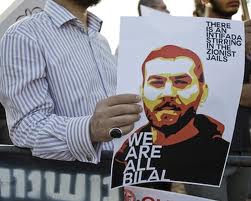
Administrative detainees’ protests are growing. Two additional administrative detainees, Bilal Diab and Thair Halahleh declared hunger strikes on 1 March, which they claim will continue until their release from administrative detention. On 3 March, two other administrative detainees declared hunger strikes until their release. Since the beginning of March, a number of administrative detainees have refused to acknowledge the military court and refused to participate in legal hearings of their cases. Due to Israel’s use of administrative detention, and the unwillingness of the military court to interfere in this practice, a hunger strike serves as a non-violent and the sole tool available to administrative detainees to protest and fight for their basic human rights.

Approximately 309 Palestinians are currently held in administrative detention in Israeli prisons. Administrative detention allows Israel to hold detainees for indefinitely renewable six-month periods. The arrest is granted on the basis of “secret information” and without a public indictment. Therefore, administrative detainees and their lawyers cannot defend against these allegations in court.

********************


Hana Shalabi: The Challenge of Palestinian Nonviolence


            No sooner had Khader Adnan ended his 66-day, life threatening hunger strike than new urgent concerns are being voiced for Hana Shalabi, another West Bank hunger striker now without food for more than 34 days.  With a grim irony there is continuity between these acts of spiritual defiance as both Khader Adnan and Hana Shalabi have been held in the same room at the Ramleh Prison Hospital.


            Both strikes are directed against the abusive use of administrative detention by Israeli West Bank occupying military forces, protesting both the colonial practice of internment without charges or trial and the degrading and physically harsh treatment administered during the arrest, interrogation, and detention process.


            The case of Hana Shalabi should move even the hardhearted. She seems a sensitive and caring young woman of 29 who is a member of Islamic Jihad, and appears dedicated to her family, hopes for marriage, and such simple pleasures as shopping for clothes and home furnishings. She had previously been held in administrative detention at the HaSharon prison in Israel for a 30 month period between 2009 and 2011, being released in the prisoner exchange of four months ago that freed 1027 Palestinians and the lone Israeli soldier captive, Gilad Shalit. After her release, according to her mother, she spent weeks recovering from the deep sense of estrangement she experienced in prison, and rarely left her home or the company of her family. As she was returning to normalcy she was re-arrested in a highly abusive manner, which allegedly included a strip-search by a male soldier at the interrogation center and other behavior intended to humiliate and intimidate.


            On February 16, 2012, the day of this renewal of her administrative detention, Hana Shalabi announced her resolve to start a hunger strike to protest her own treatment and to demand an end of administrative detention now relied upon by Israel to hold at least 309 Palestinian in prison. Her family has been denied visitation rights even in her present critical condition, Hana Shalabi was placed in solitary confinement at the outset of her detention, and her health has deteriorated to the point of severe concern for her health, even her life. According to her lawyer, Raed Mahameed, Hana Shalabi was examined by a doctor from Physicians for Human Rights and the doctor said that “she suffers from low heart beat rate, low blood sugar, loss of weight, weakness in muscles, yellowing of the eyes and high levels of salt in the blood which affected her kidneys causing her pain in her sides specially the left side as well as pain in chest bones. Physicians for Human Rights said that Shalabi cannot sleep because of pain, she also suffers dizziness and blurred and occasional loss of vision. Ms. Shalabi told Mahameed that she took salt last week but refused to take any salt since then and is living on two litres of water a day.”

            Impressively, her parents have committed themselves to a sympathy hunger strike for as long as their daughter remains under administrative detention. Her mother, Badia Shalabi, has made a video in which she says that even to see food makes her cry considering the suffering of her daughter. Her father has likewise made a global appeal to save the life of his child.


            Despite frequent mentoring to Palestinians from liberals in the West to rely on nonviolent tactics of resistance, these extraordinary hunger strikes have met with silence or indifference in both Israel and the West. Israeli authorities cynically declare that undertaking a hunger strike is a voluntary action and a publicity stunt for which they take no responsibility and that the striker is alone responsible if any harm results. There is also not a hint that Palestinian grievances about administrative detention are well founded and will even be considered much less acted upon. Such hardheartedness in the face of such sacrificial bravery is a sure sign that Israel is not ready for a sustainable and just peace with Palestine.


            The UN also disappoints those who believe in its ideals. It has not raised its voice even to take notice of Hana Shalabi’s plight or Israeli accountability. I share the view of Khitam Saafin, Chairwoman of The Union of Palestinian Women’s Committees: “The UN must be responsible for the whole violation that are going on against our people. These prisoners are war prisoners, not security prisoners, not criminals. They are freedom fighters for their rights.” The sad yet inspiring spiritual defiance of Hana Shalabi is also well expressed by Yael Maron, a spokesperson for the NGO, Physicians for Human Rights- Israel: “The story of Hana Shalabi, like that of Khader Adnan before, is in my opinion a remarkable example of a struggle that’s completely nonviolent towards one’s surroundings..It is the last protest a prisoner can make, and I find it brave and inspiring.”


            To engage in an open ended hunger strike, especially for a person who is not in a leadership role, requires a deep and abiding dedication to right a perceived wrong of the greatest gravity. It is physically exceedingly painful and dangerous to bodily health, as well as being psychologically demanding in the extreme. It presupposes the strongest of wills, and usually arises, as in these instances, from a sense that any lesser form of resistance has proved futile, exhibiting a long record of failure. In the end, this unconditional hunger strike is an appeal to the conscience and humanity of the other, and a desperate call to all of us, to understand better the cartography of abuse that abusive imprisonment and occupation entails, which can only be pervasively humiliating for a religiously oriented young Islamic woman. To risk life and health in this way without harming or even threatening the oppressor is to turn terrorism against the innocent on its head. It is potentially to sacrifice one’s life to make an appeal of last resort, an appeal that transcends normal law and politics, and demands our response.


            We can only fervently hope and pray that Hana Shalabi’s heroic path of resistance will end with her release and the complete restoration of her health. For Israel’s own moral wellbeing it is time, really long past time, to renounce reliance on administrative detention and to do more than this, to end forthwith its varied crimes of occupation. At this point the only possible way to do this is to withdraw unconditionally behind the 1967 borders, and to start peace negotiations from such an altered position of acknowledged wrongdoing without asking or expecting any reciprocal gesture from the Palestinian side. In the present atmosphere, it is politically unimaginable that Israeli leaders will heed such a call, but it is morally unimaginable that Israel will survive an impending spiritual collapse if it does not quickly learn to do so.


            In the meantime, we who are beyond these zones of occupation, abuse, and imprisonment, must do more than stand and watch as this tragic drama plays itself out.  We need to do all we can to strengthen the demands of Khader Adnan, Hana Shalabi, and all are refusing food in solidarity for the immediate release of all Palestinians currently held in administrative detention, for an end to detention without charges, to abusive arrests in the middle of the night, and beyond this, and to an end to an occupation that has lasted for 45 years with no end in sight.

Afghanistan: The War Turns Pathological—Withdraw!

14 Mar


            The latest occupation crime in Afghanistan is a shooting spree on March 11 by a lone American soldier in the village of Balandi in the Panjwai District of Kandahar Province of Afghanistan. 16 Afghan civilians, including women and children, were shot in their homes in the middle of the night without any pretense of combat activity in the area. Such an atrocity is one more expression of a pathological reaction by one soldier to an incomprehensible military reality that seems to be driving crazy American military personnel on the ground in Afghanistan. The main criminal here is not the shooter, but the political leader who insists on continuing a mission in face of the evidence that it is turning its own citizens into pathological killers.


            American soldiers urinating on dead Taliban fighters, Koran burning, and countryside patrols whose members were convicted by an American military tribunal of killing Afghan civilians for sport or routinely invading the privacy of Afghan homes in the middle of the night: whatever the U.S. military commanders in Kabul might sincerely say in regret and Washington might repeat by way of formal apology has become essentially irrelevant.


            These so-called ‘incidents’ or ‘aberrations’ are nothing of the sort. These happenings are pathological reactions of men and women caught up in a death trap not of their making, an alien environment that collides lethally with their sense of normalcy and decency. Besides the desecration of foreign lands and their cultural identities, American political leaders have unforgivably for more than a decade placed young American’s in intolerable situations of risk, uncertainty, and enmity to wage essentially meaningless wars. Also signaling a kind of cultural implosion are recent studies documenting historically high suicide rates among the lower ranks of the American military.


            Senseless and morbid wars produce senseless and morbid behavior. Afghanistan, as Vietnam 40 years earlier, has become an atrocity-generating killing field where the ‘enemy’ is frequently indistinguishable from the ‘friend,’ and the battlefield is everywhere and nowhere. In Vietnam the White House finally speeded up the American exit when it became evident that soldiers were murdering their own officers, a pattern exhibiting ultimate alienation that became so widespread it give birth to a new word ‘fragging.’


            Whatever the defensive pretext in the immediacy of the post-9/11 attacks, the Afghanistan War was misconceived from its inception, although deceptively so. (to my lasting regret I supported the war initially as an instance of self-defense validated by the credible fear of future attacks emanating from Afghanistan) Air warfare was relied upon in 2002 to decimate the leadership ranks of Al Qaeda, but instead its top political and military commanders slipped across the border. Regime change in Kabul, with a leader flown in from Washington to help coordinate the foreign occupation of his country, reverted to an old counterinsurgency formula that had failed over and over again, but with the militarist mindset prevailing in the U.S. Government, failure was once again reinterpreted as an opportunity to do it right the next time! Despite the efficiency of the radical innovative tactic of target killing by drones, the latest form of state terror in Afghanistan yields an outcome that is no different from earlier defeats.


            What more needs to be said? It is long past time for the United States and its NATO allies to withdraw with all deliberate speed from Afghanistan rather than proceed on its present course: negotiating a long-term ‘memorandum of understanding’ that transfers the formalities of the occupation to the Afghans while leaving private American military contractors—mercenaries of the 21st century—as the outlaw governance structure of this war torn country after most combat forces withdraw by the end of 2014, although incredibly Washington and Kabul, despite the devastation and futility, are presently negotiating a ten-year arrangement to maintain an American military presence in the country, a dynamic that might be labeled ‘re-colonization by consent,’ a geopolitical malady of the early 21st century.


            As in Iraq, what has been ‘achieved’ in Afghanistan is the very opposite of the goals set by Pentagon planners and State Department diplomacy: the country is decimated rather than reconstructed, the regional balance shifts in favor of Iran, of Islamic extremism, and the United States is ever more widely feared and resented, solidifying its geopolitical role as the great malefactor of our era.


            America seems incapable of grasping the pathologies it has inflicted on its own citizenry, let alone the physical and psychological wreckage it leaves behind in the countries it attacks and occupies. The disgusting 2004 pictures of American soldiers getting their kicks from torturing and humiliating naked Iraqi prisoners at Abu Ghraib should have made clear once and for all to the leaders and the public that it was time to bring American troops home, and keep them there if we cared for their welfare.  Instead punishments were inflicted on these hapless young citizens who were both perpetrators and victims, and their commanders resumed their militarist misadventures as if nothing had happened except an unwelcome ‘leak’ (Donald Rumsfeld said as much) What this pattern of descretation exhibits is not only a criminal indifference to the wellbeing of ‘others’ but a shameful disregard of the welfare of our collective selves. The current bellicose Republican presidential candidates calling for attacks on Iran amounts to taking another giant step along the road that is taking American over the cliff. And the Obama presidency is only a half step behind, counseling patience, but itself indulging war-mongering, whether for its own sake or on behalf of Israel is unclear.


            President Obama recently was quoted as saying of Afghanistan “now is the time for us to transition.”  No, it isn’t. “Now is the time to leave.”  And not only for the sake of the Afghan people, and surely for that, but also for the benefit of the American people Obama was elected to serve. 

Hana Shalabi: A Brave Act of Palestinian Nonviolence

10 Mar

                                                                (photo by Joe Catron)

            No sooner had Khader Adnan ended his 66 day life threatening hunger strike than new urgent concerns are being voiced for Hana Shalabi, another West Bank hunger striker now without food for more than 24 days. Both strikes were directed by Palestinian activists against the abusive use of administrative detention by Israeli West Bank occupying military forces, protesting both the practice of internment without charges or trial and the degrading and physically harsh treatment administered during the arrest, interrogation, and detention process.


            The case of Hana Shalabi should move even the most hardhearted. She seems a young tender and normal woman who is a member of Islamic Jihad, and is dedicated to her family, hopes for marriage, and simple pleasures of shopping.

She had previously been held in administrative detention at the HaSharon prison in Israel for a 30 month period between 2009 and 2011, being released in the prisoner exchange of four months ago that freed 1027 Palestinians and the lone Israeli soldier captive, Gilad Shalit. Since her release she has been trying to recover from the deep sense of estrangement she experienced in prison, and rarely left her home or the company of her family. As she was returning to normalcy she was re-arrested in an abusive manner, which allegedly included a strip-search by a male soldier. On February 16, 2012, the day of this renewal of her administrative detention, Hana Shalabi indicated her resolve to start a hunger strike to protest her own treatment and to demand an end of administrative detention now relied upon by Israel to hold at least 309 Palestinian in prison. Her parents have been denied visitation rights, Hana Shalabi has been placed in solitary confinement, and her health has deteriorated to the point of concern for her life. Impressively, her parents have committed themselves to a hunger strike for as long as their daughter remains under administrative detention. Her mother, Badia Shalabi, has made a video in which she says that even to see food makes her cry considering the suffering of her daughter.


            Despite the calls to Palestinian from liberals in the West these extraordinary hunger strikes have met with silence or indifference in both Israel and the West. Israeli authorities declare that such a posture is a voluntary action for which they have no responsibility. The UN has not raised its voice, as well. I share the view of Khitam Saafin, Chairwoman of Union of Palestinian Woman’s Committee: “The UN must be responsible for the whole violation that are going on against our people. These prisoners are war prisoners, not security prisoners, not criminals. They are freedom fighters for their rights.” The plight of Hana Shalabi is also well expressed by Yael Maron, a spokesperson for the Israeli NGO, Physicians for Human Rights- Israel: “The story of Hana Shalabi, like that of Khader Adnan, before is in my opinion a remarkable example of a struggle that’s completely nonviolent towards one’s surroundings..It is the last protest a prisoner can make, and I find it brave and inspiring.”


            To engage in an open ended hunger strike, especially for a person who is not in a leadership role, requires a deep and abiding dedication to right a perceived wrong of the greatest gravity. It is physically painful and dangerous to bodily health, as well as being psychologically demanding in the extreme. It presupposes the strongest of wills, and usually arises, as in these instances, from a sense that any lesser form of resistance is futile, and has a long record of failure. In the end, it is an appeal to the conscience and humanity of the other, and a desperate call to all of us, to understand better the cartography of abuse that abusive imprisonment entails, which I would imagine is pervasively humiliating for a religiously oriented young Islamic woman. To risk life this way without harming or even threatening the oppressor is to turn terrorism against the innocent on its head. It is potentially to sacrifice one’s life to make an appeal of last resort, an appeal that transcends normal law and politics.


            We can only fervently hope and pray that Hana Shalabi’s heroic path of resistance will end with her release and the restoration of her health. For Israel’s own moral wellbeing it is time, really long past time, to renounce reliance on administrative detention and to do more than this, to end forthwith its varied crimes of occupation. At this point the only possible way to do this is to withdraw unconditionally behind the 1967 borders, and to start peace negotiations from that altered position. It is politically unimaginable that Israeli leaders will heed such a call, but it is morally unimaginable that Israel will survive its impending spiritual collapse if it does not do so.


(photo by Joe Catron)

            In the meantime, we who are beyond these zones of occupation, abuse, and imprisonment must not only stand and watch as this tragic drama plays itself out. Wherever we are, whatever we can do, we need to act, to appeal, to shout, and to denounce the inhumanity of allowing such cruelty to be enacted before our watching eyes. 

Koran Burning in Afghanistan: Mistake, Crime, and Metaphor

9 Mar


On February 20, 2012 several American soldiers, five having been identified as responsible at this point, took some Islamic writings including several copies of the Koran to a landfill on Bagram Air Base in Afghanistan where they were burned. As soon as Afghan workers on the scene realized that Korans were being burned, they recognized what was happening as an act of desecration, and launched an immediate protest. The protest spread rapidly throughout the country, and turned violent, producing at least 30 Afghan deaths, as well as five dead American soldiers that also produced many non-lethal casualties. The incident is under formal investigation by three distinct boards of inquiry: a U.S. military investigation with authority to recommend disciplinary action against the soldiers; a joint U.S./Afghan undertaking; and an Afghan investigation leading to recommendations by a council of religious figures.


The American governmental response has been apologetic in tone, but unconvincingly so. President Obama sent a letter of formal apology to the Afghan president, Hamid Karzai, expressing regret and explaining that the incident occurred due to carelessness rather than as a deliberate expression of Islamophobic desecration. Refusing to adopt even a mildly apologetic posture, a reactionary American backlash powerfully surfaced, complaining about Obama’s stance by an insistence that it was the Afghan government that owed the United States an apology given the loss of American lives and an outburst of violence that was totally inappropriate given the accidental nature of the provocation. The reactionary presidential candidate, Rick Santorum, expressed the more or less typical Republican reaction to the incident:  “I think the response need to be apologized for, by Mr. Karzai and the Afghan people, for attacking our men and women in uniform and reacting to this inadvertent mistake.” He added, “This is the real crime, not what our soldiers did.”


Obama, as usual in such situations seemed caught in the headlights of controversy, publicly justifying the apology as necessary “to save lives..and to make sure that our troops who are there right now are not placed in further danger.” Such a backhanded rationale leads to an ironic query: when does an ‘apology’ cease being an apology? Obama obviously wants to appease foreign anger while at the same time affirming his patriotic credentials. He is addressing contradictory audiences, and can only hope that Afghans are not listening when he offers his pragmatic reasons for sending the letter to Karzai. Yet to claim that an apology was necessary to save American lives is hardly a genuine way to express regret, which was the least that should have been done, and could have been properly joined with sentiments of bereavement associated with the American soldiers who were also victims of a misguided military intervention and occupation. In my view Obama needlessly lost ground with all constituencies. Maybe Hilary Clinton had a point during the 2008 campaign for the presidential nomination when she famously taunted Obama: “if you can’t stand the heat get out of the kitchen.”


What is baffling is Washington’s unlearning evident, which flies in the face of its claim that it had redesigned counterinsurgency warfare after the Vietnam experience, above all else, to exhibit sensitivity to a foreign culture that is the site of armed struggle for political ascendancy. Here the cultural insensitivity was monumental, especially if proper account is taken of earlier similar incidents. There were earlier fully publicized desecrations of the Koran that vividly demonstrated how intense a reaction would likely result from a repetition of such behavior. There was a huge outcry following disclosure that a Koran had flushed down a toilet at the Guantánamo Bay prison a few years ago. Somewhat later an American soldier in Iraq was found to have used a Koran for target practice, which provoked a storm of angry denunciations of the American role in the country.


And then there was the shocking spectacle of Rev. Terry Jones of the Dove World Outreach Center in Gainesville, Florida announcing to his tiny congregation that he would burn 200 Korans on the anniversary of 9/11 in 2010, an outrage despite its non-governmental character, which was finally successfully discouraged, at least temporarily. But on March 20, 2011 the determined Rev. Jones held a ‘trial of the Koran’ and found it guilty of crimes against humanity, and burned a Koran in the church sanctuary. The result in the Afghan city of Mazar-i-Sharif was an attack on the UN Assistance Mission, killing at least 30, including 7 UN workers, and injuring 150. Our man in Kabul, Hamid Karzai, called for the arrest of Jones, but such a request was ignored as perhaps it had to be under American law; the conduct of Rev. Jones was explained (away) as an expression of American freedom of religion that did not reflect official views.

One would have supposed that a halfway vigilant imperialism would have understood that any show of disrespect toward the Koran, whether public or private, and especially by occupying American soldiers, would strike a severe blow against the American role in Afghanistan. At least with American troops, such experience would have led to introducing the most rigorous means to train and discipline occupation forces accordingly. It is not an exaggeration to say that such displays of disrespect for the Koran are more serious setbacks for Washington than would be even dramatic defeats on the battlefield. Why? Because it so clearly discredits the American claim to be present in the country as a humanitarian benefactor respectful of Afghan cultural and religious values.


There is something deeply disturbing, and revealing, about this compulsive inability to show respect for the most sacred artifacts of a foreign civilization. The Koran is the holiest of scripture not only for Islam as the dominant religion of the country but also underpins the unity embedded in the wider cultural identity of the Afghan people. It is a far more potent symbol of Afghan unity than is the national flag or constitution of this otherwise most fragmented of countries, and possibly it is the only source of unity other than opposition to foreign occupation. Americans would themselves react furiously, and likely violently, were the Bible to be burned by foreign military personnel somehow present on national territory, but the truth is that the imperial mindset is utterly incapable of comprehending such a logic of reciprocity, or its ethical analogue, the golden rule. The opposed imperial logic has a different ethic: the wrongs that we do to others we occasionally will excuse as accidental, while being incapable of even imagining that others might dare to do them to us, and if they were stupid enough to do so, a righteous fury of vengeance would be appropriately unleashed.


Tom Friedman, whose arrogance is as boundless as the globalization he blandly celebrates, mimics Republicans by telling his readers that Afghan political and religious leaders have made themselves primarily at fault for their failure to protest strongly against “the killing of innocent Americans,” especially given the accidental nature of the Koran desecration and Obama apology. The liberal interpretation of the incident is only softer in tone than is the Santorum reactionary rant, and suggests an uncritical American consensus that is ready to fight war after war in distant countries without having the slightest pang of conscience or the wisdom to stand quietly before mirrors of self-criticism.


In an important sense, these American soldiers, including those who participated in this unfortunate incident, were fundamentally ‘innocent.’ They are themselves both participants and victims of an occupation of a foreign country that they and their leaders do not understand, a military mission that never have been attempted, and is proving as futile as those many previous Western attempts to domesticate Afghanistan by force of arms, a sorry story expertly chronicled in Deepak Tripathi’s illuminating book, Breeding Ground: Afghanistan and the Origins of Islamist Terrorism (Washington, DC; Potomac). Those who are most responsible for this crime, in my judgment, are those who initially mandated such a war a decade ago and now perpetuate it, and this includes the president and those who favored the war policies that have misguidedly led to a ten year military occupation of Afghanistan with little result except this upsurge of vitriolic anti-American sentiment and a severely torn country. The best that United States policy planners can hope for after inflicting such an ordeal is reaching a power-sharing deal negotiated with the Taliban, the original mortal enemy, which portends a political future for Afghanistan not at all to Washington’s liking, nor consoling to the majority of Afghans. After all those billions spent, lives lost, sacrificed, and misshaped, and devastation wrought there is nothing at the end but the slim hope of learning from defeat after the fact not to go abroad in search of foreign monsters. With the Iran war drums beating loudly, it seems like an idle fancy to suppose that the American political elite will seek the intensive rehab it needs to have any chance of recovering from this addictive militarism that brings suffering to others and defeat and decline to itself.


Of course, unleashing violence in response to desecration does make for a sorry spectacle, and reflects badly on the quality of religious leadership in Afghanistan. At the same time the call of the Afghan clerical leadership for an end to the American nighttime raids on Afghan homes and the insistence that Americans turn over the administration of prisons to the Afghan government seem like reasonable demands long overdue. They touch the raw nerve of the American occupation, and its undisguised contempt for the self-determination of the Afghan people. In light of this, such reasonable demands will not be fully accommodated, but maybe partially accepted as the price of retaining the authority of a foreign occupier.  In this vein, there are reports that the American prison authorities will turn over Afghan prisoners, but retain a veto to deny some transfers.


These American tactics of counterinsurgency are consistently perceived by the Afghan people to be principal sources of ‘occupation terror.’ The American response to these demands sounds as though lifted from a colonial handbook: raids in the middle of the night are effective operations and that the Afghan judicial system is not capable of the handling the legal issues associated with dangerous Afghan detainees. Such a response unintentionally poses an awkward question: ‘who is entitled to govern Afghanistan at this time?’ It has long been the awkward truth that the limits of Karzai’s mandate are not set in Kabul, but by distant Pentagon and White House officials, a reality that makes a mockery of American claims of respect for Afghan rights of self-determination.


This inflammable incident touches on the essence of military intervention and foreign occupation, much more so than the secondary question of whether to treat Koran burning as a mistake or crime. The act of burning is of course from differing perspectives both a mistake and a crime, but more than this burning the Koran is a telling metaphor of all the many instances of flawed Western diplomacy consisting of military intervention and foreign occupation. Such diplomacy flies in the face of the collapse of colonialism and the rise of non-West religion and culture, and produces one costly geopolitical failure after another.  To burn the most holy scripture of a culture, whether by inadvertence or calculation, is the most delegitimizing acknowledgement of bad motives and intentions that it is possible to imagine, as well as a dismaying display of cultural insensitivity.


In this regard Koran burning may be as provocative in its assault on Afghan political culture as was the self-immolation of Mohamed Bouazizi with respect to the authoritarian cruelty of the Tunisian regime presided over by the tyrannical rule of Zine El Alindine Ben Ali, who was driven from power as a direct result. The failure of the United States Government even now to appreciate the seriousness of what has happened , despite the several earlier intimations of the great popular significance attached to any show of disrespect toward Islam throughout the Muslim world, altogether discrediting to its claims of benevolence and undermining of its claims to be quelling the global threat of anti-Western terrorism. When the culture screams it is time to leave!