Archive | Human Rights RSS feed for this section

Dilemmas of Sovereignty and Intervention

16 Jul


            The Arab Spring (and its troublesome, yet still hopeful, aftermath in Egypt), intervention in Libya, nonintervention in Syria and Bahrain, drone military operations in Pakistan, Yemen, Somalia, the influx of unwanted immigrants and walls of exclusion, and selective applications of international criminal law draw into question the most basic of all ideas of world order: the sovereignty of territorial states, and its limits. Also, at issue, are the closely related norms of international law prohibiting intervention in the internal affairs of states and affirming the fundamental right of self-determination as an inherent right of all peoples. These are basic rules of international order acknowledged in the United Nations Charter, taking the form of prohibiting the Organization from intervening in matters ‘essentially within domestic jurisdiction’ and through affirmations of the right of self-determination.

The latter is only aspirational in the Charter, but becomes obligatory as a result being posited as common Article 1 of the two human rights Covenants and being listed as one of seven principles enumerated in the authoritative Declaration on Principles of International Law Concerning Friendly Relations and Cooperation Among States (UN General Assembly Resolution 2625, 1970).


            At the same time, as Ken Booth provocatively pointed out almost 20 years ago one of the great failings over the centuries of the Westphalian framework of world order (based on treaties of peace in 1648 concluded at the end of the Thirty Years War that are treated as establishing the modern European system of territorial states premised on the juridical ideal of sovereign equality) was associated with sovereign prerogatives to possess unconditional authority in state/society relations. Booth showed that respect for sovereignty had legitimated the inner space of states as a sanctuary for the commission of what he called ‘human wrongs,’ that is, non-accountable and cruel abuses of persons subject to territorial authority. Historically, the West claimed rights of intervention, often in the name of ‘civilization,’ in the non-West, particularly in the decaying Ottoman Empire of the 19th and early 20th centuries. The great wakeup experience, at least rhetorically for the liberal West, was the non-response at the international level to the lethal internal persecutions in Nazi Germany during the 1930s, which were not only within a sovereign state, but within a country with a high claim to be a major embodiment of Western civilization.


The responses after World War II, mainly expressed via international law, consisted of the Nuremberg and Tokyo trials of surviving German and Japanese leaders, the adoption of the Genocide Convention, and the negotiation and approval of the Universal Declaration of Human Rights (UDHR), as well as the establishment of the United Nations itself. These were well-intentioned, although somewhat ambivalent, gestures of global responsibility that generated criticisms and even suspicions at the time: the Nuremberg and Tokyo standards of individual accountability for crimes were only imposed by the coalition of victors in World War II upon the losers, exempting the Allied Powers from any legal responsibility for the terror bombings of German and Japanese cities and the atomic bombing of Hiroshima and Nagasaki; the Genocide Convention seemed deficient due to its failure to  provide mechanisms for enforcement; the UDHR was drafted under the sway of Western liberal individualism as a hegemonic orientation, and was only endorsed in the form of a non-binding ‘declaration,’ a clear signal that no expectation of enforcement existed; as well, the legitimacy of the colonial structures of foreign ruler were not questioned until challenged by a series of populist uprisings throughout the non-West that produced some bloody wars as in Indochina and Algeria..


            In passing, it should be observed that the West never respected the sovereign rights of the peoples of the non-West until it was forced to do so. Whether it was European colonialism that extended its reach throughout Africa and Asia or the assertions of American hegemony over Latin America beneath the banner of the Monroe Doctrine the pattern was one based on relations of hierarchy, not equality. This was accompanied by a refusal to extend the Westphalian writ of mutual respect for sovereign rights beyond the Euro-American regional domain until the imperial order began to crumble after World War I. First, the Good Neighbor policy seemed to reaffirm sovereignty for Latin America, but only within limits set by Washington, as the Cold War era of covert and overt interventions confirm. In the Middle East and Africa various experiments with colonial halfway houses were undertaken within the framework of the League of Nations, and formalized as the Mandates System. Secondly, after World War II a variety of nationalist movements and wars of national liberation broke the back of European colonialism as an acceptable political arrangement, and the idea of the equality of sovereign states was globalized as a matter of juridical doctrine, although not geopolitically.


            During the last six decades the world has moved forward in pursuit of global justice, or has it? On the one side, human rights has matured beyond all expectations, and to some degree exerts a generalized moral and political force subversive of national sovereignty by validating a higher law that exists above and beyond the legal order of the state. This subversive thrust is reinforced by the development and institutionalization of international criminal law, enforcement of accountability claims against such pariah leaders as Milosevic and Saddam Hussein, as well as lesser figures in the entourage of tyrants, the establishment of the International Criminal Court, arrest warrants for the likes of el-Bashir of Sudan and Qaddafi. And, perhaps, most significantly in relation to global justice, the rise of respected transnational NGOs that have created a somewhat less selective pressure for implementation of human rights norms, but one that remains weighted toward political and civil rights that are given priority in the liberal democracies of the North, and one that gives little attention to the economic, social, cultural, and collective rights that possess primary importance to developing societies in the South. In actuality, the UDHR was correct in its integration of all forms of human rights in a single coherent legal instrument, but it became a casualty of the Cold War ideological tensions between capitalism and socialism, with one side championing a liberal individualist understanding of human rights and the other side a collective conception.


            And yet, these various moves toward what might be called ‘humanitarian globalization’ achieved at the expense of older conceptions sovereignty are too often subordinated to the realities of geopolitics. That is, the application of legal standards and the assertion of interventionary claims remain imbalanced: the West against the rest, the North against the South, the strong against the weak. Even the supposedly globally oriented human rights NGOs devote most of their attention to non-West violations when it comes to alleged infractions of international criminal law.  Selective applications of law and morality tarnish the integrity of law and morality that is premised upon fidelity to principles of equality and reciprocity. This makes supposedly challenges to sovereignty suspect, but are they also worthless, or as some argue, worse than worthless?


            There are two contradictory modes of response. The liberal answer is to insist that progress in society almost always occurs incrementally, and doing what is possible politically is better than throwing up one’s hands in frsutration, and doing nothing. So long as targets of intervention and indicted leaders are given fair trials, and are convicted on the basis of the weight of the evidence, such results should be affirmed as demonstrating an expanding global rule of law, and serving the interests of global justice. The fact that the principal states intervene at will and enjoy impunity in relation to international criminal law, remains a feature of world politics, and is even given a prominent constitutional status at the UN by granting a veto power to the five permanent members of the Security Council.


            The critical response argues that the prevalence of double standards contaminates law, and makes it just one more instrument of power. The authority and legitimacy of law depends on its linkage to justice, not power. To enforce prohibitions on the use of aggressive force or the commission of crimes of state only on losers and the weak is implicitly to cede the high moral and legal ground to the richest and most dangerous political actors. It makes available a humanitarian disguise for abusive behavior in a post-colonial global setting, providing pretexts for disregarding the dynamics of self-determination, which is the legal, political, and moral lynchpin of a system of sovereign states detached from the hierarchies of geopolitics.


            In a world beset by contradictions, there are only hard choices. There seem to be three kinds of situation that somewhat transcend this tension between liberal and critical perspectives: a severe natural disaster that cannot be addressed by national capabilities ( Asian tsunami of 2004; Haiti earthquake of 2010) acute or imminent genocide as in Rwanda (1994) where a small international effort would have seemed likely to avert the deaths of hundreds of thousands; a mandate to act issued by the UN Security Council as in Libya. In each instance, there are risks, uncertainties, and unanticipated effects; especially worrisome is the recent pattern of authorizations of force by the Security Council. Both in the Gulf War (1991), to some extent the sanctions currently imposed on Iran, and now with the Libyan intervention, the mandate to use force is stretched beyond the limits specified in the language of authorization. In the Libyan case, Security Council Resolution 1973 the initial justification for intervention was justified by reference to an emergency situation endangering the lives of many Libyan civilians, but converted operationally and massively by NATO into a mandate to achieve regime change in Tripoli by dislodging the Qaddafi leadership. No effort was made to secure a broader mandate from the Security Council and nothing was done to insist that NATO operations be limited by the terms of the original UN authorization.


            What can be done? We have little choice but to cope as best we can with these contradictions, especially when it comes to uses of force in the course of what is labeled as a ‘humanitarian intervention’ or an application of the ‘right to protect’ norm. I would propose two ways to turn the abundance of information on these issues into reliable knowledge, and hopefully thereby, to engender greater wisdom with respect to the specifics of global policy and decision-making. First, acknowledge the full range of realities in international life, including the absence of equal protection of the law, that is, judging claims and deciding on responses with eyes wide open by being sensitive to the context, including its many uncertainties. With these considerations in mind adopt a posture of reluctance to use force except in extreme cases. Secondly, presume strongly against reliance on hard power resolutions of conflict situations both because the costs almost always exceed the estimates of those advocating intervention and because military power during the period of the last sixty years is rarely able to shape political outcomes in ways that are on balance beneficial for the society on whose behalf the intervention is supposedly taking place.


            When it comes to severe human rights abuses somewhat analogous considerations apply. In almost every instance, deference to internal dynamics seems preferable to intervention-from-without, while soft power interventions-from-below-and-without are to be encouraged as expressions of emergent global democracy. Victimization and collective acute vulnerability should not be insulated from assistance by rigid notions of sovereignty, but nor should self-determination be jeopardized by the hypocritical moral pretensions of hegemonic states.  This is inevitably a delicate balance, but the alternative is to opt for extremes of passivity or activism.


            In effect, to the extent possible, global challenges to sovereignty should take the form of transnational soft power tactics of empathy as identities of persons around the globe become as globalized (and localized) as markets. The recent furor aroused by Freedom Flotilla II is illustrative of an emerging tension between the role of sovereign states in defining the contours of law and morality and that of popular forces mobilized on behalf of those unjustly suffering and neglected by the world of states. Ideally, the UN should act as a mediating arbiter, but the UN remains a membership organization designed to serve the diplomacy of sovereign states and the states system, and is generally hostile to the claims of global civil society however well founded. One attractive proposal to endow the UN with a more robust mediating role is to establish some form of Global Parliament, perhaps building on the experience of the European Parliament that has evolved in authority and political weight over the decades.  A more relevant innovation consistent with the above analysis would be the establishment of a UN Humanitarian Emergency Peace Fund with independent funding, an authorizing procedure that was not subject to a veto, and an operational discipline that ensured that the implementation of a mandate to act forcibly did not exceed its boundaries.  


####

Sabotaging Flotilla II: Waging War Against Civil Society

4 Jul


           The reports that two of the foreign flagged ships planning to be part of the ten vessel Freedom Flotilla II experienced similar forms of disabling sabotage creates strong circumstantial evidence of Israeli responsibility. It stretches the imagination to suppose that a sophisticated cutting of the propeller shafts of both ships is a coincidence with no involvement by Israel’s Mossad, long infamous for its overseas criminal acts in support of contested Israeli national interests. Recalling the lethal encounter in international waters with Freedom Flotilla I that took place on 31 May 2010, and the frantic diplomatic campaign by Tel Aviv to prevent this second challenge to the Gaza blockade by peace activists and humanitarian aid workers, such conduct by a state against this latest civil society initiative, if further validated by incriminating evidence, should be formally condemned as a form of ‘state terrorism’ or even as an act of war by a state against global civil society.


The Israeli Government has so far done little to deny its culpability. Its highest officials speak of the allegations in self-righteous language that is typically diversionary, asserting an irrelevant right of self-defense, which supposedly comes mysteriously into play whenever civil society acts nonviolently to break the siege of Gaza that has persisted for more than four years. From the perspective of the obligations to uphold international law it is the Flotilla participants who are acting legally and morally, certainly well within their rights, and it is Israel and their friends that are resorting to a variety of legally and morally dubious tactics to insulate this cruel and unlawful blockade from what is essentially a symbolic challenge. The behavior of the Greek Government, surely a reflection of its precarious financial and political situation, also violates the law of the sea: foreign flagged vessels can be detained in port only if they are acting in violation of national law or are proven to be unseaworthy and dangerous to international navigation. Otherwise, interference by detention or by seizing while en route within Greek territorial waters is an unlawful interference with the right of innocent passage. Greece would be very vulnerable to defeat and damages if the Freedom Flotilla victims of these encroachment on rights were to have recourse to the Hamburg International Tribunal for Law of the Sea.


            The most relevant precedent for such government-sponsored sabotage is the Rainbow Warrior incident of 1985. There French agents detonated explosives on a Greenpeace (an environmental NGO) fishing trawler docked in the Auckland, New Zealand harbor prior to proactively challenging the French plans to conduct underwater nuclear tests off the shore of the nearby Pacific atoll, Moruroa. Fernando Pereira , Greenpeace photographer for the mission, was killed by the explosions, although the devices were detonated at night when no one from Greenpeace was expected to be on board the vessel. At first, the French government completely denied involvement, later as incriminating evidence mounted, Paris officially claimed that its agents who were identified as being near the scene were only spying on Greenpeace activities and had nothing to do with the explosives, and later still, as the evidence of French culpability became undeniable, officials in France finally admitted government responsibility for this violent undertaking to eliminate activist opposition to their nuclear test, even acknowledging that the operation had been given the bizarre, although self-incriminating, code-name of Operation Satanique.


After some further months of controversy the French Prime Minister, Laurent Fabius cleared the air by issuing a contrite statement: “The truth is cruel. Agents of the French secret service sank the boat. They were acting on orders.” (the decision to destroy the Rainbow Warrior were later confirmed to have come from France’s supreme leader at the time, the president of the Republic, Francois Mitterand) The French agents who had by then been arrested by the New Zealand police, charged with arson, willful damage, and murder, but due to pressure from the French government that included a threatened European economic embargo on New Zealand exports, the charges were reduced. The French defendants were allowed to enter a guilty plea to lesser charges of manslaughter that was accepted by the Auckland court, resulting in a ten-year prison sentence, and later supplemented by an inter-governmental deal that virtually eliminated the punishment. The French paid New Zealand $6.5 million and issued an apology, while the convicted agents were transferred to a French military base on Hao atoll, and were later wrongly released only two years after being genteelly confined in comfortable quarters provided by the base.


            It is useful to compare the Flotilla II unfolding experience with the Rainbow Warrior incident. At the time, the French nuclear tests in the Pacific were considered legal, although intensely contested, while the blockade of Israel is widely viewed as a prolonged instance of collective punishment in violation of international humanitarian law, specifically Article 33 of the 4th Geneva Convention. Although Israel could argue that it had a right to monitor ships suspected of carrying arms to occupied Gaza, the Freedom Flotilla II ships made themselves available for inspection, and there was no sufficient security justification for the blockade as the investigation by the UN Human Rights Council of the 2010 flotilla incident made clear. The overriding role of the blockade is to inflict punitive damage on the people of Gaza. Even before the blockade was imposed in 2007 all shipments at the Gaza crossing points were painstakingly monitored by Israel for smuggled weapons.


A person was unintentionally killed by the French acts of sabotage, and so far no one has died as a result of these efforts to disable and interfere with Flotilla ships, although the Irish vessel, MV Saoirse (‘freedom’ in Gaelic), was disabled in such a way that if the damage had not been discovered before heading to sea, the ship reportedly would have likely sunk with many passengers put at extreme risk of death. Perhaps, the most important distinction of all, is the failure to claim any right to act violently against peaceful protesters even though the French state was officially engaged in an activity directly associated with its national security (weapons development). In contrast, the Israelis are seeking to avoid having their universally unpopular and criminal Gaza policies further delegitimized, and claim the entitlement as a sovereign state to engage in violent action, even if it endangers nonviolent civilians. In effect, it is a declaration of war by Israel against global civil society as over 50 nationalities are represented among the passengers on the Flotilla ships.


Any reasonably informed person knows that the Israeli alleged concern about weapons smuggling to Gaza is a smokescreen without substance. The Flotilla organizers have credibly pledged nonviolence, have offered to allow inspectors to examine the cargo, and have invited respected journalists to be on board the vessels. There is zero prospect of weapons being allowed on board any of these ships (even without any inspection), and the Israelis undoubtedly realize this, as does Washington. To insist that this demonstrably peaceful activism mainly by dedicated adherents of nonviolent militancy poses a threat to Israeli security while hardly ever mentioning the hundreds of unmonitored tunnels that are in daily use along the Gaza border with Egypt makes a mockery of the Israeli argument.


            Long before the flotilla actually set sail, with typical propagandistic fervor and diplomatic finesse, supported every inch of the way by its many powerful friends in Washington, Israel zealously engaged in a concerted hasbara campaign to discredit the shipment of humanitarian aid to the besieged people of Gaza. By verbal acrobatics reminding us that Orwell’s warnings about the extreme debasement of political language (1984) remains all too relevant as ever, Israel has been trying to portray committed peace activists and cultural icons (e.g. Alice Walker) as harboring ‘terrorists’ and arms dealers, if not being themselves willing accomplices. As might be expected, much of the media, especially in the United States, has taken at face value such scandalous accusations, or at the very least has put them forward as credibly accounting for the bitter complaint by Israel that Flotilla II is being used as a humanitarian front behind which arms are being smuggled into Israel.


            On a second level of Orwellian distortion, a somewhat more subtle, but no less insidious, case against the Flotilla has been put forward.  The daily existence of the entrapped, impoverished, and mentally and physically debilitated Gazans have been widely depicted by Israeli propagandists as if they were enjoying a glitzy pleasure kingdom that benefits its 1.6 million inhabitants. No less a journalistic personality than Ethan Bronner, long a skilled Israeli apologist in the American setting, opens a front page story in the NY Times (June 28, 2011), with the following absurdly glowing description of the situation in Gaza: “Two luxury hotels are opening in Gaza this month. Thousands of new cars are plying the roads. A second shopping mall—with escalators imported from Israel—will open next month. Hundreds of homes and two dozen schools are about to go up. A Hamas-run farm where Jewish settlements once stood is producing enough fruit that Israeli imports are tapering off.” What makes this travesty on conditions in Gaza newsworthy is not these good things that are supposedly happening, but its relevance to the Israeli contention that the humanitarian rationale for the flotilla mission is fatuous and unnecessary because the life of the Gazans, despite appearances to the contrary, is going along in sprightly fashion despite the barbed wire and prison walls that enclose Gaza. It comes as no surprise that Bronner immediately connects his puff opening about conditions in Gaza with the Israeli anti-flotilla campaign: “As pro-Palestinian activists prepare to set sail aboard a flotilla aimed at maintaining an international spotlight on Gaza and pressure on Israel, the isolated Palestinian coastal enclave is experiencing its first real period of economic growth since the siege they are protesting began in 2007.”


Later on in the story, presumably to avoid losing all credibility as an objective reporter in that deceptive NY Times style, Bronner acknowledges some of the darker sides of life in Gaza, but in a manner that does little to challenge the dominant message of his article: since there is no genuine humanitarian crisis in Gaza, the real motivations of Flotilla organizers must be either to delegitimize Israel or to mount an irresponsible challenge to the country’s reasonable security measures. It is a portrayal that is echoed by the assertion by the Chief of Staff of the Israeli Defense Forces (IDF), Benny Gantz, who has the temerity to assert that the people of Gaza are enjoying a ‘comfortable lifestyle.’ Ehud Barak, the Minister of Defense, joins the chorus with his suggestion that if the Flotilla activists were sincere in their humanitarian commitment they would forget about the people of Gaza and turn their attention a genuine humanitarian challenge: arranging the release of the sole Israeli prisoner, Gilad Shalit, held by Hamas. Of course, Barak is silent about the several thousand Palestinians, including numerous children, being held by Israel, sometimes for years, in detention under harsh conditions.


            A first level of response to such distortions is to point to the authoritative and highly data-based report released last month by the United Nations Relief and Works Agency (UNRWA) on the economic conditions in Gaza with special attention to labor. Among its highlights is the disclosure that the unemployment rate in Gaza has climbed to 45.2%, which appears to be the highest in the world.  This alarming figure was coupled with a 7.9% decline in the purchasing power of average monthly wages for the those Palestinians during the last half of 2010 lucky enough to have a job. There has been an alarming overall decline of 34.5% in the purchasing power of workers for the period since 2006. It is further estimated that 300,000 Gazans now subsist on less than $1 per day.


And this is not all. 95% of the water supply in Gaza is unsafe for human consumption, the electricity is insufficient for the needs of the population, causing frequent blackouts. Worse still, the health system is near collapse, with no supply of many vital medicines, and most other medicines in Gaza are not reliable because they are being held beyond their expiration dates. There are numerous recent reports of curtailed services in Gaza hospitals, cancelled surgeries and closures because of the absence of essential medical supplies. And perhaps, most crippling of all, no exports of any kind from Gaza have been allowed during the entire period of the blockade and siege. This means that most Gazans have become almost totally dependent on UN handouts and the machinations of black marketers just to subsist.


            But the material conditions of deprivation do not begin to describe the ordeal endured by the Gazan population. To be entrapped in such an impoverished and crowded areas for a few days would be a hardship, but to be denied entry or exit over a period of four years is a crime, a distinct humanitarian disaster even if Gaza was indeed the Switzerland of the Middle East that Israeli leaders are seeking to have the world believe. Additionally, Israel uses violence across its borders at times and places of its choosing, killing and wounding many, and terrifying the entire Gazan population. The debris of the 2008-09 massive attacks has mostly not been cleared, nor have many of the destroyed homes and buildings been reconstructed.


            To view this cumulative set of conditions as other than a severe humanitarian crisis, intensified by an illegal blockade, is grotesque. It is compounded by another Orwellian maneuver. The American Secretary of State, Hilary Clinton, had the temerity to say a few days ago that “..its not helpful for there to be flotillas that try to provoke actions by entering into Israeli waters and creating a situation in which Israelis have a right to defend themselves.” Should we not ask ‘who is provoking whom?’ Are Israelis defending themselves or insulating their criminality in Gaza from a peaceful and entirely appropriate challenge, especially considering the passivity of governments and the UN that have allowed this particular humanitarian catastrophe to go on and on? Since when does a sovereign state have a right of self-defense against peace activists and humanitarian aid workers? At the very least should not Clinton have implored the new Egyptian leadership to open and expand the Rafah Crossing to allow Gazans a reliable means of exit and entry?


            Shining through the darkness of this experience of obstructing Flotilla II is the raw nerve of the illegitimacy of Israeli occupation policy. Neither the Flotilla movement nor the somewhat complementary BDS campaign are questioning the legitimacy of Israel as such, but they are challenging the unyielding and expansionist Zionist leadership that denies the fundamental rights of the Palestinian people living under occupation, but also the rights of the 5-7 million Palestinians living in refugee camps or in exile and the rights of the 1.5 million Palestinians that have been subject to a range of discriminations ever since the establishment of Israel in 1948. A just and sustainable peace for both peoples requires an acknowledgement and implementation of these rights. Such rights are truly inalienable, and do not lapse because of their long suppression. This is ultimately what the Flotilla II encounter is really about, and this is also why Israel finds it so dangerous.  
A Shameless Secretary General versus Freedom Flotilla 2

2 Jun


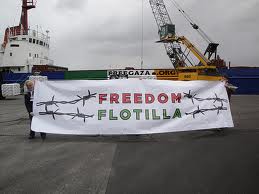
             It is expected that at the end of June, Freedom Flotilla 2 will set sail for Gaza carrying various forms of humanitarian aid, including medical, educaional, and construction materials. This second flotilla will consist of 15 ships, including the Mavi Marmara sailing from Istanbul, but also vessels departing from several European countries, and carrying as many as 1500 humanitarian activists as passengers. If these plans are carried out, as seems likely, it means that the second flotilla will be about double the size of the first that was so violently and unlawfully intercepted by Israeli commandos in international waters on May 31, 2010, resulting in nine deaths on the Turkish lead ship.


            Since that shocking incident of a year ago the Arab Spring is transforming the regional atmosphere, but it has not ended the blockade of Gaza, or the suffering inflicted on the Gazan population over the four-year period of coerced confinement. Such imprisonment of an occupied people has been punctuated by periodic violence, including the sustained all out Israeli attack for three weeks at the end of 2008 during which even women, children, and the disabled were not allowed to leave the deadly killing fields of Gaza. It is an extraordinary narrative of Israeli cruelty and deafening international silence, a silence broken only by the brave civil society initiatives in recent years that brought both invaluable symbolic relief in the form of empathy and human solidarity, as well as token amounts of substantive assistance in the form of much needed food and medicine. It is true that the new Egypt has opened the Rafah crossing a few days ago (but not fully or unconditionally), allowing several hundred Gazans to leave or return to Gaza on a daily basis. At best, this opening even if sustained provides only partial relief. Rafah is not currently equipped to handle goods, and is available only to people and so the blockade of imports and exports continues in force, and may even be intensified as Israel vents its anger over the Fatah/Hamas unity agreement.


            As the Greek coordinator of Freedom Flotilla 2, Vangelis Pisias, has expressed the motivation of this new effort to break the blockade: “We will not allow Israel to set up open prisons and concentration camps.”  Connecting  this Gazan ordeal to the wider regional struggles,” Pisias added, “Palestine is in our heart and could be the symbol of a new era in the region.” Such sentiments reinforce the renewal of Palestinian militancy as exhibited in the recent Nabka and Naksa demonstrations.


            A highly credible assessment of the Israeli 2010 attack on Freedom Flotilla 1 by a fact finding mission appointed by the UN Human Rights Council concluded that the Israelis had violated international law in several respects: by using excessive force, by wrongfully attacking humanitarian vessels in international waters, and by an unacceptable claim to be enforcing a blockade that was itself unlawful. Such views have been widely endorsed by a variety of respected sources throughout the international community, although the panel appointed by the UN Secretary General to evaluate the same incident has not yet made public its report, and apparently its conclusions will be unacceptably muted by the need to accommodate its Israeli member.


            In light of these surrounding circumstances, including the failure of Israel to live up to its announced promise after the attack in 2010 to lift the blockade, it shocks our moral and legal sensibilities that the UN Secretary General should be using the authority of his office to urge member governments to prevent ships from joining Freedom Flotilla 2. Ban Ki-moon shamelessly does not even balance such a call, purportedly to avoid the recurrence of violence, by at least sending an equivalent message to Israel insisting that the blockade end and demanding that no force be used by Israel in response to humanitarian initiatives of the sort being planned. Instead of protecting those who would act on behalf of unlawful Palestinian victimization, the UN Secretary General disgraces the office, by taking a one-sided stand in support of one of the most flagrant and long lasting instances of injustice that has been allowed to persist in the world. True, his spokesperson tries to soften the impact of such a message by vacuously stating that “the situation in the Gaza Strip must be changed, and Israel must conduct real measures to end the siege.” We must ask why were these thoughts not expressed by the Secretary General himself and directly to Israel? Public relations is part of his job, but it is not a cover for crassly taking the wrong side in the controversy over whether or not Freedom Flotilla 2 is a legitimate humanitarian initiative courageously undertaken by civil society without the slightest credible threat to Israeli security and in the face of Israeli warnings of dire consequences.


            Appropriately, and not unexpectedly, the Turkish Government refuses to bow to such abusive pressures even when backed by the UN at its highest level. Ahmet Davutoglu, the widely respected Turkish Foreign Minister, has said repeatedly in recent weeks when asked about Freedom Flotilla 2, that no democratic government should ever claim the authority to exercise control over the peaceful initiatives of civil society, as represented by NGOs. Davutoglu has been quoted as saying “[N]obody should expect from Turkey…to forget that nine civilians were killed last year..Therefore we are sending a clear message to all those concerned. The same tragedy should not be repeated again.” Underscoring the unresolved essential issue he asked rhetorically, “[D]o we think that one member state is beyond international law?” Noting that Israel has still not offered an apology to Turkey or compensation to the families of those killed, Davutoglu makes clear that until such reasonable preconditions for diplomatic normalization are met, Israel should not be accepted “to be a partner in the region.”


             In the background of this sordid effort to interfere with Freedom Flotilla 2 is the geopolitical muscle of the United States that blindly (and dumbly) backs Israel no matter how outrageous or criminal its behavior. And undoubtedly, this geopolitical pressure helps explain this attempted interference by the UN with a brave and needed humanitarian initiative that deserves to be strongly supported by the UN rather than condemned. Despite the near universal verbal objections of world leaders, including even Ban Ki-moon, to the Israeli blockade, no meaningful action has been yet taken by either governments or the UN. Israel’s undisguised defiance of the requirements of belligerent occupation of Gaza as set forth in the Fourth Geneva Convention of 1949, and the First Additional Protocol appended thereto in 1977, is an unacknowledged scandal of gigantic proportions.


            Liberating Palestine from oppressive occupation and refugee regimes should become a unifying priority for peoples and leaders during this second stage of the Arab Spring. Nothing could do more to manifest the external as well as the internal turn to democracy, constitutional governance, and human rights than displays of solidarity by new and newly reformist governments in Arab countries with this unendurably long Palestinian struggle for justice and sustainable peace. It would also offer the world a contrast with the subservience to Israel recently on display in Washington, highlighted by inviting Benjamin Netanyahu to address an adoring U.S. Congress, a rarity in the country’s treatment of foreign leaders. Its impact was heightened by the pandering speech given by President Obama to AIPAC, the notorious Israeli lobbying organization, at about the same time. It is unprecedented in the history of diplomacy that a leading sovereign state would so jeopardize its own global reputation and sacrifice its values to avoid offending a small allied partner. It is in the American interest, as well as in the interest of the peoples of the Arab world, particularly the Palestinians, to end the conflict.


             The United States Government has long discredited itself as an intermediary in the conflict. Its partisanship, driven mainly by domestic politics, represents a costly sacrifice of its own interests, but is also objectionable as lending support to intolerable Israeli policies of apartheid occupation and colonialist expansionism. It is time to shift the locus of diplomatic responsibility for resolving the conflict from Washington to the far more geopolitically trustworthy auspices of Brazil, Turkey, Nordic countries, even possibly Russia or China, and to encourage a more active regional role. If the encouraging recent Fatah/Hamas unity arrangements hold up and move forward, Palestinian representation will be regarded as increasingly credible, and hopefully will actively incorporate elements of the refugee communities in the bordering countries into their diplomacy. It is time for the world to realize, and the Palestinians to highlight, that the conflict is not just about territory (‘land for peace’), or even to ensure an adequate Palestinian presence in Jerusalem, it is most fundamentally about people. Insisting on respect for the moral, legal, and political rights of Palestinian refugees is the litmus test of a people-centered approach to the conflict, and our concern for the future of these long entrapped refugees should not be allowed to drift off into peripheral space, as has happened in the past.

Obama’s Flawed Approach to the Israel/Palestine Conflict

21 May

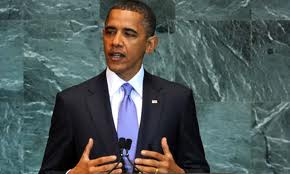
            There is no world leader that is more skilled at speechmaking than Barack Obama, especially when it comes to inspiring rhetoric that resonates with deep and widely held human aspirations. And his speech on Middle East policy, symbolically delivered to a Washington audience gathered at the State Department, was no exception, and it contained certain welcome reassurances about American intentions in the region.  I would point to his overall endorsement of the Arab Spring as a demonstration that the shaping of political order ultimately is a prerogative of the people. Further that populist outrage if mobilized is capable of liberating an oppressed people from the yoke of brutal and corrupt dictatorships, and amazingly to do so without recourse to violence. Obama also was honest enough to acknowledge that the national strategic interests of the United States sometimes take precedence over this preferential option for democracy and respect for human rights. Finally, his proposed $1 billion in debt relief for Egypt was a concrete expression of support for the completion of its revolutionary process, although the further $1 billion tied to an opening to outside investment and a free trade framework was far more ambiguous, threatening the enfeebled Egyptian economy with the sort of competitive intrusions that have been so devastating for indigenous agriculture and industry throughout the African continent.


            But let’s face it, when the soaring language is taken away, we should not be surprised that Obama continues to seek approval, as he has throughout his presidency, from the hawks in the State Department, the militarists in the Pentagon, and capitalist true believers on Wall Street. Such are the fixed parameters of his presidency with respect to foreign policy and explain why there is so much disappointment among his former most ardent followers during his uphill campaign for the presidency, who were once energized and excited by the slogan “change, yes we can!”  Succumbing to Washington ‘realism’ (actually a recipe for imperial implosion), the unacknowledged operational slogan of the Obama presidency has become “change, no we won’t!”

Obama’s Pro-Israeli Partisanship

           With these considerations in mind, it is not at all surprising that Obama’s approach to the Israel/Palestine conflict remains one-sided, deeply flawed, and a barrier rather than a gateway to a just and sustainable peace. The underlying pressures that produce the distortion is the one-sided allegiance to Israel (“Our commitment to Israel’s security is unshakeable. And we will stand against attempt to single it out for criticism in international forums.”). This leads to the totally unwarranted assessment that failure to achieve peace in recent years is equally attributable to Israelis and the Palestinians, thereby equating what is certainly not equivalent. Consider Obama’s words of comparison: “Israeli settlement activity continues, Palestinians have walked away from the talks.” How many times is it necessary to point out that Israeli settlement activity is unlawful, and used to be viewed as such even by the United States Government, and that the Palestinian refusal to negotiate while their promised homeland is being despoiled not only by settlement expansion and settler violence, but by the continued construction of an unlawful barrier wall well beyond the 1967 borders. Obama never finds it appropriate to mention Israel’s reliance on excessive and lethal force, most recently in its response to the Nakba demonstrations along its borders, or its blatant disregard of international law, whether by continuing to blockade the entrapped 1.5 million Palestinians locked inside Gaza or by violently attacking the Freedom Flotilla a year ago on international waters while it was carrying much needed humanitarian aid to the Gazans or the ethnic cleansing of Palestinian neighborhoods in East Jerusalem.


            At least in Obama’s Cairo speech of June 2009 there was a strong recognition of Palestinian suffering through dispossession, occupation, and refugee status: “..it is also undeniable that the Palestinian people—Muslims and Christians—have suffered in pursuit of a homeland. For more than sixty years they have endured the pain of dislocation. Many wait in refugee camps in the West  Bank, Gaza, and neighboring lands for a life of peace and security that they have never been able to lead. They endure the daily humiliations—large and small—that come with occupation. So let there be no doubt: the situation for the Palestinian people is intolerable. America will not turn our backs on the legitimate aspiration for dignity, opportunity, and a state of their own.” Of course, this formulation prejudges the most fundamental of Palestinian entitlements by confining any exercise of their right of self-determination as a people to a two-state straight jacket that may no longer be viable or desirable, if it ever was. And throughout the speech in Cairo there was never a sense that the Palestinians have rights under international law that must be taken into account in any legitimate peace process, taking precedence over ‘facts on the ground.’

             But at least in Cairo Obama was clear on the Israeli settlements, or reasonably so: “The United States does not accept the legitimacy of continued Israeli settlements. This construction violates previous agreements and undermines efforts to achieve peace. It is time for the settlements to stop.” Even here Obama is only pleading for a freeze (rather than dismantling what was unlawful). In the new speech settlement activity is blandly referred to as making it difficult to get new negotiations started, but nothing critical is said, despite resumed and intensified settlement construction in the West Bank and East Jerusalem. This unwillingness to confront Israel on such a litmus test of a commitment to a negotiated peace is indicative of Obama’s further retreat from even the pretense of balanced diplomacy as measured against Cairo.

             And there were other demonstrations of pro-Israeli partisanship in the speech. On the somewhat hopeful moves toward Palestinian Authority/Hamas reconciliation as a necessary basis for effective representation of the Palestinian people at the international level, Obama confines his comments to reiterating Israeli complaints about the refusal of Hamas to recognize Israel’s right to exist. What was left unsaid by Obama is that progress toward peace might be made by at last treating Hamas as a political actor, appreciating its efforts to establish ceasefires and suppress rocket attacks from Gaza, acknowledging its repeated acceptance of a Palestinian state within 1967 borders buttressed by a long-term proposal for peaceful co-existence with Israel, and lifting a punitive and unlawful blockade on Gaza that has lasted for almost four years. It is possible that such an approach might fail, but if the terminology of taking risks for peace is to have any meaning it must include an altered orientation toward the participation of Hamas in any future peace process.

 A Disturbing Innovation

             Perhaps, the most serious flaw in the Obama conception of resumed negotiations, is the separation of the territorial issues from the wider agenda of fundamental questions. This unfortunate feature of his approach has been obscured by Israel’s evident anger about the passage in the speech that affirms what was already generally accepted in the international community: “The borders of Israel and Palestine should be based on the 1967 lines with mutually agreed swaps, so that secure and recognized borders are established for both states.” If anything this is a step back from the 1967 canonical and unanimous Security Council Resolution 242 that looked unconditionally toward “withdrawal of Israel armed forces from territory occupied in the recent conflict.”

              Obama’s innovation involves deferring consideration of what he calls “[t]wo wrenching and emotional issues..the future of Jerusalem, and the fate of Palestinian refugees.” Leaving Jerusalem out of the negotiating process is in effect an uncritical acceptance of Israel’s insistence that the city as a whole belongs exclusively to Israel. What is worse, it allows Israel to continue the gradual process of ethnic cleansing in East Jerusalem: settlement expansion, house demolitions, withdrawal of residency permits and deportations, and overall policies designed to discourage a continued Palestinian presence.  It must be understood, I believe, as an unscrupulous American acceptance of Israel’s position on Jerusalem, which is not only a betrayal of legitimate Palestinian expectations of situating their capital in East Jerusalem but also a move that will be received with bitter resentment throughout the Arab world.

            Similarly, the deferral of the refugee issue is quite unforgivable. As of 2010 4.7 million Palestinians are registered with the UN as refugees, either living within refugee camps under conditions of occupation or in precarious circumstances in neighboring countries within camps or as vulnerable members of the host country. This refugee status has persisted for more that 60 years despite the clear assertion of Palestinian refugee rights contained in General Assembly Resolution 194 adopted in 1948 and annually reaffirmed: “The refugees wishing to return to their homes and live at peace with their neighbors should be permitted to do so at the earliest practicable date.” This persistence of the Palestinian refugee status six decades later is one of the most notorious denials of human rights that exist in the world today. To remove it from the peace process, as Obama purports to do, is to consign the refugees to an outer darkness of despair, and as such, is a telling disclosure of the bad faith embedded in the most recent Obama rendering of his approach to peace. Those who are dedicated to achieving a just peace for the two peoples—Israelis and Palestinians—are doomed to fail unless the refugees are treated as a core issue that can neither be postponed nor evaded without a grave betrayal of justice.

 Legitimacy Confusions

               And finally, Obama does his best to dash Palestinian hopes about their one effort to move their struggle a step forward, gaining their acceptance as a state by the United Nations in September of this year. In a perverse formulation of this reasonable, even belated, Palestinian effort to enlist international support for their claims of self-determination and statehood, Obama resorts to deflating and condescending language: “..efforts to delegitimize Israel will end in failure. Symbolic actions to isolate Israel at the United Nations in September won’t create an independent state.” This language is perverse because the Palestinian diplomatic initiative is meant to legitimize itself, not delegitimize Israel. And the BDS campaign and other international civil society initiatives carrying on the ‘legitimacy war’ being waged against Israel by way of the Palestinian solidarity movement are not aimed at delegitimizing Israel, but rather seek to overcome the illegitimacy of such Israeli unlawful policies and practices as the Gaza blockade, ethnic cleansing, wall building in defiance of the World Court, settlement expansion and settler violence, excessive violence in the name of security.

               In many respects, Obama’s speech, aside from the soaring rhetoric, might have been crafted in Tel Aviv rather than the White House. It is a tribute to Israel’s extraordinary influence upon the American media that has been able to shift the focus of assessment to the supposed Israeli anger about affirming Palestinian statehood within 1967 borders. It is hardly a secret that the Netanyahu leadership, aside from its shrewd propaganda, is opposed to the establishment of any Palestinian state, whether symbolic or substantive. This much was confirmed by the release of the Palestinian Papers that established rather conclusively that behind closed doors even when the Palestinian Authority made concession after concession in response to Israeli demands, the Israeli negotiating partners seemed totally unresponsive, and appeared disinterested in negotiating a genuine solution to the conflict.

             Underneath the Israeli demand for recognition of it character as a Jewish state is the hidden reality of a Palestinian minority of more than 1.5 million living as second class citizens within Israel. The Obama conception of “a Jewish state and the homeland for the Jewish people, and the state of Palestine as the homeland for the Palestinian people; each state enjoying self-determination, mutual recognition, and peace” seems completely oblivious to the rights of minority peoples and religions. Such ethnic and religious states seem incompatible with the promise of human dignity for all persons living within a political community. Homelands for a people are fine provided they do not encroach on pre-existing rights of others and do not claim exclusivity at the level of society or state. The Jewish claim in Palestine has the force of history behind it, but so Christians and others, and the Balfour certification should not mean much in a post-colonial era. It needs also to be acknowledged that the realization of a Jewish homeland in historic Palestine has long been abusive toward the resident population, and now to consign the Palestinians to a homeland behind the 1967 borders sends a regressive message. It offers Israel a covert way to invalidate the claims of refugees expelled in 1948 from Palestine, as well as overlooks the rights and wellbeing of the Palestinian minority living within Israel at present.


American Irrelevance and Palestinian Populism

               In a profound sense, whatever Obama says at this point is just more words, beside the point. He has neither the will nor the capacity to exert any material leverage on Israel that might make it more amenable to respecting Palestinian rights under international law or to strike a genuine compromise based on mutuality of claims. Palestinians should not look to sovereign states, or even the United Nations, and certainly not the United States, in their long and tormented journey to realize a just and sustainable destiny for themselves. Their future will depend on the outcome of their struggle, abetted and supported by people of good will around the world, and increasingly assuming the character of a nonviolent legitimacy war that mobilizes moral and political pressures that assert Palestinian rights from below.  In this regard, it remains politically significant to make use of the UN and friendly governments to gain visibility and legitimacy for their claims of right. It is Palestinian populism not great power diplomacy that offers the best current hope of achieving a sustainable and just peace on behalf of the Palestinian people. Obama’s State Department speech should be understood as merely the latest in a long series of disguised confessions of geopolitical impotence, but of one thing we can be sure, it will not be the last.       

Observing the 63rd Nakba

15 May

The latest news reports that at least 14 were Palestinians killed and scores more than that number injured by Israeli soldiers using live ammunition against Nakba demonstrators at confrontations near the Israeli borders with Lebanon (Ras Maroun), Syria (Golan Heights), Gaza, and West Bank. An immediate reaction is to contrast sophisticated Israeli non-lethal crowd control when dealing with settler violence and the lethal responses to Palestinian resistance politics in these four distinct settings. All in all, what is exhibited by these encounters is an upsurge of Palestinian militancy, perhaps a prelude to a third intifada, and the continuity of Israeli reliance on excessive force designed to punish and intimidate, which is a characteristic severe violation of Israel’s duties as an occupying power as defined by international humanitarian law. 

One of the many signs of the growing worldwide movement in support of the Palestinian struggle for their rights under international law and elemental morality is the increased international awareness of the Nakba. On this 63rd anniversary of the catastrophic Palestinian experience since 1948 when an escaping and expelled 760,000 Palestinians (now this dispossessed population has grown to 4.7 million; the 160,000 Palestinians who managed to stay behind in what became Israel now number 1.3 million) there is an encouraging sense that the destiny of the Palestinian people has entered a more hopeful phase: the Arab Spring, combined with earlier political developments in Turkey and Lebanon, have shifted the regional balance toward a greater identification with the Palestinian people and their just claims under international law and morality; the growing BDS worldwide campaign has extended the symbolic battlefield in the Legitimacy War against Israeli occupation, and related policies of apartheid, ethnic cleansing, barrier wall, blockade, settlements; the decision by the recently unified Palestinian leadership to seek acknowledgement of Palestinian statehood in the United Nations this September opening possibilities for further motivating the international community to live up to its responsibilities to address Palestinian grievances that have gone unanswered for these 63 years of UN endorsement of the valid establishment of Israel,  despite it being a colonial settler state imposed on and carved out of  historic Palestine; new signs of activism among the Palestinians living under occupation and in exile; the manifest and deplorable double standards involved in supporting the violent imposition of a No Fly Zone on Libya, which is in reality an effort to achieve regime change on behalf of a rebel insurgency of unknown character, while refusing to protect the people of Gaza who have severely victimized by a total blockade that has lasted almost four years, a massive case of deliberate and criminal collective punishment outlawed by Article 33 of the Fourth Geneva Convention. Against such a background the ongoing mobilization of public engagement on behalf of Palestinian rights should enlist all persons of conscience throughout the world, a populist dynamic that is happening and should intensify in the coming year. From this perspective it may soon be the case that the annual observance of the Nakba will be treated as the first truly global holiday the world has known.

Despite these developments there is no indication whatsoever that the Israeli leadership or public has any interest in achieving a sustainable peace or that it is prepared to desist from its expansionist and annexationist approach to the occupation of the West Bank and East Jerusalem. There are a few lonely Israeli voices calling for justice to the Palestinian people. For instance, Gideon Levy calling on Israel to teach ‘a different heritage lesson,’ that of the Nabka. Writing in Haaretz (15.5.2011) Levy writes, “Not only is it possible to permit the Israeli Palestinians to commemorate the day of their heritage and express their national and personal pain, something that should be self-evident, but also to teach us, the Jews, the other narrative..Only on the day that the pupils in Israel also learn about the Nabka, will we know that the earth is no longer burning under our feet..”

The Nakba is of course a day of grievance and resolve for all Palestinians including the several million living in refugee camps for decades in the countries surrounding Palestine and other millions in exile throughout the region and the world. A sustainable peace must realize the rights of all Palestinians, and must be broader and deeper than ending the occupation or establishing a Palestinian state. Palestinian representation to be legitimate and effective must keep faith with this wider Palestinian reality, and not confine its political program to a territorial imaginary. Just as the Palestinian solidarity movement is without boundaries so must be the campaign to achieve full realization of all of the rights of the dispossessed Palestinian people.

To live under Israeli occupation or as refugees for a day is difficult, for a week is unendurable, but to do so for decades is intolerable beyond words of outrage and empathy. We cannot grasp the enormity of this ordeal merely by underscoring the fact that Nakba occurred 63 years ago and that the added cruelty of the occupation started in 1967. Only the existential experience of being on the ground in occupied Palestine or visiting refugee camps in Lebanon, Jordan, or Syria can begin in a modest way to impart an understanding of the suffering and insecurity that is a daily reality of all those so confined, and even this can give rise to a false consciousness of ‘knowing.’ Those that visit can leave, those subject to regimen cannot, and that makes all the difference!

Below is the text of a press release issued in my capacity as Special Rapporteur for the Palestinian Territories Occupied since 1967, and released under the auspices of the Office of the High Commission for Human Rights in Geneva.

***********

                                                                                          16 May 2011


The UN human rights expert on the 63th anniversary of the Palestinian Nakba


16 May 2011
UN human rights expert on the 63th anniversary of the Palestinian Nakba

GENEVA – The Special Rapporteur on the situation of human rights in the occupied Palestinian territories, Mr. Richard Falk, marks the 63rd anniversary of the Nakba, the catastrophic beginning of the Palestinian tragedy of dispossession and occupation, with the following statement: 

“I commemorate Nakba this year dismayed by the killing of demonstrators observing the day in the occupied Palestinian territory and elsewhere in the region.

Since the Nakba on 15 May 1948 Israel has continuously confiscated Palestinian land in order to build illegal settlements and populate them with Israeli citizens. It is astonishing that no one in the international community has stepped forward, after 63 years, to coerce Israel to comply with international law. Israel’s legacy of ethnic cleansing persists, and manifests itself in an array of challenges to the security of residency for Palestinians living under occupation.

“The construction of the Wall inside the West Bank results in an additional 12% of land confiscation and demolition of Palestinian homes, in flagrant defiance of the Advisory Opinion of the International Court of Justice.

“This past week seven Palestinian families in the West Bank village of al-Walaja received demolition orders. This is a reminder that the Nakba continues. Israel’s pursuit of what it calls ‘facts on the ground’ consistently forces Palestinians to abandon their homes, lands, and lives, creating a reality better understood as virtual annexation. 

“This is a particularly notable Nakba anniversary, as it coincides with the release of information confirming that Israel secretly revoked as many as 140,000 residency permits of Palestinians between 1967 and 1994. This is not only another violation of Israel’s obligations as the Occupying Power under the Fourth Geneva Convention.  It is also a glaring example of several sinister schemes that Israel has employed over the years to rid historic Palestine of its original inhabitants, in order to make space for Israeli citizens.

“The international community needs to take urgent action to compel Israel to end its confiscation and occupation of Palestinian land.” 

ENDS

In 2008, the UN Human Rights Council designated Richard Falk (United States of America) as the fifth Special Rapporteur on the situation of human rights on Palestinian territories occupied since 1967. The mandate was originally established in 1993 by the UN Commission on Human Rights.

Learn more about the mandate and work of the Special Rapporteur:http://www2.ohchr.org/english/countries/ps/mandate/index.htm

OHCHR Country Page – Occupied Palestinian Territories:http://www.ohchr.org/EN/countries/MENARegion/Pages/PSIndex.aspx

OHCHR Country Page – Israel: http://www.ohchr.org/EN/Countries/MENARegion/Pages/ILIndex.aspx

For more information and media requests, please contact Nikki Siahpoush (Tel.: + 41 22 928 9430 / email:nsiahpoush@ohchr.org) or write to sropt@ohchr.org. 


Hazards and Hopes of Limitless Freedom of Expression

4 May

             One of the glories of the Western Enlightenment, especially as embodied in the lifeblood of political democracies is freedom of expression, the right to give voice in public spaces to unpopular, tasteless, provocative, and even outrageous ideas, and especially those critical of the prevailing political order without fear of retaliation. In the United States particularly the right to express ideas and opinions are extended to symbolic acts such as burning the American flag as a way of dramatizing the repudiation of official policies, or more broadly, the right to challenge the symbolic ascendancy of nationalism and patriotism. The U.S. Supreme Court has generally takes a very broad view of freedom of expression but finds some outer limits. It indicated famously that it would validate laws prohibiting members of an audience from falsely shouting ‘fire!’ in a crowded theater. It explained that the likely result is panic and a stampede that can hurt of kill. Even at the height of the Cold War, with McCarthyism creating waves of conformity, the endorsement of Communist ideas were generally allowed, although loyalty oaths for certain types of employment were imposed and actual, and even suspected, Communist Party affiliations were punished both formally and informally. The dividing line in wartime and during periods of national tension is very thin as exemplified in the United States by past laws on seditious speech and required loyalty oaths, which when the crisis expires are often in retrospect disowned as mistakes.


The Rushdie Fatwa


            These issues are often more easily be balanced by delicate legal and politics acrobatics within national political space, but finding a comparable balance globally has become far more precarious, if it is possible at all. The exceedingly difficult nature of the problem became evident to many after Salmon Rushdie in 1988 published Satantic Verses to Western critical acclaim and widespread Eastern censure, climaxing in the issuance of a fatwa by Ayatollah Ruhollah Khomeini on February 14, 1989 that declared it a duty of Muslims to kill Rushdie and to hold mortally accountable anyone anywhere who was associated with the publication of the book. Demonstrating that such words have deadly consequences, a Japanese translator, Hitoshi Igarishi was stabbed to death in 1991, as was an Italian translator of Satanic Verses. In addition, a Norwegian publisher of the book was violently attacked and barely survived. Rushdie himself went into hiding for about a decade with Britain effectively providing twenty-four hour police protection. In most countries with large Muslim populations the book was banned, with the notable exception of Turkey, and bookstores in the West that carried the book were threatened, and several were burned. Obviously, the fatwa had severe harmful effects on a variety of ‘innocent’ persons that carried far beyond Iran, the country of utterance by its supreme leader, that is, if innocence is assessed by Western liberal norms.


In 1998 Iran’s President Mohamed Khatami appeared to withdraw support for the fatwa, and seemed eager to bring to an end the anti-Rushdie worldwide campaign, but the fatwa remains formally in effect as it can only be withdrawn by the person who issued it, and Khomeini had died long before Khatami spoke out even assuming, which is highly unlikely, that the author of the fatwa might have been later inclined to back away from the harshness of the original condemnation. Had Khomeini been alive in 1998 he would have almost certainly reaffirmed the fatwa, and might likely have gone on to challenge Khatami’s qualifications to provide secular leadership for the country. With respect to the treatment of the Rushdie book there exists a definite clash of values and rights. In most countries in the West this publication was immediately treated as an important work of literature by a renowned author whose publication was initially not thought as posing any challenge to freedom of expression, while in many Islamic societies the book was immediately viewed as offensive to deeply held community and religious beliefs as to make its availability and distribution arguably unacceptable, and regarded by public authorities as such a grave threat to public order to lead several governments to ban its publication. This diversity about matters of cultural and religious propriety and the fixing of some limits on free expressions seems inevitable in a state-centric and multi-civilizational world that contains contradictory assessments of the balance between individual freedom and community values. This diversity is an accurate reflection of the world order that currently exists, and is incapable of being persuasively resolved by resort to claimed universal principle. Despite the worldwide rise of human rights, universal norms cannot resolve difficult controversies about rights and values, although almost everywhere except Iran the Khomeini fatwa was treated as a deeply troubling precedent. The fatwa claimed an unreviewable authority to mandate death by unreviewable decree to the author of a book and those who facilitated publication even though in their political space no law was broken or widely endorsed moral position was affronted. This fatwa was indeed a bridge too far!


How to prevent such abuses in the future is a daunting challenge. It is difficult to propose a better response than the ancient encouragement of comity among countries, but this reliance on reciprocal courtesy and respect among sovereign states can hardly be expected to exert much influence on those who act on the basis of genuinely held fundamentalist beliefs about good and evil. It is inevitable that there will at some point arise somewhere on the planet behavior that will give rise elsewhere to the formulation and implementation of efforts to punish or react to controversial ideas that are found offensive within and beyond territory.


The Danish Cartoon Controversy                                                     


            In many ways as insulting to Muslim sensibilities around the world as Satanic Verses, was the Danish newspaper’s publication in 2005 of twelve cartoons depicting the prophet Mohamed in a derogatory manner. In response, riots leading to several deaths took place in Asian countries. The Danish official defensive response to criticism after the event was to call attention to the existence of national penal laws that prohibited blasphemy or discriminatory statements. It was a curious gesture because at the same time the Danish prosecutor declared the inapplicability of these laws in this instance because the cartoons addressed matters of ‘public interest’ whose publication was thus entitled to special protection. Here, there was more at stake than the trouble caused overseas. The cartoons also caused intense discomfort to Muslim minorities living in Denmark and elsewhere in Europe. The publication and political debate that followed was properly regarded as confirming the reality of an Islamophobic climate of opinion taking shape in Europe. The Danish response was essentially premised on freedom of expression as insulating even deliberately insulting remarks and images associated with religions and their sanctified leadership. In this respect, Copenhagen was arguing that Islam was not being singled out. Every religion, including Christianity, it was said had been at various times attacked in a manner that could be construed as blasphemous. But what here of the predictable impact of the cartoons, causing violent reactions around the world and intensifying hostility to Muslims within Denmark? Is this not analogous to shouting fire in a crowded theater? That is, the publisher and editor of the Danish newspaper should have anticipated these harmful effects, although some observers have argued that the riots were not the foreseen, and were primarily caused by the cartoons. Seen in this manner, the ensuing violence was mainly the result of opportunistic and irresponsible mainstream religious figures in several Muslim countries seizing the inflamed moment by agitating mobs to bolster their own personal influence. Unlike Rushdie, who acted perfectly reasonably, given his British residence and citizenship, the Danish provocation should arguably have been avoided by self-censorship, and the violent responses in Asia were exaggerated reactions that also should never have happened. It is generally desirable to encourage free expression without the state administering the limits, but in that case it is up to the state to prevent riots and societal violence.


            The challenge is a difficult one. It could be argued that a stronger civic tradition on Rushdie’s part, but even more so in relation to Khomeini, would have produced self-censorship. Long after the event, Rushdie expressed surprise, and even a tinge of remorse, that his novel had become an occasion for such a violent and enraged backlash. Long after the fact he gave the impression on occasion that he might not have written such a book had he anticipated the consequences for himself and others. In contrast, the Danish newspaper was forewarned of inflammatory effects but went ahead without any hesitation. In effect, self-censorship does not currently protect against the harmful effects of incendiary forms of expression in the hostile and commercially driven, even hateful, environment that exists, and even promotes a culture war against or on behalf of the Muslim world.


Burning the Koran


            The case of Terry Jones, the fundamentalist pastor of a small Christian church in Gainesville, Florida called the Dove World Outreach Center, founded in 1996 and serving 50 families, is a dramatic illustration of the dilemmas posed by hateful and irresponsible speech, not by a supreme leader as with Khomeini but by an obscure religious figure who would have remained forever unknown except for his outrageous provocation. The actions of Rev. Jones illustrate the ethical and political challenge in its most vivid form. Jones proclaimed his intention to burn the Koran on the anniversary of September 11 in 2010, even proposing the establishment of an “International Burn a Koran Day.” He had earlier published a booklet entitled “Islam is of the Devil,” and in August 2009 two children from his church were sent home from a local school because of ‘inappropriate dress,’ T-shirts with “Islam is of the Devil” emblazoned in bright letters. The Florida community did what it could to rein Jones in by informal action, denying Jones a burn permit and seeking to cancel the mortgage outstanding on his church. When asked to explain the recent shrinkage in his church membership by 50% Jones cunningly replied, “I think mainly just because the things we’re involved in are just really too hot for your normal Christian and your normal person.” Prior to the burning last month, many urged Jones to refrain, including even General David Petraeus who correctly warned that such anti-Islamic acts would endanger the lives of American troops under his command. And indeed two American soldiers were killed in distant Afghanistan apparently to avenge the Koran burning. Of course, such an incident should be appreciated as a personal tragedy for those singled out, although the American military presence in Afghanistan was likely a contributing cause, and in its own way an unlawful and irresponsible provocation. Should the state step in and impose a punishment or forbid such speech? On what authority? Should the idea of hate speech be associated with hostility to a book (as distinct from a person) that is treated as sacred by more than a billion persons? Is its denigration an intolerable incitement to public disorder? Does the answer depend on the national or civilizational setting at a particular historical, or are we now living in such a globalized and networked world as to make geographic boundaries of acceptable expression meaningless?


The Manning Case


            This brings me, finally, to the sad and illuminating case of Bradley Manning, a young intelligence analyst serving in the military. While Terry Jones is a free man despite deliberately generating violent reactions to speech and symbolic deeds known to be deeply offensive to many people, Manning seemingly acted out of conscience and belief facilitating the release of thousands of documents that had been classified by the U.S. Government, Iraq and Afghanistan war logs, confidential State Department cables, and other classified materials. As with Daniel Ellsberg’s release of the Pentagon Papers almost 40 years earlier, the evident intention of Manning was to inform people about the realities of government policies that were producing death and destruction in foreign countries. It seems that Ellsberg, also a government security specialist with privileged access and status, wanted the American people to know some core truths about the planning and perpetration of the Vietnam War that were dramatically at variance with what the public was being told about the war by the government. With Manning his range of motivations is not fully known, but he seems also to have become deeply disenchanted with the unlawful and immoral manner with which the United States was using its military power around the world, and the extent to which it was hiding war crimes behind heavy curtains of unwarranted secrecy. Manning has not yet been prosecuted, but has been held in demeaning and cruel conditions for many months. Without alluding to any extenuating circumstances, President Obama has not only said in response to a question from a journalist in the face of protests by human rights groups and others about Manning’s treatment in military prison that it was “appropriate and meets our basic standards,” but also was later caught on tape prejudging the case by saying in a private conversation at a fundraising dinner that Manning “broke the law,” and should be prosecuted.


The Manning case is a further stain on the moral reputation of the United States. It exhibits a vindictiveness toward a citizen, and a low ranking member of the armed forces, who steps out of line, seeking to allow a wider public of a democratic society to know a series of ‘inconvenient truths.’ Perhaps, there is some justification for some secrecy in diplomatic communication, and thus for laws that punish improper disclosures, or leaks. But each case needs to be judged in relation to its specific context. This case has many extenuating circumstances, and calls for leniency and empathy, taking account of Manning’s motivation and the improprieties exposed, rather than the vindictive approach so far taken by American officialdom. Let us remember that high government officials often leak classified information for their own purposes, including the exertion of influence on the media treatment of controversial policy issues. They almost never suffer any adverse consequences, enjoying what amounts to de facto impunity. What is striking about the Ellsberg/Manning disclosures is the whistle blowing character of their actions, that is, essentially a contribution to public wellbeing. In Manning’s case the documents given to WikiLeaks, including a classified video of a military incident in Afghanistan (an Apache helicopter attack that killed two Reuters News employees and several civilians without any indication of a military target), as well as many documents confirming U.S. association with war crimes, government lawbreaking, and serious corruption. Such behavior deserves to be known by the American public and should never have been allowed to happen in the first place. Rather than condemning the disclosures, the behavior disclosed is what should have produced presidential anger and appropriate action.


In a healthy democratic society such behavior would be protected if the intentions of ‘unlawful’ were shown to be positive and reasonable, and no unwarranted harm could come to named individuals. According to reports, the documents released by WikiLeaks were carefully screened in advance to avoid targeting individuals. Complex modern societies are rendered more secure by the safety valve of whistle blowing, and at the very least, benign leadership should moderate the implementation of secrecy laws by an acknowledgement of the huge public benefits of and needs for governmental transparency. In this instance President Obama’s inappropriate assertion of Manning’s guilt prior to a criminal trial under the auspices of a military tribunal further highlights the degree to which statist interests outweigh both justice to an individual charged with serious crimes (remember that innocence until proven guilty by a court of law operating according to due process is a fundamental right) and disregards the interest of the citizenry in the greatest possible transparency on the part of their government. If due process prevails even a military tribunal should conclude that Obama’s statements have been sufficiently prejudicial, after all he is commander in chief whose views are not likely to be contradicted in a military venue venerating hierarchy and chains of command, to have the case against Manning thrown out. Such an outcome is also justified as a result of severe and sustained pre-trial abuse that cumulatively amounts to ‘torture,’ or what the Bush presidency chillingly called the techniques of ‘enhanced interrogation.’


            The German philosopher, Friedrich Nietzsche, wrote in 1885: “The state is the coldest of all cold monsters. Coldly it lies, too; and this lie creeps from its mouth: ‘I, the state, am the people.’” [Thus Spake Zarathustra, ‘Of the New Idol’]

In the Manning case this coldness is exemplified, as is the lie that because the state is the people, the people have no needs to know beyond what the state is prepared to disclose, however incriminating the information. This coldness of the state is expressed by criminalizing truth telling, branding it as virtually a form of treason, whereas a humane political community would seek to learn from those in their midst who are brave and dedicated enough to reveal to their citizen comrades what is hidden because it should never have been allowed to take place.  To punish righteousness is the seminal sin of organized power that the Bible warns about over and over again, and yet the ears of the modern cold state remain are plugged on principle, with the help of laws that stifle those forms of freedom of expression needed to ensure a lawful government. The same state that will go to great lengths to claim virtue for itself because it tolerates criticism will spare no effort to punish those who dare to expose its criminality. This punitive reflex must be curbed if democracy is to flourish in the 21st century.


V..4…2011


What Future for the Goldstone Report? Beyond the Name

20 Apr


            Ever since it first struck the raw nerve of Israeli political consciousness I thought it misleading to associate the Goldstone Report so exclusively with its chair, Judge Richard Goldstone. After all, despite his deserved prominence as an international jurist, he was the least qualified substantively of the four members of the mission. Undoubtedly, part of the intensely hostile Israeli reaction of their highest political leaders had to do with the sense that Goldstone as a devoted Zionist had been guilty of betrayal, even of ‘a blood libel’ against the Jewish people, because he seemed to be elevating his fidelity to the ‘law’ above that of tribal loyalties, and according to Tel Aviv he should never have been mixed up with such a suspect entity as the UN Human Rights Council in the first place.  


What should be observed, and stands out over time, is the degree of importance that even the extremist Israeli leadership attaches to the avoidance of further stains on their reputation as a law abiding political actor. This seems true for the Israeli leadership even when the assessing organization is the UN Human Rights Council that Israel, as well as the U.S. Government, never misses the chance to denounce and defame. Implicit in this Israeli search for vindication is their implicit acknowledgement that the UN is after all a major site of struggle in the ongoing legitimacy war being fought against Palestinian claims of self-determination. This acknowledgement of importance has been expressed more recently by Netanyahu’s inappropriate insistence that in view of the Goldstone retreat the UN retract the report in its totality.


This assessment was embarrassingly confirmed by the reaction of the U.S. Senate to Goldstone’s Washington Post op/ed of April 1st when two weeks lateron it unanimously passed a resolution calling on the UN “to reflect the author’s repudiation of the Goldstone report’s central findings, rescind the report and reconsider further Council actions with respect to its findings.” It also asked the UN Secretary General, Ban Ki Moon, “to do all in his power to redress the damage to Israel’s repuation.” This ill-informed and inflammatory wording is quite extraordinary, starting with the reference to Goldstone as ‘the author’ of the report, thereby completely overlooking the reality that it was a joint effort, that his input was probably the smallest, and the other authors have reaffirmed their support for the entire report subsequent to the Goldstone retreat. What is mostly revealed by this Senate initiative is the blatant partisanship that is now unquestioned in official Washington. This unsubtle disregard for international law and the authority of the UN should at the very least encourage the Palestine Authority to seek other auspices for any future negotiations with Israel than what is provided by the U.S. Government.


            It is probably true that if Goldstone had not been so vilified for his association with the report it would have likely experienced the same fate as  thousands of other well documented UN reports on controversial issues. By lending his name to the fact-finding mission and its outcome Goldstone became an unwilling lightning rod, the target of vicious attacks but also heralded at the time by fair-minded persons around the world for his fidelity to the law even in the face of such hostile fire. In this regard Goldstone became a sacrificial scarecrow that failed in his appointed role of keeping the birds of prey at a safe distance. In effect, how could Israel attack one of their own if the assessment of their behavior produced findings of severe violations of international humanitarian law? How could such findings be avoided given the widely known characteristics of Operation Cast Lead? There is a double irony present: Goldstone was partly selected to head this sensitive undertaking because as a known supporter of Israel he would make it harder for Israel to complain about UN bias so as to deflect attention away from the message; but precisely because of the difficulty posed for Israel’s propaganda machine by Goldstone’s credibility the level of attack on him reached hysterical heights and evidently exerted such intense pressure that he was eventually led to make an awkward and unprecedented partial repudiation of the report that pleases neither side.


            Two other aspects of the situation are often neglected or misstated. First of all, several other respected international studies had already confirmed most of the conclusions reached by the time the Goldstone  Report was released in September 2009. Other prior noteworthy reports on the international law issues including Human Rights Watch, Amnesty International, B’Tselem, Al Haq, and especially the comprehensive report of an earlier detailed and authoritative fact-finding team composed of internationally respected international law experts under the leadership of John Dugard, a leading South African jurist and former UN Special Rapporteur for Occupied Palestine carried out on behalf of the Arab League. Against such a background, in a substantive sense the Goldstone Report did not say anything that was not already well established by a highly credible accountability community of NGOs, journalists, and an array of UN humanitarian workers and civilians who were on the scene during the attacks. Such an overwhelming informed consensus is what makes such a mockery of this effort by the U.S. State Department and the Senate to seize on the Goldstone retreat as a new occasion to repudiate the report as a whole, and throw once more a blanket of impunity over Israeli defiance of international law.


            The second element that should be kept in mind, but is rarely ever acknowledged even by those who stand 100% behind the report is that it was not, as the media mostly claimed, unduly critical of Israel. On the contrary, in my view, the report was one-sided, but to the benefit of Israel. Let me mention several evidences of leaning toward Israel: the report proceeds on the basis of Israel’s right of self-defense without bothering to decide whether in a situation of continuing occupation a claim of self-defense is ever available under international humanitarian law, although Israel was entitled to rely on force to the extent necessary to uphold specific security interests arising from the rocket attacks. Furthermore, the report did not examine whether the factual conditions prior to the attacks supported any security claim considering the success of the truce to cut rocket fire to almost zero in the months preceding the attacks, a truce that had held until Israel provocatively broke it on 4 November 2008 by conducting a lethal raid within Gaza. Beyond this the claimed security justification seemed artificially fashioned to serve as a rationalization for the Israeli aggressive and unlawful all out military assault against Gaza that was mostly motivated by a series of Israeli claims that were quite independent of security in Gaza. The real goals were as follows: to destroy Hamas; to  induce the return of the captured Israeli soldier Gilad Shalit, to punish Gazans  for voting in favor of Hamas back in 2006. In addition, it was clear that the IDF had been planning Operation Cast Lead for six months prior to launching the attack on 27 December 2008, and for a variety of reasons other than securing southern Israel against rockets: striking hard at Gaza before Obama took office, influencing in Kadima’s favor the Israeli domestic elections that were about to take place, restoring confidence in the IDF after its failures in the Lebanon War of 2006, and sending a message to Iran that Israel would not hesitate to use overwhelming force whenever its interests dictated and without restraint.  


            The Goldstone Report did appropriately emphasize the severe Israeli departures from the law of war by attacking with disproportionate and indiscriminate force against a crowded, mainly urbanized society. But it failed to emphasize a distinctive feature of the attacks—the denial to the civilian population of Gaza of the option to leave the war zone and become refugees, at least temporarily. To keep civilians, especially children, the aged, and the disabled, so confined leaves permanent psychic wounds as has been reported by many post-attack studies and residents of Gaza, but is not disclosed by the casualty figures that count only the dead and the wounded. Part of the public horror of Operation Cast Lead resulted from the 100:1 ratio of war dead, which is a vivid confirmation of the defenseless plight of the Gazan population and the helplessness of Hamas protectors when confronted by the Israeli war machine. Despite this indicator of one-sidedness, the casualty comparison dramatically understated the real losses to the Palestinians. If the psychologically damaged are added to the Palestinian total and the friendly fire victims are subtracted from the Israeli side, reducing their total deaths from 13 to 6 or 7 the ratio of losses is gigantically uneven. In view of this one-sidedness, together with Israel’s initiation of the attacks and its role as occupying power, the report gave excessive emphasis to Hamas violations of international humanitarian law, which should have been noted, but not treated, as was the case, as virtually symmetrical with those of Israel. To treat as balanced that which is so manifestly unbalanced is to falsify the relevant reality.


            As has been pointed out in the media, including by Goldstone, his retraction was limited to the admittedly important issue of whether Israel intentionally targeted civilians as a matter of policy. Even this limited retraction is unconvincing because it rests so heavily on Israel’s self-investigations, which the post-Goldstone UN fact-finding mission jointly headed by an American judge, Mary McGowan Davis and the Swedish judge, Lennart Aspergen, found in their recent report failed to meet international standards. As mentioned previously, the retraction by Goldstone was also seriously undermined by the joint statement of the three other members of the Goldstone mission who publically reaffirmed the report in its totality, which never made the sweeping accusation of Israel that Goldstone retracted!


            Only half satirically, I would think that the Goldstone Report might be time to rechristen the Goldstone Report as the Chinkin Report or blandly let it be henceforth be known as the ‘Report on Israeli and Hamas War Crimes and Crimes Against Humanity during Operation Cast Lead.’ Whatever the name, the main allegations have been confirmed over and over again, and it is now up to the governments making up the UN General Assembly and Security Council to show the world whether international criminal accountability and the International Criminal Court is exclusively reserved for sub-Saharan African wrongdoing!


            Many have asked whether the Goldstone retraction will doom the future of the report. In my view rather than performing a funeral rite Goldstone miscalculated, and has given the report a second life. It may still languish in the UN System, thanks to the geopolitical leverage being exerted by the United States to ensure that Israeli impunity is safeguarded once more, but this new controversy surrounding the report has provided civil society with renewed energy to push harder on the legitimacy agenda that has been animating the growing Palestinian global solidarity movement. Never before has the Goldstone Report received such sympathetic attention even from American mainstream sources. Astonishingly, even the NY Times columnist, Roger Cohen, chided Goldstone for trying belatedly to distance himself from the report, going so far as to suggest that his behavior has contributed a new verb ‘to Goldstone’ to the language of politics. “Its meaning: to make a finding, and then partially retract it for uncertain motive.” Cohen’s formal definition—“to ‘Goldstone’: (Colloq.) To sow confusion, hide a secret, create havoc.”


            History has funny ways of reversing expectations. Just as most of the world was ready to forget the allegations against Israel from the ghastly 2008-09 attacks on Gaza and move on, Richard Goldstone inadvertently wakes us all up to a remembrance of those morbid events, and in the process, does irreparable damage to his own reputation while trying to redeem himself in certain circles.


It is up to persons of conscience to seize this opportunity, and press hard for a more even handed approach to the application of the rule of law in world politics. There is much righteous talk these days at the UN and elsewhere about the ‘responsibility to protect,’ contending that the Qaddafi threats directed at Libyans civilians justified a No Fly Zone and a full fledged military intervention from the air undertaken with UN blessings and NATO bombs and missiles, but not even a whisper of support for providing the still beleaguered people of Gaza with a No Fly Zone despite frequent violent incursions by Israel and a debilitating unlawful blockade that has lasted almost four years, a severe form of collective punishment that directly violates Article 33 of the Fourth Geneva Convention. This blockade continues to block the entry of building materials needed in Gaza to recover from the devastation caused more than two years ago.


IV..20…2011


The United States Stands Alone with Israel in the UN Security Council [or How (Dis)honest is the Honest Broker?]

19 Feb

The United States Stands Alone with Israel in the UN Security Council [or How (Dis)honest is the Honest Broker?]

In what appears to be as close to a consensus as the world community can ever hope to achieve, the United States reluctantly stood its ground on behalf of Israel and on February 18, 2011 vetoed a resolution on the Israeli settlements  in the West Bank and East Jerusalem that was supported by all 14 of the other members of the UN Security Council. The resolution was also sponsored by 130 member countries before being presented to the Council. In the face of such near unanimity the United States might have been expected to some respect for the views of every leading government in the world, including all of its closest European allies, to have had the good grace to at least abstain from the vote. Indeed, such an obstructive use of the veto builds a case for its elimination, or at least the placement of restrictions on its use. Why should an overwhelming majority of member countries be held hostage to the geopolitical whims of Washington, or in some other situation, an outlier member trying to shield itself or its ally from a Security Council decision enjoying overwhelming support. Of course this American veto is not some idiosyncratic whim, but is an expression of the sorry pro-Israeli realities of domestic politics, suggesting that it is Israel that is the real holder of the veto in this situation, and the U.S. Congress and the Israeli Lobby are merely designated as the enforcers.


Susan Rice, the American chief representative in the Security Council, appeared to admit as much when she lamely explained that the casting the veto on this text “should not be misunderstood to mean support for settlement construction,” adding that, on the contrary, the United States “rejects in the strongest terms the legitimacy of continued Israeli settlement activity.” Why then? The formal answer given is that the United States, agreeing with Israel, believes that only in the context of direct negotiations can the issue of settlements be addressed alongside other unresolved matters such as refugees, borders, and the status of Jerusalem. This seems absurdly arrogant, and geopolitically humiliating. If the 14 other members of the Security Council believe that Israeli should be censured for continuing to build unlawful settlements, and that no negotiations can proceed until it ceases, then it would seem that a united front would be the most effective posture to resumed negotiations. This is especially so here as it is a no brainer to realize that every additional settlement unit authorized and constructed makes it less likely that a truly independent and viable Palestinian state can ever be brought into being, and that there exists the slightest intention on the Israeli side to do so.

In view of this feverish Israeli effort to create still more facts on the ground, for the Israelis to contend that negotiations should resume without preconditions, is to hope that the Palestinian Authority will play the fool forever. After all for more than 43 years the Israelis have been whittling away at the substance of the two state consensus embodied in unanimous Security Council Resolution 242 (1967), contending at every phase of the faux peace process that an agreement must incorporate ‘subsequent developments,’ that is, unlawful settlements, ethnic cleansing. In the end, the Israelis may turn out to have been more clever by half, creating an irresistible momentum toward the establishment of a single secular democratic state of Palestine that upholds human rights for both peoples and brings to an end the Zionist project of an exclusive ‘Jewish state.’ With great historic irony, such an outcome would seem to complete the circle of fire ignited by Lord Balfour’s secret 1917 promise to the Zionist movement of ‘a Jewish homeland’ in historic Palestine, a process that caused a Palestinian catastrophe along the way and brought war and bloodshed to the region.

The disingenuousness of the Israeli position was confirmed by the recent publication of the Palestine Papers that showed beyond a shadow of a doubt that even when the Palestinian Authorities caved in on such crucial issues as Jerusalem, settlements, and refugees, their Israeli counterparts, including the supposedly more moderate predecessors to the Netanyahu leadership, displayed no interest in reaching even an agreement so heavily weighted in Tel Aviv’s favor. What seems inescapable from any careful reading of these negotiating positions behind closed doors during the prior decade is that the public negotiations are a sham designed to buy time for Israel to complete its illegal dirty work of de facto annexation in the West Bank, a position it has long adopted in the form of Israeli de jure annexation of the entire expanded city of Jerusalem in defiance of the will of the international community and the understanding of international law, objectively considered. To contend that stopping the unlawful encroachments of continuing settlement activity on occupied Palestinian territory, an assessment that even the United States does not question substantively, is an inappropriate Palestinian demand seems so excessive as to humiliate any Palestinian representatives that stooped so low as to accept it. Equally so, is the Israeli claim that this demand has not been made in the past, which to the extent accurate, is not an argument against freezing further settlement activity, but a disturbing comment on Palestinian complacency in relation to their failure to insist upon respect for their rights under international law.

In the context of this latest incident in the Security Council, the Palestinian Authority deserves praise for holding firm, and not folding under U.S. pressure, which was strongly applied, including reported warnings from President Obama by phone to President Mahmoud Abbas of adverse ‘repercussions’ if the text calling for an end to illegal settlement building was brought before the Security Council for a vote. Obviously, the United States Government realized its predicament. It did not want to be so isolated and embarrassed in this way, finding itself caught between its international exposure as willing to support even the most unreasonable Israeli defiance of the UN and its domestic vulnerability to a pro-Israeli backlash in the event that it failed to do Israel’s bidding in this matter of largely symbolic importance.


We should not forget that had the Security Council resolution been adopted, there is not the slightest prospect that Israel would have curtailed, let alone frozen, its settlement plans. Israel has defied a near unanimous vote (with, hardly a surprise, the U.S. judge casting the lone negative vote among the 15 judges) of the World Court in 2004 on the unlawfulness of the settlement wall. Here, an American dissent could not bring Israel in from the cold of its refusal to abide by this ruling as thankfully there is no veto power in judicial settings. In that instance of the wall, Israel wasted no time denouncing the advisory opinion of the highest UN judicial body, declaring its refusal to obey this clear finding that the wall built on occupied Palestinian territory should be dismantled forthwith and Palestinians compensated for any harm done.  Instead, despite brave nonviolent Palestinian resistance, work continues to this day on finishing the wall.


With respect to the settlements it is no wonder that American diplomacy wanted to avoid blocking an assertion of unlawfulness that it was on record as agreeing to, a fact awkwardly acknowledged by Ambassador Rice in the debate, knowing that the resolution would not have the slightest behavioral impact on Israel in any event. It should be noticed that as much as Israel defies the UN and international law, it still cashes in its most expensive diplomatic chips to avoid censure whenever possible. I believe that this is an important, although unacknowledged, Israeli recognition of the legitimizing role of international law and the UN.  It is also connected with an increasing Palestinian reliance on soft power, especially its BDS campaign. This partial shift in Palestinian tactics worries Israel. In the last several months Israeli think tanks close to the government refer to as ‘the delegitimation project’ with growing anxiety.  This approach of the Palestinian Global Solidarity Movement is what I have been calling a Legitimacy War. For the last several years it is being waged and won by the Palestinians, joining the struggles of those living under occupation and in exile.

On the PA side there was reported anxiety that withdrawing the resolution in this atmosphere would amount to what was derisively referred to as a possible ‘Goldstone 2,’ a reference to the inexcusable effort by the Palestinian Authority back in October 2009 to have consideration of the Goldstone Report deferred for several months by the Human Rights Council as a prelude to its institutional burial, which has now more or less taken place thanks to American pressures behind the scene. It has even been suggested that had the PA withdrawn the resolution Abbas would have been driven from power by an angry popular backlash among the Palestinian populace. In this sense, the PA was, like the United States, squeezed from both sides: by the Americans and by their own people.

Of course, in the background of this incident at the UN are the tumultuous developments taking place throughout the region, which are all adverse to Israel and all promising in relation to the Palestinian struggle even though many uncertainties exist. It is not only the anti-autocrat upheavals in Tunisia and Egypt, the outcome of which is still not clear from the perspective of genuine regime change as distinct from recasting the role of dictatorial leader, but the wider regional developments. These include the political rise of Hezbollah in Lebanon, Turkish diplomacy that refuses to tow the Washington line, the failure of American interventionary diplomacy in Iraq, and the beleaguered authoritarian governments in the region some of whom are likely to give more active support on behalf of Palestinian goals to shore up their own faltering domestic legitimacy in relation to their own people.

In many ways, the failed Security Council resolution condemning Israeli settlement activity is a rather trivial event in the broader setting of the underlying conflict. At the same time it is a significant show of the play of forces that are operative in Washington and Ramallah, and above all, it is an unseemly display of the influence Israel wields with respect to the Obama Administration. Is it not time that the United States revisited its Declaration of Independence or began to treat the 4th of July as a day of mourning?

II.19.2011


Revolutionary Prospects After Mubarak

15 Feb

The Egyptian Revolution has already achieved extraordinary results: after only eighteen intense days of dramatic protests. It brought to an abrupt end Mubarak’s cruelly dictatorial and obscenely corrupt regime that had ruled the country for more than thirty years. It also gained a promise from Egyptian military leaders to run the country for no more than six months of transition, the minimum period needed for the establishment of independent political parties, free elections, and some degree of economic restabilization. It is hoped that this transition would serve as the prelude to and first institutional expression of genuine democracy. Some informed observers, most notably Mohamed ElBaradei worry that this may be too short a time to fill the political vacuum that exists in Egypt after the collapse of the authoritarian structures that had used its suppressive energies to keep civil society weak and to disallow governmental institutions, especially parliament and the judiciary, to function with any degree of independence. It is often overlooked that the flip side of authoritarianism is nominal constitutionalism.

In contrast, some of the activist leaders that found their voice in Tahrir Square are concerned that even six months may be too long, giving the military and outside forces sufficient time to restore the essence of the old order, while giving it enough of a new look to satisfy the majority of Egyptians. Such a dismal prospect seems to be reinforced by reported American efforts to offer emergency economic assistance apparently designed to mollify the protesters, encourage popular belief that a rapid return to normalcy will provide this impoverished people (40% living on less than $2 per day; rising food price; high youth unemployment) with material gains.

The bravery, discipline, and creativity of the Egyptian revolutionary movement is nothing short of a political miracle, deserving to be regarded as one of the seven political wonders of the modern world! To have achieved these results without violence, despite a series of bloody provocations, and persisting without an iconic leader, without even the clarifying benefit of a revolutionary manifesto, epitomizes the originality and grandeur of the Egyptian Revolution of 2011. Such accomplishments shall always remain glories of the highest order that can never be taken away from the Egyptian people, regardless of what the future brings. And these glorious moments belong not just to those who gathered at Tahrir Square and at the other protest sites in Cairo, but belong to all those ignored by the world media who demonstrated at risk and often at the cost of their life or physical wellbeing day after day throughout the entire country in every major city. Both the magnitude and intensity of this spontaneous national mobilization was truly remarkable. The flames of an aroused opposition were fanned by brilliantly innovative, yet somewhat obscure, uses of social networking, while the fires were lit by the acutely discontented youth of Egypt and kept ablaze by people of all class and educational backgrounds coming out into the street. The inspirational spark for all that followed in Egypt and elsewhere in the region, let us not forget, was provided by the Tunisian Revolution. What happened in Tunisia was equally astonishing to the amazing happenings in Egypt, not only for being the initiating tremor, but also for reliance on nonviolent militancy to confront a ruthlessly oppressive regime so effectively that the supposed invincible dictator, Ben Ali, escaped quickly to Saudi Arabia for cover.  The significance of the Tunisian unfolding and its further development should not be neglected or eclipsed during the months ahead. Without the Tunisian spark we might still be awaiting the Egyptian blaze!

As is widely understood, after the fireworks and the impressive cleanup of the piles of debris and garbage by the revolutionaries in Tahrir Square, itself a brilliantly creative footnote to their main revolutionary message, there remains the extraordinarily difficult task of generating ex nihil a new governing process based on human rights, the will of the Egyptian people, and a mighty resolve to guard sovereign rights against the undoubted plots of canny external actors scared by and unhappy with the revolution, seeking to rollback the outcome, and seeking above all by any means the restoration of Mubarakism without Mubarak.  The plight of the Egyptian poor must also be placed on the top of the new political agenda, which will require not only control of food and fuel prices, but the construction of an equitable economy that gives as much attention to the distribution of the benefits of growth as to GNP aggregate figures. Unless the people benefit, economic growth is a subsidy for the rich, whether Egyptian or foreign.

Short of catastrophic imaginings, if interpreted as warnings may forestall their actual occurrence, there are immediate concerns: it seemed necessary to accept the primacy of the Egyptian military with the crucial task of overseeing the transition, but is it a trustworthy custodian of the hopes and aspirations of the revolution? Its leadership was deeply implicated in the corruption and the brutality of the Mubarak regime, kept in line over the decades by being willing accomplices of oppressive rule and major beneficiaries of its corrupting largess. How much of this privileged role is the military elite ready to renounce voluntarily out of its claimed respect for and deference to the popular demand for an end to exploitative governance in a society languishing in mass poverty? Will the Egyptian military act responsibly to avoid the destructive effects of a second uprising against the established order? It should also not be forgotten that the Egyptian officer corps was mainly trained in the United States, and that coordination at the highest level between American military commanders and their Egyptian counterparts has already been resumed at the highest levels, especially with an eye toward maintaining ‘the cold peace’ with Israel.  These nefarious connections help explain why Mubarak was viewed for so long as a loyal ally and friend in Washington, Tel Aviv, and Riyadh, and why the inner counsels of these governments are reacting with concealed panic at the outburst of emancipatory politics throughout the region. I would suppose that these old relationships are being approached with emergency zeal to ensure that however goes the transition to Egyptian democracy it somehow exempts wider controversial regional issues from review and change that would reflect the values that animated the revolutionary risings in Tunisia and Egypt. These values would suggest solidarity with movements throughout the Middle East to end autocratic governance, oppose interventions and the military presence of the United States, solve the Israel/Palestine conflict in accordance with international law rather than ‘facts on the ground,’ and seek to make the region a nuclear free zone (including Israel) reinforced by a treaty framework establishing peaceful relations and procedures of mutual security.  It does not require an expert to realize that such changes consistent with the revolutionary perspectives that prevailed in Egypt and Tunisia would send shivers down the collective spines of autocratic leaderships throughout the region, as well as being deeply threatening to Israel and to the grand strategy of the United States and, to a lesser extent, the European Union, that has been determined to safeguard vital economic and political interests in the region by reliance on the military and paramilitary instruments of hard power.

At stake if the revolutionary process continues, is Western access to Gulf oil reserves at prices and amounts that will not roil global markets, as well as the loss of lucrative markets for arms sales. Also at risk is the security of Israel so long as its government refuses to allow the Palestinians to have an independent and viable state within 1967 borders that accords with the two state solution long favored by the international community, and long opposed by Israel. Such a Palestinian state existing with full sovereign rights on all territories occupied by Israel since the 1967 War would mean an immediate lifting of the Gaza blockade, withdrawal of occupying Israeli forces from the West Bank, dismantling of the settlements (including in East Jerusalem), allowing Palestinian refugees to exercise some right of return, and agreeing to either the joint administration of Jerusalem or a Palestinian capital in East Jerusalem. It should be understood that such a peace was already implicit in Security Council Resolution 242 that was unanimously adopted in 1967, proposed again by Arab governments in 2002 with a side offer to normalize relations with Israel, and already accepted by the Palestinian National Council back in 1988 and reaffirmed a few years ago by Hamas as the basis for long-term peaceful coexistence. It should be understood that this Palestinian state claims only 22% of historic Palestine, and is a minimal redress of justice for an occupation that has lasted almost 44 years (recall that the UN partition plan gave the Palestinians 45% in 1947, and that seemed unfair at the time), and an expulsion that has resulted in an outrageously prolonged refugee status for millions of Palestinians that derives from the nakba of 1948. But until now, even this minimal recognition of the Palestinian right of self-determination has been unacceptable to Israel as most recently evidenced in the Palestine Papers that provide evidence that even when the Palestine Authority agreed to extravagant Israeli demands for retention of most settlements, including in East Jerusalem, and abandonment of any provision for the return of Palestinian refugees, the Israelis were not interested, and walked away. The question now is whether the revolutionary challenges posed by the outcome in Egypt will lead to a new realism in Tel Aviv, or more of the same, which would mean a maximal effort to rollback the revolutionary gains of the Egyptian people, or if that proves impossible, then at least do whatever possible to contain the regional enactment of revolutionary values.

Does this seemingly amateur (in the best sense of the word) movement in Egypt have the sustaining energy, historical knowledge, and political sophistication to ensure that the transition process fulfills revolutionary expectations? So many past revolutions, fulsome with promise, have faltered precisely at this moment of apparent victory. Will the political and moral imagination of Egyptian militancy retain enough energy, perseverance, and vision to fulfill these requirements of exceptional vigilance to keep the circling vultures at bay? In one sense, these revolutions must spread beyond Tunisia and Egypt or these countries will be surrounded and existing in a hostile political neighborhood. Some have spoken of the Turkish domestic model as helpfully providing an image of a democratizing Egypt and Tunisia, but its foreign policy under AKP leadership is equally, if not more so, suggestive of a foreign policy worthy of these revolutions and their aftermath, and essential for a post-colonial Middle East that finally achieves its ‘second liberation.’  The first liberation was to end colonial rule. The second liberation, initiated by the Iranian Revolution in its first phase, seeks the end of geopolitical hegemony, and this struggle has barely begun.

How dangerous is the prospect of intervention by the United States, Gulf countries, and Israel, probably not in visible forms, but in all likelihood in the form of maneuvers carried out from beneath the surface? The foreign policy interests of these governments and allied corporate and financial forces are definitely at serious risk. If the Egyptian revolutionary process unfolds successfully in Egypt during the months ahead it will have profound regional effects that will certainly shake the foundations of the old post-colonial regional setup, not necessarily producing revolutions elsewhere but changing the balance in ways that enhance the wellbeing of the peoples and diminish the role of outsiders. These effects are foreseeable by the adversely affected old elites, creating a strong, if not desperate, array of external incentives to derail the Egyptian Revolution by relying on many varieties of counterrevolutionary obstructionism. It is already evident that these elites with help from their many friends in the mainstream media are already spreading falsehoods about the supposed extremism and ambitions of the Muslim Brotherhood that seem intended to distract public attention, discredit the revolution, and build the basis for future interventionary moves, undertaken in the name of combating extremism, if not  justified as counter-terrorism.

It is correct that historically revolutions have swerved off course by succumbing to extremist takeovers. In different ways this happened to both the French and Russian Revolutions, and more recently to the Iranian Revolution. Extremism won out, disappointing the democratic hopes of the people, leading to either the restoration of the old elites or to new forms of violence, oppression, and exploitation. Why? Each situation is unique and original, but there are recurrent patterns. During the revolutionary struggle opposition to the old regime is deceptively unifying, obscuring real and hidden tensions that emerge later to fracture the spirit and substance of solidarity. Soon after the old order collapses, or as here partially collapses, the spirit of unity is increasingly difficult to maintain. Some fear a betrayal of revolutionary goals by the untrustworthy managers of transition. Others fear that reactionary and unscrupulous elements from within the ranks of the revolution will come to dominate the democratizing process. Still others fear that all will be lost unless an all out struggle against internal and external counterrevolutionary plots, real and imagined, is launched immediately. And often in the confusing and contradictory aftermath of revolution, some or all of these concerns have a foundation in fact.

The revolution does need to be defended against its real enemies, which as here, definitely exist, as well to avoid imagined enemies that produce tragic implosions of revolutionary processes. It is in this atmosphere of seeking to consolidate revolutionary gains that the purity of the movement is at risk, and is tested in a different manner than when masses of people were in the streets defying a violent crackdown. The danger in Egypt is that the inspirational nonviolence that mobilized the opposition can in the months ahead either be superseded by a violent mentality or succumb to outside and inside pressures by being too passive or overly trusting in misleading reassurances. Perhaps, this post-revolutionary interval between collapse of the old and consolidation of the new poses the greatest challenge that has yet faced this exciting movement led by young leaders who are just now beginning to emerge from the shadows of anonymity. All persons of good will should bless their efforts to safeguard all that has been so far gained, and to move forward in solidarity toward a sustainably humane and just future for their society, their region, and their world.


The Toxic Residue of Colonialism: Protecting Interests, Disregarding Rights

8 Feb


At least, overtly, there has been no talk from either Washington or Tel Aviv, the governments with most to lose as the Egyptian Revolution unfolds, of military intervention. Such restraint is more expressive of geopolitical sanity than postcolonial morality, but still it enables some measure of change to take place that unsettles, temporarily at least, the established political order. And yet, by means seen and unseen, external actors, especially the United States, with a distinct American blend of presumed imperial and paternal prerogatives are seeking to shape and limits the outcome of this extraordinary uprising  of the Egyptian people long held in subsidized bondage by the cruel and corrupt Mubarak dictatorship. What is the most defining feature of this American-led diplomacy-from-without is the seeming propriety of managing the turmoil so that the regime survives and the demonstrators return to what is perversely being called ‘normalcy.’ I find most astonishing that President Obama so openly claims the authority to instruct the Mubarak regime about how it is supposed to respond to the revolutionary uprising. I am not surprised at the effort, and would be surprised by its absence, but merely by the lack of any signs of imperial shyness in a world order that is supposedly built around the legitimacy of self-determination, national sovereignty, and democracy. And almost as surprising, is the failure of Mubarak to pretend in public that such interference in the guise of guidance is unacceptable, even if behind closed doors he listens submissively and acts accordingly. This geopolitical theater performance of master and servant suggests the persistence of the colonial mentality on the part of both colonizer and their national collaborators.

The only genuine post-colonial message would be one of deference: ‘stand aside, and applaud.’ The great transformative struggles of the last century involved a series of challenges throughout the global south to get rid of the European colonial empires. But political independence did not bring an end to the more indirect, but still insidious, methods of indirect control designed to protect economic and strategic interests. Such a dynamic meant reliance on political leaders that would sacrifice the wellbeing of their own people to serve the wishes of their unacknowledged former colonial masters, or their Western successors (the United States largely displacing France and the United Kingdom in the Middle East after the Suez Crisis of 1956). And these post-colonial servants of the West would be well-paid autocrats vested with virtual ownership rights in relation to the indigenous wealth of their country provided they remained receptive to foreign capital.  In this regard the Mubarak regime was (and remains) a poster child of post-colonial success. Western liberal eyes were long accustomed not to notice the internal patterns of abuse that were integral to this foreign policy success, and if occasionally noticed by some intrepid journalist, who would then be ignored or if necessary discredited as some sort of ‘leftist,’ and if this failed to deflect criticism than point out, usually with an accompanying condescending smile, that torture and the like came with Arab cultural territory, a reality that savvy outsiders adapted to without any discomfort. Actually, in this instance, such practices were quite convenient, Egypt serving as one of the interrogation sites for the insidious practice of ‘extreme rendition,’ by which the CIA transports terrorist suspects to accommodating foreign countries that willingly provide torture tools and facilities. Is this what is meant by ‘a human rights presidency’? The irony should not be overlooked that President Obama’s special envoy to the Mubarak government in the crisis was none other than Frank Wisner, an American with a most notable CIA lineage.

There should be clarity about the relationship between this kind of post-colonial state, serving American regional interests (oil, Israel, containment of Islam, avoidance of unwanted proliferation of nuclear weapons) in exchange for power, privilege, and wealth vested in a tiny corrupt national elite that sacrifices the wellbeing and dignity of the national populace in the process. Such a structure in the post-colonial era where national sovereignty and human rights infuse popular consciousness can only be maintained by erecting high barriers of fear reinforced by state terror that are designed to intimidate the populace from pursuing their goals and values. When these barriers are breached, as recently in Tunisia and Egypt, then the fragility of the oppressive regime glows in the dark. The dictator either runs for the nearest exit, as did Tunisia’s Ben Ali, or is dumped by his entourage and foreign friends so that the revolutionary challenge can be tricked into a premature accommodation. This latter process seems to represent the latest maneuvering of the palace elite in Cairo and their backers in the White House. Only time will tell whether the furies of counterrevolution will win the day, possibly by gunfire and whip, and possibly through mollifying gestures of reform that become unfulfillable promises in due course if the old regime is not totally reconstructed. Unfulfillable because corruption and gross disparities of wealth amid mass impoverishment can only be sustained, post-Tahrir Square, through the reimposition of oppressive rule. And if it is not oppressive, then it will not be able for very long to withstand demands for rights, for social and economic justice, and due course for solidarity with the Palestinian struggle.

Here is the crux of the ethical irony. Washington is respectful of the logic of self-determination so long as it converges with American grand strategy, and oblivious to the will of the people whenever its expression is seen as posing a threat to the neoliberal overlords of the globalized world economy or to strategic alignments that seem so dear to State Department or Pentagon planners. As a result there is an inevitable to-ing and fro-ing as the United States tries to bob and weave, celebrating the advent of democracy in Egypt, complaining about the violence and torture of the tottering regime, while doing what it can to manage the process from outside, which means preventing genuine change, much less a democratic transformation of the Egyptian state. Anointing the main CIA contact person and a Mubarak loyalist, Omar Suleiman, to preside over the transition process on behalf of Egypt seems a thinly disguised plan to throw Mubarak to the crowd while stabilizing the regime he presided over for more than 30 years.  I would expected more subtlety on the part of the geopolitical managers, but perhaps its absence is one more sign of imperial myopia that so often accompanies the decline of great empires.

It is notable that most protesters when asked by the media about their reasons for risking death and violence by being in the Egyptian streets respond with variations on the phrases “We want our rights” or “We want freedom and dignity.”  Of course, joblessness, poverty, food security, anger at the corruption, abuses, and dynastic pretensions of the Mubarak regime offer an understandable infrastructure of rage that undoubtedly fuels the revolutionary fires, but it is rights and dignity that seems to float on the surface of this awakened political consciousness. These ideas, to a large extent nurtured in the hothouse of Western consciousness and then innocently exported as a sign of good will, like ‘nationalism’ a century earlier, might originally be intended only as public relations moves, but over time such ideas gave rise to the dreams of the oppressed and victimized, and when the unexpected historical moment finally arrived, burst into flame. I remember talking a decade or so ago to Indonesian radicals in Jakarta who talked of the extent to which their initial involvement in anti-colonial struggle was stimulated to what they had learned from their Dutch colonial teachers about the rise of nationalism as a political ideology in the West.

Ideas may be disseminated with conservative intent, but if they later become appropriated on behalf of the struggles of oppressed peoples such ideas are reborn, and serve as the underpinnings of a new emancipatory politics. Nothing better illustrates this Hegelian journey than the idea of ‘self-determination,’ initially proclaimed by Woodrow Wilson after World War I. Wilson was a leader who sought above all to maintain order, believed in satisfying the aims of foreign investors and corporations,  and had no complaints about the European colonial empires. For him, self-determination was merely a convenient means to arrange the permanent breakup of the Ottoman Empire through the formation of a series of ethnic states. Little did Wilson imagine, despite warnings from his Secretary of State, that self-determination could serve other gods, and become a powerful mobilizing tool to overthrow colonial rule. In our time, human rights has followed a similarly winding path, sometimes being no more than a propaganda banner used to taunt enemies during the Cold War, sometimes as a convenient hedge against imperial identity, and sometimes as the foundations of revolutionary zeal as seems to be the case in the unfinished and ongoing struggles for rights and dignity taking place throughout the Arab world in a variety of forms.

It is impossible to predict how this future will play out. There are too many forces at play in circumstances of radical uncertainty. In Egypt, for instance, it is widely believed that the army holds most of the cards, and that where it finally decides to put its weight will determine the outcome. But is such conventional wisdom not just one more sign that hard power realism dominates our imagination, and that historical agency belongs in the end to the generals and their weapons, and not to the people in the streets. Of course, there is blurring of pressures as the army could be merely trying to go with the flow, siding with the winner once the outcome seems clear. Is there any reason to rely on the wisdom, judgment, and good will of armies, not just in Egypt whose commanders owe their positions to Mubarak, but throughout the world? In Iran the army did stand aside, and a revolutionary process transformed the Shah’s edifice of corrupt and brutal governance, the people momentarily prevailed, only to have their extraordinary nonviolent victory snatch away in a subsequent counterrevolutionary move that substituted theocracy for democracy.  There are few instances of revolutionary victory, and in those few instances, it is rarer still to carry forward the revolutionary mission without disruption. The challenge is to sustain the revolution in the face of almost inevitable counterrevolutionary projects, some launched by those who were part of the earlier movement unified against the old order but now determined to hijack the victory for its own ends. The complexities of the revolutionary moment require utmost vigilance on the part of those who view emancipation, justice, and democracy as their animating ideals because there will be enemies who seek to seize power at the expense of humane politics. One of the most impressive features of the Egyptian Revolution up to this point has been the extraordinary ethos of nonviolence and solidarity exhibited by the massed demonstrators even in the face of repeated bloody provocations of the baltagiyya dispatched by the regime. This ethos has so far refused to be diverted by these provocations, and we can only hope against hope that the provocations will cease, and that counterrevolutionary tides will subside, sensing either the futility of assaulting history or imploding at long last from the build up of corrosive effects from a long embrace of an encompassing illegitimacy.