Archive | International & Global Law RSS feed for this section

Can Humanitarian Intervention ever be Humanitarian?

4 Aug


             Not since the debate about the Kosovo War of 1999 has there been such widespread discussion of humanitarian intervention, including the semantics of coupling ‘humanitarian’ with the word ‘intervention.’ At one extreme of this debate about language stands Gareth Evans, former Foreign Minister of Australia, who is a staunch advocate of displacing the discourse on ‘humanitarian intervention’ by relying on concept of ‘responsibility to protect’ (known as R2P). Evans was, in fact, co-chair of the International Commission on Intervention and State Sovereignty that came up a decade ago with the idea of R2P. This approach to intervention was skillfully marketed it to the international community, including the United Nations. Arguing the conceptual case for R2P, Evans writes, “[b]y changing the focus from the ‘right’ to ‘responsibility,’ and from ‘intervene’ to ‘protect,’ by making clear that there needed to be at much attention paid to prevention as to reaction and non-coercive measures, and by emphasizing that military coercion—which needed to be mandated by the UN Security Council—was an absolute last resort in civilian protection cases.’ [Evans, “Humanitarian intervention is only justified when…” Global Brief, Summer 2011, 60.]


Insisting that the coercive actions in the Ivory Coast and Libya show the benefits of this approach, as contrasted with the supposed failures of the 1990s to take action in Rwanda, Bosnia, and Kosovo, Evans feels so vindicated by recent events as to make the following plea: “So let us please lay ‘humanitarian intervention’ language to rest once and for all.” This raises three questions: should we? will we? does it really matter? My answer to the first two is ‘no,’ and to the third, ‘not much.’ My basic problem with the R2P approach is that it downplays the role of geopolitics in the diplomacy of both decisions to intervene and to not intervene. By hiding this fundamental element in the decision process behind a screen of moralizing language talking of R2P rather than humanitarian intervention invites misunderstanding, as well as encourages imperial ambitions. 


            At the other semantic extreme is Michael Walzer, who writing in Foreign Affairs, insists that the idea of humanitarianism has become a central feature of world politics in the early 21st century. He starts his article with some hyperbolic language to this effect: “Humanitarianism is probably the most important ‘ism’ in the world today, given the collapse of communism, the discrediting of neoliberalism, and general distrust of large-scale ideologies.” [“On Humanitarianism,” Foreign Affairs 90(No.4): 69-80.] I find such a sentiment to be so exaggerated as to defy reasoned discussion. One wonders has how such an incredible sentence escaped the scrutiny of the eagle-eyed editors of Foreign Affairs. Walzer appears to be suggesting that humanitarianism now eclipses realism and nationalism as an influential global force in the world of ideas and statecraft, which is not only farfetched and wrong, but especially surprising considering that Walzer is without question one of the world’s most respected and influential thinkers on the ethical dimensions of relations among sovereign states. His overall effort in the article is to demonstrate that this humanitarian impulse is a matter of duty for governments, and should not be treated as a species of charity, a potentially valuable distinction that becomes clear when he comes to discuss humanitarian intervention without even mentioning the R2P approach, presumably because it obscures rather than illuminates the underlying issues of choice.


            Walzer looks behind the semantics of intervention to appraise the responses to situations where populations are genuinely at risk. He faults the UN Security Council as having a dismal record in the past due to its failures “to rescue those in need of rescuing,” giving Rwanda  and Bosnia as examples. Walzer goes on to conclude that the “UN Security Council rarely acts effectively in crises, not only because of the veto power of its leading members but also because its members do not a strong sense of responsibility for global security, for the survival of minority peoples, for public health and environmental safety, or for general well-being. They pursue their own national interests while the world burns.” [75] This passage sounds to me like an old-fashioned reaffirmation, after all, of realism and nationalism, and is far more descriptively credible than Walzer’s assertion that humanitarianism is the recently emergent dominant ideology.


            Coming to specifics, Walzer understandably turns his attention to Libya

as having generated a new debate about humanitarian intervention. He summarily dismisses leftist suspicions about Western recourse to hard power solutions to international conflict situations, but also acknowledges that this NATO intervention does not seem to be succeeding in making good on its initial humanitarian claim. Nevertheless, he gives the intervenors a surprising clean bill of health as far as their intentions are concerned: “Their motives were and are humanitarian, but not sufficiently shaped by considerations of prudence and justice.” [77] Walzer is alive to the complexity of international political life that makes him skeptical about endorsing generalized solutions to such general problems as what to do about a menaced civilian population.  Instead he advocates a situational approach to gross civilian vulnerability. He argues that any state can serve as a humanitarian agent even without necessarily receiving permission from the international community for a use of non-defensive force. In Walzer’s words, “[t]here is no established procedure that will tell us the proper name of the agent.” He gives approval to several non-Western examples of humanitarian intervention: Vietnam in 1978 contra the Khmer Rouge in Cambodia, India in 1971 contra Pakistan in what was then East Pakistan and is now Bangladesh, and Tanzania in 1979 contra the bloody tyranny of Idi Amin in Uganda. These uses of force are endorsed as serving humanitarian ends even though they failed to receive any mandate to act from the Security Council and although in each instance, despite rescuing a vulnerable population, the predominant motivation to intervene seemed clearly non-humanitarian in character. In contrast, Walzer pushing to the outer limit his central thesis as to the rise of  humanitarian diplomacy writes “In these circumstances, decisions about intervention and aid will often have to be made unilaterally…The governing principle is, Whoever can, should,” [79] which is the second extraordinary statement made in his article.


Such a volitional framework governing interventionary initiatives negates, without even an explanatory comment, the essential effort of contemporary international law to prohibit all international uses of force that are neither instances of self-defense (as defined by the UN Charter in Article 51) nor authorized by the UN Security Council. In this respect, Walzer seems to be endorsing a kind of ethical anarchism as the best available means for achieving global justice in these situations. At this point he veers back to his confidence in the purity of geopolitical motives by contending that ‘what drives’ these uses of force “is not only humanitarian benevolence but also a strong sense of what justice requires.” [79] This is written as if imperial ambitions even if packaged as ‘grand strategy’ should not be a concern. What about the protection of vulnerable states that are victimized by geopolitical maneuvers associated with resources, markets, and congenial ideology? It might be well to recall that it was a notorious tactic of Hitler’s expansionist foreign policy to intervene or threaten to do so for the sake of protecting German minorities being allegedly abused in neighboring countries.


            Returning to a comparison of perspectives, Evans sets forth a series of guidelines that he believes will make it more likely that uses of force in these interventionary settings will be respectful of international law while at the same time recognizing the sensitivities in the post-colonial world about giving approval to military encroachments upon sovereign space, which are invariably of a North/South character if acted upon by the United Nations, that is, the North as agent of intervention, the South as the site where force is used. His five criteria are law-oriented, and deferential to the authority vested in the Security Council: (1) seriousness of the risk; (2) purposeful and discriminate use of force to end threat of harm; (3) force as a last resort; (4) proportionality of military means authorized with respect to the humanitarian goals of the mission; (5) the likely benefit of the contemplated use of force for those being protected. Since Evans, unlike Walzer’s willingness to live with unilateralism, seeks a consensual foundation for such uses of force, he insists that the final mandate for an R2P operation must be shaped within the five-part framework set forth and based on a formal Security Council authorization. Walzer argues more opportunistically, geopolitically naively, that states should be empowered to act even without proper authorization if they have the will and means to do so. His examples  of humanitarian interventions by non-Western states (Vietnam, India, Tanzania)were all neighbors of the target state, and at the time contested to varying degrees due to the play of geopolitical forces, not as a reflection of different levels of humanitarian urgency. In this regard, the strongest humanitarian argument was undoubtedly present in support of the Vietnam intervention in Cambodia to stop a massive genocide, but also the most controversial as it contravened the American policy at the time of placating China so as to increase pressure on the Soviet Union.  Acting under the umbrella of R2P is most likely to generate intense controversy when the United States acts with or without European backing (Iraq, Afghanistan, Kosovo, Libya), especially if the humanitarian claim seems marginal or as a cloak hiding strategic and imperial goals. Only in the Libyan debate did R2P figure prominently, and maybe led several of the members of the Security Council, including China and Russia, to abstain rather than to vote against SC Resolution that gave NATO the green light to commence its military campaign.

In this sense, Evans’ claims need to be taken seriously, but not because they represent a step forward, but rather because they weaken the overall effort of the UN and international law to minimize war and military options in international political life.


            What makes these discussions serious is their bearing on life and death issues for vulnerable peoples and their supposed benefactors. On the one side, Noam Chomsky is right to worry about ‘military humanism,’ which he depicts as the grand strategy of hegemonic political actors being cleverly disguised as global public works projects. In effect, humanitarianism is the pathetic fig leaf selected to hide the emperor’s nudity. Chomsky points to ‘double standards’ as proof positive that whatever the explanation given for a particular intervention by the United States or NATO, the claimed humanitarian motivation is window dressing, and not the primary consideration. He treats Western silence about decades of brutal Turkish suppression of the Kurdish movement for human rights as an illuminating example of geopolitical blinkering whenever it seems inconvenient to take action on behalf of a victimized minority. In my view, the most extreme instance of double standards involves the failure of the UN System or ‘a coalition of the willing’ to take any action protective of the Palestinian population enduring an oppressive occupation for more than forty-four years,

despite the direct UN and colonialist responsibility for the Palestinian ordeal.  


On the other side of this debate among progressives is Mary Kaldor who worries that without the intervention option dreadful atrocities would take place with even greater frequency. She supported intervention to protect the endangered Albanian population of Kosovo, fearing that otherwise the genocidal horrors of Bosnia would likely have been repeated, including even the risk of reenacting the grisly massacre of Srebrenica. At the same time, Kaldor was not indifferent to the risks of great power abuse, and tried, in the manner of Gareth Evan, to condition her endorsement of intervention with a framework of guidelines that if followed would make the restraints of international humanitarian law applicable and minimize the exploitative opportunities of intervening powers. This framework was embodied in the report of the Independent International Commission on Kosovo on which Kaldo was an influential member. That report also took account of the inability of the intervenors to win UN Security Council approval (in this instance, because of the expectation of Russian and Chinese vetoes). The report took the position that in situations of imminent humanitarian catastrophe it would be legitimate to intervene if the capabilities were available to exercise effective proportionate force, although unlawful given the UN Charter prohibition on all non-defensive claims to use force. It is, of course, not generally desirable to create exceptions to restraints that enjoy the status of fundamental rules of international law, but it can seem even more discrediting for the role of law in world affairs to be paralyzed in humanitarian emergencies by rigid rules and procedures that produce inaction, and expose vulnerable peoples to the ultimate abuse of genocide or severe crimes against humanity.


There is no right and wrong in such a debate. Both orientations are in touch with relevant realities, and there is no principled way to choose between such contradictory concerns beyond an assessment of risks, costs, and likely effects of intervention or inaction in each instance depending on its overall properties. Judgment here is necessarily operating in a domain of radical uncertainty, that is, nobody knows! This raises the crucial question, what to do when nobody knows? It is this unavoidable responsibility for a decision when the consequences are great and available knowledge is of only limited help that points to the difficulties of the human condition even putting to one side the distorting effects of greed, ambition, civilizational bias, and the maneuvers of geopolitics. The late great French philosophical presence, Jacque Derrida, explored this dilemma in many discourses that related freedom to responsibility, with some collateral damage to Enlightenment confidence in the role of reason in human affairs. For Derrida, making such decisions is an unavoidable ordeal that is embedded in what it means to be human, combining helplessness with urgency.


            I would suggest two lines of response. First, there are degrees of uncertainty, making some decisions more prudent and principled, although inevitably with the unclear contours with respect to envisioning outcomes given ‘the fog of war.’ In this regard everything is guesswork when it comes to composing a balance sheet of horrors. Still, it seems plausible to insist that Rwanda in 1994 was a lost opportunity spare many lives taken in a genocidal onslaught, a claim strengthened now and later by the preexisting presence of a UN peacekeeping force in the country, and the informed judgment of both the UN commander on the ground and many observers. General Roméo Dallaire indicated at the start of the crisis that 5,000 additional troops plus a protective mandate to act from the UN could have prevented most of the killings, estimated to be over 800,000. (Dallaire commanded the UN Assistance Mission for Rwanda; see also Linda Malvern, Conspiracy to Murder: The Rwandan Genocide, Verso, 1994.). From the perspective of prudence, the fate of minorities trapped in major states is almost always an unattractive option, although non-military initiatives of support and censure may have positive effects in some instances. It is unattractive because the costs would be high, the target state has major capabilities, the scale of an effective intervention would exceed the political will to protect a threatened minority, and most important, there would be a high risk of starting a general war.


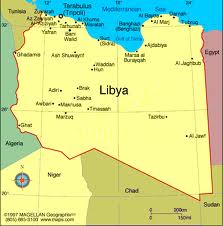
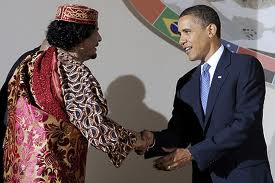
The Libyan intervention in 2011 was falsely labeled and the mission authorized was light years away from the operational goals of the NATO operation. In effect, this amounts to a disguised form of an unlawful use of force, but coupled with a dereliction of duty on the part of the Security Council to ensure that the gap between its mandate and the actual operation was closed. Besides, those who are being protected, or more accurately, being helped in a struggle for control of the country, were a shadowy organization thrown together on the spot, lacking in cohesion, and almost from the outset having recourse to violence in a manner that violated the spirit and character of the inspiring Arab Spring popular movements in neighboring Tunisia and Egypt. At the same time, there was a humanitarian challenge, as the dictatorial leader, Col. Muammar Qaddafi, was delivering bloody rants and the civilian population, under siege in Benghazi, was definitely in a situation of imminent risk. Under these circumstances, a carefully delineated protective move under UN auspices could have been justified, but it would have depended on placing NATO troops in situations of potential danger. The kind of air campaign that has been waged by inflating and exceeding the actual UN mandate depicted in Security Council Resolution 1973 has been discrediting for UN peacekeeping and authority. It has been ineffectual in stopping the violence in Libya, and likely responsible for its spread. At the same time, so far the intervention has resulted in not a single NATO casualty (while causing a rather large number of Libyan civilian deaths). Whether the stalemate in the conflict will produce a negotiated compromise remains uncertain, but the shaping and execution of the intervention is suggestive of the inadequacy of either allowing the decisions and policies relating to humanitarian catastrophe to be made by governments on the basis of their own calculus or through reliance on a UN framework that is susceptible to major geopolitical manipulation.


There is a preferable, although imperfect, alternative that has been around for several years: the establishment of a UN Emergency Peace Force (UNEPF) capable of being activated through the joint authority of the Secretary-General and a super-majority of two-thirds of the membership of the UN Security Council in reaction to either a humanitarian catastrophe arising from political policies or conflict, or a natural disaster that exceeds the response capabilities of the national government. The UNEPF should ideally be funded through some kind of small global tax imposed on the sale of luxury goods, international travel, currency transactions in financial markets, or some combination. If this proves to be impractical, then voluntary contributions by non-permanent members of the UN Security Council would be acceptable. The whole idea would be, to the extent possible, to break the present links between ‘humanitarian interventions’ and geopolitics. The only means to do this would be through the creation of a maximally independent international agency for such undertakings that would engender confidence in its good faith and through its prudent tactics and effective operations. Unlike such delegated interventions as the Gulf War of 1991, the Kosovo War of 1999, and the Libyan War of 2011, UNEF would rely on tactics that were geared toward minimizing risks for a threatened population and would operate under the strict supervision of the mandating authorities while carrying out an interventionary or relief mission. UNEPF capabilities would be constructed from the ground up, with separate recruitment, training, doctrine, and command structure.


            This seems like such a sensible innovation for the benefit of humanity that it may seem puzzling why it has never gained significant political support from UN members, but it should not be. For decades global reformers have been advocating a UN tax (often named a ‘Tobin Tax’ after James Tobin, an Nobel economist who first floated such a proposal) and the kind of UNEPF recommended above (for instance, carefully outlined in a proposal developed by Robert Johansen in collaboration with other scholars, a prominent political scientist who has for years been associated with the Kroc Institute of International Peace Studies at Notre Dame). Such a practical solution to this daunting challenge is not on the table because it would weaken the leverage of geopolitical actors over the resolution of conflict situations. Reverting to the earlier discussion of Walzer, it is precisely because humanitarianism is marginal to the conduct of world politics that makes the UNEPF proposal seem utopian. In relation to Evans, geopolitical forces can accommodate his framework, which is probably well-intended, but provides intervening states with a rationalization for their desired uses of force without significantly interfering with the discretion to intervene and not to intervene. As the Libyan debate and decision confirms, geopolitics remains in control despite recourse to the framing of action by reference to R2P. If we want more principled and effective action in the future, it will require a great deal of pressure from global civil society in collaboration with middle powers, the sort of coalition that led to the surprising establishment of the International Criminal Court in 2002 over the opposition of such international stalwarts as the United States, China, Russia, and India.


Dilemmas of Sovereignty and Intervention

16 Jul


            The Arab Spring (and its troublesome, yet still hopeful, aftermath in Egypt), intervention in Libya, nonintervention in Syria and Bahrain, drone military operations in Pakistan, Yemen, Somalia, the influx of unwanted immigrants and walls of exclusion, and selective applications of international criminal law draw into question the most basic of all ideas of world order: the sovereignty of territorial states, and its limits. Also, at issue, are the closely related norms of international law prohibiting intervention in the internal affairs of states and affirming the fundamental right of self-determination as an inherent right of all peoples. These are basic rules of international order acknowledged in the United Nations Charter, taking the form of prohibiting the Organization from intervening in matters ‘essentially within domestic jurisdiction’ and through affirmations of the right of self-determination.

The latter is only aspirational in the Charter, but becomes obligatory as a result being posited as common Article 1 of the two human rights Covenants and being listed as one of seven principles enumerated in the authoritative Declaration on Principles of International Law Concerning Friendly Relations and Cooperation Among States (UN General Assembly Resolution 2625, 1970).


            At the same time, as Ken Booth provocatively pointed out almost 20 years ago one of the great failings over the centuries of the Westphalian framework of world order (based on treaties of peace in 1648 concluded at the end of the Thirty Years War that are treated as establishing the modern European system of territorial states premised on the juridical ideal of sovereign equality) was associated with sovereign prerogatives to possess unconditional authority in state/society relations. Booth showed that respect for sovereignty had legitimated the inner space of states as a sanctuary for the commission of what he called ‘human wrongs,’ that is, non-accountable and cruel abuses of persons subject to territorial authority. Historically, the West claimed rights of intervention, often in the name of ‘civilization,’ in the non-West, particularly in the decaying Ottoman Empire of the 19th and early 20th centuries. The great wakeup experience, at least rhetorically for the liberal West, was the non-response at the international level to the lethal internal persecutions in Nazi Germany during the 1930s, which were not only within a sovereign state, but within a country with a high claim to be a major embodiment of Western civilization.


The responses after World War II, mainly expressed via international law, consisted of the Nuremberg and Tokyo trials of surviving German and Japanese leaders, the adoption of the Genocide Convention, and the negotiation and approval of the Universal Declaration of Human Rights (UDHR), as well as the establishment of the United Nations itself. These were well-intentioned, although somewhat ambivalent, gestures of global responsibility that generated criticisms and even suspicions at the time: the Nuremberg and Tokyo standards of individual accountability for crimes were only imposed by the coalition of victors in World War II upon the losers, exempting the Allied Powers from any legal responsibility for the terror bombings of German and Japanese cities and the atomic bombing of Hiroshima and Nagasaki; the Genocide Convention seemed deficient due to its failure to  provide mechanisms for enforcement; the UDHR was drafted under the sway of Western liberal individualism as a hegemonic orientation, and was only endorsed in the form of a non-binding ‘declaration,’ a clear signal that no expectation of enforcement existed; as well, the legitimacy of the colonial structures of foreign ruler were not questioned until challenged by a series of populist uprisings throughout the non-West that produced some bloody wars as in Indochina and Algeria..


            In passing, it should be observed that the West never respected the sovereign rights of the peoples of the non-West until it was forced to do so. Whether it was European colonialism that extended its reach throughout Africa and Asia or the assertions of American hegemony over Latin America beneath the banner of the Monroe Doctrine the pattern was one based on relations of hierarchy, not equality. This was accompanied by a refusal to extend the Westphalian writ of mutual respect for sovereign rights beyond the Euro-American regional domain until the imperial order began to crumble after World War I. First, the Good Neighbor policy seemed to reaffirm sovereignty for Latin America, but only within limits set by Washington, as the Cold War era of covert and overt interventions confirm. In the Middle East and Africa various experiments with colonial halfway houses were undertaken within the framework of the League of Nations, and formalized as the Mandates System. Secondly, after World War II a variety of nationalist movements and wars of national liberation broke the back of European colonialism as an acceptable political arrangement, and the idea of the equality of sovereign states was globalized as a matter of juridical doctrine, although not geopolitically.


            During the last six decades the world has moved forward in pursuit of global justice, or has it? On the one side, human rights has matured beyond all expectations, and to some degree exerts a generalized moral and political force subversive of national sovereignty by validating a higher law that exists above and beyond the legal order of the state. This subversive thrust is reinforced by the development and institutionalization of international criminal law, enforcement of accountability claims against such pariah leaders as Milosevic and Saddam Hussein, as well as lesser figures in the entourage of tyrants, the establishment of the International Criminal Court, arrest warrants for the likes of el-Bashir of Sudan and Qaddafi. And, perhaps, most significantly in relation to global justice, the rise of respected transnational NGOs that have created a somewhat less selective pressure for implementation of human rights norms, but one that remains weighted toward political and civil rights that are given priority in the liberal democracies of the North, and one that gives little attention to the economic, social, cultural, and collective rights that possess primary importance to developing societies in the South. In actuality, the UDHR was correct in its integration of all forms of human rights in a single coherent legal instrument, but it became a casualty of the Cold War ideological tensions between capitalism and socialism, with one side championing a liberal individualist understanding of human rights and the other side a collective conception.


            And yet, these various moves toward what might be called ‘humanitarian globalization’ achieved at the expense of older conceptions sovereignty are too often subordinated to the realities of geopolitics. That is, the application of legal standards and the assertion of interventionary claims remain imbalanced: the West against the rest, the North against the South, the strong against the weak. Even the supposedly globally oriented human rights NGOs devote most of their attention to non-West violations when it comes to alleged infractions of international criminal law.  Selective applications of law and morality tarnish the integrity of law and morality that is premised upon fidelity to principles of equality and reciprocity. This makes supposedly challenges to sovereignty suspect, but are they also worthless, or as some argue, worse than worthless?


            There are two contradictory modes of response. The liberal answer is to insist that progress in society almost always occurs incrementally, and doing what is possible politically is better than throwing up one’s hands in frsutration, and doing nothing. So long as targets of intervention and indicted leaders are given fair trials, and are convicted on the basis of the weight of the evidence, such results should be affirmed as demonstrating an expanding global rule of law, and serving the interests of global justice. The fact that the principal states intervene at will and enjoy impunity in relation to international criminal law, remains a feature of world politics, and is even given a prominent constitutional status at the UN by granting a veto power to the five permanent members of the Security Council.


            The critical response argues that the prevalence of double standards contaminates law, and makes it just one more instrument of power. The authority and legitimacy of law depends on its linkage to justice, not power. To enforce prohibitions on the use of aggressive force or the commission of crimes of state only on losers and the weak is implicitly to cede the high moral and legal ground to the richest and most dangerous political actors. It makes available a humanitarian disguise for abusive behavior in a post-colonial global setting, providing pretexts for disregarding the dynamics of self-determination, which is the legal, political, and moral lynchpin of a system of sovereign states detached from the hierarchies of geopolitics.


            In a world beset by contradictions, there are only hard choices. There seem to be three kinds of situation that somewhat transcend this tension between liberal and critical perspectives: a severe natural disaster that cannot be addressed by national capabilities ( Asian tsunami of 2004; Haiti earthquake of 2010) acute or imminent genocide as in Rwanda (1994) where a small international effort would have seemed likely to avert the deaths of hundreds of thousands; a mandate to act issued by the UN Security Council as in Libya. In each instance, there are risks, uncertainties, and unanticipated effects; especially worrisome is the recent pattern of authorizations of force by the Security Council. Both in the Gulf War (1991), to some extent the sanctions currently imposed on Iran, and now with the Libyan intervention, the mandate to use force is stretched beyond the limits specified in the language of authorization. In the Libyan case, Security Council Resolution 1973 the initial justification for intervention was justified by reference to an emergency situation endangering the lives of many Libyan civilians, but converted operationally and massively by NATO into a mandate to achieve regime change in Tripoli by dislodging the Qaddafi leadership. No effort was made to secure a broader mandate from the Security Council and nothing was done to insist that NATO operations be limited by the terms of the original UN authorization.


            What can be done? We have little choice but to cope as best we can with these contradictions, especially when it comes to uses of force in the course of what is labeled as a ‘humanitarian intervention’ or an application of the ‘right to protect’ norm. I would propose two ways to turn the abundance of information on these issues into reliable knowledge, and hopefully thereby, to engender greater wisdom with respect to the specifics of global policy and decision-making. First, acknowledge the full range of realities in international life, including the absence of equal protection of the law, that is, judging claims and deciding on responses with eyes wide open by being sensitive to the context, including its many uncertainties. With these considerations in mind adopt a posture of reluctance to use force except in extreme cases. Secondly, presume strongly against reliance on hard power resolutions of conflict situations both because the costs almost always exceed the estimates of those advocating intervention and because military power during the period of the last sixty years is rarely able to shape political outcomes in ways that are on balance beneficial for the society on whose behalf the intervention is supposedly taking place.


            When it comes to severe human rights abuses somewhat analogous considerations apply. In almost every instance, deference to internal dynamics seems preferable to intervention-from-without, while soft power interventions-from-below-and-without are to be encouraged as expressions of emergent global democracy. Victimization and collective acute vulnerability should not be insulated from assistance by rigid notions of sovereignty, but nor should self-determination be jeopardized by the hypocritical moral pretensions of hegemonic states.  This is inevitably a delicate balance, but the alternative is to opt for extremes of passivity or activism.


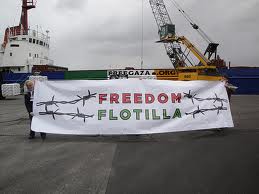
            In effect, to the extent possible, global challenges to sovereignty should take the form of transnational soft power tactics of empathy as identities of persons around the globe become as globalized (and localized) as markets. The recent furor aroused by Freedom Flotilla II is illustrative of an emerging tension between the role of sovereign states in defining the contours of law and morality and that of popular forces mobilized on behalf of those unjustly suffering and neglected by the world of states. Ideally, the UN should act as a mediating arbiter, but the UN remains a membership organization designed to serve the diplomacy of sovereign states and the states system, and is generally hostile to the claims of global civil society however well founded. One attractive proposal to endow the UN with a more robust mediating role is to establish some form of Global Parliament, perhaps building on the experience of the European Parliament that has evolved in authority and political weight over the decades.  A more relevant innovation consistent with the above analysis would be the establishment of a UN Humanitarian Emergency Peace Fund with independent funding, an authorizing procedure that was not subject to a veto, and an operational discipline that ensured that the implementation of a mandate to act forcibly did not exceed its boundaries.  


####
The International Criminal Court Plays Politics? the Qaddafi Arrest Warrants

29 Jun


The International Criminal Court has formally agreed that warrants should be issued for the arrest of Col. Muammar Qaddafi, as well as his son, Seif al-Islam, who has been acting as Prime Minister along with Libya’s intelligence chief, Abdullah Senussi. These three Libyan leaders are charged with crimes against humanity involving the murder, injuring, and imprisoning of Libyan civilians between Feburary 10-18, 2011, the first days of the uprising and prior to NATO’s military involvement. The ICC judge speaking on behalf of a three-judge panel authorized the issuance of the arrest warrants, Sanji Monogeng of Botswana, on the basis of the evidence presented by the prosecutor that ‘reasonable grounds’ existed to support the charges contained in the outstanding indictments against these three individuals. Judge Monogeng clarified the ruling by explaining that issuing an arrest warrant was meant to convey the conclusion that sufficient evidence of criminality existed to proceed with the prosecution, but it is not intended to imply guilt, which must be determined by the outcome of a trial. The ICC assessment is likely to withstand scrutiny so far as the substance of the accusations directed at the Qaddafi leadership are concerned. Qaddafi clearly responded with extreme violence, reinforced by genocidal rhetoric, to the popular challenges directed against the Libyan government, which certainly seems to qualify as crimes against humanity. But I am led to question why such an effort to arrest and indict was pushed so hard at this time.


The timing of the indictment, and now the arrest warrants, arouses strong suspicions, and not just of bad judgment! It is relevant to recall that in the course of NATO’s Kosovo War in 1999 against Serbia, the Serbian president, Slobodan Milosevic, was indicted by another European-based international tribunal–the special ad hoc International Criminal Tribunal for Former Yugoslavia. Are we now to expect that whenever NATO has recourse to war the political leader heading its opposition will be charged with international crimes while the fighting ensues? How convenient! Lawfare in the service of warfare!

Rather than a matter of convenience, the motivation seems more sinister. Criticism is deflected from NATO’s own lawlessness. In both of these instances, NATO had itself has resorting to war unlawfully, engaging in what was designated at Nuremberg as a ‘crime against peace,’ and held by that tribunal to be the greatest of war crimes embracing within itself both crimes against humanity and gross violations of the laws of war (war crimes). In the Kosovo War NATO acted without a mandate from the UN, thereby violating the UN Charter’s core principle prohibiting non-defensive uses of force unless authorized by the Security Council. In Libya there was such an initial authorization to protect civilians by establishing a no fly zone (Security Council Resoultion 1973, 17 May 2011), but the NATO mission as executed almost immediately grossly exceeded the original mandate, and did little to hide its unmandated goal of regime change in Tripoli by way of ending Qaddafi’s role as ruler and thereby achieving victory for opposition forces in a civil war. It is certainly worthy of comment that in both of these wars initiated by NATO the leader of a country attacked was targeted for criminal prosecution before hostilities has ended. Even the Allies in World War II waited until after the end of combat before trying to impose their version of ‘victors justice’ on surviving defeated German and Japanese leaders.

A somewhat similar manipulation of criminal accountability occurred in Iraq a few years ago.  There the American led aggressive war waged against Iraq in 2003 was quickly followed by a carefully planned and orchestrated criminal prosecution, stage managed behind the scenes by the US occupation commanders), followed by the execution of Saddam Hussein (and his close associates).  The Iraqi trial was politically circumscribed so as to exclude any evidence bearing on the close and discrediting strategic relationship maintained between the United States and Iraq during the period of Saddam Hussein’s most serious instances of criminality (genocidal operations against Kurdish villages), as well as by disallowing any inquiry into American criminality associated with the attack on Iraq and subsequent allegations of criminal wrongdoing in response to Iraqi resistance to military occupation.  This American potential criminality was never discussed, much less investigated in a responsible manner.

What converts these separate instances into a pattern is the Eurocentric (or West-centric) selectivity evident in most recent efforts to enforce international criminal law. It should be noted that this selectivity is made more objectionable by the impunity accorded to European, American, and Israeli leaders. Double standards so pervasively evident in this behavior undermine the authority of law, especially in relation to a subject-matter as vital as war and peace. Unless equals are treated equally most of the time, what is called ‘law’ is more accurately treated as ‘geopolitics.’


The geopolitical nature of this approval of arrest warrants just issued by the ICC is unintentionally confirmed when it is acknowledged by NATO officials that it will not be possible to arrest Qaddafi unless in the unlikely event that he is captured by the Rebels. Governmental representatives in Washington admitting this, have declared that the warrants will nevertheless be useful in forthcoming UN debates about Libyan policy, presumably to push aside any objections based on the failure by NATO to limit military operations to the no fly zone initially authorized by the Security Council. It should be remembered that the initial authorization in SC Resolution 1973 was itself weakened by five abstentions, including China and Russia, and further, by South Africa that voted with the majority, while expressing strong objections to the subsequent undertaking.  One wonders whether China and Russia would not have used their veto had they anticipated how far beyond what was insisted on limited humanitarian purposes by the proponents of the use of force would the actual operation become. In effect, to overcome any impression of unlawfulness on NATO’s part it is useful to demonize the adversary, and an opportune way to reach this goal is to put forward premature accusations of severe criminality.

Of course, as has been pointed out more than once, there was an embedded hypocrisy in the central argument put forward by the states seeking a UN green light to intervene in Libya, which was based on the responsibility to protect norm that supposedly confers a duty on the international community to protect civilian populations that are being subjected to severely abusive behavior. Too obvious contradictions were present. Why not Syria in the current regional setting? And even more starkly, why not Gaza back in 2008-09 when it was being mercilessly attacked by Israel? The answers to such questions are ‘blowin’ in the wind.’

There are further more technical reasons in the present setting to challenge the timing of the arrest warrants. They seem legally and politically dubious. Legally dubious because the most serious criminality associated with the behavior of the Qaddafi regime during the conflict occurred after the ICC cutoff date of 18 February (e.g. the siege of Misrata). Why other than ulterior motivations was there this rush to prosecute? Politically dubious because there is now a new obstacle to diplomacy in a situation where the alternative seems likely to be a prolonged civil war. Negotiating space for an accommodation is definitely reduced by this implication of Qaddafi’s criminality that creates incentives for the Tripoli leadership to fight on as long as possible.

Perhaps, cynics would argue that law always reflects power, and of course they are correct to a certain extent. Progress in human affairs arises from a struggle against such pretensions. And the locus and nature of power is changing in the world: the West is losing its capacity to shape history and high technology warfare, upon which the West depends to enforce its will on the non-West, is losing its capacity to produce political victories (e.g. anti-colonial wars, Vietnam, Iraq, Afghanistan). This politicized use of the ICC in the course of the Libyan War offers an opportunity for those dedicated to global justice, especially in the Arab world, to insist that international law should no longer serve as a plaything for those who intervene with hard power in their region from the comfort zone of NATO headquarters.

A Few Notes on WHAT IS LEFT (or Toward a Manifesto for Revolutionary Emancipation)

19 Jun


WHAT IS LEFT in two senses:


            –what remains of the historic left, conceived more universally as emancipatory politics independent of place and cultural nexus; that is, not

just Marxism, and its progeny, but all forms of resistance to oppression, including by indigenous peoples or in response to religious convictions;

            –the definitional challenge associated with defining ‘the left’ under contemporary conditions; the position taken here is that the left is somewhat obsolete if conceived in Eurocentric terms as opposition to the right, and needs to be conceived in relation to visions and projects of emancipation and through the aperture of historic struggles.


Toward a Manifesto for Revolutionary Emancipation:

            –the need for a radical depiction of transformative politics that takes full account of the historical particularity of present world conditions;

            –the importance of repudiating and transcending the anti-utopian ethos of prevailing political perspectives on change and reform;

            –the potentiality of generalizing a politics that seeks a just and sustainable future for all living beings on the planet;

            –the engagement with a conversational approach to political advocacy, and a corresponding rejection of all forms of dogmatic thinking.

 ************************************************************************************ 

The ‘left’ agenda of the early 21st century:


            –support for the Palestinian Solidarity Movement, including its BDS campaign as both a creative form of resistance to oppressive circumstances, not just territorial occupation, but also to the struggle to overcome the enforced refugee and displacement status that has afflicted millions of Palestinians for more than six decades and a vision of justice and reconciliation;

            –struggle against global capitalism, especially in its neoliberal globalizing phase of super-financialization, as fundamentally unjust and unsustainable;

            –support for movement from below to push for adjustments to the challenges of climate change; the emissions of greenhouse gasses must be drastically reduced as an urgent priority; waiting until the harm is sufficiently tangible to produce effective governmental responses will be waiting too long, and involves the neglect of justice to future generations and indifferent to the present sufferings of sub-Saharan  Africa, islands and coastal areas subject to flooding.


 ********************************************************


The leading forces for and against emancipatory politics:


            –FOR: the declining effectiveness of hard power politics either in its governmental or resistance forms; militarism is failing, although the political elites of the world, led by the United States, seem oblivious to this decisive historical trend; confirmations include the revolutionary potential of the Arab Spring, as well as the outcome of the Vietnam War, the Iraq War, and the still persisting Afghanistan War; it is not that military power has become irrelevant, but that it rarely in this historical period determines the political outcome; the great series of struggles in the last 60 years against colonialism ended with victory by the militarily weaker side, or by the side, as in India, that did not contest the imperial presence by violent forms of resistance; in contrast, hard power warfare and rulership were effective in earlier historical eras, and throughout the world;


        –AGAINST: the spreading of materialist consumerism as the new opiate of the people that hides the destructive and alienating dimensions of late modernity, and shields capitalist behavior from transformative critique; economic globalization as exhibited through franchise capitalism is the most widely endorsed regressive ideology operative in the world today, and is characteristic in different formats of the two leading exponents of the capitalist path: the United States and China. The absence of a counter-ideology of wide applicability after the Soviet collapse combined with discrediting a socialist ethos as alternative foundation for economic and political activity and organization has contributed to a widespread mood of resignation (‘there are no alternatives’). Replacing despair with hope is indispensable if new

globally attractive forms of emancipatory politics are to emerge and evolve.

 ******************************************************


Comments on Legitimacy Wars as the encompassing form of struggle:


–an overriding recognition of the historical ascendancy of soft power;

–tactical and strategic commitments to nonviolence, although not unconditionally;

–crucial emphasis on gaining the high moral ground to widen popular appeal,

and use of law as an instrument to mobilize support, especially international law (‘lawfare’ as an approved modality of struggle);

–use of international arenas, whether regional or global, local or national, to wage symbolic struggles on behalf of legitimate claims, with a special stress on the symbolic significance of gaining support in the United Nations;

–understanding that most struggles for legitimate goals are non-territorial in relation to the symbolic and soft power battlefields that give potency to public opinion, to exemplary leadership (e.g Gandhi, Nelson Mandela); to tactics such as boycott, divestment, and sanctions, and to the certification of the moral and legal authority of grievances and claims (e.g. the Goldstone Report);

–patience and perseverance  as cardinal political virtues, along with the realization that legitimacy wars can be lost as well as won, with outcomes contingent on many contextual factors (e.g. self-determination for Tibetans, Chechens; indigenous peoples);

–a vision of the goal that includes reconciliation, accountability, and forgiveness, with the realization that there will be tensions and contradictions present in clearing the path forward, away from conflict, toward sustainable and just peace.


*********************************************


These notes are meant as tentative and conversational expressions of an emergent political point of view, and will be revised in response to commentary by others. Obviously, also, there is no pretension on my part of comprehensiveness, or else many other issues would have been addressed: struggles against various types of patriarchy; the need to renounce nuclear weaponry, and work toward a phased process of nuclear disarmament, as well as other aspects of demilitarization; extending rights of self-determination to indigenous peoples variously situated; and establishing institutional arrangements giving opportunities for popular and direct representation of the peoples of the world (e.g. a UN Parliament of Peoples); building in all social spaces substantive democracy based on the equality of persons, reverence for the natural environment, and celebration of diverse spiritual and religious traditions. A cosmopolitan ethos that affirms love of self and others, tradition and otherness, and the familiar and the exotic.

A Shameless Secretary General versus Freedom Flotilla 2

2 Jun


             It is expected that at the end of June, Freedom Flotilla 2 will set sail for Gaza carrying various forms of humanitarian aid, including medical, educaional, and construction materials. This second flotilla will consist of 15 ships, including the Mavi Marmara sailing from Istanbul, but also vessels departing from several European countries, and carrying as many as 1500 humanitarian activists as passengers. If these plans are carried out, as seems likely, it means that the second flotilla will be about double the size of the first that was so violently and unlawfully intercepted by Israeli commandos in international waters on May 31, 2010, resulting in nine deaths on the Turkish lead ship.


            Since that shocking incident of a year ago the Arab Spring is transforming the regional atmosphere, but it has not ended the blockade of Gaza, or the suffering inflicted on the Gazan population over the four-year period of coerced confinement. Such imprisonment of an occupied people has been punctuated by periodic violence, including the sustained all out Israeli attack for three weeks at the end of 2008 during which even women, children, and the disabled were not allowed to leave the deadly killing fields of Gaza. It is an extraordinary narrative of Israeli cruelty and deafening international silence, a silence broken only by the brave civil society initiatives in recent years that brought both invaluable symbolic relief in the form of empathy and human solidarity, as well as token amounts of substantive assistance in the form of much needed food and medicine. It is true that the new Egypt has opened the Rafah crossing a few days ago (but not fully or unconditionally), allowing several hundred Gazans to leave or return to Gaza on a daily basis. At best, this opening even if sustained provides only partial relief. Rafah is not currently equipped to handle goods, and is available only to people and so the blockade of imports and exports continues in force, and may even be intensified as Israel vents its anger over the Fatah/Hamas unity agreement.


            As the Greek coordinator of Freedom Flotilla 2, Vangelis Pisias, has expressed the motivation of this new effort to break the blockade: “We will not allow Israel to set up open prisons and concentration camps.”  Connecting  this Gazan ordeal to the wider regional struggles,” Pisias added, “Palestine is in our heart and could be the symbol of a new era in the region.” Such sentiments reinforce the renewal of Palestinian militancy as exhibited in the recent Nabka and Naksa demonstrations.


            A highly credible assessment of the Israeli 2010 attack on Freedom Flotilla 1 by a fact finding mission appointed by the UN Human Rights Council concluded that the Israelis had violated international law in several respects: by using excessive force, by wrongfully attacking humanitarian vessels in international waters, and by an unacceptable claim to be enforcing a blockade that was itself unlawful. Such views have been widely endorsed by a variety of respected sources throughout the international community, although the panel appointed by the UN Secretary General to evaluate the same incident has not yet made public its report, and apparently its conclusions will be unacceptably muted by the need to accommodate its Israeli member.


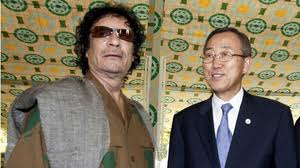
            In light of these surrounding circumstances, including the failure of Israel to live up to its announced promise after the attack in 2010 to lift the blockade, it shocks our moral and legal sensibilities that the UN Secretary General should be using the authority of his office to urge member governments to prevent ships from joining Freedom Flotilla 2. Ban Ki-moon shamelessly does not even balance such a call, purportedly to avoid the recurrence of violence, by at least sending an equivalent message to Israel insisting that the blockade end and demanding that no force be used by Israel in response to humanitarian initiatives of the sort being planned. Instead of protecting those who would act on behalf of unlawful Palestinian victimization, the UN Secretary General disgraces the office, by taking a one-sided stand in support of one of the most flagrant and long lasting instances of injustice that has been allowed to persist in the world. True, his spokesperson tries to soften the impact of such a message by vacuously stating that “the situation in the Gaza Strip must be changed, and Israel must conduct real measures to end the siege.” We must ask why were these thoughts not expressed by the Secretary General himself and directly to Israel? Public relations is part of his job, but it is not a cover for crassly taking the wrong side in the controversy over whether or not Freedom Flotilla 2 is a legitimate humanitarian initiative courageously undertaken by civil society without the slightest credible threat to Israeli security and in the face of Israeli warnings of dire consequences.


            Appropriately, and not unexpectedly, the Turkish Government refuses to bow to such abusive pressures even when backed by the UN at its highest level. Ahmet Davutoglu, the widely respected Turkish Foreign Minister, has said repeatedly in recent weeks when asked about Freedom Flotilla 2, that no democratic government should ever claim the authority to exercise control over the peaceful initiatives of civil society, as represented by NGOs. Davutoglu has been quoted as saying “[N]obody should expect from Turkey…to forget that nine civilians were killed last year..Therefore we are sending a clear message to all those concerned. The same tragedy should not be repeated again.” Underscoring the unresolved essential issue he asked rhetorically, “[D]o we think that one member state is beyond international law?” Noting that Israel has still not offered an apology to Turkey or compensation to the families of those killed, Davutoglu makes clear that until such reasonable preconditions for diplomatic normalization are met, Israel should not be accepted “to be a partner in the region.”


             In the background of this sordid effort to interfere with Freedom Flotilla 2 is the geopolitical muscle of the United States that blindly (and dumbly) backs Israel no matter how outrageous or criminal its behavior. And undoubtedly, this geopolitical pressure helps explain this attempted interference by the UN with a brave and needed humanitarian initiative that deserves to be strongly supported by the UN rather than condemned. Despite the near universal verbal objections of world leaders, including even Ban Ki-moon, to the Israeli blockade, no meaningful action has been yet taken by either governments or the UN. Israel’s undisguised defiance of the requirements of belligerent occupation of Gaza as set forth in the Fourth Geneva Convention of 1949, and the First Additional Protocol appended thereto in 1977, is an unacknowledged scandal of gigantic proportions.


            Liberating Palestine from oppressive occupation and refugee regimes should become a unifying priority for peoples and leaders during this second stage of the Arab Spring. Nothing could do more to manifest the external as well as the internal turn to democracy, constitutional governance, and human rights than displays of solidarity by new and newly reformist governments in Arab countries with this unendurably long Palestinian struggle for justice and sustainable peace. It would also offer the world a contrast with the subservience to Israel recently on display in Washington, highlighted by inviting Benjamin Netanyahu to address an adoring U.S. Congress, a rarity in the country’s treatment of foreign leaders. Its impact was heightened by the pandering speech given by President Obama to AIPAC, the notorious Israeli lobbying organization, at about the same time. It is unprecedented in the history of diplomacy that a leading sovereign state would so jeopardize its own global reputation and sacrifice its values to avoid offending a small allied partner. It is in the American interest, as well as in the interest of the peoples of the Arab world, particularly the Palestinians, to end the conflict.


             The United States Government has long discredited itself as an intermediary in the conflict. Its partisanship, driven mainly by domestic politics, represents a costly sacrifice of its own interests, but is also objectionable as lending support to intolerable Israeli policies of apartheid occupation and colonialist expansionism. It is time to shift the locus of diplomatic responsibility for resolving the conflict from Washington to the far more geopolitically trustworthy auspices of Brazil, Turkey, Nordic countries, even possibly Russia or China, and to encourage a more active regional role. If the encouraging recent Fatah/Hamas unity arrangements hold up and move forward, Palestinian representation will be regarded as increasingly credible, and hopefully will actively incorporate elements of the refugee communities in the bordering countries into their diplomacy. It is time for the world to realize, and the Palestinians to highlight, that the conflict is not just about territory (‘land for peace’), or even to ensure an adequate Palestinian presence in Jerusalem, it is most fundamentally about people. Insisting on respect for the moral, legal, and political rights of Palestinian refugees is the litmus test of a people-centered approach to the conflict, and our concern for the future of these long entrapped refugees should not be allowed to drift off into peripheral space, as has happened in the past.

Obama’s Flawed Approach to the Israel/Palestine Conflict

21 May

            There is no world leader that is more skilled at speechmaking than Barack Obama, especially when it comes to inspiring rhetoric that resonates with deep and widely held human aspirations. And his speech on Middle East policy, symbolically delivered to a Washington audience gathered at the State Department, was no exception, and it contained certain welcome reassurances about American intentions in the region.  I would point to his overall endorsement of the Arab Spring as a demonstration that the shaping of political order ultimately is a prerogative of the people. Further that populist outrage if mobilized is capable of liberating an oppressed people from the yoke of brutal and corrupt dictatorships, and amazingly to do so without recourse to violence. Obama also was honest enough to acknowledge that the national strategic interests of the United States sometimes take precedence over this preferential option for democracy and respect for human rights. Finally, his proposed $1 billion in debt relief for Egypt was a concrete expression of support for the completion of its revolutionary process, although the further $1 billion tied to an opening to outside investment and a free trade framework was far more ambiguous, threatening the enfeebled Egyptian economy with the sort of competitive intrusions that have been so devastating for indigenous agriculture and industry throughout the African continent.


            But let’s face it, when the soaring language is taken away, we should not be surprised that Obama continues to seek approval, as he has throughout his presidency, from the hawks in the State Department, the militarists in the Pentagon, and capitalist true believers on Wall Street. Such are the fixed parameters of his presidency with respect to foreign policy and explain why there is so much disappointment among his former most ardent followers during his uphill campaign for the presidency, who were once energized and excited by the slogan “change, yes we can!”  Succumbing to Washington ‘realism’ (actually a recipe for imperial implosion), the unacknowledged operational slogan of the Obama presidency has become “change, no we won’t!”

Obama’s Pro-Israeli Partisanship

           With these considerations in mind, it is not at all surprising that Obama’s approach to the Israel/Palestine conflict remains one-sided, deeply flawed, and a barrier rather than a gateway to a just and sustainable peace. The underlying pressures that produce the distortion is the one-sided allegiance to Israel (“Our commitment to Israel’s security is unshakeable. And we will stand against attempt to single it out for criticism in international forums.”). This leads to the totally unwarranted assessment that failure to achieve peace in recent years is equally attributable to Israelis and the Palestinians, thereby equating what is certainly not equivalent. Consider Obama’s words of comparison: “Israeli settlement activity continues, Palestinians have walked away from the talks.” How many times is it necessary to point out that Israeli settlement activity is unlawful, and used to be viewed as such even by the United States Government, and that the Palestinian refusal to negotiate while their promised homeland is being despoiled not only by settlement expansion and settler violence, but by the continued construction of an unlawful barrier wall well beyond the 1967 borders. Obama never finds it appropriate to mention Israel’s reliance on excessive and lethal force, most recently in its response to the Nakba demonstrations along its borders, or its blatant disregard of international law, whether by continuing to blockade the entrapped 1.5 million Palestinians locked inside Gaza or by violently attacking the Freedom Flotilla a year ago on international waters while it was carrying much needed humanitarian aid to the Gazans or the ethnic cleansing of Palestinian neighborhoods in East Jerusalem.


            At least in Obama’s Cairo speech of June 2009 there was a strong recognition of Palestinian suffering through dispossession, occupation, and refugee status: “..it is also undeniable that the Palestinian people—Muslims and Christians—have suffered in pursuit of a homeland. For more than sixty years they have endured the pain of dislocation. Many wait in refugee camps in the West  Bank, Gaza, and neighboring lands for a life of peace and security that they have never been able to lead. They endure the daily humiliations—large and small—that come with occupation. So let there be no doubt: the situation for the Palestinian people is intolerable. America will not turn our backs on the legitimate aspiration for dignity, opportunity, and a state of their own.” Of course, this formulation prejudges the most fundamental of Palestinian entitlements by confining any exercise of their right of self-determination as a people to a two-state straight jacket that may no longer be viable or desirable, if it ever was. And throughout the speech in Cairo there was never a sense that the Palestinians have rights under international law that must be taken into account in any legitimate peace process, taking precedence over ‘facts on the ground.’

             But at least in Cairo Obama was clear on the Israeli settlements, or reasonably so: “The United States does not accept the legitimacy of continued Israeli settlements. This construction violates previous agreements and undermines efforts to achieve peace. It is time for the settlements to stop.” Even here Obama is only pleading for a freeze (rather than dismantling what was unlawful). In the new speech settlement activity is blandly referred to as making it difficult to get new negotiations started, but nothing critical is said, despite resumed and intensified settlement construction in the West Bank and East Jerusalem. This unwillingness to confront Israel on such a litmus test of a commitment to a negotiated peace is indicative of Obama’s further retreat from even the pretense of balanced diplomacy as measured against Cairo.

             And there were other demonstrations of pro-Israeli partisanship in the speech. On the somewhat hopeful moves toward Palestinian Authority/Hamas reconciliation as a necessary basis for effective representation of the Palestinian people at the international level, Obama confines his comments to reiterating Israeli complaints about the refusal of Hamas to recognize Israel’s right to exist. What was left unsaid by Obama is that progress toward peace might be made by at last treating Hamas as a political actor, appreciating its efforts to establish ceasefires and suppress rocket attacks from Gaza, acknowledging its repeated acceptance of a Palestinian state within 1967 borders buttressed by a long-term proposal for peaceful co-existence with Israel, and lifting a punitive and unlawful blockade on Gaza that has lasted for almost four years. It is possible that such an approach might fail, but if the terminology of taking risks for peace is to have any meaning it must include an altered orientation toward the participation of Hamas in any future peace process.

 A Disturbing Innovation

             Perhaps, the most serious flaw in the Obama conception of resumed negotiations, is the separation of the territorial issues from the wider agenda of fundamental questions. This unfortunate feature of his approach has been obscured by Israel’s evident anger about the passage in the speech that affirms what was already generally accepted in the international community: “The borders of Israel and Palestine should be based on the 1967 lines with mutually agreed swaps, so that secure and recognized borders are established for both states.” If anything this is a step back from the 1967 canonical and unanimous Security Council Resolution 242 that looked unconditionally toward “withdrawal of Israel armed forces from territory occupied in the recent conflict.”

              Obama’s innovation involves deferring consideration of what he calls “[t]wo wrenching and emotional issues..the future of Jerusalem, and the fate of Palestinian refugees.” Leaving Jerusalem out of the negotiating process is in effect an uncritical acceptance of Israel’s insistence that the city as a whole belongs exclusively to Israel. What is worse, it allows Israel to continue the gradual process of ethnic cleansing in East Jerusalem: settlement expansion, house demolitions, withdrawal of residency permits and deportations, and overall policies designed to discourage a continued Palestinian presence.  It must be understood, I believe, as an unscrupulous American acceptance of Israel’s position on Jerusalem, which is not only a betrayal of legitimate Palestinian expectations of situating their capital in East Jerusalem but also a move that will be received with bitter resentment throughout the Arab world.

            Similarly, the deferral of the refugee issue is quite unforgivable. As of 2010 4.7 million Palestinians are registered with the UN as refugees, either living within refugee camps under conditions of occupation or in precarious circumstances in neighboring countries within camps or as vulnerable members of the host country. This refugee status has persisted for more that 60 years despite the clear assertion of Palestinian refugee rights contained in General Assembly Resolution 194 adopted in 1948 and annually reaffirmed: “The refugees wishing to return to their homes and live at peace with their neighbors should be permitted to do so at the earliest practicable date.” This persistence of the Palestinian refugee status six decades later is one of the most notorious denials of human rights that exist in the world today. To remove it from the peace process, as Obama purports to do, is to consign the refugees to an outer darkness of despair, and as such, is a telling disclosure of the bad faith embedded in the most recent Obama rendering of his approach to peace. Those who are dedicated to achieving a just peace for the two peoples—Israelis and Palestinians—are doomed to fail unless the refugees are treated as a core issue that can neither be postponed nor evaded without a grave betrayal of justice.

 Legitimacy Confusions

               And finally, Obama does his best to dash Palestinian hopes about their one effort to move their struggle a step forward, gaining their acceptance as a state by the United Nations in September of this year. In a perverse formulation of this reasonable, even belated, Palestinian effort to enlist international support for their claims of self-determination and statehood, Obama resorts to deflating and condescending language: “..efforts to delegitimize Israel will end in failure. Symbolic actions to isolate Israel at the United Nations in September won’t create an independent state.” This language is perverse because the Palestinian diplomatic initiative is meant to legitimize itself, not delegitimize Israel. And the BDS campaign and other international civil society initiatives carrying on the ‘legitimacy war’ being waged against Israel by way of the Palestinian solidarity movement are not aimed at delegitimizing Israel, but rather seek to overcome the illegitimacy of such Israeli unlawful policies and practices as the Gaza blockade, ethnic cleansing, wall building in defiance of the World Court, settlement expansion and settler violence, excessive violence in the name of security.

               In many respects, Obama’s speech, aside from the soaring rhetoric, might have been crafted in Tel Aviv rather than the White House. It is a tribute to Israel’s extraordinary influence upon the American media that has been able to shift the focus of assessment to the supposed Israeli anger about affirming Palestinian statehood within 1967 borders. It is hardly a secret that the Netanyahu leadership, aside from its shrewd propaganda, is opposed to the establishment of any Palestinian state, whether symbolic or substantive. This much was confirmed by the release of the Palestinian Papers that established rather conclusively that behind closed doors even when the Palestinian Authority made concession after concession in response to Israeli demands, the Israeli negotiating partners seemed totally unresponsive, and appeared disinterested in negotiating a genuine solution to the conflict.

             Underneath the Israeli demand for recognition of it character as a Jewish state is the hidden reality of a Palestinian minority of more than 1.5 million living as second class citizens within Israel. The Obama conception of “a Jewish state and the homeland for the Jewish people, and the state of Palestine as the homeland for the Palestinian people; each state enjoying self-determination, mutual recognition, and peace” seems completely oblivious to the rights of minority peoples and religions. Such ethnic and religious states seem incompatible with the promise of human dignity for all persons living within a political community. Homelands for a people are fine provided they do not encroach on pre-existing rights of others and do not claim exclusivity at the level of society or state. The Jewish claim in Palestine has the force of history behind it, but so Christians and others, and the Balfour certification should not mean much in a post-colonial era. It needs also to be acknowledged that the realization of a Jewish homeland in historic Palestine has long been abusive toward the resident population, and now to consign the Palestinians to a homeland behind the 1967 borders sends a regressive message. It offers Israel a covert way to invalidate the claims of refugees expelled in 1948 from Palestine, as well as overlooks the rights and wellbeing of the Palestinian minority living within Israel at present.


American Irrelevance and Palestinian Populism

               In a profound sense, whatever Obama says at this point is just more words, beside the point. He has neither the will nor the capacity to exert any material leverage on Israel that might make it more amenable to respecting Palestinian rights under international law or to strike a genuine compromise based on mutuality of claims. Palestinians should not look to sovereign states, or even the United Nations, and certainly not the United States, in their long and tormented journey to realize a just and sustainable destiny for themselves. Their future will depend on the outcome of their struggle, abetted and supported by people of good will around the world, and increasingly assuming the character of a nonviolent legitimacy war that mobilizes moral and political pressures that assert Palestinian rights from below.  In this regard, it remains politically significant to make use of the UN and friendly governments to gain visibility and legitimacy for their claims of right. It is Palestinian populism not great power diplomacy that offers the best current hope of achieving a sustainable and just peace on behalf of the Palestinian people. Obama’s State Department speech should be understood as merely the latest in a long series of disguised confessions of geopolitical impotence, but of one thing we can be sure, it will not be the last.       

What Future for the Goldstone Report? Beyond the Name

20 Apr


            Ever since it first struck the raw nerve of Israeli political consciousness I thought it misleading to associate the Goldstone Report so exclusively with its chair, Judge Richard Goldstone. After all, despite his deserved prominence as an international jurist, he was the least qualified substantively of the four members of the mission. Undoubtedly, part of the intensely hostile Israeli reaction of their highest political leaders had to do with the sense that Goldstone as a devoted Zionist had been guilty of betrayal, even of ‘a blood libel’ against the Jewish people, because he seemed to be elevating his fidelity to the ‘law’ above that of tribal loyalties, and according to Tel Aviv he should never have been mixed up with such a suspect entity as the UN Human Rights Council in the first place.  


What should be observed, and stands out over time, is the degree of importance that even the extremist Israeli leadership attaches to the avoidance of further stains on their reputation as a law abiding political actor. This seems true for the Israeli leadership even when the assessing organization is the UN Human Rights Council that Israel, as well as the U.S. Government, never misses the chance to denounce and defame. Implicit in this Israeli search for vindication is their implicit acknowledgement that the UN is after all a major site of struggle in the ongoing legitimacy war being fought against Palestinian claims of self-determination. This acknowledgement of importance has been expressed more recently by Netanyahu’s inappropriate insistence that in view of the Goldstone retreat the UN retract the report in its totality.


This assessment was embarrassingly confirmed by the reaction of the U.S. Senate to Goldstone’s Washington Post op/ed of April 1st when two weeks lateron it unanimously passed a resolution calling on the UN “to reflect the author’s repudiation of the Goldstone report’s central findings, rescind the report and reconsider further Council actions with respect to its findings.” It also asked the UN Secretary General, Ban Ki Moon, “to do all in his power to redress the damage to Israel’s repuation.” This ill-informed and inflammatory wording is quite extraordinary, starting with the reference to Goldstone as ‘the author’ of the report, thereby completely overlooking the reality that it was a joint effort, that his input was probably the smallest, and the other authors have reaffirmed their support for the entire report subsequent to the Goldstone retreat. What is mostly revealed by this Senate initiative is the blatant partisanship that is now unquestioned in official Washington. This unsubtle disregard for international law and the authority of the UN should at the very least encourage the Palestine Authority to seek other auspices for any future negotiations with Israel than what is provided by the U.S. Government.


            It is probably true that if Goldstone had not been so vilified for his association with the report it would have likely experienced the same fate as  thousands of other well documented UN reports on controversial issues. By lending his name to the fact-finding mission and its outcome Goldstone became an unwilling lightning rod, the target of vicious attacks but also heralded at the time by fair-minded persons around the world for his fidelity to the law even in the face of such hostile fire. In this regard Goldstone became a sacrificial scarecrow that failed in his appointed role of keeping the birds of prey at a safe distance. In effect, how could Israel attack one of their own if the assessment of their behavior produced findings of severe violations of international humanitarian law? How could such findings be avoided given the widely known characteristics of Operation Cast Lead? There is a double irony present: Goldstone was partly selected to head this sensitive undertaking because as a known supporter of Israel he would make it harder for Israel to complain about UN bias so as to deflect attention away from the message; but precisely because of the difficulty posed for Israel’s propaganda machine by Goldstone’s credibility the level of attack on him reached hysterical heights and evidently exerted such intense pressure that he was eventually led to make an awkward and unprecedented partial repudiation of the report that pleases neither side.


            Two other aspects of the situation are often neglected or misstated. First of all, several other respected international studies had already confirmed most of the conclusions reached by the time the Goldstone  Report was released in September 2009. Other prior noteworthy reports on the international law issues including Human Rights Watch, Amnesty International, B’Tselem, Al Haq, and especially the comprehensive report of an earlier detailed and authoritative fact-finding team composed of internationally respected international law experts under the leadership of John Dugard, a leading South African jurist and former UN Special Rapporteur for Occupied Palestine carried out on behalf of the Arab League. Against such a background, in a substantive sense the Goldstone Report did not say anything that was not already well established by a highly credible accountability community of NGOs, journalists, and an array of UN humanitarian workers and civilians who were on the scene during the attacks. Such an overwhelming informed consensus is what makes such a mockery of this effort by the U.S. State Department and the Senate to seize on the Goldstone retreat as a new occasion to repudiate the report as a whole, and throw once more a blanket of impunity over Israeli defiance of international law.


            The second element that should be kept in mind, but is rarely ever acknowledged even by those who stand 100% behind the report is that it was not, as the media mostly claimed, unduly critical of Israel. On the contrary, in my view, the report was one-sided, but to the benefit of Israel. Let me mention several evidences of leaning toward Israel: the report proceeds on the basis of Israel’s right of self-defense without bothering to decide whether in a situation of continuing occupation a claim of self-defense is ever available under international humanitarian law, although Israel was entitled to rely on force to the extent necessary to uphold specific security interests arising from the rocket attacks. Furthermore, the report did not examine whether the factual conditions prior to the attacks supported any security claim considering the success of the truce to cut rocket fire to almost zero in the months preceding the attacks, a truce that had held until Israel provocatively broke it on 4 November 2008 by conducting a lethal raid within Gaza. Beyond this the claimed security justification seemed artificially fashioned to serve as a rationalization for the Israeli aggressive and unlawful all out military assault against Gaza that was mostly motivated by a series of Israeli claims that were quite independent of security in Gaza. The real goals were as follows: to destroy Hamas; to  induce the return of the captured Israeli soldier Gilad Shalit, to punish Gazans  for voting in favor of Hamas back in 2006. In addition, it was clear that the IDF had been planning Operation Cast Lead for six months prior to launching the attack on 27 December 2008, and for a variety of reasons other than securing southern Israel against rockets: striking hard at Gaza before Obama took office, influencing in Kadima’s favor the Israeli domestic elections that were about to take place, restoring confidence in the IDF after its failures in the Lebanon War of 2006, and sending a message to Iran that Israel would not hesitate to use overwhelming force whenever its interests dictated and without restraint.  


            The Goldstone Report did appropriately emphasize the severe Israeli departures from the law of war by attacking with disproportionate and indiscriminate force against a crowded, mainly urbanized society. But it failed to emphasize a distinctive feature of the attacks—the denial to the civilian population of Gaza of the option to leave the war zone and become refugees, at least temporarily. To keep civilians, especially children, the aged, and the disabled, so confined leaves permanent psychic wounds as has been reported by many post-attack studies and residents of Gaza, but is not disclosed by the casualty figures that count only the dead and the wounded. Part of the public horror of Operation Cast Lead resulted from the 100:1 ratio of war dead, which is a vivid confirmation of the defenseless plight of the Gazan population and the helplessness of Hamas protectors when confronted by the Israeli war machine. Despite this indicator of one-sidedness, the casualty comparison dramatically understated the real losses to the Palestinians. If the psychologically damaged are added to the Palestinian total and the friendly fire victims are subtracted from the Israeli side, reducing their total deaths from 13 to 6 or 7 the ratio of losses is gigantically uneven. In view of this one-sidedness, together with Israel’s initiation of the attacks and its role as occupying power, the report gave excessive emphasis to Hamas violations of international humanitarian law, which should have been noted, but not treated, as was the case, as virtually symmetrical with those of Israel. To treat as balanced that which is so manifestly unbalanced is to falsify the relevant reality.


            As has been pointed out in the media, including by Goldstone, his retraction was limited to the admittedly important issue of whether Israel intentionally targeted civilians as a matter of policy. Even this limited retraction is unconvincing because it rests so heavily on Israel’s self-investigations, which the post-Goldstone UN fact-finding mission jointly headed by an American judge, Mary McGowan Davis and the Swedish judge, Lennart Aspergen, found in their recent report failed to meet international standards. As mentioned previously, the retraction by Goldstone was also seriously undermined by the joint statement of the three other members of the Goldstone mission who publically reaffirmed the report in its totality, which never made the sweeping accusation of Israel that Goldstone retracted!


            Only half satirically, I would think that the Goldstone Report might be time to rechristen the Goldstone Report as the Chinkin Report or blandly let it be henceforth be known as the ‘Report on Israeli and Hamas War Crimes and Crimes Against Humanity during Operation Cast Lead.’ Whatever the name, the main allegations have been confirmed over and over again, and it is now up to the governments making up the UN General Assembly and Security Council to show the world whether international criminal accountability and the International Criminal Court is exclusively reserved for sub-Saharan African wrongdoing!


            Many have asked whether the Goldstone retraction will doom the future of the report. In my view rather than performing a funeral rite Goldstone miscalculated, and has given the report a second life. It may still languish in the UN System, thanks to the geopolitical leverage being exerted by the United States to ensure that Israeli impunity is safeguarded once more, but this new controversy surrounding the report has provided civil society with renewed energy to push harder on the legitimacy agenda that has been animating the growing Palestinian global solidarity movement. Never before has the Goldstone Report received such sympathetic attention even from American mainstream sources. Astonishingly, even the NY Times columnist, Roger Cohen, chided Goldstone for trying belatedly to distance himself from the report, going so far as to suggest that his behavior has contributed a new verb ‘to Goldstone’ to the language of politics. “Its meaning: to make a finding, and then partially retract it for uncertain motive.” Cohen’s formal definition—“to ‘Goldstone’: (Colloq.) To sow confusion, hide a secret, create havoc.”


            History has funny ways of reversing expectations. Just as most of the world was ready to forget the allegations against Israel from the ghastly 2008-09 attacks on Gaza and move on, Richard Goldstone inadvertently wakes us all up to a remembrance of those morbid events, and in the process, does irreparable damage to his own reputation while trying to redeem himself in certain circles.


It is up to persons of conscience to seize this opportunity, and press hard for a more even handed approach to the application of the rule of law in world politics. There is much righteous talk these days at the UN and elsewhere about the ‘responsibility to protect,’ contending that the Qaddafi threats directed at Libyans civilians justified a No Fly Zone and a full fledged military intervention from the air undertaken with UN blessings and NATO bombs and missiles, but not even a whisper of support for providing the still beleaguered people of Gaza with a No Fly Zone despite frequent violent incursions by Israel and a debilitating unlawful blockade that has lasted almost four years, a severe form of collective punishment that directly violates Article 33 of the Fourth Geneva Convention. This blockade continues to block the entry of building materials needed in Gaza to recover from the devastation caused more than two years ago.


IV..20…2011


Obama’s Libyan Folly: To be or not to be..

5 Apr

The outcome in Libya remains uncertain, but what seems clear beyond reasonable doubt is that military intervention has not saved the day for either the shadowy opposition known as ‘the rebels,’ and certainly not for the people of the country. It has seemingly plunged Libya into a protracted violent conflict with the domestic balance of forces tipping decisively in favor of the Qaddafi regime despite a major military onslaught managed by the American-led coalition, which in recent days has been supposedly outsourced to NATO. But since when is NATO not an American dominated alliance? The best that can be hoped for at this stage is a face-saving ceasefire that commits the Libyan leadership to a vague power-sharing scheme, but leaves the governing process more or less as it is, possibly replacing Qaddafi with his son who may offer the West the cosmetic trappings of liberal modernity, which may exhibit a genuine interest in reform.

President Barack Obama has chosen Libya as the place to draw a line in the sand, although it is a rather wavering and fuzzy line. It was finally drawn in response to what was being called two weeks ago an imminent atrocity about to be inflicted upon the people of Benghazi, although the evidence of this prospect of dire bloodletting was never present much beyond the bombast of the dictator. Obama stopped what the more ardent interventionist in his camp were derisively calling his ‘dithering.’ Heeding these criticisms Obama on March 28 came out clearly in support of military action, although carefully circumscribed in scope and nature by reference to its supposedly narrow humanitarian undertaking of protecting Libyan civilian.  The futility of preventing a Qaddafi victory on the ground by establishing a No Fly Zone, even as inappropriately expanded to become a No Drive Zone, should have been obvious to anyone conversant with the course of numerous political struggles of recent times being waged for the political control of a sovereign state. What the world actually witnessed was mainly something far different than an effort to protect Libyan civilians. It was rather a an unauthorized attempt to turn the tide of the conflict in favor of the insurrectionary campaign by destroying as many of the military assets possessed by Libya’s armed forces as possible, clearing the path for a rebel advance.

The campaign and character of the opposition has never been clearly established. It is still most accurately described as a motley gathering of opposition forces mysteriously referred to as ‘the rebels.’ In contrast to the seeming failure and ineptness of its military challenge, the public relations campaign of the rebels worked brilliantly. Most of all it mobilized the humanitarian hawks inhabiting the Obama presidential bird nest, most prominently Samantha Power, Hilary Clinton, and Susan Rice, as well as the recently departed former State Department Head of Policy Planning, Anne-Marie Slaughter. Samantha Power particularly has long called upon the United States Government to use its might wherever on the globe severe human rights abuses should occur (unless in a large country beyond interventionary ambitions), apparently analogizing every humanitarian crisis to the totally different circumstances of Rwanda (1994) where a small effort to mitigate major genocide was inappropriately blocked by the Clinton White House. And in the media the celebrants of this intervention have been led by the NY Times pious stalwarts, Nicholas Kristof and Thomas Friedman.  At least Friedman, the patron saint of ‘wars of choice’ was sensible enough on this occasion to acknowledge that Obama would need major help from Lady Luck if his Libyan policy would have any chance of a happy ending, which is welcome contrast with his cheerleading of the Iraq intervention. If lives were not at stake, it might be amusing to note the new cosmic humility of this most arrogant of journalists, who in the past was forever fond of addressing world leaders by their first names in his columns while dishing out his unsolicited guidance, now being reduced to treating the Libyan intervention as the equivalent to a night out in Las Vegas!

The PR full court press by the rebels, aided by that high flying French publicity seeking French enthusiast for intervention Bernard-Henri Lévy, also misleadingly convinced world public opinion and several Western political leaders that the Qaddafi regime was opposed and hated by the entire population of Libya making him extremely vulnerable to intervention. This encouraged the belief that the only alternative to military intervention was for the Western world to sit back and bear witness to genocide against the Libyan people on a massive scale. This entire portrayal of the conflict was at best premature, and likely misleadingly intended to make it appear that the only choices available to the UN and the global community was to intervene militarily or sit back and take the consequences. Among other options, diplomacy and the search for a ceasefire was never seriously embarked upon.

Even without the spurious wisdom of hindsight, the international undertaking could be criticized from another angle as having been designed to fail: a questionable intervention in what appeared increasingly to be an armed insurrection against the established government, yet falling far short of what would be needed to secure the only outcome proclaimed as just and necessary—the fall of the Qaddafi government. How can such a struggle, involving one more paternalistic challenge to the dynamics of self-determination, be won by relying on the bombs and missiles of colonial powers, undertaken without even the willingness to follow the attack with a willingness to engage in peacekeeping on the ground? Had this willingness been present it would have at least connected the dots between the interventionary means adopted and the political mission being proclaimed. Even with this more credible posture the odds of success would still remain small. If we consider the record of the past sixty years very few interventions by colonial or hegemonic actors were successful despite their overwhelming military superiority. The only ‘success’ stories of interventionary politics involve very minor countries such as Grenada and Panama where organized resistance was absent, while the failures were in the big and prolonged struggles that took place in Indochina, Algeria, Indonesia, elsewhere.

In Libya the prospects were further worsened by the incoherence, inexperience, and lack of discipline exhibited by rebel forces. This effort of a weak and unorganized opposition to induce foreign forces to secure for themselves an otherwise unattainable victory is reminiscent of the bill of goods that wily Iraqi exiles sold to neoconservative operatives such as Richard Perle and Paul Wolfowitz during the lead up to the Iraq War (2003). Remember those promises of flowers greeting the American troops arriving in Baghdad or regime change being ‘a cakewalk’ that would be achieved without notable American casualties or costs. As in Libya the case for intervention rested on the false assumption that the foreign occupiers would be welcomed as liberators and that the Saddam Hussein regime lacked any popular base of support. Obama sang this interventionists’ lullaby when he lauded the villager

who thanked an American pilot whose plane crashed accidentally over some rebel held territory.

Such a negative assessment of the Libyan intervention seems clear enough. Such an assessment was offered at the outset of the crisis by the most qualified high official in the Obama inner circle, Robert Gates, the Secretary of Defense. Why did Obama not heed this sensible advice? Unfortunately, every Democratic president, and none more than Obama, struggle to maintain their image as willing to use force in the pursuit of national interests whenever the occasion arises. We must pause to give credit as Obama has pursued a generally militarist foreign policy while still managing to collect a Nobel Peace Prize, something that W’s handlers could never have achieved, and likely didn’t seek. And here in Libya, the risks of inaction must have seemed too great to bear. Instead Obama attempted to have it both ways: lead the diplomatic effort to obtain a mandate from the UN Security Council and then provide most of the military muscle for the initial phase of the operation, and then hastily withdraw to the background while NATO supposedly takes over. This middle path is littered with contradictions: to convince the Security Council, and avoid a Russian or Chinese veto, it was necessary to portray the mission in the most narrow humanitarian terms as being only for the protection of civilians, while to protect the rebels (who are not ‘civilians’ as legally understood) required a much more ambitious scale of attack than is implied by establishing a No Fly Zone; beyond this, if the unconditional goal was the elimination of the Qaddafi regime, then the intervention would have to go far beyond the boundary set by the Security Council decision. It would have to tip the balance in the conflict. As has become clear, the approved military objectives have been dramatically exceeded in the flawed effort to protect the rebels and help them win, but seemingly to no avail.

Of course, the abstainers also have blood on their hands, and share some of the responsibility for what has gone wrong. These abstaining members of the Security Council went along with a mandate to use force that seemed inconsistent with the Charter assurances of refraining from UN intervention in matters essentially within domestic jurisdiction, as this struggle surely was and is. They also allowed the backers of the Securitry Council to twist enough arms to get their mission creep hopes raised by inserting the permissive clause ‘by all necessary means.’ China, Russia, India, Brazil, and South Africa should be ashamed of their posture, criticizing before the vote, abstaining so as to assure that authorization would be provided, and then resuming criticism afterwards to undertakings that should have been anticipated and precluded by much more constricted language in 1973. The vote was 10 in favor, none opposed, and five abstaining.

Such disregard of the limits of the UN Security Council authorization, awkwardly reinforced by the failure of the Security Council to play any subsequent supervisory role to ensure that its approval of force did not go beyond what had been agreed, has once again weakened the UN as a body operating within the constitutional framework of the UN Charter. It makes the UN in the peace and security area appear to be more an agent of geopolitical and neoimperial forces in the West than an objective body seeking to implement the rule of law in relation to the strong and weak alike. We all should remember that when the UN was established in the aftermath of World War II it was assigned the primary responsibility of minimizing the role of war in human affairs.  The inspirational opening words of the Preamble to the UN Charter should be recalled and solemnly reaffirmed: “We the peoples of the United Nations determined to save succeeding generations from the scourge of war.” To allow these words to be selectively overridden by the recently endorsed norm of ‘responsibility to protect’ or R2P is to provide a selective tool that shamelessly exhibits double standards. Where were those humanitarian and paternalistic voices when the civilian population of Gaza was subjected to a murderous attack from land, air, and sea for three weeks by the Israeli Defense Forces (Dec. 27, 2008-January 19, 2009)

Throughout this period of revolutionary ferment in the Arab world, Obama’s paternalism has been pronounced. While intermittingly celebrating these popular risings, Obama has unblushingly felt entitled to pronounce on which leaders should stay and which should go as if he is indeed the first designated global chief executive. And these pronouncements lack even the pretense of coherence and consistency unless measured from an exclusively geopolitical standpoint. The White House was fine with Mubarak until the popular movement made his continued presence untenable, and then he was instructed to leave. In Yemen the leader is told to step down after he failed to quiet the protests, while in Bahrain the Al Khalifa royal family is supported by Washington although governed as an absolute monarchy, which has not only recently relied on extremely violent means to quell unarmed demonstrators, but has even inviting its stronger neighbor, Saudi Arabia, to send military forces across the border to help restore order. Restoring order in Bahrain  is a matter of making further repressive moves to thwart robust popular calls for a new political order based on democracy and human rights.

Obama’s maneuvers in and out of the limelight during the unfolding of events in the Arab world reveals the two sides of the current American dilemma: it is not yet ready to shed the mantle of imperial overseer in the post-colonial regions of the world, but it is faced with the contradictory pressures of imperial decline and overstretch.  This fledgling patriarch can lecture the world, and even manage a military thrust or two, but nothing is sustained, and little achieved. Obama seems to be auditioning to play Hamlet in this unfolding global tragedy.

IV..5…2011

Qaddafi, Moral Interventionism, Libya, and the Arab Revolutionary Moment

20 Mar

Qaddafi, Moral Interventionism, Libya, and the Arab Revolutionary Moment

Long ago Qaddafi forfeited the domestic legitimacy of his rule, creating the moral and political conditions for an appropriate revolutionary challenge. Recently he has confirmed this assessment by referring to the disaffected portion of his own citizenry as ‘rats and dogs’ or ‘cockroaches,’ employing the bloodthirsty and vengeful language of a demented tyrant. Such a tragically criminal imposition of political abuse on the Libyan experience is a painful reality that exists beyond any reasonable doubt, but does it validate a UN authorized military intervention carried out by a revived partnership of those old colonial partners, France and Britain, and their post-colonial American imperial overseer?

From a personal perspective, my hopes are with the Libyan rebels, despite their reliance on violence and the opaqueness  of their political identity.  As many credible exile Libyan voices attest, it would seem highly likely that a rebel victory would benefit the people of Libya and would be a step in the right direction for the region, especially the Arab world, but does this entail supporting Western-led military intervention even if it is backed by the United Nations? I believe not.

Let us begin with some unknowns and uncertainties. There is no coherent political identity that can be confidently ascribed to the various anti-Qaddafi

forces, loosely referred to as ‘rebels.’ Just who are they, whom do they represent, and what are their political aspirations? It is worth observing that unlike the other regional events of 2011 the Libyan rising did not last long as a popular movement of a spontaneous character, or unfold as a specific reaction to some horrific incident as in Tunisia. It seemed, although there is some ambiguity in the media reports, that the Libyan oppositional movement was armed and reliant on military force almost from the start, and that its political character seems more in the nature of a traditional insurrection against the established order than a popular revolution in the manner of Tahrir Square inspired by democratic values. This violent political reaction to Qaddafi’s regime seems fully justified as an expression of Libyan self-determination, and as suggested deserves encouragement from world public opinion, including support from such soft power instruments as boycott, divestment, and maybe sanctions. By and large, the international community did not resort to interventionary threats and actions in Libya until the domestic tide turned in favor of Tripoli, which means that the intervention was called upon to overcome the apparent growing likelihood that Qaddafi would reestablish order in his favor, and therefore this international intrusion on the conflict represents a coercive effort to restructure a country’s governing process from without.

The main pretext given for the intervention was the vulnerability of Libyan civilians to the wrath of the Qaddafi regime. But there was little evidence that such wrath extends beyond the regime’s expected defense of the established order, although admittedly being here undertaken in a brutal manner, which itself is not unusual in such situation where a government and its leadership is fighting for their survival. How is this Libyan response different in character than the tactics relied upon by the regimes in Yemen and Bahrain, and in the face of far less of a threat to the status quo, and even that taking the form of political resistance, not military action. In Libya the opposition forces relied on heavy weapons, while elsewhere in the region the people were in the streets in massive numbers, and mostly with no weapons, although in a few instances, with very primitive ones (stones, simple guns) that mainly were used in retaliation for regime violence.

It may have been the case that the immediate Libyan governmental response was predictably brutal and militarist, and that the rebel opposition felt that it had no choice. But it should have been clear from the experiences in Iraq and Afghanistan that military intervention against a hated and brutal regime is not the end of the story, and before the ending is reached violence cascades to heights far beyond what would have likely resulted had there been no intervention. In the process heavy casualties are inflicted and massive displacements occur causing immense suffering for the entrapped and innocent population. In effect, overall historical trends vindicate trust in the dynamics of self-determination despite the fact that short-term disillusioning disasters may and do occur from time to time. These trends similarly underscore the inherently problematic character of intervention, even given the purest of motivations, which rarely, if ever, exists in world politics on the side of intervening parties.

But it can be asked, what about Rwanda, Bosnia (especially, the massacre at Srebrenica)? Are not these instances where humanitarian intervention should have been undertaken and was not? And didn’t the NATO War in Kosovo demonstrate that humanitarian intervention does sometimes spare a vulnerable population from the ordeal of genocidal ethnic cleansing? With respect to Rwanda and Bosnia, the threat of genocidal behavior was clearly established, and could likely have been prevented by a relatively small-scale intervention, and should have been undertaken despite the uncertainties. The facts surrounding the alleged genocidal threat in Kosovo remain contested, but there was a plausible basis for taking it seriously given what had happened a few years earlier in Bosnia. But just as the Libyan rebels raise some suspicion by seeking Euro-American military intervention, so did the KLA in Kosovo engage in terrorist provocations that led to violent Serb responses, allegedly setting the stage in 1999 for NATO’s ‘coalition of the willing.’ NATO went ahead in Kosovo without the benefit of a Security Council mandate, as here, for military action ‘by all necessary means.’ But with respect to Libya there is no firm evidence of a genocidal intention on Qaddafi’s, no humanitarian catastrophe in the making, and not even clear indications of the extent of civilian casualties resulting from the fighting. We should be asking why did Russia signal its intention to veto such authorization in relation to Kosovo, but not with respect to Libya. Perhaps, the Russian sense of identification with Serb interests goes a long way to explain its opportunistic pattern of standing in the way on the earlier occasion when interventionary forces gathered a head of steam in the late 1990s, while standing aside in 2011 in deference to the Euro-American juggernaut.

One of the mysteries surrounding UN support for the Libyan intervention is why China and Russia expressed their opposition by abstaining rather than using their veto, why South Africa voted with the majority, and why Germany, India, and Brazil were content to abstain, yet seeming to express reservations sufficient to produce ‘no’ votes, which would have deprived the interventionist side of the nine affirmative votes that they needed to obtain authorization. Often the veto is used promiscuously, as recently by the United States, to shield Israel from condemnation for their settlement policy, but here the veto was not used when it could have served positive purposes, preventing a non-defensive and destructive military action that seems imprudent and almost certain in the future to be regarded as an unfortunate precedent.

The internal American debate on the use of force was more complex than usual, and cut across party lines. Three positions are worth distinguishing: realists, moral interventionists, moral and legal anti-interventionists. The realists, who usually carry the day when controversial military issues arise in foreign policy debates, on this occasion warned against the intervention, saying it was too uncertain in its effects and costs, that the U.S. was already overstretched in its overseas commitments, and that there were few American strategic interests involved. The moral interventionists, who were in control during the Bush II years, triumphantly reemerged in the company of hawkish Democrats such as Hilary Clinton and Joseph Biden, prevailing in the shaping of policy partly thanks to the push from London and Paris, the acquiescence of the Arab neighbors, and the loss of will on the part of Moscow and Beijing. It is hard to find a war that Republicans will not endorse, especially if the enemy can be personalized as anti-American and demonized as Qaddafi has been, and it always helps to have some oil in the ground! The anti-interventionists, who are generally reluctant about reliance on force in foreign policy except for self-defense, and additionally have doubts about the effectiveness of hard power tactics, especially under Western auspices. These opponents of intervention against Qaddafi were outmaneuvered, especially at the United Nations and in the sensationalist media that confused the Qaddafi horror show for no brainer/slam dunk reasoning on the question of intervention, treating it almost exclusively as a question of ‘how,’ rather than ‘whether,’ and once again failing to fulfill their role in a democratic society by giving no attention to the full spectrum of viewpoints, including the anti-intervention position.

Finally, there arises the question of the UN authorization itself by way of Security Council Resolution 1373. The way international law is generally understood, there is no doubt that the Security Council vote, however questionable on moral and political grounds and in relation to the Charter text and values, resolves the legal issue within the UN system. An earlier World Court decision, ironically involving Libya, concluded that even when the UN Security Council contravenes relevant norms of international law, its decisions are binding and authoritative. Here, the Security Council has reached a decision supportive of military intervention that is legal, but in my judgment not legitimate, being neither politically prudent nor morally acceptable. The states that abstained acted irresponsibly, or put differently, did not uphold either the spirit or letter of the Charter. The Charter in Article 2(7) establishes a prohibition on UN authority to intervene in matters ‘essentially within the domestic jurisdiction’ of member states unless there is a genuine issue of international peace and security present.  Here there was not the basis for an exception to non-intervention as even the claim was supposedly motivated solely to protect the civilian population of eastern Libya, and hence was squarely within the domestic jurisdiction of Libya.

Besides, the claim to intervene as stated was patently misleading and disingenuous as the obvious goals, as became manifest from the scale and nature of military action as soon as the operation commenced. The actual goals of the intervention were minimally to protect the armed rebels from being defeated, and possibly destroyed, and maximally, to achieve a regime change resulting in a new governing leadership for Libya that was friendly to the West, including buying fully into its liberal economic geopolitical policy compass. The missile attacks in the vicinity of Tripoli, especially the early missile hits on the Qaddafi compound are unmistakable signatures of this wider intention. As the Gulf War in 1991 demonstrated, once the Security Council authorizes military action of an unspecified character, it gives up any further responsibility for or effort to maintain operational control and accountability.

Using a slightly altered language, the UN Charter embedded a social contract with its membership that privileged the politics of self-determination and was heavily weighted against the politics of intervention. Neither position is absolute, but what seems to have happened with respect to Libya is that intervention was privileged and self-determination cast aside. It is an instance of normatively dubious practice trumping the legal/moral ethos of containing geopolitical discretion in relation to obligatory rules governing the use of force and the duty of non-intervention.  We do not know yet what will happen in Libya, but we already know enough to oppose such a precedent that exhibits so many unfortunate characteristics.  It is time to restore the global social contract between territorial sovereign states and the organized international community, which not only corresponds with the outlawry of aggressive war but also reflects the movement of history in support of the soft power struggles of the non-Western peoples of the world.

If ordinary citizens were allowed to have foreign policy doctrines mine would be this: without high levels of confidence in a proposed course of military action, the UN should never agree to allow states to engage in violent action that kills people. And if this cautionary principle is ignored, governments should expect that their behavior would be widely viewed in the public as a species of international criminality, and the UN is likely to be regarded as more of a creature of politics than law and morality. For these reasons it would have been my preference to have had the abstainers in the Security Council voting against Resolution 1973. It is likely that the coalition of the willing would have gone forward in any event, but at least without the apparent UN seal of approval.


Will We Ever Learn? Kicking the Intervention Habit

7 Mar

Will We Ever Learn? Kicking the Intervention Habit


What is immediately striking about the bipartisan call in Washington for a no-fly zone and air strikes designed to help rebel forces in Libya is the absence of any concern with the relevance of international law or the authority of the United Nations. None in authority take the trouble to construct some kind of legal rationalization. The ‘realists’ in command, and echoed by the mainstream media, do not feel any need to provide even a legal fig leaf before embarking on aggressive warfare.


It should be obvious that a no-fly zone in Libyan airspace is an act of war, as would be, of course, contemplated air strikes on fortifications of the Qadaffi forces. The core legal obligation of the UN Charter requires member states to refrain from any use of force unless it can be justified as self-defense after a cross-border armed attack or mandated by a decision of the UN Security Council. Neither of these conditions authorizing a legal use of force is remotely present, and yet the discussion proceeds in the media and Washington circles as if the only questions worth discussing pertain to feasibility, costs, risks, and a possible backlash in the Arab world. The imperial mentality is not inclined to discuss the question of legality, much less show behavioral respect for the constraints embedded in international law.

Cannot it not be argued that in situations of humanitarian emergency ‘a state of exception’ exists allowing an intervention to be carried out by a coalition of the willing provided it doesn’t make the situation worse? Was not this the essential moral/political rationale for NATO’s Kosovo War in 1999, and didn’t that probably spare the majority Albanian population in Kosovo from a bloody episode of ethnic cleansing at the hands of the embattled Serb occupiers? Hard cases make bad precedents, as is well known. But even bad precedents need to find a justification in the circumstances of a new claimed situation of claimed exception, or else there would a strong reinforcement for the public impression that the powerful act as they will without even pausing to make a principled argument for a proposed departure from the normal legal regime of restraint.


With respect to Libya, we need to take account of the fact that the Qaddafi government, however distasteful on humanitarian grounds, remains the lawful diplomatic representative of a sovereign state, and any international use of force even by the UN, much less a state or group of states, would constitute an unlawful intervention in the internal affairs of a sovereign state, prohibited by Article 2(7) of the UN Charter unless expressly authorized by the Security Council as essential for the sake of international peace and security. Beyond this, there is no assurance that an intervention, if undertaken, would lessen the suffering of the Libyan people or bring to power a regime more respectful of human rights and dedicated to democratic participation.

The record of military intervention during the last several decades is one of almost unbroken failure if either the human costs or political outcomes are taken into proper account. Such interventionary experience in the Islamic world during the last fifty years makes it impossible to sustain the burden of persuasion that would be needed to justify an anti-regime intervention in Libya in some ethically and legally persuasive way.


There are also serious credibility concerns. As has been widely noted in recent weeks, the United States has had no second thoughts about supporting oppressive regimes throughout the region for decades, and is widely resented for this role by the various anti-regime movements. Qadaffi’s crimes against humanity were never a secret, and certainly widely known by European and American intelligence services. Even high profile liberal intellectuals in Britain and the United States welcomed invitations to Tripoli during the last several years, apparently without a blink of conscience, accepting consulting fees and shamelessly writing positive assessments that praised the softening authoritarianism in Libya. Perhaps, that is what Joseph Nye, one of the most prominent of these recent good will visitors to Tripoli, would call a private use of ‘smart power,’ commending Qadaffi for renouncing his anti-West posture, for making deals for oil and weapons, and most of all for abandoning what some now say was at most a phantom nuclear weapons program.

Some Beltway pundits are insisting on talk shows that the interventionists after faltering in the region want to get on the right side of history before it is too late. But what is the right side of history in Libya seems quite different than it is in Bahrain or Jordan, and for that matter throughout the region. History seems to flow according to the same river currents as does oil! Elsewhere, the effort is to restore stability with minimal concessions to the reformist demands, hoping to get away with a political touch up that is designed to convert the insurrectionists of yesterday into the bureaucrats of tomorrow.

Mahmoud Mamdani has taught us to distinguish ‘good Muslims’ from ‘bad Muslims,’ now we are being instructed to distinguish ‘good autocrats’ from ‘bad autocrats.’ By this definition, only the pro-regime elements in Libya and Iran qualify as bad autocrats, and their structures of must at least be shaken if they cannot be broken. What distinguishes these regimes? It does not seem to be that their degree of oppressiveness is more pervasive and severe than is the case for the others. Other considerations give more insight: access and pricing of oil, arms sales, security of Israel, relationship to the neoliberal world economy.

What I find most disturbing is that despite the failures of counterinsurgency thinking and practice, American foreign policy gurus continue to contemplate intervention in post-colonial societies without scruples or the slightest show of sensitivity to historical experience, not even the recognition that national resistance in the post-colonial world has consistently neutralized the advantages of superior hard power deployed by the intervening power. The most that has been heard is a whispered expression of concern by the relatively circumspect Secretary of Defense, Robert Gates, that it may not be prudent at this time for the United States to intervene in yet another Islamic country. The absence of any learning from Vietnam, Afghanistan, and Iraq is startling, underscored by the glorification of General David Petraeus who rose to military stardom soon after he was credited with refurbishing the army’s approach to counterinsurgency, which is the Pentagon jargon for pro-regime intervention. Major current illustrations are Afghanistan, Iraq, and several other places in the Middle East. Technically speaking, the proposed intervention in Libya is not an instance of counterinsurgency, but is rather a pro-insurgency intervention, as has also been the case with the covert destabilization efforts that continue in Iran.

It is easier to understand the professional resistance to learning from past failure on the part of military commanders as it is their life work, but the civilian politicians deserve not a whit of sympathy. Among the most ardent advocates of intervention in Libya are the last Republican presidential candidate, John McCain, the supposedly independent Joe Lieberman, and the Obama Democrat John Kerry. It seems that many of the Republicans focused on the deficit although cutting public expenditures punishes the poor at a time of widespread unemployment and home foreclosures would not mind ponying up countless billions to finance acts of war in Libya. There exists a worrying readiness to throw money and weapons at an overseas conflict, seemingly as to show that imperial geopolitics is not yet dead despite the growing evidence of American decline.

In the end, I suppose we have to hope that those more cautious imperial voices that base their opposition to intervention on feasibility concerns carry the day!

What I am mainly decrying here in the Libyan debate are three kinds of policy failure:

(1) the exclusion of international law and the United Nations from relevance to national debates about international uses of force;

(2) the absence of respect for the dynamics of self-determination in societies of the South;

(3) the refusal to heed the ethics and politics appropriate for a post-colonial world order that is being de-Westernized and is becoming increasingly multi-polar.


III.7.2011