Archive | International & Global Law RSS feed for this section

The United States Stands Alone with Israel in the UN Security Council [or How (Dis)honest is the Honest Broker?]

19 Feb

The United States Stands Alone with Israel in the UN Security Council [or How (Dis)honest is the Honest Broker?]

In what appears to be as close to a consensus as the world community can ever hope to achieve, the United States reluctantly stood its ground on behalf of Israel and on February 18, 2011 vetoed a resolution on the Israeli settlements  in the West Bank and East Jerusalem that was supported by all 14 of the other members of the UN Security Council. The resolution was also sponsored by 130 member countries before being presented to the Council. In the face of such near unanimity the United States might have been expected to some respect for the views of every leading government in the world, including all of its closest European allies, to have had the good grace to at least abstain from the vote. Indeed, such an obstructive use of the veto builds a case for its elimination, or at least the placement of restrictions on its use. Why should an overwhelming majority of member countries be held hostage to the geopolitical whims of Washington, or in some other situation, an outlier member trying to shield itself or its ally from a Security Council decision enjoying overwhelming support. Of course this American veto is not some idiosyncratic whim, but is an expression of the sorry pro-Israeli realities of domestic politics, suggesting that it is Israel that is the real holder of the veto in this situation, and the U.S. Congress and the Israeli Lobby are merely designated as the enforcers.


Susan Rice, the American chief representative in the Security Council, appeared to admit as much when she lamely explained that the casting the veto on this text “should not be misunderstood to mean support for settlement construction,” adding that, on the contrary, the United States “rejects in the strongest terms the legitimacy of continued Israeli settlement activity.” Why then? The formal answer given is that the United States, agreeing with Israel, believes that only in the context of direct negotiations can the issue of settlements be addressed alongside other unresolved matters such as refugees, borders, and the status of Jerusalem. This seems absurdly arrogant, and geopolitically humiliating. If the 14 other members of the Security Council believe that Israeli should be censured for continuing to build unlawful settlements, and that no negotiations can proceed until it ceases, then it would seem that a united front would be the most effective posture to resumed negotiations. This is especially so here as it is a no brainer to realize that every additional settlement unit authorized and constructed makes it less likely that a truly independent and viable Palestinian state can ever be brought into being, and that there exists the slightest intention on the Israeli side to do so.

In view of this feverish Israeli effort to create still more facts on the ground, for the Israelis to contend that negotiations should resume without preconditions, is to hope that the Palestinian Authority will play the fool forever. After all for more than 43 years the Israelis have been whittling away at the substance of the two state consensus embodied in unanimous Security Council Resolution 242 (1967), contending at every phase of the faux peace process that an agreement must incorporate ‘subsequent developments,’ that is, unlawful settlements, ethnic cleansing. In the end, the Israelis may turn out to have been more clever by half, creating an irresistible momentum toward the establishment of a single secular democratic state of Palestine that upholds human rights for both peoples and brings to an end the Zionist project of an exclusive ‘Jewish state.’ With great historic irony, such an outcome would seem to complete the circle of fire ignited by Lord Balfour’s secret 1917 promise to the Zionist movement of ‘a Jewish homeland’ in historic Palestine, a process that caused a Palestinian catastrophe along the way and brought war and bloodshed to the region.

The disingenuousness of the Israeli position was confirmed by the recent publication of the Palestine Papers that showed beyond a shadow of a doubt that even when the Palestinian Authorities caved in on such crucial issues as Jerusalem, settlements, and refugees, their Israeli counterparts, including the supposedly more moderate predecessors to the Netanyahu leadership, displayed no interest in reaching even an agreement so heavily weighted in Tel Aviv’s favor. What seems inescapable from any careful reading of these negotiating positions behind closed doors during the prior decade is that the public negotiations are a sham designed to buy time for Israel to complete its illegal dirty work of de facto annexation in the West Bank, a position it has long adopted in the form of Israeli de jure annexation of the entire expanded city of Jerusalem in defiance of the will of the international community and the understanding of international law, objectively considered. To contend that stopping the unlawful encroachments of continuing settlement activity on occupied Palestinian territory, an assessment that even the United States does not question substantively, is an inappropriate Palestinian demand seems so excessive as to humiliate any Palestinian representatives that stooped so low as to accept it. Equally so, is the Israeli claim that this demand has not been made in the past, which to the extent accurate, is not an argument against freezing further settlement activity, but a disturbing comment on Palestinian complacency in relation to their failure to insist upon respect for their rights under international law.

In the context of this latest incident in the Security Council, the Palestinian Authority deserves praise for holding firm, and not folding under U.S. pressure, which was strongly applied, including reported warnings from President Obama by phone to President Mahmoud Abbas of adverse ‘repercussions’ if the text calling for an end to illegal settlement building was brought before the Security Council for a vote. Obviously, the United States Government realized its predicament. It did not want to be so isolated and embarrassed in this way, finding itself caught between its international exposure as willing to support even the most unreasonable Israeli defiance of the UN and its domestic vulnerability to a pro-Israeli backlash in the event that it failed to do Israel’s bidding in this matter of largely symbolic importance.


We should not forget that had the Security Council resolution been adopted, there is not the slightest prospect that Israel would have curtailed, let alone frozen, its settlement plans. Israel has defied a near unanimous vote (with, hardly a surprise, the U.S. judge casting the lone negative vote among the 15 judges) of the World Court in 2004 on the unlawfulness of the settlement wall. Here, an American dissent could not bring Israel in from the cold of its refusal to abide by this ruling as thankfully there is no veto power in judicial settings. In that instance of the wall, Israel wasted no time denouncing the advisory opinion of the highest UN judicial body, declaring its refusal to obey this clear finding that the wall built on occupied Palestinian territory should be dismantled forthwith and Palestinians compensated for any harm done.  Instead, despite brave nonviolent Palestinian resistance, work continues to this day on finishing the wall.


With respect to the settlements it is no wonder that American diplomacy wanted to avoid blocking an assertion of unlawfulness that it was on record as agreeing to, a fact awkwardly acknowledged by Ambassador Rice in the debate, knowing that the resolution would not have the slightest behavioral impact on Israel in any event. It should be noticed that as much as Israel defies the UN and international law, it still cashes in its most expensive diplomatic chips to avoid censure whenever possible. I believe that this is an important, although unacknowledged, Israeli recognition of the legitimizing role of international law and the UN.  It is also connected with an increasing Palestinian reliance on soft power, especially its BDS campaign. This partial shift in Palestinian tactics worries Israel. In the last several months Israeli think tanks close to the government refer to as ‘the delegitimation project’ with growing anxiety.  This approach of the Palestinian Global Solidarity Movement is what I have been calling a Legitimacy War. For the last several years it is being waged and won by the Palestinians, joining the struggles of those living under occupation and in exile.

On the PA side there was reported anxiety that withdrawing the resolution in this atmosphere would amount to what was derisively referred to as a possible ‘Goldstone 2,’ a reference to the inexcusable effort by the Palestinian Authority back in October 2009 to have consideration of the Goldstone Report deferred for several months by the Human Rights Council as a prelude to its institutional burial, which has now more or less taken place thanks to American pressures behind the scene. It has even been suggested that had the PA withdrawn the resolution Abbas would have been driven from power by an angry popular backlash among the Palestinian populace. In this sense, the PA was, like the United States, squeezed from both sides: by the Americans and by their own people.

Of course, in the background of this incident at the UN are the tumultuous developments taking place throughout the region, which are all adverse to Israel and all promising in relation to the Palestinian struggle even though many uncertainties exist. It is not only the anti-autocrat upheavals in Tunisia and Egypt, the outcome of which is still not clear from the perspective of genuine regime change as distinct from recasting the role of dictatorial leader, but the wider regional developments. These include the political rise of Hezbollah in Lebanon, Turkish diplomacy that refuses to tow the Washington line, the failure of American interventionary diplomacy in Iraq, and the beleaguered authoritarian governments in the region some of whom are likely to give more active support on behalf of Palestinian goals to shore up their own faltering domestic legitimacy in relation to their own people.

In many ways, the failed Security Council resolution condemning Israeli settlement activity is a rather trivial event in the broader setting of the underlying conflict. At the same time it is a significant show of the play of forces that are operative in Washington and Ramallah, and above all, it is an unseemly display of the influence Israel wields with respect to the Obama Administration. Is it not time that the United States revisited its Declaration of Independence or began to treat the 4th of July as a day of mourning?

II.19.2011


Israel’s Violence Against Separation Wall Protests: Along the Road of STATE TERRORISM

7 Jan


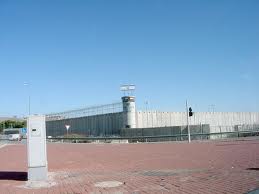
One of the flashpoints in Occupied Palestine in recent years has involved non-violent weekly protests against continued Israeli construction of a separation wall extending throughout the whole of the West Bank. A particularly active site for these protests has been the village of Bi’lin near the city of Ramallah, and it is here where the Israeli penchant to use deadly force to disrupt nonviolent demonstrations raises deep legal and moral concerns. These concerns are accentuated when it is realized that way back in 2004 the International Court of Justice (the highest judicial body in the UN System) in a rare near unanimous ruling declared the construction of the wall on occupied Palestinian territory to be unlawful, and reached findings ordering Israel to dismantle the wall and compensate Palestinians for the harm done. Israel has defied this ruling, and so the wall remains, and work continues on segments yet to be completed.
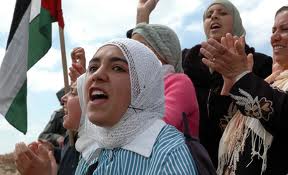

It is against this background that the world should take note of the shocking death of Jawaher Abu Rahma on the first day of 2011 as a result of suffocation resulting from tear gas inhalation while not even being part of the Bi’lin demonstration. Witnesses confirm that she was standing above the actual demonstration as an interested spectator. It was a large year end demonstration that included the participation of 350 Israeli and international activists. There was no excuse for the use of such a harsh method of disrupting a protest against a feature of the occupation that had been pronounced to be unlawful by an authoritative international body. As it happens the brother of Ms. Rahman had been killed a few months earlier by a tear gas canister fired with a high velocity from a close range. And there are many other reports of casualties caused by Israel’s extreme methods of crowd control. International activists have also been injured and harshly detained in the past, including the Irish Nobel Peace Laureate, Mairead Maguire. Together these deaths exhibit a general unacceptable Israeli disposition to use excessive force against Palestinians living under occupation. Just a day later an unarmed young Palestinian, Ahmed Maslamany, peacefully on his way to work was shot to death at a West Bank checkpoint because he failed to follow an instruction given in Hebrew, a language he did not understand.

When this lethal violence is directed against unarmed civilians seeking to uphold fundamental rights to land, routine mobility, and self-determination  it dramatizes just how lawless a state Israel has become and how justifiable and necessary is the growing world campaign of delegitimation centered upon the boycott, disvestment, and sanctions movement (BDS). Each instance of Israeli excessive and criminal violence inflicts suffering on innocent Palestinian civilians, but it also is a form of martyrdom in the nonviolent Legitimacy War that the Palestinians have been waging within Palestine and on the symbolic global battlefields of world public opinion with growing success.

Israel knows very well how to control unruly crowds with a minimum of violence. It has demonstrated this frequently by the way it gently deals, if it deals at all, with a variety of settler demonstrations that pose far greater threats to social peace than do these anti-wall demonstrations. It is impossible to separate this excessive use of force by Israel on the ground against Palestinians from the indiscriminate use of force against civilians in Israel’s larger occupation policy, as illustrated by the cruel punitive blockade that has been imposed on the people of Gaza for more than three years and by the criminal manner in which carried out attacks for three weeks on the defenseless population in Gaza exactly two years ago. Is it not time for the international community to step in and offer this long vulnerable Palestinian population protection against Israeli violence?

.
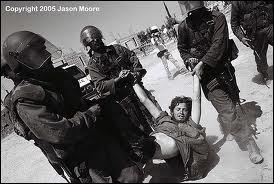
Underneath Israel’s reliance on excessive force as a matter of strategic doctrine are thinly disguised racist ideas: Israeli lives are worth many times the value of Palestinian lives and Palestinians, like all Arabs, only understand the language of force (an essentially genocidal idea launched influentially years ago in a notorious book The Arab Mind by Raphael Patai published in 1973. It is also part of a punitive approach to the occupation, especially in Gaza, where WikiLeaks cables confirm what was long suspected: “As part of their overall embargo plan against Gaza, Israeli officials have confirmed to [U.S, Embassy economic officers] on multiple occasions that they intend to keep the Gaza economy on the brink of collapse without quite pushing it over the edge.” (cable reported on Jan. 5, 2011, Norwegian daily) Then Prime Minister Ehud Olmert in a speech delivered in January 2008 said of the blockade: “We will not harm the supply of food for children, medecine for those who need it and fuel to save lives..But there is no justification for demanding we allow residents of Gaza to live normal live while shells and rockets are fired from their streets and courtyards (at southern Israel).”

This is a clear confession of collective punishment of a civilian population by Israel’s political leader at the time, violating the unconditional prohibition of Article 33 of the Fourth Geneva Convention. Such gross criminality should subject Israeli political leaders to international mechanisms designed to impose accountability on individuals responsible for the commission of crimes against humanity. It also makes it evident that the blockade is punitive, not responsive to cross-border violence that incidentally at all times was far more destructive of Palestinian lives and property than that of Israelis. Beyond this, the Hamas leadership in Gaza had since its election repeatedly attempted to establish a ceasefire along its border, which when agreed upon with the help of Egypt reduced casualties on both sides to almost zero after being establishment in mid-2008. This ceasefire was provocatively disrupted by Israel on November 5, 2008 to set the stage for launching of the massive attacks on Gaza, lasting for three weeks after being initiated on December 27th of 2008.

In that war, if such a one-sided conflict should be so described, the criminality of the tactics relied upon by the Israeli Defense Forces has been abundantly documented by The Goldstone Report, by a comprehensive fact-finding mission headed by John Dugard under the auspices of the Arab League, and by detailed reports issued by Amnesty International and Human Rights Watch. There is no reasonable basis for any longer doubting the substance of the allegations of criminality associated with those three weeks of all out attacks on the people and civilian infrastructure, including UN schools and buildings.

The Goldstone Report correctly noted that the overall impression left by the attacks was an extension of the Dahiya Doctrine attributed to an Israeli general during the Lebanon War 2006 in which the Israeli destruction from the air of a district in South Beirut was a deliberately excessive response, at the expense of civilian society, because of being an alleged Hezbollah stronghold, and in response to a border incident in which ten Israeli soldiers lost their lives in an encounter with Hezbollah combatants. The 2009 Goldstone report quoted IDF Northern Command Chief Gadi Eisenkot, who said, “What happened in the Dahiya quarter of Beirut in 2006 will happen in every village from which Israel is fired on. We will apply disproportionate force on it and cause great damage and destruction there. From our standpoint, these are not civilian villages, they are military bases. […] This is not a recommendation. This is a plan. And it has been approved.” In effect, the civilian infrastructure of adversaries such as Hamas or Hezbollah are treated as permissible military targets, which is not only an overt violation of the most elementary norms of the law of war and of universal morality, but an avowal of a doctrine of violence that needs to be called by its proper name: STATE TERRORISM.

We have reached a stage where the oppressiveness of the Israeli occupation, extending now for more than 43 years and maintained in multiple daily violations of international humanitarian law.  In its essence and by design the Israeli occupation of the West Bank, East Jerusalem, and the Gaza Strip should be understood and condemned as STATE TERRORISM as exhibited both in structure and practice.

IRAQI OCCUPATION AND HIGHER EDUCATION: THE GHENT CHARTER

4 Jan


For Americans, the long occupation of Iraq, dating back to 2003 when George W. Bush notoriously proclaimed ‘mission accomplished,’ is measured almost entirely by the American casualty count and the cost of the war to taxpayers, now estimated to be over $3 trillion, an amount large enough to make major inroads on global poverty and preventable disease. The loss of Iraqi lives or the devastation of the country, or the long suffering inflicted on the people of Iraq, does not enter into calculations. Much attention is given to whether the outcome can be called ‘a success’ or somehow beneficial for the people of Iraq, but without any notice of the enormous human price paid by a people that was never consulted in typical imperial behavior. Iraq is the poster child of post-colonial colonialism that disregards the ethos of self-determination in pursuit of geopolitical goals such as oil, regional hegemony, Israeli priorities.

For Iraqis, the occupation followed a frightening ‘shock and awe’ onslaught in 2003 that had been preceded by twelve years of punitive sanctions that took hundreds of thousands of civilian lives following the Gulf War of 2001 that deliberately devastated the infrastructure of the country to a degree that a respected UN Report described the country as bombed back to ‘the stone age.’ A phenomenon that Madeleine Albright notoriously described at the time on prime time TV “as worth it” when confronted with the estimated civilian losses due to sanctions as 700,000.

During this period Iraq shifted its status from being the country with the most impressive development statistics in the region with respect to social indicators to becoming a failed state in every sense: increasing poverty, loss of skill personnel in all sectors, declining literacy, declining life expectancy, staggering unemployment, destruction of cultural life, pervasive civic violence, lethal religious conflict, all forms of acute insecurity.  (See some salient statistics in the Ghent Charter with link at end of text below)

(additional information is contained in an excellent article by Dirk Anriaensens, “Iraq: The Age of Darkness,” <www.brussellstribunal.org/> International Seminar on the Situation of Iraqi Academics, under ‘publications’)

True, Iraq under Saddam Hussein had been oppressively governed, especially for the Kurdish minority and the Shiite majority, but there was a high degree of social order, material progress, and economic stability. True, Iraq was a disruptive presence in the region, attacking Iran (with U.S. encouragement) in 1980, and then invading and annexing Kuwait in 1990. Yet nothing can vindicate the American led response based on war, punitive sanctions, and prolonged occupation. By now it should be evident that the forcible destruction of the regime of Saddam Hussein caused a far worse humanitarian catastrophe than did the abuses, however dreadful, associated with his governance. Military intervention has been uniformly shown to be a darkly dysfunctional corrective for abusive governance, especially in the post-colonial era. The tragedy inflicted on the people of Iraq is a direct result of American crimes of aggression, war crimes, and crimes against humanity, the offenses for which German and Japanese leaders were prosecuted and punished after World War II at the Nuremberg and Tokyo Tribunals. If there is a lesson in all this, it is that imperial grand strategy as it is playing out in the Middle East and Central Asia is intrinsically criminal, and its cruel impositions can only be defeated by campaigns of global solidarity.  Neither states nor the United Nations possess the political will or capabilities to oppose effectively these extensions of colonial behavior in the post-colonial era. As far as human rights are concerned, their realization is essentially a societal challenge, and unless abuse reaches the level of genocide or ethnic cleansing, violations should never serve as a pretext for military intervention even if disguised as ‘humanitarian intervention’ or fulfillments of the norm of ‘responsibility to protect.’

By now, there are no excuses left to ignore the horrors that accompany foreign military occupation. The prolonged experiences of Iraq, Palestine, and Afghanistan provide a consistent confirmation that benevolent claims of the occupier are disguises for exploitation, corruption, oppression, and violence against innocent civilians.

My focus in this blog is on the terrible condition of institutions of higher learning in Iraq.

The shocking portrait of what occupation has meant for academicians and students is depicted by the Ghent Charter that has been endorsed by prominent educators in Europe and elsewhere, including the Rector of the University of Ghent. The BRussell Tribunal has played a leading part in exposing these realities afflicting Iraqi universities, and has organized a seminar to take place in Ghent, Belgium, March 9-11, 2011, with the title “Defending education in times of war and occupation.” It is important that all of us, especially those paying taxes in the United States to pay for this occupation, understand that our silence is complicity. Especially those of us associated with teaching and research in American universities bear an additional responsibility to exhibit even now our solidarity with those who have suffered and are suffering in Iraqi academic communities. We know that many faculty members have been murdered since 2003 (over 500 confirmed cases), particularly those who spoke out and acted against the occupation, and many more have fled the country permanently. The departure of university personnel is part of a wider exodus of middle class Iraqis, estimates are over two million, leaving the country deprived of the sort of national social fabric essential to avoid predatory forms of foreign economic exploitation of the country. We who devote our lives to higher education realize the importance of educated and dedicated young people for the wellbeing of a country. If Iraq’s future is to be restored to some semblance of decency, its institutions of higher learning will need to become safe and hospitable for students and faculty.

In the meantime, read the Ghent Charter and weep! Ghent Charter in Defense of Iraqi Academia

Discrimination in Occupied Palestine: Validating the Obvious is Necessary

21 Dec


In 2010 only the most diehard Zionist would deny the presence of multiple forms of Israeli discrimination being daily inflicted upon the Palestinians in the course of an occupation that has gone on for more than 43 years. It is hardly a secret that Israel lavishes every kind of benefit on the settler population of the West Bank while subjecting Palestinian existence to severe torments that bring cruel suffering, and produce an atmosphere of unalleviated anxiety that inevitably accompanies a situation in which the oppressor can do anything it wants whenever it pleases (up to and including dispossession and murder) with impunity, while the oppressed is left utterly vulnerable without the protection of law and placed in a no-law vacuum that constitutes a condition of utter subjugation (or subject to Israeli military law, which is roughly the equivalent), that is, when victimized, no-law, when accused, one-sided oppressive law).

The release a few days ago of an exhaustive Human Rights Report, “Separate and Unequal: Israel’s Discriminatory Treatment of Palestinians in the Occupied Palestinian Territories,” is a major event. It exhaustively documents the forms of discrimination against Palestinians in the West Bank, and enjoys the credibility of an NGO that has an impeccable global reputation for getting the facts and applicable law right, and exercising restraint with respect to political implications. When HRW speaks the media listens (although media bias is such that it keeps its mouth mostly shut if the target is Israel). The public has every reason to believe that whatever allegations are made by HRW are fully supported by reliable evidence. For all these reasons, and in the setting of the Global Palestinian Solidarity Movement, and specifically the BDS Campaign, those who support the Palestinian struggle should welcome this publication, and do their best to make it as widely known as possible. This is so even though, in important respects, ‘Separate by Unequal’ ( an ironic play on the American Jim Crow doctrine supported for years by the Supreme Court under the rubric ‘separate and equal’) doesn’t tell us anything we didn’t know before, or at least should have known. If anyone is ‘shocked’ after reading this report, it means that for more than four decades their ears have been filled with wax, and their eyes blindfolded.

But the report is more than a conclusive demonstration of acute and pervasive discrimination against Palestinians as a salient feature of the Israeli occupation. It also brings to life abstractions and statistics by relating stories of specific individuals and particular communities that have endured the occupation or enjoyed the privileges of being a settler living in a settlement. This confirms what has been reported in a series of powerful recent books on the occupation that rely on the power of storytelling to convey the actualities of social and political set of conditions. I would recommend highly the following recent books for capturing with compassion and concreteness the daily suffering and insecurity of Palestinian lives, thereby supplementing the more analysis and presentation of the practices reported upon so tellingly in the HRW Report. In my view these books extend the story being told in the report about life in Area C of the West Bank, even though their geographic focus is Gaza or another dimension of life in the West Bank: Laila El-Haddad, Gaza Mom: Palestine, Politics, Parenting, and Everything In Between (Charlottesville, VA: Just World Books, 2010); Rich Wiles, Behind the Wall: Life, Love and Struggle in Palestine (Washington, D.C.: Potomac Books, 2010); Ramzy Baroud, My Father Was a Freedom Fighter (London, UK: Pluto Books, 2010); Sharyn Lock (with Sarah Irving), Gaza Beneath the Bombs (London, UK: Pluto Books, 2010). Each of these books is powerful partly because it speaks so movingly from experience relying on the resources of the heart, as well as those of the head, and thereby creating unforgettable auras of enduring authenticity.

It is an aspect of the ugly atmosphere that still prevails in the United States that whenever HRW issues a report critical of Israel, the organization is  described as ‘courageous.’ In a democratic society that supposedly values the rule of law it should not require courage to depict patterns of practice that so flagrantly and systemically violate international humanitarian law norms as embodied in the Fourth Geneva Convention. But it is courageous. A human rights organization dependent on private funding and media access takes its life in its hands wherever it challenges Israeli policies toward the Palestinians. In this respect, it is appropriate to acknowledge the principled leadership of HRW that undertook to produce this report, knowing with the certainty of the cycles of the moon, that a vicious counter-attack designed to discredit would undoubtedly greet the study at the moment of its publication. And what is more, that the attack would be short on substance, but adept at the politics of deflection.  It would cleverly seek to redirect the eye of a reader from the message to the supposedly perfidious messenger.  Already a spokesperson from the office of the Israeli Prime Minister, Benjamin Netanyahu, launched such an attack only a day after the report was released as saying: “Unfortunately, over the last few years there has been a series of documented cases in which Human Rights Watch has allowed a blatant anti-Israeli agenda to pollute its reporting.” (Financial Times, XII.20.2010) In fact,

HRW is scrupulously careful whenever it ventures on this treacherous ground   of criticizing Israel, and leans over backward, as was also the case with the defamed Goldstone Report, in giving every possible benefit of reasonable doubt to Israeli claims.

NGO Monitor characteristically shoots from the hip, tries its best to discredit NGOs or individuals who dare to be truthful about the situation of Palestinians living under occupation even if their approach is methodical and mild. CNN gave TV exposure to Gerald Steinberg, the notorious founder and principal toxic voice of NGO Monitor, in which he absurdly claimed that the HRW Report consists of “manufactured allegations” that ignore the supposed intense ongoing conflict between Israel and the Palestinians, and is thus insensitive to the “legitimate security” of Israel. From this perspective, it is but a short leap to contend that “the report exploits human rights” and is part of the larger plan to turn Israel into “a pariah state.” In essence, the HRW is being criticized because it relies on information gathered by such highly respected human rights NGOs as al Haq, Badil, B’Tselem, and Yesh Din, as well as the UN agency, OCHA. HRW is also accused of promoting the BDS agenda by recommending that outside sources of settlement funding be respectful of international law and withhold financial support. NGO Monitor also explicitly argues that outsiders should refrain from ever holding Israel accountable because it is as an open society that engages in self-criticism and needs no external assessment as to law or morality. Without much effort at disguise, what irks these defenders of Israel is that the claim that the international community holds Israel to higher standards than other countries in the region, and is supposedly obsessed with Israel while turning a blind eye to the violations of others. Of course, there is a bit of truth to this claim, although it overlooks the degree to which it was a colonialist mentality (first, Britain, and then, the United Nations) that inflicted the tragic destiny on the Palestinian people from a time long pre-dating the independence of Israel as a sovereign state. What is also not considered, is the degree to which the United States in particular, through an unprecedented network of public and private sector initiatives, has been regularly financing the settlement dynamic and Israeli militarism.

What is strange, although understandable given the oppressive structure of Israeli discrimination, is the lack of attention given by the critics of the HRW report to its most central contention: that the Israeli settlers unlawfully present and their settlements unlawfully established are given the fullest protection of the law and the maximum security possible, while Palestinians living under this occupation who are according to international humanitarian law, ‘protected persons,’ are abused constantly, are compelled to live decade after decade without rights or the barest minimum of security, that there land and prospects for a decent future are constantly diminished by the expansion of the settlements.

The moderateness, and from my perspective, the incompleteness of the HRW report can be expressed by calling attention to several shortcomings of its conclusions and recommendations:

time: although the report is explicit about the patterns of discrimination being aggravated due to the length of the occupation, there is no attention accorded to the intrinsic unlawfulness of an occupation that is so prolonged.

International humanitarian law was designed for temporary occupations of short duration, not a quasi-permanent set of circumstances that includes ill-disguised tactics of land seizure and the incremental dispossession of long-term Palestinian residents. Any ‘right’ of occupation should long since have lapsed. It is a failure of international humanitarian law that it makes no provision for this failure to bring a belligerent occupation to a timely and agreed end (here anticipated in accordance with SC Resolution 242 agreed upon in 1967, and pointing to an Israel withdrawal).

criminality: the report addresses violations of international law and human rights law, but it holds back from describing these violations in terms of their criminal character. Surely, the structures of discrimination (roads, security, legal regime, access to water, mobility) establish the primie facie basis for allegations of apartheid arising from the dual structure of privilege (for Israeli settlers) and vulnerability and deprivation (for Palestinians). It should be understood that the Rome Statute establishing the International Criminal Court  (ICC) treats apartheid (forms of systematic discrimination based on race) as one type of Crimes Against Humanity. This international crime of apartheid is deliberately conceived of as a distinct crime of generic character, and not to be equated with the racist patterns of discrimination that existed in South Africa under the apartheid regime that operated there. As well, the crime of apartheid is embedded in customary international law, which makes it a crime even without any formal undertaking by the ICC. Additionally, the patterns of discrimination are rendering life unbearable for Palestinians residents in most of the West Bank. As many as 31% of those interviewed for the HRW report are seeking to escape somehow from life under occupation. Such an outcome appears to qualify this occupation as a form of ‘ethnic cleansing,’ even if there is evidence lacking of a blueprint or specific intent. An inference of ethnic cleansing follows from the deliberateness of the dual structures of law and administration, producing either direct or indirect forms of displacement of the indigenous population.

language: the report speaks in terms of violations, not crimes, not the overall illegitimacy of persisting occupation that encroaches on the fundamental rights of the occupied, and leaves those living under occupation without a clear path to achieving their most fundamental of rights, the right of self-determination. I believe it is necessary to use harsher language than is usual in mainstream circles in describing the situation confronting the Palestinians who continue to endure this occupation. It is ‘annexation’ not ‘occupation,’ it is ‘ethnic cleansing’ not ‘house demolitions’ and ‘settler only roads, not just ‘land seizures,’ and constraints on ‘mobility,’ but ‘settler colonialism.’ In keeping with the BDS campaign it is time for the peoples of the world to perceive the Palestinian multiple nakba (catastrophe) without evasive or legalistic terminology that obscures and normalizes rather than illuminates the abnormality of the situation and gives rise to a mobilizing sense of outrage.

XII.22..2010

******

The report can be downloaded from the HRW home page website:

Separate and Unequal

Israel’s Discriminatory Treatment of Palestinians in the Occupied Palestinian Territories

GET THE REPORT

Download the full report


THE PALESTINIAN LEGITIMACY WAR VERSUS ‘LAWFARE’

17 Dec

There has long been advocacy of the idea that judges in national courts could help strengthen the implementation of global norms by extending the reach of national law, especially for serious crimes that cannot be otherwise prosecuted. The authority to use national courts against piracy on the high seas was widely endorsed, and constitutes the jurisprudential basis for what has come to be known as ‘universal jurisdiction,’ that is, regardless of where a crime was committed or the national identity of the alleged perpetrator or victim, a national court has the authority to attach its law. This reliance on universal jurisdiction received a strong shot in the arm as a result of the war crimes trials at the end of War War II against surviving German and Japanese political and military leaders, a legal framework institutionalized internationally in 2002 as a result of the establishment of the International Criminal Court. The underlying rationale is that aggressive war, crimes against humanity, and severe violations of the law of war and international humanitarian law are crimes against the whole of humanity, and not just the victim state or people. Although the Nuremberg Judgment was flawed, ‘victors’ justice,’ it generated global norms in the form of the Nuremberg Principles that are considered by international law consensus to be universally binding. These ideas underlie the recent prosecution of geopolitical pariahs such as Saddam Hussein or Slobodan Milosevic, and several African tyrannical figures. But when it comes to the lead political actors, as understood by the American-led hegemonic hierarchy, the leadership of the rest of the world enjoys impunity, in effect, an exemption from accountability to international criminal law. It is a prime instance of double standards that pervades current world order, perhaps, most prominently illustrated in relation to the veto power given permanent members of the UN Security Council or the Nonproliferation Regime Governing Nuclear Weaponry. Double standards severs any link between law as administered by the state system on a world level and pretensions of global justice. The challenge for those seeking global justice based on international law that treats equals equally is to overcome in every substantive setting double standards and impunity. The world of sovereign states and the United Nations have not been able to mount such a challenge. Into this vacuum has moved a surging global civil society movement that got its start in the global fight against colonialism, especially, the Vietnam War, and moved forward dramatically as a result of the Anti-Apartheid Campaign. Various instruments have been relied upon, including boycott, divestment, and sanctions solidarity movements, informally constituted citizens’ war crimes tribunals (starting with the Russell Tribunal during the Vietnam War, and extended by the Permanent Peoples Tribunal in Rome, and in 2005 by the Iraq War Tribunal that held 20 sessions around the world, culminating in a final session in Istanbul), civil disobedience in various forms, especially refusals to serve in military operations that violate international law. It was a coalition of civil society actors that created the political climate that somewhat surprisingly allowed the International Criminal Court to come into being in 2002, although unsurprisingly without the participants of the United States, Israel, and most of the senior members of the geopolitical first echelon. It is against this background, that two contradictory developments are to be found that will be discussed in more detail in subsequent blogs: the waging of an all out Legitimacy War against Israel on behalf of the Palestinian struggle for a just peace and a backlash campaign against what is called ‘Lawfare’ by Israeli hardliners. A Legitimacy War strategy seeks popular mobilization on the basis of nonviolent coercion to achieve political goals, relying on the relevance of international law and the accountability of those that act on behalf of states in the commission of crimes of state. The Goldstone Report illustrates this interface between a Legitimacy War and Lawfare, reinforcing Palestinian contentions of victimization as a result of Israel’s use of force as in the notorious Operation Cast Lead (2008-09) and driving Israel’s top leaders to venomous fury in their effort to discredit the distinguished jurist, Richard Goldstone, who headed the UN mission responsible for the report, and the findings so convincingly reached. With Israeli impunity under growing threat there have been special pressures placed on the United States to use its geopolitical muscle within the UN to maintain the mantle of impunity over the documented record of Israeli criminality, and to make sure that the UN remains a selective sanctuary for such outrageous grants of impunity. These issues of criminal accountability are on the front lines of the Legitimacy War, and provide the foundation for efforts throughout the world in relation to the growing BDS Campaign. The Lawfare counterattack at one level acknowledges the strength of civil society efforts, but it is also cynically and polemically undertaken to discredit reliance on international law by those who are victimized by abusive and oppressive uses of military and police power. The Palestinians have been victimized in these respects for more than 62 years, and their efforts to end this intolerable set of realities by an innovative reliance on nonviolent resistance and self-defense deserves the support of persons of conscience throughout the world. Whether this reliance on a Legitimacy War can finally achieve justice for the Palestinian people and peace for both peoples, only the future can tell, but there is no doubt that this struggle is the best contemporary instance of ‘a just war.’