Archive | Nuclear Weapons RSS feed for this section

A Modest Proposal: Is It Time for the Community of Non-Nuclear States to Revolt?

7 Oct


             There are 189 countries that are parties to the Nuclear Nonproliferation Treaty (NPT) that entered into force in 1970. Only India, Pakistan, Israel, and North Korea have remained outside the treaty regime so as to be free to acquire the weapons. The nuclear weapons states have done an incredibly successful job, especially the United States, in getting a free ride, continuously modernizing their arsenals while keeping the weapons out of most unwanted hands.


            But the NPT was negotiated as a world order bargain. The non-nuclear countries would forego their weapons option in exchange for receiving the full benefits of nuclear energy and a pledge by the nuclear weapons states to seek nuclear disarmament in good faith. After 40 years it seems time to question both the benefits of nuclear energy (especially so after Fukushima) and even more the good faith of the members of the nuclear weapons club. Back in 1996 the World Court unanimously concluded that the nuclear weapons states needed to fulfill their treaty obligation to seek nuclear disarmament as a matter of urgency, and yet nothing resembling disarmament negotiations has taken place. It seems time to declare that the good faith obligation of Article VI of the treaty has been violated, and that this is a material breach that allows all states to disavow any obligation.


            Two mind games have kept the non-nuclear majority of states in line so far: first, convincing the public that the greatest danger to the world comes from the countries that do not have the weapons rather than from those that do; secondly, confusing the public into believing that arms control measures are steps toward nuclear disarmament rather than being managerial steps periodically taken by the nuclear weapons states to cut the costs and risks associated with their weapons arsenals and programs and to fool the world into thinking they are living up to their obligation to phase out these infernal weapons of mass destruction.


            There are other problems too. Israel has been allowed to acquire nuclear weapons by stealth without suffering any adverse consequences, while Iraq was invaded and occupied supposedly to dismantle their nuclear weapons program that turned out to be non-existent and Iran is under threat of military attack because its nuclear energy program has a built in weapons potential. Such double standards and geopolitical discrimination severely erode the legitimacy of the NPT approach.


            Barack Obama earned much favorable publicity, and probably was given the Nobel Peace Prize, because in 2009 he made an inspirational speech in Prague announcing his commitment to a world without nuclear weapons. Although the speech was hedged with qualifications, including the mind-numbing reassurance to nuclearists not to worry, nothing would happen in Obama’s lifetime, it still gave rise to hopes that finally there would be a genuine attempt to rid the world of this nuclear curse. But it was not to be.

As with so many issues during the Obama presidency, the early gestures of promise were quietly abandoned in arenas of performance.


            Has not the time come for the too patient 184+ non-nuclear weapons states to stand together with the peoples of the world to challenge the world nuclear weapons oligopoly? One way would be to declare the treaty null and void due to non-compliance by the nuclear weapons states. Such a move would be fully in accord with international treaty law.


            Another way, perhaps more brash, but also maybe more likely to have a political impact, would be for as many non-nuclear states as possible to take a collective stand by way of an ultamatum: if the nuclear weapons states do not engage in credible nuclear disarmament negotiations designed to eliminate the weapons within two years, the treaty will be denounced.  


Warfare Without Limits: A Darkening Human Horizon

27 Jul


There are several pressures that push war in the direction of the absolute, and imperil the human future. Perhaps, the foremost of these is emergence, use, retention, and proliferation of nuclear weapons, as well as the development of biological and chemical weapons of mass destruction. Since Hiroshima and Nagasaki there have been several close calls involving heightened dangers of wars fought with nuclear weapons, especially associated with the Cold War rivalry, none more serious than the Cuban Missile Crisis of 1962. To entrust such weaponry to the vagaries of political leadership and the whims governmental institutions seems like a Mt. Everest of human folly, and yet the present challenges to nuclearism remain modest and marginal despite the collapse of the deterrence rationale that seemed plausible to many during the confrontation between the Soviet Union and the United States.


Underneath the tendency to develop for use whatever weapons and tactics that technology can provide is the fragmented political identities of a world divided into sovereign states. The inhabitants of these states of greatly varying size, capabilities, and vulnerabilities, have long been indoctrinated to view their own state through the idolatrous eyes of nationalism that view the extermination of the enemy as acceptable if necessary for national security or even desirable to satisfy national ambitions. The ideology of nationalism, nurturing the values of unquestioning patriotism, have led to an orientation that can be described as secular fundamentalism, vindicating militarist worldviews however dysfunctional given the risks and limits associated with gaining desired political ends by relying on military superiority. The crime of treason reinforces the absolutist claims of the secular state by disallowing defenses based on conscience, law, and belief.  


As I have pointed out in other contexts, the militarily superior side has rarely prevailed in an armed conflict since the end of World War II unless also able to command the moral and legal heights wherein are located the symbols of legitimacy. The political failures of the colonial powers despite their military dominance provides many bloody illustrations of this trend of miltarist frustration that did not exist until the middle of the last century. Because of entrenched bureaucratic and economic interests (‘the military-industrial-media complex’), the experience is denied, military solutions for conflicts continue to be preferred, and futile recourse to war goes on and on.


One further check on the excesses of warfare is supposedly provided by the inhibiting role of conscience, the ethical component of the human sensibility. This sentiment was powerfully and memorably expressed by some lines in the Bertolt Brecht poem, “A German War Primer”:


                        General, your bomber is powerful

                        It smashes down forests and crushes a hundred men

                        But it has one defect:

                        It needs a driver.


This ‘defect,’ a driver is both a human cost, and maybe a brake on excess, as Brecht suggests a few lines later:


                        General, man is very useful

                        He can fly and he can kill

                        But he has one defect:

                        He can think.


Of course, military training and discipline are generally effective in overcoming this defect, especially as backed up by the nationalist ideology discussed above, while international humanitarian law vainly tries to give support to thinking and respecting limits. The Nuremberg Trials of Nazi surviving leaders even went so far as to decide that ‘superior orders’ were no excuse if war crimes were committed.


In the nuclear age this process went further as the stakes were so high. I recall visiting the headquarters of the Strategic Air Command (SAC) at the height of the Cold War. SAC was responsible for the missile force that then targeted many cities in the Soviet Union. What struck me at the time was the seeming technocratic indifference of those entrusted with operating the computers that would fire the missiles in contrast to the ideological zeal of the commanding generals who would give the orders to annihilate millions of civilians at a distant locations. I was told at the time that the lower ranked technical personnel had been tested to ensure that moral scruples would not interfere with their readiness to follow orders. I found this mix of commanders politically convinced that the enemy was evil and apolitical and amoral subordinates a frightening mix at the time, and still do, although I have not been invited back to SAC to see whether similar conditions now prevail. I suspect that they do, considering the differing requirements of the two roles. This view seems confirms by the enthusiasm expressed for carrying on the ‘war on terror’ in the aftermath of the 9/11 attacks.


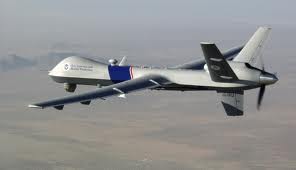
In this period new technological innovations in war making accentuate my earlier concerns. The reliance on drone attacks in Afghanistan (and elsewhere) removes the human person altogether from the war experience, except as in the role of programmer, and even here reliance on algorithms for targeting, removes any shred of responsibility. When mistakes are made, and innocent civilians are killed, the event is neutralized by being labeled ‘collateral damage,’ and an apology is issued but the practice goes on and is even extended.  More important is the chilling effect of removing that human presence, both as a person of one’s own nation being at risk and as a source of potential questioning and even refusal. It should be recalled that the anti-war opposition of American soldiers in Vietnam exerted a powerful influence that helped over time finally to bring this failed war to an end.


What is at stake ultimately is the human spirit squeezed to near death by technological momentum, corporate greed, militarism, and secular fundamentalism. This web of historical forces continues to entrap major political actors in the world, and dims hopes for a sustainable future even without taking into account the dismal effects of the gathering clouds of climate change. Scenarios of future cyber warfare are also part of this overall process of destroying societies without risking lives directly. The cumulative effect of these developments is to make irrelevant the moral compass that alone provides acceptable guidance for a progressive human future.


Learning from Disaster? After Sendai

15 Mar

Learning from Disaster? After Sendai

After atomic bombs were dropped on Hiroshima and Nagasaki there was in the West, especially the United States, a short triumphal moment, crediting American science and military prowess with bringing victory over Japan and the avoidance of what was anticipated at the time to be a long and bloody conquest of the Japanese homeland. This official narrative of the devastating attacks on these Japanese cities has been contested by numerous reputable historians who argued that Japan had conveyed its readiness to surrender well before the bombs had been dropped, that the U.S. Government needed to launch the attacks to demonstrate to the Soviet Union that it had this super-weapon at its disposal, and that the attacks would help establish American supremacy in the Pacific without any need to share power with Moscow. But whatever historical interpretation is believed, the horror and indecency of the attacks is beyond controversy. This use of atomic bombs against defenseless densely populated cities remains the greatest single act of state terror in human history, and had it been committed by the losers in World War II surely the perpetrators would have been held criminally accountable and the weaponry forever prohibited. But history gives the winners in big wars considerable latitude to shape the future according to their own wishes, sometimes for the better, often for the worse.

Not only were these two cities of little military significance devastated beyond recognition, but additionally, inhabitants in a wide surrounding area were exposed to lethal doses of radioactivity causing for decades death, disease, acute anxiety, and birth defects. Beyond this, it was clear that such a technology would change the face of war and power, and would either be eliminated from the planet or others than the United States would insist on possession of the weaponry, and in fact, the five permanent member of the UN Security Council became the first five states to develop and possess nuclear weapons, and in later years, Israel, India, Pakistan, and North Korea have developed nuclear warheads of their own. As well, the technology was constantly improved at great cost, allowing long-distance delivery of nuclear warheads by guided missiles and payloads hundreds times greater than those primitive bombs used against Japan.

After Hiroshima and Nagasaki there were widespread expressions of concern about the future issued by political leaders and an array of moral authority figures.  Statesmen in the West talked about the necessity of nuclear disarmament as the only alternative to a future war that would destroy industrial civilization. Scientists and others in society spoke in apocalyptic terms about the future. It was a mood of ‘utopia or else,’ and ‘on the beach,’  a sense that unless a new form of governance emerged rapidly there would be no way to avoid a catastrophic future for the human species and for the earth itself.

But what happened? The bellicose realists prevailed, warning of the distrust of ‘the other,’ insisting that it would be ‘better to be dead than red,’ and that nothing fundamental changed, that as in the past, only a balance of power could prevent war and catastrophe. The new name for balance in the nuclear age was ‘deterrence,’ and it evolved into an innovative, yet dangerous, semi-cooperative security posture that was given the formal doctrinal label of ‘mutual assured destruction.’ This reality was more popularly, and sanely, known by its expressive acronym, MAD, or sometimes this reality was identified as ‘a balance of terror,’ both a precursor of 9/11 language and a reminded that states have always been the supreme terrorist actors.  The main form of learning that took place after the disasters of Hiroshima and Nagasaki was to normalize the weaponry, banish the memories, hope for the best, and try to prevent other states from acquiring it. The same realists, perhaps most prominently, John Mearsheimer, have even gone so far as to give their thanks to nuclear weaponry as ‘keepers of the peace’ during the Cold War.  With some plausibility these nuclearists insisted that best explanation for why the Soviet Union-United States rivalry did not result in World War III was their shared fear of nuclear devastation.  Such nuclear complacency was again in evidence when in the 1990s after the Soviet Union collapsed, there was a refusal to propose at that time the elimination of nuclear weaponry, and there were reliable reports that the U.S. Government actually used its diplomatic leverage to discourage any Russian disarmament initiatives that might expose the embarrassing extent of this post-deterrence, post-Cold War American attachment to nuclearism. This attachment has persisted, enjoys wide and deep bipartisan support in the United States, is shared with the leadership and citizenry of the other nuclear weapons states to varying degrees, and is joined at the hip to an anti-proliferation regime that hypocritically treats most states (Israel was a notable exception, and India a partial one) that aspire to have nuclear weapons of their own as criminal outlaws subject to military intervention. The counter-proliferation geopolitical regime has been superimposed upon the legal regime, and currently being used to threaten and coerce Iran in a manner that violates fundamental postulates of international law and the UN Charter.

Here is the lesson that applies to the present: the shock of the atomic attacks wears off in a few years, is unequivocally superseded by a restoration of normalcy surrounding the role of hard power whether nuclear or not. Because of evolving technology, this meant creating the conditions for repetition of the potential use of such weaponry at greater magnitudes of death and destruction. Such a pattern is accentuated, as here, if the subject-matter of disaster is clouded by the politics of the day that obscured the gross immorality and criminality of the historical use of the weapon, that ignored the fact that there are governmental forces associated with the military establishment that seek maximal hard power as an unconditional goal, and overlooked the extent to which these professional militarists are reinforced by paid cadres of scientists, defense intellectuals, and bureaucrats who build careers around the weaponry. This structure is, in turn, strongly reinforced in various ways by private sector profit-making opportunities, including a globally influential corporatized media. These conditions also apply with even less restraint across, undergirding the dirty business of international arms sales. At least with nuclear weapons the main political actors are much more prudent in their relations with one another than was the case in the pre-nuclear era of international relations, and have a shared and high priority incentive to keep the weaponry from falling into hostile hands.

We should also take account of the incredible ‘Faustian Bargain’ sold to the non-nuclear world: give up a nuclear weapons option and in exchange get an unlimited ‘pass’ to the ‘benefits’ of nuclear energy, and besides, the nuclear weapons states, while furtively winking to one another when negotiating the notorious Nonproliferation Treaty (1963) promised in good faith to pursue nuclear disarmament, and indeed general and complete disarmament. Of course, the bad half of the bargain has been fulfilled, although selectively, even in the face of the dire experiences of Three Mile Island (1979) and Chernobyl (1986), while the good half of the bargain (getting rid of the weaponry) never gave rise to even halfhearted nuclear disarmament proposals and negotiations (and instead the world settled irresponsibly for managerial fixes from time to time, negotiated arrangements known as ‘arms control’ measures that were designed to stabilize the nuclear rivalry of the U.S. and Soviet Union (now Russia) in mutually beneficial ways relating to financial burdens and risks. Such a contention has been recently confirmed by the presidential commitment to devote an additional $80 billion for the development of nuclear weapons before the U.S.  Senate could be persuaded to ratify the New START Treaty in late 2010, the latest arms control ruse that was falsely promoted by Washington as a step toward disarmament and denuclearization. There is nothing intrinsically wrong with arms control, it may usefully reduce risks and costs under certain circumstances, but it is definitely not disarmament, and should not presented as if it is.

It is with this background in mind that the unfolding Japanese multidimensional mega-tragedy must be understood and its effects on future policy discussed in a preliminary manner. This extraordinary disaster originated in a natural event that was itself beyond human reckoning and control. An earthquake of unimaginable fury, measuring an unprecedented 9.0 on the Richter Scale, unleashing a deadly tsunami that reached a height of 30 feet, and swept inland in the Sendai area of northern Japan to an incredible distance up to 6 kilometers. It is still too early to count finally the number of the dead, the injured, the property damage, and the overall human costs, but we know enough by now to realize that the impact is already colossal, and will continue to grow, that this is a terrible happening that will be permanently seared into the collective imagination of humanity, perhaps the more so, because it is the most visually recorded epic occurrence in all of history, with real time video recordings of its catastrophic  ‘moments of truth’ and sensationalist media reportage, especially via TV.

But this natural disaster that has been responsible for massive human suffering has been compounded by its nuclear dimension, the full measure of which remains uncertain at this point, although generating a deepening foreboding that is perhaps magnified by calming reassurances by the corporate managers of nuclear power in Japan (Tokyo Electric Power Company or TEPCO) who already had many blemishes on their safety record, as well as by political leaders, including Prime Minister Naoto Kan who understandably wants to avoid causing the Japanese public to shift from its impressive posture of traumatized, yet composed, witnessing to one of outright panic. There is also a lack of credibility based, especially, on a long record of false reassurances and cover ups by the Japanese nuclear industry, hiding and minimizing the effects of a 2007 earthquake in Japan, and actually lying about the extent of damage to a reactor at that time and on other occasions. What we need to understand is that the vulnerabilities of modern industrial society accentuate vulnerabilities that arise from extreme events in nature. There is no doubt that the huge earthquake/tsunami constellation of forces was responsible for great damage and societal distress, but the overall impact has been geometrically increased by this buying into the Faustian Bargain of nuclear energy, whose risks, if objectively assessed, were widely known for many years, yet effectively put to one side. It is the greedy profit-seekers, who minimize and suppress these risks, whether in the Gulf of Mexico or Fukushima or on Wall Street, and then scurry madly at the time of disaster to shift responsibilities to the victims that make me tremble as I contemplate the human future. These predatory forces are made more formidable because they have cajoled most politicians into complicity and have many allies in the media that overwhelm the publics of the world with steady doses of misinformation and tranquilizing promises of greater future care and protestations of societal need.

The reality of current nuclear dangers in Japan are far stronger than these words of reassurance that claim the risks to health are minimal because the radioactivity can even now be contained to avoid dangerous levels of contamination, although the latest reports indicate that already in nearby regions milk and spinach have tested as containing radiation above safe levels. A more trustworthy measure of the perceived rising dangers can be gathered from the continual official expansions of the evacuation zone around the six Fukushima Daiichi reactors from 3 km to 10 km, and more recently to 18 km, and more, coupled with the instructions to everyone caught in the region to stay indoors indefinitely, with windows and doors sealed. We can hope and pray that the four explosions that have so far taken place in the Fukushima Daiichi complex of reactors will not lead to further explosions or fires, and that a full meltdown in one or more of the reactors will not occur. Even without a meltdown the near certain venting of highly toxic radioactive steam to prevent unmanageable pressure from building up due to the boiling water in the reactor cores and spent fuel rods is likely to spread risks and harmful effects.  It is a policy dilemma that has become a living nightmare: either allow the heat to rise and confront the high probability of reactor meltdowns or vent the steam and subject large numbers of persons in the vicinity and beyond to radioactivity, especially should the wind shift southwards carrying the steam toward Tokyo or westward toward northern Japan or Korea.  In reactors 1, 2, and 3 are at risk of meltdowns, while with the shutdown reactors 4,5, and 6 pose the threat of fire releasing radioactive steam from the spent fuel rods.

We know that throughout Asia alone some 500 new reactors are either being built or have been planned and approved in the pre-Fukushima mood of energy worries, with as many as 150 destined for China alone. We know that nuclear power has been touted in the last several years as a major source of energy that is needed to deal with future energy requirements, a way of overcoming the challenge of ‘peak oil’ and of combating global warming by some decrease in carbon emissions. We know that the nuclear industry will contend that it knows how to build safe reactors in the future that will withstand even such ‘impossible’ events that have wrought such havoc in the Sendai region of Japan, while at the same time lobbying for insurance schemes to avoid such risks. Some critics of nuclear energy facilities in Japan and elsewhere had warned that these Fukushima reactors some built more than 40 years ago had become accident-prone and should no longer have been kept operational. Similar reactors are still operating around the world, including in the United States, with several near earthquake zones and close to large cities.And we know that governments will be under great pressure to renew the Faustian Bargain despite what should have been clear from the moment the bombs fell in 1945: This technology is far too unforgiving and lethal to be managed safely over time by human institutions, even if they were operated responsibly, which they are not. It is folly to persist, but it is foolhardy to expect the elites of the world to change course, despite this dramatic delivery of vivid reminders of human fallibility and culpability. We cannot hope to control the savageries of nature, although even these are being intensified by our refusal to take responsible steps to reduce greenhouse gas emissions, but we can, if the will existed, learn to live within prudent limits even if this comes to mean a less materially abundant and an altered and less consumerist life style. The failure to take seriously the precautionary principle as a guide to social planning is a gathering dark cloud menacing all of our futures. Some specialists, including Amory Lovins and Jeremy Rifkin have argued that a blend of conservation, energy efficiency, and safe energy sources would satisfy the energy cravings of modern society without life style adjustments. Others, including Thomas Homer-Dixon, advocate the development of new major energy sources, in his case, deep geothermal drilling to tap into the heated core deep below the surface of the earth. [Globe and Mail, March 17, 2011, Canada]

Let us fervently hope that this Sendai disaster will not take further turns for the worse, but that the warnings already embedded in such happenings, will awaken enough people to the dangers on this path of hyper-modernity so that a politics of limits can arise to challenge the prevailing politics of limitless growth and consumerist profligacy. Such a challenge must include the repudiation of a neoliberal worldview, insisting without compromise on an economics and a human-centered vision of development based on needs and people rather than on profit margins, capital efficiency, and macro-economic indicators. Advocacy of such a course is admittedly a long shot, but so is the deadly collectivized utopian realism of staying on the nuclear course, whether it be with weapons or reactors. This is what Sendai should teach all of us!  But will it?

III..15…2011 (updated III..20…2011)


Revolutionary Prospects After Mubarak

15 Feb

The Egyptian Revolution has already achieved extraordinary results: after only eighteen intense days of dramatic protests. It brought to an abrupt end Mubarak’s cruelly dictatorial and obscenely corrupt regime that had ruled the country for more than thirty years. It also gained a promise from Egyptian military leaders to run the country for no more than six months of transition, the minimum period needed for the establishment of independent political parties, free elections, and some degree of economic restabilization. It is hoped that this transition would serve as the prelude to and first institutional expression of genuine democracy. Some informed observers, most notably Mohamed ElBaradei worry that this may be too short a time to fill the political vacuum that exists in Egypt after the collapse of the authoritarian structures that had used its suppressive energies to keep civil society weak and to disallow governmental institutions, especially parliament and the judiciary, to function with any degree of independence. It is often overlooked that the flip side of authoritarianism is nominal constitutionalism.

In contrast, some of the activist leaders that found their voice in Tahrir Square are concerned that even six months may be too long, giving the military and outside forces sufficient time to restore the essence of the old order, while giving it enough of a new look to satisfy the majority of Egyptians. Such a dismal prospect seems to be reinforced by reported American efforts to offer emergency economic assistance apparently designed to mollify the protesters, encourage popular belief that a rapid return to normalcy will provide this impoverished people (40% living on less than $2 per day; rising food price; high youth unemployment) with material gains.

The bravery, discipline, and creativity of the Egyptian revolutionary movement is nothing short of a political miracle, deserving to be regarded as one of the seven political wonders of the modern world! To have achieved these results without violence, despite a series of bloody provocations, and persisting without an iconic leader, without even the clarifying benefit of a revolutionary manifesto, epitomizes the originality and grandeur of the Egyptian Revolution of 2011. Such accomplishments shall always remain glories of the highest order that can never be taken away from the Egyptian people, regardless of what the future brings. And these glorious moments belong not just to those who gathered at Tahrir Square and at the other protest sites in Cairo, but belong to all those ignored by the world media who demonstrated at risk and often at the cost of their life or physical wellbeing day after day throughout the entire country in every major city. Both the magnitude and intensity of this spontaneous national mobilization was truly remarkable. The flames of an aroused opposition were fanned by brilliantly innovative, yet somewhat obscure, uses of social networking, while the fires were lit by the acutely discontented youth of Egypt and kept ablaze by people of all class and educational backgrounds coming out into the street. The inspirational spark for all that followed in Egypt and elsewhere in the region, let us not forget, was provided by the Tunisian Revolution. What happened in Tunisia was equally astonishing to the amazing happenings in Egypt, not only for being the initiating tremor, but also for reliance on nonviolent militancy to confront a ruthlessly oppressive regime so effectively that the supposed invincible dictator, Ben Ali, escaped quickly to Saudi Arabia for cover.  The significance of the Tunisian unfolding and its further development should not be neglected or eclipsed during the months ahead. Without the Tunisian spark we might still be awaiting the Egyptian blaze!

As is widely understood, after the fireworks and the impressive cleanup of the piles of debris and garbage by the revolutionaries in Tahrir Square, itself a brilliantly creative footnote to their main revolutionary message, there remains the extraordinarily difficult task of generating ex nihil a new governing process based on human rights, the will of the Egyptian people, and a mighty resolve to guard sovereign rights against the undoubted plots of canny external actors scared by and unhappy with the revolution, seeking to rollback the outcome, and seeking above all by any means the restoration of Mubarakism without Mubarak.  The plight of the Egyptian poor must also be placed on the top of the new political agenda, which will require not only control of food and fuel prices, but the construction of an equitable economy that gives as much attention to the distribution of the benefits of growth as to GNP aggregate figures. Unless the people benefit, economic growth is a subsidy for the rich, whether Egyptian or foreign.

Short of catastrophic imaginings, if interpreted as warnings may forestall their actual occurrence, there are immediate concerns: it seemed necessary to accept the primacy of the Egyptian military with the crucial task of overseeing the transition, but is it a trustworthy custodian of the hopes and aspirations of the revolution? Its leadership was deeply implicated in the corruption and the brutality of the Mubarak regime, kept in line over the decades by being willing accomplices of oppressive rule and major beneficiaries of its corrupting largess. How much of this privileged role is the military elite ready to renounce voluntarily out of its claimed respect for and deference to the popular demand for an end to exploitative governance in a society languishing in mass poverty? Will the Egyptian military act responsibly to avoid the destructive effects of a second uprising against the established order? It should also not be forgotten that the Egyptian officer corps was mainly trained in the United States, and that coordination at the highest level between American military commanders and their Egyptian counterparts has already been resumed at the highest levels, especially with an eye toward maintaining ‘the cold peace’ with Israel.  These nefarious connections help explain why Mubarak was viewed for so long as a loyal ally and friend in Washington, Tel Aviv, and Riyadh, and why the inner counsels of these governments are reacting with concealed panic at the outburst of emancipatory politics throughout the region. I would suppose that these old relationships are being approached with emergency zeal to ensure that however goes the transition to Egyptian democracy it somehow exempts wider controversial regional issues from review and change that would reflect the values that animated the revolutionary risings in Tunisia and Egypt. These values would suggest solidarity with movements throughout the Middle East to end autocratic governance, oppose interventions and the military presence of the United States, solve the Israel/Palestine conflict in accordance with international law rather than ‘facts on the ground,’ and seek to make the region a nuclear free zone (including Israel) reinforced by a treaty framework establishing peaceful relations and procedures of mutual security.  It does not require an expert to realize that such changes consistent with the revolutionary perspectives that prevailed in Egypt and Tunisia would send shivers down the collective spines of autocratic leaderships throughout the region, as well as being deeply threatening to Israel and to the grand strategy of the United States and, to a lesser extent, the European Union, that has been determined to safeguard vital economic and political interests in the region by reliance on the military and paramilitary instruments of hard power.

At stake if the revolutionary process continues, is Western access to Gulf oil reserves at prices and amounts that will not roil global markets, as well as the loss of lucrative markets for arms sales. Also at risk is the security of Israel so long as its government refuses to allow the Palestinians to have an independent and viable state within 1967 borders that accords with the two state solution long favored by the international community, and long opposed by Israel. Such a Palestinian state existing with full sovereign rights on all territories occupied by Israel since the 1967 War would mean an immediate lifting of the Gaza blockade, withdrawal of occupying Israeli forces from the West Bank, dismantling of the settlements (including in East Jerusalem), allowing Palestinian refugees to exercise some right of return, and agreeing to either the joint administration of Jerusalem or a Palestinian capital in East Jerusalem. It should be understood that such a peace was already implicit in Security Council Resolution 242 that was unanimously adopted in 1967, proposed again by Arab governments in 2002 with a side offer to normalize relations with Israel, and already accepted by the Palestinian National Council back in 1988 and reaffirmed a few years ago by Hamas as the basis for long-term peaceful coexistence. It should be understood that this Palestinian state claims only 22% of historic Palestine, and is a minimal redress of justice for an occupation that has lasted almost 44 years (recall that the UN partition plan gave the Palestinians 45% in 1947, and that seemed unfair at the time), and an expulsion that has resulted in an outrageously prolonged refugee status for millions of Palestinians that derives from the nakba of 1948. But until now, even this minimal recognition of the Palestinian right of self-determination has been unacceptable to Israel as most recently evidenced in the Palestine Papers that provide evidence that even when the Palestine Authority agreed to extravagant Israeli demands for retention of most settlements, including in East Jerusalem, and abandonment of any provision for the return of Palestinian refugees, the Israelis were not interested, and walked away. The question now is whether the revolutionary challenges posed by the outcome in Egypt will lead to a new realism in Tel Aviv, or more of the same, which would mean a maximal effort to rollback the revolutionary gains of the Egyptian people, or if that proves impossible, then at least do whatever possible to contain the regional enactment of revolutionary values.

Does this seemingly amateur (in the best sense of the word) movement in Egypt have the sustaining energy, historical knowledge, and political sophistication to ensure that the transition process fulfills revolutionary expectations? So many past revolutions, fulsome with promise, have faltered precisely at this moment of apparent victory. Will the political and moral imagination of Egyptian militancy retain enough energy, perseverance, and vision to fulfill these requirements of exceptional vigilance to keep the circling vultures at bay? In one sense, these revolutions must spread beyond Tunisia and Egypt or these countries will be surrounded and existing in a hostile political neighborhood. Some have spoken of the Turkish domestic model as helpfully providing an image of a democratizing Egypt and Tunisia, but its foreign policy under AKP leadership is equally, if not more so, suggestive of a foreign policy worthy of these revolutions and their aftermath, and essential for a post-colonial Middle East that finally achieves its ‘second liberation.’  The first liberation was to end colonial rule. The second liberation, initiated by the Iranian Revolution in its first phase, seeks the end of geopolitical hegemony, and this struggle has barely begun.

How dangerous is the prospect of intervention by the United States, Gulf countries, and Israel, probably not in visible forms, but in all likelihood in the form of maneuvers carried out from beneath the surface? The foreign policy interests of these governments and allied corporate and financial forces are definitely at serious risk. If the Egyptian revolutionary process unfolds successfully in Egypt during the months ahead it will have profound regional effects that will certainly shake the foundations of the old post-colonial regional setup, not necessarily producing revolutions elsewhere but changing the balance in ways that enhance the wellbeing of the peoples and diminish the role of outsiders. These effects are foreseeable by the adversely affected old elites, creating a strong, if not desperate, array of external incentives to derail the Egyptian Revolution by relying on many varieties of counterrevolutionary obstructionism. It is already evident that these elites with help from their many friends in the mainstream media are already spreading falsehoods about the supposed extremism and ambitions of the Muslim Brotherhood that seem intended to distract public attention, discredit the revolution, and build the basis for future interventionary moves, undertaken in the name of combating extremism, if not  justified as counter-terrorism.

It is correct that historically revolutions have swerved off course by succumbing to extremist takeovers. In different ways this happened to both the French and Russian Revolutions, and more recently to the Iranian Revolution. Extremism won out, disappointing the democratic hopes of the people, leading to either the restoration of the old elites or to new forms of violence, oppression, and exploitation. Why? Each situation is unique and original, but there are recurrent patterns. During the revolutionary struggle opposition to the old regime is deceptively unifying, obscuring real and hidden tensions that emerge later to fracture the spirit and substance of solidarity. Soon after the old order collapses, or as here partially collapses, the spirit of unity is increasingly difficult to maintain. Some fear a betrayal of revolutionary goals by the untrustworthy managers of transition. Others fear that reactionary and unscrupulous elements from within the ranks of the revolution will come to dominate the democratizing process. Still others fear that all will be lost unless an all out struggle against internal and external counterrevolutionary plots, real and imagined, is launched immediately. And often in the confusing and contradictory aftermath of revolution, some or all of these concerns have a foundation in fact.

The revolution does need to be defended against its real enemies, which as here, definitely exist, as well to avoid imagined enemies that produce tragic implosions of revolutionary processes. It is in this atmosphere of seeking to consolidate revolutionary gains that the purity of the movement is at risk, and is tested in a different manner than when masses of people were in the streets defying a violent crackdown. The danger in Egypt is that the inspirational nonviolence that mobilized the opposition can in the months ahead either be superseded by a violent mentality or succumb to outside and inside pressures by being too passive or overly trusting in misleading reassurances. Perhaps, this post-revolutionary interval between collapse of the old and consolidation of the new poses the greatest challenge that has yet faced this exciting movement led by young leaders who are just now beginning to emerge from the shadows of anonymity. All persons of good will should bless their efforts to safeguard all that has been so far gained, and to move forward in solidarity toward a sustainably humane and just future for their society, their region, and their world.


Time to START Over: Arms Control is Not Nuclear Disarmament

26 Dec


There is no question that the Senate ratification of the New START Treaty was a political victory for the Obama presidency, demonstrating that it could override hard core militarism associated with the right wing of the Republican Party that is mindlessly opposed to any international source of restraint on the American nuclear weapons policy, even if the purpose is only, as here, to limit the costs and risks of nuclear weaponry. But was it also a victory for the cause of nuclear disarmament, getting to zero as the guiding new approach to this infernal form of destructive power?

Not long after President Obama moved into the White House he gave a visionary speech in Prague on April 4, 2009 where he declared “..I state clearly and with conviction America’s commitment to seek the peace and security of a world without nuclear weapons.” Then came some cautionary language, “I am not naïve. This goal will not be reached quickly—perhaps not in my lifetime. It will take patience and persistence. But now we, too, must ignore the voices who tell us that the world cannot change. We have to insist, ‘Yes, we can.’” And then the reassurance that the vision is not meant after all to be taken seriously as a political project: “Make no mistake: as long as these weapons exist, the United States will maintain a safe, secure and effective arsenal to deter any adversary, and guarantee that defense to our allies..”

Many mistakenly read the Prague speech as setting forth a program of action that would move the world toward a comprehensive treaty for nuclear disarmament, what is prescribed in Article VI of the Non-Proliferation Treaty of 1968, but this is not the case, whatever Barack Obama may privately wish. There was no reason to point out that nuclear weapons could not be eliminated within a decade or so if the necessary political will existed. After all, the present window of opportunity in modern world history is almost uniquely favorable to nuclear disarmament. No war-threatening strategic rivalry exists among leading states at present. At the same time, the menace posed by non-state political extremists acquiring and using nuclear weapons creates a strong incentive to work hard toward the elimination of this weaponry. Beyond this, there are no acceptable ways to prevent further proliferation of these weapons in the years ahead, and the mere effort to do so carries a high price tag, providing a looming pretext for aggressive war as is the case in relation to Iran. Then there are the moral/legal arguments that have always existed since the bombs were first dropped on Hiroshima and Nagasaki in 1945: these weapons are completely indiscriminate and utterly disproportionate, and are massively cruel in their overall effects, particularly for those exposed to radioactive fallout. To possess and threaten the use of such weapons and to create in societies a citizenry ready to rely on such genocidal approaches to national security is to strike at the moral core of political culture, which must rests on respect for the sacredness of innocent lives, which is completely absent from the nuclearist mindset.

Yet why not consider reductions in the number of nuclear warheads on strategic missile launchers and agreed verification procedures to test compliance on the part of Russia and the United States as a step, even if a modest one, in the right direction? There is 30% reduction over the amounts agreed upon in the last US/Russian treaty on nuclear weapons concluded in 2002, bringing the total down to 1,550 warheads, but even here the results are less than meets the eye. Each bomber is now being counted as a single warhead no matter how many nuclear weapons it actually carries. There are also some minor restrictions placed on the number of launchers that each side is permitted to possess. In my view, this treaty is designed to avoid an expensive quantitative nuclear arms rivalry, and to create some favorable publicity to undergird the claim that the leading nuclear weapons states are beginning to live up to their bargain to get rid of the weaponry, as well as to put the relations between Russia and the United States on a friendlier footing. But if you look just a bit deeper, it becomes obvious that this treaty is at best concerned with the management of this weaponry and not with disarmament. To get the necessary Republican votes for ratification the Obama Administration promised $85 billion for the modernization of the nuclear arsenal over the course of the next decade, and insisted that nothing in the treaty would interfere with the development of nuclear missile defense systems, which are widely seen as not primarily defensive, but as making it less likely that any sort of retaliation by a country attacked would produce significant damage in the attacking country. To go further than this New START approach would suggest that the formidable American military-industrial-media complex is ready to let go of the weaponry, and this is not the case, and never has been.

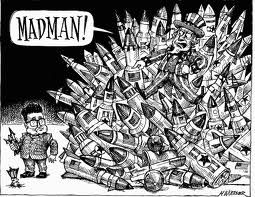
There are two logics at work in relation to nuclear weapons: the realist logic that believes that it is a dangerous illusion to suppose that these weapons can ever be eliminated, and is reinforced by the geopolitical logic that legitimizes the weaponry for the nuclear weapons states while (selectively) criminalizing attempts to acquire the weapons by other states, including those like Iraq, Iran, and North Korea that are surrounded by hostile states and threatened by the United States. Preventing unwanted proliferation is treated by the United States as justifying military threats, and possibly attacks, on the preemptive/preventive war reasoning that was used by the Bush presidency to justify the attack on Iraq in 2003, while neutral or desirable forms of proliferation are indulged (for instance, Israel, India). No domain of international life is more characterized by double standards than is the status of nuclear weapons since 1945. It is an apocalyptic mind game in which the world is supposed to accept the lie that the threat flowing from nuclear weaponry derives primarily from those that do not possess these weapons rather from the nuclear weapons states, above all the United States, that has never even been willing to renounce the option to use nuclear weapons first. In his Prague speech President Obama said that “..as the only nuclear power to have used a nuclear weapon, the United States has a moral responsibility to act. We cannot succeed in this endeavor alone, we can lead it, we can start it.” We should certainly be asking whether the New START Treaty is any kind of start? It hardly seems so as the side assurances on modernization and missile defense seem like robust commitments to continue to bolster the nuclear arsenal in ways that more than offset the quantitative reductions in warheads and launchers, given their large numbers. The treaty might more accurately be called the New Continuation Treaty.

The other logic is one that takes credible steps to explore the prospects for phased nuclear disarmament accompanied by verification. This logic is guided by a commitment to long-term human survival, by strategic prudence, and most of all by acknowledging the inherent immorality and unlawfulness of relying on genocidal instruments of power and security, and of preparing for their use in circumstances subject to neither scrutiny nor accountability. When the most important possible decision a government might ever make is entrusted to a secret set of guidelines that are never exposed to criticism and dissent, it is obvious that democratic forms of governance are being severely compromised. There is every indication that several of the leading nuclear weapons states will never part with these weapons unless there emerges a grassroots global campaign of unprecedented strength, and this seems unlikely without the tragic stimulus of a war fought with nuclear weapons.

We can appreciate that President Obama achieved a domestic political victory, needed at home to counter the perception of his ineffectual presidency, but we also need to keep focused on what is acceptable and what is not with respect to governmental policy. Perhaps, the New START Treaty will make Obama more re-electable, but it will not move us any closer to a world without nuclear weapons, and by substituting illusion for reality, may reduce what momentum had been building for converting the visionary goal embraced at Prague into a genuine political project undertaken belatedly, but with all seriousness, on behalf of the peoples of the world.

************

This table of nuclear forces provides a snapshot of the nuclear weapons arsenal, and the relative size of various country’s share:

Status of World Nuclear Forces 2010*
Country Strategic Non-Strategic Operational Total Inventory
Russia 2,600 2,050a 4,650 12,000b
United States 1,968 500c 2,468d 9,600e
France 300 n.a. ~300 300f
China 180 ? ~180 240g
United Kingdom 160 n.a. <160 225h
Israel 80 n.a. n.a. 80i
Pakistan 70-90 n.a. n.a. 70-90i
India 60-80 n.a. n.a. 60-80i
North Korea <10 n.a. n.a. <10j
Total: ~5,400k ~2,550k ~7,700k ~22,600k
* All numbers are estimates and further described in the Nuclear Notebook in the Bulletin of the Atomic Scientists, and the nuclear appendix in the SIPRI Yearbook. Additional reports are published on the FAS Strategic Security Blog. Unlike those publications, this table is updated continuously as new information becomes available. Current update: May 26, 2010.

a Russia’s estimated total inventory of non-strategic warheads is approximately 5,390 warheads, down from 15,000 in 1991.
b The estimate for the size and composition of the total Russian inventory comes with considerable uncertainty but is based on Cold War levels, subsequent dismantlement rates, and official Russian statements. Perhaps as many as a quarter (~3,000) of the weapons listed may be awaiting dismantlement. An estimated average of 1,000 retired warheads are dismantled per year.
 c Approximately 200, probably including some inactive warheads, are deployed in Europe.
 d An additional 2,500 warheads are spares and in central storage and not counted as operational.
 e In addition to the 5,100 warheads in the DOD stockpile, approximately 3,500-4,500 retired warheads are awaiting dismantlement. In addition, nearly 14,000 plutonium cores (pits) and some 5,000 Canned Assemblies (secondaries) are in storage. See here for breakdown of U.S. warhead inventory.
 f France is thought to have a small inventory of spare warheads but no reserve like the United States and Russia. An additional reduction announced by President Sarkozy in March 2008 will reduced the inventory to slightly less than 300 warheads in 2009.
 g Many “strategic” warheads are for regional use. The status of a Chinese non-strategic nuclear arsenal is uncertain. Some deployed warheads may not be fully operational. Additional warheads are in storage, for a total stockpile of approximately 240 warheads.
 h Only 50 missiles are left, for a maximum of 150 warheads. “Less than 160” warheads are said to be “operationally available,” but a small number of spares probably exist too. Forty-eight missiles are needed to arm three SSBNs with a maximum of 144 warheads. One submarine with “up to 48 warheads” is on patrol at any given time. In addition to the 160 operationally available warheads, another 65 or so are in reserve for a total stockpile of 225.
 i All warheads of the four lesser nuclear powers are considered strategic. Only some of these may be operational. India and Pakistan are increasing their inventories, with Pakistan thought to have a slight lead.
 j Despite two North Korean nuclear tests, there is no publicly available evidence that North Korea has operationalized its nuclear weapons capability. A 2009 world survey by the U.S. Air Force National Air and Space Intelligence Center (NASIC) does not credit any of North Korea’s ballistic missiles with nuclear capability.
 k Numbers may not add up due to rounding and uncertainty about the operational status of the four lesser nuclear weapons states and the uncertainty about the size of the total inventories of three of the five initial nuclear powers.