This post is a short essay responding to a question about my dramatic change of position on the Afghanistan War with regard to its initial justification and flawed execution. It is both a reconsideration of errors of judgment and reflections on how the world has changed in the course of this decade, focusing on the inability of the United States to grasp either its own decline or the related decline in the historical agency of hard power approaches to security.
**********
Reading what I wrote about Afghanistan a decade ago reminded me of how much my understanding of the role of war and hard power in upholding security for the nation and the world has changed. Actually, it seems clear to me that my views on Afghanistan back in 2001 were an exception to my general skepticism about Western interventions in the non-Western world, a view formed during ten years of opposition to the American role in the Vietnam War. At the time, with the Al Qaeda attacks so recently seared into my political consciousness, and some anxiety that more attacks of a similar kind were likely to follow, it seemed logical and helpful to adopt a war strategy as part of an overall effort to disrupt the mega-terrorist capabilities to inflict further harm either in this country or somewhere else on the planet. Although I realized that the international law argument for attacking Afghanistan, with the clear objective of regime change, was weak absent the exhaustion of diplomatic remedies, but such considerations were overcome in my mind by the political argument for doing immediately whatever was necessary to uphold security in this country and generally, and the moral argument that any successor government to what was being imposed on the Afghan people by the Taliban would almost inevitably be a step in the right direction. At first, these early assessments of mine seemed vindicated, but now with the benefit of ten further years of military engagement and retrospective insight, a reappraisal is long overdue.
There were some reasons for skepticism and worry from the outset of the approach to Afghanistan. The manner by which the air war was conducted, and its failure to adopt tactics designed to have a maximum impact on Al Qaeda capabilities were disturbing to me from the beginning of the military operations. The American military undertaking seemed poorly conceived and implemented, naively relying on untrustworthy coordination with Afghan ground forces that had their own distinct agendas often at odds with U.S. counter-terrorist priorities. This unreliability should have been known on the basis of intelligence and prior counterinsurgency experience. The United States Government, and especially the Rumsfeld Pentagon, were ideologically committed to fighting the war with minimum American ground involvement, thereby avoiding heavy American casualties, and yet achieve the goals of the intervention. This was proclaimed at the time to represent a test case for a ‘revolutionary’ transformation of warfare in which technology displaced troops on the ground. We learned very soon that virtually the entire Al Qaeda leadership had managed to escape across the border to Pakistan along with its main cadre of militant trained fighters.
Beyond this central mission failure, the promised regime change in Afghanistan quickly became a costly and obvious fool’s errand. The authority of the new political leadership in Kabul, handpicked by Washington, could hardly extend its writ beyond the capital city despite its dependence on the delegitimizing presence of foreign occupying forces. This led over time to the resurgence and regrouping of a variety of forces of national resistance to foreign occupation, as well as the unexpected revival of the Taliban as both a fighting force and a serious political challenger for control of the country.
Faulty perceptions in this post-9/11 period, including my own, ignored the lessons of Vietnam. It was one thing to mount a counter-terrorist operation against the Al Qaida presence in Afghanistan, which was itself an alien intrusion on national political space, but another for the leading country in the West to seek to override the workings of self-determination within Afghanistan so as to impose a governing structure and political culture more to its liking. This renwed reliance on counterinsurgency thinking, of which General David Petraeus, was the most influential voice within the military, sought to overcome memories of defeat in Vietnam by adopting an approach more friendly to and respectful of the indigenous culture and the human rights of the people supposedly being protected. But it is one thing to be abstractly sensitive in these ways, but it is another to remain a benevolent presence while killing the inhabitants of the country, especially its women and children, while simultaneously doing everything possible to minimize risks of injury and death to one’s own troops. In the circumstances that exist in Afghanistan these two sincerely held objectives are often in tension with notable incidents leading to anger either at the scene in Afghanistan or at home in the United States. It is ironic that Petraeus, despite his historical knowledge, political acumen, and his own prior efforts to right the mistakes of the past, relied on drone strikes at a rate of ten times that of his predecessor, resulting in a predictable rise in civilian casualties and popular alienation. The use of sophisticated unmanned aircraft firing missiles at human targets carries to new heights the technological one-sidedness of such counterinsurgency warfare where as much of the risk as possible is shifted to the territorial society and those who pick targets in safety have neither accountability for deliberate or accidental wrongs nor possess any leverage over the political dynamics within the country. It is this disabling irony that has yet to have its proper impact on American policymaking. Our political leaders seem unwilling to learn that military dominance rarely translates into favorable political outcomes at acceptable costs in the early 21st century.
Despite the evidence supporting such an interpretation of recent historical trends the mistakes of the past are stubbornly repeated, and such a pattern calls for an explanation. It is necessary to consider the impact of factors that overcome the expected rationality of government decision-making and problem solving. Perhaps, the most important of these is the emergence of what Mark Selden calls ‘the permanent warfare state’ in the United States. The country has for decades made a disproportionate investment in achieving military dominance on a global scale. The existence of such expensive capabilities generate strong bureaucratic and ideological pressures to rely on military approaches to ensure a favorable outcome of international conflicts. After all at present, if the United States spends more than the next ten countries in the world combined, there must be a commensurate political payoff, or else it is extremely discrediting with respect to the use of taxpayer revenues in a setting of intense fiscal concern about government spending..
It is this hard power dogmatism that has led the United States, along with its Western junior partners, to engage in a nation-building war in Afghanistan that seems destined for defeat and humiliation. As the Afghan saying goes: “You got the watches, we got the time.” Because the benefits to the United States of persisting in Afghanistan despite the costs seem so uncertain as compared to the clear goals of the opposition to rid the country of foreign occupiers, it seems likely that the longer-term and deeper commitments of the Afghan national resistance will reap eventually the rewards of its persistence. Of course, this prediction is reinforced by the low quality of the Karzai government that undermined its democratizing claim by stealing the most recent faux elections and through its corrupting links to the drug trade and warlords. In the twenty-first century those who cooperate with foreign invaders and occupiers rarely are able to claim ‘mission accomplished’ with any credibility at the end of the day. It is important also to realize that this was not true in the colonial era during which the superior military technology of the colonialists generally prevailed without large losses or major expenditures. Prior to World War II, there was insufficient confidence in the capacity of most non-Western societies to mount an effective national resistance to a determined military intervention, although even here Afghanistan stood out as the one country in Asia that colonial powers found impossible to pacify in a manner that served their interests, with both Britain and Russia failing in their attempts to do so. It is difficult for Americans to appreciate that foreign occupation poses such a stiff challenge to self-determination as to be very rarely viewed as liberating or legitimate by the civilian majority in a country subject to military intervention.
Such generalizations need to be distinguished from the sorts of interventions that seem to have been effective in Kosovo in 1999, and maybe again this year in Libya. In Kosovo, the foreign intervention was a rescue operation in support of a domestic struggle of the Albanian overwhelming majority against what was perceived to be Serbian alien rule sustained by atrocities against Kosovars and posing an imminent threat of violent ethnic cleansing. It was, to the extent that the people of Kosovo enjoyed the status of being ‘a people’ in international law, possible to consider the NATO intervention as being in furtherance of self-determination rather than as an attempt to impose a Western oriented outcome. True, the clarity of such an endorsement of the Kosovo War is qualified by the absence of any UN Security Council authorization for the use of force and by NATO’s controversial reliance on high altitude bombing that killed an estimated 500 civilians on the ground. The post-conflict establishment of Camp Bonsteel, a huge NATO military base also raises questions about the purity of the alleged protective intentions.
In the case of Libya, although the NATO operations ignored the limits of the UN Security Council authorization, the military action reinforced a struggle already underway in the country, and backed by a majority of the population, against a hated dictator that was engaging in indiscriminate violence against his own people, and threatening to do worse. It remains to be seen whether the victors in Libya can bring constitutional democracy and an equitable economy to the country, but at least the intervention is highly unlikely to engender national resistance as there is no foreign occupation contemplated. There are already concerns about the prospect of manipulation behind the scenes by the intervening parties to bring big profits to NATO oil companies and construction firms. If these concerns materialize it could be quite discrediting to the nationalist claims of the new Transnational National Council leadership. Nevertheless, as of now, the main point stands: with UN backing, without any intention of foreign occupation and military bases, against an existing cruel, exploitative, and oppressive rule, and in support of an existing oppositional movement, a Western military intervention can achieve its initial goals, but even then not without evoking considerable controversy and raising suspicions about ulterior motives. Phase one is regime change as has taken place with the defeat of the Qaddafi regime, phase two is constitutional state building and equitable and sustainable development that remains to be achieved, and depends on national will and capabilities.
There was another major dimension of the Afghanistan War as it appeared in 2001 as compared to the way it seems in 2011. What I failed to appreciate then, and has still not been properly registered in mainstream foreign policy thinking, is that during the presidency of George W. Bush, the grand strategic emphasis was placed on control of the Middle East. This objective of grand strategy took precedence over the successful prosecution of the post-9/11 struggle against terrorism. The two different undertakings were misleadingly merged in public consciousness by relying on the unifying, yet diversionary label of ‘global war on terror,’ but in fact while Afghanistan was directly linked to the 9/11 attacks the government of Saddam Hussein in Iraq was only indirectly, if at all, linked. The Iraq War launched in 2003 increased anti-American resentment throughout the Islamic world, and was at odds with an all out struggle against Al Qaeda, which would have given continuing priority to consolidating the early gains in Afghanistan and neighboring Pakistan. Instead, after the military attacks on Afghanistan produced the collapse of Taliban rule, the American emphasis immediately shifted dramatically to the Iraq War, and Afghanistan became a forgotten sideshow, which encouraged the steady deterioration of political order in the country, making a mockery of early claims of achieving a liberating political change welcomed by the population. Obama tried to overcome this unfortunate legacy of neo-conservative foreign policy by both promising to end the Iraq War, a commitment that remains problematic and unfulfilled, and a commitment to view the Afghanistan War as requiring renewed attention due to its relevance to the challenge of terrorism.
Finally, ten years after 9/11 the road not taken of law enforcement, intelligence collaboration, occasional special forces covert undertakings in foreign countries seems attractive on a number of grounds, and the defense of human rights at home and abroad. It would have avoided the costly, mostly failed efforts in Iraq and Afghanistan. It would have avoided national humiliation associated with the panicky recourse to torture that led to the globally discrediting disclosures of systematic abuse of detainees at Guantanamo and Abu Ghraib, and a homeland security apparatus containing many features of authoritarian governance. It would have strengthened claims by the United States to provide benevolent world order leadership based on minimizing the role of war and military solutions, while maximizing the role of law, international police cooperation, and diplomacy, including efforts to take steps to acknowledge and overcome the legitimate grievances of the Arab World, especially the American failure to push for a fair and balanced solution to the Palestine/Israel conflict. This approach would have also allowed a greater concentration of the political imagination and the resources of the country on meeting domestic infrastructure problems and addressing such rising global challenges as climate change and persistent extreme poverty. Furthermore, such non-war path in response to the 9/11 attacks could have demonstrated a realization of the limits of hard power approaches to the solution of conflict and security problems in the early 21st century, and avoided falling again into the traps unwittingly set for the country by pro-interventionists and counterinsurgency advocates. Of course, a counter-factual portrayal of the decade is by definition unaware of the bumps in the road that would undoubtedly have been encountered, especially if further attacks had been successfully launched on high value targets within the United States. Even conceding this unknowability, this alternative path would have been in closer accord with out ‘better angels,’ and corresponded with American continuing claims on the global stage to be the home of moral exceptionalism. If it failed once having been tried, the grounds for a more muscular approach would have been responsibly laid.
These retrospective comments are meant to be non-partisan as far as internal American politics are concerned. The Bush approach after 9/11 enjoyed overwhelming support among the citizenry and in Congress. There were no influential dissenting voices. The mobilization of national unity on the basis of fear and anger, and reinforced by patriotic pride, was intense, effective, and unconditional. My regrets about the policies pursued are mainly preoccupied with the deficiencies of American political culture given the realities and challenges of our world. Unless the political mind of the country becomes quickly disenchanted with military approaches to conflict resolution there is every likelihood of repeating the mistakes of the past decade that will increase dangerous storm clouds that already cast dark shadows menacing the future wellbeing of the country and world.
Tags: al Qaeda, Demography of Afghanistan, Kabul, Mark Selden, Taliban, United States, Vietnam, War in Afghanistan (2001–present)





 Global Justice in the 21st Century
What is Shame?
22 Dec‘Shame’ is a disturbing, much admired, Steve McQueen film that has been misleadingly reviewed, but deserves our serious attention. Let me put my reasoning in provocative language: ‘Shame’ depicts with chilling realism the degeneracy of high-end capitalist life style in the urban landscape of Sodom on the Hudson, otherwise known as ‘The Big Apple,’ that is, New York City. This sterile glitter of clubs and bars, loveless sexuality, acute alienation, and shady business operations is a city within the city that somehow co-exists with the world’s most innovative, abundant, and world class cultural life that continues to contain in its midst many enclaves of normalcy, humanism, and personal fulfillment. There is a central confusion in the film, perhaps deliberate: the city is portrayed as if it can be reduced to this skyscraper reality of nefarious business ventures and the flashy life it offers its operatives.
Most reviews focus on the torments of the main character, brilliantly enacted by Michael Fassbender in the role of Brandon Sullivan, a mid-level employee in an unidentified hugely successful money making enterprise where profitable deals are celebrated in a soulless atmosphere of total indifference to what goes on beyond the glass walls enclosing this outpost of digitized finance capitalism. Is it any wonder that Brandon suffers from an amputated imagination, leaving him in lonely pursuit of sexual gratification? His own inextinguishable decency is disclosed when he withdraws from making love to Marianne, an office mate and the one person in the film who retains her dignity despite the corrupting environment. Brandon understands at that moment, and only then, that sexuality is one thing and love and intimacy quite another. It is worth observing that Marianne, well portrayed by Nicole Beharle, is the only African American presence in the film, possibly suggesting that this whole capitalist escapade is a white racist self-willed implosion posing apocalyptic dangers for the human future. In my political and moral imagination, what is depicted by ‘Shame’ is not to be sharply distinguished from the militarist willingness of Beltway strategists to plan wars to preserve privileged access to oil reserves for the West.
Of course, the film works as ‘entertainment’ because of its narrative and our engagement with its characters, either pro or con. The interaction of Brandon with his younger sister, Sissy (beautifully rendered by Carey Mulligan), is a study in converging contrasts. In a sense Sissy seeks access to the dubious world of her brother by succeeding as a club singer, highlighted by a deeply sad and drawn out interpretation of the signature song, ‘New York, New York.’ Brandon in the audience fights back tears, apparently realizing in some sense that this city, or at least his experience of the city, has robbed him of his soul, and that his sister grasps this reality in the song with depth that is both personally rending and suggestive of the Faustian Bargains that alone will open doors to the lavish joys of the city. In fact, the song is sung with such a display of understanding and authenticity that it seem inevitable that suicidal behavior becomes Sissy’s only unlocked door as she is incapable of enduring a future without genuine love and a sustaining emotional community. Sissy’s hysteria is the counterpart to Brandon’s hyper-alienated sex addiction. There is a mysterious keynote assertion by Sissy seemingly meant to comprehend their messed up lives: “We are not bad people. We just come from a bad place.” Perhaps, it would be more illuminating if the script had read, “We just came to a bad place, or tried to.” As it is, we are never informed about the character of the bad place in their past, and the line has resonance without imparting meaning.
One of the most erotic moments in the film is an attempted subway stalking by Brandon of an attractive woman with whom he exchanges enticing glances. He follows her to the exit, but loses her in the crowd after
a chase that exhibits his desperation and amorality (as the camera let us know earlier that the woman was wearing a wedding ring). The film ends with a similar encounter, although this time the same woman more explicitly encourages contact, which Brandon keenly observes, but chooses to ignore by not following her. Perhaps, this suggests the overcoming of shame by Brandon, shame as understood in its dictionary sense of ‘a painful feeling of humiliation or distress caused by the consciousness of wrong or foolish behavior.’ (Oxford English Dictionary) Brandon seems to have learned enough during this narrative to transcend his shamefulness for at least this revealing instant. Whether Brandon’s momentary epiphany expresses an enduring transformative resolve or is merely a transitory gesture is not resolved by the film, but appropriately consigned by the director to the realm of our imaginative speculation. If transformative, it would require Brandon to seek other work outside the city within the city, and move to a modest hangout in Brooklyn or somewhere far away.
Dwelling on the personal suggests to me that McQueen fails to understand the savage cultural critique that represents the core trans-personal meaning and significance of the film, and what makes it worthy of commentary. Or put more ironically, does this insistence on emphasizing the personal tell us that a commercially acceptable film must be about people not the system if it wants the imprimatur of Hollywood and the reviewing cognoscenti? It is notable that the most thoughtful reviews that I have found all devote their attention to the foreground of these personal struggles and all but ignore the setting that disposes, if not determines, the options available to individuals caught in such a maelstrom that is both exploitative of others and destructive of their better selves.
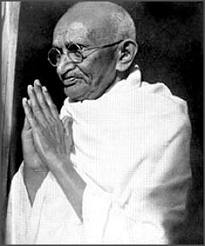
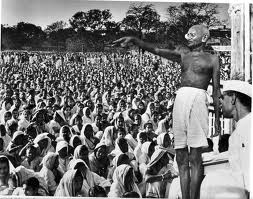
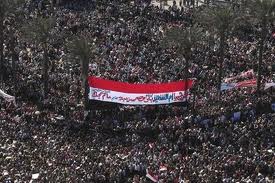
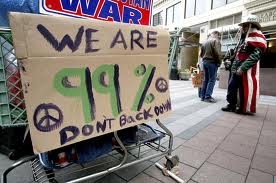
An admirable feature of the film is its effort to capture the real time experience, allowing the camera to linger and giving the viewing audience space to reflect on what is happening. This is a liberty rarely taken by a director who seeks financial viability as a continuing assurance that there will be support for future projects. I assume that McQueen’s eminence as a famous filmmaker frees him from such anxieties, but it should not be forgotten that Hollywood is as tied to Wall Street as Brandon is connected to his lovely, lost sister. I would hope that the Occupy polemics directed at Wall Street are soon extended to express a measure of empathy to the winners, that benighted 1%, as well as to the victimized 99%, so as to achieve the spiritual coherence that respects the Gandhi /Tahrir legacy so often invoked by those inhabiting the tent cities around the world. Whether intended or not, ‘Shame’ helps us complete this circle of victimization, by illuminating the fallen lives of those who seem to prosper by gaming the system. For me the real source of ‘shame’ is not this personal humiliation of the characters, but the shamefulness of their constructed societal environments that seems calculated to achieve an acute alienation that suspends ethical judgment, a goal greatly facilitated by the insidious blending of the wonders of cyberspace with the secretarial skills of gifted entrepreneurs.
Tags: Brandon, Carey Mulligan, Marianne, Michael Fassbender, New York City, Shame, Sissy, Steve McQueen