[Prefatory Note: The post below is a slightly modified version of an interview published in The Nation on September 25th, following the September 14th attack on Saudi oil facilities. It follows a pattern with respect to Iran of accusations, denials, and public uncertainties. This combination of elements, given the leadership in Washington and Tehran, one blustering, the other inflexible, can easily produce an unintended stumble into war. A second shorter interview is appended, conducted prior to the attacks by an Iranian journalist, M.J. Hassani of Tasnim News Agency. It illustrates the seeming rigidity of Iran’s Supreme Guide, considered as having the final word on government policy, exceeding that of the elected leadership.]
Daniel Falcone Introduction to the Interview: After accusations of Iranian drone attacks on Saudi oil facilities, Iranian officials and authorities indicated that “full-fledged war” with the United States could be imminent, prompting Aramco, Saudi Arabia’s state oil company, to suspend oil production by nearly 6 million barrels per day. US Secretary of State Mike Pompeo referred to the purported aggression as an “unprecedented attack on the world’s energy supply.” The allegations caused other countries to ostracize Iran at the United Nations General Assembly and significantly complicated the prospects of a multilateral nuclear deal.
Falcone: Can you provide some context for this latest series of headlines regarding the “Iranian threat.” Is this just “old wine new bottles?”
Falk: The magnitude of this attack on Saudi oil facilities makes the situation more dangerous even if it is considered as nothing more than a quantitative escalation of Iran’s response to US sanctions and other provocations, an Iranian version of Trump’s proclaimed policy of applying ‘maximum pressure’ to bring Iran to its knees. Yet it could be a qualitative escalation if the attack is treated as the biggest test of the US commitment to dominance in the region since 1956 when the US sided with the UN in calling for France, the UK, and Israel to withdraw from the Sinai after the Suez Operation. As Falcone suggests, the American Secretary of State, Mike Pompeo, made war-mongering remarks, including calling the attacks ‘an act of war.’ It is hard to deny that such an attack is an act of war, but against whom, by whom, has not been firmly established.
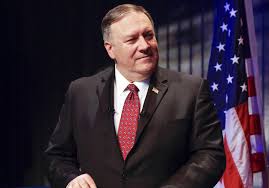
And yet, the hawks in the room clamor for blood, and do not seem to mind if the result is an all out regional war. Stephen A. Cook, the respected Council on Foreign Relations Middle East expert, endorsed this qualitative line of interpretation when he ended his analysis of the attack with some inflammatory words: “If Trump does not respond militarily, the United States should just pack up and go home.” [see Cook, “This is the Moment that Decides the Future of the Middle East,” Flash Points, Sept. 18, 2019]
At the same time, Trump seems to be inclined, at least for the present, to regard the attacks on the Abqaiq oil processing facility and the Khurais oil field as a big serving of the old wine. Trump in typical fashion has displayed both bluster and restraint. At least verbally Trump has spoken in a muscular vein, insisting that if Iranian responsibility for the attack can be demonstrated, then he will retaliate in some proportionate manner. Even under these circumstances, possibly with his eye on November 2020, Trump seems determined to avoid acts that would start an unwanted war. Although ambiguously, Trump still somewhat surprisingly appears to be keeping the diplomatic door ajar. He has been quoted as saying, probably much to Israel’s chagrin, “I know they [the Iranians] want to make a deal..at some point it will work out.” It will not work out if Trump uses this transactional language when approaching the religious leadership of Iran, even if directed at President Rouhani who leads the moderate forces in Tehran. To talk of ‘a deal’ is to demean the process, and helps explain the deep distrust of any American move toward negotiation that was unreservedly expressed recently by Iran’s supreme guide, Ayatollah Khamenei. U.S. leaders and diplomats should by now have learned that the language of the bazaar does not work if the objective is to find an agreement that serves the interests of both sides.
Falcone: With Iran, Trump seems to be caught in a pickle. On the one hand, he needs to undo the Obama legacy in the region with the Joint Comprehensive Plan of Action (JCPOA). On the other hand, he runs the risk of looking like a neoconservative. What’s going on in your estimation?
Falk: I think you are correct in sensing the conflicting pressures on Trump. He cannot go back on his repudiation of the JCPOA agreed upon in 2015 and its Obama approach without seeming to be giving in to Iran’s pressure. At the same time, he evidently does not want to follow the Bolton/neocon/Pompeo path that leads to open military action, and most likely followed by a devastating war. In this sense, Trump’s ideal outcome would be some sort of diplomatic accommodation that he could ‘sell’ as a demonstration that ‘maximum pressure’ has yielded results. Whether he could spin such an outcome as a victory outside of his base seems doubtful as there would be many critics who would insist that any such result, even if it disguised the revival of JCPOA with another round of negotiations and a new name, would be viewed as at best a repetition of what had been achieved by the P5 + 1 Obama diplomacy of 2015. In fact, it now seems that to get any agreement with Iran there would have to be a much more solid commitment by the US and its allies that sanctions could not be again re-imposed on Iran in the future without a collective decision by the parties to the agreement. Such a condtion might possibly also be reinforced requiring a confirming decision on sanctions by the UN Security Council. If I were negotiating on Iran’s behalf, I would certainly insist on ironclad assurances that sanctions could not be renewed by a unilateral decree issued in Washington. Perhaps, Iran could be persuaded to accept some joint arrangements on regional peacekeeping and nonintervention that could be sold in Washington, and maybe even in Jerusalem and Riyadh as curtailing Tehran’s projection of regional power.
Falcone: John Bolton was recently fired. Can you talk about his role in the administration to get us to this point. I’m wondering if his dismissal is mere optics and the Bolton-Pompeo foreign policy is firmly in Trump’s hand.
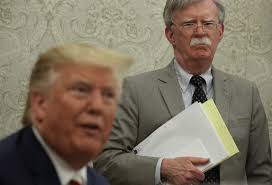
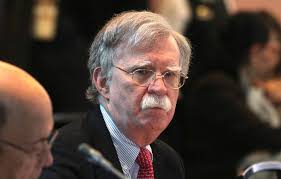
Falk: We should realize by now that Trump’s highly quixotic style is resistant to all attempts at rational analysis. We do not really know whether Trump was reacting to Bolton’s belligerence with respect to foreign policy or to his aggressive, pushy personality that has long offended many prominent persons without achieving promised foreign policy victories. For instance, his advocacy of maximum pressure did not produce the desired regime change in Iran, or even a pullback on its regional involvements as in Gaza, Lebanon, and Yemen. All it did was to raise regional tensions to dangerous heights.
It does not appear that there is any sign of an ideological shift in the White House, although there does seem to be a more complex approach preferred by Trump, which fuses bluster and threats with this resolve to avoid outright combat, war, and any course of action that might lead to American casualties. This zigzag pattern of diplomatic maneuvering has so far seemed capable of absorbing Trump’s drastic mood swings and off the chart impulsiveness. The fact that it drives crazy the rational think tank gurus who dominate the Beltway can be regarded as a plus for Trump. Perhaps, the best explanation of Bolton’s dismissal was his fiery independence, which must have been fundamentally at odds with Trump’s insistence on low-profile deference from his top advisors and the shaping and reshaping of foreign policy on the basis of a constant search for transactional gains (even at the cost of diplomatic setbacks), which treats global policymaking as if it is just a replica of how to succeed in the urban real estate market without trying too hard.
It is lamentable that Bolton’s successor as National Security Advisor, Robert O’Brien, seems to be a milder version of the same hawkish pedigree, although seemingly more bureaucratic, less ascerbic, in style. A few years ago, O’Brien published a book of essays [While America Slept: Restoring American Leadership to a World in Crisis] that was highly critical of the supposed passivity of Obama’s foreign policy. In recent years, as State Department coordinator of hostage releases O’Brien has proven his value by being a Trump enthusiast, which in the present climate is the best credential a person can have who seeks a promotion to a high-status position in the federal government.
Falcone: How does oil, sanctions, and our relations with the Saudis contribute to the rising tensions in the region and the dangerous possibility of escalations?
Falk: There is no doubt that the sanctions imposed on Iran, coupled with the repudiation of the JCPOA, has escalated the conflict, and resulted partly from Washington seeking to please the Saudis and Israelis by adopting a more confrontational approach to Iran. As well, in the background is the dream scenario of toppling the regime, or at least forcing it to plead for mercy. There is no doubt that sanctions have caused great harm as measured by social and economic conditions in Iran, a collective and indiscriminate punishment mainly inflicted on the Iranian civilian population. Such coercion violates the UN Charter and international law. This punitive behavior against Iran resembles what was done to the Iraqi population in the twelve years after the First Gulf War. The frustrations with this reliance on sanctions eventuated in a devastating attack and occupation of Iraq initiated by George W. Bush in 2003. The Iraq War ended in a costly strategic failure given its supposed goals, including a boost to extremism concretely exhibited by the rise of ISIS almost in direct response to the heavy-handed American occupation policies in Iraq.
The prolonged strife in Yemen is part of this mindless militarism. It has included strong American backing for a brutal Saudi intervention from the aiir that has caused widespread suffering on the part of a largely helpless society, posing serious threats of massive famine and disease epidemics
Falcone: I’ve noticed whenever Trump wants to avoid delivering a foreign policy message and tone that sounds like Bush or Clinton he trots Pence out there to do the dirty work. Is this, in your view, to promote war with Iran yet try to create an intentional distance from neoliberals and neoconservatives?
Falk: As always, it is hard to interpret the logic behind Trump’s moves, or even to believe that a discoverable logic exists. He seems to act without calculating gains and losses unless money is involved, but is focused on trying to achieve immediate results that bring him notoriety if not glory. If there is a policy failure, then Trump does his best to shift the blame to others. Perhaps, because confronting Iran is a risky kind of diplomatic venture, it is best to put Pence out in front as often as possible, and thus seek to distance himself from responsibility if and when policy breakdowns occur. Trump consistently personalizes foreign policy and his leadership role demands above all that media attention is focused on himself. Trump stretches the reality of almost any situation to implausible extremes making it necessary to exonerate himself from distasteful and dysfunctional behavior by inverting and inventing facts, lying when it seems helpful, and disseminating fake news without blushing.
Falcone: Of course Israel will always be pertinent in figuring out the US method to the madness concerning Iran. How can following the US-Israeli alliance help us to get a sense of potential war with Iran. Or has this war already been underway?
Falk: The connections with Israel are vital to an understanding of the US role in the Middle East, and especially in the context of Washington’s ‘special relationships’ with Israel and Saudi Arabia. The Israeli relationship is more deeply rooted in American politics than is the Saudi connection, which seems interest-based, relating not only to oil but also to its status as the world’s primary arms purchaser. With respect to both countries, it is arguable that these special relationships are contrary to American national interests in the Middle East, and also lead to behavior contrary to America’s professed values. With regard to the Saudis, their huge investment in the dissemination worldwide of a fundamentalist Wahabist doctrine of Islam would seem radically at odds with the US counterterrorist strategy, especially since 9/11. If Iran’s indirect involvement in the attacks on the Saudi oil facilities is established, then it would allow us to make a challenging comparison with the Saudi direct and indirect involvement in the 9/11 attacks, which according to the official version of the events implicated 15 Saudis of the 19 hijackers.
Most damaging is the FBI evidence of Saudi support for the attacks that killed almost 3,000 Americans that has been withheld all these years until families of victims finally obtained their release. The efforts of the presidency of George W. Bush with inappropriate help from the FBI director at the time who happened to be Robert Mueller, to shield Saudi embassy officials and others close to the royal family from any accountability, or even scrutiny. Only the pressure of survivors and survivor families seems finally to be prying some of this information loose in the course of a law suit charging Saudi complicity in 9/11. Shockingly, yet to be expected, hardly a word appears in the mainstream media, and even now Trump’s Attorney General, William Barr, is invoking the state secrets act to justify on national security grounds withholding evidence that evidently would further incriminate Saudi Arabia. These developments coming to light 17 years after 9/11 should give pause to those who still question the primacy of geopolitics and the unacceptable behavor of the deep state when it comes to the conduct of American foreign policy or even the protection of national interests and the wellbeing of American citizens. It also raises haunting questions about the effects of these two special relationships, and reminds us of the ugly connivance and coverup of the Israeli assault on the USS Liberty back in 1967 that killed 44 American naval personnel. For those who seek the full exposure of this incident, I urge a reading of Joan Mellen’s Blood in the Water, written with the cooperation of leading officers of the Liberty who survived the attack. In effect, bad as Trump is on these issues, he cannot be blamed for everything. These pernicious special relationships long preceded his presidency, and were bipartisan.
As for Israel, the relationship has definitely turned Arab public opinion and popular sentiments strongly against the US, and made the US continued dominance in the region depend on propping up anti-democratic autocratic leaders. The whole policy of confronting Iran has for many years been driven by the Netanyahu leadership, gravely weakening America’s role as a responsible global leader, and risking a war that would be a humanitarian and geopolitical disaster.
How far Israel, as a state, and Netanyahu, personally, are to blame for the escalated confrontation with Iran is difficult to assess, but it would seem to be substantial. What stands out for me is how supposed American ‘patriots’ can continue to swallow the toxic kool aid of these two special relationships. It may be time to reconsider what constitutes patriotism and what constitutes treason. In a world where Edward Snowden, Chelsea Manning, and Julian Assange are viewed as criminals but John Bolton, Mike Pompeo, and Donald Trump are viewed as national patriots there is something terribly wrong with our political language.
Tasnim News Agency Interview Questions, M.J. Hassani, 17 Sept 2019
Hassani: On Tuesday, Leader of the Islamic Revolution Ayatollah Seyed Ali Khamenei deplored the US’ calls for talks with Iran as a trick and said that Tehran will not negotiate bilaterally or multilaterally with Washington at any level. What do you think about Ayatollah Khamenei’s remarks?
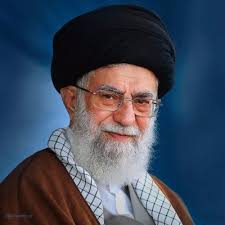
Falk: With all due respect, I think that Ayatollah Khamenei’s remarks are phrased in too unconditional language. I believe that it is not desirable to shut the door to what I call ‘restorative diplomacy,’ and thereby avoid any further devastation caused by the current reliance on ‘coercive diplomacy’ by the adversaries of Iran and by Iran’s ‘active resistance.’ Trump is unpredictable and impulsive, and should not be challenged so directly as he might act irrationally in ways that could be mutually catastrophic. At the same time, the Iranian religious leader is correct to express the view that Iran will not engage in normalization talks so long as the United States and Israel seek to impose unacceptable restraints on Iran as a sovereign nation, while they engage in unrestrained and unaccountable military action throughout the entire Middle East.
Hassani: The reason behind this approach is that Iran sees the US calls for negotiation as a trick aimed at imposing its demands on the Islamic Republic and pretending that the “maximum pressure” policy has worked. This is while Iran has not given in to the US pressures so far. Is the reason justified? How do you assess Iran’s policy of “active resistance” against the US?
I agree with the view that Iran should not be lured into a negotiation that gives the US a public relations victory by claiming the success of its ‘maximum pressure’ approach, but this should be done by Tehran in ways that also expresses Iran’s search for an improved regional and global political atmosphere that is geared toward peace and co-existence rather than war and hostility. I believe Iran has effectively made its point that it will not back down in the face of harsh sanctions and other hostile acts that are contrary to international law. Now it can seize the initiative by proposing a constructive approach that shows that it seeks normalization on the basis of sovereign equality, and is not seeking confrontation for the sake of confrontation.
Hassani: Iran has described the US return to the 2015 nuclear deal, known as the Joint Comprehensive Plan of Action (JCPOA), and the removal of sanctions against the Islamic Republic as the only way that Washington can hold talks with Iran. How do you see the prospect of open diplomacy between Iran and the US as well as the other parties to the JCPOA?
Falk: Trump has wrongly, and for regressive political reasons, condemned the JCPOA, but would have incredible political difficulty and embarrassment if he now were to affirm it. The motivation for condemning JCPOA had to do with his efforts to repudiate Obama’s diplomacy and to show total solidarity with Israel, and is not really about the 2015 agreement, except incidentally. I think Iran should propose to reconvene the countries that negotiated in 2015, and produce a new agreement based on intervening developments, but making it clear that this would not be an acceptance of any preconditions put forward by Washington, and would not relate to non-nuclear issues.
Hassani: Can we regard the Islamic Republic’s strategy of “active resistance” against the US pressures as successful given Ayatollah Khamenei’s assertions?
Falk: I think ‘active resistance,’ depending somewhat on how it is defined has been successful so far, but in some ways a dangerous and high risk policy if adhered to much longer. Iran, having made its point effectively, should move to higher ground by proposing constructive deescalating steps such as reconvening the P5 +1 group to come up with a new framework agreement covering Iran’s nuclear program and the ending of US sanctions. The way forward should not be a continuation of the present, but an effort to occupy this high ground of law, morality, and peaceful conflict resolution. It may also be appropriate at this time to propose an emergency meeting of the UN Security Council, which likely would be rejected by Trump, but would put Iran in a favorable light internationally as creatively engaging in restorative diplomacy. Taking a longer view, Iran should consider reviving discussion of a nuclear free zone for the entire Middle East, including Israel, a country that acquired nuclear weapons by stealth and covert assistance from those states now most objecting to Iran’s nuclear program.
Tags: Bolton, Iran, JCPOA, Khamenei, Maximum Press, Sanction, Saudi oil attacks, Trump


 Global Justice in the 21st Century
Declining Protection of Human Rights: Why?
31 OctThe Future of Human Rights: Regressive Trends and Restorative Prospects
Points of Departure
Reviewing the global situation, the then UN High Commissioner for Human Rights, Zaed Raad Al Hussein of Jordan, opened a 2018 conference devoted to the 25th anniversary of the 1993 UN Conference on Human Rights and Development held in Vienna, on a decidedly pessimistic note. Instead of doing the usual on such occasions, that is, celebrating the progress made since the earlier event, Prince Zaed emphasized the disturbing evidence of regression with respect to a broad range of issues bearing on the protection of human rights embedded in international treaty instruments as evidenced by the practice of states. He insisted that without fundamental changes in patterns of governance by sovereign states and in the operation of the world economy it would be naïve to expect an improved international atmosphere for human rights.
In the background of these remarks was the realization that we live in a state-centric world, which means that there is a significant degree of correlation between the quality of national governance and the presence of a political will on the part of leaders of sovereign states that is dedicated to the realization of human rights. In this regard the most important factor contributing to the declining protection of human rights is the disturbing global trend since the year 2000 away from liberal democracies and toward illiberal democracies. The essence of illiberalism is a resurgent nationalism that devalues international sources of authority such as international law and the UN, and exhibits an unconditional reliance on sovereign rights to act autonomously unless their internal public order system challenges geopolitical strategic priorities (as is currently the case with Venezuela, Iran, and Cuba). At this time, there are almost no important countries that have not embraced this hyper-nationalism of illiberal democracy, which is generally abetted by an autocratic governing style that is impatient with constraints associated with constitutionalism and the rule of law.
The more human rights form of liberalism is especially concerned with patterns of governing, avoiding the abuse of citizens by oppressive mechanisms and facilitating participation in the governing process by way of political parties and rights of free expression. This liberal perspective tends to overlook the relevance of economic dimensions, including the impact of the market and the establishment of social protection mechanisms to overcome poverty and to meet needs of individuals relating to health, education, and housing. The collapse of the Soviet Union was interpreted in the West as demonstrating the superiority of capitalism and the failure of socialism, which also had the effect of removing socialism as a political alternative in many countries, which contributed to the rise of unrestrained capitalism internationally and nationally, definitely weakening the performance records of governments with respect to economic and social rights quite independently of the trend toward illiberal democratic leadership. The efforts by the United Nations to put forward Sustainable Development Goals associated with economic and social challenges substitutes a voluntary process of governmental policymaking for the obligatory commitments of international human rights law, and seems to lack the kind of political traction needed for reaching the ambitious goals set for attainment by 2030.
Ever since 1945 the leader of international liberalism was the United States, which gave human rights considerable visibility in the Cold War Era. The liberal West regarded human rights as essentially reduced in scope to civil and political rights while the socialist East proclaimed their support of economic and social rights as providing the material pre-conditons of human dignity for all. Human rights in these two forms were a competitive ideological focus for these geopolitical rivals, strongly reinforced in the West by the emergence of transnationally organized NGOs dedicated to the promotion and protection of human rights, but overwhelmingly associating human rights with civil and political rights, and not according serious attention to economic, social, and cultural rights. This civil society activism led many observers to conclude that human rights only concerned political and civil rights, a view never accepted in the global South, which tended to privilege economic, social, and cultural rights. In truth, the U.S., much more than its more social democratic European allies, never accepted the view that ‘human rights’ extended to the material needs of people, and always viewed such help ambivalently, as given by governments at their discretionrather than as a matter of obligation. This meant that even the provision of food or health care was voluntary, and not a matter of right. With the style and substance of Trump’s leadership, it has become clear that the international human rights of vulnerable people do not inform public policy unless market manipulations operate to raise wages, reduce unemployment, and improve living standards. Human rights, as rooted in international sources of legal and moral authority, are rendered irrelevant by such an orientation, and are viewed as obstacles to the efficient promotion of investment and trade, which according to such thinking, operate best when governed by market forces rather than by moral sentiments and legal norms.
During the Cold War there was some political motivations for achieving progress with respect to human rights, especially after Jimmy Carter in 1976 made human rights an essential feature of American foreign policy. In the following years, the ideological rivalry with the Soviet Bloc led both sides to claim that their version of human rights was superior to that of their adversary. In essence, the Western claim was that the freedom of the individual was being protected, while in the Soviet bloc the claim was that the collective wellbeing of society was upheld. The practical influence of human rights reached its climax in the anti-apartheid campaign that combined pressure exerted inter-governmentally and by way of the UN with influences of transnational grassroots activism, especially via sanctions and boycotts, given expression in a robust BDS set of initiatives. With illiberal democracies now running the international show, the sun has set temporarily for the human rights movement, and is further threatened by ongoing and unmet challenges throughout the world.
Threats and Challenges to Human Rights
Against this background, a number of threats can be mentioned as intensifying the trend toward the decline of human rights as a framework relevant to the behavior of states internally (state/society relations) and internationally (state to state relations). Basically, the current atmosphere highlighting the legitimacy of ultra-nationalism from a geopolitical standpoint translates at the level of policy into a reciprocal posture of ‘see no evil, hear no evil,’ and thus shields from accountability those that ‘do evil’ to their own people and to others. Rather than provide full expositions of the most salient developments adverse to the implementation of human rights, threat will be enumerated and identified:
Expectations for the Future
The most haunting questions concern whether these pressures adverse to compliance with and implementation of human rights are likely to diminish or even be reversed in the years ahead. A number of key factors to consider will be identified here as questions, but as with the case of adverse trends, the issues will not be fully discussed.
Conclusion
The main objective of this essay is to sketch the profound challenges to human rights that arise from a series of interrelated and overlapping developments, and to give some sense that to restore and enhance human rights is a difficult undertaking that now seems almost impossible given the ultra-nationalist outlook of the governments of most leading states. Yet the future is uncertain, and will be influenced by what peoples variously situated choose to do or refrain from doing. Under these conditions of menace and uncertainty there is every reason to struggle for what is necessary and desirable even if it seems presently impossible of attainment.
Tags: Ecological Imperative, economic and social rights, Human Rights Decline, ultra-nationalism, UN