The Undisclosed Second Paradox in Michael Walzer’s The Paradox of Liberation

20 Jun


There is little doubt that several of Michael Walzer’s contributions to political theory will long remain influential (Revolution of the Saints (1965); Just and Unjust Wars (1977); Spheres of Justice (1983)). Although his work lacks the cumulative weight of a major philosophic presence, the ideas and issues Walzer has been exploring in the last several decades with great conceptual coherence and originality. His work exhibits a consistent practical relevance to the realities of the unfolding world around us. His writing is lucid, well informed, and is mainstream enough to be non-threatening. Walzer’s worldview is congruent with widely shared ethical presuppositions prevalent among liberals in Western society. Added to this, Walzer’s writings are tinged with a socialist nostalgic edge that imparts a now harmless progressive resonance. This is somewhat soothing for all those suffering varying degrees of guilty conscience as we go on as before, enjoying life in non-sustainable consumptive Western societies.


Aside from John Rawls, Jacques Derrida, Jürgens Habermas who enjoy preeminence, only Michel Foucault, Martha Nussbaum, Richard Rorty, and Amartya Sen have had a comparable contemporary influence to that of Walzer by way of philosophic commentary on major public issues. Apart from Walzer’s strong scholarly emphasis on Judaic Studies and ideological support for Israel, it is Rorty who seems closest to Walzer in ethos, philosophic stance, and intellectual style. As I read this latest extended essay by Walzer I kept thinking of the lines from Auden’s great poem “In Memory of W. B. Yeats”:

                        “Time with that with this strange excuse

                        Pardoned Kipling and his views

                        And will pardon Paul Claudell

                        Pardon him for writing well”

The point being that despite often finding Walzer’s views suspect, I never find his writing dull or his ideas without force and relevance, and that maybe in the end what flourishes through time is more style than substance.


Walzer has been a strong and consistent advocate of Israel and outspoken adherent of moderate Zionism throughout his career. Sometimes his eloquent partisanship has been hidden below the surface of his theorizing, giving his undisclosed messages the status of a sub-text, adored by the faithful and repudiated by the critical. Among critics this Walzer tendency to hide his political commitments beneath his theoretical generalization, creates an impression of a rather sneaky lack of forthrightness. For instance, his influential Just and Unjust Wars can be read (without any acknowledgement from Walzer) as a show of strong support for Israel’s approach to Palestinian armed resistance that is expressed in the abstract language of the ethics of counter-terrorism. Walzer’s tendency to be not straight forward about his ideological agenda is intriguingly relevant to his latest book, The Paradox of Liberation, which sets forth a bold and challenging general thesis—that the distinct secular movements that produced national liberation in Algeria, India, and Israel a few generations ago have each most unexpectedly and progressively yielded their identities to intense religious counter-revolutions. These counter-revolutions have each sought to restore tradition and religious observance in public spaces, including the governing process. This religious turn against the secular came as an unwelcome surprise to the founding generation of national liberation leaders whose successors find themselves pushed aside by more socially conservative elites.


These secularizing movements were rooted initially in the opposite belief that only by breaking with societal traditions can liberation be achieved for a national people that is being oppressed or acutely denied its true destiny. As Walzer summarizes: “The old ways must be repudiated and overcome totally. But the old ways are cherished by many of the men and women whose ways they are. That is the paradox of liberation.” (19) In the Paradox of Liberation: Secular Revolutions and Religious Counterrevolutions (Yale University Press, 2015). Walzer is preoccupied by this paradox, and devotes himself to its explication. He contends that the paradox arises from the tension between the mobilization of a people around the negation of that which the majority society affirms (that is, religious values) and while this negation seems useful (even to many of the religiously oriented) during the struggle against alien oppression, it will itself be negated a generation or so after liberation, a phenomenon of negating the negation that can also be understood as the return of the repressed in the form of religious resurgence. The secularists enjoyed a temporary ascendancy because they were active resisters to oppressive circumstances rather than as was the case with religiously oriented leaderships, which tended to be passive and even deferential to the status quo.


This pattern of secularist victory giving way to religion is reproduced in a nationally distinctive form in each of these specific historical circumstances by the seemingly inexplicable rise and potency of religious zeal. In each of Walzer’s three cases, the political moment of successful liberation by secularists was soon to be superseded to varying degrees by the religious moment, an entirely unexpected sequel. The liberators whether led by Ben Bella, Jawaharlal Nehru, or David Ben Gurion were modernizers who strongly believed that religion was being and should be superseded by science and rationality. This meant that religion was largely a spent force with respect to cultural identity and public policy, and should in the future be confined in its role to state ritual occasions and private devotional practice. Walzer argument explains the central misunderstanding of these secular leaders, and expresses his own hope that the religious resurgence should not be viewed as the end of the national narrative. Also, Walzer would not welcome the Algerian phase three sequel to the religious challenge by way of bloody civil war, followed by military autocracy and renewed societal passivity.


What makes the book challenging is its main prescriptive argument that runs as follows. The secular nationalists made a crucial initial mistake, according to Walzer, by basing their movement on the negation of religion rather than byseeking its incorporation. If their secularist goal was sustainable liberation, which it certainly was, then the adoption of an either/or orientation toward religion and its practice was wrong from the start. Instead the attitude of the secular liberators toward religion should have one of constructive engagement, and not negation. What this means in the context of each movement is not spelled out by Walzer. The stress is placed on a recommended (re)incorporation of religious values into the reigning secular ideology combined with sensitivity to traditional values and practices. Walzer is fully aware that his proposed approach becomes problematic as soon as it is pursued unconditionally. As he recognizes, the traditions in each of these nations denies equality to women, often in cruel and unacceptable ways. Walzer does not want secularists to give up their commitment to gender equality for the sake of reconciliation with religiously oriented sectors of society. What he encourages is a sympathetic awareness of traditional attitudes toward gender while seeking to overcome their embedded biases. As is often the case, Walzer is more persuasive in diagnosis than prescription, delineating the problems far better than finding credible solutions.


One difficulty with the framework we are offered in the book is the failure to consider the discrediting relevance of the corruption and incompetence of the liberators, which amounted to a betrayal of their promises to lead a new and happy society of free people. Whether through corruption or the failure to deliver a better life to a large portion of the population, a post-liberation mood of disillusionment takes hold in different patterns, but they share in common the search for an alternative orientation.


In other words the excitement of liberation is hard to sustain during the state-building rigors of governance, and also in most cases, the personalities suitable for liberation are not well adapted to handle the routines and typical challenges of post-liberation existence. Israel, in particular, was an outlier from these perspectives, as its claims of liberation were at all stages shadowed by doubts as a result of fears, threats, uncertainties, and opposition to its underlying legitimacy claim from within its ethnic ranks and more so from those it sought to subdue by either displacement or subjugation. The anti-colonial liberations of India and Algeria never faced such basic challenges to its core identity.


There is for me a closely related yet more fundamental problem with the misleading comparisons relied upon by Walzer to develop his argument. India and Algeria were genuine liberation movements waged by indigenous nations to rid from the entire territorial space of their respective countries a deeply resented, exploitative, and domineering foreign presence. To place Israel in such a category is to foster several deep misunderstandings—there is the master presupposition that the Zionist movement is being properly treated as a case of ‘national liberation’ even if the Jewish nation was not engaged in reclaiming control over its residential territorial space. Jews were scattered in enclaves around the world when the Zionist movement was launched and most of its leaders relied on biblical claims to Palestine to ground its territorial claims. Although the early debate about whether a homeland in Uganda would fulfill Zionist goals illuminates the distinctiveness of the Zionist quest. Beyond this Zionists became legally dependent upon British colonialist support to carry forward their efforts to establish a Jewish homeland in Palestine with the issuance of the Balfour Declaration in 1917. Zionism cannot be meaningfully regarded as a revolt against alien rulership, although in its last pre-state stage it did try to expel Britain from Palestine so as to compel an abandonment of its mandatory administration. Unlike standard anti-colonial movements, Zionism is more correctly perceived as an activist effort to overcome the realities of diaspora Judaism confronted by the persecution, discrimination, and assimilation in an array of national settings.


Given this background, it seems dubious, indeed polemical, to treat Israel’s establishment as an instance of ‘liberation,’ a terminology that obscures the centrality of the ‘dispossession’ experienced by the majority indigenous Palestinian Arab population in the course of Israel’s acquisition of statehood. In passing, Walzer does somewhat acknowledge some of these differences that distinguish Israel from India and Algeria, but regards them as inconsequential contextual issues that do not raise for him any serious doubts about the basic reasonableness of regarding Israel as coming into being as a result of national liberation led by the Zionist movement. Walzer’s focus is rather upon whether Israel fits the pattern of a secularist phase one giving way to a religious phase two, leaving us with a big question mark as to whether there will be a phase three, and if so, whether it will reflect Walzer’s hopes for a belated constructive engagement with religion rather than an Alegerian style relapse into civil strife and autocracy. Although Walzer expresses his personal wish for the Palestinians to have their own sovereign state (53) at some point, this wish is never contextualized or concretized by reference to criteria of equality between the two peoples. The Palestinian national liberation movement is discussed by Walzer as correlative to his main thesis. Walzer notes that even prior to achieving Palestinian statehood, the PLO’s secular leadership has been increasingly challenged and even discredited by a rising Islamist alternative. (53-55)


This reference to the Palestinian national movement is an interesting aside in relation to Walzer’s essential set of contentions relating to the paradox he is depicting, but it fails to engage the issue I find central, which is whether Israel’s establishment can qualify as an instance of national liberation. To be sure Zionism generated an extraordinary international movement that overcame many formidable obstacles that stood in its way, and none more formidable than an indigenous Palestinian Arab majority population that did its best to prevent Zionists from reaching their goal of statehood on behalf of the Jewish people. Although Walzer notes that the early secularist Zionist leaders stressed a commitment to equality when articulating their ideas about the preferred relationship between Jews and non-Jews in the Israeli state. In my view, it is questionable in the extreme whether this idealistic goal ever represented the actual intentions of Zionist leaders. It should be evident to all that such egalitarianism was never expressive of Israeli policies and practices on the ground from even before the establishment of the state of Israel in 1948.


More problematic still, was the dispossession and displacement from the land of most of the indigenous Arab population that had been living in Palestine for many generations. Surely this Palestinian experience is profoundly different in character and consequence from the repudiation of exploitative rule of a country by a foreign, usually European, elite and its native collaborators. Again Walzer’s sub-text, whether consciously intended or not, seems to be the retroactive legitimation of Israel’s claim to be an example of national liberation of the sort achieved by Algeria and India, and hence to be situated in the highest echelon of 20th century state-building undertakings. As many of us realize this ‘liberation’ was for Palestinians a catastrophe, known by its Arabic word nakba.


Overall, this is a peculiar book, developing a general view of religious counter-revolutions against secular movements of national liberation, but due to the inclusion of Israel as a principal case despite not seeming to fit, there is an implicit polemical motivation that involves whitewashing the criminality of Israel’s emergence. Acknowledging such criminality is not meant to be a covert argument for delegitimizing the present state of Israel that has now been in existence for more than 67 years, and is a member state of the United Nations. My critique of Walzer, in other words, is not meant to lay the groundwork for a second Palestinian dispossession, this time directed toward Jews. I side with Edward Said in a commitment to fair future for both peoples based on their shared rights under international law and on diplomacy to negotiate compromises where rights overlap. I do agree with Said that such a jointly conceived future cannot be undertaken without a prior Israeli acknowledgement of the recent past as epitomized by the nakba, and such rituals of redress must include a formal apology to the Palestinian people for the suffering they have for so long endured.


In the end, the paradox that Walzer dwells upon is less consequential than the paradox he ignores: namely, that what is being represented as ‘national liberation’ of the Jewish people by Zionist ideologues is more objectively presented as the ‘national oppression’ of the Palestinian people. This oppression is experienced in different sets of circumstances: as a subjugated minority; as an occupied people; as a nation of refugees and exiles; as a community of resistance aspiring to Palestinian ‘national liberation’; as communities victimized by state terrorism. This second paradox is that what is portrayed as ‘liberation’ for one people serves at the same time as pretext and rationale for the ‘oppression’ of another people. In my view, the second paradox raised life or death questions for both peoples to a far greater extent than does the first paradox that seems to control Walzer’s own Zionist imagination.


Michael Ignatieff, whose political orientation resembles that of Michael Walzer, in the course of a mostly laudatory review of The Paradox of Liberation confirms my suspicion that the undisclosed intent of this book is to connect Israel’s fate with that of such exemplary liberation movements as those that took place in India and Algeria. Consider Igantieff’s revealing language innocently proclaiming this reading: “While Israel remains the central focus of The Paradox of Liberation, Walzer has made a major contribution to the question of what’s happening there simply by arguing that Israel may not be so special after all: the same kinds of problems may be occurring in other states created by national liberation movements. He compares what happened to Ben-Gurion’s vision with what befell Jawaharlal Nehru’s in India and Ahmed Ben Bella’s in Algeria.” [Michael Ignatieff, “The Religious Spector Haunting Revolution,” NY Review of Books, 19 June 2015] In a stunning instance of ‘benign neglect’ Ignatieff never once even mentions the relevance of Palestinian dispossession in his lengthy

assessment of Walzer’s version of Israel’s ‘national liberation’ story. Instead, he makes the opposite point, suggesting that Walzer in an indirect way diminishes Israel by his implicit denial of Israeli exceptionalism. As the language quoted above seems to suggest, Israel is upgraded by its similarities with (rather than differences from) other liberation narratives.


In closing, it is plausible, even morally, to argue that the Zionist cause was in keeping with a variety of attempts over the course of the last century by many nations and peoples to possess a state of their own that is defined by ethnic or religious boundaries that transcend in psycho-political relevance geographic boundaries, which incidentally have yet to be authoritatively drawn to delineate Israel’s territorial scope. Yet what is not plausible is to lump together the Israeli experience with that of India and Algeria just because the founding generation of leaders shared a secular ideology that was later subjected to a religious challenge once the state was established. For India and Algeria their respective anti-colonial struggles each possessed its originality, but without raising doubts about the delineation of the scope of territorial sovereignty and without needing to coercing the native population to submit or leave. This became integral to Zionism in the course of the struggle between opposed nationalisms, with expulsion necessary to ensure Jewish dominance over the development and governance of the country.


If Jewish biblical claims to territorial sovereignty are dismissed, as surely should be a major premise of secular thinking, then the Zionist project needs to be conceived of as essentially one of colonizing a foreign country. The presence of a deeply rooted Jewish minority, less than 5% when the Zionist movement got started in the late 19th century, does not make Palestine any less of a foreign country from the perspective of Jews who settled in Palestine in a spirit of missionizing zeal. As Walzer himself makes clear, Zionists were self-consciously opposed to the Judaism they had experienced in the diaspora that was premised on passivity and deference to the rulers of their country of residence and religiously expressed by the message of patience, the religious duty to wait for the Messiah, the only religiously acceptable experience of liberation. The founders of Zionism, and its current leaders, were determined to reconstitute Jewish life on the basis of assertiveness and even aggressiveness, overcoming the alleged diasporic legacy of passivity, and this feature of their movement has been transformative for even religious Jews. From this perspective, the historic triumphal event was undoubtedly Israel’s victory in the 1967 War, which became inspirational for diasporic Jewish communities identified more strongly than ever with the state of Israel, and questioned their own traditional postures of passivity.


My contention is that Walzer’s paradox dissolves as soon as the claim to categorize Zionism as a mode of ‘national liberation’ is deconstructed, while the second paradox remains to be explained. This second paradox dwells on the moral and political interplay of what transpires when the liberation of the self is organically linked to the dispossession of the other. In a postscript (134-146) Walzer explains why America does not belong with his three cases, which is because America’s original founding never truly embraced secularism. What he might have also said, but doesn’t, is that what the founding of America and Israel have most in common is the dispossession of the native populations, and it is this foundational fact that shapes the state-building experiences of both countries more than either has been willing to acknowledge. In this sense, we might invite Walzer to write a sequel on this second more consequential paradox, but realizing that such an invitation is certain to be refused. Its acceptance would implicitly repudiate the ideological benefits and normative authority of the first paradox that treats the establishment of Israel as if it is entitled to be regarded as one of the illustrious examples of 20th century anti-colonial struggles.


Is the Middle East America’s to Lose?

14 Jun


I was appalled by the embedded colonialism of a recent issue of The Economist [June 6-12, 2015], boldly proclaiming its mood of geopolitical angst on its cover titling its featured story “Losing the Middle East.” Any glimmer of doubt about the intent of the magazine’s editors is removed by displaying a somewhat bedraggled American flag on the cover accompanied by the sub-title “Why American must not abandon the region.” The rationale offered for this political imperative within this most revered journal of intelligent establishment guidance strikes me as even more appalling than this provocative packaging giving the plot away before we even begin reading the story.


What The Economist Proposes


The argument set forth rests on the colonialist assumption that the Middle East is America’s to lose, although not quite, as the lead editorial ends with an enigmatic distinction: “The idea has taken root that America no longer has what it takes to run the Middle East. That it ever could was an illusion. But America has a vital part to play. If it continues to stand back, everyone will be worse of—including the Americans.” We are never told whether the catchall ‘everyone’ includes the people of the region, and whether they even matter in the calculations of this organ of elite opinion primarily concerned with the wellbeing of the West, which is linked seamlessly to the operations of the neoliberal world economy. The strong implication of this lead editorial, never adequately explained, is that America should intervene more throughout the Middle East to reverse, or at least contain, present disruptive trends. Why this is so is never really explored beyond the misleading supposition that American military capabilities can improve the situation if brought more directly to bear and without explaining why, insisting that existing alignments with political actors in the region, regardless of their character, should be reinforced and strengthened.


The pragmatic side of what The Economist seems to be proposing is two-fold:First, a militarist prescription for the pursuit of America’s regional interests, which are identified as counter-terrorism, oil, and preventing nuclear proliferation; secondly, a willingness to accept contradictions in protecting these interests, such as siding with Iran against IS [Islamic State] in Iran and opposing Iran in Syria. It is within this framing that “[t]he Middle East desperately needs a new, invigorated engagement from America. That would not only be within America’s power, it would also be in America’s interest.” Its central critique is that President Obama’s policy is too weak and wavering to be effective, which is clarified by the insistence that “[h]e must be ready to use force. Mr. Obama’s taboo about deploying American soldiers against IS in Iraq has led to a self-defeating shortage of special forces to guide air strikes to their targets.” In their view, Obama’s approach has created a ‘vacuum’ that has “exacerbated the strife and disorder.” The fuller story in the body of the magazine also welcomes the prospect that either Hilary Clinton or any of the Republican presidential hopefuls seem determined to be far readier than Obama to intervene forcibly throughout the region.


Behind this scathing criticism of Obama is the evident belief that America’s geopolitical muscle if applied with skill, militarily and diplomatically, could have lessened the chaos and violence that now pervades the region. Such an argument seems deeply flawed. To begin with, it is hardly accurate to portray Obama as standing aloof from the struggles going on in the Middle East. It is actively militarily engaged against IS and Syria and is in the process of becoming militarily reengaged in Iraq at the present time. It was a strong advocate of the regime changing NATO intervention against Qaddafi’s dictatorial rule in Libya, and it has quietly gone along with the counter-revolutionary shift in Egypt that destroyed the hopes of humane governance, at least temporarily, that surfaced with such excitement in early 2011 throughout the region. My own view is that this degree of American military and diplomatic engagement brought more, not less, chaos to the Middle East. And now, as if to take the critique of The Economist immediately to heart the U.S. Government has announced plans to pre-position heavy weaponry and military personnel in several points in the region so as to be in a better position to intervene rapidly should further crises emerge.


Criticizing the Obama Approach


In my view, the burden of persuasion should always be upon those who favor greater reliance on military force whether in the Middle East or elsewhere. Without acknowledging any inconsistency, The Economist concedes that the Bush invasion of 2003 and subsequent occupation of Iraq was a disaster, illustrative of imprudently intervening in a massive fashion. As every major effort at intervention by the United States has revealed, upping the ante by intervening a bit more, is a slippery slope that has eventually led to defeat after defeat, most vividly evident in the trajectory and outcome of the Vietnam War. This unquestioning militarization of the political imagination, which is what comes through in this sharp criticism of Obama’s approach, does not even pause to consider the benefits of allowing the dynamics of self-determination to control political outcomes in the 21st century.


An unlearned lesson of geopolitics in the post-colonial world is that the power balance has decisively shifted as between intervention by the West and national forces of resistance. These forces have learned to be more effective in their combat tactics, but above all, have come to understand that time is on their side, that a foreign intervener will give up the quest at some point implicitly acknowledging that military dominance is not able to impose a political outcome at acceptable costs. This is not just a matter of democratic societies becoming impatient in the face of a drawn out distant wars with questionable justifications, which causes death and injury to its young citizens, but the deeper realization that the post-colonial politics of resistance over time subverts the will and morale of the intervener. This happened as clearly to the Soviet Union in Afghanistan as it did to the United States in Vietnam, or later in Afghanistan and Iraq, and is more of a reflection of the structure of shifting power relations than of a weakening of ideological resolve.


The central metaphor of ‘losing the Middle East’ presupposes that it was America’s to lose rather than an acknowledgement of the empowerment of the peoples of the region and their governments with respect to the control of national and regional destinies. The metaphor of winning and losing is a colonialist framing of geopolitics that amorally vindicates hegemonic ambitions, especially the virtues of Western control. It gives priority to Western interests in a non-Western geographic domain, and pretends that such an orientation conveniently also happens to be an expression of fidelity to Western values, including democracy and human rights, and of benefit to the affected societies. No where in the extensive article are doubts raised about the unconditionality of support for Saudi Arabia and the other Gulf monarchies that oppress their populations and subject women to humiliating social constraints or to Israel that has dispossessed most Palestinians from their own homeland, and held the rest captive.


The Economist has the temerity to couple its sharp criticism of Obama’s allegedly soft diplomacy by anticipating what is misleadingly described as a “return to the center” that is expected to occur after the U.S. presidential elections in 2016: “The next American president may well be warmer towards Israel, and more willing to turn a blind eye to new settlements in the occupied territories. He or she might do more to reassure Gulf monarchies and speak more sternly to Iran.” What a strange set of hopeful expectations! Obama turned a pretty blind eye to Israeli settlement expansion during the last several years, even instructing his representatives to vote in isolation to shield Israel from UN censure over settlement expansion. His administration has also gone along with the basic approach of the Gulf monarchies, although timidly voicing some recent doubts about the wisdom of respected Saudi air strikes directed against the Houthis in Yemen.


And it is astonishing to note that the Obama presidency is situated by The Economist in the political spectrum as left of center? The idea of returning to the center implies that American regional policy these last six years had somehow veered toward the left. And therefore, for me what The Economist calls the center would more accurately be described as the right, or even the hard right. In most respects, including policy toward Iran, Iraq, and Israel, Obama’s essential approach has been to sustain continuity with the policies of the George W. Bush presidency. There was the same willingness to threaten Iran with a military attack if seen to be crossing the nuclear threshold, a similar stance toward supporting the Shia governing process in Iraq, and the same endorsement of Israel’s defiance of international law, as well as insulating its nuclear weapons capability from even a whispered challenge.


There are more fundamental deficiencies in this analysis by The Economist of what has gone wrong in the region and what to do about it. There is a seemingly blind eye toward the relevance of the history of Western responsibilities for the unfolding political ordeal that is being enacted throughout the Middle East. This perspective overlooks such defining antecedents as the playing out of British and French overt colonial ambitions in the aftermath of World War I and of the statist goals of the Zionist Movement as abetted by British policies during its period of mandate administration. Imposing arbitrary boundaries on the region by Europe meant establishing unnatural political communities that could be held together (or broken apart) only by violence from above (or below). In a revealing respect Lebanon is a poster child of this era of Sykes-Picot diplomacy, having been carved out of Ottoman Syria to satisfy France’s egocentric craving at the time for a colonial possession in the region with a Christian majority.


The Economist’s policy prescriptions are also notable for their failure even to mention international law or the United Nation. These normative sources of authority and constraint are evidently seen as of utterly no concern to the geopolitical optic through which the magazine’s august editors perceive policy options for the region. But if China were to assess its approach to the sovereignty disputes involving the Spratly Islands with the same cavalier attitudes toward the relevance of normative authority, the West would be up in arms, persuasively contending that such behavior is dangerously destructive of a moderate political order in the Pacific.


The Old Geopolitics versus the New Geopolitics


Even when it comes to the pragmatic level of analysis, I find that The Economist’s sense of editorial guidance is woefully shortsighted. Let’s accept their focus on terrorism, oil, and nuclear proliferation even accepting as accurate their portrayal of American interests. Surely, the best way to combat jihadism is a measured withdrawal from the region. As for oil, the Arab producers in the region have shown through the years that their policies are market-driven with scant attention to ideology as shown by their readiness to throw the Palestinians under the bus. Most persuasive of all, nuclear proliferation would be best prevented by establishing a nuclear free zone in the Middle East, which all governments except Israel favor, and have done so for several years. In other words, the idea of trying to fill the so-called vacuum following the European retreat, which began during World War II and was consummated by the 1956 Suez War, with American military power and diplomatic muscle epitomizes the ‘old geopolitics’ of Western hegemony rather than relying on a potential ‘new geopolitics’ of self-determination.


There is, of course, little assurance that the outcome of the interplay of domestic and regional forces in the Middle East will be ethically satisfying or politically stable, but there is at least some likelihood that going with the post-colonial historical flow will produce better results than further reliance on the United States to continue battling the strong currents of nationalism. This clarion call for enhanced trust in the nostalgic imaginary of the old geopolitics seems historically tone deaf. It represents a reliance on the old geopolitics of militarism that should have been discredited long ago by its record of failure and its incredibly high opportunity costs. At the very least, adopting this new geopolitics of self-determination might enable the politicians and citizenry of the United States to take a much needed and long overdue look within its own borders, and devote much more of its imaginative and material resources to creating a humane society at home, starting with its physical and moral infrastructure.


One good starting point for such a program is with the language of political discourse. This idea of the West ‘losing’ a country or, as with The Economist’s cover story, losing a whole region, should be banished from the 21st century political imaginary, and with it the realization that such a concept of winning and losing is worse than anachronistic, it is obsolete. It might be helpful to recall that for many years the American political right accused the U.S. Government of ‘losing China’ only to discover later in the Cold War that China had become a valuable geopolitical ally in the core struggle with the Soviet Union, and still later, that China as much as any country, keeps the world economy from unraveling.

Israel’s Shimon Peres Reacts to the Turkish Elections

10 Jun


Newspapers reported on June 9th that former Israeli president Shimon Peres (2007-2014) was pleased by the outcome in Turkey. He is quoted as saying “I am happy about what happened in Turkey – Erdoğan wanted to turn Turkey into Iran, and there is no room for two Iran’s in the Middle East.”


It is worth recalling that the downward spiral in relations between Turkey and Israel started in a real way when Erdoğan attacked Israel and Peres personally for defending Israel’s massive attack on Gaza at the 2009 World Economic Forum in the course of a panel in which both he and Peres were members. Erdoğan responded to Peres’ contention that Hamas was responsible for violence against Israeli civilians. His words were undiplomatically blunt: “Mr. Peres, you are a senior citizen and you speak in a loud tone. I feel that your raised voice is due to the guilt you feel. But be sure that my voice will not be raised as yours is. When it comes to killing, you know very well how to kill. I know very well how you struck and killed innocent children on the beaches.” So piercing the haze that separates these polite evasions of such international events from the cruel realities under discussion was a welcome rarity: on this occasion Erdoğan was confronting the naked face of power with a truth that needed to be heard. After

interference from the chair, Erdoğan strode off the stage announcing that he was through forever with the World Economic Forum, not for allowing Peres to speak, but for the attempting to stifle a response.


The deterioration in Turkish/Israeli relations climaxed the following year when Israeli commandos boarded the Turkish passenger ship, Mavi Marmara, the lead vessel among six in a freedom flotilla containing peace activists bringing humanitarian supplies to Gaza and seeking to break the Israeli blockade. The incident on May 31, 2010 resulted in the death of nine Turkish nationals, and created an enduring rupture in the political relations between the two countries that continues despite efforts by the American president, Barack Obama, to encourage normalization. Turkey is prepared to compromise on the issues raised by the Mavi Marmara attack, but to its credit will not accept normalization until Israel lifts its blockade of Gaza and ceases its use of massive force against the totally vulnerable Gazan civilian population.


Erdoğan’s departure from diplomatic protocol at the World Economic Forum illustrated his impulsive tendency to vent his feeling in public places without the usual filters of self-censorship that is second nature for most politicians. Of course, assessing such outbursts generally depends on the context and on whether what is being said so forthrightly has merit or not. Erdoğan’s public venting in relation to policies that were sensitive for secular Turks became particularly frequent, intensifying polarization, especially after the AKP’s one-sided victory in the 2011 general election after which the Turkish leader did seem to embrace a more majoritarian view of democracy (acting on the mandate of the majority of voters), and abandoning the pragmatism of his earlier posture based on an acceptance of republican democracy (that is, respect for minority values and views, checks and balances on the exercise of state power).


Reverting to the recent Peres assertion, it is certainly inflammatory and deeply misleading to link Turkey under the AKP with Iran, and to contend that Erdoğan’s hidden project is to convert Turkey into a second Iran. This is both false and insulting, as if Turkey is incapable of self-determination according to the declared will of its own public and elected leaders. There exists no credible evidence that Turkey has in any way endorsed the defining feature of the Islamic Republic of Iran, namely, a theocratic mode of governance.


Peres also essentializes Iran, refusing to acknowledge its recent evolution as a result of Hassan Rouhani’s election as president in 2013 and Iran’s forthcoming nuclear diplomacy that went the extra mile in search of a formula that would normalize its regional and global relations, which if accepted by the West and put into practiced, will almost certainly be viewed as a major contribution to regional and world peace. Peres speaks as if Iran is the hermetically sealed embodiment of political evil rather than a country that has struggled to overcome its autocratic past under the Shah, and managed to be stable during this period of exceptional regional turmoil with its theocracy displaying a willingness to indulge a limited democracy despite threats and provocations from the United States and Israel. There is much to criticize in Iran, but for such criticism to be responsible, it should be responsive to actualities, especially in the Middle East where there are such scant grounds for stability, let alone justice.


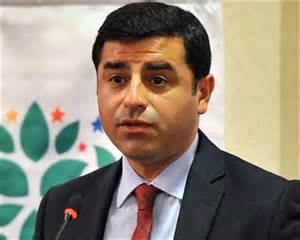
In important respects, the outcome of the Turkish elections is far better interpreted as a Kurdish HDP victory rather than an Erdoğan AKP defeat. Time will tell whether the Kurds will be constructive and creative in this phase of their political engagement within Turkey and in relation to Kurdish political developments in neighboring countries. It will also determine whether Erdoğan is statesmanlike and creative in shaping the political future of the country, taking to heart the electoral message that any shift to a presidential system is not now in the interests of the country.

Turkish Elections: It’s Not Just Erdoğan!

9 Jun

 dgwmt42n4n2

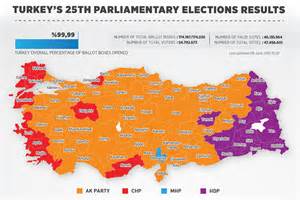
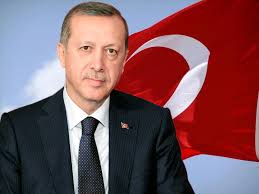
The Turkish general election on June 7th ended more or less as the polls predicted. The only small surprise was that the Kurdish Party (HDP) ended with 13% of the vote rather than either falling just below or above the 10% threshold needed for parliamentary participation. By clearing the 10% hurdle, the HDP denies the winner, Erdoğan Justice and Development Party (AKP), the majority required to form a new government. This means either a coalition, currently deemed unlikely and even undesirable, or a minority government with a new set of general elections scheduled in coming months.


The spinning of the Turkish election results in the West is rather malicious. It seems designed to generate two kinds of reactions: first, that the outcome was a personal defeat for Erdoğan and the AKP; and secondly, that now Turkey faces a period of instability and uncertainty, an atmosphere supposedly confirmed by a drop in the Turkish stock market and currency value. Such assessments, although not totally wrong, are misleading in dangerous and possibly self-fulfilling ways if taken by the Turkish opposition and the world as the real meaning of what took place. It is disturbingly reminiscent of the effort of the opposition in Egypt to discredit the Morsi presidency as soon as he was elected in mid-2012, generating a crisis of legitimacy despite his electoral victory, setting the stage for a populist revolt and the Sisi-led coup a year later. This undermining of electoral results is one of the most dangerous games being played by certain elements in the United States and the Middle East, and could lead the way to yet another regional disaster.


I believe what is most important about the Turkish elections is their affirmation of the growing strength and poise of Turkish democracy. If ever there existed a temptation to manipulate the vote so as to keep the HDP below the 10% margin, it was in this election as it would have enabled the AKP to have the majority in the Turkish Grand National Assembly so as to form a new government on its own and later have the parliament mandate a referendum on the shift to a presidential system in which the governing party would be quite sure to prevail. The fact that enough voters, especially among young and progressive Turkish citizens voted for the HDP, exhibited a healthy resistance to the perceived efforts to consolidate power further in Ankara, especially in the person of Erdoğan.


When the Conservatives in Britain won 36% of the vote to 30% for Labour the media called it a landslide, and a decisive vindication of Tory policies. In Turkey, although slipping 6% points (and losing 2.5 million votes compared to 2011), the AKP still prevailed in the election by more than 15%, winning 41.8% of the popular vote, with its closest competitor being the old Ataturk party, the CHP, winning only 25%. It might be well to recall that in 2002 the AKP formed the government although winning only 34% of the overall vote, gathering its majority because 45% of the total ballots were cast for parties that fell below 10% , resulting in their transfer mainly to the AKP.


The fact that HDP will now have 79 members in Parliament despite being an overtly Kurdish party is a further healthy development that might make a long overdue reconciliation more attainable. Also notable was the election of 97 women to parliarment along with four Christians, the first Roma ever, and a member of the Yazidi community. Such increased diversification refutes in a very vivid manner the contention that the AKP leadership was gradually turning Turkey into an Islamic republic, a so-called ‘second Iran.’


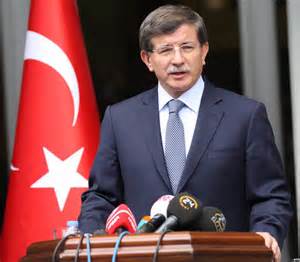
What is so striking about the world media reactions is their failure to note these encouraging developments, or to take balanced account of the dignified acceptance of the public will exhibited by the existing Turkish leadership. The AKP Chairman and Prime Minister Ahmet Davutoğlu, said simply “This nation’s decision is the best decision,” indicating respect for the outcome. So far, as well, Erdoğan has in no way challenged the vote that was certainly, in part, a defeat for his insistence that the ‘New Turkey’ would be more successful if it shifted to a presidential system. He has not lived up to the Putinesque persona that his detractors have long insisted upon.


The other failure of world perception has to do with some attention to some other contextual explanations for some decline in AKP popularity. In the background, is the fact of holding the reins of government in Turkey ever since their surprise victory in 2002, reaffirmed with increasing margins in 2007 and 2011 general elections. It is always a sign of a healthy democracy when a portion of the voters indicate their belief that ‘it time for a change.’ There is truth in the adage that ‘power corrupts,’ and a shift of leadership to a responsible opposition can be a revitalizing development for a country. Unfortunately, a persisting weakness in the Turkish political firmament is the absence of a credible alternative to the AKP. The opposition parties lack leaders of suitable stature or any kind of alternative program that commands widespread support. In this sense, I would suppose that there would have been a larger defection from the AKP in this election if a viable alternative did exist. Why there is no such alternative is something that constructive critics of the AKP should be devoting their attention to rather than giving their energies over to incessant and mean-spirited attacks.


There are additional explanations of some loss of voter support by the AKP. Above all, the weakening of the economy, with growth falling to 3% of GNP, or possibly a bit lower, and unemployment rising to 11%. Such a decline in economic performance is a product of many factors, but it certainly disappointed the expectations of many Turks struggling to get along on a day-to-day basis. Also, important is the deep cleavage that developed with the Hizmet Movement led by Fetullah Gulen, whose followers supposedly shifted votes in this election to the CHP and MHP. And finally, the lingering bad taste associated with the government’s excessive use of force in response to the Gezi Park demonstrations of 2013 apparently led many on the left and among the young to vote for the HDP, and may have given this Kurdish party the support it needed to qualify for parliamentary representation and thereby change the political climate in the country.


images-1


There are also understandable dissatisfactions in Turkey about Ankara’s Syria policy, which has resulted in both a huge influx of refugees, numbering about 1.5 million, and controversial tactics in lending some support to extremist anti-Assad forces. It is always easy to second-guess what to do in situations of a severe humanitarian/political crisis, and no governmental actor has emerged with a positive reputation in this post-Arab Spring period. Although the Turkish government seems to have made miscalculations, especially underestimating the strength and resilience of the Assad regime, it has more than most regional or global actors pursued a principled position throughout. It has supported democratizing movements, and opposed efforts to restore authoritarianism or to use governmental violence against peaceful demonstrators as in Syria and Egypt.


The election results are very new. What will ensue is not yet at all clear. It is a moment for all sides to show leadership and composure, and most of all, Erdoğan and Davutoğlu. Erdoğan, in particular, has been given a rare opportunity to turn electoral defeat into political victory. All he has to do is make a statesmanlike speech, acknowledging the setback for his vision of Turkey’s future but displaying his respect and admiration for the democratic process, and his commitment to maintaining Turkish political stability and working toward economic revival. It would be an opportunity for Erdoğan to put to rest among all except his most ardent enemies, the contention that he is an aspiring autocrat in the Putin mold. In the immediate aftermath of the elections, Erdoğan has so far taken the high road, but without making his response fully evident. At least, he does not lament defeat, but rather acknowledges the will of the electorate expressed by a vote in which 84% of eligible voters took part, and calls on all parties to evaluate the results “healthily and realistically,” adding that “the esteem of our nation is above all else.” Instead of berating the opposition, Erdoğan praised the turnout as exhibiting “the precious nation’s determination for democracy and for reflecting its will at the ballot box.” There was no bombast or recriminations that has sometimes in the past marred Erdoğan’s performance as a leader. It is too early to be sure that this benign mood will persist, but these early signs are hopeful.


For Davutoğlu the opportunity presented to him is more complex, but still very present. It is his moment to show firm leadership and demonstrate his dedication to a smoothe transition in the interest of the whole country. Without distancing himself from Erdoğan, Davutoğlu can demonstrate that he is quite capable of leading the country, and sensitive to the benefits of parliamentary democracy. Davutoğlu could emerge as a co-leader with Erdoğan that would not only restore confidence in AKP’s competence and underlying commitment to secular democracy, but would show to the Middle East that non-autocratic rule true to a nation’s history and character is possible. Of course, it is also a moment to move forward with the Kurdish peace and reconciliation process and to improve the human rights record of the government, especially showing a greater capacity to respect criticism from the media and political dissenters.


Despite the turbulence of the region, the economic troubles of neighbors in the Middle East and Europe, Turkey has enjoyed a period of extraordinary success during these years of AKP governance. The economy tripled in size, the militarized deep state has been dismantled, and overall democracy has been strengthened and diversified in relation to gender and ethnicity. Beyond these national gains, the regional and global standing of Turkey increased dramatically. Perhaps, more than any country, Turkey in this AKP period showed the world that it is possible to pursue an independent line in foreign policy and yet maintain continuity with its most enduring alignments. It is easy to overlook such notable achievements, especially given the polarizing passions of the anti-Erdoğan opposition.

It may also be a time for bringing back the steady hand of Abdullah Gul to the governing process. It would be a further sign of the ability of the AKP to learn from its mistakes, and to provide Turkey with the best possible leadership.


In my view, persons of good will throughout the world and in Turkey, should now breathe a sigh of relief, being glad that the AKP plan to establish a presidential Turkey has been put back on the shelf and yet relieved that the AKP was again supported by a significant plurality of Turkish citizens in an impressively free and fair electoral process.

FIFA Scandals are Worse than Bribes

5 Jun


Lost in the heavy clouds cast by the spectacular FIFA corruption disclosures climaxing so far with the resignation of its compromised president, Sepp Blatter, is a worse scandal of racist discrimination that has so far been flying beneath the media radar. Blatter, with customary wheeling and dealing, did his best to protect Israel from long standing Palestinian grievances—physical harassment of Palestinian players and teams by long delays and arbitrary restrictions on movement, an indulgent attitude toward the hateful baiting by Beitar Jerusalem threateningly yelling ‘death to the Arabs’ as a warning to Palestinian players, and inclusion of teams from the unlawful settlements competing in Israel soccer leagues violating FIFA’s own rules. The Palestinian Soccer Association was persuaded by Blatter to drop its charges, with a renewal of previously empty pledges to ameliorate conditions confronting Palestinians coupled with a surely ironic plea to keep ‘politics’ from intruding on ‘the beautiful game.’ As if the humiliations and constraints imposed on the Palestinian teams were not political!


Without recounting the details, I would make reference to three assertions that are markers for the moral imagination in relation to this provocative interplay of sport and politics in situations of acute oppression and criminality. The first assertion is by the mild mannered president of the Palestinian Soccer Association, Jabril Rajoub: what Palestinians face is worse than what South African blacks faced in the apartheid era—“There they wanted them to be slaves. But here in Palestine, they don’t want us to be.” [quoted in Rudi Rodoven, “Palestinian Soccer Association Drops Effort to Suspend Israel from FIFA,” NY Times, May 29, 2015] Whether there is objective confirmation of such an attitude or not on the Israeli side, this Palestinian subjectivity is widely experienced, and is certainly confirmed

by the tactics and language of right-wing Israelis who increasingly control the political and moral space in the country. There is much public and legal attention right given to establishing genocidal intent, but rarely is there notice paid to the ways acute oppression and racism is experienced by the victimized community.


Mr. Rojoub’s cry of torment reminded me of Audre Lorde’s poem, ‘Litany for Survival’ that was frequently quoted a year ago in the days after the Ferguson killing of Michael Brown to express a similar subjectivity prominent among African-Americans. Counseling her people to speak their true feelings even if it produced angry pushback, the last lines of Lorde’s poem resonate with those anguished words of Jabril Rajoub quoted above:

and when we speak we are afraid our words will not be heard

nor welcomed
but when we are silent we are still afraid

So it is better to speak remembering
we were never meant to survive

It is a sad truth confirmed over and over again in tragedy after tragedy that those who are dispossessed, subjugated, and displaced are never meant to survive, and thereby finally erased altogether from the consciousness of those who do the dispossessing, subjugating, and displacing. It took a strong dose of revisionist history to challenge generations of delusion that allowed children in America to celebrate Columbus Day without pausing to wonder what tears flowed in native American communities that were never meant to survive.


From such a reflection, the mind moves without pause to the sentiments often captured in early self-serving Zionist musings about ‘a country without a people for a people without a country.’ Perhaps the most memorable formulation was that of Chaim Weizman in 1914 at the World Zionist Congress: “..there is a country which happens to be called Palestine, a country without a people, and on the other hand, there exist the Jewish people, and it has no land. What else is necessary than to fit the gem into the ring, to unite this people with this country?” Remember that such malicious falsehoods were uttered long before the name of Hitler was even known, much less Naziism or the Holocaust experienced. This assertion was made even a few years before the infamous Balfour Declaration alerted the world to British colonial support for the establishment of a Jewish national home in Palestine. It is worth noting that Palestine was inhabited at the time by well over a half million Palestinian Arabs, of whom less that 7% were Jews, and many of these were then opposed to the Zionist project as disruptive of their mostly calm co-existence with the Arab majority.


What do these three laconic reflections on the relations between perpetrators and victims tell us? As Rajoub implies, the presence of the slave, however much abused, is wanted, even deemed necessary, as the prevailing social and economic arrangements depend on such exploited labor. As the unfolding South Africa overcoming of apartheid disclosed, at some point, because there is a deformed kind of mutuality between master and slave, when the underlying balance shifts, a previously unimaginable accommodation abruptly becomes attainable.


But when the primary stake is land, not labor, then erasure is the goal of the perpetrator and the justifiable fear of the victim is extinction, or at least, exclusion. Fortunately, in our modern world these polarized subjectivities are not acted out to their full extreme except in the most monstrous of scenarios such as the fate that befell European Jewry in the period of Nazi hegemony. Yet even if not literalized there are objective consequences of the illusion that the other doesn’t exist or should be induced quietly to disappear. In the emergence of Israel, the Zionist momentum shifted the site of struggle from the imaginary of emptiness to the battlefields of dispossession inflicting the traumas of the nakba and naksa, and without an end in sight.


What has so far been distinctive, even inspirational, about Palestinian perseverance is their refusal to leave the historical stage despite enduring a long litany of unspeakable abuses that would have broken the will of many peoples. We cannot know the future by peering through such ‘a glass darkly,’ but more and more people throughout the world are becoming aware that solidarity with the ongoing Palestinian struggle for political oxygen is the most salient and compelling moral cause of our time.


In the aftermath of Netanyahu’s electoral victory in March David Shulman writes movingly and enigmatically of the unsustainability of the status quo: “Perhaps hope lies in a vision of all territory west of the Jordan River as somehow more than one state but less than two, under conditions of true equality… One thing is certain. The demand to fully enfranchise the Palestinians now suffering under Israeli rule will eventually prove irresistible. What happens after that, no one can say.” [Shulman, “Bibi: The Hidden Consequences of His Victory,” NY Review of Books, April 23, 2015] Even such a somewhat hopeful prospect is insufficient to render justice to the Palestinians as it leaves out of account the more than 7 million Palestinians living in refugee camps or exile; in many instances, their circumstances are as desperate, or even more so, than that of Palestinians living in utter vulnerability beneath the yoke of prolonged occupation.

America at Its Best is Strange

31 May

America at Its Best


America even at its best is a strange place, alive with contradictions, a Teflon political culture that has an unshakable faith in its innocent and virtuous national character and its overall impact on the world, impervious to the ghosts of slavery and of ethnic cleansing of native Americans that should be tormenting our sleep and darkening our dreams, comfortable with its robust gun culture, and with its promiscuous reliance on rogue drones engineered to kill on command and on the brutal happenings that take place in black sites immorally situated in countries whose leaders agree to avert their gaze from the dirty work taking place. Looked at from a short distance this is not a pretty picture.


Yet there are still those rare moments when this unsavory national profile seems not to be telling the whole story. For instance, I felt heartened by a recent news item reporting that the conservative Nebraska Legislature voted to abolish capital punishment, and in doing so went so far as to override the governor’s veto. That’s right, Nebraska!


Unfortunately, the welcome Nebraska move may not survive the backlash in the making. The Republican state governor, Pete Ricketts, vows to overturn the new law: “My words cannot express how appalled I am that we have lost a critical law to protect law enforcement and Nebraska families.” He is supported in this lethal passion by a pro-capital punishment legislator who proposes arranging a ballot initiative that supposedly will allow Nebraskans to reinstate the death penalty. It is not yet certain whether this is a legally permissible tactic.


While the abolitionist move stands there is a strong temptation to commend Nebraska for such an unexpected show of humanistic sensitivity, but that would be misleading, overlooking what actually swayed the majority to vote the way they did. Speaking for this majority, Peter Collins put it this way, “We went into it wanting to remain objective. This is purely about costs.” And sure enough, it seems that it was primarily conservatives, not liberals, that pushed hardest for abolition on the amoral grounds of fiscal conservatism and a commitment to “philosophical consistency” when it comes to entrusting the government with authority over life and death. As a Republican legislator, Laure Elke, insisted the bill was “a matter of conscience,” because if you are not able to trust the government on health care, how can it be trusted on such irrevocable life/death decisions. A few other conservatives were apparently troubled by the seeming contradiction between supporting the right to life for the unborn as a sacred matter while permitting a state government to impose death on a life in being.


The main crusader for the bill was a Democrat, Senator Ernie Chambers who had tried 37 times during his forty years in the Nebraska Legislature to get rid of the death penalty before achieving this notable victory. Even Chambers was forced to acknowledge that it was ‘conservative pragmatism’ not liberal idealism that made the difference, taking note of a growing Republican trend to oppose capital punishment because it is viewed as costly, inefficient, and for some, un-Christian. On one level, who cares why capital punishment was abolished. It is the outcome that counts. Yet on a second level, it is worth caring, because if the decision reflects cost/benefit assessments rather than a principled ethical stand, it could be quickly reversed when calculations changed.


It is indeed a strange country: rapid public strides in the direction of freedom to shape one’s own gender identity giving rise to a series of vindictive pushbacks by those that want to impose their particular life style on those that seek to live differently in ways that do no harm. The opportunistic rants of right wing politicians on such issues as same sex marriage, trans gender identity, and abortion may not be meant to hurt and demean but they do. They hurt and demean those who want to live openly their authentic identities or deeply felt needs, which is what freedom should mean for all of us, not just for ourselves but our neighbors, that is, for every sentient being on the planet. and are so often elsewhere in our world forced to live in locked closets or face harsh criminal punishments. Is not this the deeper meta-religious significance of globalization. For all that is wrong with what the United States is doing to others throughout the world, these explorations on the frontiers of personal freedom might be the start of a better page of national history if this forward momentum can be sustained and exported in relation to personal self-determination.


Perhaps, and only perhaps, what we insist upon for ourselves might finally spill over with respect to what we to do to others. I don’t expect the drones to disappear anytime soon or even for capital punishment to become a bad memory, but at least more folks will begin to draw the sort of connection that to align themselves with a conservative repositioning similar to what turned a big majority of legislators against the death penalty in Nebraska. Given the political climate in the country, ‘conservative pragmatism’ may be the best we can currently hope for at this time for America. Sadly, the 99% have once again left the playing field of political life enabling the 1% to indulge their inexhaustible appetites.


Of course, for me the abolition of capital punishment has never been a matter of cost/benefit analysis whether measured in dollars or bureaucratic efficiency. It is a matter purely situated in the domain of values. I believe that no government should ever be given the authority to kill its own citizens, or that anyone anywhere should be vested with authority to kill without proper submission to the rule of law, whether acting domestically or internationally, and I believe it would benefit prospects for species survival if many of us as possible strive for and advocate a comprehensive ethos of nonviolence or what Glenn Paige has dubbed ‘a non-killing politics.’ For now, this is a utopian wish, but this goal has long struck me as being a time sensitive ethical and biopolitical imperative. In the domain of social practice, I feel the same way about same-sex marriage, gender self-determination, and the reproductive rights of women. Capital punishment is about wrongful death, same-sex marriage is an emotional component of the right to life, and reproductive rights recognize the sacred endowments and personal responsibility of women in relation to their own bodies.


America is not alone in being strange. All countries are strange reflecting the particularities of tradition and experience. Strangeness is bound up with originality and contradiction, and is not necessarily negative. We can be inspired by what is strange and wonderful, and appalled by what is strange and abusive. It is this negative strangeness that we must struggle to mitigate, whether it be capital punishment, human trafficking, or the subjugation that accompanies deep poverty and all forms of forcible dispossession.

Parodies of Parity: Israel & Palestine

14 May

Parodies of Parity: Israel & Palestine


As long ago as 1998 Edward Said reminded the world that acting as if Palestinians were equally responsible with Israelis for the persisting struggle of the two peoples was not only misleading, but exhibited a fundamental in misunderstanding of the true reality facing the two peoples: “The major task of the American or Palestinian intellectual of the left is to reveal the disparity between the so-called two sides, which appears to be in perfect balance, but are not in fact. To reveal that this is an oppressed and an oppressor, a victim and a victimizer, and unless we recognize that, we’re nowhere.” [interview with Bruce Robbins published in Social Text (1998)] I would rephrase Said’s statement by substituting ‘any engaged citizen and morally sensitive intellectual’ for ‘the American or Palestinian intellectual of the left.’ We do not need to be on the left to expose the cruel hypocrisy of suppressing gross disparities of circumstances, or more to the point, blocking out the multiple diplomatic, military, material, and psychological advantages enjoyed by Israel as compared to the Palestine. “It is elementary, my dear Watson!” as Sherlock Holmes so often exclaimed, or at least it should be.


Unfortunately, a principal instrument of the mind numbing diplomacy of the United States is precisely aimed at avoiding any acknowledgement of the disparity that at the core of the encounter. As a result, the American public is confused as to what it is reasonable to expect from the two sides and how to interpret the failure of negotiations to get anywhere time and again. This failure is far from neutral. It is rather the disparity that has done the most damage to peace prospects ever since 1967: This pattern of delay has kept the Palestinians in bondage while allowing the Israelis build and create armed communities on occupied Palestinian land that was supposedly put aside for the future Palestinian state.


Beyond this appeal to intellectuals, Said’s message should be understood by everyone everywhere, and not just by Americans and Israelis, although these are the two populations most responsible for the prolonged failure to produce a peace based on justice. Elsewhere, except possibly in parts of Western Europe, such a discourse as to shared responsibility for the ongoing struggle is not so relevant because the ugly forms of Israeli exploitation of the Palestinian ordeal have become increasingly transparent in recent years. Only in America and Canada has the combined manipulations of hasbara and the Israel Lobby kept the public from sensing the extremities of Palestinian suffering. For decades Europeans gave Israel the benefit of the doubt, partly reflecting a sense of empathy for the Jewish people as victims of the Holocaust without giving much attention to the attendant displacement of the indigenous Arab population. Such an outlook, although still influential at the governmental level, loses its tenability with each passing year. 

Beyond this, there are increasing expressions of grassroots solidarity with the Palestinian struggle by most peoples in the world. It is a misfortune of the Palestinians that most political leaders in the world are rarely moved to act to overcome injustice, and are far more responsive to hegemonic structures that control world politics and their perception of narrowly conceived national interests. This pattern has become most vividly apparent in the Arab world where the people scream when Israel periodically launches its attacks on Gazan civilian society while their governments smile quietly or avert their eyes as the bombs drop and the hospitals fill up.


In Israel, the argument as to balance also has little resonance as Israelis, if they pause to wonder at all, tend to blame the Palestinians for failing to accept past Israeli conflict-resolving proposals initiatives made over the years. Israelis mostly believe that the Barak proposals at Camp David in 2000 and the Sharon ‘disengagement’ from Gaza in 2005 demonstrated Tel Aviv’s good faith. Even Netanyahu, at least when he is not seeking reelection, and is speaking for the benefit of an American audience disingenuously claims Israel’s continuing dedication to a peace process based on seeking a two-state solution while he explains diplomatic gridlock by contending that lacks a Palestinian partner in the search for peace, and never deigns to mention the settlement archipelago as an obstacle.


Looked at objectively, by assessing behavior and apparent motivation, it is the Palestinians that have no partner for genuine peace negotiations, and should have stopped long ago acting as if Israel was such a partner. That is, Israel inverts the Said disparity, contending that the public should point its finger of blame at Palestine, not Israel. Of course, this is hasbara in its impurest form. Israel never made a peace proposal that offered Palestinians a solution based on national and sovereign equality and sensitive to Palestinian rights under international law. And as for Sharon’s purported disengagement from Gaza, it was justified at the time in Israel as a way to deflect international pressures building to pursue a diplomatic solution and it was managed as a withdrawal that didn’t loosen the grip of effective control, leaving Gaza as occupied and more vulnerable than it was when the IDF soldiers patrolled the streets. Since 2005 the people of Gaza have suffered far more from Israel’s military domination than in all the years following 1967 when occupation commenced, and it should be clear, this outcome was not a reaction to Hamas and rockets. Hamas has repeated sought and upheld ceasefires that Israel has consistently violated, and offered long-term arrangements for peaceful coexistence that Israel and the United States have refused to even acknowledge.


Where the equivalence argument is so influential is with the Obama administration and among liberal Zionists, including such NGOs as J Street and Peace Now that are critical of Israel for blocking progress toward a two-state solution. It is a blindfold that obscures the structural reality of the relationship between the two sides, and believes that if Israel would make some small adjustments in their occupation policy, especially in relation to settlements, and if the Palestinians would do the same with respect to refugees and accepting Israel as a Jewish state, then a negotiated peace would follow as naturally as day follows night. In effect, Israel is expected to curtail unlawful settlement activity in exchange for Palestine suspending its rights under international law affecting the situation of several million Palestinian refugees. As is widely known, Jews from anywhere in the world have an unconditional right to immigrate to Israel, whereas Palestinian living abroad with deep residence roots in the country are almost totally banished from Israel including if their purpose is to resume residence so as to live with close family members.


In Ramallah back in March 2013, and speaking to a Palestinian gathering, President Obama did forcefully say that “The Palestinians deserve an end to occupation and the daily indignities that come with it,” and this will require “a state of their own.” Obama even then acknowledged “that the status quo isn’t really a status quo, because the situation on the ground continues to evolve in a direction that makes it harder to reach a two-state solution.” Such a display of circumlocution (“..continues to evolve in a direction”) so as to avoid clearing mentioning Israel’s continuous encroachment on the land set aside by the international consensus, is for a discerning reader all that one needs to know. The unwillingness to challenge frontally Israel’s unlawful and obstructive behavior is underscored by Obama’s reassurances given to a separate Israeli audience in Jerusalem on the same day that he spoke guardedly to the Palestinian, with such phrases as “America’s unwavering commitment,” ‘unbreakable bonds,” “our alliance is eternal, it is forever,” “unshakeable support,” and “your greatest friend.” No such language of reassurance was offered the Palestinians. His two speeches left no doubt that Israel retained its upper hand, and could continue to rest easy with this status quo of simmering conflict that had worked so long in its favor.


The Secretary of State, John Kerry, ploughs the same field, calling on both sides to make “painful concessions.” Obama in his Jerusalem speech illustrated what this concretely might mean, assuming that the two sides were equally called upon to act if peace were to be achieved. The Palestinians were called upon to recognize Israel as a Jewish state, while Israel was politely reminded in language so vague as to be irrelevant, “Israelis must recognize that settlement activity is counterproductive.” To ask Palestinians to recognize Israel is to affirm as legitimate the discriminatory regime under which the 20% Palestinian minority lives, while asking the Israelis to recognize that the counterproductive character of settlement expansion is to misunderstand Israeli intentions. If their goal is to avoid the establishment of a Palestinian state then being ‘counterproductive’ is exactly the result being sought. Besides asking the Palestinians to abridge their rights while requesting Israel to admit that their settlement activity is not helping the diplomatic process is to appeal to their self-interest, and avoid a demand to cease and reverse an unlawful, likely criminal, activity. The false equivalence is a metaphor for the deformed framework of diplomacy that has unfolded largely as a result of the United States being accepted as the presiding intermediary, a role for which it is totally unsuited to play. This lack of qualification is admitted by its own frequent declarations of a high profile strategic and ideological partnership with Israel, not to mention the interference of a domestic Israeli lobby that controls Congress and shapes the media allocation of blame and praise in relation to the conflict.


Kerry expresses the same kind of one-sidedness in the guise of fairness when he calls on the parties to make compromises: “..we seek reasonable compromises on tough complicated, emotional, and symbolic issues. I think reasonable compromises has to be a keystone of all of this effort.” What kind of compromises are the Palestinians supposed to make, given that they are already confined to less and less of the 22% of the British Mandatory territory of Palestine, and since 1988 have sought no greater proportion of the land. Kerry’s approach overlooks, as well, the defiant refusal of Israel to act in good faith in relation to the 1967 Security Council Resolution 242 that called upon Israel to withdraw without claiming territory through its use of force or by taking advantage of being the occupying power. In the interim, while being unwilling to do anything concrete to implement its view of decades that Israeli settlement activity is ‘counterproductive’ the United States proclaims and proves its readiness to oppose any Palestinian attempt to gain access to the UN to express its grievances, an effort which Obama denigrated as “unilateral attempts to bypass negotiations through the UN.” The Palestinian Authority has repeatedly made clear that it favors a resumption of direct negotiations with Israel, despite being at a great disadvantage within such a framework, and insists persuasively that there is no inconsistency between its seeking greater participation in international institutions and its continued readiness to work toward a diplomatic solution of the conflict. If Israel and the United States were sincerely dedicated to a sustainable peace, they would encourage this Palestinian turn away from violent resistance, and their increased effort to push their cause by persuasion rather than missiles, to advance their cause by gaining respectability through joining institutions and adhering to lawmaking treaties instead of being confined in a prolonged rightless lockdown euphemistically disguised as ‘occupation.’


In the end, we cannot see the situation for what it is without reverting to theSaid insistence that the relation between oppressor and oppressed is a paramount precondition for sustainable peace. Unless the structural distortion and illegitimacy is acknowledged, no viable political arrangement will be forthcoming. From this perspective the Kerry emphasis on ‘reasonable compromise’ is as mind numbingly irrelevant as it would have been in seeking a peaceful end to racial struggle in apartheid South Africa by demanding that ANC and Nelson Mandela become amenable to compromise with their racist overlords. Peace will come to Israel and Palestine, and be sustained, if and only if the oppressor becomes ready to dismantle its oppressive regime by withdrawing, not merely by disengaging Gaza style. At present, such a readiness is not to be found on the Israeli side, and so long as this is so, direct negotiations and these periodic calls issued by Washington to resume direct talks have one main effect–to free Israel to realize its ambition to establish ‘Greater Israel’ while keeping the Palestinians in chains. This ambition has not yet been explicitly embraced by the Israeli leadership, although only those who refuse to notice what is happening on the ground can fail to notice this expansionist pattern. Israel’s new coalition government even more rightest and pro-settler than its predecessor makes Israel’s ambition to end the conflict by self-serving unilateral action less and less a well kept state secret.

The Semantics of Struggle

9 May

Words Against the Grain


While reporting to the UN on Israel’s violation of basic Palestinian rights I became keenly aware of how official language is used to hide inconvenient truths. Language is a tool used by the powerful to keep unpleasant realities confined to shadow lands of incomprehension.


Determined to use the rather modest flashlight at my disposal to illuminate the realities of the Palestinian ordeal as best I could, meant replacing words that obscure ugly realities with words that expose as awkward truths often as possible. My best opportunity to do this was in my annual reports to the UN Human Rights Council in Geneva and the General Assembly in New York. My courageous predecessor as Special Rapporteur, John Dugard, deserves credit for setting the stage, effectively challenging UN complacency with language that looked at the realities lurking below the oily euphemisms that diplomat seem so fond of.


Of course, I paid a price for such a posture as did Dugard before me. Your name is added to various black lists, and doors once open are quietly closed, if not slammed shut. If the words used touched enough raw nerves, you become a target of invective and epithets. In my case, my temporary visibility as UN Special Rapporteur meant being called ‘an anti-Semite,’ even ‘a notorious anti-Semite,’ and on occasion ‘a self-hating Jew.’ Strong Zionist pressures are now seeking to induce legislative bodies in the United States to brand advocacy of BDS or harsh criticism of Israel as prohibited forms of ‘hate speech.’ In April of this year pressures  by the British Jewish Board of Deputies led the University of Southampton to cancel a major academic conference on the Israel/Palestine conflict.


In relation to Israel’s treatment of the Palestinians, the clarifying/some of the offending words are ‘apartheid,’ ‘ethnic cleansing,’ ‘settler colonialism,’ ‘annexation,’ ‘crimes against humanity,’ and ‘genocide.’ The UN evades such invasions of light by speaking of Israeli ‘occupation’ (as if a static reality without history) and without challenging certain strong normative tendencies, including the criminalization of apartheid and ethnic cleansing, the delegitimation of colonialism, and the unlawfulness of annexation (as in Jerusalem by legal diktat and the West Bank by the de facto settlement phenomenon).


It was my experience that using words that connect the realities with the norms changes the discourse that is used by some of those at the UN and in the media, especially among those who seek genuinely to understand the significance of what is actually happening. Right language encourages right action. What is right language follows from how convincingly the word links to the reality being pointed to, and whether ideological obstacles can be overcome. The weakness of Israel’s position from the perspective of controversy is being expressed by their avoidance of substantive debate, for instance, challenging the labeling of occupation as apartheid, and recourse instead to character assassination of those who dared to connect these dots.


I feel that Israel is losing this struggle to obscure the true nature of their activities, and its devastating effects on Palestinian lives and rights. Whether this will mean that Israel will alter its policies is far less clear, and certainly not assured, and the outcome of the 2015 Israeli elections and formation of the new coalition government would suggest that the most extremist Israeli government ever has been installed under the leadership of Netanyahu and the Likud Party.


Nothing should be more shocking to Western liberal sensibilities than the appointment of Ayelet Shaked of the Jewish Home Party as the Minister of Justice in Netanyahu’s newly formed coalition government. Ms. Shaked, while being a member of the Knesset, became globally notorious as a result of her post sent around during the Israeli attack on Gaza in the summer of 2014 in which she called the entire Palestinian population the “enemy” that “should be destroyed.” Leaving no room doubt she went on to say that even that even “its elderly and and its women” should not be spared, and that the killing of Palestinian mothers is justified because they give birth “to little snakes.” Ali Abunimah asks rhetorically, “If Shaked’s post does not meet the legal definition of genocide then nothing does.” What is as shocking as these sentiments of Shaked is the silence of the Western media and leaders in the face of such an appointment in the only democracy in the region. Imagine the self-righteous angry posturing from liberals in the West if Hamas dared to select such a personality from their ranks to serve as the Minister of Justice. As it is the Hamas Covenant is invoked to confirm genocidal sentiments although subsequent behavior and political initiatives have moved in a far more accommodating direction. What is at stake is the discriminatory manner of either noticing or not noticing the elevation of adherents of ‘genocide’ to the pinnacles of state power. This two-way approach to language is fully displayed in the political discourse surrounding the Israel/Palestine conflict. And closer to home, compare Ayelet’s selection as Minister of Justice after her offensive tweet with the University of Illinois’ breach of Steven Salaita’s contract to become a tenured professor in reaction to his tweets expressing his outrage about Israel’s 51 day criminal assault on Gaza last summer. It conveys a lively sense of the extremity to which double standards are carried when it comes to Israeli behavior. 


There is another set of intense struggles around language that arise when a single word is insisted upon because of its emotive value, and possibly its legal ramifications. I am referring to the unconditional insistence of the Armenian diaspora that the catastrophic events that climaxed in the 1915 massacre of as many as 1.5 million Armenians should be acknowledged as ‘genocide’ by Turkey in the form of an official apology by the government and its leaders. The Armenian insistence stems from several motivations, it seems. Above all, the fact that once ‘genocide’ is admitted, then the link to ultimate evil is established beyond controversy, the Armenian narrative is validated beyond controversy, descendants of victims are granted a kind of clisure, and what happened to the Armenians is implicitly equated with what later happened to the Jews as a result of Naziism. It is psychologically important to prevail with respect to how these events are described so as to alleviate the pain endured over the years by the Armenian people because of what they have experienced as ‘genocide denial’ on the part of Turkey.


Turkey’s response to the Armenian allegations has evolved over the years, but it remains somewhat edgy. The 2014 statement of Erdogan seemed to accept the Armenian narrative to the extent of acknowledging the massacres and wrongdoings of 1915, while stopping well short of using the G-word. A few weeks ago, Prior to the centenary of April 24, Pope Francis brought his moral authority to bear by describing in a solemn mass as ‘genocide’ what happened to the Armenian people, and called upon Turkey to recognize these events for what they were. In reaction, Erdogan and other Turkish leaders stepped back, declaring that the issue of what happened in 1915 has not yet been sufficiently resolved by historians to justify attaching the word ‘genocide’ to this horrific set of events, that wrongdoing was not as one-sided as Armenians claim, and that the pope stepped out of line by issuing such an ill-informed and partisan statement concerning historical events that are complex and contested. 


Taking a different tack than that of Pope Francis, Barack Obama angered Armenians (even more than the pope angered Turks) by refusing to include the word ‘genocide’ in his centenary message to the Armenian people, instead using the Armenian descriptive Meds Yegham (the great calamity). Obama added that the 1915 events constituted a ‘massacre,’ produced ‘a terrible carnage,’ and were ‘a dark chapter of history.’ It seemed meant to be a strong statement of solidarity with the Armenian campaign, omitting only the word ‘genocide,’ but this omission was all that was needed to turn this expression of solidarity with the Armenian call for redress of grievances into an anti-Armenian statement that was unwelcome because it refused to show its support for all that now mattered to the Armenians, namely, that their victimization be regarded as ‘genocide’ beyond any doubt. For this goal to be reached, the endorsement by the U.S. Government is deemed to be necessary, and hence the Obama formulation fell decisively short.  No denunciation of the 1915 events that did not adopt the descriptive label of genocide was acceptable for the aggrieved and mobilized Armenian diaspora. This semantic hard line shows how much meaning can be invested in whether or not a particular word is used.


In response to Obama, representatives of the organized Armenian diaspora expressed their disappointment in harsh language, going so far as to say it would have been better if Obama had said nothing at all. They called ‘disgraceful’ his refusal to live up to a 2008 campaign pledge that if elected president he would identify the events of 1915 as genocide. Obama’s apparent justification for this semantic retreat is that as the head of state his primary obligation is to care for the strategic interests of the country, and Turkey as a NATO ally was too important to antagonize over such an issue. But my point here is to take account of the power of the word, as well as to notice that the language functions differently in private and public domains. To refer to 1915 as Meds Yegham is a strong affirmation of the Armenian narrative. By comparison, if Obama were to describe the dispossession of the Palestinians in 1948 as the nakba, there would be dancing in the streets of Ramallah and Gaza City. Such a designation, if ever used by an American president, would be correctly viewed as a mighty slap in Israel’s face and a great symbolic victory for the Palestinians. The point here is that the Armenians have been able to raise the threshold of semantic redress to the very highest level by this insistence on genocide, and accompanying sentiment that nothing else will be acceptable, while the Palestinians have yet to receive even a formal acknowledgement that they were victims of a calamity in the less incendiary terminology of Arabic, much less that of genocide or ethnic cleansing.


What are we to make of this bitter fight about the words used to describe a series of events that happened 100 years ago? First, and most obviously, words matter, and are made to matter deeply by political actors, especially when the purpose is to challenge conventional wisdom. Some words achieve a charismatic stature, and none more than genocide. [As an aside, I was never more attacked by Zionist activists and the mainstream media than when in 2007 I referred in a newspaper article to Israel’s policies of punitive siege imposed on the entire civilian population of Gaza as ‘genocidal’ (not ‘genocide’) in its intent and effect, a contention given governmental endorsement by Shaked’s appointment, but still manages to slip under the radar of Western moral and political sensibilities.


Secondly, the alleged Turkish reason for its objection to genocide is based on the factual contention that historical realities of 1915 remain contested, and can only be resolved by an international commission composed of historians enjoying unrestricted archival access. The Armenians summarily reject such an approach as proof of Turkish bad faith, insisting that there already exists an authoritative international consensus supportive of their claim of genocide due to the establishment of systematic, one-sided, deliberate massive slaughter designed to eliminate the Armenian presence in Turkey. Thirdly, the American position is aligned with the Armenians on the facts, but with the Turks on the appropriate language at governmental levels, which seems the weakest of all rationalizations for evading the charge of genocide. Fourthly, if the search is for a way to resolve the conflict, the Armenian tactic of invoking foreign governments and moral authority figures such as the pope, is dysfunctional although it does provide strong moral support for the campaign. If, on the contrary, the mobilization of support is primarily intended to generate a heightened collective memory of victimization among Armenians, then soliciting these external expressions of solidarity from leading moral authority figures is of great value.


I find my own view trapped midway between the positions put forward by Pope Francis and President Erdogan. On the facts, although as Turkey argues the events occurred in wartime with the Armenians acting as adversaries and sometimes engaged in violence against Turks, still the basic character of the events  certainly seemed to be genocidal in character, with entire Armenian communities being forced to make death marches. As a lawyer, however, I would refrain from using the label genocide as there was no crime of genocide in 1915, and criminal law can never properly have a retroactive application. As I have pointed out before, even the London Agreement of 1945 setting up the Nuremberg Tribunal to assess Nazi crimes did not include ‘genocide’ among the international crimes that could be charged even though the word genocide had been coined by Rafael Lemkin in 1944, or before.


Yet is it not appropriate in view of the consensus on the facts, to recognize the links to catastrophes that have been definitively called genocide by affixing the term to the onslaught against Armenians planned and executed by ‘the young Turks’ acting under Ottoman authority? Surely no sane person objects to categorizing the Holocaust as ‘genocide’ even though the death camps were established and the final solution occurred before the Genocide Convention of 1950, and was long underway before Raphael Lemkin had invented the word. Thinking along this line, and acknowledging that the crime of genocide had yet to be established, it would seem that it is politically, morally, and therapeutically correct to describe the 1915 tragic ordeal of the Armenian people as genocide, but legally irresponsible to do. In this gap between semantic contexts there seems room for a conflict resolving compromise. Yet the distinction drawn may seem obscure, and somewhat academic, unlikely in the end to be attractive for either side in the controversy.


How, then, can such an encounter over the word be resolved? It seems doubtful that Turkey will back down without some face saving ritual, and it is virtually certain that the Armenian diaspora having raised the temperature surrounding this single word to such a fever pitch will be content with anything less than a full fledged Turkish capitulation. The Armenian campaign will certainly continue to refuse to risk an ambiguous outcome arising from convening the sort of historical inquiry that Turkey proposes as the necessary next step in resolving the controversy. It doesn’t require much sophistication to conclude that the parties are stuck and likely to remain so for a long time.


This is a pity. Both sides would have much to gain by finding a way forward. It is quite likely that if the word issue was finessed, Turkey would be relieved, and go out of its way to preserve a vibrant memory of the events through such initiatives as a national museum, agreeing to a commemorative day, and hosting a variety of Armenian cultural events. If the Turkish leadership could persuade itself that the historical issue is substantially settled, and what matters is the present relationship, maybe then it could issue the kind of statement the Armenian people so fervently seek, and a mutually beneficial future could likely unfold. Both sides need to look in the mirror sufficiently to realize that more is at stake then fidelity to their fixed position for and against the use of the word genocide. Yet, the way in which psycho-political works, it is likely that the wait for such a sensible breakthrough to happen will be long. The burden of magnanimity is on the Turkish side, the stronger party and with less at stake concerning national identity.


Before concluding, I would mention another word that is obstructing reason and decency in the national and global political realm. It is ‘terrorism,’ used to demonize the grievances and the tactics of the adversary, and in mainstream discourse preempted by governments and their media apologists to create an unbridgeable moral distance between themselves and a political challenge.

“We refuse to negotiate with terrorists” is the rationale for keeping a hot war going. We should also notice that the language of terrorism is racialized. If the incident involves a white American, there is a tacit turn toward focusing on his mental condition and sociopathic sensibility, but if the suspect is Islamic a frantic search is undertaken to link the acts of violence with either jihadist groups or to trace its source to the Koran.


There are efforts to offset equalize word play. For instance, critics of hegemonic semantics introduce the phrase ‘state terror,’ to designate violence by state entities against their non-state enemies. This rejects the attempt by governments to immunize their own violence from censure, while branding the violence of their adversary as morally and legally prohibited because it is terror


We know that the accusatory language of terrorism is in the toolkit of governmental policymaking, and can be dropped when convenient. When a political actor is ready to negotiate, adherents of the former enemy are no longer described as ‘terrorists.’ Think how effortlessly the former leaders of the IRA, ANC, or even the PLO were seated at diplomatic dinner tables when the right moment arrived! Yet until the appointed hour, relying on the terminology of terrorism is the equivalent of a hunting license that can be used as a rationale for torture, disproportionate force, civilian casualties, extraordinary rendition, drone strikes, and special ops wherever, whenever without regard to constraints of law or morality.


Public reason in democratic society would greatly benefit from a renunciation of terrorism as a respectable term of art. Instead, the focus could be placed on what to do in effective and humane ways to sustain security and safeguard just political orders. In effect, to forego the temptation to call the enemy ‘a terrorist’ the path would be clear to talk as well as fight, and to resist the absurd dichotomy that we are totally ‘good’ and the adversary is totally ‘evil.’


But what if the insurgent challenge is demonizing the established order by contending that it is decadent, corrupt, and oppressive? Is it not reasonable if such a critique jumps the barriers of law, and mobilizes for violent struggle, to respond? Of course it is not only reasonable, but morally and politically imperative to respond as persuasively as possible, and to uphold the security of what is deemed legitimate societal arrangements. What is not helpful, actually diversionary, is to respond as if the struggle was between good and evil, and that is what happens as soon as the insurgent challenger is labeled

‘a terrorist.’ Such language exempts the defenders of the status quo from self-criticism and considering accommodationist tactics, proscribing negotiation and assessment of grievances. The response to ‘terrorists’ is war talk, rendering peace talk as irrelevant of worse.


Shall we also abandon the label of ‘state terror’ for crimes of the state associated with violence directed toward the innocent? Yes, as part of a wider semantic contract to banish ‘terrorism’ from the lexicon of political discourse. Yet, not unilaterally, as under existing conditions ‘state terror’ at least creates some understanding that it is the manner of deploying violence that should be repudiated rather than the blackening of insurgent reputation. As terrorism is used on behalf of the state, even violence carefully directed at state structures and their human instrumentalities are called ‘terrorists.’ In any event, state terror calls attention to policies and practices, and does not purport to demonize the state itself, leaving open possibilities of diplomacy and reconciliation.


At the very least, it would be a salutary move to call for a moratorium on the use of the word ‘terrorist’ from this day forward. And as with the fierce ideological struggles over ‘genocide’ it is best to know when to be provocative so as to expose suppressed realities and when to be pacifying so as to calm the atmosphere raising hopes for compromise and a shift of energies in the direction of nonviolent struggle.

Apartheid and the Palestinian National Struggle

28 Apr

Apartheid and the Palestinian National Struggle


Preliminary Observations


In this period when the centenary of the genocidal victimization of the Armenian people in 1915 is being so widely observed and discussed, it seems especially appropriate to call attention to the comparable victimization of the Palestinian people. This second story of prolonged collective victimization also received its jump start almost a century ago with the issuance by the British Foreign Office of the Balfour Declaration supporting the Zionist movement project of establishing a Jewish national home in historic Palestine. The most striking difference between these two experiences of severe historical wrongs is that the Armenian people are seeking acknowledgement and apology for what was done to their ancestors a century ago, and possibly seeking reparations, while the Palestinian people may sometime in the future have the opportunity to seek similar redress for the past but now their urgent focus is upon liberation from present daily structures of acute oppression. This Palestinian situation is tragic, in part, because there is no clear path to liberation, and the devastation of oppressive circumstances have gone on decade after decade with no end in view.


The political puzzle of the Israel/Palestine conflict continues to frustrate American policymakers despite their lengthy diplomatic engagement in the search for a peaceful future that satisfies both peoples. There are significant changes, of course, that have occurred as time unwinds. Perhaps, the most crucial change has involved the gradual extension of Israeli control over virtually the whole of historic Palestine with American acquiescence. This coincides with a growing and more vivid awareness around the world of how much suffering and humiliation the Palestinian people have endured over the course of the last century, and the degree to which this frozen situation can be blamed on the unlimited willingness of the United States to deploy its geopolitical muscle on Israel’s behalf.


My approach to the Palestinian struggle reflects four points of departure: first, regarding the long suffering of the Palestinian people as having become the primary international moral challenge of our time, which does not deny that there are other equally serious moral challenges, but none is so implicated in wider global patterns of past injustice or as salient in the political consciousness of the peoples of the world; secondly, believing that international law and morality should be allowed to provide essential guidance in determining the contours of a just and sustainable peace between these two long embattled peoples; thirdly, emphasizing the decisive liberating role of nonviolent civil society militancy in finding a solution for the conflict, achieving liberation from below by the mobilization of people, not the action governments as offering the most promising present scenario for ending the Palestinian ordeal; and fourthly, approaching the struggle for Palestine as matter of human wellbeing without privileging a particular ethnicity, nationality, and religion, that is, from a sense of shared humanity rather than from adversary perspectives of Jewish and Palestinian exclusivity.  


The Palestinian struggle is about far more than the ‘end to occupation,’ although the concreteness of the Israeli occupation of Palestine lends itself to visualization, as would Israeli withdrawal, and this partly explains why so many liberal activists equate peace with ending the occupation. Yet conceiving the conflict in this territorial manner is profoundly misleading. It ignores the depth and complexity of what is at stake for both Jews and Palestinians, but especially for Palestinians. I consider the Palestinian national struggle within its broader scope and less distinct parameters as a persisting struggle to achieve the right of self-determination. Self-determination is the solemn promise of common Article 1 in the two international human rights covenants made to all peoples in the world, in effect, a legal, moral, cultural, and frequently a political entitlement to determine collective destiny so long as the equal right of other peoples is not encroached upon. These 1966 covenants set forth the content of international human rights law in their most authoritative treaty form. The extended inability to realize this right is the core tragedy of the Palestinian people, informing the hardships and humiliations of daily life.


In some respects, even describing the Palestinian goal in the language of self-determination is too restrictive, and by itself, not very clarifying. Ultimately the preconditions and contours of a just and sustainable peace is what should concern us most. It is an outcome that controversially also addresses the overlapping and conflicting right of self-determination enjoyed by those of Jewish identity who are now long enough resident in Israel to possess their own legitimate basis for claiming self-determination. The key strategy of accommodation is to find the best formula for reconciling these basic competing claims of self-determination, and to reject as unacceptable contentions of their fundamental incompatibility or their resolution by force of arms. It is important at this stage to recognize that Israeli unilateralism and Zionist maximalism are making it increasingly difficult for the affected parties to find such a formula, much less give it life.


When considering the content of this underlying right of self-determination additional substantive concerns are disclosed, above all the fate of the several million Palestinian refugees many living for more than 50 years in miserable refugee camps in Jordan, Syria, and Lebanon. If Palestinian goals or the requirements of peace are confined to the territorial language of ending the occupation, the plight of Palestinian refugees tends to be left in limbo or at best consigned to the periphery of peacemaking that implicitly denies any right of repatriation and leaves the refugee communities without adequate representation.


There are other challenges facing peacemakers, as well. Edward Said, and other sensitive commentators on the interminable Palestinian ordeal have repeatedly observed that one catastrophic dispossession, that of the Palestinians in 1948, in no way justifies seeking a second dispossession, this time of Jews. In effect, the illegitimacies of the past that have victimized the Palestinians and produced the present intolerable state of affairs, must be put to one side in peacemaking contexts, and the future framed by reference to how Palestinians and Jews can best live together when account is taken of all the circumstances of past and present, including the allocation of rights by the application of international law. This injunction of mutuality should not be interpreted as a readiness to forget the past, or to minimize its relevance. Rather it is an insistence that replicating past wrongs by superimposing on all of historic Palestine a new power structure that excludes or subjugates Jews is not ethically acceptable or politically feasible as goals of conceiving Palestinian empowerment. Said did insist, however, that grave past injustices endured by the Palestinians, especially the massive dispossessions of 1948 and again in 1967, must be confronted and acknowledged by Israel before any sustainable progress toward peace and reconciliation is possible. Similarly, there is no way of reconciling the contending claims of self-determination if Zionism clings to its demand of ‘a Jewish state’ and an exclusive unlimited right of return for Jews only.


The contention that Israel has become an apartheid state is highly relevant to grasping the fate endured by the Palestinian people over the course of the last hundred years. Most poignantly, if the quest for Palestinian self-determination continues to fail, the outcome of the unresolved struggle will almost certainly result in the further entrenchment of existing systematic structures of ethnic discrimination. Such structures possess the key elements of the international crime of apartheid. If this is so, it means that the very arrangement relied upon to sustain public order in Palestine and Israel is itself an ongoing international crime of utmost gravity. Apartheid is designated as a crime against humanity in the Rome Statute of 2002, the treaty that regulates the operations of the International Criminal Court.


In other words, the present and the future of the Israel/Palestine relationship cannot be understood in neutral, symmetrical, and static terms of both sides more or less equally thwarting the path leading to conflict resolution and enduring the same consequences if that path remains blocked. Unfortunately, this has long been the official American rebuke to both parties. John Kerry, the American Secretary of State, and President Barack Obama, never tire of telling Israel and Palestine that each must make ‘painful concessions’ if the deadlock is to be broken and peace to be attained. Such language conveys a fundamentally distorted image of the present reality because it refuses to take account of the essential and vital difference between the situation of the oppressor and the oppressed, a difference that becomes unmistakable if you experience directly the many dimensions of everyday inequality between the two peoples. [this point is often made by Edward Said. See for instance his last interview: “My Right of Return,” (with Ari Shavit), in Gauri Viswanathan, ed., Power, Politics, and Culture: Interviews with Edward W. Said (Pantheon, 2001, 443-458, esp. 445-449.]


The imagery of deadlock and equal responsibility for the unsatisfactory present reality also falsely implies a static situation that would seem detrimental to both sides. This is a false image because with the passage of time Palestine loses, and Israel gains. This is so territorially, but also to live as the oppressor is consistent in most respects with living well, while living under conditions of oppression or as refugees in to varying degrees living badly. Of course, power shifts are common, and roles can be reversed, although this does not seem likely anytime soon.


The existing Israel and Palestine interplay is constantly evolving. This understanding leads me to have a quite different overview of the present situation that I will express in a deliberately provocative way–either the future will witness a further entrenching of the Israeli apartheid state or Israel will abandon and dismantle current apartheid structures and accept a Palestinian call for peace in accord with international human rights law, and more generally, agree on steps that need to be taken to realize the Palestinian right of self-determination. As previously stated such a Palestinian realization of self-determination must not be exercised at the expense of a complementary Jewish right of self-determination. This is not meant as an indirect endorsement of Zionist goals as articulated by currently dominant Israeli forces. It is obviously difficult to adjudicate between these overlapping claims of self-determination, and doing so most likely requires help from genuinely detached third parties. Putting this more concretely, a spiritual homeland for the Jewish people in ancient Palestine would could be maintained, but not the current Jewish state with its preferential ethnically framed nationality laws, making Israel what the Jewish leader Henry Siegman perceptively identifies as an ‘ethnocracy’ rather than a ‘democracy.’


Let me acknowledge, without delving into the matter, that the Palestinian Authority (PA) and the Palestinian Liberation Organization, the formal representatives of the Palestinian people in international venues, has been partly responsible for the confusion about these fundamental points by seeming to go along with both a territorial definition of the conflict and a solution based on the Oslo process despite it being tainted by the United States acting in the role of intermediary. The PA posits its primary goal to be the establishment of some kind of Palestinian state on the currently occupied territory of the West Bank, and indeed claims that such a state already exists, a position affirmed by the General Assembly in a resolution adopted on November 29, 2012. This also allows Israel and the United States to continue treating ‘the peace process’ as necessitating direct negotiations between the parties despite Israel’s multiple efforts to de facto annex portions of the West Bank at Palestine’s expense ever since the early 1990s. By now it should be evident that these direct negotiations have given the Palestinians zero benefits for the last 20+ years while bestowing on Israel a golden opportunity to pursue its expansionist agenda in violation of international law. The fact that Israel continues to lend rhetorical support to such a peace process sustains for many the illusion that its government favors a genuine effort to solve the conflict through diplomatic compromise. Washington does its part, going sheepishly along not only because it habitually defers to Israel, but because playing this particular diplomatic game enables the United States to continue portraying itself as patron of a process dedicated to producing peace.


Understanding Israel’s Recourse to Apartheid


At a conference at the National Press Club on April 10, 2015 in Washington devoted to assessing and depicting the Israel Lobby as it operates in the United States, the influential Haaretz columnist, Gideon Levy, painted a picture of the current Palestinian ordeal concisely with a few verbal brush strokes. He emphatically told the audience what every follower of this ‘peace process’ should have understood long ago: “The two state solution is dead!” What does that mean? According to Levy, neither Israeli motivation nor any practical possibility of moving toward Palestinian self-determination is present, even in that constricted and inadequate sense of territorial empowerment with respect to currently occupied Palestine. Israel’s main policies have long been subversive of the establishment of an independent and sovereign Palestine, the major presupposition of the ‘two state solution.’ The centerpiece of this subversion is, of course, the settlement phenomenon—the establishment and continuous expansion of 121 settlements authorized by Israel (along with 102 so-called ‘settlement outposts’ that are formally unauthorized but are nevertheless officially supported and subsidized) that now provide unlawful homes for between 700,000-750,000 Israeli settlers. This massive encroachment on any future independent Palestine has been abetted by the multi-billion dollar construction of a network of settler only roads, and by building a separation barrier of several hundred miles many segments of which cut deep into occupied Palestinian territory. This notorious wall was authoritatively declared illegal by 14 of 15 judges of the International Court of Justice back in an advisory opinion issued in 2004, endorsed by the General Assembly, and summarily rejected by Israel.


Although Levy didn’t explain exactly what he meant by using the word ‘dead,’ it can be interpreted in two distinct ways: first, as Benjamin Netanyahu himself proclaimed in the recent Israeli electoral campaign, as long as he and the Likud Party control the government, Israel will never allow the formation of a Palestinian state in historic Palestine. This also seems to express the real views of a majority of Israeli citizens, and thus the utterance of views to the contrary by Netanyahu and other Israeli leaders for international consumption should be disregarded as a cynical move to placate public opinion; and secondly, even if the words were to be treated as sincere, the settlements, roads, and wall make a viable sovereign Palestinian state incapable of establishment even if Israel some day possesses the political will to bring it into being.


The two-state solution has long been what the NY Times columnist Paul Krugman calls a ‘Zombie Idea’, that is, a discredited idea that continues to be accepted as the way to solve a problem because it upholds the self-interest of some powerful political actors, thereby diverting attention from alternative solutions that could be burdensome for those who benefit from freezing the status quo; it is a zombie, as in being a ghost, which lives on beyond its natural death causing torment to those it haunts. In ghostly respect the two sate solution continues to be treated as the only solution for the convenience of the parties, including the United States, Europe, and the UN, despite their private awareness of its irrelevance. During my period as UN Special Rapporteur I was often privy to corridor conversations that acknowledged the absence of any hope for a two state solution, but in public it was business as usual with these same individuals expressing their fervent hopes that talks would soon resume and finally find common ground.


In the contrasting theater of ‘reality politics’ the prospects are for further Israeli unilateralism. This impression has been reinforced by the selection by the Knesset two years ago of Reuven (Ruvi) Rivlin as President of Israel. Rivlin is a rightest Likud figure long known for his unapologetic embrace of a one state solution that envisions the Israeli incorporation of the whole of occupied Palestine. Netanyahu, a wily politician, differs from Rivlin in fundamental respects, and despite both men belonging to the same political party, they disagree on key issues and are personal antagonists: Netanyahu has previously given lip service internationally to a diplomatic process built around bilateral negotiations, as well as expressing his provisional support on behalf of Israel to a two-state solution; somewhat surprisingly Rivlin, unlike Netanyahu, strongly opposes an apartheid approach to internal Israeli security. In its place, Rivlin offers the Palestinians a Faustian Bargain, if Palestinians agree to live in an orderly manner while foregoing self-determination they deserve to be treated as fully equal citizens within a Jewish state comprising Greater Israel, including a guaranty of unrestricted political participation that might even include a Palestinian victory someday in national elections. [elaborated in by David Remnick, “The One-State Reality,” The New Yorker, Nov. 17, 2014.] To obtain this equality of treatment, the Palestinians would be expected to accept this consummation of the Zionist Project in a form that was originally proposed by Ze’ev Jabotinsky the Zionist visionary who inspired the founding of the Likud Party!


It should be obvious that the Palestinians will never agree to such an outcome of their national struggle, which would amount to the acceptance of a humiliating political surrender. In the unlikely event that the Ramallah leadership of the PA ever dared to accept such a deal, perhaps disguised in its presentation by granting Palestinians some community and local rights of self-government, the Palestinian people are almost certain to reject it. Such an arrangement would not bring peace, but at most it would be seen as nothing other than one more ceasefire to be broken by a further cycle of renewed resistance.


In effect, combining the physical encroachment on any Palestinian expectations of a viable sovereign state of their own with the rightward drift of internal Israeli politics, makes the apartheid solution a near certainty whether in the form of a perpetuation of the present condition of irresolution or by adopting a version of the Israeli one-state outcome within which discriminatory structures will have to be maintained to uphold public order. In light of such futures, robust Palestinian resistance can be anticipated, and for Israel to contain and suppress it will require police and paramilitary structures of control at least as strong as has has long been operative in the West Bank, and in different modalities in Gaza, ever since occupation commenced in 1967.


Again referring to Levy’s Washington talk, he regards the cumulative impact of the occupation as having produced the “systematic dehumanization of the Palestinians.” Collective dehumanization is an almost sure sign of the presence of apartheid when those experiencing abuse are ethnically and territorially distinct, and have a sufficient demographic weight as to consider themselves as ‘a people’ rather than a victimized minority.

My own experience with Palestinians has certainly confirmed this dynamic of dehumanization, but it has also been coupled with shining instances of Palestinian humanization despite everything as well as with Israeli dehumanization associated with forcing its will by brute force on a totally vulnerable people being denied their most elemental rights.


At this point, a glance at history helps us appreciate the perversity of this emergence of apartheid in Palestine. It needs to be remembered that the Zionist project received its first decisive international endorsement in a strictly colonialist form, by way of an assurance in 1917 given by the British Foreign Secretary, Lord Alfred Balfour, to Lord Rothschild, the head of the Zionist Movement in Britain, that the British government would “view with favor the establishment in Palestine of a national home for the Jewish people.” At this initial stage, a Jewish state, as distinct from a national home, was neither endorsed in the text nor envisioned as an overt goal, although Zionist leaders seemed to have had this in mind from the beginnings of the movement in the late 19th century. Even the limited idea of a Jewish homeland was qualified by the clause “it being clearly understood that nothing shall be done to prejudice the civil and religious rights of existing non-Jewish communities in Palestine.”


The Balfour promise of a Jewish national home was intended to be fused with the British plan to govern the whole of Palestine primarily in pursuit of its strategic goals of safeguarding trade routes to India, and especially the Suez Canal. Britain resorted to its habitual colonial tactic of ‘divide and rule’ with respect to its administration of relations between Jews and Arabs. But as the peace diplomacy unfolded after World War I, the British were forced by the United States to roll back their overt colonial ambitions, and operate within the mandate system that entailed an international commitment to grant Palestine eventual national independence as a single independent state but also contained the Balfour promise of a Jewish national home. In actual fact, the British governed Palestine as a de facto colony during the mandatory period from 1920-1948, but their divide and rule approach backfired as the Jewish presence disproportionately increased and as Zionist statist ambitions became evident they began colliding with British policy. In the end Zionist extremists resorted to systematic terrorism with the goal of inducing the British to abandon Palestine. Palestine became ungovernable, and the British shifted from their divide and rule tactics to the advocacy of a partition plan that would divide Palestine into two national entities, one for Palestinians, the other for Jews.


After World War II, when Britain could no longer handle the burdens of administering Palestine, the UN was given the job of addressing these conflicting claims, and in GA Resolution 181 influenced by the British approach, a partition plan for Palestine was approved over the objection of Arab countries. In the UN plan, 55% of historic Palestine was awarded to the Jewish claimants, and the remaining 45% to the Palestinians. Jerusalem was given to neither side nor split, but was designated as a corpus separatum to be administered as an international enclave by the UN with the Trusteeship Council given the assignment.


There was no attempt by the UN to implement, or even consider, self-determination by consulting the will of the resident population in Palestine, which was then overwhelmingly opposed to partition. Partition was a paternalistic initiative of the international community that in effect ratified the settler colonialist approach of the Zionist movement as initially facilitated by Britain and later greatly strengthened due to developments in Europe, especially Germany. Not surprisingly partition was at the time rejected by the Palestinian majority population and accepted by the Zionists, resulting in the 1948 War, decisively won by the Jewish side. This battlefield outcome shrank the Palestinian remnant from 55% to 22% of the land, and also de-internationalized the city of Jerusalem, putting West Jerusalem under the control of Israel and East Jerusalem under the administrative authority of Jordan ; in the course of the 1948 war, there occurred the forcible dispossession of an estimated 750,000 Palestinians accompanied by the destruction and depopulation of as many as 531 Palestinian villages. The Palestinians recall and observe these events as the nakba, or catastrophe, a narration of national tragedy that combines the politics of dispossession with the tactics of massive ethnic cleansing.


Subsequent consequences, associated with refugee camps in neighboring countries, the 1967 War that resulted in Israel’s occupation of the rest of Palestine, and intensifying hostility toward Gaza, especially after 2006, are viewed by Palestinians as a continuation of the nakba, conceived now more adequately as a process through time rather than as a circumscribed event.


If we consider the sweep of developments over the course of the century a pattern emerges that continues into the present. Put simply: ever since the Balfour Declaration of 1917, the Palestinians have survived within a steadily diminished horizon of expectations, while the Zionist Movement was continuously widening its horizons. The unfolding of this dual process can be crudely expressed by reference to three periods: the first, lasting from 1917 to 1947, the mandate period during which the demographic balance of Palestine started shifting due to Jewish immigration, a dynamic accelerated by the emergence of Nazism that also increased international attention to and support for a Jewish homeland, and later, Israeli statehood; secondly, from 1948 to 1967 during a state-building period in Israel, with the West Bank and East Jerusalem administered as occupied territory in the aftermath of the 1948 War by Jordan and Gaza by Egypt; thirdly, from 1967 to the present when these Palestinian territories (as well as the Syrian Golan Heights) were shifted from Arab occupation to Israeli occupation, during which de facto annexation of portions of the West Bank, East Jerusalem, and Golan Heights took place. Gaza was first occupied and settled, with Israel ‘disengaging’ in 2005, but continuing to exert effective control over Gaza through its total regulation of borders, air space, and shoreline.


The UN is typically criticized for devoting too much attention to Palestinian grievances while overlooking other issues where the humanitarian urgency is as great or greater. This criticism that is frequently invoked by political leaders in Israel and the U.S. completely overlooks the degree to which the UN, and the League before it, have a special responsibility for the failure to resolve the conflict over Palestine. No where else in the world can such a humanitarian fiasco be laid so directly at the feet of the UN making it seem more appropriate to blame the Organization for doing too little or doing what it did ineptly, rather than blaming it for being obsessively focused on Israel’s wrongdoing with respect to Palestine and Palestinians.


The Politics and Ethics of Naming


Calling the Israeli domination of Palestinians within the various governmental zones of Israeli domination apartheid is one facet of the wider controversy. For ardent defenders of Israel the mere allegation of apartheid is inflammatory and viewed as so totally inaccurate as to suggest that anyone calling Israel an apartheid state is an anti-Semite. Israel defends its policies toward Palestinians in Israel and under occupation by invoking the democratic character of Israel in which Palestinians vote, form political parties, and enjoy membership in the Knesset. For Palestinians who live outside of Israel under occupation in the West Bank or Gaza, Israel justifies its policies by security considerations. And for the Palestinian refugees, Israel shifts blame to the Arab countries in which they are resident.


As the accusation of Israeli apartheid has become more and more mainstream pro-Israeli responses have become harsher. Even revered and eminent figures such as Jimmy Carter and Archbishop Desmond Tutu after expressing their opinion as to the actual and potential apartheid character of Israel have been defamed. Despite this effort to intimidate the use of the terminology of apartheid to describe not only the occupation of the West Bank but also the discriminatory regimes operative in Israel itself and East Jerusalem, as well as the oppressive securitization of Gaza, is increasing. Apartheid as the descriptive label of Israeli policy toward the Palestinian people has been gaining acceptability throughout the world, including within the UN. It has also captured the imagination of many campus groups in the West that organize Palestinian solidarity efforts and justify the BDS campaign under the banner of ‘Israel Apartheid Week,’ believing that the idea of apartheid now better expresses the essential character of Israel’s policies toward the Palestinian people than any other descriptive language. In retaliation, Israel and its NGO global network of support are seeking to criminalize civil society initiatives that flow from the apartheid analysis.


It is important to distinguish the political use of the terminology of apartheid in expressive and impressionistic modes from its legal usage in international law, although the two types of usage overlap. The legal conception of apartheid has evolved via the International Convention on the Suppression and Punishment of the Crime of Apartheid adopted in 1973. This treaty criminalized apartheid and made clear that the essence of the crime involved maintaining systematic regimes of extreme discrimination based on race or ethnicity, and although derived from the South African experience the crime was not limited to that particular type of discriminatory separation. The Rome Statute of 2002 that underpins the operations of the International Criminal Court categorizes the crime of apartheid within its broader classification of crimes against humanity in Article 7(1)(j). Article 7 provides a clear definition of apartheid as an: “..institutionalized regime of systematic oppression and domination of one racial group over any other racial group or groups and committed with the intention of managing that regime.” It is understood that ‘race’ is used here in a broad sense to encompass diverse ‘ethnicities’ or ‘religions.’


The political use of apartheid in relation to Israel does not attempt to pass legal judgment. It is rather an assessment based on the systematic character of structures of domination and discrimination that cannot be convincingly rationalized as either non-discriminatory or by reference to the reasonable requirements of Israeli security. In the background of the apartheid debate is the overarching idea of international humanitarian law as mainly set forth in the Fourth Geneva Convention to the effect that an occupying power has as its primary obligation the protection of civilians living in a society under occupation, subject only to the right of the occupier to adopt measures necessary to uphold security. The apartheid perception with respect to Palestinians is diverse and fragmented. This corresponds to the sub-regimes of control that Israel has established to deal with different segments of the Palestinian resident population.


The most clearly delineated apartheid structures are maintained in the West Bank where there is a pervasive subjugation of the Palestinian population by a regime of rightlessness as administered by Israeli military authorities, and to some extent since 1993 delegated to the Palestinian Authority. This regime gives rise to contrasts between the Palestinian experiences of everyday abuse and uplifting Israeli experiences of the rule of law and the stable life circumstances enjoyed by unlawful settlers. This bright line of discrimination is reinforced by the checkpoints, house demolitions, settler only roads, an intrusive separation wall, settler violence, and epitomized by the grossly unequal allocation of Palestinian water resources.


The 1.8 million Palestinians living in Gaza, especially since the Israeli ‘disengagement’ of 2005 followed by the Hamas electoral victory in 2006, have been subjected to the most severe sub-regime of discriminatory domination. The Gazan civilian population has been locked within the borders of Gaza and subject to periodic military attacks, chillingly described in Israel as ‘mowing the lawn.’ Jerusalem and pre-1967 Israel are administered by the government of Israel, and here discriminatory laws are based on nationality and administrative rulings limiting Palestinian rights and stability of residence, denying family unification, restricting employment and education opportunities, and imposing the domination of a Jewish state, creating a situation of pervasive human insecurity for the Palestinian minority. There are also about 1.6 million Palestinians living behind the Green Line within Israel’s 1967 borders as Israeli citizens, while being denied real equality due to this wide variety of nationality laws that blatantly privilege Jewish nationality.


In its totality, the Israeli apartheid system can be compared to the colonial governance approach of the British. The British derived security by ‘divide and rule’ tactics while the Israel approach can be summarized as ‘divide, dominate, and discriminate.’ In the first case, we have the traditional format of a colonial power, while in the second, the most obvious label is that of ‘settler colonialism,’ yet it must be particularized in relation to Palestine to be fully understood.


The Palestinian National Movement


The Palestinian struggle has gone through a series of overlapping stages during the course of almost a century. There was an early period of a building internal resistance by the native population to continuing Jewish immigration during the mandate period coupled with growing Zionist influence and militancy in Palestine. The British colonialist approach tended to support this buildup of the Jewish presence in Palestine, initially feeling more kinship with Jews as mainly fellow Europeans. This widening cleavage eventually led the British and then the UN to seek stability and conflict resolution via partition, dividing the two peoples territorially, with the hope of creating separate polities. The British reached the conclusion, which was endorsed by the UN, that Jews and Palestinians would never peacefully live together, and that separation was the only viable approach. This idea of partition, eventually accepted as a goal by many world leaders, including those representing the Palestinian people, has since the 1990s morphed into ‘the two state solution.’ Among its original flaws, aside from the arrogance of imposing a solution from without and above, was the dispersion of the native Palestinian population throughout all of Palestine, whereas the Jewish population was confined to certain portions of the country. This meant that even with dispossession many Palestinians would find themselves captive in the incipient Jewish state, and consigned to the status of a subjugated minority in what had been their homeland for countless generations.


The failure of partition led to a phase of Arab belligerency in relation to the Palestinian struggle. In wars waged in 1948, 1956, 1967, and 1973, it was the goal of neighboring Arab countries to liberate Palestine and Jerusalem by joint military action. These efforts were unsuccessful, resulting in a series of Israeli military victories, coupled with territorial expansion, and belligerent occupation.


The failure of such liberation from without was followed by a period of resistance from within, the formation of the Palestinian Liberation Organization under the leadership of Yasir Arafat. This rise of national resistance activity was especially pronounced in the years following the 1967 War, a period of nationalist resurgence by the Palestinian people. It was in this period that Palestinian armed resistance activity began being portrayed in the West as ‘terrorism’ and its suppression by Israel was welcomed, especially in reaction to internationalizing the Palestinian struggle through the staging of shocking violent incidents at the Munich Olympics, hijacking, exploding planes, attacking airports and passenger ships.


Armed struggle by Palestinians also was discredited and defeated by Israel’ effective counter-terrorist tactics and by its ability to tilt in its favor the media treatment of the conflict. In a spontaneous show of civil society activism, the Intifada of 1987 created a new previously unexpected challenge to Israeli dominance. In a show of populist unity and courage, ‘the war of the stones’ was defiantly waged by the Palestinian people. It communicated to the world the dramatic refusal of the Palestinian people to allow the occupation to be normalized. The inequalities in weaponry and suffering between the two sides began to shift the balance in the war of ideas and images, especially giving enhanced credibility to Palestinian narratives of victimization.


In response, the conflict once again became internationalized. The United States playing a leading role, culminating in the formulation of the Oslo Framework of Principles solemnized by Itzaak Rabin and Yasir Arafat with a historic handshake on the White House Lawn in 1993. Oslo diplomacy reflected the power disparity that exists between Israel and Palestine, and the naively bewildering trust of the Palestinian leadership in the good offices of the U.S. Government to deliver a decent agreement. It should not have been surprising that the diplomacy over these many years was of a one-sided variety that relied on fruitless periodic negotiations between the parties, with the United States serving as intermediary and wrongly assigning blame for failures to find an agreed solution to the inflexibility of the Palestinians.


The unwillingness of Israel even to stop settlement expansion during the negotiating sessions both exhibited the one-sidedness of the process and the underlying absence of political will in Israel to reach a fair settlement. Of course, there is an element of subjectivity with respect to the content of ‘fair,’ but international law could have offered guidelines had it been allowed to be relevant. And what is objectively clear was translating Israel’s unlawful ‘facts on the ground’ into new negotiating positions that continuously diminished Palestinian prospects. In retrospect, the Oslo diplomacy was based on the relative bargaining power of the two sides, combined with the intensity of their respective political will. It was also shaped by the American deference to Israel’s policy priorities, above all, its refusal to give ground on the right of return of dispossessed Palestinian refugees or to accept shared governmental authority in Jerusalem.


The intifada was the basis for what later became the legitimacy war strategy of struggle. The energy of Palestinian resistance shifted from top down to bottom-up, that is, to the agency of civil society. The formal authority or top-down Palestinian leadership is being bypassed. There is a rejection under existing conditions of both armed struggle and inter-governmental diplomacy, including via the UN. Major mobilization efforts are directed at delegitimizing Israeli policies and practices, as well as stimulating militant forms of nonviolent coercive support for Palestinian empowerment and liberation. This Palestinian version of a legitimacy war has been deeply influenced by the successful anti-apartheid campaign in South Africa, and has centered its actions in relation to a comparable BDS Campaign that responded to an appeal from a coalition of Palestinians NGOs in 2004, and has been gaining global momentum, including within the United States, especially, in the aftermath of the massive military onslaughts carried out against Gaza in 2008-09, 2012, and 2014.


Many sympathetic commentators believe that the Palestinians are winning this Legitimacy War, including the important Palestinian founder of the Electronic Intifada, Ali Abunimah. It is also the thesis of my book Palestine: The Legitimacy of Hope. I take note of the international experience since the end of World War II in which the side that prevailed in a Legitimacy War generally controlled the political outcome of conflicts, despite being militarily inferior. Recourse to a Legitimacy War strategy usually reflects two kinds of developments: a societal sense of moral outrage that combines with the refusal of governments and international institutions to promote a just solution.


This unfolding of the legitimacy discourse has definitely moved in a direction favorable to Palestinian hopes. In the years following World War II, Israel was seen as the David battling the Arab Goliath, with Israel scoring unexpected military victory after military victory against hostile larger neighbors accused of seeking to throw the Jewish people into the sea. The Palestinians were portrayed as ‘rejectionists’ that defied the UN’s plan widely deemed at the time in the West to be a reasonable compromise. This negative image of Palestinian political behavior was further strengthened by the portrayal of Palestinian resistance as ‘terrorism.’ This violence was widely perceived as unacceptably threatening the Jewish people, and reminded the world of the Holocaust and the fate of Jews during the Nazi period. Such a link between Jewish victimization in the Holocaust and the Palestinian/Arab struggle was strongly promoted through intense Israeli propaganda efforts. (hasbara)


This image, which remains strong in the West, and certainly is powerful in the United States where Israel is viewed not only as the most admirable and dynamic country in the region, but also as the most important strategic partner Washington possesses and a recipient of intense support in Christian evangelical circles. This strategic bonding was greatly facilitated by Israel’s military prowess as revealed in its victorious wars, especially the 1967 War, and given additional reinforcement through its long experience of counter-terrorism that was treated as a major Israeli contribution to American security policies in the aftermath of the 9/11 attacks.


Concluding Comments


The basic drift of my argument is as follows:

            –UN authority was not able to obtain a solution;

            –armed struggle and international statecraft were tried, but both failed to resolve the conflict or improve the Palestinian position;

            –what this leaves is either Israeli unilateralism, carrying out the Zionist endgame of incorporating the whole of Jerusalem and the West Bank into Israel, and claiming to be the state of the entire Jewish people, or a Legitimacy War victory by the Palestinian people that induces a cycle of ‘new diplomacy’ on a level playing field;

            –in the interim, any further attempts to revive the Oslo diplomacy, even enjoying should they enjoy the cynical of the Netanyahu government should be resisted as a dead end that is more harmful to the Palestinian struggle than is facing the realities of Israeli expansionism.


Given this understanding of the conflict, and considering the extraordinary record of military assistance given to Israel by the United States government, the American people have an increasingly dishonorable connection to the conflict. The American indulgence of Israeli exceptionalism includes issuing a free pass to Israel when it secretly became a nuclear weapons state. American citizens have a special responsibility for the long ordeal of the Palestinian people. The Jewish philosopher, Abraham Heschel observed “[f]ew are guilty, but all are responsible.” The Legitimacy War scenario gives each of us ample opportunities to exercise our individual responsibility. We owe the Palestinian people and ourselves nothing less.


Armenians 1915: The Genocide Controversy

19 Apr

Armenia: The Genocide Controversy


Of the many current concerns associated with historic wrongs, none is more salient these days than the long simmering tensions between modern Turkey and the Armenian diaspora (and the state of Armenia). And none so convincingly validates the assertion of the great American novelist, William Faulkner: “The past is never dead. It’s not even past.” This year being the centenary of the contested events of 1915 makes it understandable that was simmering through the decades has come to a boil, with the anniversary day of April 24th likely to be the climax of this latest phase of the unresolved drama.


The Armenian red line for any move toward reconciliation has been for many years a formal acknowledgement by the Turkish government that the killings that occurred in 1915 should be regarded as ‘genocide,’ and that an official apology to the descendants of the Armenian victims should be issued by the top political leaders in Turkey. It is not clear whether once that red line is crossed, a second exists, this one involving Armenian expectations of reparations in some form or even restorations of property and territory. For now the battleground is over the significance of granting or withholding the G word from these momentous happenings. The utterance of this word, alone, seems the only key capable of unlocking the portals leading to conflict resolution, but it is a key that Turks across the political spectrum refuse to use.


What has recently raised the temperature on both sides is the clear alignment of Pope Francis with the Armenian demands. At a solemn mass in St. Peter’s Basilica in Rome on April 12th that was devoted to the centenary of the Ottoman killings of Armenian Christians Francis quoted with approval from the 2001 joint declaration of Pope John Paul II and the Armenian religious leader Karenkin II to the effect that these massacres in 1915 were “widely considered the first genocide of the 20th century.” The pope’s reliance upon an earlier declaration by a predecessor pontiff was interpreted by some Vatican watchers as a subtle indication of ‘restraint,’ showing a continuity of view in the Catholic Church rather than the enunciation of a provocative new position. Others equally reliable commentators felt that situating the label of genocide within a solemn mass gave it more authority than the earlier declaration with the 1.1 billion Catholics around the world, with likely more public impact. The unusual stature enjoyed by this pope who is widely admired the world over as possessing the most influential voice of moral authority, exerting a powerful impact even on non-Catholics, lends added significance to his pronouncements on sensitive policy issues. There are some in the Catholic community, to be sure, who are critical of this latest foray into this conflict about the application of the word genocide at a delicate time. For instance, the respected Vatican expert, Marco Politi, said that Pope Francis’s comment were typical of this pope who “uses language without excessive diplomatic care.”


For these very reasons of salience, one supposes, the Turkish response has been strident, involving some retreat from the more forthcoming statements made just a year ago by the then Prime Minister Recep Tayyip Erdoğan. In an apologetic and conciliatory speech addressed directly to the Armenian community Erdoğan in 2014 said: “May Armenians who lost their lives in the early twentieth century rest in peace, we convey our condolences to their grandchildren.” His language in 2015 reverts to a much harsher tone, in a pushback to Francis declaring that religious leaders make a ‘mistake’ when they try to resolve historical controversies. In an effort to constructive, Erdoğan restates the long standing Turkish proposal to open the Ottoman archives and allow a joint international commission of historians to settle the issue as to how the events of 1915 should most accurately be described, and specifically whether the term genocide is appropriate. Both Erdoğan and the current prime minister, Ahmet Davutoğlu, continue to regard the core issue to be a historical matter of establishing the factual reality. The Turkish position is that there were terrible killings of the Armenians, but at a level far below the 1.5 million claimed by Armenian and most international sources, and mainly as an incident of ongoing warfare and civil strife in which many Turks also lost their lives, and hence it was an experience of mutual loss, and not ‘genocide.’


The almost internationally uncontested historical narrative is that the essential factual questions have settled: the Ottoman political leaders embarked on a deliberate policy of mass killings of the Armenians living in what is now modern Turkey. From this international consensus, the Armenians claim that it follows that Armenian victimization in 1915 was ‘genocide,’ the position endorsed and supported by Pope Francis, the European Parliament, and about 20 countries, including France and Russia. As might have been expected the NY Times jumped on the bandwagon by publishing a lead editorial with the headline, “Turkey’s Willful Amnesia,” as if was a matter of Ankara forgetting or a dynamic of denial, rather than is the case of selective perception, nationalism, and fears about the fragility of domestic political balance that explain Turkey’s seemingly stubborn adherence to a discredited narrative.


Yet there are weighty problems here, as well. The conclusion of ‘genocide’ is ambiguous. Not only did no such crime, labeled as such, exist in 1915, but there was not even the concept crystallyzed in this manner. Indeed the word was not coined until 1944 by Rafael Lemkin in his book Axis Rule in Occupied Europe, written in reaction to the crimes of the Nazis. Lemkin’s text does indirectly lend support to the Armenian insistence that only by acknowledging these events as genocide is their true reality comprehended. Consider this often quoted passage from Lemkin’s book: “I became interested in genocide because it happened so many times in history. It happened to the Armenians, then after the Armenians, Hitler took action.”


From a Turkish perspective, it is notable that the Nuremberg Judgment assessing Nazi criminality avoids characterizing the Holocaust as genocide, limiting itself to crimes against peace and crimes against humanity. If in 1945 there was no legal foundation for charging surviving Nazi leaders with genocide, how can the crime be attributed to the Ottoman Turks, and how can the Turkish government be reasonably expected to acknowledge it. Also in the Nuremberg Judgment there is a clear statement to the effect that criminal law can never be validly applied retroactively (nulla poena sine lege). This principle is also embedded in contemporary international criminal law. That is, if genocide was not a crime in 1915, it cannot be treated as a crime in 2015. Yet from an Armenian perspective, this issue of criminality is tangential, and is not the ground on which the Turkish narrative rests. Both sides seem to agree that what is at stake is whether or not to characterize the events as ‘genocide,’ regardless of whether genocide was a distinct crime in 1915.


But here ambiguity abounds on this issue of criminality. The preamble of the Genocide Convention (1950) includes language compatible with the wider import of Armenian contentions: “Recognized in all periods of history that genocide has inflicted great losses on humanity.” In effect, that the reality of genocide long preceded the conclusion of the treaty. And even the premise of prior criminality is reinforced by Article 1: “The Contracting Parties confirm that genocide, whether committed in time of peace, or time of war, is a crime under international law which they undertake to prevent and punish.” By using the word ‘confirm’ it would appear that the crime of genocide preexisted the use of the word ‘genocide’ invented to describe the phenomenon, and thus no persuasive jurisprudential reason is present to oppose redescribing the events of 1915 as an instance of genocide.


Such a discussion of the pros and cons of the legalities is far from the end of the debate. The pressure to call what happened to the Armenians as genocide is best understood as a pycho-political campaign to achieve an acknowledgement and apology that is commensurate with the magnitude of the historical wrong, and possibly to set the stage for a subsequent demand of reparations. The insistence on the label ‘genocide’ seeks to capture total control of the moral high ground in relation to the events by authoritatively associating the tragic experience of the Armenians with the most horrendous events experienced by others, and most particularly by the Jewish victims of Nazism. In this sense, although Nazis were not indicted at Nuremberg for genocide, the whole political effort to criminalize genocide as a crime was in reaction to the Holocaust, lending an initial credibility to the ‘never again’ pledge. In other words, only by calling the events of 1915 genocide can the issues of guilt and responsibility be resolved in accord with the Armenian narrative with sufficient gravitas. The Armenian claim is thus not to be understood as primarily expressive of a criminal law perspective, but reflects the key contention that what took place resembled what is prohibited by the Genocide Convention, and thus in this extra-legal sense is appropriately called ‘genocide,’ which functions as a way of concluding that the Armenians were victimized by the worst possible type of human behavior. And further, that no other word conveys this assessment as definitively as does ‘genocide,’ and hence the Armenian insistence is non-negotiable. Any step back from this posture would be interpreted as a further humiliation, thereby dishonoring the memory of those who suffered and opening the wounds of the past still further.


At present, both sides are locked into these contradictory positions. No way forward is apparent at present. Each side is hardening their positions, partly in retaliation for what they perceive to be the provocation of their adversary in the controversy. Erdoğan’s relatively conciliatory tone of 2014 has been replaced on the Turkish side by a relapse into defensiveness and denial, and the revival of the largely discredited nationalist version of the events in 2015 as a mutual ordeal. The Armenian campaign, in turn, has intensified, taking advantage of the centenary mood, and now given the strongest possible encouragement by Pope Francis. In this setting, it is to be expected that Armenians will mount further pressure on the U.S. Government, considered a key player by both parties, to abandon its NATO-oriented reluctance to antagonize Turkey by officially endorsing the view that what happened in 1915 should be acknowledged by Turkey as genocide. Barack Obama had assured the Armenian community during his presidential campaign that he believed that Armenians were victims of genocide in 1915 but has to date refrained from reiterating this position in his role as president.


The contextualization of this tension associated with the redress of a historical grievance is also an element in the unfolding story. There appears to be an Israeli role in deflecting Turkish harsh criticism of its behavior in Gaza by a show of strong support for the Armenian campaign. Then there is the peril in the region especially faced by Christians, the Yazidis (an ancient syncretist religion drawing on Zoroastrianism, Judaism, Nestorian Christianity and Islam, and believed by many Iraqi to be devil-worshipers) and non-Muslims, especially at risk from ISIS and other extremist groups seeking to ‘purify’ areas under their control in the Middle East. In this picture also is the rise of Islamophobia in Europe, as well as the moral panic created by the Charlie Hebdo incident and other post-9/11 signs that religiously induced violence is continuing to spread Westwards. When Pope Francis visited Turkey last November there was reported an agreement reached with Erdoğan that the Vatican would combat Islamophobia in Europe while Turkey would oppose any persecution of Christian minorities in the Middle East.


I have known well prominent personalities on both sides of this Armenian/Turkish divide. More than twenty years ago I endorsed the Armenian position in talks and some writings. In more recent years, partly as a result of spending several months in Turkey each year I have become more sympathetic with Turkish reluctance to apologize and accept responsibility for ‘genocide.’ Among other concerns is the credible anxiety that any acknowledgement of genocide by Turkish leaders would unleash a furious right-wing backlash in the country imperiling social order and political stability. Aside from such prudential inhibitions there are on both sides of the divide deep and genuine issues of selective perception and identity politics that help maintain gridlock through the years, with no breakthrough in sight. Augmenting pressure on Turkey as is presently occurring is likely to be counter-productive, making the Turkish hard line both more mainstream and inflexible. Indicative of this is the stand of the main opposition leader, Kemal Kiliçdaroğlu (head of the CHP) who seldom loses an opportunity to oppose the governing party on almost every issue, when it comes to the Armenian question is in lockstep solidarity with Erdoğan.


I see no way out of this debilitating impasse without finding a way to change the discourse. It serves neither the Armenians nor the Turks to continue this public encounter on its present path. The Turkish proposal for a historical joint commission is a bridge to nowhere as either it would reinforce the existing consensus and be unacceptable or the gridlock and be unacceptable. What might be more promising would be a council of ‘wise persons’ drawn from both ethno/religious backgrounds, and perhaps including some third parties as well, that would meet privately in search of shared understanding and common ground. A Turkish columnist, writing in this same spirit, proposes renewing the Erdoğan approach of 2014 by moving beyond sharing the pain to making an apology, coupled with offers of Turkish citizenship to the descendants of Armenians who were killed or diplaced in 1915.[See Verda Özer, “Beyond the Genocide Debate,” Hürriet Daily News, April 17, 2015] One possible formula that might have some traction is to agree that if what was done in 1915 were to occur now it would clearly qualify as ‘genocide,’ and that was done one hundred years ago was clearly genocidal in scale and intent. Perhaps, with good will and a realization that both sides would gain in self-esteem by a win/win outcome, progress could be made. At least it seems worth trying to use the resources of the moral imagination to work through with all possible good will a tangle of issues that has so long seemed intractable.