This post is a modified, revised, and expanded text of a contribution to a six-part Jadaliyya roundtable on targeted killing, edited by Noura Erakat, and posted on the Jadaliyya website, March 5, 2012; the roundtable responds to an important article by Lisa Hajjar referred to in the opening paragraph.
**********************
There is an emergent Israeli/American controversy on the lawfulness of targeted killing. Although the policy has not yet attained the status of being a national debate, there are signs that it may be about to happen, especially in light of the Attorney General, Eric Holder’s Northwestern Law School speech on March 5, 2012 outlining the Obama’s administration’s controversial approach to targeted killing in some detail. Lisa Hajjar convincingly narrates how the “legalization” of targeted killing has evolved over the course of the last twenty years. [Hajjar, “Lawfare and Targeted Killing:Developments in the Israeli and U.S. Contexts,” Jadaliyya, Jan. 15, 2012] She there calls attention to the analogy to the torture debate that, in many ways, defined the political and moral identity of the Bush presidency in the aftermath of the 9/11 attacks, and even caused moral and legal fissures to develop that divided the American people unto this day.
Hajjar shows that it was Israel that first crossed the threshold of legality in response to a wave of suicide bombings that traumatized Israeli society in the 1990s. In other words, targeted killing became a tactic of choice for both the Israel and the United States as part of the preventive logic of counter-terrorism, that is, placing a premium on eliminating threats before harm is inflicted rather than the reactive logic of striking back and retaliating. The upsurge in targeted killing seems responsive to the belief that neither defensive strategies nor deterrence, nor massive retaliation are appropriate or effective against a terrorist adversary, especially if the violence might accompanied by the readiness of a perpetrator to die while carrying out a mission.
By so doing, it gives up on the struggle to restrict the discretion of states to claim self-defense as an open ended justification for the use of force. This is a major setback for war prevention efforts resting on international law that can be traced back at least to the Kellogg-Briand Pact of 1928 that outlawed recourse to war, and was later reinforced and elaborated at the Nuremberg trials and in the core provisions, Articles 2(4) and 51, of the UN Charter. In other words, from an international law perspective the stakes are higher than they might seem in the context of authorizing target killing by invoking the alleged security necessities of the ‘war’ occasioned by the 9/11 attacks. Holder framed his defense of the tactics, including targeted killing, relied upon by the Obama presidency in the terms initially laid down by George W. Bush in his September 20, 2001 speech to a joint session of Congress: “We are a nation at war.” How different might the last decade have been, and likely for the better, if Bush had opted back then in that feverish atmosphere for a policy of enhanced law enforcement, not a global war on terror. And one can only wonder, and question the failure of Obama to take advantage of the changed climate in 2009 when he moved into the White House, or after the execution of Osama Bin Laden, to indicate that the war was at an end, and from now on the guidelines of law enforcement would prevail. Earlier terrorist organizations operating in Europe poses much greater threats to the security of societies than is posed by the remnants of Al Qaeda, and never insisted on the governmental prerogatives of warmaking.
In considering the victims of targeted killing we are dealing with one aspect of the plight of rightless Palestinians and alleged American enemies scattered around the world, with an inevitable skepticism about the degree to which this unaccountable authority to kill individuals is exercised in a responsible manner as claimed by its apologists, most recently by Eric Holder. Looking at the Israel record with respect to Palestinian prisons or the American treatment of its detainees at Abu Ghraib or Gunatánamo Bay there is every reason to doubt whether the claims of great care exercised in the approval of targets are to be trusted at all. Certainly, those selected for torture were often persons without information and sometimes without any real involvement with terrorist activities. In important respects, target killing is worse than torture due both to its finality which deprives the target of any opportunity to tell his or her story, and because of the collateral damage inflicted on those unlucky innocents who happen to be in the killing zone—or are mistakenly targeted.
Lawfare: Hajjar draws an instructive distinction between those who regard reliance on law and courts as a positive dimension of political democracy and those who view recourse to law as a means to delegitimize states and their security policies. I would develop this distinction by viewing civil society’s recourse to litigation and legal arguments as “constructive lawfare,” while viewing the denigration of law’s role by governments, specifically, Israel and the US, as nihilistic or regressive, and an effort to free themselves from all forms of legal accountability that they cannot fully control. Such efforts to deplore recourse to law and international standards of legitimacy aim to insulate state security policy from procedures and discipline of accountability, and deprive society of an absolutely necessary check on the abuse of state power undertaken in secrecy and insulated from even post-facto investigation. Constructive lawfare is one of the few means available in a democratic society to redress the new imbalance between state and society in the post-9/11 world, and in relation to the acute vulnerability experienced daily by a people living under occupation for decades.
Instead of seeking to invalidate ‘lawfare,’ governments that took seriously their own insistence on the importance of living according to cherished values would move to allow citizens to have greater access to courts to raise questions of international and constitutional law flowing from governmental security policies.
More specifically, it would be a meaningful gesture in this direction if the U.S. Government were to foreswear procedural copouts from accountability by renouncing the political questions doctrine, executive privilege, and sovereign immunity. Holder quotes Obama several times to the effect that adhering to the rule of law is the right thing to do, but also because it is more effective in upholding security interests. As Obama expressed it as the National Archives in 2009: “[w]e uphold our most cherished values not only because doing so is right, but because it strengthens our country and it keeps it safe. Time and again, our values have been our best national security asset.” If that were genuinely believed, then a different approach would have been long ago adopted both in relation to targeted killing, and more generally, to security: less secrecy, more accountability, and more readiness to recognize and address the legitimate grievances of foreign adversaries.
Reciprocity: David Cole makes the following cogent observation on his New York Review of Books blog (19 September 2011): “In international law, where reciprocity governs, what is lawful for the goose is lawful for the gander.” He goes further in questioning the approach taken to targeted killing by the Obama administration as being unmindful of setting a precedent that is a prelude to future regret: if we “continue to justify such practices in only the vaguest of terms, we should expect other countries to take them up—and almost certainly in ways we will not find to our liking.” In effect, he is adopting the view that Obama embraces, which is the convenient convergence of virtue and practical benefit.
It is true that international law in many substantive domains, from diplomatic exchange to commerce, substitutes reciprocity for enforcement, and so what is claimed for oneself is granted to others. However, in the domains of national security, the use of armed force, and criminal accountability for gross crime, international law operates more characteristically according to an imperial logic, or at best a hegemonic logic, in which equals are not treated equally. It is obvious that losers in wars with the West and leaders of some Global South countries are being held more and more accountable for crimes against humanity, especially since the establishment of the International Criminal Court a decade ago. But it is equally obvious that leaders of Western countries, including Israel, enjoy de facto impunity despite their evident involvement in crimes against humanity.
The one exception, which irritates geopolitical actors clinging to impunity, is the haphazard efforts to detain and prosecute state officials and agents under the controversial rubric of universal jurisdiction. Hajjar’s article gives a helpful summary of the pull and push pressures associated with attempts to rely on universal jurisdiction in relation to Israeli military and political leaders whose travel carries them to countries in Western Europe that have laws on their books permitting the use of domestic courts to pursue accountability for crimes of state committed beyond normal territorial sovereignty. What is most notable is that these attempts to extend the reach of international criminal law beyond what is possible at a global level are furiously resisted by the United States and Israel, claiming the potential disruption of diplomatic interaction. True, the imposition of law can be disruptive, but the refusal to apply law is also disruptive in a different way by discrediting fundamental claims about animating values.
Whether the targeted killing precedents being set by the US and Israel will come to haunt these countries is highly uncertain, and they will do what they can to persuade public opinion that such claims made by hostile states are undisguised terrorism. Israel can assassinate Iranian nuclear scientists with impunity, while an alleged Iranian threat to kill a Saudi Arabian diplomat, which never materialized, is treated as a heinous instance of international terrorism is never questioned in the mainstream media. In other words, the language of law will be used in contradictory ways to deal with our acts and theirs’.
The US used atomic bombs against Japanese cities at the end of World War II, escaped any kind of accountability as war crimes prosecutions were limited to the wrongdoing of the Germans and Japanese, the losers in the war, which led critics of such double standards to deride the outcomes at Nuremberg and Tokyo as “victors’ justice.” In the current era, practices of targeted killing are certain to spread. Fifty countries have drones, and some deploy them for surveillance and reconnaissance missions. For example, Turkey, in fighting against Kurdish insurgents, made use of drones to carry out recent cross-border raids against PKK base areas in northern Iraq. The future will almost surely witness a strong effort by the United States to impose geopolitical discipline on attack uses of drone aircraft. Whether such an effort will be successful is uncertain as the relative high accessibility of drone technology as compared to nuclear weaponry may make it impossible to implement a non-proliferation approach.
Surely, Iran would have strong grounds to emulate Israeli and American practice with regard to targeted killing, particularly in view of the alleged Israeli targeting and assassinating of Iranian nuclear scientists in recent years, as well as mounting repeated overt threats of launching an attack designed to disable Iran’s nuclear program. Such threats would appear to be direct violations of Article 2(4) of the UN Charter that categorically prohibits “the threat or use of force” except in situations of self-defense against a prior armed attack (Article 51) or as mandated by a decision of the UN Security Council. But if Iran was to avail itself of the targeted killing precedent to assassinate individuals in Israel or the United States that it deemed to be threatening or responsible for a prior attack on its citizens, such violence would be denounced as “terrorism,” and devastating forms of retaliation would almost certainly follow.
In other words, reciprocity is not likely to shape the future of targeted killing, but rather a regime of double standards tailored to the specific realities of the spread and use of drone weaponry. If such a one sided regime is established it would have the effect of giving a new meaning to military superiority in the 21st century, and widen the opportunities for geopolitical management of international conflict. It is hard to imagine that China or Russia, and perhaps others, would acquiesce in this event, and new dangerous, costly, and unstable rivalries among leading sovereign states might likely ensue.
Human Rights: It is important to introduce the perspectives of human rights into the legal debate on targeting killing, and not limit inquiry to the applicability of international humanitarian law as set forth in the Geneva Conventions of 1949 and the Geneva Protocols of 1977. Targeted killing of a non-combatant involves a challenge to the right to life, as well as constitutes a flagrant form of extra-judicial execution. UN Special Rapporteur on Extra-judicial, Summary or Arbitrary Executions Philip Alston, in his influential 2010 report to the UN Human Rights Council, legally condemns targeted killing by drones on these bases, especially those taking place outside the combat zone, or as the Obama presidency puts it, far from “the hot battlefield.”
These human rights objections to targeted killing take on added force when extended to individuals who are suspected of inciting terrorist acts, as was the case with Anwar al-Awlaki, but without any disclosure of evidence of either the case against the target or a credible demonstration that such an individual posed an imminent security threat and could not be captured. As Hajjar points out, the difficulties posed by detention constraints and questionable evidence that would hold up in court exert pressure to avoid these complexities by killing the person in question.
Self-defense: The most serious encroachment on relatively settled conceptions of the self-defense exception to the international law prohibition on the use of force is the US reliance on a unilaterally expanded definition of self-defense to validate targeted killing in countries remote from existing combat zones. This expansion of the right to use force is a virtual abandonment without legal and political argument of the animating undertaking of the UN Charter to set forth a legal framework that delimits as carefully as language can, the legal discretion by states to use force without a Security Council mandate. Even conceding some flexibility in construing the right of self-defense with respect to the red lines of Article 51, this kind of globalization of the option to kill terrorist suspects, and by so doing often spread terror in societies that are geographically unrelated to active battlefields, stretches self-defense beyond the breaking point in a manner resembling Yoo/Gonzales insistence that water boarding was not a form of torture. Implicit in Holder’s approach is the uncomfortable question of whether there are any limits on hegemonic lawmaking left in the 21st century? The question is not really deflected by Holder’s bland and meaningless assurance: “Of course, any such use of lethal force by the United States will comply with the four fundamental law of war principles governing the use of force.” (that is, necessity, discrimination, proportionality, humanity). These abstract guidelines, legal descendants of the Just War Doctrine are meaningless without being coupled to some mechanism of accountability, and here where the evidence surrounding a targeted killing is shrouded in secrecy it is not even possible to mount an informal argument of abuse.
To view the execution of individuals in Yemen or Somalia on the ground that their activities are to be assimilated to the claim of self-defense associated with a continuing urgent response to the al-Qaeda 9/11 attacks is to unilaterally expand the option of recourse to international force beyond what international law had attempted to impose on states after 1945. True, over the years state practice has nibbled away at the red lines written into Article 51, sometimes reasonably, sometimes not, especially weakened in the name of flexibility has been the insistence that a valid claim of self-defense could only be made in response to a prior armed attack, but the Obama administration’s legal rationale for targeted killing cuts the use of force off from any testable legal mooring, including the procedural requirement in the Charter that a claimant state must submit its use of force to the Security Council for review. What becomes clear, and without any indication of forethought, is the abandonment of that effort memorialized in the words of the Preamble to the UN Charter “to save succeeding generations from the scourge of war.” Additionally, Obama has done nothing to restore the constitutional balance when it comes to war, failing to seek a declaration of war before its involvement in the NATO War against Libya. The Legal Advisor, Harold Koh, sought to justify this failure by claiming that the hostilities didn’t rise to the level of war mainly because there was little prospect of American casualties or troops on the ground. Apparently, the devastation wrought by thousands of bombing sorties does not count in Koh’s thinking as ‘war.’ Whether such a sensibility should be described as Orwellian or imperialist is mainly a matter of taste.
The most comprehensive legal justifications for targeted killing have been made by Eric Holder and John Brennan, Obama’s official chief counterterrorist advisor, in his speech at the Harvard Law School a few months ago. For devastating critique of the due process issues raised by targeted killing as rationalized by Holder see David Cole’s blog post
http://www.nybooks.com/blogs/nyrblog/2012/mar/06/targeted-killings-holder-speech/ The irony here is that, just as John Yoo shocked the conscience of liberal America by insisting that practices long assumed to be torture (most notably water boarding) were not torture (i.e., flagrantly illegal) when employed by the US government, now the Obama administration asserts a similar position that America loves the rule of law, except of course when it might inhibit recourse to a preferred tactic. If such a bump in the road, then the lawyers are sent in with their shovels to remove any appearance of an obstacle, making it clear to the world that whatever America wants to do is “legal” so are as its leading legal technicians are concerned even when the policy in question flaunts generally accepted understandings of a rule of international law. In this instance, self-defense is stretched way beyond the accepted consensus among international law specialists as most authoritatively expressed by the majority of the International Court of Justice in its Nicaragua decision of 1986. Claiming that self-defense entitles the United States to convert the entire world into a global battlefield is certainly bad law, but it is also likely to be bad policy, generating support for extremist expressions of anti-Americanism and creating tensions with such other states as China and Russia, and maybe Brazil, India, and Turkey. And it is scant consolation for Mr. Holder, Mr. Brennan and other Obama officials to reassure the public that this broad legal authority is being used prudently and sparingly, and with a maximum effort to avoid harm to others than those targeted. Unfortunately, the facts as more impartially assessed do not lend credence to such self-serving packaging of targeted killing without even taking considerationthe spread of terror to communities that might be struck day or night by a drone missile aimed at a suspect. This indiscriminate form of state terrorism embedded in targeted killing does not even get the benefit of an acknowledgement.
A Word in Conclusion
We now have the materials we need to launch a much overdue debate on targeted killing. Unlike torture, which has vividness and immediacy that existentially assaults our sense of decency and dignity, the relative novelty and remoteness of targeted killing, a technologically facilitated innovation in the tactics of state violence, seems more abstract and numbing, and less in conflict with civilizational values. In some respects, this distinction identifies some real differences. Most legal commentators do not challenge targeted killing if confined to the combat zone, say Afghanistan, but focus their criticisms on its cross-border uses, which in the US case, can be anywhere in the non-Western world. In this regard, while torture is primarily of concern as a crime against humanity, targeted killing raises the most fundamental issues of world order, sovereignty, the scope of warfare, the crime of aggression, and extra-judicial executions.

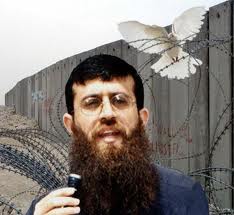


THE ORDEAL OF HANA SHALABI: Medical Urgency and Spiritual Defiance
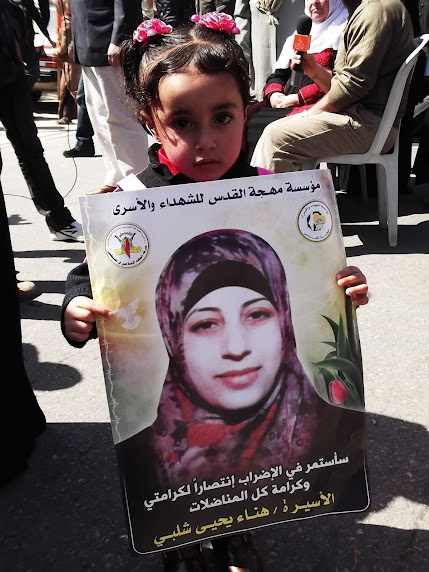
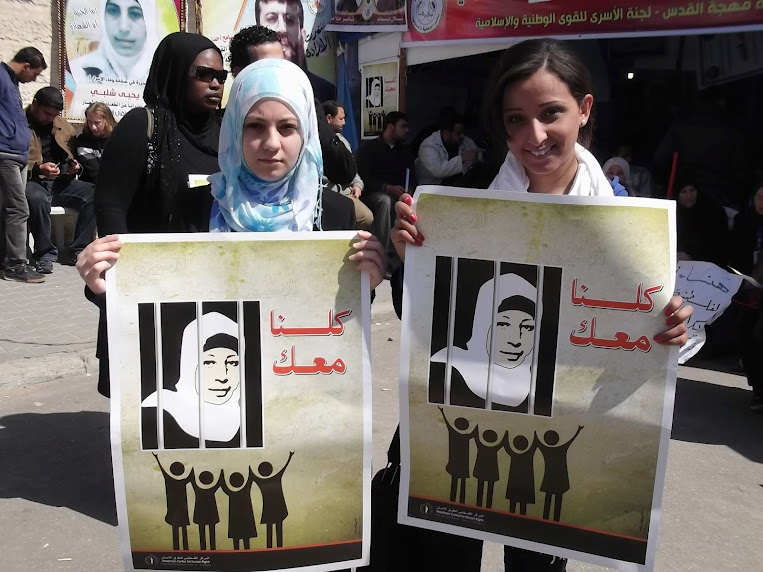
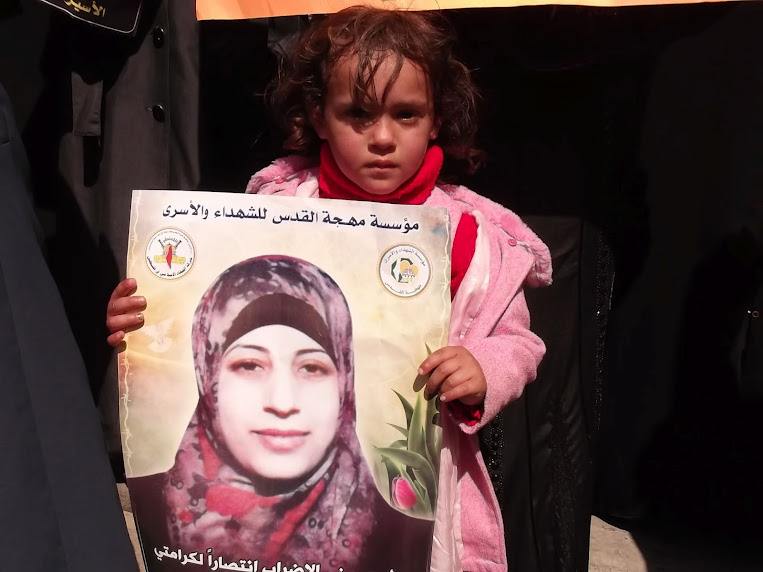
22 MarThe respected human rights NGOs, Addameer-Palestine and Physicians for Human Rights-Israel, have expressed their deep concern for the mortal danger facing Hana Shalabi who continues her historic hunger strike to protest abuse that she experienced and her objections to the Israeli practice of prolonged detention without charges, without trial. There are reported to be currently as many as 24 other Palestinians in administrative detention that have declared their own hunger strike in solidarity with Hana Shalabi’s protest.
There are signs of growing expressions of global awareness and solidarity, including a vigil in Trafalgar Square on 23 March at 6:30 pm and Day of Action in Glascow, Scotland on the following day. There are new allegations that even in her present circumstances of clinging to life, she has been abused by prison authorities, and her family has been denied visitation rights. Her father, Yahya Shalabi, is quoted as saying, “My daughter sticks to her words and promises. She has committed to do this for herself and Palestine.” And Hana Shalabi has herself said of this sacrificial commitment, “[i]t is true that our lives are very precious, but our freedom is even more precious and more powerful than their cells.” Although Israeli newspapers refer to Hana Shalabi in the dehumanizing rhetoric of ‘a terrorist suspect’ without even acknowledging that a hunger strike is the absolute opposite of terrorism: it turns violence against the innocent self so as to illuminate the wrongs of the guilty other who is rendered exempted from physical harm, and to the extent that others are targets at all, it is in the form of extraordinary appeals to their consciousness and conscience. We all must not allow these acts of spiritual defiance be in vain. I am posting below the statement released by PHR-I two days ago and a revised version of an earlier post of mine that was published a few days earlier by Al Jazeera.
***************
Full text of Physicians for Human Rights – Israel statement
On the 33rd day of her hunger strike, administrative detainee Hana Shalabi is in danger of imminent death
On the 33rd day of her hunger strike, administrative detainee Hana Shalabi is in danger of imminent death. An independent physician from Physicians for Human Rights – Israel (PHR-Israel) examined her today and determined that she must be hospitalized immediately
Physicians for Human Rights: the Prison Service treatment of Shalabi violates medical ethics
Hana Shalabi, an administrative detainee held at the Sharon Prison, has been on hunger strike for more than a month, in protest of her violent detention, the humiliating and hurtful search that was conducted on her upon her detention, and also in protest of being held in administrative detention. A hearing on her case is expected to be held at the military court.
This morning (March 19th) an independent physician visited Hana Shalabi on behalf of PHR-Israel, and she states that there has been a significant deterioration in her condition, and that she risks death. The deterioration is expressed in a process of muscle breakdown, with a weight loss of 14 kg (31 lb.) since the onset of the hunger strike, a very slow pulse, and a drop in blood sodium levels. These symptoms could indicate grave damage to the heart and the beginning of the breakdown of the heart muscle, which could lead to heart failure at any moment.
Additionally, her body temperature is low (hypothermia), recorded at 35.05C (95.09F), with Shalabi reporting that she feels cold. This finding indicates that the energy production in her body is mostly directed at the essential organs, which also indicates possible damage to the heart, which could be expressed in arrhythmia, systemic deterioration, or sudden death. The attending physician adds that Shalabi is not taking medications, has gone from ambulatory independence to being dependent on others for locomotion, and suffers from significant weakness, low blood pressure, serious pain throughout her body, significant sensitivity in her upper abdominal region, and serious dizziness.
The results of the blood test taken on March 14th indicate a drop in the levels of blood glucose and sodium, and damage to the thyroid functions. The thyroid plays a critical role in maintaining body temperature, as well as heart, liver, and brain function. Significant damage to the thyroid gland could lead to a coma, and this possibility is clearly present with regard to Shalabi. Additionally, blood work done today indicates disruption of the clotting functionality, and a significant lack of iron and vitamins.
Following her examination, the physician has determined that Shalabi is in immediate danger to her life, and recommended that she be transported to a hospital with no delay, for close supervision and follow-up. The Prison Service has announced that it has transported Shalabi to the Meir Hospital in Kfar Saba pursuant to the recommendation of the physician.
Physicians For Human Rights Israel today calls out the problematic conduct by the Israeli Prison Service in its treatment of Hana Shalabi:
Physicians For Human Rights again expresses extreme concern for Hana Shalabi’s life. The organization expresses its dismay at the fact that medical teams are still considering the possibility of force-feeding her, despite the fact that international treaties prohibit this.
The organization calls upon the local and the international community to act immediately and intervene for the release of Shalabi, and to act to end Israel’s use of administrative detention.
For reports of prior examinations by the PHR physician see: March 13th.
Background:
On 23 February 2012 an administrative detention order for six months was issued for Ms. Hana Shalabi. On 29 February there was a hearing regarding her detention in Ofer military court. On 4 March the military court decided to reduce the detention period from six to four months, but without promising to extend or renew it. As a result, Ms. Hana Shalabi announced she would continue to hunger strike until her release. On 7 March, an appeal hearing regarding the court’s decision was held at Ofer, and the military judge ordered the parties to try and reach a compromise by Sunday 11 March, but no agreement has yet been reached.
Administrative detainees’ protests are growing. Two additional administrative detainees, Bilal Diab and Thair Halahleh declared hunger strikes on 1 March, which they claim will continue until their release from administrative detention. On 3 March, two other administrative detainees declared hunger strikes until their release. Since the beginning of March, a number of administrative detainees have refused to acknowledge the military court and refused to participate in legal hearings of their cases. Due to Israel’s use of administrative detention, and the unwillingness of the military court to interfere in this practice, a hunger strike serves as a non-violent and the sole tool available to administrative detainees to protest and fight for their basic human rights.
Approximately 309 Palestinians are currently held in administrative detention in Israeli prisons. Administrative detention allows Israel to hold detainees for indefinitely renewable six-month periods. The arrest is granted on the basis of “secret information” and without a public indictment. Therefore, administrative detainees and their lawyers cannot defend against these allegations in court.
********************
Hana Shalabi: The Challenge of Palestinian Nonviolence
No sooner had Khader Adnan ended his 66-day, life threatening hunger strike than new urgent concerns are being voiced for Hana Shalabi, another West Bank hunger striker now without food for more than 34 days. With a grim irony there is continuity between these acts of spiritual defiance as both Khader Adnan and Hana Shalabi have been held in the same room at the Ramleh Prison Hospital.
Both strikes are directed against the abusive use of administrative detention by Israeli West Bank occupying military forces, protesting both the colonial practice of internment without charges or trial and the degrading and physically harsh treatment administered during the arrest, interrogation, and detention process.
The case of Hana Shalabi should move even the hardhearted. She seems a sensitive and caring young woman of 29 who is a member of Islamic Jihad, and appears dedicated to her family, hopes for marriage, and such simple pleasures as shopping for clothes and home furnishings. She had previously been held in administrative detention at the HaSharon prison in Israel for a 30 month period between 2009 and 2011, being released in the prisoner exchange of four months ago that freed 1027 Palestinians and the lone Israeli soldier captive, Gilad Shalit. After her release, according to her mother, she spent weeks recovering from the deep sense of estrangement she experienced in prison, and rarely left her home or the company of her family. As she was returning to normalcy she was re-arrested in a highly abusive manner, which allegedly included a strip-search by a male soldier at the interrogation center and other behavior intended to humiliate and intimidate.
On February 16, 2012, the day of this renewal of her administrative detention, Hana Shalabi announced her resolve to start a hunger strike to protest her own treatment and to demand an end of administrative detention now relied upon by Israel to hold at least 309 Palestinian in prison. Her family has been denied visitation rights even in her present critical condition, Hana Shalabi was placed in solitary confinement at the outset of her detention, and her health has deteriorated to the point of severe concern for her health, even her life. According to her lawyer, Raed Mahameed, Hana Shalabi was examined by a doctor from Physicians for Human Rights and the doctor said that “she suffers from low heart beat rate, low blood sugar, loss of weight, weakness in muscles, yellowing of the eyes and high levels of salt in the blood which affected her kidneys causing her pain in her sides specially the left side as well as pain in chest bones. Physicians for Human Rights said that Shalabi cannot sleep because of pain, she also suffers dizziness and blurred and occasional loss of vision. Ms. Shalabi told Mahameed that she took salt last week but refused to take any salt since then and is living on two litres of water a day.”
Impressively, her parents have committed themselves to a sympathy hunger strike for as long as their daughter remains under administrative detention. Her mother, Badia Shalabi, has made a video in which she says that even to see food makes her cry considering the suffering of her daughter. Her father has likewise made a global appeal to save the life of his child.
Despite frequent mentoring to Palestinians from liberals in the West to rely on nonviolent tactics of resistance, these extraordinary hunger strikes have met with silence or indifference in both Israel and the West. Israeli authorities cynically declare that undertaking a hunger strike is a voluntary action and a publicity stunt for which they take no responsibility and that the striker is alone responsible if any harm results. There is also not a hint that Palestinian grievances about administrative detention are well founded and will even be considered much less acted upon. Such hardheartedness in the face of such sacrificial bravery is a sure sign that Israel is not ready for a sustainable and just peace with Palestine.
The UN also disappoints those who believe in its ideals. It has not raised its voice even to take notice of Hana Shalabi’s plight or Israeli accountability. I share the view of Khitam Saafin, Chairwoman of The Union of Palestinian Women’s Committees: “The UN must be responsible for the whole violation that are going on against our people. These prisoners are war prisoners, not security prisoners, not criminals. They are freedom fighters for their rights.” The sad yet inspiring spiritual defiance of Hana Shalabi is also well expressed by Yael Maron, a spokesperson for the NGO, Physicians for Human Rights- Israel: “The story of Hana Shalabi, like that of Khader Adnan before, is in my opinion a remarkable example of a struggle that’s completely nonviolent towards one’s surroundings..It is the last protest a prisoner can make, and I find it brave and inspiring.”
To engage in an open ended hunger strike, especially for a person who is not in a leadership role, requires a deep and abiding dedication to right a perceived wrong of the greatest gravity. It is physically exceedingly painful and dangerous to bodily health, as well as being psychologically demanding in the extreme. It presupposes the strongest of wills, and usually arises, as in these instances, from a sense that any lesser form of resistance has proved futile, exhibiting a long record of failure. In the end, this unconditional hunger strike is an appeal to the conscience and humanity of the other, and a desperate call to all of us, to understand better the cartography of abuse that abusive imprisonment and occupation entails, which can only be pervasively humiliating for a religiously oriented young Islamic woman. To risk life and health in this way without harming or even threatening the oppressor is to turn terrorism against the innocent on its head. It is potentially to sacrifice one’s life to make an appeal of last resort, an appeal that transcends normal law and politics, and demands our response.
We can only fervently hope and pray that Hana Shalabi’s heroic path of resistance will end with her release and the complete restoration of her health. For Israel’s own moral wellbeing it is time, really long past time, to renounce reliance on administrative detention and to do more than this, to end forthwith its varied crimes of occupation. At this point the only possible way to do this is to withdraw unconditionally behind the 1967 borders, and to start peace negotiations from such an altered position of acknowledged wrongdoing without asking or expecting any reciprocal gesture from the Palestinian side. In the present atmosphere, it is politically unimaginable that Israeli leaders will heed such a call, but it is morally unimaginable that Israel will survive an impending spiritual collapse if it does not quickly learn to do so.
In the meantime, we who are beyond these zones of occupation, abuse, and imprisonment, must do more than stand and watch as this tragic drama plays itself out. We need to do all we can to strengthen the demands of Khader Adnan, Hana Shalabi, and all are refusing food in solidarity for the immediate release of all Palestinians currently held in administrative detention, for an end to detention without charges, to abusive arrests in the middle of the night, and beyond this, and to an end to an occupation that has lasted for 45 years with no end in sight.
Tags: Administrative detention, HanaShalabi, Hungerstrike, Israel, Meir Hospital, Physicians for Human Rights-Israel, Prison Service, Shalabi