
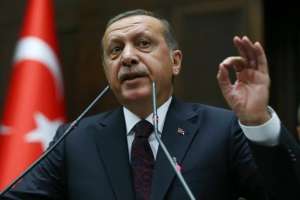
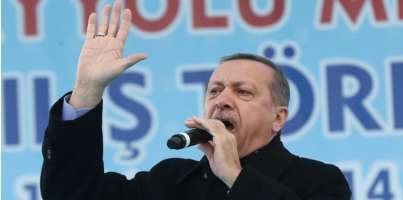
Never in the history of the Turkish republic have municipal elections of the mayors of cities and towns meant so much to the political life of the country as those held on March 30. It is not a sudden turn to localism around the country or in the big cities, although the commercializing of the urban landscape in large Turkish cities, especially Istanbul, is a matter of serious concern to an influential and discontented segment of the citizenry. The primary explanation for this great interest in these local elections, exhibited by a record voter turnout, had to do with an embittered and multi-faceted opposition to the national leadership provided by the Justice and Development Party (AKP), and above all, by its controversially charismatic leader Recep Tayyip Erdogan. Both the government and the opposition treated these elections as a referendum on the leadership being bestowed upon the country by Erdogan, its stormy prime minister during the past 12 years.
What was surprising about the outcome to most observers was the persisting strength of public support for AKP leadership, reflecting a widely shared approval on the part of ordinary Turks combined with the sense that the main opposition forces, the Republican People’s Party (CHP) and the National Action Party (MHP), had little to offer the country, and if given the chance to govern would likely plunge the country into recession and chaos, and possibly even collapse. In such an inflamed atmosphere, the AKP received approximately 45% of the vote, up from 39% in the last local elections held in 2009, while the Kemalist Republican People’s Party (CHP) received 28% and the rightest National Action Party (MHP) about 14%. The support of the CHP was mainly concentrated in the large Turkish cities in the West. In the cities of the Turkish East where minorities often dominate, especially Kurds, the CHP turns its back, has no organizational presence, and received less than 1% voter support in such leading cities as Diyarbakir, Van, Sanliurfa. It is a strange anomaly of Turkey that in a country of 77 million the AKP is the only political party that competes for votes throughout the entire country, and seems responsive to the expectations and grievances of all sections and ethnicities.
Looked at differently, the election returns also disclose that 55% of the Turkish public opposes Erdogan and the AKP, and this would suggest that Erdogan’s presumed presidential ambitions might never be realized. In the presidential elections scheduled for this August the winner must poll over 50%, although not necessarily on the first round. Erdogan’s candidacy might still be a possibility, if done with the support, or at least acquiescence, of the current president, Abdullah Gul, and if the Kurds could be persuaded to vote, Erdogan, which is a distinct possibility. As of now, Erdogan has not disclosed his intentions about the presidency or, more generally, his political future. Whatever happens, so long as Erdogan remains active, his presence is likely to be the lightning rod that dominates the Turkish political landscape, and keeps the atmosphere tense.
From an outsider’s perspective this level of reaffirmation of citizen confidence in the AKP and Erdogan seems implausible at first glance. The mainstream international media has been increasingly hostile toward Turkey since 2010 or so, especially contending that his leadership in recent years was slouching toward authoritarian rule. This line of criticism portrayed Erdogan as a Turkish version of Vladimir Putin. This international turn toward a critical view of Erdogan undoubtedly reflected several developments: the deterioration of Turkish-Israeli relations following the Gaza War of 2008-09 culminating in the Mavi Marmara incident the following year in which Israeli commandos killed nine Turks on a Turkish passenger ship carrying humanitarian supplies to beleaguered Gaza in defiance of an Israeli blockade; the Turkish pursuit of a foreign policy line more independent of American priorities, especially in relation to Iran, highlighted by a 2010 Turkish/Brazilian initiative to resolve tensions surrounding Iran’s nuclear program and followed by a related refusal of Turkey to go along with the Western push in the UN Security Council for intensifying sanctions on Iran; and more recently, with Turkey standing almost alone in the Middle East and the West in its refusal to welcome the 2013 military coup against the Muslim Brotherhood led Egyptian government or to be silent when the new military leadership under General Sisi committed vicious state crimes against those that resisted the efforts of the new regime in Cairo to impose total control over the society after overthrowing the elected Morsi government.
Such Turkish deviations from the Western consensus on regional policy were not really as dramatic or systemic as made to appear. The Turkish Government has long made it clear that restoration of normal diplomatic relations with Israel would be welcomed if Tel Aviv acted reasonably, and accepted responsibility for the Mavi Marmara deaths and lifted its unlawful blockade of Gaza maintained since mid-2007. In relation to Iran, the NATO group has always claimed, as does Turkey, to seek a diplomatic solution, and seemed at one stage even to encourage and welcome the Turkish/Brazilian initiative to find a solution for the storage of Iran’s enriched uranium. Besides, Ankara’s relations with Iran have cooled considerably in light of their opposed positions in Syria. Further, given the bloody record of the post-Morsi leadership in Egypt, the United States and others in the region should by now feel ashamed of their failure to stand up for democratically elected leaders and insist that the Sisi leadership show at least minimal respect for the rule of law and human rights before lavish economic assistance is forthcoming.
Additionally, on a host of other issues Turkey remains solidly in the Western camp, including the controversial deployment of defensive NATO missile systems on its territory, strong opposition to the Assad regime in Syria, provision for over one million Syrian refugees in a form that meets international standards, tendering of crucial and unwavering support for the Syrian rebel insurgency, and participation in the NATO intervention of 2013 in Libya, and even in the controversial NATO operation in Afghanistan. On balance, Turkey in recent years was doing nothing more disruptive of its long-term Western orientation in foreign policy than to behave like an independent sovereign state of rising regional influence and global status. Turkish behavior should have been viewed in Washington and Europe as a positive and natural development in this post-Cold War era, especially if compared with the violent instability, entrenched authoritarianism, and economic stagnancy that continues to prevail throughout most of the Middle East.
Undoubtedly, the domestic realities of Turkey, even ignoring the recent flare ups, seemed likely to weaken Erdogan’s hold on popular support. To begin with, any democratically elected leadership that has been in power for more than a decade has a tendency to make an increasing proportion of its citizenry restless. Furthermore, most political parties to long in control of the government become increasingly susceptible to corrupting temptations. Such extended governance even without scandals generates feelings in the public that it is time for a change. Although in Turkey such a prospect of change is worrisome, as the alternatives to AKP leadership seem so lacking in capacity and vision. It is a definite weakness of Turkey’s political life that there is absent a responsible opposition that could at least elevate the level of policy debate and offer constructive ideas about addressing national policy options. Without such a responsible opposition the body politic of a democratic society is subject to the unhappy choice of relying indefinitely on a single governing party or taking its chances with the irresponsible opposition that may not even be able to manage the economy, much less steer the ship of state through the perilous political waters of the region.
In the background, was a deep seated and uncompromising opposition to the AKP and Erdogan on the part of the old secular establishment that had ruled the country ever since its initial electoral success in 2002. Such sentiments of discontent in Turkey were given a fierce endorsement by the Gezi Park demonstrations of mid-2013, and even more so by the lethal force used in response by the government to maintain public order. Whether these developments did more than strengthen the will and intensify the shrillness of anti-Erdogan forces is hard to say, but the recent electoral results suggest that no serious erosion of pro-AKP support occurred. Erdogan’s abrasive refusal to address the Gezi protests in a respectful and statesmanlike language that sought reconciliation produced widespread critical comment at home and abroad. His initial praise for police tactics also alarmed commentators, and reinforced the impression that Erdogan was insensitive to the abuse inflicted on aroused citizens who were doing nothing more than exercising democratic rights of peaceful protest. It is also relevant to note that the international media was much more critical of Erdogan’s response to Gezi Park than to the far bloodier responses of General Sisi’s regime to peaceful demonstrations of the Muslim Brotherhood in the public squares of Cairo. Also, it should be taken into account, that what started in Gezi Park as a youth movement of environmental protest against the destruction of a heritage site in Istanbul quickly escalated into an anti-Erdogan hate fest, calling for his resignation, if not his head, and savagely attacking the entire economic and political program being pursued by the AKP. Also overlooked by the international media and internal opposition were the several moves toward reconciliation made by Erdogan, including meeting with opposition leaders, accepting a judicial decision as to the future of Gezi Park, and generally, trying, if belatedly to calm the situation and move on.
What followed after Gezi in recent months came as a startling surprise to most outsiders, and seemed far more threatening to the AKP hold on political power: the split between the Hizmet Movement headed by Fetullah Gulen from his unusual command center in rural Pennsylvania and Erdogan. This split dramatically ruptured the unity of the two leading Islamic tendencies in Turkish political and cultural life. Without considering the complexity of what produced this bitter conflict between these two powerful Islamically oriented personalities, it seemed that such an organizational cleavage would gravely weaken the AKP appeal, especially against the background of seemingly rising dissatisfaction that seemed on the increase throughout Turkey in recent years. This dissatisfaction seemed further magnified by the spectacular corruption charges put forward on December 17, 2013, purporting to implicating the highest levels of the Erdogan administration, and inducing four ministers to resign in disgrace. There were additional accusations of major corruption also directed at Erdogan and his son, but the evidence made public so far relies on untrustworthy and possibly fraudulent, and certainly unlawful, surveillance tapes that did not enjoy high credibility.
Assessing the overall leadership of Erdogan is not an easy task. Ever since the AKP came to power Erdogan has been hated by the Turkish secular opposition and adored by his populist followers. In the early years of the AKP administration, Erdogan was cautious, pragmatic, and exceedingly effective in steering the country onto a course of action that involved economic growth, the control of inflation, a pronounced effort to accommodate the European Union’s criteria for membership, control of the armed forces, relative mildness in his personal pronouncements, and a range of regional and extra-regional foreign policy initiatives that won widespread admiration around the world. Despite the electoral mandate and difficulties associated with a resistant bureaucracy that reflected largely CHP and MHP views as to Turkish national policy, it seemed clear to most objective observers that Turkey was under capable leadership impressively pursuing constructive national goals, especially as compared to unfolding events elsewhere in the Middle East.
Yet, the opposition was unwilling to act responsibly, seeming to be only interested in finding reasons to attack the Erdogan administration, and even to generate a crisis of legitimacy that would be conducive to a coup of the kind that had displaced several elected Turkish governments in the past. Talking to secular critics in the early years of AKP governance, there were several lines of response all aggressively hostile: the main one was the suspicion that the real intentions of the AKP was secretly to prepare the ground for making Turkey into ‘a second Iran,’ that is, a governing process reflecting Islamic values and contrary to the secular principles associated with the founding vision of Kemal Ataturk and enshrined in the Turkish constitution; a somewhat less belligerent theme of the AKP critics was to belittle its record of success, which was difficult to deny altogether, as a byproduct of the Turkish effort to satisfy EU requirements for membership or benefitting from the good luck of an economic package that had been bestowed on the country by the IMF and took hold just in time for the AKP to claim credit for a record of sustained economic growth that it didn’t deserve.
As time passed, two things became obvious: first, the Turkish armed forces were not willing, as in the pre-AKP past, to take control of and responsibility for the state, suggesting that the democratically elected AKP was no longer on a collision course with the military as had been a widespread conjecture in the years immediately following their electoral victory in 2002; and secondly, the Turkish citizenry confirmed their support for the AKP in election after election up through the just concluded local elections of 2014, and especially exhibited an expanding base of support for AKP in the 2011 national elections. This trend and the 2011 outcome added to the polarization that reflected the atmosphere of distrust and hostility on both sides of the Turkish political divide. It is true that after 2011 Erdogan often behaved as if intoxicated by political success and the tangible achievements during his time as head of state. The opposition became hysterically alienated, both convinced that they possessed no democratic path by which to displace the AKP from the commanding heights in Turkey and fearful and angry about Erdogan’s more strident and opinionated portended a descent into oppressive rule. Putting the issue in more conceptual terms, Erdogan was becoming more of a populist leader buoyed by the enthusiasm of his political base, interpreting the 2011 electoral mandate from the perspective of majoritarian democracy, that is, without taking into account the views of the opposition, ruling on behalf of the majority rather than exhibiting sensitivity to the interests of the whole of Turkish society.
On the night of the March 30 elections, Erdogan delivered a victory speech from the balcony of his official residence that could be read in either of two ways, and probably should be understood as expressing an unresolved tension in his own mind. Because of some aggressive language directed toward the opposition, especially bitterness toward the tactics and behavior of the Gulen movement, it could be viewed as it was in a NY Times editorial as indicating Erdogan’s thirst for revenge. His words were strong: “We’ll walk into their dens..Now is the time to comb them out, with the law. Why? Because from now on, neither the nation nor we will show tolerance to such networks.” It seemed to suggest that with the elections behind, a purge of Gulen adherents would be carried out with merciless resolve by the Turkish state.
There was a different message also contained in the speech. It was a message of reconciliation and unity, addressed to the whole of the country, and celebrating, rather than bemoaning Turkish diversity. “We have said one nation with Turks, Kurds, Laz, Caucasians, Abkhasians, Bosniaks and Roma people. I love them as a Turk for being a Turk, a Kurd for being a Kurd, or a Laz for being a Laz.” This multiculturalism was reinforced further: “Today..the process of national unity and fraternity won. Not even one person among the 77 million lost, because a cadre that is ready to serve them without any discrimination is in office.” This is a welcome departure from an ethno-nationalist past nurtured by Ataturk in the state-building early phase of modern Turkish history, in which being Turkish overrode non-Turkish ethnic identities, producing discrimination and sometimes severe and dangerous tensions, especially in relation to the large Kurdish minority.
As we look to the Turkish future we can thus see two different dominant scenarios of AKP/Erdogan leadership: the first is to remain in an internal confrontational mode with a combative leadership in Ankara lashing out at all those that disagree with its style and substance; the second is to give meaning to the promise of leadership on behalf of the whole of Turkish society, requiring Erdogan to moderate his rhetoric and to be less publicly opinionated about social life style issues, and to restore a foreign policy approach dedicated to the peaceful settlement of regional conflcts and positive engagement with Africa, the Balkans, and Central Asia. Two starting points for this preferred approach would be a concerted revival of the Kurdish initiative, which seemed quite hopeful a few months ago and a reset on Syria that gave priority to ending the violence and addressing the humanitarian emergency in the country and supported an inclusive diplomacy that tried hard to make Iran part of the solution rather than the core of the problem.
At stake, is the quality of Turkish democracy, which must at once value the procedures of election, but also confirm the importance of constraints on the power of the state via genuine support for the rule of law, freedom of expression in the media, accountability of political leaders, a credible anti-corruption campaign, and a respectful attitude toward the political opposition. In effect, what is being proposed is a move away from the excesses of majoritarian democracy, and toward the implementation of republican ideas of separation of powers and checks and balances. Of course, also, the opposition needs to play its part by desisting from demonizing the leadership, acknowledging the accomplishments of government alongside the mounting of criticisms of its shortcomings, and adhering itself to legal and responsible limits associated with respect to surveillance and the use of social media. Turkey retains the potential to carry a bright torch of hope into the future if it can restore political stability, sustain economic growth, engage with the more democratic trends in the region, and resume a foreign policy that rests on ethical principles and ambitions as well as national interests.
The assessment of the deadly sarin gas incident that killed as many as 1500 people living in the Ghouta neighborhood on the outskirts of Damascus on August 21, 2013 has now cast a new dark shadow across the Turkish post-election political scene. Seymour Hersh, a highly respected American investigative journalist, has recently published a devastating account of how the Turkish government facilitated the acquisition of sarin gas by the Al Nusra Front in Syria with the intention of producing a false flag operation in Syria that would cross Obama’s red line relating to chemical weapons, and lead to a devastating American air attack on Syria, and swing the war there back in favor of the anti-Assad insurgency. [See Seymour M Hersh, “The Red Line and the Rat Line,” London Review of Books, April 6, 2014; reinforcing Hersh’s account is an interpretative article by Robert Fisk, an equally prominent journalist, appearing on April 10, 2014 in The Independent with the inflammatory title, “Has Recep Tayyip Erdogan gone from model Middle East ‘strongman’ to tin-pot dictator?”]
This scenario that came perilously close to happening, being aborted at the last minute by the unwelcome realization in the Obama White House that the sarin attack could not be convincingly attributed to the Assad regime. According to Hersh’s analysis Obama shifted course at the last minute when it became clear that the evidence indicated that it was rebel forces, and not the Damascus government, that fired the missiles containing the poison gas into a crowded urban area. Obama reportedly changed course when presented with the revised account of the events on August 21 by the top American military commanders. Both the United States and Turkish Governments have issued sharp denials of the Hersh allegations, and continue to insist that there still are no reasons to doubt that the attack on Ghouta was done by Assad’s forces. Whatever the reality, this controversy has been seized upon by Erdogan’s foes in Turkey to renew their attack on the legitimacy of his leadership. These charges are extremely serious, and if reliably established and do not just fade away, could tip the Turkish balance against Erdogan as an acceptable political leader.

 Global Justice in the 21st Century
Imperiled Polities: Egypt and Turkey—Two Visions of Democracy
25 JanThe Meaning of a 98.1% Vote
In mid-January there was a vote in Egypt as to whether to approve a constitution drafted by a 50-person committee appointed by the interim government put in place after the military coup carried out on July 3, 2013. The constitution was approved by 98.1% of those who voted, 38.6% of the eligible 53 million Egyptians. This compares with 63.8% support received by the constitution prepared during the presidency of Mohammed Morsi from the 32.9% of the Egyptian citizenry that participated in the vote. It should be observed that this new constitutional referendum was boycotted by both the Muslim Brotherhood and various of the youth groups that has been at the forefront of the anti-Mubarak upheaval in 2011. Also the validity of the vote was further discredited because of the atmosphere of intimidation in Egypt well conveyed by the pro-coup slogan: “You are either with me or with the terrorists.” Not only had the MB been criminalized, its assets seized, its leaders jailed, its media outlets shut down, but anyone of any persuasion who seemed opposed to the leadership and style of General el-Sisi was subject to arrest and abuse.
In the background here are questions about the nature of ‘democracy,’ and how to evaluate the views of people caught in the maelstrom of political conflict. On one level, it might seem that a vote of over 90% for absolutely anything is an expression of extraordinary consensus, and as a result el-Sisi’s constitution is far more popular than Morsi’s constitution, and hence more legitimate. Reflecting on this further makes it seem evident, especially when the oppressive context is to taken into account that the one-sided vote should be interpreted in the opposite manner, making Morsi’s vote more trustworthy because it reached plausible results. Any vote in a modern society that claims 98.1% support should be automatically disregarded because it must have been contrived and coerced. In effect, we cannot trust democratic procedures to reveal true sentiments in a political atmosphere that terrorizes its opponents, and purports to delegitimize its opposition by engaging in state crime. The consent of the governed can only be truly ascertained if the conditions exist for the free and honest expression of views for and against what present power-wielders favor.
Maybe, however, the connections made between democracy and legitimacy, seeking this populist signal of approval by the ritual of a vote, is itself a kind of blindfold. It would seem that a majority of Egyptians did, in fact, welcome the el-Sisi coup, believing that a military leadership would at least ensure food and fuel at affordable prices and restore order on the streets. In other words, most citizens in crisis situations posit order and economic stability as their highest political priorities, and are ready to give up ‘democracy’ if its leaders fail to meet these expectations. In my view, what has happened in Egypt is the abandonment of the substance of democracy by the majority of the Egyptian people, as reinforced by the suppression of a minority hostile to the takeover. This dynamic is hidden because the discourse and rituals of democracy are retained. It is this process that I believe we are witnessing as unfolding in Egypt. In effect, polarization of the first two-and-half years following the overthrow of Mubarak has been followed by the restoration of autocratic rule, but due to the intervening embrace of political freedom, however problematic, the new autocrat is even harsher than what was rejected at Tahrir Square three years ago.
The Politics of Polarization and Alienation
Amid this political turmoil that has been spoiling the politics of the Middle East is a conceptual confusion that contributes to acute political alienation on the part of those societal elements that feel subject to a governmental leadership and policy agenda that is perceived as hostile to their interests and values. Such circumstances are aggravated by political cultures that have been accustomed to ‘one-man shows’ that accentuate tendencies toward adoration and demonization. Each national situation reflects the particularities of history, culture, values, national memories, personalities, and a host of other considerations, and at the same time there are certain shared tendencies that may reflect some commonalities of experience and inter-societal mimicry, as well as the deformed adoption of Western hegemonic ideas of modernity, development, constitutionalism, and governance, as well as of course the relationship between religion and politics.
The recent disturbing political turmoil in Turkey and Egypt, each in its own way, is illustrative. In both countries there are strong, although quite divergent, traditions of charismatic authoritarian leadership, reinforced by quasi-religious sanctification. Very recently, however, this authoritarian past is being challenged by counter-traditions of populist legitimacy putting forward impassioned demands for freedom, integrity, equity, and inclusive democracy, which if not met, justify putting aside governmental procedures, including even the results of national elections. Within this emergent counter-tradition is also a willingness to give up all democratic pretensions so as to restore a preferred ideological orientation toward governance, that is, resorting to whatever instruments are effecting in transferring control of the state back to the old order that had lost control of the governing process by elections, and had poor prospects of democratically winning power in the future.
In Egypt, this circumstance led to unconditional opposition to the elected leadership, especially to Mohammed Morsi, the president drawn from the ranks of the Muslim Brotherhood. The aim of this opposition, whether or not consciously espoused, seemed to have been to create a crisis of governability of sufficient depth to provoke a crisis of legitimacy, which could then produce a populist challenge from below that brought together ideological demands for a different orientation and material demands for a better life. It is true that Morse lent a certain credibility to this rising tide of opposition by a combination of incompetence and some clumsy repressive moves, but this was almost irrelevant as his secular and fulool opponents wanted him to fail and never allowed him even the possibility of success. For such opponents, the idea of living under a government run by the MB was by itself intolerable. In the end, many of those who had pleaded so bravely for freedom in Tahrir Square were two years later pleading with the armed forces to engage in the most brutal expressions of counter-revolutionary vengeance. Whether this will be the end of the Egyptian story for the near future is difficult to discern, the downward spiral suggests insurrection and strife for the foreseeable future.
In Turkey, such a collision has recently produced turmoil and highlighting the dangers and passions that accompany lethal polarization, initially, in the encounters of the summer of 2013 at Gezi Park and some months later in a titanic struggle between Tayyip Recip Erdogan and Fetullah Gulan generating a rising tide of mutual recriminations and accusations that threatens the AKP dominance of the political process, a threat that will be soon tested in the March local elections, especially those in Istanbul and Ankara. Turkey is different than Egypt in at least two major respects. First of all, its economy has flourished in the past decade, producing a rising middle class, and a business community with lots to lose if investor confidence and currency exchange rates decline sharply. This reality is complicated by the fact that part of those that have gained economically have been aligned with the AKP, and by the degree to which the Turkish armed forces are also major stakeholders in the private sector. Secondly, a major achievement of the AKP leadership has been to depoliticize the role of the Turkish military, partly to protect itself against interference and partly to satisfy European Union accession criteria.
Alienation and emotional distress is more a symptom than an explanation of why there exist such strong political tensions. Better understood, these conflicts are about class, religion, status, political style, the benefits of governmental control, and availability of capital and credit. An additional source of public antagonism is the unresolved, and mostly unacknowledged, debate about the true nature of democracy as the legitimating ideal for good governance in the 21st century. One perplexing element is language, especially its use by politicians concerned with public opinion. There is this impulse on one side to base governmental legitimacy on pleasing the citizenry, and the impulse on the other side is to insist upon fidelity to law and constitutionalism. Both sides have powerful arguments that can be invoked to support their claims. There is no right and wrong, which is infuriating for polarized discourse that can only raise its voice to shout in higher decibels, but can never reach a conclusion of the sort that might resolve a scientific debate or solve a mathematical puzzle. Each side is motivated by unshakeable convictions, and has no disposition to listen, much less appreciate, what the others are saying. In effect, good governance is impossible in the absence of community, and what has become evident is that society unity is currently unattainable in the presence of the sort of alienation that has gripped the publics in Egypt and Turkey, and elsewhere.
Part of the controversy, but only part, can be reduced to these differences over the very nature of democracy. Another part, as discussed in relation to the vote on the Egyptian constitution, involves the abandonment of democracy in substance while insisting on its retention in form.
Varieties of Democracy
The word democracy itself needs to be qualified in one of two ways: majoritarian or republican. And here is the central tension: the public myth in all countries that deem themselves ‘modern’ endorse the republican tradition of limited government and internal checks and balances, while the political culture is decidedly ambivalent. It can spontaneously legitimize the majoritarian prerogatives of a popular leader with strong backing on the street and among the armed forces, even at the cost of republican correctness. Because of this reality, there exists a tendency by those social forces being displaced through societal power shifts to view a newly ascendant leader through a glass darkly. They suddenly lament authoritarian tendencies that never troubled them in the past when their elites held the reins of governmental authority. Part of the recent confusion is that sometimes the authoritarian tendency gets so corrupted that it loses support even among those who share its class and ideological outlook, and a reformist enthusiasm emerges. This happened in Egypt, but its tenure was short lived as its adherents, drawn from the ranks of the urban educated elites, quickly realized that their interests and values were more jeopardized by the ‘new’ order than it had been by the excesses of the ‘old’ order.
We find in Egypt this pattern played out through the wildly gyrations in the perception of the armed forces as a political player. In the Mubarak Era the armed forces were the central pillar of the state, and a major beneficiary of governmental corruption, neoliberal inequities, and a principal perpetrator, along with other security forces, of state crime. In the Morsi period of governance the armed forces seemed to stay in the background until either responding to or prompting the populist mandate of the opposition exhibited by mass demonstrations and media mobilization based on a paranoid image of Muslim Brotherhood rule and widespread genuine distress about economic stagnancy and political disarray.
After the July 3rd coup led by Morsi’s Minister of Defense, General Abdel Fattah el-Sisi, the armed forces set aside the constitution, installed a transitional government, promised new elections, and set about drafting a constitution that embodied the hegemony of the armed forces. What has taken place, however, is an undisguised exercise of authoritarian closure based on declaring the former choice of the citizenry, the Muslim Brotherhood, to be a ‘terrorist’ organization whose leadership were victims of several atrocities, imprisoned, forced underground, and fled the country. Nevertheless, despite these repressive measures, the armed forces are proceeding on a basis as if their action has been mandated by ‘democracy,’ that is, by majoritarian demands for change enacted on the streets of Egyptian cities and through the subsequent endorsement of the repressive steps to be undertaken by the regime, eventually validated through demonstrations, voting, and electoral ratification. In the background of such a counter-revolutionary turn, of course, were weak institutions of government accustomed to operate for decades within a strict authoritarian political space, and a governmental bureaucracy whose judiciary and police continued to ideologically aligned with the old order. Such an entrenched bureaucracy seems to have regarded the reemergence of authoritarian and militarized politics as natural, linked in their imaginary with Egypt’s ancient heritage of greatness and more comfortable with such domineering figures as Nasser and Mubarak as compared to the density and seeming incapacities of Morsi.
Challenging Democracy in Turkey
The situation in Turkey is much more subtle and less menacing, yet exhibits several analogous features. Despite the outcome of elections that brought the AKP to power initially in 2002, a development subsequently reinforced by stronger electoral mandates in 2007 and 2012, most of the opposition never accepted these results as politically acceptable, and immediately sought to undermine the elected leadership in a variety of legal and extra-legal ways. In the background of this alienation was the implicit and feared belief that the AKP was mounting a challenge to the hallowed legacy of Kemal Ataturk, as well as to the rigid Turkish style of secularism that was periodically reinvigorated by the armed forces that staged coups, which in 1982 had imposed a highly centralized, security oriented constitution on the country. With political acumen, the AKP maneuvered pragmatically in an impressive manner, creating a rapidly growing economy, seeking to play a conflict resolving role throughout the Middle East, and repeatedly proclaiming a fidelity to the secular creed as the foundation of public order, and by stages subjecting the armed forces to civilian control. Despite the magnitude of these achievements the AKP and Erdogan never gained an iota of appreciation or respect from the anti-religious Kemalist opposition that claimed to be the only legitimate guardians of Turkish ‘secularism.’ Strangely, this alienated opposition was never able to present a responsible political platform that could give the Turkish people a positive alternative, and so the prospects of mounting an electoral challenge remained poor, especially given the accomplishments of the AKP.
In such a setting this intensely alienated opposition seemed increasingly dependent on manufacturing a crisis of legitimacy that would restore the old state/society balance that had prevailed since the founding of the republic in 1923. The Ataturk legacy included a somewhat reluctance acceptance of procedural democracy in the form of free and fair elections with the apparent implied assumption that the outcome would remain faithful to his modernist orientation, modeled on Europe, that accompanied the founding of the republic. The range of opposition was limited by a law allowing the closure of political parties that seemed to be straying from the prescribed Kemalist path. When the AKP defied these expectations in 2002, the opposition became quickly fed up with the workings of ‘democracy,’ and seemed early on to count on being rescued, as in the past, by a military intervention that they hoped would be encouraged by the U.S., which was assumed to be unhappy about the Islamist leanings attributed to the AKP political base and leadership. The disappointment among the old secular elites arising from the failure of these expectations to materialize deepened the alienation and frustrations of opposition forces, especially on the part of urban elites in the main cities of Turkey in the western part of the country, which exaggerated the faults of the government and ignored its achievements.
With such considerations in mind it was understandable that there would be exhilaration among the opposition generated by the Gezi Park demonstrations in the summer of 2013, especially in its initial phases that were as much a protest against the AKP’s embrace of an environmentally rapacious neoliberalism as it was against the authoritarian excesses of the Erdogan leadership. This enthusiasm weakened when the Gezi movement was substantially hijacked in its subsequent phases by the most extreme tendencies of the alienated opposition, which seemed to believe that Gezi presented an opportunity to fashion a full-fledged crisis of governability out of this narrowly focused protest that might force the resignation of Erdogan, if not the collapse of the AKP. There was an attempt to take advantage of escalating public outrage that resulted after excessive force was used by the police to maintain order in the Gezi context. Of course, Erdogan’s harsh style of discourse, including off the cuff opinions that reflected his Islamic devoutness, were part of the broader political atmosphere, and were particularly alarming to an already alienated opposition, reinforcing their their underlying beliefs that any alternative would be better for Turkey than what the AKP was bestowing upon the country. The situation was aggravated after the AKP electoral success in 2011. It seemed to give Erdogan confidence that he need no longer adhere to his earlier cautiously pragmatic approach to leadership, and he adopted the sort of swagger that both frightened and disgusted an opposition that was not inclined to give him any leeway.
Similarly, the more recent, unexpected, and still obscure and bitter public falling out between the AKP and the hizmet movement has injected a new virus into the Turkish body politic posing unpredictable threats. It may turn out that this conflict represent nothing more fundamental than a struggle for relative influence and power that calmer minds will resolve before long. Perhaps also Turkey is experiencing some of the almost inevitable mishaps associated with keeping one political party with a strong leader in power for too long. Such prolonged control of government almost always produces scandal and corruption, especially in a political culture where the rule of law and the ethics of civic virtue do not have a very strong grip on behavioral patterns. In the more distant Turkish past are the memories of Ottoman times when the country was a regional power center, governed by highly authoritarian figures, a hallowed past that was secularized in the last century but not challenged in its essential role in Turkish political culture.
Majoritarian and Republican Democracy Assessed
With this mix of considerations in mind, the distinction between ‘Majoritarian Democracy’ and ‘Republican Democracy,’ although simplifying the actual political texture, seems important. In Majoritarian Democracy the leadership is essentially responsible to the electorate, and if its policies reflect the will of the majority, the views and values of opposed minorities need not be respected. Critical views treat such forms of government as susceptible to the ‘tyranny of the majority,’ which has subjective and objective realities distinguishing between what is perceived and what is actually taking place. Arguably after Morsi’s election in 2012, and given the embittered opposition that seemed unwilling to accept the outcome of the vote, the Muslim Brotherhood used the prerogatives of office in a failed attempt to impose the majoritarian will, and may itself have been prepared to change the rules of the political game so as to retain control. Part of the majoritarian mentality is to locate a check on its excesses in the will of the citizenry, and thus when the people are mobilized to demand a new leadership for the country without waiting upon the niceties of the next elections, the path is cleared for the sort of military takeover that occurred last July. Of course, majoritarian dynamics are subject to manipulation by anti-democratic forces whose zeal is directed toward gaining control of the state.
‘Republican Democracy’ in contrast starts with a generally skeptical view of human nature, and seeks above all to find procedures and support the nurturing of a political culture that prizes moderate government over efficiency and transcendent leadership. The American self-conscious adoption of Republican Democracy at the end of the 18th century, as spelled out for the ages in The Federalist Papers, is a classic instance of molding a constitutional system that was wary of majorities and protective of minorities and of individual rights ( although totally blind to the human claims of slaves and native Americans). Unlike Egypt or Turkey, Americans were seeking to arrange a different future for themselves than was associated with British royalism, and its absolutist pretensions. In the background, were political thinkers such as John Locke with a stress on the link between good governance and rights and Montesquieu who argued along analogous lines about the cardinal relevance of separation of powers to the avoidance of the concentration and excesses of state power. Delinking government from religious claims of certainty was also consistent with republican sensitivity to human flaws and the general ethos of Lord Acton’s famous saying ‘power corrupts, and absolute power corrupts absolutely.’
Because over time every political system faces crises, the American founders realized that the envisioned arrangements would only survive the tests of time if two conditions were realized: first, reverence for the constitution by both lawmakers and citizens, and secondly, judicial supremacy to override legislative and executive swings toward either implementing the momentary passions of the mob or aggrandizing power and authority, and thereby upsetting the delicate balance of institutions. Despite this self-conscious commitment to the republican approach, in times of war and crisis, the democratic feature of accountable power-wielding tends to yield to claims of national security and public expediency. And once such departures from republicanism become entrenched, as a result of a long period of warfare or in relation to nuclear weaponry, and now transnational terrorism, the authoritarian genie is able to escape from the constitutional bottle. As the American motto of ‘eternal vigilance’ reminds us, there are no safe paths to moderate government, and its most influential advocates realized that their wishes might be so defeated that they recognized that the people enjoyed ‘a right of revolution’ if despite all precautions the governing process had become despotic.
It need hardly be argued that neither Egypt nor Turkey are remotely similar to the United States or Europe, but the superficial embrace of democracy by these and other countries might benefit from examining more closely the menace of Majoritarian Democracy in a fragmented polity and the difficulties of establishing Republican Democracy in political cultures that have been so long dominated by militarism and authoritarianism. Egypt is experiencing the essentially anti-democratic restoration of authoritarian militarism, while Turkey is trying to preserve sufficient stability and consensus to enable the self-restrained persistence of procedural democracy and a successful process of constitutional renewal that rids the country of the 1982 militarist vision of governance, and moves toward creating the institutional and procedural frame and safeguards associated with Republican Democracy. Beyond this, however, will be the immense educational challenge of shaping a supportive political culture that entrenches republican values in public consciousness, above all a respect for individual and group rights and an inclusive approach to policy formation that seeks participation by and approval from stakeholding constituencies opposed to the majority. Such a vision of a democratic future for Turkey implies a process, not an event, and will require an ongoing struggle inevitably distracted by both manufactured and authentic crises of legitimacy. The hope is that moderate minds will prevail, serving the long-term interests of a state and its peoples that retain great potential to be a beacon of light for the region and beyond.
Tags: authoritarianism, Democracy, Egypt, legitimacy, Turkey