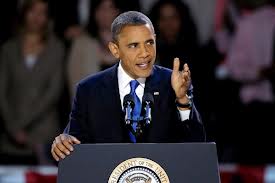
That President Obama chose on 23 May to unveil his second term cautionary approach to counter-terrorism at the National Defense University epitomized the ambiguity of the occasion. The choice of venue was itself a virtual guarantee that nothing would be said or done on that occasion that challenges in any fundamental way the global projection of American military power. Obama’s skillfully phrased speech was about refining technique in foreign policy, achieving greater efficiency in killing, interrogating the post-9/11 war mentality, and all the while extolling the self-mystifying glories of American exceptionalism. That is, only the United States, and perhaps Israel and NATO, possessed an entitlement to use force at times and places of the actor’s choosing without consulting the UN, respecting the constraints of international law, and heeding the admonition in the Declaration of Independence to show “a decent respect for the opinions of mankind.” Such exceptionalism, especially as enacted by recourse to aggressive wars, invites resistance, polarizes political struggle, and defeats any hope that stability will be achieved by the gradual realization of global justice rather than through the crude tactics of hard power diplomacy and militarism.
There were several points of light in the otherwise dark Obama firmament. Perhaps, the most promising aspect of Obama’s presentation was its carefully hedged call for reexamining the still prevailing response to the 9/11 attacks as ‘perpetual war.’ From the outset this cautious, yet welcome, questioning represented an ironic inversion of Kant’s prescriptions for perpetual peace. In Obama’s words, “..a perpetual war—through drones or troop deployments—will prove self-defeating and alter our country in troubling ways.” Depending on how we read world history since 1939, it can be understood as an era of perpetual war with a brief intermission between the end of the Cold War and the 9/11 attacks. Certainly, during the course of this period the United States has been continuously mobilized to engage in major war on a moment’s notice, and that this posture has definitely militarizes state/society relations in the country. There was nothing in Obama’s speech to draw attention to the perils posed by such a militarized state, having achieve global military dominance, and creating a domestic ‘miliary-industrial complex’ that would make even Dwight Eisenhower tremble with fear. There were no benchmarks that would allow the Congress or the citizenry to appreciate that it was time to bring the war on terror to an end.
Obama also appeared to question the openendedness of the 2001 unlimited legislative mandate to use force overseas without including any requirement of a specific prior procedure of Congressial approval in Authorization to Use Military Force Act (AUMF). In Obama’s words, “Our systematic effort to dismantle terrorist organizations must continue, but all wars, must end. That’s what history advises. That’s what our democracy demands.” At the same time, Obama avoided directly challenging this AUMF legislation enacted to give the government precisely the legal authority to use force anywhere and at any time to wage war against supposed terrorist adversaries and their governmental guardians. Such authority can be validly used even where there is no terrorist threat, as was the case for Iraq when it was invaded and occupied in 2003. At this point, Obama was asking Congress “to determine how we can continue to fight terrorists without keeping America on a perpetual war-time footing.” He went on to say that what is needed is “to refine, and ultimately repeal, the AUMF mandate.” Whenever politicians qualify a recommendation with such words as ‘refine’ and ‘ultimately,’ it is an almost sure sign that an end game is not envisioned, and may not even be intended. What Obama made evident is that although he had the right instincts with respecting to changing course with respect to the war on terror, his political will to support any altered course of action was far too weak to produce action, or maybe even too feeble to generate a needed debate on security for the country and the world, given the realities of mid-2013. Obama seems to be comfortable with framing counter-terrorist security policy as war so long as it is moving toward an understanding that war on terror will become more limited in scope at some point, and that at least there will be announced an intention to declare that the war on terror is over. Obama did not have the resolve to insist that incidents of terrorism should be hereafter handled as criminal acts, which is what happens in the rest of the world—this would certainly have been a major step back from the fire, and might even deserved to be treated as extinguish the fire set for the world on 12 September 2001. The nature of the Boston Marathon murders might have been just the right occasion to make the change, emphasizing the degree to which the major danger was being posed by extremists living within the country. It was no longer necessary to treat the world as a counter-terrorist battlefield.
There is admittedly a genuine security challenge that was posed on 9/11: the United States is vulnerable to well-planned terrorist attacks on the many soft targets of a complex modern society. And although other countries are also subject to major attacks, as was Madrid train bombings in 2004 and the London attacks in 2007, no country is as likely to arouse extremist anger and resentment due to its global projection of hard power as is the United States, and no country is as fearful, despite its military dominance as measured by realist calculations, as is the United States. Such a mismatch suggests that the American global role requires adjustment to the logic of self-determination in the post-colonial world, that the protection of the last remnants of the colonial edifice is a losing effort, and a dangerous one.
To be sure there was in Obama’s speech many rhetorical flourishes that were probably designed to please liberal critics of drone warfare and Guantanamo, the two most awkward features of his presidency. Such rhetoric invited a comparison with the far more bellicose and imperial language relied upon by George W Bush, but Obama’s approach was in a form that was sufficiently nationalistic to take account of the sensitivities of the right wing jackals that give him little, or no slack. Obama voiced his commitments to fight political extremists wherever they are found, while abiding by law, living up to ethical standards, and upholding the Constitution. He contended that his presidency “has worked vigorously to establish a framework that governs our use of force against terrorists—insisting upon clear guidelines, oversight and accountability that is now codified in Presidential Policy Guidance that I signed yesterday,” a boast bound to raise more than a few skeptical eyebrows. Obama also did acknowledge that “this new technology raises profound questions—about who is targeted, and why; about civilian casualties, and the risk of creating new enemies; about the legality of such strikes under U.S. and international law; about accountability and morality.” At the same time, this welcome willingness to suggest the need for some comprehensive rethinking was confusing, hedged by claims that all that has been done up to now has worked and that the drone war, despite a few mistakes, has at all stages been consistent with the international laws of war, the Constitution, and international morality. It is notable that Obama refers to ‘profound questions’ that deserve to be asked and answered, but craftily refrains from answering them himself, just as he was relatively polite to Medea Benjamin, when she interrupted his talk from the floor with a direct challenge to use his authority as Commander-in Chief to close Guantanamo, which he responded to by saying that she deserved an attentive audience, although he was in substantial disagreement with what she was proposing, but without saying why and how. In assessing Obama’s performance, I am reminded of the early downplaying among Soviet dissenters of Mikhail Gorbachev’s claims to be a radical reformer: “He is giving us glastnost (freer speech) without perestroika (substantive and structural change), but he promised us both.”
In large part Obama was reacting to a tsunami of recent criticism from around the world. His explanations at the National Defense University amounted to an admission that the conduct of drone warfare and the maintenance of Guantanamo, for better and worse, had severely eroded America’s diplomatic stature. Beyond this, such behavior had given rise to acute resentment directed against the United States, and was quite likely spawning the very extremists that the use of attack drones were supposed to be killing. The Obama presidency was clearly attempting to retreat from this precipice of disconnect without falling into an anticipated ambush staged by its obsessive detractors at home. As many have pointed out the speech was long on vague generalities, short on policy specifics. It called in several ways for a more ‘disciplined’ approach to the war on terror, yet at the same time claimed in some detail that what has been done during the Obama years was both ‘effective’ and ‘legal,’ and had been climaxed by the mission that killed Osama Bin Laden in 2011. In effect, the speech was acknowledging that the projection of American force around the world had become understandably problematic for many, but could be fixed by acknowledgements and a show of concern without making any discernable major shifts in behavior or objectives. Such a proposed tweaking of policy hardly qualifies as ‘profound’ even if its sentiments were to be fulfilled by such gradual shifts in policy as closing Guantanamo and minimizing reliance on drones, moves that at this point still seems quite unlikely.
The speech was notably short even on those specifics that had been anticipated by those who gave their expert opinion as to what to expect. For instance, it was expected that the controversial and ethically outrageous ‘signature strikes’ whereby combat-age males have been targeted and killed in Pakistani tribal areas and in Yemen if they are seen congregating in a place supposedly frequented by terrorists, even if no further evidence exists as to their relationship to political violence, would be repudiated. Obama never even mentioned signature strikes. Nor did he refer to the supposed likelihood of an announcement that the CIA would be confined in the future to its primary role as a spy and intelligence gathering agency rather than acting in a variety of paramilitary modes. Even if this does happen at some point, drone policies relating to authorization and accountability will continue to be shrouded in secrecy and deniability whether or not major responsibility for the use of drones remains headquartered at Langley. Of course, the purported significance of such a reassignment of responsibility for the drones to the Pentagon may be typical liberal hype. It seems unrealistic to expect a great breakthrough in transparency and sensitivity to international law and morality just because the Pentagon rather than the CIA would be presiding over the attacks. It might be illuminating in this regard to ask Bradley Manning and Julian Assange what they thought about transparency at the Pentagon and its respect for international law..
But there is much more at stake than was discussed in the lengthy speech. In trying to make the case that drone warfare is less invasive, resulting in fewer civilian casualties, Obama never even alluded to the severe degree to which attack drones are instruments of state terror, terrorizing the entire region exposed to their habitual use. Drone warfare, this supposedly miracle counter-terrorism weapons system, is in its enactment a new form of intense state terror that is enraging public opinion against the United States around the world, reactions not limited to the places subject to attack, although especially there. A Yemeni citizen, Farea al-Muslimi told the U.S. Senate in recent hearings, about attitudes toward drones in his home village, “..when they think of America, they think of the fear they feel at the drones over their heads.” In Pakistan, American drones have had a disastrously negative impact on public attitudes toward Islamabad’s relationship with the United States, evoking acute and widespread grassroots hostility throughout this key Asian country. Even in Afghanistan, where the political violence shows no signs of abating, the American handpicked leader, Hamid Karzai, is now saying that the prospects for Afghan stability and peace would be enhanced by the departure of American led NATO forces. This is a rather astounding about face for a leader handpicked years ago in Washington and long dependent on American largess and human sacrifice.
Such realities should have at least tempted Obama to raise some genuinely profound questions about the viability and inherent morality of the continued U.S. insistence on projecting its military power to the far corners of the global. For whose benefit? At what costs? To what effects? But there was Obama silence about such underlying questions that are daily being asked elsewhere in the world.
There is another line of prudential concern that was no where to be found in this less unconditional embrace of drones, reliance upon which was deglamorized to some degree, yet remains an embrace. Some 70 countries currently possess drones, although not all of these have acquired attack drones, but the day is not far off when drones will be part of the military establishment of every self-respecting sovereign state, and then what? Obama spoke about the right of the United States to kill or capture suspected ‘terrorists’ wherever they may be in the world if deemed by the government to be an imminent threat to American security interests and not amenable to capture. But is there not a de facto golden rule governing international relations: “what you claim the right to do to others, you authorize them to do to you.” Of course, this is often modified by invoking the geopolitical bronze super-rule that is generally operative, at least in relations with most of the non-West: “we can do to you whatever we wish or feel the need to do, and yet there is no legal, moral, or political precedent created that can be invoked by others.” American exceptionalism has long parted company with the central idea that international law is dependent for its effectiveness on the logic of reciprocity: namely, that what X does to Y, Y can do to X, or for that matter to Z, but with the technology of drones emergent, we may soon come to regret resting our claim on such a one-sided anti-law prerogative that encodes double standards. A hegemonic approach to international law has been relied upon in relation to nuclear weapons, with a somewhat similar pronouncement by Obama in 2009 to work ultimately toward a world without such weapons. Four years later the meager effort to realize such a vision should be a cautionary indication that the future military application of drones is unlikely to be significantly restricted so long as the United States finds their role useful, and given this prospect, a borderless future for violent conflict throughout the world should give Pentagon planners many a sleepless night.
There is another feature of the Obama approach that bears scrutiny. The discipline and care associated with his plea for a more restrictive approach to counter-terrorism is basically entrusted to the suspect subjectivities of governmental good faith in Washington. At least, the Wikileaks disclosures should have taught American citizenry that secrecy at high levels of public sector policymaking is intended to place controversial behavior of government beyond public scrutiny and democratic accountability. Obama is asking the American people to put their trust in the judgment and values of bureaucrats in Washington so as to ensure that democracy can be restored in the country, and a better balance struck between security and the freedoms of the citizenry. Perhaps, while waving the banner of national security, you can fool most of the people most of the time, but hopefully there are limits to such bromides from on high despite a compliant media. It should be noticed that the Obama presidency has done more to prevent and punish breaches of governmental secrecy than any previous political leadership. In relation to the criminality disclosed by Wikileaks the reaction was to do its best to prosecute the messenger while totally ignoring the message.
In most respects, the song that Obama sang at the National Defense Univerity did not conform to the melody. Obama refrained from taking what would have been the most natural and welcome step: belatedly putting the genie of war back in its box, and finally reject this dysfunctional blending of war and crime. After all the deaths and displacements of the wars waged in Afghanistan and Iraq were major failures from the perspective of counter-terrorism, and it would appear that such an adjustment was overdue. The root error committed immediately after 9/11 was to move the fight against Al Qaeda and international terrorism from the discourse of crime to the framework of war without any kind of thoughtful rationale or appreciation of the adverse consequences. In the traumatic atmosphere that prevailed after the attacks, this rushed transition to war was partially done under the influence of neocon grand strategy that had been actively seeking a global writ to intervene well before the attacks occurred, especially in the Middle East. The Bush entourage made no secret of its search for a pretext to take advantage of what was then being called ‘the unipolar moment,’ a phrase no longer in fashion for obvious reasons. It needs to be remembered that back before 9/11 the Democrats were being chided for their wimpish foreign policy during the 1990s that wasted what was alleged to be a rare opportunity to create the sort of global security infrastructure that was needed to realize and protect the full potential of neoliberal globalization, which included a preoccupation with ensuring that the oil reserves of the Gulf remained accessible to the West. Although the United States has been chastened by its military setbacks in recent wars, its underlying grand strategy has not been repudiated or revised, and even now with so much at stake politically and militarily, there are strong pressures mounting to intervene more robustly in Syria and to launch yet another aggressive war, this time against Iran.
If effect, we the peoples of the world, can take some slight comfort in the cautionary approach evident in the Obama tilt away from the hazards of ‘perpetual war,’ but until the more fundamental aspects of the American global role and ambitions, and its related militarism become the crux of debate, advocacy, and policy, we and others cannot rest easy!
Tags: AUMF, Authorization for Use of Military Force Against Terrorists, Barack Obama, Cold War, George W. Bush, National Defense University, Obama, United States


 Global Justice in the 21st Century
Globalizing Homeland Security (revised)
21 AugTaking Note: The Drift Toward Autocracy: Revised (several modifications that clarify and reinforce the original text)
It is not just one thing that should worry us about the authoritarian tendencies of the Obama presidency, but one thing after another. The cumulative effect of it all.
The latest sign of the times was the August 19 detention of David Miranda, under the British anti-terrorist law for nine hours. His laptop, cell phone, and other electronic devices were also confiscated, and presumably examined. We need to wonder what is so frightening about ‘the Snowden documents’ that it induces these flagrant intrusions on the privacy and confidentiality of journalists, and now even their associates who are not known to be accomplices. keeps reassuring Americans, and indeed the world, that he shares a concern for protecting elemental rights, and yet he seems to spare no means to move against disclosures of information that seems awkward for the United States and some allies even when not of particular interest to Al Qaeda and the like. Just as 40 years ago the government sought to prosecute Daniel Ellsberg, revealing secrets being kept primarily from the American people, and not from the ‘enemy’ in the jungles and rice paddies of Vietnam. It was not a matter of secrecy for secrecy’s sake, but secrecy to sustain the trust of the citizenry by a cover up of lies and deception in an increasingly unpopular and failed war taking many Vietnamese and American lives.
Keep in mind that by the rules of the road in international affairs, Moscow could not extradite Snowden, and yet Washington insisted, and when spurned, ‘punished’ itself more than Russia and Putin, by canceling the presidential meeting scheduled for Russia in September to discuss issues of common concern, including Syria, Iran, North Korea, nuclear arms control, and presumably the horrifying turmoil that is turning the Middle East into a war zone. Any fool would realize that at this point the United States has much more to gain from a cooperative rather than an alienated Russia, and so what is the point of showing Snowden childish pique by this rebuff of Putin? It would seem that Washington’s concept of such cooperation between the two countries is entirely hegemonic: the United States sets the tune, and Russia is supposed to sing the song. There are no honest disagreements. Obama’s much heralded ‘reset’ approach to U.S./Russian relations is a one-way street as near as I can tell, and when the songsters in Moscow provide their own lyrics, the music makers in Washington turn hostile, claiming disappointment, dismissing the Russian version of the song as disruptive ‘noise.’
Also, it is not an unfriendly gesture to accord Snowden asylum in view of his political crimes, the punitive approach adopted by the Obama presidency for breaches of secrecy, and the unwarranted cancellation of his passport depriving him of valid travel documents by state fiat without even granting a day in court. On the contrary, asylum for Snowden is what a human rights culture should lead us to hope for in such situations. Was it really sensible diplomacy to use America’s leverage in the NATO region to disrupt the European flight of Evo Morales, violating the civil air international navigational rights of Bolivia, and also encroaching upon its sovereignty and insulting its leader. As it turned out, this effort to capture Snowden while he was mistakenly thought to be on his way to asylum in Bolivia, angered and affronted all whole of Latin America, including the usually placid Brazil, which even speculated that it might not now continue with its plan to make a large purchase of fighter aircraft from Boeing. It would seem that the Obama presidency loses its composure and moral compass as soon as some of its dirty secrets are told, whether involving war crimes in Iraq and Afghanistan or human rights violations around the world.
There are two principles at stake that both are protective of Snowden: first, extradition is not legally permissible because of the political nature of his crime; secondly, asylum is appropriate because of the evident intention of the United States to punish Snowden for the disclosure of information that is protective of the global public good, exposing surveillance, intrusions on privacy, and threats to democracy both in the United States and throughout the world.
Instead of such a display of childish frustration manifest as statist fury, Obama would have helped his cause much more by declaring the Snowden disclosures as a ‘teaching moment,’ an occasion both to discuss the post-9/11 pressures to gain information and the threats poses to freedom and democracy by the inflated demands of ‘homeland security,’ especially when the homeland becomes equated with the world.
The road to autocracy in America, aside from the plutocratic ride of the 1%, tunnels through mountains of secrecy, a panopticon of surveillance, drone warfare, White House approved assassination lists, death squads roaming foreign lands, and a globe-girdling militarism manifest in a network of hundreds of foreign bases, space satellites, provocative military exercises, and outmoded strategic doctrines.
Tags: Barack Obama, Daniel Ellsberg, Glenn Greenwald, Middle East, Obama, Russia, Snowden, United States