Tag Archives: Poetry

Three Poems of Struggle Against ‘The Dying of the Light’

15 Dec

[Prefatory Note: These three recent poems of mine are published here as a humble seasonal offering that is both alarmed by the ambience of darkness and encouraged by glimmers. Poetry is also my mode of speaking when normal language is stymied by unspeakable happenings. For me poetry–whether read or written is a valuable resource for me. I self-published a book of poems a few years ago with the title Waiting for Rainbows. I find myself still waiting. Read with gentle eyes.]

The End of the Road?

I yearn to know

                                    the future

                                    and yet

                                                      my dreams

                                                      seem grayer

                                                      than an overcast sky

                                    crystal balls

                                                      roll toward

                                                      the sea

                                                      clouded over

                                                      of no use

a captivity of time

                                                      thou shall not

                                                      pass this gate

                                                      now never

                                                      thou shall not

KNOW

Condemned to die

                                                      At this gate

                                                      barring entry

                                                      ghosted by

                                                      eternal

                                                      curiosity

What is to come            

                                                      will be foretold

                                                      after a light

                                                      from above

                                                      or within

                                                      shines green

                                                      by day

                                                      and night

                                                      through all        

                                                      seasons

at the end of the road

                                                      where you

                                                      will be 

                                                      waiting

                                                      and only

                                                      for me

Richard Falk

Yalikavak, Turkey

August 19, 2025

Rev. December 15, 2025

Aspiring Royalism

                                                      As if a crown prince

                                                                        impatient

                                                                                          for a crown to

                                                                                                            fall from heaven

                                                                                                                              a dark miracle

landing on his head

                                                      Not accidentally

                                                      Nor dynastically

                                                      The American way

                                                                        stealth and wealth

                                                                                          overt crime

                                                                                                            as needed

                                                      Upending history

                                                                        is part of the story

                                                                                          after all

                                                                                                            if the Confederacy

                                                                                                                              is reborn

                                                      Why not the American Revolution

                                                                        an outworn pride

                                                                                          to restore the worst

                                                                                                            to renounce the best

                                                      Keeping the pomp

                                                                        hiding the circumstance

                                                                                          indulging in state dinners

                                                                                                            while being indulged

By the ghost royalty

                                                                        of a dying kingdom

                                                                                          and dying king

                                                                                                            the pageantry

                                                                                                                              alone survives

This is America

                                                                        where kings ascend the throne

                                                                                          by stealth and wealth

                                                      No need for coronations

                                                                        or dynastic entitlements

                                                                                          in MAGA Amerika

                                                      Enough to glow

                                                                        in pale light    

                                                                                          cast by reigning

                                                                                                            oligarchs

                                                      Reinventing

                                                                        the glitter with guns

                                                                                          swag and swagger

                                                                                                            of salutes and sheiks

                                                      Farewell to nightmares

                                                                        of freedom and equality

                                                                                          diversity inclusion

                                                                                                            remembering forgetting

At this time                                                                                              

once proud citizens

                                                                                          bend their knees

                                                                                                            comply by plunder

                                                      This is not America

                                                      This is the New America

                                                      Like the New Middle East

                                                      The sun no longer rises

                                                      Over deserts of the spirit

                                                      Darkness prevails

                                                                        glimmers of light

                                                                                          here and there

                                                                                                            signposts of hope

                                                      Awaiting coronations

                                                                        of evil before

                                                                                          the next dawn

s

                                                      Richard Falk

                                                      September 21, 2025

                                                      Yalikavak, Turkey/Rev. December 15, 2025

Advice to a Novice Poet

Why waste words seeking truth

                                                                        or beauty

                                                                        on these arid

                                                                        starless nights

My ancient brain

                                    instructs

My heart shuts down

                                    as storm clouds

Gather above the earth

                                    hauntingly

Dooming human destiny

                                    endangered

As never before

                                    even more

As endangered as

snow leopards

With no church bells ringing

                                    stillness seems better

Hanging out in gardens

                                    clinging to solitude

On lookout for wildfires

here and there

Daydreaming about truth and trust

                                    amid lies and bluffs

While mighty men play losers poker

                                    with our future

Grifters who rarely smile

                                    preside prevail

Claiming their toxic farts

                                    a rare perfume

Always performing

                                    partying at gallows

Satanic antics beneath

                                    a blood-stained moon

Richard Falk

August 16, 2025, rev. December 15, 2025

Yalikavak, Turkey

o

CHOOSING NAMES: parenting begins

15 Apr

[Prefatory Note: This poem was initially published in TRANSCEND Media Service (TMS) on April 14, 2025. It is by the Hawaiian poet, Puanani Burgess, who also engages in healing and reconciliation activities. It made me think that we who have brought children into the world have often been complacent when it comes to giving them names, which can be lifelong gifts or unwanted challenges. When we name our child it ideally manifests love and our hopes, offering guidance at the unconscious levels of being, and if lucky, of becoming, telling us of who we are and wish to be. I thank Puanani Burgess for making me think of naming as our initial, sometimes pre-natally expressed, act of parenting.]

Choosing My Name

                        Puanani Burgess

When I was born my mother gave me three names:
Christabelle, Yoshie, and Puanani
Christabelle was my “English” name,
My social security card name,
My school name,
The name I gave when teachers asked me for my “real” name
A safe name

Yoshie was my home name
My everyday name,
The name that reminded my father’s family
That I was Japanese, even though
My nose, hips, and feet were wide,
The name that made me acceptable to them
Who called my Hawaiian mother kuroi mame (black bean),
A saving name

Puanani is my chosen name
My piko name connecting me back to the ‘āina
And the kai and the po’e kahiko
My blessing, my burden,
My amulet, my spear

                        Puanani Burgess

********************

Hawaiian Word Definitions:

  • kuroi = black
  • ‘aina = land
  • piko = belly button
  • kai = ocean
  • po’e kahiko = ancestors

__________________________________________________________

Choosing My Name” is a poem written by Hawaiian author, Puanani Burgess. It can be found in her book, Growing Up Local: An anthology of poetry and prose from Hawai’i.

Puanani Burgess (1947 -2024) was a poet, priest, aunty, and friend to many. She was a community activist in the Native Hawaiian sovereignty movement for over fifty years. As the designer and facilitator for Building the Beloved Community – a process that brings ceremony, storytelling, and circles of trust and respect – Aunty Pua shared Native Hawaiian practices throughout the world to bring healing and reconciliation. She served as the Myles and Zilphia Horton Chair for the Highlander Research and Education Center in Tennessee and as a community scholar in residence at the Department of Urban and Regional Planning at the University of Hawai’i. Aunty Pua was an ordained Zen Buddhist priest in the International Daihonzan Chozen-ji.

“You want to make a difference? Then start by looking within.” – Aunty Puanani Burgess

My 94th Birthday amid rubble and precious life

15 Nov

[Prefatory Note: my poem on navigating the narrowing channel

Between personal happiness and public gloom.]

My 94th Birthday amid rubble and precious life

1.Demons Prowling

For these last years I felt

It was strange to be still alive

When so many around me were dead

Stranger still to stay young within

To receive and give love

While the planet burns

And untamed demons prowl

Plunging the world into total darkness

It seems even

The night sky shares the gloom of earth

Even the stars retreat as if on strike

Against demon stalkers of the night

Prowling about their mansions of deceit

Trampling upon their manicured gardens

Hatefully howling in the darkness

Until the only safe comfort zones

Were hidden distant in  the galaxy

                       II. Precious Living

Yet despite the carnage

Roses bloom guarded by thorns

Gardenias retain their addictive aroma

A glorious bestowal of nature’s blessings

And yet we complain that it is not enough

Indulging our pure greed always wanting more

Yet our private and inner life eludes the grasp

Of beasts of prey and demons of the night

The joys of loving and being loved never age

Rather grow old together gathering wisdom

Year by year accepting and affirming what remains

What is lost as long as your love and presence

Resists abandonment, partners to the end

As long as the radiance of love infuses our lives

As long as the lives and legacies of our children

As long as this sturdy light of my life stays bright 

Bringing tears of delight of love’s deepest roots

Through time and emotional memories

Good and bad playful ironic serious

That long we know we are still alive

To what always matters most up close    

                       III. Jackal Dominion

Always darkness and light merge

At dawn and dusk never diverge

Almost as certain as death itself

Birds and cats know more than we

About the movements of earth and sky

Those blessed companions, therapists

Of the soul, minions of the heart

Until now spared from vengeful jackals

In control now our public destiny

Each day the shrouded bodies of babies

Subverts our sacred longing for serenity

With shrieks of horror by those left alive

While those others the jackals

Dare speak to us with gruesome clarity

Of unabashed evil means and ends

Yet they are there and we are here

For us living fearfully at a distance

Nothing worse is yet happening to me

Than nightly disturbances of sleep

But tomorrow a servant of the jackals

May knock hard on our door bringing

The news that that there is no more there

                    IV. Cry Freedom!

When slaves break their chains

And patriots of the earth become

Warriors gardeners poets engaging

In a fight worth winning for the sake

Of those we love and learn from

So long as the trusted soul breathes its light

While the body is busy with the work of dying

Life remains a precious gift of the god

Richard Falk

Santa Barbara, California

November 13, 2024

Poems, Pandemics, and Preservation

3 Jul

[Prefatory Note: with the help of a friend I taught myself to write poems in a haiku form following classic Japanese guidance. Poetry has long been a place of sanctuary for me, and in recent months it has also offered me the pleasures of ‘lockdown therapy.’ I hope I am not abusing readers of this blog by posting a sample, and hoping others will be drawn to join an invisible community of haiku lovers.]


Poems, Pandemics, and Preservation


Lonely despair wilts

Colorful blooming flowers

Can’t hide fragrance


Joy is a heart wave

Complacency vanishes

Blue replaces gray


black while jogging

Ahmaud Arbery

Then dead like King


By choice blue birds fly

Above the prisoners below

Singing their freedom songs


Enough of dreaming

The scent of this rose is real

Holding the stem I bleed


3 Poems at Springtime

6 May

[Prefatory Note: Theodor Adorno’s unforgettable remark of 1983 continues

to challenge and even haunt: “to write poetry after Auschwitz is barbaric.”

When I first encountered such a startling sentiment II was grateful to be reminded

that to engage normally involves turning a blind eye toward acute and massive

suffering, at least briefly. Today there are many horrors inflicted on innocent decent people

whether on the southern border of the United States, Rakhine State in

Myanmar, Gaza, Yemen, Syria, Honduras, among the poor and strife-ridden everywhere. 

Yet to be on the side of justice is at. one with embracing the glories of life, and to live well is

to dream poetically. My short poems are intended as a gesture of celebration,

a welcoming of Spring in dark times, indefensible yet indispensable. Maybe also somewhat

self-indulgent, an undeserved respite from grief and grievances.]


3 Poems at Springtime

______________________________________________________


On My 88thBirthday: A Reflection


To be almost 90

And happy

With good health


Feels almost criminal

Amid Satanic happenings

Raising Images too dark

To seem real


Children in Gaza

Are shot and killed

Friday after Friday

By designated assassins


Khashoggi’s murder

An unspeakable crime

Yet only a PR problem

For hard men of power


Events this dark

And this numerous

Form storm clouds


Will despair be our fate?

Is this truly our world?

Are we even meant to survive?


My hope– to live

Long enough to shout

An everlasting ‘No’


And may so affirming

Become my last word

Become my testament

Of hope for all that lives


Richard Falk

Berlin

November 13, 2018

Rev. April 20, 2019

*************************************** 


In Search of Equivalence

 A daisy is like a pigeon

A pigeon seems an ant

Yet an ant is far from daisy

And you my love are neither


An orchid is like my cat

A cat is a household god

Worship only what you love

Yet avoiding hate of all else


Ask a single question

Are equals ever equal

Yeats had an answer

Whatever is born begotten dies


IV/14/2019

Santa Barbara


*******************************************

What You See Is Not What You Get


graffiti and garbage

       walls alive

              pavements littered


whether Delhi or Rome

       yet fabulous

              feasting the eye


a delirium of the senses

       heartbreak torment

              disturbs the mind


always thankful for vividness

       overcoming pity

              we live for life


IV/14/2019

Santa Barbara  


A Poetic Illumination at the Start of a New Year

1 Jan

[Prefatory Note: At the dawn of the new year, while the bitter embers of the departing year glow in the dark, it is the mysterious outreach of poetry, more than the sobering reflections of the Enlightenment mind, that best touches the raw nerves of the many disturbing realities that menace the human future. In this spirit I came across a few lines of the Zen poetry of the late eighteen century Zen poet, Ryōkan. For those with an interest in further exploration of Ryōkan’s meditative sensibility I suggest One Robe, One Bowl: The Zen Poetry of Ryōkan, with superb translations by John Stevens, published by Weatherhill (Boston)  in a third edition, 2006.]


a verse from ‘The Long Winter Night: Three Poems’:

 Another year lingers to an end;

Heaven sends a bitter frost

Fallen leaves cover the mountains

And there are no travelers to cast shadows on the path.

Endless night: dried leaves burn slowly in the hearth.

Occasionally, the sound of freezing rain.

Dizzy, I try to recall the past—

Nothing here but dreams.

The Nuclear Challenge: 70 Years After Hiroshima and Nagasaki (2)

19 Aug

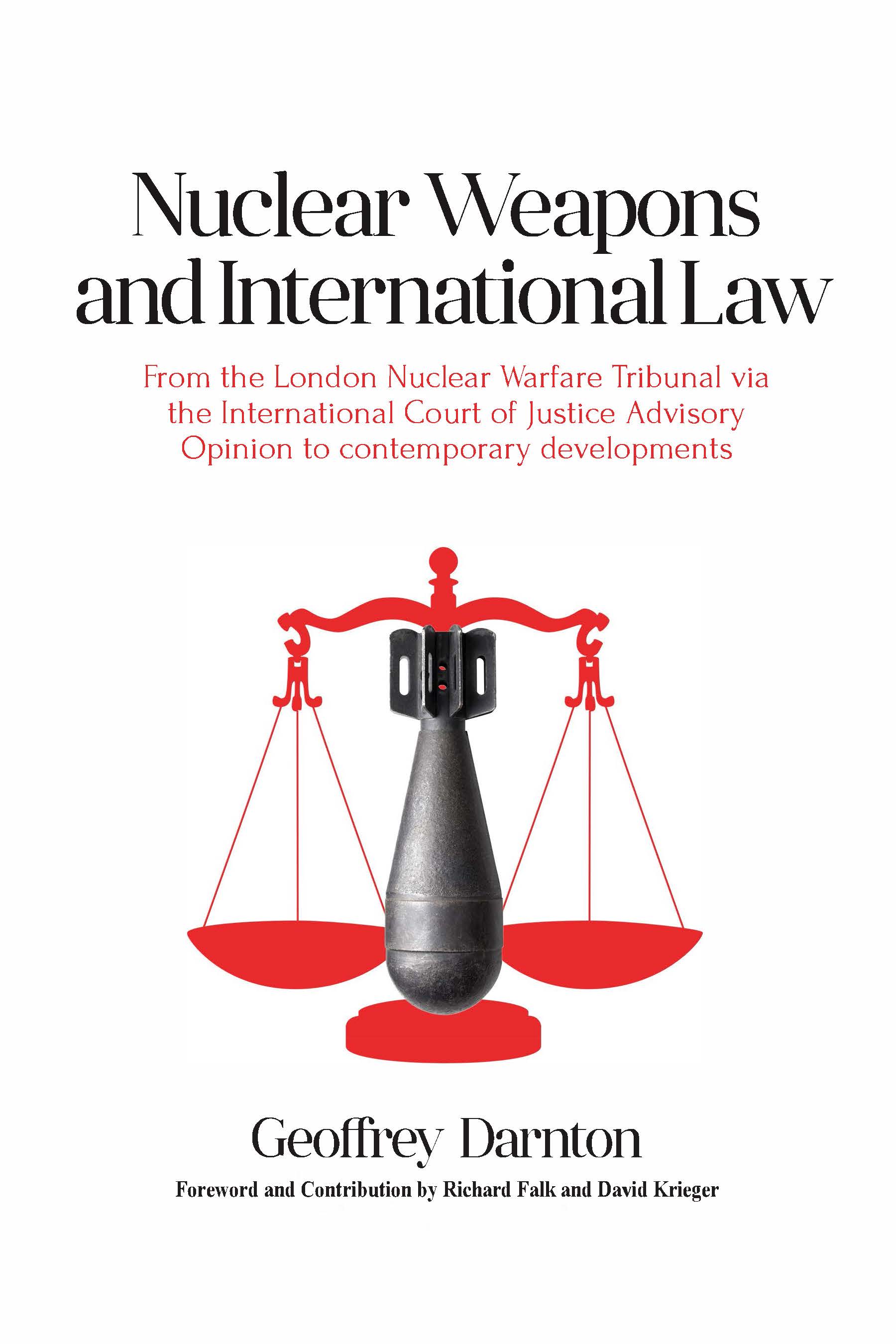
[Prefatory Note: What follows is a poem by David Krieger on what happened 70 years ago during those few fateful days in August that forever altered the human condition followed by the joint introduction that we contributed to Geoffrey Darnton’s Nuclear War and International Law, which was just published, and is available for purchase at the usual online outlets and via book store

Poetry is for David a seamless mode of expression that merges his life’s dedication to human wellbeing with his inner reflective consciousness, and bears a special relevance to his central mission of achieving a world without nuclear weapons. In my understanding, David’s poem that follows and others he has written dealing with other aspects of nuclearism enables him to enter what Thomas Merton and James Douglass identify as the domain of the unspeakable, and indeed virtually unimaginable. Most of us need poetry, film, and art to make authentic contact in those private and public situations where prose language and even an enlivened imagination cannot adequately express the extremities of experience. I think of the French film of Alain Resnais, ‘Hiroshima, Mon Amour’ (1959) and Picasso’s ‘Guernica’ as world class examples, but there are many.

Another form of authentic contact with the unspeakable is by way of pilgrimage to hallowed sites of desecration, and David has made such visits frequently, which often feature contact with hibakusha, survivors of the atomic attacks. As with the Holocaust, public atrocities of this enormity, constitute an inexhaustible occasion for mourning and reflections on the dark mysteries of evil, but unlike the memories associated with the Auschwitz experience, Hiroshima and Nagasaki have permanently and negatively affected the biopolitical contingency of the human species and its earthly habitat.

There is one further preliminary observation. Private atrocities, the death or terminal illness of one’s child or any deeply loved one, also gives rise to inexhaustible cascades of grief that can never be adequately expressed through reasoned narrative and never truly overcome. Such acute private losses because of their negative purity indirectly validate the reality of the absolute in human experience, and for closely related reasons helps us appreciate the extraordinary gravitational pull of the divine and sacred.

The special challenge of Hiroshima and Nagasaki is not merely to mourn and remember. It is rather a summons to devote our energies to rid the world of this curse that imperils human destiny for these past 70 years and as far ahead as we can discern. Denuclearization as a process of diminishing in all ways possible the threat posed by this weaponry and treating ‘getting to zero’ as the non-negotiable goal. This process and this goal can become attainable objectives if a sufficient political will is mobilized and becomes attached to a collective ambition to renounce nuclear weapons as an absolute prerequisite of human dignity.]
 

front%2002


th-2

A SHORT HISTORY LESSON: 1945


August 6th:

Dropped atomic bomb

On civilians

At Hiroshima.


August 8th:

Agreed to hold

War crimes trials

For Nazis.


August 9th:

Dropped atomic bomb

On civilians

At Nagasaki.


David Krieger

***********************************************************


Foreword to New Edition of Decision of London Nuclear Warfare

Tribunal


Richard Falk & David Krieger


When the London Nuclear Warfare Tribunal was convened in 1985, the Cold War set the tone of international relations. Beyond this, Ronald Reagan was the most anti-Communist and belligerent American leader since the end of World War II. There was every reason to be worried that the risks of nuclear war had become unacceptable from the outlook of political prudence additional to their dubious moral and legal status. In this atmosphere the London Tribunal sought an authoritative assessment of the status of nuclear weapons and warfare under international law with the hope that this might move the political debate toward the embrace of nuclear disarmament.


Now 30 years later, the Cold War is over and Barack Obama, the current American leader declared in 2009 his resolve to work toward achieving a world without nuclear weapons. This message of hope and commitment was reinforced at the time by four prominent American political figures with strong realist credentials (Henry Kissinger, George Shultz, Sam Nunn, and William Perry) present the case for nuclear disarmament to avoid the further spread of nuclear weaponry. Yet as we reflect upon these issues in 2015 we note that there is not present among the nuclear weapons states the existence of a political will to place nuclear disarmament on the global policy agenda, much less evidence of a willingness by non-nuclear states to exert meaningful pressures.


Despite important shifts in conflict patterns, which make it more dangerous than ever that nuclear weapons will get into the hands of non-state political actors that would be inclined to disregard the horrifying consequences of use, there are no serious initiatives proposed by governments or through the United Nations to address this menacing challenge. What we find in 2015, instead of a sense of urgency, is a shared mood of complacency on the part of governments, international institutions, and international public opinion. Without the Cold War, and considering the absence of any use of such a weapon since 1945 at Nagasaki, there is a false sense of security, even as anxieties rise to fever pitch when contemplating the prospect of Iran armed with nuclear weapons. Indeed, the evident present priority of nuclear weapons states is to invest heavily in the modernization and further development of their existing arsenal of nuclear weapons, as well in the pseudo-stability of the nonproliferation regime.


And thus, even more so than in 1985, it would seem that it will be up to civil society activism to create the kind of climate of opinion that will force the hand of governmental actors. One step in this direction is to remind the people of the world that from the perspective of international law, nuclear weapons are unlawful, making their threat or use, crimes of utmost magnitude. In this regard, the material gathered in this volume is an invaluable resource for citizen activism on the basis of expecting governments in the 21st century to pursue security within the framework of the global rule of law. The clarity and authoritativeness of the conclusions of the London Tribunal are reinforced by the Advisory Opinion of the International Court of Justice rendered in 1996, and especially by the historic dissent of Judge Christopher Weeramantry that is also included in this volume.


In 1986 there were some 70,000 nuclear weapons in the world. Since then, the number has fallen to approximately 16,000. It is a dramatic quantitative drop, but remains far from the only safe number, which is zero. Over 90 percent of the weapons are in the arsenals of the US and Russia, and their negotiations for further reductions have stalled while they engage in military posturing, including nuclear posturing over the conflict in Ukraine. The US and Russia still maintain some 1,800 nuclear weapons between them on hair-trigger alert, ready to be fired within moments of an order to do so. Neither country has a commitment to No First Use of its nuclear arsenal, leaving open the threat of a preemptive attack, or other initiating use of the sort sometimes suggested as the best means to destroy Iran’s underground nuclear facilities.


The United States unilaterally withdrew from the Anti-Ballistic Missile Treaty in 2002 under Bush II, a treaty that was designed to limit the number of missile defense deployments in order to discourage defensive-offensive escalation cycles. This US withdrawal from the treaty coupled with the subsequent deployment of missile defense installations near the Russian borders has generated Russian anxiety about a possible US first strike, which increases tensions between the two countries and makes more nervous the fingers on the nuclear buttons.


In addition to the US and Russia, seven other countries possess nuclear weapons: the UK, France, China, Israel, India, Pakistan and North Korea. All of them have joined the US and Russia in modernizing their nuclear arsenals. Each of these arsenals is a source of nuclear danger, as are those of the US and Russia. Atmospheric scientists found through modelling studies that a relatively small nuclear exchange between India and Pakistan using 50 Hiroshima-size nuclear weapons each on the other side’s cities would put enough soot into the upper stratosphere to block warming sunlight from reaching the Earth, reduce temperatures on the planet to the lowest levels in 1,000 years, shorten growing seasons, cause crop failures and result in nuclear famine that could take two billion lives of the most vulnerable people on the planet. A larger exchange of nuclear weapons between the US and Russia could send the world tumbling into a new ice age, destroy civilization and annihilate the human species and most complex forms of life on the planet.


Article VI of the 1970 Nuclear Non-Proliferation Treaty obligates the parties to the NPT to negotiate in good faith on effective measures for a cessation of the nuclear arms race and an early date and for nuclear disarmament. These negotiations have never taken place, despite the unanimous legal support of the Article VI obligations in the 1996 ICJ Advisory Opinion: “There exists an obligation to pursue in good faith and bring to a conclusion negotiations leading to nuclear disarmament in all its aspects under strict and effective international control.”


In 2014, one of the smallest countries on the planet, the Republic of the Marshall Islands (RMI), took a bold action to enforce the Article VI obligations and the customary international law obligations that derive from them.   The RMI brought lawsuits against the nine nuclear-armed countries in the ICJ, seeking declaratory judgments that they are in breach of their nuclear disarmament obligations and injunctive relief ordering them to commence the required negotiations within one year.   Because only three of the nine nuclear-armed countries accept the compulsory jurisdiction of the ICJ, only the cases against the UK, Pakistan and India are currently going forward at the ICJ. The other six countries would have had to affirmatively accept the jurisdiction of the ICJ to have their cases go forward and none have chosen to do so.


The Marshall Islands also brought a separate lawsuit against the US in US federal court, due to the pivotal position of the US in terms of its leadership on nuclear issues. That case was dismissed by the lower court and is currently being appealed in the Ninth Circuit Court of Appeals. The cases are drawing interest throughout the world and currently over ninety civil society organizations, including the World Council of Churches, Greenpeace International and the Nobel Women’s Initiative, have joined a consortium headed by the Nuclear Age Peace Foundation in support of the RMI’s Nuclear Zero lawsuits (see www.nuclearzero.org).


The Marshall Islands acts with great moral authority, as their territory was used as a site of US nuclear testing in the early years of the Nuclear Age. The US conducted 67 nuclear tests in the RMI between 1946 and 1958, with the equivalent explosive power of having tested 1.6 nuclear Hiroshima bombs daily for 12 years. The Marshall Islanders suffered cancers, leukemia, stillbirths, birth defects and other radiation-induced illnesses. Some of their islands still remain uninhabitable, and they have never been adequately compensated for their pain, suffering, premature deaths and the loss of their lands.


In addition to the Nuclear Zero lawsuits by the Marshall Islands, one other positive initiative in relation to nuclear weapons is the series of inter-governmental conferences on the humanitarian impacts of nuclear weapons that have taken place in recent years in Oslo, Nayarit (Mexico), and Vienna. At the Vienna conference in December 2014, the Austrian government made an Austrian Pledge to work to close the legal gap to achieve the prohibition and elimination of nuclear weapons. Since then, over 100 other states have joined Austria in taking this pledge, now known as the Humanitarian Pledge. The hope is that one or more of these countries will convene a meeting of states to initiate a Nuclear Ban Treaty, similar to the Ottawa Conference that was convened to create a Landmine Ban Treaty. This can be done with or without the initial participation of the nuclear-armed countries.


This year (2015) marks the 70th anniversaries of the bombings of Hiroshima and Nagasaki. The survivors of those bombings, the hibakusha, have been outspoken in their calls to abolish nuclear weapons so that their past does not become someone else’s future. Every year, every day, that this advice is not heeded, increases the danger to the human future. This is a legal issue, as this book makes clear, but it is also a moral issue, a security issue and, ultimately, a spiritual issue. Humankind must step back from the nuclear abyss now, before it is too late.


2 Aug

Poetry and War


During these days of continuing massacre in Gaza I have found it difficult to focus the mind elsewhere. I came across a short statement of about 200 words by the great, enigmatic 20th century poet, Wallace Stevens, stuck between poems in his Selected Poems, p.270, with a characteristically unemotional title—‘A Prose Statement on the Poetry of War.’


Stevens seems to be telling us that true poetry is a peacetime activity generated by the imagination while poetic responses to war are products of our consciousness derived from the domain of fact. In his words, “consciousness takes the place of imagination.” It is, to be sure, a special kind of consciousness, imbued with what Stevens refers to as the ‘heroic,’ and I would add, the ‘tragic’ and ‘unimaginable.’ We witness horror visually and viscerally, and yet we still too often rely on statistics about killing and dying to shape our sense of the gravity of all that is happening.


Stevens also reminds us that the imagination is not without its own ambitions, seeking to impart a sense of reality that supersedes the facticity of what Stevens is calling consciousness. Ambitions of this sort, situated in the hidden recesses of mental activity, also reflects the strong pull of desire, which if it challenges the prevailing images of what we might call ‘heroic fact’ generates severe feelings of hostility. It is a war zone of its own. Stevens alludes to “the endless struggle with fact” whether in peacetime or during a war, and adds, almost as a cautionary warning, “[b]ut in war, the desire to move in the direction of fact as we want it to be and to move quickly is overwhelming.”


There is of course a haunting ambiguity in Stevens’ use of the word ‘we’ in this sense. Who are we? Does not our answer, usually not articulated, tell us how we join imagination to fact under the stress of war. The intensities of the ongoing violence in Gaza stifles the imaginative voice because the domain of fact becomes truly, even appropriately, overwhelming. Yet fact can be as victimized by subjectivity as the realms of the imagination, especially when it collides with desire. I think these days of those who would rationalize ‘massacre’ as ‘self-defense’ or dehumanize and demonize victims by branding ‘the other’ as ‘terrorist.’


While attentive to the terrible reality confronting us by the ongoing happenings in Gaza, we should strive for root causes. What is it about our world that allows the Guernicas, Auschwitzs, Hiroshimas, Srebrenicas to keep happening? How do we best identify this genocidal virus that keeps attacking the body politic, and yields tears, but no antidote? Is it the reification of ‘the other’ and of ‘the self’ that allows us to see mostly ‘villains’ and ‘heroes,’ and not children, women, and men? Up to now, we allow these lines of division to be drawn and to dominate the public sphere, and affirm partisanship as ‘realistic’ because the tensions of our world means that either I die or you die, and our leaders find good reasons for us to live and you to die. And so atrocity

begets atrocity, a ceaseless cycle with periods of calm and shifts of place, culprit, and victim.


In reflecting along these lines I am reminded of Theodor Adorno’s extraordinary comment—“To write poetry after Auschwitz is barbaric.” Adorno’s meaning is not immediately evident, nor will it ever be. The cultural critic, Brian Oard, insists that the assertion must be read in its broader context, and in light of Adorno’s own later clarification that softens the specific injunction. If so approached, the statement is meant less literally than if read or invoked as an isolated indictment of what could be described as the indecency of any return to ‘cultural normalcy’ after the enormity of the crimes of the Holocaust.


What Adorno wants us to grasp is that Western culture that allowed Auschwitz to happen included its cultural artifacts, incorporating even the work and worldviews of poets in an overall totality that facilitates the grotesque. It encourages the coldness of indifference and helplessness in the face of the severe abuses of all those who fall outside the protective umbrella of our conscience.


Can we capable of learning anything at all from the corpses being drawn from the rubble of devastation in Gaza day by day? Is not the beginnings of a response, whether in the domains of imagination or consciousness, a refusal to embrace the moral and political delusions of sub-species identities, whether of nationality, ethnicity, religion, gender, and civilization? Until the self merges with the other on a planetary scale, we will feel the pressure to avert our gaze from those crimes against humanity committed on our behalf or against those with whom we have no tribal or national identification. Is such an affirmation of species unity a dangerous utopian dream? We cannot know, but we should realize by now that the its rejection helps explain the recurrence of genocidal nightmares.     

Beyond The Haunted Imagination

12 Feb


            Ever since atomic bombs were exploded over the Japanese cities of Hiroshima and Nagasaki in the closing days of World War II end of the world forebodings have been present in Western cultural consciousness. In the background of such thinking is the religious anticipation of a day of judgment when life in earth will be replaced by the consignment of everyone then living to either the hell of damnation or the heaven of salvation. The first type of end time thinking is based on the fear that the Promethean gift of technological innovation when carried to its omega point will produce a big bang terminal moment in the human experience. The second kind of end time thinking imagines that the gift of planetary life was a testing time for the human species that would end with endless punishment for the many and eternal rewards for a few, and was divinely programmed in a fatalistic manner beyond human capacity to control or alter. We live now amid both types of end time thinking, a realization made more troublesome because such alarmist patterns of awareness while rather widespread have not generated any strong reactive movement based on prudence and preservation. Instead, all of us avert our eyes most of the time, and most manage to look away all the time often with the help of drugs and denial. Only a few are able to fix their full gaze on the impending cosmic wreck without turning away.


            One of those few is a poet named C.K. Williams who in an essay, “Nature and Panic,” which appeared in the October 2012 issue of Poetry magazine, acknowledged panic in response to what he observes in the world around him. In words that resonate with me Williams wrote: “Like many people I know, I often have a somewhat—no, a wholly—frightening vision of the future of humanity and of our earth. There are periods when I live in a state of acute anxiety, indeed, near panic, about what awaits our children and grandchildren. Last year, I realized one day that every poem I was writing or attempting to write, had global warming and its consequences either as its overt or implied theme. Sometime I’m depressed beyond writing or saying anything at all; I fall into a funk that threatens never to end.”


            Williams goes on to refer to Cormac McCarthy’s The Road, which paints the darkest possible picture of the desperate aftermath of a totalizing apocalyptic catastrophe that reduces human existence to the barest of survival struggles waged among roving gangs of desperate people ready to feast on one another. Such an extreme playing out of dark forebodings provokes an attitude of resentment in Williams, not because it is an exaggeration of what lies in store for humanity, but because it rings true! In Williams’ words: “I’m not the only person I know who’s expressed regret at having injested the book: I feel sometimes indignant that I have to have it in my consciousness. If there ever was a book that embodies the extremity of the emotion we call panic, this has to be it. I find it’s like having a piercing scream in my mind, one that, when the book comes to mind, which it does more often than I’d like, goes off like a siren.”


            From this low point of panic, Williams finds his solace in beauty as an authentic manner of not succumbing to the torments of reason and the all too realistic tremors of a beckoning end time. He takes note of the pervasiveness of beauty in all its forms—music, painting, architecture, poetry—“if not in every day then in every age” as something that lifts human experience to a higher realm of being that is no longer vulnerable to panic no matter how dire the warning signs. Williams writes “[o]ften our first experience of beauty will be the first hint of what each of us at some point will dare call our soul.’ This allows our exposure to great art of any kind to carry us beyond ourselves and whatever conditions we fear in the world. Williams notes that the first creators of painting retreated to caves so as to avoid being distracted by the lesser wonders of nature that he seems also to regard with awe, yet a lesser awe, because these wonders are there to be found rather than there to be discovered in the solitary mineshafts of the creative imagination. Williams ends his extraordinary pilgrimage beyond the realms of end time with these almost hopeful words: “Beauty saves us. Beauty will save us. The world, though, is still ours to cherish, and ours to protect.”


            This brave sentiment is less an act of will than a refocusing of the human spirit. While we are alive, let us be saved by beauty, and I would add by love, but let us not forget that the world is not yet alien, but contains flowers and birds and stars and moonlight and rainbows and many beautiful people of all shades and beliefs. It is worth protecting, and cherishing, and who really knows what the future will bestow? Despite sharing with Williams  “a pessimism of the intellect” I also know deep down that the struggle for the human future is far from over, that the world and all those who are being made to daily suffer close by and at great distances are both “ours to protect.”      

Beyond Words: Poet’s Lament

5 Aug

Poetry at its finest stretches the expressiveness of language beyond its prior limits, not necessarily by its choice of words, but through the magical invocation of feelings embedded deeply within consciousness. Yes even poetry has its own frontiers that if crossed lead to a word-less terrain littered with corpses of atrocity, what Thomas Merton and James Douglass have soulfully identified for us as the realm of ‘the unspeakable,’ and then are brave enough to explore forbidden terrain. When we do not respect the unspeakable by our silence we domesticate the criminality of the horror that human beings are capable of inflicting on one another, and give way to the eventual emergence of normalcy as has happened with nuclear weapons detached from the happenings of Hiroshima and Nagasaki.

I came across an utterance by one of my heroes, the Jesuit priest/poet, Daniel Berrigan, while on trial for pouring blood on draft cards during the Vietnam War: “I was in danger of verbalizing my moral impulses out of existence.” These words appear at the start of a haunting poem by another one of my heroes, the recently dead poet, Adrienne Rich; the poem’s title is “The Burning of Paper Instead of Children” and I recommend it not only as a stunning poetic achievement but also as a text for meditation.

Such thoughts seem far from the recent controversies on this blog about

the competing justice and victimization claims of Israelis and Palestinians, and the sort of language that seems historically validated for some to discuss such matters of life and death, while being hateful to others. It made me appreciate anew that there are some rivers of divergence that are too wide to cross, and that the attempt, first generates anger and frustration, but eventually brings despair, even sadness. Of course, the blogosphere is a new kind of undefended public space that can be entered by anyone with good will or ill. To appoint myself as a kind of censor, given the capacity to exclude or include comments, was neither

congenial nor tenable as a role, and I have decided to give it up except in relation to hate speech or defamatory material, although even here I acknowledge that some degree of subjectivity will always be present, at least unconsciously.

I am of course aware that the Israel/Palestine conflict is almost impossible to approach in a spirit of moderation, and I realize that many of the hostile comments are directed at my particular understanding and way of presenting the issues. Indeed, my posts have been scrutinized by pro-Israeli zealots so as to find some turn of language or alleged opinion that can be used to discredit me in other settings, especially in relation to my role as Special Rapporteur for Occupied Palestine on behalf of the UN Human Rights Council. Unlike comments that can be excluded, the posts are in the public domain, source material for those who seek to mount a personal attack, and there are no rules of the game to ensure that allegations are at least fair and reasonable. I have tried my best not to be intimidated or hurt by such concerted efforts to harm my reputation and destroy my self-esteem, but have not always succeeded.

As the person who dares to continue to write a blog under such circumstances, I have tried to devise for myself a code of responsible behavior for my own benefit, and to establish an atmosphere of trust and respect. I have selected two main principles as guidelines: (1) sustain integrity, especially whenever the suffering of others is involved, especially if it is unpopular to complain about what is happening, or worse, to mount sharp criticism of the perpetrators; in effect, talk truth to power, acknowledging, as I do, in the process that for Gandhi a dedication to truthfulness should never be separated from a dedication to nonviolence. (2) Admit mistakes, and explain their occurrence as honestly and helpfully as possible. In addition, I would add a couple further principles to this informal code, which like the Japanese game of Go has never put its rules in the form of an authoritative written text: (3) use the blog space to challenge whenever possible the ‘politics of invisibility’ that shields from our awareness structures of suffering, abuse, and exploitation; I attempted to do this, for instance, by calling attention to the extraordinary Palestinian hunger strikes that were almost totally ignored by the mainstream media in North America while giving daily coverage to Chinese human rights activists who were enduring far less. (4) use the blog space from time to time to consider a complementary aspect of the way reality is so often obscured and twisted by media, government, special interests, a pattern I label ‘the politics of deflection,’ that is, diverting attention from the message to the messenger, or condemning the auspices under which allegations were made while ignoring their substance; this is happening all the time, perhaps most damagingly by convincing much of the public for decades that the menace of nuclear weaponry has to do mostly with its proliferation rather than with its possession, deployment, threat, and possible use; more controversially, to obscure the violence of energy geopolitics behind a protective screen of counter-terrorism as in fashioning a rationale for attacking Iraq in 2003.

The work of poetry is poetry, but there are times when poets do produce lines here and there that illuminate the human predicament in unforgettable ways. Of course, the recognition of such an illumination is highly personal, and should never be defended. For me the following lines from Rainer Maria Rilke’s Fragment of an Elegy had this kind of explosive impact upon my imagination:

Once poets resounded over the battlefield, what voice

can outshout the rattle of this metallic age

that is struggling on toward its careening future?

Although composed almost a hundred years ago, this image of triumphal militarism illuminates current conditions and obliquely addresses our worst fears. We need to be thankful for these poems that make the outer limits of the speakable more accessible, especially in dark times of torment, great risk, and confusion.