Tag Archives: Trump

The Politics of Kneeling: A Tribute to Colin Kaepernick  

22 Jun


The Politics of Kneeling: A Tribute to Colin Kaepernick


I had long held the image of kneeling as primarily ritual behavior in placesof religious worship, a sign of reverence for the sacred and divine. More broadly, getting down on one’s knees is an expression of submission associated withformal meetings between those of unequal social rank—as when commoners or even nobles interact with kings and queens. In a more metaphoric, and somewhat hypocritical spirit, kneeling has traditionally often been associated with assuming a submissive posture as when men have conveyed marriage proposals to the woman of their dreams, a pre-marital gesture of supplication. A more pragmatic recourse to kneeling is often the sign of a beseeching or well-trained street beggar, seeking our sympathy, most of all a bit of our money. We kneel or crouch, when performing as a grandparent, seeking to be less intimidating to our young and small grandchild. Whatever else, it is perverse to consider a kneeling person to be a defiant or subversive citizen. When citizens are denied the right to exhibit their deepest concerns about injustice democracy is dead! When citizens are punished or chastised for kneeling democracy is dying!


When the NFL quarterback for the San Francisco 49ers, Colin Kaepernick, decided to kneel during the playing of the National Anthem during the 2016 season, his announced intention was to call attention to racial inequality in the United States, and its ugliest manifestations via excessive uses of deadly force by police against African Americans. Kneeling, for the reasons noted above is a respectful and dignified way for a public figure to communicate their deepest felt concerns to a wider public, and contrasts with turning one’s back while the National Anthem is playing, and is a far more gentle reminder of injustice than raising a defiant clenched fist as the African American Olympic athletes, Tommie Smith and Juan Carlos, did during the playing of the U.S. National Anthem as is customary at the medal ceremony to honor the country of the athlete winning a competition as occurred in Mexico City after the 200 meters race at the 1968 Summer Olympics in Mexico City. Such a deliberately militant show of identification by way of the Black Power Salute was at the time controversial (supposedly politicizing the Olympics as if tallying the overall winner by the number of medals a country has won is apolitical!). It should also be remembered that 1968 was a tumultuous year during which both Martin Luther King Jr. and Robert F. Kennedy were assassinated. It struck me at the time as an effective nonviolent means of conveying an urgent moral, social, and political message that all was not well when it came to race relations in the United States, and if racial injustices were not addressed, massive suffering would persist, and could give rise to bloody conflict and strife. Smith later explained that the clenched fist was meant as  ‘a human rights salute’ rather than a ‘black power salute,’ but the distinction was hardly noticed at the time, and even had it been, I doubt that its intention would have been to shift our perception from ‘militant’ to ‘liberal’ or from ‘political’ to ‘humanitarian’?


Such displays of outrage by prominent athletes or entertainers are often denounced, especially by reactionary talk show hosts and reactionary politicians, insisting that athletes and entertainers are being paid millions for doing what they are superbly skilled at doing, but they have no credibility when it comes to declaring their unwelcome opinions on controversial societal issues. Such individuals are even instructed to renounce normal rights as citizens because speaking out would be taking unfair advantage of their notoriety. To engage in political advocacy or to promote a social cause such as racial equality or justice and equality for gay and trans people is treated by such monitors of propriety as crossing a red line. I would contend the opposite. Athletes and entertainers of conscience are the canaries in the mines of modern societies in North America and Europe, bearing witness often to their own unhealed wounds received from childhood experiences, neighborhood encounters, and personal struggles that many of us have been spared.


Kaepernick’s act was brave and had an impact, and partly because it dared violate sports etiquette by putting at risk his professional life, and also served as an early warning of the kind of volcanic feelings of pent up anger and distrust that came from generations of racial abuse in America. It is not surprising that Kaepernick’s ‘statement’ should now be remembered and intoned by protesters in the streets, but that it is also being reevaluated in the board rooms of NFL billionaire owners and league officials is less a surprise than a sign that the protest sweeping America might be beginning to make difference. It also should be appreciated that it took the martyrdom of George Floyd to redeem Kaepernick’s initiative that should have been heeded in the manner intended rather than shifted to a trivializing debate about whether kneeling during the National Anthem was a form of wrongdoing rather than what it was, a dignified exercise of the right of free expression on an unresolved issue of great gravity. We in America need to grasp our crucial dependence on acts of conscience by public figures and by whistleblowers with insider information about state crime if we have any hope at all of preserving democracy in the face of fascist style assaults on the rule of law and citizen dissent.


Of course, do not wait for Donald Trump to rethink any of his past appalling behavior on matters of either race or justice. Trump has made it a signature trait to double down on his worst missteps in these domains. It was Trump who called a player who kneeled ‘a son of a bitch,’ who deserved to be fired by club owners. He insisted that Kaepernick was showing disrespect for flag and country by kneeling, which he with typical unknowing arrogance compared to ‘sitting.’ He urged suspensions and disciplinary action, leading Trump’s fan base to boo whenever any player knelt in solidarity with Kaepernick. Trump showed no remorse when Kaepernick’s exercise of free agency resulted in no offers of a contract from any NFL team, and he soon discovered that he was improperly rendered unemployable. Such a punitive pushback was so excessive and abusive that Kaepernick filed a formal complaint in accord with the League’s grievance procedures, negotiating a confidential agreement, presumably a financial settlement that avoided a costly legal battle over innocent behavior that severely damaged his professional reputation with the result that he was unable to continue his outstanding career as a football player.


Thankfully, Roger Goodall, the Commissioner of the National Football League, is not Donald Trump. He has at least and at last issued an apology, belatedly urging teams to hire Kaepernick,  and even acknowledginging the impropriety of his past actions. This reappraisal has been reinforced by the comment of Kaepernick’s coach, Chip Kelly, who said that his protest move had a ‘zero distraction’ effect on the team. Kaepernick, even before Floyd’s death, received several awards from many human rights NGOs, in recognition that his action were justified, and deserved commendation not censure. The players on the San Francisco 49ers’ team likewise recognized his contributions by naming Kaepernick the recipient in 2016 of the Len Eshmont Award for best epitomizing the courageous and inspirational play of Len Eshmont, a beloved former player for the 49ers. A comprehensive assessment of the incident by two psychologists in the Scientific American ended with these words from its authors, Jeremy Adam Smith and Dacher Kettner: “Will Americans one day look back on Kaepernick’s symbolic act as a moment when we started to understand each other just a little bit better?” [“The Psychology of Taking a Knee,” Scientific American, June 2020]


Of course, there have been many Kaepernick moments that stretch back to the era of slavery, and forward to Rosa Parks’ 1956 refusal to go to the back of the bus sparking the Montgomery Bus Boycott , King’s 1963 letter from the Birmingham Jail, and the death of George Floyd, some more resonant than others, but none have been enough to remove the darks stains of systemic racism from the fabric of daily life in America, and elsewhere in the world. It takes a dedicated movement, not a string of moments, no matter how searing and memorable, to achieve the deep structural changes that will allow all persons of color to be treated as equal citizens with equal rights, and until that feeling exists among those previously victimized, there will be inter-racial ceasefires, but no enduring peace.


The challenge is resoundingly clear, but up until now the response is not.  Racism in America has over and over again proven its lethal resilience.     


World Order and Covid-19 Pandemic

19 Apr

[PREFATORY NOTE: THE POST BELOW IS A SLIGHTLY MODIFIED TEXT OF AN INTERVIEW CONDUCTED BY DANIEL FALCONE, AND PUBLISHED ON APRIL. 17, 2020 IN COUTERPUNCH.]

World Order and the Sars-Co2-Virus

 Daniel Falcone: Carlos Delclós, a sociologist based in Barcelona has highlighted the need for bottom up responses for social solidarity in Spain when compared to the unity declarations put forth by the monarchy. Further, journalist Ben Ehrenreich cites that while there are severe problems with the government, remnants of a democratic spirit and mutual aid keep optimism and hope alive within their system of universalized healthcare. Can you comment on the greater European response to pandemic?


Richard Falk: I am aware of the greater strength and role of cooperative movements in European countries, a residue of the socialist movements of the prior century, that give rise to more spontaneous approaches on local levels to immediate threats to well-being, exhibiting both less trust and less dependence on governmental undertakings.


Furthermore, European health systems are more evolved, fewer people left out, and more sense of public responsibility, although some deficiencies also emerged. Italy and Spain lacked sufficient governmental capabilities to cope humanely with the challenge of a pandemic, although the epicenter was initially in Lombardy, the richest part of the country.


Given the urbanization and social complexity accompanying modernity, the need for intelligent, imaginative, and humane governance is a necessity in times of societal crisis, and its absence magnifies suffering.


Daniel Falcone: The World Bank is reporting that Sub-Saharan Africa is experiencing a drastic economic downturn and the first in more than a couple of decades. Can you explain the unfolding in this region, which is fairly under reported by western democracies?


Richard FalkSub-Saharan Africa is still heavily dependent on the exports of resources rather than on the provision of services and high-end manufacturing, and as a result is exceedingly vulnerable to changes in the adverse terms of trade that arise whenever “deglobalization” trends are present. It would seem that the rise of ultra-nationalism, as highlighted by “Trumpist” economic nationalism, have negative impacts on sub-Saharan African development prospects.


Daniel Falcone: Recently, I spoke with John Feffer of Foreign Policy in Focus and he explained how the pandemic has impacted globalization in regards to a “slowbalization.” He has commented on additional dimensions of this elsewhere. Could you elaborate on the anti-globalization and ultra-nationalist worldview wave that autocrats around the world are riding currently? This looks as dangerous as the pandemic.


Richard Falk: There is no little doubt a rise of autocrats, elected and non-elected, in what seemed entrenched democracies (U.S., UK, India, Brazil), in faux democracies (Russia, Hungary, Egypt), and monarchies (Saudi Arabia, UAE, Morocco). This authoritarian surge, which came initially as a surprise to most of us, superseded expectations associated with the end of the Cold War that were triumphantly interpreted as an ideological victory for the West and its values, and especially for the American political economy.

George H.W. Bush, president at the time of the Soviet collapse, proclaimed ‘a new world order’ in which the geopolitical hegemony of the U.S. now was unopposed, and would no longer be challenged in global arenas. This meant that the UN could function as intended on the basis of consensus in a world without ideological rivalry, which allowed the UN to sponsor the Iraq War of 1992 designed to restore Kuwaiti sovereignty by compelling Iraq to abandon conquest and annexation.


Then Bill Clinton came along promoting a foreign policy based on a doctrine of ‘enlargement,’ shorthand for predicting and promoting the spread of democracies. It was accompanied by the optimistic belief that an era of peace and prosperity would follow the further spread of democratically governed states. It was widely believed that democracies do not go to war against one another and capitalism is the best engine of growth the world has ever known. From such perspectives the post-Cold War world was envisioned as becoming increasingly both peaceful and prosperous.

Such a worldview was supportive of regime-changing interventions, especially in the Middle East, to get rid of the more strategically troublesome remnants of autocratic regimes and reflected the prevailing enthusiasm about the growth potential of neoliberal globalization, an approach long championed by the neoconservative movement.


To become operational such a policy outlook needed both the 9/11 attacks to re-securitize American foreign policy and the neoconservative presidency of George W. Bush. The decisive test of this proactive outlook occurred in the Iraq War of 2003. Expressing this jubilant mood, Bush II introduced a government report on national security in 2002 with an assertion of faith in the singularity and superiority of the American form of governance that went largely unchallenged at the time. He contended that market-oriented constitutionalism (as exemplified by the USA) had demonstrated to the world that its form of democracy (elections plus capitalism) was the only legitimate way to organize the political life of a sovereign state in the new century.


So, the haunting question remains, ‘what went wrong’? The most obvious explanation rests on the alienating impacts of neoliberal globalization that seemed to heap its rewards on the very, very rich while leading to stagnation or worse for the multitudes.


This structural explanation of the rise of autocracy is certainly a large part of the story as predatory capitalism in this period gave rise to gross inequality on all levels of social order, symbolized by the 26 richest individuals controlling more than half of the world’s wealth. Another part of this story, less frequently acknowledged, is that the socialist alternative to capitalism was successfully discredited by falsely representing the Soviet political and economic failure as a decisive and sufficient test case of the viability of a socialist alternative.


This ideological supremacy of neoliberal capitalism facilitated two regressive developments: first, leading neoliberal globalization to privilege capital over people, or put differently, to choose economic efficiency over human well-being. Secondly, creating a political consciousness that fed the illusion that there were no tenable alternatives to the existing mode of political economy, completely ignoring the kind of autocratic state capitalism that flourished so remarkably in China in an ideological atmosphere that presented itself as fulfilling the hopes and dreams of socialism, experiencing a remarkable modernizing facelift under the leadership of Deng Xiaoping that had did not rest its claims on the virtues of democracy.


For most of the world, the Chinese phenomenon, while mesmerizing, was seen as not generalizable beyond China, or at least not beyond Asia. In such a setting there was a very unhealthy political situation—the dominant practices and policies of neoliberal globalization were not delivering material benefits to most people living in democratic societies, and the excesses of this stage of capitalism were left unchallenged, and hence unmitigated, by socialist challenges that had since Marx led the most adept masters of capital to seek accommodation with the laboring classes and create an image of an ethical capitalism that was inclusive of the great majority of people in their respective national societies.


With that humanistic imperative of ideological rivalry pushed aside, the path was cleared for the emergence of demagogues, and those who found scapegoats to blame for the widespread distress among the public, especially foreigners. This new kind of political appeal produces a blind kind of trust in the leader, however misleading the diagnosis, and feeds a nationalist frenzy at the very time that the world needs recognition of a cooperative global order to address such challenges as climate change. It is not without irony, that the U.S., which had long lectured the world on the many virtues of democracy, should voluntarily succumb to the autocratic ‘charms’ of Donald Trump.


It is notable to take account of the existence of some dissenters from ‘slowbalization,’ the most prominent is Richard Haass, former government official and currently President of the Council of Foreign Relations. He anticipates a recovery process that involves an ‘acceleration’ of pre-pandemic trends, including a concerted effort to restore the neoliberal world order with especial emphasis on its orientation toward limitless growth based on technological innovation and capital efficiency, but revamped in the precarious context of continuing American decline, which includes an absence of the kind leadership required to address global problems through multilateralism.


In the background of the Haass view of the post-pandemic world is an intensifying geopolitical rivalry producing conflict and increasing dangers of strategic warfare, presumably featuring a standoff between the U.S. and China.

Henry Kissinger, a stalwart of the triumphalist outlook that followed the Soviet collapse, is more hopeful than Haass, projecting the period after the pandemic subsides as a call for the reassertion of robust American leadership on the global policy stage. He believes that the openness of trade and the transnational mobility of people depend on the renewal of confidence in the neoliberal world order that proved so successful after World War II, and was constructed on the basis of Enlightenment values emphasizing the fusion of political stability, confidence in science and technology, and market-driven economic growth


In the background of the restoration of the pre-pandemic ‘normal’ is the ecological illiteracy of supposing that maximizing economic growth via globalization, or otherwise, can proceed without respect for the limits on carrying capacity of the earth. Frank Snowden, the widely respected expert on epidemiology in an illuminating interview (Il Manifesto, Global Edition, April 11, 2020) suggesting that COVID-19 virus and earlier flu epidemics (SARS, MERS, Ebola, avian flu) can all be traced to zoonotic transfers of the virus from animals to humans, expressing spillovers that he argues are bound to occur when animal habitats are encroached upon by spreading urbanization and industrialization.


A more reconstructive post-pandemic approach would strive for ‘a new normal,’ which combined the health imperative of sensible preparedness and universal coverage with an ecological sophistication that sought to mitigate inequalities among peoples and societies by addressing poverty as a health issue, including the recognition that diseases are more lethal in relation to vulnerable peoples, who suffer as victims and victimize others by becoming agents of contagion.

Daniel Falcone: After the dust settles from the pandemic, if it does, can you attempt a forecast of how global powers will align or realign?

Dealignment’ is more likely than ‘realignment.’ I am assuming here that either that the nationalist retreat from neoliberal globalization will continue or there will be strong moves, hard to forecast, in the direction of regional and global cooperation in key sectors of policy, with international institutions given important coordinating roles. In either alternative alliance, diplomacy seems not likely to reemerge in any manner comparable to what it was in the prior century. Trump has already significantly weakened the Western alliance structure, and except for the forays of “coercive diplomacy” contra Iran (in concert with Saudi Arabia, Israel), seems to have adopted a unilateralist foreign policy course supplemented by transactional bilateralism in which the interaction seeks win/lose outcomes based on hard power disparities.


Reverting to Haass and Kisssinger, it is worth noting that the pessimistic assessments of Haass are explicitly linked to his anticipation of the post-pandemic world order as resembling what happened in the decades after World War I, that is, the Great Depression, the rise of fascism, and a second world war. Kissinger, although habitually associated with a fatalistic view of the international scene, somehow strikes more hopeful notes by advocating and somewhat anticipating a post-pandemic recovery that resembles the dynamics of world order following World War II with the U.S. playing its former leadership role by recognizing the opportunities and needs for a more cooperative approach to global problems.


Daniel Falcone: Are there any chances for United States reform at a local or even an institutional level that can offset the political capital maintained by autocrats both here and around the world? Are we in fact, a “failed state?”

You raise an interesting question. A response must start with the disappointing observation that the 2020 election is between Trump and Biden, a familiar political figure who shaped his career around the bipartisan Cold War consensus of militarism, neoliberalism, and pro-Israeli absolutism. This orientation is what I have called elsewhere ‘the three pillars of American foreign policy’ that only Sanders dared challenge (and paid the price) as one sees what was done to his frontrunner status by the guardians of the established order. Sanders’ response that he lost the primary campaign, but his movement will go on fighting, is suggestive of the gap between the establishment world of political parties and his movement consisting of various societal domains of people that seems openly hostile to the bipartisan consensus, the deep state, and the special interest lobbies that continue to dominate not only the governing process, but also the electoral process

What is worth noticing is that even Trump despite his bombastic claims during the 2016 presidential campaign has as president paid his dues to the bipartisanship in foreign policy with his enlarged military budget, tax cuts for the richest and rollback of regulatory interferences with predatory capitalism, and the greenest light ever given to Israeli expansionism and one-statism. His only halfhearted departure from bipartisanship has been the downplaying of Euro-American alliance geopolitics.

Possibly, the autocratic edge of American politics would be dulled by a Biden presidency by more moderate judicial appointments and some effort to address gross inequalities, student debt, infrastructure, and an improved health system that encompasses the whole society. Yet, it would seem absurd to expect more from Biden, given that his principal message is ideational, a promise to restore national unity by reaching out so far as to include so-called ‘moderate’ Romney Republicans, who have never struck me as moderate except in comparison to their alt-right Republican leadership of the Trump era.

Biden’s unity message is also code language for restoring the bipartisan consensus in an overt form that would counter some of the ultra-nationalist retreat from globalization. In foreign policy we could expect a shift in tone from ‘America First’ to ‘NATO First’ as a way of differentiating his approach from that of Trump and of reaffirming faith in the Western alliance as once again the centerpiece of American foreign policy. It would be foolhardy to expect Biden after a centrist lifetime political career to pursue a progressive social and ecological agenda, yet without such an agenda we can be thankful to Biden for ending the reign of Trump while renewing our severe worries about the social and ecological shortcomings of the American governance experience given 21st century urgencies.


COVID-19: Present, Past, and Future

17 Mar

COVID-19: Present, Past, and Future


A few days ago when WHO officially declared the COVID-19 a ‘pandemic’ a Rubicon of consciousness and global governance was crossed. Hundreds of millions of individuals around the world are coping physically and mentally with what that word never before used in my lifetime means for themselves and those they care most about. The mental dimensions of self-isolation may turn out to be a big challenge almost as big as the disease itself. For once, government officials seem to be heeding the warning of health specialists rather than dutifully than scurrying about to address market signals of distress with public funds. At least this is the public face we see on our TV screens, although in Trump’s case even the appearances are mismanaged, considering the corporate smirk at his Rose Garden press conference when several CEOs pf prominent companies received better free PR that not even their most energetic publicist ever imagined attainable. There is a silver lining: if the American elections are actually held in November, we should see the fall of Trump, and as importantly, the end of Trumpism, that is, unless there is a quicker return to normalcy than now seems possible. Although one thing we might learn from how our lives changed overnight is to stop trying to outguess the future. Economists and future studies consultants may have their super-sophisticated models and graphs, but some of the most significant surges of history have a will of their own that often makes the most mathematically advanced computer models seem out of touch with transformative social forces that remain hidden until a shockingly unexpected eruption occurs.


If nothing else, COVID-19 reminds us of the perils and possible promise of radical uncertainty. As this mysterious deadly mutation of the Coronavirus suggests, our powers of anticipation are not much more impressive than those of our brothers and sisters in the jungle, and I am referring mainly not to tribal peoples looking up at the sky for signs of what is to come, but also of elephants and lions roaming freely on the savannas and grasslands of the world, yet suffering mass killings when wild fires rage out of control. What this uncertainty mandates above all else is preparedness and the acceptance as a matter of urgency of the Precautionary Principle as the long overdue Eleventh Commandment of our civilization. The Precautionary Principle should guide us to take steps to avoid known thresholds of irreversibility or curves of rising risks. The message is this.  Don’t wait until the predictable crisis is at hand, and don’t build on or near the known fault lines of the planet.


COVID-19 also suggests something else that is both instructive and worrisome. We as a species react to crises when their impact is immediate and lethal, and sometimes compensate for earlier complacency by over-reacting when widespread fear spirals out of control to produce panic, and in the process lurid memories of past failures are dredged from the depths of collective consciousness. The Spanish Flu Epidemic of 1918-19 is a current example of a past event I never heard discussed during my childhood, or throughout my adult life, but now is on the lips of many. While still a child this earlier flu pandemic was almost as recent then as the 9/11 attacks are now. We forget quickly past urgencies until replaced by new urgencies.


Another lesson here is that we cannot afford to treat climate change as we are treating this pandemic. Once the concreteness of climate change is revealed so that none can plausibly deny, or escape, or turn away from what happens at a distance, or be explained away as an anomaly of nature, or a danger that technology will address before the great collapse will occur, it will be probably too late to halt the downward trend.  For now, despite the fires, floods, and droughts the sky above remains as blue as ever in most places, the stock market showed no abiding concern about global warming, and the whole societal ecosystem lurches forward, producing the latest digital device and AI advance, without blinking. Even Brazil and Australia, scenes of catastrophic fires, seem to view these occurrences as one-time events that should not in the first instance interfere with neither sovereign rights nor with profit-making deforestation and cattle ranching, and in the second, with expanding coal production and exports. The short-termism of how we live our ordinary lives and how political leaders and corporate moguls are judged, makes it difficult to combine democracy and accommodating the global and the long-term, especially if its destructive impact can be imagined as always occurring to others far away or in the distant future. When we read of the ordeal of those living in prolonged subsistence confinement in Gaza or in the misery of refugee camps and border assaults, we may lament the news, and even sign petitions and make donations, but our nighttime sleep is rarely interrupted the way it would be if a next door neighbor or a loved one was so severely infected by the virus as to be carried off to a hospital, hopefully one with enough beds and ventilators, which in a matter of weeks might itself become a vain hope for many older infected people.


COVID-19 also further tears at the fabric of democratic governance. Israel reveals that it has elaborate secret files for the surveillance of all mobile phone users in the country, supposedly to help with counterterrorist efforts, but now to be used in identifying, locating, and confining those believed to be infected or having had recent contact with carriers of the disease. When Orwell imagined a tormenting Big Brother, it was read as an indictment of totalitarian systems of governance, specifically the Soviet Union, or at most a warning of a world in the making, an imagined dystopia that would hopefully never become actual. What the imagination could only worry about the technologists have now achieved. Are we safer, more secure and content when all of us have become suspects and our lives transparencies subject to the discretion of unaccountable bureaucrats?


As with the delusions of the militarist, excessive investments in weapons brings insecurity, not enhanced security. America is the best example in all of history. While our military arsenals grow, we shackle ourselves with more and more restrictions on our freedoms, which has been translated by our minder into electronic monitoring, long lines, and countless hidden cameras. Instead of improving lives by investing in social betterment through health, education, culture, parks and natural preserves, we spend public monies collecting meta-data and insist on a military capability that is dominant globally, able to strike catastrophic blows anywhere on the face of the earth from land, air, and sea platforms, and even from space. China, with all its imperfections, demonstrates to the world that the way to gain power, prestige, and influence is to manage clever fusions of state and market, taking advantage of soft power opportunities wherever they are found. By way of contrast, America is demonstrating that the way to lose power, prestige, and influence is to rely on geopolitical muscle through threat and coercive diplomacy, sanctions, and intervention. The result has been repeated frustration by striking its blows in dead end misadventures, yet learning nothing from each failure because the whole edifice is militarized, paralyzing the moral and political imagination, and the high-priced gurus offer tactical adjustments that misinterpret past failures, and thus prepare the way for new failures..


The democratic fabric of many countries was fraying badly long before COVID-19 added to the wear and tear. The end of the Cold War brought with it the expectation that the material and political benefits of democratic forms of governance would become so obvious to everyone as to produce a global tsunami of democratization, and to some extent it did during the 1990s. Bill Clinton spoke of ‘enlargement’ by which he meant that more capitalist democracies would emerge, and that this would be good for both economic prosperity and world peace as democracies do not make war on one another, especially when trade and investment are robust. Then came 9/11, the counterrevolutionary moves after the Arab Spring that caused severe civil strife and mass displacement, refugees and asylum seekers, ultra-nationalist reactions to neoliberalism, and now COVID-19 comes along. A mixture of alienation, scapegoating, and identity politics gave rise to the still bewildering phenomenon of societies freely electing, and even reelecting, autocratic demagogues that take away basic liberties without disguising their acts or intentions. A leader as regressive from the perspective of democratic values as Rodrigo Duterte enjoys an 80% approval rating in The Phillippines despite being responsible for as many as 20,000 extra-judicial executions, as well as numerous flagrant violations of human rights standards and disregard  of constitutional limitations on the exercise of state power. Modi remains popular in India despite his crude and cruel encroachment on the autonomy of Kashmir coupled with inflaming attitudes toward the large Muslim minority.


It is to be expected that there are no real democracies during wartime or in the midst of crises that give governments, regardless of ideology, a free hand to do whatever they proclaim as helpful in the name of national security, and now public health. During World War II the United States Government interned its West Coast Japanese minority without the slightest attempt to proceed in accord with the rule of law or even due process, and yet a majority of the U.S. Supreme Court had no trouble upholding this repressive undertaking as a reasonable security precaution given wartime apprehensions of disloyalty among Japanese citizens and residents. At least, the decision was controversial at the time, and there were dissenting opinions in the high court. Later on official apologies followed, especially 25 years after the end of the war when wartime fevers had dissipated. Now the U.S. government seeks to expel rather than intern, to keep the poor and unwanted out whether by erecting walls or imposing anti-Muslim bans and the like. Instead of global democratization, the recent international experience has been one of the previously unforeseen popularity of radical forms of de-democratization, proliferating ultra-nationalist outlooks, and the erosion of respect for the UN, international law, and global cooperation when such instruments of good order are more needed than ever. Also present in this anti-democratic ‘perfect storm’ is the penchant for undermining independent journalism and academic freedom, banishing free expression of ideas to private conversations among dissidents.


The cumulative effect of these political tendencies to weaken trust, and even draw the possibility of truth into question, making governance into a series of opportunistic fabrications. When scientifically backed opinions and unwelcome evidence can be dismissed as ‘hoaxes’ and ‘fake news,’ we no longer know what to believe, and most of all view skeptically what the government and its leaders tell us. Democracies depend for their legitimacy and effectiveness on trust as well as an atmosphere of normalcy, and when neither exists, there is confusion and chaos, and demagogues comes forth with self-confident and often malicious propaganda that is swallowed whole by large sectors of the population, however divorced from reality is the promise of rescue. One transcription of the message is this: making America ‘great’ again is being achieved at the price of inducing planetary collapse. This is the dark logic of our time that needs to be countered by a dialectic of resistance and transformation.


Interestingly, COVID has temporarily restored the stature and influence of the expert, at least for this current state of emergency. Can you imagine a future Trump press conference on climate change featuring the head of the Sierra Club, Environmental Defense Fund, and having Greta Thunberg share the platform with the experts. However absurd such a. musing, this  seems more or less how the American president seeks now  to reassure the public that despite some early stumbles, citizens can now have confidence that everything recommended by the best experts is being done to minimize the harm resulting from the global virus. Trump no longer appears in front of the TV cameras and assembled journalists as the preeminent know-everything leader. Instead he is flanked by health experts, corporate managers, and cabinet member to whom he regularly defers whenever a question by a journalist raises a technical issue. In this ironic turn, the supreme leader has become the novice, and hopefully will soon receive a pink slip of the kind he so gleefully issued while weekly performing on The Apprentice.


Of course, experts have their limits as well, and relying on the authority of the measurable is not a humane path to the future. Ethical sensitivity, especially empathy, is more important than following the evidence as interpreted by many experts, who are often hiding their own questionable policy agendas or career ambitions behind a flurry of numbers and graphs. So somewhere between banishing reality as fake news and worshipping the dapper expert as our supreme guide we need to find the courage, wisdom, and humility to reach difficult decisions that move humanity forward. Yet we are a long way from generating the political choices that include such constructive voices. So far what opposes the entrenched autocrat seems an improvement worth supporting, but It doesn’t even pretend to transform the system.


Without overdoing it, the real lessons to be learned are well depicted in a fine essay by Bruce Franklin, an admired friend and long one of the most perceptive and humane interpreters of the political scene, whose virtues have unfortunately automatically relegated him to the outer margins of public awareness. His piece, https://www.counterpunch.org/2020/03/13/what-is-covid-19-trying-to-teach-us/  stresses the idea that continuing to rely on state-centric world order and transactional geopolitics is to choose a doomsday destiny not only for country, but for the human species. If we cannot learn from the COVID-19 experience of our dependence on global cooperation, and a win/win approach to global problem-solving, the human species is far along on bio-ecological death march. As Franklin makes clear, in responding positively to a pandemic we help ourselves by helping other, and we hurt ourselves when we refuse to do so. His crucial point is that climate change, extreme poverty, biodiversity, global migration, nuclear disarmament, demilitarization are essentially the same: challenges of global scope that will not be resolved except by global win/win responses on a comparable scale.


Dumping Sanders: A Provocation

6 Mar

Dumping Sanders: A Provocation


I suppose it was all over after the Biden blowout victory in South Carolina, inducing the leading remaining ‘never Sanders’ moderates, Buttigieg and Klobuchar, to drop out of the race for the Democratic Party nomination. Biden’s dominance on Super Tuesday sealed the deal, and adding one more to his extravagant array of futile gestures, Bloomberg could withdraw with satisfaction as his anti-Sanders dirty work had been completed by others. It now seems like there will be no brokered Democrat Convention in Milwaukee, as Biden is almost certain to earn majority support well before the opening gavel is pounded, avoiding the embarrassment of handing the Sanders’ assassination dagger to the superdelegates. Wall Street emitted a giant sigh of relief registering a gain of more than 800 points on the Dow, and even forgetting about COVID-19, at least, for an interval of 24 hours.


The evasive rationalization by many faux moderates is that the swing toward Biden was based on electability, and as Bloomberg explained, Biden had ‘the best shot’ to beat Trump. Never a word about those polls that gave Sanders the nod in the November faceoff. For those more sophisticated, who realized that the electability issue was cloudy and that Biden seemed at best the winner of a race to the bottom, stress a shift to governability concerns, that is, even if Sanders were to push Trump off his throne, he would be stymied once he arrived at the White House, never able to get anything done for the American people, as he supposedly would remain an alien outsider even for Democrats. Ultra-establishment stalwarts like Tom Friedman, whose unsurprising first choice for the nomination was the stop-and-frisk billionaire, painted a grotesque picture of Sanders being so slaughtered by a Trump landslide that all branches of government, including both houses of Congress, would be under the thumb of a reelected Trump, which while not as bad for such ‘thinkers’ as the prospect of a Sanders’ presidency, is to be avoided if at all possible. If that is not enough, Americans were reminded over and over again that the last time the Democrats nominated as an outsider, George McGovern, he was crushed by a consummate insider, Richard Nixon, who unlike Trump slid off the impeachment block by resigning, not trusting a more conscientious Senate to let him stay in the Oval Office he did so much to discredit.


Sanders is a threat, not only to portfolio (stocks & bonds) Democrats, but also to the super-glue that has manged this three-pillar foreign policy consensus that has held up through many international twists and turns ever since 1945. To the surprise of many insiders it did not lose much ground during four years of Trump’s disruptive and narcissistic style of leadership, and with Sanders all but beaten, its adherents in and out of government can again breathe easily regardless of who wins in November. Trump was barely tolerated at first but became tolerable in the end, including to most denizens of the deep state, because in his own idiosyncratic tweeting style he upheld the three pillars. Indeed, if considered closely, Trump even added to their ideological hegemony and policy realization: he celebrated and strengthened the military without wasting lives and trillions in failed wars; his policies propelled the stock market to record highs, while keeping employment high while lowering taxes on the rich; and he pushed Israel’s maximal agenda to a point that probably exceeded Sheldon Adelson’s wildest dreams, confronting Palestinians with a surrender ultimatum, while giving Netanyahu at least as much as he sought on a series of sensitive issues. What worry about Trump lingers along the corridors of power is no longer about ideology, but about fears that his personality disorders might one day erupt with catastrophic fury. There are genuine secondary concerns about Trump held especially by more traditional Republicans, including his dog whistles to white racists, contempt for NATO, loving embraces of brutal autocrats, Iran warmongering, wall-building, cutting to the bone benefits to the poor, along with the most wretched Supreme Court appointments of all time. This is what makes portfolio Democrats more or less comfortable with Biden as an alternative to Trump. Most such Democrats, along with the Party establishment, sincerely believe it crucial to rid of Trump as his craziness might any day turn apocalyptic. While Trump represents the worst of America, he turns out for a plurality of the citizenry to be not as bad after all as Sanders confirming that class and portfolio issues are the bottom line with electorate, with a bit of demagoguery thrown in to please the alienated underclass.

 And what of Sanders who wants health care and education to be treated as public goods, who favors cuts in the military budget, and might create programs that would produce inflation, deficits, and higher taxes for the rich? Is the progressive populist base strong and disciplined enough to get the job done? It doesn’t seem so, although for most Americans Sanders’ policies would be highly beneficial, and well worth operationalizing, although it would somewhat weaken each of the three pillars. If today’s view holds, as now seems a near certainty, darkness will descend even assuming, what is far from assured, that Biden will win on Election Day. Even Biden’s most reluctant supporters do not feel that way. They are mostly cheered by the fact that Biden is not Trump. Beyond this, many feel confident Biden can steer the American ship of state toward calmer waters while making them comfortable by reenchanting the bipartisan worldview that Trump also affirmed, but without his diversionary and unconstitutional pyrotechnics. And if Biden should fall to Trump next November, there will be regrets and there will be many moans and tears among portfolio Democrats, but no tears will be shed on behalf of Sanders even if the evidence demonstrates that he would likel have been a stronger candidate than Biden. Quite the contrary. Blame for Biden’s defeat will angrily focus on die hard Sanders supporters who stayed home rather than vote or had the banal audacity to exercise their democratic prerogative by voting for a third party candidate.


The media labels for the various candidates accentuate the distorted mainstream dialogue. The Democratic primary struggle was not really between moderates and progressives, at least when it comes to foreign policy. There is no moderation among the ‘moderates,’ and Sanders was the only true moderate. His positions while threatening to the guardians of the three pillars really advocated rather mild reforms—small cuts in the military, modest tax increases on the richest among us, and some small moves toward balancing partisanship on Israel/Palestine with calls for accountability by Israel and empathy for Palestine. This is not the stuff of revolution. It strikes me as a truly moderate reformist agenda, and even Sanders’ domestic agenda, which is indeed progressive, is in the spirit of Scandinavian democratic socialism, light years away from the Soviet model of socialism, much less a communist state.


And as for Trump, he does project as immoderate worldview, but more as a matter of style than substance. His domestic policies seem mean-spirited and divisive, while his foreign policy seems somewhat innovative, casting China in the role that Bidenites would assign mainly to Russia. Both Biden and Trump seem to see the world through a geopolitical lens that stresses hard power rivalries among principal states, putting the 9/11 counterterrorist preoccupation to one side, although this could change quickly with one large incident. Biden might be slightly more internationalist that Trump, but I would be astounded if he would do anything as provocative (and appropriate) as moving the American Embassy now in Jerusalem back to Tel Aviv, an act that would show both policy discontinuity with the Trump presidency and respect for the UN consensus.  


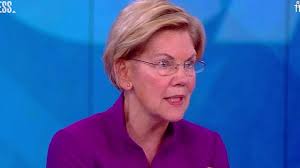
Those critics who bemoan living in a choiceless democracy, best conceived as a plutocracy, will feel vindicated, while pragmatic liberals who are either content with the three pillars or only give attention to the domestic agenda will also feel encouraged if Biden prevails although possibly expressing slight disappointment that Sanders and Warren were so abruptly swept aside. I will be surprised if there is solidarity on the more progressive side, which would have meant an earlier withdrawal by Warren coupled with a strong endorsement of Sanders. Given what has happened in recent days, I expect Warren to play her remaining cards astutely, which would mean withholding any endorsement of Biden while campaigning hard against Trump and treating Sanders as a lost cause by not endorsing his candidacy, and thereby keeping her future options open by signaling a willingness to accommodate the DNC and the Democratic Party Establishment.  


How Sanders Wins and Governs–Winning and Losing in 2020

24 Feb

How Sanders Wins and Governs–Winning and Losing in 2020


Anyone sensitive to the American political scene has become aware of an emerging collision between surging citizen support for Bernie Sanders and the lamentations of portfolio (stocks & bonds) driven Democrats who purport to question Sanders’ electability, and even if they now most reluctantly acknowledge the robustness of his electoral challenge to Trump, contend that he will be never be able to govern given his left agenda and considering the likely embitterment of the DNC establishment.


Admittedly, in my voting lifetime there has never been a credible candidate that is disliked by Wall Street, the Pentagon, and AIPAC. Yet, until now over many decades there has also never been a candidate that has been so ardently affirmed and trusted as Sanders by those who are tired of this regressive electoral hegemony achieved by these three pillars of the bipartisan American establishment. The person who came closest in the past to posing a similar challenge was, of course, Sanders in 2016, which had his challenge back then been allowed to happen, we might have been relieved of the present agonizing prospect of the renewal of Trump’s electoral mandate. The Sanders challenge is long overdue, and yet the Bloomberg millions and the wish for establishment continuity should not be underestimated. It is certainly not underfunded. These pale blue forces, although anti-Trump, are determined to spend and intensify their anti-Sanders campaign until they achieve their goals. They are down, but far from out, and seem in the end to care more about securing ‘a three pillars candidate’ (whoever it might be) than defeating Trump. For Trump, despite his explosive bombast and crazy tweets has pandered to Wall Street (tax breaks for the ultra-rich), Pentagon (highest budget ever in peacetime), and AIPAC (Israel gets green light for settlements, Jerusalem, Golan Heights that even prior pro-Israel partisan presidents held back on). In this sense, despite the ridicule of liberals, ‘Trump gets American politics.’


Against this background, principled pragmatism suggests a formula: Elizabeth Warren soon withdraws from the primary battle, despite her admirable campaign, throwing her support to Sanders. In turn Sanders pledges compatibility with her programs on health, education, and immigration, or proposes ways to blend her detailed proposals with his proclaimed objectives; he also promises her selection as his chief economic advisor throughout his presidency, while indicating an unconditional commitment to be at most a one-term president, coupled with some language suggesting that he will do all in his power to secure the 2024 Democratic Party nomination for Warren.


Such a formula is likely to be difficult to make operational, but if the alternative is a blue-tinged red billionaire becoming either candidate or kingmaker, we will be living under Trump in what amounts to a choiceless democracy for at least another four years. If portfolio Democrats win this battle, as they did in 2016, we might as well reconcile ourselves to an ‘always Trump’ future, dimming the lights of genuine democracy for a long, long time. They will express shock and regret as the Trump victory becomes apparent, but will unusually sleep well that night!

Will Confronting Iran Lead to War or Peace?

1 Oct

[Prefatory Note: The post below is a slightly modified version of an interview published in The Nation on September 25th, following the September 14th attack on Saudi oil facilities. It follows a pattern with respect to Iran of accusations, denials, and public uncertainties. This combination of elements, given the leadership in Washington and Tehran, one blustering, the other inflexible, can easily produce an unintended stumble into war. A second shorter interview is appended, conducted prior to the attacks by an Iranian journalist, M.J. Hassani of Tasnim News Agency. It illustrates the seeming rigidity of Iran’s Supreme Guide, considered as having the final word on government policy, exceeding that of the elected leadership.]


Daniel Falcone Introduction to the Interview: After accusations of Iranian drone attacks on Saudi oil facilities, Iranian officials and authorities indicated that “full-fledged war” with the United States could be imminent, prompting Aramco, Saudi Arabia’s state oil company, to suspend oil production by nearly 6 million barrels per day. US Secretary of State Mike Pompeo referred to the purported aggression as an “unprecedented attack on the world’s energy supply.” The allegations caused other countries to ostracize Iran at the United Nations General Assembly and significantly complicated the prospects of a multilateral nuclear deal.


Falcone: Can you provide some context for this latest series of headlines regarding the “Iranian threat.” Is this just “old wine new bottles?”


Falk: The magnitude of this attack on Saudi oil facilities makes the situation more dangerous even if it is considered as nothing more than a quantitative escalation of Iran’s response to US sanctions and other provocations, an Iranian version of Trump’s proclaimed policy of applying ‘maximum pressure’ to bring Iran to its knees. Yet it could be a qualitative escalation if the attack is treated as the biggest test of the US commitment to dominance in the region since 1956 when the US sided with the UN in calling for France, the UK, and Israel to withdraw from the Sinai after the Suez Operation. As Falcone suggests, the American Secretary of State, Mike Pompeo, made war-mongering remarks, including calling the attacks ‘an act of war.’ It is hard to deny that such an attack is an act of war, but against whom, by whom, has not been firmly established.

And yet, the hawks in the room clamor for blood, and do not seem to mind if the result is an all out regional war. Stephen A. Cook, the respected Council on Foreign Relations Middle East expert, endorsed this qualitative line of interpretation when he ended his analysis of the attack with some inflammatory words: “If Trump does not respond militarily, the United States should just pack up and go home.” [see Cook, “This is the Moment that Decides the Future of the Middle East,” Flash Points, Sept. 18, 2019]


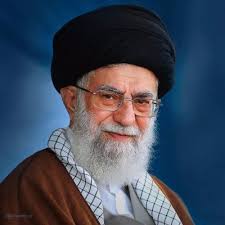
At the same time, Trump seems to be inclined, at least for the present, to regard the attacks on the Abqaiq oil processing facility and the Khurais oil field as a big serving of the old wine. Trump in typical fashion has displayed both bluster and restraint. At least verbally Trump has spoken in a muscular vein, insisting that if Iranian responsibility for the attack can be demonstrated, then he will retaliate in some proportionate manner. Even under these circumstances, possibly with his eye on November 2020, Trump seems determined to avoid acts that would start an unwanted war. Although ambiguously, Trump still somewhat surprisingly appears to be keeping the diplomatic door ajar. He has been quoted as saying, probably much to Israel’s chagrin, “I know they [the Iranians] want to make a deal..at some point it will work out.” It will not work out if Trump uses this transactional language when approaching the religious leadership of Iran, even if directed at President Rouhani who leads the moderate forces in Tehran. To talk of ‘a deal’ is to demean the process, and helps explain the deep distrust of any American move toward negotiation that was unreservedly expressed recently by Iran’s supreme guide, Ayatollah Khamenei. U.S. leaders and diplomats should by now have learned that the language of the bazaar does not work if the objective is to find an agreement that serves the interests of both sides.


Falcone: With Iran, Trump seems to be caught in a pickle. On the one hand, he needs to undo the Obama legacy in the region with the Joint Comprehensive Plan of Action (JCPOA). On the other hand, he runs the risk of looking like a neoconservative. What’s going on in your estimation?


Falk: I think you are correct in sensing the conflicting pressures on Trump. He cannot go back on his repudiation of the JCPOA agreed upon in 2015 and its Obama approach without seeming to be giving in to Iran’s pressure. At the same time, he evidently does not want to follow the Bolton/neocon/Pompeo path that leads to open military action, and most likely followed by a devastating war. In this sense, Trump’s ideal outcome would be some sort of diplomatic accommodation that he could ‘sell’ as a demonstration that ‘maximum pressure’ has yielded results. Whether he could spin such an outcome as a victory outside of his base seems doubtful as there would be many critics who would insist that any such result, even if it disguised the revival of JCPOA with another round of negotiations and a new name, would be viewed as at best a repetition of what had been achieved by the P5 + 1 Obama diplomacy of 2015. In fact, it now seems that to get any agreement with Iran there would have to be a much more solid commitment by the US and its allies that sanctions could not be again re-imposed on Iran in the future without a collective decision by the parties to the agreement. Such a condtion might possibly also be reinforced requiring a confirming decision on sanctions by the UN Security Council. If I were negotiating on Iran’s behalf, I would certainly insist on ironclad assurances that sanctions could not be renewed by a unilateral decree issued in Washington. Perhaps, Iran could be persuaded to accept some joint arrangements on regional peacekeeping and nonintervention that could be sold in Washington, and maybe even in Jerusalem and Riyadh as curtailing Tehran’s projection of regional power.


Falcone: John Bolton was recently fired. Can you talk about his role in the administration to get us to this point. I’m wondering if his dismissal is mere optics and the Bolton-Pompeo foreign policy is firmly in Trump’s hand.


Falk: We should realize by now that Trump’s highly quixotic style is resistant to all attempts at rational analysis. We do not really know whether Trump was reacting to Bolton’s belligerence with respect to foreign policy or to his aggressive, pushy personality that has long offended many prominent persons without achieving promised foreign policy victories. For instance, his advocacy of maximum pressure did not produce the desired regime change in Iran, or even a pullback on its regional involvements as in Gaza, Lebanon, and Yemen. All it did was to raise regional tensions to dangerous heights.


It does not appear that there is any sign of an ideological shift in the White House, although there does seem to be a more complex approach preferred by Trump, which fuses bluster and threats with this resolve to avoid outright combat, war, and any course of action that might lead to American casualties. This zigzag pattern of diplomatic maneuvering has so far seemed capable of absorbing Trump’s drastic mood swings and off the chart impulsiveness. The fact that it drives crazy the rational think tank gurus who dominate the Beltway can be regarded as a plus for Trump. Perhaps, the best explanation of Bolton’s dismissal was his fiery independence, which must have been fundamentally at odds with Trump’s insistence on low-profile deference from his top advisors and the shaping and reshaping of foreign policy on the basis of a constant search for transactional gains (even at the cost of diplomatic setbacks), which treats global policymaking as if it is just a replica of how to succeed in the urban real estate market without trying too hard.


It is lamentable that Bolton’s successor as National Security Advisor, Robert O’Brien, seems to be a milder version of the same hawkish pedigree, although seemingly more bureaucratic, less ascerbic, in style. A few years ago, O’Brien published a book of essays [While America Slept: Restoring American Leadership to a World in Crisis] that was highly critical of the supposed passivity of Obama’s foreign policy. In recent years, as State Department coordinator of hostage releases O’Brien has proven his value by being a Trump enthusiast, which in the present climate is the best credential a person can have who seeks a promotion to a high-status position in the federal government.

Falcone: How does oil, sanctions, and our relations with the Saudis contribute to the rising tensions in the region and the dangerous possibility of escalations?


Falk: There is no doubt that the sanctions imposed on Iran, coupled with the repudiation of the JCPOA, has escalated the conflict, and resulted partly from Washington seeking to please the Saudis and Israelis by adopting a more confrontational approach to Iran. As well, in the background is the dream scenario of toppling the regime, or at least forcing it to plead for mercy. There is no doubt that sanctions have caused great harm as measured by social and economic conditions in Iran, a collective and indiscriminate punishment mainly inflicted on the Iranian civilian population. Such coercion violates the UN Charter and international law. This punitive behavior against Iran resembles what was done to the Iraqi population in the twelve years after the First Gulf War. The frustrations with this reliance on sanctions eventuated in a devastating attack and occupation of Iraq initiated by George W. Bush in 2003. The Iraq War ended in a costly strategic failure given its supposed goals, including a boost to extremism concretely exhibited by the rise of ISIS almost in direct response to the heavy-handed American occupation policies in Iraq.


The prolonged strife in Yemen is part of this mindless militarism. It has included strong American backing for a brutal Saudi intervention from the aiir that has caused widespread suffering on the part of a largely helpless society, posing serious threats of massive famine and disease epidemics

Falcone: I’ve noticed whenever Trump wants to avoid delivering a foreign policy message and tone that sounds like Bush or Clinton he trots Pence out there to do the dirty work. Is this, in your view, to promote war with Iran yet try to create an intentional distance from neoliberals and neoconservatives?


Falk: As always, it is hard to interpret the logic behind Trump’s moves, or even to believe that a discoverable logic exists. He seems to act without calculating gains and losses unless money is involved, but is focused on trying to achieve immediate results that bring him notoriety if not glory. If there is a policy failure, then Trump does his best to shift the blame to others. Perhaps, because confronting Iran is a risky kind of diplomatic venture, it is best to put Pence out in front as often as possible, and thus seek to distance himself from responsibility if and when policy breakdowns occur. Trump consistently personalizes foreign policy and his leadership role demands above all that media attention is focused on himself. Trump stretches the reality of almost any situation to implausible extremes making it necessary to exonerate himself from distasteful and dysfunctional behavior by inverting and inventing facts, lying when it seems helpful, and disseminating fake news without blushing.

Falcone: Of course Israel will always be pertinent in figuring out the US method to the madness concerning Iran. How can following the US-Israeli alliance help us to get a sense of potential war with Iran. Or has this war already been underway?


Falk: The connections with Israel are vital to an understanding of the US role in the Middle East, and especially in the context of Washington’s ‘special relationships’ with Israel and Saudi Arabia. The Israeli relationship is more deeply rooted in American politics than is the Saudi connection, which seems interest-based, relating not only to oil but also to its status as the world’s primary arms purchaser. With respect to both countries, it is arguable that these special relationships are contrary to American national interests in the Middle East, and also lead to behavior contrary to America’s professed values. With regard to the Saudis, their huge investment in the dissemination worldwide of a fundamentalist Wahabist doctrine of Islam would seem radically at odds with the US counterterrorist strategy, especially since 9/11. If Iran’s indirect involvement in the attacks on the Saudi oil facilities is established, then it would allow us to make a challenging comparison with the Saudi direct and indirect involvement in the 9/11 attacks, which according to the official version of the events implicated 15 Saudis of the 19 hijackers.


Most damaging is the FBI evidence of Saudi support for the attacks that killed almost 3,000 Americans that has been withheld all these years until families of victims finally obtained their release. The efforts of the presidency of George W. Bush with inappropriate help from the FBI director at the time who happened to be Robert Mueller, to shield Saudi embassy officials and others close to the royal family from any accountability, or even scrutiny. Only the pressure of survivors and survivor families seems finally to be prying some of this information loose in the course of a law suit charging Saudi complicity in 9/11. Shockingly, yet to be expected, hardly a word appears in the mainstream media, and even now Trump’s Attorney General, William Barr, is invoking the state secrets act to justify on national security grounds withholding evidence that evidently would further incriminate Saudi Arabia. These developments coming to light 17 years after 9/11 should give pause to those who still question the primacy of geopolitics and the unacceptable behavor of the deep state when it comes to the conduct of American foreign policy or even the protection of national interests and the wellbeing of American citizens. It also raises haunting questions about the effects of these two special relationships, and reminds us of the ugly connivance and coverup of the Israeli assault on the USS Liberty back in 1967 that killed 44 American naval personnel. For those who seek the full exposure of this incident, I urge a reading of Joan Mellen’s Blood in the Water, written with the cooperation of leading officers of the Liberty who survived the attack. In effect, bad as Trump is on these issues, he cannot be blamed for everything. These pernicious special relationships long preceded his presidency, and were bipartisan.


As for Israel, the relationship has definitely turned Arab public opinion and popular sentiments strongly against the US, and made the US continued dominance in the region depend on propping up anti-democratic autocratic leaders. The whole policy of confronting Iran has for many years been driven by the Netanyahu leadership, gravely weakening America’s role as a responsible global leader, and risking a war that would be a humanitarian and geopolitical disaster.


How far Israel, as a state, and Netanyahu, personally, are to blame for the escalated confrontation with Iran is difficult to assess, but it would seem to be substantial. What stands out for me is how supposed American ‘patriots’ can continue to swallow the toxic kool aid of these two special relationships. It may be time to reconsider what constitutes patriotism and what constitutes treason. In a world where Edward Snowden, Chelsea Manning,  and Julian Assange are viewed as criminals but John Bolton, Mike Pompeo, and Donald Trump are viewed as national patriots there is something terribly wrong with our political language.


Tasnim News Agency Interview Questions, M.J. Hassani, 17 Sept 2019

Hassani: On Tuesday, Leader of the Islamic Revolution Ayatollah Seyed Ali Khamenei deplored the US’ calls for talks with Iran as a trick and said that Tehran will not negotiate bilaterally or multilaterally with Washington at any level. What do you think about Ayatollah Khamenei’s remarks?

Falk: With all due respect, I think that Ayatollah Khamenei’s remarks are phrased in too unconditional language. I believe that it is not desirable to shut the door to what I call ‘restorative diplomacy,’ and thereby avoid any further devastation caused by the current reliance on ‘coercive diplomacy’ by the adversaries of Iran and by Iran’s ‘active resistance.’ Trump is unpredictable and impulsive, and should not be challenged so directly as he might act irrationally in ways that could be mutually catastrophic. At the same time, the Iranian religious leader is correct to express the view that Iran will not engage in normalization talks so long as the United States and Israel seek to impose unacceptable restraints on Iran as a sovereign nation, while they engage in unrestrained and unaccountable military action throughout the entire Middle East.


Hassani: The reason behind this approach is that Iran sees the US calls for negotiation as a trick aimed at imposing its demands on the Islamic Republic and pretending that the “maximum pressure” policy has worked. This is while Iran has not given in to the US pressures so far. Is the reason justified? How do you assess Iran’s policy of “active resistance” against the US?

I agree with the view that Iran should not be lured into a negotiation that gives the US a public relations victory by claiming the success of its ‘maximum pressure’ approach, but this should be done by Tehran in ways that also expresses Iran’s search for an improved regional and global political atmosphere that is geared toward peace and co-existence rather than war and hostility. I believe Iran has effectively made its point that it will not back down in the face of harsh sanctions and other hostile acts that are contrary to international law. Now it can seize the initiative by proposing a constructive approach that shows that it seeks normalization on the basis of sovereign equality, and is not seeking confrontation for the sake of confrontation.


Hassani: Iran has described the US return to the 2015 nuclear deal, known as the Joint Comprehensive Plan of Action (JCPOA), and the removal of sanctions against the Islamic Republic as the only way that Washington can hold talks with Iran. How do you see the prospect of open diplomacy between Iran and the US as well as the other parties to the JCPOA?

Falk: Trump has wrongly, and for regressive political reasons, condemned the JCPOA, but would have incredible political difficulty and embarrassment if he now were to affirm it. The motivation for condemning JCPOA had to do with his efforts to repudiate Obama’s diplomacy and to show total solidarity with Israel, and is not really about the 2015 agreement, except incidentally. I think Iran should propose to reconvene the countries that negotiated in 2015, and produce a new agreement based on intervening developments, but making it clear that this would not be an acceptance of any preconditions put forward by Washington, and would not relate to non-nuclear issues.


Hassani: Can we regard the Islamic Republic’s strategy of “active resistance” against the US pressures as successful given Ayatollah Khamenei’s assertions?

Falk: I think ‘active resistance,’ depending somewhat on how it is defined has been successful so far, but in some ways a dangerous and high risk policy if adhered to much longer. Iran, having made its point effectively, should move to higher ground by proposing constructive deescalating steps such as reconvening the P5 +1 group to come up with a new framework agreement covering Iran’s nuclear program and the ending of US sanctions. The way forward should not be a continuation of the present, but an effort to occupy this high ground of law, morality, and peaceful conflict resolution. It may also be appropriate at this time to propose an emergency meeting of the UN Security Council, which likely would be rejected by Trump, but would put Iran in a favorable light internationally as creatively engaging in restorative diplomacy. Taking a longer view, Iran should consider reviving discussion of a nuclear free zone for the entire Middle East, including Israel, a country that acquired nuclear weapons by stealth and covert assistance from those states now most objecting to Iran’s nuclear program.


Choosing a Candidate: Elizabeth Warren for President!

14 Jun


[Prefatory Note: I have had several second thoughts since posting ‘Are the Democrats in a Race to the Bottom’? I continue to worry about the disunity of anti-Trump America, and its danger of giving Americans, and indeed the world, four more years of cruel and dangerous governance almost certain to erode the quality of democracy for decades, but there are several major caveats that qualify this anti-Trump priority.


Above all, the realization that both parties have affirmed an unhealthy war-mongering approach to Middle East politics, including unconditional support for special relationship with Israel and Saudi Arabia that overlook, if not being complicit with the criminal wrongdoing of both governments. As well, the Democratic Party establishment still obsessively seeks to push the anti-Russian line in extremist directions that risk a second more volatile Cold War. Those who speak on behalf of the DNC (Democratic National Committee) also are clearly unready to repudiate the predatory capitalism of neoliberal globalization that flourished since the collapse of the Soviet Union. This predatory behavior since the end of the Cold War underscores the practical insight that capitalism grows extremely abusive and detached from human wellbeing when not challenged by a socialist alternative as endorsed by a sizable proportion of working people. Long before the political tragedy of Trumpism, the overwhelming majority of the American people were being exploited and politically pacified by the bipartisan embrace of Wall Street Economics, which is humanly as detrimental to the society as is the persisting bipartisan embrace of militarism. Unfortunately, the eight years of the Obama presidency, admirable in some ways, did little to challenge these two deadly pillars of the bipartisan consensus that emerged after 1945.


I seize the moment to praise Bernie Sanders’ speech at George Washington University calling for the establishment of a new Economic Bill of Rights with six levels of promised specific action under his chosen rubric of ‘democratic socialism.’ As Sanders rightly shows, there is a practice that goes back a century demonizing all steps forward on behalf of the American people as ‘socialism,’ which was used to block FDR’s New Deal reforms during the Great Depression. Sanders invokes the New Deal and the legacy of FDR to insist that this is the most authentic and progressive form of American political leadership, and its absence from recent governance trends is what has alienated, enraged, confused, and disempowered many American citizens contributing to the. vulnerability that brought us Trump and Trumpism in the United States, and even elsewhere.


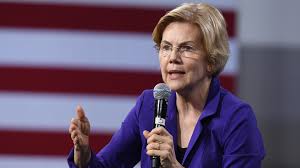
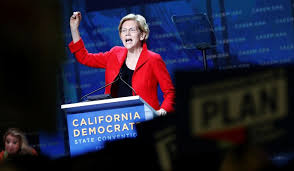
Nevertheless, on reflection, despite my liking and endorsement of Sanders’ central message, I am changing my rank ordering of preferential candidates. mainly by now singling out Elizabeth Warren as my first choice, at least for now. She is showing herself to be an improved campaigner, consistent in values and outlook, setting forth a rich offering of progressive programs in key areas of voter concerns. She also is someone that has demonstrated the ability to get things done while serving in the Senate. Warren comes across as a voice of intelligent, trustworthy, and compassionate concern that avoids any superfluous ideologizing of her political agenda.


In light of this hard choice, I relegate Sanders to my second tier of preferred candidates, and add to that group Pete Buttigeig, an oversight on my part in the earlier post. He deserves to be there, more or less for the same reasons as Obama deserved to become president in 2008. He is intelligent, informed, fluent, youthfully sympathetic, and has already taken brave steps toward the kind of leadership America needs by presenting himself as a gay man happily married to another gay man. My revised second tier list now is Sanders, Buttigeig, O’Rourke, Harris, Gabbard, Bennet, and Inslee, with still a few days left for Sherrod Brown to enter the fray. This strikes me as a good list of viable candidates, although I expect the further stages of the campaign to select a nominee will highlight individual strengths and weaknesses not presently apparent. This will undoubtedly alter these rankings in both directions.


My other change of heart since the earlier post, is to worry less that Biden will somehow maintain his frontrunner status. Having observed Bidenin action, I have become more confident that he will self-destruct, or at least remove himself from the running. I share the view that the Biden of today, having suffered personal losses that enlarge moral sensibilities and having been pushed to reconsider some of his past policies, and even behavior, is a wiser, more humane person than the opportunistic politico of past years, and yet that does not make him qualified to be president of this complex country at its most perilous time since the American Civil War, maybe even more perilous because of the global setting.


In light of these considerations, I am reposting my earlier blog with a new title more responsive to the central issue. I have not done this before, but I think the issues are of sufficient importance to make an exception. I also underscore my rejection of the view that because there are serious concerns about the underpinnings of the Democratic Party, the outcome of the 2020 election is inconsequential, making it a waste of time even to vote. I believe electing a Democrat, anyone on the list, including unlisted third tier candidates would be a dramatic step in the right direction—on economic and social policy, climate change, appointment of Federal judges, women’s rights, public debate and relations with foreign governments.


We should not at this critical juncture give up on democracy even in the face of its seriously deficient functioning. As Europeans found out in the 1930s, fascism is far worse! Such a view does not invalidate the imperative need for radical restorative reforms if we want to make democracy a progressive reality with respect to the 21stCentury array of challenges, especially the blending of the economic and ecological spheres in sustainable and equitable local, national, regional, and global linkages. Let’s become aware that sustainability with justice is unsustainable.In my view the best way to move down this benevolent path at the moment is to nominate, and then elect, Elizabeth Warren as the next American president.]


Choosing a  Presidential Candidate: Elizabeth Warren for President!


I have had several recent conversations with friends about the 2020 election who preface their assessment with this liberal sentiment—‘I am in favor of whoever has the best chance of beating Trump.’ I respond meekly with a question, guessing in advance their likely response. My words: ‘Where does that lead you?’ and my guess is depressingly accurate. His or her words: ‘I think that Joe Biden is the only one who can beat Trump.’  Or in more pessimistic responses: ‘Biden has the best chance of winning.’


I feel depressed with this assessment, or at odds with it, for two reasons: first, I doubt that Biden is a stronger candidate than was Hillary Clinton in 2016, although he might do a bit better with disaffected Midwestern workers and older voters, but likely worse with others. My other reason for being a Biden doubter is more substantive. How can I in good faith and with any enthusiasm support a candidate with such an awful record when it comes to women’s rights, racism, Wall Street, and American militarism (including even support for the Iraq War in 2003). Although Biden has been tacking left and apologizing for some of this past in the last few weeks, one has to wonder what sort of national leader he would be other than not-Trump, to which I would ask, ‘have our expectations fallen this low?’


Already, happily, Biden’s frontrunner status is beginning to erode rapid. Name recognition is good to get a veteran politician out of the gate, but as the race itself commences, substance and political magnetism matter more and more. The Trump taunt ‘Sleepy Joe’ may be unkind or even unfair, but it catches something unnerving about the persona Biden projects. I do not envy Biden the challenge of debating Trump should he gain the nomination, and I would be surprised if he were successful. Trump has greater clarity in his delivery, and more punch and style in his swing. If I were a cagey Republican strategist I would do all in my power to exhibit fear of a Biden candidacy precisely because he would likely be a pushover.


There is something else about a Biden candidacy that will surely alienate the folks backing Sanders, and likely some of the others among the more progressive candidates. Selecting Biden would represent the DNC and the Democratic Party Establishment as again lining up behind a candidate that is an organization man rather than a political leader with progressive passions and consistent views. Biden, whether reasonably or not, will be perceived by the body politic as Clinton redux. Isn’t it time to let the American people decide, and not the donors with the deepest pockets or the bipartisan congeries of special interests? A Biden presidency would waste no time restoring the Cold War bipartisan consensus, which will probably mean confrontational geopolitics with Russia and China, as well as threatened and actual interventions in the Middle East.


In this sense, should we not be patient, allowing the candidates to achieve a rank ordering on the basis of their performance on the hustings? It is difficult to get a sufficient read on the whole field, but a few stand out in my mind, sufficiently for me to believe they could deal effectively with Trump and yet not be disillusioning to people like myself. I think mostly favorably of Sanders, Warren, O’Rourke, Bennet, Inslee, Gabbard, and maybe even Harris.


I do not dissent from the view that Democrats are much more likely to prevail in the elections If they find a unifying candidate. At present, despite the large field none of those seeking the nomination, including Biden, or Sanders or Warren for that matter, seems a credible unifier. For this reason, it may still yet be beneficial for Sherrod Brown to come in from the cold, reconsidering his decision not to run. I feel that Brown by his record and his outlook to have the potential to be that much needed unifier with the added bonus of coming from Ohio, a state that could quite possibly decide who will be the next president of this now troubled country.


I personally prefer Warren or Sanders because of their integrity and programs, but I recognize for a variety of reasons neither will be an anti-Trump unifier due to ideological reasons. Many rich and elite Democrats reject candidates who are strident in their attacks on Wall Street, inequality, free trade, and militarism, and seek the bromide of a Biden type candidate. Just because such an approach failed in 2016 is no reason for such folks, so it seems, not to try again. I felt this sentiment as informing the pro-Biden advocacy of some of my friends that I mentioned above, feelings disguised a bit by claiming that Biden had the best chance of dislodging Trump.


For now, I support Sanders and Warren, not as a joint ticket, but as alternatives for the top spot. Despite my deep disillusionment with the behavior of American democracy in this period, as evidenced by the

inexplicable loyalty of the Trump base or the implacable failure to protect our citizenry by the kind of gun control that exists in other comparable societies or the refusal of the Democratic leadership in Congress to begin impeachment proceedings or a hundred other causes of my discontent, I still feel that such principled candidates not only offer a brighter future for the society but that they would be probable winners. This forthcoming electoral struggle is almost certain to dominate the American political imagination in the year ahead, and determine whether as a nation we recover hope or flounder in despair.


And should these preferred candidates fall by the wayside, then I would place a long odds desperate bet on a resurrected Sherrod Brown, but this will not even be an option if the man offstage waits much longer before stepping forth.


If we do end up with Biden as Trump’s opponent, what then? I think we

should defer such an unpleasant conversation until the reality is upon us, which I am optimistic enough to believe will be never.  


Are the Democrats in a Race to the Bottom?

11 Jun

Are the Democrats in a Race to the Bottom?


I have had several recent conversations with friends about the 2020 election who preface their assessment with this liberal sentiment—‘I am in favor of whoever has the best chance of beating Trump.’ I respond meekly with a question, guessing in advance their likely response. My words: ‘Where does that lead you?’ and my guess is depressingly accurate. His or her words: ‘I think that Joe Biden is the only one who can beat Trump.’  Or in more pessimistic versions of the same response: ‘Biden has the best chance of winning.’


I feel depressed with this assessment, or at odds with it, for two reasons: first, I doubt that Biden is a stronger candidate than was Hillary Clinton in 2016, although he might do a bit better with disaffected Midwestern workers and older voters, but likely worse with others. My other reason for being a Biden doubter is more substantive. How can I in good faith and with any enthusiasm support a candidate with such an awful record when it comes to women’s rights, racism, Wall Street, and American militarism (including even support for the Iraq War in 2003). Although Biden has been tacking left and apologizing for some of this past in the last few weeks, one has to wonder what sort of national leader he would be other than not-Trump, to which I would ask, ‘have our expectations fallen this low?’


Already, happily, Biden’s frontrunner status is beginning to erode rapid. Name recognition is good to get a veteran politician out of the gate, but as the race itself commences, substance and political magnetism matter more and more. The Trump taunt ‘Sleepy Joe’ may be unkind or even unfair, but it catches something unnerving about the persona Biden projects. I do not envy Biden the challenge of debating Trump should he gain the nomination, and I would be surprised if he were successful. Trump has greater clarity in his delivery, and more punch and style in his swing. If I were a cagey Republican strategist I would do all in my power to exhibit fear of a Biden candidacy precisely because he would likely be a pushover.


There is something else about a Biden candidacy that will surely alienate the folks backing Sanders, and likely some of the others among the more progressive candidates. Selecting Biden would represent the DNC and the Democratic Party Establishment as again lining up behind a candidate that is an organization man rather than a political leader with progressive passions and consistent views. Biden, whether reasonably or not, will be perceived by the body politic as Clinton redux. Isn’t it time to let the American people decide, and not the donors with the deepest pockets or the bipartisan congeries of special interests? A Biden presidency would waste no time restoring the Cold War bipartisan consensus, which will probably mean confrontational geopolitics with Russia and China, as well as threatened and actual interventions in the  Middle East.


In this sense, should we not be patient, allowing the candidates to achieve a rank ordering on the basis of their performance on the hustings? It is difficult to get a sufficient read on the whole field, but a few stand out in my mind, sufficiently for me to believe they could deal effectively with Trump and yet not be disillusioning to people like myself. I think mostly favorably of Sanders, Warren, O’Rourke, Bennet, Inslee, Gabbard, and maybe even Harris.


I do not dissent from the view that Democrats are much more likely to prevail in the elections If they find a unifying candidate. At present, despite the large field none of those seeking the nomination, including Biden, or Sanders or Warren for that matter, seems a credible unifier. For this reason, it may still yet be beneficial for Sherrod Brown to come in from the cold, reconsidering his decision not to run. I feel that Brown by his record and his outlook to have the potential to be that much needed unifier with the added bonus of coming from Ohio, a state that could quite possibly decide who will be the next president of this now troubled country.


I personally prefer Warren or Sanders because of their integrity and programs, but I recognize for a variety of reasons neither will be an anti-Trump unifier due to ideological reasons. Many rich and elite Democrats reject candidates who are strident in their attacks on Wall Street, inequality, free trade, and militarism, and seek the bromide of a Biden type candidate. Just because such an approach failed in 2016 is no reason for such folks, so it seems, not to try again. I felt this sentiment as informing the pro-Biden advocacy of some of my friends that I mentioned above, feelings disguised a bit by claiming that Biden had the best chance of dislodging Trump.


For now, I support Sanders and Warren, not as a joint ticket, but as alternatives for the top spot. Despite my deep disillusionment with the behavior of American democracy in this period, as evidenced by the

inexplicable loyalty of the Trump base or the implacable failure to protect our citizenry by the kind of gun control that exists in other comparable societies or the refusal of the Democratic leadership in Congress to begin impeachment proceedings or a hundred other causes of my discontent, I still feel that such principled candidates not only offer a brighter future for the society but that they would be probable winners. This forthcoming electoral struggle is almost certain to dominate the American political imagination in the year ahead, and determine whether as a nation we recover hope or flounder in despair.


And should these preferred candidates fall by the wayside, then I would place a long odds desperate bet on a resurrected Sherrod Brown, but this will not even be an option if the man offstage waits much longer before stepping forth.


If we do end up with Biden as Trump’s opponent, what then? I think we

should defer such an unpleasant conversation until the reality is upon us, which I am optimistic enough to believe will be never.


Denouncing Socialism, Practicing Fascism

8 Feb

Denouncing Socialism, Practicing Fascism


With Trump the silences are usually as expressive of his intentions as the incoherent dogmas. Indeed, his Second State of the Union Address (delivered in Congress on February 5, 2019) gives a clear insight into the political mentality of tormentor in chief when it comes to the human condition. The speech contains many tensions, but none more illuminating than his denunciation of socialism and his silence about the resurgence of fascist tendencies throughout the world, and not least in his own country, which he several times anointed that night as the best the world has ever known. He not the first leader to make such a claim, of course, but he is undoubtedly the least qualified, and his own two years of faulty leadership has contributed to making America far less admired, and far more feared, than previously.


His diatribe against socialism had at least two targets: First, the Sanders wing of the Democratic Party now personified by the more radical recently elected women in the House of Representatives, especially Alexandria Ocasio-Cortez, as well as the declared female presidential aspirants, Elizabeth Warren, Kamala Harris, and Tulsi Gabbard. And secondly, the Madura elected government in Venezuela, which he alleged failed because of its ‘socialist policies.’ Trump contends that these policies transformed Venezuela from being a wealthy example to the rest of Latin America into a society of ‘abject poverty and despair.’


When it comes to the United States, to contend that there is an incipient ideological war between the Democrats as the party of socialism and the Repuiblicans as the party of capitalism, Trump seems to be launching a more virulent version of the Cold War than what existed during the period of rivalry with the Soviet Union. It also overlooks the persistence of the toxic ‘bipartisan consensus,’ that owes its zombie-like persistence to the Faustian Bargains struck with both political parties that merge support for global militarism with that of capitalism as reinforced by the dysfunctional ‘special relationship’ to Israel. There is no current intimations that the Democratic Party will field a ticket for the 2020 elections that will challenge this consensus.


The media liberal mainstream, as might be expected, ignores the bipartisan consensus that has by now inscribed anti-socialism in its digital DNA. A typical reaction is that of Chris Cuomo, the unabashedly anti-Trump CNN news program host who warns the Democrats not to fall into the supposed trap set by Trump. Cuomo advises the Democrats that they would be making a potentially fatal mistake if they would be so foolish as to try to defend ‘socialism’ as a desirable option for American voters.


Of course, the more progressive views articulated by these Democratic presidential hopefuls, as well as by Stacey Adams who the DNC wisely chose for a formal response to Trump’s speech, is not socialism in any meaningful sense. It does not propose shrinking the private sector by shifting the ownership of the mainsprings of production and services to the public sector, that is, to government control. Trump, knowingly or more likely unknowingly, confused ‘socialism’ with a politics of empathy for the American people. Empathy under current conditions means such humane policies as affordable health care for all, highly subsidized higher education and student debt relief, equitable taxation, environmental and climate change sanity, drastically reduced military spending, and vastly increased infrastructure investment. I would add to this list an end to regime change geopolitics, a reduced global military profile, and an upgrading of respect for international law and international institutions, especially the United Nations.


To denounce socialism as unamerican is something never done even during the ideological hysteria of McCarthyism that disgraced the nation at the height of the Cold War. Trump’s language seems intended to brand those who espouse socialism by name or even by their platforms as subversive adherents of a faith alien to American values and traditions: “..we are alarmed by new calls to adopt socialism in our country. America was founded on liberty and independence — not government coercion, domination, and control. We are born free, and we will stay free.”

It may be helpful to recall that during the Great Depression the Socialist Party under the leadership of Norman Thomas was a respected and formidable presence on the American political landscape, widely praised by many non-socialist for pushing New Deal Democrats to adopt more compassionate policies toward the poor and unemployed precisely to weaken the appeal of socialist alternatives. For those of us old enough to remember, there are few active in American political life then or now more imbued with American values and our better angels than Normal Thomas. To assert, as Trump did, that socialism is unamerican is to insult the memory of this great American.


Perhaps, most serious of all, was the seemingly deliberate misidentification of the ideological threat actively undermining authentic American political, economic, social, and cultural traditions, institutions, reputation, and morale. It is the fascist threat that is real, and the socialist alternative that is contrived by Trump for inflammatory and insidious purposes. The celebration of militarism, bonding with autocratic oppressors around the world, the demonizing of immigrants and asylum seekers, war mongering toward Iran, challenging the rule of law, and ultra-nationalist versions of patriotism that are threatening the future of America, not fascism. The perversion of values and the neglect of the real interest of the American people was notably symbolized by several striking silences in Trump’s long speech: he found no time to include a sentence about climate change, gun violence, and predatory warfare in Yemen.


If we are to restore humane republicanism in America it will require not only a repudiation of Trump and Trumpism but also a rejection of the bipartisan consensus and deep state geopolitics. This means we must hope that the next American president will be a truly progressive female candidate who breaks free of the consensus and is not embarrassed by an ardent embrace of social and political justice for allAmericans and a global outlook that is responsive to urgent long-term challenges (climate change, nuclear disarmament topping the list) and to the immediate crises calling for international cooperation of an unprecedented scale, a move in the direction of moral globalization(migration, famine, crimes against humanity).


Sputnik News Agency Interview on G20 Meeting and U.S./Russia Relations

2 Dec


Sputnik News Agency Interview on G20 Meeting and U.S./Russia Relations


(Prefatory Note:What follows are my responses to questions addressed to me by Sputnik News Agency in Moscow. These responses were submitted on December 1, 2018. Although the focus was on the ongoing G20 meeting in Buenos Aires, the real concern was the future of U.S./Russia relations and how these relations should be managed to avoid arms races, geopolitical rivalry, and ideological tensions. Ironically, of all the weaknesses in the Trump approach to the world, his apparent wish for a normalized relationship with Russia was what most antagonized the American political class, whether Democrat or Republican. Indeed, it so antagonized the established order in this country to such a degree as to undermine Trump’s apparent intention to downgrade NATO and Atlanticism while normalizing and improving relations with Russia. It is always uncertain to assess the real motivations of Trump, which here may involve some kind of vulnerability on his part for undisclosed and awkward economic entanglements or embarrassing personal behavior, but whatever the explanation, the world would be better off with a positive geopolitical atmosphere, and that means cooperative behavior with Russia and China. In our delegitimizing of Trump it is important not to lose sight of the ingredients of sustainable world peace. The Sputnik text is slightly modified.)   

  1. The talks of G20 leaders led to a possible breakthrough on the global trading system. How likely is any progress to be achieved? Will the US be onboard with this?


I would be very surprised if there is any outcome of the G20 meeting that can be properly called a ‘breakthrough.’ The leaders of these governments do not have a shared understanding of what would constitute a mutually beneficial world trade framework. Perhaps, such a consensus never existed, yet in the period after World War II, the United States leadership of the West was able to generate what has alternatively been call ‘the liberal economic order’ or ‘the Washington consensus.’ These arrangements rested on giving the World Bank and IMF a central role in stabilizing global conditions, including currency markets, and rested on a rule-based set of procedures. Its performance was assessed almost solely by the rate of global economic growth, which overlooked both issues of the equitable distribution of the benefits of growth and the regulation of adverse ecological side effects.


Since the Trump presidency, there has emerged serious ambiguities as to whether the United States, the leading world economy, was itself willing to participate any longer in the liberal world order. Such doubts arose after Trump rejected the Trans Pacific Partnership, sought the renegotiation of North American arrangements set forth in the NAFTA agreements, and adopted a series of protectionist measures inconsistent with the promotion of the most efficient use of capital, a major guideline of the neoliberal ideology that guided American foreign economic policy ever since 1945.


The United States, in particular, during the Trump presidency regards world trade as a s sequence of transactions rather than as systemic aggregate of institutions, rules, and procedures by which to regulate and facilitate transnational capital flows and trade relations. By this I mean, that the U.S. wants now to proceed on the basis of economic advantage for itself in each economic policy context rather than promote an overall framework that benefits all participants in the world economy. Under Trump the United States no longer perceives the more structural advantages of having a global trading system that provides a framework that binds together all countries that adhere to principle of market economics on the assumption of shared interests. Of course, such a framework is only a practical possibility if there is a strong political will on the part of leading governments to proceed in this manner. It is difficult to be confident about making assessments of government intentions, but I think most governments would still like to retain a systemic framework for the world economy with the exception of the United States, which wants to leverage its strength in a more flexible and muscular diplomatic atmosphere. We should await the final declaration from Buenos Aires before reaching firm conclusions as to whether this cleavage will be exposed or hidden from public view.


This is a different cleavage than existed during the Cold War when fundamental ideological differences led to dual structures for international and transnational economic relations. During the Cold War the market economies organized their trade and fiscal relations within the liberal framework established under American leadership. The Soviet bloc of countries was neither invited to join this liberal world order nor did it seek entry, but rather maintained its economic relations based on the orientation of state socialism as tempered by Soviet hegemonic leadership and the pursuit of national and regional interests.


  1. Meanwhile, Trump is reportedly ready to hold talks with Putin after Russia releases Ukrainian sailors. How high are hopes that the two leaders will sit down for talks in the future given the development?


It is important for Russian society to understand that Trump seems to be handling diplomacy particularly with Russia, but also with other countries, mainly on the basis of his calculations of domestic politics in the United States as connected with his ‘America First’ mantra. Anti-Trump forces in the U.S. have, wrongfully in my view, concentrated their criticism of Trump, including the apparent focus of the investigations of wrongdoing by the Special Counsel, on the supposedly improper relationship between the Trump campaign and the Russian government during the 2016 presidential elections. In doing this, it overlooks the importance of establishing peaceful and constructive relations between Russia and the United States, keeping in mind that these two dominant states are the world’s leading nuclear weapons states. World peace depends on avoiding a second Cold War in any form, and this reality is obscured by the focus on alleged Russian interference in the American elections and Trump’s supposed collusion in this process.


Some degree of interference no doubt occurred, but it should have raised few eyebrows in Washington, have been a staple instrument of American soft power intervention in many countries over the course of several decades. Furthermore, the belligerent tone of Hillary Clinton’s campaign, as well as the outlook of her closest advisors, gave good reason for Moscow to fear a Clinton victory in 2016, and do their best to avoid such an outcome. This is not intended to reject efforts to insulate American elections from manipulation from without or within. When thinking of the wrongfulness of Russian tactics we as a country tend to overlook the wrongfulness of gerrymandering, racial bias, special interests and money being used to manipulate election results in the United States. Both types of interference are incompatible with a legitimate democratic political process.


On the immediate prospects for productive relations with Russia following the Ukrainian incidents, I think it is likely that bilateral talks can be held in coming months, maybe even in coming weeks. It should be realized, however, that the main American focus now is in resetting the economic relationship between the United States in China in ways that avoid a trade war and do not make either side appear to be the loser in this important confrontation. In actuality, most attention at the G20 meeting in the West was given over to the question as to whether the U.S. and China could use the occasion to agree on a political compromise, which would undoubtedly benefit the world as a whole. The failure to reach such a compromise could produce detrimental effects for the world economy, as well as raise political tensions and risks of regional, and even global warfare. Therefore, the so-called ‘truce’ reportedly agreed upon by Trump and Xi Jinping were viewed positively at the G20 as constituting an informal agreement to defer American tariffs on Chinese metal exports in exchange for a Chinese commitment to purchase more exports from the United States. It is notable that this stepping back from an economic confrontation required China to make a gesture of acceptance of the American complaints as well as deferring indefinitely American efforts to gain short-term advantages by raising tariffs on goods imported from China. The central drama on the global stage is now how the United States and China will handle their conflicts in the South Asia islands and with regard to trade. The relationship of the West with Russia is of secondary importance. The status of Russia as a major political actor has been significantly restored in the era of Putin’s leadership, but it remains secondary except in certain limited spheres, such as Syria or along its own borders.


Unfortunately, the relationship between Trump and Putin is seen by a broad spectrum of political opinion in the West as one where the challenge being posed is how to stand up to perceptions of renewed threats of Russian expansionism. This is why the Ukrainian incident is viewed as something more serious that the event itself. There is a fear, whether justifies or not, of Russian territorial ambitions that is being relied upon by militarist forces in the West to generate anti-Russian sentiments and expanded defense spending.


Unfortunately, President Putin did not help those seeking more benevolent relations with Russia by his unseemly show of friendship when greeting Mohammed bin Salmon (MBS) at the G20 meetings. These images were caught on camera by journalists, and widely shown here in the United States evoking commentary that interpreted this greeting as a cynical indirect endorsement by Putin of the gruesome murder of the Saudi journalist, Kamal Khashoggi. Trump has been under pressure to react to this murder, and widely criticized for reaffirming close alliance ties between Washington and Riyadh in the aftermath of the murder, but at least in the G20 context he displayed the good sense to keep his distance from MBS at least when cameras were around, and avoided any public or personal display of friendship for this discredited foreign leader.


At this point, the relationship between Putin and Trump are on the American side primarily reflections of political calculations about the effects on the upcoming 2020 presidential elections. Although still two years away, these forthcoming American elections are already shaping the behavior of Trump on such delicate matters as relations with Russia, and the American mood seems now to favor the adoption of a more confrontational approach toward both Russia and China.


  1. What is Trump’s earlier move to cancel the meeting indicative of?


As I have indicated, Trump’s recent behavior is responsive to growing pressures on his leadership from within the American political system, especially due to his low popularity with the public, the prospect of a damaging report by the Special Counsel investigating Trump’s alleged improper behavior, and the loss of control of Congress due to the outcome of the recent midterm election. He no longer acts as if free to pursue a policy of accommodation with Russia even if this is what he would wish. It is true that when he ran for president in 2016 Trump’s outlook dramatically contrasted with that of Hillary Clinton on the question of relations with Russia. Many Americans then worried about a new Cold War, voted for Trump solely to avoid a rise in tensions with Russia that seems certain to have followed had Clinton been elected. At the same time there remains a strong consensus that is bipartisan in character, and included the Pentagon and CIA, that leans toward a more aggressive approach toward Russia, even more so than toward China. It is in this general atmosphere that it is best to comprehend and interpret Trump’s behavior with regard to Putin and Russia generally. The revelations of Russian interference in American elections further hardens public attitudes in an antagonist direction.


On the other side, it is not clear what Russia seeks to achieve during G20 meetings and in its relationship with the United States at this point, although Moscow clearly seemed earlier to be receptive to the Trump approach, and gave many indications of wanting to restore normal peaceful relations. It also seemed that Putin would have welcomed a positive political atmosphere and encouraged robust economic and cultural interactions between the two countries.


The fault associated with these deteriorating prospects is not only with America. Russia could achieve a more favorable image in the world if it made some constructive initiatives such as the renewal of nuclear disarmament negotiations or the establishment of a nuclear free zone in the Middle East or the establishment of a global migration compact. Perhaps, we in the West are not aware of Russian attempts to contribute to a more peaceful and just world order, in which case a greater effort needs to be made to set forth the positive content of Russian foreign policy. As matters now stand, the Russian role is viewed through the prism of bullying the Ukraine and propping up the criminal Assad regime in Syria.