
[Prefatory Note: The post below in the text of my foreword to an exceptionally valuable comparison of conflicts: Vietnam and Arab-Israeli. These two regions have preoccupied me throughout my professional career and in the course of my life as an engaged citizen. The book, just published by Michigan University Press, is the source of insight, as well, to the evolution of international law relative to such conflicts.]
Making Endless War: The Vietnam and Arab-Israeli Conflicts in the History of International Law
Brian Cuddy and Victor Kattan, Editors, 2023.
How International Law Evolves: Norms, Precedents, and Geopolitics
Prologue
We should understand that this volume devoted to the relevance of international law to these two geographically distinct war zones in the Middle East and Southeast Asia in the period after World War II is a very distinctive undertaking. I am not familiar with any similar search for comparisons and connections, either in relation to the Indochina or Arab-Israeli conflicts, with respect to lawmaking interactions and potentialities. What is notable about this inquiry is that it considers the interaction between regional scale conflicts to be both a source of new norms of international law and occasions for evasions and justifications of existing norms.
My point of departure is to take note of the motivation of the lead political actors in both conflict configurations to evade the constraints on the use of force imposed by the UN Charter, a constitutional framework for international law drafted under the primary influence of World War II, achieving a special urgency after the use of atomic bombs against Japanese cities. This influence expressed itself by the adoption of a war prevention rationale powerfully set forth in the opening words of the Charter Preamble, “…to save succeeding generations from the scourge of war.” This language was a response not only to the devastation associated with the thus concluded war with its 60 million deaths, but to the fear that a future war of similar or greater proportions would bring even more catastrophic results for the entire world. The Charter norms on the use of force were designed to be very constraining, suggesting that recourse to force by states was to be legal only if undertaken in self-defense against a prior armed attack [Articles 2(4), 51 of the UN Charter] or in response to a decision authorizing the use of force by the Security Council. As the editors’ introduction to the volume suggests, the Charter carried forward the transformational ambitions to prohibit international war-making and coercive diplomacy by constraining legally mandated recourses to international uses of force as comprehensibly as possible. It should be understood that these ambitions were always tied to the self-restraint of and harmony among the five permanent members of the Security Council who enjoyed a right of veto, which effectively exempted them from an obligatory connection to the international legal norms governing force set forth in the Charter. Even if the General Assembly attempted to fill this gap between international law and this disturbing geopolitical privilege its authority was constitutionally limited to making ‘recommendations,’ lacking in obligatory force.
The geopolitical condition of fragile and always partial harmony that prevailed in 1945 as a result of the recent victory over fascism achieved by the Allied Powers did not last very long. The UN was established with some hope, although contested by political realists from its inception, that the combination of these restraining norms and the collective security mechanisms of the Security Council could ensure a peaceful world. Such idealistic expectations were challenged by events. First came the Korean War (1950-53) and then by the 1956 Suez Crisis and Operation, and above all by the outbreak of the Cold War that ruptured forever the pious hope a wartime alliance could be transformed into a peacemaking coalition. Nevertheless, until the decade of the 1960s there remained a superficial attachment by the geopolitical antagonists to the UN Charter framework constraining aggressive war-making as the focus continued to be on the avoidance of a third world war or any disregard of the taboo prohibiting recourse to nuclear weaponry.
This changed in the decade of the 1960s. It became clear that the victors in World War II were faced with significant geopolitical challenges and possessed strategic ambitions that could not be satisfied by adhering to the Charter norms. This was made apparent in the Indochina War, especially its Vietnam central arena. The Charter notion of self-defense was not applicable nor would the American extension of the war to North Vietnam in 1965 have enabled the Security Council to restore peace due to the veto power possessed by the geopolitical antagonists, the Soviet Union, China, and the United States. For these reasons the Indochina War, despite its scale and level of destruction, was undertaken without heeding or seriously engaging the UN framework or contemporary international law.[1] The U.S. Government, in particular, issued elaborate documentary justifications for the forcible actions undertaken by invoking international law. Its legal rationalizations were partisan in nature and one-sided, and as such unconvincing to the scholarly community of international jurists.
As well, both in Indochina and the Middle East the warfare that resulted was not between political entities of symmetric technological capabilities and tactics. International law had been evolved to address wars fought between sovereign states of roughly equivalent technological capabilities, and was concerned with limiting and regulating war rather than outlawing it. The experience of World War II convinced the victors that there was a gap in the legal framework concerning the protection of civilians living under military occupation, captured prisoners of war, and the treatment of wounded soldiers on the battlefield. This realization resulted in the negotiation of the four Geneva Conventions of 1949, a new corpus of law that became known as ‘international humanitarian law.’
Yet these Geneva Conventions were still preoccupied with wars between sovereign states. What was shown by the Indochina and Middle East wars of the 1960s was the importance of extending international humanitarian law (IHL) to conditions of sustained warfare within sovereign states, especially when magnified in intensity by external interventions, proxy wars, and geopolitical alignments. Acknowledging the prevalence of this new type of violent conflict gave rise to the two 1977 Geneva Protocols that were deemed supplemental to the 1949 treaties. In particular, Protocol I dealing with the Protection of Victims in International Conflicts was a tricky area for international law as it challenged the sovereign rights of the territorial government, and even trickier for the United States as it explicitly extended the protection of international humanitarian law (IHL) to armed conflicts in which a people are fighting against colonial domination, alien occupation or racist regimes.[2] This meant that Protocol I applied to foreign interventions in domestic armed conflicts that were struggles over the control of the state. Protocol II was somewhat less controversial as it extended IHL to non-international conflicts and did not have any bearing on interventionary diplomacy, although it did seek IHL accountability for purely internal wars, purporting to put legal limits on previously unlimited territorial sovereign rights.
By considering such conflicts as entitled to international protection it was perceived as weakening the sovereign authority of states to deal with insurgent opposition movements without being subject to international legal accountability. This resistance to the internationalization of anti-colonial struggles pertains directly to the Vietnam and Palestinian experiences. Indeed, the diplomacy producing the Protocol was prompted by the tactics and experience of the Vietnam War, which exhibited gaps in the coverage of international humanitarian law as specified by the four Geneva Conventions of 1949.[3] The importance of exempting such armed conflicts from IHL is part of the geopolitical effort to retain freedom of geopolitical maneuver, as Cuddy and Kattan explain, in the momentous international shift from the earlier international law focus on total war to the new realities of endless limited, yet devastating, wars. Protecting civilian populations in this new epoch of post-colonial warfare, as in Syria, Yemen, Afghanistan, Iraq, Libya, and Ukraine are suggestive of the need for further renovation and effective implementation of IHL, and indeed the overall law of war framework. A merit of this volume is to frame this transition by reference to the Vietnam and Middle East experiences, with particular reference to the unresolved Palestinian struggle. This struggle has taken on a new relevance in the last five years as a result of an emergent civil society consensus that Israel apartheid policies and practices are blocking the realization of the long denied basic rights of the Palestinian people.
In assessing these legal developments two features of international political society are paramount, and need to be kept in mind when discussing the two geographically and psycho-politically distinct war zones:
–the primacy of geopolitics vis-a-vis international law;
–the primacy of military necessity in combat situations.
These two realities, given the absence of centralized governmental institutions on a global level, have accentuated the marginality of international law in war/peace situations, both with respect to recourse to force and the behavior of the parties in the course of warfare.
Acknowledging these two definitive constraints on the role of international law in relation to war should not lead us to cynical conclusions that ‘law is irrelevant with respect to war’ or that ‘international law does not matter.’ International law is relevant and matters for several reasons: it empowers civil society activism; it provides a channel for domestic dissent from war making in democratic societies in both government circles and civil society; it moderates behavior of belligerent states to the extent that reciprocal interests support compliance with international legal norms (e.g. treatment of prisoners of war).
During the Vietnam War, the U.S. Government was more eager than subsequently, to retain its liberal image as a champion of a law-governed international order, and so went to great lengths to argue that its policies and practices in Vietnam accorded with international law and the UN Charter. Such motivations also legitimated anti-war activism that could invoke international law to challenge Washington’s behavior in Vietnam. It also emboldened critics in Congress to mount objections framed in legal and constitutional language, and allowed international law scholars like myself to be invited to testify before Congressional committees or have opinion pieces published in mainstream media venues.[4]
Unfortunately, with the rightest drift in American politics and the lobbying leverage of AIPAC and other Zionist groups, the authority of international law and the UN have experienced sharp declines. The U.S. no longer invests diplomatic energy in upholding a liberal image, and increasingly relies on coercive threats and militarism to pursue its foreign policy goals, especially in the Middle East. The reliance on unlawful threats of military attack has been at the core of U.S./Israeli/Saudi confrontational diplomacy directed at Iran for several decades. This trend has reached a symbolic climax of sorts by its imposition of sanctions on the Prosecutor of the International Criminal Court for recommending an investigation of U.S. war crimes in Afghanistan. Israel, also, has responded with a furious denunciation of this international institution for daring to propose a limited investigation of its crimes in Occupied Palestine. Although the U.S. government after a change in presidential leadership terminated its sanctions imposed on ICC officials, it refused to accept the extension of ICC authority to investigate allegations against itself or Israel. Since the Ukrainian Crisis of 2022 the U.S. Government has displayed a mixture of hypocrisy and opportunism by urging ICC investigation of Russian war crimes in Ukraine, and the indictment of Putin.
The fury of these reactions suggests two opposite interpretations. The first, and most obvious, is the refusal of leading states to defer to international law in settings where national security issues or geopolitical alignments are paramount. And the second, that the fury of the reactions to legally framed allegations suggest how deeply sensitive the governments and leaders of such states become when accused of serious violations of international law by credible procedures. In response, such governments do not try to defend their behavior, but move to discredit and weaken international procedures of accountability, in part, as a form of damage control to avoid any worsening of their international reputations. Even if the ICC were to prosecute and convict, there is almost no prospect that its judgments would be enforced, and so the whole pushback is about safeguarding legitimacy and opposing impingements by the deployment of symbolic politics as causative influences in traditional spheres of geopolitical and sovereign autonomy.
A Brief Comment on the Two War Zones
For the United States in Vietnam the Charter norms were perceived as inconsistent with the mission to prevent a Communist victory in South Vietnam and a subsequent unification of Vietnam under the control of Hanoi. It was believed in Washington that it was militarily necessary to extend the war zone beyond the boundaries of South Vietnam to punish North Vietnam for supplying the anti-regime insurgency led by the NLF. Similarly, the extensions of the war to Laos and Cambodia were prompted by calculations associated with disrupting the support of the war in the South of Vietnam by keeping a base area in and maintaining supply chains that passed through Cambodia. Similar reasoning produced sustained U.S. air attacks on Laos, unlawfully abusing diplomatic privileges by orchestrating this military campaign from within the American Embassy in the Laotian capital city of Vientiane. In other words, the Cold War priorities prevailed over efforts to constrain recourse to war and tactics in war. On the other side, the priorities of national liberation and anti-colonial legitimacy also prevailed over legal constraints.
In the Middle East there were similar factors at work, although tempered by some balancing considerations. The United States was still in the 1960s seeking to balance, at least in public, its commitment to Israel with its vital strategic interests in retaining favorable access to regional oil supplies at affordable prices situated in Arab countries. In this respect, contrary to Israel’s wishes at the time, the U.S., along with European countries, sought to affirm international law with respect to the acquisition of territory by force, the major premise of the unanimous UN Security Resolution 242 adopted after the 1967 War. Yet even then there was insufficient political will to implement the rhetoric, by an insistence on a timely Israeli withdrawal.
Of even greater relevance to the focus of the volume is the degree to which antagonists in the Middle East with respect to Israel/Palestine evaded the Charter norm on recourse to war. Israel in 1967 and Egypt in 1973 both sought to gain military advantage by striking first, and thus apparently violating the requirement of a prior armed attack contained in Article 51, although there are respectable legal counter-arguments in each setting.[5] Both governments defended their actions by claiming security imperatives as providing a convincing ‘legal’ rationale for preemption.
As far as interconnections are concerned, both war zones produced conflicts that ignored the fundamental framework of international law and institutional accountability that was the hallmark of the war prevention efforts after World War II. The asymmetric nature of the wars also strained the law of war during combat, especially in Indochina, but also in the Middle East to the extent that warfare after 1967 temporarily shifted to Palestinian efforts to pursue an armed struggle strategy that was designated as ‘terrorism’ by Israel and its supporters.[6] During its various military attacks on occupied Gaza Israel exhibite a disregard for international law constraints, and did no without suffering any adverse consequences. This counter-terrorist rationale had been used by the U.S. in Vietnam, but with less impact due to the outcome of the struggle and the absence of widespread support for the war in the West, including even in the U.S. in its last stages.
International Law Evolves
Against this background it becomes possible to get a better appreciation of how international law evolves. It is important to realize that in some sense all of international law is ‘soft law’ because of the absence of regular procedures of authoritative interpretation and enforcement, not to mention ‘the geopolitical exemption’ of the winners of World War II implicit in the right of veto conferred by the Charter.
Added to this, international law in relation to peace and security issues suffers from the special issues previously mentioned—essentially, the primacy of geopolitics and of military necessity. Geopolitics manipulates the law governing recourse to force, while military necessity by its priority under combat circumstances is constantly reshaping the law involving the use of force.
A major interconnection between Indochina and the Middle East is illustrative. In Indochina the United States created a strong precedent for disregarding the Charter conceptions governing the law governing recourse to force. It put forward some legal justifications to the effect that North Vietnam was guilty of ‘indirect aggression’ by its support of the insurgency in the South, creating a legal foundation for extending the war beyond the artificial boundary delimiting South Vietnam. After the 1964 Gulf of Tonkin alleged attack on American naval vessels in international waters and the February 1965 NLF attack on a U.S. military camp near Pleiku, the U.S. Government shifted its legal rationale to one of collective self-defense against a prior armed attack.[7] It also contended that Cambodia and Laos violated the laws of war governing neutrality by allowing their territories to be used for hostile purposes associated with North Vietnam’s belligerent activities.
Although Israel in 1967 and Egypt in 1973 did not specifically invoke the American precedents set in the Vietnam War, their conduct was shielded from critical scrutiny by the combination of a weakening of the geopolitical commitment to the Charter conception of permissible recourse to force, and by the sense that these specific recourses to force were within their context ‘reasonable.’ Because of the geopolitical alignment with Israel, the Egyptian surprise attack on Israel was legally condemned by Western countries, but in a manner that made it appear to be more an expression of alliance diplomacy than a pronouncement of allegiance to international law. Such a view gains weight from the pattern of practice in years subsequent to 1973.
It was also evident that the West controlled international legal discourse on permissible and impermissible uses of force. In this way the violence of non-state actors and liberation movements was demonized as ‘terrorism’ while state violence even if directed at civilian targets was treated under rubrics of security and self-defense rather than delimited as ‘state terror.’ Such a discourse gained wider impacts after the 9/11 attacks on the U.S., and through the launch of the so-called ‘War on Terror.’ It has impacted strongly in the Middle East contexts, especially allowing Israel to validate its excessive force and collective punishment as security measures or as the exercise of the right of every sovereign state to defend itself. To some extent, especially in recent years, the UN has challenged this discourse by issuing many reports on Israeli violations of the Geneva Conventions and international humanitarian law more generally. This tension between the geopolitical discourse and the UN discourse is what leads the U.S. and Israel, in particular, to make accusations about UN bias when it comes to violations of international law. It is this tension, however, that encourages civil society initiatives to claim the legitimacy of international law, as is the case with support for the BDS Campaign or by mounting challenges to Israeli apartheid.
It should be noted, in passing, that when Western interests are engaged, as by Russia’s recent aggression against Ukraine, the Charter framework is again invoked as if it is as authoritative and constraining as when adopted in 1945. In other words, the fate of norms is tied to the control of the international normative discourse, and especially in relation to the geopolitics of propaganda. For partisans it highlights the relevance of international law, while for objective jurists it suggests the manipulation of law as a self-serving policy instrument aptly invoking criticisms of double standards.
Conclusion
The main conclusion reached is that the Charter framework established in 1945 was greatly weakened, if not altogether rendered somewhat anachronistic, by the combined impact of geopolitical opportunism and military circumstances in the wars taking place in Indochina and the Middle East in the decades after World War II. To some extent, it can be asserted that the Charter framework was always unrealistic given the character of a state-centric world order system that included hegemonic actors recognized as such by their right of veto in the UN Security Council, a disempowering reality that became fully evident onlly after the onset of the Cold War. The nature of the conflicts, which consisted of nationalist movements was also not anticipated by the kind of legal order envisioned for the post-World War II, and not able to cope with the normative challenges of asymmetric warfare or wars of national liberation.
There is also an important tension with regard to the orientation toward normative discourse. The West seeks a statist discourse with unrestricted discretion for geopolitical actors, excepting of course, its rivals who are to be held fully accountable by reference to the UN Charter framework. The South, and at the UN General Assembly, is generally favorable to the claims of nationalist movements and anti-colonialist struggles, especially if directed toward liberation from European or Western control. In this regard, this subaltern discourse is supportive of the situation of the Vietnamese and Palestinian national liberation struggles, given concreteness in international law by the wide consensus supporting the inalienable right of self-determination as enshrined in Article 1 of both International Covenants on Human Rights, and more broadly reaffirmed in the influential Declaration on Principles of International Law concerning Friendly Relations and Co-operation among States in Accordance with the Charter of the United Nations.[8]
[1] Indeed, the flaunting of international law was so notorious and the failure of the UN to respond so pronounced that the celebrated British philosopher, Bertrand Russell, convened a civil society tribunal charged with assessing unlawful conduct and international crimes. The tribunal was composed of leading public intellectuals, presided over by Jean-Paul Sartre, and producing a full documented set of conclusions relating to U.S. violations of the laws of war. See John Duffett, ed., Against the Crime of Silence: Proceedings of the Russell International War Crimes Tribunal, (1968). See also Tor Krever’s chapter in this volume for a more detailed discussion of the Russell Tribunal.
[2] On the reasons for the US refusal to ratify the Additional Protocols see the chapter by Victor Kattan in this volume.
[3] On the influence of the Vietnam and Arab-Israeli conflicts on the drafting of Additional Protocol 1 see the chapters by Amanda Alexander and Ihab Shalbak and Jessica Whyte in this volume.
[4] On the significance of international law for civil society activism and domestic dissent during the Vietnam War, see the chapter by Madelaine Chiam and Brian Cuddy in this volume.
[5] See John Quigley’s chapter in this volume for a differing legal characterization of responsibility for initiating the 1973 War. See also, John B. Quigley, The Six-Day War and Israeli Self-Defense: Questioning the Legal Basis for Preventive War (Cambridge University Press 2013).
[6] On the development of ‘operational law’ in the U.S. and Israel, which appears to have been developed partly in response to the conflict conditions in Vietnam and the Middle East as well as the new IHL rules of the 1977 Additional Protocols, see the chapter by Craig Jones in this volume.
[7] For further analysis see Brian Cuddy’s chapter in this volume. Both the Gulf of Tonkin and Pleiku attacks were used to justify plans to expand the combat zone in Vietnam to the north of the country, across the international boundary.
[8] General Assembly Resolution 2625, 24 October 1970, A/Res/2625.

 Global Justice in the 21st Century
Post-COVID Prospects Assessed
8 Jul[Prefatory Note: The text below is a slightly edited interview on post-COVID prospects that was published in Mutekabiliyet, a Turkish student online journal, July 3, 2020]
Post-COVID Prospects Assessed
Question 1: In the past few decades, the world has been heading towards more globalisation, more openness, more interconnectedness and there were more bridges between the civilisations and countries. However, with the rise of US President Donald Trump to power, the far-right started to gain more momentum all over the world. For instance, in France, Marine Le Pen got around 33% which was unprecedented and never happened before. In Germany, Neo-Nazi AfD got around 25%. These are the powers of convergence. Powers that are closing up the countries and not building bridges with the countries. In light of this, what are we going to witness after COVID-19? Are we going for more convergence or divergence? More nationalism and divisiveness or more connectedness?
Response: As there are contradictory tendencies present, and their relative strength difficult to evaluate, speculation about post-COVID-19 realities remain highly conjectural. I can offer more or less informed opinions setting forth hopes, fears, and assessments of what we expect in light of what we should have learned from the planetary scope of such an exceptionally dislocating pandemic experience. Also, some alternative scenarios suggest that there are events that might bear heavily on what we expect will happen in the aftermath. Maybe reflecting my identity as an American, although presently residing in Turkey, I regard the American upcoming presidential elections six months away as highly significant, maybe the most significant of my lifetime. It is not only a question of a referendum on the national leadership provided by Donald Trump, but also whether the United States will continue to withdraw from its pre-Trump internationalist role of encouraging global cooperation to achieve shared results that are somewhat reflective of human interest at stake as well as of national and geopolitical interests.
The earlier Obama role in championing a UN approach to climate change that led to the Paris Agreement in 2015 and his promotion of a deescalating agreement on the nuclear program of Iran in 2015 are illustrative of pursuing national interests by way of global multilateral diplomacy. Trump’s withdrawal of U.S. participation in relation to both of these agreements, previously internationally praised as benevolent breakthroughs for a more positive ecological approach in one instance and a laudable attempt to replace conflict with accommodation in the other, highlights the difference between these two statist and globalist approaches to global problem-solving. During the period of the current health crisis the absence of global leadership by the United States has been a pronounced negative element that has aggravated efforts to combat the disease, with leading countries engaging in blaming rivals rather than promoting cooperation, and some governments even seeking to gain national and commercial advantages by commodifying medical supplies and vaccine research and development.
I would venture the view, that the extension of Trump’s presidency to a second term will mean that nothing fundamental will change with respect to the absence of global leadership attuned to challenges facing humanity as a whole. If Trump is defeated in November 2020, then a vigorous resumption of American internationalist leadership is almost certain to occur, but containing some new and different dangers of geopolitical confrontation. As matters now stand, this dimension of steering the global ship of state remains overly dependent on the U.S. as no alternative leadership is now visible on the horizon, although this could change, yet not likely for some years. China or a conceivably resurgent European Union are the most likely political actors that might become politically assertive in global settings if unresolved issues reached crisis levels of perception. The UN is institutionally situated to play such a role, but so long as geopolitics retains primacy with respect to global policy formation, the UN will remain marginal when its leading members disagree and instrumental only when they agree.
Aside from leadership, another area where conjecture seems helpful, if read with caveats in mind, is with respect to preparedness for future health challenges of pandemic magnitude. It seems tragically evident that many countries, including some of the most affluent and technologically sophisticated were both grossly unprepared with respect to medical supplies (ventilators, ICU units, test kits, personal protective equipment), hospital facilities, and governmental knowhow (timing of lockdowns, social distancing). It would seem likely that the experience of the COVID-19 Pandemic would encourage two sets of adjustments: increased investment in national health systems and an expanded role for the World Health Organization (WHO) and the United Nations generally. The U.S. formal withdrawal from WHO in mid-2020 will create a funding crisis and a loss of universal support. It can be expected that pressure from the public to institute these health-oriented reforms will be considerable in the aftermath of the current crisis, but whether it will lead to major improvements in preparedness remains in doubt as some contrary elements are in play.
On the one side, national leadership, as with wars, learn from disasters to address past mistakes, often without an accompanying realization that future health challenges might not resemble COVID-19. As health crises have tended to be inter-generational, there is are strong temptations for politicians, once the crisis atmosphere passes, to concentrate resources on existing or very short-term public policy challenges. Their performance is not judged by their degree of preparation for longer-term threats but what they do in the span of their term in office, and if a crisis should materialize, then their handling of the situation, not their failure to prevent or prepare, will be the focus of evaluating their leadership. Beyond this, so many governments around the world are stretched thin to a point of being unable to devote resources and energies to the sort of health infrastructure that would put a society in a better position to minimize damage if faced with future viral epidemics.
Such considerations build a strong case for a global approach as it would seem much more economically efficient than expecting the almost 200 countries in the world to make prudent national adjustments, especially those that are poorest, densely populated. and most vulnerable. It would seem sensible to increase the budget of the WHO and assign it major responsibilities with respect to detection and early warning mechanisms, as well as to formulate guidelines as to prevention, treatment, and recovery, and possibly with regard to stockpiling of medical supplies and the subsidizing of regional hospital capabilities. Although this would seem a rather uncontroversial post-pandemic response, it is far from assured. Trump has been attacking the WHO for incompetence and complicity with the alleged early coverup by China, has defunded the agency in the midst of the crisis, and has alone blocked support for the UN call for a global ceasefire that had the support of the other 14 members of the UN Security Council. It seems true that the WHO has not enjoyed the sort of leadership that appears above politics, operates transparently, and commands a high level of professional respect. Additionally, the ultra-nationalist trend in so many countries, unless reversed, is hostile to globalizing solutions to policy challenges, and seems content to let severe problems simmer rather than empower international mechanisms beyond their national governance structures to seek and implement solutions.
In general, what should be the major learning experience from COVID-19 is the significance of what is called the Precautionary Principle (PP) in environmental policymaking. The PP privileges prevention over reaction, and encourages action to reduce risks of severe harm before the extent or timing of the risk can be conclusively established. Such an approach rests on heeding warnings from science and relevant experts. The failure to apply the PP has been frequently discussed in recent years with respect to regulating the dissemination of greenhouse gasses, especially CO2, so as to avoid global warming beyond a certain threshold. The reasoning that applies to climate change would also encourage preventive behavior in other areas of concern, such as risks of major wars fought with nuclear weapons or the further increase in transnational migratory flows. Each challenge has its distinctive features, but each would benefit from the application of the PP, but is blocked and resisted by short-termism and by leaders and segments of the public that prefer to leave the future in the hands of God, bestow confidence in the belief that technology will come up with solutions when the risks materialize, or indulge conspiracy theorists that reject all claims of governance structures to limit individual freedom, whether involving pollution or disobeying lockdown decrees.
And, of course, sometimes even well-evidenced risks do not materialize, and the prophets of doom are discredited as was the case of the warnings about Y2K destroying bank records and computer files at the turn of the century or the dire predictions of famine, over-population, and resource depletion by the Club of Rome fifty years ago. The COVID-19 experience underscored the precariousness, fragility, radical uncertainty, and deficiencies of governance at all levels of social action, but what to do poses daunting challenges to the moral and political imagination of all of us. The meme ‘we are all in this together’ has never rung truer, but so has the inverse, as the bodies of the poor and marginalized pile far higher than those of the rich and racially/religiously dominant who minimize the gravity of the crisis because for them it is not as serious as is the economic challenge.
Finally, is the perplexing challenge of interpreting the impacts of interconnectedness, and the contrary moves involving various retreats from globalization. Technological trends in relation to networking and digitalization are certainly heightening the sense of interconnectedness, and the varieties of vulnerability associated with the ease of transnational communication, commuter hacking, and cyber warfare. The degree of networked interaction is creating a new human imaginary. The post-9/11 combat zone pitting non-state extremists against the ‘global state’ of the United States encompasses the entire planet as a global battlefield. Both sides targeted their enemies, with low technology ‘terrorists’ relying on box cutters for weapons and high technology counter-terrorists relying on drone attacks from the air and infiltrated special forces units on the ground. Such interconnectedness erodes greatly international boundaries as markers for a disconnected world order, while the connectedness that arises is a kind of lawless anarchy with no acknowledgement of shared respect for international law, sovereign rights or the authority of the United Nations.
In addition, there is the kind of retreat from globalism that is expressed by the references in your question to a generation of autocratic leaders elected to preside over important states on the basis of an ultra-nationalist, nativist, and chauvinistic message. Such a Hobbesian contrast between order and community within the state and chaos without represents a reaction against the excesses of neoliberalism, especially gross inequality and severe social alienation subject to manipulation by aspiring demagogues. These developments bear witness to the dialectical relations between the pulls toward connectedness for the sake of market gains and global cooperation to meet systemic challenges such as climate change and migration and separation and self-reliance for the sake of identity, tradition, and community. We can wonder now whether the COVID-19 ordeal will revive the globalizing dynamic seemingly the wave of the future in the 1990s or will intensify the reactive reaffirmation of the statist benefits of disconnectedness that attained such prominence in the decade preceding the pandemic.
Question 2: The legitimacy of the international organizations is decreasing as they were not able to do much during pandemic. Some leaders like Trump are threatening international organizations to cut funds which would mean that these organizations would shut-down. What future would IOs have after COVID-19 is over? Is it something that would reinforce their legitimacy and their functioning or something that decreases the legitimacy?
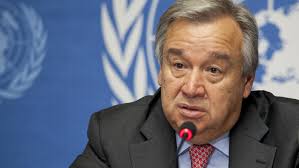
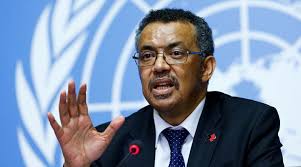
Response: My response here again emphasizes the dialectical flow of history, but in a lesser key than with respect to the complex interactions between states and markets in the period following the end of the Cold War. I disagree somewhat with the premise set forth. I think that both the. WHO and the Secretary General demonstrated an importance that came as a surprise to many observers. It is well to remember that COVID-19 became ‘a pandemic’ only when WHO so declared on March 11th and this designation was accepted as authoritative by the entire world. Such deference is a sign of legitimacy and speaks to the need for having responses unified in relation to a shared assessment of the nature of the challenge. Similarly, taking advantage of the leadership vacuum mentioned above, the UN Secretary General, Antonio Guterres, filling the void, receiving attention and respect as the world’s leading moral authority figure when he spoke in favor of unity and a people-first perspective. More than any political voice, Guterres seized the historic moment to call in late March for a global ceasefire for the duration of the pandemic that gained at least rhetorical support from most of the world’s government and almost unanimous approval from world public opinion, although with somewhat mixed behavioral results.
At the same time, it is true that the most publicly visible elements of the UN, the Security Council and the General Assembly, have been up to this point largely missing in action during the pandemic. The silence of the Security Council during the health crisis has been deafening, confirming that if any action had been attempted it would have floundered due to U.S./China tensions. This silence is also a result of the stubborn refusal of the U.S. to allow a Security Council resolution to go forward because of an indirect positive reference to the WHO that would have been an important geopolitical endorsement of the Guterres call for a global ceasefire in a text that embodied six weeks of work to find political compromises that succeeded in satisfying all 15 members of the Security Council except for the U.S.. This unfortunate confirmation of the degree to which the U.S. is prepared to oppose even symbolic moves expressing global solidarity in responding to the pandemic curtails the relevance of the UN even as people are dying the world over from this lethal disease.
The less geopolitically accountable General Assembly did manage to pass two constructive resolutions calling for sharing of medical supplies and vaccines as well as emphasizing the globality of the crisis, accentuating the human solidarity rather than nationalist factionalism, but were largely ignored because without authoritative force and not embraced by major governments or the media. On reflection, it should be understandable that the political organs of the UN are by design of its founders, shaped mainly to be instruments of Member states and especially the uber-states that are given privileged P-5 status with an unrestricted option of obstructing UN responses by casting a veto whenever their leaders are better off with silence rather than action.
With respect to legitimacy considerations, any assessment must be alive to the contradictions present. Among the most salient of these are the tension between Trump’s hostile actions toward the WHO and the widespread public appreciation of its role and essential contributions for countries with less sophisticated health systems. So long as nationalist and geopolitical turns in world politics remains influential among leading states, the relevance of the UN and internationalism generally is likely to remain at the margins of world politics, not so much with regard to legitimacy, but more with regard to effectiveness as assessed by behavioral impacts. If as mentioned in my response to the first question, Trump is defeated in 2020, and a more internationalist leader takes over control of the U.S. Government, there will be a strong push toward the reaffirmation of globalism in many of its dimensions, including the institutional dimensions exemplified by the UN System. International institutionalism as part of global governance is far more extensive than the UN if regional, economic, civil society institutionalization is taken into account. As matters now seem, the short-term aftermath of COVID-19 is likely to disappoint globalists hoping for a major transformative impact that lessens the statist nature of world order, and legitimates the UN as confirming that the whole has at last become greater than its parts. This cautious view would seem to hold even if more globalist leadership from the United States is forthcoming as of 2021. This is because the public sentiments, as present in legislative and executive organs, tend toward affirming sovereign rights and dismissing externally imposed duties or accountability procedures.
If the dialectical interpretation of historical process is correct, then we can expect before too long a reaction against ultra-nationalism and chauvinistic styles of leadership of sovereign states, which will translate concretely into a new dawn for globalism, and especially for the UN. The material explanation for this anticipated sea change in political atmosphere is the near certainty that global scale challenges will grow more menacing in the course of the coming decade, and could induce a post-catastrophe mood that has been the only historical circumstance in which global reforms of any magnitude have any hope of gaining sufficient support from heads of the more influential states. Given the disparity of wealth and capabilities among states, such pressures could work in the opposite direction, intensifying inward and selfishly oriented national political postures, although a problem-solving approach would produce a growing recognition of the need for globally structured solutions, but quite possibly along hierarchical or even hegemonic lines.
Question 3: In case we are heading for more convergence, more right-wing and nationalism, are we going to have head towards more wars, more clashes, more proxy wars like in Syria or larger scale wars? What are we most likely heading to?
Response:This is a fundamental question, yet formulating a coherent response is not a simple matter given the radical uncertainty arising from the complexities and contradictions of the historical circumstances. A haunting unknown is whether the turmoil of the Middle East is a special case or a foretaste of what will happen in other parts of the world, and has already been causing prolonged havoc in several sub-Saharan African countries despite arousing far less concern in the West for a variety of reasons. The Middle East has several defining features that are not reproduced elsewhere to nearly the same degree: artificial states created on the basis of European colonial ambitions after the Ottoman collapse at the end of World War I; the primacy of oil as a the indispensable source of energy in the modernizing process of the industrial age and still crucial in the digital age; the inflammatory support given to the Zionist Movement by Europe in the early 20th century leading to the success of its settler colonialist project at the time when European colonialism was collapsing in the rest of the world; the fact that the region was perceived as the epicenter of both political Islam (after the Iranian Revolution of 1979) and Western grand strategy after the Cold War (replacing Europe), and then became the main crucible of transnational terrorism after 2001. Given the frustrations of prolonged acute strife in Syria, Yemen, as well as discrediting regime-changing interventions in Iraq and Libya, one wonders whether the geopolitical appetite for engagement in the region will persist. A further regional concern is whether the United States and Israel will press Iran to the point that provokes a major war that neither side wishes.
The other dangerous global hotspots in East Asia and South Asia seem to involve unresolved inter-governmental conflicts of a more traditional type familiar throughout world history. The question posed as to whether the U.S. and China can escape ‘the Thucydides trap’ by which ascendant hegemons have historically tended to go to war rather than risk being displaced by rising rivals seems like a central concern over the course of the next decade, and tensions between these two dominant world powers rose to a fever pitch of mutual recrimination during the pandemic. Much may depend whether the rivalry remains centered on economic competition or takes the form of military encounters. A second concern, also in East Asia, is whether the denuclearizing pressure on North Korea exerted by the United States so as to maintain its global security framework anchored in a regime of ‘nuclear apartheid’ will cross the military threshold, and bring about a possibly devastating war on the Korean Peninsula that engages China and Japan, and possibly Russia. A third concern is whether India and Pakistan will turn their conflict over Kashmir in a direction that erupts in a war fought between two states possessing nuclear weapons.
Tags: After COVID-19, Guterres, Trump, UN, WHO, world health