[Prefatory Note: I post below two items pertaining to Gaza—my short poem, and a collection of responses to the question “What is the Future of Gaza” by a clever online publication, called ‘One Question,’ which true to its name poses a single question to a number of people presumed to have something to say in response, is the creation of Cihan Aksan and Jon Bailes. I only learned about this format because I am among the respondents represented below. My current concern is that while the world of states, and even the UN, has virtually abandoned the people trapped in Gaza, we who support their empowerment and liberation, must not lose faith in their future, nor weaken our emotions of empathy so long as their ordeal persists.]
*******************************************************************************
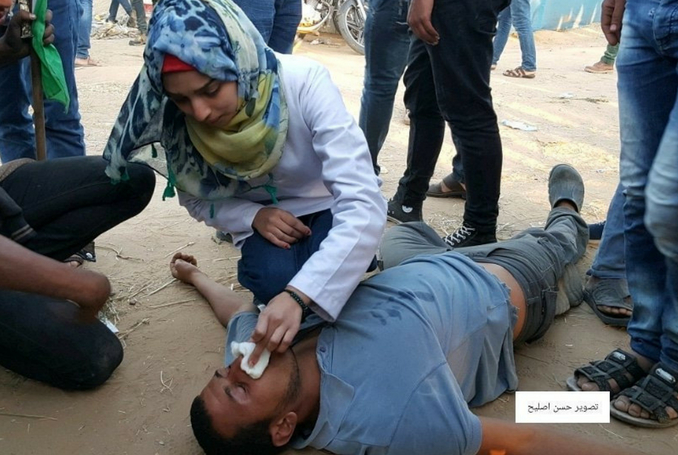
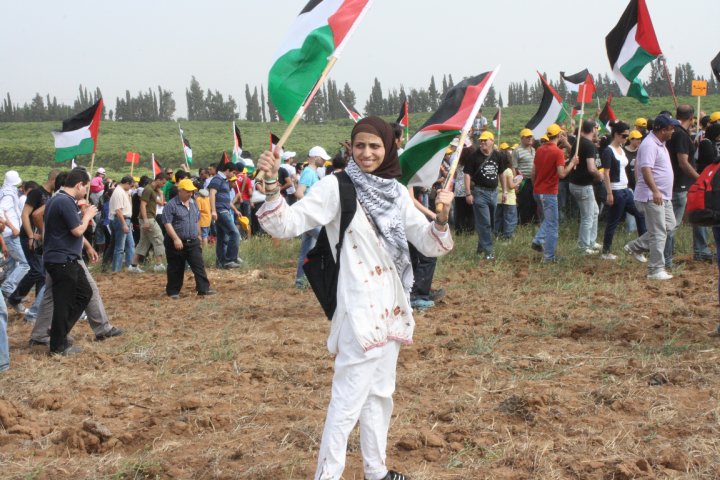
Great March of Return and the Unspeakable
This wordless borderland
Where love and atrocity meet
Where free fire zones
Fill pools with blood
Overflowing hatred
Climb forlorn fences
Call forth silences
Of heart and mind
Words of rage
Rightless rights
March and return
Return and march
Tears are not enough
Nor outrage nor silence
When tending the wounded
Become a capital crime
It’s time to say
This world is doomed
27 June 2018
Yalikavak, Turkey
One Question
Gaza
28th June 2018 Cihan Aksan And Jon Bailes <stateofnatureblog.com/one-question-future-gaza>
One Question is a monthly series in which we ask leading thinkers to give a brief answer to a single question. This month, we ask:What is the future of Gaza?
With responses from: Ramzy Baroud; Richard Falk; Sara Roy; Abdalhadi Alijla; Norman Finkelstein; Toufic Haddad; Atef Alshaer; Helga Tawil-Souri; Hagar Kotef; Joel Beinin; Magid Shihade; Ran Greenstein; Richard Hardigan; Salman Abu Sitta.
Ramzy Baroud
Journalist, author and editor of Palestine Chronicle. His latest book is The Last Earth: A Palestinian Story(Pluto, 2018). He has a PhD in Palestine Studies from the University of Exeter and is a Non-Resident Scholar at Orfalea Center for Global and International Studies, University of California Santa Barbara. His website is www.ramzybaroud.net.
The ongoing siege on the Gaza Strip was interrupted by three major Israeli wars: in 2008/9, 2012 and 2014, with a total death toll that exceeded 5,000. Tens of thousands were wounded and maimed, and hundreds more were killed in the in-between, so-called ‘lull’ years. Coupled with a hermetic blockade, Gaza cannot rebuild most of its destroyed infrastructure, leading the United Nations to conclude that the tiny but overcrowded enclave will become ‘uninhabitable’ by 2020. In many ways, however, and tragically so, it already is.
The future of Gaza will follow the same path of horrific wars and a suffocating siege if no new positive factors are injected into this dismal equation. Without a regional and international push to force Israel to loosen its grip, or to find alternative routes to assist the isolated Strip, misery will continue, even beyond 2020. ‘Uninhabitable’ or not, Israel has no plans to allow Gaza’s 2-million inhabitants, mostly refugees from historic Palestine, today’s Israel, to lead normal lives.
It is important to note that Israel is not solely responsible for Gaza’s current fate; Egypt and the Palestinian Authority (PA) are also culpable, each with its own agenda. Egypt, which shares the Rafah border crossing with Gaza, wants to ensure that Hamas, which it perceives as an extension of the Muslim Brotherhood Movement, is isolated and weakened. The PA, which is controlled by the largest Palestinian Liberation Organisation (PLO) faction, Fatah, is also hell-bent on defeating Hamas. Fatah lost a parliamentary election to Hamas in 2006, and does not wish to repeat that perceived folly by allowing another democratic election to take place.
Thus, the Palestinian political rift is important for all parties involved: Israel needs to demonise Hamas and, by extension, all of Gaza; Egypt wants to marginalise any strong Islamic political tide, and the PA in the West Bank wants to keep its rivals at bay. Despite Hamas’ regional politicking, it has so far failed to break away from its isolation. Gaza is, therefore, not a victim of Israel alone. True, the latter owns the largest shares in Gaza’s desolation, but other Arab and Palestinian parties are greatly invested and equally keen on keeping the hapless Strip on its knees.
If the status quo persists, a backlash is on the way, not just in terms of another deadly Israeli war to ‘downgrade’ the defenses of Palestinian resistance, but also in terms of social and political upheaval in Gaza and the West Bank. The large protests against the PA in Ramallah in recent days were violently suppressedby PA police and thugs, but West Bankers are growing angry over the subjugation of their Gaza brethren. Meanwhile, the mass ralliesat the Gaza-Israel fence are an indication that Gazans are seeking alternative methods to fight back, even at the price of a high death and injury toll, as has been and continues to be the case
.
Richard Falk
Professor Emeritus in International Law, Princeton University; between 2008-2014 he served as Special Rapporteur for Occupied Palestine on behalf of the UN Human Rights Council; his most recent books are Power Shift: On the New Global Order(University of Chicago, 2016) and Revisiting the Vietnam War(University of Cambridge, 2017).
It is important to understand some essential features of the distinctive place of Gaza in the wider context of the Palestinian struggle for elemental rights. Perhaps most fundamentally, unlike the West Bank and Jerusalem, Gaza is not considered part of the ‘promised land’ that forms the substance of the Zionist Project to form a Jewish State that corresponds with its understanding of the scope of biblical entitlement.
At the same time, Gaza has a long history of centrality in the Palestinian national experience that stretches back before the time of Mohammed, and thus the inclusion of Gaza in Palestine’s vision of self-determination is vital. This collides with Israel’s desire to maintain a Jewish majority state, which would make it desirable for Gaza to be absorbed or at least administered separately by either Jordan or Egypt.
Gaza, more than the West Bank, has also been the center of Palestinian resistance, being the site where the First Intifada was launched in 1987 and where Hamas came to govern after it prevailed in internationally supervised elections of 2006 and in a struggle for governing authority the following year.
The intense hostility between Hamas and the PLO has fractured Palestinian political unity, weakening Palestinian diplomatic leverage, and making it more plausible for Israel to claim it has no Palestinian ‘partner’ in the search for a peaceful solution.
Such a background helps us understand why Gaza has experienced massively destructive attacks by Israel in 2008-09, 2012, and 2014, as well as the recent border massacre in response to the Great Return March that is the latest example of Israeli reliance on excessive violence and cruel tactics to crush Palestinian resistance.
Gaza also partakes of the wider fate of the Palestinian people, which in the time of Netanyahu and Trump seems extremely unfavorable, with respect to relief from the ordeal of a suffocating blockade that has lasted more than a decade and control policies designed to achieve de-development of the Gazan economy. In this regard, the safest prediction is a continuation of the cycle of repression and resistance with no change of basic circumstances. Even the Israeli expansionists do not seek to absorb Gaza, although its offshore deposits of natural gas might create a future temptation.
The longer vision of a Gazan future is clouded at present. Ideally, Gaza would participate in a single secular state embracing the whole of historic Palestine. Increasingly, the impracticality of the two-state solution has focused Gazan hopes either on a long-term ceasefire or a genuine peace process that establishes a single democratic state.
Sara Roy
Senior research scholar at the Center for Middle Eastern Studies, Harvard University, specialising in the Palestinian economy, Palestinian Islamism and the Israeli-Palestinian conflict. She is also co-chair of the Middle East Seminar, jointly sponsored by the Weatherhead Center for International Affairs and the Center for Middle Eastern Studies, and co-chair of the Middle East Forum at the Center for Middle Eastern Studies. Her books include: The Gaza Strip: The Political Economy of De-development (Institute for Palestine Studies, 1995, 2001, third edition 2016 with a new introduction and afterword and Arabic edition forthcoming in 2018); Failing Peace: Gaza and the Palestinian-Israeli Conflict (Pluto Press, 2007); and Hamas and Civil Society in Gaza: Engaging the Islamist Social Sector (Princeton University Press, 2011, 2014 with a new afterword).
The question itself reflects the problem. It speaks to Gaza as separate and apart – severed from Israel, the West Bank, and the world. In this regard, Israel has been stunningly successful; it has not only removed and contained Gaza geographically, economically and legally; it has convinced us to understand and accept Gaza as something distinct and awful, unenduring, and therefore undeserving of a normal, worthwhile existence.
Gaza’s temporality has always defined Israel’s approach to the territory because Israel has never really known what to do with Gaza. Gaza has always been unruly, guilty of what for Israel is indefensible and unforgiveable: defiance. This accounts in part for Israel’s brutal treatment of the territory including a blockade now in its 12thyear, which has destroyed the local economy. Gaza was – and remains – the center of Palestinian resistance to Israeli occupation and the injustice that sustains it.
The recent protests along the fence isolating Gaza from Israel, which at times exceeded 30,000 people, were a nightmare for Israel, a harbinger of things to come. No doubt one issue plaguing the Israeli government right now is how better to control Gaza.
This question, I am told, is at the heart of the American peace plan (especially since the West Bank has effectively succumbed to Israeli rule). Controlling Gaza in the future, however, will be no different from the past. Gaza will continue to be treated as a humanitarian problem requiring nothing more than subsistence relief. Defining the parameters of Israel’s policy toward the territory, an Israeli defense official was clear and succinct: ‘No development, no prosperity, no humanitarian crisis.’
Gaza’s future must be informed by its past; yet, its lived reality has no connection to a past or a future. The majority of Gazans have no memory of Gaza before the destruction. History – both recent and far – is not so much absent as it is vacant, and without that history to navigate a way forward, there are no prospects worth thinking about or expectations worth having. People are so consumed by the present that mundane needs have become aspirational. The future is beyond conceptualisation.
If Gaza has a future outside incarceration, it lies in ending its liminality and present state of exception. It lies in admittance and inclusion. And it lies in returning to Gazans what they want most – a predictable, unexceptional life.
Abdalhadi Alijla
Palestinian-Swedish researcher and writer. Since April 2018, he has been an Associate Fellow at the Post-Conflict Research Center in Sarajevo, Bosnia and Herzegovina. He is a member of the elected Executive Committee of the Global Young Academy for 2018-2019, Director of Institute for Middle East Studies, Canada (IMESC), and Regional Manager of the Varieties of Democracy Institute (Gothenburg University) for Gulf countries. His work has appeared in OpenDemocracy, Huffpost,Qantara, Your Middle East, Jaddaliyaand other media outlets.
Gaza has two futures: the future that the Palestinians living in Gaza are looking for, a Gaza open to the world with no fear, and the future that seems to be their destiny, which is the current reality of a life filled with misery. When I left Gaza more than a decade ago, I knew that I was leaving a place which seemed like another planet behind me, where the unemployment rate was high, Palestinian internal division was deepening, and the Israeli siege had only just started. Today, the situation in Gaza is catastrophic, literally.
The Palestinians of Gaza are paying the price for Israel’s occupation, and the detrimental policies of both Hamas and Fatah. The recent incidents in Ramallah and the Gaza strip, where Hamas and Abbas’s forces broke up protests taking place in opposition to the sanctions against Gaza by the PA, has proven that both political entities are acting as de-facto, Israel-delegated authoritarian forces.
The Palestinians of Gaza look for a bright future where they can move freely, study and have access to health care without being dehumanised. The future Gazans want is the future where ICT incubators flourish, and industries that have been destroyed by Israel, such as textiles, will return. The future of Gaza should be without the occupation, the siege, and political division.
The other future, which I see as the most probable, is the continuation of the suffering and dehumanisation of the Palestinians of Gaza by settler colonial Israel, as well as the negligence of the Palestinian leadership with respect to the demands of their citizens for unification and elections. This future is the one that nobody wants except the Israeli occupation. It is the future characterised by high rates of suicide, a slaughter every four years, and miserable economic and societal conditions.
Norman Finkelstein
Received his PhD from the Princeton University Politics Department. He has written many books, including The Holocaust Industry: Reflections on the Exploitation of Jewish Suffering(Verso, 2000), and most recently, Gaza: An Inquest into its Martyrdom(University of California, 2018).
T
he modern history of Gaza begins in 1948 with the massive influx of expellees from the newborn state of Israel. In 1967, Gaza came under a brutal Israeli occupation. Israel alleges that it withdrew from Gaza in 2005, but the consensus among legal specialists – including top Israeli authority Yoram Dinstein – is that Israel remains the occupying power. In 2006, after Hamas won ‘completely honest and fair elections’ (Jimmy Carter), Israel imposed a medieval-like blockade on Gaza. In the meantime, Israel has visited not fewer than eight ‘operations’ on Gaza since 2004. After the last massacre, Operation Protective Edge (2014), President of the International Committee of the Red Cross, Peter Maurer, went to Gaza and observed, ‘I’ve never seen such massive destruction ever before.’
UN agencies have now pronounced Gaza ‘unlivable.’ ’I see this extraordinarily inhuman and unjust process of strangling gradually two million civilians that really pose a threat to nobody,’ UN humanitarian coordinator for Gaza, Robert Piper, observed last year. Echoing him, UN Human Rights chief, Zeid Ra’ad al-Hussein, recently deplored the fact that Gazans have been ‘caged in a toxic slum from birth to death.’
On March 30, the people of Gaza initiated weekly mass demonstrations to break the illegal siege. Human rights groups report that the marches have been overwhelmingly peaceful. But more than 110 Gazans have been killed and more than 3,700 injured (many permanently) with live ammunition by Israeli snipers. ‘Israeli forces’ repeated use of lethal force in the Gaza Strip since March 30, 2018, against Palestinian demonstrators who posed no imminent threat to life,’ Human Rights Watch concluded in a major investigation, ‘may amount to war crimes.’
What is the future of Gaza?
Sara Roy of Harvard University’s Center for Middle Eastern Studies has observed that ‘innocent human beings, most of them young, are slowly being poisoned by the water they drink, and likely by the soil in which they plant.’ Experts say that before long Gaza will be overrun by typhoid and cholera epidemics. It is impossible to predict the future except to say, if the international community doesn’t act, Gaza won’t have one.
A 2015 UN report by New York State judge Mary McGowan Davis called on Israel to lift the blockade ‘immediately and unconditionally,’ while the European Parliament in 2018 called for an ‘immediate and unconditional end to the blockade.’ If Israel isn’t compelled to end the illegal and inhuman siege, the judgment of History will not be kind. Will it one day be asked, why was the world silent when Gaza was crucified?
Toufic Haddad
Completed his PhD in Development Studies at the School for Oriental and African Studies (SOAS) in London in 2015, and has recently engaged in postdoctoral research for the Arab Council for Social Sciences, exploring the political economy of siege and resilience in the Gaza Strip. Author of Palestine Ltd.: Neoliberalism and National Liberation in the Occupied Palestinian Territory(I.B. Taurus, 2016).
The future or Gaza needs little prognostication: what after all could be the future of a territory of 360 km2crammed with two million people, two thirds of whom are refugees; whose water is entirely poisoned; whose civilian infrastructure has effectively collapsed; where food dependency exceeds 80 percent, and unemployment is the highest in the world? In 2017, the UN advanced its own 2012 prediction that the territory would become ‘unlivable’ by 2020, declaring the territory had already passed this dubious threshold.
Gaza has long been a ‘humanitarian catastrophe’ well documented by the not-so-small cottage industry of local and international organisations designated to confer such designations.
And here lies part of the problem: the perpetually deteriorating humanitarian and developmental conditions that have come to define the ‘Gaza ghetto’ continually frame their subject matter as an object of international humanitarian appeal, or as a festering security dilemma.
It is this dual approach that bears much of the blame for Gaza’s tortured predicament, because the ‘problem of Gaza’ is ultimately a political problem. And it has been the deliberate attempt on behalf of these actors to avoid or suppress the political nature of Gaza that has led to its persistent worsening situation.
What after all is ‘the Gaza Strip’? The territory has no natural precedent, and can only be understood as a rump territory created in the wake of the ethnic cleansing of Palestine’s southern and coastal plains during the creation of the state of Israel.
Gaza’s concentration of historical and political injustices is too long to document in 400 words. The resulting ‘open air prison’ the territory has become is a scourge on the conscious of humanity.
Absented in the statistics documenting Gaza’s travails is the untold story of how this ugly brother of the West Bank consistently generated the Palestinian movement’s political vanguard, organising for refugee return, statehood and national liberation. While today this movement is led by Islamo-nationalists (Hamas), years ago this mantle fell to communists, Nasserists, Left nationalists (PFLP), and secular nationalists (Fateh).
The myth that this predicament can continue ad infinitum, solved through ‘technological fixes’, aid and yet more sophisticated military means – from drones and remote controlled machine guns, to underground walls, is precisely that – a myth.
Eventually Palestinians and their allies will develop means to more effectively counter their predicament, be this violently or nonviolently.
The question then becomes how much blood is to be shed before then, and perhaps more importantly, what history will write about those who perpetuated this bloodshed, by design or by default.
Atef Alshaer
Lecturer in Arabic Studies at the University of Westminster. He has written several research papers and monographs, including Poetry and Politics in the Modern Arab World(Hurst, 2016); Language and National Identity in Palestine: Representations of Power and Resistance in Gaza(IB Taurus, 2018); the co-authored The Hezbollah Phenomenon: Politics and Communication, with Dina Matar and Lina Khatib (Hurst, 2014); and an edited volume, Love and Poetry in the Middle East(Hurst, 2018).
Known as the biggest open air prison, Gaza’s future lies in it being totally liberated. Besieged and battered by three devastating wars and constant attacks by Israel, ruled by Hamas without any regimes nearby to cooperate with its partisan rule, Gaza is left to fend for itself in the face of a world that seems content to look at it as an abyss, the ultimate brainchild of Israel and its ideology of racist Zionism, with its irrational and irresponsible American patronage.
Much has been written about Gaza, but little has been done to alleviate its suffering, that of two million people trapped for more than a decade in 365 square kilometres. It is crowded as well as poverty-stricken, and lacking in opportunities for its vibrant and often educated youth. It is depleted of humane prospects for the future, yet Gazans continue to resist and innovate in their resistance; and the latest manifestation of this is the Great March for Return, held to commemorate the 70thanniversary of the Palestinian Nakba, the dispossession from historic Palestine.
The past of Gaza has been tragedy and resistance and so is its present and so will be its future. The only meaningful future for Gaza is for it to be reunited with historic Palestine within a one democratic state solution, where every citizen from the River Jordan to the Mediterranean Sea has equal political and human rights. Short of that, Gaza will remain deadlocked between uncaring Egypt on the one hand and deadly Israel on the other. Alas, it will continue to be without an open border to connect it to the outside world, and without viable infrastructure reinforced with fair political solutions that address the root cause of its wretched state. This is anchored in the liberation of the whole of Palestine from the Israeli occupation and its entrenched mind-set of apartheid.
I
t is utterly sad that Gaza lacks a future that befits its extraordinarily warm and movingly steadfast people, notwithstanding the pain. Gaza was once part of the fabric of the Mediterranean world. Wrenched from its natural bosom, Gaza will most unfortunately remain a suffering shadow of its former prosperous self.
Helga Tawil-Souri
Associate Professor of Media, Culture, and Communication at New York University where she is also the Director of the Kevorkian Center for Near Eastern Studies. She co-edited Gaza as Metaphorwith Dina Matar (Hurst, 2016), and teaches and writes on technology, media, territory and politics in the Middle East, with a focus on Palestine-Israel.
That the question of a future of Gaza separate from Palestine makes sense already foretells a destination. Gaza has been severed: from Palestine, and from the world; while that world either supports Israel’s leading role in Gaza’s undoing, or, at best, throws up its arms in despair or in disregard, and lets Gaza sink into an abyss.
There is no doubt – looking at the past five, then, twenty, fifty, seventy years – that Gaza gets progressively worse. Based on that calculation, the future is grim: dispossession, destitution, misery, abjection; more of the past seven decades, for a growing population whose age is younger, who has never known anything outside of the man-made disaster called Gaza.
In the immediate future, Israel is hell-bent on making Gazans disappear… How, I’m not sure. The coming years and decades are too painful for me to ponder.
So my thoughts move along the measure of centuries instead. I think of the Maya (or the Mycenaeans): disappeared civilisations about whom we rely mostly on archaeologists to reconstruct an understanding, while we treat their ruins as playgrounds on which to take holidays along pretty seasides. Gaza might become a tourist destination with beautiful beaches in three or four-hundred years. But unlike with the fate of the Maya, or the Mycenaeans, our task today is to document – so that centuries from now, Gaza’s fate is not sealed as yet another disappeared culture.
There should be records, notes, reports; recipes, stories, biographies, pictures. Accounts and illustrations about life with constant military machines flying overhead and life forcefully severed from outside contact except virtually. Recordings, compilations, archives of sub-local dialects, idioms, performances, prayers, songs, architectural details, engravings, memories (of those who remember ten, twenty, seventy years ago). Details of weddings and burials and surgeries performed in the dark and the din of generators; figures, measurements and reports of babies orphaned, footsteps taken, high school graduation ceremonies held, regardless of physical and psychological scars wreaked.
Centuries from now, the disappearance of Gaza will be a permanent stain on humanity’s conscience, a moment of failure when society allowed a mighty victim to do away with a group of individuals because of the circumstances they were born in. There will be records that this disappearance wasn’t a miracle, a freak series of natural causes (as what presumably befell the Maya), or an inexplicable migration of millions of people. No, in Gaza, it was a protracted, painful, relentless sociocide, and the world clapped along or shed a tear, but not more. And we would have the records.
Hagar Kotef
Senior Lecturer in Political Theory and Comparative Politics at SOAS, University of London. Her book Movement and the Ordering of Freedom (Duke University Press, 2015) examines the roles of mobility and immobility in the history of political thought and the structuring of political spaces.
’m writing these words as the future of Gaza seems to oscillate, once again, between a bright (?) economic future promised by the new American peace-enterprise, and yet another round of the ongoing ‘cycles of fighting’, as they are officially termed. In recent days, we have seen increasing attacks on ‘Hamas’ infrastructures’ (which in Gaza often means simply ‘infrastructure’), retaliations on Hamas’ part, and an inflated rhetoric that we know too well from previous rounds. (Is there a future for a place that seems to be situated within a cyclical temporality?)
Trying to predict the future would therefore be foolish, but I am also not sure I want to use this question as an opportunity to imagine. As a Jewish Israeli, this is not my imagination to unfold, not my space to occupy.
The point of departure should therefore be the imagination of people in Gaza, and the recent demonstrations at Israel’s buffer zone provide an opportunity to listen. Those demonstrations entailed a demand for a future: a demand to be set free of the siege that has lasted (depending how and what one counts) at least 11 years, but also, through the name ‘the Great March of Return’, a demand to change the terms through which this freedom is understood.
It is not just a demand for basic human conditions: electricity for more than four hours a day, drinking water (96% of the water in Gaza is not drinkable), the right to fish, to work, to reconstruct demolished homes, the right to move, to see family members, to receive education, medical treatment; it is also a demand for a political language, a space, where the people of Gaza have a place not just as humanitarian subjects but as political actors. This demand, I believe, calls us to question initiatives such as the new American enterprise, but also to reflect on the terms of the question itself. As a question about the future of Gaza it undermines, I believe, precisely this latter – political – call for a future.
The future of Gaza should be integral to the future of Palestine, and any effort to separate the two questions already surrenders itself to the terms Israel has worked so hard to construct. Since 1967, and increasingly after the disengagement of 2005, and then the rise of Hamas and the division of the Palestinian Authority (PA) in 2007, Israel has been doing everything within its capacity – politically and militarily – to separate the future of Gaza from the future of the West Bank.
The recent attacks of the PA on demonstrators supporting Gaza show that the PA itself has accepted this division (if only as a tool to re-gain control over Gaza). The American enterprise seems to already take the isolation of Gaza almost for granted. When we ask about the future of Gazawe have already given up the question of the future of Palestine or have excluded Gazans from this question. We need to ask a different question then, or ask the question differently.
Joel Beinin
Donald J McLachlan Professor of History and Professor of Middle East History at Stanford University. From 2006 to 2008 he served as Director of Middle East Studies and Professor of History at the American University in Cairo. In 2002 he served as president of the Middle East Studies Association of North America. He has written or edited eleven books, most recently, Workers and Thieves: Labor Movements and Popular Uprisings in Tunisia and Egypt (Stanford University Press, 2016).
The Palestinian Great March of Return exposed both the diplomatic impasse over Israel/Palestine and the emergence of a new political alignment in the Middle East. The campaign, which began on March 30, was initiated by politically unaligned young men and women of the Gaza Strip as a protest against their miserable futures. They did so independently of both Hamas and Fatah, which have become increasingly corrupt while failing to improve their lives or to advance Palestinian political and human rights. Demonstrators demanded that the decade-long siege by Israel and Egypt be lifted and called for the right of Palestinian refugees to return to their homes – highlighting the origins of the Palestinian-Israeli conflict, rather than its post-1967 consequences.
On May 14, as President Donald Trump’s coterie of hardline Zionist funders and supporters, represented by Sheldon Adelson and anti-Semitic evangelical Protestant preachers John Hagee and Robert Jeffress, celebrated the inauguration of the future US Embassy in Jerusalem, Israeli forces shot dead over 60 Palestinians and injured over 2000. Beyond verbal denunciations, the only practical response by any Arab state was Egypt opening its border with the Gaza Strip for the month of Ramadan, allowing a limited number of Palestinians to exit. The reason for the measured response of Saudi Arabia, the United Arab Emirates and Egypt is that they have been forging an alliance with Israel directed against Iran.
While several secret meetings between Israelis and Emiratishave been reported, Saudi Arabia is reluctant to openly acknowledge its alignment with Israel. Israel is pursuing a more public relationship. Before Saudi Arabia and Russia kicked off in the opening game of World Cup 2018, the Israeli Foreign Ministry’s official Arabic Twitter account wished Saudi Arabia ‘best of luck!‘
By withdrawing from the 2015 nuclear agreement with Iran, President Trump signalled willingness to follow Israel’s lead in pursuing realignment of the Middle East around an anti-Iranian front. Palestinians may become collateral damage of this agenda, first and foremost the 1.9 million residents of the Gaza Strip, which may become ‘unliveable’ by 2020 according to a UN report. However, the Saudis and Emiratis, who have recently bailed out Egypt to the tune of $8 billion, could easily become the lead funders for the rehabilitation of Gaza if they became convinced that their anti-Iranian project requires it.
Magid Shihade
Assistant professor of International Studies at Birzeit University. His book, Not Just a Soccer Game: Colonialism and Conflict among Palestinians in Israelwas published in 2011 by Syracuse University Press. His recent articles include: ‘Global Israel: Settler Colonialism, Ruptures and Connection’, Borderlands, 2015, and ‘Education and Decolonization: On Not Reading Ibn Khaldun in Palestine’, Decolonization: Indigeneity, Education, & Society, 2017.
In thinking about the future of Gaza, one has to consider the history of modern Palestine, and the founding of the Israeli settler colonial state in 1948, which has led to a process of elimination of the native Palestinian society, through displacement, separation, maiming, encampment, caging and killing.
The Israeli state is a racialised and racist state which affects not only the native Palestinians but also Jews of non-western origin, and migrants from Africa and Asia. Since its founding it has been engaged in violence against the native Palestinian population, and peoples in neighbouring states. It has also been engaged in wars, arms exports and support for criminal regimes, creating havoc around the world. Like all settler colonial states, its impact can be seen locally, but more than other cases it has been a global issue from the start.
Thus, while the Israeli state must be seen as a European settler colony (like the US and others), its specific features must be considered. Its uniqueness lies in its claims to represent world Jewry – implicating Jews wherever they live, forcing them to take a stand either as supporters of Zionism, or as detractors of a racist ideology and state – as well as in its self-image as the West’s front against Asia and Africa. But it is also unique because it has created millions of Palestinian refugees since 1948, who live in many countries and have gained the support of the local populations. And, by being part of the western global exportation of arms and violence, it has created mass opposition around the world.
In short, the Israeli state and its policies towards Gaza and Palestine must be seen in their global context, and in their connection to the rise and dominance of racist western capitalist, colonial, and imperialist policies. They are part of a larger structure that has been at war against the most vulnerable at home and abroad, those who are considered ‘Other’ or disposable, and against nature and its limited resources.
So, the future of Gaza-Palestine is part of the future of the world. It is the future of surviving the current conditions, created by the many who have been negatively affected by them, and needs a global framework. In thinking about the possibility of a better future, one is reminded of the concept of asabiyya(social solidarity) defined by the 14-15th century scholar Ibn Khaldun. In his analysis of how societies manage to survive, Ibn Khaldun argued that some form of common feeling is needed among the members of a group. And this cooperation between people is not just an ethical issue, but a practical one.
Taking that concept to a global scale, one can imagine the majority of people having in common a respect for human lives, human dignity, equality, fair pay for labour, quality of life, the right to mobility, and a world where natural resources and the environment are respected, without which we cannot survive. For Gaza-Palestine to have a better future, we are responsible for working to create a different and a better world for much of its population.
Ran Greenstein
Associate professor of sociology at the University of the Witwatersrand, Johannesburg, South Africa. Among his publications are Zionism and its Discontents: A Century of Radical Dissent in Israel/Palestine(Pluto, 2014), and Identity, Nationalism, and Race: Anti-colonial Resistance in South Africa and Israel/Palestine(forthcoming).
For the last 70 years Gaza has been stranded between Israel and Egypt in a state of limbo. Not wanted but not given up; dominated but not subordinated; always controlled from the outside but left to its own devices from the inside; separated from the rest of Palestine but linked to it; incorporated into the system of domination but not integrated socially and politically.
Does its future have to look the same as its past and present?
To avoid that, it needs to reverse course, to become re-integrated with the rest of Palestine, to overcome the image of the bogeyman it has acquired in Israeli eyes.
Why has Gaza been such a problem for its neighbours? It epitomises the Palestinian situation; most of its population are refugees who regard pre-1948 Palestine as their true home after generations of life in exile. Yet, unlike other refugees, its people live within the boundaries of historical Palestine, a few miles away from their ancestral land. For three decades they could hop on a taxi and in an hour find themselves in Ashkelon or Jaffa, able to see the sights and work but not spend the night there, let alone return on a permanent basis. For the last two decades even this symbolic relief has been blocked, increasing the sense of isolation and desperation.
What can be done to change the future? First, Gaza must cease being a bone of contention between rival forces. The PA must stop punishing its people for making the ‘wrong’ electoral choice; Hamas must stop using it as an alternative political centre. Both sacrifice the interests of the people for the sake of power. This is replicated on the broader scene, with regional forces using diplomacy and money to play one faction against another. Internal Palestinian unity is essential for a move forward.
Reaching out to Israeli constituencies is another necessary step. Gaza’s only viable future is with the rest of Palestine and that means Israelis are essential to the picture. They must be seen as part of the solution not only part of the problem. A strategy that gathers progressive forces on a platform of individual and collective equality, redress and justice for all, is needed. Only through political dialogues among all population segments can a common solution be developed, aided by global solidarity that is guided by local actors.
Richard Hardigan
University professor based in California. He is author of The Other Side of the Wall(Cune, 2018). His website is richardhardigan.com, and you can follow him on Twitter @RichardHardigan.
The quality of life in the Gaza Strip is appalling. According to a 2017 studyby the Israeli NGO B’Tselem, the unemployment rate hovers at 44% (61.9% for those under the age of 29). 80% of Gazans depend on humanitarian aid, while 60% suffer from food insecurity. 96.2% of the Strip’s water is contaminated and undrinkable. Electricity is cut for all but a few hours every day. Raw sewage is pumped into the sea. And the situation is only worsening. A reportissued by the United Nations in 2015 predicted that the Gaza Strip will be uninhabitable by 2020.
UN Secretary General Antonio Guterres has calledthe situation in Gaza ‘one of the most dramatic humanitarian crises that [he has] seen in many years working as a humanitarian in the United Nations.’
The crisis in Gaza is entirely man-made. It is a result of the Israeli blockade of the enclave, which began in 2007 after Hamas’ election victory that followed Israel’s unilateral withdrawal in 2005. Israel insists the purpose of its blockade is to diminish Hamas’ capacity to maintain or increase its weapons arsenal, but a quick scan of the items it bans – which includes such goods as chocolate and potato chips – reveals the mendacity of its claim. In fact, a US diplomatic cable quotedIsraeli officials as saying they wanted to ‘keep Gaza’s economy on the brink of collapse.’
Since the imposition of the blockade Israel has also engaged in three major assaults on Gaza, the consequences of which were devastating. Thousands of Palestinians – most of them non-combatants – died; tens of thousands of homes were destroyed or badly damaged; schools, hospitals, factories, farms, mosques, and infrastructure such as power and water plants were hit.
Israel’s policy vis-à-vis the Gaza Strip is to raise the level of suffering of the civilian population to such an extent that it will have no choice but to overthrow the Hamas government. But this is a serious miscalculation. Over the last decade Israel’s harsh measures have given Hamas the opportunity to cement its stranglehold on power. Only by easing its restrictions on the embattled enclave and allowing for its reconstruction can it hope to create an environment in which an extreme political movement such as Hamas cannot thrive. If Israel continues on its current path, the civilian population will eventually reach its breaking point. And when it does, the Gaza Strip is going to explode in a paroxysm of violence, the consequences of which will be devastating not only for the Palestinians, but for Israel, as well.
Salman Abu Sitta
A writer and activist on Palestinian refugees and the Right of Return. He has authored over 300 papers and articles and five books including the encyclopaedic Atlas of Palestine 1948and the expanded Atlas of Palestine 1917- 1966published in 2010. He is founder and president of the Palestine Land Society, UK, for the purpose of documenting the land and people of Palestine. The society website has a wealth of information at www.plands.org.
Gaza is the symbol of Palestine. Gaza is the part of Palestine which never willingly raised a flag other than that of Palestine. Gaza represents the conscience of the Palestinian people, which can express itself freely (most of the time), unlike in other regions in Palestine, under Israeli rule.
Gaza is not only the symbol but the centre of resistance to the occupation of a homeland. In Gaza, the first commando operations to liberate occupied Palestine started in 1950. In Gaza, demonstrations against settling Palestinians in Sinai in 1954 and 1955 were met with killings and jail sentences. The cry of the people in the streets was ‘we want to return home, not further exile.’
In Gaza, the first popular movements to liberate occupied Palestine started just after al-Nakba. Fatah, Arab Nationalists, Muslim Brothers and Communists each vied to find the best strategy to liberate Palestine throughout most of the 1950s.
In Gaza, the first democratically elected Palestine Legislative Council was formed in 1961. From Gaza, the first Palestinian delegation travelled to New York in 1962 to address the UN on behalf of the Palestinian people. All previous representations at the UN had been made by Arab League members.
Why is Gaza Strip the most crowded place on Earth?
During the British Mandate on Palestine (1920- 1948), Britain, in contravention of its obligations to bring independence to Palestine, allowed European Jewish settlers to come to Palestine. During this period, the settlers, with British collusion, managed to control only 6% of Palestine. Armed and trained by the British, these Zionist settlers (later called Israelis) depopulated 675 Palestinian towns and villages and occupied by military force 80% of Palestine in 1948/49, after the unceremonious British departure.
Nowhere are the effects more striking than in southern Palestine. The southern half (50%) of Palestine was totally ethnically cleansed by the Israelis and the inhabitants of 247 villages have been pushed into 1.3% of the territory. That is the Gaza Strip. They now live in 8 refugee camps at a density of 7000 people/km2.
They literally see their land and homes across the barbed wire. Their land is still empty; the settlers’ density is only 7 people/km2.
The longest standing resolution in UN history since 1948, UNGA resolution 194, calls for the return of the refugees to their homes.
Three generations of refugees, as the youngest eloquently demonstrated in April and May 2018, insist on their Right of Return. There can never be any peace in the region without the right of 7 million Palestinian refugees to return to their homes, now occupied by 2% of Israelis.
The future of the whole region resides in Palestine. And the future of Palestine resides in Gaza. And the future of Gaza is in the Right of Return. And that calls for justice, well over due.
Tags: Future of Gaza, Gaza, Gaza Massacre






 Global Justice in the 21st Century
The Future of NATO: An Interview
11 AugThe Future of NATO: An Interview with Daniel Falcone
[Prefatory Note: An interview with Daniel Falcone on the future of NATO that considers Trump’s brazen challenges and the tepid responses of European political leaders, and what this interplay signifies for the future of world order. At least, Trump’s approach has so far avoided the drift toward Cold War 2 that might have happened had Hillary Clinton become president, but Trump’s trade war mentality may hasten the advent of a different kind of second Cold War, with China and Europe at its epicenter, that is, if the Trump presidency is not undermined in the November elections or otherwise. We should be puzzled by the seeming passivity of the deep state in the U.S. Does it not exist after all?]
Q1. What are the reasons for Trump’s insistence that NATO is just another extension of corruption and an institutional burden for the United States?
It is difficult to evaluate Trump’s particular moves from coherent rational perspectives. He seems driven by narcissistic motivations of various sorts that have little to do with any overall grand strategy, and a diplomatic style that he has managed to impose on the conduct of American foreign policy that consists of provocative bluster and insults of respected foreign leaders, a continuation of the sort of vulgar irreverence that brought him unexpected success on the presidential campaign trail in 2016 and earlier celebrity in the deal-making world of real estate, gambling casinos, beauty pageants, professional boxing, and reality TV (“The Apprentice”). Explaining Trump’s recent confrontational focus on financial contributions by NATO members seems as simple as this at first glance, but of course, such assessments based on personality never tell the whole story in the complex unfolding political narrative. Undoubtedly, another part of the story can be associated with the insistence during a Trump’s interview that Europe is a trade rival of the United States. A further conjecture may be a geopolitical ‘peace’ framework based on Russia, China, and the U.S..
With regard to NATO, Trump has a clear target related to two things he seems to love, and admittedly such affections were not alien to the foreign policy he inherited from his predecessors: money and weapons. By showing that he can gain what Obama failed to achieve with respect to meeting the agreed 2% of GDP goal set for NATO members, he can, and certainly will, boast of his greater effectiveness in protecting America’s material interests than prior presidents. As suggested he measures foreign policy success by reference to monetary returns and America, First (and Me, First) criteria, and tends to put to one side the solidarities of friendship among countries sharing a common cultural identity and mutual respect that have been at the core of the alliance ethos over the decades, especially in relations with Western Europe since World War II. For Trump it appears that alliances, including even NATO, are to be treated as nothing more than business arrangements that are only worthwhile so long as their profit margins hold up. This means that financial contributions become the clearest test of whether cooperative frameworks makes sense in present settings. Interests and values are put to one side while the bundles of cash are counted. In such a process, the circumstances that brought the alliance into being, or justify its continuation, are ignored. Actually, Trump could make a credible case for withdrawing from or greatly downsizing the alliance, given present world conditions, which would help reduce the U.S. fiscal deficit, as well as easing the burdens of security that fall to Washington.
In the end, Trump could credibly claim a narrow victory for himself at this recent NATO summit in the transactional sense of gaining assurances from the European governments that they will be increasing their defense budgets.In return Trump reaffirmed continuing U.S. support for the NATO alliance. Like a Mafioso family gathering when the cash flow is restored, friendship between European governments and Trump’s America becomes again possible, providing foreign leaders are prepared to continue absorbing the insults Trump delivers along the way, and then when they create awkward moments, as with Teresa May in Helsinki, are curtly dismissed as his own ‘fake news.’ When ‘fake’ is used to discredit the truth, trust vanishes, and one of the pillars of a healthy democracy is destroyed. We gradually lose our understanding of what is truth, and worse, no longer care or hold leaders accountable by reference to reality.
There is no indication of any attention given by Trump to the crucial question: whether NATO serves sufficient useful purposes in the post-Cold War world to be worth the economic costs, let alone the political costs associated with spending on weapons rather than the wellbeing of people and their natural surroundings. Would not the long overdue transition to a real peacetime security posture have many positive advantages for the U.S. and Europe, including exploring prospects for a mutually beneficial cooperative relationships with Russia and China? We have reached a stage in world history where we should be asking whether NATO might be abandoned altogether or drastically redesigned in light of the current agenda of actual global policy challenges. If NATO were converted into a vehicle for the realization of humansecurity, setting its new agenda by reference to the wellbeing of people, it would be a genuine triumph for Trump and the global public interest, but such an orientations seems well outside the boundaries of his political imagination. In fairness, no American leader has dared to adopt the discourse of human security, or questioned the continued viability of Cold War alliances and accompanying strategic doctrine, and it would be pure wishful thinking to expect such demilitarizing words to issue from the lips or mind of Donald Trump. At least those of us who watch the Trump spectacle in bemused fear should more than ever put forward our own hopes and beliefs in broad gauged cooperation between North America and Europe based on a commitment to peace, justice, and security, and demand that discussion of the future of the relationship between Europe and North America not be reduced to a demeaning debate about how to raise the level of military spending or keep obsolete alliances in being by the artifice of worrying only about whether particular governments are meeting the 2% goal, which seems like an arbitrary number that is unrelated to the actuality of security challenges..
Q2. How do you forecast the European reaction to the Trump commentary on NATO and could you explain how this might impact key portions of US foreign affairs?
Europe’s governmental response to the Trump onslaught so far has been very disappointing, while recent civil society responses in Europe has been generally encouraging. On the one side, NATO leaders seem to pout like aggrieved children, angered and humiliated, but too frightened of the uncertainties associated with confronting Trump to raise their objections above the level of a whisper. On the other side, their acquiescence to the Trump insistence that NATO viability is to be measured in dollars or maybe Euros, unaccompanied by even a pretense of putting forward a relevant substantive rationale for Cold War levesl of spending. Such passive aggressive behavior by European leaders is likely best understood as a sullen endorsement of Trumpism. In effect, the Europeans are muttering “yes, we in Europe should be allocating more of our resources to the defense budget and begin to live up to our 2% commitment” so as to keep a renewed watchful eye on Russia and go along with the slouch toward a Second Cold War. There is no justification given for supposing that Europe will be safer if more heavily invested in military equipment, and my view is that Europe would be far safer, more secure, and more serene if it instead invested these additional funds in helping alleviate the refugee challenge at both the asylum end and at its various sources where combat and climate change have made some national habitats virtually unlivable. It might be emphasized that these habitants from which people are escaping to Europe most commonly at great risk to themselves, have been rendered uninhabitable partly by industrialization in the West and by the bloody aftermath of European colonialism that left behind arbitrary borders that did not correspond to natural communities.
Responding to the root causes of refugee and migration pressures should be seen as a matter of long deferred collective responsibility, and not as charity or as exercises of discretion. Furthermore, if NATO were responsive to real threats to the security of Europe, including to its democratic way of life, it would focus its attention with a sense of urgency on these issues instead of implicitly preparing the continent for a new Cold War that an anti-Russian weaponized foreign policy will, ironically, help bring about, initially no doubt in the form of a destablizing arms race, and calls for raising defense spending to even higher levels.
Here Trump seems to have his priorities confused. At times, for instance in supporting Brexit, and now endorsing a hard Brexit and the Boris Johnson approach, Trump seems to be furthering Moscow’s prime aim of weakening the unity of Europe, while at the same time by rallying NATO members to increase military spending Trump seems to be lending credibility to Russian worries of a new Cold War.
Whether for personal reasons associated with his shady financial dealings and his vulnerability to blackmail or a sense that the way to bring stability to the world is to have strong leaders work together, and establish a grand alliance of autocrats, Trump’s soft spot for Putin may be preferable to what a hard-edged, NATO enthusiast like Hilary Clinton would have brought to the White House had she won the election. A Clinton presidency would almost certainly have gone easy on NATO when it comes to the economics and politics of burden-sharing while insisting on the adoption of a hardline on such geopolitical issues as Crimea and eastern Ukraine. Given the recent show of timidity by NATO leaders scared to cut the umbilical cord that has tied their security policies to the diktats of Washington ever since 1945 (with the notable exception of DeGaulle’s ‘France, First’/. leadership). We sometimes forget that aspiring to the role of global leader has always come with a high price tag, but the expense involved is more than offset by the benefits of status, heightened influence in global arenas, and a favorable positioning in the world economy, or so it seemed to the political elites of both parties until Trump through handfuls of sand into the intricate machinery of the national security state..
Q3. In the past US led and authorized NATO bombings are criticized rather easily and justifiably from the left, but what is the danger of the Trump mentality to foster a disregard for global order from the reactionary right wing? And does resistance to Trump cynicism put NATO skeptics on the left in a difficult position in your view?
I think that the ideological discourse has definitely been altered by Trump’s alt-right approach to NATO. The left, such as it is, has refocused its energies on resisting what it believes to be a slide toward fascism at home arising from its correct perceptions of the Trump presidency as racist, ultra-nationalist, chauvinist, Islamophobic, subverting constitutionalism, and haunted by demagogic leadership. Those most upset with the attacks on the alliance underpinnings of NATO are not the left, but rather the more centrist liberalconstituencies encompassing moderate Republicans as well as mainstream Democrats. These are persons likely as upset by the challenge mounted by the mildly insurgent left-leaning politics of Bernie Sanders as by Trump, perhaps more so. Trump is ardently pro-business, pushed through Congress tax reform that mainly benefits those, like himself, who are part of a tiny billionaire class. What remains of the liberal establishment, whether on Wall Street or situated in the dark inner and hidden recesses of the deep state, is on the verge of tears in the aftermath of Trump’s assault on the NATO anchoring of the Atlanticist approach to American foreign policy that became so iconic for the political classes comprising the bipartisan American establishment ever since 1945.
Q4. Trump was elected partly because of what amounts to his “Me First” Doctrine as well as his “Make America Great Again” slogan. Does he in your estimation fully intend to utilize NATO in the background while appeasing his rabid anti institution base?
Trump and his fanatical base in the U.S. never seem far apart. Even in pursuing trade wars around the world, especially with China, that harm many of those who voted for him, his rationalizations, invoking the ‘America, First’ language and jobs rhetoric whether or not the evidence supports such claims. Apparently, so far, a relentless demagogue can fool many of the people all the time, especially by the rants of a populist politic that takes delight in scapegoating outsiders and arousing rage against the insiders who are portrayed as reaping the benefits of the international liberalism that gave us both the Cold War world economy and produced a neoliberal predatory aftermath identified in the 1990s as ‘globalization’, a view of political legitimacy that combines a private sector economy with some minimal form of democracy.
,;
’
How NATO will eventuallu fit within this Trump scheme is not yet clear, and may never be so. It seems a blustery sideshow at this point as NATO does not seem to have clear missions in post-Cold War Europe except to be a rallying center for counterterrorist tactics, which operationally depend on national policing and paramilitary capabilities. It seems that Europe is willing to pay up to sustain the NATO status quo, allowing Trump to laugh his way to the bank. NATO’s leading members are most worried these days about keeping the EU together in the face of various stresses associated with Brexit, refugees, a far right anti-immigration resurgence, and some loss of confidence in the EURO and austerity fiscal discipline. Handling Trump is an unpleasant additional chore for European leaders, but it is so far treated more in the spirit of the London protesters’ giant baby balloon, a matter of parenting, lacking real substantive weight, or so it seems. Aside from Turkey no European government seems to be considering alternative alignments now.
On the broader posture of anti-institutionalism and anti-multilateralism, Trump has kept faith with his pre-Fascist base by bullying tactics at the UN, repudiating the Nuclear Agreement with Iran, and withdrawing from the Paris Climate Change Agreement. These are big ticket items that represent extremely serious setbacks for responsible efforts to address challenges of regional and global scale that pose severe threats to peace and ecological stability.
Q5. Trump likes to portray himself as a populist alternative to the Bushes and Clintons and their reckless foreign policy while questioning our “exceptionalism.” In reality however we have broadened and expanded our presence around the world under Trump. Can you talk about the Trump foreign policy and how’d you categorize it?
Trump foreign policy, such as it is, seeks to diminish engagement with international institutions, including treaty regimes, and retain greater freedom of maneuver for the U.S. Government in international relations. It seems also to deny the reality of such global challenges as climate change, global migrations, genocidal behavior, and extreme poverty. It is definitely statist in outlook, both because of a belief in nationalism as the best guide to policymaking and problem solving, and because the United States as the richest and most powerful of states can supposedly gain greater advantages for itself by reliance on its superior bargaining leverage in any bilateral bargaining process. Borrowing from his deal-making past, Trump seems convinced that the U.S. will get more of what it wants when it deals bilaterally than in hemmed in my multilateral frameworks as in trade relations or environmental protection.
Beyond this kind of transactional search for material advantages, oblivious to substantive realities that make cooperative approaches more likely to achieve beneficial results, Trump has been consistent in promoting reactionary issues at home and abroad whenever given the chance, whether by tweeting or issuing executive orders. While in Europe he gave public voice via TV to an anti-immigration screed, telling Europeans that immigrants were ruining Europe, bringing to the continent crime and terrorism, a malicious argument similar to the slander of undocumented Hispanic immigrants present in the United States, some long in the country, and making laudable contributions.
Trump’s silences are also important. He seems determined to ignore crimes against humanity if committed by states against people subject to its authority, whether the Rohingya in Myanmar or Palestinians in Gaza. American support for human rights, always subject to geopolitical manipulation, is now a thing of the past so long as Trump hangs around, although such considerations may be cynically invoked when helpful to strengthen arguments for sanctions and uses of force against adversery states.
Whether wittingly or not, Trump seems determined to shatter the legacy of the Bushes and Clinton built around an American led liberal international order, but without any real alternative conception of global governance to put in its place. So far this has produced an ad hoc approach, beset by contradiction, which one day can veer in the direction of confrontation as with Iran or North Korea, or on another day seem to seek some sort of long-term accommodation with Russia and North Korea, and sometimes even China. Also evident is the extent to which Trump’s foreign policy initiatives are designed to please Israel, as with the move of the American Embassy to Jerusalem announced last December, or the heightened tensions with Iran, or have no justification other than to uphold the expectations of billionaire domestic donors of his presidential campaign. And finally, there is the search for the grandiose, ‘the deal of the century,’ a breakthrough that will make Trump great for once and for many, but when more closely considered the deal, as the one in the offing to end the Israel/Palestine struggle turns out to be a house of cards, so one-sided that it effectively collapses before its absurdly pro-Israeli contents have been officially disclosed.
Whether by his blunt actions sowing discord or his silent acquiescence in the face of atrocities, we have reason to fear the trajectory of the Trump presidency. In this sense, the NATO performance was just a tip of a dangerous iceberg imperiling world order, but also the future of responsible and responsive governance in a period of grave danger and intense turmoil. As with the weak response of European governments to Trumpism, there is reason for disappointment about the resilience of republican institutions within the United States, including such stalwarts as separation of powers and the constitutional integrity of political parties. Alarm bells should be ringing through the night at maximum volume, but so far the silences outweigh the noise as the world slouches toward catastrophe, chaos, and cruelty.
Tags: European Security, NATO, New Cold War, Trump, world order