Archive by Author

Responding to The Syrian Challenge

27 May


            The issue facing the U.S. Government at this stage is not one of whether or not to intervene, but to what extent, with what objectives, and with what likely effects. More precisely, it is a matter of deciding whether to increase the level and overtness of the intervention, as well as taking account of what others are doing and not doing on the Assad regime side of the conflict. Roughly speaking, there have been interventions by the Turkey, the United States, Qatar, Saudi Arabia, Israel, and the EU on the insurgent side, and by Russia, Iran, Hezbollah on the regime side, with a variety of non-Syrian ‘volunteers’ from all over being part of the lethal mix.


            From an international law perspective the issues are blurred and controversial, both factually and jurisprudentially. The Assad government remains the government of Syria from most international perspectives, despite having repeatedly perpetrated the most despicable crimes against humanity. Such behavior has eroded Syria’s status as a sovereign state whose territorial integrity, political independence, and governmental authority should be respected by outside actors including the UN. Under most circumstances the UN Charter obligates the Organization to refrain from intervening in matters internal to states, including civil wars, unless there is a clear impact on international peace and security.  Such an impact certainly seems to exist here, given the large-scale regional proxy involvement in the conflict. Given the pull and push of the current situation in Syria, the UN Security Council could, if a political consensus existed among its permanent member, authorize a limited or even a regime changing intervention under a UN banner. For better or worse such a consensus does not exist, and never has, since the outbreak of violence usually dated as commencing on March 15, 2011 with the violent suppression of previously peaceful anti-government demonstrations in the cities of Aleppo, Damascus, and especially Daraa, often known as ‘the cradle of the revolution.’ The situation is further clouded by bad geopolitical memories, especially the Security Council authorization to use force in Libya to protect the civilian population of Benghazi in March 2011. On that occasion, Russia and China, as well as Germany, Brazil, and India, put aside their anti-interventionist convictions, and allowed an intervention under NATO auspices to go forward by abstaining rather than voting against the authorization of force.  But what happened in Libya thereafter was deeply disturbing to the abstainers—instead of a limited authorization to establish a no-fly zone around Benghazi, a full-fledged air campaign with regime-changing objective in mind went forward without any effort by the intervenors to expand their mission or even to explain why the limits accepted in the Security Council debate and resolution were so blatantly put to one side. After such a deception trust was broken, and the difficulties of obtaining UN approval to act under the norm of ‘responsibility to protect’ were greatly magnified.


            Should it not be argued that the people of Syria should not be sacrificed because of this betrayal of trust in relation to Libya, and besides, Western leaders contend is not Libya and the world better off with Qaddafi gone. If this outlook is persuasive, and China and Russia continue to thwart a rescue of the Syrian people by threatening to veto any call for action, would it not be justifiable for a group of states to act without UN authorization, claiming Kosovo-like legitimacy. Yet there are major costs involved when the restraining ropes of law are loosening for the sake of moral and political expediency.  To cast aside the Charter regime is a move toward restoring the discretion of states when it comes to waging war, which was the main rationale for establishing the UN in the first place.


            This prohibition on non-defensive force holds legally even if a strong humanitarian justification for intervention can be made. The Kosovo precedent suggests that in the face of an imminent humanitarian catastrophe, an intervention will be widely endorsed as legitimate by the organized international community even if it is clearly unlawful. If such an undertaking is reasonably successful in ending the violence and saving lives, there is likely to be an ex post facto endorsement of what was done, especially if seems to most respected observer that humanitarian objectives were not invoked by the interveners to obscure the pursuit of strategic goals. This is what happened after the NATO War to remove the Serbian presence from Kosovo. The UN watched from the sidelines without condemning the unlawful use of force, and has played a central role in the post-conflict reconstruction of Kosovo. More surprisingly, the UN, to its regret, even attempted to play such a role after the flagrantly unlawful and illegitimate attack upon and occupation of Iraq, despite having earlier rebuffed the concerted American effort to win the approval of the Security Council prior to the war. It should not have come as a great surprise that the Iraqi resistance forces targeted the UN Headquarters in Baghdad, apparently regarding the UN as having becoming an arm of the occupying and invading foreign forces. Unlike Kosovo where the Serbs were driven out, in Iraq despite a massive displacement of civilians, resistance forces stayed in the country to fight against the occupiers and on behalf of their vision of a post-occupation Iraq.


            There are important world order issues present aside from the questions of legality and legitimacy. There are also pragmatic and prudential dimensions of any decision about what to do in response to Syria’s descent into chaos and horrific violence, with no early end in sight. Although the sovereign state is not an absolute ground of political community, it is the basic unit comprising world order, and the logic of self-determination should be allowed to prevail in most situations even when the results are disappointing. The practical alternative to the logic of self-determination is the hegemonic logic of hard power, and its record is not a happy one if viewed from the standpoint of people and justice. Sovereign equality has been the weave of the juridical order ever since the Peace of Westphalia in 1648, although the existential inequality of states has offered a counterpoint that as given rise to a variety of geopolitical regimes, e.g. the European colonial period, the bipolarity of the Cold War, the unipolarity of the 1990s, and perhaps, the emerging multipolarity of the early 21st century.


            When crimes against humanity cross a certain threshold of severity,  which is itself necessarily a subjective judgment, or where genocide is credibly threatened or actually taking place or credibly threatened, the normally desirable and applicable norm of non-intervention and its internal complement of self-determination, gives way to claims of ‘humanitarian intervention,’ a practice somewhat sanitized recently by being accorded normative authority in the form of a ‘responsibility to protect.’ National primacy gives ground to the primacy of the human in such exceptional circumstances, and the human interest can justify a full-scale intervention provided prudential and pragmatic factors seem likely to allow intervention to succeed at acceptable costs, and to be procedurally endorsed in some secondary way.  Of course, there is also the question of disentangling strategic motives for intervention from the humanitarian justification. There is no easy formula for distinguishing between acceptable and unacceptable blends of the strategic and the moral, but as Noam Chomsky warned during the Kosove intervention, ‘military humanism’ is not believable because double standards are so rampant. Why are the Kosovars protected but not the besieged population of Gaza? Why the Libyans but not the Syrians? The presence of double standards is not the end of the story. Without some strategic incentive it is unlikely that the political will is strong enough to succeed with a military undertaking that is purely a rescue operation. Recall how quickly the United States backed away from its involvement in Somalia after Black Hawk Down incident in 1993. In that sense, the presence of oil, maritime shipping lanes, pipeline routes is a strategic interest that will offset the costs of war for a considerable number of years as the Iraq invasion of more than ten years ago illustrated, but even in Iraq an eventual acknowledgement of the inability to achieve the strategic objectives led to a conclusion to give in and get out, time ran out. A democratic public does not accept the human and economic costs of a non-defensive war indefinitely, no matter how much the media plays along with the official line. That is the lesson that is imperfectly learned by politicians in a long list of encounters, most prominently, Vietnam, Iraq, and now Afghanistan.


            Arguably, in 1999 what happened in Kosovo was a positive scenario for interventionary diplomacy. NATO intervened without a green light from the UN, and yet managed, although without achieving complete success, to provide the great majority of the Kosovar population not only with security but with support for their claim of self-determination. Before the intervention, most of the Kosovo population was living under oppressive conditions, and faced a severe threat of worse to come. As many as a million people, almost half of the population, sought temporary refuge in nearby Macedonia, but ratified the intervention by returning to their homeland as soon as NATO had forced their Serbian oppressors to leave. There are complexities beyond the debate about the use of force. Who would settle the question of competing sovereign claims mounted by Belgrade and Pristina? It appears that the resolution of this dispute will be resolved for the foreseeable future by the de facto realities, which is to say in favor of Kosovar claims of political independence and in opposition to Serbian claims of historic sovereign title.


            Such a positive outcome didn’t occur in Iraq, which was attacked in 2003 without UN authorization, and in the absence of a humanitarian emergency, and the effects of the undertaking were horrendous in terms of level of devastation and loss of life, agitating sectarian conflict, with no stability or decent government put in place or in sight. A ruthless dictator who brought stability to Iraq was replaced by an authoritarian regime beset by enemies from within, including even the loss of control of the northern regions run by the Kurdish majority as a virtually of a state within the state. Such an intervention was neither legitimate nor lawful. The Libyan intervention of 2011 seems an intermediate case, if evaluated either from the perspective of just cause or overall consequences. The dust has certainly not settled in Libya, and at this point it is difficult to tell whether the future will resemble more the strife of Iraq or the relative calm of, say, Bosnia.


            How does Syria fit into this picture based on recent experience with large-scale interventions? The situation in Syria qualifies for intervention on behalf of a beleaguered population that have endured great suffering already, and in this respect, even absent UN authorization, the legitimacy rationale of Kosovo would seem sufficient. According to a variety of reports there have been at least 80,000 killed in the Syrian conflict, with an incredible 4 million Syrians internally displaced, with an additional 1.5 million Syrian refugees in neighboring countries, especially, Turkey, Lebanon, and Jordan.  This massive spillover is giving rise to severe destabilizing tensions in these countries, and creating a rising risk that the internationalized civil war in Syria will further engage other countries directly in combat operations. Israel has already three times struck at targets in Syria that were allegedly connected with weapons shipments to Hezbollah in Lebanon, and there are reports that Beirut has been hit by a rocket sent from Syrian rebel forces. Also relevant is the line in the sand drawn by Obama in relation to the use of chemical weapons by Damascus, or the depots used to store these weapons falling into hostile hands, and the Assad threats of retaliation, and some signs of violence on the border separating Syria from the Israeli occupied Golan Heights. And finally, the allegations by Israel and some right wing member of the U.S. Congress urging more aggressive moves in relation to Iran, with Netanyahu contending that Iran is seeking to become a ‘nuclear superpower’ with a program larger than that of either North Korea and Pakistan, both already members of the nuclear weapons club.


            The dangers of widening the war zone in a disastrous manner and of acting in behalf of the questionable agendas of states other than Syria greatly complicates the response to the Syrian internal crisis. It also gives a heavy weight to the question: how to take account of prudential considerations that relate to probable costs and effects of various alternative courses of action? Here there is much less prospect that sufficient force could and would be used to tip the conflict in favor of the disunited rebel groups in the direction of an acceptable outcome, or even that a sustainable ceasefire could be achieved. The more likely result of any further escalation of external intervention is to magnify the conflict still further, and this would likely include encouraging counter-moves by the powerful foreign friends of the Assad government. It needs to be realized that outsiders are engaged heavily on both sides, and each can credibly blame the other, although it does seem to be widely agreed that by far the greatest share of responsibility for the commission of atrocities belongs to the governing authorities operating out of Damascus. There is something strange about the alignments, with the conservative Arab governments in Qatar and Saudi Arabia, as well as the United States and Western Europe, backing the revolutionary insurgency, despite it being increasingly dominated by radical Islamic participation, especially Jilhat al-Nusra. On the other side, Iran’s religiously oriented government finds itself aligned to the secular Ba’athist leadership in Damascus. 


            Against this background only a diplomacy of compromise seems both justifiable as the best among an array of bad option and prudent in having the best hope of ending the violence and putting Syria on a trail that could lead to political normalcy. But a diplomacy of compromise accepts the stalemate on the battlefield as its necessary starting point, and does not set preconditions, such as the removal of Bashar al-Assad from his position as head of state and the demand for a post-Assad transitional government in Damascus. Nor in like measure can a diplomacy of compromise expect the opposition to trust the government or to lay down their arms if the Assad regime is left in control of the governance structures in the country. Such a process can only hope to be effective if the two sides, at least subjectively, realize that they are trapped in an endless and irreversible downward spiral, and act accordingly, although not needing to admit such an unsatisfactory outcome in their public utterances. There are pitfalls. A ceasefire, even if bolstered by a major peacekeeping presence and some devolution of political authority that takes account of which side controls which city and region.


            The Syrian situation is further bedeviled by the absence of a unified insurgent leadership, making it unclear who can speak authoritatively on behalf of insurgent forces. Just a week ago some of the opposition forces met in Istanbul under the auspices of the National Coalition for Syrian Revolutionary and Opposition Forces, issuing a 16 point proposal that called for the departure of Assad from the country, the establishment of a coalition government to manage the transition, with the inclusion of some members of the Assad leadership, and impunity for all allegations of criminality associated with the strife. Such a proposal seemed to arouse controversy even at the coalition meeting, and seems without great support in Syria if the views of the various opposition groupings are all taken into consideration. In the meantime, the United States is acting strenuously to convene a second conference in Geneva during the month of June to exert pressure on the Assad government to negotiate an end to the war on the basis of the removal of Assad as president and the establishment of a pluralist transitional government tasked with organizing elections. The American Secretary of State, John Kerry, is energetically pushing this plan, which is linked to a threat—either negotiate along the lines we propose, or the arms embargo will be lifted, and the rebel militias will receive arms. Although the language being used by the United States and others in UN Action Group for Syria and the Friends of Syria is respectful of the role of the Syrian people in shaping the future of the country, there is a coercive aura surrounding this surge of diplomatic initiative that is dysfunctional to the extent that it seems based on the insurgency having the upper hand rather than there being a stalemate. Under the conditions prevailing in Syria, by far the role for external actors is to assume a facilitative mode that is fully supportive of a framework for negotiations based on a diplomacy of compromise. The litmus test for a diplomacy of compromise is the mutual realization that a battlefield stalemate cannot be broken by acceptable means. When and if this realization takes hold negotiations can proceed in a serious manner and a ceasefire is more likely to hold. What this would mean concretely is difficult to discern, and would undoubtedly be difficult for the parties to agree upon. An urgent preliminary step would be to invite trusted international envoys from non-geopolitically activist governments to talk with the entire spectrum of political actors to ascertain whether such a diplomacy of compromise has any traction at the present time, and if not, why not.


            Suppose such an initiative fails, and cannot it be said that this approach has already been tried under UN and Arab League auspices, designating such respected global figures as Kofi Annan and Lakhdar Brahimi to undertake a similar mission? Perhaps, such initiatives preceded the recognition by the Syrian antagonists that the military path is blocked and bloody, and that now the timing is better, although maybe not good enough. It could be that such an appreciation led Moscow and Washington to agree on convening a conference of interested governments in Geneva next month that is expected to include the government of Syria.  Such an international effort suggests that outsiders might be able to find enough common interests to put their geopolitical weight behind a diplomacy of compromise, but they should not attempt to do anything more by way of imposing conditions. An effective and legitimate diplomacy of compromise must be seen as coming from within, and not a maneuver that is executed from without. Of course, such restraint is not inconsistent with upgrading efforts to soften the hardships of Syrian refugees and those internally displaced, nor upgrading efforts to meet uregent relief needs in Syria, which probably calls for allowing reliable NGOs to take over the bulk of the humanitarian challenge, but again in a manner faithful to the ethos of compromise, which includes suspending disbelief as to who is right and who wrong.


            But what of the Jalhat al-Nusra extremists in the insurgent ranks, credited with doing the most arduous recent fighting on the insurgent side? And what about the war criminals running the government in Damascus? Or their Hezbollah allies also given major combat roles in the last several weeks? Can these realities be wished away, and if not how to respond? Radical uncertainty prompts caution with respect to every alternative course of action, including throwing up one’s hands in despair. Obviously a diplomacy of compromise is not a panacea, and likely is a non-starter, but in such a desperate situation it seems worth trying, provided it does not become a different kind of battlefield in which the goals sought by violence are being pursued by statecraft, doing nothing more than instituting an intermission between periods of unrestrained violence for the weary combatants. My essential argument is that until the parties engaged in hostilities on both sides recognize their inability to achieve a political victory by way of the battlefield, and external actors acquiesce in this recognition, there can only take place an unproductive and wrongheaded coercive diplomacy of partisanship, supporting the claims of the anti-Assad side. It should have become clear after more than two years of bloodshed and atrocities that no amount of geopolitical arm-twisting will lead Damascus and their own constituencies to place the destiny of Syria on this kind of diplomatic chopping block. 

On Political Preconditions

15 May


            To the extent that diplomacy solves international problems it depends on the satisfaction of the political preconditions that must be met for negotiations betweensovereign states to reach sustainable and benevolent results. To clarify the point, in situations where there is a clear winner and loser, political preconditions are irrelevant, as the winner can dictate the terms, either imposing them as was done after World War II in response to the unconditional surrender of Germany and Japan, or offering proposals on a ‘take it or leave it’ basis. This is what Israel has attempted to do over the course of the twenty years that the Oslo Framework, the Roadmap, and the Quartet, have provided the ground rules for diplomacy with respect to Israel/Palestine negotiations. Israel has performed as if the winner, and expected Palestine to act as if the loser, but so far this scenario has not produced the desired outcome, a ‘peace’ essentially framed in accordance with Israel’s priorities (retaining settlements by critical land swaps, annexing the whole of Jerusalem, maintaining access to West Bank aquifers, ignoring refugees, de-linking Gaza). Palestine although occupied, without a sympathetic intermediary, and despite many of its people living as refugees or in exile, has not given up the struggle for a fair outcome as defined by international law and international morality.


            My point here is conceptual in large part. It applies to various forms of advocacy, including the abolition of nuclear weapons or the establishment of world government. In neither instance, are the political conditions present for the realization of such goals, assuming that in some form such outcomes would be desirable. In relation to nuclear weapons, leading state actors are not willing to part with such weaponry, especially as its retention is strongly supported by entrenched bureaucratic and private sector interests, as well as being ideologically grounded in political realism, which continues to shape the worldview of most national elites. With respect to world government, there is no climate of opinion that is strong enough to challenge the nationalist orientation of every government and citizenry that exists in the world. Besides, trying to consolidate governmental authority in the presence of the degree of radical inequality that presently exists is more likely to produce global totalitarianism than a benevolent form of centralized humane global governance.


            The reason for addressing this subject at this time is the feverish efforts by the American Secretary of State, John Kerry, to stimulate the resumption of direct peace negotiations between Israel and Palestine. On neither side are the political preconditions present. The Netanyahu led government is clearly committed to achieving the political embodiment of Greater Israel, and would not settle for anything less. It is seeking as much legitimation as possible for this expansionist objective, hopeful that adroit diplomacy with American help can yield such a result. For Ramallah, and the Palestinian Authority, there is a lack of representational coherence and political unity, as the elected governing authorities of Gaza are not represented, nor is the wider Palestinian community of refugee communities in neighboring countries. Even if Palestinian negotiators were to accept under pressure some version of Israel’s Plan A, it is almost certain that it would not be accepted by the Palestinian people. Given this setting, political preconditions for direct negotiations do not exist, and any resumption of direct negotiations appears to be worth less than nothing.


            Why worse than nothing? If past efforts are any indication, the side with the weaker standing in the international community and the media, is likely to receive most of the blame for the almost certain breakdown at the site of negotiations, and this has been Palestine’s previous experience. Beyond this, both sides will probably react to diplomatic failure by pursuing with renewed unilateral vigor their respective conception of Plan B: Israel will complain about the absence of a partner for peace and proceed with accelerated expansion of settlements and related road construction, as well as continuing with its promotion of the unification of the city of Jerusalem; Palestine, on its side, will seek to intensify resistance, possibly emphasizing more its confidence in the global solidarity movement building around the BDS campaign of boycott, divestment, and sanctions, highlighted recently by Stephen Hawking’s much heralded boycott of Israeli President Shimon Peres’ fifth annual conference of global notables on the theme of Facing Tomorrow.


            Time is not neutral in situations of gross disparity. The side with hard power control can encroach further on the prospects of the weaker side. If we look back at the developments of the past twenty years, we take note of the extraordinary growth in the number of Israeli settlers and the ethnographic and infrastructural changes in the city of Jerusalem, making it difficult to continue to lend credence to Palestinian self-determination being realized by a ‘two-state’ solution, which remains the American oft-repeated mantra. What might have seemed like a viable Palestinian state in 1967 when Security Council Resolution 242 was adopted, became less so, when the Oslo Framework was accepted on the White House lawn in 1993, and by 2013 it is a delusionary goal.


            Understanding the relevance of political preconditions is crucial to rational behavior in seeking solutions to long festering problems. Also where there are gross disparities of power and expectations a conflict is almost never ripe for resolution. Of course, the opposite is also true. When political conditions exist for a fair solution, then it is imperative to move forward, flexibly and with an eye on a win/win outcome. Given the perspectives of the two sides, if win/win does not seem realistic, then patience is preferable to a demoralizing charade of false consciousness.  

Rethinking ‘Red Lines’

11 May

The Wrong ‘Red Line’ (expanded and revised Al-Jazeera opinion piece)


            There are widespread reports circulating in the media that President Obama had not fully appreciated the political consequences of responding to a question at an August press conference that asked about the consequences of a possible future use of chemical weapons by the Assad regime. Obama replied that such a use, should it occur, would be to cross ‘a red line.’ Such an assertion was widely understood to be a threat by Obama either to launch air strikes or to provide rebel forces with major direct military assistance, including weaponry. There have been sketchy reports that Syria did make some use chemical weapons, as well as allegations that the reported use was ‘a false flag’ operation, designed to call Obama’s bluff. As the New York Times notes in a frontpage story on May 7th, Obama “finds himself in a geopolitical box, his credibility at stake with frustratingly few good options.” Such a policy dilemma raised tactical issues for the U.S. Government about how to intervene in the Syrian civil war without risking a costly and uncertain involvement in yet another Middle Eastern war. Not responding also raises delicate questions of presidential leadership in a highly polarized domestic political atmosphere, already shamelessly exploited by belligerent Republican lawmakers backed by a feverish media that always seem to be pushing Obama to pursue a more muscular foreign policy in support of alleged America’s global interests, as if hard power geopolitics still is the key to global security.


            What is missing from the debate on Syria, and generally from the challenge to American foreign policy, is a more fundamental red line that the United States at another time and place took the lead in formulating—namely, the unconditional prohibition of the use of international force by states other than in cases of self-defense against a prior armed attack. This prohibition was the core idea embodied in the United Nations Charter, embedded in contemporary international law, and it was also a natural sequel to the prosecution and punishment of surviving German and Japanese leaders after World War II for their commission of Crimes against Peace, which was the international crime associated with engaging in aggressive warfare.  The only lawful exception to this prohibition was a use of force consistent with the terms of a prior authorization given by the UN Security Council. The key hope for world peace was this consensus among the winners in World War II that in the future aggressive war and any acquisition of territory by force, even acquired in the exercise of self-defense, must be outlawed without exceptions. Such authorizations by the Security Council were obtained by the West in the Gulf War of 1991 and again in the NATO Libya War of 2011, but in each instance the actual undertaking became controversial as a result of the scope and intensity of the military operations far exceeding the UN mandate. As a consequence, there was a loss of trust on the part of China and Russia in endorsing limited uses of force under UN auspices, which became evident in the course of the gridlocked debate about what to do in response to the regionally dangerous violence in Syria that combined internal strife with external proxy involvements threatening the expansion of the war zone in a variety of menacing ways.


            Actually the Charter red line has been surprisingly well respected over the period since 1945, at least in clear instances of border-crossing sustained violence. The UN authorized the defense of South Korea in response to an armed attack by North Korea in 1950. The UN, with surprising U.S. support, even exerted effective pressure in 1956 on the United Kingdom, France, and Israel to withdraw from territory seized after their attack on Egypt, which was the sole prominent example of law prevailing over geopolitics. In 1991 the UN successfully authorized force that followed sanctions, and succeeded in restoring the sovereignty of Kuwait after Iraq’s aggressive occupation and annexation of the country in the previous year. The UN red line held up reasonably well until the end of the last century, although all along its interpretation was subject to geopolitical manipulations by reference to a variety of loopholes and evasions associated with claims of humanitarian intervention, as well as a variety of strategically motivated covert interventions (e.g. Iran 1953, Guatemala 1954). This pattern of evasion was a prominent feature of the Cold War as both sides intervened in foreign states or in their respective spheres of influence (e.g. South Vietnam, Eastern Europe, Afghanistan) to uphold by force of arms an ideological alignment with one or the other superpower. Such uses of international force by rival superpowers without engaging the UN framework definitely eroded the authority of the anti-aggression red line and its stature in international law, but it did not lead political actors to call for its abandonment in view of the behavior of leading states. It is true that some anti-legalist international law specialists who subscribed to a realist worldview felt that patterns of state practice overrode the claims of international law and the UN Charter, and that, in effect, the red line had been erased, at least for the top tier of sovereign states. Although not made explicit, the American position was increasingly exhibiting the psychological characteristics of geopolitical bipolarity: no red line for American foreign policy, while maintaining a bright red line for others, especially for adversary states.


            What weakened this red line even more decisively was undoubtedly the American led ‘coalition of the willing’ attack on Iraq in 2003 after an American plea for UN permission to use force had been rebuffed by the Security Council despite a concerted effort to convince its members that Iraq’s supposed possession of weapons of mass destruction was such a great menace to world peace as to justify what amounted to a ‘preventive war’. This undisguised defiance of this most fundamental red line of international law by the United States also defied world public opinion that had expressed itself in the most massive anti-war demonstrations in all of history held in some 80 countries on February 15, 2003, a little more than a month before the ‘shock and awe’ start of the Iraq War.  Richard Perle, often touted as the most astute of the neocon intellectuals who fashioned American strategic policy during the Bush years, was exultant about this seemingly definitive breach of the red line, celebrating American aggression against Iraq in a Guardian article aptly headlined, “Thank God for the Death of the UN.” [March 20, 2003] Although the authority of the UN was definitely flouted by the invasion and occupation of Iraq, the UN is far from dead as an Organization in its manifold efforts to address the concerns of the world, and even its red line, although covered with dust, has not yet been erased. Maybe we should really thank God that the collective global consciousness is so forgetful!


            What is baffling about the Obama approach is that it purports to be very mindful of the importance of exhibiting respect for international law. Just last September in a speech to the General Assembly Obama said, “We know from painful experience that the path to security prosperity does not lie outside the boundaries of international law..” In his Second Inaugural Obama repeated the sentiment: “We will defend our people and uphold values through strength of arms and rule of law.” And in arguing on behalf of taking collective action against states that violate international law told the Nobel Peace Prize audience in Stockholm, “[t]hose that claim respect for international law cannot avert their eyes when those laws are flouted.”


            And yet, when reflecting on intervening in Syria or resort to a military option in relation to Iran’s nuclear program, Obama is silent about the relevance of international law, although neither instance of contemplated uses of force can be remotely claimed to be justified as either individual or collective self-defense. And for obvious reasons, there is also no mention of circumventing the red line by failing to seek authorization for a contemplated used of force from the Security Council. Presumably since approval would not be forthcoming due to the anticipated opposition of Russia and China it was not even worth considering as a public tactic. It is true that the Clinton presidency in participating via NATO in the Kosovo War proceeded also to embark on a non-defensive war without seeking prior authorization for somewhat similar reasons as any resolution on Kosovo proposing use of force was sure to be vetoed by Russia and China. The Kosovo precedent generated worries about non-defensive military undertakings lacking a legal foundation. These were offset in the belief that a humanitarian catastrophe had been averted. The Kosovo undertaking was convincingly justified at the time on credible moral grounds of imminent genocide, on political grounds as enjoying support from almost all of Kosovo’s European neighbors, and on practical grounds as a military intervention that was feasible. In effect, the legitimacy of the intervention was allowed to offset its illegality. As it turned out the military undertaking and political follow up was more difficult than anticipated, but still achieved at a reasonable cost, within a relatively short period, and productive of zero casualties among the intervening forces.

            The question raised is whether from an overall perspective, the red line of international law at stake in Syria is more like Iraq or Kosovo/Libya. It is unlike Iraq in the sense that there is an ongoing unresolved civil war in Syria that is actively destabilizing the region and already spilling over national borders to cause unrest in neighboring countries.  Syria is also the scene of severe Crimes Against Humanity that are being mainly committed by the regime. Finally, at present, there is no end of the violence is in sight give the relative strength of the two sides. It is, however, unlike Kosovo/Libya as there are proxy states acting as participants on both sides, the Damascus regime despite its behavior maintains considerable internal support while the opposition is widely viewed with deep suspicion and fear as to its democratic credentials, its lack of inclusiveness, and its uncertain respect for non-Sunni minorities. In a sense it is essential that each conflict be assessed within its own distinctive context, which should raise for discussion whether the red lines of international law and UN authority should be crossed in this instance on behalf of the blue lines of legitimacy (saving a vulnerable people from a humanitarian catastrophe) and white lines of feasibility (likelihood of success with minimum loss of life and high probability of positive net effects).


            Finally, it has been argued that the changing nature of conflict has made the red line embedded in the UN Charter obsolete or at least in need of a drastically modified interpretation.  The rationale for rethinking the Charter approach to the use of force is associated with the global security situation that has resulted from terrorist attacks since 9/11 leading to the global war on terror being waged on a battlefield without national limits and increasingly doing the killing via reliance on robotic warfare on the one side and very primitive forms of disruptive violence by political extremists on the other side. Traditional ideas of deterrence, containment, and territorial defense seem almost irrelevant in relation to global security regimes when the perceived assailants are individuals who cannot be deterred, and are operating in non-territorial networks and exhibiting a readiness to die to complete their mission. As matters are proceeding the policy about force is being formulated without bothering with the red lines of international law and the UN, regressively producing once again a world of unregulated sovereign states and extremist non-states essentially deciding on their own when war is permissible. The recent Israeli air strikes on Syrian targets is illustrative: unprovoked and non-defensive, yet eliciting scant criticism in the media or even commentary about the dangers of unilateralism with respect to uses of international force. Such normative chaos in a world where already nine countries possess nuclear weapons seems like a prescription for eventual species suicide, an impression reinforced by the failure to take precautionary steps with respect to the menace of global warming. Never has the world more needed red lines that are drawn by major states, and upheld by them out of the realization that the national interest has also merged with the global interest. Arguably the red lines of the Charter need to be modified in light of the rise of non-state actors and the advent of non-territorial warfare, but such an undertaking is no where on the agenda of major states, and so the world drifts back to the pre-World War I era of unrestricted warfare, at least on the level of geopolitics.


            What is strange in all this is that Obama talks the talk, but seems unwilling to walk the walk. Such a disjunction invites cynicism about law and morality, and induces despair on the part of those of us who believe the world we inhabit badly needs red lines, but the right red lines. Redrawing the red lines that fit the realities of our world and keep alive hopes for peace and justice, should be the great diplomatic challenge of our time, the visionary projects of leading diplomats whose imaginative gaze extends beyond addressing immediate threats. The old red lines have been put aside in contemplating what to do in relation to Syria, but without trying to establish new red lines that can serve humanity well in what has been so far a  disorienting journey in the 21st century.

Clarifying Boston Marathon Post

25 Apr


            I want to offer a brief clarification and an explanation.


            It should have been clear from my post that I regard the Boston Marathon massacre as a despicable crime, so horrifying that I lack the imagination to comprehend the sociopathic mentality that planned and executed such a monstrous event.  And beyond this, that I feel great empathy for the unspeakable human loss that brought such acute suffering on entirely innocent victims, their families and friends, and the wider community in Boston and elsewhere.


            Further, I had no intention whatsoever to connect any dots as to whether there was a causal linkage between what the U.S. or Israel have done in the world and what happened in Boston. My only effort was to suggest that in addition to grieving and bringing the perpetrators to justice, this could also become an occasion for collective self-scrutiny as a nation and as a people. Should this be seen as such a provocative assertion as to provoke a wave of hate mail? At a time when the U.S. Congress rejected even mild legislation requiring more extensive background checks for gun purchasers, it should be a no brainer that something has gone badly wrong on the home front. And the fact that the Tsarnaev brothers assembled such an arsenal of weaponry might at least have raised a few additional eyebrows!


            By way of explanation, because there was such a flood of comments on my post, I abandoned just this once, my recent blog policy of excluding those responses that seem hateful and insulting, and lack substance. My intention remains seeking a blog site that is hospitable only to discourse conducted in a spirit of civility. My departure in this context was that I felt there were significant substantive issues and strong emotions sometimes bound up with the invective, and that I should not try to pick and choose among the various comments to select those I deemed appropriate. It would be misleading, however tempting, to allow only those comments that supported my outlook, and even the most hostile disclosed one dimension of the national mood.


            I realize, of course, that my post can and will be read in different ways, but what I have tried to clarify is the nature of my intentions when it was written and now after the array of responses.


A Commentary on the Marathon Murders

19 Apr


            The dominant reactions to the horrific bombings on April 15th, the day of the running of the Boston Marathon, as well as the celebration of Patriots Day, have been so far: compassion for the victims, a maximal resolve to track down the perpetrators, a pundit’s notebook that generally agrees that Americans have been protected against terrorist violence since 9/11 and that the best way to prevail against such sinister adversaries is to restore normalcy as quickly as possible. In this spirit, it is best to avoid dwelling on the gory details by darkly glamorizing the scene of mayhem with flowers and homage. It is better to move forward with calm resolve and a re-commitment to the revolutionary ideals that midwifed the birth of the American nation. Such responses are generally benevolent, especially when compared to the holy war fevers espoused by national leaders, the media, and a vengeful public after the 9/11 attacks that also embraced Islamophobic falsehoods. Maybe America has become more poised in relation to such extremist incidents, but maybe not. It is soon to tell, and the somewhat hysterical Boston dragnet for the remaining at large and alive suspect does suggest that the wounds of 9/11 are far from healed


            For one thing, the scale and drama of the Boston attack, while great, was not nearly as large or as symbolically resonant as the destruction of the World Trade Center and the shattering of the Pentagon. Also, although each life is sacred, the magnitude of tragedy is somewhat conveyed by numbers, and the Marathon incident has so far produced three deaths as compared to three thousand, that is, 1/1000th of 9/11. Also important, the neocon presidency of George W. Bush, was in 2001 prior to the attacks openly seeking a pretext to launch a regime-changing war against Saddam Hussein’s Iraq, and the 9/11 events, as interpreted and spun, provided just the supportive domestic climate needed for launching an aggressive war against the Baghdad regime. The Iraq War was undertaken despite the UN Security Council failure to lend its authority to such an American deadly geopolitical venture and in the face of the largest anti-war global demonstrations in human history. In 2001 the preferred American grand strategy, as blueprinted by the ideologues of the American Enterprise Institute and the Hoover Institution, was given a green light by the Bush/Cheney White House even in the face of the red lights posted both at the UN and in the streets of 600 or more cities around the world.


            Although there are many distressing continuities that emerge if the Obama presidency is appraised by comparison with the counter-terrorist agenda of his predecessors, there are also some key differences of situation and approach. Obama came to Washington as outspoken opponent of torture and of the Iraq War. He also arrived after the failed wars of Afghanistan and Iraq, which had devastated two countries, seemingly beyond foreseeable recovery, while adding nothing to American security, however measured. These unlawful wars wasted trillions expended over the several years during which many Americans were enduring the hardships and pain of the deepest economic recession since the 1930s. In other words, temporarily at least, the Beltway think tanks and the government are doing their best to manage global crises without embarking on further wars in a spirit of geopolitical intoxication that was hallmark of the unipolar moment that was invoked by Republicans to chide the Clinton presidency for its wimpish failure to pursue American strategic interests in the Middle East. Remember, as well, that this was the period of quick victorious wars that were also cheap when measured by casualties or resources. The Gulf War of 1991 and the NATO Kosovo War of 1999 were the poster children of this supposed revolution in warfare that enabled the United States and its allies to fight ‘zero casualty wars.’ At least it seems that for the present irresponsible and unlawful warfare are no longer the centerpiece of America’s foreign policy as had become the case in the first decade of the 21st century, although this is far from a certainty. The war drums are beating at this moment in relation to both North Korea and Iran, and as long as Tel Aviv has the compliant ear of the American political establishment those who wish for peace and justice in the world should not rest easy.


            Aside from the dangers and unacceptability of promiscuous wars, there are other serious deficiencies in how the United States sees itself in the world. We should be worried by the taboo at this moment of 24/7 self-congratulatory commentary imposed on any type of self-scrutiny by either the political leadership or the mainstream media. Unlike the aftermath of 9/11, there are a few hopeful signs of awakening to this one-eyed vision on the part of the citizenry. Listening to a PBS program hours after the Boston event, I was struck by the critical attitudes of several callers to the radio station: “it is horrible, but we in this country should not be too surprised, given our drone attacks that have killed women and children attending weddings and funerals in Afghanistan and Pakistan. Another caller asked “is this not a kind of retribution for torture inflicted by American security forces acting under the authority of the government, and verified for the world by pictures of the humiliation of Iraqi prisoners at Abu Ghraib?” And another asked, “in light of the authoritative reports of officially sanctioned torture as detailed in the 577 page report of a task force chaired by two former senators, one a Republican, the other a Democrat, and containing senior military and security officials, has not the time come to apply the law to the wrongdoers during the Bush presidency”? Can we not expect one among our politicians, other than the Tea Party darling Rand Paul, to have the courage to connect some of these dots? Should we not all be meditating on W.H. Auden’s haunting line: “Those to whom evil is done/do evil in return”?


            The American global domination project is bound to generate all kinds of resistance in the post-colonial world. In some respects the United States has been fortunate not to experience worse blowbacks, and these may yet happen, especially if there is no disposition to rethink US relations to others in the world, starting with the Middle East. Some of us naively hoped that Obama’s Cairo speech of 2009 was to be beginning of such a process of renewal, and although timid in many ways, it was yet possessed of a tonality candidly acknowledged that relations with the Islamic world needed a fundamental moves by the US Government for the sake of reconciliation, including the adoption of a far more balanced approach to the Palestine/Israel impasse. But as the months passed, what became evident, especially given the strong pushback by Israel and its belligerent leader, Bibi Netanyahu, were a series of disappointing reactions by Obama, which could be described as an accelerating back peddling in relation to opening political space in the Middle East.


            Now at the start of his second presidential term, it seems that Obama has given up altogether, succumbing to the Beltway ethos of Israel First. Obama has  acknowledged the constraints on his freedom of maneuver on these foreign policy issues, and seeks to confine his legacy ambitions to such domestic concerns as immigration, gun control, and health care. In so doing he is virtually abandoning the international agenda except to manage crisis diplomacy in ways that do not disturb the global status quo or weaken America’s global reach. Obama’s March trip to Israel, highlighted by his March 21st speech in Jerusalem, which was delivered as a love letter to the Israeli public rather than qualifying as a good faith effort to demonstrate his belief in a just peace. Such obsequious diplomacy was a disappointment even to those of us with low expectations in what the White House is willing to overcome the prolonged ordeal of the Palestinian people.


            Aside from the tensions of the moment, self-scrutiny and mid-course reflections on America’s global role is long overdue. Such a process is crucial both for the sake of the country’s own future security and also in consideration of the wellbeing of others. Such adjustments will eventually come about either as a result of a voluntary process of self-reflection or through the force of unpleasant events. How and when this process of reassessment occurs remains a mystery. Until it does, America’s military prowess and the abiding confidence of its leaders in hard power diplomacy makes the United States a menace to the world and to itself. Such an observation is as true if the more avowedly belligerent Mitt Romney rather than the seemingly dovish Barack Obama was in the White House. Such bipartisan support for maintaining the globe-girdling geopolitics runs deep in the body politic, and is accompanied by the refusal to admit the evidence of national decline. The signature irony is that the more American decline is met by a politics of denial, the more rapid and steep will be the decline, and the more abrupt and risky will be the necessary shrinking of the global leadership role so long played by the United States. We should be asking ourselves at this moment, “how many canaries will have to die before we awaken from our geopolitical fantasy of global domination?”

Divestment at UCSB

16 Apr

Moving Toward Divestment from Corporations Profiting from Israeli Militarism, Occupation, and Settlments


A few days ago I spoke to a student audience in support of a divestment resolution that was to be submitted for adoption at the University of California at Santa Barbara. The resolution was narrowly defeated the next day in the UCSB Student Senate, but this series of student initiated efforts to urge several campuses of the University of California to divest from corporations doing a profitable business selling military equipment to Israel represents an encouraging awakening on the part of American youth to the severe victimization of the Palestinian people by way of occupation, discrimination, refugee misery, and exile, a worsening set of circumstances that has lasted in its various forms for several decades, and shows no signs of ending anytime soon.


Ever since the nakba of 1948, either traditional diplomacy, nor the United Nations, nor armed struggle have been able to secure Palestinian rights, and as time has passed, Palestinian prospects are being steadily diminished by deliberate Israeli policies: establishment and expansion of unlawful settlements, ethnic cleansing of East Jerusalem, construction of a separation wall that the World Court found in 2004 was being unlawfully built on Palestinian territory, a network of Israeli only road, a dualistic system of laws that have an apartheid character, widespread abuse of Palestinian prisoners, systematic discrimination of the Palestinian minority living in pre-1967 Israel.


Israel has been consistently defiant in relation to relation to international law and the UN, and has refused to uphold Palestinian rights under international law. Given this set of circumstances that combine the failures of diplomacy to achieve a fair peaceful resolution of the conflict and the unwillingness of Israel to fulfill its obligations under international law, the only viable option consistent with the imperatives of global justice are a blend of continuing Palestinian resistance and a militant global solidarity campaign that is nonviolent, yet coercive.


The Palestinian struggle for self-determination has become the great international moral issue of our time, a successor to the struggle in South Africa a generation ago against its form of institutionalized racism, the original basis of the international crime of apartheid. It is notable that the Statute of the International Criminal Court designates apartheid as one type of Crime Against Humanity, and associates it with any structure of discrimination that is based on ethnicity or religion, and not necessarily a structure exhibiting the same characteristics as present in South Africa. Increasingly, independent inquiry has concluded that Israel’s occupation of Palestine is accurately considered to be a version of apartheid, and hence an ongoing Crime Against Humanity.


It is against this background that divestment initiatives and the wider BDS Campaign take on such importance at this time, especially here in America where the governing authorities turn a blind eye to Israel’s wrongdoing and yet continue to insist on their capacity to provide a trustworthy intermediary perspective that is alleged to be the only path to peace, a claim that goes back to the aftermath of the 1967 war, and more definitively linked to the brokered famous handshake on the White House lawn affirming the 1993 Oslo Framework as the authoritative foundation for the resolution of the conflict. It has turned out that Oslo has been a horrible failure from the perspective of achieving Palestinian rights and yet a huge success from the standpoint of the Israeli expansionist blueprint, which included the annexation of the most fertile and desirable land in the West Bank and the consolidation of unified control over the sacred city of Jerusalem.


Against this background, there is only a single way forward: the mobilization of transnational civil society to join the struggle mounted by the Palestinians for an end to occupation in a manner that produces a just solution, including respect for the rights of Palestinian refugees. If this solidarity surge happens on a sufficient scale it will weaken Israel internally and internationally, and hopefully, would lead to an altered political climate in Israel and the United States that would

at long last become receptive to an outcome consistent with international law and morality. Such a posture would be in contrast with what these two governments have for so long insisted upon– a ‘solution’ that translated Israel’s hard power dominance, including the ‘facts on the ground’ that it has steadily created, into arrangements falsely called ‘peace.’


After I presented this argument supporting the divestment resolution several important questions asked by members of a generally appreciative student audience:

–“some people object to this divestment effort as unfairly singling out Israel when there are so many other situations in the world where unlawful behavior and oppressive policies have resulted in more extreme forms of victimization than that experienced by the Palestinians. Why single out the Israelis for this kind of hostile maneuver?”

>there are several ways to respond: the American support of Israel is itself reason enough to justify the current level of attention. Despite Israel’s relative affluence American taxpayers foot the bill for $3 billion + per year, more than is given to the whole of Africa and Latin America, which amounts to $8.7 million per day; additional to the financial contribution is the extraordinary level of diplomatic support that privileges Israel above any other allied country, and extends to pushing policies that reflect Israeli priorities even when adverse to American national interests. This is the case with respect to Iran’s nuclear program. The most stabilizing move would be to propose a nuclear free zone for the entire Middle East, but the United States will not even mention such an option for fear of occasioning some kind of backlash orchestrated by an irate leadership in Tel Aviv.

>the world community as a whole, particularly the UN, undertook a major responsibility for the future of Palestine when it adopted GA Resolution 181 proposing the partition of historic Palestine, giving 55% for a Jewish homeland and 45% to the Palestinians; even since the Balfour Declaration in 1917, the wishes of the indigenous population of Palestine have been disregarded in favor of colonialist ambitions; Palestine remains the last and most unfortunate instance of an ongoing

example of settler colonialism, exemplified by the dispossession and subjugation of the indigenous population as a result of violent suppression. The settlers in this usage are all those that displace the indigenous population, depriving such people of their right of self-determination, and should not be confused with ‘settlers’ from Israel that establish enclaves of domination within occupied Palestine.


–“some persons have said that we should not push for divestment because it makes Jewish students on the campus uncomfortable. Is there some basis for taking such sensitivities into account?

>It is important not to allow Zionist propaganda to make us believe that being critical of Israel is tantamount to anti-semitism, and hostility to Jews as a religious and ethnic minority in this country and elsewhere. Because anti-semitism did produce such horrible historical abuses of Jews it is a cruel and opportunistic tactic to mislead public opinion in this manner. Not only Jews, but all of us must learn, that we are human  before we are Jews, or any other ethnicity. I am Jewish, but it is more important to privilege human interests, and to avoid the narrow partisanship of tribal loyalties. If we are to survive on this crowded planet we must learn, in the words of W.H. Auden, “to love another or die.” It would be odd if as citizens of the United States we were to refrain criticizing the government in Washington because we didn’t want to make Americans feel uncomfortable. At this stage, we have an obligation to make those who shield Israel from criticism to feel uncomfortable not because they are Jewish but because they are being complicit in the commission of crimes against a vulnerable people that have long endured unimaginable levels of abuse.


–“Is there any reason to believe that the Israeli government will change its policies as a result of the pressures mounted by divestment measures of this kind even if implemented, which seems highly unlikely?”

>The importance of this divestment campaign is partly symbolic and partly substantive. Such initiatives are only undertaken after a prolonged failure of traditional means of overcoming international situations of extreme injustice. As such, it sends a message of distress as well as seeks to discourage corporations from making profits from transactions relating to unlawful activities in Israel, especially relating to uses of force against the Palestinian civilian population. Beyond this, we never know whether a combination of factors produces such pressure that those responsible for policy recalculate their interests and make a drastic change that could not have been anticipated. This happened to the white leadership in South Africa, leading to the release of Nelson Mandela from prison after 27 years, and a reconciliation process that allowed the oppressed black majority to assume leadership of the country on the basis of a constitutionally mandated inclusive democracy. No one now expects an analogous transformation in Israel, but it will surely not come about without making the status quo increasingly unsustainable for the oppressor as it has long been for the oppressed.

Seeing in the Dark

11 Apr

Seeing in the Dark with Victoria Brittain


            As with the best of journalists, Victoria Brittain has spent a lifetime enabling us to see in the dark! Or more accurately, she has shined a bright light on those whose suffering has been hidden by being deliberately situated in one or another shadow land of governmental and societal abuse, whether local, national, or geopolitical in its animus. These patterns of abuse are hidden because whenever their visibility cannot be avoided, the liberal mythologizing of the decency of the modern democratic state suffers a staggering blow. In recent years this unwanted visibility has permanently tarnished the human rights credentials of the United States due to the spectacular exposés of the horrifying pictures of prisoner abuse at the Abu Ghraib prison in Iraq or various reports of grotesque treatment of Guantanomo detainees. As with Bradley Manning and Wikileaks, the U.S. Government should be embarrassed by its response: a preoccupation with these unwelcome leaks of its dirty secrets, while manifesting indifference to the substantive disclosures of its endorsement of torture and other crimes against humanity. But it is not, and that has become and remains a deep challenge to all of us who wish to live in a society of laws, not sadistic men, a society based on ethics and human rights, not cruelty and dehumanization. Once such secrets have been revealed, all of us are challenged not to avert our gaze, being reminded that upholding the rights and dignity of every person is the duty of government and the responsibility of all citizens, and when flagrant and intentional failures along these lines remain unchallenged, the credentials of decency are forever compromised.


            This is but a prelude to commenting briefly upon Victoria Brittain’s extraordinary recent book of humane disclosure, SHADOW LIVES: THE FORGOTTEN WOMEN OF THE WAR ON TERROR (London: Pluto, 2013; distributed in the United States by Palgrave Macmillan). Brittain is a journalist who not only sees in the dark, but what is even rarer among the restless practitioners of this profession, she stays around long enough to listen. Here she listens with empathy and insight to the words and experience of women whose male partners have been targeted in Britain and the United States by the rapacious masters of homeland security in the years since the 9/11 attacks. These women and their children, mainly living in Britain, are the forgotten and neglected ‘collateral damage’ of those who are detained year after year without charges or trials as terrorist suspects. As the book makes clear, Muslims as a distinct ethnic and religious group, have been deprived of rights available to others accused of political crime. She quotes an American lawyer, Linda Moreno, “After 9/11 the Constitution was suspended when it comes to Muslims, especially Palestinians.” (p.161) But it was not only the liberal governments that were at fault, it was also the media that stereotyped anyone accused of being a jihadist or somehow sympathetic with the aims and activities of those alleged to be guilty of acts of terrorism as unquestionably evil, and such a menace as to deserve ill-treatment. In Brittain’s words, “[t]he enormity of the injustice perpetrated over a decade and more has been airbrushed out of America’s and Britain’s mainstream consciousness.” She goes on to ask a question we need to ask ourselves with all due gravity—“How did we get so coarsened that this is virtually unremarked?” (p.23)


            The real story here is that of several women who try to live in the ruins created by the detention of their husbands, and seek to do whatever they can to bring normalcy to their family life, and raise their children as lovingly as possible in the process. It is a difficult life where the reverberations of Islamophobia are daily felt via the hostility of neighbors and the treatment experienced in schools and elsewhere. In other words, society, as well as government and the media, are complicit in the incidental, yet severe, punishments endured by these families of targeted individuals. Yet the picture is not entirely grim as these women are also courageous and determined not to be defeated, even as they struggle against depression and acute anxiety, as well as the loneliness associated with the loss of their loving partner and co-parent. And what is worse in some ways, are witnesses to the collapse of their men due to the mistreatment of prolonged prison experiences unalleviated by the reality of indictments and charges. These men are mainly held on the basis of secret evidence that is not even disclosed to their lawyers, and the majority seem entirely innocent, victims of post-9/11 panic politics nurtured by the nanny security state. When in Britain such detainees are released, it should not be confused with ‘freedom’ because the former prisoner is require to wear electronic tags, subject to curfews, daily reporting to local police, living with rigid restrictions on visits by friends, routine intrusions in family space by security personnel, even prohibitions on use of computers. In summing up the overall ordeal of these families, Brittain comments, “[f]or all of them, something worse than their very worst nightmares had come true.” (p.149) One of the daughters who had endured this reality asks plaintively, “[l]isten to my story, then decide if you will be able to live my life.” (p.67) It occasions no surprise that the several of the men attempt suicide or experience paranoid delusion and that the women become clinically depressed.


            There is for several of the women a kind of existential double jeopardy. They came to Britain or the United States as refugees to escape from deadly torments in Afghanistan, Pakistan, and Palestine, expecting at least the benefits of a liberal democracy, and instead were confronted by a far worse existence than what they had reluctantly left behind. Sometimes their memories were filled with happiness, as with one woman describing her earlier time in Afghanistan: “The life was not easy, but it was beautiful.” (p.154) These years of injustice were “intertwined with memories, ghosts and dreams of an Afghanistan or a Palestine—past or future. Those other shadow lives infused everything for them, if you came close enough to listen, and were, with their faith. Their secret lifeline of joy against bitterness and despair.” (p.164) Not only what was remembered, but also what was hoped for, believed in, a faith, often with overtones of the Koran, of a deliverance yet to come, however difficult the life of exile had become.


            Especially, the women from a Palestinian background were passionate about educating their children, sometimes doing the schooling at home to avoid the unpleasant atmosphere facing Muslim children in British society. Other children of imprisoned fathers received their education at local schools. Brittain is sensitive to their acute sense of their special circumstances: “One child spoke for several others when she said that now loyalty and duty to her absent father meant excelling at school and remembering to be happy.” (p.158) Remembering to be happy! Every child should be exempt from such a duty!


            Victoria Brittain has written a book that we need to read, ponder, discuss, and to the best of our ability, act upon. It is a captivating book of love and dedication, as well as of torments, and it is mainly the intimate renderings of these women doing the best they can under the most agonizing of condition that no decent society should allow to persist. What is made clear throughout is the degree to which the state-sanctioned cruelty to these individuals, including the terrorist suspects themselves, is a blend of panic, sadism, and anti-Muslim hatred, and cannot be convincingly explained away as regrettable but necessary measures to ensure the security of societies threatened by terrorism. In effect, Brittain condemns reliance on such disproportionate means in the alleged pursuit of the end of security, opportunistically sacrificing the few to promote the pseudo-contentment of the many. In his short Foreword, John Berger puts the essence of what makes SHADOW LIVES a mandatory reading experience: “What makes this book unforgettable and terrible is its demonstration of the extent of the human cruelty meted out by the (human) stupidity of those wielding power. Neither such cruelty nor such stupidity exist in the natural world without humankind.” (p.ix). In her Afterword, Marina Warner issues a similar injunction, although more directly: “..we need uncomfortable books like this one, to ask the tough questions.” (p.166) Indeed, we do!

Open Letter to Blog Faithful

31 Mar

To the Blog Faithful:

I have had a recurrent struggle to set boundaries on the comments section of this blog. At first, I was determined to have an open forum welcoming critical commentary on any issue, excluding only those comments that seemed struck me as clear instances of hate speech. This approach seemed to work okay except with respect to Israel/Palestine, which increasingly attracted either long argumentative comments posing a list of rhetorical questions or angry serial comment contributors that insulted me as well as others who had submitted comments that were interpreted by them as being pro-Palestinian or hostile to Israel and Zionism. There was no symmetry in the sense the blog received no serial or long provocative comments written by those who more or less supportive of the Palestinian struggle for justice. From blog readers I received mixed reactions, but I was most persuaded by those who expressed dismay about the tendency to fill the comments section with insults and counter-insults or with argumentative views that did not invite serious dialogue.

In reaction after some months, I reached the conclusion that it was preferable, on balance, to limit the comment space of my blog to likeminded views on Israel/Palestine. This meant excluding those annoying serial comments and those pro-Israeli comments that struck me as merely argumentative or dismissive of pro-Palestinian positions. In my view, this more restrictive approach did succeed in raising the quality of interaction between my posts and the authors of comments, as well as enhanced the dialogue among comment writers.

At the same time, as might have been predicted, such selective monitoring provoked angry reactions from those whose comments were being excluded.[see David Singer, “Palestine-UN Special Rapporteur Bans Free Speech,” Canada Free Press, http://canadafreepress.com/index.php/print-friendly/54172] It was claimed that I was violating canons of free speech, and that this was especially wrong, given my position as Special Rapporteur for the UN Human Rights Council. I am not persuaded by these objections. A blog is not necessarily an arena that should observe standards that are respectful free speech or necessarily exhibit openness to all sincerely held viewpoints.

The media governs access to its arenas of expression by its editorial policies, and no one insists that it has no constitutional right to do this, although a newspaper or TV channel is more of a public entity than is a personal blog. If you do not like the editorial approach of say, the Wall Street Journal or Fox TV, you can in a democracy go elsewhere, or find ways to encourage the establishment of more congenial media. Public radio and TV makes a greater effort, partly because of tax policy and funding sources, to be ‘objective,’ that is, to present opposing responsible viewpoints without taking sides. Many of us, however, feel that what CNN views as impartial and objective, seems unduly reflective of the mainstream consensus, and is unreceptive to progressive critical viewpoints, especially those associated with the anti-militarist, anti-capitalist portions of the political spectrum.

As far as my UN role is concerned, it seems irrelevant in relation to a private blog that makes no claim to be associated with my formal position, which is essentially voluntary and unpaid. I retain my right as a private citizen to express personal views on a range of public issues, including those that pertain to Israel & Palestine. My reports to the UN are based, to the best of my ability, on an objective assessment of evidence and procedures of impartial interpretation. My efforts along these lines have been obstructed from the outset by Israel’s refusal to cooperate with this undertaking to gather facts even to the minimal extent of granting me access to the Occupied Palestine Territories; in fact, I was expelled from Israel on December 14, 2008 when I tried to carry out a UN mission to examine conditions in the West Bank and East Jerusalem, and was detained for some hours in a prison located near to the Ben Gurion Airport. Israel has been able to sustain this position throughout my tenure as Special Rapporteur, despite numerous attempts to request reconsideration and Israel’s treaty obligation as a member of the UN to cooperate with its official undertakings. As in other sectors of Israel’s behavior, the realities of impunity shield its officials and government from accountability.

As before, I welcome, and have learned from, a wide range of thoughtful and gracious comments, some critical, some supportive, some inbetween. I have tried to be responsive to well intentioned criticism, learn from my mistakes, and express gratitude to all those who have used the comment section in a constructive spirit. I welcome further discussion on this theme, a continuing struggle to find the right balance for a blog with an avowedly emancipatory political agenda. I offer no apology for this posture of dedication to the pursuit of global justice.

I am most grateful to all those that have given me feedback and support, and made me feel that despite the overcrowded blogosphere, these posts of mine are not completely superfluous wilderness whimperings, and reach a community of co-believers that shares with me the vision that our lives on this planet are spiritual journeys, really pilgrimages.

You make a reasonable case against my blog policy that I have adopted reluctantly. My main disagreement with you is that I do not consider a blog to be a venue for free speech, but rather for civil discourse. I had many complaints about allowing recurrent email that took issue repeatedly and consistently with my views. This blog has nothing to do with my role as a UN Special Rapporteur, which in any event is a burdensome unpaid position that I do as conscientiously as possible. I consider the blog, a birthday gift from my daughter, to be a semi-private way of communicating with likeminded persons, not that all the comments, such as the one you refer to, are to my liking. I do not expect you to understand or accept my view on this issue, but at least I thought it worthwhile to offer this response, and it leads me to think that I should address the issue briefly in a future post.

Reading Palestinian Prison Diaries

30 Mar

images

The Prisoners’ Diaries: Palestinian Voices from the Israeli Gulag, edited by Norma Hashim, in close collaboration with the Centre for Political & Development Studies, Gaza, 2013

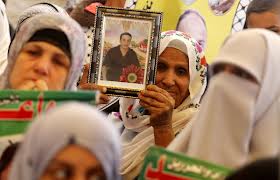
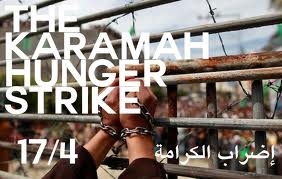
There are many moving passages that can be found in these excerpts from prison diaries and recollections of 22 Palestinians. What is most compelling is how much the material expresses the shared concerns of these prisoners despite great variations in writing style and background. A few keywords dominate the texts: pain, God or Allah, love, dream, homeland, steadfastness, tears, freedom, dream, prayer. My reading of these diaries exposed me to the distinct personal struggles of each prisoner to survive with as much dignity as possible in a dank and poorly lit circumstances of isolation, humiliation, acute hostility on the part of the prison staff, including abusive neglect by the medical personnel. The diaries also confirmed that even prolonged captivity had not diluted the spirit of Palestinian resistance to Israeli occupation, but on the contrary had intensified it.  A strong impression of the overall illegitimacy of Israel’s encroachment on the most fundamental rights of the Palestinian people is also present on virtually every page.

Although not professional writers, the sentiments expressed have a special kind of eloquence arising from their authenticity and passion.  A female prisoner, Sana’a Shihada, on learning that her family had been spared the demolition of their family home, describes the ordeal of her interrogation in a poetic idiom: “..the anger of the interrogators was like snow and peace to me [an Arabic saying that conveys a sense of being ‘soothing’]. I felt the pride of the Palestinians, the glory of Muslims, and the brightness of honesty. I knelt to Allah, thankfully. My tears fell on the floor of the cell, and I am sure they dug a path which those later imprisoned will be able to see.” Or the words of Eyad Obayyat, a prisoner facing three lifetime sentences for his role in killing several Israeli soldiers, “Among us prisoners, the unity of love for our homeland was precious above all other things.” Another, Avina Sarahna, asks poignantly, “Is resisting occupation a crime?…Let me be a witness to the truth, and let me stay here.” Speaking of the pain of being separated from her four children, Kahera Als’adi writes, whom she discovered were living in an orphanage: “I couldn’t keep myself from bursting into tears. Was my loving family scattered like this? Was fate against us because of our love for our homeland?..After that visit, I felt like a slaughtered sheep.” These randomly selected quotations could be multiplied many times over, but hopefully the overall tone and coherent message are conveyed by these few examples.

What I found most valuable about this publication was its success in turning the abstraction of Palestinian prisoners into a series of human stories most of which exhibit agonized feelings of regret resulting from prolonged estrangement from those they most love in the world. Particularly moving were the sorrows expressed by men missing their mothers and daughters. These are the written words of prisoners who have been convicted of various major crimes by Israeli military courts, some of whom face cruel confinement for the remainder of their life on earth, and who have been further punished by being deprived of ever seeing those they love not at all, or on rare occasions, for brief tantalizing visits under dehumanizing conditions, through fogged up separation walls.

It is hard not to treat a prison population as an abstraction that if noticed at all by the outside world is usually reduced to statistics that appear in reports of human rights NGOs. These autobiographical texts, in contrast, force us to commune with these prisoners as fellow human beings, persons like ourselves with loves, lovers, needs, aspirations, hopes, pious dreams, and unrelenting hardships and suffering. There is also reference to the other side of the prison walls. These prisoners show concern for the suffering that imprisonment causes their families, especially young children and elderly parents.  Given the closeness of Palestinian  families it is certain that those who are being held in prison would be terribly missed, especially as their confinement arises because of their engagement in a struggle sacred to virtually every Palestinian. Such humanization of Palestinian prisoners is undoubtedly superfluous for Palestinians living under occupation or in refugee camps where arrests, which resemble state-sanctioned kidnappings are being made daily by Israeli security forces. It is a tragic aspect of the occupation that after 45 years of occupation there is not a Palestinian family that is left untouched by the Israeli criminalization of all forms of resistance, including those that are nonviolent and symbolic.

images-1

We need a wider ethical, legal, and political perspective to grasp properly this phenomenon of Palestinian prisoners. The unlawful occupation policies of Israel are unpunished even when lethal and flagrantly in violation of international humanitarian law, and are rarely even officially criticized in international arenas. In contrast lawful forms of resistance by the Palestinian people are harshly punished, and the resulting victimization of those brave enough to resist is overlooked almost everywhere.  If we side with those who resist, as was done during World War II when those Europeans mounted militant forms of resistance against German occupation and criminal practices, we glorify their deeds and struggle. Yet if the occupier enjoys our primary solidarity we tend to criminalize resistance without any show of empathy. To some extent, this book cuts through this ideological myopia, and lets us experience the torment of these prisoners as human beings rather than as Palestinian ‘soldiers’ in the ongoing struggle against Israel.

images-2

In the past year, heroic Palestinian hunger strikers, initially Khader Adnan and Hana Shalabi, did their best to call attention to the abusive character of Israel’s terrifying violent arrests in the middle of the night followed by imprisonment for lengthy periods without even making charges or holding trials. Israeli recourse to administrative detention takes place even in circumstances where the person being confined was engaged in no activities that could be remotely considered to pose a security threats.  It is notable that despite hunger strikers putting their own lives at severe risk to protest such inhumane behavior by Israel in its role as the occupying power, the world refuses to pay attention even to such hunger strikers, which is somewhat shocking despite decades of lectures to the Palestinians to renounce armed resistance, and engage instead in nonviolent forms of resistance, and if they do so, they will win political support for their grievances even from governments allied with Israel, including the United States. To date the evidence suggests a far uglier pattern: when Palestinians resist by way of armed struggle, their actions are denounced and their grievances are ignored, while when they resist nonviolently, their actions and their grievances are ignored. What is worse, while this shift in Palestinian tactics has taken place in recent years, the Israeli governing process moves steadily to the right until now in March 2013, the latest governing coalition in Tel Aviv is avowedly settler oriented. The international background music has not changed, and Washington loses no opportunity to sound the trumpets while declaring its unconditional and undying loyalty to Israel, pretending not to notice violations of international law and the deliberate efforts to make the two state solution yesterday’s dream, today’s nightmare.

The preoccupation of these prisoners with the fate of the singular Israeli prisoner at the time, Gilad Shalit, was something of a surprise for me, although it is understandable. Why, the Palestinians ask themselves, does the world make such a fuss about a single Israeli being held in Gaza after being captured during a military mission, and ignore the fate of the many thousands of Palestinians detained for year after year because they fought for the freedom of their country? Once considered, such a question is both natural, and once asked, the grotesque display of double standards seems self-evident. But there is also an opposite appreciation of the significance of Shalit expressed, which recognizes that the October 2011 deal struck to release 1,027 Palestinian prisoners would not have happened had Shalit not been captured. In this sense, the Palestinians in recording their feelings realize that their freedom has been made possible because Hamas succeeded in capturing and holding Shalit. This was no small achievement. During the massive attacks by Israel on Gaza in 2008-09, Operation Cast Lead, IDF commanders told their troops that this violence had been unleashed so as to gain the release of Shalit. Had Hamas allowed Shalit to go free or had be been killed in the operation, then there would have been no negotiations for the release of Palestinian prisoners. It is as simple as that. Of course, it is not simple. Many of those released were soon rearrested by Israel, once more undermining even minimal trust between the two peoples, and again showing that Israel can defy legal and moral obligations without facing any adverse consequences, a metaphor for the overall stranglehold of the occupation.

Above all, these texts in almost every page confirm that particularly prized Palestinian collective public/private virtue of sumud or steadfastness. Such exhibitions of courage indirectly shames those of us who suffer far less or not at all, and yet find ourselves discouraged and dispirited by the ills of the world to an extent that we retreat from public engagement to the comfort zones of sanctuaries of escape. These prisoners have no such option, maintaining their commitment to the Palestinian struggle in the darkest of circumstances, consigned to spending their most energetic years behind bars or surrounded by dank prison walls. We can ask ourselves where does such courage come from? There is no definite common answer. Yet what comes across from these diary pages are deep commitments  rooted in love of family and homeland as strengthened by religious faith and practice and sustained by prison camaraderie or in embittered reaction to the dehumanizing atmosphere of enduring prison life year upon year.

We should not forget that there is a callous and manifest unlawfulness about this network of Israeli prisons, all but one of the 19 being located in Israel, in direct violation of Article 76 of the Fourth Geneva Convention governing belligerent occupation: “Protected persons accused of offenses shall be detained in the occupied country, and if convicted they shall serve therein.”  Underlying such a provision of law is a humane impulse: compelling an individual to be imprisoned in the occupying country imposes a geographic separation from family and homeland, which in the Israeli case is accentuated by a permit system that as a practical matter makes family visits from occupied Palestine a virtual impossibility. With respect to prisoners from Gaza, there are virtually no prison visits allowed even if sentences are for several decades or lifetime. As is widely known, the people of Gaza have been subject to a punitive blockade maintained ever since mid-2007 that involves a massive imposition of collective punishment on the civilian population, a crime of war so specified in Article 33 of the Fourth Geneva Convention.

Israel’s cruelty toward Palestinian prisoners is underscored by its recent practice of releasing West Bank hunger strikers at death’s doorstep, then deporting them for a period of years to Gaza, that is, beyond access to their families and normal places of residence, at a moment when their physical condition is so deteriorated that they could not possibly become a security threat and when most in need of nurture and familiar surroundings. Hana Shalabi, who was particularly close to her family, was so deported to Gaza for three years and just days ago. Ayman Sharawneh was similarly deported for ten years as part of a plea bargain. Such shocking practice is worthy of global condemnation. It involves another form of collective punishment inflicted both on the person so confined to Gaza and to his or her family that is not allowed to travel from the West Bank to Gaza. There is a triple  perverseness about this practice of prisoner release: Gaza itself an open-aired prison also serves Israel as a site of punitive internal exile, and makes the distinction between ‘prison’ and ‘freedom’ almost disappear into surreal thin air.  One can only imagine the global protest movement if Hamas had conditioned Gilad Shalit’s release on his confinement in a Salafi controlled region of Egypt!

This pattern of unlawful imprisonment and unjust deportation also interferes with the preparation of adequate defense representation as Palestinian lawyers also experience routine difficulties in obtaining permits and visiting rights. Article 76 also requires that prison conditions for those living under occupation should under no condition be worse than those of Israeli prisoners in Israel, which makes the disallowance and obstruction of family visits for Palestinians unlawful, as well as cruel.

It is increasing evident that international humanitarian law falls short when it comes to offering suitable protection to the Palestinian people who have been living under occupation since 1967, with no end in sight. It is not only occupation, but a continuous process of encroachment that cumulatively has assumed the character of de facto annexation via the massive settlement phenomenon. Under these circumstances, and given the inalienable right of self-determination that belongs to the Palestinian people, there is posed some protection for rights of resistance. These rights need to be exercised in a manner respectful of civilian innocence, but difficult issues of identification are posed in relation to armed and violent Israeli settlers. True, those who act in resistance are not technically prisoners of war, who are protected the Third Geneva Convention, but they are acting to fulfill fundamental rights being violated by those who occupy their land and sit in judgment when they act defensively. What is needed, beyond all doubt, is a code of conduct, if not an additional protocol to the Geneva Conventions, that fills in this gap associated with resistance. Resisters should be treated with the same dignity under international humanitarian law as is associated with Prisoners of War. Their acts, even if violent, are in keeping with prevailing societal and civilizational values, and perpetrators, even when confined for reasonable security reasons, should be treated with appropriate dignity. Unlike sociopathic common murderers, rapists, and the like (and even they should also be treated in accord with international standards), the acts of Palestinian prisoners are viewed as heroic by their own society and political culture, as well as many people throughout the world. They deserve international recognition and protection. Their ‘crimes’ will eventually be vindicated by history as part of a final chapter in the struggle against European colonial rule.

I believe it to be a moral obligation of all of us who care about human rights and freedom to read this book, and share it with others. The Palestinians, whose rights and dignity have been long trampled upon, especially deserve our deepest empathy, as well as our solidarity in their struggle. Reading the words of these prisoners vividly discloses the nature of such a struggle in the form of witnessing by those Palestinians who have put their lives at risk for the sake of recovering their stolen homeland. We also owe a debt of gratitude to Norma Hashim who has edited this collection as a work of devotion and an expression of solidarity with and reflection on the Palestinian struggle. Its publication in book form is timed to coincide with Palestinian Prisoner’s Day, April 17th.

The pdf version of Prison Diaries can be downloaded now for USD1.99 at http://theprisonersdiaries.blogspot.com. The printed book will be available at palestinemall.net from 17 April 2013.

What was Wrong with Obama’s Speech in Jerusalem

24 Mar


            It was master-crafted as an ingratiating speech by the world’s most important leader and the government that has most consistently championed Israel’s cause over the decades. Enthusiastically received by the audience of Israeli youth, and especially by liberal Jews around the world. Despite the venue, President Obama’s words in Jerusalem on March 21st seemed primarily intended to clear the air somewhat in Washington. Obama may now have a slightly better chance to succeed in his second legacy-building presidential term despite a deeply polarized U.S. Congress, and a struggling American economy if assessed from the perspective of workers’ distress rather than on the basis of robust corporate profits. 


            As for the speech itself, it did possess several redeeming features. It did acknowledge that alongside Israeli security concerns “Palestinian people’s right of self-determination, their right to justice must also be recognized.” This affirmation was followed by the strongest assertion of all: “..put yourself in their shoes. Look at the world through their eyes.” To consider the realities of the conflict through Palestinian eyes is to confront the ugly realities of prolonged occupation, annexationist settlement projects, an unlawful separation wall, generations confined to the misery of refugee camps and exile, second-class citizenship in Israel, ethnic cleansing in Jerusalem, and a myriad of regulations that make the daily life of Palestinians a narrative of humiliation and frustration. Of course, Obama did not dare to do this. None of these realities were specified, being left to the imagination of his audience of Israeli youth, but at least the general injunction to see the conflict through the eyes of the other pointed the way toward empathy and reconciliation.


            Obama also encouraged in a helpful way Israeli citizen activism on behalf of a just peace based on two states for two peoples. A bit strangely he urged that “for the moment, put aside the plans and process” by which this goal might be achieved, and “instead..build trust between people.” Is this not an odd bit of advice? It seems a stretch to stress trust when the structures and practice of occupation are for the Palestinians unremittingly cruel, exploitative, and whittle away day after day at the attainability of a viable Palestinian state. But this farfetched entreaty was coupled with a more plausible plea: “I can promise you this: Political leaders will never take risks if the people do not push them to take some risks. You must create the change that you want to see. Ordinary people can accomplish extraordinary things.” There is some genuine hope to be found in these inspirational words, but to what end given the present situation.


            In my opinion the speech was deeply flawed in three fundamental respects:

                        –by speaking only to Israeli youth, and not arranging a parallel talk in Ramallah to Palestinian youth, the role of the United States as ‘dishonest broker’ was brazenly confirmed; it also signaled that the White House was more interested in appealing to the folks in Washington than to those Palestinians trapped in the West Bank and Gaza, an interpretation reinforced by laying a wreath at the grave of Theodor Herzl but refusing to do so at the tomb of Yasir Arafat. This disparity of concern was further exhibited when Obama spoke of the children of Sderot in southern Israel, “the same age as my own daughters, who went to bed at night fearful that a rocket would land in their bedroom simply because of who they are and where they live.” To make such an observation without even mentioning the trauma-laden life of children on the other side of the border in Gaza who have been living for years under conditions of blockade, violent incursions, and total vulnerability year after year is to subscribe fully to the one-sided Israeli narrative as to the insecurity being experienced by the two peoples.


                        –by speaking about the possibility of peace based on the two state consensus, the old ideas, without mentioning developments that have made more and more people skeptical about Israeli intentions is to lend credence to what seems more and more to be a delusionary approach to resolving the conflict. Coupling this with Obama’s perverse injunction to the leaders of the Middle East that seems willfully oblivious to the present set of circumstances makes the whole appeal seem out of touch: “Now’s the time for the Arab world to take steps towards normalizing relations with Israel.” How can now be the time, when just days earlier Benjamin Netanyahu announced the formation of the most right-wing, pro-settler government in the history of Israel, selecting a cabinet that is deeply dedicated to settlement expansion and resistant to the very idea of a genuine Palestinian state? It should never be forgotten that when the Palestinian Liberation Organization announced back in 1988 that it was prepared to make a sustained peace with Israel on the basis of the 1967 borders. By doing this, the Palestinians were making an extraordinary territorial concession that has never been reciprocated, and operationally repudiated by continuous settlement building. The move meant accepting a state limited to 22% of historic Palestine, or less than half of what the UN had proposed in its 1947 partition plan contained in GA Resolution 181, which at the time was seen as grossly unfair to the Palestinians and a plan put forward without taking account of the wishes of the resident population. To expect the Palestinians to be willing now to accept significantly less land than enclosed by these 1967 borders to reach a resolution of the conflict seems highly unreasonable, and probably not sustainable if it should be imprudently accepted by the Palestinian Authority.


                        –by endorsing the formula two states for two peoples was consigning the Palestinian minority in Israel to permanent second-class citizenship without even being worthy of mention as a human rights challenge facing the democratic Israel that Obama was celebrating. As David Bromwich has pointed out [“Tribalism in the Jerusalem speech,”] http://mondoweiss.net/2013/03/tribalism-jerusalem-speech.html Obama was also endorsing a tribalist view of statehood that seem inconsistent with a globalizing world, and with secularist assumptions that a legitimate state should never be exclusivist in either its religious or ethnic character. Obama went out of his to affirm the core Zionist idea of a statist homeland where all Jews can most fully embrace their Jewishness: “Israel is rooted not just in history and tradition, but also in a simple and profound idea: the idea that people deserve to be free in a land of their own.” And with embedded irony no mention was made of the absence of any Palestinian right of return even for those who were coerced into fleeing from homes and villages that had been family residences for countless generations.

            Such a regressive approach to identity and statehood was also by implication attributed to the Palestinians, also affirmed as a a lesser entitlement. But this is highly misleading, a false symmetry. The Palestinians have no guiding ethno-religious ideology that is comparable to Zionism. Their quest has been to recover rights under international law in the lands of their habitual residence, above all, the exercise of their inalienable right of self-determination in such a manner as to roll back the wider claims of settler colonialism that have been so grandiosely integral to the Greater Israel vision and practice of the Netanyahu government. And what of the 20% of the current population of Israel that lives under a legal regime that discriminates against them and almost by definition is a permanent consignment to second-class citizenship. Indeed, Obama’s speech was also an affront to many Israeli post-Zionists and secularists who do not affirm the idea of living under in a hyper-nationalist state with pretensions of religious endowments.


            In my view, there are two conclusions to be drawn. (1) Until the rhetoric of seeing the realities of the situation through Palestinian eyes is matched by a consideration of the specifics, there is created a misleading impression that both sides hold equally the keys to peace, and both being at fault to the same extent for being unwilling to use them.  (2) It is a cruel distraction to urge a resumption of negotiations when Israel clearly lacks the political will to establish a viable and independent sovereign Palestinian state within 1967 borders and in circumstances in which the West Bank has been altered by continuous settlement expansion, settler only roads, the separation wall, and all the signs are suggesting that there is more of the same to come. Making matters even worse, Israel is taking many steps to ensure that Jerusalem never becomes the capital of whatever Palestinian entity eventually emerges, which is a severe affront not only to Palestinians and Arabs, but to the 1.4 billion Muslims the world over.


            In retrospect, worse than speech was the visit itself. Obama should never have undertaken such the visit without an accompanying willingness to treat the Palestinian reality with at least equal dignity to that of the Israeli reality and without some indication of how to imagine a just peace based on two states for two peoples given the outrageous continuing Israeli encroachments on occupied Palestinian territory that give every indication of permanence, not to mention the non-representation and collective punishment of the Gazan population of 1.5 million. Obama made no mention of the wave of recent Palestinian hunger strikes or the degree to which Palestinians have shifted their tactics of resistance away from a reliance on armed struggle.  It is perverse to heap praise on the oppressive occupier, ignore nonviolent tactics of Palestinian resistance and the surge of global solidarity with the Palestinian struggle, and then hypocritically call on both peoples to move forward toward peace by building relations of trust with one another. On what planet has Mr. Obama been living?