Archive | Commentary RSS feed for this section

Reading Jeff Halper’s ‘War Against the People: Israel, the Palestinians and Global Pacification’

7 Apr


[Prefatory Note: The review below was published in the current issue of Journal of the Society for Contemporary Thought and Islamicate World. I am posting it here because I believe that Jeff Halper’s book deserves the widest possible reading. It explains clearly and convincingly one of the deepest and least understood roots of Israel’s diplomatic support throughout the world, which is its role as a niche arms supplier and influential tactical specialist in waging wars against peoples who dare offer resistance to state power as variously deployed against them. The Israeli experience in exerting oppressive control of the Palestinian people provides the foundation of Israel’s international credibility and perceptions of effectiveness in disseminating for economic and political profit its hardware and software associated with managing and suppressing the resistance of popular movements fighting for their rights. The Israel stress on pacification rather than victory exposes the true nature of what Halper identifies so vividly and comprehensively as the distinctive character of waging ‘war against the people.’ ]

Jeff Halper, War Against the People: Israel, the Palestinians and Global Pacification, Pluto Press, 2015, 296 pp., $25.00 US (pbk), ISBN 9780745334301.

Jeff Halper is an unusual hybrid presence on both the scholarly and political scene. He describes himself as an “activist-scholar” (6), which adopts a controversial self-identification. The conventional stance erects a high wall between scholarship and activism. To his credit and for our benefit, Halper excels almost equally in both roles. He is one of the most lucid speakers on the lecture circuit combining clarity with wisdom and a rich fund of information and firsthand experience, and his work as a writer is influential and widely known. His activist credentials have been built up over many years, especially in his work as co-founder and leader of the Israeli Committee Against House Demolitions, which has bravely confronted Israeli demolition crews and IDF soldiers, helped Palestinians on multiple occasions to rebuild their destroyed homes, thereby responding humanely to one of Israel’s cruelest occupation practices, an instance of unlawful collective punishment. Halper has estimated that less than 2% of demolitions can lay claim to a credible security justification (the respected Israeli human rights NGO, B’Tselem, estimates 1.3% of demolitions are justified by security, while the rest are punitive or 621 of 47,000 since 1967). As an author his main prior book makes an unsurprisingly strong pitch for activism as the most reliable foundation for analysis and prescription. His important and incisive title gave the theme away—An Israeli in Palestine: Resisting Dispossession, Redeeming Israel.1 This earlier book remains valuable as testimony by a progressive Zionist in Israel that with good faith Jews and Palestinians might yet learn to live together, including finding a formula for sharing the land.

Halper’s own life experience makes this blend of scholarship and activism particularly compelling. He is an American born Jew who grew up in the Midwest and studied anthropology in Wisconsin, taught at a Quaker university for several years, and then moved to Israel where he married an Israeli and has three grown children. What particularly sets Halper apart from most other principled Jews in the ranks of critics of Israel is the striking combination of the radicalism of his opposition to the policies and practices of the Israeli state together with his evident commitment to remain in Israel no matter how far right the governing process drifts. Most other prominent Jewish critics of Israel have remained outside the country throughout their life (e.g. Noam Chomsky) or were born in Israel and then chose to become expatriate critical voices (e.g. Daniel Levy, Ilan Pappé, Gilad Azmun). There are a few internationally prominent Israeli journalists and cultural figures who have sustained sharply critical commentary (e.g. Gideon Levy, Amira Hass) and kept their Israeli residence despite harassment and threats.

In the book under review Halper broadens his own distinctive identity while enlarging the apertures of perception by which he views the Israeli state. He focuses attention on the Israeli arms industry, security doctrines, and policies, and examines Israel’s acquisition of formidable diplomatic influence grossly disproportionate to its size and capabilities. It is this gap between Israel’s significant impact on current world history and the modest scale of its territorial reality and its outsider status in most global settings that is the core mystery being explicated by Halper. He starts the book with some provocative questions that put the underlying puzzle before us in vivid language: “How does Israel get away with it? In a decidedly post-colonial age, how is Israel able to sustain a half-century occupation over the Palestinians, a people violently displaced in 1948, in the face of almost unanimous international opposition” (1)? He indicates that this phenomenon cannot be adequately “explained by normal international relations” nor by the strength of the Israel lobby in the United States nor by strong Israeli pushback to discredit critics by invoking the Holocaust as an indefinite source of impunity (3). What the book demonstrates very persuasively is that Israeli influence is a result of its extraordinary, partially hidden and understated role as arms supplier to more than 130 countries and as an increasingly significant mentor of national police forces and counter-terrorist operations and practices in many countries, including the United States.

Israel as Arms Merchant and Pacification Ideologue

Without exaggeration, War Against the People, is really three books in one. It is first of all a comprehensive and detailed look at the elaborate Israeli arms industry, including the extensive network of private companies engaged in arms production. Halper explores how Israel managed to become such a valued producer of sophisticated weaponry that so many governments have come to depend upon. Part of Israel’s success in the highly competitive international arms market is to identify and develop niches for itself in the wider global arms market that allows it to compete successfully for market share with companies backed by several of the world’s largest states by supplying specific kinds of weaponry that outperform the alternatives available for purchase. By so serving as an arms merchant to no less than 130 countries gives Israel a powerful unacknowledged source of leverage throughout the entire world. An aspect of Israel’s success is to be apolitical in its operations as an arms supplier, provided only that the foreign government poses no security threat to Israel.

Secondly, the book is a detailed examination of the specific ways that Israel has adapted its security doctrine and practice to the varieties of Palestinian resistance over the decades. The Israeli approach rests on adopting a goal toward internal security that seeks to achieve a tolerable level of “pacification” of the Palestinian population. As such it does not seek to “defeat” the Palestinians, including even Hamas, and is content with keeping violent resistance contained so that Israelis can go about their lives with reasonable security and the economy can prosper. At the same time, the threat of violent resistance never entirely disappears or is absent from the political consciousness and experience of Israeli society, and the fear factor keeps Israelis supportive of oppressive internal policies. Pacification in the face of a potentially very hostile minority Palestinian presence in pre-1967 Israel has presupposed a fusing of Israel’s military, paramilitary, police, and intelligence capabilities, but also a less understood Israeli politics of restraint. The capabilities to sustain pacifications must be continuously updated and adapted to evolving circumstances, including shifts in Palestinian tactics of resistance.

This mental shift from “victory” over the natives to their relentless “pacification” to some extent reflects the ethical orientation of a post-colonial world. In many respects Israel represents a species of settler colonialism, but it takes the form of seeking some kind of imposed accommodation with the native population rather than their extinction or spatial marginalization. Actually, as Israeli politics have moved further and further to the right, the tactics of pacification have become more coercive and brutal, and do seem to push the original dispossession of the nakba toward some kind of “final solution” by way of settlement expansion as likely supplemented at some point by population transfer and by periodic massive military operations of the sort that have occurred in Gaza in 2008-2009, 2012, and 2014. In other words, pacification as conceived in the 1950s has become quite something more ominous for the Palestinians in the twenty-first century as “Palestine” shrinks in size and diminishes in threat while Israel’s territorial ambitions continue to expand and seem to be within reach.

The Israel/Palestine encounter is certainly unique in several of its aspects, yet it bears sufficient similarity to a range of threats facing many governments in the world to allow the Israeli government to serve as an exemplary practitioner of counterinsurgency war/politics. It is precisely the generality of contemporary security challenges situated within society that makes the Israeli experience seem so valuable to others, especially when reinforced by the widespread impression that Israel’s security policies have succeeded in the face of difficult challenges over an extended period. This combination of considerations gives Israel’s weapons, training programs, and security doctrines their global resonance. Especially in the aftermath of the 9/11 attacks, the long-term character of the Israeli experience became a strong credential on the arms market and among strategy-minded think tanks. Israel’s perceived counterinsurgency record has even led other governments to mute or even abandon their criticisms of the manner in which Israel suppresses Palestinians and flaunts international law. In this way, the Israeli network of arms sales arrangements has not only functioned as direct sources of influence and economic benefit to Israel, but also contributed a political payoff by weakening motivations at the UN and elsewhere in the world to exert meaningful pressure on Israel to modify its policies and uphold its obligations under international law. What Halper helps us to understand is this rarely discussed relationship between the arms trade and what might be called an international diplomacy of pacification. In effect, Israel has quietly bought off most of its potentially most dangerous governmental adversaries by making itself an invaluable collaborator in the security domain, which is given priority by every government when it comes to shaping its foreign policy. The reach of this weapons diplomacy is further extended due to Israel’s willingness to do arms deals discreetly with the most repressive of regimes around the world even while at the same time it takes great pains to substantiate the claim that Israel remains the only democracy in the Middle East.

Thirdly, this long experience of coping with Palestinian resistance has given Israel continuing field experience with tactics and weapons useful to subdue a non-state adversary, including convincing demonstrations of what works and what doesn’t. In fundamental respects the work of pacification is never finished, and so Israel continuously modifies its weapons mix to take account of battlefield lessons and technological innovations, and this is of great value to governments that were seeking to choose among several alternatives to meet the requirements of their particular security challenges. Israel can claim both the reliability of its weaponry through their field testing in response to varying conditions and success in adapting to ever changing tactics of Palestinian resistance. No other country has achieved this mastery over the hardware and software of a pacification approach to internal security.

Halper also makes us aware that pacification is what also best explains the hegemonic ambitions of America’s securitizing approach to world order. What Israel has achieved on a small scale, the United States is managing on a large scale. In other words the several hundred American foreign military bases together with navies patrolling all of the world’s oceans, further reinforced by satellite militarization of space for purposes of intelligence and possible attack are the coercive infrastructure of both neoliberal globalization and American global leadership. The objective is to keep those dissatisfied with this established order under sufficient control so that trade, investment, and basic security relations are not deeply disturbed. Part of Halper’s argument is that Israel understands the dynamics of an effective regime of global pacification better than any other country, and has done its best to be useful to the United States and Europe by providing niche support in terms of weaponry (say for border barriers, surveillance, and control) and doctrine (say targeted assassinations by drone strikes and collective blockades).

Matrix of Control

Halper relies upon an illuminating style of conceptualization to develop his basic analysis. For instance, one of his important contributions is to specify global pacification by reference to a “Matrix of Control.” The basic argument of the book is that the most defining “wars” of our times involve using state violence against a mobilized population that mounts threats against the established economic and political order. The matrix of control is the complex interaction of weapons, policies, practices, and ideas that make this project a reality. The paradigmatic case is the Israeli pacification of the Palestinians, which is less than their defeat or annihilation, but something other than sustained warfare; it is doing enough by way of forcible action to punish, terrorize, and suppress without clearly crossing the line drawn by legal prohibitions on mass atrocity and genocide. It is damping down the fires of Palestinian resistance into a smoldering mass of tensions and resentments that every so often bursts into flames, offering pretexts for launching a new campaign of devastation. The pattern of periodic onslaughts against Gaza since 2008 is indicative of the broader policies, with three massive attacks every 2-3 years, what Israeli officials are comfortable describing as “mowing the lawn” (146), which incidentally stimulates a new round of arms sales.

The Israeli matrix of control (143-190) is specified by reference to its various main components, forming an integrated and distinctive form of what Halper describes as “urban warfare” resting on the premise of “domestic securitization,” that is, conceiving of the enemy as mainly operating within the boundaries of the state, ultimately to be contained rather than defeated. Such an integrated approach relies on walls to keep the unwanted from entering, surveillance, fragmenting the population to be controlled, periodic and punitive violent suppression designed to prevent, preempt, and demoralize, and proactive intelligence that seeks to gain access to the inner circles of militant opposition forces. Such a matrix of control both deploys a mixture of traditional counterterrorist measures and the latest innovations in sophisticated technology, including armed robotics, drones, and a variety of overlapping surveillance techniques. The approach relies on a vertical layering of security measures that rests on redundancy to ensure effective control. What is original about this approach is its conscious realization that “victory” over hostile subjugated forces is not an acceptable or realizable policy option, and what works best is a system of permanent control sustained by a mix of coercive and psychological instruments.

Pacifying Palestinians and Pacifying the World

Halper shows how this matrix of control, which developed to enable Israeli settler society to achieve a tolerable level of security with respect to the indigenous Palestinian population, seeks to fulfill an elusive requirement. It maintains security without resorting to genocide or to the kind of destructive forms of mass slaughter that characterized earlier experiences of settler colonialism where the land occupied was cleared of natives. At the same time, it pacifies in a post-colonial era where the power of the colonial master has been effectively challenged throughout the world. It is no longer possible to beat the native population into a condition of passive resignation as had been the case so often during the heyday of the extensive European colonial empires. These two considerations suggest a policy puzzle for the pacifier who must avoid extreme violence and yet depends on a sufficient degree of violence to intimidate a restive population that believes resistance is justified and currently accords with the flow of history.

The Israeli answer in a variety of acknowledged and disguised forms is best understood by reference to the Dahiya Doctrine, which incorporates a logic of disproportionate retaliation (174-176). In effect, for every Israeli killed or home damaged or destroyed, a far greater number of Palestinians will be killed and entire residential neighborhoods destroyed. The Dahiya Docrtine was proclaimed originally to justify the destruction of the Dahiya neighborhood in south Beirut during the Lebanon War of 2006. The people living in densely populated Dahiya were viewed by Israel as supportive of Hezbollah, but it is descriptive of Israeli behavior generally with respect to Palestinian acts of resistance, particularly with respect to Gaza since falling under Hamas’s control. The supposedly centrist Tzipi Livni, the Israeli political leader who served as Foreign Minister during the massive attack on Gaza at the end of 2008, expressed this Israeli way of dealing with Palestinian resistance in Gaza in the following chilling words: “Hamas now understands that when you fire on its [Israel’s] citizens it responds by going wild—and this is a good thing” (quoted in Halper, 175). I would add that “going wild” is a euphemism for rejecting the efforts of international humanitarian law and the just war tradition to constrain the intensity of violence and suffering by insisting on proportional responses. In effect, to reject so overtly this admittedly vague effort of international law to impose limits on the conduct of warfare, Israel is incorporating into the core of its security approach a repudiation of the humanizing ambition of international law, and implicitly claiming the right on its own to use force as it wishes. This is a step back from the extensive attempt during the prior century to put the genie of war, if not back in its bottle, at least to gesture toward that end. With Israel’s concept of securitization, also descriptive of the approach taken by the United States, as well as such other countries as Russia, France, and China, it is arguable that international society has turned the normative clock back to a nihilistic zero.

There is another crucial feature of the matrix of control that is of wider relevance than Israel’s treatment of the Palestinians that Halper associates with “Framing: A Tendentious Definition of ‘Terrorism’” (149-151). This framing idea is to make it appear that “the terrorists” are always those resisting control by the established political order, and never those that are exercising authority however oppressively. As Halper points out, the IDF may kill over 2,000 Palestinians, two-thirds of whom are civilians, in the course of an armed confrontation in Gaza, as opposed to Hamas killing five Israeli civilians, but Hamas will still be depicted as the practitioner of terror and Israel’s violence will be put forward as defensive measures that are reasonable and necessary for the protection of the civilian population of Israel. The Israeli government will describe Palestinian civilian deaths as regrettable collateral damage, while attributing Hamas’s comparatively trivial lethality to a deliberate intention to kill Israeli civilians. The final step in the ideologizing process is to make this construction of the respective intentions of the two sides hinge on the question of deliberate intention, and since Hamas’s rockets are fired in the general direction of civilian populations the intention is declared to be deliberate, while Israel is seeking to destroy militarily relevant personnel and weaponry. This kind of manipulative framing by Israel has been borrowed by the United States and other governments to lend moral authority to the form of disproportionate violence that has characterized counterinsurgency warfare in Iraq and Afghanistan in the post-9/11 era as well as lesser military operations around the world in the course of “the war on terror.”

What Israel has been doing within Palestinian territory it is seeking to control, the United States does globally. The introduction of drone warfare and special ops covert forces into dozens of countries throughout the world is an extension of the matrix of control as perfected by Israel within its limited field of operations. It also reformulates the parameters of permissible violence without regard to the limitations of international law, regarding any point of suspected adversaries throughout the planet as subject to deadly attack, borrowing notions of targeted assassination from the repertoire of Israeli practices. As with Israel, the operative goal of the so-called long war is not victory in the World War II sense, but rather the exercise of a sufficiency of control that is able to establish tolerable levels of security for Western societies and transnational economic activity. It is worth pointing out that as with Israel, the United States is unwilling to pay the costs in reputation and resources that would be required to achieve victory, although in the Iraq occupation as earlier in Vietnam it did seek to do more than pacify but in the end found the costs too high, and abandoned the undertaking.

Halper’s book gives essential insights to a key set of interrelated concerns: the political benefits to Israel arising from its dual role as quality arms supplier and counterinsurgency mentor; the degree to which Israel’s success in managing a hostile Palestinian population as well as a series of dangerous regional threats offers the United States a model for global securitization with a primary objective of preempting threats to the American homeland and safeguarding neoliberal global markets and trade routes from hostile forces; as also noted, the Israeli domestic security apparatus has been influential in the equipping and training of American and other national police forces. Additionally, Isreali technologies and knowhow have been relied upon to monitor borders and to erect barriers against unwanted entry; the advantages of having a seemingly permanent combat zone such as Gaza for field testing weapons and tactics increases the attractiveness of Israel as supplier of choice. This kind of combat zone is real world simulation that has many experimental advantages over the sorts of war games that are used to assess the effectiveness of weapons and tactics. Without incoming rockets from Gaza it would be impossible to reliably test the effectiveness of a defensive system such as the Iron Dome.

Concluding Comments

In the end, Halper answers the question as to why Israel’s seeming international unpopularity based of its long-term suppression of the Palestinian people does not harm its image or status. Israel manages to get away with its abusive human rights record while a more powerful and populous country such as apartheid South Africa was sanctioned and censured repeatedly. Of course, U.S. geopolitical muscle is part of the answer, but what Halper adds to our understanding in an insightful and factually supported manner is an appreciation of Israel’s extraordinary usefulness as arms supplier and counterinsurgency guru. A further implication of Israeli usefulness is a realization that governments give much more weight to relationships that bolster their security capabilities than they do to matters of international morality and law. Given these realities, it remains clear that the Palestinian national movement will have to wage its struggle on its own with principal support coming from civil society. Israel, it must be acknowledged has substantially neutralized both the UN and the foreign policy of most important countries, although public opinion around the world is moving in directions that could exert mounting pressure on Israel in the years to come.

As the title of Halper’s book suggests, what is transpiring worldwide, and is epitomized by the Israeli response to Palestinian opposition, can be best understood as part of a wider shift in the nature of global conflict in the post-Cold War period. Instead of most attention being given by security bureaucracies to rivalries and warfare among leading states, the most salient, dangerous, and cruelest conflicts are between state and society, or wars waged against people. There are no significant international wars between two or more states taking place now, while at least 30 internal wars are raging in different parts of the world. To be sure there have been a series of military interventions as part of the global pacification project under the direction of the United States and proxy wars in the Middle East in which major states intervene on opposite sides of a civil war. Yet whether we think of Syria as the paradigm of twenty-first century warfare or the Israeli matrix of control, it is “the people,” or a mobilized segment, that is being victimized. Halper’s book does the best job so far of depicting this new cartography of warfare, and deserves to be widely read and its main theses debated.


Three Unshakeable Pillars of American Foreign Policy

3 Apr


It deserves to be noticed that it is only the two anti-establishment candidates who have challenged the foreign policy consensus that has guided American politicians ever since the end of World War II: consistently express unconditional support for the Pentagon, Wall Street, and Israel (especially since the 1967 War).


Bernie Sanders has been the first serious presidential aspirant for several decades to challenge directly and unabashedly at least one of these pillars by way of his principled and concerted attacks on Wall Street, on the billionaire class, on the exploitative 1%. Although moderate overall, Sanders has been respectfully deferential to the other two pillars, Pentagon and Israel. Because he has mobilized an intense following among all categories of American youth there has been a media reluctance to assault his substantive views frontally, except to offer a variety of snide remarks that cast doubt on his ‘electability.’


Such a dismissal pretends to be pragmatic, but the polls indicate that Sanders would do better against likely Republicans than Clinton. This leads me to interpret the refusal of the corporatized mainstream to take Sanders seriously, at least so far, as a coded ideological attack, basically a reaction to his anti-Wall Street stand that can be viewed as the opening salvo of class warfare.


Donald Trump has encountered a somewhat different firestorm but with a similar intent. At first, when the cognoscenti dismissed him as a serious candidate, he was welcomed as a source of entertainment. When his popularity with primary voters could no longer be overlooked, he was challenged by a steady flow of condescending rebukes that question his competence to govern (rather than his electability) or to be a commander in chief. Again his cardinal sin, in my judgment, is not the extraordinary mobilization of a proto-fascist populism that relishes his anti-Muslim immigration stand, his xenophobic call for a high wall on the Mexican border paid for by Mexico, and his proposed revival of torture as a necessary instrument of anti-terrorism. Most hard core Trump supporters have been long hiding out in a closet until The Donald stepped forward with aplomb and a strident willingness to be politically incorrect. As with Sanders, but seemingly more capriciously and less convincingly, Trump has agitated the guardians of all three pillars, unlike Sanders with a programmatic assault, but more obliquely with provocative comments here and there. He manages to convey, although by way of his many off hand and unrehearsed asides, a heretical state of mind with respect to the received wisdom that has been guiding the country since World War II regardless of which party’s president sits in the oval office.


Of the Pentagon, his heretical views seem spontaneous challenges to settled policies. Trump appears to look with some indifference, if not outright approval, at the prospect for further proliferation of nuclear weapons, specifically in relation to Japan and South Korea. Such a comment is regarded as imprudent even if never meant to be acted upon as it makes the so-called ‘nuclear umbrella’ seem leaky to those accustomed to its protection, and more importantly, casts some doubt on American global commitments around the world.


Similarly, casting doubt on the role of NATO in a post-Cold War world, asking for the Europeans to pay more, is seen by the Beltway wonks, as both an unacceptable public rebuke to allies and an even more unacceptable failure to take seriously the threat being posed by a newly belligerent Russia that flexed its muscles in the Ukraine, and then Syria. Trump’s skeptical attitude toward NATO was particularly resented as it seemed insensitive to the bellicose slide toward a new cold war that had been gathering bipartisan momentum in Washington.


Beyond this, Trump showed little appreciation of the way the Pentagon community views the war on terror. Although war planners likely welcomed the Trump promise to rebuild America’s armed forces so as overcome their alleged decline during the Obama presidency. What bothered the Washington policy community was Trump’s skepticism about such mainstays of American foreign policy as military intervention and regime-changing missions. At one heretical high point Trump even hinted that it would be a good idea to divert Pentagon dollars into infrastructure investment here in America. Annoyed listeners among the guardians might have detected in such a sweeping assertion a disguised, if confused, nostalgia for a revival of American isolationism.


Of the Wall Street pillar, Trump is perhaps more seriously worrisome, although not at all in the Sanders’ mode. Trump trashes the international trading regime that has been such an article of faith at the core of ‘the Washington consensus’ that gave substance and direction to neoliberal globalization in the latter stages of the prior century. His views of the world economy clearly favor the nationalist sort of protectionism that is widely held responsible for the Great Depression. Beyond this, Trump seems intent on challenging the terms of trade with China in ways that could expose a disastrous American vulnerability to Chinese countermeasures, especially given their enormous dollar holdings. Although the foreign policy approach to China endorsed by the guardians is ready, if not eager, to confront China on the island disputes in the South China Sea, it does not want to disrupt the enormous economic benefits and continuing potential of orderly relations with the Chinese market. From this perspective, Trump’s aggressive deal-making approach to global economic policy is viewed as highly dangerous.


Trump has even made the Israeli pillar quiver ever so slightly by suggesting at one point that he favored neutrality in approaching the relations between Israel and Palestine. He sought to override this unwelcome and uncharacteristic display of judiciousness, by making a fawning speech at the AIPAC annual conference. Yet Trump’s willingness to follow the intimations of his gut must have probably made ardent Israeli advocates yearn for the likes of Clinton and Cruz who have mortgaged what’s left of their soul on the altar of subservience to the lordship of Netanyahu and his extremist cohorts.


The candidates who pass the litmus test associated with the three pillars approach are clearly Clinton and Kasich, with Ryan on the sidelines waiting to be called if gridlock ensues at the Republican Convention. Cruz would also be treated as an outlier if it were not for Trump preempting him by this assault on the three pillars. Cruz is hardly the kind of candidate that the guardians prefer. His evangelical religiosity is outside the political box, as is his imprudent stance toward engaging international adversaries, crushing enemies, patrolling Muslim communities, and endorsements of waterboarding. It is not the sort of image of America that the guardians wish to convey to the rest of the world.


Sanders is grudgingly admired for his authenticity, but grounded politically for assailing Wall Street and cruel capitalism in ways that threaten the established economic order (universal health care, free public university tuition) with initiatives popular with many voters.


For months the guardians assumed that Trump would self-destruct but instead he kept dominating the field of presidential hopefuls among the Republican ranks. Unlike the Clinton control of the Democratic Party machine, the Republican Party bureaucracy has been ineffectual in stemming the Trump tide. For this reason media and establishment reinforcements were called upon, and even President Obama joined the chorus of Trump detractors, not because he overtly opposed to the activation of fascist populism but to relieve pressures on the three pillars consensus.


The voters in Wisconsin and elsewhere still have an opportunity to push back. If Sanders should win by double digits on Tuesday, it will create a quandary for the guardians. To have to depend on Clinton’s support among the super delegates for the nomination would be such an anti-democratic rebuff of the Sanders’ constituency that not even Sanders could effectively control the backlash. Many of the Sanders’ faithful would sit out the election no matter what their leader urged, rejecting the lesser of evils plea.


If Trump should prevail, even narrowly, it looks as though the Republicans will find themselves swallowing hard while being forced to select a candidate unacceptable to themselves. Such an outcome would also probably mean kissing goodbye to any hope of regaining the White House, leading the main party effort to be directed at holding on to control of Congress.


Actually, this primary campaign reveals a dismal underlying situation: in a healthy democracy all three pillars should long ago have been shaken at least as hard as Sanders is currently challenging Wall Street. This benevolent challenge mounted by Sanders is a sign that America may be finally getting ready for a genuinely revolutionary challenge, although the grassroots strength of the Trump legions creates the menacing alternative possibility of a fascist counterrevolution. Such radical options are at this point no more than remote possibilities. The persisting probability is more of the same, most likely under Democratic Party auspices. In this respect, the three pillars seem secure in their dysfunction for the foreseeable future. We who lament this can only wish that this dysfunction does not achieve political maturity in the form of global catastrophe.


I have not dwelled on the lesser of evils argument that makes Clinton seem a vastly preferable alternative to a wannabe reactionary like Trump or Cruz. Even if we fear Clinton’s warmongering past, we could at least expect better judicial appointments, more positive initiatives on health care and women’s rights, and more informed and balanced assessment of foreign economic policy. Whether this is enough to overcome our distaste for Clinton’s wanton opportunism and instinctive militarism, is something every citizen will have to ponder on her own if the choice comes down to this next November.                            

Reflections on the Brussels Attack

26 Mar


[Prefatory Note: A much abbreviated version of this post was published in Al Jazeera English on March 24, 2016. Although the essential analysis is the same, the reasoning here is greatly elaborated. The themes addressed and the policies proposed are advanced in a tentative spirit. Debate and reflection are urgently needed with respect to the political violence that is being unleashed in various forms in the West and non-West.]


This latest terrorist outrage for which ISIS claimed responsibility exhibits the new face of 21st century warfare for which there are no front

lines, no path to military victory, and acute civilian vulnerability. As such, it represents a radical challenge to our traditional understanding of warfare, and unless responses are shaped by these realities, it could drive Western democracies step by step into an enthused political embrace and revived actuality of fascist politics. Already the virulence of the fascist virus dormant in every body politic in the West has disclosed its potency in the surprisingly robust Trump/Cruz run to become the Republican candidate in the next American presidential election.


Perhaps, the most important dimension of this 21st century pattern of warfare, especially as it is playing out in the Middle East, is the will and capacity of violent extremists to extend the battlefield to those perceived to be their enemies, and to rely on acutely alienated Europeans and North Americans to undertake the suicidal bloody tasks. The British Independent struck the right note in its commentary, almost alone among media commentary that went beyond condolences, denunciations, and statements of resolve to defeat and destroy ISIS. It included a quote from the ISIS statement claiming responsibility for the Brussels attack: : ‘Let France and all nations following its path know that they will continue to be at the top of the target list for the Islamic State and that the scent of death will not leave their nostrils as long as they partake part in the crusader campaign … [with] their strikes against Muslims in the lands of the Caliphate with their jets.’ … ISIS also released an undated video today threatening to attack France if it continued intervention in Iraq and Syria. ‘As long as you keep bombing you will not live in peace. You will even fear traveling to the market,’ said one of the militants, identified as ‘Abu Maryam the Frenchman.'” It follows this statement with the report that there have been 11,111 air strikes launched by Western and Gulf states against targets in Syria and Iraq, causing massive casualties, human displacement, and great devastation, especially in areas controlled by ISIS. Evidently, given the Belgian attack, for ISIS European unity if accepted as a given, making France as a

locater of an epicenter, but Europe as a whole as circumscribing one crucial combat zone


Noticing this reality is not meant to diminish or offer a rationalization for the barbarism involved in the Brussels attacks, as well as the earlier Paris attacks, but it does make clear that intervening in the Middle East, and conceivably elsewhere in the Global South, no longer ensures that the intervening societies will remain outside the combat zone and continue to enjoy what might be called ‘battlefield impunity.’ By and large the sustained violence of the major anti-colonial wars, even the long Vietnam War, were confined to the colonized society, at most affecting its geographic neighbors. In the 1970s and 1980s there were sporadic signs of such a tactical shift: the IRA extended their struggle in Northern Ireland to Britain, and the PLO via airplane hijacking, Libyan explosions in a German disco frequented by American soldiers, and the PLO Munich attack on Israeli Olympic athletes also prefigured efforts to strike back at foreign hostile sources believed to be responsible for the failure to achieve political goals. ISIS seems more sophisticated in the execution of such operations, has the advantages of home grown adherents willing to engage in suicide missions that is often accompanied by a religious motivation that validates the most extremist disregard of civilian innocence.


As in any armed confrontation, it is essential to take account of innovative features and opt for policies that seem to offer the most hope of success. So far the public Western responses have failed to appreciate what is the true novelty and challenge associated with the adoption by ISIS of these tactics involving mega-terrorism in the homeland of their Western adversaries as asymmetric ways of extending the battlefield.


The Attack


The attacks of March 22 in Belgium occurred in the departure area of the international airport located in the town of Zaventem, seven miles from Brussels and in the Maelbeek metro station in the heart of the city, nearby the headquarters of European Union. Reports indicate over 30 persons were killed and as many as 250 wounded. The timing of the attack made the motivation at first seem like revenge for the capture a few days earlier in Brussels of Salah Abdelslam, the accused mastermind of the Paris attack of November 13, 2015. It hardly matters whether this line of interpretation is accurate or not. It is known for sure that there are clear links between the Paris events and what took place in Brussels, and the scale of the operation depended on weeks, if not months, of planning and preparation.


The essence of the event is one more deeply distressing challenge to the maintenance of domestic public order in democratic space as the conflict that becomes ever more horrible, with ominous overtones for the future of human security in urban environments throughout the world. The hysterical surge of xenophobia is one expression of fear and hate as American politicians debate closing off national access to all Muslims and Europeans pay a large ransom Turkey to confine Syrian refugees within their borders. We are not supposed to notice that recent terrorist acts are mainly the work of those living, and often born, within the society closing its doors to outsiders, moves likely to deepen the angry alienation of those insiders whose ethnic and religious identity makes them targets of suspicion and discrimination.


So far, the official statements of the political leaders have adhered to familiar anti-terrorist lines, disclosing little indication of an understanding of the distinctive realities of the events and how best to cope with the various challenges being posed. For instance, the Prime Minister of Belgium described the attacks as “blind, violent, cowardly,” and added a Belgian promise of the resolve needed to defeat ISIS and the threat it poses. François Hollande of France, never missing an opportunity to utter the obvious irrelevance, simply vowed “to relentlessly fight terrorism, both internationally and internally.” And using the occasion for the recovery of European unity so visibly weakened by the recent dangerous tensions generated in bitter conflicts over fiscal policy and the search for a common policy on migrants, Hollande added, “Through the Brussels attack, it is the whole of Europe that is hit.” Whether such appeals to unity will lead anywhere beyond flags lowered and empathetic rhetoric seems doubtful. What should be evident now is that it that not only Europe that is under constant threat, and understandably troubled by the prospect of future attacks, worrying aloud about such menacing relatively soft targets as nuclear power plants. It is virtually the entire world that has become vulnerable to violent disruption from these contradictory sources of intervention and terrorism.


President Obama offered sensitive condolences to the bereaved families of the victims and expressed solidarity with Europe on the basis of “our shared commitment to defeat the scourge of terrorism.” Again it is disappointing that there is not more understanding displayed that this is a kind of war in which the violence on both sides profoundly violates the security and sovereignty of the other. Until this awareness emerges, we will continue to expect that ‘legitimate violence’ is properly limited to the territories of non-Western societies as it was in the colonial era, and insist that retaliatory strikes constitute terrorism, that is, ‘illegitimate violence.’

What is so far missing from these responses is both a conceptual sensitivity to the originality and nature of the threat and a related willingness to engage in the kind of minimal self-scrutiny that is responsive to the ISIS statement that appears to express its motivation. It is not a matter of giving credence to such a rationalization for criminality, but rather finding out how best to realize what might be described as ‘enlightened self-interest’ in view of the disturbing surrounding circumstances, which might well begin with a review of the compatibility of domestic racism and interventionary diplomacy with the ethics, law, and values of this post-colonial era.


From this perspective the iconic conservative magazine, The Economist, does far better than political leaders by at least emphasizing nonviolent steps that can be taken to improve preventive law enforcement. The magazine points out that the significance of the Brussels attack should be interpreted from a crucial policy perspective: the current limitations of national intelligence services to take preventive action that would alone protect society by identifying and removing threats in advance. The Economist correctly stresses that it has become more important than ever to maximize international efforts to share all intelligence pertaining to the activities of violent extremists, although it too avoids a consideration of root causes that can alone restore normalcy and achieve human security.


This shift from reactive to preventive approaches to defending the domestic social order represents a fundamental reorientation toward the nature of security threats, and how to minimize their escalating lethality. There are three novel aspects of this type of postmodern warfare: striking fear into the whole of society; creating a huge opening for repressive and irresponsible demagogues in targeted societies; and mindlessly unleashing excessive amounts of reactive force in distant countries that tends to spread the virus of violent extremism throughout the planet more than it eradicates it. As has been widely observed, there is no way to know whether drones and air strikes kill more dangerous adversaries than have the effect of actually expanding the ranks of the terrorists by way of alienation and increased recruitment.


It is not yet sufficiently appreciated that the state terror spread by drones and missiles extends to the entire civilian society of a city or even country under attack, making it extremely misleading to treat the lethal impact as properly measured by counting the dead. People living in targeted communities or states all live in dread once a missile from afar has struck, an anxiety aggravated by the realization that those targeted have no way to strike back. The United States reliance on drone warfare in Asia, the Middle East, and Africa has recklessly set a precedent that future generations in the West and elsewhere may come to regret deeply. Unlike nuclear weaponry, there is no likely equivalent for drones to a regime of non-proliferation and there is nothing similar to the doctrine of deterrence to discourage use, and even these instruments of nuclear management, although successful in avoiding the worst, are far from acceptable.


This New War


These deeper overlooked aspects of the Brussels attack that need to be grasped with humility, and responded to by summoning the moral and political imagination to identify what works and what fails in this new era that places such a high priority on atrocity prevention as an explanation of the most widespread, growing, and intense forms of human insecurity.


First, and most significantly, this is an encounter between two sides that ignores boundaries, is not properly equated with traditional warfare between states, and is being waged by new types of hybrid political actors. On one side is a confusing combination of transnational networks of Islamic extremists and in one instance (ISIS) a self-proclaimed territorial caliphate retaliating against the most sensitive civilian targets in the West, thereby adopting a doctrine that explicitly proclaims a strategy exalting crimes against humanity. On the other side, is a coalition of states led by the United States, which has foreign bases and navies spread around the world that seeks to destroy ISIS and kindred jihadists wherever they are found with scant regard for the sovereignty of foreign countries. The United States has long ceased to be a normal state defined by territorial borders, and for more than half a century has acted as ‘a global state’ whose writ the entirety of land, sea, and air of the planet.


Secondly, it is crucial to acknowledge that Western drones and paramilitary special forces operating in more than a hundred states is an inherently imprecise and often indiscriminate form of state violence that spreads its own versions of terror among civilian populations in various countries in the Middle East, Asia and Africa. It is time to admit that civilians in the West and the Global South are both victims of terror in this kind of warfare, which will continue to fuel the kind of mutual hatred and fervent self-righteousness toward the enemy that offers a frightening pretext for what now seems destined to be a condition of perpetual war.


What has totally changed, and is beginning to traumatize the West, is the retaliatory capacities and strategy of these non-Western, non-state and quasi-state adversaries. The colonial, and even post-colonial patterns of intervention were all one-sided with the combat zone reliably confined to the distant other, thereby avoiding any threat to the security and serenity of Western societies. Now that the violence is reciprocal, if asymmetrical (that is, each side employs tactics corresponding to its technological and imaginative capabilities) the balance of forces has fundamentally changed, and so must our thinking and acting, if we are to break the circle of violence and ever again live in secure peace. The stakes are high. Either break with obsolete conceptions of warfare or discover a diplomacy that can accommodate the rough and tumble of the 21st century.


Whether a creative and covert diplomacy can emerge from this tangled web that somehow exchanges an end terrorism from above for an end to terrorism from below is the haunting question that hangs over the human future. If this radical conceptual leap is to be made, it is not likely to result from the initiative of government bureaucracies, but rather from intense pressures mounted by the beleaguered peoples of the world.


Part of what is required, strangely enough given the borderless compulsion of the digital age and the dynamics of economic globalization, is a return to the security structures of the Westphalian framework of territorial sovereign states. Perhaps, these structures never actually prevailed in the past, given the maneuvers of geopolitical actors and the hierarchical relations of colonial systems and regional empires, but their ideal was the shared constitutional basis of world order. With the advent of the global battlefield this ideal must now become the existential foundation of relations among states, stressing the inviolability of norms of non-intervention in a new territorially based global security system. This will not overnight solve the problem, and certainly only indirectly overcomes the internal challenges posed by alienated minorities.


Obviously, this recommended approach could adversely affect the international protection of human rights and weaken global procedures of sanctuary for those displaced by civil strife, impoverishment, and climate change. These issues deserve concerted attention, but the immediate priority is the restoration of minimum order without which no consensual and normatively acceptable political order can persist. And this can only happen, if at all, by de facto or de jure arrangements that renounce all forms of terror, whether the work of states or radical movements.


Two Ways of Looking at the Race for the American Presidency

12 Mar

[Prefatory Note: This is a rewritten and partially modified version of what posted to hastily yesterday.]


#1: as an incredibly dumbing down of the political process, turning the presidential campaigns for the nomination as heavily financed shadow shows, hiding special interests and money management, all about selling the candidate by boast and bluster;


#2: as pre-revolutionary ferment, mobilizing the young, and confronting the established order, finally, with non-establishment choices between the radical right of Trump & Cruz and the moderate social democratic left of Sanders.


This tedious struggle for political prominence and historical name recognition is being played out against a backdrop of the three pillars of America’s global role: the Pentagon, Wall Street, and Israel. No candidate has managed to shake the pillars, although this time around Sanders has at least launched a genuine attack on the Wall Street pillar, and Trump has gestured toward what might turn out to be a mild push against the Israel pillar. This alone makes Sanders and Trump the first outsiders to compete seriously for a mainstream run at the White House. Of course, since Sanders has done so much better than expected, Clinton has taken to making some noises as if she too is ready to take on Wall Street, but as the unreleased transcripts of her mercenary talks at Goldman, Sachs undoubtedly confirm, no one think she means it, and she doesn’t; this is her way of harmlessly sparring with the man from Vermont until she locks up the machine-driven nomination, and then we might get a hint of the real Hilary, that is, unless she worries about alienating the Sanders’ supporters when election time comes in November.

 Torquemada

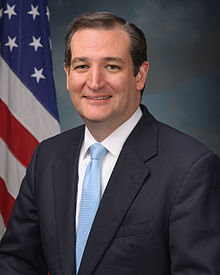
When we look at the candidates from a Hollywood central casting point of view, we have to wonder who is running the show, especially on the Republican side. Senator Ted Cruz appears to be a credible reincarnation of Tomás de Torquemada, Grand Inquisitor of Spain (1484-1498), grimly ready to deal harshly with the infidels whether within the country or without. Like Torquemada he is sincere, personally austere, and reflective of God’s will. He also seems to have an incidental fondness for ‘carpet bombing,’ and all out war with ‘the enemies’ of the United States wherever they might be in the world, and looks to Netanyahu as the sort of leader he would like to be.

Ted_Cruz,_official_portrait,_113th_Congress 

Then there is Marco Rubio snapping at the Cruz and Trump heals as if a scrappy dog seeking an evening meal. Rubio reminds one of a high school debating champion, articulate and self-assured, yet so lacking in political gravitas as to be irrelevant.

 And I almost forgot John Kasich that redoubtable former governor of Ohio who repeatedly tells his audience in a conversational monotone that he has already solved all of America’s problems in microcosm while he brilliantly managed the public life of Ohio from the state capital in Columbus. He pledges to do the same for America as a whole once in Washington, and puts himself forward as the only candidate with the right experience and track record to take up residence in the White House. It is not surprising that there is a tendency to forget Kasich as he has so far managed to stay on board the train only because he has become the default candidate of that endangered species, ‘moderate Republicans.’

 Trump 2Trump

Then there is Donald Trump who, whatever else, is hardly in danger of being forgotten. He is leading the pack into some wild terrain of which he seems only dimly aware. Trump’s idea of how to do international politics boils down to hard driving real estate deal making backed by an larger, all powerful military machine and tax breaks for American multinationals. Without exhibiting much command of the political domain Trump offers some mildly encouraging, even sensible, takeaways that are almost lost in the bigoted noise—his skepticism about regime-changing interventions, opposition to neoliberal international trade agreements, and even casting a smidgeon of doubt on the special relationship with Israel. Of course, it is not these sensible asides but the Trump thunder that excites his followers and energizes his crowds. He wins his mass following by demonizing Muslims and Latinos, promising to end all Muslim immigration, deport 11 million illegals, and build that high wall along the Mexican border, and then send the bill to the Mexican Government, and, get this, restore American military might. His reputation for repudiating what liberals espouse as ‘politically correct’ earns him a reputation for talking right-wing nonsense to power, and being perceived by his followers as deliciously politically incorrect. The Trump appeal is based totally on the politics of emotion, tapping into resentments, prejudices, and racism, unleashing a venomous tide of proto-fascist activism that should be, but isn’t yet, scaring Americans as much as it seems to be frightening and startling the rest of the world.

 th

The Democrats seem to be doing a little bit better, but only in comparison to the current crop of Republican alternatives.Hilary Clinton, running needlessly scared as frontrunner, seems to have that ‘deer in the headlights’ look every time her ‘core beliefs’ are probed or challenged. The unclassified, yet disclosed, truth, is that she doesn’t seem to have any, or at least not yet. Or maybe she had, but lost track, and now can’t find them or lost them along the way or will rediscover them if necessary. Ever an ambitious opportunist par excellence, it seems that her least laundered credential is her steadfast realization that the three pillars are absolutes in American politics, maybe better represented as ‘sacred cows.’


Hence, Hilary is fully credible when promising to improve upon current U.S. relations with Israel and can be trusted never to let down either the Pentagon or Wall Street, or to go wobbly when given the opportunity to champion a new military intervention. What more could the Democratic Party establishment want from a candidate, and this is the point that has seemed to resonate so strongly with the so-called superdelegates (elected officials and party luminaries who can vote for whomever they wish, neither being selected by voters or pledged to a particular candidate) who mostly stand shoulder to shoulder with Clinton and virtually extinguish the slight hopes of Sanders however many Michigan style upsets he manages to pull off.


And then there is Bernie Sanders, as genuine a proponent of a decent American society as the political system has produced since FDR, and maybe more so, but he only knows how to carry melodies with only a single note, and while it is a high note, pushing hard against the Wall Street pillar, it exhibits too narrow a grasp of the American political challenge to make him qualified to lead the first global state in human history. His views on the other two pillars seem unthreatening to the mainstream, he goes along, perhaps reluctantly at the margins, seeming to accept the defense budget except some quibbles, as well as existing alliances and alignments, and raises no awkward questions about continuing unconditional support for Israel. Of course, shackling Wall Street while universalizing health care and providing free public education at college levels would give the country a vital breath of free air, but given the U.S. global role, it is not enough to validate the claim of delivering ‘a social revolution.’


Let’s ask where all of this leads? The probable short term result is probably Trump versus Clinton, with either Trump navigating the ship of state through turbulent waters fraught with danger and unpredictability or Clinton sailing full speed ahead as if Barack Obama was still serving as the real president, but somehow has grown more macho in the process of aging. Either outcome is, of course, problematic. If Trump, the beast of fascism slouches ever closer to Washington; if Clinton, the gods of war will be dancing through the night.


There are a few silver linings that may be merely wishful thinking. It is possible that the Republican Party will implode, or reemerge for what it is becoming in any event, that is, the party of discontent and revenge, shedding its pedigree as the sedate sanctuary of privilege and big business. For the Democrats, the Sanders defeat might give birth to a break with party politics on the part of its young and progressive contingent, who leave discontented, adopting an anti-three pillars agenda that expands upon what Bernie so resolutely initiated. It is this possibility that seems plausible given the extraordinary strength of Sanders’ support among voters 18-25 who will be bound to feel more bitterly frustrated than ever by the dynamics of ‘normal politics.’ The country can again become hopeful about the future if such a progressive vision of a better America prevails among the young and is sustained by a strong consensus giving rise to a militant nonviolent movement for drastic change at home and abroad.

Of course, I may be wrong, my imagination remains trapped in what now seems most likely. It is possible that Trump will be stopped and Sanders will prevail, or that some kind of third party will be insinuated in the political process to save the established order from shipwreck. If it happens, then the  shape of the future will be different from what is conjectured here, but I doubt that I will have to eat many of these words. 

At another level, the political soap opera that seems to be entrancing the American people at present can be seen as an epic battle between ‘the politics of emotion’ (Trump), ‘the politics of sentiment and values’ (Sanders), and ‘the politics of reason and knowledge’ (as variously represented by Clinton, Cruz, Kasich, and Rubio). 


Why Democratic Party Foreign Policy Fails and Will Continue to Fail

5 Mar


[Prefatory Note: An earlier version of this essay appeared on March 2, 2016 in The Progressive Magazine. It tries to explain the entrapment of liberal Democrats in an iron cage of militarism when it comes to international security policy. The explanation points in two directions: the militarized bureaucracy at home and the three pillars of credibility constraining elected political leaders—unquestioning support for high Pentagon budgets, opposition to stiff regulation of Wall Street abuses, and any expression of doubts about unconditional support of Israel.]


Why Democratic Party Foreign Policy Fails and Will Continue to Fail

For six years (2008-2014) I acted as UN Special Rapporteur for Occupied Palestine, and found myself routinely and personally attacked by the top UN diplomats representing the U.S. Government. Of course, I knew that America was in Israel’s corner no matter what the issue happened to be, whether complying with a near unanimous set findings by the World Court in the Hague or a report detailing Israeli crimes committed in the course of its periodic unlawful attacks on Gaza. Actually, the vitriol was greater from such prominent Democratic liberals as Susan Rice or Samantha Power than from the Republican neocon stalwart John Bolton who was the lamentable U.S. ambassador at the UN when I was appointed. I mention this personal background only because it seems so disappointingly emblematic of the failure of the Democratic Party to walk the walk of its rule of law and human rights talk.


From the moment Barack Obama stepped into the Oval Office he never tired of telling the country, indeed the world that we as a nation were different because we adhered to the rule of law and acted in accord with our values in foreign policy. But when it came down to concrete cases, ranging from drone warfare to the increasingly damaging special relationships with Israel and Saudi Arabia, the policies pursued seemed almost as congenial to a Kissinger realist as to an Obama visionary liberal. Of course, recently the Republicans from the comfort zone of oppositional irresponsibility chide the government led by a Democrat for its wimpy approach whether in response to Russia’s involvement in the Ukraine, China’s moves in the Pacific, and especially the emergence of ISIS. The Republicans out of office want more bombs and more wars in more places, and seem content to risk a slide into a Second Cold War however menacing such a reality would undoubtedly turn out to be.


How are we to explain this inability of Democrats to follow through on a foreign policy that is linked to law and ethics, as well as to show respect for the authority of the UN, World Court, Human Rights Council, and above all, the UN Charter? Such a question can be partly answered by noticing the gap between Obama the national campaigner and Obama the elected president expected to govern in the face of a hostile and reaction Congress and a corporatized media. In effect, it is the government bureaucracy and the special interest groups especially those linked to Wall Street, the Pentagon, guns, and Israel that call the shots in Washington, and it is expected that a politician once elected will forget the wellbeing of the American people as a whole on most issues, and especially with respect to controversial foreign policy positions, if he or she hopes to remain a credible public figure. The boundaries of credibility are monitored and disciplined by the mainstream media, as interpreted to reflect the interests of the militarized and intelligence sectors of the government and the economy.


Obama’s disappointing record is instructive because he initially made some gestures toward an innovative and independent approach. In early 2009 he went to Prague to announce a commitment to work toward a world without nuclear weapons, but there was no tangible steps taken toward implementation, and he kept quiet to the extent that his hopes were shattered. He will finish his presidency no nearer that goal than when he was elected, and in a backward move he has even committed the country to modernizing the existing arsenal of nuclear weapons at the hefty cost of $30 billion. The only reasonable conclusion is that the nuclear weapons establishment won out, and security policy of not only this country, but the world and future generations, remains subject to nuclearism, and what this implies about our unnecessarily precarious fate as a species.


Obama gave a second visionary speech in Cairo a few months later in which he promised a new openness to the Islamic world, and seemed to acknowledge that the Palestinians had suffered long enough and deserved an independent state and further, that it was reasonable to expect Israel to suspend unlawful settlement expansion to generate a positive negotiating atmosphere. When the Israel lobby responded by flexing its muscles and the Netanyahu leadership in Israel made it clear that they were in charge of the American approach to ‘the peace process,’ Obama sheepishly backed off, and what followed is a dismal story of collapsed diplomacy, accelerated Israeli settlement expansion, and renewed Palestinian despair and violent resistance. The result is to leave the prospect of a sustainable peace more distant than ever. It was clear that Zionist forces are able to mount such strong pressure in Congress, the media, and Beltway think tanks that no elected official can follow a balanced approach on core issues. Perhaps, the Democrats are even more vulnerable to such pressures as their funding and political base is more dependent on support of the Jewish communities in the big cities of America.


Occasionally, an issue comes along that is so clearly in the national interest that Israel’s opposition can be circumvented, at least temporarily and partially. This seems to have been the case with regard to the Iran Nuclear Agreement of a year ago that enjoyed the rare support of all five permanent members of the UN Security Council plus Germany. Yet even such a positive and sensible step toward restoring peace and stability in the tormented Middle East met with intense resistance at home, even being opposed by several prominent Democratic senators who acted as if they knew on which side their toast was buttered.


It seems pathetic that the White House in the aftermath of going against Israel’s rigid views on Iran found it necessary to patch things up by dispatching high level emissaries to reassure Israel that the U.S. remains as committed as ever to ‘the special relationship.’ To prove this point the Obama administration is even ready to increase military assistance to Israel from an already excessive $3 billion annual amount to a scandalous $5 billion, which is properly seen as compensation for going ahead with the Iran deal in the face of Israel opposition. Even the habitual $3 billion subsidy is in many ways outrageous given Israel’s regional military dominance, economic wellbeing, without even mentioning their refusal to take reasonable steps toward achieving a sustainable peace, which would greatly facilitate wider the pursuit of wider American goals in the Middle East. It is past time for American taxpayers to protest such misuses of government revenues, especially given the austerity budget at home, the decaying domestic infrastructure, and the anti-Americanism among the peoples of the Middle East that is partly a consequence of our long one-sided support for Israel and related insensitivity to the Palestinian ordeal.


True, the Democrats do push slightly harder to find diplomatic alternatives to war than Republicans, although Obama appointed hard liners to the key foreign policy positions. Hilary Clinton was made Secretary of State despite her pro-intervention views, or maybe because of them. Democrats seem to feel a habitual need to firm up their militarist credentials, and reassure the powerful ‘deep state’ in Washington of their readiness to use force in pursuit of American interests around the world. In contrast, Republicans are sitting pretty, being certified hawks on foreign policy without any need to prove repeatedly their toughness. Until George W. Bush came along it did seem that Democrats started the most serious war since 1945, and it took a Republican warmonger to end it, and even more daringly, finally to normalize relations with Communist China, a self-interested move long overdue and delayed for decades by anti-Communist ideological fervor and the once powerful ‘China Lobby.’


Looking ahead there is little reason to expect much departure if a Democrat is elected the next American president in 2016. Clinton has already tipped her hand in a recent speech to the Council on Foreign Relations, the self-anointed voice of the East Coast American establishment. She promised more air strikes and a no fly zone in Syria and a more aggressive approach toward ISIS. Such slippery slopes usually morph into major warfare, with devastating results for the country where the violence is situated and no greater likelihood of a positive political outcome as understood in Washington. If we consider the main theaters of American interventionary engagement in the 21st century, including Afghanistan, Iraq, and Libya we find the perplexing combination of battlefield dominance and political defeat. It is dismaying that neither Clinton nor lead foreign policy advisors are willing to examine critically this past record of frustration and defeat, and seem ready for more of the same, or as it now expressed, ‘doubling down.’ We should not forget that Clinton was the most ardent advocate of the disastrous intervention in Libya, and mainly unrepentant about her support of the Iraq War, which should shock even her most committed backers, considering that it was the most costly mistake and international crime since Vietnam.


Ever since the Vietnam War political leaders and military commanders have tried to overcome this record of failed interventionism, forever seeking new doctrines and weapons that will deliver victory to the United States when it fights wars against peoples living in distant lands of the Global South. Democrats along with Republicans have tried to overcome the dismal experience of intervention by opting for a professional army and total reliance on air tactics and special forces operations so as to reduce conditions giving rise to the sort of robust anti-war movement that dogged the diehard advocates of the Vietnam War in its latter stages. The government has also taken a number of steps to achieve a more supportive media through ‘embedding’ journalists with American forces in the fields of battle. These kinds of adjustment were supposed to address the extreme militarist complaint that the Vietnam War was not lost on the battlefields of combat, but on the TV screens in American living rooms who watched the coffins being unloaded when returned home.


Despite these adjustments it has not helped the U.S. reached its goals overseas. America still ends up frustrated and thwarted. This inability to learn from past mistakes really disguises an unwillingness that expresses a reluctance or inability to challenge the powers that be, especially in the area of war and peace. As a result not only is foreign policy stuck adhering to deficient policies with a near certainty of future failure, but democracy takes a big hit because the critical debate so essential in a truly free society is suppressed or so muted as to politically irrelevant. Since 9/11 this suppression has been reinforced by enhanced intrusions on the rights of the citizenry, a process supported as uncritically by Democrats as by the other party. Again it is evident that the unaccountable deep state wields a big stick!


This is the Rubicon that no Democrat, including even Bernie Sanders, has dared yet to cross: The acknowledgement that military intervention no longer works and should not be the first line of response to challenges emerging overseas, especially in the Middle East. The forces of national resistance in country after country in the South outlast their Northern interveners despite being militarily inferior. This is the major unlearned lesson of the wars waged against European colonialism, and then against the United States in Vietnam, and still later in Afghanistan, Iraq, and Libya. The balance of forces in the Global South has decisively shifted against a military reading of history that prior to the middle of the last century was the persuasive basis of defending the country against foreign enemies, as well as providing imperial ambitions with a cost efficient means to gain access to resources and market in underdeveloped parts of the world. National resistance movements have learned since 1945 that they are able to prevail, although sometimes at a great cost, because they have more patience and more at stake. As the Afghan saying goes, “You have the watches, we have the time.”


The intervening side shapes its foreign policy by a crude cost/benefit calculus, and at some point, the effort does not seem worth the cost in lives and resources, and is brought to an end. For the national resistance side the difference between winning and losing for a mobilized population is nearly absolute, and so the costs however high seem never too high. The most coherent intervention initiated by the Obama presidency in 2011 did succeed in driving a hostile dictatorship from power, but what resulted was the opposite of what was intended and expected by Washington: chaos and a country run by warring and murderous tribal militias. In other words, military intervention has become more destructive than ever, and yet its political goals of stability and a friendly atmosphere remain even more elusive than previously.


For Democrats to have an approach that learns from this experience in the period since the end of World War II would require leveling with American people on two main points: (1) military intervention generally does not reach its proclaimed goals unless mandated by the UN Security Council and carried out in a manner consistent with international law; and (2) the human concerns and national interests of the country are better protected in this century by deferring to the dynamics of self-determination even if the result are not always in keeping with American strategic goals and national values. Such a foreign policy reset would not always yield results that the leaders and public like, but it is preferable to the tried and tested alternatives that have failed so often with resulting heavy burdens. Adopting such a self-determination approach is likely to diminish violence, enhance the role of diplomacy, and reduce the massive displacement of persons that is responsible for the wrenching current humanitarian crises of migration and the ugly extremist violence that hits back at the Middle East interveners in a merciless and horrifying manner as was the case in the November 13th attacks in Paris.


Despite these assessments when, hopefully, a Democrat is elected in 2016, which on balance remains the preferable lesser of evils outcome, she has already announced her readiness to continue with the same failed policy, but even worse, to increase its intensity. Despite such a militarist resolve there is every reason to expect the same dismal results, both strategically and humanly. The unfortunate political reality is that even Democratic politicians find it easier to go along with such a discredited approach than risk the backlash that world occur if less military policies were advocated and embraced. We must not avoid an awareness that our governmental security dynamics is confined to an iron cage of militarism that is utterly incapable of adjusting to failure and its own wrongdoing.


We must ask ourselves why do liberal minded Democratic politicians, especially once in office follow blindly militarist policies that have failed in the past and give every indication of doing even worse in the future because the international resistance side is more extremist and becoming better organized. Dwight Eisenhower, incidentally a Republican, gave the most direct answer more than 50 years ago—what he called ‘the military-industrial complex,’ that lethal synergy between government and capital. Such a reality has become a toxic parasite that preys upon our democratic polity, and has been augmented over the years by intelligence services, the corporatization of the media and universities, public policy institutes, and lobbies that have turned Congress into a complicit issuer of rubber stamps as requested.

Under these conditions we have to ask ourselves ‘What would have to happen to enable a presidential candidate of the Democratic Party to depart from the foreign policy failures of the past? That is, to escape from the cage within which foreign policy is now imprisoned: Nothing less than a transforming of the governing process from below that would sweep away this parasitical burden that is ever

more deforming the republic and spreading suffering and resentment to all corners of the planet. American foreign policy is having these harmful effects at a time when decent people of all parties should be exerting their political imagination to the utmost to meet the unprecedented challenges mounted by the accumulating dangers of climate change and the moral disgrace of mounting extreme economic inequalities despite as many as 3 billion people living on less than $2.50 per day.


Not only is the Democratic Party failing the nation by its refusal to meet the modest first principle of Florence Nightingale—‘do no harm’—but it is not rising to the deeper and more dangerous threats to future wellbeing and sustainability directed at the nation and the ecological health of the planet, and also of menace to peoples everywhere. What the United States does and does not do reverberates across the globe. Political responsibility in the 21st century does not stop at the border, and certainly is not fulfilled by walls and drones. If political parties cannot protect us, then it is up to the people to mount the barricades, but this too looks farfetched when the most vital form of populism now seems to be of a proto-fascist variety activated so viciously by the candidacy of Donald Trump, and reinforced more politely by his main Republican rivals.


A Somewhat Anguished Open Letter to Blog Subscribers

4 Mar


In recent weeks, once again this website has been dominated by polarized debate about the relations between Israel and Palestine. My affinities in this debate are clear, but it has become for me and most others who share my viewpoint a very unproductive process. It reminds me of the sort of venom on display in the Republican primary struggle to select a presidential candidate, and at this point, the secondary struggle to offset the proto-fascist surge of Trump-mania that promises to make the choice of the next American leader a perverse and masochistic form of entertainment. This will be a tragedy not only for America, but for the world, considering the reality of its self-anointed role as the first global state in human history, and the implications this has for who is chosen to lead such a country.


I realize that such a free association is off point. What I want to express is that I have found the many comments contributors supporting Israel, while granting their sincerity, to resemble my experience in South Africa during the 1960s. In 1965 I spent the year in The Hague as an international law advisor to the Ethiopian and Liberian team in the South West Africa Cases being argued at the International Court of Justice. I learned many things, including being impressed and appalled by the skill and dogmatic convictions of the South African legal team in making their moral and legal case for apartheid, which I had previously uncritically viewed as a vicious form of racism that was not worth arguing about. It was not that I found these proponents of apartheid convincing, but it was my first experience of how ideological closure in the defense of a horrible situation can allow decent and intelligent people, pursuing their own social and material interests, to align themselves with what appeared to me to be a depraved structure of power and exploitation.


When I went to South Africa in 1968 to be an official observer at a political trial of activists in South West Africa, now Namibia, this dual experience of confrontation was deepened: with apologists for the apartheid regime and with those being victimized by it. I was told by the apologists a variety of things: “you don’t live here, and have no right to criticize what we do,” “blacks are better off here than elsewhere in Africa,” “it is either us or them, our survival is at stake,” “those who oppose apartheid are terrorists,” “we have brought prosperity and order to South Africa,” and on and on. My experience of the victimization of the African majority told, of course, a different story, one of fear, poverty, degradation, hardship, and the role of law in the service of oppression and degrading double standards.


I am not saying that the reality of Israel/Palestine relations are identical to those of apartheid South Africa, but there are essential similarities, including South African claims at the time of being a constitutional democracy governed according to the rule of law. There are also vast differences of history and circumstances, and the path to a just solution is very different, but the nature of debate between apologists for the status quo and its critics is sufficiently similar to make the comparison relevant and instructive.


While teaching at Princeton I agreed to debate a prominent American apologist for apartheid in an event sponsored by a conservative campus group. My opponent, an editor at the National Review with a Dutch background, made all the familiar pro-apartheid arguments in a cogent, even passionate form, and I angrily countered them, feeling afterwards ashamed that I had lost my poise having become so outraged by the distortions he was telling a mainly uninformed young student audience. It convinced me that such a debate, while sometimes captivating for its fireworks, is not the sort of communication and dialogue that I find worthwhile.


I have reached the same conclusion on several occasions with respect to the comments section of this blog. Over these years I have constantly vacillated between ignoring and engaging with the hostile and dogmatic comments submitted by Israeli apologists, which have frequently included nasty allegation or innuendo questioning my integrity and identity, and demeaning in various ways those who agreed with me. Such a dialogue of the deaf is repetitive, wasteful, hurtful, and initiates an intellectual race to the bottom.


I have been admittedly inconsistent in response, sometimes preferring a laissez-faire approach, sometimes monitoring to keep out personal insults and extremist views. I am a strong proponent of freedom of expression, although I have always found varieties of hate speech, including spurious allegations of anti-Semitism, to be troublesome and damaging. At the same time, while open to a wide divergence of views in the public square, I do not feel any obligation to invite those whose views I abhor to my home. A personal website is neither the public square nor a private dwelling, and that makes the issue messier, and undoubtedly explains why wavering between ‘openness’ and ‘boundaries.’


When a newspaper has opinion pieces and a comments section the case for extending the ethos of free speech is stronger, but not as convincing as it might appear on first glance. The Al Jazeera English comments section is dominated by vituperative and

hostile exchanges, polarizing and irrelevant debate and name calling, and rarely instructive. A personal blog site, even if addressing politically sensitive issues, seems to be justified in seeking to impose certain boundaries on what is acceptable. The goal is ‘productive conversation,’ which ideally would be hospitable to very divergent interpretations. I have always felt that I often learn most from those with whom I disagree, provided that these adversaries exhibit respect for the authenticity of my different experience and understanding.


These reflections leads me to once more adopt a more interventionist approach to comments submitted to this blog site. My goal is ‘productive conversation’ on a range of topics, and not limited to the Israel/Palestine agenda important that this is to me. I have enjoyed and benefitted from comments on a variety of issues, but rarely with respect to polar confrontations between Israel’s apologists and critics. With reluctance, but temporary resolve, I have decided to block comments that are written in a polarizing rhetoric or impugn the motives of Israel’s critics. It is

certain that the regular comment writers who I am categorizing as apologists for Israel will be offended, but I encourage them to go elsewhere. There are a variety of Zionist and pro-Israeli websites that are completely one-sided in ways they would find unproblematic, receiving either no critical comments or filtering out any that are out of tune with the spirit of the website.


On the basis of past experience, I have no illusions that this restrictive turn will work over time to improve the quality of discussion in the comments section, but I feel it is worth a try, and ask those who agree to be active, making it happen, providing that productive conversation on controversial issues is possible and useful.

How Neoliberalism Really Works: A Small Anecdote

27 Feb


Along with several million, I suffer from the eye disease known as glaucoma. It can be managed, rather than cured, by taking eye drops several times a day. Based on the advice of my doctor, I rely on Azopt and Lumigen, two drugs produced by leading pharmaceutical companies.


A week ago, prior to an international trip, I stopped at a local pharmacy to renew my prescription of Azopt (produced by a Texas company Alcon that manufactures 86 drugs) because I feared that my supply would be exhausted during the trip. A day later the pharmacist called me back to say that my insurance would only cover the refill in mid-March when according to their records I should have finished the supply I had, and would be entitled to

more. She added that the for 15 ml. of Azopt without insurance I would have to pay $445, which is double what it would cost after the insurance kicked in. I thanked her for letting me know this bad news, saying that I would wait until next month.


Of course, I was upset as I really depend on the medicine. My eye doctor reminds me on each visit that if I am not diligent about the daily dosage of drops, I risk blindness, but to pay such an amount seemed exorbitant, and besides, I was heading for countries where such drugs could be obtained more cheaply without even requiring a prescription. The U.S. puts no limits on drug prices, and unscrupulous pharmaceutical companies charge whatever they believe the market will bear.


But I was in for a surprise. In the small Italian village of Bellagio I stopped at the first pharmacy I could find, asking nervously whether they had Azopt in stock. Sure enough a 10 ml. bottle was produced, and I asked for a second one.

The combined price for 20 ml. was 21 Euros, or about 35 times cheaper than what I was told I had to pay in California! It was not even a generic version, but came in the same bottle.


I do not have a precise explanation of this extraordinary price differential. It seems to reflect the machinations of the free market as operative in the United States, combined with the inelastic nature of demand, possibly due to absence of alternatives in the American market.


For me this experience was disturbing but never disastrous. I could travel to where the drugs were more cheaply available, or if necessary, pay the ransom prices being exacted on the American market. What distressed me was all those in need of such medication who were not engaged in international travel and lacked the funds to cover payment were being put in an intolerable position.


I am not sure what the explanation is for such gigantic price gaps, but it seems like a metaphor for all that is wrong with a world economy that lacks mechanisms of societal conscience to protect the vulnerable.


There are, of course, two kinds of related problems. The first is the gap between drug prices on the American market and prices elsewhere, and the second is the seemingly outrageously high drug prices on the American market where Azopt, even if covered by insurance, would still be $223 for

a 15 ml bottle, sufficient for a couple of months.


What should be done? Make Bernie Sanders electable? Seek a social revolution? Does this require a global remedy, replacing neoliberalism with ‘social democracy’?


Surely something should be done!

An Open Letter to Ban Ki-moon

12 Feb

[Prefatory Note: The post that follows is a modified version of an opinion piece published by Middle East Eye on 6 February 2016. Its focus on the metaphor of ‘shooting the messenger’ has usually been reserved for critics of Israel, and it is only when high officials depart from their scripted roles as faithful servants of the established order that their behavior results in demeaning rebukes. Israel and its most ardent defenders have been repeatedly guilty of shooting the messenger, thereby diverting attention from the damaging message by defaming the agent who delivered the message. It is a tactic that works, partly because the media finds character assassination more marketable than substantive commentary of a controversial nature. In my case, being frequently a messenger due to my UN role for six years, the nastier side of the attack tactics was to describe me (and others) as ‘a self-hating Jew’ or ‘anti-Semite.’ I tried to stay on message, largely ignoring the attacks, especially within the UN itself, but media coverage was preoccupied with an assessment of the personal vendetta that was difficult to ignore altogether without seemingly to acquiesce in the allegations. I should add that my tormenters extended beyond Mr. Ban Ki-moon and included others on the UN Watch mailing list including Susan Rice, then U.S. Ambassador at the UN, and high officials from other white settler countries, including Canada and Australia. Even the supposedly liberal Samantha Power, although previously a friendly acquaintance, joined the party, calling me biased and ill-suited for the position in statements to the press. She based her attack on the harshness of my criticisms leveled at Israel in my reports that highlighted the mismatch between their policies and practices as the Occupying Power in Palestine with the standards, duties, and principles set forth in the Geneva Conventions.]


th-1

ban-ki-moon-benjamin-netanyahu 

Dear Mr. Ban Ki-moon, Secretary General of the United Nations:


Having read of the vicious attacks on you for venturing some moderate, incontestable criticisms of Israel’s behavior, I understand well the discomfort you clearly feel. Not since the Richard Goldstone chaired the group that released the report detailing apparent Israeli war crimes during its massive attack on Gaza at the end of 2008 have Israel’s big political guns responded with such unwarranted fury, magnified as usual by ultra-Zionist media commentary. Netanyahu has the audacity to claim that your acknowledgement that it is not unnatural for the Palestinians oppressed for half century to resist and resort to extremism is tantamount to the encouragement of terrorism, what he described as giving a “tailwind to terrorism.”


The fact your intention was quite the opposite hardly matters. Or your repeated denunciation of terrorism will be disregarded by these irresponsible critics whose sole objective is take attention away from the issues raised. Israel and its keenest supporters have found that there is no better way to do this than by defaming their critics, branding them as soft on terrorism or even as anti-Semites. And it makes no difference, whatsoever, that you have leaned over backwards during years as Secretary General, almost falling to the ground, to deflect even the most justifiable criticisms of Israel during your time as leader of the UN.


It is hardly surprising that you should respond to these attacks directed at you by way of a New York Times opinion piece that chides Israeli officials and Zionist zealots for ‘shooting the messenger’ and instead of heeding the message.[Ban Ki-moon, “Don’t Shoot the Messenger, Israel.” NY Times, Feb. 1, 2016] What both intrigues and appalls me is that while I was Special Rapporteur for Occupied Palestine during the period 2008-2014 you chose to attack me personally in public on several occasions, joining with U.S. and Israel diplomats calling for my dismissal and doing the utmost to undermine my credibility while I was working in this unpaid UN position under difficult conditions. At the time I was doing my best to bear witness to some of the same truths about Israel’s unlawful and immoral behavior that recently got you in similar hot water. My UN mandate was to report upon the reality of Israeli violations of international law while sustaining their apartheid regime of oppressive control over the Palestinian people. The Palestinians need and deserve such a voice as provided by the UN to make governments of the world more aware of their responsibility to take steps that will bring this unprecedented ordeal endured by the Palestinian people to an end. In carrying out these duties it is my hope that future UN Special Rapporteurs receive the support that they need from future Secretary Generals.

 th

In my case, hurt and offended by being so unfairly attacked by you, the highest UN official, I was encouraged by some highly placed officials in the UN Office of the High Commissioner in Geneva to seek some kind of explanation from you or your office, and hopefully even an apology. You never criticized my reports on Palestine or objected to my criticisms of Israel’s policies and practices, but rather focused your venomous remarks on some comments attributed to my views as expressed on my personal blog that were concerned with the 9/11 attacks and the Boston marathon bombings.


It was obvious to me from the content of your attack that you relied on a letter written by Hillel Neuer, Executive Director of UN Watch, Israel’s faithful watchdog NGO in Geneva, that gave my rather carefully qualified blog comments deliberately inflammatory twists, but like you seemed wary of engaging in any debate about the substance of my criticisms of Israel’s polices and practices in my reports. I called your office, and was referred to your affable aide de camp. He seemed immediately apologetic even before I was even able to register my complaint and explain to him my actual position on these controversial issues. After listening to what I had to say, he obliquely accepted my concerns by admitting that ‘we didn’t do due diligence,’ by which he evidently meant that the SG and his advisors relied on Neuer’s letter rather than reading what I actually wrote on the blog, which was nuanced and moderate in tone and content. This UN official volunteered a further explanation to the effect that “we were under great pressure at the time from the U.S. Congress, and this was an opportunity to show that we were not anti-Israeli.” He ended the conversation with a promise to talk with you, and get back to me. I am sad to say, this never happened.


This incident occurred while you were campaigning successfully for a second term as SG, and apparently wanted to reassure Washington that you would not rock the boat if reelected. I venture to say that if you had back then voiced such strong criticisms of Israel’s settlement policy or indicated a similar empathetic understanding of Palestinian resistance, you would never have received Washington’s blessings for a second term as Secretary General. I understand that your reticence back then was prudential, even a sensible, although dispiriting, concession to the realities of UN leadership. What I have trouble to this day understanding is your willingness, in old Soviet style, to defame by name a lowly UN holding a position as appointed volunteer, so as to beef up your credentials as a team player when it came to Israel. You even relied through a spokesperson at a news briefing on my status as someone outside the UN civil service to explain why you lacked the authority to dismiss me. Without contacting me in advance for an explanation or afterwards for an apology seems to me to exhibit an extreme version of bureaucratic immorality.


In light of this experience, I felt at the time that you were joining with others in shooting a messenger, and invoked the metaphor, who was seeking to convey some inconvenient truths about Israel’s behavior. These truths are rather similar to your own recent comments about the denial of Palestinian rights, especially with respect to the right of self-determination. The folk wisdom of ‘what goes around comes around’ seems to fit your plight. You who expediently took shots at the messenger are now taking umbrage when the tactic is directed at you. This response is reasonable in this instance but awkwardly inconsistent with your own past behavior. You say, “..when heartfelt concerns about shortsighted or morally damaging policies emanate from so many sources, including Israel’s closest friends, it cannot be sustainable to keep lashing out at every well-intentioned critic.” True, of course, but why only now? And only you?


Actually, although your critical stress on settlements and resistance is welcome and significant, your overall stance still falls far short of adopting a helpful way forward. You continue to insist misleadingly that compromises are called for by both sides in pursuing the goal of reaching a sustainable peace based on the establishment of Palestinian state. I find puzzling the assertion in your article that “..I am so concerned that we are reaching a point of no return for the two-state solution.” In your statement of 26 January to the Security Council you urge Palestinian unity as necessary so that the Palestinians “can instead focus their energies on establishing a stable state as part of a negotiated two-state solution.” Have you forgotten that every step taken by the Palestinian Authority and Hamas to establish unity has been opposed by anger, reinforced by punitive pushback on Israel’s part, a response endorsed by the United States? And wasn’t that ‘point of no return’ reached some time ago, and certainly after what the American Secretary of State, John Kerry, proclaimed as ‘the last chance’ negotiations broke down in the Spring of 2014 after a year of trading allegations and achieving not a single positive result? And how, Mr. Ban, is a two-state solution to be achieved over the opposition and resolve of more than 600,000 Israeli settlers, with more expansion underway and even more promised?


You acknowledge being “disturbed by statements from senior members of the Israeli’s government that the aim [of a Palestinian state] should be abandoned altogether.” What you fail to say is that these ‘senior members’ include Israel’s elected prime minister, its president, its current ambassador to the UN. In light of this unified opposition to a two-state approach by Israel’s highest governmental leaders, how can you encourage reliance on this discredited diplomatic path that has resulted in an ongoing process of severe territorial encroachment on occupied Palestine and subjection to a regime of intensified suffering for the Palestinian people? Clinging to the two-state mantra is not neutral. Delay benefits Israel, harms Palestine. There is every reason to believe that this pattern will continue as long as Israel is not seriously challenged diplomatically and by Palestinian resistance, as well as by the sorts of growing pressures mounted by the international solidarity movement and the BDS campaign.


More widely, and important to understand, shooting the messenger is part of a broader Israel strategy to minimize attention given to substantive criticisms of their behavior. You are merely the latest victim, and one of the most highly placed. The intensity of defamation seems to be roughly proportional to the perceived impact of your criticism. In this sense, Mr. Secretary General, you have scored highly, especially due to your reminder to the Security Council that the UN will “continue to uphold the right of Palestinians to self-determination.” This is not the language Israel’s leaders hoped to hear coming from your lips, and hardly consistent with earlier your record of steadfast support for Israel that included condemning even the Second Freedom Flotilla that sought to deliver humanitarian assistance to Gaza. To be meaningful beyond a ritual affirmation, self-determination must be understood, given present realities, as something more and other than another delusionary embrace of a diplomatically negotiated two-state solution. At the very least, you might have urged the Security Council to consider the applicability of the ‘responsibility to protect’ (R2P) norm to relieving the anguish of Gazan captivity, a timely move considering that Netanyahu has been warning of yet another massive attack, promising that it will be even more lethal than the earlier one-sided massacres.

th-2


You also tell the Security Council that “incitement has no place, and that questioning Israel’s right to exist cannot be tolerated.” Fair enough, but challenging Israel’s postures, policies, and practices should be placed high on the UN agenda of unfinished business if what you propose on behalf of the Palestinian people is ever to have the slightest chance of being achieved. We need all to realize what else should not be tolerated: while the Palestinian flag flies outside UN Headquarters, the Palestinian people have lived for almost 70 years under the daily brutalities of occupation, refugee camps, Gazan captivity, and involuntary exile. Can you bring yourself to call this ordeal ‘intolerable’? Then at least you could leave your UN post with a feeling that when your career was no longer in jeopardy you spoke truth to power.


Sincerely,


Richard Falk

UN Special Rapporteur of the Human Rights Council for Occupied Palestine (2008-2014)

Professor of International Law

Israel’s Security Establishment Makes Public Plea for a Two State Solution

7 Feb

Bluelight_NYT_CMEP_Chiefs_TearSheet-rev-LARGE


Rarely, if ever, has a newspaper ad mobilized such influential backing for a position of prominent Israelis at odds with the elected leadership of the Israeli state. A full page add appeared in the New York Times on February 4, 2016. It was sponsored by the S. Daniel Abraham Center for Middle East Peace. Considering the main readership of the NYT it is clear that the message was aimed at the American public, and likely, particularly at Jewish Americans and the advisors of the next American president who is to take office a year from now. Its message was proclaimed in large bold type: “Israel’s Security Chiefs Agree: Separation into two States is in Israel’s vital security interest.”


This assertion was followed by short supportive quotations beneath a rogues gallery of Israel’s security establishment: three rows of pictures, the top one of Six former Israeli IDF Chiefs of Staff, in the middle five former Shin Bet heads (internal security agency), and on the bottom five former heads of the Mossad (international intelligence agency). To be sure this is an imposing array of top Israeli officials together indirectly expressing their collective dismay with respect to the Likud government led by Netanyahu turning its back on the two-state solution. As such, it is an impressive expression of Israeli elite and informed opinion, but whether it reflects a consensus with political leverage either here in the United States or in Israel seems doubtful. At minimum it conveys the strong impression that an influential part of the Israeli establishment has lost confidence in the Netanyahu leadership to protect Israel’s vital interests, and this is itself significant.


The ad consists of two main features: photos of these military and intelligence officials, many familiar and some notorious names to those following Israeli politics and one-line quotations from each one expressing the need and urgency of implementing some version of the two-state solution for the sake of Israel’s security. Not surprisingly, all 16 are men who have been during the careers instrumental in the dispossession and oppression of the Palestinian people.

 th-2

Also not surprisingly, the ad makes clear that this break with the Netanyahu approach has nothing whatsoever to with seeking deferred justice for the Palestinians or some kind of empathy for their long ordeal. Support for a Palestinian state is exclusively connected with the supposed need to defuse the so-called ‘demographic bomb.’ Or in the language of the ad, “The only way Israel can remain a Jewish, democratic state is if the Palestinians have a demilitarized Palestinian state.” This rationale is the prelude to positing a conclusion in bold type and enlarged format: “It’s Time: Two States for Two People[s].” And to remove any doubt there is a sidebar summarizing the demographics: 2015 52% Jewish, 2020 49% Jewish, 2030 44% Jewish.


I find this anti-Likud rejection of the current drift toward an Israeli one-state outcome noteworthy for two different reasons: first of all, it proposes a solution that will not work; not only is there no mention of the need to give up the settlements or to address the rights of Palestinian refugees, but the conception of ‘a demilitarized Palestinian state’ is such an affirmation of the inequality of the two peoples that it is a virtual guaranty that even if the Ramallah leadership turned out to swallow such an arrangement, the Palestinian people would not. The only path to a sustainable peace needs to be based to the extent possible on the equality of the two peoples, and if a Palestinian state is ever acceptably established it must be endowed with the same sovereign rights as Israel.


Secondly, it is worth noticing that Netanyahu is far from alone in rejecting the two-state diplomacy. The President of Israel, Reuven Rivlin, elected in 2013 by the Knesset, is an unapologetic proponent of the one-state approach, endorsing the biblical and ethnic claim to the whole of the West Bank, the maximal territorial version of Greater Israel. Similarly, Israel’s ambassador to the UN, Danny Danon, is a settler firebrand and government official who has long spearheaded opposition to any politically viable accommodation with the Palestinians that acknowledges their right of self-determination.


Against such a background, it seems obvious that any revival of the two-state diplomacy along the lines proposed in the ad, let’s say at the initiative of the next American president, would soon reach a dead end. There is no doubt that resorting to such an ad in the leading American newspaper is convincing evidence of a deep split in Israeli leadership circles, but its proposed alternative approach fails to move prospects for a just peace forward. It suggests a split between those Israelis worried about ruling over a Palestinian majority population and those Israelis guided by territorial and colonizing ambition. Neither orientation is located on a path leading to sustainable peace.


Only a solution and vision based on the equality of Jews and Palestinians deserves respect and engenders hope. Let’s not be further misled, this weighty statement by Israel’s security establishment should not be confused with a revival of the Israeli peace movement or some expression of civil society disaffection directed at the Netanyahu leadership. It is, at most, lending transparency to a long ongoing conversation within Israel’s governing elite, nothing more, nothing less.


Furthermore, the idea of safeguarding Israel’s democratic character seems to presuppose that Israel remains a democracy. Yes, as with other apartheid structures, it is ‘democratic’ but for Jews only. For Palestinians, whether living as a minority in Israel, under occupation in the West Bank and East Jerusalem, subject to captivity and collective punishment in Gaza, and in refugee camps scattered within the occupied territories and neighboring countries, the label ‘democracy’ has long been a cruel joke. To qualify as an authentic democracy rights based on non-discrimination must be upheld for all those living under the authority of the governing process.


The S. Daniel Abraham Center for Middle East Peace makes no secret of its Zionist leanings and Israeli outlook, although it seems genuinely to believe that Likud governance of the country is endangering Israel’s identity as well as its security. Its webpage proclaims a commitment to peace, honors the memory of Yitzhak Rabin, and calls favorable attention to the Arab Peace Initiative of 2002. At the same time it refrains from criticizing Israel’s treatment of the Palestinian people or any of the numerous daily denials of Palestinian rights, avoids mentioning Israel’s apartheid governance structures, and refrains from expressions of empathy for the multiple forms of suffering imposed upon the Palestinian people.


On Progressive Democrats: Sanders v. Clinton

4 Feb

th-1 

In past years, I tried to distance myself from ‘liberals’ by describing myself as ‘progressive.’ It was admittedly a middle ground between being a liberal, which I associated with being a comforter of the established order while opting for humane policies at the margins, and being a ‘radical’ or ‘leftist,’ which struck me as terms of self-exile outside domains of relevant discourse. My basic objection to liberals and their agenda was that they swallowed ‘the system’ whole while excusing themselves by claiming the mantle of realism and moral concern. In my view, American structures of militarism and capitalism needed to be transformed in socialist directions if humanity was to have a positive future, and this is what the liberals I knew didn’t want to hear about, believing that such structural criticisms would hand the government over to Republicans by alienating the mainstream and thus be a prescription for the self-destruction of the Democratic Party, and political darkness.


In my lifetime there never was a progressive presidential candidate in my sense, although George McGovern came close, as did Gene McCarthy, and their political failures, were often cited as proof that the practical wisdom of the liberal position should be heeded. Whenever I acknowledged having voted for the third party candidate, Ralph Nader, in the 2000 elections, the best that I could hope for from my liberal friends was scorn, followed by the allegation of irresponsibility, pointing out that the Florida outcome would likely have gone Al Gore’s way if Nader’s name had not been on the ballot, and attracted the vote of some 90,000 wayward citizens. And so the misery of the George W. Bush years would have been avoided, and in its place the lesser misery of Gore would have been experienced.

 th

With these considerations in mind, I am startled by the amusing controversy between Hilary Clinton and Bernie Sanders as to whether Clinton is entitled to claim the mantle of ‘progressive.’ What seems odd and unexpected is that both candidates competing for support among Democrats, avoid any reference to being a ‘liberal’ and both proudly claim to be a ‘progressive.’ Actually, when challenged, Clinton does behave like a liberal, claiming realism is on her side, and dismissing Sanders transformative proposals (on health care, college tuition, wages, tax reform) as not achievable. In contrast, she bases her appeal on a commitment to finish what Obama started and a record of getting things done. In other words, she shares the abstract language of Sanders, but when it comes down to it, her promised contributions will be limited to the margins, identifying her in ways characteristic of her long political career—as a liberal. In fairness I suppose both candidates and their minders have made linguistic calculations. In Sanders’ case it is to run away as far as possible from being called ‘a socialist’ and for Clinton it seems to be wanting to avoid the deadend boredom of being classified as ‘a liberal.’


If I had to associate the word liberal with a particular set of views, I would probably select Nicholas Kristof, a regular opinion page columnist for the New York Times, as exemplifying the liberal worldview. And sure enough, in a true liberal mode Kristof jumped to Clinton’s defense with a condescending pat on Barry Sander’s back along the way. Under the headline “2 Questions For Bernie Sanders” [NYT, February 4, 2016] Kristof puts forward the usual liberal ‘higher wisdom’: first, Sanders’ sweeping proposals would never get enacted in the real world of Washington politics, and secondly, nominating a self-proclaimed ‘socialist’ would alienate American voters to such an extent as virtually to assure the election of a dangerous Republican reactionary such as Ted Cruz. There is no doubt that the current makeup of Congress would block the policymaking ambitions of any Democrat who lands in the White House, whether Clinton or Sanders, but if this is the case then the election is almost as irrelevant as many young people have believed in the past, at least until Obama and now Sanders came along. This cynicism is itself dangerously simplistic as a Democrat as president at least can be counted on to do less harm.


No sensible person would doubt that these practical considerations are serious concerns, but they must be balanced against the deep structural deformation long associated with neoliberal capitalism and geopolitical militarism. For too long these deeper maladies of American politics have been swept under the rug in deference to the imperatives of practical politics, and Kristof never dares even entertains an assessment of why it might finally make sense to give up on the liberal option.


In my view, Bernie Sanders is a true progressive because he has the courage to confront structurally Wall Street America, although he can claim only the weak form of progressivism as he has yet to confront Pentagon America. Sanders contends that his movement is a call for ‘revolution’ but if that is the claim then to be fully credible it must also call into question the American Global Domination Project, involving the network of foreign bases, naval supremacy throughout the world’s oceans, nuclear modernization program, and the ambitious militarizing plans for the management of space. In the meantime, while impatient for the revolution needed in America, I greatly prefer a true progressive to a disguised liberal, and so did 84% of the young voters who backed Sanders over Clinton in Iowa.