
Toward the Brink of War: Provoking Iran for What? For Whom?
[Prefatory Note: The following interview with the Iranian journalist Javad Hieran-Nia was published in Iran together with Middle Scholar’s Statement on Trump’s Iran Policy. The links below on the Iranian publication in Mehr News and Tehran Times.
https://www.tehrantimes.com/news/437548/Attack-on-Iran-would-be-an-unmitigated-disaster-for-all
https://en.mehrnews.com/news/146956/American-attack-on-Iran-would-be-an-unmitigated-disaster-for
What follows here is an English version of the interview, somewhat modified.]
Q 1: Do you think that the maximum pressure campaign on Iran will have the intended outcome sought by Trump?
We have learned that it is impossible to predict where Trump will go with Iran policy. Judging from relations with other leaders, he is likely to be more forthcoming if the foreign government and its leaders are receptive to his often enigmatic diplomatic initiatives, sometimes proposing out of the blue face to face meetings.
It is quite unlikely that this Trump diplomatic pattern will be followed in relation to Iran for several reasons. First of all, Trump has himself taken a number of unilateral provocative steps for which there was no justification, starting with the withdrawal from the Nuclear Program Agreement followed by the imposition of a harsh sanctions regime that unlawfully overreaches by seeking to coerce other countries to refrain from trading with Iran. Such punitive initiatives are flagrant instances of economic aggression in violation of international law and the UN Charter.
Secondly, Trump’s chief advisors seem determined to push the US Government over the brink by escalating tensions, threatening military action, and demonizing Iran. Thirdly, U.S. military capabilities have been provocatively increased with the obvious bullying goal of posing a threat to and exerting pressure on Iran, or as anti-Iranian militants allege to deter Iranian moves against American regional interests. Fourthly, the anti-Iran policy has been pushed hard by Israel and Saudi Arabia, which exert excessive influence on American foreign policy in the Middle East.
At the same time Trump’s unpredictability could suggest that a more hopeful future. Trump has at time indicated his willingness to talk with Iranian leaders, backed down at the last minute a week ago at the dangerous verge of authorizing a military strike, and has seemed reluctant to initiate wars as distinct from his disposition to make threats and impose sanctions. We know that in 2016 Trump was highly critical of Democrats (and even Republicans) for regime-changing wars in the Middle East, especially Iraq and Libya, and may believe that a military confrontation with Iran would hurt his reelection prospects in 2020. The. American people seem opposed at this time to any kind of military undertaking that risks war with Iran.
Q2, It looks as though we are approaching closer to the American presidential election, Trump seems to be increasingly willing to talk with Iranian authorities. Some believe that this readiness to talk is more for electoral advertising than as an expression of a new foreign policy approach to Iran. What is your opinion?
As my prior response suggests, it is always difficult to grasp Trump’s political motivations accurately, and he is quite capable of thinking that peace talks with Iran will help his reelection plans one day and think the opposite on the very next day. His positions are adopted and abandoned in a manner that reflects his calculations of advantage at a particular moment in time.
Trump knows very little about the substantive issues relating to Iran. All he seems to know and rely upon is that his friends in Tel Aviv and Riyadh dislike Iran and that his nemesis, Obama, reached a normalizing relationship with Iran in 2015 that he has repudiated in one of his worst displays of irresponsible. statesmanship.
It is quite likely that if Trump thinks that if he could achieve a new agreement on Iran’s nuclear program then he could promote the outcome as hi personal diplomatic victory, and claim as a great achievement of his hardline approach that shows skeptics he knew what he was doing all along. Trump probably believes that such an outcome would bring him victory and a second term in the White House, and he could be right about this.except that it is close to inconceivable that his desired outcome will happen. The Iranian government, while seeking normalization with the West, including the U.S., show no sign that it willing to give any further ground with respect to its position on key questions pertaining to its nuclear program.
Q3. If the maximum pressure against Iran does not reach the result, then what? Would you imagine a change in Trump’s national security team, including the dismissal of John Bolton and Mike Pompeo by way of forced resignations?
As with the. earlier questions, we cannot confidently predict how Trump will handle high officials in his own government whom he thinks disagree or obstruct his policies. It seems that most often such officials soon resign or are fired, but not always. Yet if he claims victory with respect to his Iran policies, even if it seems to most observers as ‘a defeat’ he would probably praise Bolton and Pompeo for their contributions rather than complain about their performance.
We cannot know at this point whether the hard line advocated by Bolton and Pompeo is seeking results by exerting maximum pressure via threat diplomacy or is a prelude to war if Iran does not give in to the demands or retaliates in some way. The tanker attacks in the Gulf of Oman can be understood either as a possible effort by the intelligence agencies and Bolton/Pompeo to trap Trump into authorizing a ‘decisive response’ or maybe just an effort to mobilize public opinion in the US and Europe to become more supportive of the current Washington approach based on belligerence and provocation. We do know that much evidence and objective assessments point to false flag operations in these tanker attacks, and if so, it suggests that whoever is responsible clearly intended to raise tensions and set the stage for a further escalation of the conflict.
- Given that Trump’s trade war with China will have unfavorable effects on the US economy in the coming months and the economy it could have an effect on the 2020. Presidential elections. Trump. What do you anticipate to be the outcome of the US elections in 2020 if the trade war with China. continues?
As far as we now know, the Trump trade policies are producing a trade war with China that will not end soon, but whether its negative effects will alter the 2020 national elections is highly uncertain at this time. As long as the American stock market remains high and the unemployment levels remain low it is not likely to be a major factor as compared to health, immigration, security, and most of all, a test of Trump’s degree of popularity with the American voting public.
There is a broad American consensus that China had been acting unfairly in international trade, which justified some efforts to resurface the playing field in relation to trade and intellectual property rights, but among economists there seems wide agreement that raising tariffs on Chinese imports are not an effective tool for reaching this goal. Tariffs are seen as counterproductive to the extent that they drag down the world economy, remind Americans of the Great Depression, and end up hurting the United States. As your question suggests over time a trade war will produce a downturn in the American economy that then drags has negative effects on the world economy, but I doubt that it will have much of an. Impact on the forthcoming presidential elections, which seem dominated by sharp disagreements on the domestic policy agenda.
- A poll of voter preferences was recently arranged by Fox News, the chief media sponsor of Trump, that shows that Trump has less voter support than five Democrats, including Bernie Sanders and Joe Biden. Given the fact that the poll was held by Fox News, how do you evaluate such results? I recognize that there have been some differences between Trump and Fox News recently, which may make these resulting less important than they seem.
Fox News continues to be mainly supportive of Trump, and this presidential popularity poll may have been released to energize Trump support groups to work harder, warning of. a strong challenge from a candidate of the Democratic Party.
These early polls are not reliable. I do not expect that either Sanders or Biden to end up as the choice of the Democratic Party to oppose Trump in 2020. I believe Biden will be seen as too weak a candidate that would self-destruct if facing Trump, while Sanders is seen as too divisive, old, and narrow in his focus. What is true is that Trump remains an historically unpopular president, and is definitely vulnerable to defeat if the Democratic Party puts forward a candidate that unifies its moderate and progressive factions while offering progressive programs on the main domestic issues and proposing a more constructive foreign policy.
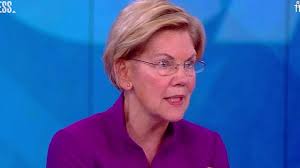
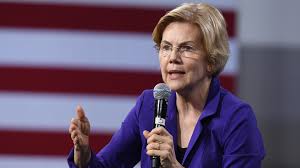
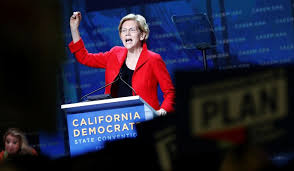
Such a Democratic candidate would certainly announce an intention to restore the Obama nuclear agreement with Iran and reinstitute the staged removal of sanctions in accord with the agreement, which would also achieve a restored consensus with Europe, Russia, China, and Germany. If such an eventuality occurs, Iran would be expected to renew its commitment as to an agreed level and quantity of enriched uranium and an acceptance of limits on the annual production of heavy water. Such a positive expectation would be reason enough for me to vote in favor of whomever the Democratic Party ends of nominating. I hope it will be Elizabeth Warren, but several others would be acceptable to me.

 Global Justice in the 21st Century
What Comes After Bahrain?
6 JulIs there an ‘After’ After the Kushner show in Bahrain?
Q1: Bahrain hosted the so-called “Peace to Prosperity” conference to discuss what the US has described as the economic part of President Donald Trump’s “deal of the century”, a plan which aims to consign the Palestinian cause to oblivion. The Palestinian leadership boycotted the meeting on June 25 and 26 in Manama, leading critics to question the credibility of the event. In your opinion, what goals are the US and Israel pursuing by holding the conference? Would they reach their goals?
The ‘workshop’ in Bahrain should never have been evaluated without considering the overall approach taken by the Trump presidency to Israel and Palestine. The relationship to Israel pre-Trump had been one of leaning toward Israel while purporting to be ‘an honest broker,’ a thinly disguised partisanship. Since Trump became president the U.S. has dispensed with thin disguise, and become the avowed
partner of Israel and adversary of Palestinian goals. It manifested this shift in several concrete unprovoked policy shifts that were deliberately punitive toward the Palestinians. Such behavior was a strange prelude to a proclaimed ‘diplomatic’ initiative hyperbolically called ‘the deal of the century.’ Washington’s behavior clearly signaled an end to diplomacy based on agreement and consent of the parties, substituting coercion on behalf of the favored party and seeking submission by its adversary.
From such a perspective it should be understood that the purpose of ‘Peace to Prosperity’ is neither peace nor prosperity, but securing an Israeli ‘victory’ and a Palestinian surrender with respect to the political agenda of achieving basic national rights, especially the right of self-determination. Thus, the Manama meeting is a success to the extent it made the proposed bargain of economic normalization in exchange for political defeat seem of material benefit to the governments of the region and had some attraction for the Palestinian Authority and segments of the Palestinian people. The reactions to the event seem very subdued suggesting that the Kushner/Trump initiative has had very little, if any, political impact so far. The secondary objective is one of public relations, being able to blame the anticipated failure to achieve ‘the deal of the century’ on the Palestinians. I fear the Western mainstream media will lend some support to this outrageous claim, which confuses the rejection of American ultimatum, preceded by a series of pro-Israel policy moves (Jerusalem, settlements, UNRWA funding, closing the PLO information office Washington, endorsing Golan and West Bank annexations) hostile to the Palestinians as signaling this Trump shift from pro-Israeli partisanship of the Obama era to pro-Israeli coercive diplomacy currently practices by Washington.
Against this background, it is disingenuous for Israeli apologists such as Dershowitz and others to urge the Palestinians to listen with an open mind to what the Trump ‘peace initiative’ is proposing. To lend legitimacy to such coercive diplomacy would be a sign of weakness and an expression of illegitimacy by representatives of the Palestinian people. It would have been seen as an expression of Palestinian hopelessness. Instead, if their refusal to participate in such a macabre charade is linked to the resistance struggle in Gaza embodied in the Great March of Return, it is a moment for those of us in solidarity with the Palestinian struggle to lend greater support to nonviolent initiatives, including the BDS campaign.
Q2: Some analysts say that the Trump administration’s focus on an economic plan, led by his son-in-law and senior adviser Jared Kushner, is a strategic mistake that could stymie the peace negotiations even before they begin. What is your assessment of the US approach to the conflict and the future of the plan? Is it practical at all?
The Trump/Kushner ‘plan’ is not looking toward genuine diplomatic negotiations. It is trying to impose a one-sided Israeli victory, and treat the conflict as resolved. This overlooks the robustness of Palestinian resistance, dramatized by the Great March of Return in Gaza, and by the growing global solidarity movement, as featuring the BDS (Boycott, Divestment, and Sanctions) Campaign. It should be appreciated that such a campaign managed over time delegitimized South Africa’s apartheid regime to such an extent that it collapsed. Such a soft power Palestinian victory can still be expected if this combination of resistance, solidarity, and patience persist in a manner that imposes sufficient costs on Israel for its reliance on an apartheid structure to achieve its ‘security’ at the expense of Palestinian basic rights. The hope of most activists is that Israeli leaders and citizens will recalculate their interests so as to accept a political compromise based on the equality of rights of the two peoples coexisting with mutual respect in historic Palestine. Remember that all of the anti-colonial victories of the 20th century were achieved by the weakerside militarily and geopolitically.
Q3: Israeli occupation forces have killed 84 Palestinians during the first half of 2019, including eight women and 19 children, according to local media reports. On Friday, Israeli forces once again opened fire on Palestinians taking part in the peaceful “Great March of Return” protests, along the separation fence between the besieged Gaza Strip and occupied territories. According to media reports, more than 270 people, including 52 children, have been killed since the demonstrations began in March 2018. Most of the dead and the thousands wounded were unarmed civilians against whom Israel was using excessive force. Why has the international community, particularly the Western mainstream media, made a muted response to the Tel Aviv regime’s crimes against Palestinians so far?
Israel reliance on excessive force and collective punishment to deal with the Great March of Return, and its grievances and lawful demands, should be treated as violations of international humanitarian law of a severity that amounts to crimes against humanity. It is a shocking reflection of media bias that it accords massive attention to human rights violations in Turkey of a relatively lesser character, while ignoring and even rationalizing much more serious violations by Israel. Although Western liberals have counseled Palestinians to rely on nonviolence in their opposition to Israel, such reliance as in the Great March has been consistently met with brutal force by Israel and by virtual silence in the world media, by the governments of the world, and even by the United Nations. It is a case of geopolitics eclipsing moral and legal accountability exposing the lack of political
will to protect the innocent and vulnerable from abuse by the vindictive and militarily powerful.
The growing movement of global solidarity as reinforced by Palestinian acts of resistance to apartheid structures of oppression is the sole basis for a peaceful future for both peoples, Palestinians and Israeli Jews.
Tags: Bahrain Workshop, Deal of the Century, Great March of Return, Kushner, Peace to Prosperity