Not since the debate about the Kosovo War of 1999 has there been such widespread discussion of humanitarian intervention, including the semantics of coupling ‘humanitarian’ with the word ‘intervention.’ At one extreme of this debate about language stands Gareth Evans, former Foreign Minister of Australia, who is a staunch advocate of displacing the discourse on ‘humanitarian intervention’ by relying on concept of ‘responsibility to protect’ (known as R2P). Evans was, in fact, co-chair of the International Commission on Intervention and State Sovereignty that came up a decade ago with the idea of R2P. This approach to intervention was skillfully marketed it to the international community, including the United Nations. Arguing the conceptual case for R2P, Evans writes, “[b]y changing the focus from the ‘right’ to ‘responsibility,’ and from ‘intervene’ to ‘protect,’ by making clear that there needed to be at much attention paid to prevention as to reaction and non-coercive measures, and by emphasizing that military coercion—which needed to be mandated by the UN Security Council—was an absolute last resort in civilian protection cases.’ [Evans, “Humanitarian intervention is only justified when…” Global Brief, Summer 2011, 60.]
Insisting that the coercive actions in the Ivory Coast and Libya show the benefits of this approach, as contrasted with the supposed failures of the 1990s to take action in Rwanda, Bosnia, and Kosovo, Evans feels so vindicated by recent events as to make the following plea: “So let us please lay ‘humanitarian intervention’ language to rest once and for all.” This raises three questions: should we? will we? does it really matter? My answer to the first two is ‘no,’ and to the third, ‘not much.’ My basic problem with the R2P approach is that it downplays the role of geopolitics in the diplomacy of both decisions to intervene and to not intervene. By hiding this fundamental element in the decision process behind a screen of moralizing language talking of R2P rather than humanitarian intervention invites misunderstanding, as well as encourages imperial ambitions.
At the other semantic extreme is Michael Walzer, who writing in Foreign Affairs, insists that the idea of humanitarianism has become a central feature of world politics in the early 21st century. He starts his article with some hyperbolic language to this effect: “Humanitarianism is probably the most important ‘ism’ in the world today, given the collapse of communism, the discrediting of neoliberalism, and general distrust of large-scale ideologies.” [“On Humanitarianism,” Foreign Affairs 90(No.4): 69-80.] I find such a sentiment to be so exaggerated as to defy reasoned discussion. One wonders has how such an incredible sentence escaped the scrutiny of the eagle-eyed editors of Foreign Affairs. Walzer appears to be suggesting that humanitarianism now eclipses realism and nationalism as an influential global force in the world of ideas and statecraft, which is not only farfetched and wrong, but especially surprising considering that Walzer is without question one of the world’s most respected and influential thinkers on the ethical dimensions of relations among sovereign states. His overall effort in the article is to demonstrate that this humanitarian impulse is a matter of duty for governments, and should not be treated as a species of charity, a potentially valuable distinction that becomes clear when he comes to discuss humanitarian intervention without even mentioning the R2P approach, presumably because it obscures rather than illuminates the underlying issues of choice.
Walzer looks behind the semantics of intervention to appraise the responses to situations where populations are genuinely at risk. He faults the UN Security Council as having a dismal record in the past due to its failures “to rescue those in need of rescuing,” giving Rwanda and Bosnia as examples. Walzer goes on to conclude that the “UN Security Council rarely acts effectively in crises, not only because of the veto power of its leading members but also because its members do not a strong sense of responsibility for global security, for the survival of minority peoples, for public health and environmental safety, or for general well-being. They pursue their own national interests while the world burns.” [75] This passage sounds to me like an old-fashioned reaffirmation, after all, of realism and nationalism, and is far more descriptively credible than Walzer’s assertion that humanitarianism is the recently emergent dominant ideology.
Coming to specifics, Walzer understandably turns his attention to Libya
as having generated a new debate about humanitarian intervention. He summarily dismisses leftist suspicions about Western recourse to hard power solutions to international conflict situations, but also acknowledges that this NATO intervention does not seem to be succeeding in making good on its initial humanitarian claim. Nevertheless, he gives the intervenors a surprising clean bill of health as far as their intentions are concerned: “Their motives were and are humanitarian, but not sufficiently shaped by considerations of prudence and justice.” [77] Walzer is alive to the complexity of international political life that makes him skeptical about endorsing generalized solutions to such general problems as what to do about a menaced civilian population. Instead he advocates a situational approach to gross civilian vulnerability. He argues that any state can serve as a humanitarian agent even without necessarily receiving permission from the international community for a use of non-defensive force. In Walzer’s words, “[t]here is no established procedure that will tell us the proper name of the agent.” He gives approval to several non-Western examples of humanitarian intervention: Vietnam in 1978 contra the Khmer Rouge in Cambodia, India in 1971 contra Pakistan in what was then East Pakistan and is now Bangladesh, and Tanzania in 1979 contra the bloody tyranny of Idi Amin in Uganda. These uses of force are endorsed as serving humanitarian ends even though they failed to receive any mandate to act from the Security Council and although in each instance, despite rescuing a vulnerable population, the predominant motivation to intervene seemed clearly non-humanitarian in character. In contrast, Walzer pushing to the outer limit his central thesis as to the rise of humanitarian diplomacy writes “In these circumstances, decisions about intervention and aid will often have to be made unilaterally…The governing principle is, Whoever can, should,” [79] which is the second extraordinary statement made in his article.
Such a volitional framework governing interventionary initiatives negates, without even an explanatory comment, the essential effort of contemporary international law to prohibit all international uses of force that are neither instances of self-defense (as defined by the UN Charter in Article 51) nor authorized by the UN Security Council. In this respect, Walzer seems to be endorsing a kind of ethical anarchism as the best available means for achieving global justice in these situations. At this point he veers back to his confidence in the purity of geopolitical motives by contending that ‘what drives’ these uses of force “is not only humanitarian benevolence but also a strong sense of what justice requires.” [79] This is written as if imperial ambitions even if packaged as ‘grand strategy’ should not be a concern. What about the protection of vulnerable states that are victimized by geopolitical maneuvers associated with resources, markets, and congenial ideology? It might be well to recall that it was a notorious tactic of Hitler’s expansionist foreign policy to intervene or threaten to do so for the sake of protecting German minorities being allegedly abused in neighboring countries.
Returning to a comparison of perspectives, Evans sets forth a series of guidelines that he believes will make it more likely that uses of force in these interventionary settings will be respectful of international law while at the same time recognizing the sensitivities in the post-colonial world about giving approval to military encroachments upon sovereign space, which are invariably of a North/South character if acted upon by the United Nations, that is, the North as agent of intervention, the South as the site where force is used. His five criteria are law-oriented, and deferential to the authority vested in the Security Council: (1) seriousness of the risk; (2) purposeful and discriminate use of force to end threat of harm; (3) force as a last resort; (4) proportionality of military means authorized with respect to the humanitarian goals of the mission; (5) the likely benefit of the contemplated use of force for those being protected. Since Evans, unlike Walzer’s willingness to live with unilateralism, seeks a consensual foundation for such uses of force, he insists that the final mandate for an R2P operation must be shaped within the five-part framework set forth and based on a formal Security Council authorization. Walzer argues more opportunistically, geopolitically naively, that states should be empowered to act even without proper authorization if they have the will and means to do so. His examples of humanitarian interventions by non-Western states (Vietnam, India, Tanzania)were all neighbors of the target state, and at the time contested to varying degrees due to the play of geopolitical forces, not as a reflection of different levels of humanitarian urgency. In this regard, the strongest humanitarian argument was undoubtedly present in support of the Vietnam intervention in Cambodia to stop a massive genocide, but also the most controversial as it contravened the American policy at the time of placating China so as to increase pressure on the Soviet Union. Acting under the umbrella of R2P is most likely to generate intense controversy when the United States acts with or without European backing (Iraq, Afghanistan, Kosovo, Libya), especially if the humanitarian claim seems marginal or as a cloak hiding strategic and imperial goals. Only in the Libyan debate did R2P figure prominently, and maybe led several of the members of the Security Council, including China and Russia, to abstain rather than to vote against SC Resolution that gave NATO the green light to commence its military campaign.
In this sense, Evans’ claims need to be taken seriously, but not because they represent a step forward, but rather because they weaken the overall effort of the UN and international law to minimize war and military options in international political life.
What makes these discussions serious is their bearing on life and death issues for vulnerable peoples and their supposed benefactors. On the one side, Noam Chomsky is right to worry about ‘military humanism,’ which he depicts as the grand strategy of hegemonic political actors being cleverly disguised as global public works projects. In effect, humanitarianism is the pathetic fig leaf selected to hide the emperor’s nudity. Chomsky points to ‘double standards’ as proof positive that whatever the explanation given for a particular intervention by the United States or NATO, the claimed humanitarian motivation is window dressing, and not the primary consideration. He treats Western silence about decades of brutal Turkish suppression of the Kurdish movement for human rights as an illuminating example of geopolitical blinkering whenever it seems inconvenient to take action on behalf of a victimized minority. In my view, the most extreme instance of double standards involves the failure of the UN System or ‘a coalition of the willing’ to take any action protective of the Palestinian population enduring an oppressive occupation for more than forty-four years,
despite the direct UN and colonialist responsibility for the Palestinian ordeal.
On the other side of this debate among progressives is Mary Kaldor who worries that without the intervention option dreadful atrocities would take place with even greater frequency. She supported intervention to protect the endangered Albanian population of Kosovo, fearing that otherwise the genocidal horrors of Bosnia would likely have been repeated, including even the risk of reenacting the grisly massacre of Srebrenica. At the same time, Kaldor was not indifferent to the risks of great power abuse, and tried, in the manner of Gareth Evan, to condition her endorsement of intervention with a framework of guidelines that if followed would make the restraints of international humanitarian law applicable and minimize the exploitative opportunities of intervening powers. This framework was embodied in the report of the Independent International Commission on Kosovo on which Kaldo was an influential member. That report also took account of the inability of the intervenors to win UN Security Council approval (in this instance, because of the expectation of Russian and Chinese vetoes). The report took the position that in situations of imminent humanitarian catastrophe it would be legitimate to intervene if the capabilities were available to exercise effective proportionate force, although unlawful given the UN Charter prohibition on all non-defensive claims to use force. It is, of course, not generally desirable to create exceptions to restraints that enjoy the status of fundamental rules of international law, but it can seem even more discrediting for the role of law in world affairs to be paralyzed in humanitarian emergencies by rigid rules and procedures that produce inaction, and expose vulnerable peoples to the ultimate abuse of genocide or severe crimes against humanity.
There is no right and wrong in such a debate. Both orientations are in touch with relevant realities, and there is no principled way to choose between such contradictory concerns beyond an assessment of risks, costs, and likely effects of intervention or inaction in each instance depending on its overall properties. Judgment here is necessarily operating in a domain of radical uncertainty, that is, nobody knows! This raises the crucial question, what to do when nobody knows? It is this unavoidable responsibility for a decision when the consequences are great and available knowledge is of only limited help that points to the difficulties of the human condition even putting to one side the distorting effects of greed, ambition, civilizational bias, and the maneuvers of geopolitics. The late great French philosophical presence, Jacque Derrida, explored this dilemma in many discourses that related freedom to responsibility, with some collateral damage to Enlightenment confidence in the role of reason in human affairs. For Derrida, making such decisions is an unavoidable ordeal that is embedded in what it means to be human, combining helplessness with urgency.
I would suggest two lines of response. First, there are degrees of uncertainty, making some decisions more prudent and principled, although inevitably with the unclear contours with respect to envisioning outcomes given ‘the fog of war.’ In this regard everything is guesswork when it comes to composing a balance sheet of horrors. Still, it seems plausible to insist that Rwanda in 1994 was a lost opportunity spare many lives taken in a genocidal onslaught, a claim strengthened now and later by the preexisting presence of a UN peacekeeping force in the country, and the informed judgment of both the UN commander on the ground and many observers. General Roméo Dallaire indicated at the start of the crisis that 5,000 additional troops plus a protective mandate to act from the UN could have prevented most of the killings, estimated to be over 800,000. (Dallaire commanded the UN Assistance Mission for Rwanda; see also Linda Malvern, Conspiracy to Murder: The Rwandan Genocide, Verso, 1994.). From the perspective of prudence, the fate of minorities trapped in major states is almost always an unattractive option, although non-military initiatives of support and censure may have positive effects in some instances. It is unattractive because the costs would be high, the target state has major capabilities, the scale of an effective intervention would exceed the political will to protect a threatened minority, and most important, there would be a high risk of starting a general war.
The Libyan intervention in 2011 was falsely labeled and the mission authorized was light years away from the operational goals of the NATO operation. In effect, this amounts to a disguised form of an unlawful use of force, but coupled with a dereliction of duty on the part of the Security Council to ensure that the gap between its mandate and the actual operation was closed. Besides, those who are being protected, or more accurately, being helped in a struggle for control of the country, were a shadowy organization thrown together on the spot, lacking in cohesion, and almost from the outset having recourse to violence in a manner that violated the spirit and character of the inspiring Arab Spring popular movements in neighboring Tunisia and Egypt. At the same time, there was a humanitarian challenge, as the dictatorial leader, Col. Muammar Qaddafi, was delivering bloody rants and the civilian population, under siege in Benghazi, was definitely in a situation of imminent risk. Under these circumstances, a carefully delineated protective move under UN auspices could have been justified, but it would have depended on placing NATO troops in situations of potential danger. The kind of air campaign that has been waged by inflating and exceeding the actual UN mandate depicted in Security Council Resolution 1973 has been discrediting for UN peacekeeping and authority. It has been ineffectual in stopping the violence in Libya, and likely responsible for its spread. At the same time, so far the intervention has resulted in not a single NATO casualty (while causing a rather large number of Libyan civilian deaths). Whether the stalemate in the conflict will produce a negotiated compromise remains uncertain, but the shaping and execution of the intervention is suggestive of the inadequacy of either allowing the decisions and policies relating to humanitarian catastrophe to be made by governments on the basis of their own calculus or through reliance on a UN framework that is susceptible to major geopolitical manipulation.
There is a preferable, although imperfect, alternative that has been around for several years: the establishment of a UN Emergency Peace Force (UNEPF) capable of being activated through the joint authority of the Secretary-General and a super-majority of two-thirds of the membership of the UN Security Council in reaction to either a humanitarian catastrophe arising from political policies or conflict, or a natural disaster that exceeds the response capabilities of the national government. The UNEPF should ideally be funded through some kind of small global tax imposed on the sale of luxury goods, international travel, currency transactions in financial markets, or some combination. If this proves to be impractical, then voluntary contributions by non-permanent members of the UN Security Council would be acceptable. The whole idea would be, to the extent possible, to break the present links between ‘humanitarian interventions’ and geopolitics. The only means to do this would be through the creation of a maximally independent international agency for such undertakings that would engender confidence in its good faith and through its prudent tactics and effective operations. Unlike such delegated interventions as the Gulf War of 1991, the Kosovo War of 1999, and the Libyan War of 2011, UNEF would rely on tactics that were geared toward minimizing risks for a threatened population and would operate under the strict supervision of the mandating authorities while carrying out an interventionary or relief mission. UNEPF capabilities would be constructed from the ground up, with separate recruitment, training, doctrine, and command structure.
This seems like such a sensible innovation for the benefit of humanity that it may seem puzzling why it has never gained significant political support from UN members, but it should not be. For decades global reformers have been advocating a UN tax (often named a ‘Tobin Tax’ after James Tobin, an Nobel economist who first floated such a proposal) and the kind of UNEPF recommended above (for instance, carefully outlined in a proposal developed by Robert Johansen in collaboration with other scholars, a prominent political scientist who has for years been associated with the Kroc Institute of International Peace Studies at Notre Dame). Such a practical solution to this daunting challenge is not on the table because it would weaken the leverage of geopolitical actors over the resolution of conflict situations. Reverting to the earlier discussion of Walzer, it is precisely because humanitarianism is marginal to the conduct of world politics that makes the UNEPF proposal seem utopian. In relation to Evans, geopolitical forces can accommodate his framework, which is probably well-intended, but provides intervening states with a rationalization for their desired uses of force without significantly interfering with the discretion to intervene and not to intervene. As the Libyan debate and decision confirms, geopolitics remains in control despite recourse to the framing of action by reference to R2P. If we want more principled and effective action in the future, it will require a great deal of pressure from global civil society in collaboration with middle powers, the sort of coalition that led to the surprising establishment of the International Criminal Court in 2002 over the opposition of such international stalwarts as the United States, China, Russia, and India.
Tags: Gareth Evans, Humanitarian intervention, Michael Walzer, Responsibility to protect, UN Security Council, United Nations, United Nations Security Council, United States







 Global Justice in the 21st Century
Rethinking Afghanistan After a Decade
19 SepThis post is a short essay responding to a question about my dramatic change of position on the Afghanistan War with regard to its initial justification and flawed execution. It is both a reconsideration of errors of judgment and reflections on how the world has changed in the course of this decade, focusing on the inability of the United States to grasp either its own decline or the related decline in the historical agency of hard power approaches to security.
**********
Reading what I wrote about Afghanistan a decade ago reminded me of how much my understanding of the role of war and hard power in upholding security for the nation and the world has changed. Actually, it seems clear to me that my views on Afghanistan back in 2001 were an exception to my general skepticism about Western interventions in the non-Western world, a view formed during ten years of opposition to the American role in the Vietnam War. At the time, with the Al Qaeda attacks so recently seared into my political consciousness, and some anxiety that more attacks of a similar kind were likely to follow, it seemed logical and helpful to adopt a war strategy as part of an overall effort to disrupt the mega-terrorist capabilities to inflict further harm either in this country or somewhere else on the planet. Although I realized that the international law argument for attacking Afghanistan, with the clear objective of regime change, was weak absent the exhaustion of diplomatic remedies, but such considerations were overcome in my mind by the political argument for doing immediately whatever was necessary to uphold security in this country and generally, and the moral argument that any successor government to what was being imposed on the Afghan people by the Taliban would almost inevitably be a step in the right direction. At first, these early assessments of mine seemed vindicated, but now with the benefit of ten further years of military engagement and retrospective insight, a reappraisal is long overdue.
There were some reasons for skepticism and worry from the outset of the approach to Afghanistan. The manner by which the air war was conducted, and its failure to adopt tactics designed to have a maximum impact on Al Qaeda capabilities were disturbing to me from the beginning of the military operations. The American military undertaking seemed poorly conceived and implemented, naively relying on untrustworthy coordination with Afghan ground forces that had their own distinct agendas often at odds with U.S. counter-terrorist priorities. This unreliability should have been known on the basis of intelligence and prior counterinsurgency experience. The United States Government, and especially the Rumsfeld Pentagon, were ideologically committed to fighting the war with minimum American ground involvement, thereby avoiding heavy American casualties, and yet achieve the goals of the intervention. This was proclaimed at the time to represent a test case for a ‘revolutionary’ transformation of warfare in which technology displaced troops on the ground. We learned very soon that virtually the entire Al Qaeda leadership had managed to escape across the border to Pakistan along with its main cadre of militant trained fighters.
Beyond this central mission failure, the promised regime change in Afghanistan quickly became a costly and obvious fool’s errand. The authority of the new political leadership in Kabul, handpicked by Washington, could hardly extend its writ beyond the capital city despite its dependence on the delegitimizing presence of foreign occupying forces. This led over time to the resurgence and regrouping of a variety of forces of national resistance to foreign occupation, as well as the unexpected revival of the Taliban as both a fighting force and a serious political challenger for control of the country.
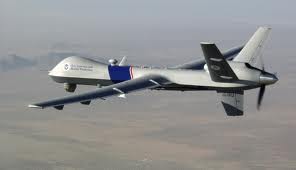
Faulty perceptions in this post-9/11 period, including my own, ignored the lessons of Vietnam. It was one thing to mount a counter-terrorist operation against the Al Qaida presence in Afghanistan, which was itself an alien intrusion on national political space, but another for the leading country in the West to seek to override the workings of self-determination within Afghanistan so as to impose a governing structure and political culture more to its liking. This renwed reliance on counterinsurgency thinking, of which General David Petraeus, was the most influential voice within the military, sought to overcome memories of defeat in Vietnam by adopting an approach more friendly to and respectful of the indigenous culture and the human rights of the people supposedly being protected. But it is one thing to be abstractly sensitive in these ways, but it is another to remain a benevolent presence while killing the inhabitants of the country, especially its women and children, while simultaneously doing everything possible to minimize risks of injury and death to one’s own troops. In the circumstances that exist in Afghanistan these two sincerely held objectives are often in tension with notable incidents leading to anger either at the scene in Afghanistan or at home in the United States. It is ironic that Petraeus, despite his historical knowledge, political acumen, and his own prior efforts to right the mistakes of the past, relied on drone strikes at a rate of ten times that of his predecessor, resulting in a predictable rise in civilian casualties and popular alienation. The use of sophisticated unmanned aircraft firing missiles at human targets carries to new heights the technological one-sidedness of such counterinsurgency warfare where as much of the risk as possible is shifted to the territorial society and those who pick targets in safety have neither accountability for deliberate or accidental wrongs nor possess any leverage over the political dynamics within the country. It is this disabling irony that has yet to have its proper impact on American policymaking. Our political leaders seem unwilling to learn that military dominance rarely translates into favorable political outcomes at acceptable costs in the early 21st century.
Despite the evidence supporting such an interpretation of recent historical trends the mistakes of the past are stubbornly repeated, and such a pattern calls for an explanation. It is necessary to consider the impact of factors that overcome the expected rationality of government decision-making and problem solving. Perhaps, the most important of these is the emergence of what Mark Selden calls ‘the permanent warfare state’ in the United States. The country has for decades made a disproportionate investment in achieving military dominance on a global scale. The existence of such expensive capabilities generate strong bureaucratic and ideological pressures to rely on military approaches to ensure a favorable outcome of international conflicts. After all at present, if the United States spends more than the next ten countries in the world combined, there must be a commensurate political payoff, or else it is extremely discrediting with respect to the use of taxpayer revenues in a setting of intense fiscal concern about government spending..
It is this hard power dogmatism that has led the United States, along with its Western junior partners, to engage in a nation-building war in Afghanistan that seems destined for defeat and humiliation. As the Afghan saying goes: “You got the watches, we got the time.” Because the benefits to the United States of persisting in Afghanistan despite the costs seem so uncertain as compared to the clear goals of the opposition to rid the country of foreign occupiers, it seems likely that the longer-term and deeper commitments of the Afghan national resistance will reap eventually the rewards of its persistence. Of course, this prediction is reinforced by the low quality of the Karzai government that undermined its democratizing claim by stealing the most recent faux elections and through its corrupting links to the drug trade and warlords. In the twenty-first century those who cooperate with foreign invaders and occupiers rarely are able to claim ‘mission accomplished’ with any credibility at the end of the day. It is important also to realize that this was not true in the colonial era during which the superior military technology of the colonialists generally prevailed without large losses or major expenditures. Prior to World War II, there was insufficient confidence in the capacity of most non-Western societies to mount an effective national resistance to a determined military intervention, although even here Afghanistan stood out as the one country in Asia that colonial powers found impossible to pacify in a manner that served their interests, with both Britain and Russia failing in their attempts to do so. It is difficult for Americans to appreciate that foreign occupation poses such a stiff challenge to self-determination as to be very rarely viewed as liberating or legitimate by the civilian majority in a country subject to military intervention.
Such generalizations need to be distinguished from the sorts of interventions that seem to have been effective in Kosovo in 1999, and maybe again this year in Libya. In Kosovo, the foreign intervention was a rescue operation in support of a domestic struggle of the Albanian overwhelming majority against what was perceived to be Serbian alien rule sustained by atrocities against Kosovars and posing an imminent threat of violent ethnic cleansing. It was, to the extent that the people of Kosovo enjoyed the status of being ‘a people’ in international law, possible to consider the NATO intervention as being in furtherance of self-determination rather than as an attempt to impose a Western oriented outcome. True, the clarity of such an endorsement of the Kosovo War is qualified by the absence of any UN Security Council authorization for the use of force and by NATO’s controversial reliance on high altitude bombing that killed an estimated 500 civilians on the ground. The post-conflict establishment of Camp Bonsteel, a huge NATO military base also raises questions about the purity of the alleged protective intentions.
In the case of Libya, although the NATO operations ignored the limits of the UN Security Council authorization, the military action reinforced a struggle already underway in the country, and backed by a majority of the population, against a hated dictator that was engaging in indiscriminate violence against his own people, and threatening to do worse. It remains to be seen whether the victors in Libya can bring constitutional democracy and an equitable economy to the country, but at least the intervention is highly unlikely to engender national resistance as there is no foreign occupation contemplated. There are already concerns about the prospect of manipulation behind the scenes by the intervening parties to bring big profits to NATO oil companies and construction firms. If these concerns materialize it could be quite discrediting to the nationalist claims of the new Transnational National Council leadership. Nevertheless, as of now, the main point stands: with UN backing, without any intention of foreign occupation and military bases, against an existing cruel, exploitative, and oppressive rule, and in support of an existing oppositional movement, a Western military intervention can achieve its initial goals, but even then not without evoking considerable controversy and raising suspicions about ulterior motives. Phase one is regime change as has taken place with the defeat of the Qaddafi regime, phase two is constitutional state building and equitable and sustainable development that remains to be achieved, and depends on national will and capabilities.
There was another major dimension of the Afghanistan War as it appeared in 2001 as compared to the way it seems in 2011. What I failed to appreciate then, and has still not been properly registered in mainstream foreign policy thinking, is that during the presidency of George W. Bush, the grand strategic emphasis was placed on control of the Middle East. This objective of grand strategy took precedence over the successful prosecution of the post-9/11 struggle against terrorism. The two different undertakings were misleadingly merged in public consciousness by relying on the unifying, yet diversionary label of ‘global war on terror,’ but in fact while Afghanistan was directly linked to the 9/11 attacks the government of Saddam Hussein in Iraq was only indirectly, if at all, linked. The Iraq War launched in 2003 increased anti-American resentment throughout the Islamic world, and was at odds with an all out struggle against Al Qaeda, which would have given continuing priority to consolidating the early gains in Afghanistan and neighboring Pakistan. Instead, after the military attacks on Afghanistan produced the collapse of Taliban rule, the American emphasis immediately shifted dramatically to the Iraq War, and Afghanistan became a forgotten sideshow, which encouraged the steady deterioration of political order in the country, making a mockery of early claims of achieving a liberating political change welcomed by the population. Obama tried to overcome this unfortunate legacy of neo-conservative foreign policy by both promising to end the Iraq War, a commitment that remains problematic and unfulfilled, and a commitment to view the Afghanistan War as requiring renewed attention due to its relevance to the challenge of terrorism.
Finally, ten years after 9/11 the road not taken of law enforcement, intelligence collaboration, occasional special forces covert undertakings in foreign countries seems attractive on a number of grounds, and the defense of human rights at home and abroad. It would have avoided the costly, mostly failed efforts in Iraq and Afghanistan. It would have avoided national humiliation associated with the panicky recourse to torture that led to the globally discrediting disclosures of systematic abuse of detainees at Guantanamo and Abu Ghraib, and a homeland security apparatus containing many features of authoritarian governance. It would have strengthened claims by the United States to provide benevolent world order leadership based on minimizing the role of war and military solutions, while maximizing the role of law, international police cooperation, and diplomacy, including efforts to take steps to acknowledge and overcome the legitimate grievances of the Arab World, especially the American failure to push for a fair and balanced solution to the Palestine/Israel conflict. This approach would have also allowed a greater concentration of the political imagination and the resources of the country on meeting domestic infrastructure problems and addressing such rising global challenges as climate change and persistent extreme poverty. Furthermore, such non-war path in response to the 9/11 attacks could have demonstrated a realization of the limits of hard power approaches to the solution of conflict and security problems in the early 21st century, and avoided falling again into the traps unwittingly set for the country by pro-interventionists and counterinsurgency advocates. Of course, a counter-factual portrayal of the decade is by definition unaware of the bumps in the road that would undoubtedly have been encountered, especially if further attacks had been successfully launched on high value targets within the United States. Even conceding this unknowability, this alternative path would have been in closer accord with out ‘better angels,’ and corresponded with American continuing claims on the global stage to be the home of moral exceptionalism. If it failed once having been tried, the grounds for a more muscular approach would have been responsibly laid.
These retrospective comments are meant to be non-partisan as far as internal American politics are concerned. The Bush approach after 9/11 enjoyed overwhelming support among the citizenry and in Congress. There were no influential dissenting voices. The mobilization of national unity on the basis of fear and anger, and reinforced by patriotic pride, was intense, effective, and unconditional. My regrets about the policies pursued are mainly preoccupied with the deficiencies of American political culture given the realities and challenges of our world. Unless the political mind of the country becomes quickly disenchanted with military approaches to conflict resolution there is every likelihood of repeating the mistakes of the past decade that will increase dangerous storm clouds that already cast dark shadows menacing the future wellbeing of the country and world.
Tags: al Qaeda, Demography of Afghanistan, Kabul, Mark Selden, Taliban, United States, Vietnam, War in Afghanistan (2001–present)