
[Prefatory Note: What follows is an interview with Daniel Falcone, author and educator, that was published in CounterPunchon December 14, 2018. The text has been slightly modified.]
[Prefatory Note: What follows is an interview with Daniel Falcone, author and educator, that was published in CounterPunchon December 14, 2018. The text has been slightly modified.]
Celebrating Noam Chomsky’s 90th Birthday
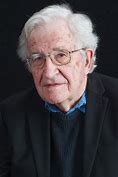
Daniel Falcone: How were you first introduced to Chomsky? What initial work brought you into contact with Chomsky?
Richard Falk: Actually, my first awareness of Noam Chomsky was in the late 1950s while I was teaching at Ohio State University. I had a smart linguist friend who told me about the revolutionary work of a young scholar at MIT who was completely transforming his field by the work he had done while still a graduate student on ‘structural linguistics’ and ‘generative grammar.’ As I remember our conversation nothing was mentioned about Chomsky’s politics.
Later on in the early 1960s I continued to hear of Chomsky as the great linguist, but also about Chomsky as the militant anti-Vietnam Waractivist.
We met in the mid-1960s as a result of common interests. We were both deeply involved as opponents of the escalations of American involvement in Vietnam, and indeed we were opposed to any military involvement at all. At that point Chomsky was strongly supporting draft resistance in addition to speaking at anti-war events. I was mainly engaged during the 1960s in academic debates and teach-ins devoted to questions of the legality of the American role in Vietnam, and after 1965, discussions often focused on the decision by the Lyndon Johnson presidency to extend the war to North Vietnam.
We interacted quite frequently in this decade, and stayed at each other’s homes in Lexington and Princeton when we spoke in the other’s venue.
I recall Chomsky insisting in response to an invitation from the Princeton Philosophy Department that he would only agree to give a series of lectures on linguistics that was the nature of the invitation if his hosts would also arrange parallel formats for him to address his political concerns. He apparently frequently made this a condition of his acceptance, and because he was such a star attraction, it was almost always enthusiastically accepted, and even viewed as a bonus.
I found the Princeton lectureson theoretical tensions within the field of linguistics to be not only abstruse, but also quite memorable from a performance perspective. The first of Chomsky’s linguistic lectures was held in one of the largest auditoriums at Princeton. Before Noam was introduced the hall was filled to capacity in excited anticipation of being enlightened by whatever this already famous scholar had to say. Chomsky’s style and delivery were highly technical, presupposed a fairly sophisticated understanding of the complex issues of linguistic theory at stake, which meant that his presentation seemed way above the head of 90% of the audience, including myself.
By the end of the lecture there were less than 25 people left in the huge hall. What impressed me then and even now was Chomsky’s attitude of apparent indifference to this reaction, which was confirmed by his failure to alter his style in the next two lectures. It was hardly surprising that the second and third lecturewere given in a rather empty room, being attended by only a small coterie of graduate students and a few on the faculty who had strong linguistic interests.
When he gave his talk on political issues, Chomsky’s style was strikingly different. His presentation on political issues was meant to reach people with little prior knowledge. His interpretations were supported by abundant evidence – fact-based, carefully and clearly reasoned, and were even spiced by humorous asides, usually of a wry and satiric nature. Chomsky was personally engaged, clearly hoping to persuade the audience to adopt his viewpoint, and conveying an assured sense that there existed no other coherent and ethical to view the issues being discussed. As with his opening linguistics lecrure, his political talk was held in a large hall that was overflowing, but this time no one left.
The response was enthusiastic and responsive. I came away with the sense those attending felt that just by being there they had taken part in an historic experience. It was also an audience that drew heavily from the community as well as the university, and had far fewer faculty members than did the linguistic talks. I was struck by Chomsky’s confident, calm manner, his wide knowledge, and his utter insistence on speaking truth to power. These truths of Chomsky went far beyond mainstream ways of thinking and acting.
My only reservation from the perspective of frequently being a member of Chomsky’s audience was his reluctance to acknowledge even slight differences of opinion, much less admit error. I felt this to be a weakness. There was something disturbing about this unwillingness to concede small points to those who shared his views 95% of the time. This polemical style left even admirers sometimes feeling that his presentation could have been more effective if he had left a bit of space for doubt and divergent opinions. This style of unwavering assurance seemed to reflect a public sensibility more than deriving from a fixed ideology. Off camera, Noam was always gentle and non-dogmatic, but while performing I found his demeanor sometimes to be leonine.
DF: Scholar Henry Girouxonce told me that he thought Chomsky was “a national treasure.” How is Chomsky a national treasure in your view?
RF: I share this expression of exceptional mode of appreciating Chomsky’s many contributions to enlightened and critical thought. Such contributions are essential if the vitality of a democratic society is to be sustained through dark times, such as at present. To quibble a bit, I would prefer to identify Noam even more grandly as ‘a global treasure.’ His following is global in ways that exceed that of any other
living public intellectual
Noam’s worldwide following has identified him as a beacon of truth and conscience who can be trusted, whatever the issue, to express his views with honesty, through the medium of reasoned analysis, and on the basis of a dazzling familiarity with a wide range of evidence supporting his conclusions. He conveys a sense of having read and remembering everything ever written on the topic he happens to be addressing on any particular occasion.
There are many other highly intelligent and progressive persons in the world, but few if any, who have the professional record of world class scholarship and the astonishingly wide range of knowledgeabout subjects that embrace concerns that cover the waterfront. Chomskyis always worth listening to whatever the topic, whether it happens to be the philosophical foundations of knowledge and existence or the specifics of atrocities taking place in some remote part of the world.
His presence and role is so precious because of this rare mix of qualities: a trustworthy character, comprehensive knowledge, mastery over the logic of argument and reasoned analysis, a speaking style that is measured and never relies on shouting to make a point. Chomsky has a special gravitas that I have never before encountered, and helps account for the attitudes of reverence and gratitude that so many persons from all corners of the globe feel in his presence.
DF: What ideas and activities of Chomsky have influenced you the most over the years?
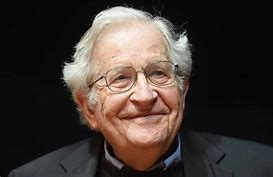
RF: I have been particularly influenced by Noam’s extraordinary perseverance, his spectacular displays of intellectuality and moral engagement, his willingness to enter domains where angels fear to tread, and above all by his insistence on following the evidence wherever it might lead. Noam, in this sense, is one of the great moral voices of all time, guided by a sense of justice and decency, and possessed of a skilled deconstructive voice that dismisses much conventional wisdom with a flip of his rhetorical wrist.
On a more doctrinal level, I have found Chomsky’s thought particularly valuably deployed in his authoritative depiction of how ‘indoctrination in a free society’ works. This is not a simple matter. I would express Chomsky’s line of critique by a more concrete phrase, ‘how the New York Timesmisleads, especially with regard to the Middle East.’ Chomsky can be devastating when showing how the liberal mainstream distorts reality by its selective interpretations of the facts and norms at stake, never more so than in relation to Israel/Palestine over the decades or by the liberal acceptance of the structures of militarism and predatory capitalism without a whimper while bemoaning the cruelty of extreme poverty. Like the monkeys who see and hear no evil, so it is with most liberals. They are willing to do good so long as it doesn’t interfere with their supreme interest in doing well!
I am aware that Chomsky’s views on Israel/Palestinehave given rise to some fierce criticism, and not just from Zionists. Chomsky has been steadfastly supportive of a two-state solution that he has, although perhaps not so clearly recently, insisted as only viable solution that would allow the two peoples to live in a sustainable peace. In my understanding of Chomsky’s recent reflections on these issues, he seems to be saying that an Israeli version of a one-state solution is coming into being, and that a series of internal and international developments now make it impractical to achieve any kind of acceptable form of a Palestinian state in the foreseeable future. Despite disagreements with Said on such questions I never observed Noam or Edward expressing anything other than sentiments of respect and admiration for the work and commitment of the other.
Now that Chomsky is convinced that the political and physical conditions no longer exist to achieve a two-state peace, and the Israeli one-state solution is unacceptable, it would be of great value to know what Chomsky now proposes. Perhaps, he has already set forth his ideas in light of the present circumstances, but I am not familiar with any such statement.
Chomsky has also been criticized for failing to support BDSor coercive nonviolence as a tactic of the global solidarity movement to support the Palestinian national movement. I am not aware of the deep roots of this reluctance to exert pressure on Israel, although I do know that his family background was one of left Zionism, which he felt that Israel as a state and Zionism as a movement and project had seriously betrayed, and the Palestinian people have been paying the price.
I also found Noam’s critique of what he called ‘military humanism’ as a pushback to those who favored the Kosovo intervention to be challenging and almost persuasive as a refutation of the case for humanitarian intervention in the pre-war context of 1999. In the end, with strong feelings of ambivalence, my fear of a Kosovo repetition of the Srebrenica massacre of 1995 led me to support the NATO intervention on behalf of Kosovo independence from Serbia.
Chomsky argued that the moral rhetoric of those calling for intervention in Kosovo was chosen to hide the real reasons for recourse to this admittedly non-defensive war, which were strategic and amoral. These true motivations for the proposed war, according to Chomsky, had to do with extending the life of NATO in the post-Cold War world and making sure that the Russians were not given a pretext for establishing a presence in the Balkans. He rested his argument on the moral inconsistencies and hypocrisy of American foreign policy, pointing to the sustained indifference of the West toward the comparable Kurdish plight in Turkey.
Noam opposed this mixing of humanitarianism with militarism while taking a lifelong interest in depicting severe abuses of human rights. There were numerous settings in which Noam stood up for the human rights of vulnerable and abused peoples, including individuals. Chomsky also made a series of fine scholarly contributions along these lines in several books written in collaboration with the late Edward S. Herman.
DF: How do the leading intellectual figures of the past one hundred years compare with Chomsky?’
RF: I have no real awareness of Chomsky’s own views beyond his sense that Bertrand Russellwas an admirable figure, perhaps a role model, and at least warranted a large picture in Noam’s MIT office. I think Russell is an appropriate antecedent figure to capture the core reality of Chomsky, despite the obvious fact that these two extraordinary men were so different in class and ethnic backgrounds. Such differences were superficial compared to their similarities: exceptional scholarly achievement, belief in Enlightenment ideals, values, and practices, and moral engagement in ways that challenged both conventional wisdom and the consensus affirmed by the governing political class and the official policies in each of their respective countries. Both were derided for swimming against strong national currents.
In my own intellectual and personal experience, the closest parallels to Chomsky are Jean-Paul Sartreand Edward Said. More than others, it was this threesome that made me understand the role and contributions of those who came to be known as ‘public intellectuals.’ Each took risks in their work and acted with courage and moral clarity within the political context within which they lived gave full attention to the historical moment. Each took sides that accorded with their view of moral engagement with the struggles of their time, and each stood unconditionally behind their beliefs even if it meant standing alone. In the context of the Cold War Chomsky published his inspirational essay, “The Responsibility of the Intellectual,” in the initial issue of the New York Review of Books, Feb. 23, 1967. No piece in my lifetime exerted a stronger positive influence on public debate in the United States than did this call to act in opposition to the Vietnam War at a crucial moment when doubts about the American war policies were beginning to challenge the government.
Sartre rejected the Nobel Prize for Literature and broke with Camusand official France over the Algerian War. Said rejected Arafat’s and the PLO’s willingness to trust Washington, resigned from the PNC, and refused from the outset to support the betrayal of Palestinian goals and rights as set forth in the 1993 Oslo Frameworkof Principles. Chomsky broke with the Zionist world, especially after the Israeli victory in the 1967 War, and lent support to the academic freedom of an embattled Holocaust denier in France, the British born historian Robert Faurisson. When questioned about this, Chomsky provocatively responded that Faurisson’s research was no worse than that of many of his MIT colleagues, although he did object when Chomsky’s statement of support was published as a foreword to a Faurisson book without his permission.
Each of these three confronted the world around them with undiminished passion, and never wasted their energy offering apologies or setting forth justifications for their dissenting views. In a last interview Sartrewas asked, what was his greatest regret? I found Sartre’s response suggestively provocative–that he had not gone far enough in the articulation of his radical views, a response that Chomsky might also have made, and Said as well. In effect, rather than backing down or retreating by acknowledging that he might have been more diplomatic, he opts for an even more strident clarity of belief and action.
If I look around at later generations, I take note of many passionate and articulate voices, but none that achieves the scale, scope, gravitas, and impact of these three. More than ever we need such exceptional voices for guidance and inspiration. We are living at a moment of unprecedented bioethical crisis that Chomsky has come to acknowledge and discuss in his recent interviews and writings. Even in these years when approaching the awesome age of 90,Noam’s voice remains as loud and clear as ever. It is always worthy of listening, and almost always of heeding. In recent years Chomsky has impressively broadened his interests to engage the more general challenges facing humanity, and given less attention to the various flaws of American foreign policy or to critiques of capitalism. At the same time, he has delivered scathing attacks on Trump and Trumpism as the climax of degenerative politics in America.
DF: How has the left changed over the course of Chomsky’s career in your view or have you noticed changes in his work over time?
RF: This is a difficult question for me as I am not sure that I am familiar enough with Chomsky’s engagement with the left at the various stages of his long life. He is certainly what one might call ‘a radical progressive,’ but he is also clearly uncomfortable with the organized left and never was an apologist for the Soviet Union. Although familiar with Marxist literature and socialist thought, his writing and commentary was not directed at theoretical issues that were so often debated in European leftist thinking. My impression is that Chomsky endorsed socialist values within a framework of philosophical anarchism— that is, characterized by deep suspicion directed toward all governmental embodiments of statist authority.
Chomsky’s writing and preoccupations have consistently been responsive to historical circumstances. There is no political issue that is outside his domain, although to my knowledge he has never commented extensively on cultural issues in the manner with which Said wrote about opera or Sartre contributed to literature. Two years ago Chomsky and I took part in a workshop on the dangers of nuclearism, along with Daniel Ellsberg, and I was struck by Noam’s unexpectedly hopeful contributions to the discussions. He argued that there were and are, many missed opportunities that might have addressed the dangers posed by nuclear weapons in a different manner than the paths chosen by policymakers and leaders. He wanted us to believe that the geopolitics of power is not the only game in town, and that civil society engagements on behalf of what we believe is worthwhile, necessary, and not foreclosed. I found this line of assessment a refreshing departure from my impression of Chomsky’s early posture of pessimistic critical realism. It may reflect the personal serenity that Noam seems to be experiencing in this stage of his life.
My sense of Chomsky’s leftism is that of someone who is incredibly attentive to the calls of conscience and freedom, and devotes extraordinary energy to the changing situational challenges, but thinks and acts by himself without taking part in organizational efforts, or any kind of collective process. At present, this tendency has led Chomsky both to decry Trump and Trumpism, and to worry about a fascist drift in world political behavior, but also to grasp the ecological and ethical menace of unregulated global capitalism. In my terminology, Chomsky has become an exemplary ‘citizen pilgrim,’ responding as an individual to the injustices of today with an abiding hope for a better tomorrow.
I did feel in the late 1960s that Chomsky was too ready to concede the future, at least in Vietnam, to those who dominated hard power capabilities. If my memory is correct, Noam was convinced that the U.S. would prevail in Vietnam because of the battlefield imbalances, and thus underestimated the depth of the Vietnamese national movement of resistance and the potentialities of anti-war activism. He also downplayed the reversibility of the intervention, not fully appreciating that if the costs became too high for enough Americans the leaders in Washington would bring the war to an end even if it produced an embarrassing defeat for a militarist foreign policy. In a sense, these assessments seemed to arise from a certain kind of realism that underlies Chomsky’s analysis, reflecting his fidelity to the facts as he comprehends them and his readiness to disregard his most ardent preferences when his reading of the facts of a complex political situation points to an outcome that is contrary to his wishes.
At the same time, Chomsky is ready to stand in solidarity with any dedicated person willing to act unlawfully so as to reveal the lies and distortions relied upon by governments, including in liberal societies, to befuddle and manipulate the citizenry. He stood by Dan Ellsberg after he released the Pentagon Papers, refusing to testify before the Boston Grand Jury, thereby risking a prison sentence. In retrospect, Ellsberg committed the perfect ‘crime’ from a Chomskyan worldview, defying the state so as to expose realities cynically hidden from the citizenry, heightened by the context of an unlawful war leading to the deaths of many innocent persons.
I should add that Chomsky’s positive attitude toward my work, which meant a great deal to me, was related to his respect for international law as legitimating dissent and nonviolent opposition to the militarist characteristics of American foreign policy. He favored a foreign policy that complied with international law and showed respect for the UN and its Charter as matters of elemental morality and geopolitical prudence.
DF: What is to account for Chomsky’s ability to reach such large amounts of people for so long? What do you find most interesting about him?
RF: You touch upon one of Chomsky’s most distinctive qualities, his influence and popularity throughout the world. I think that two features in his demeanor and approach help us understand this global reach.
First, Chomsky’s analysis is accessible to an audience of non-specialists, whether sophisticated or not. His grasp of the facts, and coherent and sensible interpretations of wrongdoings in high places, communicates an understanding of the world surrounding us that most of us have difficulty of formulating.
Secondly, Chomsky’s style, personal engagement, and life experience epitomizes authenticity. You may disagree with Chomsky, but it is impossible to doubt his sincerity and dedication to truth telling. Those who are dissatisfied with the status quo find in Chomsky a lucid accounting of what is wrong and why in a manner that generates trust and stimulates action, and even hopes for a better future.
My only reservation is a tendency by Chomsky sometimes to overlook ambiguity and uncertainty, and countervailing lines of thought. Perhaps, my discomfort reflects my own background, especially law school training that made me aware, perhaps overly aware, that there are always at least two sides to any contested position.
Without the ambiguity of the law, lawyers would have no role and no livelihood. For me as someone trained in law, the challenge has always been to acknowledge this epistemological fuzziness while making ethically driven choices that can produce one-sided political commitments whenever appropriate. More concretely, how I am able to acknowledge the existence of an Israeli narrative yet firmly side with the Palestinian struggle for their basic rights. My own answer to this seeming dilemma is to make such choices ‘by taking suffering seriously,’ which almost always means identifying with the vulnerable and exploited, but it also means understanding hierarchies of abuse and exploitation as the core reality of apartheid structures..
I seek the moral clarity associated with Chomsky, Sartre, and Said, but do so more circuitously because of this continuing subservience to the way lawyers are taught to think and act.
DF: Are there positions and perspectives that you are surprised that Chomsky holds? Do you have many Chomsky books in your studyand which of those has influenced you’re foreign policy perspectives in particular?
RF: I have a shelf full of Chomsky books, and try to keep up with his synoptic capacity to encompass all that is worth thinking about. The range and persistence of his productivity is nothing short of astounding, and I might add, humbling. Few prophets in all of history have been as endowed with such mental resilience and blessed by physical longevity!
As far as direct influence is concerned I would mention two areas. I learned from Chomsky’s acute critique of the practices of liberalism, and the essential importance of grasping the sources of human suffering that cannot be understood without engaging in structural analysis. Among the most serious intellectual inadequacies of liberalism is to opt for incremental policy changes while taking the underlying hegemonic structures of power and economic forces for granted, even ignoring their relevance.
Chomsky has helped me understand why I am not a liberal. In this sense, it helps explain why I was outraged by the way the Democratic Party subverted the presidential candidacy of Bernie Sandersin 2016, while promoting that of Hillary Clinton. Sanders was treated as unacceptable to the Democratic National Committee, despite not even being consistently radical in his outlook. Yet he was radical enough to threaten the verities of Goldman Sachs and the ethos of neoliberalism, and that was enough to disqualify his candidacy although he emerged as the most popular and trusted political figure in America, greatly exceeding the approval ratings of the prevailing candidates, Trump and Clinton.
And secondly, I learned from Chomsky the importance of not compromising when it came to matters of principle even if it requires enduring defamation and marginalization. I found Chomsky’s strong early criticisms of how the Zionistproject was being enacted in Israel, and the American complicity, not only persuasive, but it also challenged me to stop hiding in the shadows. I think Chomsky’s moral posture has been as influential as his substantive views. Standing up for truth, rejecting the liberal consensus, and always being in solidarity with those struggling against injustice are the insignia of Noam Chomsky’s most illustrious career and life.
And it would be wrong not to reiterate Chomsky’s overwhelming sense of the responsibility of an intellectualto engage in dialogue. Over the years I have encountered many ‘ordinary’ persons who have written to Noam after hearing him speak or reading his books, and have been amazed by receiving detailed and respectful responses, and a readiness to continue the correspondence. It takes energy and time to be so available, but it also expresses a commitment to the seriousness of ideas and likeminded communication, and the value of what amounts to informal education. Again, I have tried to follow this path set by Noam, trailing behind, but grateful for the grandeur of his example.
Daniel Falcone: How were you first introduced to Chomsky? What initial work brought you into contact with Chomsky?
Richard Falk: Actually, my first awareness of Noam Chomsky was in the late 1950s while I was teaching at Ohio State University. I had a smart linguist friend who told me about the revolutionary work of a young scholar at MIT who was completely transforming his field by the work he had done while still a graduate student on ‘structural linguistics’ and ‘generative grammar.’ As I remember our conversation nothing was mentioned about Chomsky’s politics.
Later on in the early 1960s I continued to hear of Chomsky as the great linguist, but also about Chomsky as the militant anti-Vietnam Waractivist.
We met in the mid-1960s as a result of common interests. We were both deeply involved as opponents of the escalations of American involvement in Vietnam, and indeed we were opposed to any military involvement at all. At that point Chomsky was strongly supporting draft resistance in addition to speaking at anti-war events. I was mainly engaged during the 1960s in academic debates and teach-ins devoted to questions of the legality of the American role in Vietnam, and after 1965, discussions often focused on the decision by the Lyndon Johnson presidency to extend the war to North Vietnam.
We interacted quite frequently in this decade, and stayed at each other’s homes in Lexington and Princeton when we spoke in the other’s venue.
I recall Chomsky insisting in response to an invitation from the Princeton Philosophy Department that he would only agree to give a series of lectures on linguistics that was the nature of the invitation if his hosts would also arrange parallel formats for him to address his political concerns. He apparently frequently made this a condition of his acceptance, and because he was such a star attraction, it was almost always enthusiastically accepted, and even viewed as a bonus.
I found the Princeton lectureson theoretical tensions within the field of linguistics to be not only abstruse, but also quite memorable from a performance perspective. The first of Chomsky’s linguistic lectures was held in one of the largest auditoriums at Princeton. Before Noam was introduced the hall was filled to capacity in excited anticipation of being enlightened by whatever this already famous scholar had to say. Chomsky’s style and delivery were highly technical, presupposed a fairly sophisticated understanding of the complex issues of linguistic theory at stake, which meant that his presentation seemed way above the head of 90% of the audience, including myself.
By the end of the lecture there were less than 25 people left in the huge hall. What impressed me then and even now was Chomsky’s attitude of apparent indifference to this reaction, which was confirmed by his failure to alter his style in the next two lectures. It was hardly surprising that the second and third lecturewere given in a rather empty room, being attended by only a small coterie of graduate students and a few on the faculty who had strong linguistic interests.
When he gave his talk on political issues, Chomsky’s style was strikingly different. His presentation on political issues was meant to reach people with little prior knowledge. His interpretations were supported by abundant evidence – fact-based, carefully and clearly reasoned, and were even spiced by humorous asides, usually of a wry and satiric nature. Chomsky was personally engaged, clearly hoping to persuade the audience to adopt his viewpoint, and conveying an assured sense that there existed no other coherent and ethical to view the issues being discussed. As with his opening linguistics lecrure, his political talk was held in a large hall that was overflowing, but this time no one left.
The response was enthusiastic and responsive. I came away with the sense those attending felt that just by being there they had taken part in an historic experience. It was also an audience that drew heavily from the community as well as the university, and had far fewer faculty members than did the linguistic talks. I was struck by Chomsky’s confident, calm manner, his wide knowledge, and his utter insistence on speaking truth to power. These truths of Chomsky went far beyond mainstream ways of thinking and acting.
My only reservation from the perspective of frequently being a member of Chomsky’s audience was his reluctance to acknowledge even slight differences of opinion, much less admit error. I felt this to be a weakness. There was something disturbing about this unwillingness to concede small points to those who shared his views 95% of the time. This polemical style left even admirers sometimes feeling that his presentation could have been more effective if he had left a bit of space for doubt and divergent opinions. This style of unwavering assurance seemed to reflect a public sensibility more than deriving from a fixed ideology. Off camera, Noam was always gentle and non-dogmatic, but while performing I found his demeanor sometimes to be leonine.
DF: Scholar Henry Girouxonce told me that he thought Chomsky was “a national treasure.” How is Chomsky a national treasure in your view?
RF: I share this expression of exceptional mode of appreciating Chomsky’s many contributions to enlightened and critical thought. Such contributions are essential if the vitality of a democratic society is to be sustained through dark times, such as at present. To quibble a bit, I would prefer to identify Noam even more grandly as ‘a global treasure.’ His following is global in ways that exceed that of any other
living public intellectual
Noam’s worldwide following has identified him as a beacon of truth and conscience who can be trusted, whatever the issue, to express his views with honesty, through the medium of reasoned analysis, and on the basis of a dazzling familiarity with a wide range of evidence supporting his conclusions. He conveys a sense of having read and remembering everything ever written on the topic he happens to be addressing on any particular occasion.
There are many other highly intelligent and progressive persons in the world, but few if any, who have the professional record of world class scholarship and the astonishingly wide range of knowledgeabout subjects that embrace concerns that cover the waterfront. Chomskyis always worth listening to whatever the topic, whether it happens to be the philosophical foundations of knowledge and existence or the specifics of atrocities taking place in some remote part of the world.
His presence and role is so precious because of this rare mix of qualities: a trustworthy character, comprehensive knowledge, mastery over the logic of argument and reasoned analysis, a speaking style that is measured and never relies on shouting to make a point. Chomsky has a special gravitas that I have never before encountered, and helps account for the attitudes of reverence and gratitude that so many persons from all corners of the globe feel in his presence.
DF: What ideas and activities of Chomsky have influenced you the most over the years?
RF: I have been particularly influenced by Noam’s extraordinary perseverance, his spectacular displays of intellectuality and moral engagement, his willingness to enter domains where angels fear to tread, and above all by his insistence on following the evidence wherever it might lead. Noam, in this sense, is one of the great moral voices of all time, guided by a sense of justice and decency, and possessed of a skilled deconstructive voice that dismisses much conventional wisdom with a flip of his rhetorical wrist.
On a more doctrinal level, I have found Chomsky’s thought particularly valuably deployed in his authoritative depiction of how ‘indoctrination in a free society’ works. This is not a simple matter. I would express Chomsky’s line of critique by a more concrete phrase, ‘how the New York Timesmisleads, especially with regard to the Middle East.’ Chomsky can be devastating when showing how the liberal mainstream distorts reality by its selective interpretations of the facts and norms at stake, never more so than in relation to Israel/Palestine over the decades or by the liberal acceptance of the structures of militarism and predatory capitalism without a whimper while bemoaning the cruelty of extreme poverty. Like the monkeys who see and hear no evil, so it is with most liberals. They are willing to do good so long as it doesn’t interfere with their supreme interest in doing well!
I am aware that Chomsky’s views on Israel/Palestinehave given rise to some fierce criticism, and not just from Zionists. Chomsky has been steadfastly supportive of a two-state solution that he has, although perhaps not so clearly recently, insisted as only viable solution that would allow the two peoples to live in a sustainable peace. In my understanding of Chomsky’s recent reflections on these issues, he seems to be saying that an Israeli version of a one-state solution is coming into being, and that a series of internal and international developments now make it impractical to achieve any kind of acceptable form of a Palestinian state in the foreseeable future. Despite disagreements with Said on such questions I never observed Noam or Edward expressing anything other than sentiments of respect and admiration for the work and commitment of the other.
Now that Chomsky is convinced that the political and physical conditions no longer exist to achieve a two-state peace, and the Israeli one-state solution is unacceptable, it would be of great value to know what Chomsky now proposes. Perhaps, he has already set forth his ideas in light of the present circumstances, but I am not familiar with any such statement.
Chomsky has also been criticized for failing to support BDSor coercive nonviolence as a tactic of the global solidarity movement to support the Palestinian national movement. I am not aware of the deep roots of this reluctance to exert pressure on Israel, although I do know that his family background was one of left Zionism, which he felt that Israel as a state and Zionism as a movement and project had seriously betrayed, and the Palestinian people have been paying the price.
I also found Noam’s critique of what he called ‘military humanism’ as a pushback to those who favored the Kosovo intervention to be challenging and almost persuasive as a refutation of the case for humanitarian intervention in the pre-war context of 1999. In the end, with strong feelings of ambivalence, my fear of a Kosovo repetition of the Srebrenica massacre of 1995 led me to support the NATO intervention on behalf of Kosovo independence from Serbia.
Chomsky argued that the moral rhetoric of those calling for intervention in Kosovo was chosen to hide the real reasons for recourse to this admittedly non-defensive war, which were strategic and amoral. These true motivations for the proposed war, according to Chomsky, had to do with extending the life of NATO in the post-Cold War world and making sure that the Russians were not given a pretext for establishing a presence in the Balkans. He rested his argument on the moral inconsistencies and hypocrisy of American foreign policy, pointing to the sustained indifference of the West toward the comparable Kurdish plight in Turkey.
Noam opposed this mixing of humanitarianism with militarism while taking a lifelong interest in depicting severe abuses of human rights. There were numerous settings in which Noam stood up for the human rights of vulnerable and abused peoples, including individuals. Chomsky also made a series of fine scholarly contributions along these lines in several books written in collaboration with the late Edward S. Herman.
DF: How do the leading intellectual figures of the past one hundred years compare with Chomsky?’
RF: I have no real awareness of Chomsky’s own views beyond his sense that Bertrand Russellwas an admirable figure, perhaps a role model, and at least warranted a large picture in Noam’s MIT office. I think Russell is an appropriate antecedent figure to capture the core reality of Chomsky, despite the obvious fact that these two extraordinary men were so different in class and ethnic backgrounds. Such differences were superficial compared to their similarities: exceptional scholarly achievement, belief in Enlightenment ideals, values, and practices, and moral engagement in ways that challenged both conventional wisdom and the consensus affirmed by the governing political class and the official policies in each of their respective countries. Both were derided for swimming against strong national currents.
In my own intellectual and personal experience, the closest parallels to Chomsky are Jean-Paul Sartreand Edward Said. More than others, it was this threesome that made me understand the role and contributions of those who came to be known as ‘public intellectuals.’ Each took risks in their work and acted with courage and moral clarity within the political context within which they lived gave full attention to the historical moment. Each took sides that accorded with their view of moral engagement with the struggles of their time, and each stood unconditionally behind their beliefs even if it meant standing alone. In the context of the Cold War Chomsky published his inspirational essay, “The Responsibility of the Intellectual,” in the initial issue of the New York Review of Books, Feb. 23, 1967. No piece in my lifetime exerted a stronger positive influence on public debate in the United States than did this call to act in opposition to the Vietnam War at a crucial moment when doubts about the American war policies were beginning to challenge the government.
Sartre rejected the Nobel Prize for Literature and broke with Camusand official France over the Algerian War. Said rejected Arafat’s and the PLO’s willingness to trust Washington, resigned from the PNC, and refused from the outset to support the betrayal of Palestinian goals and rights as set forth in the 1993 Oslo Frameworkof Principles. Chomsky broke with the Zionist world, especially after the Israeli victory in the 1967 War, and lent support to the academic freedom of an embattled Holocaust denier in France, the British born historian Robert Faurisson. When questioned about this, Chomsky provocatively responded that Faurisson’s research was no worse than that of many of his MIT colleagues, although he did object when Chomsky’s statement of support was published as a foreword to a Faurisson book without his permission.
Each of these three confronted the world around them with undiminished passion, and never wasted their energy offering apologies or setting forth justifications for their dissenting views. In a last interview Sartrewas asked, what was his greatest regret? I found Sartre’s response suggestively provocative–that he had not gone far enough in the articulation of his radical views, a response that Chomsky might also have made, and Said as well. In effect, rather than backing down or retreating by acknowledging that he might have been more diplomatic, he opts for an even more strident clarity of belief and action.
If I look around at later generations, I take note of many passionate and articulate voices, but none that achieves the scale, scope, gravitas, and impact of these three. More than ever we need such exceptional voices for guidance and inspiration. We are living at a moment of unprecedented bioethical crisis that Chomsky has come to acknowledge and discuss in his recent interviews and writings. Even in these years when approaching the awesome age of 90,Noam’s voice remains as loud and clear as ever. It is always worthy of listening, and almost always of heeding. In recent years Chomsky has impressively broadened his interests to engage the more general challenges facing humanity, and given less attention to the various flaws of American foreign policy or to critiques of capitalism. At the same time, he has delivered scathing attacks on Trump and Trumpism as the climax of degenerative politics in America.
DF: How has the left changed over the course of Chomsky’s career in your view or have you noticed changes in his work over time?
RF: This is a difficult question for me as I am not sure that I am familiar enough with Chomsky’s engagement with the left at the various stages of his long life. He is certainly what one might call ‘a radical progressive,’ but he is also clearly uncomfortable with the organized left and never was an apologist for the Soviet Union. Although familiar with Marxist literature and socialist thought, his writing and commentary was not directed at theoretical issues that were so often debated in European leftist thinking. My impression is that Chomsky endorsed socialist values within a framework of philosophical anarchism— that is, characterized by deep suspicion directed toward all governmental embodiments of statist authority.
Chomsky’s writing and preoccupations have consistently been responsive to historical circumstances. There is no political issue that is outside his domain, although to my knowledge he has never commented extensively on cultural issues in the manner with which Said wrote about opera or Sartre contributed to literature. Two years ago Chomsky and I took part in a workshop on the dangers of nuclearism, along with Daniel Ellsberg, and I was struck by Noam’s unexpectedly hopeful contributions to the discussions. He argued that there were and are, many missed opportunities that might have addressed the dangers posed by nuclear weapons in a different manner than the paths chosen by policymakers and leaders. He wanted us to believe that the geopolitics of power is not the only game in town, and that civil society engagements on behalf of what we believe is worthwhile, necessary, and not foreclosed. I found this line of assessment a refreshing departure from my impression of Chomsky’s early posture of pessimistic critical realism. It may reflect the personal serenity that Noam seems to be experiencing in this stage of his life.
My sense of Chomsky’s leftism is that of someone who is incredibly attentive to the calls of conscience and freedom, and devotes extraordinary energy to the changing situational challenges, but thinks and acts by himself without taking part in organizational efforts, or any kind of collective process. At present, this tendency has led Chomsky both to decry Trump and Trumpism, and to worry about a fascist drift in world political behavior, but also to grasp the ecological and ethical menace of unregulated global capitalism. In my terminology, Chomsky has become an exemplary ‘citizen pilgrim,’ responding as an individual to the injustices of today with an abiding hope for a better tomorrow.
I did feel in the late 1960s that Chomsky was too ready to concede the future, at least in Vietnam, to those who dominated hard power capabilities. If my memory is correct, Noam was convinced that the U.S. would prevail in Vietnam because of the battlefield imbalances, and thus underestimated the depth of the Vietnamese national movement of resistance and the potentialities of anti-war activism. He also downplayed the reversibility of the intervention, not fully appreciating that if the costs became too high for enough Americans the leaders in Washington would bring the war to an end even if it produced an embarrassing defeat for a militarist foreign policy. In a sense, these assessments seemed to arise from a certain kind of realism that underlies Chomsky’s analysis, reflecting his fidelity to the facts as he comprehends them and his readiness to disregard his most ardent preferences when his reading of the facts of a complex political situation points to an outcome that is contrary to his wishes.
At the same time, Chomsky is ready to stand in solidarity with any dedicated person willing to act unlawfully so as to reveal the lies and distortions relied upon by governments, including in liberal societies, to befuddle and manipulate the citizenry. He stood by Dan Ellsberg after he released the Pentagon Papers, refusing to testify before the Boston Grand Jury, thereby risking a prison sentence. In retrospect, Ellsberg committed the perfect ‘crime’ from a Chomskyan worldview, defying the state so as to expose realities cynically hidden from the citizenry, heightened by the context of an unlawful war leading to the deaths of many innocent persons.
I should add that Chomsky’s positive attitude toward my work, which meant a great deal to me, was related to his respect for international law as legitimating dissent and nonviolent opposition to the militarist characteristics of American foreign policy. He favored a foreign policy that complied with international law and showed respect for the UN and its Charter as matters of elemental morality and geopolitical prudence.
DF: What is to account for Chomsky’s ability to reach such large amounts of people for so long? What do you find most interesting about him?
RF: You touch upon one of Chomsky’s most distinctive qualities, his influence and popularity throughout the world. I think that two features in his demeanor and approach help us understand this global reach.
First, Chomsky’s analysis is accessible to an audience of non-specialists, whether sophisticated or not. His grasp of the facts, and coherent and sensible interpretations of wrongdoings in high places, communicates an understanding of the world surrounding us that most of us have difficulty of formulating.
Secondly, Chomsky’s style, personal engagement, and life experience epitomizes authenticity. You may disagree with Chomsky, but it is impossible to doubt his sincerity and dedication to truth telling. Those who are dissatisfied with the status quo find in Chomsky a lucid accounting of what is wrong and why in a manner that generates trust and stimulates action, and even hopes for a better future.
My only reservation is a tendency by Chomsky sometimes to overlook ambiguity and uncertainty, and countervailing lines of thought. Perhaps, my discomfort reflects my own background, especially law school training that made me aware, perhaps overly aware, that there are always at least two sides to any contested position.
Without the ambiguity of the law, lawyers would have no role and no livelihood. For me as someone trained in law, the challenge has always been to acknowledge this epistemological fuzziness while making ethically driven choices that can produce one-sided political commitments whenever appropriate. More concretely, how I am able to acknowledge the existence of an Israeli narrative yet firmly side with the Palestinian struggle for their basic rights. My own answer to this seeming dilemma is to make such choices ‘by taking suffering seriously,’ which almost always means identifying with the vulnerable and exploited, but it also means understanding hierarchies of abuse and exploitation as the core reality of apartheid structures..
I seek the moral clarity associated with Chomsky, Sartre, and Said, but do so more circuitously because of this continuing subservience to the way lawyers are taught to think and act.
DF: Are there positions and perspectives that you are surprised that Chomsky holds? Do you have many Chomsky books in your study and which of those has influenced you’re foreign policy perspectives in particular?
RF: I have a shelf full of Chomsky books, and try to keep up with his synoptic capacity to encompass all that is worth thinking about. The range and persistence of his productivity is nothing short of astounding, and I might add, humbling. Few prophets in all of history have been as endowed with such mental resilience and blessed by physical longevity!
As far as direct influence is concerned I would mention two areas. I learned from Chomsky’s acute critique of the practices of liberalism, and the essential importance of grasping the sources of human suffering that cannot be understood without engaging in structural analysis. Among the most serious intellectual inadequacies of liberalism is to opt for incremental policy changes while taking the underlying hegemonic structures of power and economic forces for granted, even ignoring their relevance.
Chomsky has helped me understand why I am not a liberal. In this sense, it helps explain why I was outraged by the way the Democratic Party subverted the presidential candidacy of Bernie Sanders in 2016, while promoting that of Hillary Clinton. Sanders was treated as unacceptable to the Democratic National Committee, despite not even being consistently radical in his outlook. Yet he was radical enough to threaten the verities of Goldman Sachs and the ethos of neoliberalism, and that was enough to disqualify his candidacy although he emerged as the most popular and trusted political figure in America, greatly exceeding the approval ratings of the prevailing candidates, Trump and Clinton.
And secondly, I learned from Chomsky the importance of not compromising when it came to matters of principle even if it requires enduring defamation and marginalization. I found Chomsky’s strong early criticisms of how the Zionist project was being enacted in Israel, and the American complicity, not only persuasive, but it also challenged me to stop hiding in the shadows. I think Chomsky’s moral posture has been as influential as his substantive views. Standing up for truth, rejecting the liberal consensus, and always being in solidarity with those struggling against injustice are the insignia of Noam Chomsky’s most illustrious career and life.
And it would be wrong not to reiterate Chomsky’s overwhelming sense of the responsibility of an intellectualto engage in dialogue. Over the years I have encountered many ‘ordinary’ persons who have written to Noam after hearing him speak or reading his books, and have been amazed by receiving detailed and respectful responses, and a readiness to continue the correspondence. It takes energy and time to be so available, but it also expresses a commitment to the seriousness of ideas and likeminded communication, and the value of what amounts to informal education. Again, I have tried to follow this path set by Noam, trailing behind, but grateful for the grandeur of his example.

 Global Justice in the 21st Century
Can Yemen Be Saved?
23 DecCan Yemen Be Saved?
[Prefatory Note: The people of Yemen has been experiencing devastating civil strife for several years. This ordeal was greatly intensive by a massive and sustained Saudi-led air attacks and other belligerent tactics that have targeted civilians, even hospitals. Several recent events hint at the possibility of restoring peace to the country, thereby averting the worst effects of a threatened mass famine, risks starvation for more than 75% of Yemen’s population of over 22 million. These developments pushing toward some kind of political compromise in Yemen include the dark cloud over Riyadh since the Khashoggi murder, the heightened concern of the UN and world public opinion, and the spillover from possible US disengagement in view of the sudden withdrawal of troops from Syria. We should be fully aware that Washington has been complicit and supportive of this criminally unlawful Saudi war policy, including its flagrant crimes against humanity, throughout the conflict, the struggle for control of Yemen being defined in sectarian and anti-Iranian terms. The shift in domestic mood was recently disclosed when the US Senate has expressed opposition to any continued funding for the Yemen War. Whether this followed up in 2019 by a strong effort to achieve US disengagement from the conflict remains to be seen.
This post consists of modified responses to an interview by Javad Heirania published on December 18, 2018 in the Tehran Times.]
Q 1: Stockholm talks in Sweden led to a cease-fire agreement in Al Hudaydah and other agreements. What do you think about these agreements?
The atmosphere relating to Yemen is not conducive to sustaining agreements if past experience is taken into account. There are apparently various rogue militia factions supporting the government side that might be motivated to disrupt the agreement, and there already have been some worrisome incidents along these lines.
At the same time, from a humanitarian perspective, it is crucial to uphold even this partial mitigation of the suffering of the Yemenpeople. The opening of the port cities of Al Hudaydah and Sanaa, both covered by the Stockholm Agreement, handle up to 80% of humanitarian imports of food and medicine. At this point, according to the most reliable international sources, 17.8 million Yemenis out of a population of 22.2 million are on the brink of starvation. The UN has fortunately supported a peacekeeping mission to maintain compliance with the Stockholm Agreement.
Q2: Will this agreement lead to an agreement on the Sana’a airport and brings an end to this horrible war?
It is difficult to predict with any confidence any development with respect to Yemen, but if the Stockholm Agreement holds up, then there is an expectation that the same humanitarian arguments and needed minimal cooperative outlook would lead to the reopening of the Sana Airport in the very near future.
Q3: What made the countries involved in the Yemen war come to the negotiating table?
Again, it is difficult to offer any confident interpretation. We all know that governments in situations of this kind do not reveal in public disclosure the real basis of their behavior. It is likely that on the Saudi side, especially in the aftermath of the Khashoggi murder there appeared to be a serious Saudi concern relating to being blamed for another major humanitarian catastrophe if the Yemeni ports remained closed. For similar reasons, Washington may have exerted pressure to negotiate at this point with the central aim of reducing regional tensions. Such speculation gains credibility when account is taken of the recent U.S. Senate anti-Trump move to oppose further funding and involvement in the Yemen War, which while not binding without endorsement by the House of Representatives, which is unlikely until the Democrats take control in 2019.
Q4: Regarding repeated war crimes of the Saudi coalition in Yemen, will the United Nations and the International Criminal Court review this matter?
The answer here depends on the political context, and whether the war can be brought to a rapid end by diplomacy. If this is done there may be considerable pressure on the various interested parties to refrain from any initiative that would raise tensions, induce mutual recriminations, and worst of all, could lead to a resumption of hostilities. The answer to your question may also be linked indirectly to whether war crimes allegations are brought before the UN and ICC with respect to the Syrian War, especially in relation to the serious criminal policies and practices attributed to the Assad regime over the entire combat period stretching back to 2011.
Tags: Al Hudaydah, Famine, Saudi Arabia, Stockholm Agreement, Syria, US Complicity