Tag Archives: Gaza

No Exit from Gaza: A New War Crime?

16 Jul


(Prefatory Note: this is a modified version of a post published online, July 15, 2014, at the recently established very informative website, Middle East Eye; as the casualty totals continue to mount while the world looks on in stupefied inaction, the attacks go on; at the very least, from a humanitarian perspective,there should be a global outcry demanding that children, mothers, and those sick and disabled be allowed to leave the Gaza Strip until current hostilities end. Yet this is a gap in international humanitarian law, refugee law, and the moral sensibilities of the combatant states.)


As the hideous Israeli assault on Gaza, named Operation Protective Edge, by the IDF enters its second week, overdue international appeals for a ceasefire fall on deaf ears. The short lived July 15th ceasefire arranged by Sisi’s Egypt had many accompanying signs of bad faith from its inception, including the failure to allow Hamas to participate in the process, insultingly conveying the proposed terms of the ceasefire through public media. The vague terms depicted, alongside the failure to take any account of Hamas’ previously announced conditions, suggest that this initiative was not a serious effort to end the violence, but rather a clever ploy to regain moral credibility for Israel thereby facilitating the continuation and even intensification of its violent military campaign that was never defensive in conception or execution. Rather than being a real effort to end the violence, such a ‘ceasefire’ seems best understood as a sophisticated for form of escalation produced by a descent into the lower depths of Israeli hasbara. Such an Israeli tactic was facilitated by the active complicity of the Egyptian government that shares with Israel an undisguised wish to destroy Hamas. Cairo regards Hamas as an offshoot of the Egyptian Muslim Brotherhood, an organization that has been criminalized and viciously repressed, and has collaborated with Tel Aviv ever since Sisi took over control of the Egyptian government.


Throughout Protective Edge Bibi Netanyahu has been telling the world that no outside pressure will alter Israel’s resolve to reach its military and political goals to disable Hamas for the indefinite future. The main official justification for such aggression is to make sure this time that Israelis will never again have to seek shelter from Hamas rockets, an elusive result that Netanyahu acknowledges could require a prolonged military campaign combining ground forces with a continuing air and naval assault. Others claim on Israel’s behalf that this attack on Hamas is a just response to its involvement in the kidnapping incident a month ago in which three Israeli settler teenagers were seized by two Palestinians, and soon afterwards brutally executed. Such a rationale would still be a hyperbolic form of collective punishment directed at the entire civilian population of Gaza, even if there had been a Hamas connection to the earlier crime, an involvement alleged from the very first moment, and yet up to now not substantiated by evidence even in the face of Hamas’ denial of any involvement. The internationally respected human rights and international law specialist resident in Gaza, Raji Sourani, has written that the scale and ferocity of Protective Edge is an application of what he labels the ‘Gaza Doctrine,’ a deliberate reliance on disproportionate force in any encounter in Gaza. The Gaza Doctrine is a renewal of what was originally known as the ‘Dahiya Doctrine’ after the destruction of the Dahiya residential neighborhood in south Beirut, where many of Hezbollah’s faithful were living, during the 2006 Lebanon War. The inability of Hamas to mount any sort of defense for the people of Gaza or even to provide protection via shelters and the like, epitomizes the criminal nature of Protective Edge, and more generally, of totally one-sided warfare.


Leaving aside the debate on causes and justifications, the civilian population of Gaza, estimated to be about 1.8 million with women and children comprising 75% of the total, are trapped in an overcrowded war zone with no shelters and no apparent exit from terrifying danger. Even if families are lucky enough to avoid direct physical injury, the experience of screaming jet fighters attacking through the night, targeting, attack, and surveillance drones flying overhead 24 hours a day, sustained naval artillery barrages, not to mention the threats and warnings of an imminent ground invasion combine to create a nonstop horror show. It has been convincingly confirmed by mental health specialists that these realities result in a trauma inducing phenomenon on a massive scale with prospects of lasting and irreversible psychological damage, especially to children.


With these elements in mind, the idea of fulfilling the basic objective of international humanitarian law to protect civilians caught in a war zoneis being violated by Israel, although not altogether. Israeli officials claim that leaflets dropped on some intended targets, otherwise forbidden, that give residents a few minutes to vacate their homes before their living space is reduced to rubble, exhibits a humane intent and satisfies the requirements of international humanitarian law. Such a self-sanitizing gesture fails to discharge the obligations of an Occupying Power under international humanitarian law.


In a further escalation of the attacks, perhaps the prelude to a ground invasion, residents of northern Gaza are being told to flee the area, and tens of thousands have apparently done so. Hamas apparently urged these same people not to leave their homes dismissing Israeli threats as intimidating propaganda. Cynically interpreted, Hamas appears to be informing Israel that if they go ahead and invade, there will be responsible for causing many Palestinian civilian casualties, and the shock caused by such carnage will help eventually swing the international balance of opinion strongly in their favor.


The entrapment of the Gazan population within closed borders is part of a deliberate Israeli pattern of prolonged collective punishment that has for the past several years been imposed on Gaza. This amounts to a grave breach of Article 33 of the Fourth Geneva Convention, and as such qualifies as a potential Crime Against Humanity. The morbid clarity of criminal intent is further disclosed by Israel’s willingness to allow 800 or so Gazans who have dual citizenship and hold a foreign passport to leave Gaza by entering Israel at the Erez Crossing, including 150 with American passports. No other Palestinian residents of Gaza have the option of leaving even if disabled, sick, elderly, or young. The civilian population of Gaza is denied the option of seeking refugee status by fleeing Gaza during this time of intense warfare, and there is no space available within Gaza that might allow Palestinian civilians to become internally displaced until Protective Edge completes its dirty work.


In countries such as Iraq and Syria we grieve appropriately for the millions becoming refugees or ‘internally displaced,’ compelled by the dangers of the raging conflict to seek refuge somewhere in the country that is removed from the immediate dangers of inhabiting the war zone. We can sense the extremity of the humanitarian tragedy in Gaza by realizing that these people whose lives are being acutely jeopardized, have no place to hide from the brutalities of war. There is no doubt that the whole of the Gaza Strip is a war zone. Gazans who have endured many mortal threats and a siege since 2007, currently find themselves in situations of extreme hazard, and yet have no possibility of seeking temporary safety as refugees by crossing an international border. The idea of internal refuge is almost inapplicable given the ferocious nature of Protective Edge that has spared not one corner of the tiny and overcrowded Gaza Strip. To be sure, in response to Israeli warnings to abandon their homes tens of thousands of Palestinians are fleeing south from north Gaza. At present writing , an estimated 17 thousand Palestinians have obtained refuge in the 20 UN-run schools situated throughout Gaza. UNRWA is doing its heroic best to handle these desperate people but its buildings have limited space and lack the facilities to handle properly this kind humanitarian emergency–insufficient bathrooms, no beds, and not enough space to meet the demands.


This is not the first time that this exit challenge has been posed in Gaza. Back in 2008-09 and 2012, Israeli launched major military operations in Gaza, and the issue of the entrapped civilian population was brought to the attention of the UN and the international community, a challenge met as now with scandalous silence. The encirclement of Gaza by Israeli controlled crossings and fences, even worse than in the past due to an Egyptian political leadership that makes no secret of its hostility to Hamas. The overall humanitarian crisis is catastrophic in the risk it poses to the totally vulnerable Gazan social reality.


For some perspective, it is useful to recall that just prior to the Kosovo War in 1999, up to a million Kosovars crossed into Macedonia to escape anticipated NATO air strikes and because of a credible fear of an imminent ethnic cleansing campaign carried out by Serbian forces then controlling the country. As soon as the war was over and Serbia abandoned Kosovo, these refugees returned, having safely navigated the dangers of the war.


In Libya, too, the international community meaningfully responded in 2011 to the urgent crisis of an entrapped civilian population. In the Libyan crisis Security Council members talked piously about relying on the emergent norm of international law known as the Responsibility to Protect, or R2P, that validated intruding on Libyan sovereignty by way of a No Fly Zone that was established to protect the civilian population of Benghazi facing the vengeance of Qaddafi’s forces. This 2011 intervention has been much criticized because the humanitarian justification on which authorization for the undertaking was transformed immediately into a controversial regime-changing intervention that raised many objections. What is most relevant here is that the UN and the member governments of the Security Council acknowledged their responsibility to do something to protect a civilian population unable to remove itself from a combat zone. It should not be forgotten in comparing Libya with Gaza that humanitarian appeals seem much more effective when the country in question is perceived to have strategic value, especially large oil deposits.


The UN , aside from the admirable field efforts of UNRWA noted above, and the international refusal to adopt measures protective of the people of Gaza is unforgiveable, particularly as Gazans are being subjected to severe forms of violence that are approaching genocidal thresholds. Even so the UN and its leading member governments turn their heads and look away. Some do wors by actually endorsing Israel’s aggression. This pattern of behavior exhibits either a sense of helplessness in the face of Israel’s military juggernaut or even more disturbingly, a silence that can be construed as tacitly blessing this infernal entrapment of innocent and a long victimized people.


International law has little to say. International refugee law avoids issues associated with any right to escape from a war zone and does impose a duty on belligerent parties to provide civilians with an exit and/or a temporary place of sanctuary. International humanitarian law offers little more by way of protection to an entrapped people, despite the seeming relevance of the Fourth Geneva Convention devoted to the Protection of Civilians in Time of War. There is accorded to foreign nationals a right of departure with the onset of war, including even repatriation to an enemy country, but no right of nationals to leave their own country if under attack. And the generalized obligation of an Occupying Power to protect the civilian population is legally subordinated to its security needs, including military necessity, and so is generally of little practical use during an ongoing military operation.


What is evident in relation to the entrapped civilian population of Gaza is that no legal obligation exists to provide for safe havens either within the country experiencing the warfare or beyond its borders. At minimum, this horrible cauldron of violence and vulnerability reveals serious gaps in international humanitarian law, as well as the absence of self-imposed moral constraints that might limit belligerent violence. Such unattended vulnerability to atrocity urgently calls for a supplemental international agreement, perhaps taking the form of a treaty protocol to the Geneva Convention conferring an unconditional right of exit on civilians entrapped in a war zone. There is also a need to make any denial of the right of exit a species of war crime within the purview of the International Criminal Court. It should also be considered whether there should be conferred a right of internal displacement, imposing an obligation upon the Occupying Power, a territorial government, and insurgent actor to establish and respect enclaves set aside for displaced persons and to allow unimpeded civilian departure from war zones so as to take advantage of internal displacement. There are further complications that need to be addressed including whether the territorial government or Occupying Power can invoke security considerations to deny exit and displacement rights to those it has reason to believe are entitled to respect as civilians.


For the present it is enough to observe that the civilian population of Gaza finds itself totally entrapped in a terrifying war zone, and that Israel, the UN, and neighboring governments have refused to accept responsibility to offer some form of humane protection. It is one aspect of the unacceptability of the Israeli military operation from a moral/legal perspective and the related failure of international humanitarian law to lay down suitable rules and procedures that respect the human dignity of civilian innocence so entrapped. Yet, as almost always in such situations, it is the presence or absence of political will on the part of leading geopolitical actors that is the decisive factor in determining whether victimized people will be protected or not.And so it is with Gaza.

Tormenting Gaza

15 Jul

(Prefatory Note: the Israeli military operation, code name Operation Protective Edge by Israel, being carried out in the Gaza Strip continues, and seems poised to mount a ground attack that will further intensify the suffering of the Palestinian people, and lend additional credibility to the accusation of ‘collective punishment,’ both a grave breach of international humanitarian law and a crime against humanity. The post below is a somewhat edited republication of an opinion piece published in AlJazeera English several days ago at the start of Operation Protective Edge.]


For the third time in the last six years Israel has cruelly unleashed the full fury of its military machine against the defenseless 1.7 million people of Gaza, inflicting heavy civilian casualties and further devastation on the long besieged and impoverished Gaza Strip. With cynical disregard of the realities of this latest one-sided confrontation between Israel and Palestine, instead of condemning such recourse to massive violence as ‘aggression’ that violates the UN Charter and fundamental international law principles, the reaction of Western diplomats and mainstream media has so far perversely sided with Israel, citing the bland rationalization repeatedly stressed by Netanyahu that ‘every nation has the right to defend itself.’ And so it does, but not by way of aggression! From the UN Secretary General to the President of the United States, the main insistence has been that Hamas stop must all rocket attacks while Israel is requested ever so politely to show “maximum restraint.”


Up to now, the Israeli attacks have caused some two hundred deaths (more than half of whom are women and children; 80% civilians) and more than a thousand physical injuries (plus countless more injuries to mental health). In this period hundreds of rockets have been fired into Israel from Gaza, but have yet to cause a single death. The only reported serious injury to Israelis has been suffered by a person on his way to a shelter, making one aware that there are no shelters for Gazans subjected to much more lethal forms of firepower. Granted that such rocket attacks, indiscriminate in nature, are unlawful forms of resistance, to single out this lesser type of violence out and overlook the greater violence distorts the context in biased and unacceptable ways, and helps explain the distorted discourse in Western diplomacy. Surely, the greater occasion of terror is that being inflicted on the hapless Gazans as disclosed by comparing the casualty disparity, and surely the political condemnation by responsible governments and even more so by the UN should be directed at the aggressor, who also happens to be the only political actor with the means to end the escalating violence, yet defiantly lacks the will. This international reaction to this latest crisis confirms for all with eyes to see that geopolitical alignments, not law or justice, dominates the diplomacy of leading Western states and the UN, when it comes to the Middle East, and especially if it concerns Israel-Palestine, and never more so than in relation to Gaza.


After several days of the Israel attack, self-servingly code-named Protective Edge by Israel, President Obama made a low profile offer to mediate a return to the 2012 ceasefire that had been arranged through the good offices of Egypt after this earlier onslaught on Gaza. Whether the U.S. Government, the undisguised patron and unconditional supporter of Israel, has the credibility to play such a mediating role rather doubtful, but in any event, Israel showed no interest. It is possible that Hamas, weakened by developments in Egypt and elsewhere in the region, and facing the desperation of a terrorized and totally vulnerable people entrapped in the Gaza Strip, with a health system on the verge of collapse, might accept such a move even if excluded from participating directly in the negotiations, which would mean depending on the Palestinian Authority to represent Gaza’s interests. After all, Hamas, although prevailing in fair elections back in 2006, remains ‘a terrorist organization’ according to the Western diplomatic establishment, even though it has been in recent years mostly on the receiving end of Israeli state terrorism, and should be allowed to act diplomatically on behalf of Gaza and enhance its credentials as a political actor. At present, the issue may be moot as Netanyahu belligerently insists that no amount of international pressure will lead Israel to stop its attack until the ambitious political goals of the military operation have been attained. These goals include as a priority the elimination of Hamas influence in the West Bank, which is the prize that the current Israeli leadership covets in its quest to complete the Likud maximalist version of the Zionist Project.


An aspect of the distorted approach to responsibility for the violence in Gaza is the refusal of the West to take note of the connection between Protective Edge and the June 12th kidnapping and killing of the three Israeli settler teenage children and the surge of public and private sector revenge violence culminating in the grisly murder of Mohammed Abu Khdeir, a 17 year old Arab boy a few days later in the Shuafat neighborhood of Jerusalem. Without ever disclosing evidence linking Hamas to such an atrocious crime the Netanyahu government and Israeli media reacted hysterically, immediately inciting a vicious campaign against suspected Hamas militants throughout the West Bank and East Jerusalem, including air strikes in Gaza. In this atmosphere many Israeli officials and media stalwarts were provocatively calling upon the Israeli citizenry to strike back at the Palestinians. It was in this inflamed atmosphere that the Israeli government undertook a massive campaign of collective punishment, itself a war crime: hundreds of Palestinians thought to be associated with Hamas were arrested and detained; house demolitions of the homes of suspects; killings of at least six Palestinians; lockdowns of entire cities; air strikes against Gaza.


All this was done despite the mounting belief of independent observers that the crime against the Israeli youths was carried out by two Palestinians unaffiliated with Hamas, perhaps with an initial plan to bargain for the release of Palestinian prisoners in an exchange. Never has it been asserted in high profile diplomatic circles of the West that the horrible crime provided Netanyahu with a pretext for unleashing an anti-Hamas campaign to complete the process of de facto annexation of most of the West Bank. This campaign seems far less motivated by a response to the kidnapping/murder than by the political objective of punishing the Palestinians leadership for defying the Netanyahu government for recently achieving a measure of reconciliation as between the Palestinian Authority and Hamas. Further in the background, but part of the context, is the Israeli interest in shifting responsibility away from themselves for the failure of the Kerry direct negotiations that collapsed at the end of April. And in the foreground, are the settlers and the settlements with their avowed intention of incorporating Samaria and Judea into the state of Israel once and for all, whatever the consequences.


So far, Israel has met calls for restraint and a ceasefire with contempt. Rumors of Hamas’s receptivity to a ceasefire have not been tested. Israel’s leaders have responded defiantly, suggesting that Protective Edge will not cease until the Hamas’ infrastructure is destroyed, whatever it takes, supposedly to ensure that no rockets will ever again be fired from Gaza, which would imply that Gaza was totally subjugated and completely helpless. When Palestinian civilians are killed and terrorized in the process of pursuing such an elusive goal, this is rationalized by Israeli officials as a regrettable side effect of what Israeli leaders are claiming to be a legitimate military undertaking. In a characteristic warped statement Netanyahu declared: “We are not eager for battle, but the security of our citizens and children takes precedence over all else.” Some Israeli top officials were clearer about Israel’s objectives than was the prime minister. The Defense Minister, Moshe Yalon, called for the total destruction of Hamas, which is tantamount to seeking a genocidal hunting license in relation to the entrapped people of Gaza and the oppressed population of the West Bank and East Jerusalem. The Deputy Minister of Defense, Danny Dayon, publically urged Israel to cut off fuel and electricity to Gaza. If such a policy is implemented it would virtually guaranty a grotesque humanitarian crisis; he was later dismissed by Netanyahu for publicly declaring that Israel was humiliated because it allowed Hamas to set the terms for a ceasefire, an allegation that is obviously false as Hamas, so far as we know was excluded from the negotiations that led to the announcement that Israel had accepted a ceasefire. As it turned out, this unilateral ceasefire, rejected by Hamas, only lasted for six hours, and has been followed by intensified Israeli attacks on Gaza, especially targeting the residences of Hamas leaders. 


While Gaza burns, the fiddlers at the UN content themselves by worrying about the text of a proposed Security Council resolution, which never materialized. Israel and the United States were reported to be using all the leverage at their disposal to avoid condemnations of the Israeli air strikes on civilian targets in Gaza and even hoping that the final text of a resolution, if any, will include their preferred language about every sovereign state having a right to protect itself. It now seems that there will be no resolution as the United States is refusing to accept the language of the drafters, and only a rather innocuous non-binding Security Council ‘statement.’


On the basis of this disillusioning global response to Israeli aggression, it should become clear that the Palestinian struggle for self-determination and justice needs to be waged worldwide primarily at the grassroots level. It has never seemed more reasonable and morally necessary for persons of good will to lend maximum support to the BDS (boycott, divestment, and sanctions) campaign that has been in any event growing rapidly. It is also time to demand that governments adopt sanctions seeking Israeli withdrawal from the occupation of Palestine. An appropriate furtheresponse would be for the UN General Assembly to recommend imposing an arms embargo on Israel, as well as a boycott on Israel’s arms exports. This would be, at first, a largely symbolic gesture as Israel has become a major weapons maker, exporting arms to many countries with a tasteless sales pitch that stress the benefits of Israeli weaponry because it is ‘field-tested.’ There is a special challenge to American governmental institutions and its taxpaying citizenry that have been providing more than $3 billion of military assistance aid, coupled with special arrangements beneficial to Israel, for many years.


It is painfully evident that state-to-state diplomacy and the UN have failed to produce a just peace despite decades of fruitless talks. It is time acknowledge that these talks have been carried on in bad faith: while the diplomats sat around the table, Israeli settlements relentlessly expanded, apartheid structures deepened their hold on the West Bank and Jerusalem, and Gaza was cordoned off as a hostage enclave to be attacked by Israel at will whenever a bloody sacrifice seemed useful from the perspective of national interests.


At least, the Secretary General of the Arab League, Nabil ElAraby, condemned the “dangerous Israeli escalation,” urged the Security Council to “adopt measures to stop Israeli aggression against the Gaza Strip,” and warned of the humanitarian consequences. Turkish and Iranian issued official statements along similar lines. There is so much regional turbulence at present that it is unlikely to hope for anything more than scattered verbal denunciations from authorities in the region preoccupied with other concerns, but given the gravity of the situation, attention needs to be refocused on the Palestinian ordeal. Pressure on Israel is urgently needed to protect the Palestinian people from further tragedy, and the Arab neighbors of Israel and the European states that long held sway in the region, are challenged as never before to do the right thing, but it is doubtful that any constructive action will be taken unless regional and global public opinion becomes sufficiently enraged to exert real pressure on these governments, and hence on Israel itself. To pursue this goal now should be made a top priority of the Palestinian global solidarity movement.


GAZA: The Unfolding Tragedy

30 Nov

GAZA: The Unfolding Humanitarian Catastrophe

This material below was distributed by John Whitbeck, distinguished American lawyer and author, living in Paris,and doing his best to keep a group concerned with world affairs informed about latest developments, especially inthe Middle East. I also add a slightly edited text of a message sent by Robert Stiver from Hawaii, who has exhibited consistent empathy for the suffering of the Palestinian people.My press release below, although far less emotional than the cri de coeur that Robert Stiver wrote, issues from the same place of urgent concern for the brave and resolute people of Gaza. I hope that Robert is wrong however when he ends with self-tormenting words of despair: “What to do, in the name of common justice?  I know not; it seems useless, all useless.” Such feelings of futility are quite understandable, but let us do all within our power to make sure that this unfolding catastrophe ENDS before its full tragic character is totally realized.

It hardly needs to be observed that the silence of the United Nations and the global media is a continuing disgrace, particularly given the pomp and circumstance of those mighty statesmen who self-righteously proclaim a new doctrine: ‘the responsibility to protect’ (R2P) those whose survival and dignity is at stake due to crimes of state or as a result of natural catastrophe.

******************************************************

Cutting edge Middle East news analysis edited by Oliver Miles
 Web Arab News Digest
Gaza: a disgraceAccording to a BBC report military action in Gaza between Israel and Hamas has been limited since the serious fighting a year ago in which about 170 Palestinians and six Israelis died. But tension remains high, as also between Hamas and Egypt where northern Sinai has been the scene of much fighting. Meanwhile living conditions for 1.7 million Gazans remain atrocious.

Reuters reports that Turkey has pledged $850,000, $200,000 of which have already reached Gaza, to alleviate the fuel crisis which has closed Gaza’s only power station and a major sewage treatment plant, so that raw sewage is running in the streets. Fuel deliveries by the UN have started, and are reported to be promised by Qatar. The immediate cause of the fuel crisis is the destruction by Egypt of cross-border tunnels, and the longer term cause the Israeli blockade.

We thank John Whitbeck for an “Action Alert” from the Friends of Al-Aqsa (a UK NGO) drawing attention to the first item below, a UN report on action needed to avert a humanitarian crisis. He comments that the Action Alert refers to the “smuggling” of fuel and other basic necessities into Gaza through tunnels on the border between Egypt and Palestine. ‘This terminology is standard media usage in Israel and the West, intended to semantically criminalize the victims, but, as a matter of both law and common sense, I believe that the use of the word “smuggle” is totally inappropriate in these circumstances. “Smuggling” is an illegal activity, usually involving a violation of the laws of the importing state. Under whose applicable laws is importing basic necessities into Gaza illegal? Certainly not the laws of the importing state, Palestine, or the current de facto government of Gaza, as to which Israel insists that it has not been the occupying power (and, accordingly, has had no responsibilities or obligations) since it withdrew its illegal settlers, locked the gates and, effectively, threw away the keys. If there is an Egyptian law banning the export of basic necessities from Egypt, I am not aware of it. The provisioning of Gaza with the basic necessities of life should be characterized as humanitarian relief, those who prevent Gazans from receiving the basic necessities of life should be characterized as criminals and those who are aware of the situation and fail to speak out should be characterized as moral bankrupts.’

The second item below is a report published by Al Jazeera on the impact of Israeli drones over Gaza, particularly on children. The author is a British journalist resident in Nazareth, Israel.

Gaza fuel crisis: UN expert calls for urgent action to avert a humanitarian catastrophe

GENEVA (26 November 2013) – United Nations Special Rapporteur Richard Falk today called for urgent action to address the power shortage in occupied Palestine  that has left 1.7 million residents of the Gaza Strip in a dire situation. More than three weeks after the only power plant shut down due to a critical fuel shortage, power supply has been limited to six hours a day.

“The situation in Gaza is at a point of near catastrophe,” warned the independent expert charged by the UN Human Rights Council to monitor and report on the situation of human rights in the Palestinian territories occupied since 1967.

“The fuel shortage and power cuts have undermined an already precarious infrastructure, severely disrupting the provision of basic services, including health, water and sanitation,” he said. “The onset of winter is certain to make things even worse.”

Less than half of Gaza’s total power needs are being met and disruptions to specialized health services, such as kidney dialysis, operating theatres, blood banks, intensive care units and incubators are putting the lives of vulnerable patients in Gaza at risk.

Mr. Falk highlighted the plight of patients in Gaza unable to seek affordable specialized medical treatment in Egypt as a result of Egypt’s closure of the Rafah crossing in recent weeks. “The Israeli authorities have been more forthcoming in issuing permits to Gazans in need of urgent specialized treatment, but the high cost of medical treatment in Israel places it beyond the reach of most Gazans,” he noted.

For the past two weeks, approximately 3000 residents, including children, living in or near the Gazan neighbourhood of Az Zeitoun have been wading through raw sewage on the streets after the largest sewage treatment facility in area overflowed due to a power failure.

The Special Rapporteur stressed that other sewage treatment stations may soon also run out of petrol to fuel generators and result in more sewage overflowing onto the streets of Gaza. Medical experts have warned of the serious risk of disease, and even an epidemic

“Up to 40 per cent of Gaza’s population receives water only once every three days,” he noted. “In this situation of dire necessity those who can afford to do so, are shockingly buying unsafe water from unregulated water vendors and distributors.”

The human rights expert believes that the main trigger for the latest crisis is Egypt’s ongoing crackdown on the vast network of tunnels and fuel tanks near the southern border of Gaza, which allowed Gaza to avoid some of the hardships associated with the Israeli blockade maintained since 2007.

“We mustn’t forget that the underlying cause of a lack of adequate medical facilities and specialized care in Gaza is a consequence of Israel’s illegal blockade,” Mr. Falk said.

The Special Rapporteur explained that, under present conditions, Israel has a special responsibility under international humanitarian law to take whatever measures are necessary to protect the civilian population of Gaza against this mounting threat to their wellbeing. “The failure to do so would be an aggravated instance of collective punishment, which is unconditionally prohibited by the 4th Geneva Convention,” Mr. Falk cautioned.

He also urged the governing authorities in Gaza to cooperate with the Palestinian Authority in a joint effort to ensure that desperately needed fuel becomes available to the residents of Gaza at the earliest hour.

“Israel must end its illegal blockade and exercise its core responsibility as the occupying Power to protect the civilian population,” the expert said.

Last Tuesday, an aid convoy carrying medicine, medical equipment and canned food was reportedly permitted to enter Gaza via the Rafah crossing for first time since June this year.

“Under these conditions of humanitarian emergency, the international community also has a responsibility to take special measures to safeguard the acutely vulnerable people of Gaza from impending tragedy,” the Special Rapporteur underscored.

In 2008, the UN Human Rights Council designated Richard Falk (United States of America) as the fifth Special Rapporteur on the situation of human rights on Palestinian territories occupied since 1967. The mandate was originally established in 1993 by the UN Commission on Human Rights.

Gaza: Life and death under Israel’s drones

Drones buzzing overhead are a source of daily trauma for Palestinians in the occupied Gaza Strip.

Jonathan Cook: 28 Nov 2013

Jerusalem – There are many things to fear in Gaza: Attacks from Israel’s Apache helicopters and F-16 fighter jets, the coastal enclave’s growing isolation, the regular blackouts from power shortages, increasingly polluted drinking water and rivers of sewage flooding the streets.

Meanwhile, for most Palestinians in Gaza the anxiety-inducing soundtrack to their lives is the constant buzz of the remotely piloted aircraft – better known as “drones” – that hover in the skies above.

Drones are increasingly being used for surveillance and extra-judicial execution in parts of the Middle East, especially by the US, but in nowhere more than Gaza has the drone become a permanent fixture of life. More than 1.7 million Palestinians, confined by Israel to a small territory in one of the most densely populated areas in the world, are subject to near continual surveillance and intermittent death raining down from the sky.

There is little hope of escaping the zenana – an Arabic word referring to a wife’s relentless nagging that Gazans have adopted to describe the drone’s oppressive noise and their feelings about it. According to statistics compiled by human rights groups in Gaza, civilians are the chief casualties of what Israel refers to as “surgical” strikes from drones.

“When you hear the drones, you feel naked and vulnerable,” said Hamdi Shaqura, deputy director of the Palestinian Centre for Human Rights, based in Gaza City. “The buzz is the sound of death. There is no escape, nowhere is private. It is a reminder that, whatever Israel and the international community assert, the occupation has not ended. We are still living completely under Israeli control. They control the borders and the sea and they decide our fates from their position in the sky,” said Shaqura.

The Israeli military did not respond to Al Jazeera’s requests for comment.

Suffer the children

The sense of permanent exposure, coupled with the fear of being mistakenly targeted, has inflicted deep psychological scars on civilians, especially children, according to experts.

“There is a great sense of insecurity. Nowhere feels safe for the children, and they feel no one can offer them protection, not even their parents,” said Ahmed Tawahina, a psychologist running clinics in Gaza as part of the Community Mental Health Programme. “That traumatises both the children and parents, who feel they are failing in their most basic responsibility.”

Shaqura observed: “From a political perspective, there is a deep paradox. Israel says it needs security, but it demands it at the cost of our constant insecurity.”

There are no statistics that detail the effect of the drones on Palestinians in Gaza. Doctors admit it is impossible to separate the psychological toll inflicted by drones from other sources of damage to mental health, such as air strikes by F-16s, severe restrictions on movement and the economic insecurity caused by Israel’s blockade.

But field researchers working for Palestinian rights groups point out that the use of drones is intimately tied to these other sources of fear and anxiety. Drones fire missiles themselves, they guide attacks by F-16s or helicopters, and they patrol and oversee the borders.

A survey in medical journal The Lancet following Operation Cast Lead, Israel’s month-long attack on Gaza in winter 2008-09, found large percentages of children suffered from symptoms of psychological trauma: Fifty-eight percent permanently feared the dark; 43 percent reported regular nightmares; 37 percent wet the bed and 42 percent had crying attacks.

Tawahina described the sense of being constantly observed as a “form of psychological torture, which exhausts people’s mental and emotional resources. Among children at school, this can be seen in poor concentration and unruly behaviour.” The trauma for children is compounded by the fact that the drones also disrupt what should be their safest activity – watching TV at home. When a drone is operating nearby, it invariably interferes with satellite reception.

“”It doesn’t make headlines, but it is another example of how there is no escape from the drones. Parents want their children indoors, where it feels safer and where they’re less likely to hear the drones, but still the drone finds a way into their home. The children cannot even switch off from the traumas around them by watching TV because of the drones.”

Israel’s ‘major advantage’

Israel developed its first drones in the early 1980s, during its long occupation of south Lebanon, to gather aerial intelligence without exposing Israeli pilots to anti-aircraft missiles. Efraim Inbar, director of the Begin-Sadat Centre for Strategic Studies at Bar Ilan University, said drones help in situations where good, on-the-ground intelligence is lacking. “What the UAV gives you is eyes on the other side of the hill or over the border,” he said. “That provides Israel with a major advantage over its enemies.”

Other Israeli analysts have claimed that the use of drones, with their detailed intelligence-collecting abilities, is justified because they reduce the chances of errors and the likelihood of “collateral damage” – civilian deaths – during attacks.

But, according to Inbar, the drone is no better equipped than other aircraft for gathering intelligence or carrying out an execution.

“The advantage from Israel’s point of view is that using a drone for these tasks reduces the risk of endangering a pilot’s life or losing an expensive plane. That is why we are moving towards much greater use of these kinds of robots on the battlefield,” he said.

‘Mistakes can happen’

According to Gaza human rights group al-Mezan, Israel started using drones over the territory from the start of the second intifada in 2000, but only for surveillance.

Israel’s first extra-judicial executions using drones occurred in 2004, when two Palestinians were killed. But these operations greatly expanded after 2006, in the wake of Israel’s withdrawal of settlers and soldiers from Gaza and the rise to power of the Palestinian Islamic movement Hamas.

Drones, the front-line weapon in Israel’s surveillance operations and efforts to foil rocket attacks, killed more than 90 Palestinians in each of the years 2006 and 2007, according to al-Mezan. The figures soared during Operation Cast Lead and in its aftermath, with 461 Palestinians killed by drones in 2009. The number peaked again with 199 deaths in 2012, the year when Israel launched the eight-day Operation Pillar of Defence against Gaza.

Despite Israeli claims that the intelligence provided by drones makes it easier to target those Palestinians it has defined as “terrorists”, research shows civilians are the main victims. In the 2012 Pillar of Defence operation, 36 of the 162 Palestinians killed were a result of drone strikes, and a further 100 were injured by drones. Of those 36 killed, two-thirds were civilians.

Also revealing was a finding that, although drones were used in only five percent of air strikes, they accounted for 23 percent of the total deaths during Pillar of Defence. According to the Economist magazine, the assassination of Hamas leader Ahmed Jabari, which triggered that operation, was carried out using a Hermes 450 drone.

Palestinian fighters report that they have responded to the constant surveillance by living in hiding, rarely going outdoors and avoiding using phones or cars. It is a way of life not possible for most people in Gaza.

Gaza’s armed groups are reported to be trying to find a way to jam the drones’ navigation systems. In the meantime, Hamas has claimed it has shot down three drones, the latest this month, though Israel says all three crashed due to malfunctions.

Last week, on the anniversary of the launch of Pillar of Defence, an Israeli commander whose soldiers control the drones over Gaza from a base south of Tel Aviv told the Haaretz newspaper that “many” air strikes during the operation had involved drones. “Lt Col Shay” was quoted saying: “Ultimately, we are at war. As much as the IDF strives to carry out the most precise surgical strikes, mistakes can happen in the air or on the ground.”

Random death by drone

It is for this reason that drones have become increasingly associated with random death from the sky, said Samir Zaqout, a senior field researcher for Al-Mezan.

“We know from the footage taken by drones that Israel can see what is happening below in the finest detail. And yet women and children keep being killed in drone attacks. Why the continual mistakes? The answer, I think, is that these aren’t mistakes. The message Israel wants to send us is that there is no protection whether you are a civilian or fighter. They want us afraid and to make us turn on the resistance [Palestinian fighters].”

Zaqout also points to a more recent use of drones – what has come to be known as “roof-knocking”. This is when a drone fires small missiles at the roof of a building to warn the inhabitants to evacuate – a practice Israel developed during Operation Cast Lead three years earlier, to allay international concerns about its repeated levellings of buildings with civilians inside.

In Pillar of Defence in 2012, 33 buildings were targeted by roof-knocking.

Israel says it provides 10 minutes’ warning from a roof-knock to an air strike, but, in practice, families find they often have much less time. This, said Zaqout, puts large families in great danger as they usually send their members out in small groups to be sure they will not be attacked as they move onto the streets.

One notorious case occurred during Cast Lead, when six members of the Salha family, all women and children, were killed when their home was shelled moments after a roof-knocking. The father, Fayez Salha, who survived, lost a case for damages in Israel’s Supreme Court last February and was ordered to pay costs after the judges ruled that the attack was legitimate because it occurred as part of a military operation.

A US citizen who has lived long-term in Gaza, who wished not be named for fear of reprisals from Israel, said she often heard the drones at night when the street noise dies down, or as they hover above her while out walking. “The sound is like the buzz of a mosquito, although there is one type of drone that sometimes comes into view that is silent,” she said.

She added that she knew of families that, before moving into a new apartment building, checked to see whether it housed a fighter or a relative of a fighter, for fear that the building may be attacked by Israel.

Shaqura said the drones inevitably affect one’s day-to-day behaviour. He said he was jogging early one morning while a drone hovered overhead.

“I got 100 metres from my front door when I started to feel overwhelmed with fear. I realised that my tracksuit was black, the same colour as many of the fighters’ uniforms. I read in my work too many reports of civilians being killed by drones not to see the danger. So I hurried back home.”


**************************
Robert Stiver’s message:

“I seethe with helpless indignation and rage at the despicable members of the “human” race, including me, who (i) perpetrate and (ii) allow this unspeakable tragedy to continue, always worsening, most often vindictive, all too often indifferent to the hapless-victims aspects of it.  And I must admit that I am as outraged at the God who, via the vaunted “free will” He is credited with giving us, has not yet found “His time” to intervene and put paid to this unending stain on humanity — a stain that, in my 20th-21st Century view, begins and ends with militant/political Zionism and its ever-present worldwide practitioners.

Sadly – how sadly – the Palestinian Authority and the quisling Fateh are in lockstep, fellow travelers with this miasma of shame and inhumanity.  Hamas and Fateh must overcome the USraeli “divide and rule” tactics and link arms as a solid force of resistance to the illegal occupation of their homeland.  Today, that must be the number one priority!

……..

And thanks to Turkey and Qatar for having the scruples to toss a few coins to the suffering masses, perhaps alleviating but by no means solving their torment…as I am mystified that they don’t join hands, trek to Geneva or NYCity and demand a white-hot emergency meeting of the UNSC in demand that international law and countless supportive UNSC resolutions be enforced.  Failing any action there, a certainty because of the US’ enabling of pure evil, the Turkish-Qatari reps should trek to the UNGA and orchestrate a (I’ve forgotten the term…”Uniting for Peace”) proper response and accompanying action.  The “response” would be overwhelming – on the order of 150 pro, 5 opposed.  Why cannot this scenario take place?

Let us pity – we have nothing else to offer – the brave, beleaguered residents of Gaza.  Our pity should be informed by mental images of the children there, slogging through a toxic mix of urine and feces, facing epidemics of pestilence ready to strike at any moment, lacking hope for any surcease of their everyday misery and for a future of human rights, normality and dignity — victims of a deliberately vicious, internationally illegal collective persecution (not “mere” punishment…persecution) of them and their families.

Today/29th is the International Day of Solidarity with the Palestinian People.  Where is the solidarity?

What to do, in the name of common justice?  I know not; it seems useless, all useless…”

Gaza: 7th Year of Unlawful Blockade (UN HRC SR Press Release)

15 Jun

Gaza Blockade

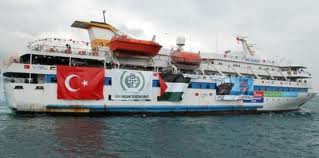
Prefatory Note: I am posting a press release of yesterday, 14 June 2013, to take note of the start of the seventh year of the Israeli blockade. After the Mavi Marmara incident, 31 May 2010 and the more recent November ceasefire agreement between Israel and the Gaza government there was an undertaking to ease the blockade with respect to the flow back and forth of people and goods, but the situation remains desperate for the civilian population of Gaza that remains essentially locked into the Gaza Strip where economic destitution has reached epidemic extremes and where the water is mostly unfit for human consumption. The international community, and its main leaders, have commented adversely on the blockade, but nothing happens! It is this sense of powerlessness that is undermining the legitimacy and relevance of the United Nations to the suffering of the Palestinian people, and with particular relevance to the extreme ordeal of the civilian population of Gaza.

**********************************************************

Freedom Flotilla 


UN Human Rights Office of the High Commissioner

Press Release on start of 7th year of Gaza Blockade

Collective punishment in Gaza must end: Israel’s blockade enters its 7th year – UN Special Rapporteur        

GENEVA, 14 June 2013 – The United Nations Special Rapporteur on the situation of human rights in the Palestinian territories occupied by Israel since 1967, Richard Falk, called today on Israel to end its blockade over the Gaza Strip, six years after it was tightened following the Hamas takeover in June 2007. The human suffering of the land, sea and air blockade imposed on the 1.75 million Palestinians living in one of the most densely populated and impoverished areas of the world has been devastating.

“Six years of Israel’s calculated strangulation of the Gaza Strip has stunted the economy and has kept most Gazans in a state of perpetual poverty and aid dependency,” said the UN expert. “Whether it is fishermen unable to go beyond six nautical miles from the shore, farmers unable to access their land near the Israeli fence, businessmen suffering from severe restrictions on the export of goods, students denied access to education in the West Bank, or patients in need of urgent medical attention refused access to Palestinian hospitals in the West Bank, the destructive designs of blockade have been felt by every single household in Gaza. It is especially felt by Palestinian families separated by the blockade,” he added.

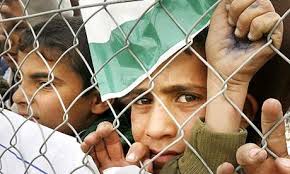
Gaza children at fence

“The people of Gaza have endured the unendurable and suffered what is insufferable for six years. Israel’s collective punishment of the civilian population in Gaza must end today,” said the Special Rapporteur.

“Israel has the responsibility as the Occupying Power to protect the civilian population. But instead of allowing a healthy people and economy to flourish, Israeli authorities have sealed off the Gaza Strip. According to statistics released by the Israeli Ministry of Defense, last month’s exports out of Gaza consisted of 49 truckloads of empty boxes, three truckloads of spices, one truckload of cut flowers, and one truckload of furniture,” he said. In 2012, the total number of truckloads of exports leaving Gaza was 254, compared to 9,787 in 2005 before the tightening of the blockade.

“It does not take an economist to figure out that such a trickle of goods out of Gaza is not the basis of a viable economy,” noted the UN expert. “The easing of the blockade announced by Israel in June 2010 after its deadly assault on the flotilla of ships carrying aid to the besieged population resulted only in an increase in consumer goods entering Gaza, and has not improved living conditions for most Gazans.  Since 2007, the productive capacity of Gaza has dwindled with 80 percent of factories in Gaza now closed or operating at half capacity or less due to the loss of export markets and prohibitively high operating costs as a result of the blockade. 34 percent of Gaza’s workforce is unemployed including up to half the youth population, 44 percent of Gazans are food insecure, 80 percent of Gazans are aid recipients,” he said.

“To make matters worse, 90 percent of the water from the Gaza aquifer is unsafe for human consumption without treatment, and severe fuel and electricity shortage results in outages of up to 12 hours a day. Only a small proportion of Gazans who can afford to obtain supplies through the tunnel economy are buffered from the full blow of the blockade, but tunnels alone cannot meet the daily needs of the population in Gaza.”

“Last year, the United Nations forecast that under existing conditions, Gaza would be uninhabitable by 2020. Less optimistic forecasts presented to me were that the Gaza Strip may no longer be viable only three years from now,” said the Special Rapporteur. “It’s clear that the Israeli authorities set out six years ago to devitalize  the Gazan population and economy,” he said, referring to a study undertaken by the Israeli Ministry of Defense in early 2008 detailing the minimum number of calories Palestinians in Gaza need to consume on a daily basis to avoid malnutrition.  The myriad of restrictions imposed by Israel do not permit civilians in Gaza to develop to their full potential, and enjoy and exercise fully their human rights.

ENDS

In 2008, the UN Human Rights Council designated Richard Falk (United States of America) as the fifth Special Rapporteur on the situation of human rights on Palestinian territories occupied since 1967. The mandate was originally established in 1993 by the UN Commission on Human Rights.

Learn more, log on to: http://www2.ohchr.org/english/countries/ps/mandate/index.htm

UN Human Rights – Occupied Palestinian Territories: http://www.ohchr.org/EN/countries/MENARegion/Pages/PSIndex.aspx

UN Human Rights – Israel: http://www.ohchr.org/EN/Countries/MENARegion/Pages/ILIndex.aspx

For more information and media requests, please contact Kevin Turner (kturner@ohchr.org) or Kiyohiko Hasegawa khasegawa@ohchr.org) or write to sropt@ohchr.org

For media inquiries related to other UN independent experts:

Cécile Pouilly, UN Human Rights – Media Unit (+ 41 22 917 9310 / cpouilly@ohchr.org)

UN Human Rights, follow us on social media:

Facebook: https://www.facebook.com/unitednationshumanrights

Twitter: http://twitter.com/UNrightswire

Google+ gplus.to/unitednationshumanrights    

YouTube: http://www.youtube.com/UNOHCHR

Storify:        http://storify.com/UNrightswire

An Open Letter of Response to CRIF (Conseil Représentif des Institutions Juives de France)

30 Dec

An Open Letter of Response to CRIF (Conseil Représentif des Institutions Juives de France)

I am shocked and saddened that your organization would label me as an anti-Semite and self-hating Jew. It is utterly defamatory, and such allegations are entirely based on distortions of what I believe and what I have done. To confuse my criticisms of Israel with self-hatred of myself as a Jew or with hatred of Jews is a calumny. I have long been a critic of American foreign policy but that does not make me anti-American; it is freedom of conscience and its integral link with freedom of expression that is the core defining reality of a genuinely democratic society, and the robust exercise of these rights are crucial to the quality of political life in a particular country, especially here in the United States where its size and influence often has such a large impact on the lives and destiny of many peoples excluded from participating in its policy debates or elections.

It is always difficult to negate irresponsible accusations of this kind. What follows is an attempt to clarify my honestly held positions in relation to a litany of charges that have been given currency by a defamatory campaign conducted by UN Watch ever since I was appointed by the UN Human Rights Council to be Special Rapporteur for the human rights situation in the Occupied Palestinian Territories in 2008. What follows are brief attempts at clarification in response to the main charges:

–the attacks on me by such high profile individuals as Ban ki-Moon, Susan Rice, David Cameron were made in response to vilifying letters about me sent to them by UN Watch, and signed by its Executive Director, Hillel Neuer. The contention that Navi Pillay, UN High Commissioner for Human Rights, also attacked me is misleading. She regretted the posting of a cartoon on my blog that had an anti-Semitic cartoon, but she took note of my contention that it was a complete accident and that the cartoon was immediately removed when brought to my attention;

–it was the cartoon that has served UN Watch as the basis of their insistence that I am an anti-Semite. Their bad faith is demonstrated by their repeated magnification of the cartoon far beyond what I had posted on the basis of its size on the Google image page for the International Criminal Court. As I have explained many times, I was unaware when I posted the cartoon of its anti-Semitic character, and pointed out that the post in which was inserted was dealing with my argument that the ICC was biased in its use of its authority, in this instance by issuing arrest warrants against the Qaddafi leadership in Libya. Israel was not mentioned in the post the content of which had nothing whatsoever to do with Judaism or Jews. To ignore such an explanation is to my way of thinking and to reprint the cartoon in an enlarged form is a sign of malicious intent; any fair reading of the 182 posts on my blog, including one devoted to Jewish identity would make it very clear to any objective reader that I have not expressed a single sentiment that can be fairly described as an anti-Semite. It is a grave disservice to both Israel and Jews to confuse criticism of Israel’s behavior toward the Palestinians with anti-Semitism.

–the claim that I am a 9/11 conspiracy theorist, actually a leading one, is false, as well. I have consistently maintained that I have insufficient knowledge to reach any conclusions about whether there is an alternative narrative of the 9/11 events that is more convincing than the official version. What I have said, and stand behind, is that David Griffin and many others have raised questions that have not been adequately answered, and constitute serious gaps in the official version that were not closed by the 9/11 Commission report. I would reaffirm that David Griffin is a cherished friend, and that we have professionally collaborated on several projects long before 9/11. It should be pointed out that Griffin is a philosopher of religion of worldwide reputation that has written on a wide range of issues, including a series on inquiries into the post-modern world and the desirability of an ecological civilization.

–The recent UN Watch letter that led me to be removed from the Human Rights Watch SB city Committee also claims I am a partisan of Hamas, which is a polemic charge and is untrue. What I have encouraged is a balanced view of Hamas based on the full context of their statements and behavior, and not fixing on language in the Hamas Charter or a particular speech. When the broader context is considered of Hamas statements and recent behavior is considered, then I believe there exists a potential opportunity to work with Hamas leaders to end the violence, to release the people of Gaza from captivity, and to generate a diplomatic process that leads to a period of prolonged peaceful co-existence with Israel. I have never insisted that this hopeful interpretation is necessarily correct, but I do maintain that it is worth exploring, and a preferred alternative to the current rigid insistence on refusing to deal with Hamas as a political actor because it is ‘a terrorist organization.’ It was evident in the recent violence preceding the November ceasefire in Gaza that leaders throughout the Middle East were treating Hamas as the governmental authority in Gaza and as a normal political entity, and this helped bring the violence to an end.

–Finally, UN Watch charges that I am biased and one-sided in my treatment of Israeli behavior, and cites Susan Rice and others for support, as well as noting my failure to report on violations by Hamas, Fatah, and the Palestinian Authority. I can only say once more that I am trying my best to be objective and truthful, although unwilling to give in to pressure. I did make an effort in my initial appearance before the Human Rights Council to broaden my mandate to take account of Palestinian violations, but was rebuffed by most of the 49 governmental members of the Council for seeking to make such a change, and reasonable grounds were advanced for not changing my mandate. I have noted Palestinian violations of international law wherever relevant to the assessment of Israeli behavior, as for instance in relation to the launch of indiscriminate rockets. Palestinian abuses of human rights of Palestinians under their control while administering portions of Occupied Palestine is outside my mandate, and I have no discretion to comment on such behavior in discharging my responsibilities as Special Rapporteur.

It is my view that Israel is in control of the occupied Palestinian territories of the West Bank, East Jerusalem, and the Gaza Strip, and is primarily responsible for the situation and the persistence of the conflict, especially by their insistence on undertaking provocative actions such as targeted assassinations and accelerated settlement expansions.

I would grateful if this account of my actual views and beliefs can be circulated widely in response to the CRIF repetition of the UN Watch attacks.

Richard Falk

29 December 2012

The Gaza Ceasefire: An Early Assessment

24 Nov


The Gaza Ceasefire, unlike a similar ceasefire achieved after Operation Cast Lead four years ago, is an event that has a likely significance far beyond ending the violence after eight days of murderous attacks. It is just possible that it will be looked back upon as a turning point in the long struggle between Israel and Palestine. Many have talked about ‘the fog of war,’ but it pales besides the ‘the fog of truce making,’ and in our media-infected air, the outcomes along with conjectures about the future are already being spun in all possible directions. Supporters of every position give their own spin, and then proclaim ‘victory.’ But as with the violent phases of the conflict, it is clarifying to distinguish the more persuasive contentions and interpretations from those that are less persuasive. What follows is one such attempt at such clarification.

It remains too soon to tell whether the ceasefire will hold for very long, and if it does, whether its central provisions will be implemented in good faith. At this early moment, the prospects are not promising. Israel has already used excessive violence to disperse Palestinian civilians who gathered on the Gaza side of the border, with a few straying across into Israel, to celebrate what they thought was their new freedom now to venture close to the border. This so-called ‘no-go-area’ was decreed by Israel after its 2005 ‘disengagement’ has been a killing field where 213, including 17 children and 154 uninvolved, had lost their lives according to Israeli human rights organizations. Israeli security forces, after firing warning shots, killed one Palestinian civilian and wounded another 20 others with live ammunition. The Israeli explanation was that it had given warnings, and since there had been no agreement on new ground rules implementing the ceasefire, the old regime of control was still in place. It is notable that Hamas protested, but at this point has made no moves to cancel the ceasefire or to retaliate violently, but the situation remains tense, fragile, and subject to change.

Putting aside the precariousness of the current situation and the accompanying uncertainties, it remains useful to look at the process by which the ceasefire was brought about, how this sheds light on the changing dynamics of the conflict itself, as well as discloses some underlying shifts in the regional and global balances of forces.

First of all, the role and outlook of the Arab governments was far more pro-active than in past interludes of intensified Israel/Palestine violence. During attacks several leading foreign ministers from the region visited Gaza and were received by the Hamas governing authorities, thus undermining the Israeli policy of isolating Hamas and excluding it from participation in diplomacy affecting the Palestinian people. Egypt played the critical role in brokering the agreement, and despite the Muslim Brotherhood affiliation of its leaders. Mohammed Morsi, the Egyptian President, emerged as the key diplomatic figure in the process and widely praised by the West for his ‘pragmatism.’ This can be understood as recognition of Morsi’s capability as a statesman to address the concerns of both sides without intruding his own pro-Palestinian outlook. Indeed, the auspices of this brokered agreement inverted what Americans have brought to the table in past negotiations, a pretension of balance, a reality of partisanship.

Secondly, the text of the agreement implicitly acknowledged Hamas as the governing authority of Gaza, and thereby gives it, at least temporarily, a greatly enhanced status among Palestinians, regionally, and internationally. Its claim to be a (not the) legitimate representative of the Palestinian people has now become plausible, making Hamas a political actor that has for the moment been brought in from the terrorist cold. While Hamas is almost certain to remain formally ‘a terrorist organization’ in the eyes of Israel, the United States, and Europe, throughout this just concluded feverish effort to establish a ceasefire, Hamas was treated as if ‘a political actor’ with sovereign authority to speak on behalf of the people living in Gaza. Such a move represents a potential sea change, depending on whether there is an effort to build on the momentum achieved or a return to the futile and embittering Israeli/U.S. policy of excluding Hamas from diplomatic channels by insisting that no contact with a terrorist organization is permissible or politically acceptable. Correspondingly, the Palestinian Authority, and its leader, Mahmoud Abbas, have been for the moment awkwardly sidelined, overshadowed, and made to appear irrelevant in the midst of this latest terrible ordeal affecting the Palestinian people. It is puzzling why such an impression was fostered by the approach taken by all the diplomatic players.

Thirdly, Israel accepted as integral conditions of the ceasefire two sets of obligations toward the people of Gaza that it would never have agreed to before it launched its Pillar of Defense Operation: (1) agreeing not to engage in “incursions and targeting of individuals” and (2) agreeing to meet so as to arrange for the “opening the crossings and facilitating the movements of people and the transfer of goods, and refraining from restricting residents free movement, and targeting residents in border areas.” If implemented in good faith by Israel, this means the end of targeted assassinations and it requires the lifting of the blockade that has tormented Gaza for more than five years. These are major setbacks for the Israeli policy, although Hamas is obligated to stop sending rockets from its territory. The political acceptance by Tel Aviv of a prohibition on targeted assassinations, if respected, renounces a favorite tactic of Israeli governments for many years, which although generally regarded as illegal was still frequently relied upon by Israel with impunity. Indeed, the most dramatic precipitating event in the recent controversial unfolding crisis timeline was the killing of Ahmed al-Jabari on 14 November, a military/political leader of Hamas, who at the very time was negotiating a truce relating to cross-border violence. Unraveling the competing claims of acting defensively should at least acknowledge this complexity that makes polemical the contention that only one side is responsible. The Obama administration, with its usual deference to Tel Aviv, misleading told the story of the sustained violence as if only Israel was entitled to claim a defensive prerogative.

Fourthly, the role of the United States, while still significant, was considerably downsized by these other factors, especially by the need to allow Egypt to play the main role as arbiter. Such a need was partly, no doubt, a consequence of Washington’s dysfunctional insistence of continuing to avoid any direct contact with Hamas officials. This Egyptian prominence suggests a trend toward the regionalization of Middle East diplomacy that diminishes the importance and seriously erodes the legitimacy of extra-regional interference. This is bad news for the Israelis and for the United States. Turkey, a state with bad relations with Israel, also played a significant role in defusing the escalating crisis.

There exists a revealing gap between the U.S. insistence all along that Israel’s use of force was fully justified because every country has the right to defend itself and the ceasefire text that placed restrictions on future violence as being applicable to both sides. After the ceasefire, the United States needs to make a defining choice: either continue its role as Israel’s unconditional enabler or itself adopt a more ‘pragmatic’ approach to the conflict in the manner of Morsi. If the United States remains primarily an enabler, its diplomatic role is likely to diminish rapidly, but if it decides to adopt a balanced approach, even if quietly, it might still be able to take the lead in establishing a real peace process that is sensitive to the rights of both sides under international law. To make such a shift credible, President Obama would have to make a major speech to the American people at some point explaining why it is necessary to choose between partisanship and diplomacy in reshaping its future relationship to the conflict. However sensible such a shift would be both for American foreign policy and the stability of the Middle East, it is highly unlikely to happen. There is nothing in Obama’s resume that suggests a willingness to go to the people to circumvent the dysfunctional outlook of special interest groups that have dominated the way the U.S. Congress and the media present the conflict.

Fifthly, the United Nations was made to appear almost irrelevant, despite the presence of the Secretary General in the region during the diplomatic endgame. Ban Ki Moon did not help matters by seeming to echo the sentiments coming from Washington, calling attention almost exclusively to Israeli defensive rights. The UN could provide more neutral auspices for future negotiations if it were to disentangle itself from Western geopolitics. To do this would probably require withdrawing from participation in the Quartet, and pledging a commitment to a sustaining and just peace for both peoples. As with United States, it is highly unlikely that the UN will make such a move, at least not without prior authorization from Washington. As with Obama, there is nothing in the performance to date of Ban Ki Moon as Secretary General that suggests either the willingness or the capacity to act independently when the geopolitical stakes are high.

Sixthly, the immediate aftermath of the ceasefire was a call from the Gaza streets for Palestinian unity, symbolized by the presence of Palestinian Authority, Hamas, Islamic Jihad, and Popular Front for the Liberation of Palestine flags all flying in harmonious co-existence. As the New York Times commented, “a rainbow not visible here in years.” If Palestinian unity holds, and becomes a practical reality by being implemented at governmental levels, it could alter the political landscape in a fundamental manner. To take hold it would require open and free elections throughout Occupied Palestine. If this narrative were to unfold, it might make the ceasefire to be perceived as much more than a temporary tense truce, but as a new beginning in the long march toward Palestinian justice.

All in all, the outcome of Operation Pillar of Defense was a resounding defeat for Israel in at least three respects: despite the incessant pounding of Gaza for eight days and the threat of a ground invasion, Hamas did not give in to Israeli demands for a unilateral ceasefire; the military capabilities of Gaza rockets exhibited a far greater capacity than in the past to inflict damage throughout the whole of Israel including Tel Aviv and Jerusalem, which suggests that in any future recurrence of major violence the military capabilities at the disposal of Gaza will become even greater; and the Israeli politics of promoting the Palestinian Authority as the only legitimate representative of the Palestinian people while refusing to deal with Hamas was dealt a heavy, possibly fatal, blow.

There is one chilling slant being given by Israeli officials to this attack on Gaza. It is brazenly being described as ‘a war game’ designed to rehearse for an impending attack on Iran. In the words of Israel’s ambassador to the United States, Michael Oren, “Israel was not confronting Gaza, but Iran.” Considering that at least 160 Gazans were killed, 1000 wounded, and many more traumatized, this is, or should be, a shocking admission of a declared intent to commit crimes against humanity. It should at least prompt the UN Human Rights Council to appoint a fact-finding mission to assess the allegations of criminal conduct during the military attack. In effect, the situation demands a Goldstone 2 report, but this time with the political will to follow through, assuming that incriminating findings are reported.If the HRC does not initiate such a process, as seems a near certainty at this point, the responsibility and the opportunity is a challenge to civil society organizations committed to peace and justice. Given the tactics and disproportionate levels of violence, it would be a fresh abuse of those who died and were injured, to fail to assess this behavior from the perspective of international criminal law.

These developments will themselves be affected by the pervasive uncertainties that make it likely that the ceasefire will be a short truce rather than a dramatic turn from violence to diplomacy. Will the parties respect the ceasefire? Israel has often in the past made international commitments that are later completely abandoned, as has been the case with dismantling the numerous ‘outposts’ (that is, ‘settlements’ unlawful even under Israeli law) or in relation to the commitment to settle the ‘final status’ issues associated with the Oslo Framework within five years. It is not encouraging that Israeli officials are already cynically whispering to the media that they agreed to nothing “beyond the immediate cessation of hostilities.” The undertakings of the text are thus being minimized as ‘talking points’ rather than agreed commitments that lack only specific mechanisms for their implementation. If Israel refuses to give effect to the agreed stoppage of targeted assassinations and does not move to end the blockade in good faith, it will not be surprising to see the rockets flying again.

The Palestinian Authority is poised to regain some of its lost ground by seeking recognition by the UN General Assembly of its status as ‘a non-member state’ on November 29, 2013, a move being fiercely resisted by Tel Aviv and Washington. It is probably too much to expect a softening of this diplomacy. Any claim of Palestinian statehood, even if only of symbolic significance, seems to threaten deeply Israel’s hypocritical posture of agreeing to the creation of a Palestinian state in the abstract while doing everything in its power to oppose any Palestinian efforts to claim statehood.

Such speculations must be conditioned by the realization that as the clock ticks the international consensus solution to the conflict, an independent sovereign Palestine, is fast slipping out of the realm of the feasible, if it has not already done so. The situation of prolonged occupation has altered the demography of Occupied Palestinian and raised the expectations of most Israelis. With as many 600,000 unlawful settlers in the West Bank and Jerusalem no foreseeable Israeli government would survive if it agreed to any conflict-resolving arrangement that required even a small percentage of those settlers to leave. In contrast, on the Palestinian side no arrangement would be sustainable without the substantial reversal of the settlement phenomenon. So long as this 1000 pound gorilla strides freely along the corridors of diplomacy, attaining a genuine peace based on the international consensus of two states for two peoples seems an exercise in wishful thinking.

At the same time, history has shown us over and over again that ‘the impossible’ happens, impossible in the sense that it is an outcome that informed observers rejected as ‘possible’ before it surprised them by happening. It happened when European colonialism was defeated, and again when the Soviet internal and external empire suddenly disintegrated, and then when the apartheid regime was voluntarily dissolved. Sadly, the Palestinian destiny continues to be entrapped in such a foreclosed imaginary, and yet as we have learned from history the struggles of oppressed peoples can on occasion achieve the unforeseeable. It is just barely possible that this latest display of Palestinian sumud (steadfastness) in the face of Pillar of Defense, together with the post-2011 increased responsiveness of the governments of Israel’s neighbors to the wishes of its their own citizenry, will give rise to a sequence of events that alters the equations of regional and global power enough  finally to give a just peace a chance.

The Latest Gaza Catastrophe: Will They Ever Learn?

18 Nov


            [This post is an updated version of an article published in the online English edition of Al Jazeera, 17 Nov 2012, taking account of some further developments in the new horrifying unfolding of violence in Gaza.


            President Obama, upon his arrival today in Bangkok at the start of a state visit to several Asian countries, reminded the world of just how unconditional U.S. support for Israel remains. Obama was quoted as saying, “There is no country on earth that would tolerate missiles raining down on its citizens from outside of its borders. We are fully supportive of Israel’s right to defend itself.” Much is missing from such a sentiment, most glaringly, the absence of any balancing statement along the following line: “and no country would tolerate the periodic assassination of its leaders by missiles fired by a neighboring country, especially during a lull achieved by a mutually agreed truce. It is time for both sides to end the violence, and establish an immediate ceasefire.”


            But instead of such statesmanship from this newly elected leader what we hear from Ben Rhodes, his Deputy National Security Advisor, who is traveling with the president in Asia is the following: that the rockets from Gaza are “the precipitating factor for the conflict. We believe Israel has a right to defend itself, and they’ll make their own decisions about the tactics they use in that regard.” Of course, these tactics up to this point have involved attacking a densely urbanized population with advanced weaponry from air and sea, targeting media outlets, striking residential structures, and killing and wounding many civilians, including numerous children. Since when does ‘the right to defend oneself’ amount to a license to kill and wound without limit, without some clear demonstration that the means of violence are connected with the goals being sought, without a requirement that force be exclusively directed against military targets, without at least an expression of concern about the proportionality of the military response? To overlooks such caveats in the present context in which Gaza has no means whatsoever defend itself indicates just how unconditional is the moral/legal blindfold that impairs the political wisdom and the elemental human empathy of the American political establishment.


            The statement by Rhodes signals a bright green light to the Netanyahu government to do whatever it wishes as far as Washington is concerned, and omits even a perfunctory mention of the relevance of international law. It presumes American exceptionalism, now generously shared with Israel, that doesn’t even have to bother justifying its behavior, conveying to the world an imperial directive that what would be treated as unspeakable crimes if committed by others are matters of discretion for the United States and its closest governmental associates.


            And what Netanyahu proposes is as chilling as it is criminal: to “significantly expand” what he calls Israel’s “Gaza operation” and what I call “the killing fields of Gaza.” This idea that a state defends itself by such an all out attack on an undefended society is humanly unacceptable, as well as being a mandate for future retaliation and festering hatred. Operation Cast Lead was launched in December 2008 to contribute to Israeli security, but instead led Hamas to acquire the kind of longer range rockets that are now posing genuine threats to Israel’s major cities. The unfolding logic of the conflict is that in a few years, Israel will be confronted by more sophisticated rockets capable of eluding the Iron Dome and accurately pinpointing their intended targets. This deadly logic of the war system continues to guide strategists and military planners in Washington and Tel Aviv, and ignores the string of political failures that marks recent American history from Vietnam to Afghanistan. The world has changed since the good old colonial days of gunboat diplomacy, and the history-making reality of military superiority. Will they ever learn?


            What should have been clear long ago is that Israeli security is not achieved by guns and missiles, nor incidentally are Hamas’ goals reached by rockets. The only clear path to security is to follow a ceasefire with some mutual assurances of nonviolent coexistence, a lifting of the blockade of Gaza, an acceptance by Israel (and the United States) of both Hamas and the Palestinian Authority as political actors, freezing all settlement construction, and a revival of negotiations on the basis of a commitment to produce a sustainable and just peace in accordance with Palestinian and Israeli rights under international law, above all the Palestinian right of self-determination. Depicting such a moderate approach to security for these two peoples highlights just how pathological present patterns of ‘acceptable’ behavior have become.


            Israel’s policies seemed almost calculated to increase future ‘insecurity’ for its people and the region. There is a slow ongoing mobilization of the region in support of Palestinian claims well expressed by the diplomatic re-positioning of Egypt and Turkey.  It will be become much more difficult for the United States to insulate Israel from the consequences of its future aggressions against the Palestinians. This is partly because it is likely that the next time, militants hostile to Israel will be better armed, as was true for Hezbollah after the 2006 Lebanon War and for Hamas since the 2008-09 Gaza attacks, and partly because the balance of regional forces is tilting quickly against Israel.


            These speculations make such obvious points that most Israeli strategists must be assumed to have appreciated them. It makes one wonder whether it is wrong to think of this latest surge of Israeli violence as primarily motivated by security considerations. Perhaps other motivations have greater weight: diverting attention from annexationist moves in the West Bank; reinforcing the Netanyahu claims to be the gallant protector of the nation; removing any pressure on Israel to uphold Palestinian rights; reminding Iran yet again of the militarized fury of an antagonized Israel assured of U.S. support.]


**************the text of the AJ article is reproduced below—————————


            The media double standards in the West on the new and tragic Israeli escalation of violence directed at Gaza were epitomized by an absurdly partisan New York Times front page headline: “Rockets Target Jerusalem; Israel girds for Gaza Invasion.” (NYT,  16 Nov 2012) Decoded somewhat, the message is this: Hamas is the aggressor, and Israel when and if it launches a ground attack on Gaza must expect itself to be further attacked by rockets. This is a stunningly Orwellian re-phrasing of reality. The true situation is, of course, quite the opposite: namely, that the defenseless population of Gaza can be assumed now to be acutely fearful of an all out imminent Israeli assault, while it is also true, without minimizing the reality of a threat, that some rockets fired from Gaza fell harmlessly (although with admittedly menacing implications) on the outskirts of Jerusalem and Tel Aviv. There is such a gross disproportion in the capacity of the two sides to inflict damage and suffering due to Israeli total military dominance as to make perverse this reversal of  concerns to what might befall Israeli society if the attack on Gaza further intensifies.


            The reliance by Hamas and the various Gaza militias on indiscriminate, even if wildly inaccurate and generally harmless, rockets is a criminal violation of international humanitarian law, but the low number of casualties caused and the minor damage caused, needs to be assessed in the overall context of massive violence inflicted on the Palestinians. The widespread non-Western perception of the new cycle of violence involving Gaza is that it looks like a repetition of Israeli aggression against Gaza in late 2008, early 2009, that similarly fell between the end of American presidential elections and scheduled Israeli parliamentary elections.


            There is the usual discussion over where to locate responsibility for the initial act in this renewed upsurge violence. Is it some shots fired from Gaza across the border and aimed at an armored Israeli jeep or was it the targeted killing by an Israeli missile of Ahmed al-Jabani, leader of the military wing of Hamas, a few days later? Or some other act by one side or the other? Or is it the continuous violence against the people of Gaza arising from the blockade that has been imposed since mid-2007? The assassination of al-Jabani came a few days after an informal truce that had been negotiated through the good offices of Egypt, and quite ironically agreed to by none other than al-Jabani acting on behalf of Hamas. Killing him was clearly intended as a major provocation, disrupting a carefully negotiated effort to avoid another tit-for-tat sequence of violence of the sort that has periodically taken place during the last several years. An assassination of such a high profile Palestinian political figure as al-Jahani is not a spontaneous act. It is based on elaborate surveillance over a long period, and is obviously planned well in advance partly with the hope of avoiding collateral damage, and thus limiting unfavorable publicity. Such an extra-judicial killing, although also part and parcel of the new American ethos of drone warfare, remains an unlawful tactic of conflict, denying adversary political leaders separated from combat any opportunity to defend themselves against accusations, and implies a rejection of any disposition to seek a peaceful resolution of a political conflict. It amounts to the imposition of capital punishment without due process, a denial of elementary rights to confront an accuser.


            Putting aside the niceties of law, the Israeli leadership knew exactly what it was doing when it broke the truce and assassinated such a prominent Hamas leader, someone generally thought to be second only to the Gaza prime minister, Ismail Haniya. There have been rumors, and veiled threats, for months that the Netanyahu government plans a major assault of Gaza, and the timing of the ongoing attacks seems to coincide with the dynamics of Israeli internal politics, especially the traditional Israeli practice of shoring up the image of toughness of the existing leadership in Tel Aviv as a way of inducing Israeli citizens to feel fearful, yet protected, before casting their ballots.


            Beneath the horrific violence, which exposes the utter vulnerability, of all those living as captives in Gaza, which is one of the most crowded and impoverished communities on the planet, is a frightful structure of human abuse that the international community continues to turn its back upon, while preaching elsewhere adherence to the norm of ‘responsibility to protect’ whenever it suits NATO. More than half of the 1.6 million Gazans are refugees living in a total area of just over twice the size of the city of Washington, D.C.. The population has endured a punitive blockade since mid-2007 that makes daily life intolerable, and Gaza has been harshly occupied ever since 1967.


            Israel has tried to fool the world by setting forth its narrative of a good faith withdrawal from Gaza in 2005, which was exploited by Palestinian militants as the time as an opportunity to launch deadly rocket attacks. The counter-narrative, accepted by most independent observers, is that the Israeli removal of troops and settlements was little more than a mere redeployment to the borders of Gaza, with absolute control over what goes in and what leaves, maintaining an open season of a license to kill at will, with no accountability and no adverse consequences, backed without question by the U.S. Government. From an international law point of view, Israel’s purported ‘disengagement’ from Gaza didn’t end its responsibility as an Occupying Power under the Geneva Conventions, and thus its master plan of subjecting the entire population of Gaza to severe forms of collective punishment amounts to a continuing crime against humanity, as well as a flagrant violation of Article 33 of Geneva IV. It is not surprising that so many who have observed the plight of Gaza at close range have described it as ‘the largest open air prison in the world.’


            The Netanyahu government pursues a policy that is best understood from the perspective of settler colonialism. What distinguishes settler colonialism from other forms of colonialism is the resolve of the colonialists not only to exploit and dominate, but to make the land their own and superimpose their own culture on that of indigenous population. In this respect, Israel is well served by the Hamas/Fatah split, and seeks to induce the oppressed Palestinian to give up their identity along with their resistance struggle even to the extent of asking Palestinians in Israel to take an oath of loyalty to Israel as ‘a Jewish state.’ Actually, unlike the West Bank and East Jerusalem, Israel has no long-term territorial ambitions in Gaza. Israel’s short-term solution to its so-called ‘demographic problem’ (that is, worries about the increase in the population of Palestinians relative to Jews) could be greatly eased if Egypt would absorb Gaza, or if Gaza would become a permanently separate entity, provided it could be reliably demilitarized. What makes Gaza presently useful to the Israelis is their capacity to manage the level of violence, both as a distraction from other concerns (e.g. backing down in relation to Iran; accelerated expansion of the settlements) and as a way of convincing their own people that dangerous enemies remain and must be dealt with by the iron fist of Israeli militarism.


            In the background, but not very far removed from the understanding of observers, are two closely related developments. The first is the degree to which the continuing expansion of Israeli settlements has made it unrealistic to suppose that a viable Palestinian state will ever emerge from direct negotiations. The second, underscored by the recent merger of Netanyahu and Lieberman forces, is the extent to which the Israeli governing process has indirectly itself irreversibly embraced the vision of Greater Israel encompassing all of Jerusalem and most of the West Bank. The fact that world leaders in the West keep repeating the mantra of peace through direct negotiations is either an expression of the grossest incompetence or totally bad faith. At minimum, Washington and the others calling for the resumption of direct negotiations owe it to all of us to explain how it will be possible to establish a Palestinian state within 1967 borders when it means the displacement of most of the 600,000 armed settlers now defended by the Israeli Defense Forces, and spread throughout occupied Palestine. Such an explanation would also have to show why Israel is being allowed to quietly legalize the 100 or so ‘outposts,’ settlements spread around the West Bank that had been previously unlawful even under Israeli law. Such moves toward legalization deserve the urgent attention of all those who continue to proclaim their faith in a two-state solution, but instead are ignored.


            This brings us back to Gaza and Hamas. The top Hamas leaders have made it abundantly clear over and over again that they are open to permanent peace with Israel if there is a total withdrawal to the 1967 borders (22% of historic Palestine) and the arrangement is supported by a referendum of all Palestinians living under occupation. Israel, with the backing of Washington, takes the position that Hamas as ‘a terrorist organization’ that must be permanently excluded from the procedures of diplomacy, except of course when it is serves Israel’s purposes to negotiate with Hamas. It did this in 2011 when it negotiated the prisoner exchange in which several hundred Palestinians were released from Israeli prisons in exchange for the release of the Israel soldier captive, Gilad Shalit, or when it seems convenient to take advantage of Egyptian mediation to establish temporary ceasefires. As the celebrated Israeli peace activist and former Knesset member, Uri Avnery, reminds us a cease-fire in Arab culture, hudna in Arabic, is considered to be sanctified by Allah, has tended to be in use and faithfully observed ever since the time of the Crusades. Avnery also reports that up to the time be was assassinated al-Jabari was in contact with Gershon Baskin of Israel, seeking to explore prospects for a long-term ceasefire that was reported to Israeli leaders, who unsurprisingly showed no interest.


            There is a further feature of this renewal of conflict involving attacks on Gaza. Israel sometimes insists that since it is no longer, according to its claims, an occupying power, it is in a state of war with a Hamas governed Gaza. But if this were to be taken as the proper legal description of the relationship between the two sides, then Gaza would have the rights of a combatant, including the option to use proportionate force against Israeli military targets. As earlier argued, such a legal description of the relationship between Israel and Gaza is unacceptable. Gaza remains occupied and essentially helpless, and Israel as occupier has no legal or ethical right to engage in war against the people and government of Gaza, which incidentally was elected in internationally monitored free elections in early 2006. On the contrary, its overriding obligation as Occupier is to protect the civilian population of Gaza. Even if casualty figures in the present violence are so far low as compared with Operation Cast Lead, the intensity of air and sea strikes against the helpless people of Gaza strikes terror in the hearts and minds of every person living in the strip, a form of indiscriminate violence against the spirit and mental health of an entire people that cannot be measured in blood and flesh, but by reference to the traumatizing fear that has been generated.


            We hear many claims in the West as to a supposed decline in international warfare since the collapse of the Soviet Union 20 years ago. Such claims are This is to some extent a welcome development, but the people of the Middle East have yet to benefit from this trend, least of all the people of Occupied Palestine, and of these, the people of Gaza are suffering the most acutely. This spectacle of one-sided war in which Israel decides how much violence to unleash, and Gaza waits to be struck, firing off militarily meaningless salvos of rockets as a gesture of resistance, represents a shameful breakdown of civilization values. These rockets do spread fear and cause trauma among Israeli civilians even when no targets are struck, and represent an unacceptable tactic. Yet such unacceptability must be weighed against the unacceptable tactics of Israel that holds all the cards in the conflict. It is truly alarming that now even the holiest of cities, Jerusalem, is threatened with attacks, but the continuation of oppressive conditions for the people of Gaza, inevitably leads to increasing levels of frustration, in effect, cries of help that world has ignored at its peril for decades. These are survival screams! To realize this is not to exaggerate! To gain perspective, it is only necessary to read a recent UN Report that concludes that the deterioration of services and conditions will make Gaza uninhabitable by 2020. 


           That is, completely aside from the merits of the grievances on the two sides, for one side to be militarily omnipotent and the other side to be crouching helplessly in fear. Such a grotesque reality passes under the radar screens of world conscience because of the geopolitical shield behind which Israel is given a free pass to do whatever it wishes. Such a circumstance is morally unendurable, and should be politically unacceptable. It needs to be actively opposed globally by every person, government, and institution of good will.     


Short Addendum to the Open Letter to My Blog

6 Sep


            As I should have anticipated the responses to my effort to set some rules of the road for my blog produced considerable feedback, which was equally divided between those who welcomed such monitoring to sustain a civility of tone and useful substantive debate and those who believed that debate should go forth without such constraints, and that it was my moral failure, even alleged cowardice, to control the comment section in this way. Some contended that there were benefits from even uncivil exchanges, a position I understand, but do not share. Several of the responses were, as earlier, accusatory toward my character, repeating old charges, some demeaned the character of others who submitted comments, and some derisive in their attitude toward the Palestinian and/or Arab or the Jewish people.


            I want to restate ever so briefly that I will not in the future give my approval to comments that dwell on character failings of myself or other contributors to the blog or show no respect for the dignity of the Palestinian or Jewish people. Ethnic hatred and prejudice is the source of much suffering in our world and throughout history, and never heals wounds.


            I acknowledge a special interest in the quest for a sustainable peace in relation to the Palestine/Israel conflict, however remote its achievement currently appears to be. Let me also be forthright in admitting that I feel no responsibility to respond to comments that do not accept as a political premise the relevance of the structure of oppression and disparity of circumstance that separates the Israeli reality from that of Palestinians living under occupation, in refugee camps, in exile, or as second-class citizens in Israel. As well, I am not inclined to respond to those comment writers who question the inalienable and elemental Palestinian right of self-determination in the West Bank, Jerusalem, and Gaza, claiming that sovereignty is either ‘disputed’ or inheres by biblical or historical claim to Israel. Those who hold such position have many outlets for such views within the blogosphere and elsewhere, but for my purposes, such positions are outside the boundaries of responsible debate.


            Finally, I realize that many blogs and online media comment sections operate with much more permissive rules of the road, or virtually none. I tried this, but feel it engendered, especially recently, an atmosphere of acrimony.Such a tone and spirit of intemperance is the very opposite of my goal in establishing and continuing the blog. This new more constrictive approach is one more experiment of mine undertaken in the hope of finding a workable arrangement consistent with my values.


            With thanks and feelings of gratitude for all those who have participated in these discussions of my posts over the past couple of years in good faith whether in agreement or not with the positions being set forth. I hope to continue to discuss sensitive issues in ways that will undoubtedly infuriate some of those who visit the blog, but I hope if you choose to participate actively you will embrace this ethos of civility, which in my mind is inseparable from an affirmation of the dignity and sacredness of every person, as well as being a show of respect for the diversities of race, ethnicity, religion, nationality, and gender that currently constitute the human species.


Beyond the Politics of Invisibility: Remembering Not to Forget Palestinian Hunger Strikers

28 May


            With a certain amount of fanfare in Israel and Palestine, although still severely underreported by the world media and relatively ignored by the leading watchdog human rights NGOs, it was observed with contradictory spins that the Palestinian hunger strikes had been brought to an end by agreement between the strikers and Israel. At least, that is what most of us believed who were following this narrative from outside the region, but like so much else in the region our understanding was a half-truth, if that. Whether Israel abides by its assurances remains to be seen, and although these strikes were courageous acts of nonviolent resistance it is not clear at this point whether they will have any longer term effects on the Israel’s occupation, arrest, and prison policy, or on the wider Palestinian struggle.


            Two things are certain, however. First, a much wider awareness that Israel’s reliance on administrative detention, its abusive arrest procedures, and its prison system deserves wider scrutiny than in the past, and that this dimension of the prolonged occupation of Palestine has been responsible for inflicting great suffering on many Palestinians and their families ever since 1967. Whether such a structure of imprisonment of an occupied people should be viewed as a hitherto neglected dimension of state terrorism is an open question that should be further investigated. Secondly, that the hunger strike as a mode of resistance is now part of the Palestinian culture of resistance, and an option that engages Palestinian political consciousness in manner that did not exist prior to Khader Adnan’s 66 day hunger strike initiated on December 17, 2011.


            There were parallel and overlapping strikes: A sequence of long-term strikes, first, Adnan, followed by Hana Shalabi, then Thaer Halahleh and Bilal Diab, and maybe others, focusing on humiliating and abusive arrest procedures, as well as administration detention as a practice; and then a second wave of strikes, commencing on April 17, 2012, Palestine Prisoners Day and ending 30 days later on the eve of the 2012 Nakba observance. This latter protest involved more than 1600 Palestinian prisoners, who were initially inspired by the Adnan and Shalabi strikes, and focused their challenge on deplorable prison conditions.  


            Supposedly Israeli prison authorities agreed under the pressure of these latter strikes to reduce reliance on solitary confinement in its prisons and to allow more family visits, especially from Gaza. Gaza prisoners had been denied such visits for years as an unlawful reprisal mandated by the Knesset in angry reaction to the capture of the Israeli soldier, Gilad Shalit. What was this pressure? It was not moral suasion. It seemed to be a calculated decision by Israeli prison authorities that it would be better to make small concessions than risk angry reactions to the death of any hunger strikers. The debate in the Israeli press was entirely pragmatic: whether it was worse to have bad publicity or to show weakness by giving in. Israel only seemed to give in. It needs to be understood that Israel retains all the prerogatives to rely on administrative detention in the future and continuing to have unmonitored exclusive control over prison life.


            In the background it should be appreciated that the whole structure of this Israeli prison system violates the Fourth Geneva Convention that explicitly forbids the transfer of prisoners from an occupied territory to the territory of the occupier.


            These uncertainties about the results of these past strikes should certainly be kept in mind. What is presently of more urgent concern is the failure even to realize that long-term hunger strikes were never ended by at least two prisoners, Mahmoud Sarsak, without food for 70 days, and Akram Rikhawi on strike for 40 days. Both are, as could hardly be otherwise, are currently in danger of dying, and yet hardly anybody seems to know. Sarsak who is 25 years of age and a resident of the Rafah Refugee Camp in Gaza is hardly a nobody. When arrested in July 2009 he was a member of the Palestine National Football Team on his way to a match in the West Bank. He was arrested under the ‘Unlawful Combatants Law,’ which offers a person detained even less protection than is provided by ‘administrative detention.’ It is aimed at Palestinians living in Gaza, a part of Palestine that is treated by Israel (but not the international community) as no longer occupied since Sharon’s ‘disengagement plan’ was implemented in 2005. Iman Sarsak has bemoaned his brother’s fate, “My family never would have imagined that Mahmoud would have been imprisoned by Israel. Why, really why?”


            There is reason to believe that rather than some conjured up security concern, Sarsak was arrested as part of a broader effort to demoralize the Palestinians, especially those long entrapped in Gaza. During the savage attacks on Gaza at the end of 2008 (‘Operation Cast Lead’) the national stadium used for football and the offices of the Palestine Football Association were targeted and destroyed, and three members of the Palestine team killed. All along, the team has been handicapped by curfews, checkpoints, and harassments, as well as the blockade of Gaza, that has forced the team to forfeit many games. The goalkeeper, Omar Abu Rwayyes has said, “if you degrade the national team you degrade the idea that there could ever be a nation.” Football, what we Americans call soccer, plays a vital symbolic role in the self-esteem and national consciousness of peoples throughout the Arab world, and elsewhere in the South, to a degree unimaginable for even a sports crazy country like the United States.


            There has been some slight notice taken of the plight of the Palestinian team in the football world. A few years ago Michel Piatini, President of FIFA, warned Israel that it was risking its own membership in the world association if it continued to interfere with the Palestinian efforts to field the best possible team for international competition. But as with many international gestures of protest against Israel, there was no follow through, nullifying the original impulse. In fact, a disturbing reversal of approach took place. Not long afterwards, Piatini actually presided over a process that awarded Israel the honor of hosting the 2013 Under-21 European Championships. A British NGO, ‘Soccer Without Borders’ was not so easily seduced, issuing a declaration urging a boycott of the event in Israel, declaring that its organization “stands in solidarity with Mahmoud Sarsak and all Palestinian political prisoners.”


            As is usually the case, the Israeli response in self-justifying and cynical. A shin bet official insisted that Israel “can’t play by the rules of bridge if everyone else is playing rugby.” This kind of assertion papers over the degree to which Israeli society in recent years has enjoyed peace, prosperity, and security while Palestinians have been enduring the rigors of a cruel occupation and the severe vulnerabilities of a rightless existence. Palestinians have also been experiencing the split reality of observing a set of protective laws applied Israeli settlers (all of whom are part of an unlawful enterprise) and an unregulated military structure applied arbitrarily to the indigenous residents of the West Bank, East Jerusalem, and Gaza.


            With national athletes being such objects of interest it shows how effective is this ‘politics of invisibility’ that keeps the world from knowing the harm being done to the Palestinian people and how they are resisting, often at great risk and self-sacrifice, as epitomized by these long hunger strikes. One can be certain that if such repressive measures were taken by China or Myanmar there would be a mighty cascade of interest, coupled with high minded denunciations from the global bully pulpits of political leaders and an array of moral authority figures. But when the Palestinians experience abuse or resist by reliance on brave forms of nonviolence there is a posture of almost total disregard, and if a few voices are raised, such as that of Archbishop Tutu it is either ignored because his witness is treated as partisan or according to Israel’s more zealous defenders, he is discredited by being alleged to be ‘anti-semite,’ a denunciation whose meaning has been conflated so as to apply to any critic of Israel. Even such a globally respected figure as Jimmy Carter could not escape the wrath of Israeli loyalists merely because the word ‘apartheid’ in the title of a book urging a just peace between the two peoples.


            The politics of invisibility is cruel and harmful. It is cruel because it does not acknowledge a pattern of injustice because the victims have been effectively stigmatized. It is harmful because it sends a strong signal that victimization will only be given some sort of visibility if it shocks the conscience by its violence against those who seem innocent. Such visibility has a largely negative and stereotyping impact, allowing the oppressor to escalate state violence without risking any kind of backlash or even notice, and validating the perception of the victim population as undeserving, and even as evil endorsers of an ethos of terrorism. Israeli hasbara has worked hard over many years to stereotype the Palestinians as ‘terrorists,’ and by doing so to withdraw any sympathy from their victimization, which is portrayed as somehow deserved. These hunger strikers, despite all indications to the contrary, are so described, attributing their supposed association with Islamic Jihad as synonymous with an embrace of terrorism.  A more objective look at the evidence suggests that Islamic Jihad has itself for several years abandoned tactics of violence against civilian targets, and is part of a broader shift in Palestinian tactics of resistance in the direction of nonviolence. Such shifts are either totally ignored by the politics of invisibility or there is a refusal to acknowledge the shift so as to keep the negative stereotype before the public. 


            It is one more challenge to global civil society to do what international law is currently incapable of doing: treat equals equally. If the world media renders visible the plight of Chinese human rights activists who are abused by the state, might not at least human rights NGOs note this emergency plight of Palestinian hunger strikers on the edge of death?  And if these NGOs are afraid to do so, should not those with eyes able to see such torment, start screaming at the top of our lungs?

What is New in the Israel/Palestine Conflict

25 May


           Undoubtedly transfixed by the extraordinary developments throughout the Arab world since Mohamed Boazizi’s self-immolation on December 17, 2010: from Tahrir Square to the NATO intervention in Libya to bloody confrontations in Syria, Yemen, Bahrain to the eerie quiet in Algeria to the relative and temporary calm in Morocco, there has been a widespread few have noticed that the Israeli/Palestine conflict has changed its character in fundamental respects during the last couple of years.


            For some the first of these transformative developments may have been realized for somewhat longer, but now almost everybody knows, except for those in high places, especially in Washington and Tel Aviv who seem to have a political need not to know. The stark fact is that both Israel and Palestine have no hope that international negotiations between governmental representatives of the two sides has any chance of reaching an agreement that will end the conflict. Israelis, especially those backing the Netanyahu government never desired or believed in the possibility of a diplomatic solution. The ‘peace process’ that started in Oslo back in 1993 has steadily deteriorated the Palestinian prospects while enhancing those of Israel; it has been worse than gridlock for the Palestinians and a smokescreen for Israelis to carry out their expansionist plans while pretending to be pursuing a political compromise based on withdrawing from land occupied in 1967. The sequel to Oslo has been a pathetic enterprise, taking the form of ‘the quartet’ (U.S., European Union, Russia, and the UN) setting forth a roadmap that was supposed to lead the Palestinians to a state of their own drawn along the borders of the green line, but in practice has been a charade that Israel has scoffed at while representatives of the Palestinian Authority seemed to believe that it was worth playing along, although working within the confines of the occupation to establish governmental institutions that could claim statehood by unilateral self-assertion. The PA did seize this option last September when President Mahmoud Abbas made his historic plea to the UN General Assembly, but was stymied by exertion of U.S. geopolitical muscle

 on Israel’s behalf. At this point even the PA seems to have abandoned its effort to challenge a supposed status quo that is more realistically comprehended as a toxic mixture of annexation and apartheid should no longer be called ‘occupation.’


            Apparently to please Washington, and to a lesser extent the EU, neither Tel Aviv nor the Palestinian Authority in Ramallah have openly repudiated diplomacy, and continue to give lip service to a readiness to talk yet again, although the PA has at least the dignity to insist that no further negotiations can occur until Israel agrees to halt settlement expansion in the West Bank. To demand that Israel discontinue unlawful activities that impact upon what is being discussed should be regarded as a no brainer, but it is treated by the world media as though the Palestinians were seeking a huge concession from the Israelis, and in a way it is, if we acknowledge that the Netanyahu government is essentially a regime under the control of the settlers.


            The second of these under observed developments in the conflict is a definite shift toward nonviolence by the Palestinians. In different sites of struggle the Palestinians have confirmed the declarations of their leaders that resistance no longer primarily refers to armed struggle and suicide bombings, but is based on a range of nonviolent undertakings that challenge the legitimacy of Israeli policies, above all its oppressive policies and structures of abuse and exploitation in the West Bank, East Jerusalem, and Gaza.


            There are several different manifestations of this turn to nonviolence and a global solidarity movement. The following instance are illustrative, and should have been treated as major news, but because Israel refuses to be challenged, even nonviolently, the world media have been silent, and offered very little overall analysis. Among the forms of nonviolent opposition are the following: repeated village demonstrations in the West Bank against the continued building of the separation wall located on occupied Palestinian territory and held to be unlawful in 2004 by a near unanimous International Court of Justice; strong support and some impressive results for a growing worldwide Boycott, Divestment, and Sanctions initiative modeled on the Anti-Apartheid global campaign that was so effective in inducing the collapse of the racist regime in South Africa; and the Freedom Flotillas in which humanitarian activists from many countries challenged the Israeli blockade of Gaza that has persisted for five years and led to the ugly confrontation in May 2010 when the Turkish ship Mavi Marmara was assaulted in international waters by Israeli naval commandos, killing 8 Turks and one Turkish-American.


            Most impressive of these nonviolent challenges by Palestinians civil society has been a dramatic series of hunger strikes in Israeli jails that has reignited the Palestinian moral and political imagination. These strikes were initiated in December 2011 by the bravery of a single individual, Khader Adnan, who was harshly arrested in his home in the middle of the night and placed in ‘administrative detention’ a procedure used to hold suspects without charges, evidence, and trial. Adnan defiantly continued his strike for 66 days, was on the verge of death, and only agreed to resume eating when Israel somewhat relented.


            These hunger strikes mobilized widespread support among Palestinians, and an enthusiasm that contrasts with the bitter disillusionment directed at the failed peace talks. The strikes against administrative detention stimulated a related mass hunger strike of more than 1600 prisoners in Israeli prisons protesting conditions of their confinement. This parallel undertaking began on Palestinian Prisoners Day, April 17, and lasted for a full month until settled when Israel agreed to meet several of the demands put forward by the strikers.


            Hunger strikes are not grasped by the Western mind in their full significance. Such voluntary actions are an extreme form of nonviolence. The striker sacrificially foregoes violence against the other, seeking to awaken the conscience of those accused, bearing witness to abusive behavior, and appealing for solidarity from the wider affected community. Such extended hunger strikes send a moral message to both the oppressed and the oppressor, although the latter is likely to turn away in cynical disregard as has been the case with respect to the Israeli response.


            It should still be shocking, despite not being entirely surprising that the Western media has taken almost no notice of these remarkable hunger strikes and how they illustrate this new face of Palestinian resistance. We have only to take note of the ceaseless coverage given to Chen Guangcheng, the blind Chinese activist now enjoying sanctuary in the United States. Must we believe that Palestinian behavior is only of interest to Western media when it can be presented as fanatical and takes the form of violence against civilians? Of course this Chinese dissident deserves our sympathy, but should his story be so captivating as to completely eclipse the more extreme challenges posed by Palestinian hunger strikers that seem ready to make the supreme sacrifice of their own life? Recalling that the death in 1981 of Bobby Sands, the IRA hunger striker, helped open a door that led to a kind of peace in Northern Ireland and that Mohamed Boazizi’s death sparked revolution in Tunisia, only time will tell whether these Palestinian hunger strikes, unquestionably heroic, will lead the Palestinian people closer to realizing their right of self-determination and the finality of a just peace.            


            The third major development is the shift in the regional balance in favor of the Palestinians. The public opinion among the Arab people is strongly supportive of the Palestinian struggle and deeply alienated by the kind of Egyptian collaboration with Israel typified by the Mubarak regime. Turkey, once a strategic ally of Israel, is now an antagonist, as well as being an avowed backer of Palestinian claims. In light of these changes, I would have supposed that Israeli realists would be devoting their utmost energies to finding ways to reach a sustainable peace agreement that is sensitive to Palestinians rights under international law. Israeli realists may have sought refuge underground to avoid humiliation or worse in an Israel so firmly under the thumb of Netanyahu extremists who refuse to read this ominous writing on the regional wall, a refusal applauded by a U.S. Congress that is ready to jeopardize American security at the alter of Israeli militarism. Such an unnatural geopolitical relationship is currently unchallengeable in the United States, which is itself sad and dangerous.


            My claim is that these three sets of development should lead us to reimagine the Israel/Palestine struggle, and to channel our hopes and resources accordingly. The Israeli government and its strategic think tanks are clear that they are more threatened by this turn town militant nonviolence than by armed resistance. Israel has the weaponry and the skill on the battlefield, but fortunately their formidable propaganda machine has been unable to stem the rising tide of public opinion hostile to Israel and supportive of the Palestinian struggle.