
[Prefatory Note: “Palestine’s Dilemma: To Go or Not to Go to the International Criminal Court” was published on July 13, 2014 on the website of Middle East Eye, a site I strong recommend to all those with an interest in Middle East issues; this post represents a somewhat revised text, but within the framework of the original; the political plausibility of invoking the Inteernational Criminal Court to investigate allegations of criminality directed at Israel increases with each passing day.)
Ever since this latest Israeli major military operation against Gaza started on July 8, there have been frequent suggestions that Israel is guilty of war crimes, and that Palestine should do its best to activate the International Criminal Court (ICC) on its behalf. The evidence overwhelmingly supports basic Palestinian allegations—Israel is guilty either of aggression in violation of the UN Charter or is in flagrant violation of its obligations as the Occupying Power under the Geneva Convention to protect the civilian population of an Occupied People; Israel seems guilty of using excessive and disproportionate force against a defenseless society in the Gaza Strip; and Israel, among an array of other offenses, seems guilty of committing Crimes Against Humanity in the form of imposing an apartheid regime in the West Bank and through the transfer of population to an occupied territory as it has proceeded with its massive settlement project.
Considering this background of apparent Israeli criminality it would seem a no brainer for the Palestinian Authority to seek the help of the ICC in waging its struggle to win over world public opinion to their side. After all, the Palestinians are without military or diplomatic capabilities to oppose Israel, and it is on law, global solidarity, and their own creative and brave resistance that the Palestinian people must rest their hopes for eventually realizing their rights, particularly the right of self-determination and the right of return. Palestinian demonstrators in the West Bank are demanding that their leaders in the Palestinian Authority adhere to the Rome Statute, and become members of the ICC without further delay. It has become part of the message of Palestinian street politics that the Palestinians are being criminally victimized, and that the Palestinian Authority if it wants to retain the slightest shred of respect as representatives of the Palestinian people must join in this understanding of the Palestinian plight and stop ‘playing nice’ with Israeli authorities.
Such reasoning from a Palestinian perspective is reinforced by the May 8th letter sent by 17 respected human rights NGOs to President Mahmoud Abbas urging Palestine to become a member of the ICC, and act to end Israel’s impunity. This was not a grandstanding gesture dreamed up on the irresponsible political margins of liberal Western society. Among the signatories were such human rights stalwarts as Human Rights Watch, Amnesty International, Al Haq, and the International Commission of Jurists, entities known for their temporizing prudence in relation to the powers that be.
Adding further credence to the idea that the ICC option should be explored was the intense opposition by Israel and United States, ominously threatening the PA with dire consequences if it tried to join the ICC, much less to seek justice through its activating its investigative procedures. The American ambassador to the UN, Samantha Power, herself long ago prominent as a human rights advocate, revealed Washington’s nervous hand when she confessed that the ICC “is something that really poses a profound threat to Israel.” I am not sure that Power would like to live with the idea that because Israel is so vulnerable to mounting a legal challenge that its impunity must be upheld whatever the embarrassment to Washington of doing so. France and Germany have been more circumspect, saying absurdly that recourse to the ICC by Palestine should be avoided because it would disrupt ‘the final status negotiations,’ as if this pseudo-diplomacy was ever of any of value, a chimera if there ever was one, in the elusive quest for a just peace.
In a better world, the PA would not hesitate to invoke the authority of the ICC, but in the world as it is, the decision is not so simple. To begin with, is the question of access, which is limited to states. Back in 2009, the PA tried to adhere to the Rome Statute, which is the treaty governing the ICC, and was rebuffed by the prosecutor who turned the issue over to the Security Council, claiming a lack of authority to determine whether the PA represented a ‘state.’ Subsequently, on November 29, 2012 the UN General Assembly overwhelmingly recognized Palestine as ‘a nonmember observer state.’ Luis Moreno–Ocampo who had acted in 2009 for the ICC, and now speaking as the former prosecutor, asserted that in his opinion Palestine would now in view of the General Assembly action qualify as a state enjoying the option of becoming an ICC member. Normally, ICC jurisdiction is limited to crimes committed after the state becomes a member, but there is a provision that enables a declaration to be made accepting jurisdiction for crimes committed at any date in its territory so long as it is after the ICC itself was established in 2002.
Is this enough? Israel has never become a party to the Rome Statute setting up the ICC, and would certainly refuse to cooperate with a prosecutor who sought to investigate war crimes charges with the possible intention of prosecution. In this regard, recourse to ICC might appear to be futile as even if arrest warrants were to be issued by the court, as was done in relation to Qaddafi and his son in 2011, there would be no prospect that the accused Israeli political and military figures would be handed over, and without the presence of such defendants in the court at The Hague, a criminal trial cannot go forward. This illustrates a basic problem with the enforcement of international criminal law. It has been effective only against the losers in wars fought against the interests of the West and, to some extent, against those whose crimes are in countries located in sub-Saharan Africa. This biased form of international criminal law implementation has been the pattern since the first major effort was made after World War II at Nuremberg and Tokyo. Surviving German and Japanese leaders were prosecuted for their crimes while exempting the winners, despite Allied responsibility for the systematic bombing of civilian populations by way of strategic bombing and the American responsibility for dropping atomic bombs on the heavily populated cities of Hiroshima and Nagasaki.
Unfortunately, up to this time the ICC has not been able to get rid of this legacy of ‘victors’ justice,’ which has harmed its credibility and reputation. All ICC cases so far have involved accused from sub-Saharan African countries. The refusal of the ICC to investigate allegations of war crimes of the aggressors in relation the Iraq War of 2003 is a dramatic confirmation that leading states, especially the United States, possess a geopolitical veto over what the ICC can do. The ICC failure to investigate the crimes of Bush and Blair, as well as their entourage of complicit top officials, vividly shows the operations of double standards. Perhaps, the climate of opinion has evolved to the point where there would be an impulse to investigate the charges against Israel even if procedural obstacles preventing the case from being carried to completion. Any serious attempt to investigate the criminal accountability of Israeli political and military leaders would add legitimacy to the Palestinian struggle, and might have a positive spillover effect on the global solidarity movement and the intensifying BDS campaign.
Yet there are other roadblocks. First of all, the PA would definitely have to be prepared to deal with the wrath of Israel, undoubtedly supported by the United States and more blandly by several European countries. The push back could go in either of two directions: Israel formally annexing most or all of the West Bank, which it seems determined to do in any event, or more likely in the short run, withholding the transfer of funds needed by the PA to support its governmental operations. The U.S. Congress would be certain to follow the lead of Tel Aviv even if the Obama presidency might be more inclined to limit its opposition to a diplomatic slap on the PA wrist as it did recently in reacting to the June formation of the interim unity government, an important step toward reconciling Fatah and Hamas, and overcoming the fragmentation that has hampered Palestinian representation in international venues in recent years.
A second potential obstacle concerns the jurisdictional authority of the ICC, which extends to all war crimes committed on the territory of a treaty member, which means that leaders of Hamas would also likely be investigated and indicted for their reliance on indiscriminate rockets aimed in the direction of Israeli civilian targets.There is even speculation that given the politics of the ICC such that crimes alleged against Hamas might be exclusively pursued.
If we assume that these obstacles have been considered, and Palestine still wants to go ahead with efforts to activate the investigation of war crimes in Gaza, but also in the rest of occupied Palestine, what then? And assume further, that the ICC reacts responsibly, and gives the bulk of its attention to the allegations directed against Israel, the political actor that controls most aspects of the relationship. There are several major crimes against humanity enumerated in Articles 5-9 of the Rome Statute for which there exists abundant evidence as to make indictment and conviction of Israeli leaders all but inevitable if Palestine uses its privilege to activate an investigation and somehow is able to produce the defendants to face trial: reliance on excessive force, imposing an apartheid regime, collective punishment, population transfers in relations to settlements, maintenance of the separation wall in Palestine.
The underlying criminality of the recent aggression associated with Protective Edge (Israel’s name for its 2014 attack on Gaza) cannot be investigated at this point by the ICC, and this seriously limits its authority. It was only in 2010 that an amendment was adopted by the required 2/3 majority of the 122 treaty members on an agreed definition of aggression, but it will not become operative until 2017. In this respect, there is a big hole in the coverage of war crimes currently under the authority of the ICC.
Despite all these problems, recourse to the ICC remains a valuable trump card in the thin PA deck, and playing it might begin to change the balance of forces bearing on the conflict that has for decades now denied the Palestinian people their basic rights under international law. If this should happen, it would also be a great challenge to and opportunity for the ICC finally to override the geopolitical veto that has so far kept criminal accountability within the tight circle of ‘victors’ justice’ and hence only accorded the peoples of the world a very power-laden and biased experience of justice.
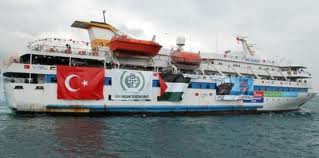
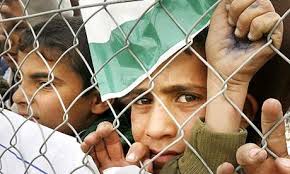


GAZA: The Unfolding Tragedy
30 NovGAZA: The Unfolding Humanitarian Catastrophe
This material below was distributed by John Whitbeck, distinguished American lawyer and author, living in Paris,and doing his best to keep a group concerned with world affairs informed about latest developments, especially inthe Middle East. I also add a slightly edited text of a message sent by Robert Stiver from Hawaii, who has exhibited consistent empathy for the suffering of the Palestinian people.My press release below, although far less emotional than the cri de coeur that Robert Stiver wrote, issues from the same place of urgent concern for the brave and resolute people of Gaza. I hope that Robert is wrong however when he ends with self-tormenting words of despair: “What to do, in the name of common justice? I know not; it seems useless, all useless.” Such feelings of futility are quite understandable, but let us do all within our power to make sure that this unfolding catastrophe ENDS before its full tragic character is totally realized.
It hardly needs to be observed that the silence of the United Nations and the global media is a continuing disgrace, particularly given the pomp and circumstance of those mighty statesmen who self-righteously proclaim a new doctrine: ‘the responsibility to protect’ (R2P) those whose survival and dignity is at stake due to crimes of state or as a result of natural catastrophe.
******************************************************
Reuters reports that Turkey has pledged $850,000, $200,000 of which have already reached Gaza, to alleviate the fuel crisis which has closed Gaza’s only power station and a major sewage treatment plant, so that raw sewage is running in the streets. Fuel deliveries by the UN have started, and are reported to be promised by Qatar. The immediate cause of the fuel crisis is the destruction by Egypt of cross-border tunnels, and the longer term cause the Israeli blockade.
We thank John Whitbeck for an “Action Alert” from the Friends of Al-Aqsa (a UK NGO) drawing attention to the first item below, a UN report on action needed to avert a humanitarian crisis. He comments that the Action Alert refers to the “smuggling” of fuel and other basic necessities into Gaza through tunnels on the border between Egypt and Palestine. ‘This terminology is standard media usage in Israel and the West, intended to semantically criminalize the victims, but, as a matter of both law and common sense, I believe that the use of the word “smuggle” is totally inappropriate in these circumstances. “Smuggling” is an illegal activity, usually involving a violation of the laws of the importing state. Under whose applicable laws is importing basic necessities into Gaza illegal? Certainly not the laws of the importing state, Palestine, or the current de facto government of Gaza, as to which Israel insists that it has not been the occupying power (and, accordingly, has had no responsibilities or obligations) since it withdrew its illegal settlers, locked the gates and, effectively, threw away the keys. If there is an Egyptian law banning the export of basic necessities from Egypt, I am not aware of it. The provisioning of Gaza with the basic necessities of life should be characterized as humanitarian relief, those who prevent Gazans from receiving the basic necessities of life should be characterized as criminals and those who are aware of the situation and fail to speak out should be characterized as moral bankrupts.’
The second item below is a report published by Al Jazeera on the impact of Israeli drones over Gaza, particularly on children. The author is a British journalist resident in Nazareth, Israel.
Gaza fuel crisis: UN expert calls for urgent action to avert a humanitarian catastrophe
GENEVA (26 November 2013) – United Nations Special Rapporteur Richard Falk today called for urgent action to address the power shortage in occupied Palestine that has left 1.7 million residents of the Gaza Strip in a dire situation. More than three weeks after the only power plant shut down due to a critical fuel shortage, power supply has been limited to six hours a day.
“The situation in Gaza is at a point of near catastrophe,” warned the independent expert charged by the UN Human Rights Council to monitor and report on the situation of human rights in the Palestinian territories occupied since 1967.
“The fuel shortage and power cuts have undermined an already precarious infrastructure, severely disrupting the provision of basic services, including health, water and sanitation,” he said. “The onset of winter is certain to make things even worse.”
Less than half of Gaza’s total power needs are being met and disruptions to specialized health services, such as kidney dialysis, operating theatres, blood banks, intensive care units and incubators are putting the lives of vulnerable patients in Gaza at risk.
Mr. Falk highlighted the plight of patients in Gaza unable to seek affordable specialized medical treatment in Egypt as a result of Egypt’s closure of the Rafah crossing in recent weeks. “The Israeli authorities have been more forthcoming in issuing permits to Gazans in need of urgent specialized treatment, but the high cost of medical treatment in Israel places it beyond the reach of most Gazans,” he noted.
For the past two weeks, approximately 3000 residents, including children, living in or near the Gazan neighbourhood of Az Zeitoun have been wading through raw sewage on the streets after the largest sewage treatment facility in area overflowed due to a power failure.
The Special Rapporteur stressed that other sewage treatment stations may soon also run out of petrol to fuel generators and result in more sewage overflowing onto the streets of Gaza. Medical experts have warned of the serious risk of disease, and even an epidemic
“Up to 40 per cent of Gaza’s population receives water only once every three days,” he noted. “In this situation of dire necessity those who can afford to do so, are shockingly buying unsafe water from unregulated water vendors and distributors.”
The human rights expert believes that the main trigger for the latest crisis is Egypt’s ongoing crackdown on the vast network of tunnels and fuel tanks near the southern border of Gaza, which allowed Gaza to avoid some of the hardships associated with the Israeli blockade maintained since 2007.
“We mustn’t forget that the underlying cause of a lack of adequate medical facilities and specialized care in Gaza is a consequence of Israel’s illegal blockade,” Mr. Falk said.
The Special Rapporteur explained that, under present conditions, Israel has a special responsibility under international humanitarian law to take whatever measures are necessary to protect the civilian population of Gaza against this mounting threat to their wellbeing. “The failure to do so would be an aggravated instance of collective punishment, which is unconditionally prohibited by the 4th Geneva Convention,” Mr. Falk cautioned.
He also urged the governing authorities in Gaza to cooperate with the Palestinian Authority in a joint effort to ensure that desperately needed fuel becomes available to the residents of Gaza at the earliest hour.
“Israel must end its illegal blockade and exercise its core responsibility as the occupying Power to protect the civilian population,” the expert said.
Last Tuesday, an aid convoy carrying medicine, medical equipment and canned food was reportedly permitted to enter Gaza via the Rafah crossing for first time since June this year.
“Under these conditions of humanitarian emergency, the international community also has a responsibility to take special measures to safeguard the acutely vulnerable people of Gaza from impending tragedy,” the Special Rapporteur underscored.
In 2008, the UN Human Rights Council designated Richard Falk (United States of America) as the fifth Special Rapporteur on the situation of human rights on Palestinian territories occupied since 1967. The mandate was originally established in 1993 by the UN Commission on Human Rights.
Gaza: Life and death under Israel’s drones
Drones buzzing overhead are a source of daily trauma for Palestinians in the occupied Gaza Strip.
Jonathan Cook: 28 Nov 2013
Jerusalem – There are many things to fear in Gaza: Attacks from Israel’s Apache helicopters and F-16 fighter jets, the coastal enclave’s growing isolation, the regular blackouts from power shortages, increasingly polluted drinking water and rivers of sewage flooding the streets.
Meanwhile, for most Palestinians in Gaza the anxiety-inducing soundtrack to their lives is the constant buzz of the remotely piloted aircraft – better known as “drones” – that hover in the skies above.
Drones are increasingly being used for surveillance and extra-judicial execution in parts of the Middle East, especially by the US, but in nowhere more than Gaza has the drone become a permanent fixture of life. More than 1.7 million Palestinians, confined by Israel to a small territory in one of the most densely populated areas in the world, are subject to near continual surveillance and intermittent death raining down from the sky.
There is little hope of escaping the zenana – an Arabic word referring to a wife’s relentless nagging that Gazans have adopted to describe the drone’s oppressive noise and their feelings about it. According to statistics compiled by human rights groups in Gaza, civilians are the chief casualties of what Israel refers to as “surgical” strikes from drones.
“When you hear the drones, you feel naked and vulnerable,” said Hamdi Shaqura, deputy director of the Palestinian Centre for Human Rights, based in Gaza City. “The buzz is the sound of death. There is no escape, nowhere is private. It is a reminder that, whatever Israel and the international community assert, the occupation has not ended. We are still living completely under Israeli control. They control the borders and the sea and they decide our fates from their position in the sky,” said Shaqura.
The Israeli military did not respond to Al Jazeera’s requests for comment.
Suffer the children
The sense of permanent exposure, coupled with the fear of being mistakenly targeted, has inflicted deep psychological scars on civilians, especially children, according to experts.
“There is a great sense of insecurity. Nowhere feels safe for the children, and they feel no one can offer them protection, not even their parents,” said Ahmed Tawahina, a psychologist running clinics in Gaza as part of the Community Mental Health Programme. “That traumatises both the children and parents, who feel they are failing in their most basic responsibility.”
Shaqura observed: “From a political perspective, there is a deep paradox. Israel says it needs security, but it demands it at the cost of our constant insecurity.”
There are no statistics that detail the effect of the drones on Palestinians in Gaza. Doctors admit it is impossible to separate the psychological toll inflicted by drones from other sources of damage to mental health, such as air strikes by F-16s, severe restrictions on movement and the economic insecurity caused by Israel’s blockade.
But field researchers working for Palestinian rights groups point out that the use of drones is intimately tied to these other sources of fear and anxiety. Drones fire missiles themselves, they guide attacks by F-16s or helicopters, and they patrol and oversee the borders.
A survey in medical journal The Lancet following Operation Cast Lead, Israel’s month-long attack on Gaza in winter 2008-09, found large percentages of children suffered from symptoms of psychological trauma: Fifty-eight percent permanently feared the dark; 43 percent reported regular nightmares; 37 percent wet the bed and 42 percent had crying attacks.
Tawahina described the sense of being constantly observed as a “form of psychological torture, which exhausts people’s mental and emotional resources. Among children at school, this can be seen in poor concentration and unruly behaviour.” The trauma for children is compounded by the fact that the drones also disrupt what should be their safest activity – watching TV at home. When a drone is operating nearby, it invariably interferes with satellite reception.
“”It doesn’t make headlines, but it is another example of how there is no escape from the drones. Parents want their children indoors, where it feels safer and where they’re less likely to hear the drones, but still the drone finds a way into their home. The children cannot even switch off from the traumas around them by watching TV because of the drones.”
Israel’s ‘major advantage’
Israel developed its first drones in the early 1980s, during its long occupation of south Lebanon, to gather aerial intelligence without exposing Israeli pilots to anti-aircraft missiles. Efraim Inbar, director of the Begin-Sadat Centre for Strategic Studies at Bar Ilan University, said drones help in situations where good, on-the-ground intelligence is lacking. “What the UAV gives you is eyes on the other side of the hill or over the border,” he said. “That provides Israel with a major advantage over its enemies.”
Other Israeli analysts have claimed that the use of drones, with their detailed intelligence-collecting abilities, is justified because they reduce the chances of errors and the likelihood of “collateral damage” – civilian deaths – during attacks.
But, according to Inbar, the drone is no better equipped than other aircraft for gathering intelligence or carrying out an execution.
“The advantage from Israel’s point of view is that using a drone for these tasks reduces the risk of endangering a pilot’s life or losing an expensive plane. That is why we are moving towards much greater use of these kinds of robots on the battlefield,” he said.
‘Mistakes can happen’
According to Gaza human rights group al-Mezan, Israel started using drones over the territory from the start of the second intifada in 2000, but only for surveillance.
Israel’s first extra-judicial executions using drones occurred in 2004, when two Palestinians were killed. But these operations greatly expanded after 2006, in the wake of Israel’s withdrawal of settlers and soldiers from Gaza and the rise to power of the Palestinian Islamic movement Hamas.
Drones, the front-line weapon in Israel’s surveillance operations and efforts to foil rocket attacks, killed more than 90 Palestinians in each of the years 2006 and 2007, according to al-Mezan. The figures soared during Operation Cast Lead and in its aftermath, with 461 Palestinians killed by drones in 2009. The number peaked again with 199 deaths in 2012, the year when Israel launched the eight-day Operation Pillar of Defence against Gaza.
Despite Israeli claims that the intelligence provided by drones makes it easier to target those Palestinians it has defined as “terrorists”, research shows civilians are the main victims. In the 2012 Pillar of Defence operation, 36 of the 162 Palestinians killed were a result of drone strikes, and a further 100 were injured by drones. Of those 36 killed, two-thirds were civilians.
Also revealing was a finding that, although drones were used in only five percent of air strikes, they accounted for 23 percent of the total deaths during Pillar of Defence. According to the Economist magazine, the assassination of Hamas leader Ahmed Jabari, which triggered that operation, was carried out using a Hermes 450 drone.
Palestinian fighters report that they have responded to the constant surveillance by living in hiding, rarely going outdoors and avoiding using phones or cars. It is a way of life not possible for most people in Gaza.
Gaza’s armed groups are reported to be trying to find a way to jam the drones’ navigation systems. In the meantime, Hamas has claimed it has shot down three drones, the latest this month, though Israel says all three crashed due to malfunctions.
Last week, on the anniversary of the launch of Pillar of Defence, an Israeli commander whose soldiers control the drones over Gaza from a base south of Tel Aviv told the Haaretz newspaper that “many” air strikes during the operation had involved drones. “Lt Col Shay” was quoted saying: “Ultimately, we are at war. As much as the IDF strives to carry out the most precise surgical strikes, mistakes can happen in the air or on the ground.”
Random death by drone
It is for this reason that drones have become increasingly associated with random death from the sky, said Samir Zaqout, a senior field researcher for Al-Mezan.
“We know from the footage taken by drones that Israel can see what is happening below in the finest detail. And yet women and children keep being killed in drone attacks. Why the continual mistakes? The answer, I think, is that these aren’t mistakes. The message Israel wants to send us is that there is no protection whether you are a civilian or fighter. They want us afraid and to make us turn on the resistance [Palestinian fighters].”
Zaqout also points to a more recent use of drones – what has come to be known as “roof-knocking”. This is when a drone fires small missiles at the roof of a building to warn the inhabitants to evacuate – a practice Israel developed during Operation Cast Lead three years earlier, to allay international concerns about its repeated levellings of buildings with civilians inside.
In Pillar of Defence in 2012, 33 buildings were targeted by roof-knocking.
Israel says it provides 10 minutes’ warning from a roof-knock to an air strike, but, in practice, families find they often have much less time. This, said Zaqout, puts large families in great danger as they usually send their members out in small groups to be sure they will not be attacked as they move onto the streets.
One notorious case occurred during Cast Lead, when six members of the Salha family, all women and children, were killed when their home was shelled moments after a roof-knocking. The father, Fayez Salha, who survived, lost a case for damages in Israel’s Supreme Court last February and was ordered to pay costs after the judges ruled that the attack was legitimate because it occurred as part of a military operation.
A US citizen who has lived long-term in Gaza, who wished not be named for fear of reprisals from Israel, said she often heard the drones at night when the street noise dies down, or as they hover above her while out walking. “The sound is like the buzz of a mosquito, although there is one type of drone that sometimes comes into view that is silent,” she said.
She added that she knew of families that, before moving into a new apartment building, checked to see whether it housed a fighter or a relative of a fighter, for fear that the building may be attacked by Israel.
Shaqura said the drones inevitably affect one’s day-to-day behaviour. He said he was jogging early one morning while a drone hovered overhead.
“I got 100 metres from my front door when I started to feel overwhelmed with fear. I realised that my tracksuit was black, the same colour as many of the fighters’ uniforms. I read in my work too many reports of civilians being killed by drones not to see the danger. So I hurried back home.”
**************************
Robert Stiver’s message:
“I seethe with helpless indignation and rage at the despicable members of the “human” race, including me, who (i) perpetrate and (ii) allow this unspeakable tragedy to continue, always worsening, most often vindictive, all too often indifferent to the hapless-victims aspects of it. And I must admit that I am as outraged at the God who, via the vaunted “free will” He is credited with giving us, has not yet found “His time” to intervene and put paid to this unending stain on humanity — a stain that, in my 20th-21st Century view, begins and ends with militant/political Zionism and its ever-present worldwide practitioners.
Sadly – how sadly – the Palestinian Authority and the quisling Fateh are in lockstep, fellow travelers with this miasma of shame and inhumanity. Hamas and Fateh must overcome the USraeli “divide and rule” tactics and link arms as a solid force of resistance to the illegal occupation of their homeland. Today, that must be the number one priority!
……..
And thanks to Turkey and Qatar for having the scruples to toss a few coins to the suffering masses, perhaps alleviating but by no means solving their torment…as I am mystified that they don’t join hands, trek to Geneva or NYCity and demand a white-hot emergency meeting of the UNSC in demand that international law and countless supportive UNSC resolutions be enforced. Failing any action there, a certainty because of the US’ enabling of pure evil, the Turkish-Qatari reps should trek to the UNGA and orchestrate a (I’ve forgotten the term…”Uniting for Peace”) proper response and accompanying action. The “response” would be overwhelming – on the order of 150 pro, 5 opposed. Why cannot this scenario take place?
Let us pity – we have nothing else to offer – the brave, beleaguered residents of Gaza. Our pity should be informed by mental images of the children there, slogging through a toxic mix of urine and feces, facing epidemics of pestilence ready to strike at any moment, lacking hope for any surcease of their everyday misery and for a future of human rights, normality and dignity — victims of a deliberately vicious, internationally illegal collective persecution (not “mere” punishment…persecution) of them and their families.
Today/29th is the International Day of Solidarity with the Palestinian People. Where is the solidarity?
What to do, in the name of common justice? I know not; it seems useless, all useless…”
Tags: Action Alert, Egypt, Gaza, Gaza Strip, Gazan, Israel, Middle East, Nazareth