[Prefatory Note: I am republishing on this blog site a letter and some documentation written by Fred Branfman, a friend and political comrade of more than 40 years. We met first in our shared opposition to the Vietnam War, and engaged in acts of civil disobedience in Washington to express our solidarity with younger Americans who were facing prison for their opposition or death and injury as conscripted soldiers, and our sense of identification with the millions of Vietnamese who were enduring the ravages of high technology war, many without ever having left their villages, much less their country. As he writes, Fred was moved and shocked by the so-called secret war being carried on in Laos by the United States through extensive covert operations, without even the slightest effort to show respect for the US Constitution’s requirements relating to war, and in cruel defiance of international law. Fred is also very conscious and sensitive about the complexities of his middle class Jewish background, and how it bears on his outlook on Israel-Palestine relations. Throughout his life he has exhibited a primary identity that is preoccupied with what it means to be ‘human,’ taking his cues from religion, ethics, and empathetic experiences. As such, his reflections on the meaning of the events in Gaza in relation to our assessments of Israel’s behavior, whether as Jews or as human beings is relevant for all of us. Fred’s central point about the moral victimization of the perpetrator of crimes as well as the abuse of those being targeted is crucial.]
Dear Friends,
I hope you will consider sending this just-published piece (original version below) to supporters of Israel’s actions in Gaza you know. Most U.S. supporters of Israel that I know are decent people who reflexively support Israel without confronting the actual facts of the atrocities it is committing. But in so doing they must understand that what is at stake is not only Israel’s humanity but their own.
The most painful memories of my life have been triggered by the recent Israeli bombing and shelling of civilian targets in Gaza: the many months I spent interviewing Lao ricefarmers about their 5 years under U.S. bombing – the most significant unknown event of the 20th century. The World Can’t Wait website has just published “Laos: Birthplace of Modern U.S. Executive War and a New ‘Ahuman’ Age” – its lessons apply not only to Laos but to Israel, Gaza, Syria and the many other cases where civilians become the main victims of automated murder.
It is critical to human civilization itself that we make the issue of civilian murder in Gaza personal, by (1) having the personal integrity to look at the facts of, not rationalizations for, Israel-caused civilian destruction in Gaza (please see “The Civilian Impact of Israel’s 2014 Attack on Gaza” below); and (2) to acknowledge that what is at stake here is not only Israel’s humanity but our own. Those who are indifferent to the murder of civilians in Gaza today are also indifferent to the destruction of our own children and grandchildren through climate change tomorrow.
In retrospect it seems like an accident of fate that I so directly encountered the U.S. mass murder of the gentlest, kindest people on earth in Laos. But I regard it now as both the most agonizing and precious experience of my life. For imagining what it means to be on the ground “looking up” at the bombers, rather than “looking down” as we inevitably do in the West, adds a crucial dimension to human existence – and one which may well determine the fate of our species as we confront the growing horrors of the 21st century. Fred
TO ISRAEL’S U.S. SUPPORTERS: PORTABLE GAS CHAMBERS, CHEMICAL WARFARE, BLINDINGS, MASS BOMBING AND SHELLING OF CIVILIANS – WHERE DO YOU DRAW THE LINE?
Note: This message is addressed to U.S. supporters of Israel both because only U.S. pressure can bring about the political settlement which alone can save Israel and Palestine, and because it appears that most Israelis – consumed by fear, hatred and the dehumanization of even Palestinian children – are presently impervious to either reason or human decency.
Dear U.S. Supporters of Israel in Gaza,
If you believed that the IDF could destroy Hamas by employing portable gas chambers or chemical weapons to publicly gas over 1,400 Gazan civilians, including 400 children, chosen at random – or deliberately blinding them – would you favor doing so? I guess not, perhaps you even feel insulted at the suggestion that you might.
But this raises a basic question: if you would not favor gassing Palestinan civilians, how do you justify your support for blowing them to bits? The controversial issue is not Israel trying to destroy Hamas tunnels. Nor is it the attempt to destroy rockets, as if the Israelis can claim that they reasonably suspected the 46-48,000 U.N.-estimated buildings they either partially or totally destroyed of containing rockets. Nor is it rightfully condemning Hamas for rocketing civilian targets as well. As even long-term apologists for Israeli violence like the New Republic’s Leon Wieseltier acknowledge, the issue is massive Israeli bombing and shelling of he civilian infrastructure in Gaza, which is wholly disproportionate to combatting tunnels and/or rockets.
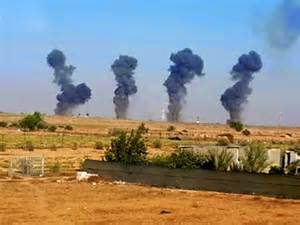
It is the actual massive bombing and shelling of Gaza’s civilian infrastructure that raises the basic question: as a human being, where do you draw the line? How do you justify to yourself your support for mass misery inflicted on hundreds of thousands of innocent civilians through a bombing and shelling campaign that – whatever its stated intent – not only murdered 1400 civilians and maimed thousands more, but destroyed hospitals, schools, businesses, and Gaza’s only power station plunging all 1.8 million Gazans into darkness and depriving them even of drinking water, created over 400,000 refugees, and traumatized a U.N.-estimated 373,000 children? (Please see “The Civilian Impact of Israel’s 2014 Attack on Gaza” below. You own integrity requires that you at least acknowledge the facts rather than, as do so many of Israel’s supporters, accept at face-value Israeli claims that it sought to avoid civilian destruction.)
I answered such questions for myself 45 years ago, when I discovered that civilians were well over 90% of the victims of U.S. leaders’ mass bombing of northern Laos. I concluded then that there is never any moral or legal justification for mass bombing or shelling of civilians. Period. Full Stop.
The “World Can’t Wait” website has just posted a PowerPoint presentation on the years-long bombing of northern Laos, perhaps the worst unknown crime of the 20th century. It combines an analysis of automated war, the writings of the rice-farmers who suffered most and were heard from least, and my personal story in discovering and trying to expose it to the world. A Lao mother summed up the nature of mass bombing of civilians for all time: “There was danger as the sound of airplanes led me to be terribly, terribly afraid of dying. When looking at the faces of my children who were losing the so very precious happiness of childhood I would grow increasingly miserable. In reality, whatever happens, it is the innocent who suffer.”
The question of protecting civilians in wartime far transcends the Israeli-Palestinian conflict: it is a basic measurement of the progress of human civilization itself. What is at stake in your support for Israel’s recent attacks on Gaza is not only Israel’s humanity but your own.
There are two basic questions regarding warfare: (1) whether a given war is considered legitimate, e.g. whether it is “aggressive war”; and (2) how civilians are treated once a war is launched. These are two distinct questions – even if you consider a given war legitimate there is no moral or legal justification for waging it in a way that mainly murders and maims civilians.
The evolution of international law on this question, beginning with the 1907 Hague Convention, has been slow and painful. But it is today unequivocal: waging war in a way that results primarily in civilian deaths and damage is a punishable war crime. Article 85 of the 1949 Geneva Conventions states categorically that “the following acts shall be regarded as grave breaches of this Protocol … launching an indiscriminate attack affecting the civilian population or civilian objects in the knowledge that such attack will cause excessive loss of life, injury to civilians or damage to civilian objects” – a precise description of Israeli bombing and shelling in Gaza.
Israel claims that it is justified in maiming and murdering civilians because Hamas is using them as “human shields”. But it must be understood: there is always a military and political rationale for bombing civilians. In Laos, Deputy CIA Director James Lilley explained that though North Vietnamese soldiers were not in the villages they would hide there if the U.S. didn’t bomb civilians. Prime Minister Nethanyahu today offers a similar rationale for mass civilian murder.
Other rationales include hoping that mass murder of civilians will turn the population against their leaders, as when former Israeli General Amos Yadlin stated in the N.Y. Times that Israel must bomb partly so that “Gaza’s people (are) given the chance to elect new leaders”. And, as the U.S. Senate Refugee Subcommittee concluded after visiting Laos, the bombing’s purpose was to hurt the enemy by destroying its “social and economic infrastructure.” This was also General Curtis Lemay’s basic rationale for burning alive over 100,000 Japanese civilians in the firebombing of Tokyo on March 9, 1945, an act for which Lemay acknowledged at the time, and his assistant Robert McNamara later
also admitted, was a war crime – for which they should have been executed. (PIease see Note 1 below.)
And it is precisely because there is always a rationale for bombing civilians that the progress of human civilization is largely measured by the extent to which civilians are protected in times of war from indiscriminate bombing and shelling, and that those who violate these rules are prosecuted for crimes of war. Protecting civilians against indiscriminate murder, in short, is not only a question of war. It is a measure of your own humanity.
The Civilian Impact of Israel’s 2014 Attack on Gaza
n CIVILIAN DEAD AND WOUNDED: A U.N.-estimated 1396 Palestinian civilians killed including 222 women and 418 children, thousands more wounded. (Source: Information Management Unit in the United Nations Office for the Coordination of Humanitarian Affairs in the Occupied Palestinian Territories, from “Month-long War in Gaza Has Left a Humanitarian and Environmental Crisis”, Washington Post. August 6, 2014)
n CHILDREN: “Pernille Ironside, who runs the UNICEF field office in Gaza, said the agency estimates that roughly 373,000 Palestinian children have had some kind of direct traumatic experience as a result of the attack and will require immediate psycho-social support … (She) added that she’s seen ‘children coming out of these shelters with scabies, lice, all kinds of communicable diseases.’” (Source: “Amid Gaza’s Ruins, Impact on Children Most ‘Severe’: UN Official”, Common Dreams, August 6, 2014)
n ECONOMIC INFRASTRUCTURE: “175 of Gaza’s most successful industrial plants had also taken devastating hits, plunging an already despairing economy into a deeper abyss” (Source: “Conflict Leaves Industry in Ashes and Gaza Reeling From Economic Toll”, NY Times, August 6, 2014)
n MOSQUES, FARMING, INDUSTRY: “As many as 80 mosques have been damaged or destroyed. Many farming areas and industrial zones, filled with the small manufacturing plants and factories that anchored Gaza’s economy, are now wastelands.” (Source: “Month-long War in Gaza Has Left a Humanitarian and Environmental Crisis”, Washington Post. August 6, 2014)
n THE WATER INFRASTRUCTURE: Oxfam said: “We’re working in an environment with a completely destroyed water infrastructure that prevents people in Gaza from cooking, flushing toilets or washing [their] hands.”(Source: “Gaza’s Survivors Now Face A Battle For Water, Shelter And Power”, The Independent, August 5, 2014)
n 400,000 REFUGEES, 46-48,000 HOMES: “Frode Mauring, the UN Development Programme’s special representative said that with 16-18,000 homes totally destroyed and another 30,000 partially damaged, and 400,000 internally displaced people, ‘the current situation for Gaza is devastating’.” (Source: “Gaza’s Survivors Now Face A Battle For Water, Shelter And Power”, The Independent, August 5, 2014)
n ELECTRICITY: “Mr Mauring said that the bombing of Gaza’s only power station and the collapse at least six of the 10 power lines from Israel, had ‘huge development and humanitarian consequences’ (Source: “Gaza’s Survivors Now Face A Battle For Water, Shelter And Power”, The Independent, August 5, 2014)
n SCHOOLS, REFUGEE CENTERS: “United Nations officials accused Israel of violating international law after artillery shells slammed into a school overflowing with evacuees Wednesday … The building was the sixth U.N. school in the Gaza Strip to be rocked by explosions during the conflict. (Source: “U.N. Says Israel Violated International Law, After Shells Hit School In Gaza”, Washington Post, July 30, 2014)
n HOSPITALS: “Israeli forces fired a tank shell at a hospital in Gaza on Monday … It was the third hospital Israel’s military has struck since launching a ground offensive in Gaza last week.” (Source: “Another Gaza Hospital Hit by Israeli Strike”, NBC News, July 21, 2014)
n HOSPITALS, HEALTH WORKERS: “There has been mounting evidence that the Israel Defense Forces launched apparently deliberate attacks against hospitals and health professionals in Gaza … Philip Luther, Middle East and North Africa Director at Amnesty International (said) ‘the Israeli army has targeted health facilities or professionals. Such attacks are absolutely prohibited by international law and would amount to war crimes.’” (Source: “Mounting Evidence Of Deliberate Attacks On Gaza Health Workers By Israeli Army”, Amnesty International, August 7, 2014)
NOTES
1- Robert McNamara, from the Errol Morris film Fog of War:
“LeMay said, ‘If we’d lost the war, we’d all have been prosecuted as war criminals.’ And I think he’s right. He, and I’d say I, were behaving as war criminals. LeMay recognized that what he was doing would be thought immoral if his side had lost. But what makes it immoral if you lose and not immoral if you win?”
Tags: Gaza, Israel, Jewish attitudes, moral responsibility



Did Israel Commit Genocide in Gaza?
9 Oct[Prefatory Note: the post below is a somewhat revised version of a text published by The Nation, and to be found at the following link. I should also point out that in these proceedings in Brussels under the auspices of the Russell Tribunal I served as a member of the jury]
In a special session of the Russell Tribunal held in Brussels on September 24th, Israel’s military operation Protective Edge was critically scrutinized from the perspective of international law, including the core allegation of genocide. The process featured a series of testimonies by legal and weapons experts, health workers, journalists and others most of whom had experienced the 50 days of military assault.
A jury composed of prominent individuals from around the world, known for their moral engagement with issues of the day that concerned their societies, and also the wellbeing of humanity, assessed the evidence with the help of an expert legal team of volunteers that helped with the preparation of the findings and analysis for consideration by the jury, which deliberated and debated all relevant issues of fact and law, above all the question of how to respond to the charge of genocide.
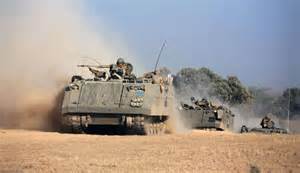
It should be acknowledged that this undertaking was never intended to be a neutral inquiry without any predispositions. It was brought into being because of the enormity of the devastation caused by Protective Edge and the spectacle of horror associated with deploying a high technology weaponry to attack a vulnerable civilian population of Gaza locked into the combat zone that left no place to hide. It also responded to the failures of the international community to do more to stop the carnage, and condemn Israel’s disproportionate uses of force against this essentially helpless and beleaguered civilian population. Israel’s contested military operations targeted many legally forbidden targets, including UN buildings used as shelters, residential neighborhoods, hospitals and clinics, and mosques. In defense of these tactics, Israel claimed that rockets and ammunition were stored in these buildings and that Hamas rocket launchers were deliberately placed in the structures that had been singled out for attack. The evidence presented did not confirm these Israeli claims.
Although the Russell Tribunal proceeded from the presumed sense that Israel was responsible for severe wrongdoing, it made every effort to be scrupulous in the presentation of evidence and the interpretation of applicable international law, and relied on testimony from individuals with established reputations as persons of integrity and conscience. Among the highlights of the testimony were a report on damage to hospitals and clinics given by Dr. Mads Gilbert, a Norwegian doctor serving in a Gaza hospital during the attacks, Mohammed Omer, a widely respected journalist who daily reported from the combat zone, Max Blumenthal, the prize winning journalist who was in Gaza throughout Protective Edge and analyzed for the jury the overall political design that appeared to explain the civilian targeting patterns, and David Sheen, who reported in agonizing detail on the racist hatred exhibited by prominent Israelis during the period of combat, widely echoed by Israelis in the social media, and never repudiated by the leadership or public in Tel Aviv.
The jury had little difficulty concluding that the pattern of attack, as well as the targeting, amounted to a series of war crimes that were aggravated by the commission of crimes against humanity, most centrally the imposition of a multi-faceted regime of collective punishment upon the entire civilian population of Gaza in flagrant and sustained violation of Article 33 of the Fourth Geneva Convention. A further notable legal finding was the rejection of the central Israel claim of acting in self-defense against rocket attacks directed at Israel.
There were several reasons given for reaching this conclusion: the claim of self-defense does not exist in relation to resistance mounted by an occupied people, and Gaza from the perspective of international law remains occupied due to Israeli persisting effective control despite Israel’s purported disengagement in 2005 (more properly characterized as a military redployment); the rockets fired from Gaza were partly at least in response to prior Israeli unlawful provocations, including the mass detention of several hundred persons loosely associated with Hamas in the West Bank and incitement to violence against Palestinians as revenge for the murder of the three kidnapped Israeli settler children; and finally, the minimal damage done by the rockets, seven civilian deaths over the entire period, is too small a security threat to qualify as “an armed attack” as is required by the UN Charter to uphold a claim of self-defense. At the same time, despite these mitigating factors, the jury did not doubt the unlawfulness of firing of numerous rockets into Israel that were incapable of distinguishing between military and civilian targets. This form of unlawful resistance was attributed to both Hamas and independent Palestinian militias operating within the Gaza Strip.
A focus of concern in the jury deliberations before and after the proceedings themselves was how to address the allegation of ‘genocide,’ which has been described as ‘the crimes of crimes.’ The jury was sensitive to the differences between the journalistic and political uses of the word ‘genocide’ to describe various forms of collective violence directed at ethnic and religious minorities, and the more demanding legal definition of genocide that requires compelling and unambiguous evidence of a specific ‘intent to destroy’.
The testimony made this issue complex and sensitive. It produced a consensus on the jury that the evidence of genocide was sufficient to make it appropriate and responsible to give careful consideration as to whether the crime of genocide had actually been committed by Israel in the course of carrying out Protective Edge. This was itself an acknowledgement that there was a genocidal atmosphere in Israel in which high officials made statements supporting the destruction, elimination, and subjugation of Gazans as a people, and such inflammatory assertions were at no time repudiated by the Netanyahu leadership or subject to criminal investigation, let alone any legal proceedings. Furthermore, the sustained bombardment of Gaza under circumstances where the population had no opportunity to leave or to seek sanctuary within the Gaza Strip lent further credibility to the charge of genocide. The fact that Protective Edge was the third large-scale, sustained military assault on this unlawfully blockaded, impoverished, and endangered population, also formed part of the larger genocidal context.
Further in the background, yet perhaps most relevant consideration of all, Israel failed to exhaust diplomatic remedies before its recourse to force, as required by international law and the UN Charter. Israel had the option of lifting the blockade and exploring the prospects for long-term arrangements for peaceful co-existence that Hamas had proposed numerous times in recent years. Such initiatives were spurned by Israel on the ground that it would not
deal with a terrorist organization.
Despite the incriminating weight of these factors, there were legal doubts as to the crime of genocide. The political and military leaders of Israel never explicitly endorsed the pursuit of genocidal goals, and purported to seek a ceasefire during the military campaign. There was absent a clear official expression of intent to commit genocide as distinct from the intensification of the regime of collective punishment that was convincingly documented. The presence of genocidal behavior and language even if used in government circles is not by itself sufficient to conclude that Protective Edge, despite its scale and fury, amounted to the commission of the crime of genocide.
What the jury did agree upon, however, was that Israeli citizens, including officials, appear to have been guilty in several instances of the separate crime of Incitement to Genocide that is specified in Article 3(c) of the Genocide Convention. It also agreed that the additional duty of Israel and others, especially the United States and Europe, to act to prevent genocide was definitely engaged by Israeli behavior. In this regard the Tribunal is sending an urgent message of warning to Israel and an appeal to the UN and the international community to uphold the Genocide Convention, and act to prevent any further behavior by Israel that would cross the line, and satisfy the difficult burden of proof that must be met if the conclusion is to be reached that the crime of genocide is being committed. At some point, the accumulation of genocidal acts will be reasonably understood as satisfying the high evidentiary bar that must be reached so as to conclude that Israel had committed genocide.
Many will react to this assessment of Protective Edge as lacking legal authority and dismiss the finding of the jury as merely recording the predictable views of a biased ‘kangaroo court.’ Such allegations have been directed at the Russell Tribunal ever since its establishment in the mid-1960s by the great English philosopher, Bertrand Russell, in the midst of the Vietnam War. These first sessions of the Russell Tribunal similarly assessed charges of war crimes associated with U.S. tactics in Vietnam, and in Russell’s words, represented a stand of citizens of conscience ‘against the crime of silence.’ This latest venture of the tribunal has a similar mission in relation to Israel’s actions in Gaza, although less against silence than the crime of indifference.
It is my view that such tribunals, created almost always in exceptional circumstances of defiance of the most elemental constraints of international law, make crucial contributions to public awareness in situations of moral and legal outrage where geopolitical realities preclude established institutional procedures such as recourse to the International Criminal Court and the UN Security Council and General Assembly. That is, these kind of self-constituted tribunals only come into being when two conditions exist: first, a circumstance of extreme and sustained violation of fundamental norms of morality and international law and secondly, a political setting in which governmental procedures and UN procedures are inoperative.
When the interests of the West are at stake, as in the Ukraine, there is no need to activate unofficial international law initiatives through the agency of civil society. However in circumstances involving Israel and Palestine, with the United States Government and most of Western Europe standing fully behind whatever Israel chooses to do, the need for a legal and moral accounting is particularly compelling even if the prospects for accountability are virtually nil. The long suffering people of Gaza have endured three criminal assaults in the past six years, and it has left virtually the whole of the population, especially young children, traumatized by the experience of such sustained military operations.
It should be acknowledged that the UN Human Rights Council has appointed a Commission of Inquiry to investigate allegations of war crimes associated with Protective Edge, but its report is not due for several months, Israel has indicated its unwillingness to cooperate with this official UN initiative, and it is almost certain that any findings of criminality and related recommendations will not be implemented due to the exercise of a geopolitical veto by the United States, and perhaps, other members of the Security Council. In view of these circumstances, the argument for convening the Russell Tribunal remains strong, especially if one recalls the fate of the Goldstone Report prepared in analogous conditions after the 2008-09 Israeli attacks on Gaza known as Operation Cast Lead.
The Russell Tribunal is filling a normative vacuum in the world. It does not pretend to be a court. In fact, among its recommendations is a call on the Palestinian Authority to join the International Criminal Court, and present Palestinian grievances to the authorities in The Hague for their investigation and possible indictments. Even then the realities of the world are such that prosecution will be impossible as Israel is not a party to the treaty establishing the ICC and would certainly refuse to honor any arrest warrants issued in The Hague, and no trial could be held without the physical presence of those accused. The value of an ICC proceeding would be symbolic and psychological, which in a legitimacy war would amount to a major ‘battlefield’ victory. It is notable that Hamas has joined in urging recourse to the ICC despite facing the distinct possibility that allegations against its launch of rockets would also be investigated and its officials indicted for its alleged war crimes.
As with the Nuremberg Judgment that documented the criminality of the Nazi experience, the process was flawed, especially by the exclusion of any consideration of the crimes committed by the victors in World War II, the Russell Tribunal can be criticized as one-sided in its undertaking. At the same time it seems virtually certain that on balance this assessment of Israel’s behavior toward the people of Gaza will be viewed as supportive of the long struggle to make the rule of law applicable to the strong as well as the weak. It is also reflective in the disparity of responsibility for the harm done by the two sides.
I recall some illuminating words of Edward Said uttered in the course of an interview with Bruce Robbins, published in Social Text (1998): “The major task of the American or the Palestinian or the Israeli intellectual of the left is to reveal the disparity between the so-called two sides, which appear to be rhetorically and ideologically to be in perfect balance, but are not in fact. To reveal that there is an oppressed and an oppressor, a victim and a victimizer, and unless we recognize that, we’re nowhere.”
Tags: Gaza, genocide, Genocide Convention, Hamas, Israel-Palestine, Operation Protective Edge, Russell Tribunal