[Prefatory Note: This attempt to cast a critical gaze at the year ahead was published as an opinion piece Anadalu News Agency in Turkey. It is republished here without modification.]
ISTANBUL
Rarely has the crystal ball used to divine the near future seemed so clouded by uncertainties. The year 2024 was dominated by disappointments, disturbing surprises, and continuing devastation in Ukraine and Gaza. It was also a year that underscored the inability of the UN to stop the most transparent genocide ever in Gaza, a senseless war in Ukraine, and mass slaughter in Sudan.
Is 2024 a turning point?
There were a variety of multilateral efforts in 2024 to escape from US international dominance after the Cold War. This dominance had fueled a global politics of resentment and a search for an alternative world order that is law-governed and not subject to the geopolitical maneuvers of the five winners of World War II. These powers were granted unrestricted veto rights in the UN Security Council under the UN Charter, which has long paralyzed efforts to ensure compliance with international law. This produces a deep contradiction in the way the world is organized, allowing the most powerful and dangerous countries, all five being nuclear-armed states, to be legally free of any obligation to respect international law.
The question in many thoughtful minds is whether these developments in the prior year will continue in the year ahead. One near certain development is the rightward turn of internal politics in the West, given a dramatic twist by the prospects of radical change associated with the second coming of Donald Trump as US president. Trump has already appointed highly controversial political figures to his Cabinet, with the expectation of implementing an ultra-right domestic agenda. However, what is his approach to foreign policy? As well, the leading governments of Europe, including Germany, France, and Italy, all exhibit signs of leaning further toward authoritarianism.
Crisis areas in the world
There are some hopeful signs. Trump seems likely to push for a negotiated peace in Ukraine and bring to a close US President Joe Biden’s “geopolitical war,” involving fighting Moscow by supplying and funding Kyiv with ever more provocative weaponry while turning his back on diplomacy and urging NATO to join in the fight with Rusi to the last Ukrainian. Such a posture raised risks of a confrontation with Russia that could also result in catastrophic nuclear warfare. Trump wants to cut spending on distant and expensive foreign adventures with no genuine American security interest and stand before the world as a peacemaker. Ukraine was a war that never should have been, as a diplomatic compromise between Russia and Ukraine was from its inception in the interest of Ukraine and world peace, as well as being attainable by responsible statecraft.
In contrast to Ukraine, the context of Israel/Palestine is far bleaker. There is every indication that Trump intends to outdo Biden by being an even more unconditional ally of Israel, fully supportive of the Netanyahu-led project entailing the establishment of Greater Israel. This is a plan to erase the Palestinian challenge through the annexation of the West Bank, parts of Gaza, and to support Israel in extending its “buffer zones” in Syria and Lebanon. The plan also includes intensified efforts to destroy Iran’s nuclear program and promote regime change in Tehran by force. The rightward turn of major governments in the West is likely to repress civil society opposition to the continuation of Israeli genocide and expansionism.
Militarism versus symbolic victories: The calculus of legitimacy wars
The efforts by countries in the Global South to have recourse to the International Court of Justice (ICJ) and International Criminal Court (ICC) are a notable expression on the part of non-Western states to invoke international law to serve the causes of peace with justice. And the ICJ has responded in an encouraging professional manner, ruling in favor of provisional measures in response to South Africa’s submission and issuing a separate opinion invalidating Israel’s continuing occupation of Gaza, the West Bank, and East Jerusalem in an authoritative near-unanimous exposition of applicable international law. Of course, it is expected that Israel will defy these developments, as it has consistently done in the face of adverse rulings by international tribunals. Nevertheless, such rulings sympathetic with Palestinian grievances are symbolically important, delegitimizing Israel and mobilizing civil society activism that gives rise to global solidarity initiatives of a Boycott, Divestment, and Sanctions (BDS) variety.
The fate of the arrest warrants issued by the ICC, ordering the arrest and transfer to The Hague for prosecution of Israeli Prime Minister Benjamin Netanyahu and former Defense Minister Yoav Gallant after a long delay is highly uncertain. Israel has mounted a legal challenge, and its government has made clear that the arrest warrants for the Israeli leaders are antisemitic outrages, and any implementation would be denounced and disrupted no matter what the ICC might decide. As with the ICJ genocide and occupation cases, the mere issuance of arrest warrants by the ICC was a significant symbolic Palestinian victory in the Legitimacy War, which may yet surprise the world in 2025 or shortly thereafter, by its overall impact on the viability of the Israeli state as now operative. It should be appreciated that the anti-colonial wars of the past 50 years were won by the weaker side militarily that managed to prevail on the symbolic battlefields of the Legitimacy War, which gives decisive weight to law, morality, and perseverance of a repressed people. The establishment of the civil society Gaza Tribunal in November of 2024 is a further legitimizing development in the Palestinian struggle for basic rights that seeks to activate global solidarity initiatives that shifted the balance in the global movement against South African apartheid, and before that of the global anti-war movement that nullified US military superiority in the Vietnam War.
The rise of multipolarity in 2025?
At the same time, global society is experiencing a surge of multilateral initiatives. Strengthening the impulse to create autonomous multipolar networks of the sort modeled by the BRICS, and especially to mount challenges to dollarization of trade and finance, which, to the extent successful, will produce a backlash in the form of high tariffs and the economic menace of a trade war, aggravated by an increase in the tendency to replace workers with digitally sophisticated substitutes for human labor to promote profitability and efficiency.
Above all, 2025 will witness growing tensions between the unified governance of global security by continued US hegemony and a resurgent challenge mounted by the Global South in the ongoing Legitimacy War with the West.
[Prefatory Note: The post below contains modified responses to questions posed by a Brazilian journalist, Rodrigo Creviero on 4/4/2024. It is critical of President Joe Biden’s ‘muscular approach’ to the conduct of foreign policy, specifically in relation to China, Russia, and Israel, as played out at the expense of the peoples of the world, including the real interests of the American people. Biden is guilty of war-mongering, reluctance to engage in peace diplomacy, and complicity crimes of support given to Israel while carrying out a prolonged genocide against the long abused civilian population of Gaza along with demonizing and dehumanizing the resistance leadership exhibited by Hamas. In reactions to past genocides the US has done less to oppose their perpetrators than it should have, but never before has it been an active accomplice, and in the process, undermining the authority of the most widely endorsed norms of international law and demeaned the institutions and procedures internationally available for purposes of interpretation and enforcement.]
1– Biden urged Netanyahu to reach “immediate ceasefire” in Gaza and called on Israel to act in the “next hours and days” in the face of the humanitarian crisis in Gaza. How do you see that?
Biden’s call for concrete steps to ensure that humanitarian assistance reaches Palestinians in Gaza comes very late, given a geocidal assault on the civilian population that is in its sixth month. Also, the effort to persuade Netanyahu to reach a ceasefire was not elaborated with the same urgency or seriousness as the humanitarian insistence on allowing aid to reach starving Palestinians. A cessation of Gaza violence has long been vital if further devastation of Palestinians is to be minimized, if not avoided, as the International Court of Justice (ICJ) in its January 26 Interim Order decreed in support of South Africa’s plea for Provisional Measures as a response to its preliminary conclusion that it was ‘plausible’ to regard Israel’s violence in Gaza as genocide, the highest international crime that cannot be excused because of claims of self-defense or national security. It is notable that legal absolutism when it comes to genocide is supported by near unanimity among the 17 judges composing the adjudicating panel of jurists, and including judges from the United States, Germany, France, and Australia whose governments had supported Israel’s response to October 7. The ICJ was widely applauded for following the law rather than flags of nationaal allegience, analyzing facts and relevant norms of international law despite the face that the Security Council failed to implement its Interim Order and Israel defied its Interim Order. What the ICJ ordered jnfluenced the symbolic domain of international by legitimating concerns about genocide in Gaza and legitimting the resolve of civil society groups.
Biden’s highly publicized move seems primarily motivated by two developments other than a late surge of empathy for Palestinian suffering: first, shifts in US public opinion away from unconditional support for Israel, which are endangering his prospects for victory in the November presidential election and the fact that Monday’s clearly deliberate attack on the aid convoy of the World Central Kitchen resulted in the death of seven Europeans, sparking media outrage and anger among those governments that had been among Israel’s supporters. No such anger in Washington or hostile media attention were given to prior and worse atrocities responsible for mass casualties among children and women so long as the victims were Palestinians. The surfacing of these concerns, especially in the US, help explain why the public disclosure of the Biden/Netanyahu phone call occurred with official blessings. Such sensitive tensions between previous allies are not normally addressed with such transparency. Such diplomatic moves are considered more effective if carried on secretly, or at least discreetly. Biden evidently was more concerned about winning back Democratic Party voters and reassuring European allies that Western lives should be treated as off-limits for Israel in the future.
Even more disturbing was the explicit support given by Biden to Israel’s recent provocative actions directed at Iran during the 30 minute phone call. The leaders spoke in the aftermath of a targeted attack on April 1st that killed seven Iranian military advisors (including three commanders) while they were present in Iran’s consular building in Damascus, a location entitled by international law to immunity from attack.
Such provocations risk a devastating wider war. Iran has declared its intention to retaliate rather than be passive in the face of Israeli military strikes and assassination of prominent Iranian military commanders, and other violations of Iranian sovereignty by Israel. Given this background, Biden publicized reassurance of support for Israel’s provocations acts as a signal to Netanyahu, facing frustrations in Gaza, rejection by Israelis, and possible imprisonment in Israel on past charges of corruption, to embark upon a wider war with Iran in ways that will exert great pressure on the US to become actively involved in the military operations likely to result and divert attention from policy failures of Israel during these past months.
2—How do you analyze this intensifying of pressure by United States against Israel now?
It seems belated, and partial at best, and easily managed by Tel Aviv without any changes in its approach to Hamas or Palestinian statehood. As suggested, it could tempt Netanyahu to embroil Israel, but also Iran, in a regional war with global dimensions. As suggested, Netanyahu is extremely unpopular among Israelis, with growing protests against his leadership. These factors undoubtedly creates temptations on Netanyahu’s part to divert attention from the failure of Hamas war policy, both as a military operation and in making Israel a pariah or rogue state in the eyes of the peoples of the world, and an increasing number of governments in the Global South.
Given reports of Netanyahu’s defiant response to these ‘pressures’ from the US are coming come too late and even now have an ambiguous impact, taking too abstract a form, not including an arms embargo or international peace force, and not raising even a possibility of support for UN-backed sanctions. I would conclude that Biden’s much publicized warning to Netanyahu presaging a US shift will not have significant humanitarian or peacemaking influence on Israel’s resolve ‘to finish the job’ by an attack on Rafah that produces devastation and many casualties in that beleaguered city giving hazardous shelter to more than ten times its normal population of somewhat more than 100,000. And could, paradoxically make things worse if Netanyahu seizes upon Biden’s apparently unconscious message to Tel Aviv that the time may have come to shift the eyes and ears of the world to a confrontation with Iran.
3- I am preparing a special article on 6 months of war. How do you evaluate the impact of the last 6 months in the efforts of a peace process in the future and in the relations between Israel and Palestinian people?
At this point, there seems no credible positive scenario for future Israel/Palestine relations. An Israeli consensus, not just the government, is deeply opposed to the establishment of a viable Palestinian sovereign state while the world consensus insists on establishing a Palestinian state with international borders and the enjoyment of equal rights in all respects, including security as Israel. The Palestinian people have not been consulted by either side of this nationalist cleavage and seems more and more inclined to opt for a single secular state with equal rights of both peoples as long favored by independent Palestinian intellectuals such as Edward Said.
The UN attempted to impose a two-state solution in 1947 without taking account of the Arab majority indigenous population, and it led to failure, periodic wars, and much suffering. In my view, a sustainable future for both Palestinians and Jews depends on a peace process, with neutral international mediation, and respect for the right of self-determination in the framework of negotiations between legitimate, self-selected representatives of both peoples acting in a unified whole of their own devising.
At present, neither Palestine nor Israel, for differing reasons, is in any position to represent their respective constituencies in a manner that is either legitimate or effective. More specifically, Palestine remains divided between the PLO/Palestine Authority leadership in Ramallah and Hamas in Gaza, with additional elements seeking participation in representing the Palestinian people, including the 7 million refugees and exiles. Israel, in contrast, has had a coherent political elite during most of its existence, but now must act to soften tensions between religious and secular constituencies that have been intensifying in recent years to be a credible partner in the search for a political compromise that clears the path to sustainable peace for both peoples based on coexistence, equality, and effective internal and regional security arrangements jointly administered. Stating these conditions highlights how difficult it will be to make the transition from apartheid/genocide realities to the sort of solution roughly depicted.
The South African case, although vastly different, is instructive. It points to two factors that make what seems impossible happen in circumstances that swwm hopelesss: the release from prison of a unifying leader; a majority recognition that a win/win outcome for both peoples rests on genuine compromise and non-interference by third party governments and international institutions.
The barbaric conduct of the Israeli state must be stopped The dignity and freedom of the Palestinian people must be upheld
The genocidal violence unleashed by Israel in Occupied Palestine since October 7 has produced unspeakable tragedy and suffering for the Palestinian people. Such barbaric behaviour places the State of Israel outside the bounds of a civilized world. Israel has become a pariah state, and must be treated as such by the international community
Sadly, the response of many governments, especially in the global West, has been less than exemplary. The active support for Israel’s misdeeds extended by the United States and a good many of its allies can only be described as criminal complicity. Those governments and their leaders must also be brought to account.
The time is long past for debates about whether genocide has been committed or the US and other NATO members have been actively involved in the orgy of violence against the people of Gaza and the West Bank.
The evidence clearly indicates that the Israeli use of force satisfies the legal requirements of genocide, and Western governments have to varying degrees supported the commission and persistence of this crime of crimes. Bemoaning this ugly reality is necessary, but woefully short of enough.
We unreservedly condemn all forms of political violence directed at civilians, including the criminal elements of the Hamas attack of 7 October. However, that attack provides no legal or moral justification for the genocidal onslaught against the Palestinian people, which has paved the way for ethnic cleansing and land grabbing. Every Israeli action since 7 October has accentuated the most objectionable features of its long occupation, and earlier policies of forced evacuation.
SHAPE BELIEVES THE TIME HAS COME FOR A BOLD RESPONSE, which is why we issue this call for urgent action on two different but closely related fronts.
The first front has to do with the immediate steps needed to stop the genocidal assault on Gaza. To this end:
We call on governments everywhere to actively press, not just through words but by all nonviolent means at their disposal, for an immediate and permanent ceasefire and wholesale economic reconstruction in Gaza and the West Bank funded primarily by Israel and its Western backers, with the Palestinian people given full control of the rebuilding process.
We call on Western publics to demand of their governments that they:
Join without delay the international call for an immediate ceasefire;
Stop all forms of diplomatic, economic and military support for Israel’s use of force in Gaza and the West Bank
Support South Africa’s application instituting proceedings against Israel before the International Court of Justice (ICJ) which argues that Israel’s conduct in Gaza violates its obligations under the Convention on the Prevention and Punishment of the Crime of Genocide.
We commend and support the widespread and passionate public support for the suffering people of Palestine in Arab and other Muslim countries, and we remind the governments of those countries that they will be judged not by their words but by their deeds. Their response thus far leaves much to be desired.
Individual governments and key multilateral bodies, especially the Arab League and the Organization of Islamic Cooperation but also BRICS, should:
Spearhead a series of sharply worded resolutions at the United Nations, both in the General Assembly and the Security Council, with the primary aim of driving home the increasing diplomatic isolation of both Israel and its primary backer the United States
Express their firm support for South Africa’s application to the ICJ accusing Israel of genocide and requesting the Court to order an immediate stop to violent actions of a genocidal character
Support the appeal by Algeria and Chile to the International Criminal Court to indict those Israelis responsible for perpetuating acts of genocide.
We urge all governments to consider the severing or at least suspension of diplomatic relations with the State of Israel, and launch an international campaign for an international embargo on arms sales and other forms of military assistance to Israel.
The second front has to do with creating the conditions for a just and sustainable peace, respectful of Palestinian rights under international law.
To this end we call on civil society everywhere – NGOs, religious and cultural organisations, labor unions, professional bodies, corporations and banks – to:
Implement policies within their spheres of concern and influence supportive of Palestinian rights
Consider the formation of an independent, non-governmental Commission of Peace, Justice, and economic reconstruction that brings together an eminent international panel of thought leaders and practitioners. Its brief would be to consult widely with Palestinian groups and intellectuals and propose a detailed transition to a new Palestine/Israel reality that fully respects the Palestinian people’s right to self-determination and remedies the wrongs of the past, notably Israel’s illegitimate and brutal occupation of Gaza, the West Bank, and East Jerusalem.
Establish a separate panel, comprised of eminent jurists, other experts and representatives of civil society organisations to consider ways in which the United Nations system can effectively exercise its authority in the resolution of the Palestinian question. Every avenue within the UN system should be considered: the UN Security Council, but also the General Assembly, including the possibility of using a Uniting for Peace mechanism (modelled on Resolution 377A), UN agencies, and importantly the office of the UN Secretary-General, with greater space given within the UN system for a prominent, concerted and sustained civil society intervention.
[Prefatory Note: Stasa Sallacanin, an independent journalist posed a series of questions on October 29, 2023. I have modified my responses to take account of recent developments and to offer a more readable text. As the genocidal assault on Gaza continues in the face of rising calls for a ceasefire and a negotiated peace, Israel remains defiant and the US stands firm in support of Israel’s supposed goal of destroying Hamas as a presence in Gaza, but also seems intent on mounting an ethnic cleansing crusade, with a West Bank focus, but a Gaza subtext. Some of these elements are addressed in the post below.]
Q 1: While Israel has vowed to destroy Hamas and has the capacity to severely damage its operational abilities, the question remains what is the future of Palestinian armed resistance?
In my judgment, Israel is inflicting important, but temporary, damage on the operational ability of Hamas to carry out military attacks against Israel, but in the disproportionate and indiscriminate manner of doing so it will exact heavy costs. Not only will Hamas’ support surge among the Palestinian people and globally, but the severe humanitarian catastrophe that has befalled the civilian population has already greatly strengthened the will of the Palestinians to mount armed resistance in the future. In addition, global mobilization in civil society will increase, as will UN efforts and even Global West governments to find a solution to the conflict that is more sympathetic with Palestinian grievances and aspirations than before October 7.
As the earlier anti-colonial wars revealed, the colonial side can dominate the combat zones, winning every battle, killing large numbers of the native population, and destroying their sources of livelihood, and yet go on to experience political defeat in. the end. This was the experience of France and the United States in Vietnam and Algeria. Despite. innovations in weaponry and tactics political defeat and frustration was subsequentially experienced by colonial actors and imperial interventions in a series of countries that lacked military capabilities to defend their territory against such external intrusions: Afghanistan, Iraq after 2003, Libya and Syria after 2011, the so-called ‘forever wars’ in which the state-building and neoliberal objectives sought through military intervention and major state-building undertakings were not realized, despite huge expenditures of funds. Despite this dismal record of relying on military means to achieve political objectives, the Global West, especially the United States, along with Europe and Israel, mindlessly continues to ‘securitize’ disputes and conflicts rather than shifting tactics or adopting a more detached view of the outcome of internal power struggles in foreign countries. Part of this failure to adapt to the diminishing agency of military superiority in North/South settings reflects the interests and influence of arms dealers in the private sector, as augmented by a compliant Congress and a militarized bureaucracy in the American case.
Israel resembles the US in these respects, although with more overt racist overtones, as articulated by Netanyahu and other Israeli leaders in the current crisis. It seeks to justify its violence by insisting that Arabs, as epitomized by Hamas, only understand ‘pressure,’ which in actuality has. been expressed by recourse to genocidal devastation. Israel and the US both subscribed to the reductive assessments of Raphael Patel’s The Arab Mind (1973). Somewhat ironically, Hamas leaders explained and justified the October 7 attack, somewhat more plausibly, by relying on the same reasoning. They claimed that armed attack was the only way to remind Israel that the Palestinians were still present and would not allow themselves to be erased by diplomatic fiat.
Q: Israel launched a ground invasion on Gaza to dismantle Hamas. Will new Palestinian armed groups continue to emerge and fight Israel and how successful they will be, considering the fact, that Israel will learn from its past mistakes and recent intelligence failure?
It is almost a sure thing that Hamas, whether under another name or not, will survive this Israeli onslaught, emerging stronger, smarter, and more resilient than previously in the period after the present encounter ends. Despite the high international reputational costs as related to the legitimacy of its claims, Israel’s genocidal assault has put its apparent victory strategy further from attainment than before.
Israel is likely to face that moment of truth that confronts all settler colonial projects—either the native population is exterminated or driven to outer margins of societal life, or it will eventually prevail. This has been the pattern since 1945 when it became apparent that indigenous nationalism could outlast the military might of the colonizers if they stood their ground and were prepared to accept shocking levels of casualties and devastation. Palestinian steadfastness has long been evident even as constantly challenged by Israeli apartheid and harsh policies and practices.
Israel will, of course, endeavor to fix the hard-to-believe failures of surveillance and border security that made the Hamas attack possible, if indeed the official narrative holds up, and current suspicions of a false flag operation put to rest. We would expect Israel to make other tactical shifts in its structures of apartheid control over a hostile Palestinian population that is more likely, as suggested above, to be mobilized, resentful, and resistant than ever.
In the background are questions about whether the Israeli security lapse was a side-effect of the Netanyahu extremist coalition’s calculated efforts to make the West Bank unlivable for Palestinians, and become a settler controlled mini-state under the sovereign control of a Greater Israel that may have further territorial goals on its policy agenda. Or this West Bank priority was coupled with an assurance of the economic benefits of an estimated $500 billion value to be realized by developing the oil and gas fields off the Gaza coast.
The only potentially winning strategy for Israel is extensive ethnic cleansing by way of forced displacement beyond the borders—the Sinai solution, and for the Palestinians a second nakba. So far Egypt has resisted pressures to enter such a Faustian Bargain, but the end-game scenario is yet to be played out. There are rumors of Israeli offers to draw down Egypt’s international indebtedness in exchange for allowing the entire Gaza Palestinian population to live in Sinai, which would facilitate Israel’s thinly disguised ambition to incorporate the West Bank into its territory as well as reap the anticipated economic benefits of reoccupying and possibly resettling Gaza in the absence of a Palestinian presence..
Q 3: Moreover, do you think that Hamas attack/resistance could inspire armed resistance, even among Palestinians in the occupied West Bank, and Gaza in the future or conversely, if Hamas fails, do you expect the weakening of armed resistance?
As earlier responses suggest, the Israeli response to the Hamas attack has already inspired resistance politics among the Palestinians, including among exile and foreign refugee communities, and further discredited the quasi-collaborative political groups aligned with Fatah as exemplified by the West Bank framework of governance and international representational status, the Palestinian Authority the sole surviving now seriously disabled child of the defunct Oslo Diplomacy that has paralyzed the Palestinians for more than 20 years while giving the settlers time to consolidate, expand, and augment their movement. The pre-October 7 Netanyahu coalition government greenlighted settler violence, and associated lang grabbing and thinly disguised efforts to escalate a strategy seemingly intent on maximum Palestinian dispossession.
Q 4: However, would you agree that any military solution cannot bear any sustainable long-term results and that the lack of a political solution will only generate the emergence of new armed groups?
Yes, that is an accurate probable future unless Israel takes drastic steps to realize its victory scenario. I believe the current leadership of Israel will, if it can, before the Gaza crisis is resolved move rapidly to implement an ethnic cleansing version of a ‘final solution’ of its Palestinian problem. How the world, especially the Global West responds, will determine whether such an outcome will actually succeed, or whether the future will exhibit what now seems impossible, the realization of Palestinian rights of at least partial self-determination, most likely in an unstable two-state outcome as proposed back in 2002 by the Arab countries meeting in Mecca and generally endorsed by governments throughout the world, although it seems unimaginably difficult to implement given the certain extreme opposition of more than half a million settlers in the West Bank.
Another likely result of the Israeli onslaught in Gaza is the emergence of secular militancy to avoid perceived regional threats of political Islam and religious warfare that will be rationalized as counterterrorism along the propagandistic lines of ‘Hamas is our ISIS..’ The French president, Emmanuel Macron, carried the idea a step further by proposing ‘a new axis of evil’ composed of hostile Islamic governments and non-state actors in the Middle East. I suspect that policy wonks have already started rereading and updating Samuel Huntington’s 1993 vision of ‘a clash of civilizations.’ It follow from this perspective that such an approach will take center stage in forthcoming phases of regional politics more than 30 years after these ideas were first circulated in Huntington’s famous and influential Foreign Affairs article.
Q 5: In the occupied West Bank, a plethora of new Palestinian armed groups have emerged in response to repressive Israeli policies. Do you think that their factions and influence will spread to Gaza once the military action against Hamas is over and in case Hamas is defeated?
It is quite possible, but I think their main focus will be resistance to Israel’s attempt to gain sovereign control over the West Bank to the extent possible. Gaza in my view despite the genocidal ordeal inflicted on the Gazans remains almost a sideshow for militant Zionists who joined with Netanyahu in implementing patterns of extremist governance of the West Bank that were operationalized as soon as their authority was formalized at the start of 2023.
In effect, Gaza is distracted attention from the remaining critical goals of the maximal Zionist Project and Israeli extremes of violence are intended to deliver a warning to Palestinians on the West Bank to get out or face an eventual firestorm. Whether such thinking is part of why Israeli government allowed the security lapse to occur or it was the Hamas attack an opportunity seized upon by the Netanyahu leadership in the course of carrying out its violent and vengeful retaliatory attack. Another possibility is that the settlers, and allies in government somewhat autonomously saw the Israeli response in Gaza as creating an opening for their cleansing campaign in the West Bank.
Q 6: The poll, conducted by the Ramallah-based Palestinian Center for Policy and Survey Research, also showed that 52% of the Palestinians believe that the armed struggle against Israel is the most effective means to end the Israeli occupation and build a Palestinian state. Twenty-one percent said they supported achieving these goals through negotiations, while 22% preferred the “popular resistance.” In addition, when asked what has been the most positive or the best thing that has happened to the Palestinian people since the Nakba in 1948 the largest percentage (24%) said it was the establishment of Islamic movements. So, will this percentage even grow after the war, and will new resistance groups be influenced by Islamic movements or they will focus and try to refocus on other matters and perhaps try to overcome political divisions within a deeply fragmented Palestinian bloc?
As of now, the Islamic groups, especially Hamas, have dominated Palestinian resistance to the extent that recourse to armed struggle has characterized resistance, and this will likely become even more the case after the Israeli guns finally fall silent in Gaza. Yet I would suppose that in the next phase of struggle, assuming Israeli ethnic cleansing schemes do not succeed in erasing or marginalizing Palestinian resistance, there will emerge new political formations that are neither Islamic nor the opposite. In other words, Palestinian resistance is overdue for an integrative politics of unity without sectarian or ideological dogma being allowed to get in the way of the overriding goal of gaining leverage needed to achieve a sustainable and just peace. Israel has resorted to a variety of means, including its early funding of Hamas when it was most overtly antisemitic as well as targeted assassinations and imprisonment of potentially unifying Palestinian political leaders, including the harassment and possible murder of Arafat, and timely assassinations of those seeking a just and sustainable peace that stood in the way of Israel following through to the full realization of the Zionist vision. Prominent among such casualties were the Swedish mediator Count Folke Bernadotte murdered by the Zionist terrorist group Lehi in 1948 and even an Israeli Prime Minister, Yitzhak Rabin in 1995, the first period of the Oslo Accords that for years looked as though it might yield an accommodation based on a political compromise between Israel and Palestine.
Only If and when Israel becomes a pariah state, its national leaders might at last consider the option of emulating the South African surprising turn as adapted to Israel’s circumstances. The leaders in Pretoria surprised the world by releasing Nelson Mandela from prison and agreeing to a transition to a multi-racial constitutional democracy with equal rights for all. It seems like a dream at present to suppose that something similar will happen in Israel, but in history dreams happen but only if made by the dedicated struggles and sacrifices of martyrs.
[Initiallly published In CounterPunch on April 26,2023, later substantially modified.]
If we look back on the major wars of the prior century and forward to the growing menace of a war fought with nuclear weaponry, there is one prominent gap in analysis and understanding. This gap is to my knowledge rarely acknowledged, or even discussed, by political leaders or addressed in the supposedly independent main media platforms in the West. Indeed, the gap seems to be explicitly denied, and given a hegemonic twist, by the Biden presidency, especially by Antony Blinken’s repeated insistence that American foreign policy, unlike that of its principal adversaries, is ‘rule-governed.’
At first glance ‘rule-governed’ seems to be nothing more than a concise synonym for adherence to international law. Blinken makes no such claim, and even a foreign policy hawk would have a hard time straining to rationalize American international behavior as ‘law-governed,’ but rather might say, or at least believe, following Thucydides, ‘that strong do as they will, while the weak do as they must.’ Some have speculated that ‘rule-governed’ as a phrase of choice these days in Washington is best associated with a rebirthing of ‘Pax Americana,’ or as I have previously suggested a dusting off of the Monroe Doctrine that guided U.S. foreign policy toward Latin America since 1823 to proclaim after the Soviet implosion in 1991 what is in effect a Monroe Doctrine for the world, or seen from a more Atlanticist perspective, the NATO-IZATION of the post-Cold War world.’
Such provocative labels seems descriptive of the NATO response to the Russian 2022 attack on Ukraine, which from day one was treated by the West as an flagrant instance of a Crime Against the Peace, more generally viewed as a war of aggression, and so declared by a large majority of countries by way of a UN General Assembly Resolution ES-11/1, 2 March, 2022, in a vote of 122-5, with 35 abstentions including China and India) although without comparable support at the UN for the follow up to denouncing the attack by way of imposing sanctions, supplying weapons, and diplomatic strong-arming looking toward a military victory rather than a political compromise achieved through a ceasefire followed by negotiations. The coercive diplomacy was left essentially to NATO members, varying according to their perceived security interests, but generally following Washington’s lead in failing to seek a ceasefire and a negotiated political compromise.
What seems to many, mostly in the West, obvious at first glance at the Ukraine War is far less clear if a closer look is taken. There is the matter of the pre-war context of Ukrainian and NATO provocations as well as the Russian right of veto entrenched in the UN Charter, amounting to a green light given to the winners in World War II to the use of international force at their discretion when it comes to peace and security issues, and in the process ignore Charter obligations to seek peaceful settlements of all international disputes.
The U.S./UK unprovoked attack on Iraq in 2003 is indicative of this double standard manifested by the contrasting international response to the Russian attack, as were the NATO regime-changing intervention in Libya and Euro-American support for the Saudi intervention in Yemen and a host of other examples going back to the Vietnam War. In other words, ‘rule-governed’ as a practical matter seems to mean impunity whenever the U.S., its allies and friends, launch their ‘wars of choice,’ while reserving accountability in relation to international law for its adversaries, particularly its geopolitical rivals, who are denied the intended impunity benefits of their right of veto and held responsible for adherence to international law in the war/peace domain as it is presented in the UN Charter. In effect, international law is not a restraint on the U.S./NATO with respect to war-making, but it functions as a strategic policy and propaganda tool for use against adversaries. Such duplicity in deploying the authority of law is widely seen outside the West as a glaring example of moral hypocrisy and double standards that undermines more generally the aspiration of substituting the rule of law for force in relations between the Great Powers in the nuclear age.
These is more to this exhibition of double standards and moral hypocrisy as illustrated by another related Blinken elaboration of the kind of world order he affirms on behalf of the U.S. It is his ahistorical assertion that ‘spheres of influence’ should have been thrown into the dustbin of history after World War II, and therefore the fact that Ukraine (and Crimea) border on Russia, with long intertwined historical experience, ethnic ties, and territorial instabilities be treated as irrelevant. Surely, Cubans or Venezuelans, or earlier Chileans and certainly Central Americans, would be excused if they laughed out loud, given the forcible contemporaneous efforts of Washington to deny the populations of these countries respect for their sovereign rights, including even the inalienable right of self-determination. Spheres of influence are admittedly abusive with respect to bordering societies, whether maintained by Russia or the United States, and yet in an imperfectly governed world such spheres in certain regional settings play crucial war prevention roles. They can mitigate potential geopolitical confrontations in which deference by antagonists to previously well-delimited spheres of influence can be credited with providing a brake on escalation at times of crisis. East/West spheres of influence for preserving world peace during the most dangerous crises of the Cold War, most notably at the time of the Berlin Crises(1950s), Soviet Interventions in Eastern Europe (1956-1968), Cuban Missile Crisis (1961).
Rather than dispensing with spheres of influence the wartime leaders of the U.S., UK, and the USSR in World War II recognized even during their common cause against Naziism that an anticipated post-war rivalry between the winners to pursue their distinct national interests by extending their ideological, political, and economic influence, especially in Europe could turn dangerous. These leaders, although espousing hostile ideologies, sought agreements to avoid postwar confrontations in Europe at a series of conferences. The leaders of the U.S., USSR, and the UK reached agreements, most notably in 1945 at Yalta and Potsdam, that might have done more to prevent a slide into World War III than certainly the UN Charter and maybe even the much invoked doctrine of Mutual Assured Destruction (or MAD as denoting the pathology of genocidal peacemaking in the nuclear age).
These wartime agreements did not explicitly use the cynical language of spheres of influence but rather stressed the divisions relating to the occupation of European countries previously controlled by the defeated fascist states, with a particular attention given to Germany that was seen as the most culpable and dangerous actor among the Axis Powers. In this regard, alone among European states, Germany was divided into East Germany and West Germany, and its capital city of Berlin was notoriously divided into West Berlin and East Berlin. For the rest of Europe, the Soviet Union was given responsibility for occupation and state building in East Europe while the victors assumed a comparable responsibility in Western Europe.
This language of division did not inhibit both ‘superpowers’ from engaged in propaganda wars with one another throughout the Cold War. Yet what it did do was to induce international prudence in a form that was respectful of these wartime assessments of control. This prudence was in stark contrast to the inflammatory response of the West to the 2023 Russian attack on Ukraine, accentuated by disdaining diplomacy, a political compromise, and openly seeking the Russian defeat so as to confirm post-Cold War unipolarity when it comes to peace and security issues. Undoubtedly, the wartime atmosphere in 1944-45 contributed to the importance of taking preventive measures to guard against the recurrence of a major war fought over the control and future of Europe. The Potsdam Conference took ended less than a week before an atomic bomb was dropped on Hiroshima, Harry Truman informing Stalin that the U.S. possessed a super-weapon that would hasten the unconditional surrender of Japan, as indeed it did.
Although conducted prior to the use of the atomic bomb this wartime diplomacy was fearfully aware that a future war would be far more destructive than two earlier world wars. In this sense, these fault lines in Europe were established in an atmosphere of hope and fear, but also within limits set by state-centrism and geopolitical ambition, giving rise quickly to tensions that extinguished hopes of retaining postwar international harmony, thereby dimming hopes of transcending the high-risk Great Power rivalries of the past. This led to Cold War bipolarity with its complex ideological, military, territorial, and political dimensions of intense conflict. And yet World War III was avoided, despite some close calls, in the ensuing 45 years after the end of World War II.
The idea of ‘geopolitical fault lines’ and even ‘spheres of influence’ are not well established in the practice or theory of international relations, but their existence is profoundly necessary for the maintenance of peace and security among Great Powers, and for the world generally. This relevance of geopolitical fault lines is partly a result of the failure of international law to have the capability to enforce consistently limits on the coercive behavior of the reigning Great Powers, granting them de facto impunity for acting beyond the limits of the law. In this sense, geopolitical fault lines and related agreed territorial divisions offer an improvised substitute for international law by setting formally agreed mutual limits on behavior backed by the specific commitments of Great Powers, which it is known that when transgressed result severe tensions, and possibly catastrophic warfare, between the most heavily armed states in the world might result.
The overriding point is that the Biden/Blinken response to the Ukraine War and the rise of China are contemptuous of the geopolitical prudence and diplomatic techniques that helped save the world from a disastrous conflagration during the Cold War Era. Of course, costly warfare broke out in the divided countries of Korea and Vietnam, but in settings where there was no assent to the temporary division imposed from without and the strategic stakes of challenging these imposed supposedly temporary divisions were peripheral as contrasted with Germany where they were of the highest order. Despite this, in the Korean and Vietnam contexts, the stakes were still high enough for the U.S. to threaten the use of nuclear weapons to maintain the status quo, most menacingly in relation to Korea, and China acting on the basis of border security entered the conflict to prevent the forcible reunification of Korea.
It goes almost out saying that geopolitical fault lines and spheres of influence are second-order restraints whose indispensability reflects the weakness of international law and the UN. Remedying these weaknesses should be accorded the highest priority by governments and peace-minded civil society activists. In the interim, spheres of influence are a recognition of multipolarity, a prelude to a more cooperative world order, and a sign that the distinctive challenges to the global public good posed by climate change and nuclear weaponry do indeed require a ‘new world order’ reflecting imperatives for leading states to act cooperatively rather than in conflictual manner.
However unlikely it now seems, it is possible that the Ukraine War will yet be remembered for producing a transition in outlook and behavior of global rivals in the direction of nonviolent geopolitics, multipolarism, and. multilateral global problem-solving. Arguably, China is currently showcasing the benefits of an increasingly activist form of geopolitics that seems intent on facilitating conflict resolution and peaceful relations, seeking a multipolar structure of world order that is not averse to demilitarizing international relations.
[Prefatory Note: The following interview was previously published in September by the online Global Governance Forum. My responses to the questions posed by Aslı Bâli have been somewhat updated to take account of intervening developments. Aslı was my last PhD student at Princeton, has emerged as a star of the UCLA School of Law in recent years, and just now has joined the faculty of Yale Law School. Although her brilliance as a Princeton student both stimulated and challenged me, it as a cherished friend that Aslı has most impacted my life.]
Ukraine: War, Statecraft, and Geopolitical Conflict — a focus on the return of the nuclear question
Introduction: The risk of nuclear escalation in the context of Russia’s invasion of Ukraine has been a subject of considerable debate in the United States among scholars, policy analysts and media commentators. These debates reveal a broad spectrum of views from those who dismiss Russian references to nuclear capabilities as mere saber rattling to those who worry that if Russian President Vladimir Putin finds his back to the wall in Ukraine, he may resort to tactical nuclear strikes. Whatever the assessment of the risks in Ukraine, it is clear that questions of nuclear deterrence are back on the table after nearly a generation in which most American analysts viewed non-proliferation as the sole U.S. foreign policy objective regarding nuclear arsenals.
For those who have continued to press concerns about nuclear disarmament since the end of the Cold War, the return of the nuclear question may raise awareness among new audiences about the existential threat posed by existing nuclear arsenals. Richard Falk has for decades been an outspoken authority calling for denuclearization. In this interview, Aslı Bâli invites Richard to reflect on whether the Ukraine conflict risks becoming a military confrontation that tips the world into further nuclear escalation or whether there remains an opportunity to move the world away from the nuclear precipice.
Richard Falk is the Albert G. Milbank Professor of International Law and Practice Emeritus at Princeton University and Chair of Global Law at Queen Mary University London, Faculty of Law. He is the author or co-author of over twenty books, and editor or co-editor of numerous others. A collection of his selected writings on nuclear disarmament was published in an edited volume from Cambridge University Press titled On Nuclear Weapons: Denuclearization, Demilitarization and Disarmament (2019). Aslı Bâli is Professor of Law at UCLA School of Law and Founding Faculty Director of the Promise Institute for Human Rights. She interviewed Falk in May 2022.
Aslı Bâli: To begin our conversation, it would be useful to provide some context as to why nuclear disarmament was largely sidelined as an urgent international question in the post-Cold War period. How might we think about the last two decades in particular, during which the possibility of the development of an Iranian nuclear arsenal was deemed so much more threatening than the existence of extensive nuclear arsenals in the hands of other states?
Richard Falk: I think the last two decades since the Soviet collapse reflect a period in which the nuclear weapons states, particularly the US, have felt comfortable with the nuclear status quo. Their preference was to organize this arrangement—in which they maintain nuclear arsenals and other states forego that option—as a permanent regime anchored in the non-proliferation treaty (NPT) interpreted in such a way as to drop the disarmament requirements of that treaty. Article VI of the NPT contains the good faith nuclear disarmament obligation, which was supposedly the bargain offered to induce non-nuclear states to become parties to the treaty. The attempt by nuclear weapons states to drop this element from the treaty arrangement creates an interesting international law situation: There’s a breach of an essential provision of the NPT, yet this treaty regime is regarded by the US and NATO countries as a great achievement of international law in relation to nuclear threat reduction. The existential scope of the NPT is reduced to a hegemonic arrangement that imposes limits on the proliferation of nuclear weapons, while keeping the development and control of the weapons restricted to a small group of nuclear weapons states. This includes the discretion to develop and threaten their use, as well as determining how and whether they would be used, and to what extent, in crisis or combat situations. This is a regulatory framework that neither reflects the NPT as a negotiated text, nor is prudent and equitable, and it certainly violates the major premise of the rule of law—treating equals equally.
I participated in a Council on Foreign Relations webinar event a year or so ago about the future of national security, and one of the participants introduced the idea that Article VI of the NPT is best understood as ‘a useful fiction.’ That is, Article VI was included in the treaty as a way of satisfying non-nuclear countries that they were being offered an equitable bargaining framework by becoming parties to the NPT. Whereas in fact there was a tacit understanding from the beginning that disarmament, despite the treaty language of commitment, was not viewed by political elites of the nuclear weapons states as a realistic, or even a desirable goal, to be pursued by the nuclear weapons states, and most especially it was so viewed by the United States.
In considering the broader context that has, as you put it, sidelined the issues of nuclear disarmament, the other thing to be emphasized is that there had crept in a kind of complacency about this weaponry. There are thousands of nuclear weapons, preponderately in the US and Russia, and very little public understanding of existing constraints on their threat or use or under what circumstances these arsenals might be introduced into diplomacy or even combat situations. The U.S. in particular, and some other countries like Israel, have been developing combat roles for certain types nuclear weapons—styled as tactical nuclear arms or so-called “mini-nukes”—that strongly implied that such weapons might actually be introduced into local or regional conflicts. Given the array of bilateral conflicts that have the risk of nuclear escalation including in Ukraine, if confrontation escalates in relation to Taiwan, on the Korean peninsula, in India/Pakistan, perhaps if Israel’s security is under pressure in the Middle East. Despite these possibilities being widely feared, there has been so far no concerted or consistent international response exhibiting opposition or even anxiety.
The risks of the overall situation are well-reflected for those who follow the nuclear issue by the fact that the Doomsday clock—maintained by the Bulletin of Atomic Scientists and often relied upon as a reliable assessment of nuclear danger at a given time—has moved ever closer in this period to midnight. Prior to the Ukraine crisis I think it was already only one hundred seconds away from midnight. In the words of the editors, “the Clock remains the closest it has ever been to civilization-ending apocalypse.” The UN Secretary General has recently warned that the world is but ‘one miscalculation’ away from nuclear catastrophe.
There is another worrisome aspect of the manner in which the three NATO nuclear weapons states have assumed the authority to enforce the NPT regime as it applies to non-nuclear states. There is nothing about enforcement in the treaty, and Article X grants non-nuclear states a right of withdrawal if facing severe security threats. And yet the U.S. and Israel have made unlawful claims to use force if they believe Iran intends or achieves a nuclear weapons capability. This is hegemonic geopolitics, which not be confused with the implementation of international law.
The complacency toward this weaponry and the satisfaction with the NPT regime that has allowed powerful states to retain a hierarchical and hegemonic relationship to non-nuclear states are important dimensions of this doomsday risk. Thus, the situation prior to Ukraine, Taiwan, and Iran require urgent action to avoid existential dangers, but global complacency and the diversionary priority given to containing proliferation threats posed by non-nuclear states rather than addressing the risks of existing arsenals has kept the nuclear agenda from any serious engagement with disarmament and war threats for many decades. This must stop or disaster is virtually assured.
Aslı Bâli: Your response raises one further question: why, in your view, have the non-nuclear states acquiesced in the violation of the core bargained-for agreement they had negotiated in the NPT?
Richard Falk: I think the non-nuclear weapons states, too, have adapted to this complacent atmosphere when it comes to nuclear weapons, although this may be changing, and not primarily because of Ukraine. It may reflect a sense of a lack of leverage over global nuclear policy in a post-Cold War context. During the Cold War, there had been some willingness on the part of the Soviet Union and then China to engage in a disarmament process on negotiating arsenal reductions, and this seemed realistic to the rest of the world. But in the post-Cold War period, the U.S. shifted away from even the pretense of disarmament priorities and there has been an absence of powerful states pushing back against this trajectory. That said, I do think there is now emerging a critical outlook on the part of the Global South that may alter course back in manner more supportive of the views of disarmament advocates. This ‘new look’ of the Global South has been most clearly expressed in the negotiation and adoption a new treaty, the Treaty on the Prohibition of Nuclear Weapons (TPNW), signed in 2017 and coming into force with over sixty ratifications in 2021. The treaty itself was originally supported by as many as 120 countries, though it has only garnered signatures from about two-thirds of that number and been ratified so far by half.
Another indication of renewed Global South resistance to overlooking the nuclear weapons states disarmament obligations is evident in the twice delayed review conference called for by the NPT. Such a review conference is supposed to take place every five years and the pivotal Tenth Review Conference was scheduled for 2020. Originally postponed due to the COVID-19 pandemic, it was supposed to be rescheduled for 2021 and was postponed again to 2022 and finally took place in August 2022. But in addition to pandemic-related reasons, it is understood that the deferrals have been prompted by the concern among nuclear weapons states that there may encounter friction with the Global South over disarmament. Although the failure to produce a consensus outcome document was blamed on Russia, there were also present signs of resentment about the continuing refusal of the nuclear weapons states to implement their Article VI obligations.
In short, even prior to Ukraine and Taiwan there was reason to think that there is a new international mood at the intergovernmental level concerning the threat posed by existing nuclear arsenals. I think the Ukraine and Taiwan encounters have now added momentum to this shift by a reawakening at the civil society level of palpable apprehensions over the threat or use of nuclear weapons, and in Ukraine the additional risk that nuclear power facilities will be accidentally, or even deliberately, attacked. I believe this is a time when I am hoping for a revival of pressure from below to put nuclear disarmament back on the global policy agenda, and this time with greatly increased participation of non-Western civil society and governments.
Aslı Bâli: Some have characterized the Ukraine conflict as illustrating the degree to which global powers might stumble blindly into a nuclear confrontation. Is it your sense that there are opportunities to contain this risk today whether through intergovernmental diplomacy or global civil society mobilization?
Richard Falk: Well, I think at the civil society level there is a definite concern though it is not too well-focused at this point. There is sort of a free-floating anxiety about the possibility that nuclear weapons use might occur on the European continent and this may have a galvanizing effect that leads to forms of domestic pressure in some European states to take action to offset such a risk. I also think that some high officials in the Biden inner circle have changed their views of the Ukraine conflict as the potential nuclear dimensions of the conflict have come into clearer focus. At an earlier stage of the Ukraine war, it seemed as if the Biden administration didn’t consider very seriously the nuclear risk, though they were always present fortunately to some degree wider war dangers of escalation. This sensitivity was evident, for example, in Biden’s early resistance to calls, especially from Congress and right-wing think tanks, to establish a no-fly zone in Ukraine, and in his original hesitancy to supply offensive weaponry to the Ukrainians. Similarly, the early posture of not interfering with Ukrainian President Volodomir Zelensky’s efforts at seeking some sort of negotiated compromise further confirmed that the Biden administration was wary of escalation, and willing to allow Ukraine to control its own future. But in a second phase of the conflict, when the Ukrainian resistance turned out to be more successful than anticipated, and strategic defeat or weakening of Russia seemed possible and strategically attractive, the Biden administration’s priorities visibly shifted and they manifestly treated the Ukraine war as an opportunity to teach Russia a lesson and at the same time, and perhaps of greater significance, to signal China that if they tried anything similar with Taiwan, they would face an even worse outcome. This latter point was provocatively underscored by Biden during his recent trip to Asia that featured a strong public statement committing the US to the defense of Taiwan, followed by an irresponsibly provocative visit to Taiwan by Nancy Pelosi that violated the spirit of the One China Policy that represented the core of the 1972 Shanghai Communique, which has kept peace and stability for 50 years.
With respect to the Ukraine conflict, I have drawn a distinction between two levels. First, there is the Russia-Ukraine confrontation over issues that pertain to their bilateral conflict. But secondly, there is the geopolitical level of interaction between the US and Russia, which entails a confrontation whose stakes exceed the question of Ukraine. Here, escalation was stimulated by what I view as the quite irresponsible rhetoric from the Biden administration that demonized Putin from the outset of the crisis in February 2022. To be sure, Putin is not an attractive political leader, but even during the Cold War American leaders sensibly refrained from demonizing Stalin or other Soviet leaders, and vice versa. Some public officials, congresspeople, did demonize Soviet officials and policies but leaders in the executive branch refrained from such behavior because it would create such an evident obstacle to keeping open necessary diplomatic channels between the US and the Soviets, and significantly the Soviets did the same even during such encroachments on sovereign rights as in the Vietnam War.
Regrettably, in the second phase of the current conflict in Ukraine, the U.S. became a source of escalation. American influence was directed also at more or less discouraging President Zelensky from further seeking a negotiated ending of the war on the ground. Instead, the U.S. position seemed to harden around pursuit of strategic victory. This was made explicit by Secretary of State Antony Blinken and Defense Secretary Lloyd Austin who commented on the opportunity to weaken Russia after a visit to Ukraine in which they pledged increased economic and military support. I think that now we have passed a third phase of the Ukraine conflict where there was some recognition in Washington and elsewhere that the Biden administration went too far in an escalatory direction from the perspective of prudence and with regard to the spillover harm from prolonged warfare. Now in a fourth phase where once more a Ukrainian victory together with a Russian/Putin defeat has changed Washington tactics once more, with such favorable results seemingly within reach at what are viewed as acceptable costs. The tragic result, already partly consummated, will be a prolonged war in Ukraine, with terrible adverse consequences for the world economy and the wellbeing of poorer people in a series of countries in the Global South. It will hardest those countries most dependent on affordable access to food and energy, and this includes European countries. It is not only the continuation of Ukraine warfare and China tensions, but the unintended consequences of anti-Russian sanctions that will result in harmful impacts in many parts of the planet.
Aslı Bâli: Given your analysis of the U.S. role in escalating the conflict in Ukraine, what in your view is the current risk of either nuclear confrontation or further erosions of the possibility of promoting U.S.-Russian arms control and nuclear disarmament?
Richard Falk: The discouraging thing about the third phase is that the Biden administration still hasn’t clearly opened wide the door to a diplomatic resolution or emphasized the importance of a cease fire that might stop the immediate killing and enable de-escalation, and now in the midst of the fourth stage it seems too late. What this suggests is that there will be either of two bad scenarios unfolding as the Ukraine Crisis continues: the first is that the risk and costs of a long war in Ukraine results in the U.S. further escalating in order to try to bring the war to a faster conclusion by making Moscow give in, or withdraw, or do something that allows Ukraine and the U.S. to claim victory. That approach really would put maximum pressure on Putin who, in turn, might determine that facing such a serious existential danger to Russian security justifies a robust response that includes the threat and possibly even the use of tactical nuclear weapons as a way, and maybe the only way, to avoid impression of strategic defeat to be the beginning of the end of his leadership.
The second scenario is that the U.S. might be prepared to live with a prolonged war and hope that it at some point Moscow will tire of the experience, the way the Soviets did in Afghanistan and that the US did in Vietnam. But recent experience suggests just how destructive this course would be for Ukraine and the world. It took the U.S. twenty years to extricate itself from Afghanistan, leaving that country as receptive to the Taliban as was twenty years earlier before driven from power, millions permanently displaced and millions more wandering the world as refugees, while those who stay home face famine and extreme gender discrimination, and untold hundreds of thousands of Afghanis have been maimed or worse. Equally depressing, as others have pointed out, the likely outcome from the Ukrainian point of view will not change very much because of what happens on the bloody battlefields, whether the war is ended next week or ten years from now except that a longer war will result in more casualties, greater devastation, and enduring embitterment.
Aslı Bâli: Could you say more about what you would expect at the end of the Ukraine conflict whether it happens through early negotiations or at the end of a protracted war?
Richard Falk: Well, I expect that the most likely scenario for an end to the conflict will entail some concessions by Ukraine in relation to the Donbas region of Eastern Ukraine, together with a pledge of neutrality for the country as a whole, and non-membership in NATO. In exchange for such concessions, Russia would likely be expected to pledge in turn that it would heretofore respect the sovereign rights and political independence of the Ukraine. In all likelihood the question of Crimea will not be addressed in the course of ending the current conflict. The contours of such a negotiated end to the conflict had already emerged in talks between the Russian and Ukrainian sides in March of 2022 and there is little reason to think these parameters will change substantially, although if the Ukrainian battlefield successes in the fourth phase hold up, it may alter a future peace process. Yet the probability still remains that such a compromised political outcome could have been achieved earlier, certainly in the first phase of the conflict if not prior to the Russian attack, before early Ukrainian victories led to the second, and then, a fourth geopolitical phase of escalation. It has become clearer as the conflict has persisted that the U.S. is prepared to go to extreme lengths, if necessary to retain its post-Cold War status as sole manager of a unipolar configuration of power in the world.
Asli Bali: Given this assessment, what opportunities, if any, do you see for reviving calls for nuclear disarmament in response to the nuclear risks made evident by the Ukraine conflict?
Richard Falk: Of course, there is a very dark form of opportunity that might emerge if there is indeed a nuclear confrontation and the use of tactical or other nuclear weapons. Such a development would undoubtedly generate a widespread call for disarmament—one hopes that doesn’t occur, of course. Beyond this apocalyptic scenario, it is a little unpredictable whether there will emerge a recognition that the pursuit of permanent stability via the non-proliferation approach should be superseded by a new effort at nuclear disarmament. I think it would be very globally popular to explore that possibility, and I would imagine the Chinese at least would be quite open to that.
In the background of such speculation is the question of whether the US is prepared to live in a multipolar world. Certainly, the post-Cold War period afforded the U.S. the opportunity to nurture illusions that the collapse of the Soviet Union might usher in a durable era in which it was the only global geopolitical actor. In a sense this is what Secretary Blinken presumably meant when he says in speeches that the idea of spheres of influence should have been discarded after World War II.[1] The thought is that after WWII, or at the very least following the Cold War, the U.S. prefers to preside over a system in which its own influence is confined by no sphere and extends in a truly global fashion. Of course, had the US adopted this posture in the immediate aftermath of WWII, as Secretary Blinken suggests, it would have amounted to a declaration of a third world war. This is because ruling out spheres of influence would have mean blocking Soviet intervention in Eastern Europe, whether in Hungary in 1956 or Czechoslovakia in 1968. Moreover, what Blinken is suggesting today is not a world without spheres of influence but rather an adaptation of a Monroe Doctrine for the world in which the US regards the global order as its singular sphere of influence. And, of course, the Monroe Doctrine in its narrower hemispheric form is also alive and well as the US continues to assert its prerogative to dictate policies and interfere with internal politics in countries throughout Latin America from Cuba to Venezuela to Nicaragua and beyond. We can hardly imagine the bellicosity of the U.S. response if Russia had dared meddle in Mexico for a decade in the manner that Washington did in Ukraine.
Against this backdrop, it is worth noting that the ongoing US effort at global supremacy does put it at a massive asymmetric advantage over all other actors in exerting influence without geographic bounds. With some 800 foreign bases—and a context in which 97% of all foreign bases globally are American—and troops stationed in every continent the US has spread its influence globally, on land, in the air, on the sea, and is investing heavily to be sure it will control space. Meanwhile, of course, alongside this enormous investment in militarism is profound disinvestment in the infrastructure and social services needed to sustain its own population domestically. In short, the US effort to prevent a multipolar order from challenging its own claim to global supremacy is coming at an enormous cost at home and is currently faltering abroad. The risk is that this strategy is increasingly tied to an investment in ensuring strategic weakness for the Russians in Ukraine, which, in turn, raises temptations to engage in nuclear brinksmanship.
*************
Aslı Bâli: There is something distressing about the way in which the Ukraine conflict has reset the domestic debate, which at the end of the Trump years and in the 2020 presidential election had begun to converge around the idea of restraining American militarism and ending endless wars. Today, bipartisan consensus around an enhanced defense budget and massive military aid to Ukraine may be eclipsing those earlier commitments. Do you consider the Ukraine conflict as providing a new lease on life for the project of American primacy?
Richard Falk: I’m afraid that might be right. Biden was so committed to unifying the country as part of his presidential campaign—the image of projecting himself as someone who is able to “cross the aisle” and generate bipartisan consensus, profoundly believing that a unified America remains a country capable of doing unlimited good at home and internationally. In fact, however, this unity project failed miserably with the Republican side converging around Trump’s constituencies. The Ukraine war has somewhat reshuffled the deck and Biden seems keen to embrace this opportunity to forge bipartisan consensus around war, but with a belated recognition that currently seeking unity at home is not only a lost cause but exhibits his lost sense of the realities of the country. His popularity level remains surprisingly low, but the surge of Cold War bipartisanship in relation to appropriating billions of dollars for Ukraine is undeniable. From a global perspective, however, this great show of empathy for Ukrainian suffering and civilian damage and refugees, and so on, sets a stark contrast to the ways in which the US and the West responded to other humanitarian crises. Thus one price of this partial unity at home may be an increasingly divided world in which US standing declines further. The specific comparisons between the Western response to Ukraine and their indifference and callous disregard for the plight of Palestinians, the consequences of the Iraq War, and the displacement generated by the Syrian conflict is difficult to explain without taking into account an element of racism. This reality has hardly escaped the attention of governments and communities in the Global South.
Aslı Bâli: Returning to the nuclear question, you have suggested that the Ukraine war has awakened a new generation to the real risks of the nuclear arsenals retained by global powers. Do you believe that this awareness alongside concerns about the double standards attached to American hegemony might mobilize new global social movements calling for disarmament and a more equitable international order?
Richard Falk: I certainly hope that might be the case. I think it would be premature to expect the Ukraine conflict alone to rekindle a vibrant anti-nuclear movement at this point. But there may be further developments that do have such a galvanizing effect, something that unfortunately cannot be discounted as the Russians engage in nuclear drills to remind Western states of the risks of escalation in Ukraine. There are also other nuclear dangers that are looming in the world. I think the Israel-Iran relationship is very unstable and may produce some renewed awareness of nuclear risk; the same is also true of the conflicts in India-Pakistan, the Korean peninsula, and above all the looming conflict involving Taiwan. In the latter instance Pentagon war games have achieved results showing that unless the U.S. is prepared itself to abandon the nuclear taboo it loses in the event of a naval confrontation in the Taiwan Straights. So new generations may come to understand that the idea of achieving stability with nuclear weapons is a dangerous and unstable illusion. This brings me back to the cynical idea that I encountered at the Council on Foreign Relations about disarmament being a useful fiction to appease publics in the Global South. At the time, and there was no pushback against such an assertion at the meeting. The response of the audience was to simply acknowledge that this is how realist elites talks about national security. It is this kind of acquiescence and complacency that poses the greatest obstacle to global social organizing around disarmament and, thus, the greatest risk that we may stumble into crises where one side is prepared to risk nuclear war to avoid a strategic defeat. I hope that the threats that are now manifest in Ukraine, Taiwan, Iran, and beyond might spark new forms of awareness among the now more mobilized younger generations leading social movements for environmental and racial justice. Nuclear arsenals pose an existential threat to our planet alongside the reckless climate policies, massive wealth disparities, and the virulent structural racism that plague the global order. There is much work to do if we are to address all of these challenges, and there might be no better place to launch a new phase of transformative global politics by championing nuclear abolition.
[Prefatory Note: Richard Falk Responses to Questions posed by Mohamadreza Farahzadi, of the international desk of Farhikhtegan Daily pertaining to long process of rejoining this agreement limited Iran to the development of civilian nuclear power technology; the text of my responses and the title has been modified. It is one more example that undoing the human and diplomatic harm of Trump’s international legacy is a complex matter that not only exhibits the persisting influence of unrepentant Trumpists but the passivity of the Democratic Party leadership, particularly when it dares to disagree with Israel on a matter of foreign policy concern.]
1. According to the reports of the International Atomic Energy Agency, which is responsible for monitoring Iran’s nuclear commitments, Tehran was fully fulfilling its obligations according to the JCPOA until the US withdrew from it. However, even after the withdrawal of the USA from the JCPOA, these approvals continued and were accepted by the existing members as well.
It seems that Iran, which started adjusting its nuclear commitments a year after the withdrawal of the USA from the JCPOA, has no problem with returning to its previous commitments. In the meantime, the only problem that is the main reason for the existence of JCPOA revival negotiations is the withdrawal of the United States from the agreement during the Trump era and its not returning during the Biden administration. Accordingly, Iran in general is only seeking guarantees so that it will not be deprived of the economic benefits of fulfilling its obligations. Why has the USA refused to return to the JCPOA?
Response: I share the view that the 2018 U.S. withdrawal from JCPOA was the sole explanation for the breakdown of the 2015 agreement, which as you suggest, was working well, with the IAEA confirming Iran’s compliance. This compliance was impressive insofar as Israel continuing to violate Iranian sovereignty by engaging unlawful and provocative ways involving further efforts to disrupt Iran’s legitimate nuclear program, including the assassination of nuclear scientists and acts of sabotage directed at nuclear facilities..
It is correct to point out that Biden would encounter political difficulties in providing a meaningful guaranty to Iran that a future president of the United States would not again withdraw as Trump would almost certainly do should he be reelected in 2024. Biden is also under pressure from Israel and from domestic politics with an mid-term election scheduled for November 2022, not to rejoin the JCPOA, at least not without additional constraints on Iran relating to non-nuclear armaments and regional political activity and a green light to Israel’s unilateral efforts to violate Iran’s sovereignty for purposes associated with alleged security concerns..
If fairness were to prevail, the. U.S. would repudiate Israeli efforts to shape U.S. foreign policy and rejoin JCPOA without any new preconditions, and accompanied by certain conciliatory acts that were in effect an apologetic acknowledgement of the harm endured by Iran and its people due to the wrongful withdrawal in 2018.
2. In recent weeks, the European Union has presented a final proposal package to Iran and the United States to revive the agreement. Iran quickly responded to the package of the European Union. Citing sources in Europe who had access to the text, some media have called Iran’s text “constructive”. However, the United States has so far refused to respond to the package proposed by Europe and maintains that it is still examining the package and Iran’s response to it. Does the fact that Iran’s speed in responding and its content which has been called “constructive” by European sources, have been faced by the delay of USA, imply Democrats’ unwillingness to revive JCPOA? The conjecture is intensified having in mind the notion that the mid-term elections of the Congress are near and returning to Iran nuclear deal can have negative results for the Democrats.
Response: I would suspect that the major explanation for the delay on the U.S, side is its search for a formula that will lessen Israeli and domestic public criticism for moving toward an acceptance of this latest proposal package table by the EU. Unlike the U.S., Iran does not need to consult with other governmental or political entities before fashioning its response. The European sources asserting that Iran’s proposals are ‘constructive’ undoubtedly is intended to influence Washington to respond in a similar favorable manner to that of Iran, and hence close to consummating a new deal.
This outlook reflects overwhelming sentiments that JCPOA is a positive framework for tension reduction and war avoidance in the Middle East that deserves widespread support to overcome these unfortunate pockets of continuing opposition to any agreement with Iran, and persisting demands to renew and even intensify the coercive approach to Iran by way of sanctions that lasted almost 25 years. Israel has attacked the proposed renewal of JCPOA on three unconvincing grounds: first,, that it will not stop Iran from acquiring nuclear weaponry, posing severe threats to the security of countries in the region; that sanctions relief will provide the Iranian government with $100 billion per year to fund ‘terrorist’ organizations’ (specifically, Hezbollah, Hamas, and Islamic Jirhad); and by agreeing to such an arrangement the U.S. signals a lack of resolve to oppose Iranian expansionism .
3. Iran is strongly seeking to receive a guarantee from the United States that Washington will not withdraw from the nuclear agreement. However, the United States ignores Iran’s request on the pretext that it is not able to make such a promise based on the structures of the United States. Although Washington’s argument may seem correct at first glance, in any case, countries have international and bilateral obligations that all their administrations must respect.
On the other hand, as the Iranian authorities have announced, it seems that they want to increase the moral cost of the USA withdrawal, because in practice, if Washington or even another country wants to withdraw from the agreement, it is impossible to force it to stay. Having in mind the fact that the provision of such assurances only increases the moral constraints of the agreement and may not have any practical value, why is Washington resisting their provision? Does Washington want another unjustified exit?
Response: My assessment is that as weak an American president as Biden will be very reluctant to generate critical reactions contending that he is giving assurances to a hostile foreign government that exceed his constitutional authority, based on the doctrine separation of legislative and executive authority that is invoked as an integral part of the foundation of legitimate governance in the U.S. The normal path to a long-range irreversible national commitments takes the form of an international treaty requiring ratification by 2/3s of the U.S. Senate. This would not be unobtainable in relation to the JCPOA. given Israel’s and Republican right-wing’s opposition to concluding any agreement with Iran on its nuclear program. In any event, to follow treaty ratification procedures would require years of effort even if the political atmosphere made ratification a practical option.
It is also probably useful for Biden to have the freedom to assure Israel and critics of a diplomatic approach coupled with an assurance that if Iran behaves in a manner that is regarded as unacceptable, then a second withdrawal is an option that has not been foreclosed, even morally. The issue is on both sides one of appearances, For Iran the appearance that JCPOA is this time a durable arrangement not subject to changes in political leadership in signatory countries. For the U.S. the appearance of flexibility are assurances to opponents and critics that JCPOA does not constrain American leaders from once more withdrawing and opting once more for a totally coercive approach to relations with Iran.
As matters now stand, the U.S. has virtually admitted that it needs time to consult with the E3 countries (France, UK, Germany), and most of all Israel to make sure that the terms agreed upon for the renewal of the JCPOA take maximum account of their national security interests. Whether the text subject to these consultations ends up in a deal probably depends on whether Washington is willing to ignore opposition by Israel and to moderate criticism by promising a strong U.S. future military and diplomatic engagement in securing the region. If an agreement does result it may also include an expressed willingness to refrain from Israeli unilateral moves against Iran even uses of aggressive force in total disregard of international law and the UN Charter.
[Prefatory Note: The following post was published in a somewhat modified form in COUTERPUNCH, May 20, 2022. Its main theme is the contrasting normative logics derived from law (Westphalian logic) on one side, and power politics (geopolitical logic) on the other side. The regulatory guidance of law derives from agreement and interpretation, and that of power politics, from what the Quincy Institute calls ‘responsible statecraft’ and I refer to as ‘responsible statecraft’ that under contemporary circumstances should involve voluntary compliance with international law, that is, in the nuclear age law and geopolitics often converge in their commitments to regulatory rationality.]
Westphalian Logic and Geopolitical Prudence in the Nuclear Age
The Ukraine War, its complexities and global spillover effects, have not been adequately
depicted by either political leaders or the more influential media. Most commonly, the Ukraine War has been narrowly and reductively depicted as a simple matter of defending Ukraine against Russian aggression. Sometimes this standard portrayal is somewhat enlarged by demonizing Putin as criminally committed to the grandiose project of restoring the full spectrum of Soviet boundaries of post-1994 Russia by force as necessary. What tends to be excluded from almost all presentations of the Ukrainian struggle is the rather distinct U.S. Government policy agenda of inflicting a humiliating defeat on Russia which purports to be related to the defense and in the interests of Ukraine yet is unfolding in a quite separate manner that seems to depart from the best interest of Ukraine and the wellbeing of its people.
This geopolitical agenda replicates Cold War confrontations, and in the global setting, seeks to remind China as well as Russia, that only the United States possesses the will, authority, and capabilities to act as the guardian of global security with respect to the maintenance or modification of international boundaries of sovereign states anywhere on the planet. Illustratively, Israel has been given a tacit green light by Washington to annex the Golan Heights, an integral part of Syria until the 1967 War, while Russia remains sanctioned for its annexation of Crimea and its current claims to incorporate parts of the Dombas region of Ukraine have been met with harsh punitive sanctions and allegations of war crimes by the U.S. president, Joe Biden. Additionally, Biden has officially and publicly committed the United States to the military defense of Taiwan in the event of an attack by China.
The most influential Western media platforms, including CNN, BBC, NY Times,The Economist, with few exceptions,have largely supported one-dimensional governmental narrative accounts of the Ukraine War, which leaves the misleading impression that U.S./NATO involvement is strictly responsive to the Russian attack on Ukraine with no broader policy objective in play. The views of progressive and anti-war critics of the manner that American foreign policy has handled the Ukraine crisis are almost totally unrepresented. At the same time, some elements of the extremist right is castigated for daring to oppose the national consensus as if only the only dissenters are conspiracy inclined fascists or those motivated by treasonous sentiments. Almost no attention given by these powerful media outlets to understanding either the buildup of tensions relating to Ukraine in the years preceding the Russian attack or the wider security rationale that could partially explain (although not justify) Putin’s resolve to reassert its former authority in the Ukraine. Similarly, there was virtually no mainstream discussion of or support for ceasefire/diplomatic options, favored by many peace and religious groups, that sought to give priority to ending the killing, coupled with a search for possible reconciling formulas that combined Ukrainian sovereign entitlements with some adjustments taking account of Russian security concerns.
The most trusted and influential media in the West functioned largely as a war-mongering propaganda machine that was only slightly more nuanced in its support for the official line of the government than what one would expect from unambiguously autocratic regimes. Coverage highlighted visual portrayals of the daily brutalities of the war coupled with a steady stream of condemnations of Russian behavior, detailed reportage on the devastation and civilian suffering endured by Ukrainians in the combat zone, and a tactical overview of how the fighting was proceeding in various parts of the country. These bellicose narratives were repeatedly reinforced by expert commentary from retired generals and intelligence officials, and never subjected to challenge from peace advocates, much less political dissenters and critics. I have yet to hear the voice or read texts on these mainstream media platforms from the most celebrated public intellectuals, Noam Chomsky or Daniel Ellsberg, or even from independent minded high-level former diplomats like Chas Freeman. Of course, these individuals are talking and writing but to learn their views you generally have
to navigate the internet in search of such online websites as COUNTERPUNCH and Common Dreams.
The fog of war has been replaced by a war fever while making the transition from helping Ukraine defend itself against aggression to pursuing a victory over Russia increasingly heedless of nuclear dangers and worldwide economic dislocations that threatened many millions with famine, acute insecurity, and destitution. The shrill assured voices of generals and think tank security gurus dominated commentary, while pleas for peace from the UN Secretary General, the Dalai Lama, and Pope Francis, if reported ed at all, were confined to the outer margins of public awareness.
This unfortunate absence of reasoned and responsible debate was further distorted by dangerously misleading statements made by the highest public official responsible for the formation and explanation of American foreign policy, the Secretary of State, Antony Blinken. Whether out of ignorance or the convenience of the moment, Secretary Blinken has been widely quoted as explaining to the public here and abroad in prime time that the U.S. does not recognize ‘spheres of influence,’ an idea “that should have been retired after World War II.” Really! Without mutual respect for spheres of influence throughout the Cold War it is probable that World War III would have been ignited by Soviet interventions in East Europe, most notoriously in Hungary (1956) and Czechoslovakia (1968). Similar deference was exhibited by Moscow. U.S. interferences in Western Europe as well as the Soviet Bloc defection of Yugoslavia were tolerated by the Kremlin. Some of the most dangerous armed confrontations occurred during the Cold War Era were revealingly located in the three divided country of Germany, Korea, and Vietnam where norms of self-determination exerted continuous pressures on boundaries artificially imposed on these countries for reasons of geopolitical convenience.
Since the end of the Cold War, Blinken should be embarrassed about telling the peoples of Cuba, Nicaragua, and Venezuela that the idea of spheres of influence is no longer descriptive of how the U.S. shapes its policy in the Western Hemisphere. Decades age Octavio Paz, the Mexican author found vivid words to express the reality of such spheres: “The tragedy of Mexico is to be so far from God and so near to the United States.” As has been observed, the Russian assertion of a traditional spheres of influence has more continuity with the past than does respect for territorial sovereignty of the countries that have regained statehood within such spheres after the Soviet collapse. This recognition is not meant to express approval of such spheres, serving only as a realization of geopolitical practice that has persisted through the whole of modernity and a further sense that mounting a challenge in light of this practice is almost certain to produce friction and heighten risks of major warfare., which in relations among states armed with nuclear weapons should induce extreme caution on the part of prudent actors. To pretend that spheres of influence are a thing of the past, as Blinken seems to be doing in relation to Ukraine, is doubly unfortunate—it is mindless about the relevance of geopolitical prudence in the nuclear age and it either ignorantly or maliciously condemns behavior of others while overlooking the analogous behavior of his own country, thereby adopting a U.S. posture of geopolitical hubris ill-suited to human survival in the nuclear age.
In the months before it became politically convenient to throw spheres of influence into the dustbin of history, Blinken was lecturing the Chinese about adhering to a ‘rule-governed’ international order that he contended was descriptive of U.S. behavior. Such an invidious comparison was a cover for confronting the quite different Chinese challenge to unipolarity being mounted as a result of China’s growing competitive edge in economic and diplomatic influence and technological breakthroughs. A puzzle for Washington arose because it could not complain that the Chinese ascent was due to posing a security threat due to its military capabilities and its aggressive uses of force (except, interestingly, within its traditional coastal and territorial spheres of influence). And so, the claim centered on the rather original allegation that China was not playing the game of power with respect to intellectual property rights by the ‘rules,’ but what are these rules and where does their authority derive from? Blinken was careful in his complaints about Chinese violations not to identify the rules with international law or decisions of the United Nations. Wherefrom then? Most probably Blinken has in mind a self-serving interpretation of the Breton Woods neoliberal framework associated with the operations of the World Bank and IMF, but refrained from saying so.
There is, to be sure, a subtle complexity about rules of order in international relations, especially on matters bearing on the use of force in international relations. A normative dividing line can be identified as 1928 when many leading governments, including the U.S., signed on to the Pact of Paris outlawing war as an instrument of national policy, [see Oona A. Hathaway & Scott Shapiro, The Internationalists: How a Radical Plan to Outlaw War Remade the World (2017)]. This ambitious norm, was then turned into the formulation of a Crime Against Peace in the London Agreement of 1945 by the victorious powers in World War II that set forth the War Crimes Charter that provided the jurisprudential foundation for the Nuremberg and Tokyo criminal prosecutions of surviving German and Japanese political leaders and military commanders. These legal innovations, although treated as major milestones in the development of international law, were never meant to constitute new rules of order and accountability that would bind sovereign states enjoying geopolitical stature as made plain in the UN Charter. Probably that should have been evident given the supreme irony of the London Agreement being formally signed by these governments on August 8, 1945, two days after the first atomic bomb was dropped on the city of Hiroshima and one day prior to the second atomic bomb was dropped on Nagasaki.
Otherwise, how could one explain the conferral of a right of veto on the five permanent members of the UN Security Council, which can only be viewed as a geopolitical right of exception, at the very least within the UN context. Apologists for this seeming repudiation of a law-oriented approach when it came to the most dangerous states at the time point to the need to give the Soviet Union assurances that it would not be outvoted by the West, or otherwise it would be unwilling to participate in the UN, and the Organization would wither on the vine in the manner of the League of Nations. But if this was truly the dominant reason for the veto, a less obtrusive could have been chosen as the way of providing reassurance, such as requiring decisions of the Security Council opposed by the Soviet Union to be supported by all non-permanent members. There would be no comparable need to give the four other states the veto unless there was an overriding motive to entrench in the UN Charter the prerogatives of geopolitical leverage as measured by being on the winning side in World War II.
Such an observation makes us aware that there exists more than one source of normative authority in the sphere of international relations. and at least two. There is the fundamental idea deriving from the origins of the modern states system identified with the Peace of Westphalia in 1648, which accorded equality to sovereign states. And then there is a second source of largely unwritten and rarely spoken about normative authority that regulates those few states that are freed from the constraints of international law and enjoy impunity for their actions. These are the states given the veto power, and among these states are those that seek the added discretion of being non-accountable for their acts. This deference to power and national supremacy, undermines fidelity to law where it seems most needed, and has long been a fundamental deficiency of sustaining peace in a nuclear-armed world. Yet geopolitics, like international law itself, possesses a normative order that is designed to impose certain limits on these geopolitical actors that if responsibly applied serves the public good. The Quincy Institute recognizes this vital feature of international relations by its positive emphasis on ‘responsible statecraft,’ which is roughly equivalent to my call for ‘geopolitical prudence.’
A crucial geopolitical prescription along these lines was the appreciation of spheres of influence as delimiting extraterritorial zones of exclusive influence, which might include ‘unlawful’ interventions and exploitations of weaker states (e.g. ‘banana republics’). As abusive as the diplomacy of spheres has been for targeted societies it has also been a way of discouraging competitive interventions that might otherwise lead to intensive wars between the Great Powers, and as mentioned, plays an indispensable role in reducing the prospect of dangerous escalations in the nuclear age. How Blinken can be so myopic in addressing this essential feature of world order is stunning, and is paralleled by the failure of the media to expose such dangerous and self-serving nonsense.
To be sure international law is itself subject to geopolitical influence in the formation and interpretation of its rules and their unequal implementation, and is far from serving justice or even public order in many critical circumstances, including its validation of settler colonialism. [See Noura Erakat, Justice for Some: Law and the Question of Palestine(2019)] Yet when it comes to upholding the prohibition on non-defensive uses of force and accountability for war crimes, it has sought to uphold the norms unless violated by major geopolitical actors and their special friends. The ad hoc International Criminal Tribunal for Former Yugoslavia, established by the UN, did not distinguish between winners and losers in the manner of the Nuremberg and Tokyo Tribunals or for that matter the Supreme Iraqi Criminal Tribunal (2005-06), which imposed a death sentence on Saddam Hussein while ignoring the U.S./UK crimes of aggression in the Iraq War of 2003.
In conclusion, it is important to recognize the interplay of international law and the geopolitical normative order. The former rests on agreement of juridically equal states as to norms and customary practice. International law also increasingly rests on voluntary compliance as illustrated by the World Court being confined in its law-declaring role to issuing ‘Advisory Opinion’ that states and international institution are permitted to disregard. Or more substantively, in relation to compliance with carbon emission pledges of parties to the Paris Climate Change Agreement of 2015.
The geopolitical normative order depends on prudence along the lines of the precautionary principle, its norms being self-interpreted, best guided by past experience, tradition, mutuality, and common sense. It should be understood that geopolitical status of the Permanent Members of the Security Council is not reflective of their de facto role in international relations. At present, only the United States, China, and Russia enjoy an existential geopolitical status; France and the UK do not, and perhaps, India, Nigeria/South Africa, Brazil possess some de facto geopolitical attributes, but lack a corresponding de jure recognition.
In the context of the Ukraine War Russia is to be faulted for its flagrant violation of the prohibition of aggressive war and its war crimes in Ukrainian combat zones, and for intimating
a willingness to have recourse to nuclear weapons if its vital interests are threatened. The United States is to be faulted for irresponsible statecraft or imprudent geopolitics by its replacement of a defensive role of support for Ukrainian resistance by more recently pushing for the defeat of Russia through the massive increases of aid, encouragement of enlarged Ukrainian goals, supplying offensive weaponry, continuation of demonizing Putin, absence of advocacy of ceasefire and peace diplomacy, inattentiveness to escalation risks especially in relation to nuclear dangers, and overall manipulation of Ukraine Crisis as part of its strategic commitment to the sort of unipolar geopolitics that has emerged during the aftermath of the Cold War. Unipolarity entails a repudiation of Chinese and Russian efforts to achieve a multipolar management of global governance. It is this latter tension that if not addressed points to a second Cold War more dangerous than its predecessor, feverish arms races, periodic crises, and the diversion of resources and energies from such urgent global challenges as climate change, food security, and humane migration policies.
[Prefatory Note: Interview Responses to Questions of Javad Heiran-Nia on world order in the time of COVID-19, with emphasis on China & United States, especially as reflected in the restructuring of the world economy. The underlying issue is whether the Chinese or U.S. approach to global policy and world order will gain the upper hand, and at what costs to humanity. The interview will be published in a forthcoming issue of Age of Reflection, a monthly magazine. (http://www.asreandisheh.com/). This post adds some observations at the end that do not appear in the interview.]
In recent years, and especially with the spread of the Corona virus and the way China and the United States have dealt with this virus, the issue of Chinese and American order has received more and more attention. Do you think it is relevant to talk about Chinese order?
Yes, I think it has become extremely relevant to talk about the comparative approaches of China and the U.S. to problem-solving and political order, both their differences and similarities. There exists a preliminary question relating to the seemingly unusual character of American political leadership during the past four years of the Trump presidency, and the probability that it is about to change in style and substance shortly after Joe Biden is inaugurated as the next president. Trump is the first American leader to reject the authority of science and expert guidance in a period of national crisis, greatly aggravating the harm caused by the Corona-19 virus through the advocacy of behavior that contributes to the spread of the disease rather than to its containment. It is also notable that other illiberal leaders of important states have also acted in extremely irresponsible ways during the crisis, including Bolsonaro, the leader of Brazil, and to some extent, Boris Johnson, the British prime minister, among others.
The comparison between China and the United States, current leadership aside, suggests some important differences. The most important difference relates to the role of the central government, and in China’s case, the state. China has more of a unitary system in which policy is set in Beijing for the entire country. In the United States, the reality of federalism means that all 50 internal states enjoy a measure of autonomy, which results in diverse responses to the COVID challenge, some following the approach taken by Trump while others following health guidelines and produce overall better results.
In general, it is possible to suggest that the role of the state is more effectively and efficiently deployed in China in response to COVID, although exhibiting a disturbing disregard for the freedom of citizens and their human rights, especially with regard to political dissent and peaceful opposition. The extraordinary success of the Chinese economy over the course of the past 50 years, confirms the importance of providing centralized guidance in promoting technological innovations and in managing the allocations of capital investment in rapid and sustainable patterns of development.
The U.S. has long suffered from the effects of massive over-investment in military capabilities, which has led to a series of costly foreign policy failures going back to Vietnam, compounded by a refusal to adapt to a global setting in which the politics of national resistance prevails over the superior weaponry of the United States, producing endless wars with unfavorable political outcomes for the intervening. So far China has avoided this trap, expanding through reliance on a variety of soft power instruments, but whether it can maintain this posture in the face of the U.S. current disposition toward confrontation and the initiation of a second cold war is not clear.
The U.S. also suffers from ideological inhibitions that are leftovers from the Cold War rivalry with the Soviet Union. Any reliance on government to perform roles relating to health, education, and social protection are labeled as ‘socialism,’ which is treated as such an evil mode of governing as to foreclose serious discussion. The result has been disinvestment in the social justice agenda, which is compounded in bad effects by the continuing over-investment in the militarist agenda.
Liberal order after World War II, with Trump coming to power, became more and more threatened, and Trump weakened the institutions and organizations that were the manifestation of economic liberalism; Like the World Trade Organization. China, meanwhile, is currently benefiting from a liberal order in the international arena. What is the reason for this?
This is a crucial question. There is no doubt that neoliberal globalization led to a surge in international trade and investment, fueling sustained economic growth, but it also led to great inequality of benefits from economic development, sharpening class tensions, and in the American case caused acute alienation among workers and rural communities. The Trump phenomenon arose as an ultra-nationalist impassioned backlash to these negative domestic impacts of liberalism. Trump’s insistent call for ‘America First’ coupled with a rejection of all phases of globalism resonated with many Americans. Such a strident outlook struck heavy blows against global cooperation and hospitality to asylum-seekers and refugee, and even immigrants, at the very time these more cosmopolitan behavioral patterns were most needed to address such serious challenges as climate change and migration flows that could not be handled satisfactorily by states acting alone. In some respects, this retreat behind borders worked politically and economically for Trump until the unanticipated COVID pandemic came along. Trump missed no opportunity to boast about the stock market reaching historic highs, low unemployment figures, and somewhat rising wages for workers. The down side of Trump’s approach led to repudiations of the authority of international economic institutions, produced accelerating inequality, and was accompanied by ugly reactions against immigrants and people of color who were denied the full benefits of citizenship and were treated as hostile threats to nationalist identities of supremacy claimed by discontented white Americans who felt understood, energized, and supported by the Trump leadership.
In contrast, China was able to benefit from market forces while simultaneously overcoming the impoverished condition of more than 300,000,000 of its citizens and rapidly building an efficient modern market society on the largest national scale ever known. China’s state-guided public investment policies have seemed very well coordinated to develop an economy that is not only remarkably productive in industrial era manufacturing, but has started to dominate the technological frontiers that have military and reputational implications as threatening to the West as was post-1945 decolonization. China managed to combine taking advantage of liberalism while avoiding most severe forms of domestic alienation, and found win/win ways to help with infrastructure development of less developed countries without seriously interfering with their sovereign rights or political independence, thereby raising its status internationally. From a human rights perspective, China built an impressive record with respect to economic and social rights, while limiting political and civil rights rather severely, and imposing an unacceptably discriminatory regime on the large minority Uighur population in Xinjiang province.
The Biden team is set to amend the World Trade Organization’s constitution to make trade more profitable for the United States. They seem to be looking to make tariff changes and a kind of economic protectionism so that China does not benefit much from free trade. What is your assessment?
The Biden approach to China reflects a bipartisan, and largely mistaken, view that China has taken unfair advantage of world economy through improper subsidies of exports and by way of strict regulation of imports and foreign investment in China, including with respect to technology. I am not equipped to assess the reasonableness of these grievances, nor of the Chinese concerns with unfair responses to their activities in global markets. There is a danger arising from this attempt to control Chinese economic behavior that it will lead China to retaliate and give rise to the sort of protectionism that caused the Great Depression of the 1930s, characterized as a ‘beggar thy neighbor’ ethos in foreign economic policy. There is also present an impression that the United States is neglecting its own economic shortcomings by shifting blame to China rather than making reforms such as a more prudent allocation of resources and a more effective and equitable public allocation of public sector revenues to promote research and development in non-military projects. The U.S. political taboo preventing even discussion of the shrinking the military budget and the worldwide network of overseas bases is more explanatory of American decline than are accusations of improper behavior directed at China. The U.S.’s military budget is larger than the combined military expenditures of the next ten countries, and yet the U.S. has never felt more insecure throughout its entire history. It is these realities that are at the root of the relative world decline in the economic sphere, and the overall crisis confidence, currently besetting the United States.
Fifteen Asia-Pacific economies formed the world’s largest free trade union, an agreement backed by China that does not include the United States. The Economic Partnership brings together the 10-member Association of Southeast Asian Nations, China, Japan, South Korea, Australia and New Zealand. The pact came as the United States withdrew from the Trans-Pacific Partnership. The pact that Obama believed would establish the Asian trade order in the 21st century and would not allow China to do so. China is now shaping the Asian order with a new treaty. What is your assessment?
This question points to another major deficiency in the global turn toward economic nationalism and away from economic multinationalism during the Trump presidency. China has taken intelligent advantage of the U.S. withdrawal from the Trans-Pacific Partnership, which incidentally excluded China reflecting Obama’s interest in containing China’s regional outreach. China has helped fill the cooperation vacuum by adopting a multilateral framework designed to facilitate Asian growth of trade and investment. Trump’s preference for ‘transactional’ bilateral deals over negotiated cooperative frameworks seems ‘ is very shortsighted, and is almost certain to be rejected as an approach during the Biden presidency. But it is probably too late to reverse these regional developments by U.S. inclusion unless Biden’s leadership moves away from confrontation and toward accommodation, which seems unlikely. This China-led 10 country Regional Comprehensive Economic Partnership includes Japan, South Korea, Singapore, Vietnam, Cambodia, Philippines, Thailand, Australia, New Zealand, and Brunei is off to an impressive start. This arrangement has been under negotiation since 2012, and just now formally endorsed by member governments. India had been expected to become a member, withdrawing recently because the expected lowering of tariffs was thought to harm Indian producers. As it is this Asian bloc comprises 30% of the world’s population, and just under 30% of the world’s GDP.
With Biden coming, it seems that we will see a kind of limited liberalism in the international system. What is your assessment?
I anticipate a double movement with regard to the world economy: one movement would be toward restoring the spirit and substance of market driven transnational agreements and frameworks designed to encourage trade and investment within a rule governed framework that is mutually beneficial and inclusive; the second movement is more ideologically delimited, seeking frameworks that are ideologically and geopolitically more closely aligned, excluding China, and possibly Russia. This post-Cold War restructuring was somewhat anticipated by the Obama ‘Asia reset’ that deliberately excluded China from the TPP, and Biden is likely to go further in Asia, and possibly joining with India in adopting a new containment approach to foreign policy and world order. It is difficult at this stage to know how China will react if it is faced with geopolitical encirclement and a more exclusionary economic atmosphere. It is possible that China, which is more pragmatic and opportunistic than the West, will do its best to encourage a less conflictual new phase of economic globalization, which would spread benefits worldwide, is also responsibly concerned with the global public good, which translates into greater support for clean energy, environmental protection, human rights, denuclearizing initiatives, and a more equitable distribution of benefits of economic growth.
Trump received over 70 million votes. This is almost equal to Biden, especially if Biden’s big margin in California is discounted. That means almost half of American voters like Trump. That is, his views on nationalism in all its dimensions, and his economic protectionism and unilateralism, are popular with the American people and are tied to the interests of the people. How can Biden balance the values of liberalism, of which globalization is a manifestation, with this demand of Trump supporters at the domestic level?
Biden’s efforts to find a consensus on foreign economic policy will definitely pose a crucial test for his presidency. If he seeks to act on the basis of domestic unity, policymaking will likely be paralyzed, especially if Republicans remain able to put roadblocks in the path of Democratic proposed initiatives. If Biden decides to ignore the priorities of this lingering large Trump support he will be confronted by resentment and disruption. It is a dilemma no recent American president has faced. Whether the dilemma can be overcome also depends on whether Trumpist Republicans retain control of the U.S. Senate, and that seems to rest on the Georgia reruns of the two senatorial elections, which will be decided in early January. Unless the Democrats win both races, the Republicans will control the Senate, and as they did with Obama’s second term, be in a position to obstruct and block most legislative initiatives that are seen as antagonistic to the Trump approach. Biden’s pledge to be president for all Americans sounds good, but whether it will be a successful governing style remains in doubt. My understanding is that most Trumpists want power not compromise or responsible government. In this regard, restoring civility to the American political scene will be welcomed even by some Trump supporters, but to uphold his policy goals it may well be necessary to confront Republicans and mobilize the support of the citizenry. With the recent election revealing the depth of polarization, further revealed by the Trump refusal to accept the outcome as certified by the long reliable voting schemes operative in the 50 states, including those presided over by Republican officials, there are many signs of domestic trouble ahead for Biden whether he gives way on his policy agenda or tries to have it fulfilled. Biden may have more success in reviving the bilateral consensus on foreign policy that existed during the Cold War, and would be now focus on restoring European alliance relations and challenging China regionally in South and East Asia, and globally with regard to a U.S. oriented revision of rule-governed globalization. Again, much depends on the degree to which the Biden leadership with continues to address global security through a militarist optic. Early indications suggest that the demilitarization of the American political and moral imagination will not be forthcoming in the near future whoever is president.
If Biden wants to deviate from the principles of free trade in order to contain China, he has deviated from one of the main principles of economic liberalism. This means that liberalism has faced a serious challenge in practice, especially at the international level. What is your opinion?
Again, I think the way to consider such a departure from global scale, inclusive liberalism is to reevaluate the operation of the world economy during and after the ending of the Cold War in the early 1990s. On the basis of my prior responses is a return to a modified Cold War orientation toward foreign economic policy. Unlike the Soviet Union, China’s participation in the world economy is indispensable for world stability and sustainable development, which creates a realization of mutual benefits. There is no realistic prospect of resurrecting the ‘Washington consensus’ shaped by the Bretton Woods institutions as projecting American values onto the global stage as the more legitimate future than that projected by Moscow. What might be feasible is some reform within the neoliberal framework that gained certain concessions from China but more or less retained the inclusive structures of neoliberal globalization that have controlled the world economy since the Soviet collapse in 1992. Thinking optimistically, we might even witness an upgrading the quality of Chinese participation. If reform fails and geopolitical confrontation occurs, then a lose/lose future for the entire world looms as the likely outcome, which could work more to the disadvantage of the West than to China. It needs to realized that China has been adapting its public investment priorities in light of expanding the economic performance of its huge domestic market, including satisfying rising consumer demand, as well continuing with the largest international/transnational development in world history, The Road and Belt Initiative or One Belt, One Road (OBOR), a new Silk Road adapted to the circumstances of the present. As Deepak Nayyar has shown in his breakthrough book, Asian Resurgence (2019), China is no longer dependent on Silicon Valley and Europe for technological progress, but the West, including the United States, may increasingly look to China for the latest technological innovations. Undoubtedly, part of the rising tension with China reflects the threatening reality that the country has graduated from its non-threatening role as ‘the factory of the world’ to becoming dominant on some of the most dynamic technological frontiers, which is a symbolic as well as a substantive blow to America’s reputation and leadership credentials, and possibly even to its dominance with respect to innovations in military technology.
8. Given that liberalism is not in America’s best interests internationally, and theorists such as Prof. John Mearsheimer warn the US government against pursuing liberalism globally, what do you think will replace the current liberal order?
John Mearsheimer has long intelligently stressed the geopolitical dimensions of world order, which inevitably emphasizes patterns of conflict between major actors. As an extreme realist he regards ‘liberalism’ as naïve, and a sign of weakness, which invites cynical adversaries to take advantage economically and diplomatically. Mearsheimer is convinced that history is shaped by those political actors that prevail militarily, and as adjusted for present realities, the first priority of foreign policy should not be cooperation with rivals but their deterrence. He has gone so far as to credit nuclear weapons with the avoidance of World War III during the Cold War.
A complementary view to that of Mearsheimer has been influentially formulated by Graham Allison in his book Destined for War: Can America and China Escape the ‘Thucydides’s Trap’ (2017), which puts forward the thesis that high risks of war occur when the hegemonic hierarchy is challenged by an ascending actor in international relations. The present ascendant political actor that perceived a rising challenge from below is likely to provoke war rather than give way, which according to Allison is what has almost happened throughout world history.
Whether such abstractions should be given much weight considering several factors:
–the globalizing adaptations in the post-COVID world, giving increased role to WHO, and UN
Generally, as offset by persisting ultra-nationalist governance trends, despite defeat of Trump;
–a growing anxiety about global warming producing climate change with many harmful effects, including dangerous erosions of biodiversity;
–the Chinese challenge to American global primacy arising in a manner unlike earlier geopolitical confrontations, most notable with respect to economic performance, technological ascendancy, and soft power expansionism rather than by way of military challenge and territorial ambitions;
–U.S. relative decline globally, reflecting a continuing over-investment in military capabilities, a militarized permanent bureaucracy entrapped in an outmoded political imagination with a disposition that exaggerates security threats and under-invests in domestic infrastructure and social protection of its citizenry;
–a resulting intensification of uncertainty about the future of world order, some recovery of functional multilateralism under Biden leadership accompanied by increased reliance on coercive geopolitics involving relying on military ‘solutions’ for political problems.
[Prefatory Note: This post is an expanded and somewhat modified version of an opinion piece published by the online publication, global-e on May 1, 2018. It seeks to raise questions and suggest different ways of conceiving of democratic governance.]
The End of Democracy?
As demagogic leaders with popular approval or at least acquiescence now dominate the political process of several important ‘democratic’ states, questions about the core or indispensable content of democracy are more appropriate than ever. How should we understand the meaning of democracy in a variety of national circumstances? Is democracy, as properly defined, the best mode of governance under all conditions for every society enjoying sovereign rights? Or in the more reserved spirit of Churchill’s quip, is democracy just ‘the least bad?” Do China or Singapore offer the world, or at least certain societies, a preferred alternative compared to democracy as it evolved and perceived in the West?
Many states seek the imprimatur of ‘democracy’ but limit drastically the choices open to the citizenry or proclaim themselves ‘a Jewish state’ or ‘an Islamic Republic,’ which means they are more accurately regarded as an ethnocracy(Israel) or theocracy(Iran). The legitimating imprimatur of democracy should be based on something more objective than the language of self-identification, that is, claiming to be a democracy because the governing arrangements have a formal appearance that resembles what is expected in a democracy, nothing more, nothing less. Instead, it seems an opportune time to delineate the particular institutions, values, and practices that identify the distinctive features of democratic forms of governance.
It is not only a matter of taking note of the weakening of the democratic character of ‘democracies’ in recent decades. It is also the attractiveness of China as an efficient developmental model and functional problem-solving mechanism. This Chinese political system is recently being identified as ‘pragmatic authoritatianism.’ Such a comparison of political systems is currently of particular interest because of the disturbing behavior of the United States in this period, both its repudiation of liberalism at home when it comes to the protection of human rights and a kind of blustering militarism abroad that is accentuated by Trump’s retreat from responsible global leadership that had previously given American foreign policy a certain legitimacy despite being the first ‘global state’ in world history. In this regard it is notable that China has shaped its ascendancy in recent decades by mastering soft power diplomacy while the U.S. decline has been accompanied by costly demonstrations of the growing deficiencies of continued reliance on the hard power geopolitics, unsuccessfully defying the realities of the post-colonial world in the early 21stcentury.
Against this background, the remainder of this essay explores the notion of democracy from a number of perspectives, seeking to distinguish between political arrangements that serve their citizens normatively as well as materially. There are also historical questions about whether democracy can flourish in an atmosphere in which intense stresses are generated by wide inequalities in circumstances that produce hardships and resentments, creating a susceptibility to opportunistic politicians who scapegoat outsiders and vulnerable groups. Such a pattern has surfaced in the West, increasingly so after the declaration of ‘the war on terror’ that has contributed to the massive generation of refugees, especially as a consequence of prolonged warfare and chaos in the Middle East. This has itself exerted pressures on humane governance by pushing political parties and publics further and further to the right, creating a populist base for fascism if the system becomes further stressed by economic crisis or through fears of terrorism, whether real or contrived.
Procedural and Republican Democracy
The idea of ‘free elections’ is certainly a prerequisite of a governing process in which the leadership is somehow accountable to the citizenry. It is not possible to think of a political system as democratic if it does not allow its citizens to select, without fear or interference, among a wide range of candidates of their choice, even if the process is filtered through political parties or primaries or otherwise. What qualifies as a free election can be debated endlessly, but it seems enough to suggest that candidates should represent significantly divergent societal viewpoints on major issues that compete for support, that votes are counted honestly, and no obstacles are intentionally placed in the path of those in the electorate who are poor, less educated, and not fluent in the native language.
The relationship of money to the electoral process is increasingly problematic, and abetted by well-funded lobbying. As might be expected, the configuration of these issues varies from state to state. A crisis of democracy in the United States has highlighted these issues. On the one side, many, perhaps most, qualified candidates are discouraged from taking part in the political process or are subjected to defamatory treatment if they do. On the other side, NGOs such as the NRA and AIPAC distort the political process, making it politically impossible to serve the public interest, for instance, by rendering unlawful the sale and possession of assault weaponry and in the case of AIPAC making it as difficult for the United States to pursue foreign policies in the Middle East that reflect the national interest of the country and the global interest of people due to the overwhelming and often mindless pressures to follow Israel’s policy priorities no matter where they might lead. The pressure exerted to repudiate the nuclear deal negotiated by the Obama administration in 2015 illustrates the way lobbying obstructs the implementation of the public interest. In some sense, it is this interplay of money, influence, and regressive policies that raise fundamental questions about the political and moral legitimacy of governing process. A clouding of public interest in democratic practiceresults from this lethal mixture of private sector money and a frustrated public that poses fundamental threats to American democracy as it formerly operated, and in different ways, to other political systems that purport to retain a democratic system jiust because they hold periodic, free elections.
Looked at from a different angle, a state should not necessarily jeopardize its democratic credentials if it disqualifies candidates and parties that deny basic human rights to segments of the citizenry on some principled basis or espouse fascist agendas, or if rights are somewhat abridged during periods of national emergency as during wartime. This contingent dimension of democratic governance is almost always controversial. It can be discussed in relation to specific instances by reference to the acceptable limits that can be imposed on the practice ofprocedural democracy. Such a form of government is sensitive to the dangers of abuses and corruptions when power becomes too concentrated, invoking ‘checks and balances’ and ‘separation of powers’ as institutional bulwarks of restraint on ‘the tyranny of the mob’ or the predatory behavior of the tyrant. To the extent that such restraints are regularized the governmental form is more precisely identified if labeled as‘republican democracy.’ There is some concern that minorities with strong agendas can encroach on free speech by overreaching by suppressing dissident views of contested historical happenings, as with the Holocaust denial laws of several European countries and in relation to the effort by Armenian communities to make it a hate crime to question the description of the 1915 massacres in turkey as ‘genocide.’
Such restraints on the capricious exercise of power tend to be challenged, however, by technological legerdemain and excessive government classification procedures that seriously undermine political transparency and the constitutional constraints on war making by leaders if present, leaving weighty decisions in the hands of an unaccountable few. Without democratic accountability in such instances, democracies lose legitimacy, especially considering the risks and dangers of the nuclear age. Whistleblowers, although often subjected to a criminalizing backlash, are an indispensable resource of contemporary democracy.
It may be that only the elimination of nuclear weapons from the arsenals ofallcountries can restore a semblance of substantive reality to a procedural or republican understanding of democracy, and the primacy that could then be again accorded ‘checks and balances’ and ‘separation of powers.’ There is growing concern that what Bruce Franklin and Chas Freeman call ‘the forever war’ can be reconciled with the political freedom of the citizenry. Security concerns are now associated with the behavior of persons not necessarily associated with formal military or intel activities, putting the whole society perpetually under suspicion, a condition that provides pretexts for pervasive intrusions on privacy and technically feasible totalizing surveillance.
Liberal versions of democracy—especially in their republican form—almost always includes a guaranty of intra-governmental friction and judicial protection of civil and political rights, especially freedom of expression and the right of assembly, but not necessarily (and likely not at all) social and economic rights. In this sense, these seemingly unresolvable tensions between neoliberal versions of capitalism and political democracy are of paramount importance in many societies widely regarded as ‘democratic.’
Normative Democracy
To achieve an inclusive political order a substantive commitment to deal with basic social and economic rights is essential, although infrequently acknowledged. This raises questions about the potential compatibility of real democracy with contemporary forms of capitalism. The protection of social and economic rights are necessary so as to satisfy the material needs of all people under sovereign control, especially with respect to food, health, shelter, education, environmental protection, responsibility to future generations. Yet a market-driven ethos has not been effectively challenged in ideologically or behaviorally even by large-scale homelessness or extreme poverty so long as the gates of opportunity pretend to be available to all. This dimension of democratic governance is rarely analyzed, and is best considered by reference to values-driven, inclusive, andnormative democracy. A society should also be protected against war-prone leadership that defies transparency by relying on claims of secrecy and national security, and authorizes leaders to engage in reckless coercive diplomacy and even to make war on their own without the participation of other branches of government.
Somewhere in between selecting leaders, upholding rights, and ensuring a minimal standard of living that entrenches human dignity and enables a humane society are considerations of internal and external security. Meeting the threats from within and without while avoiding hysteria, paranoia, and different forms of suppression is a fundamental responsibility of every legitimate state, and especially of those that claim a democratic pedigree. There is no satisfactory label, but since a state unable to protect sovereign rights and internal political order loses the respect and allegiance of its citizenry, the security dimension of governance can be associated witheffective democracy. For without political order, and a capability to address external threats and internal disorder, no form of governance can avoid chaos, foreign penetration, and a hostile backlash from its own citizenry, although specific assessments of this kind involve subjective appreciations of capabilities and political will.
There are increasing critiques of democratic states for having weakened the bonds between what citizens seek and what the government does. In the United States, for instance, special interests inflate the prices of pharmaceutical products to astronomical heights, insulate gun control from public opinion to a grotesque degree, and allow corporations, banks, and billionaires to contribute unlimited amounts to (mis)shape political campaigns. Markets are further distorted by corruption of various kinds that undermine the capabilities of government to serve the people. This dimension of democratic governance can be considered under the rubric ofresponsive democracy. Without a high degree of responsiveness on central policy issues, a governing process will steadily lose legitimacy, especially if seen as deferring to special interests.
Majoritarian Democracy
It becomes increasingly evident that in some political systems free elections occur, demagogues participate—and sometimes prevail—and a majority of the citizenry is either submissive or supportive. In this kind of atmosphere toxic, win/lose polarizations develop, with extremist and paranoid rhetoric justifying suppression and demonization of undocumented immigrants, refugees, and even asylum seekers. Walls are proposed and built; borders are militarized; and exclusionary ideas of political community gain traction in the marketplace of ideas. One result is that the values, views, and security of vulnerable and oppositional populations are ignored or even condemned. Genuine news is dismissed as fake news, and vice versa, creating fact-free political leadership. This kind of political order can be termedmajoritarian democracy, and contains worrisome attitudes that are pre-fascist in character.It also generates a mirror-image opposition that demonizes the leadership, as in Turkey, in ways that grossly exaggerate wrongdoing, generating a vicious circle of denunciation and abuse.
This majoritarian form of democracy tends to rest its claims on passion and a perversion of Rousseau’s ‘general will’ rather than on reason and evidence, and is contemptuous of limits on the exercise of state power on behalf of the nation, especially if directed against foreign or domestic ‘enemies.’ As a result, the rule of law and, especially, respect for international law and the authority of the United Nations are weakened, while deference to the ruler increases in conjunction with claims of indefinite tenure atop the political pyramid, ratified by periodic votes of approval in which the opposition is ineffectual, being demoralized, split, suppressed, and disfavored by most of the mainstream media. Such leaders as Putin, Xi, Trump, Erdoğan, Sisi, Modi, and Abe manifest the trend, remaining popular while often treating ‘citizens’ as if they were ‘subjects’, thereby blurring the distinction between democracy and authoritarianism when it comes to state/society relations.
Aspirational Democracy
In opposition to these disturbing trends are more humanistic and spiritual concerns that focus attention on the protection of human rights, especially of those who are vulnerable and poor. The idea of ‘democracy to come’ as depicted by the deceased French philosopher Jacques Derrida, and recently developed further by Fred Dallmayr, is being taken more seriously by those dedicated to achieving genuine democratic forms of governance.
This idea centers on the belief that democracy in all its manifestations, even at its best, remains an unfinished project with unfulfilled normative potential. It represents a call to work toward an inclusive democracy based on the serious implementation of ‘the spirit of equality’ (Dallmayr), the goal of humane governance best articulated by Montesquieu. Such a political order goes beyond upholding the rule of law by seeking to promote justice within and beyond sovereign borders. Such a democratic political order would now subordinatenationalinterests tohumanandglobalinterests as necessary in relation to climate change, nuclear weaponry, migration, disease control, peace and security, and the regulation of the world economy. No democracy of this kind has so far existed, but as a goal and ideal this political vision of democratic fulfillment can be understood asaspirational democracy, and might take different forms depending on the societal context and civilizational orientation.
Concluding Comments
These different forms of democracy overlap and are matters of degree, but do call attention to the various and variable features of political life that rest on the shared proposition that ‘the people,’ or their representatives, should be regarded as the proper source and validation of political authority and legitimacy. Yet such a mandate for democracy as flowing upwards from the people, superseding God-given or self-anointed authority figures legitimized by ritual and reinforced by claims of a monarchical or divine aura of absolutism, is in many societies again being scrutinized, and under all conditions, is precarious and must be safeguarded and periodically revitalized. Many informed and concerned persons are asking whether democracy is any longer the least bad system of governance for the challenges confronting their societies, yet these critics seem at a loss to propose an alternative. In this setting, the question posed for many of us is whether democracy, as now practiced and constituted, can be restored and extended by legitimating reforms. As engaged citizens we must accept this challenge in ways that are sensitive to the particularities of time, place, traditions, challenge, and opportunities.
Because of globalization in its manifest forms, it is no longer tenable to confine the ambitions of democracy to national spaces. Global democracy has become, is becoming, a matter of ultimate concern. Issues raised concern transparency, accountability, participation, and responsiveness of global policy processes, and of course, how the global is to be linked to the regional and national so as to pursue the goal of global humane governance: equitable, stable, sustainable, peaceful, compassionate, and attentive to threats, challenges, and policy choices.
Richard Falk is an international law and international relations scholar who taught at Princeton University for forty years. Since 2002 he has lived in Santa Barbara, California, and taught at the local campus of the University of California in Global and International Studies and since 2005 chaired the Board of the Nuclear Age Peace Foundation. He initiated this blog partly in celebration of his 80th birthday.

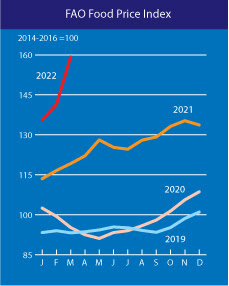

 Global Justice in the 21st Century
Will China Run the World? Should it?
14 Dec[Prefatory Note: Interview Responses to Questions of Javad Heiran-Nia on world order in the time of COVID-19, with emphasis on China & United States, especially as reflected in the restructuring of the world economy. The underlying issue is whether the Chinese or U.S. approach to global policy and world order will gain the upper hand, and at what costs to humanity. The interview will be published in a forthcoming issue of Age of Reflection, a monthly magazine. (http://www.asreandisheh.com/). This post adds some observations at the end that do not appear in the interview.]
Yes, I think it has become extremely relevant to talk about the comparative approaches of China and the U.S. to problem-solving and political order, both their differences and similarities. There exists a preliminary question relating to the seemingly unusual character of American political leadership during the past four years of the Trump presidency, and the probability that it is about to change in style and substance shortly after Joe Biden is inaugurated as the next president. Trump is the first American leader to reject the authority of science and expert guidance in a period of national crisis, greatly aggravating the harm caused by the Corona-19 virus through the advocacy of behavior that contributes to the spread of the disease rather than to its containment. It is also notable that other illiberal leaders of important states have also acted in extremely irresponsible ways during the crisis, including Bolsonaro, the leader of Brazil, and to some extent, Boris Johnson, the British prime minister, among others.
The comparison between China and the United States, current leadership aside, suggests some important differences. The most important difference relates to the role of the central government, and in China’s case, the state. China has more of a unitary system in which policy is set in Beijing for the entire country. In the United States, the reality of federalism means that all 50 internal states enjoy a measure of autonomy, which results in diverse responses to the COVID challenge, some following the approach taken by Trump while others following health guidelines and produce overall better results.
In general, it is possible to suggest that the role of the state is more effectively and efficiently deployed in China in response to COVID, although exhibiting a disturbing disregard for the freedom of citizens and their human rights, especially with regard to political dissent and peaceful opposition. The extraordinary success of the Chinese economy over the course of the past 50 years, confirms the importance of providing centralized guidance in promoting technological innovations and in managing the allocations of capital investment in rapid and sustainable patterns of development.
The U.S. has long suffered from the effects of massive over-investment in military capabilities, which has led to a series of costly foreign policy failures going back to Vietnam, compounded by a refusal to adapt to a global setting in which the politics of national resistance prevails over the superior weaponry of the United States, producing endless wars with unfavorable political outcomes for the intervening. So far China has avoided this trap, expanding through reliance on a variety of soft power instruments, but whether it can maintain this posture in the face of the U.S. current disposition toward confrontation and the initiation of a second cold war is not clear.
The U.S. also suffers from ideological inhibitions that are leftovers from the Cold War rivalry with the Soviet Union. Any reliance on government to perform roles relating to health, education, and social protection are labeled as ‘socialism,’ which is treated as such an evil mode of governing as to foreclose serious discussion. The result has been disinvestment in the social justice agenda, which is compounded in bad effects by the continuing over-investment in the militarist agenda.
This is a crucial question. There is no doubt that neoliberal globalization led to a surge in international trade and investment, fueling sustained economic growth, but it also led to great inequality of benefits from economic development, sharpening class tensions, and in the American case caused acute alienation among workers and rural communities. The Trump phenomenon arose as an ultra-nationalist impassioned backlash to these negative domestic impacts of liberalism. Trump’s insistent call for ‘America First’ coupled with a rejection of all phases of globalism resonated with many Americans. Such a strident outlook struck heavy blows against global cooperation and hospitality to asylum-seekers and refugee, and even immigrants, at the very time these more cosmopolitan behavioral patterns were most needed to address such serious challenges as climate change and migration flows that could not be handled satisfactorily by states acting alone. In some respects, this retreat behind borders worked politically and economically for Trump until the unanticipated COVID pandemic came along. Trump missed no opportunity to boast about the stock market reaching historic highs, low unemployment figures, and somewhat rising wages for workers. The down side of Trump’s approach led to repudiations of the authority of international economic institutions, produced accelerating inequality, and was accompanied by ugly reactions against immigrants and people of color who were denied the full benefits of citizenship and were treated as hostile threats to nationalist identities of supremacy claimed by discontented white Americans who felt understood, energized, and supported by the Trump leadership.
In contrast, China was able to benefit from market forces while simultaneously overcoming the impoverished condition of more than 300,000,000 of its citizens and rapidly building an efficient modern market society on the largest national scale ever known. China’s state-guided public investment policies have seemed very well coordinated to develop an economy that is not only remarkably productive in industrial era manufacturing, but has started to dominate the technological frontiers that have military and reputational implications as threatening to the West as was post-1945 decolonization. China managed to combine taking advantage of liberalism while avoiding most severe forms of domestic alienation, and found win/win ways to help with infrastructure development of less developed countries without seriously interfering with their sovereign rights or political independence, thereby raising its status internationally. From a human rights perspective, China built an impressive record with respect to economic and social rights, while limiting political and civil rights rather severely, and imposing an unacceptably discriminatory regime on the large minority Uighur population in Xinjiang province.
The Biden approach to China reflects a bipartisan, and largely mistaken, view that China has taken unfair advantage of world economy through improper subsidies of exports and by way of strict regulation of imports and foreign investment in China, including with respect to technology. I am not equipped to assess the reasonableness of these grievances, nor of the Chinese concerns with unfair responses to their activities in global markets. There is a danger arising from this attempt to control Chinese economic behavior that it will lead China to retaliate and give rise to the sort of protectionism that caused the Great Depression of the 1930s, characterized as a ‘beggar thy neighbor’ ethos in foreign economic policy. There is also present an impression that the United States is neglecting its own economic shortcomings by shifting blame to China rather than making reforms such as a more prudent allocation of resources and a more effective and equitable public allocation of public sector revenues to promote research and development in non-military projects. The U.S. political taboo preventing even discussion of the shrinking the military budget and the worldwide network of overseas bases is more explanatory of American decline than are accusations of improper behavior directed at China. The U.S.’s military budget is larger than the combined military expenditures of the next ten countries, and yet the U.S. has never felt more insecure throughout its entire history. It is these realities that are at the root of the relative world decline in the economic sphere, and the overall crisis confidence, currently besetting the United States.
This question points to another major deficiency in the global turn toward economic nationalism and away from economic multinationalism during the Trump presidency. China has taken intelligent advantage of the U.S. withdrawal from the Trans-Pacific Partnership, which incidentally excluded China reflecting Obama’s interest in containing China’s regional outreach. China has helped fill the cooperation vacuum by adopting a multilateral framework designed to facilitate Asian growth of trade and investment. Trump’s preference for ‘transactional’ bilateral deals over negotiated cooperative frameworks seems ‘ is very shortsighted, and is almost certain to be rejected as an approach during the Biden presidency. But it is probably too late to reverse these regional developments by U.S. inclusion unless Biden’s leadership moves away from confrontation and toward accommodation, which seems unlikely. This China-led 10 country Regional Comprehensive Economic Partnership includes Japan, South Korea, Singapore, Vietnam, Cambodia, Philippines, Thailand, Australia, New Zealand, and Brunei is off to an impressive start. This arrangement has been under negotiation since 2012, and just now formally endorsed by member governments. India had been expected to become a member, withdrawing recently because the expected lowering of tariffs was thought to harm Indian producers. As it is this Asian bloc comprises 30% of the world’s population, and just under 30% of the world’s GDP.
I anticipate a double movement with regard to the world economy: one movement would be toward restoring the spirit and substance of market driven transnational agreements and frameworks designed to encourage trade and investment within a rule governed framework that is mutually beneficial and inclusive; the second movement is more ideologically delimited, seeking frameworks that are ideologically and geopolitically more closely aligned, excluding China, and possibly Russia. This post-Cold War restructuring was somewhat anticipated by the Obama ‘Asia reset’ that deliberately excluded China from the TPP, and Biden is likely to go further in Asia, and possibly joining with India in adopting a new containment approach to foreign policy and world order. It is difficult at this stage to know how China will react if it is faced with geopolitical encirclement and a more exclusionary economic atmosphere. It is possible that China, which is more pragmatic and opportunistic than the West, will do its best to encourage a less conflictual new phase of economic globalization, which would spread benefits worldwide, is also responsibly concerned with the global public good, which translates into greater support for clean energy, environmental protection, human rights, denuclearizing initiatives, and a more equitable distribution of benefits of economic growth.
Biden’s efforts to find a consensus on foreign economic policy will definitely pose a crucial test for his presidency. If he seeks to act on the basis of domestic unity, policymaking will likely be paralyzed, especially if Republicans remain able to put roadblocks in the path of Democratic proposed initiatives. If Biden decides to ignore the priorities of this lingering large Trump support he will be confronted by resentment and disruption. It is a dilemma no recent American president has faced. Whether the dilemma can be overcome also depends on whether Trumpist Republicans retain control of the U.S. Senate, and that seems to rest on the Georgia reruns of the two senatorial elections, which will be decided in early January. Unless the Democrats win both races, the Republicans will control the Senate, and as they did with Obama’s second term, be in a position to obstruct and block most legislative initiatives that are seen as antagonistic to the Trump approach. Biden’s pledge to be president for all Americans sounds good, but whether it will be a successful governing style remains in doubt. My understanding is that most Trumpists want power not compromise or responsible government. In this regard, restoring civility to the American political scene will be welcomed even by some Trump supporters, but to uphold his policy goals it may well be necessary to confront Republicans and mobilize the support of the citizenry. With the recent election revealing the depth of polarization, further revealed by the Trump refusal to accept the outcome as certified by the long reliable voting schemes operative in the 50 states, including those presided over by Republican officials, there are many signs of domestic trouble ahead for Biden whether he gives way on his policy agenda or tries to have it fulfilled. Biden may have more success in reviving the bilateral consensus on foreign policy that existed during the Cold War, and would be now focus on restoring European alliance relations and challenging China regionally in South and East Asia, and globally with regard to a U.S. oriented revision of rule-governed globalization. Again, much depends on the degree to which the Biden leadership with continues to address global security through a militarist optic. Early indications suggest that the demilitarization of the American political and moral imagination will not be forthcoming in the near future whoever is president.
Again, I think the way to consider such a departure from global scale, inclusive liberalism is to reevaluate the operation of the world economy during and after the ending of the Cold War in the early 1990s. On the basis of my prior responses is a return to a modified Cold War orientation toward foreign economic policy. Unlike the Soviet Union, China’s participation in the world economy is indispensable for world stability and sustainable development, which creates a realization of mutual benefits. There is no realistic prospect of resurrecting the ‘Washington consensus’ shaped by the Bretton Woods institutions as projecting American values onto the global stage as the more legitimate future than that projected by Moscow. What might be feasible is some reform within the neoliberal framework that gained certain concessions from China but more or less retained the inclusive structures of neoliberal globalization that have controlled the world economy since the Soviet collapse in 1992. Thinking optimistically, we might even witness an upgrading the quality of Chinese participation. If reform fails and geopolitical confrontation occurs, then a lose/lose future for the entire world looms as the likely outcome, which could work more to the disadvantage of the West than to China. It needs to realized that China has been adapting its public investment priorities in light of expanding the economic performance of its huge domestic market, including satisfying rising consumer demand, as well continuing with the largest international/transnational development in world history, The Road and Belt Initiative or One Belt, One Road (OBOR), a new Silk Road adapted to the circumstances of the present. As Deepak Nayyar has shown in his breakthrough book, Asian Resurgence (2019), China is no longer dependent on Silicon Valley and Europe for technological progress, but the West, including the United States, may increasingly look to China for the latest technological innovations. Undoubtedly, part of the rising tension with China reflects the threatening reality that the country has graduated from its non-threatening role as ‘the factory of the world’ to becoming dominant on some of the most dynamic technological frontiers, which is a symbolic as well as a substantive blow to America’s reputation and leadership credentials, and possibly even to its dominance with respect to innovations in military technology.
8. Given that liberalism is not in America’s best interests internationally, and theorists such as Prof. John Mearsheimer warn the US government against pursuing liberalism globally, what do you think will replace the current liberal order?
John Mearsheimer has long intelligently stressed the geopolitical dimensions of world order, which inevitably emphasizes patterns of conflict between major actors. As an extreme realist he regards ‘liberalism’ as naïve, and a sign of weakness, which invites cynical adversaries to take advantage economically and diplomatically. Mearsheimer is convinced that history is shaped by those political actors that prevail militarily, and as adjusted for present realities, the first priority of foreign policy should not be cooperation with rivals but their deterrence. He has gone so far as to credit nuclear weapons with the avoidance of World War III during the Cold War.
A complementary view to that of Mearsheimer has been influentially formulated by Graham Allison in his book Destined for War: Can America and China Escape the ‘Thucydides’s Trap’ (2017), which puts forward the thesis that high risks of war occur when the hegemonic hierarchy is challenged by an ascending actor in international relations. The present ascendant political actor that perceived a rising challenge from below is likely to provoke war rather than give way, which according to Allison is what has almost happened throughout world history.
Whether such abstractions should be given much weight considering several factors:
–the globalizing adaptations in the post-COVID world, giving increased role to WHO, and UN
Generally, as offset by persisting ultra-nationalist governance trends, despite defeat of Trump;
–a growing anxiety about global warming producing climate change with many harmful effects, including dangerous erosions of biodiversity;
–the Chinese challenge to American global primacy arising in a manner unlike earlier geopolitical confrontations, most notable with respect to economic performance, technological ascendancy, and soft power expansionism rather than by way of military challenge and territorial ambitions;
–U.S. relative decline globally, reflecting a continuing over-investment in military capabilities, a militarized permanent bureaucracy entrapped in an outmoded political imagination with a disposition that exaggerates security threats and under-invests in domestic infrastructure and social protection of its citizenry;
–a resulting intensification of uncertainty about the future of world order, some recovery of functional multilateralism under Biden leadership accompanied by increased reliance on coercive geopolitics involving relying on military ‘solutions’ for political problems.
Tags: Asian Economic Order, China, United States, world order