Archive | Commentary RSS feed for this section

A SHORT POSTSCRIPT TO “WILL WE EVER LEARN? CONTRA INTERVENTION”

8 Mar

A SHORT POSTSCRIPT TO “WILL WE EVER LEARN? CONTRA INTERVENTION”

Since my blog was posted several responses and developments lead me to think further about the essential issues, but not to change course.

It has been suggested that, perhaps, a no fly zone would enable the rebel forces to deal more effectively with the foreign militias being relied upon by the Qaddafi regime to do much of its dirty work. It is difficult to know how a particular version of the no fly zone would impact on the battlefield. We are

speculating on the basis of radical uncertainty, and in such circumstances, it is almost always better to refrain from coercive action than to engage in it. Furthermore, there is a wide spectra of no fly zone scenarios depending on the governments who are taking such an initiative, its degree of dependence on correlated air strikes, and the options available to the rebels and Qaddafi to either take advantage of its effect or to circumvent them. For instance, it is politically more palatable to have a no fly zone established and administered under the auspices of the Arab League or as has been proposed, a joint Egypt/Turkey undertaking than to have it done by NATO or a United States-led ‘coalition of the willing.’ The UN as sponsor is out of the question given Russian opposition, and Chinese reluctance. At the same time, given the logistical and technological demands, it is more likely that the effectiveness of a no fly zone would be greater under NATO/U.S control. A failed no fly zone would embolden Libya, and likely improve his prospects to prevail in the internal struggle.

Furthermore, the tactics and character of the rebel movement seems dramatically different than the uprisings elsewhere in the region, particularly in Egypt and Tunisia. In Libya, the movement lacks the inspiring quality of nonviolence, human solidarity, and social/political demands for justice. It was violent from the outset, tribalist in spirit, recipient of weaponry from external actors, preoccupied with control over the oil-producing areas, indistinct in political outlook (a rebel segment flying the pre-Qaddafi flag of the Libyan monarchy), and uncertainly linked to private sector international oil interests. This looks more like a struggle for control of the state or possibly an effort to establish a secessionist second state if a stalemate emerges. Under this mix of circumstances one must be suspicious about the focus on Libya and the call for full consideration of military options. It would seem to be the case that if feasibility hurdles could be overcome, the political climate in the United States and Britain would support a large-scale intervention, possibly with Arab regional acquiescence. See illuminating analysis by Michel Chossudovsky, “Insurrection and Military Intervention: The US-NATO Attempted Coup d’Etat in Libya?” www.globalresearch.ca March 8, 2011.

With these considerations in mind, I think the case for nonintervention remains overwhelmingly persuasive from moral, legal, and political perspectives. Perhaps, the most compelling rationale for reaching such a conclusion was well stated by Roger Cohen: “But the deepest reason is the moral bankruptcy of the West with respect to the Arab world. Arabs have no need of U.S. or European soldiers as they seek the freedom that America and the European Union were content to deny them.” (NY Times, March 7, 2011) It is not often that I have the opportunity to quote approvingly from the New York Times when the subject-matter involves the Middle East, and so I want to make the most of it.

Perhaps, there is another way to exhibit the shabbiness of the argument being made on behalf of a protective no fly zone. Why no comparable proposal on behalf of the civilian population of Gaza trapped behind a merciless blockade for more than three years?

Aside from issues of nonintervention, always important, there is here the paramount relevance of support for dynamics of self-determination. This does not assure the triumph of justice in conflict situations. Qaddafi may win or the rebels may prevail, and prove as distastefully oppressive as the Qaddafi regime. On balance, what means most in the 21st century is to allow the peoples of the world make their own history. Western military paternalism and economic exploitation have been deservedly discredited.

As suggested, there is no way to seal the borders of territorial states. Neither pure noninterventionism nor insulated self-determination are ever possible given the porousness of borders and the interventionary incentives of a range of outsiders. There are various low profile ‘interventions’ taking place. Weapons are being supplied, perhaps, special forces are covertly present as advisors or even fighters. In this respect, the most that can be done is to oppose gross forms of overt governmental intervention, as well as limit assistance to governments, including the Tripoli regime, that violate the fundamental human rights of their own people. In this respect, sanctions are appropriate if authorized by the UN so long as not coupled with intervention, and take responsible account of competing moral, legal, and political claims.

Keep in mind that Libya has over 3.5% of the world’s oil reserves, which is twice the amount present in the United States. Without being an economic determinist, oil certainly helps explain the preferential treatment being given to insurrection in Libya!

Will We Ever Learn? Kicking the Intervention Habit

7 Mar

Will We Ever Learn? Kicking the Intervention Habit


What is immediately striking about the bipartisan call in Washington for a no-fly zone and air strikes designed to help rebel forces in Libya is the absence of any concern with the relevance of international law or the authority of the United Nations. None in authority take the trouble to construct some kind of legal rationalization. The ‘realists’ in command, and echoed by the mainstream media, do not feel any need to provide even a legal fig leaf before embarking on aggressive warfare.
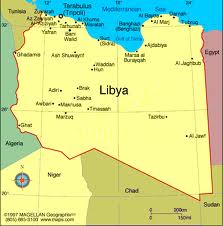

It should be obvious that a no-fly zone in Libyan airspace is an act of war, as would be, of course, contemplated air strikes on fortifications of the Qadaffi forces. The core legal obligation of the UN Charter requires member states to refrain from any use of force unless it can be justified as self-defense after a cross-border armed attack or mandated by a decision of the UN Security Council. Neither of these conditions authorizing a legal use of force is remotely present, and yet the discussion proceeds in the media and Washington circles as if the only questions worth discussing pertain to feasibility, costs, risks, and a possible backlash in the Arab world. The imperial mentality is not inclined to discuss the question of legality, much less show behavioral respect for the constraints embedded in international law.

Cannot it not be argued that in situations of humanitarian emergency ‘a state of exception’ exists allowing an intervention to be carried out by a coalition of the willing provided it doesn’t make the situation worse? Was not this the essential moral/political rationale for NATO’s Kosovo War in 1999, and didn’t that probably spare the majority Albanian population in Kosovo from a bloody episode of ethnic cleansing at the hands of the embattled Serb occupiers? Hard cases make bad precedents, as is well known. But even bad precedents need to find a justification in the circumstances of a new claimed situation of claimed exception, or else there would a strong reinforcement for the public impression that the powerful act as they will without even pausing to make a principled argument for a proposed departure from the normal legal regime of restraint.


With respect to Libya, we need to take account of the fact that the Qaddafi government, however distasteful on humanitarian grounds, remains the lawful diplomatic representative of a sovereign state, and any international use of force even by the UN, much less a state or group of states, would constitute an unlawful intervention in the internal affairs of a sovereign state, prohibited by Article 2(7) of the UN Charter unless expressly authorized by the Security Council as essential for the sake of international peace and security. Beyond this, there is no assurance that an intervention, if undertaken, would lessen the suffering of the Libyan people or bring to power a regime more respectful of human rights and dedicated to democratic participation.

The record of military intervention during the last several decades is one of almost unbroken failure if either the human costs or political outcomes are taken into proper account. Such interventionary experience in the Islamic world during the last fifty years makes it impossible to sustain the burden of persuasion that would be needed to justify an anti-regime intervention in Libya in some ethically and legally persuasive way.
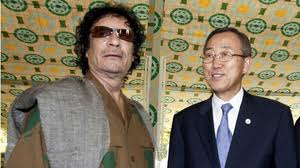
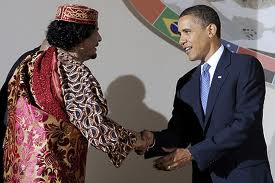


There are also serious credibility concerns. As has been widely noted in recent weeks, the United States has had no second thoughts about supporting oppressive regimes throughout the region for decades, and is widely resented for this role by the various anti-regime movements. Qadaffi’s crimes against humanity were never a secret, and certainly widely known by European and American intelligence services. Even high profile liberal intellectuals in Britain and the United States welcomed invitations to Tripoli during the last several years, apparently without a blink of conscience, accepting consulting fees and shamelessly writing positive assessments that praised the softening authoritarianism in Libya. Perhaps, that is what Joseph Nye, one of the most prominent of these recent good will visitors to Tripoli, would call a private use of ‘smart power,’ commending Qadaffi for renouncing his anti-West posture, for making deals for oil and weapons, and most of all for abandoning what some now say was at most a phantom nuclear weapons program.

Some Beltway pundits are insisting on talk shows that the interventionists after faltering in the region want to get on the right side of history before it is too late. But what is the right side of history in Libya seems quite different than it is in Bahrain or Jordan, and for that matter throughout the region. History seems to flow according to the same river currents as does oil! Elsewhere, the effort is to restore stability with minimal concessions to the reformist demands, hoping to get away with a political touch up that is designed to convert the insurrectionists of yesterday into the bureaucrats of tomorrow.

Mahmoud Mamdani has taught us to distinguish ‘good Muslims’ from ‘bad Muslims,’ now we are being instructed to distinguish ‘good autocrats’ from ‘bad autocrats.’ By this definition, only the pro-regime elements in Libya and Iran qualify as bad autocrats, and their structures of must at least be shaken if they cannot be broken. What distinguishes these regimes? It does not seem to be that their degree of oppressiveness is more pervasive and severe than is the case for the others. Other considerations give more insight: access and pricing of oil, arms sales, security of Israel, relationship to the neoliberal world economy.

What I find most disturbing is that despite the failures of counterinsurgency thinking and practice, American foreign policy gurus continue to contemplate intervention in post-colonial societies without scruples or the slightest show of sensitivity to historical experience, not even the recognition that national resistance in the post-colonial world has consistently neutralized the advantages of superior hard power deployed by the intervening power. The most that has been heard is a whispered expression of concern by the relatively circumspect Secretary of Defense, Robert Gates, that it may not be prudent at this time for the United States to intervene in yet another Islamic country. The absence of any learning from Vietnam, Afghanistan, and Iraq is startling, underscored by the glorification of General David Petraeus who rose to military stardom soon after he was credited with refurbishing the army’s approach to counterinsurgency, which is the Pentagon jargon for pro-regime intervention. Major current illustrations are Afghanistan, Iraq, and several other places in the Middle East. Technically speaking, the proposed intervention in Libya is not an instance of counterinsurgency, but is rather a pro-insurgency intervention, as has also been the case with the covert destabilization efforts that continue in Iran.

It is easier to understand the professional resistance to learning from past failure on the part of military commanders as it is their life work, but the civilian politicians deserve not a whit of sympathy. Among the most ardent advocates of intervention in Libya are the last Republican presidential candidate, John McCain, the supposedly independent Joe Lieberman, and the Obama Democrat John Kerry. It seems that many of the Republicans focused on the deficit although cutting public expenditures punishes the poor at a time of widespread unemployment and home foreclosures would not mind ponying up countless billions to finance acts of war in Libya. There exists a worrying readiness to throw money and weapons at an overseas conflict, seemingly as to show that imperial geopolitics is not yet dead despite the growing evidence of American decline.

In the end, I suppose we have to hope that those more cautious imperial voices that base their opposition to intervention on feasibility concerns carry the day!

What I am mainly decrying here in the Libyan debate are three kinds of policy failure:

(1) the exclusion of international law and the United Nations from relevance to national debates about international uses of force;

(2) the absence of respect for the dynamics of self-determination in societies of the South;

(3) the refusal to heed the ethics and politics appropriate for a post-colonial world order that is being de-Westernized and is becoming increasingly multi-polar.


III.7.2011
Commentary on Recent Developments: Interview Responses

2 Mar

The following Q & A interview consists of my responses to questions put to me by the outstanding Greek journalist, C. J. Polychroniou, and is being published in the Sunday edition of the Greek newspaper, Eleftherotypia, March 6, 2011.

1.   Various Arab leaders, from Egypt and Tunisia to Bahrain and Libya, have blamed either Islamic fundamentalist forces or Al-Qaeda for the uprisings, thus refusing to accept the uprisings as popular, secular revolutions.   An indication that the Arab leaderships are truly of of touch with reality in their own country or there is something indeed into their claims?

Such allegations by these embattled dictatorial leaders have no basis in fact as far as I can tell, and seem to be a grasping at straws while straining to survive in the midst of a political maelstrom. Such irresponsible allegations seem to be rather desperate reminders to the West, especially to Washington, that these Arab autocrats have been loyal servants for many years, that it should be appreciated that they are the enemy of the American number one enemy (Al Qaeda), and that these regimes should therefore be treated as trusted friends, and repression of the protestors welcomed. Such pleas are seeking to convey a sense that these uprisings if allowed to succeed will be damaging to Western and American interests, bringing hostile elements into political control of the respective governments, and replacing compliant current officialdom with more antagonistic leaders. Of course, each country is different in its particulars. Mubarak could reasonably pretend to have been serving Western interests during his 31 years of rule, and has long been supported and free from critical scrutiny because of this. Qaddafi, in contrast, until recently was seen by the West as a dangerously hostile presence in the region, a supporter of radical anti-Western political action. He made himself acceptable as a trading partner some years ago when he appeared to cave in geopolitically, abandoning Libya’s nuclear program and renouncing support for terrorist causes. It is almost forgotten that the Bush presidency in the period after its invasion of Iraq in 2003 claimed as a major diplomatic success this dramatic shift in Libya, suggesting that its efforts at ‘democracy promotion’ were bearing fruit.

Looking at the issue more objectively it seems clear that the rise of these democratic popular forces throughout the Arab World is taking place in spite of the Al Qaeda reality in the background rather than as a result of it. As is well known, even the Muslim Brotherhood in Egypt has an intensely antagonistic relationship with Al Qaeda, and has developed during the last decade a nonviolent and low profile political program that points in a moderate direction. Also, the experience of political Islam in Iran over the past 30 years seems to have influenced other Muslim oriented activists in the region to look to Turkey, not Iran or Al Qaeda, for inspiration. Turkey offers the region an encouraging model of achieving democratic gains and protecting human rights while promoting more equitable, yet successful, forms of economic development that have also seemingly managed to avoid major corruption. What enraged the Arab publics was a lethal mixture of authoritarian rule and gross corruption resting on a pure embrace of neoliberal policies that combined repression with material hardship. Such a pattern of economic growth confers almost all of its benefits on the ruler’s family and entourage, making positive GNP growth a cruel joke for the public as a whole.

2.   After the fall of Mubarak and Ben Ali in Egypt and Tunisia, respectively, the rest of the Arab dictators and monarchs seem to have concluded that using force to remain in power is their preferred option. Is this a viable strategy without suppport from the US and Europe?

It is difficult at this stage to tell whether reliance on force will work or not, and if so where, and to what extent it has been encouraged or at least tolerated by Washington and Europe. Of course, Libya is a special case in at least two senses: (1) the U.S. would not mind seeing the Qadaffi regime collapse, and take its chances with whatever comes next; (2) the Qaddafi response seems to rely on a more vicious and widespread use of force than has been used elsewhere in this period, and includes deploying high technology weaponry against initially unarmed demonstrators that seems to be leading toward widespread and bloody civil strife in the country. Elsewhere in the region, and especially, Bahrain because of oil, it is more likely that the U.S. would like to see the regime survive, using force if necessary to quell protests. Iran, although not an Arab country, is the extreme instance in the opposite direction. The U.S. seeks to mobilize opposition and stiffen sanctions in response to uses of force by the Tehran regime, and encourages oppositional activity by covert means, openly favoring a regime change. Iran’s experience is in many respects different that that in the Arab countries, but the internal confrontations in Iran have much in common with the recent uprisings in Tunisia and Egypt, given the goals of the Green Revolution and the resistance of the regime.

One generalization that has not yet been fully tested as yet is whether, as now seems to be the case, the monarchies in the region have more political space available to reach accommodations with opposition movements than do the secular regimes of the sort that existed in Egypt and Tunisia. The monarchies are perceived as less corrupt, more legitimate in terms of the political culture, and their leaders regarded as less usurpers than royal autocrats who have abused their role as rulers, but who can recover considerable popular respect if genuine reforms take place, granting more freedom and seeking greater economic justice.

3.   Should the UN or even NATO use force to get Gaddafi out of the picture, or best to reach an agreement with him and have him disappear in some remore corner of the globe?

I am opposed to military intervention for several reasons. It will tend to support Qaddafi’s claim that he is the victim of foreign subversion, either in the form of colonialism or Muslim fundamentalism. It would also fuel suspicions that the West will intervene where oil is at stake as in Kuwait, Iraq, or Libya, and invokes humanitarian issues as a cover for imperial goals. Intervention would likely generate more violence and suffering for the Libyan people by intensifying the military dimensions of the conflict. A humanitarian intervention could not likely be carried out in an effective manner in the short run, especially as American capabilities are stretched thin, and the Tripoli regime has the means to offer stiff resistance. If the UN had a protective force in being under its authority, then maybe a protective emergency mission could be undertaken, but even this would be risky. NATO acting beyond Europe, as in Afghanistan, creates the impression of post-colonial imperial ambitions, and should not be seriously considered. Overall in the post-colonial era, especially lacking a clear UN mandate, it is best to show respect for the dynamics of self-determination even in situations where vulnerable elements of the population is at risk, at least to the extent of refraining from military intervention.

Whether Qadaffi can be enticed to leave for comfortable exile in the manner of Ben Ali is an open question. So far, he has seemed to resist such a suggestion, preferring to die together with his family in Libya, casting himself and sons in the role of martyrs. All in all, none of the available options seem promising at this time. Some of the deficiencies of the current structure of world order are exposed: intervention is unacceptable, but so is being a helpless spectator as a humanitarian catastrophe of these proportions unfolds. Imaginative diplomacy that emphasizes soft power tactics and brings to bear civil society influences may turn out to be most effective and least costly.

4. You’ve been involved with developments in the region for many decades. What explains the sudden explosion of public anger throughout the Arab world?

It is too early to offer much commentary about the future of the Middle East. The coming months will tell us whether these uprisings are reformist or revolutionary in content. So far, the trajectory seems decidedly reformist, taking the form of either forcing the leaders out as in Tunisia and Egypt, or by inducing the existing regime to seek to regain stability by meeting some core demands of the populace as in Jordan, Yemen, Algeria, Morocco, Oman, and Bahrain. To be revolutionary, the political changes would have to be complemented by a partial rejection of neoliberal economic orientation, and that doesn’t seem likely without further radicalization of the uprisings. At this point the question is whether the political reforms will be deeper than cosmetic, establishing a genuinely democratic governance structure including independent political parties, a constitutionally functioning judiciary, an accountable bureaucracy, human rights, and a media free to criticize without risk. How these reformist governing structures will deal with jobs, food security, and general conditions of poverty and inequality remains to be seen, and will have a big bearing on whether the post-autocratic leaders gain political legitimacy and public acceptance.

It is always difficult to assess after the fact what looked extremely unlikely until it happened. Tolstoy in the Second Epilogue of War and Peace asks why historians always get things wrong when they look toward the future. Tolstoy’s answer is that historians look at the surfaces of social action, whereas the dynamics of history are shaped by unanticipated explosions from below. In effect, the changes that we are witnessing in the Middle East were long brewing, both as anger and as resistance. The uprisings seemed spontaneous, but on further reflection, it is clear that both the rage and the resistance were preexisting conditions that had evolved during prior years. Rage and resistance came together in an extraordinary kind of political chemistry that was sparked by the suicide of a young street vendor in an interior Tunisian town, an event igniting a wildfire that spread quickly as the winds of protest carried the sparks of outrage throughout Tunisia, and then to neighboring countries where additional political suicides also fanned the flames of discontent. As with an earthquake, the risks can be noted beforehand, but the event is not predictable in time or exact place.

In the Arab world, few anticipated this kind of mass visible resistance ever occurring in any of the countries, much less in the region as a whole. There was a widespread realization of acute discontent among the peoples of these countries, but little expectation that these feeling would morph into a series of revolutionary challenges to the status quo. Even the Western intelligence agencies, despite their extensive activities throughout the region and their tendency to posit alternative scenarios, were caught by surprise. In the aftermath, we find lots of ‘learned’ explanations being suddenly forthcoming as pundits scrambled to regain their reputations as ‘experts’ on the region or country.

5.   You serve as a UN Special Rapporteur on the situation of human rights in the Palestinian territories. What impact, if any, will the Arab revolutions have on the Palestinian issue?

Without wanting to evasive, my answer here too is that it is hard to say at this stage. A realistic Israel, which is itself a kind of utopian expectation, would urgently be seeking a quick peace with the Palestinians by rushing to accept the Arab League Mecca Proposals of 2002. The Palestinian Authority has already clearly indicated its willingness to accept such a settlement as full satisfaction of their search for a Palestinian state. Despite the realist logic behind such positive developments, the situation is almost certain to remain dangerous frozen for the foreseeable future.

What we are likely to witness is more stalling by Israel, vigorously claiming an interest in direct peace negotiations, while feverishly acting to undermine any prospects of a successful and just outcome by continuing with its program of unlawful settlement expansion in the West Bank and ethnic cleansing of Palestinians in East Jerusalem. In the background is the daunting question of Palestinian representation. Gazans are not currently represented at all in international venues due to the Hamas/Fatah split. This is also true of Palestinians living as a discriminated minority in Israel nor of the several million Palestinians living in refugee camps of neighboring countries or in exile.

There are some unconfirmed reports that Netanyahu is about to offer the Palestinian Authority a Palestinian state on 40-50% of the West Bank (that is, less than 11% of the historic Palestine) as an interim solution, with permanent borders to be established at a later date. There are media reports that Netanyahu is considering this diplomatic move as a direct reaction to the regional development of the last two months. In some respects this possible Israeli offer corresponds to the Fayyad approach adopted by the PA Prime Minister. Whether such a step moves toward a just outcome of the Palestinian struggle is doubtful as it leaves many contested issues out in the cold, perhaps permanently: refugees, separation wall, Jerusalem, Gaza, water, permanent borders, status of Palestinian minority in Israel.

If these Arab revolutions do manage to achieve real governmental transformations in a democratizing direction, then regional pressures on Israel are likely to mount, including pressure to renegotiate the 1979 Peace Treaty with Egypt. At minimum, one would expect an end to the blockade of Gaza that has gone on for more than three years, a cruel and criminal form of collective punishment of the 1.5 million civilians living at near subsistence levels.

My main hope for the Palestinian struggle rests on the soft power initiatives embedded in the BDS (boycott, divestment, and sanctions) campaign that has been growing in strength around the world. With the greatly reduced reliance on hard power resistance, the Palestinian movement has increasingly the shape of what I call a Legitimacy War. Such a strategy resembles the anti-apartheid campaign that was so effectively globally waged against the South African racist regime In the late 1980s and early 1990s. While noting the similarities, there are also significant dissimilarities, and the analogy should be noted, but not pushed too far.

There is no doubt that the Palestinian quest for self-determination is the major symbolic global justice issue of our time, and it will not be easily resolved. Israel will have to drastically downgrade its ambitions, and accept either a genuinely viable and independent Palestinian state within 1967 borders (requiring dismantling most of the settlements, the separation wall, reconstituting the Palestinian presence in East Jerusalem, and compromise on the refugee issue) or give up on the existence of a Zionist Israel and agree to a bi-national secular single state for both peoples. Neither option seems remotely acceptable to the current Israeli leadership, meaning that in all probability the conflict will in go on for many more years with continuing tragic results, especially for the Palestinians.

What is Winning? The Next Phase for the Revolutionary Uprisings

24 Feb


Early in the Tunisian and Egyptian uprisings it seemed that winning was understood by the massed demonstrators to mean getting rid of the hated leader, of Ben Ali in the Tunisian case, and Mubarak in the Egyptian. But as the process deepened it make clear that more was being demanded and expected, and that this had to do with restoring the material and spiritual dignity of life in all its aspects.

Without any assurance as to what ‘winning’ means in the setting of the extraordinary revolutionary uprisings that are continuing to rock the established order throughout the Arab world, it is likely to mean different things in the various countries currently in turmoil. But at the very least winning has so far meant challenging by determined and incredibly brave nonviolence the oppressive established order. This victory over long reigns of fear-induced pacification is itself a great transformative moment in 21st century history no matter what happens in the months ahead.

As Chandra Muzaffar, the widely respected Malaysian scholar who  religion and justice, compelling argues, the replacement of the old order by electoral democracy, while impressive as an accomplishment given the dictatorial rule of the past in these countries, will not be nearly enough to vindicate the sacrifices of the protestors. It is significantly better than those worst case scenarios that insist that the future will bring dismal varieties of ‘Mubarakism without Mubarak,’ which would change the faces and names of the rulers but leave the oppressive and exploitative regimes essentially in tact. This would definitely be a pyrrhic victory, given the hopes and demands that motivated the courageous political challenges embodied in withstanding without weapons the clubs, rubber bullets, live ammunition, and overall brutality, as well as the uncertainty as to what the soldiers in the streets would do when the order to open fire at the demonstrators came from the beleaguered old guard.

What is needed beyond constitutional democracy is the substantive realization of good and equitable governance: this includes, above all, people-oriented economic policies, an end to corruption, and the protection of human rights, including especially economic and social rights.  Such an indispensable agenda recognizes that the primary motivation of many of the demonstrators was related to their totally alienating entrapment in a jobless future combined with the daily struggle to obtain the bare necessities of a tolerable life.

There is present here both questions of domestic political will and governmental capability to redirect the productive resources and distributive policies of the society. How much political space is available to alter the impositions of neoliberal globalization that was responsible for reinforcing, if not inducing, the grossly inequitable and corrupting impact of the world economy on the structuring of domestic privilege and deprivation? Not far in the background is an extended global recession that may be deepened in coming months due to alarming increases in commodity prices, especially food. According to the UN Food and Agricultural Organization the world Food Price Index reached a record high in December 2010, a level exceeded by another 3% rise in January of this year. Lester Brown, a leading expert on world food and environment, wrote a few days ago that “[t]he world is now one poor harvest away from chaos in world grain markets.” [International Herald Tribune, Feb 23, 2011]

With political turmoil threatening world energy supplies, oil prices are also surging, allegedly further endangering the uneven and fragile economic recovery in the United States and Europe. Global warming adds a further troubling feature to this deteriorating situation, with droughts, floods, fires, and storms making it difficult to maintain crop yields, much increase food production to meet increasing demands of the world’s growing population.

These impinging realities will greatly complicate the already formidable difficulties facing new leaders throughout the Arab world seeking with a sense of urgency to create job opportunities and affordable supplies of food for their citizenries. This challenge is intensified by the widely shared high expectations of improved living circumstances. If the autocratic prior regime was held responsible for mass impoverishment of the many and the scandalously excessive enrichment of the few, is it not reasonable to suppose that the more democratic successor governments should establish without much delay greatly improved living conditions? And further, how could it be claimed that the heroic uprising was worthwhile if the quality of life of ordinary citizens, previously struggling to avert the torments of impoverishment, does not start improving dramatically almost immediately? An understandably impatient public may not give their new leaders the time that need, given these conditions, to make adjustments that will begin to satisfy these long denied hopes and needs. Perhaps, the public will be patient if there are clear signs that the leaders are trying their hardest and even if actual progress is slow, there is some evidence that the material conditions of the populace are, at least, on an ascending slope.

Even if the public is patient beyond reason, and understands better than can be prudently expected, the difficulties of achieving economic justice during a period of transition to a new framework of governance, there may be still little or no capacity to fulfill public expectations due to the impact of these worsening global conditions.  It is quite possible that if the worst food/energy scenarios unfold, famines and food riots could occur, casting dark shadows of despair across memories of these historic victories that made the initial phases of each national uprising such a glowing testament to the human spirit, which seemed miraculously undaunted by decades of oppression and abuse.

It needs also to be kept in mind that often the slogans of the demonstrators highlighted a thirst for freedom and rights. Even though there is little experience of democratic practice throughout the region, there will likely be a serious attempt by new governing institutions to distinguish their practices from those of their hated forebears, and allow for the exercise of all forms of oppositional activity, including freedom of expression, assembly, and party formation. Unlike the problems associated with creating jobs and providing for material needs, the establishment of the atmosphere of a free society is within the physical capacities of a new leadership if the political will exists to assume the unfamiliar risks associated with democratic practices. We must wait and see how each new leadership handles these normative challenges of transition. It remains to be seen as to whether the difficulties of transition are intensified by counterrevolutionary efforts to maintain or restore the old deforming structures and privileges. These efforts are likely to be aided and abetted by a range of covert collaborative undertakings joining external actors with those internal forces threatened by impending political change.

And if this overview was not discouraging enough, there is one further consideration. As soon as the unifying force of getting rid of the old leadership is eroded, if not altogether lost, fissures within the oppositions are certain to emerge. There will be fundamental differences as between radical and liberal approaches to transition, and especially whether to respect the property rights and social hierarchies associated with the old regime, or to seek directly to correct the injustices and irregularities of the past. Some critics of the Mandela approach to reconciliation and transition in South Africa believe that his acceptance of the social and economic dimensions of the repudiated apartheid structure have resulted in a widely felt sense of revolutionary disappointment, if not betrayal, in South Africa.

There will also be tactical and strategic differences about how to deal with the world economy, especially with respect to creating stability and attractive conditions for foreign investment. It is here that tensions emerge as between safeguarding labor rights and making investors feel that their operations will remain profitable in the new political environment.

This recitation of difficulties is not meant to detract attention from or to in any way diminish the glorious achievements of the revolutionary uprisings, but to point to the unfinished business that must be addressed if revolutionary aspirations are going to be able to avoid disillusionment. So often revolutionary gains are blunted or even lost shortly after the old oppressors have been dragged from the stage of history. If ever there exists the need for vigilance it at these times when the old order is dying and the new order is struggling to be born. As Gramsci warned long ago this period of inbetweeness is vulnerable to a wide range of predatory tendencies. It is a time when unscrupulous elements can repress anew even while waving a revolutionary banner and shouting slogans about defending the revolution against its enemies. And a difficulty here is that the enemies may well be real as well as darkly imagined. How many revolutions in the past have been lost due to the machinations of their supposed guardians?

Let us fervently hope that the mysteries of the digital age will somehow summon the creative energy to manage the transition to sustainable and substantive democracy as brilliantly as it earlier staged the revolutionary uprisings.


The United States Stands Alone with Israel in the UN Security Council [or How (Dis)honest is the Honest Broker?]

19 Feb

The United States Stands Alone with Israel in the UN Security Council [or How (Dis)honest is the Honest Broker?]

In what appears to be as close to a consensus as the world community can ever hope to achieve, the United States reluctantly stood its ground on behalf of Israel and on February 18, 2011 vetoed a resolution on the Israeli settlements  in the West Bank and East Jerusalem that was supported by all 14 of the other members of the UN Security Council. The resolution was also sponsored by 130 member countries before being presented to the Council. In the face of such near unanimity the United States might have been expected to some respect for the views of every leading government in the world, including all of its closest European allies, to have had the good grace to at least abstain from the vote. Indeed, such an obstructive use of the veto builds a case for its elimination, or at least the placement of restrictions on its use. Why should an overwhelming majority of member countries be held hostage to the geopolitical whims of Washington, or in some other situation, an outlier member trying to shield itself or its ally from a Security Council decision enjoying overwhelming support. Of course this American veto is not some idiosyncratic whim, but is an expression of the sorry pro-Israeli realities of domestic politics, suggesting that it is Israel that is the real holder of the veto in this situation, and the U.S. Congress and the Israeli Lobby are merely designated as the enforcers.


Susan Rice, the American chief representative in the Security Council, appeared to admit as much when she lamely explained that the casting the veto on this text “should not be misunderstood to mean support for settlement construction,” adding that, on the contrary, the United States “rejects in the strongest terms the legitimacy of continued Israeli settlement activity.” Why then? The formal answer given is that the United States, agreeing with Israel, believes that only in the context of direct negotiations can the issue of settlements be addressed alongside other unresolved matters such as refugees, borders, and the status of Jerusalem. This seems absurdly arrogant, and geopolitically humiliating. If the 14 other members of the Security Council believe that Israeli should be censured for continuing to build unlawful settlements, and that no negotiations can proceed until it ceases, then it would seem that a united front would be the most effective posture to resumed negotiations. This is especially so here as it is a no brainer to realize that every additional settlement unit authorized and constructed makes it less likely that a truly independent and viable Palestinian state can ever be brought into being, and that there exists the slightest intention on the Israeli side to do so.

In view of this feverish Israeli effort to create still more facts on the ground, for the Israelis to contend that negotiations should resume without preconditions, is to hope that the Palestinian Authority will play the fool forever. After all for more than 43 years the Israelis have been whittling away at the substance of the two state consensus embodied in unanimous Security Council Resolution 242 (1967), contending at every phase of the faux peace process that an agreement must incorporate ‘subsequent developments,’ that is, unlawful settlements, ethnic cleansing. In the end, the Israelis may turn out to have been more clever by half, creating an irresistible momentum toward the establishment of a single secular democratic state of Palestine that upholds human rights for both peoples and brings to an end the Zionist project of an exclusive ‘Jewish state.’ With great historic irony, such an outcome would seem to complete the circle of fire ignited by Lord Balfour’s secret 1917 promise to the Zionist movement of ‘a Jewish homeland’ in historic Palestine, a process that caused a Palestinian catastrophe along the way and brought war and bloodshed to the region.

The disingenuousness of the Israeli position was confirmed by the recent publication of the Palestine Papers that showed beyond a shadow of a doubt that even when the Palestinian Authorities caved in on such crucial issues as Jerusalem, settlements, and refugees, their Israeli counterparts, including the supposedly more moderate predecessors to the Netanyahu leadership, displayed no interest in reaching even an agreement so heavily weighted in Tel Aviv’s favor. What seems inescapable from any careful reading of these negotiating positions behind closed doors during the prior decade is that the public negotiations are a sham designed to buy time for Israel to complete its illegal dirty work of de facto annexation in the West Bank, a position it has long adopted in the form of Israeli de jure annexation of the entire expanded city of Jerusalem in defiance of the will of the international community and the understanding of international law, objectively considered. To contend that stopping the unlawful encroachments of continuing settlement activity on occupied Palestinian territory, an assessment that even the United States does not question substantively, is an inappropriate Palestinian demand seems so excessive as to humiliate any Palestinian representatives that stooped so low as to accept it. Equally so, is the Israeli claim that this demand has not been made in the past, which to the extent accurate, is not an argument against freezing further settlement activity, but a disturbing comment on Palestinian complacency in relation to their failure to insist upon respect for their rights under international law.

In the context of this latest incident in the Security Council, the Palestinian Authority deserves praise for holding firm, and not folding under U.S. pressure, which was strongly applied, including reported warnings from President Obama by phone to President Mahmoud Abbas of adverse ‘repercussions’ if the text calling for an end to illegal settlement building was brought before the Security Council for a vote. Obviously, the United States Government realized its predicament. It did not want to be so isolated and embarrassed in this way, finding itself caught between its international exposure as willing to support even the most unreasonable Israeli defiance of the UN and its domestic vulnerability to a pro-Israeli backlash in the event that it failed to do Israel’s bidding in this matter of largely symbolic importance.


We should not forget that had the Security Council resolution been adopted, there is not the slightest prospect that Israel would have curtailed, let alone frozen, its settlement plans. Israel has defied a near unanimous vote (with, hardly a surprise, the U.S. judge casting the lone negative vote among the 15 judges) of the World Court in 2004 on the unlawfulness of the settlement wall. Here, an American dissent could not bring Israel in from the cold of its refusal to abide by this ruling as thankfully there is no veto power in judicial settings. In that instance of the wall, Israel wasted no time denouncing the advisory opinion of the highest UN judicial body, declaring its refusal to obey this clear finding that the wall built on occupied Palestinian territory should be dismantled forthwith and Palestinians compensated for any harm done.  Instead, despite brave nonviolent Palestinian resistance, work continues to this day on finishing the wall.


With respect to the settlements it is no wonder that American diplomacy wanted to avoid blocking an assertion of unlawfulness that it was on record as agreeing to, a fact awkwardly acknowledged by Ambassador Rice in the debate, knowing that the resolution would not have the slightest behavioral impact on Israel in any event. It should be noticed that as much as Israel defies the UN and international law, it still cashes in its most expensive diplomatic chips to avoid censure whenever possible. I believe that this is an important, although unacknowledged, Israeli recognition of the legitimizing role of international law and the UN.  It is also connected with an increasing Palestinian reliance on soft power, especially its BDS campaign. This partial shift in Palestinian tactics worries Israel. In the last several months Israeli think tanks close to the government refer to as ‘the delegitimation project’ with growing anxiety.  This approach of the Palestinian Global Solidarity Movement is what I have been calling a Legitimacy War. For the last several years it is being waged and won by the Palestinians, joining the struggles of those living under occupation and in exile.

On the PA side there was reported anxiety that withdrawing the resolution in this atmosphere would amount to what was derisively referred to as a possible ‘Goldstone 2,’ a reference to the inexcusable effort by the Palestinian Authority back in October 2009 to have consideration of the Goldstone Report deferred for several months by the Human Rights Council as a prelude to its institutional burial, which has now more or less taken place thanks to American pressures behind the scene. It has even been suggested that had the PA withdrawn the resolution Abbas would have been driven from power by an angry popular backlash among the Palestinian populace. In this sense, the PA was, like the United States, squeezed from both sides: by the Americans and by their own people.

Of course, in the background of this incident at the UN are the tumultuous developments taking place throughout the region, which are all adverse to Israel and all promising in relation to the Palestinian struggle even though many uncertainties exist. It is not only the anti-autocrat upheavals in Tunisia and Egypt, the outcome of which is still not clear from the perspective of genuine regime change as distinct from recasting the role of dictatorial leader, but the wider regional developments. These include the political rise of Hezbollah in Lebanon, Turkish diplomacy that refuses to tow the Washington line, the failure of American interventionary diplomacy in Iraq, and the beleaguered authoritarian governments in the region some of whom are likely to give more active support on behalf of Palestinian goals to shore up their own faltering domestic legitimacy in relation to their own people.

In many ways, the failed Security Council resolution condemning Israeli settlement activity is a rather trivial event in the broader setting of the underlying conflict. At the same time it is a significant show of the play of forces that are operative in Washington and Ramallah, and above all, it is an unseemly display of the influence Israel wields with respect to the Obama Administration. Is it not time that the United States revisited its Declaration of Independence or began to treat the 4th of July as a day of mourning?

II.19.2011


Revolutionary Prospects After Mubarak

15 Feb

The Egyptian Revolution has already achieved extraordinary results: after only eighteen intense days of dramatic protests. It brought to an abrupt end Mubarak’s cruelly dictatorial and obscenely corrupt regime that had ruled the country for more than thirty years. It also gained a promise from Egyptian military leaders to run the country for no more than six months of transition, the minimum period needed for the establishment of independent political parties, free elections, and some degree of economic restabilization. It is hoped that this transition would serve as the prelude to and first institutional expression of genuine democracy. Some informed observers, most notably Mohamed ElBaradei worry that this may be too short a time to fill the political vacuum that exists in Egypt after the collapse of the authoritarian structures that had used its suppressive energies to keep civil society weak and to disallow governmental institutions, especially parliament and the judiciary, to function with any degree of independence. It is often overlooked that the flip side of authoritarianism is nominal constitutionalism.

In contrast, some of the activist leaders that found their voice in Tahrir Square are concerned that even six months may be too long, giving the military and outside forces sufficient time to restore the essence of the old order, while giving it enough of a new look to satisfy the majority of Egyptians. Such a dismal prospect seems to be reinforced by reported American efforts to offer emergency economic assistance apparently designed to mollify the protesters, encourage popular belief that a rapid return to normalcy will provide this impoverished people (40% living on less than $2 per day; rising food price; high youth unemployment) with material gains.

The bravery, discipline, and creativity of the Egyptian revolutionary movement is nothing short of a political miracle, deserving to be regarded as one of the seven political wonders of the modern world! To have achieved these results without violence, despite a series of bloody provocations, and persisting without an iconic leader, without even the clarifying benefit of a revolutionary manifesto, epitomizes the originality and grandeur of the Egyptian Revolution of 2011. Such accomplishments shall always remain glories of the highest order that can never be taken away from the Egyptian people, regardless of what the future brings. And these glorious moments belong not just to those who gathered at Tahrir Square and at the other protest sites in Cairo, but belong to all those ignored by the world media who demonstrated at risk and often at the cost of their life or physical wellbeing day after day throughout the entire country in every major city. Both the magnitude and intensity of this spontaneous national mobilization was truly remarkable. The flames of an aroused opposition were fanned by brilliantly innovative, yet somewhat obscure, uses of social networking, while the fires were lit by the acutely discontented youth of Egypt and kept ablaze by people of all class and educational backgrounds coming out into the street. The inspirational spark for all that followed in Egypt and elsewhere in the region, let us not forget, was provided by the Tunisian Revolution. What happened in Tunisia was equally astonishing to the amazing happenings in Egypt, not only for being the initiating tremor, but also for reliance on nonviolent militancy to confront a ruthlessly oppressive regime so effectively that the supposed invincible dictator, Ben Ali, escaped quickly to Saudi Arabia for cover.  The significance of the Tunisian unfolding and its further development should not be neglected or eclipsed during the months ahead. Without the Tunisian spark we might still be awaiting the Egyptian blaze!

As is widely understood, after the fireworks and the impressive cleanup of the piles of debris and garbage by the revolutionaries in Tahrir Square, itself a brilliantly creative footnote to their main revolutionary message, there remains the extraordinarily difficult task of generating ex nihil a new governing process based on human rights, the will of the Egyptian people, and a mighty resolve to guard sovereign rights against the undoubted plots of canny external actors scared by and unhappy with the revolution, seeking to rollback the outcome, and seeking above all by any means the restoration of Mubarakism without Mubarak.  The plight of the Egyptian poor must also be placed on the top of the new political agenda, which will require not only control of food and fuel prices, but the construction of an equitable economy that gives as much attention to the distribution of the benefits of growth as to GNP aggregate figures. Unless the people benefit, economic growth is a subsidy for the rich, whether Egyptian or foreign.

Short of catastrophic imaginings, if interpreted as warnings may forestall their actual occurrence, there are immediate concerns: it seemed necessary to accept the primacy of the Egyptian military with the crucial task of overseeing the transition, but is it a trustworthy custodian of the hopes and aspirations of the revolution? Its leadership was deeply implicated in the corruption and the brutality of the Mubarak regime, kept in line over the decades by being willing accomplices of oppressive rule and major beneficiaries of its corrupting largess. How much of this privileged role is the military elite ready to renounce voluntarily out of its claimed respect for and deference to the popular demand for an end to exploitative governance in a society languishing in mass poverty? Will the Egyptian military act responsibly to avoid the destructive effects of a second uprising against the established order? It should also not be forgotten that the Egyptian officer corps was mainly trained in the United States, and that coordination at the highest level between American military commanders and their Egyptian counterparts has already been resumed at the highest levels, especially with an eye toward maintaining ‘the cold peace’ with Israel.  These nefarious connections help explain why Mubarak was viewed for so long as a loyal ally and friend in Washington, Tel Aviv, and Riyadh, and why the inner counsels of these governments are reacting with concealed panic at the outburst of emancipatory politics throughout the region. I would suppose that these old relationships are being approached with emergency zeal to ensure that however goes the transition to Egyptian democracy it somehow exempts wider controversial regional issues from review and change that would reflect the values that animated the revolutionary risings in Tunisia and Egypt. These values would suggest solidarity with movements throughout the Middle East to end autocratic governance, oppose interventions and the military presence of the United States, solve the Israel/Palestine conflict in accordance with international law rather than ‘facts on the ground,’ and seek to make the region a nuclear free zone (including Israel) reinforced by a treaty framework establishing peaceful relations and procedures of mutual security.  It does not require an expert to realize that such changes consistent with the revolutionary perspectives that prevailed in Egypt and Tunisia would send shivers down the collective spines of autocratic leaderships throughout the region, as well as being deeply threatening to Israel and to the grand strategy of the United States and, to a lesser extent, the European Union, that has been determined to safeguard vital economic and political interests in the region by reliance on the military and paramilitary instruments of hard power.

At stake if the revolutionary process continues, is Western access to Gulf oil reserves at prices and amounts that will not roil global markets, as well as the loss of lucrative markets for arms sales. Also at risk is the security of Israel so long as its government refuses to allow the Palestinians to have an independent and viable state within 1967 borders that accords with the two state solution long favored by the international community, and long opposed by Israel. Such a Palestinian state existing with full sovereign rights on all territories occupied by Israel since the 1967 War would mean an immediate lifting of the Gaza blockade, withdrawal of occupying Israeli forces from the West Bank, dismantling of the settlements (including in East Jerusalem), allowing Palestinian refugees to exercise some right of return, and agreeing to either the joint administration of Jerusalem or a Palestinian capital in East Jerusalem. It should be understood that such a peace was already implicit in Security Council Resolution 242 that was unanimously adopted in 1967, proposed again by Arab governments in 2002 with a side offer to normalize relations with Israel, and already accepted by the Palestinian National Council back in 1988 and reaffirmed a few years ago by Hamas as the basis for long-term peaceful coexistence. It should be understood that this Palestinian state claims only 22% of historic Palestine, and is a minimal redress of justice for an occupation that has lasted almost 44 years (recall that the UN partition plan gave the Palestinians 45% in 1947, and that seemed unfair at the time), and an expulsion that has resulted in an outrageously prolonged refugee status for millions of Palestinians that derives from the nakba of 1948. But until now, even this minimal recognition of the Palestinian right of self-determination has been unacceptable to Israel as most recently evidenced in the Palestine Papers that provide evidence that even when the Palestine Authority agreed to extravagant Israeli demands for retention of most settlements, including in East Jerusalem, and abandonment of any provision for the return of Palestinian refugees, the Israelis were not interested, and walked away. The question now is whether the revolutionary challenges posed by the outcome in Egypt will lead to a new realism in Tel Aviv, or more of the same, which would mean a maximal effort to rollback the revolutionary gains of the Egyptian people, or if that proves impossible, then at least do whatever possible to contain the regional enactment of revolutionary values.

Does this seemingly amateur (in the best sense of the word) movement in Egypt have the sustaining energy, historical knowledge, and political sophistication to ensure that the transition process fulfills revolutionary expectations? So many past revolutions, fulsome with promise, have faltered precisely at this moment of apparent victory. Will the political and moral imagination of Egyptian militancy retain enough energy, perseverance, and vision to fulfill these requirements of exceptional vigilance to keep the circling vultures at bay? In one sense, these revolutions must spread beyond Tunisia and Egypt or these countries will be surrounded and existing in a hostile political neighborhood. Some have spoken of the Turkish domestic model as helpfully providing an image of a democratizing Egypt and Tunisia, but its foreign policy under AKP leadership is equally, if not more so, suggestive of a foreign policy worthy of these revolutions and their aftermath, and essential for a post-colonial Middle East that finally achieves its ‘second liberation.’  The first liberation was to end colonial rule. The second liberation, initiated by the Iranian Revolution in its first phase, seeks the end of geopolitical hegemony, and this struggle has barely begun.

How dangerous is the prospect of intervention by the United States, Gulf countries, and Israel, probably not in visible forms, but in all likelihood in the form of maneuvers carried out from beneath the surface? The foreign policy interests of these governments and allied corporate and financial forces are definitely at serious risk. If the Egyptian revolutionary process unfolds successfully in Egypt during the months ahead it will have profound regional effects that will certainly shake the foundations of the old post-colonial regional setup, not necessarily producing revolutions elsewhere but changing the balance in ways that enhance the wellbeing of the peoples and diminish the role of outsiders. These effects are foreseeable by the adversely affected old elites, creating a strong, if not desperate, array of external incentives to derail the Egyptian Revolution by relying on many varieties of counterrevolutionary obstructionism. It is already evident that these elites with help from their many friends in the mainstream media are already spreading falsehoods about the supposed extremism and ambitions of the Muslim Brotherhood that seem intended to distract public attention, discredit the revolution, and build the basis for future interventionary moves, undertaken in the name of combating extremism, if not  justified as counter-terrorism.

It is correct that historically revolutions have swerved off course by succumbing to extremist takeovers. In different ways this happened to both the French and Russian Revolutions, and more recently to the Iranian Revolution. Extremism won out, disappointing the democratic hopes of the people, leading to either the restoration of the old elites or to new forms of violence, oppression, and exploitation. Why? Each situation is unique and original, but there are recurrent patterns. During the revolutionary struggle opposition to the old regime is deceptively unifying, obscuring real and hidden tensions that emerge later to fracture the spirit and substance of solidarity. Soon after the old order collapses, or as here partially collapses, the spirit of unity is increasingly difficult to maintain. Some fear a betrayal of revolutionary goals by the untrustworthy managers of transition. Others fear that reactionary and unscrupulous elements from within the ranks of the revolution will come to dominate the democratizing process. Still others fear that all will be lost unless an all out struggle against internal and external counterrevolutionary plots, real and imagined, is launched immediately. And often in the confusing and contradictory aftermath of revolution, some or all of these concerns have a foundation in fact.

The revolution does need to be defended against its real enemies, which as here, definitely exist, as well to avoid imagined enemies that produce tragic implosions of revolutionary processes. It is in this atmosphere of seeking to consolidate revolutionary gains that the purity of the movement is at risk, and is tested in a different manner than when masses of people were in the streets defying a violent crackdown. The danger in Egypt is that the inspirational nonviolence that mobilized the opposition can in the months ahead either be superseded by a violent mentality or succumb to outside and inside pressures by being too passive or overly trusting in misleading reassurances. Perhaps, this post-revolutionary interval between collapse of the old and consolidation of the new poses the greatest challenge that has yet faced this exciting movement led by young leaders who are just now beginning to emerge from the shadows of anonymity. All persons of good will should bless their efforts to safeguard all that has been so far gained, and to move forward in solidarity toward a sustainably humane and just future for their society, their region, and their world.


Egypt’s Transformative Moment: Revolution, Counterrevolution, or Reform

4 Feb

Since the fall of the Berlin Wall in 1989 there have been two further transformative events that have reshaped in enduring ways the global setting. When the Soviet empire collapsed two years later, the way was opened for the triumphalist pursuit of the American Imperial Project, seizing the opportunity for geopolitical expansion provided by its self-anointed global leadership as ‘the sole surviving superpower.’ This first rupture in the character of world order produced a decade of ascendant neoliberal globalization in which state power was temporarily and partially eclipsed by a passing the torch of lead global policymaker to the oligarchs of Davos who met annually under the banner of the World Economic Forum. In that sense, the U.S. Government was the well-subsidized sheriff of predatory globalization while the policy agenda was being set by lead bankers and global corporate executives. Although not often identified as such, the 1990s was the first evidence of the rise of non-state actors, and the decline of state-centric geopolitics.

The second rupture came with the 9/11 attacks, however those events are construed. The impact of the attacks transferred the locus of policymaking authority back to the United States, as state actor, under the rubrics of ‘the war on terror,’ ‘global security,’ and ‘the long war.’ This counter-terrorist response to 9/11 produced claims to engage in preemptive warfare (‘The Bush Doctrine’). This militarist foreign policy was put into practice by initiating a ‘shock and awe’ war against Iraq in March 2003 despite the refusal of the UN Security Council to back American war plans. This second rupture has turned the entire world into a potential battlefield, with a variety of overt and covert military and paramilitary operations launched by the United States without appropriate authorization from either the UN or by deference to international law. Aside from this disruption of the liberal international order, the continuing pattern of responses to 9/11 involve disregard for the sovereign rights of states in the global South as well as complicity of many states in Europe and the Middle East in violation of basic human rights through engaging in torture in response to ‘extreme rendition’ of terrorist suspects and providing ‘black sites’ where persons deemed hostile to the United States are detained and routinely abused. The response to 9/11 also was seized upon by the neoconservative ideologues that rose to power in the Bush presidency to enact their pre-attack grand strategy accentuating ‘regime change’ in the Middle East, starting with Iraq, which was portrayed as ‘low-lying fruit’ that would have multiple benefits once picked:

military bases, lower energy prices, oil supplies, regional hegemony, promoting Israeli regional goals.

The third rupture involving the continuing worldwide deep economic recession that started in 2008, and has produced widespread rise in unemployment, declining living standards, and rising costs for basic necessities, especially food and fuel. These developments have exhibited the inequities, gross abuses, and deficiencies of neoliberal globalization, but have not led to the imposition of regulations designed to lessen such widely uneven gains from economic growth, to avoid market abuses, or even to guard against periodic market collapses. This deepening crisis of world capitalism is not being currently addressed, and alternative visions, even the revival of a Keynesian approach, have little political backing. This crisis has also exposed the vulnerabilities of the European Union to the uneven stresses exerted by varying national capabilities to deal with the challenges posed. All of these economic concerns are complicated and intensified by the advent of global warming, and its dramatically uneven impacts.

A fourth rupture in global governance is associated with the unresolved turmoil in the Middle East and North Africa. The mass popular uprisings that started in Tunisia have provided the spark that set off fires elsewhere in the region, especially Egypt. These extraordinary challenges to the established order have vividly inscribed on the global political consciousness the courage and determination of ordinary people living in these Arab countries, especially youth, who have been enduring for their entire lives intolerable conditions of material deprivation, despair, alienation, elite corruption, and merciless oppression. The outcomes of these movements for change in the Arab world is not yet knowable, and will not be for months, if not years to come. It is crucial for supporters on the scene and around the world not to become complacent as it is certain that those with entrenched interests in the old oppressive and exploitative order are seeking to restore former conditions to the extent possible, or at least salvage what they can. In this regard, it would be a naïve mistake to think that transformative and emancipatory results can come from the elimination of a single hated figure such as Ben Ali in Tunisia or Mubarak in Egypt, even if including their immediate entourage. Sustainable significant change requires a new political structure, as well as a new process that ensures free and fair elections and adequate opportunities for popular participation. Real democracy must be substantive as well as procedural, bringing human security to the people, including basic needs, decent work, and a police that protects rather than harasses. Otherwise, the changes wrought merely defer the revolutionary moment to a later day, and an ordeal of mass suffering will resume until that time comes.

To simplify, what remains unresolved is the fundamental nature of the outcome of these confrontations between the aroused populace of the region and state power with its autocratic and neoliberal orientations. Will this outcome be transformative bringing into being authentic democracy based on human rights and an economic order that puts the needs of people ahead of the ambitions of capital? If it is then it will be appropriate to speak of the Egyptian Revolution, the Tunisian Revolution, and maybe others in the region and elsewhere to come, as it was appropriate to describe the Iranian outcome in 1979 as the Iranian Revolution. From this perspective a revolutionary result may not necessarily be a benevolent outcome beyond ridding the society of the old order. In Iran a newly oppressive regime resting on a different ideological foundation emerged, itself being challenged after the 2009 elections by a popular movement calling itself the Green Revolution. So far this use of the word ‘revolution’ expressed hopes rather than referred to realities.

What has actually taken place in Iran, and what seemed to flow from the onslaught unleashed by the Chinese state in Tiananmen Square in 1989 was ‘counterrevolution,’ that is the restoration of the old order and the systematic repression of those identified as participants in the challenge. Actually, the words deployed can be misleading. What most followers of the Green Revolution seemed to seek in Iran was reform not revolution, that is, changes in personnel and policies, protection of human rights, but no challenge to the structure or the constitution of the Islamic Republic.

It is unclear whether the movement in Egypt is at present sufficiently unified or reflective to have a coherent vision of its goals beyond getting rid of Mubarak. The response of the state, besides trying to crush the uprising and even banish media coverage, offers at most promises of reform: fairer and freer elections, respect for human rights. It is rather obscure about what is meant and even more so, what will happen, in the course of an ‘orderly transition’ under the auspices of temporary leaders closely tied to the old regime, and likely enjoying enthusiastic backing in Washington. Will a cosmetic agenda of reform hide the actuality of a politics of counterrevolution? Or will revolutionary expectations come to the fore from an aroused populace to overwhelm the pacifying efforts of ‘the reformers’? Or might there be a genuine mandate of reform, supported by elites and bureaucrats, enacting sufficiently ambitious changes in the direction of democracy and social justice to satisfy the publics? Of course, there is no assurance, or likelihood, that the outcomes will be the same, or even similar, in the various countries undergoing these dynamics of change, and some will see ‘revolution’ where ‘reform’ has taken place, and few will acknowledge the extent to which ‘counterrevolution’ can lead to the breaking of even modest promises of reform.

At stake, as never since the collapse of the colonial order in the Middle East and North Africa, is the unfolding and shaping of self-determination in the entire Arab world, and possibly beyond.

How these dynamics will affect the broader regional agenda is not apparent at this stage, but there is every reason to suppose that the Israel/Palestine conflict will never be quite the same. It is also uncertain how such important regional actors as Turkey or Iran will deploy or not their influence. And, of course, the behavior of the elephant not formally in the room is likely to be a crucial element in the mix for some time to come, for better or worse.

II.4..2011

On Reading Elif Shafak’s “The Forty Rules of Love”

29 Jan

While my blogs on the Arizona shootings and on Jewish identity has sparked unexpectedly intense controversy, I have done my best to continue with normal work and activities. At times of stress poetry and philosophy have offered me consolation. Recently I finished reading Elif Shafak’s The Forty Rules of Love, which I found instructive about the Sufi worldview, the spiritual education of Rumi (the world’s greatest poet of love), and the abiding magnetism of this 13th century spiritual flourishing for those seeking a deeper experience of contemporary life. Shafak writes knowingly, and skillfully weaves a vivid tapestry of character and narrative, with seamless time shifts between that historical moment in Konya and the present. It almost doesn’t matter that the sub-plot is neither credible nor engaging: an American middle aged Jewish housewife, bored in a loveless marriage in the small college town of Northampton, becomes romantically entwined with a terminally ailing Scottish Sufi convert through email correspondence that takes off in an abrupt flight that crosses the cyber barrier with grace, but a bit too smoothly for my taste. What matters is the moral clarity and depth that Shafak brings to the Sufi tradition as it unfolded in Konya through this fascinating fictionalization of the interplay between Rumi and a wandering Dervish, Shams of Tabriz, who became the spiritual teacher of Rumi, and was murdered by representatives of the local established order who could not abide his virtue or his teaching. The parallels to the life of Jesus are too obvious to explicate, as are the differences.

This book led me to write the following poem that seeks to express my personal encounter with its thought and journey:

After Reading Elif Shafak’s The Forty Rules of Love

You impose

this singular fish

it swims below my surfaces

it swims deep below surfaces

it crisscrosses my heart’s ocean

this singular fish can creep

can creep along slick walls

of deceit, of deception

I can only impose

laughter on subtle strangers

whose delight is frostbite

These who know nothing

nothing at all

of singular fish

and the forty rules of love

will swim away in panic

will ignore the hymnals

of forty hovering angels

in flight  below soft clouds

not high above your sea

the water thick with..yes

singular fish

I.24.2011


Supplemental Blog on Arizona Shootings

27 Jan

In Response to Harsh Criticism of 9/11 Blog Comments by the UN Secretary General and the U.S. Ambassador to the UN


Because my blog prompted by the Arizona shootings has attracted many comments pro and con, and more recently has been the object of a more selective public attack on me personally, I thought it appropriate to post a supplementary blog with the purpose of clarifying my actual position and re-focusing attention on the plight and suffering of the Palestinian people being held in captivity. In the background, are crucial issues of free speech, fairness in public discourse, and responsible media treatment of sensitive and controversial affairs of state.


Both the UN Secretary General and the U.S. Ambassador to the United Nations harshly criticized some remarks in my personal blog that mentioned the 9/11 attacks. They referred to the views expressed there as ‘despicable and deeply offensive,’ ‘noxious, ‘inflammatory,’ and ‘preposterous.’ Their comments were apparently made in response to a letter written to the UN Secretary General by the head of UN Monitor, a Geneva-based highly partisan NGO, that called misleading attention to this passage in the blog. Ambassador Rice called for my dismissal from my unpaid post as an independent Special Rapporteur of the UN Human Rights Council with a mandate to report upon the Israeli observance of “human rights in Palestinian territories occupied since 1967.”


For anyone who read the blog post in its entirely it should be plain that the reference to the 9/11 issues is both restrained and tangential. What is stressed in the blog is the importance of carefully examining evidence before drawing conclusions about political and legal responsibility for highly sensitive public acts, and the importance for the serenity of the society of achieving closure in a responsible manner. I never endorsed doubts about the official version of 9/11 beyond indicating what anyone who has objectively examined the controversy knows– that there remain certain gaps in the official explanation that give rise to an array of conspiratorial explanations, and that the 9/11 Commission unfortunately did not put these concerns to rest. My plea was intended to encourage addressing these gaps in a credible manner, nothing more, nothing less. I certainly meant no disrespect toward the collective memory of 9/11 in the country and elsewhere. On the contrary, my intention was to encourage an investigation that might finally achieve closure with respect to doubts that remain prevalent among important sectors of the public, including among some 9/11 families.


What seems apparent from this incident, which is itself disturbing, is that any acknowledgement of doubt about the validity of the official version of the 9/11 events, while enjoying the legal protection of free speech, is denied the political and moral protection that are essential if an atmosphere of free speech worthy of a democracy is to be maintained. When high officials can brand someone who raises some doubts in the most cautious language as ‘an enemy of the people,’ then there are either things to hide or a defensive fury that is out of all proportion to the provocation. To seek further inquiry into the unanswered questions about 9/11 is surely not an unreasonable position


What is dismaying to me is that neither the office of the Secretary General nor the U.S. Mission to the United Nation made any effort to contact me to seek clarification of my remarks on these issues that are not connected with my UN role prior to making their insulting criticisms damaging to my reputation. I would think that as a representative of the UN and a citizen of the United States, I am at least entitled to this minimal courtesy, and more substantially, that whatever criticisms are made are based on what I said rather than on a manifestly inflammatory letter written by the UN Monitor, that has made a habit of publicly attacking me in consistently irresponsible and untruthful ways, presumably with the intention of diverting attention from my criticisms of Israel’s occupation policies in the Palestinian territories. It is always more tempting to shoot the messenger than heed the message. A similar tactic, what I call ‘the politics of deflection’ was deployed over a year ago in a shabby attempt to discredit the distinguished South African jurist, Richard Goldstone, a person of impeccable credentials as an international public servant. The intention was again to avoid a proper focus upon the devastating findings and recommendations of the Goldstone Report submitted to the United Nations after conducing a scrupulous inquiry into the allegations of violation of law associated with the Israeli attacks on Gaza between December 27, 2008 and January 18, 2009.


I remain determined to report as fully and honestly as possible about the massive human rights violations confronting Palestinians who have now lived without rights under occupation for more than 43 years, and to do my best not to let such personal attacks impair my capacity to carry out the assignment that I was invited to perform by the UN.

What the United States Government, the Secretary-General and the media should be focused on is the ongoing, widespread and systematic violation of Palestinians’ human rights by Israel. Only since the beginning of 2011, at least four Palestinian civilians have been killed by Israeli forces and more than 33 others have been injured. This is in addition to the expansion of settlements, home demolitions, forced evictions and displacement of Palestinian families, revocation of residency permits and forced transfers, particularly devastating in East Jerusalem, detention and mistreatment of over 6000 Palestinians, including children, as well as the illegal blockade of Gaza. My forthcoming report to the Human Rights Council addresses these and other severe ongoing violations of Palestinian rights by Israel.


Welcoming the Tunisian Revolution: Hopes and Fears

22 Jan

Almost six years ago, President George W. Bush’s otherwise inconsequential Secretary of State, Condoleeza Rice, gave a speech at the American University in Cairo that grabbed headlines. While lauding the autocratic leadership of Egypt’s Hosni Mubarak, Rice indicated a new approach to the Arab world by the United States in these much-quoted words: “For sixty years, my country, the United States, pursued stability at the expense of democracy in this region, here in the Middle East, and we achieved neither. Now, we are taking a different course. We are supporting the democratic aspirations of all people.” Explaining further this new approach in Washington, she went on to say “[t]hroughout the Middle East, the fear of free choices can no longer justify the denial of liberty. It is time to abandon the excuses that are made to avoid the hard work of democracy.” Any close listener at the time should have wondered what was meant when at the same time she praised Mubarak for having “unlocked the door for change,” whatever that might mean. As it turned out, outlawing opposition parties and locking up their leaders seemed to remain the bottom line in Egypt without generating a whimper of complaint from the White House either in the Bush years, or since, in the supposedly milder presidency of President Obama.

And supporting “the democratic aspirations of all peoples” seems to have run aground for the White House after the Gaza elections of January 2006 in which Hamas triumphed, and the people of the Gaza Strip, regardless of how they voted, were immediately punished despite the internationally monitored elections being pronounced among the fairest in the region. It should be remembered that Hamas was enticed to participate in the political process as a way of shifting the conflict with Israel toward nonviolent political competition, and that when victorious in the elections Hamas immediately declared a unilateral ceasefire as well as indicated its openness to diplomacy and a long-term framework of peaceful co-existence. Maybe these Hamas initiatives were not sustainable, but they was neither welcomed, reciprocated, nor even explored. Instead, humanitarian assistance from Europe and the United States to Gaza was drastically cut and Israel engaged in a variety of provocations including targeted assassinations of Hamas leaders. In mid 2007 after Hamas seized control of the governing process from Fatah in Gaza, Israel imposed its notorious blockade that unlawfully restricted to subsistence levels, or below, the flow of food, medicine, and fuel. This blockade continues  to this day, leaving the entire Gazan population locked within the world’s largest open air prison, and victimized by one of the cruelest forms of belligerent occupation in the history of warfare.

There is another aspect to the Rice/Bush embrace of democracy that was disclosed by their avowedly disproportionate response to the indiscriminate bombing campaign unleashed in 2006 by Israel on population centers in Lebanon in retaliation for a border incident. In the midst of the carnage Rice observed at the United Nations that the Lebanon War exhibited “the birth pangs of a new Middle East,” while her boss in the White House described the one-sided assault on a helpless civilian population as “a moment of opportunity.” The point here being that when the people get in the way of imperial policies, it is the people who are sacrificed without even shedding a tear, really without even noticing. If their lives and wellbeing is so easily cast to one side in this callous geopolitical manner, surely the American posture of welcoming democracy in the region needs to be viewed with more than a skeptical smile. Supporting Israel’s aggressive wars initiated against Lebanon in 2006 and its massive assault for three weeks on Gaza at the end of 2008 and beginning of 2009 are clear demonstrations of the priorities of American foreign policy.

Actually, this pattern has far deeper historical roots. During the Cold War there were strategic excuses constantly being given by Washington that overlooked oppression and corruption in Third World countries so along as they aligned themselves with the United States in the ideological struggle against the Soviet Union and put out a welcome mat to foreign investors. After the collapse of the Soviet Union this geopolitical argument evaporated, but the economic and strategic priorities remained unchanged. This supposed American dedication to democracy has all along seemed schizophrenic, lauding its virtues, but often dreading its genuine emergence, especially if strategic interests associated with economic and military priorities are at stake as they usually are; consult the record of ‘gunboat diplomacy’ in the Western Hemisphere carried out under the aegis of the Monroe Doctrine (1823) if any doubt exists. Turning back to North Africa, in 1991 when the FIS (Islamic Salvation Front) in Algeria won hotly contested elections for legislative representation, the military intervened to impose its will, Washington was silent, and remained so during the ‘dark decade’ of strife followed in which at least 60,000 Algerians lost their lives. It is part of the reality in the region that American strategic and ideological goals point one way and the popular will of the people point in the opposite direction. It is thus either hypocritical or a sign of deep confusion for American leadership to advocate democracy in the Middle East without being willing to alter its grand strategy. As of now, there is every indication of continuity in the American approach to the region, signaled by its passivity in the face of Israeli extremism, its continuing military presence in Iraq, and the degree to which keeping Gulf oil reserves in friendly autocratic hands is an unquestioned goal of American foreign policy.

Given these considerations what are we to make of America’s cautiously affirmative response to the Tunisian Revolution, or as it often called, the Jasmine Revolution? It is certainly prudent to be wary of the words issued by our government in particular, and to keep an eye out for its contrary actions, although such a gaze may well be obstructed by reliance on covert activities, and only when the next Julian Assange steps bravely forward will the public get any real understanding of the realities that take refuge behind non-transparent walls.

There is no doubt that during the more than 23 years of cruel dictatorial rule of Zine El Abedine Ben Ali, the United States Government, despite the words of Rice, the ‘democracy promotion’ schemes of the Bush presidency, and the new approach to the Islamic world promised by Obama, found nothing to complain about, ignoring report from respected human rights organizations. As Yvonne Ridley, a British journalist and activist dedicated to the Palestinian struggle has written of the American response to the violence directed by the police during the Tunisian uprising: “Not one word of condemnation, not one word of criticism, not one word urging restraint came from Barack Obama or Hilary Clinton as live ammunition was fired into crowds of unarmed men, women, and children in recent weeks.” Compare the strong denunciations of Iranian authorities when they used similarly brutal tactics to suppress the Green Revolution in Iran. The point is that geopolitics calls the tune in Washington, and this means double standards and the repudiation of the rule of law.

Indeed, Tunisia under Ben Ali exemplified what the United States seems to believe serves its interests: a blend of neoliberalism that is open to foreign investment, cooperation with American anti-terrorism by way of extreme rendition of suspects, and strict secularism that translates into the repression of political, and even religious, expressions of Islam commitments and of leftist politics. The Arab regimes throughout the region that seem most worried by the regional reverberations of the unfolding story in Tunisia, while each different, all resemble the Ben Ali approach to governance, including dependence in various forms on the United States, which is usually accompanied, as in the Tunisian case, by aloofness from the Palestinian struggle for self-determination that is so symbolically significant for the peoples in these countries. There is no way for any government in the region to follow the Ben Ali path without becoming beleaguered and for the sake of its survival forced to rely on extreme repression, denial of rights, abuse of political prisoners, police violence designed to induce fear in the population and shield the privileged corrupt elites from accountability and public rage while exposing the mass of society to chronic joblessness, inflationary food and fuel price.

The spontaneous popular eruption in Tunisia that followed the tragic suicide of Mohammed Bouazizi in the central Tunisian  city of Sidi Bou Zid on December 17, 2010 was the spark that lit the revolutionary fire. This flame surge only could have occurred in an environment of acute grievance that was felt deeply and widely by ordinary Tunisians, so deeply and widely that in a few weeks time it shifted the locus of fear from the oppressed to the oppressed. This shift was signaled by the abdication of Ben Ali on January 14 to the sanctuary of Riyadh, a pattern repeating the departure of another bloody dictator, Idi Amin a few decades earlier. But the main lesson here is that oppressive regimes alienated from their populations are vulnerable to political bonfires that can be started by an insignificant spark in a faraway part of the country. Facing such a prospect can only make rulers dependent on force both more insecure and more inclined to extend the reach of political firefighting so as to achieve the impossible: spark prevention!

The martyrdom of Mohammed Bouazizi epitomized the plight of many young jobless and tormented Tunisians. This impoverished young vegetable street seller set himself on fire in a public place after the police confiscated his produce because he lacked a permit. Such an act of principled and spontaneous suicide is not common in Arab culture where suicide, if it occurs in a politically relevant mode, is usually a deliberate instrument of struggle, relied upon by Palestinians for a while and currently by parts of the opposition to developments in Iraq, Pakistan, and Afghanistan. Such forms of political suicide are usually, although not always, targeting civilians, and are inconsistent with basic ideas of morality and law. Bouazizi’s acts were expressive, not aggressive toward others, and recall practices more common in such Asian countries as Vietnam and Korea. When Buddhist monks set themselves on fire on the streets of Saigon in 1963 it was widely interpreted within the country as a turning point in the Vietnam War, a scream of the culture that was outraged by both oppressive Vietnamese rule and by the American military intervention. The intensity of Mohammed Bouazizi’s emotional funeral on Janurary 4 was intoned in these words exhibiting sadness and anger: “Farewell, Mohammed, we will avenge you. We weep for you today. We will make those who caused your death weep.” In the end one hopes that these almost inevitable sentiments of revenge, however understandable given the background of suffering and injustice, do not become the signature of the revolution.

Another more hopeful direction was captured by a slogan that was said to draw inspiration from the French Revolution: “bread, freedom, dignity.” To be worthy of the sacrifices of those who took to the streets, confronting the violence of the state without weapons during these past several weeks, any new governing process must attend to the material needs of the Tunisian masses, open up the society to democratic debate and competition, and assert the protection of human rights as an unconditional commitment of whatever new leadership emerges. Not many revolutions manage to carry out their idealistic promises that infused the period of struggle against the established order, and quickly succumb to the temptation to punish wrongdoers from the past and imaginary and real adversaries in the present instead of improving the life circumstances of the people. It is not a simple situation. Such a revolution as has taken place in Tunisia is likely to beset by determined efforts to reverse the outcome, although a favorable factor has been the refusal of the army to side with the government. Powerful and entrenched enemies do exist, and rivalries among those contending anew for power will produce imaginary enemies as well that can discredit the humanistic claims of the revolution by tempting the leadership to launch bloody campaigns to solidify its claims to run the country. It is often a tragic predicament: either exhibit a principled adherence to constitutionalism, and get swept from power or engage in a purge of supposed hostile elements and initiate a new discrediting cycle of repression. Will Tunisia be able to find a path that protects revolutionary gains without reverting to oppression? Much depends on how this question will be answered, and that will depend not only on the wisdom and maturity of Tunisians who take control at this time, but also on what the old order will do to regain power and the extent to which there is encouragement and substantive support from without. As Robert Fisk pointedly observes “Tunisia wasn’t supposed to happen.”

Undoubtedly, Tunisia faces formidable challenges in this period of transition. As yet, there has been no displacement of the Ben Ali bureaucratic forces in the government, including the police and security forces that for decades terrorized the population. There were an estimated 40,000 police (2/3 in disguise mingling with the population to monitor and intimidate). It was said that friends were afraid to talk in cafes or restaurants, and even in their homes, because of this police/mafia state atmosphere– omnipresent surveillance, thuggery, and not knowing who was on the payroll of the state. So far most prisoners of conscience have not been released from Tunisian jails, sites that daily exposed the brutality of the Ben Ali regime, although some releases have occurred and more are promised. Heading the interim government are longtime allies of Ben Ali, including Mohammed Ghannouchi, his main aide, regarded as being more aligned with the West than with the Tunisian people, although these days promising to step aside as soon as order is restored. But even if such an intention is carried out, is it enough? At present, protests continue throughout the country, especially in the capital city of Tunis, demanding that the remnants of the Ben Ali era leave the government, including especially the cabinet ministers and Mr. Ghannouchi.

We know that the revolution came about because of the courage of young Tunisians who took to the street in many parts of the country, faced gunfire and vicious state brutality, and yet persisted, seeming to feel that their life circumstances were so bad that they had little to lose, and everything to gain. We know that the flames of revolution spread rapidly throughout, and beyond the borders of Tunisia, by interactive reliance on the Internet, many throughout the Arab world replacing personal pictures on their Facebook page with admiring pictures of revolutionary turmoil on Tunisian streets or as a sign of solidarity, posting pictures of the Tunisian flag. There were even suicides of regime opponents in several Arab countries. What we don’t know is whether a leadership can emerge that will be faithful to the revolutionary ideals, and will be allowed to be. What we cannot know is how determined and effective will be internal and external counter-revolutionary tactics. We do know from other situation that elites rarely voluntarily relinquish class privileges of wealth, status, and influence, and that Tunisian elites have allies in the region and beyond who are silently opposed to the Jasmine Revolution, and extremely worried about its wider implications for other similar regimes in the region that stay in power only so long as their citizen is held in check by state terror.  We also know that policymakers in Washington and Tel Aviv will be particularly nervous if Islamic influence emerges in the months ahead, even if vindicated by electoral outcomes. Fisk reminds us that Ben Ali was praised in the past for keeping “a firm hand on all those Islamists,” which was itself code language for bloody repression and a terrorized populace. It may even be that if Islamic oriented political parties demonstrate their popularity with the Tunisian citizenry by winning the forthcoming promised election for a new democratic selected leadership, then the counter-revolutionary backlash will be particularly severe.  There is some reason to believe that Islamic political forces currently enjoy great popularity in Tunisia, and that the main voice of the most important political party with an Islamic identity, Ali Larayedh (imprisoned and tortured for 14 years; and harassed for the past six years by Ben Ali’s secret police), articulates a moderate line on the relation of Islam to the future of Tunisia that resembles the development of recent years in Turkey rather than the hard line and oppressive theocratic developments that have so deeply tainted the Iranian Revolution. The role of the long repressed labor movement, and its Communist leadership, is not known, but it was clearly a presence in the demonstrations, giving a secular edge to the revolutionary fervor.

The future of the Tunisian Revolution is filled with uncertainty. It remains at this moment a great victory for the people of the country, and those of us in sympathy with the struggle for ‘bread, freedom and dignity’ must do all in our power to honor these goals and preserve this victory. A Palestinian journalist living in Norway, Salim Nazzal, put the situation well:  “..Arab observers agree that even if it is difficult to know where things would go in the future what is sure is that the Arab region is not the same after the Tunisian Revolution.”